
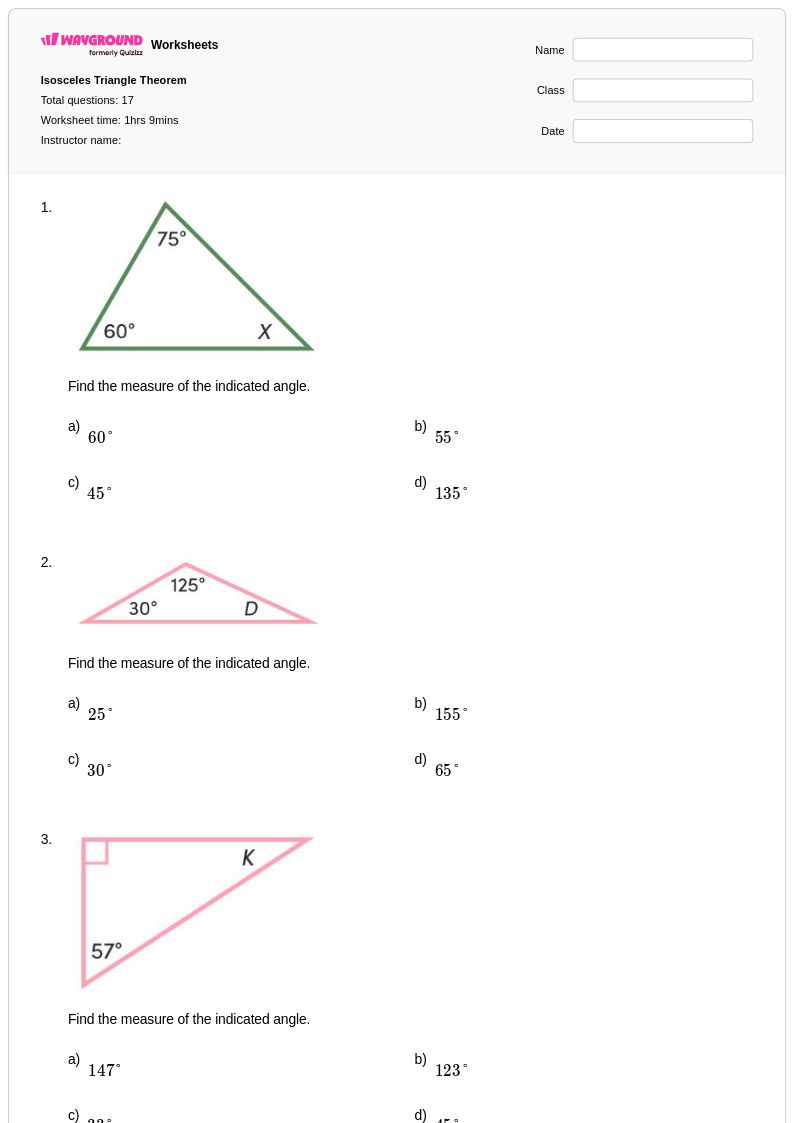
17 Q
8th - 10th
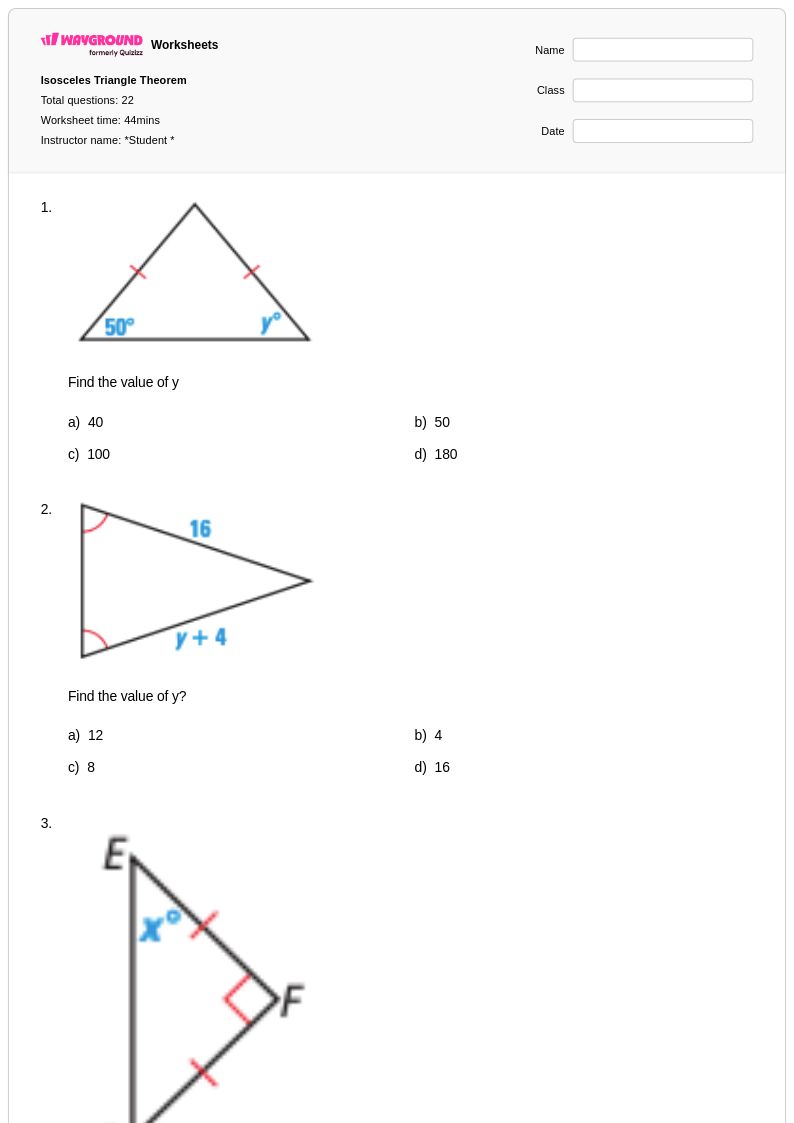
22 Q
9th - 10th
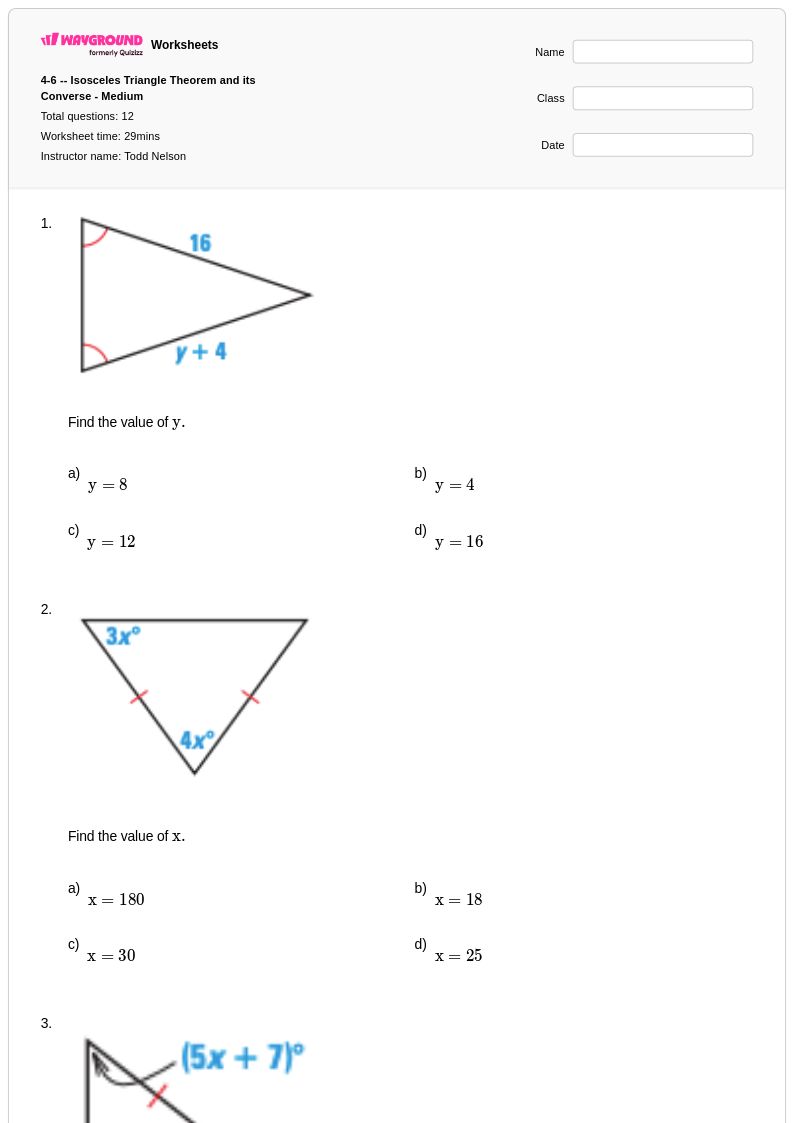
12 Q
10th
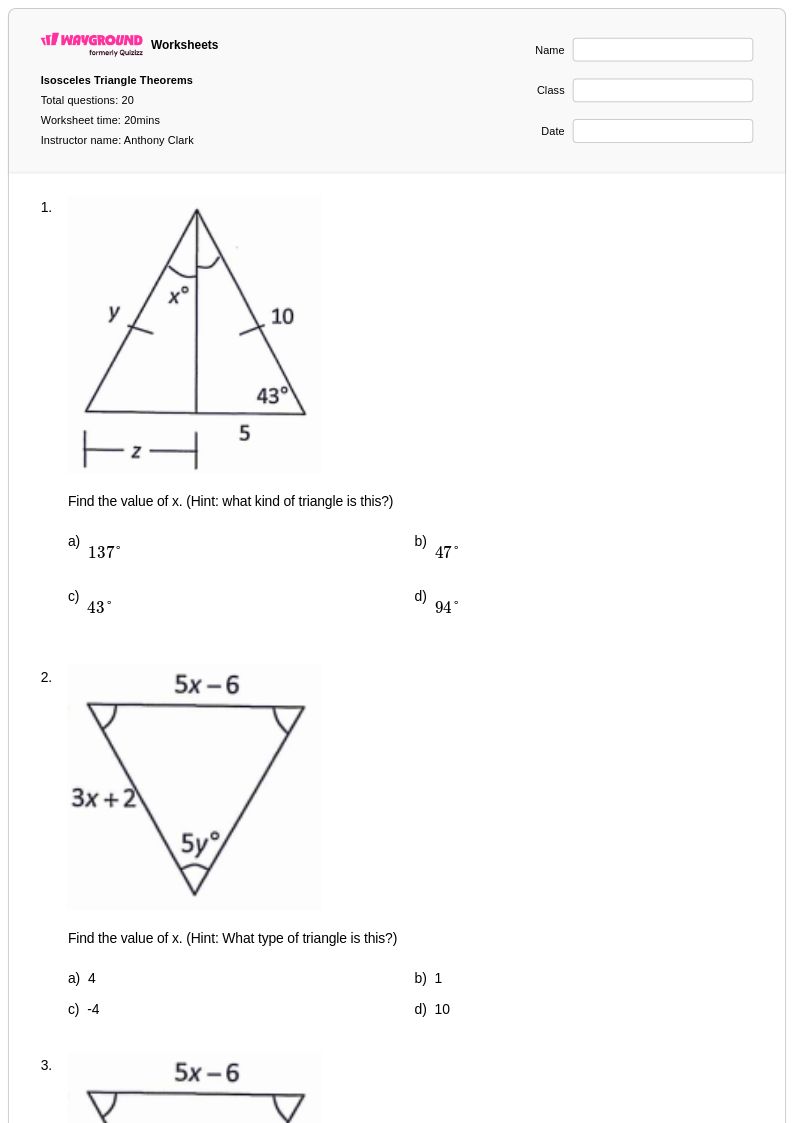
20 Q
10th - Uni
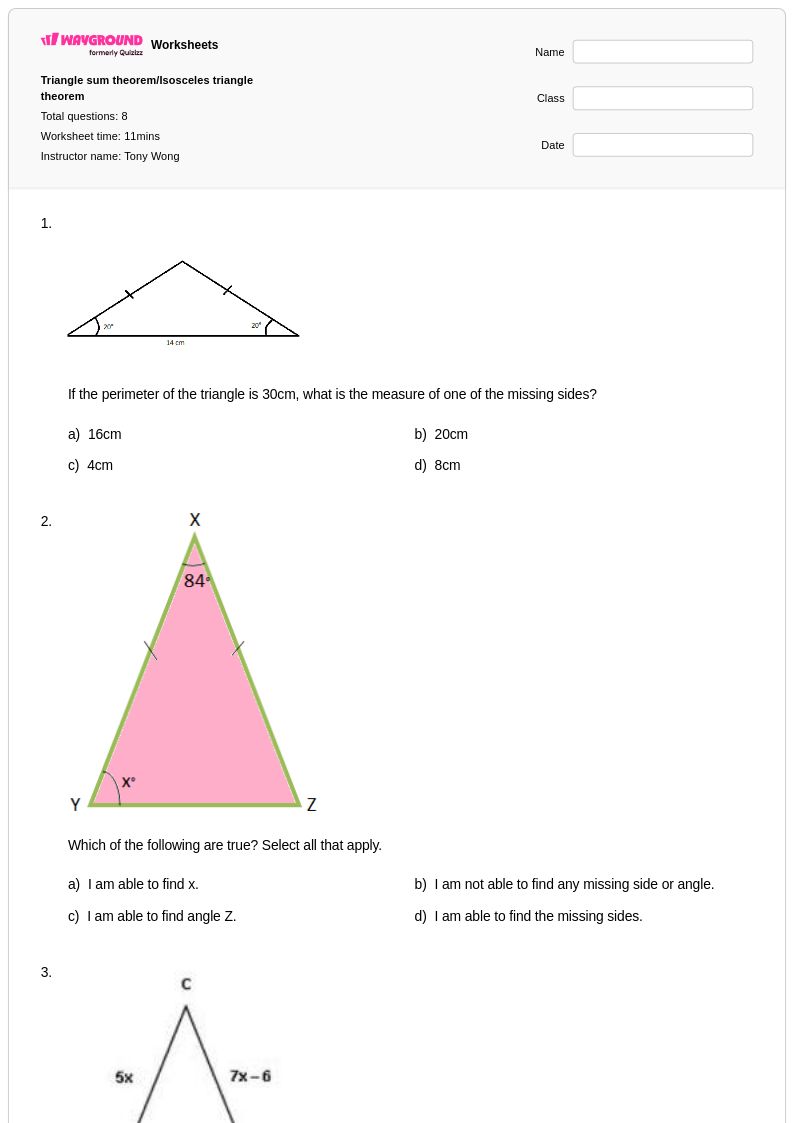
8 Q
KG
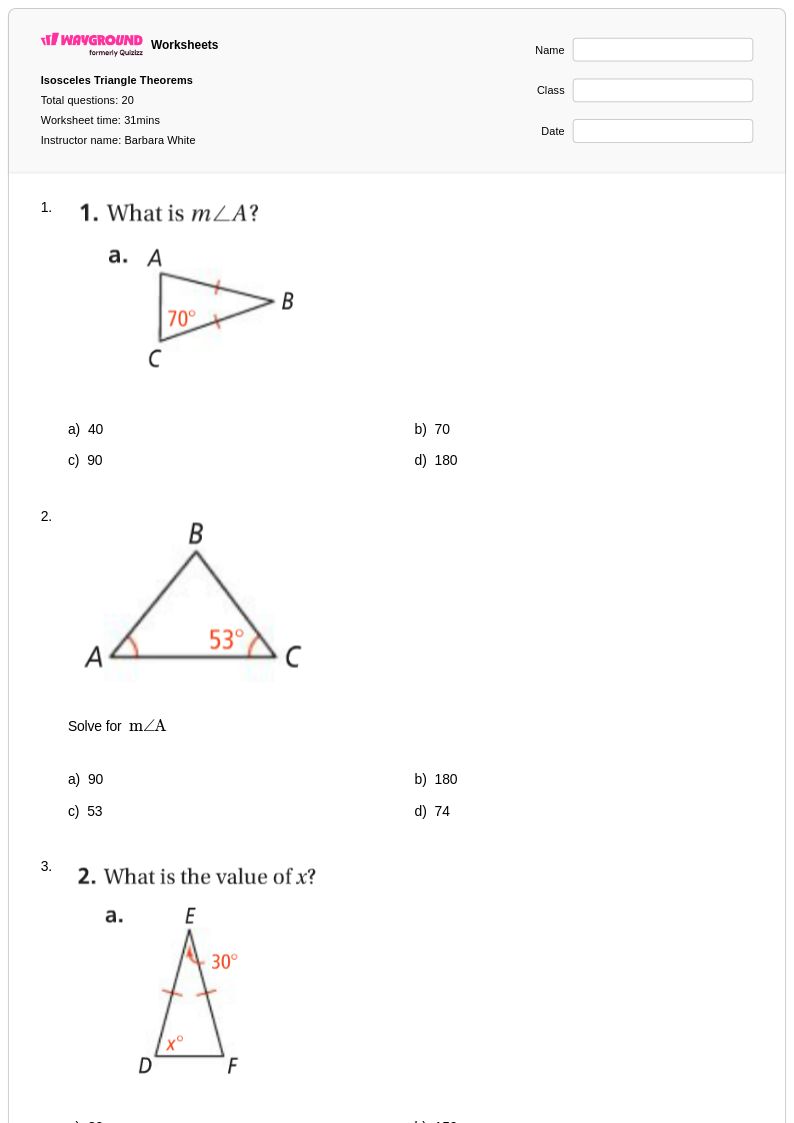
20 Q
9th - 10th
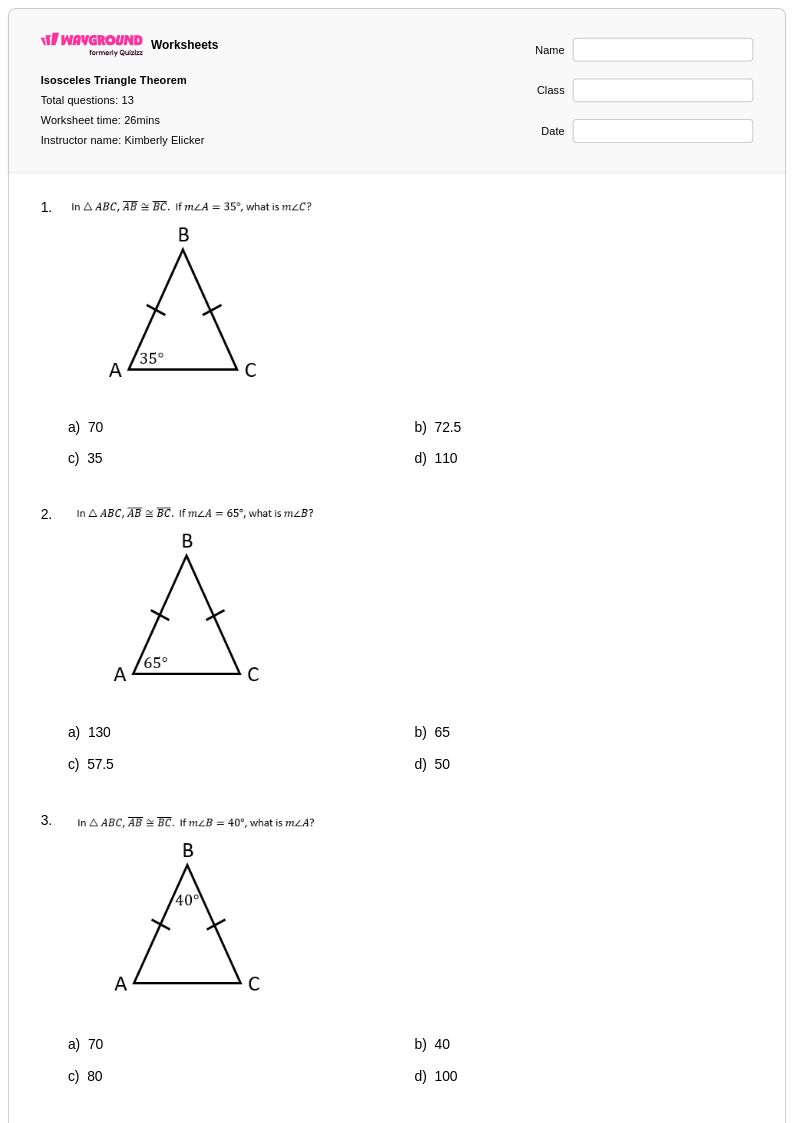
13 Q
9th - 10th
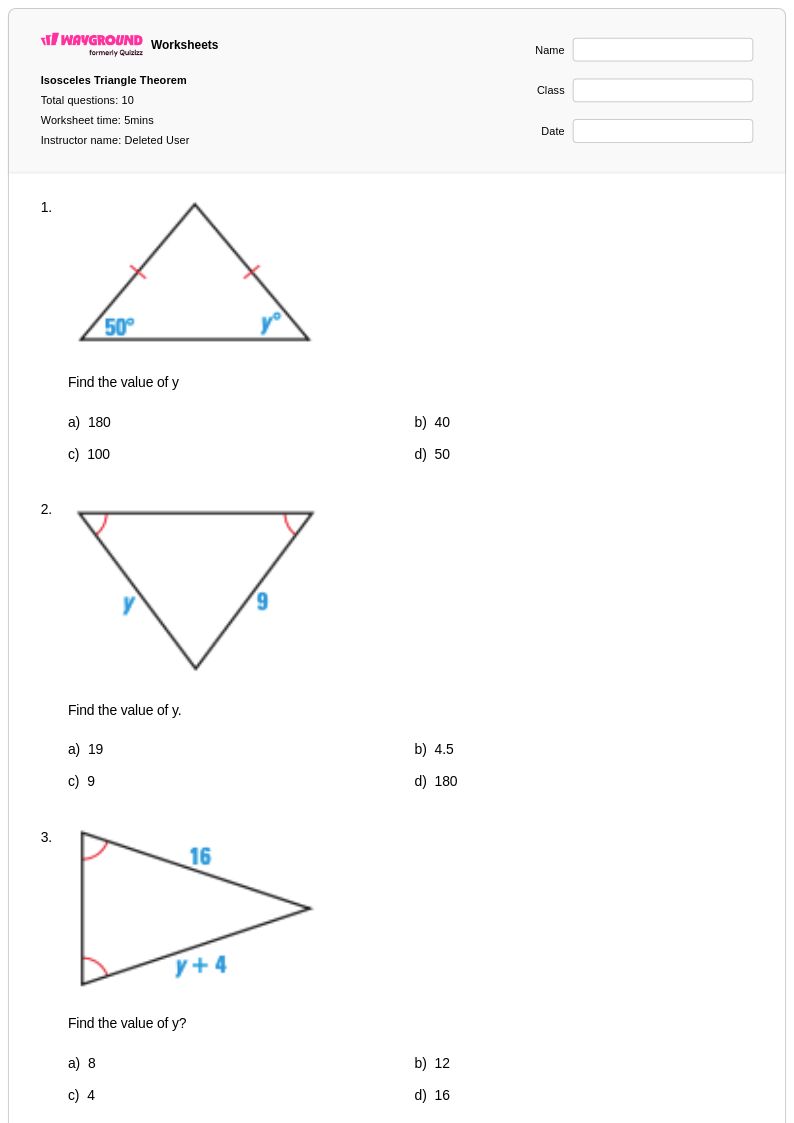
10 Q
7th - 11th
8 Q
8th
11 Q
8th - 12th
14 Q
10th
20 Q
10th
20 Q
9th - 12th
15 Q
9th - 12th
6 Q
8th
18 Q
10th
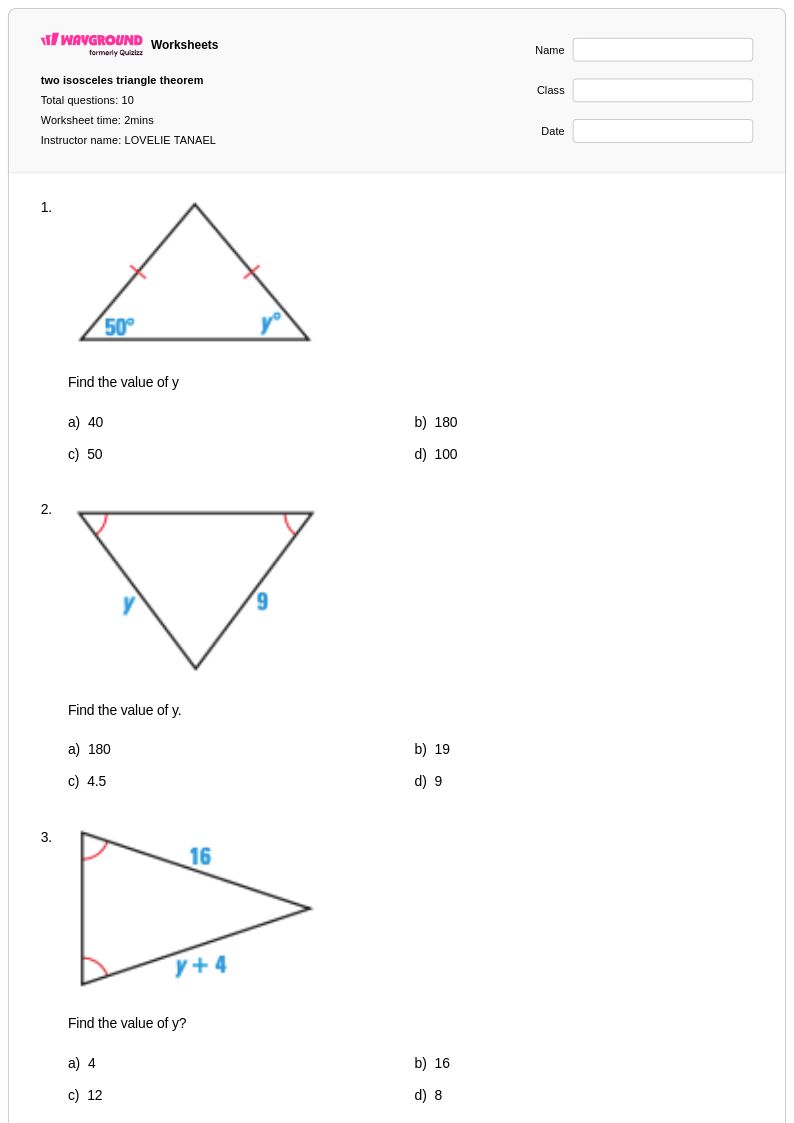
10 Q
8th
16 Q
10th
94 Q
8th
20 Q
8th
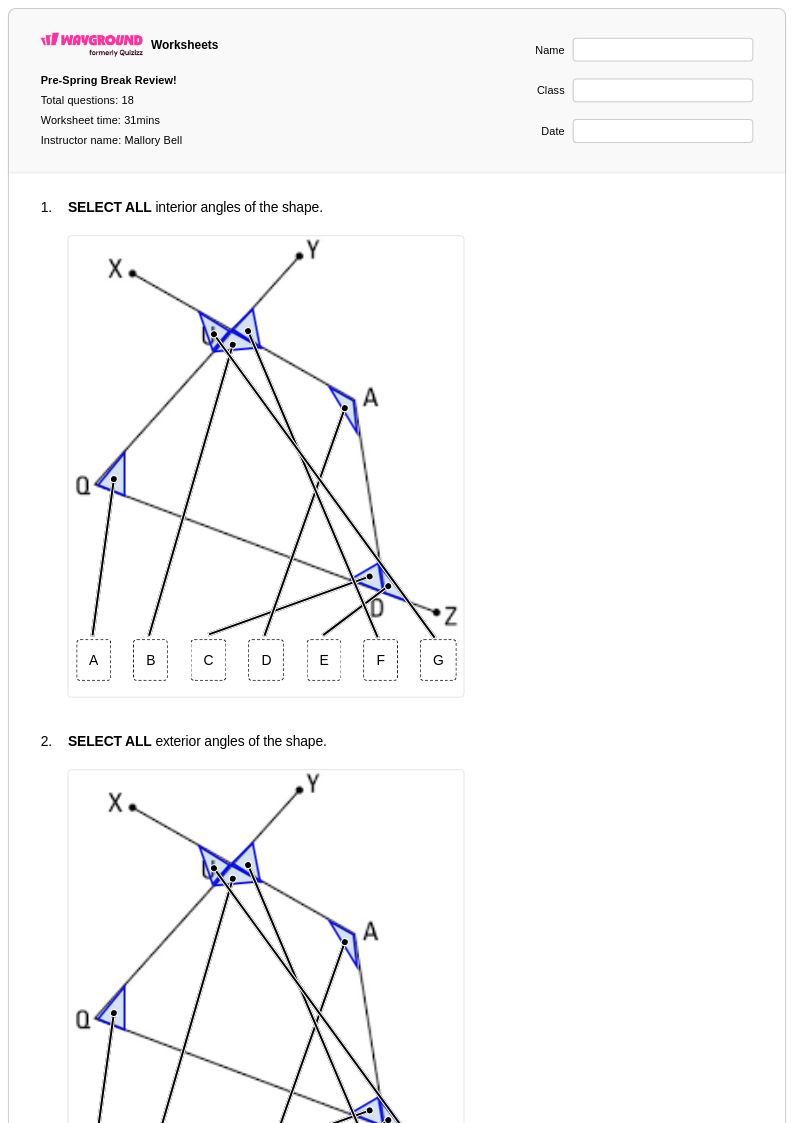
18 Q
9th - 12th
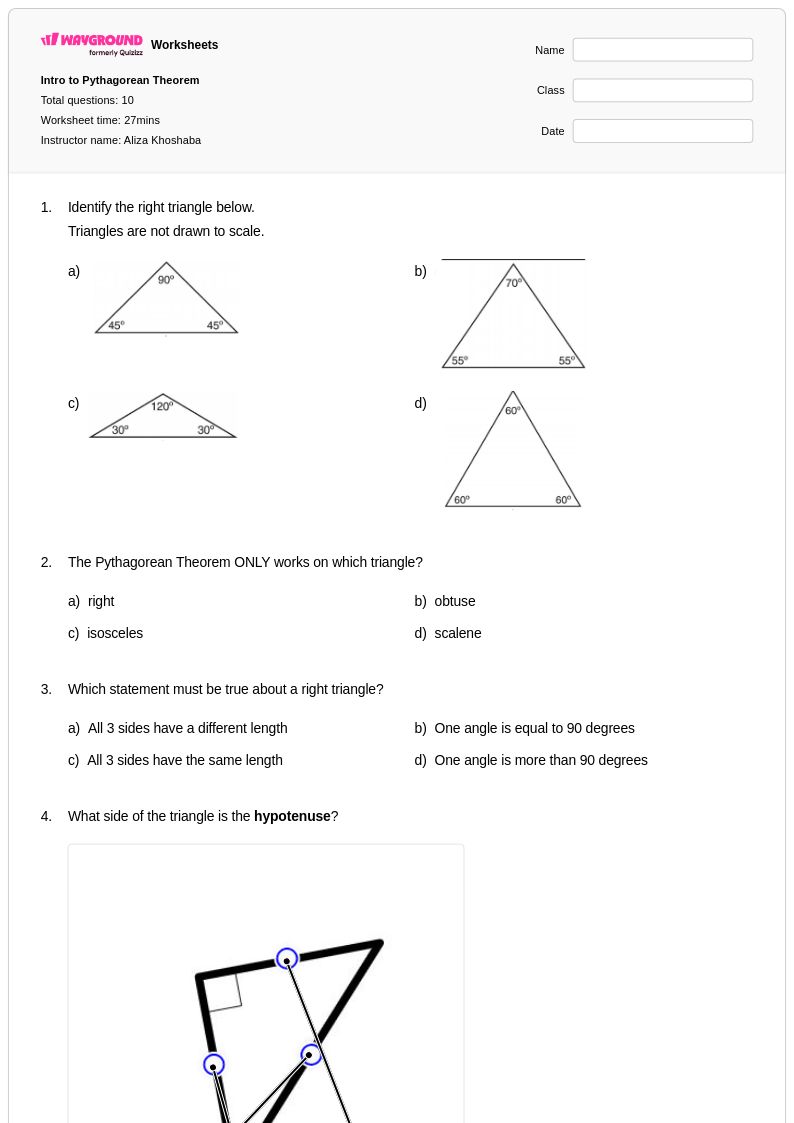
10 Q
8th
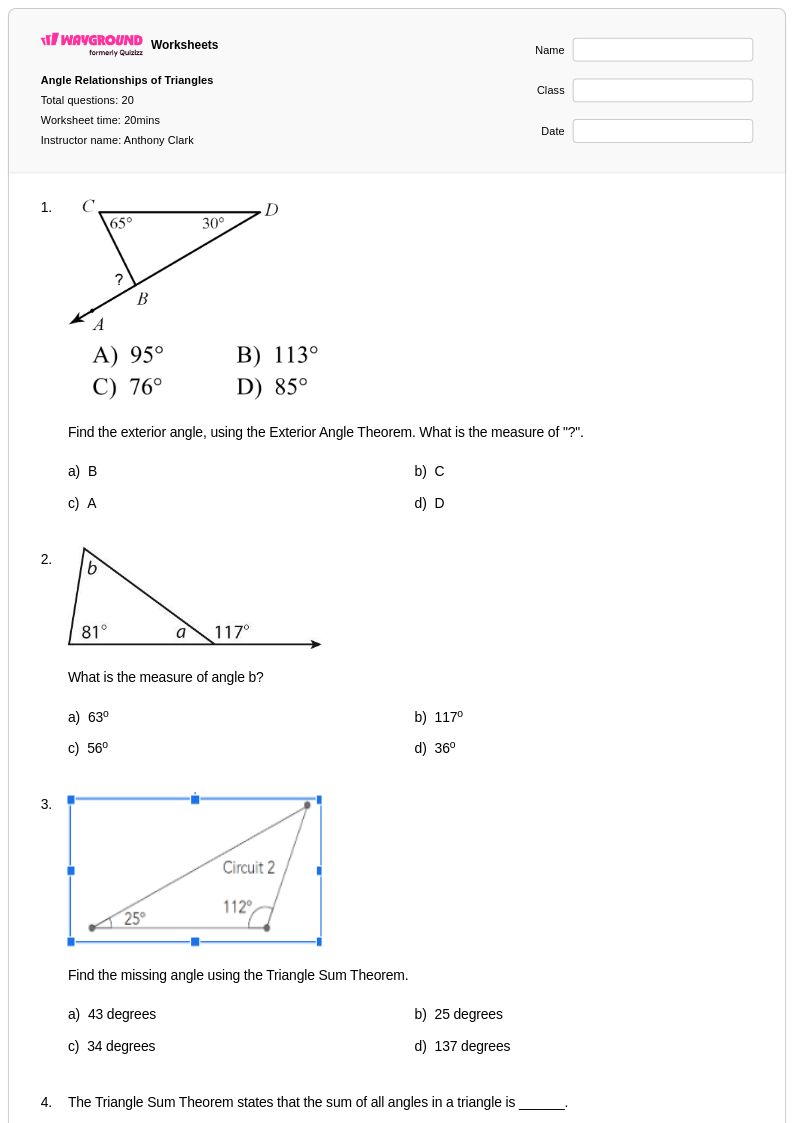
20 Q
8th - Uni
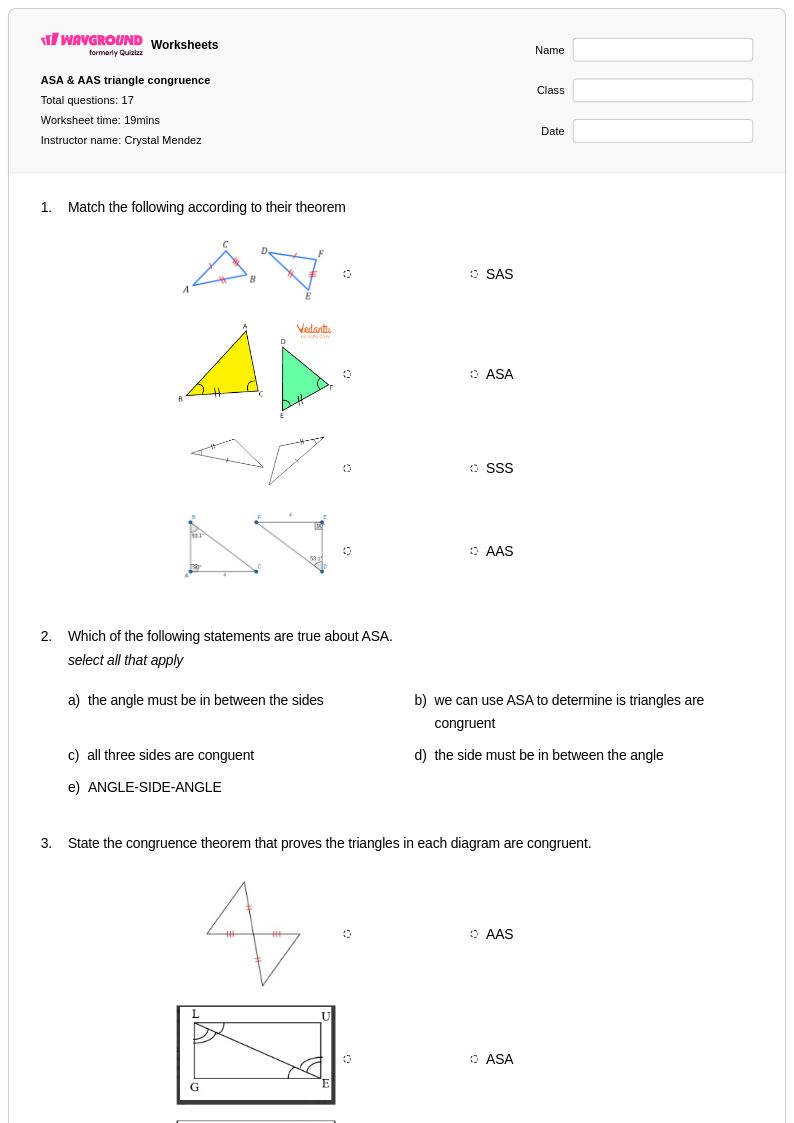
17 Q
10th
Explore Worksheets by Subjects
Explore printable Isosceles Triangle Theorem worksheets
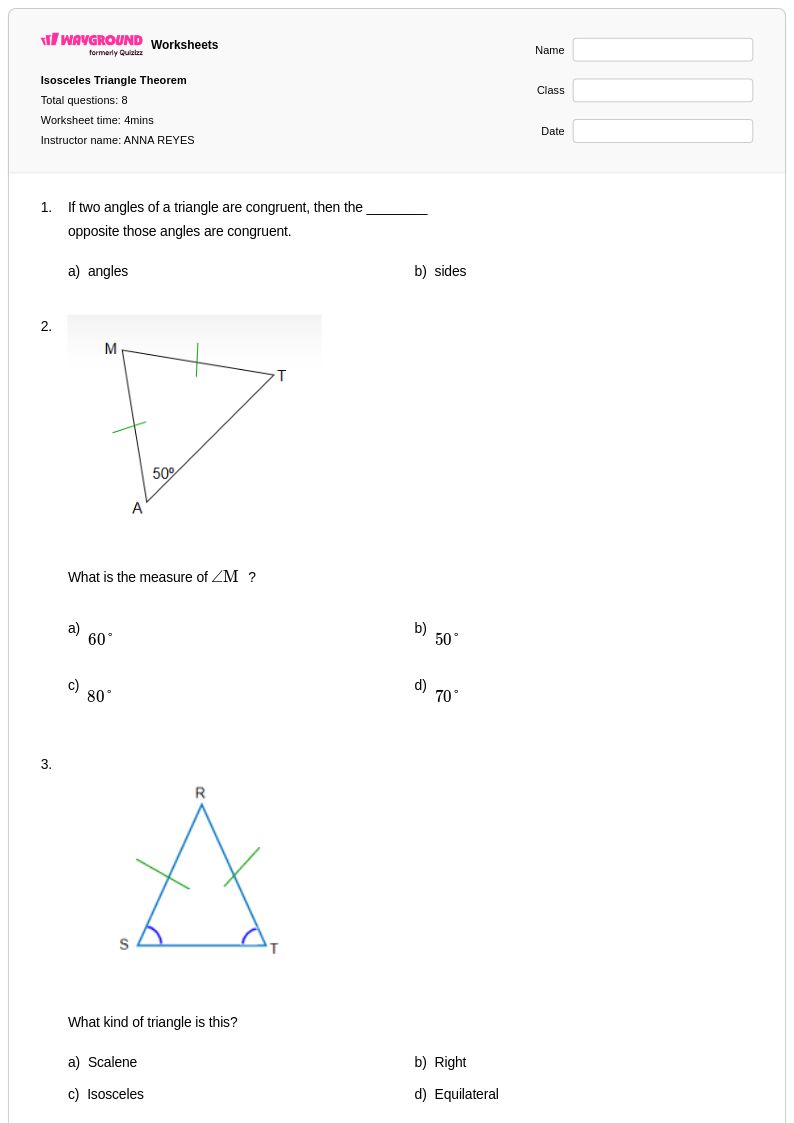
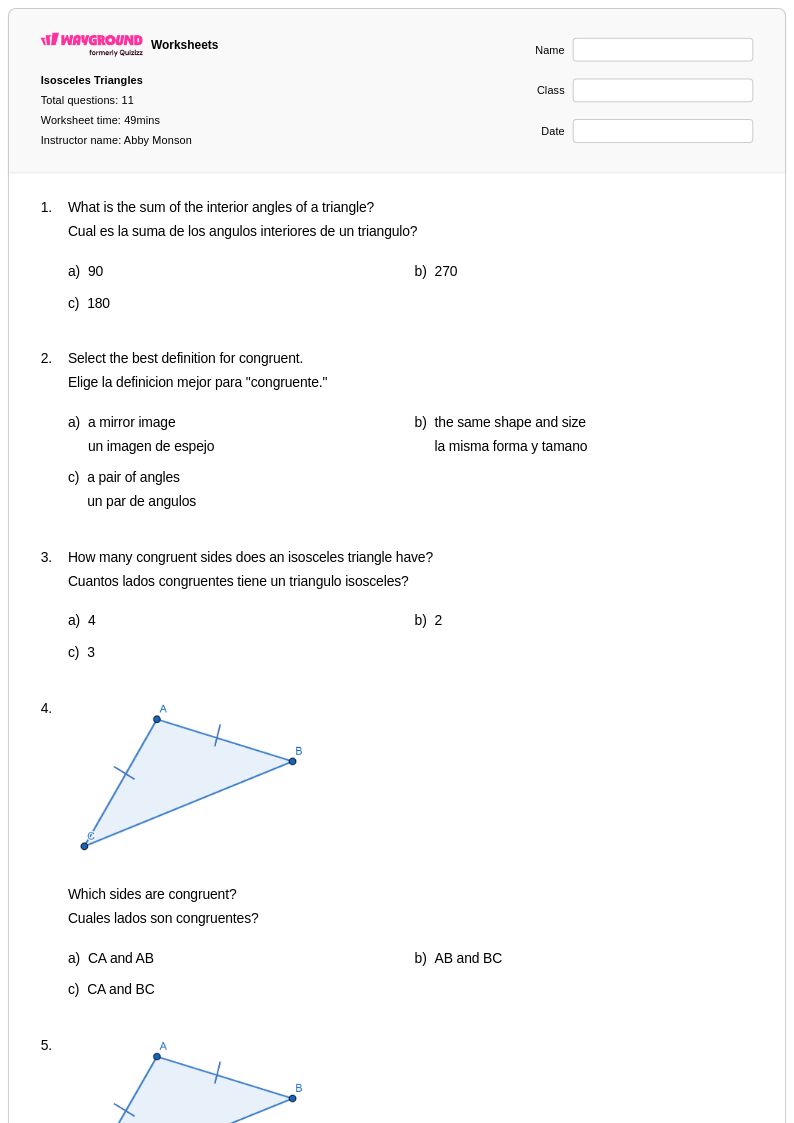
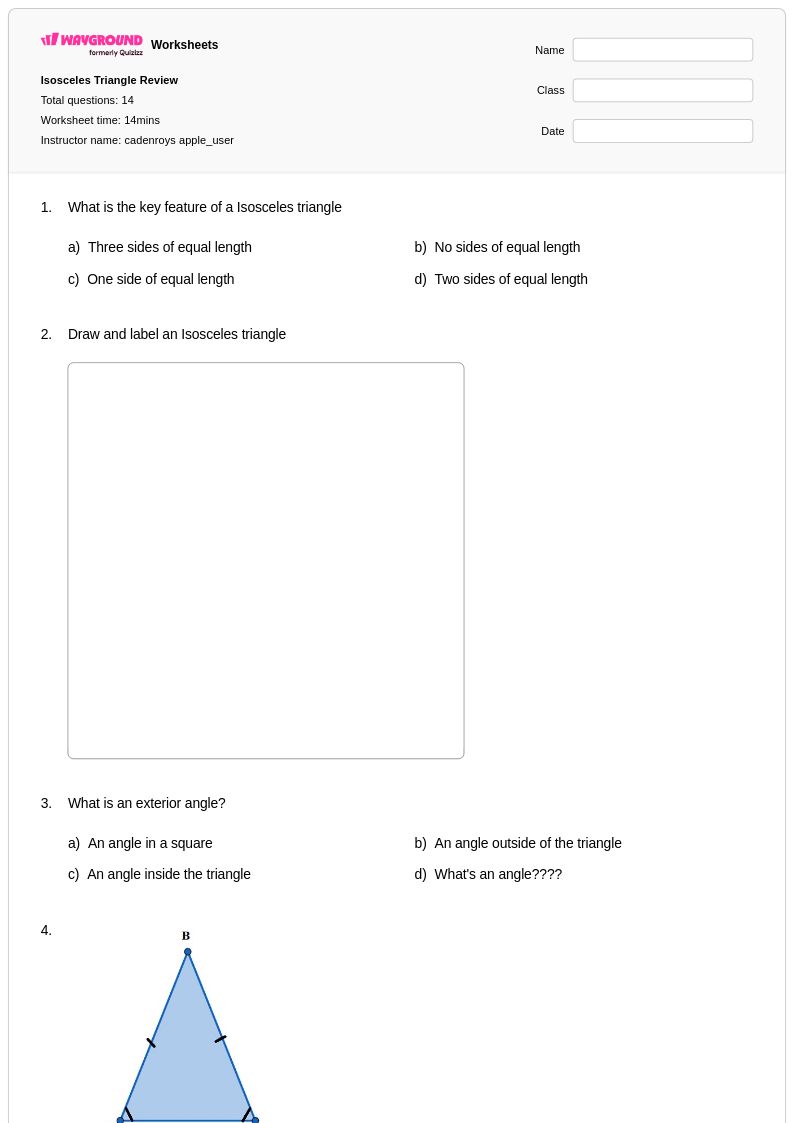
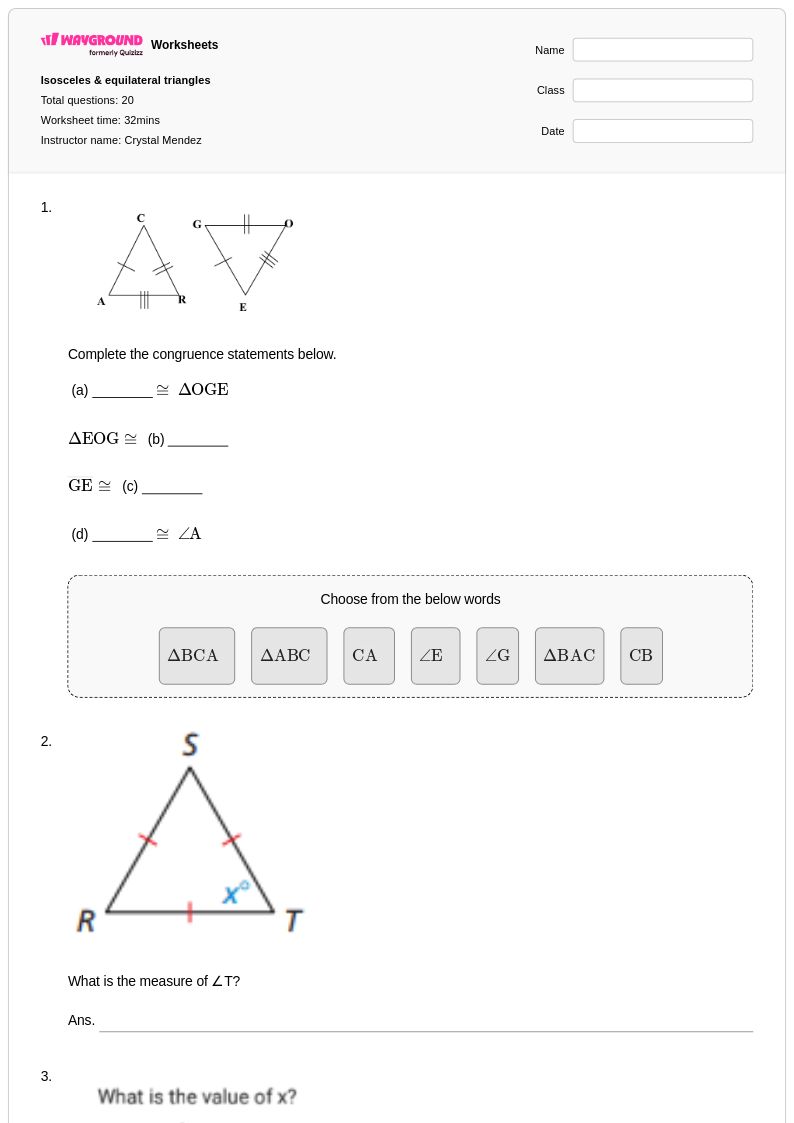
Isosceles Triangle Theorem worksheets available through Wayground (formerly Quizizz) provide comprehensive practice opportunities for students to master one of geometry's fundamental principles. These carefully designed resources help students understand that the base angles of an isosceles triangle are congruent, while developing essential skills in angle measurement, triangle classification, and geometric proof construction. The worksheet collection includes diverse practice problems that progress from basic angle identification to complex multi-step proofs, with each printable resource featuring detailed answer keys to support independent learning and self-assessment. Students work through free downloadable exercises that reinforce the theorem's applications in real-world contexts, building confidence in geometric reasoning while strengthening their ability to recognize and apply this critical relationship in various mathematical scenarios.
Wayground (formerly Quizizz) empowers educators with millions of teacher-created Isosceles Triangle Theorem resources that streamline lesson planning and enhance instruction quality. The platform's robust search and filtering capabilities allow teachers to quickly locate worksheets aligned with specific mathematical standards, while differentiation tools enable seamless customization for diverse learning needs and ability levels. These comprehensive collections are available in both printable pdf formats and interactive digital versions, providing flexibility for classroom instruction, homework assignments, and assessment preparation. Teachers utilize these versatile resources for targeted skill practice, remediation support for struggling learners, and enrichment opportunities for advanced students, ensuring that every learner can develop mastery of this essential geometric concept through appropriately challenging and engaging mathematical experiences.
FAQs
How do I teach the Isosceles Triangle Theorem?
What exercises help students practice the Isosceles Triangle Theorem?
What are common student mistakes with the Isosceles Triangle Theorem?
How do I use this Wayground worksheet?
How does this topic fit into the geometry curriculum?
How can I differentiate practice for the Isosceles Triangle Theorem?