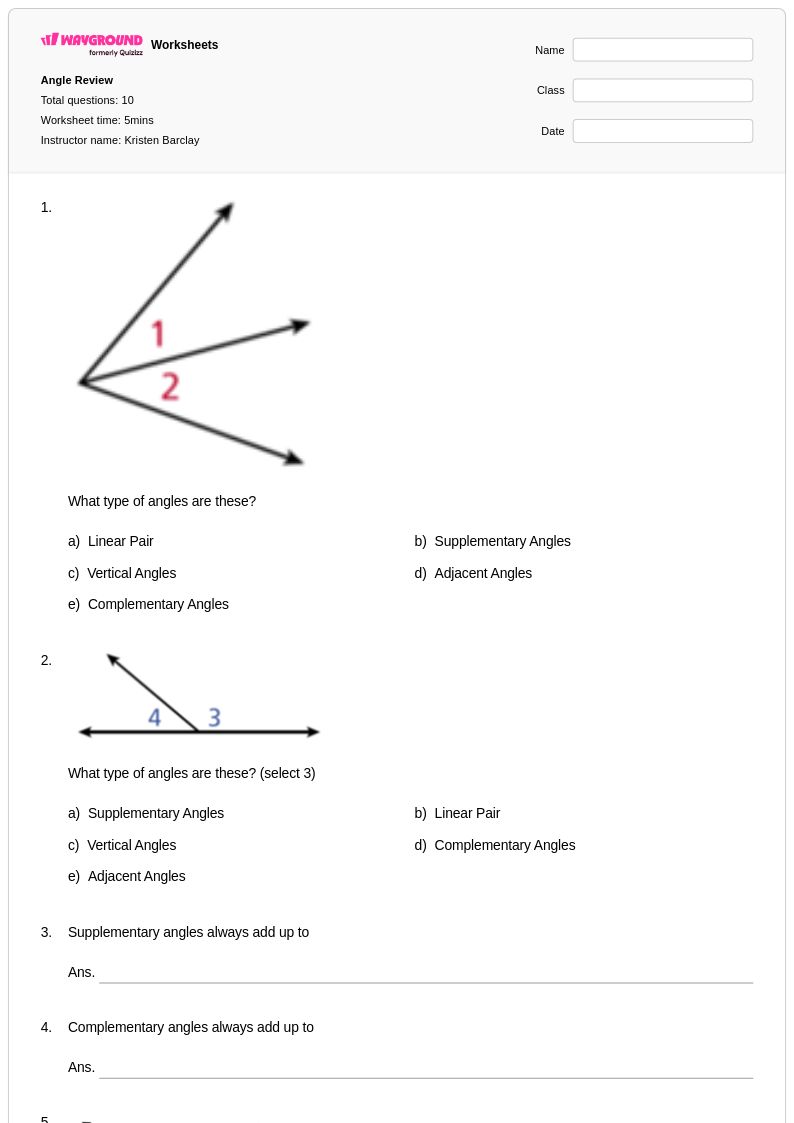
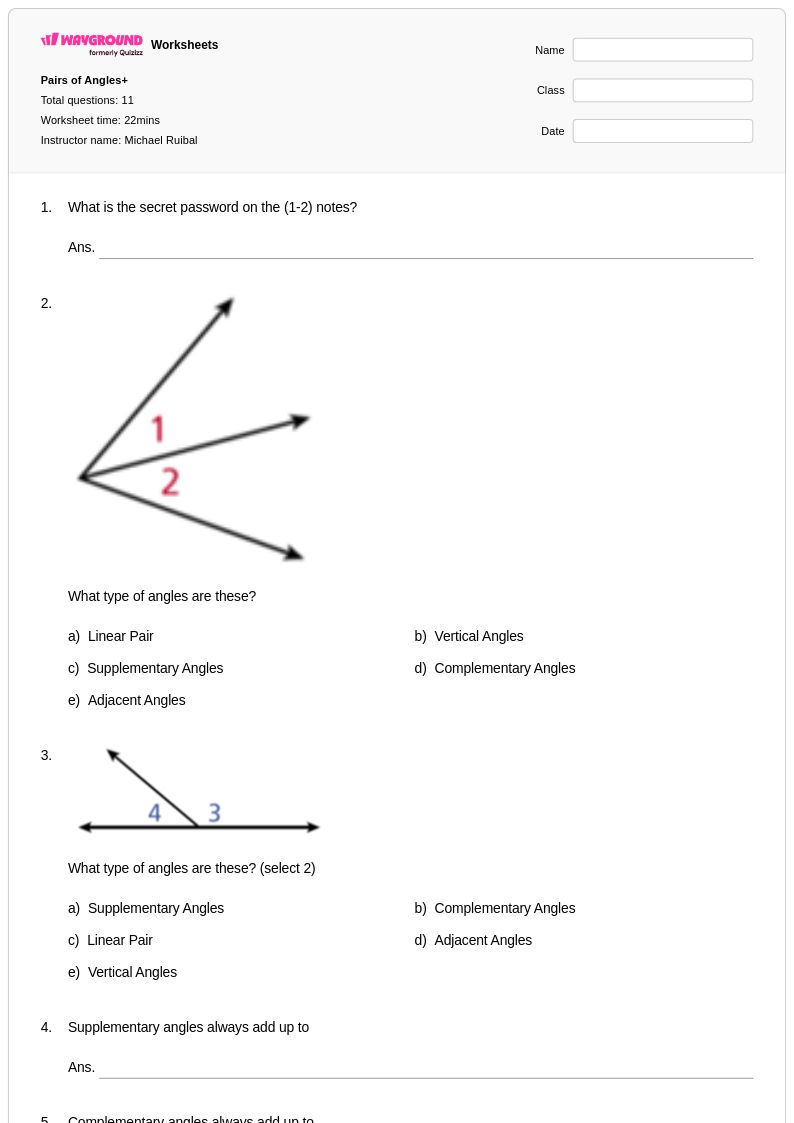
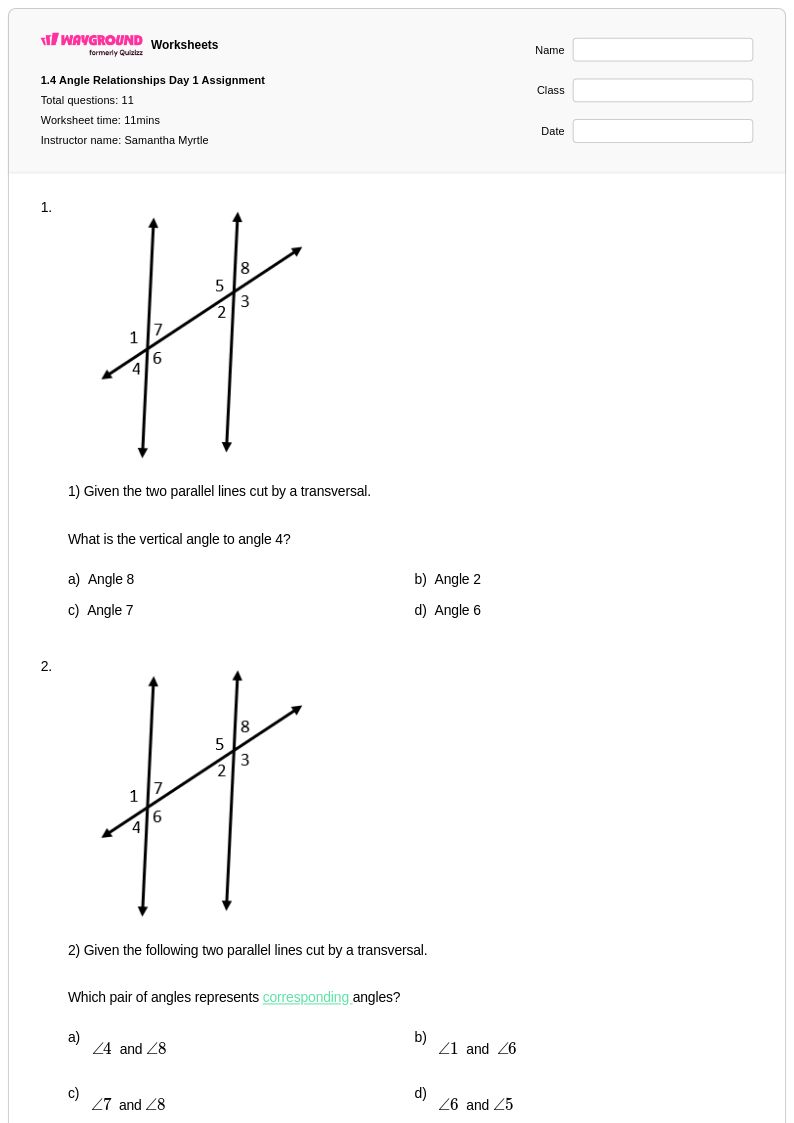
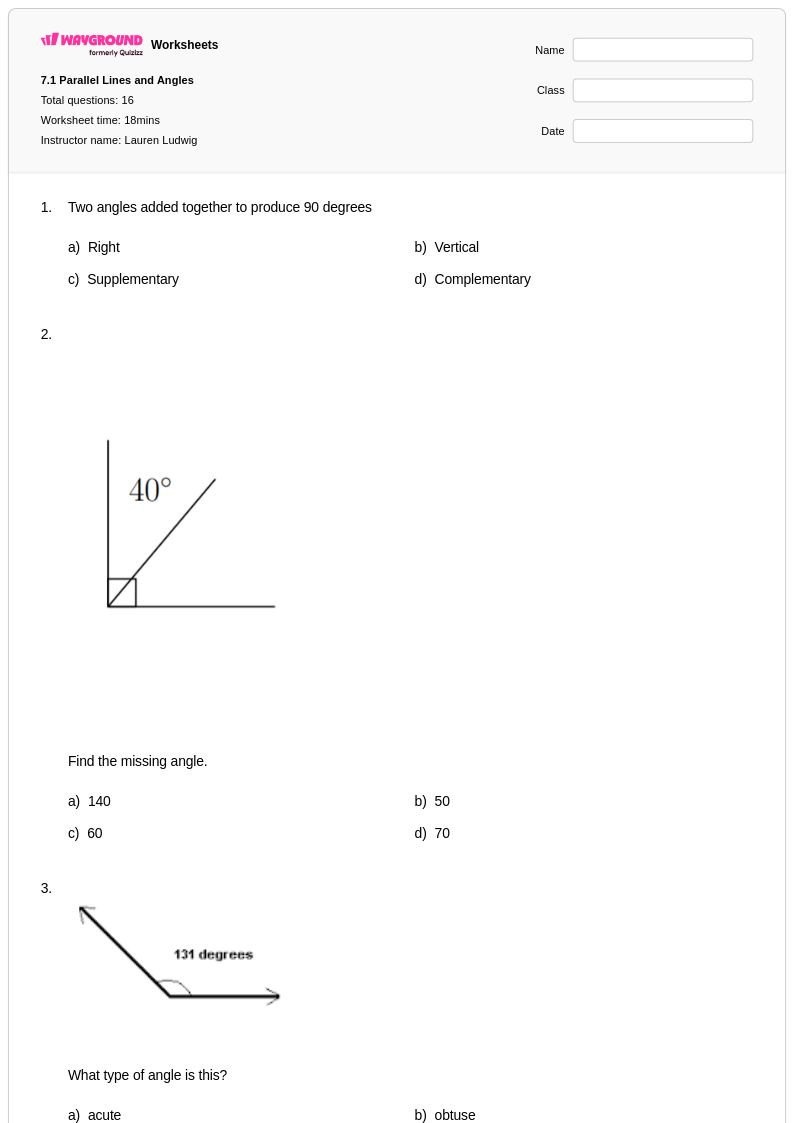
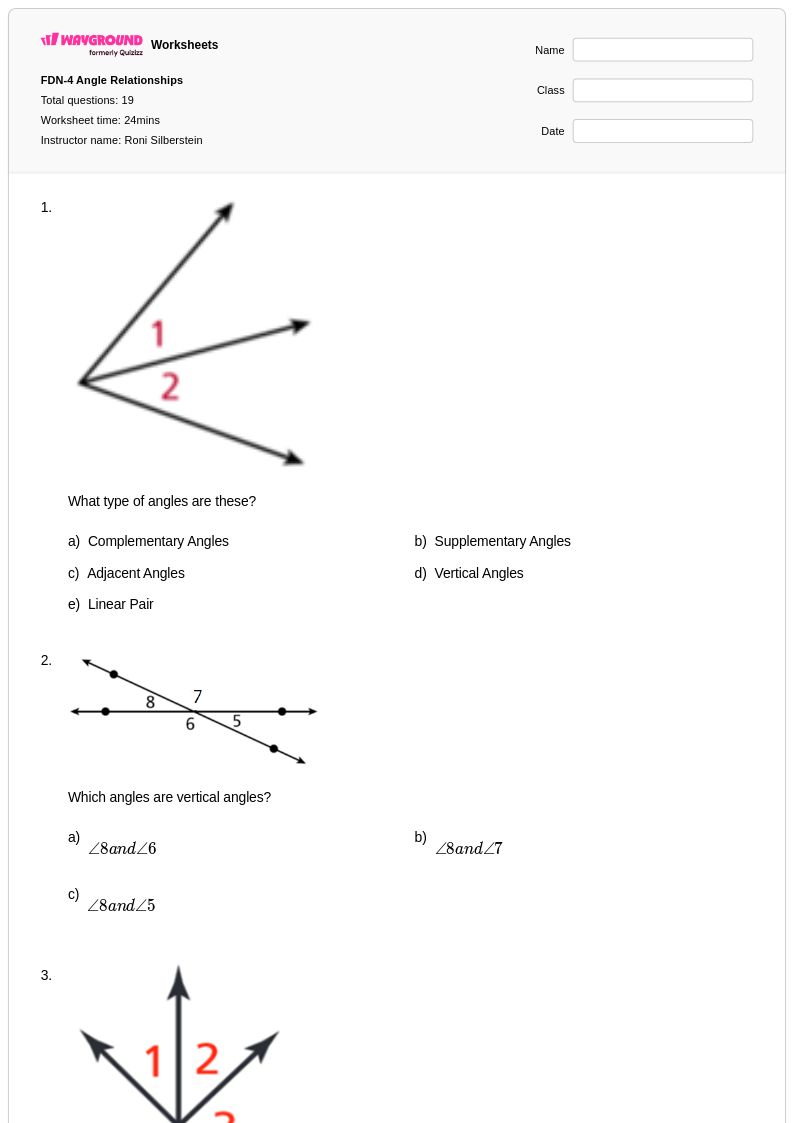
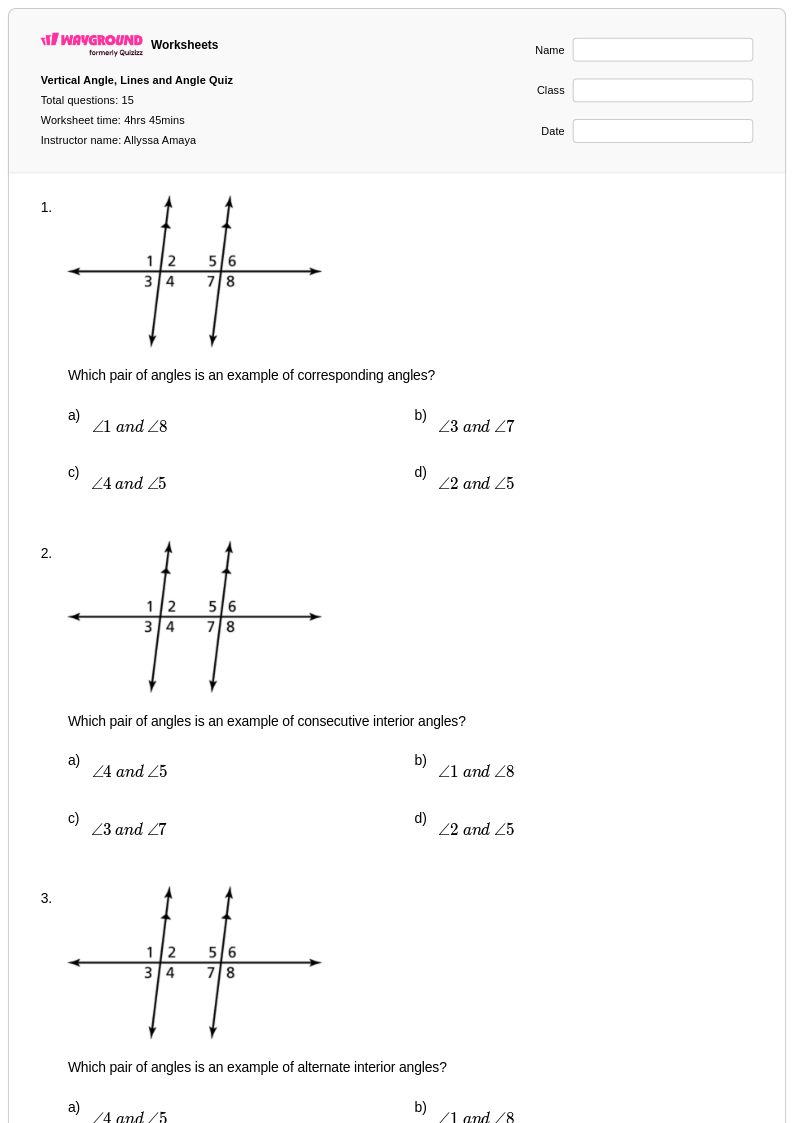
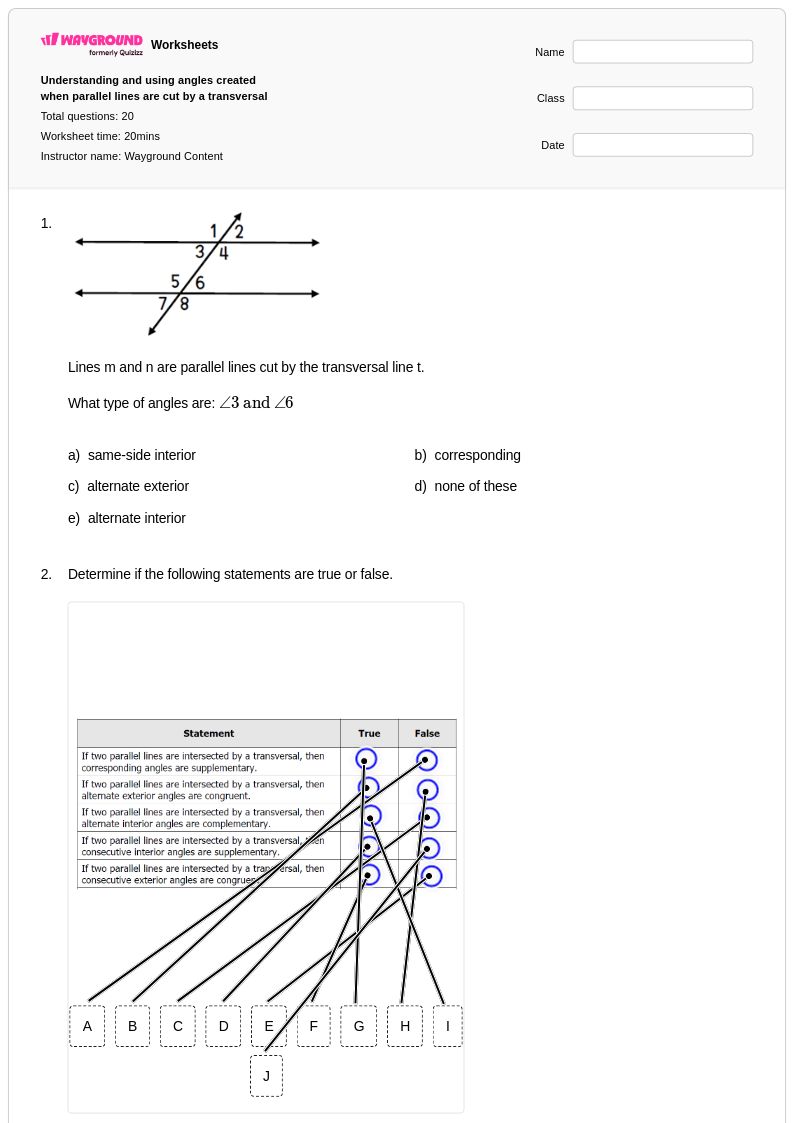
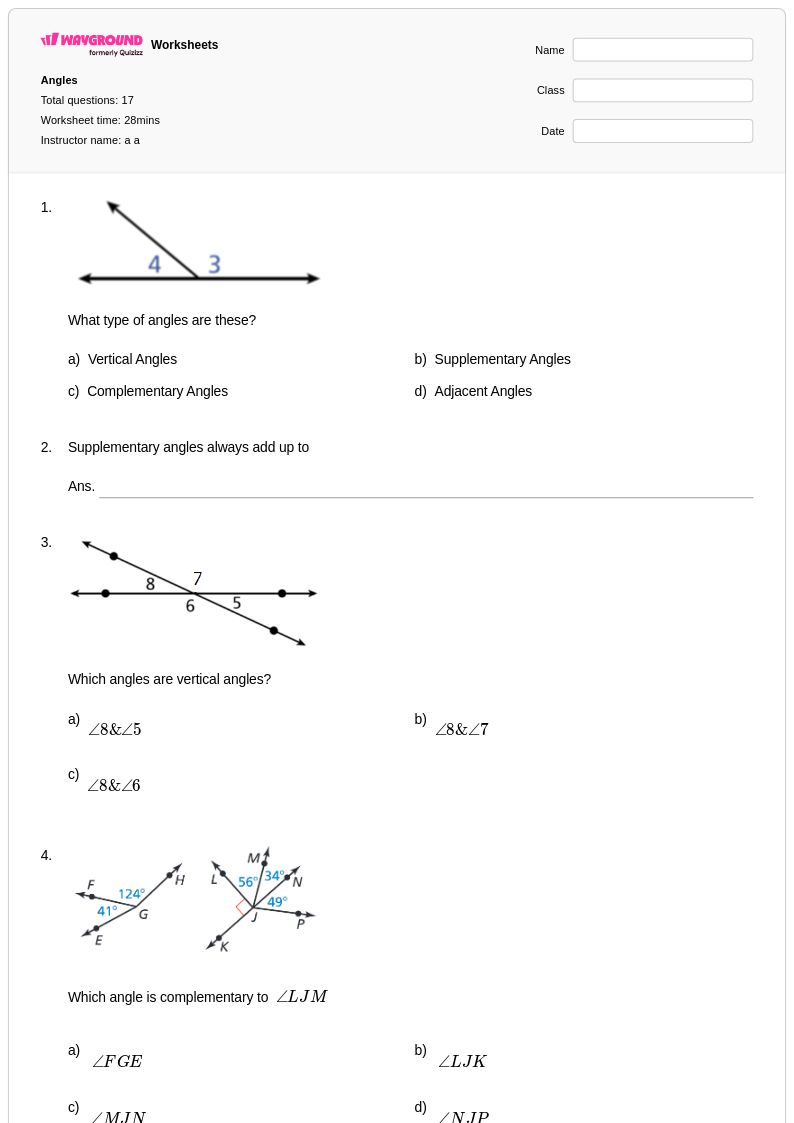
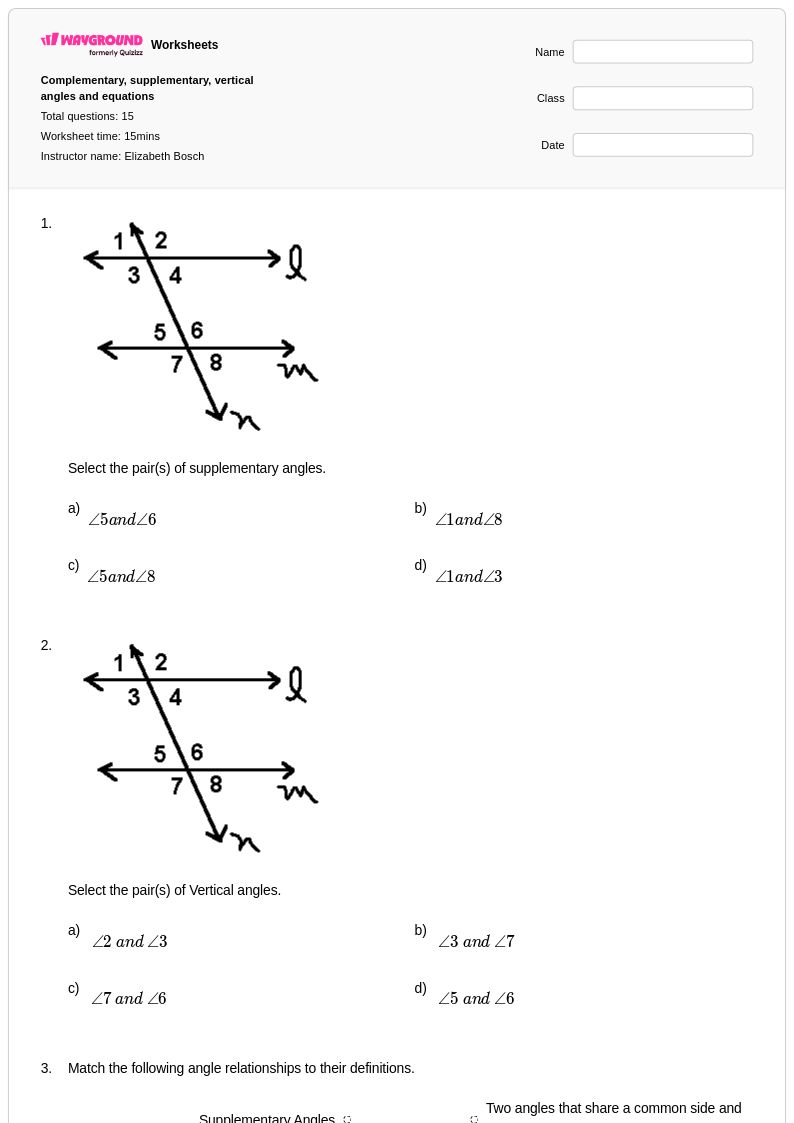
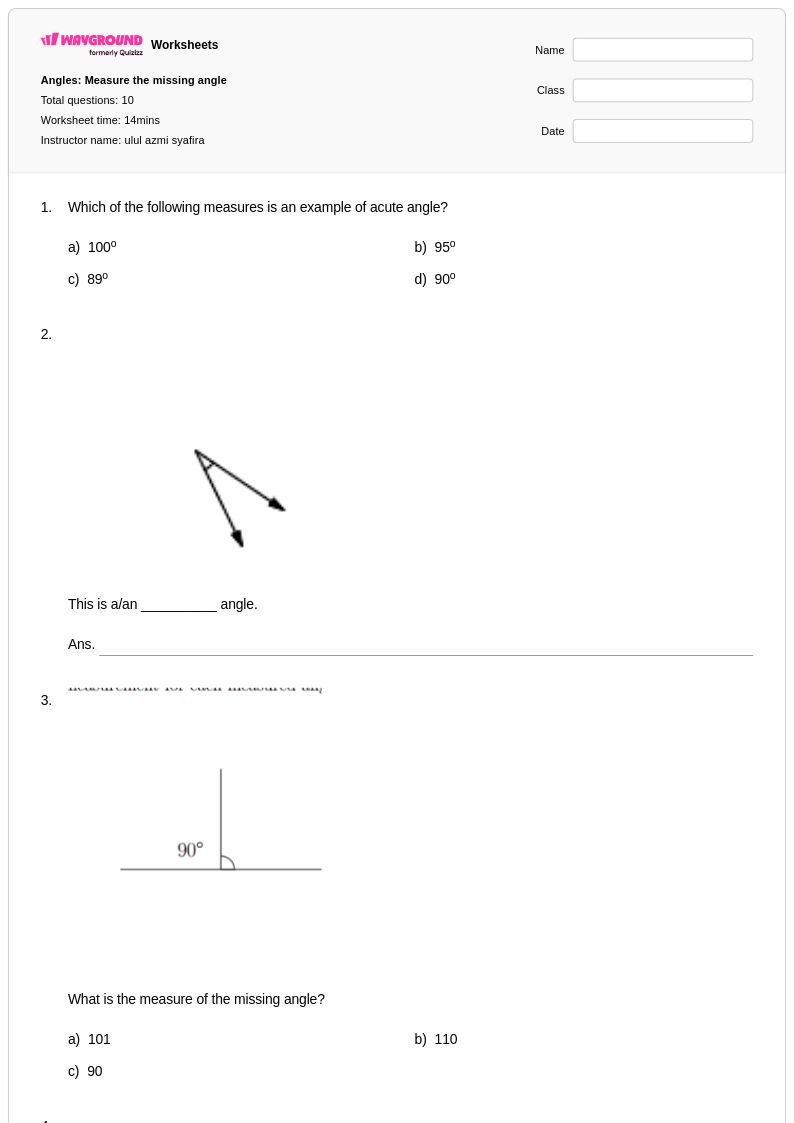
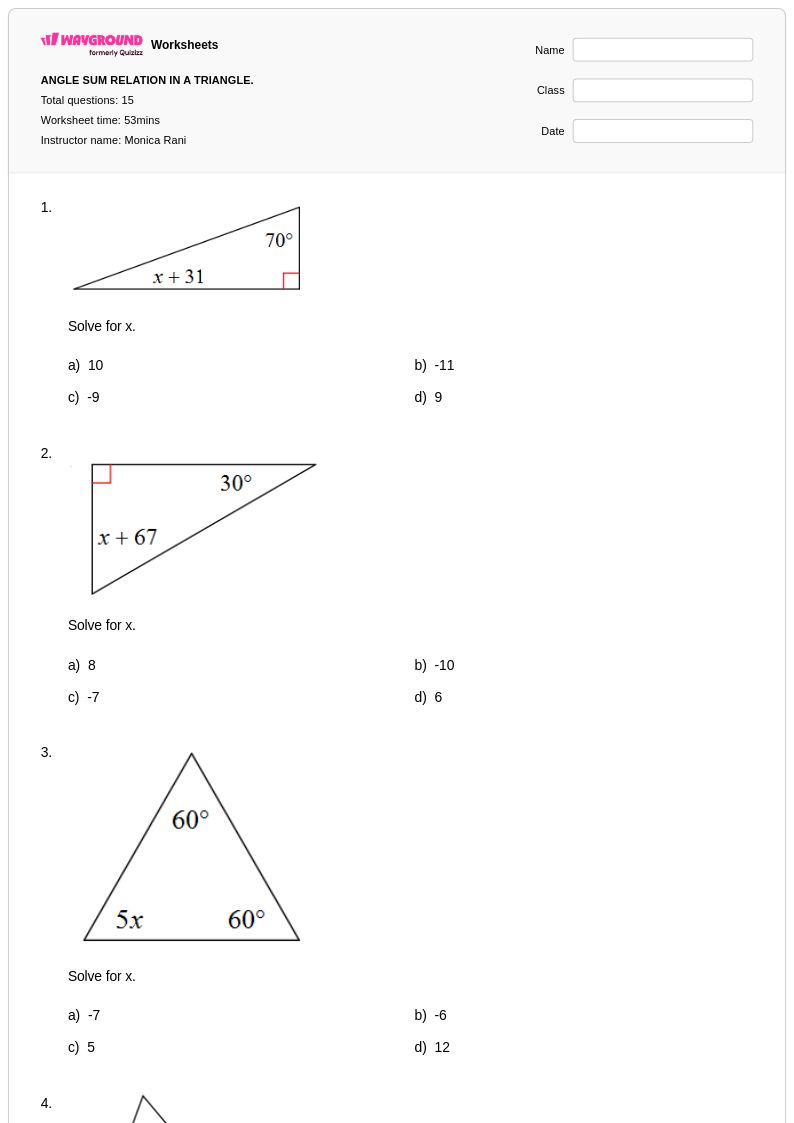
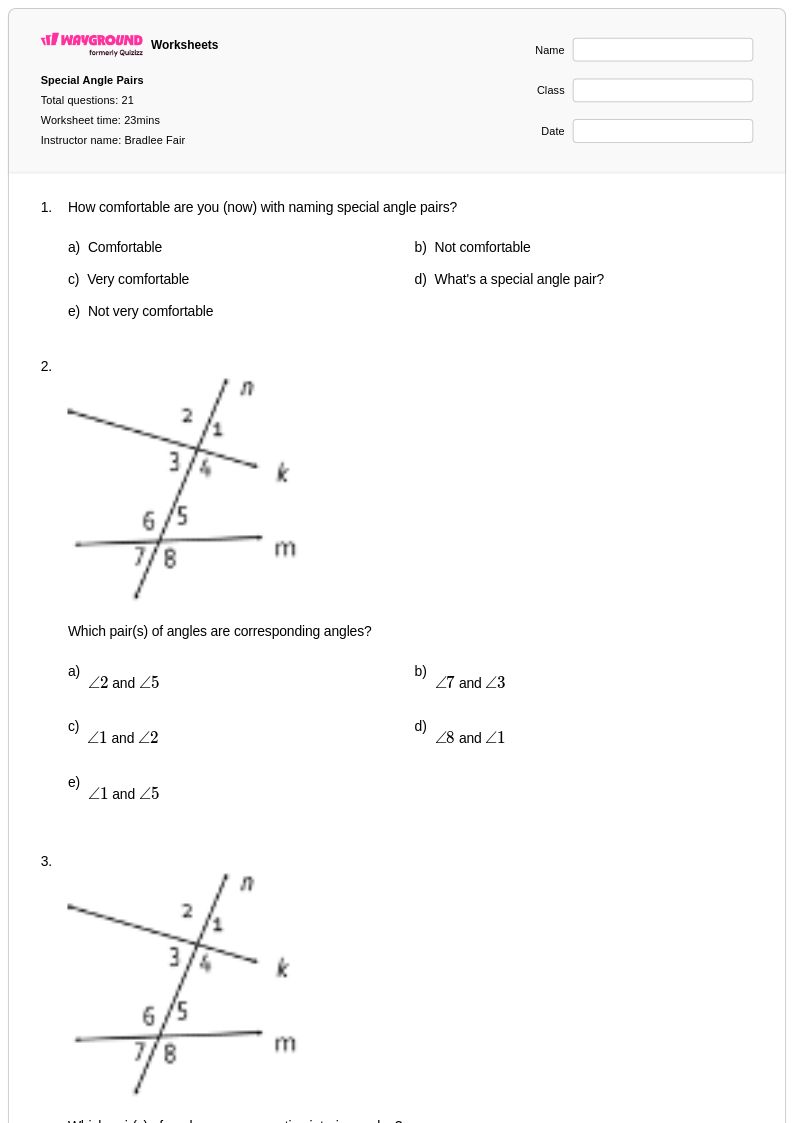
Explore Wayground's comprehensive collection of free angle operations worksheets and printables that help students master calculating, measuring, and manipulating angles through engaging practice problems with detailed answer keys.
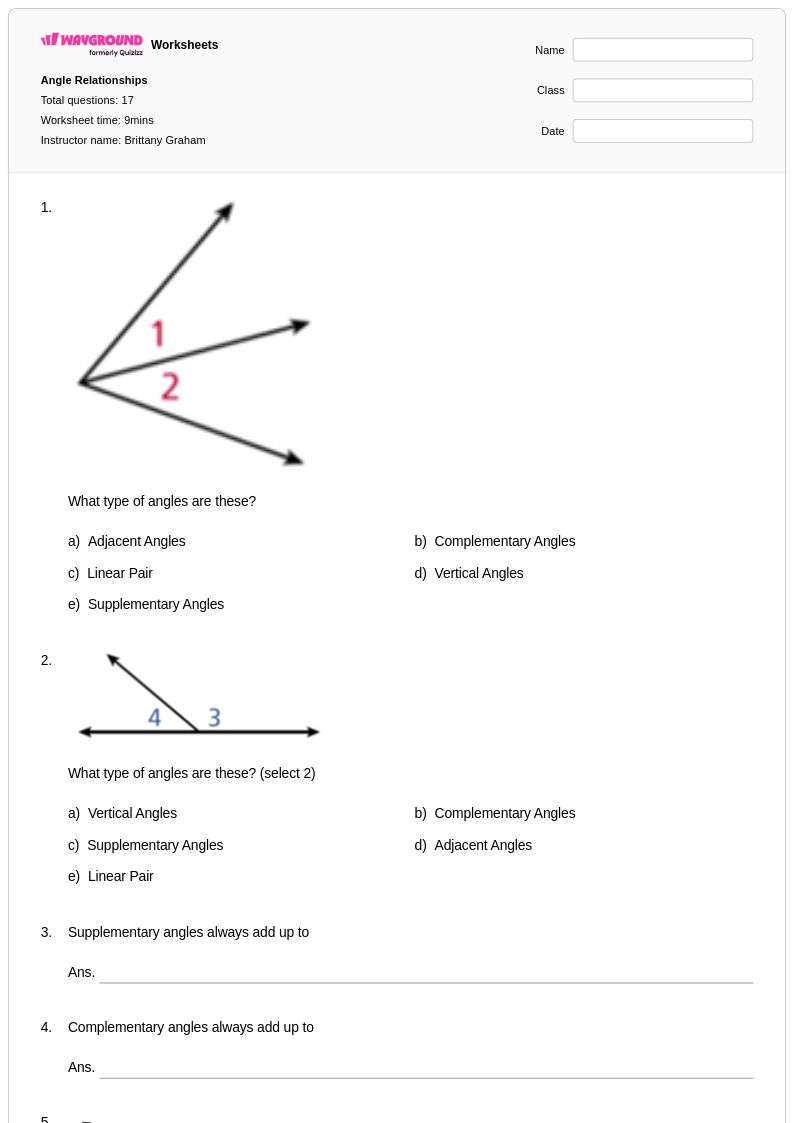
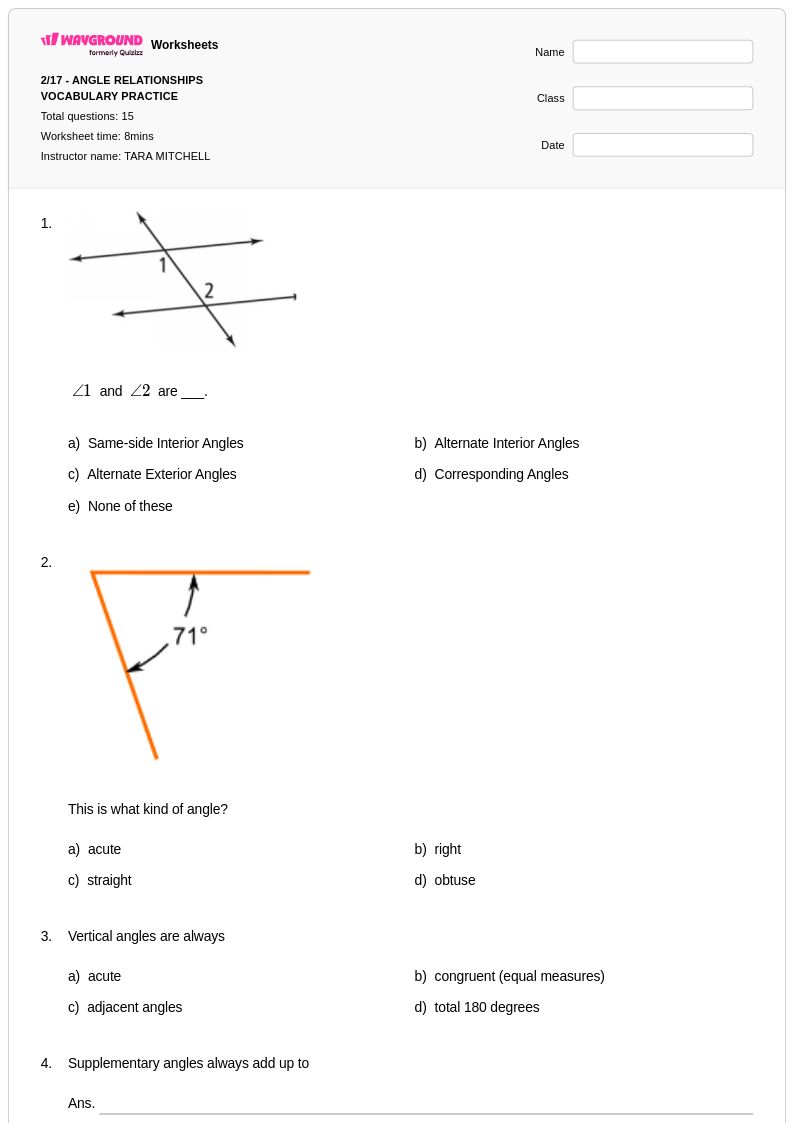
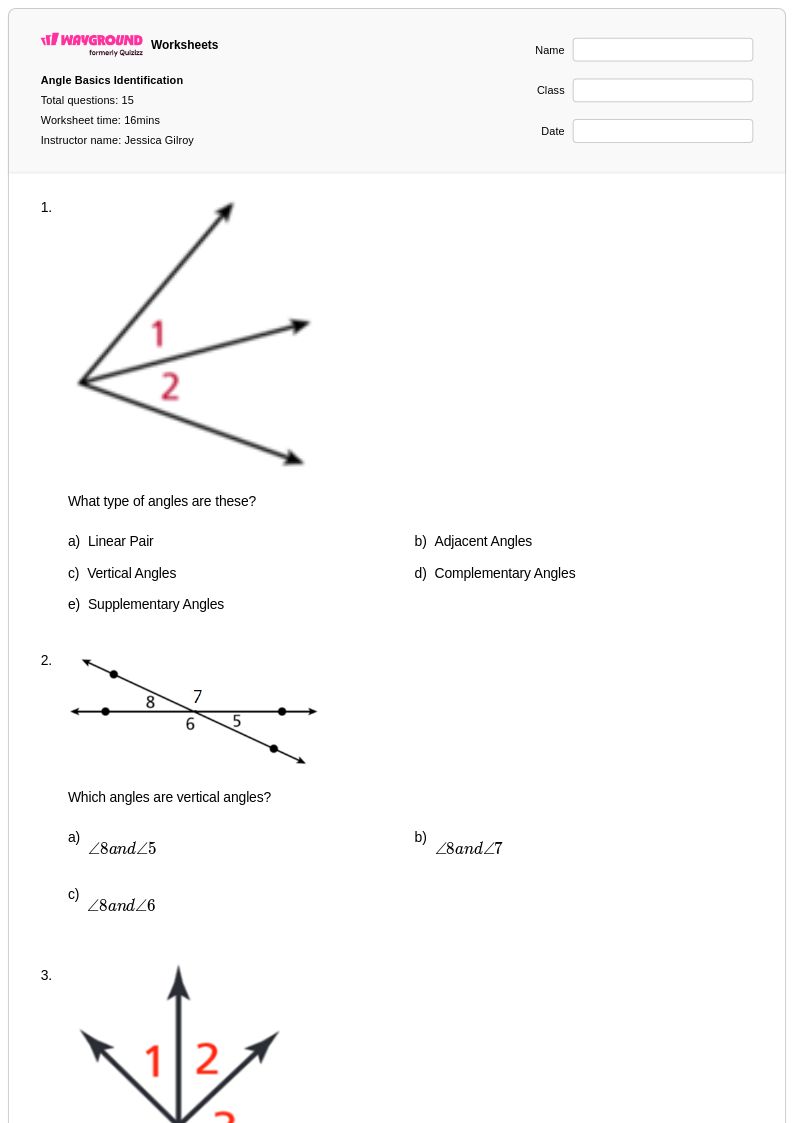
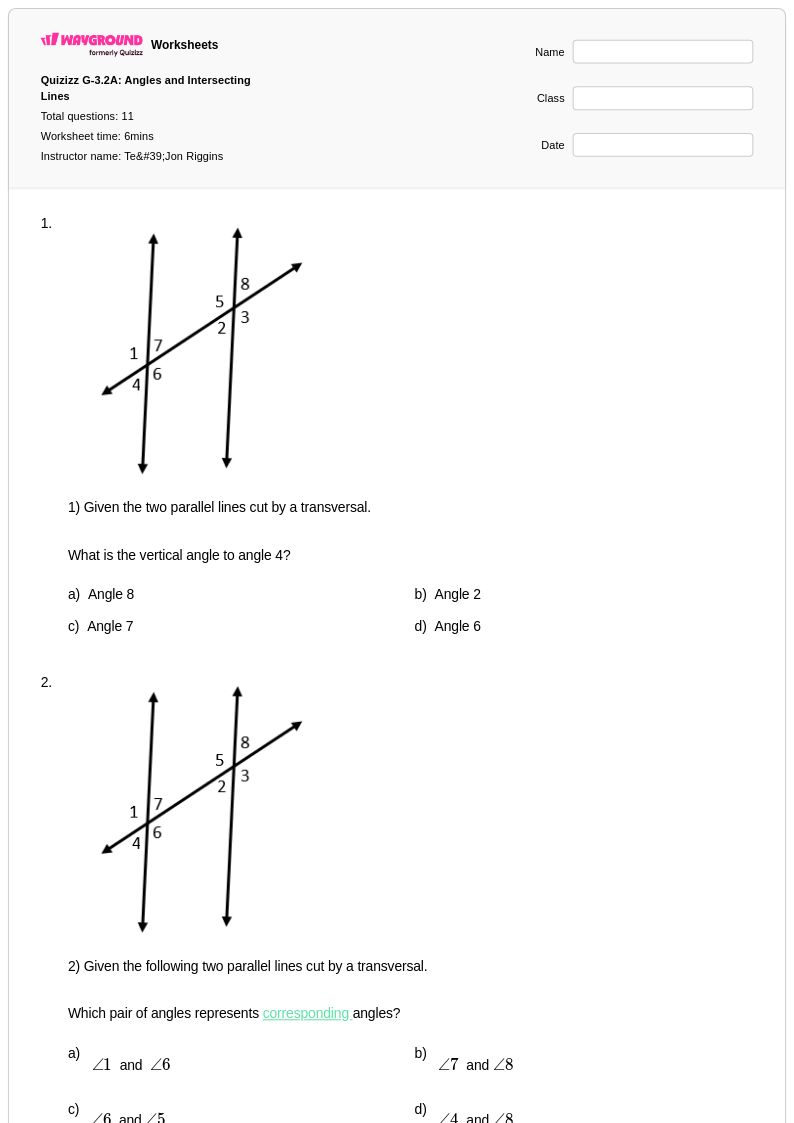
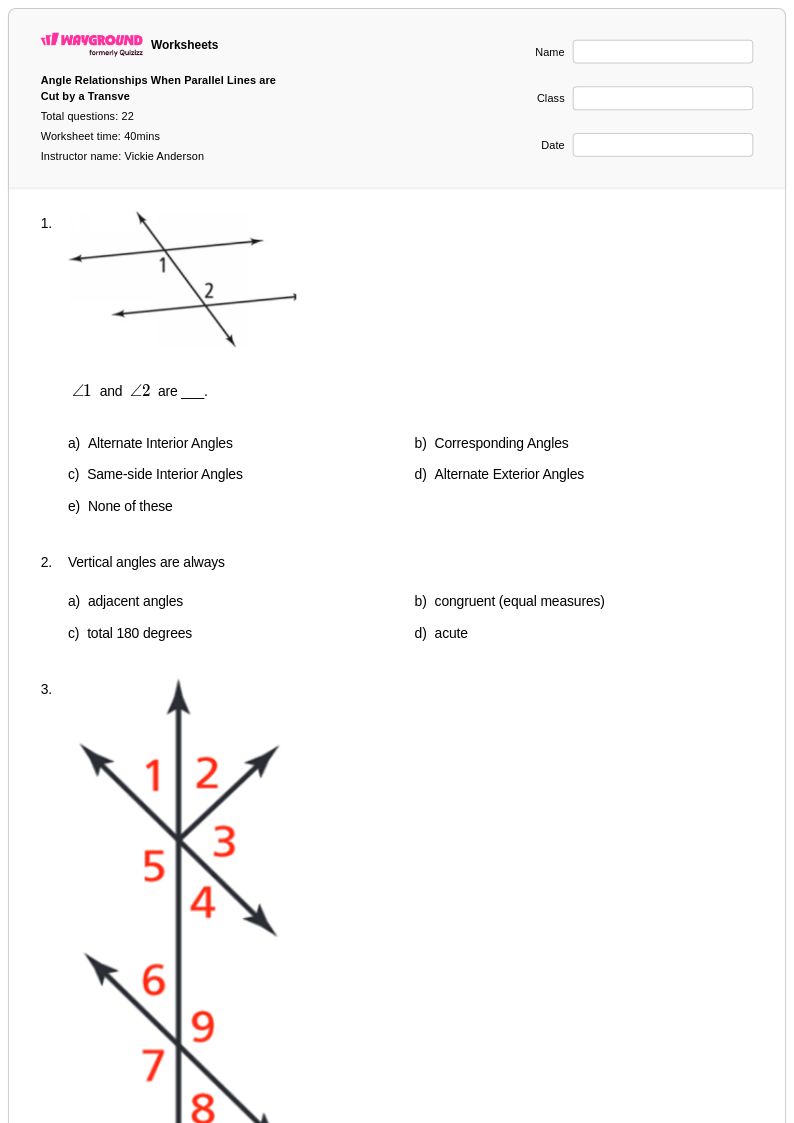
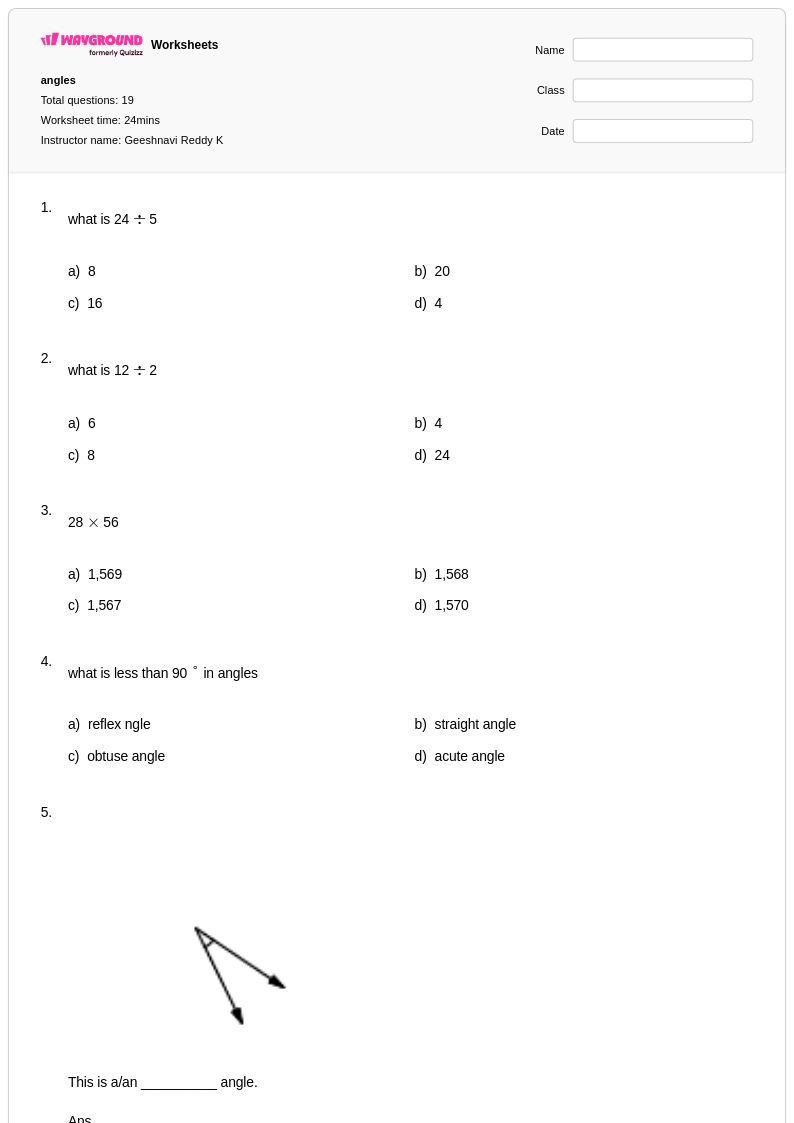
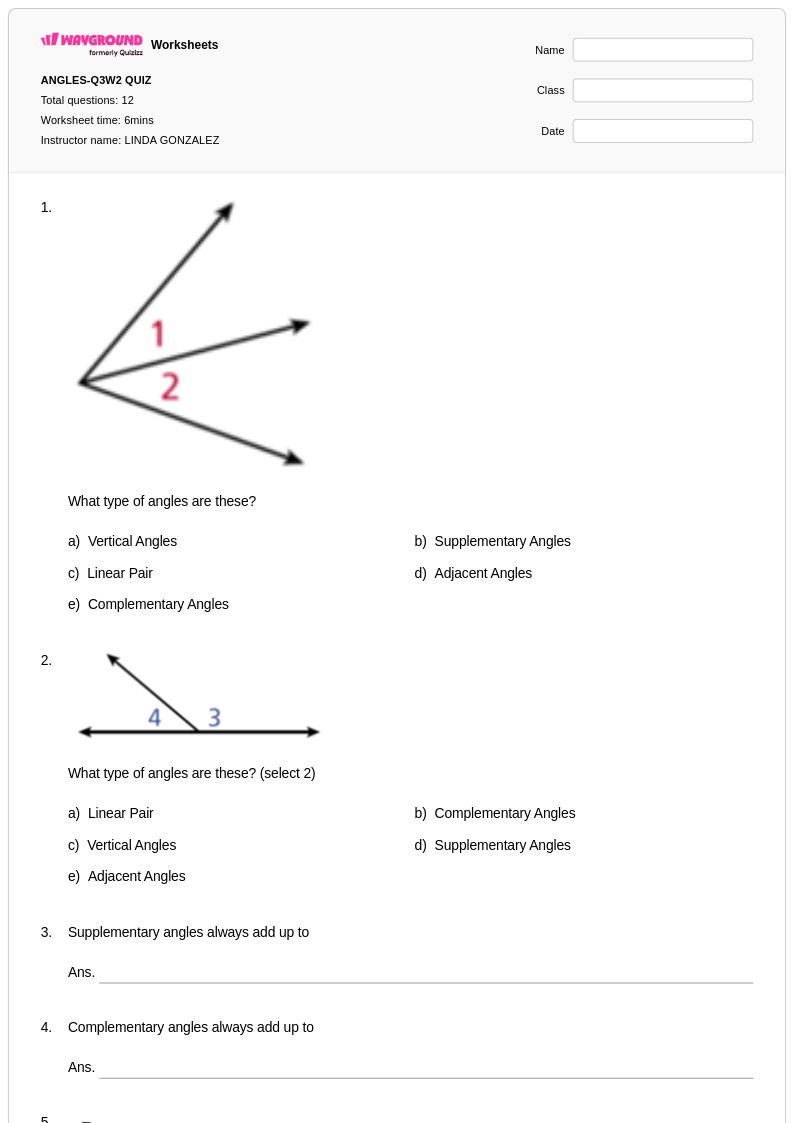
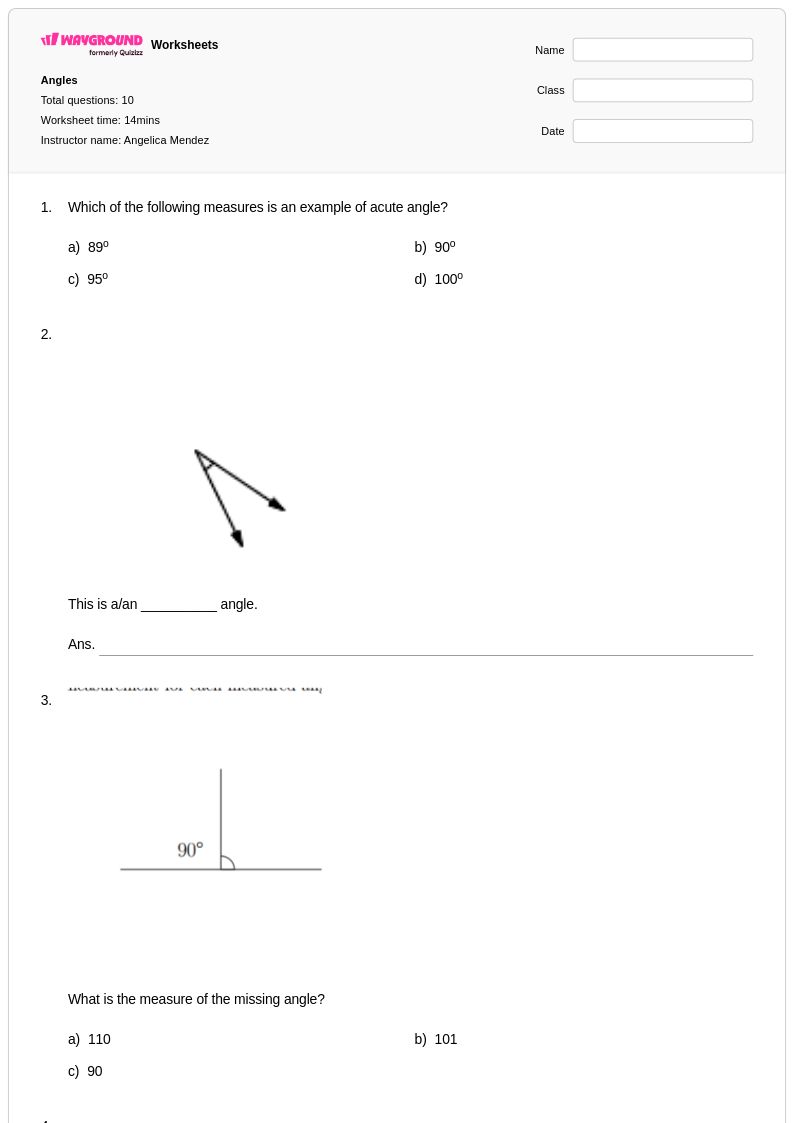
Angle operations worksheets available through Wayground (formerly Quizizz) provide comprehensive practice with essential geometric calculations involving angle measurements, relationships, and manipulations. These expertly designed resources strengthen students' understanding of angle addition and subtraction, complementary and supplementary angle pairs, vertical angles, and the properties of angles formed by intersecting lines and transversals. The collection includes varied practice problems that progress from basic angle identification to complex multi-step operations, ensuring students develop both computational fluency and conceptual understanding of angular relationships. Each worksheet comes with a detailed answer key, and the free printables are available in convenient PDF format for immediate classroom implementation or homework assignments.
Wayground (formerly Quizizz) empowers mathematics teachers with access to millions of teacher-created angle operations resources that can be easily searched and filtered to match specific instructional needs and standards alignment requirements. The platform's robust differentiation tools allow educators to customize worksheets for various skill levels, making it simple to provide targeted remediation for struggling students or enrichment opportunities for advanced learners. Teachers can seamlessly integrate these materials into their lesson planning, utilizing both printable PDF versions for traditional paper-and-pencil practice and digital formats for interactive learning experiences. The extensive collection supports systematic skill development through carefully scaffolded problems, enabling teachers to address diverse learning needs while maintaining focus on the fundamental geometric principles that govern angle operations and relationships.
FAQs
How do I teach angle operations and relationships?
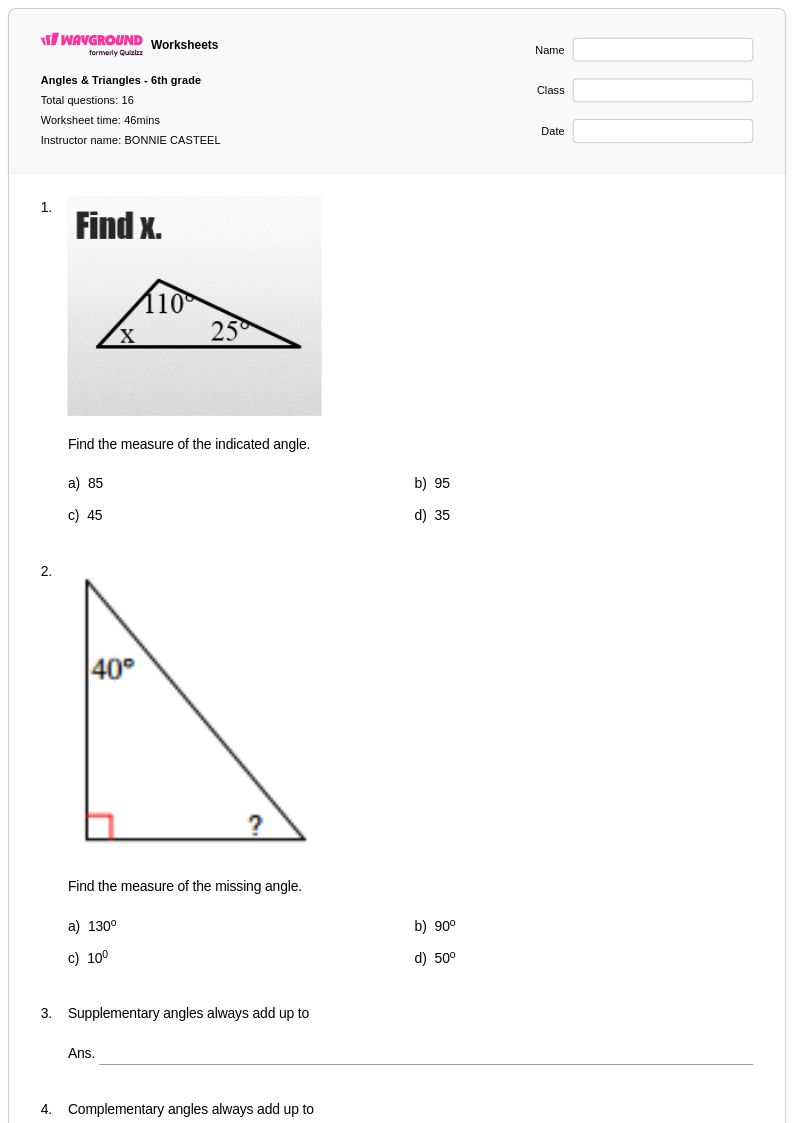
Begin with visual models that show angle addition and subtraction as combining or separating adjacent regions. Then connect equations to complementary, supplementary, and vertical angle relationships before introducing multi-step problems involving intersecting lines and transversals.
What exercises help students practice angle operations?
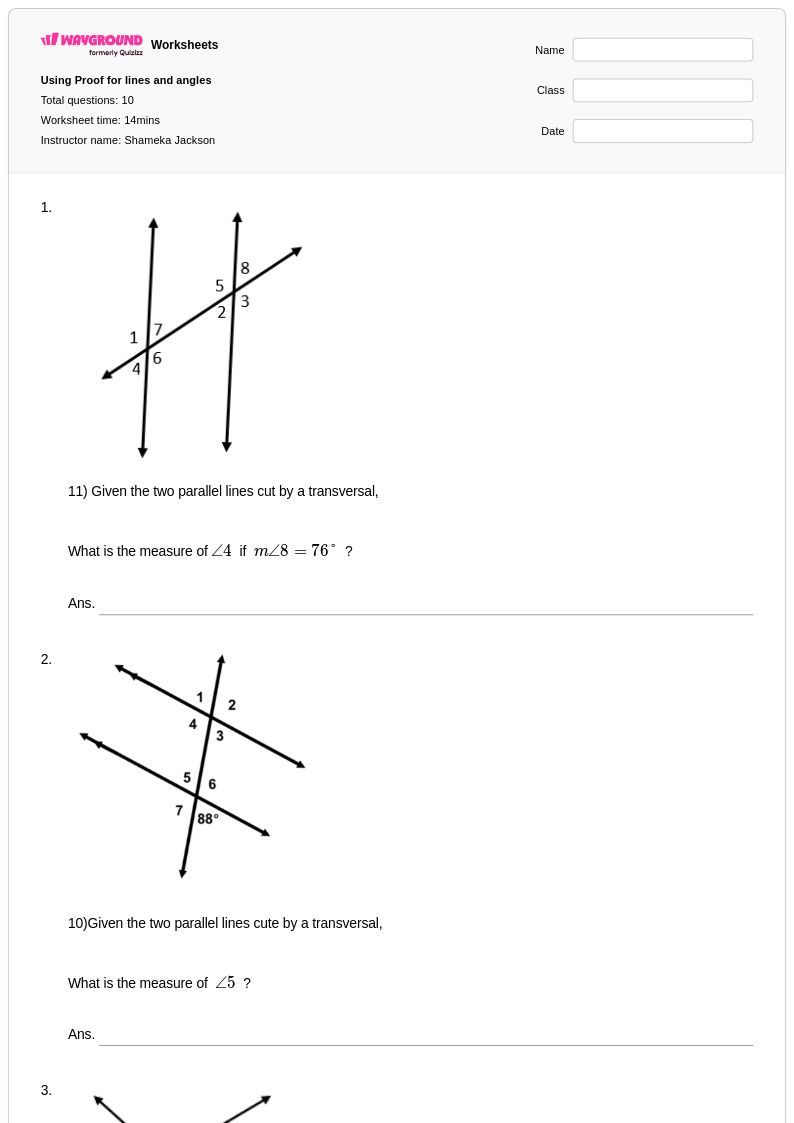
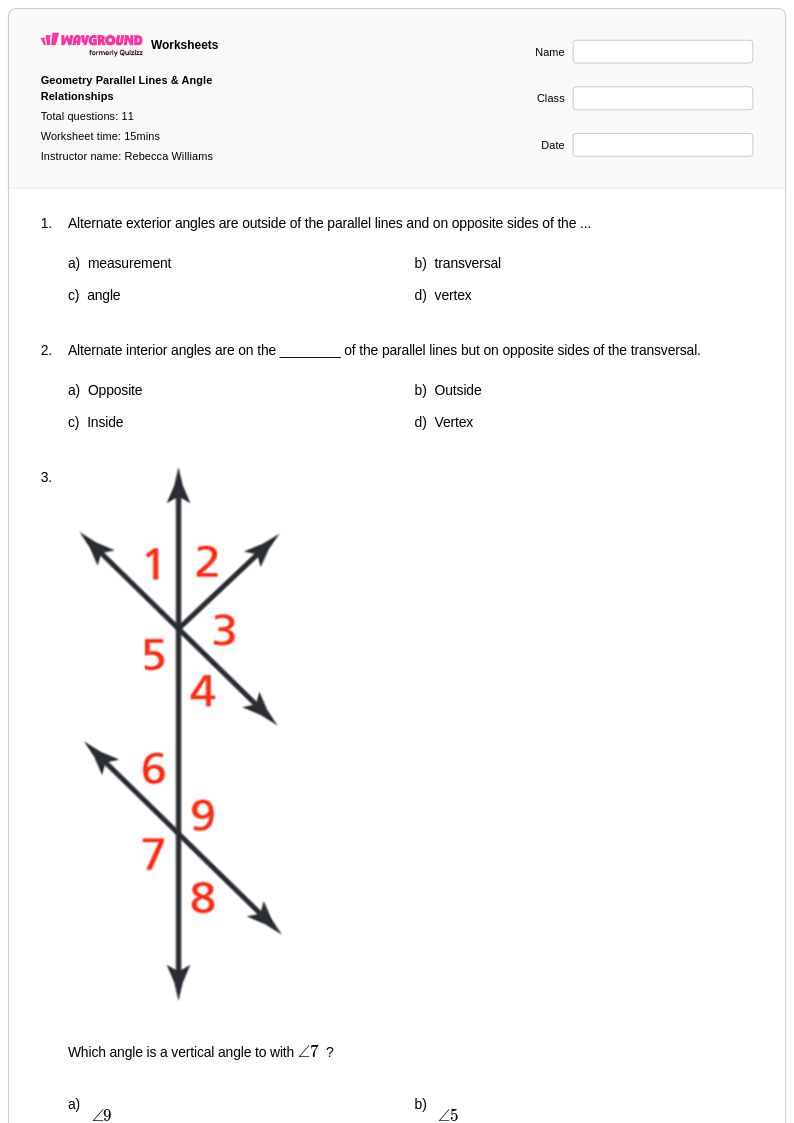
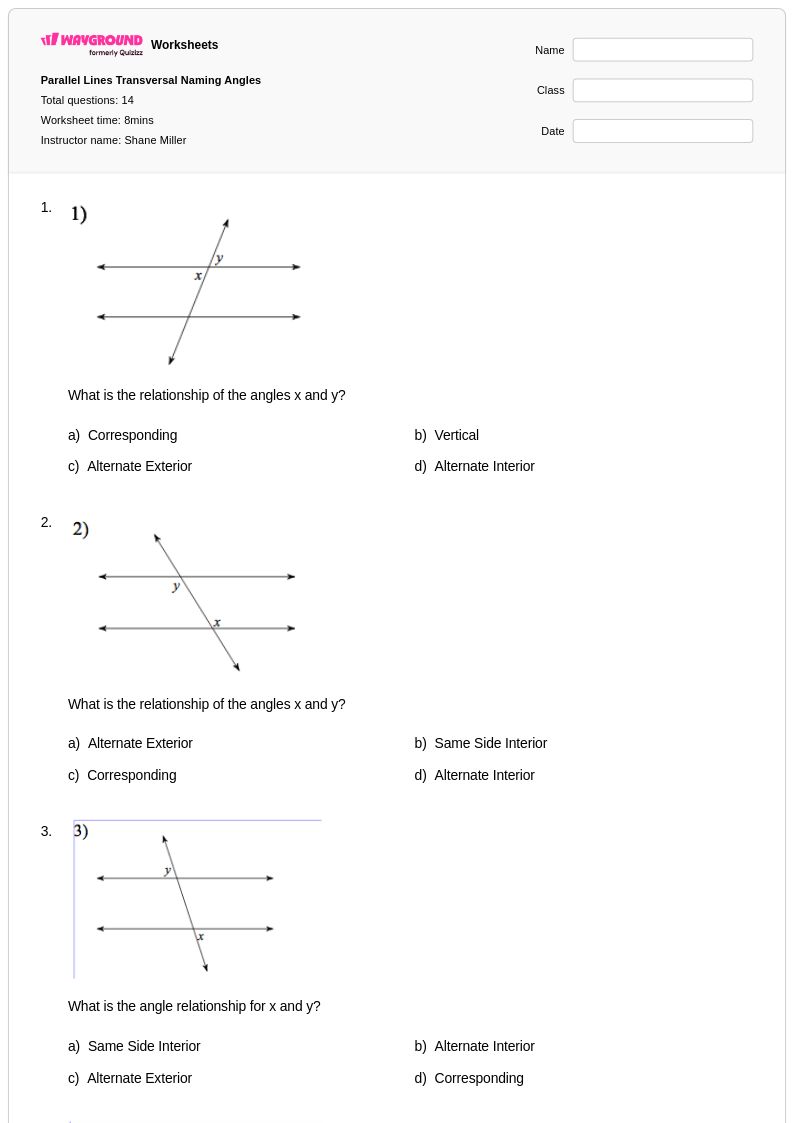
Useful exercises include finding missing addends in adjacent angles, solving complementary and supplementary pairs, writing equations for vertical angles, and calculating unknowns created by intersecting lines or transversals. A strong sequence progresses from numerical measures to algebraic expressions and multi-step diagrams.
What mistakes do students commonly make with angle operations?
Students often assume angles are complementary or supplementary without evidence, confuse adjacent angles with vertical angles, or add measures that do not form the stated whole. They may also solve an algebraic equation correctly but report the variable rather than the requested angle measure, so answers should always be checked against the diagram and relationship.
How can I use an angle operations worksheet in class?
Wayground angle operations worksheets are available as printable PDFs and digital formats, accommodating different teaching environments and student preferences. Teachers can host a worksheet as a digital quiz on Wayground or print and assign it on paper; physical submissions can be scanned or captured for grading with the Wayground for Teachers app. Every worksheet includes a complete answer key for checking both equations and angle measures.
How do angle operations fit into the Common Core math progression?
Common Core introduces angle measure as additive, which supports finding unknown angles by composing and decomposing larger angles. Students then extend this reasoning to complementary, supplementary, and vertical angles and use algebra to solve geometric problems involving lines, triangles, and transversals.
How can I differentiate angle-operations practice?
Scaffold practice with color-coded angle pairs, one-step numerical problems, and diagrams that state the relevant relationship; increase complexity with algebraic expressions, transversals, and multi-step unknowns. Wayground can provide selected students with extended time, Read Aloud, reduced answer choices, or reading mode, while alternate worksheet versions can use larger text, wider spacing, a dyslexia-friendly font, or translation.