
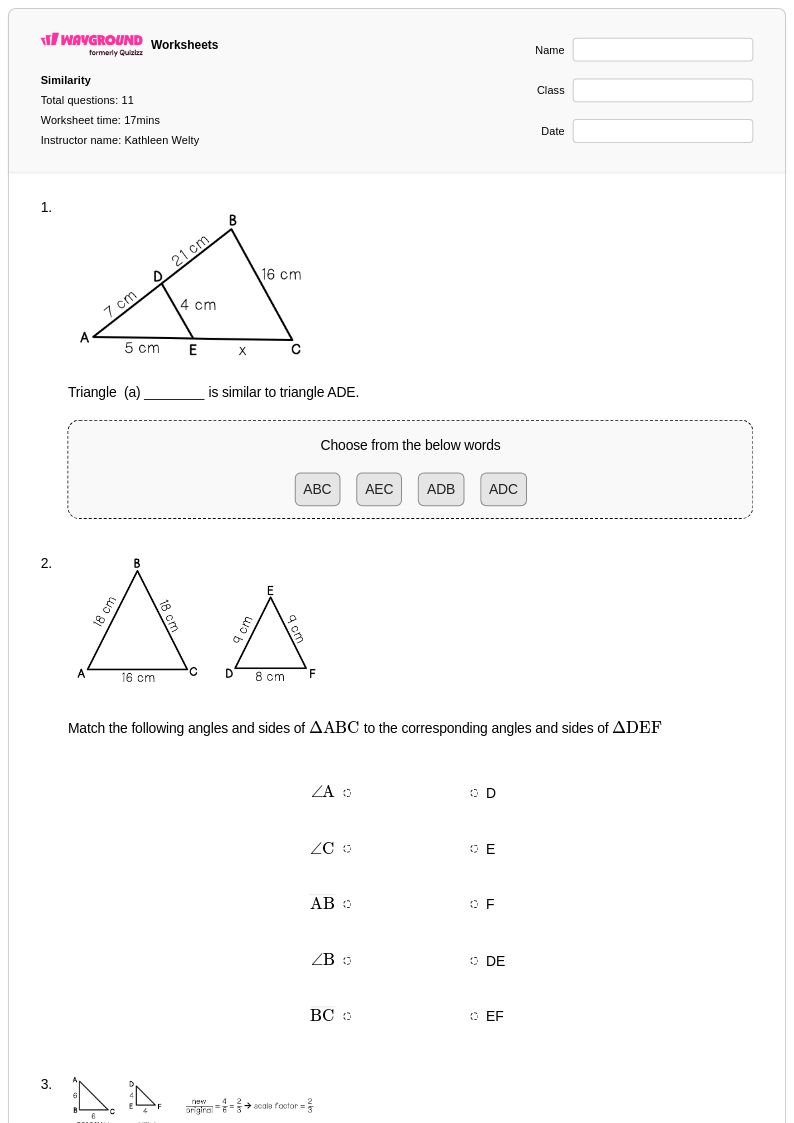
11 Q
7th
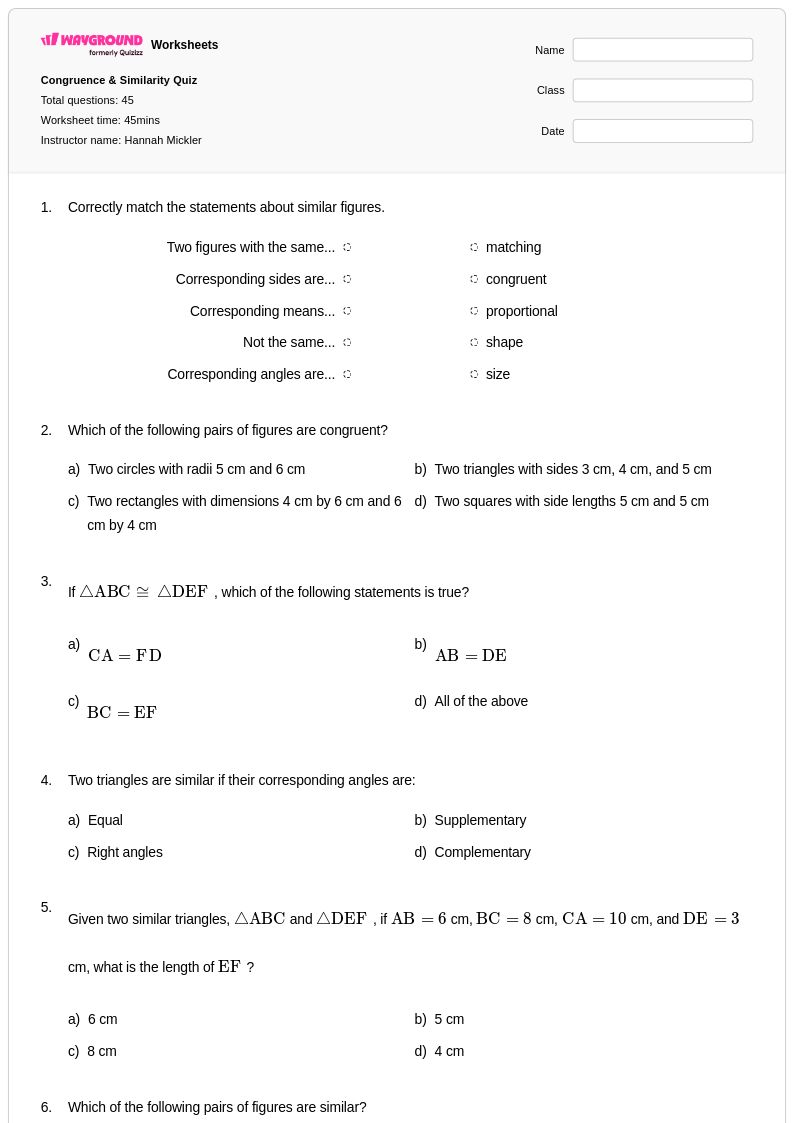
45 Q
7th
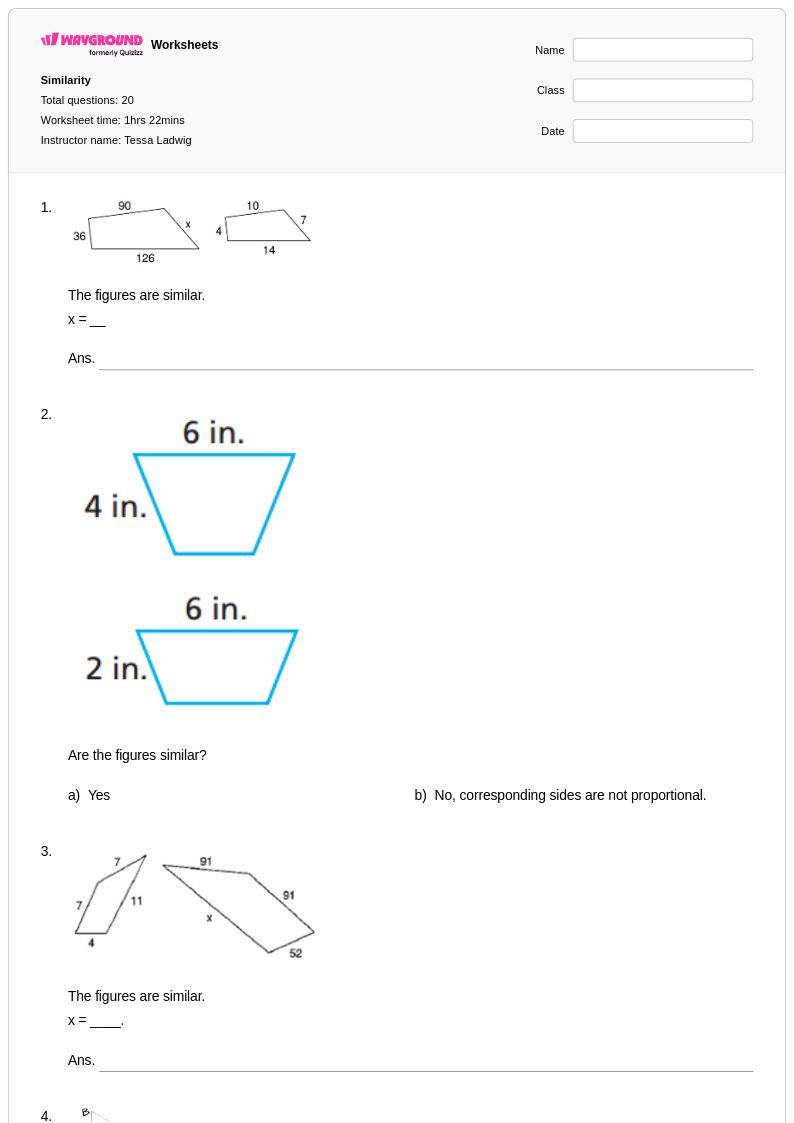
20 Q
9th - 12th
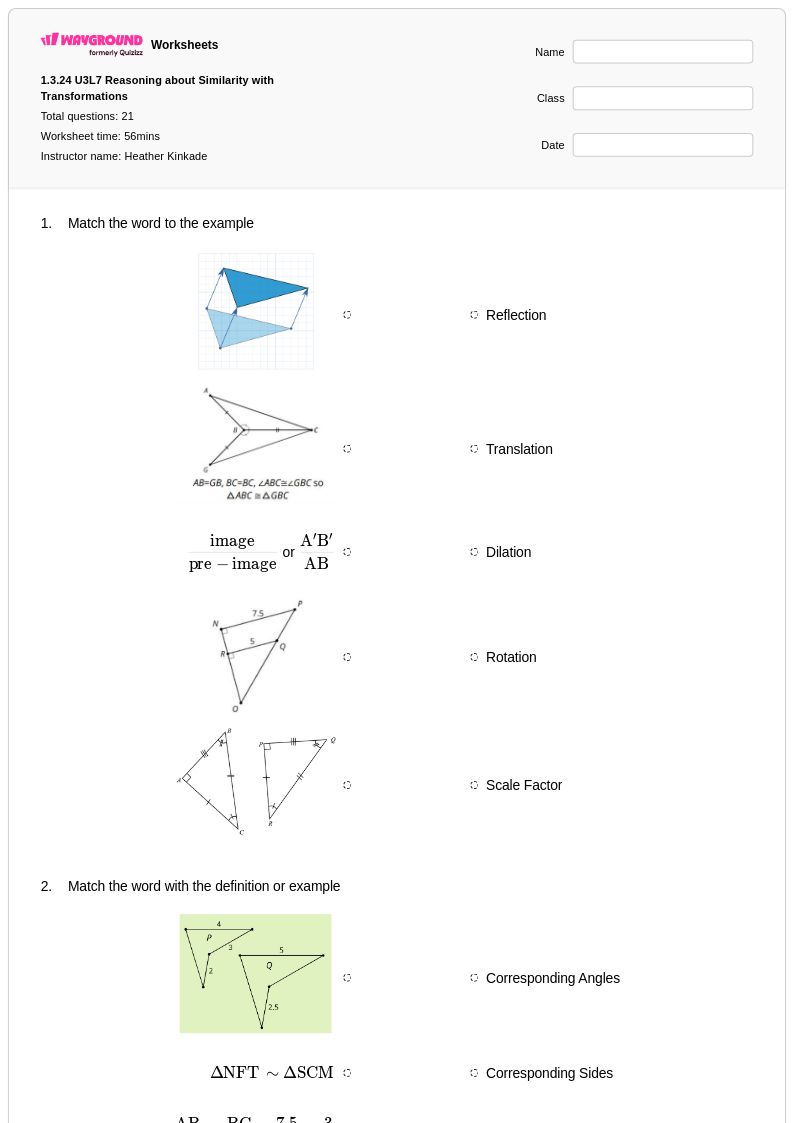
21 Q
10th
12 Q
7th
10 Q
9th - Uni
10 Q
12th
11 Q
9th - 12th
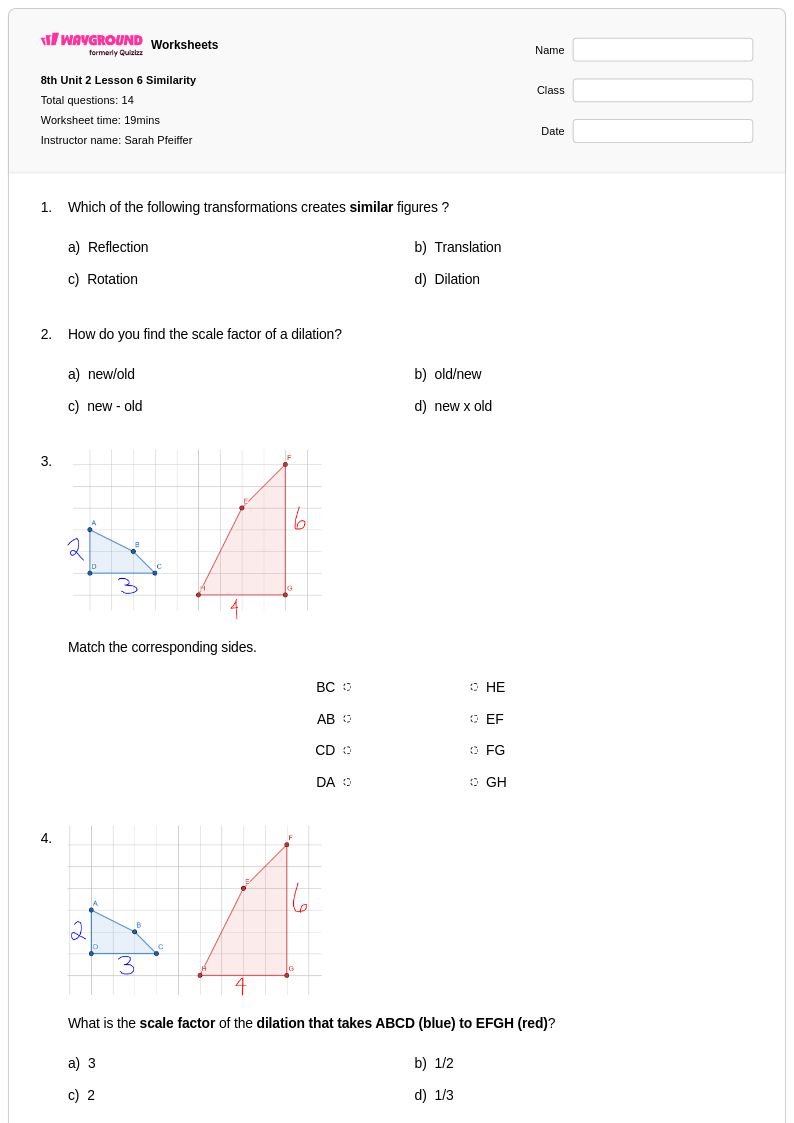
14 Q
8th
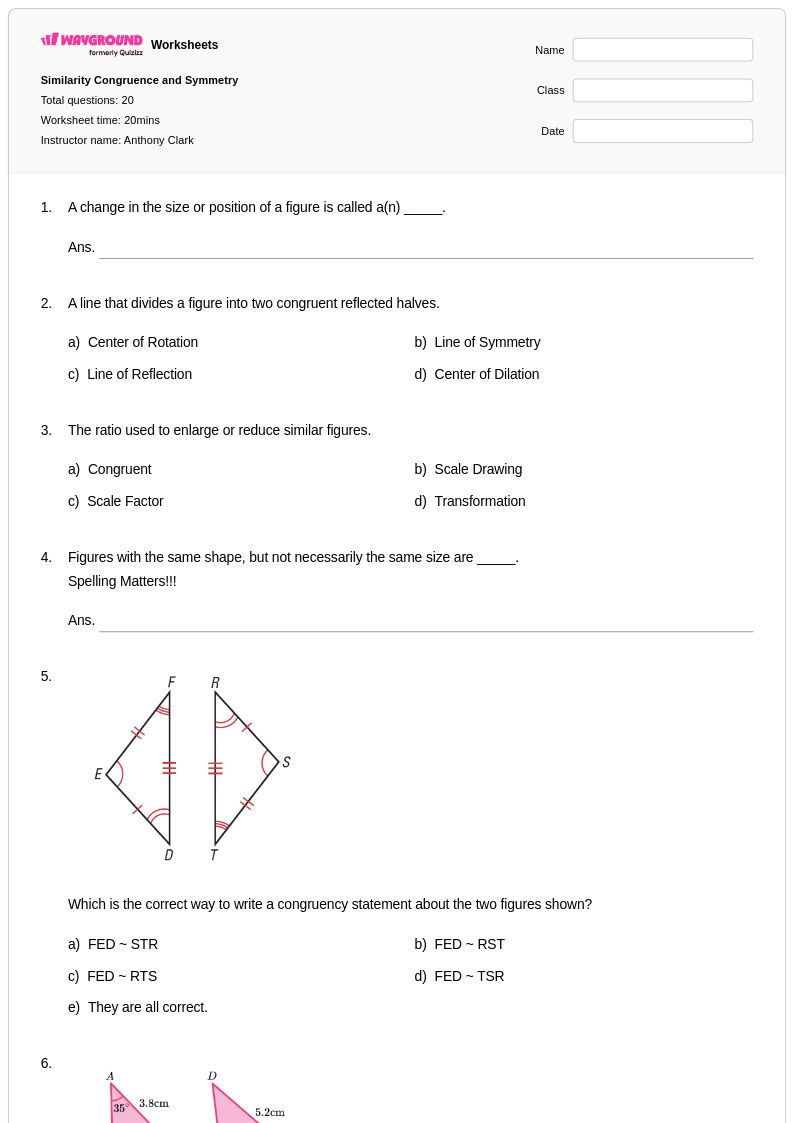
20 Q
8th - Uni
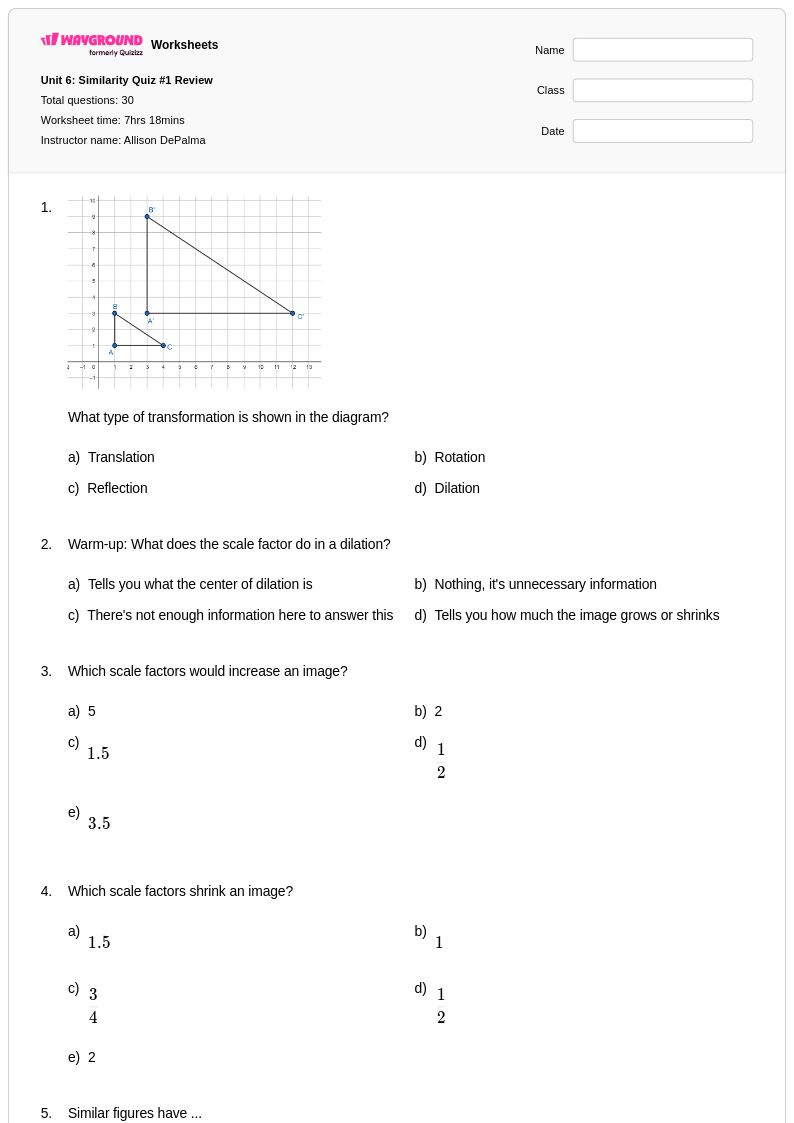
30 Q
8th
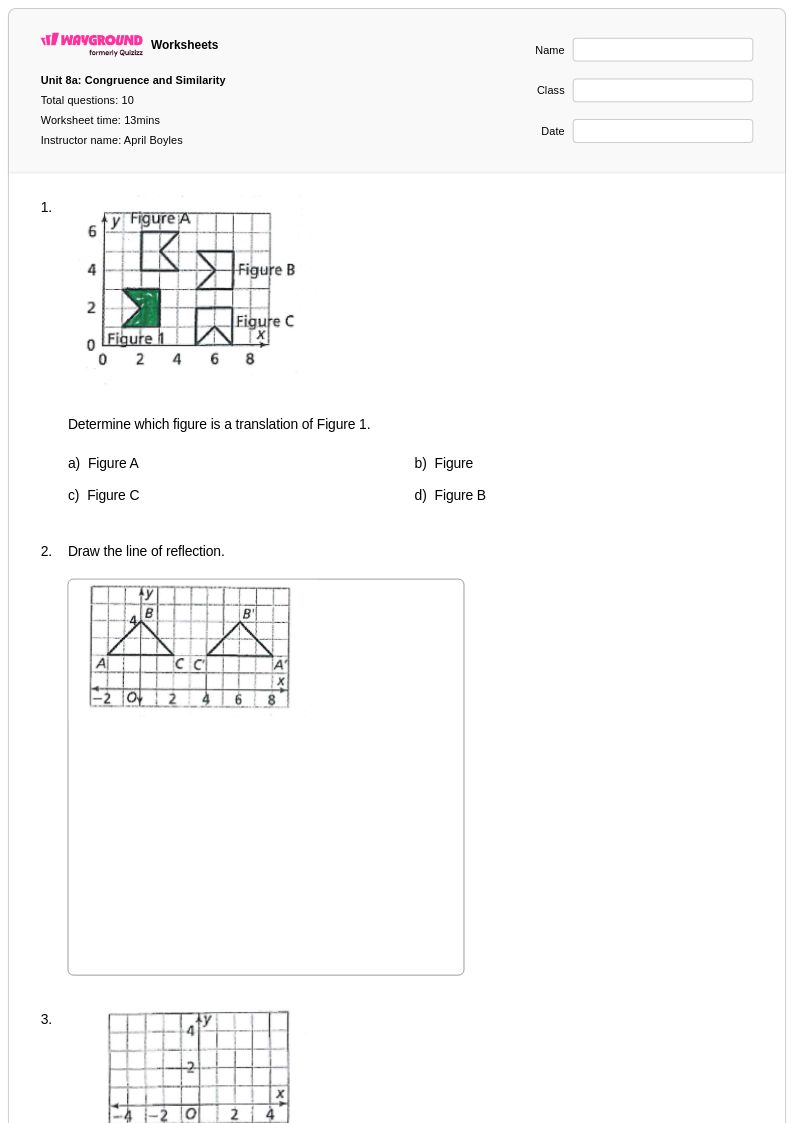
10 Q
8th
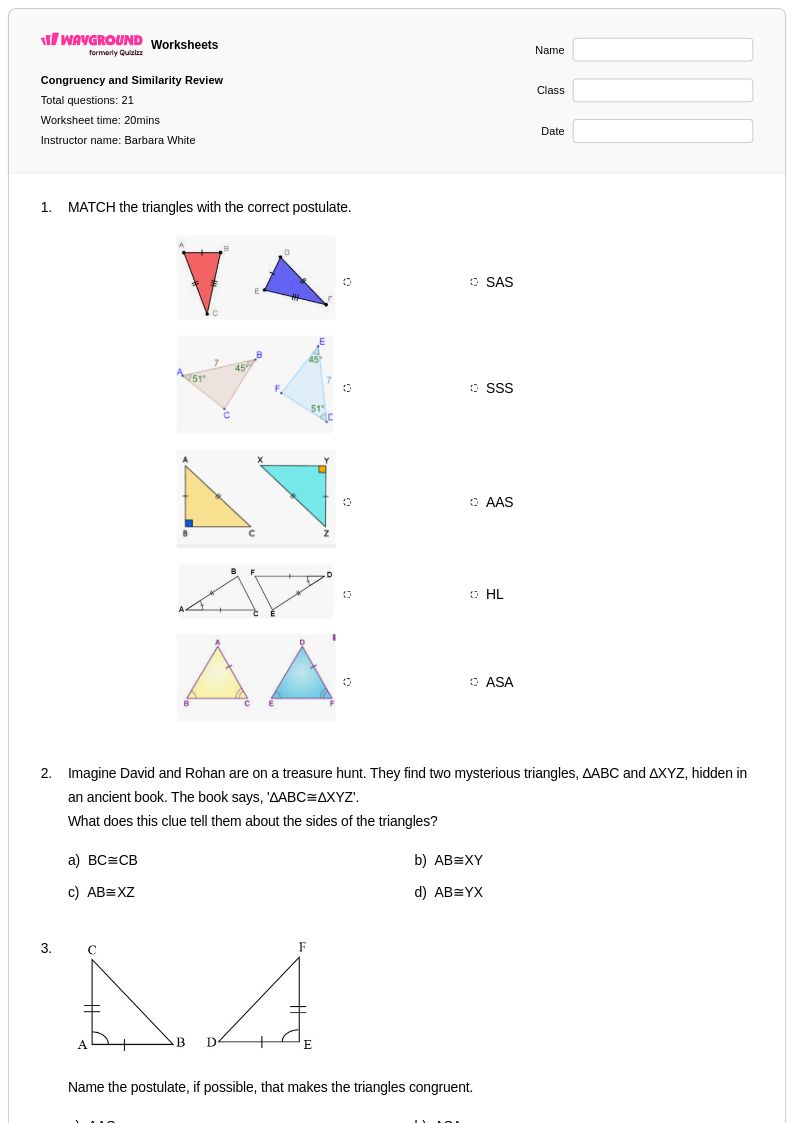
21 Q
10th
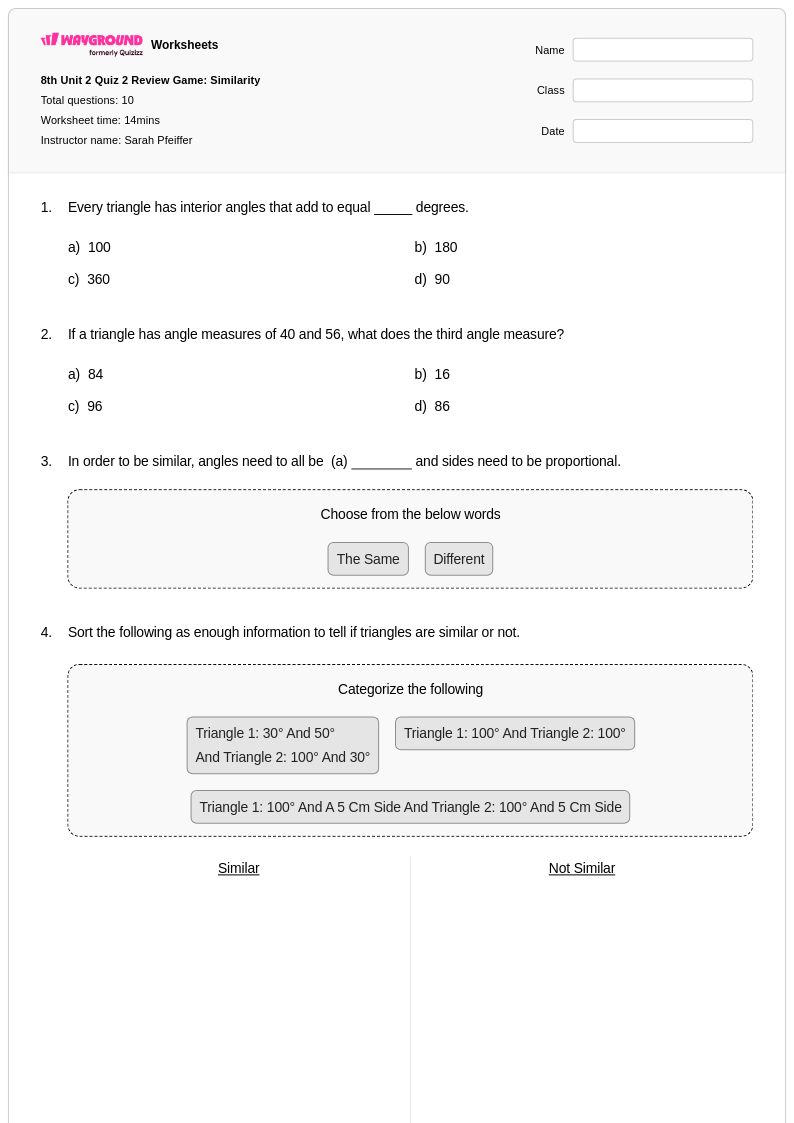
10 Q
8th
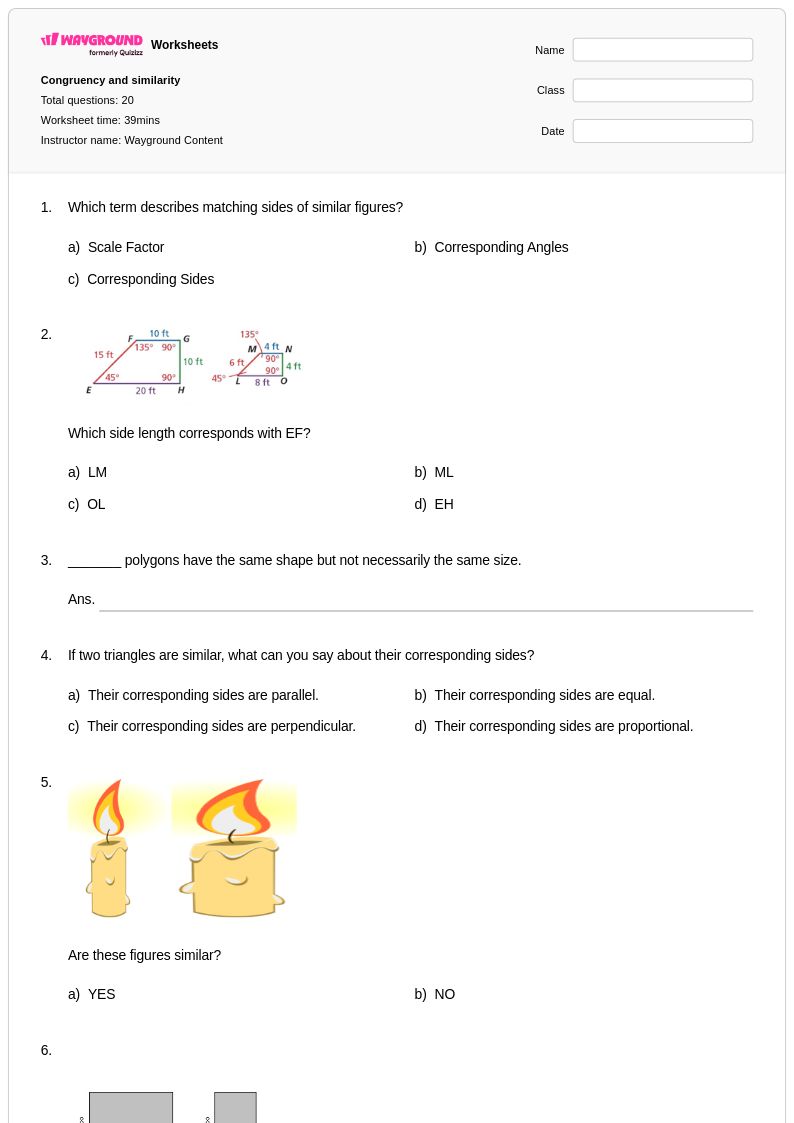
20 Q
8th - 12th
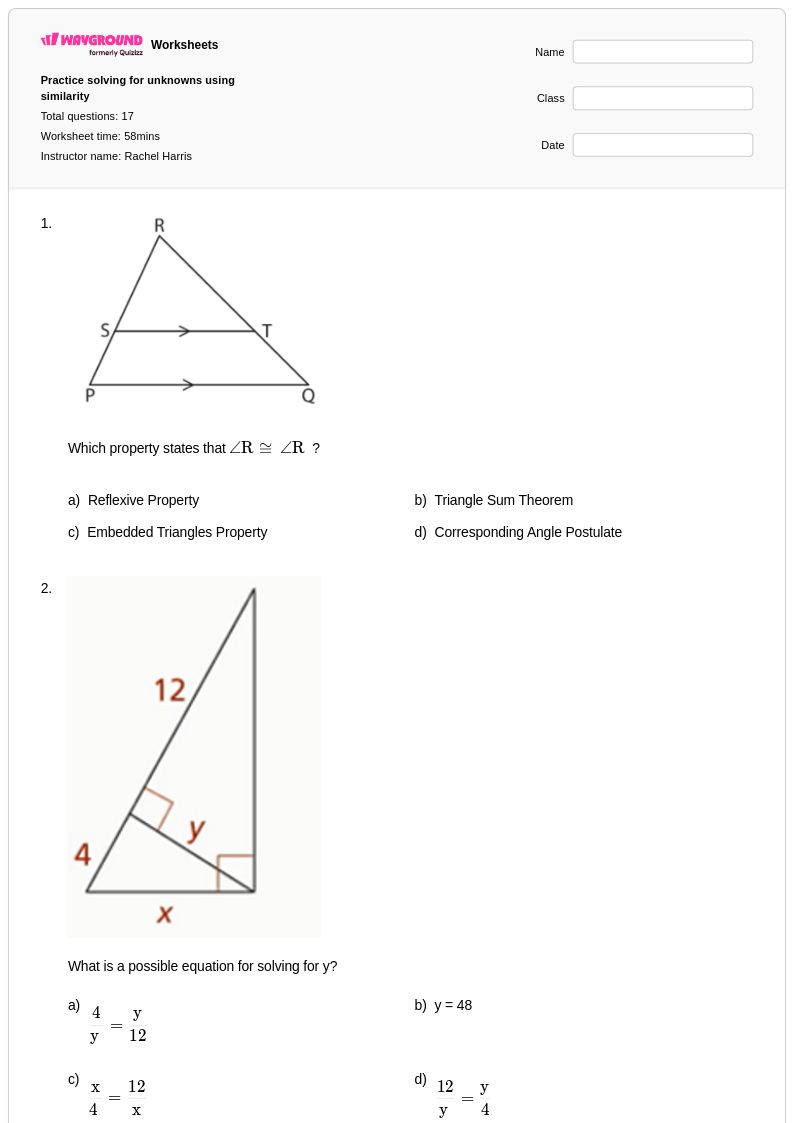
17 Q
10th
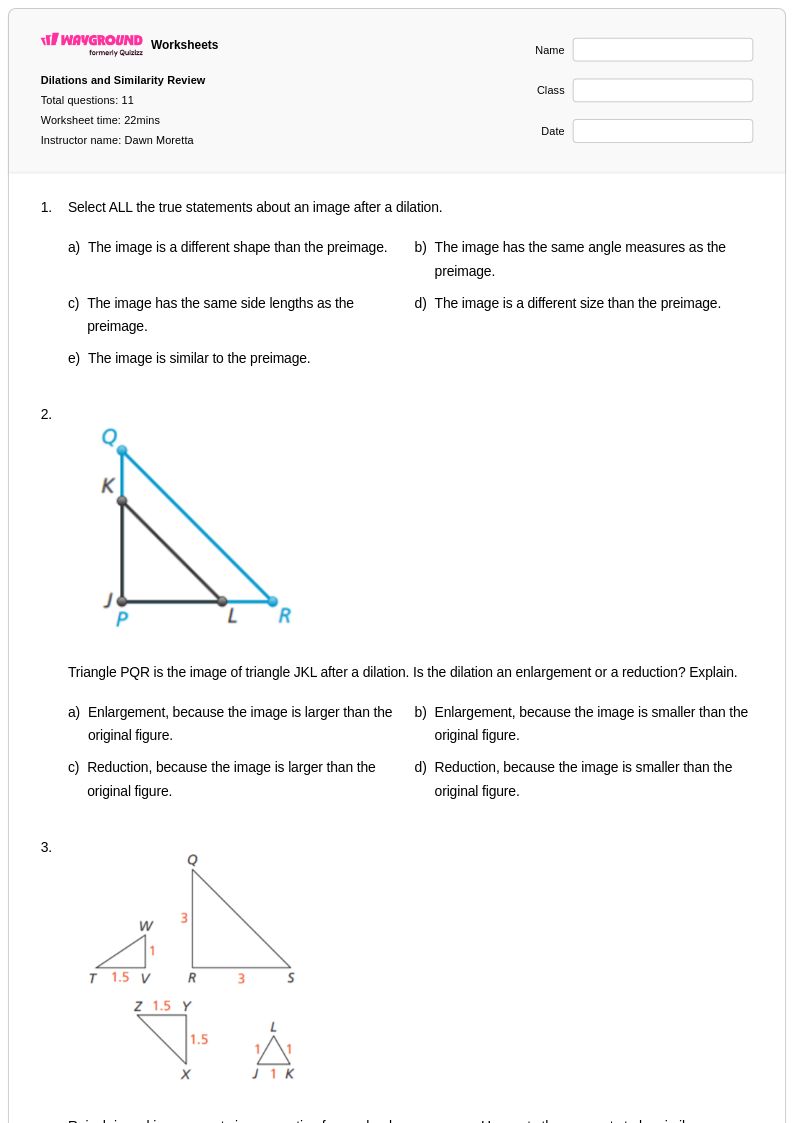
11 Q
8th
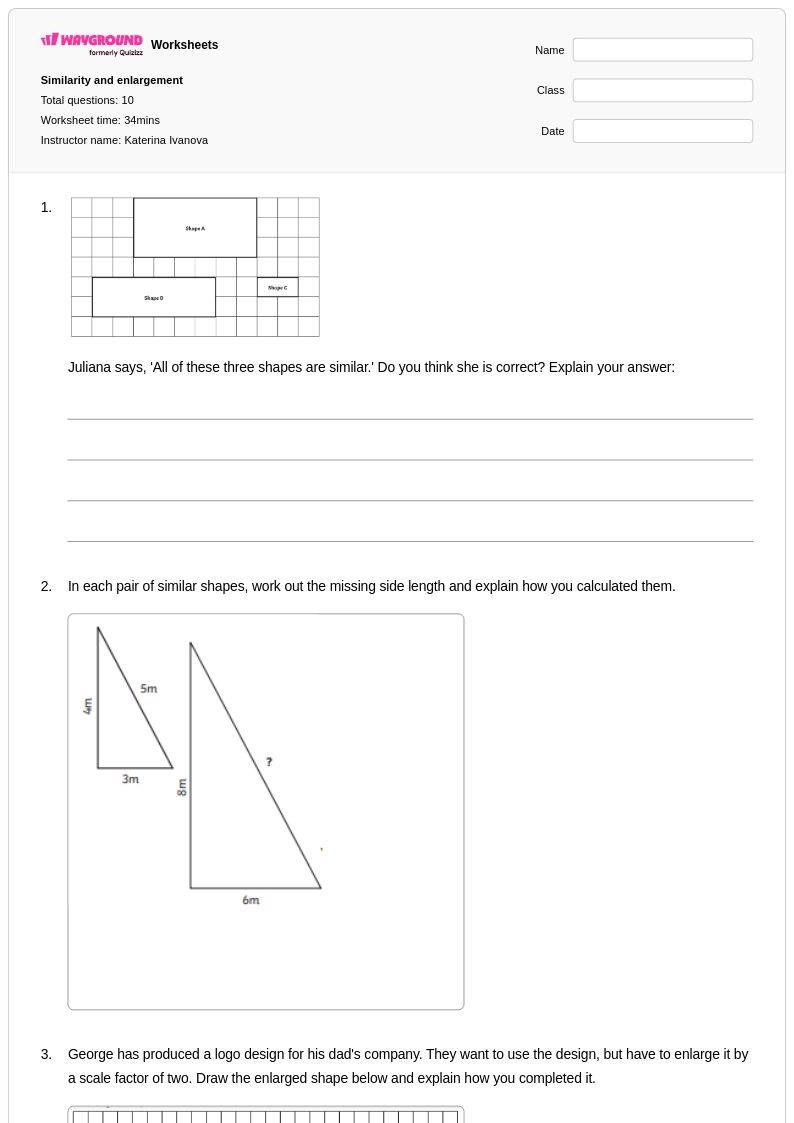
10 Q
9th
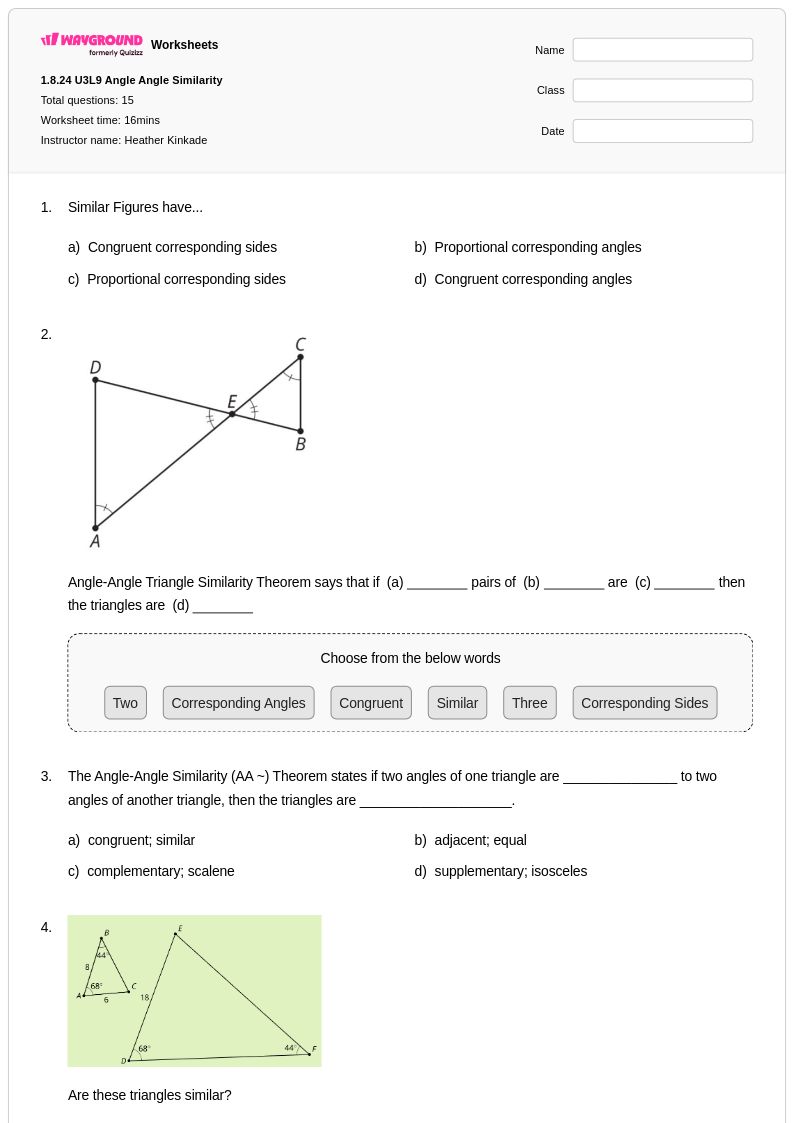
15 Q
10th
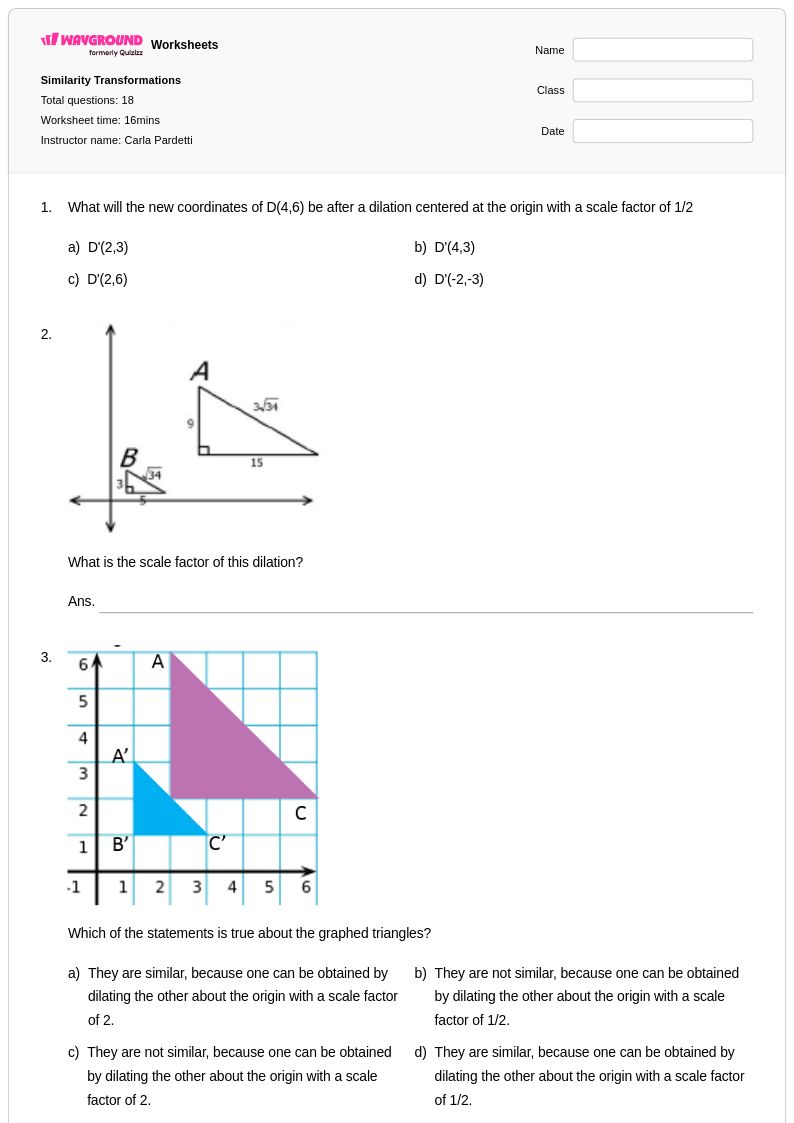
18 Q
10th - 11th

15 Q
10th - Uni
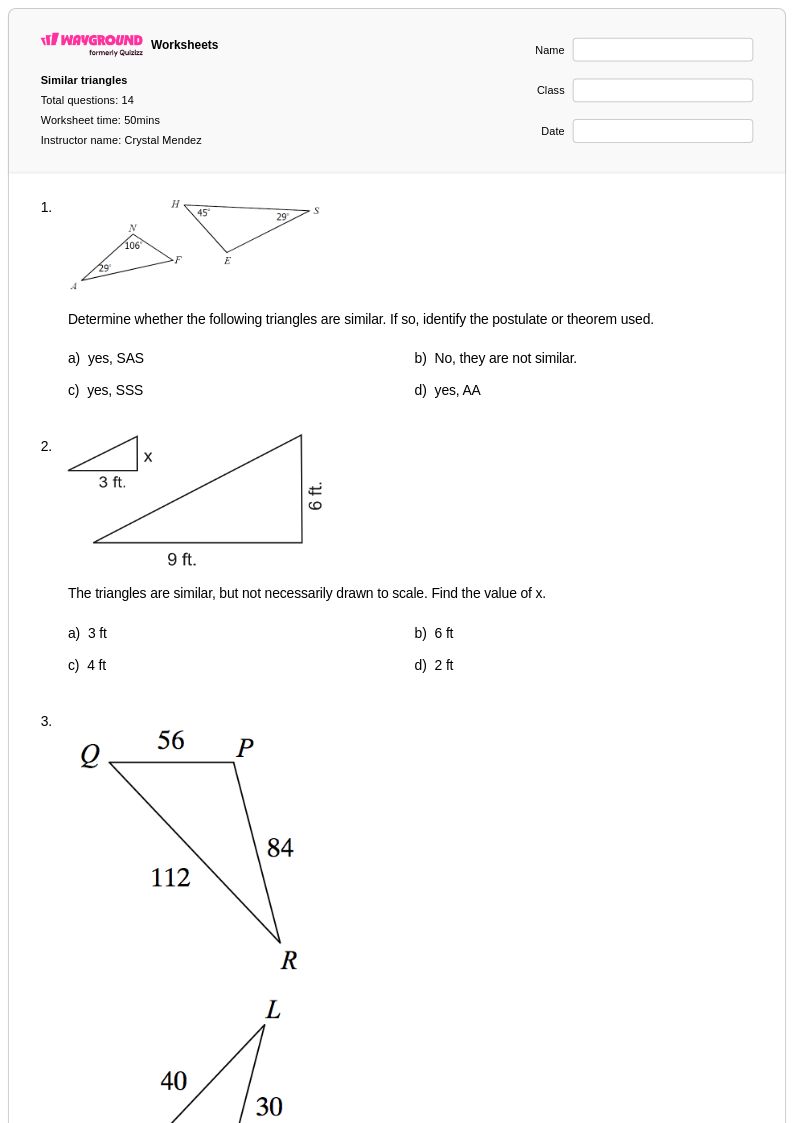
14 Q
10th
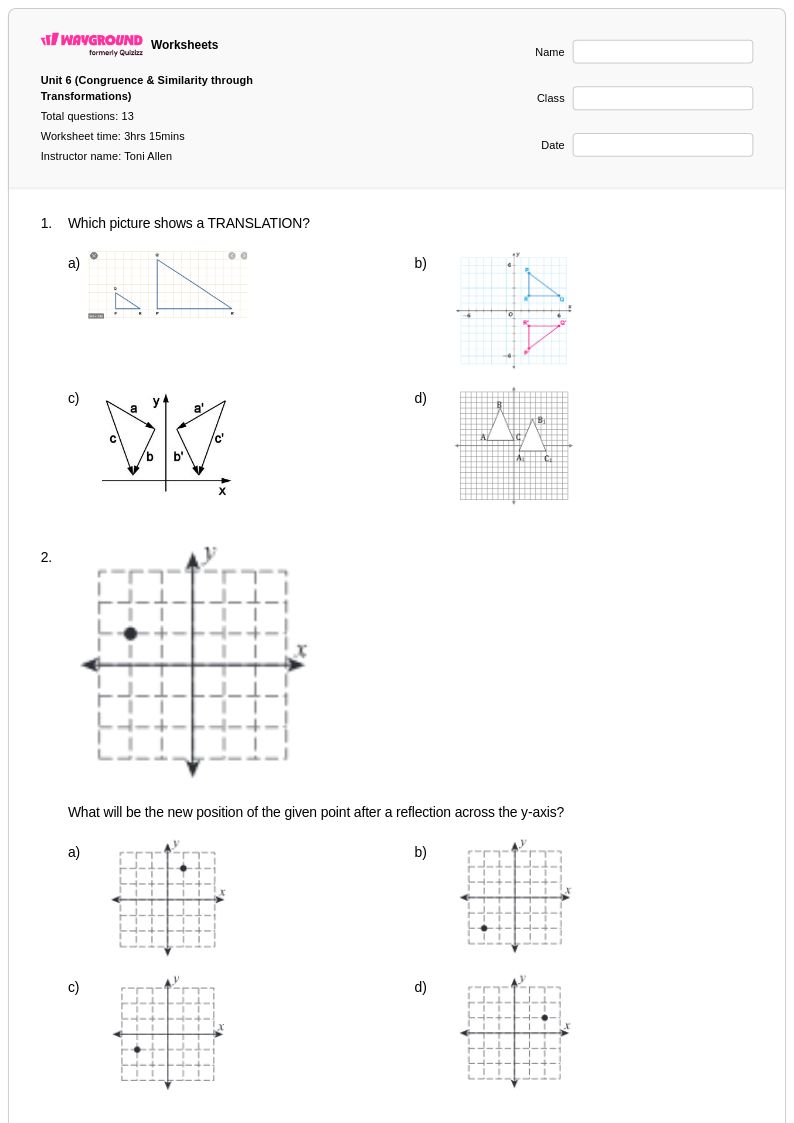
13 Q
8th
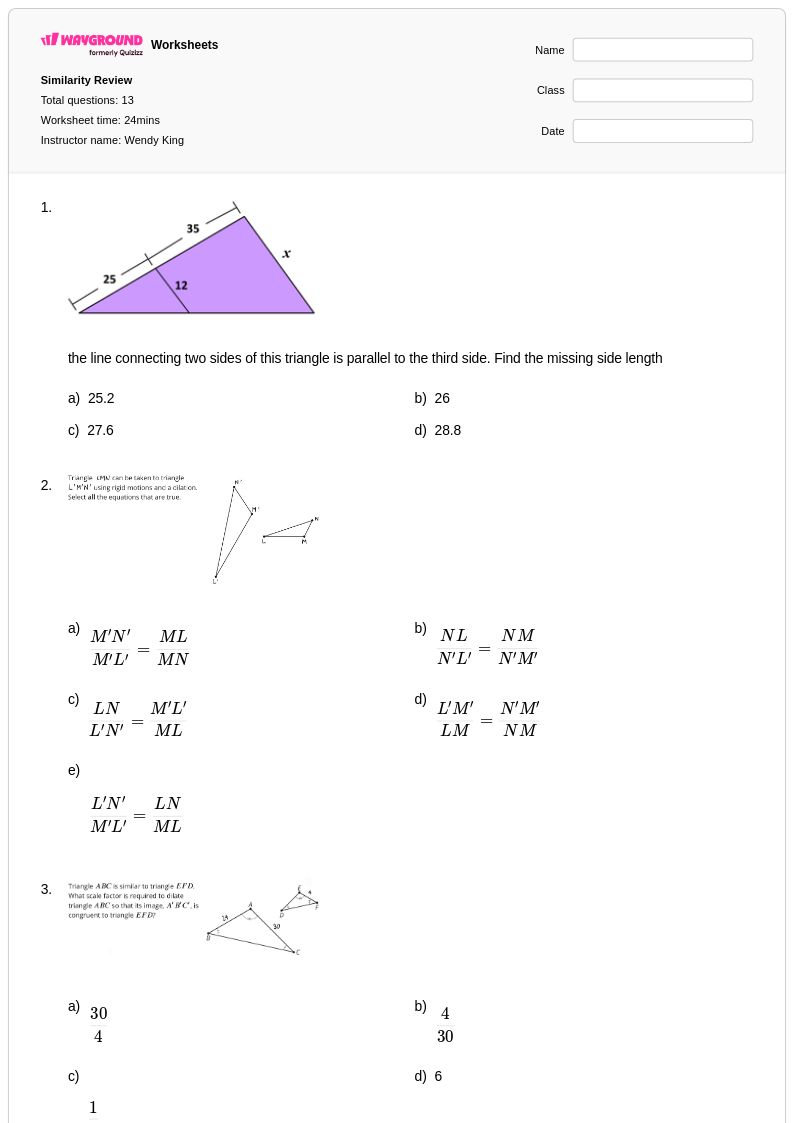
13 Q
9th - 12th
Explore Worksheets by Subjects
Explore printable Similarity worksheets
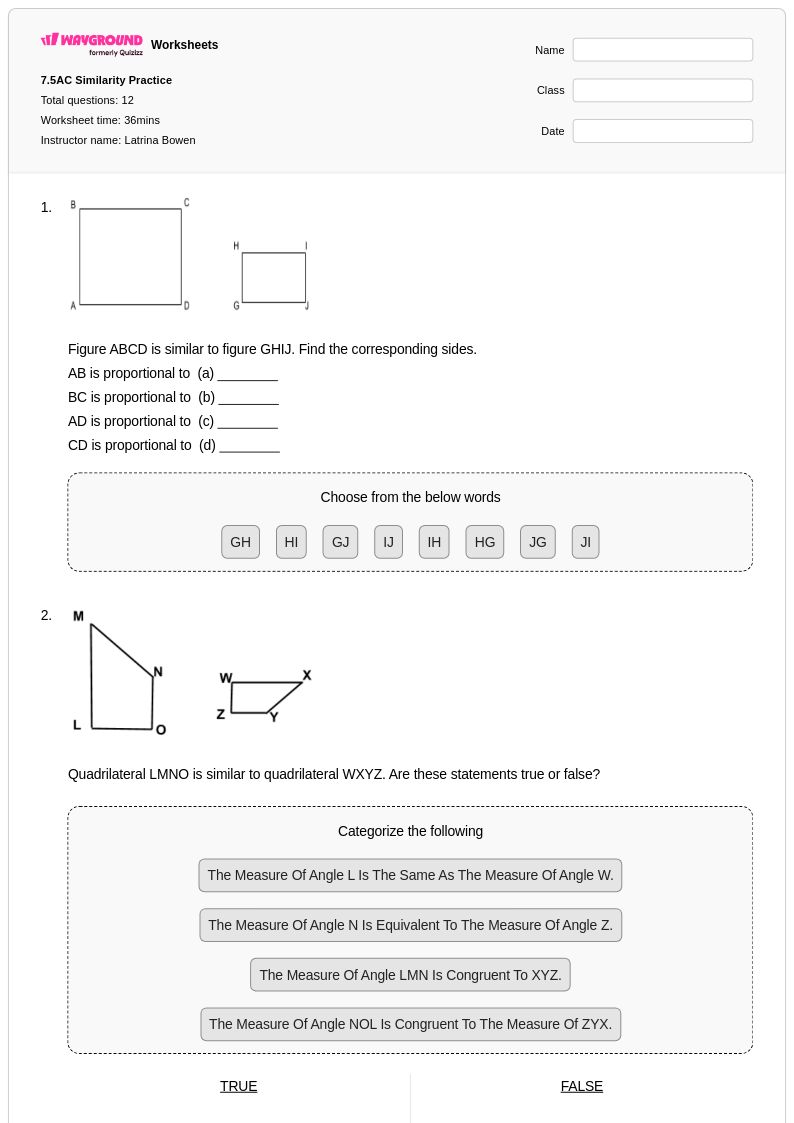
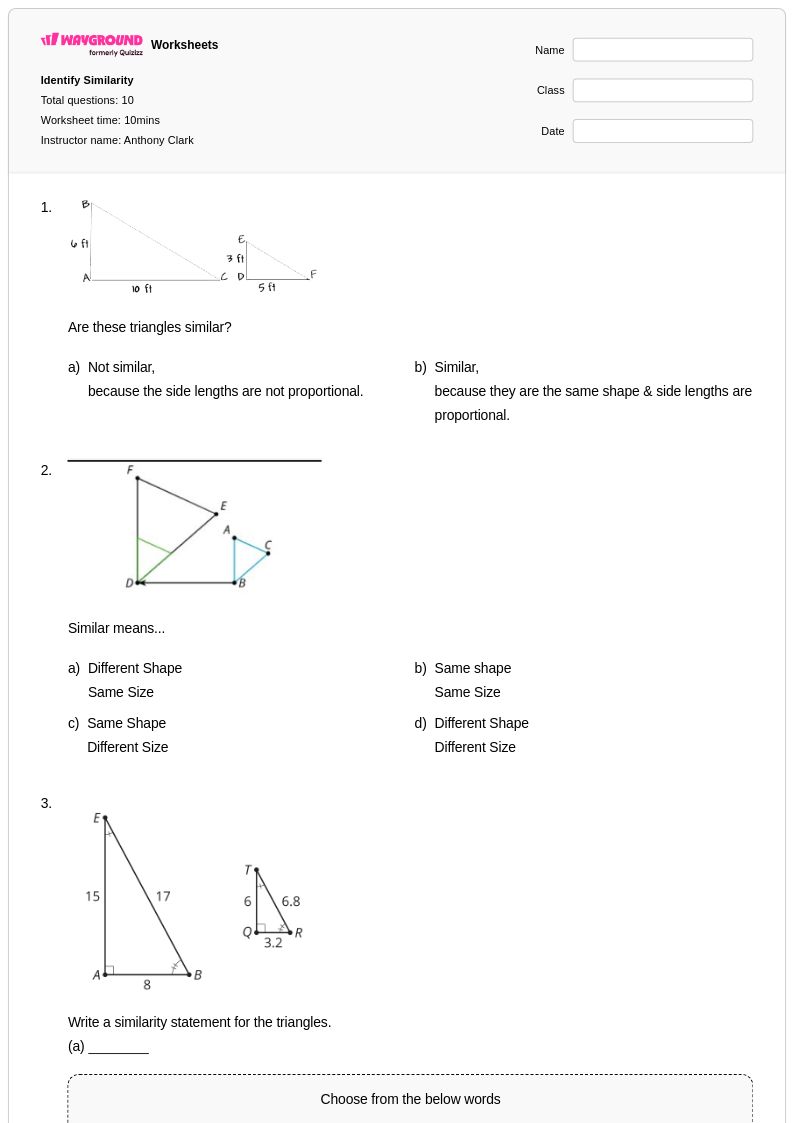
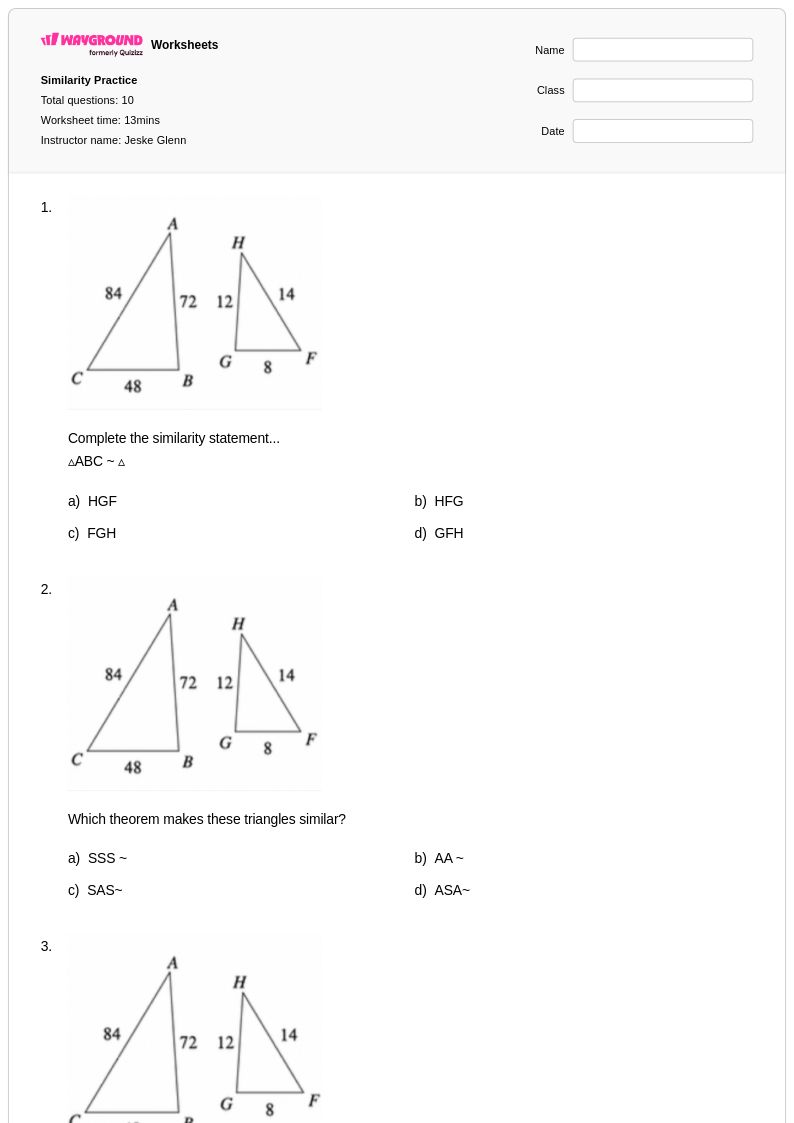
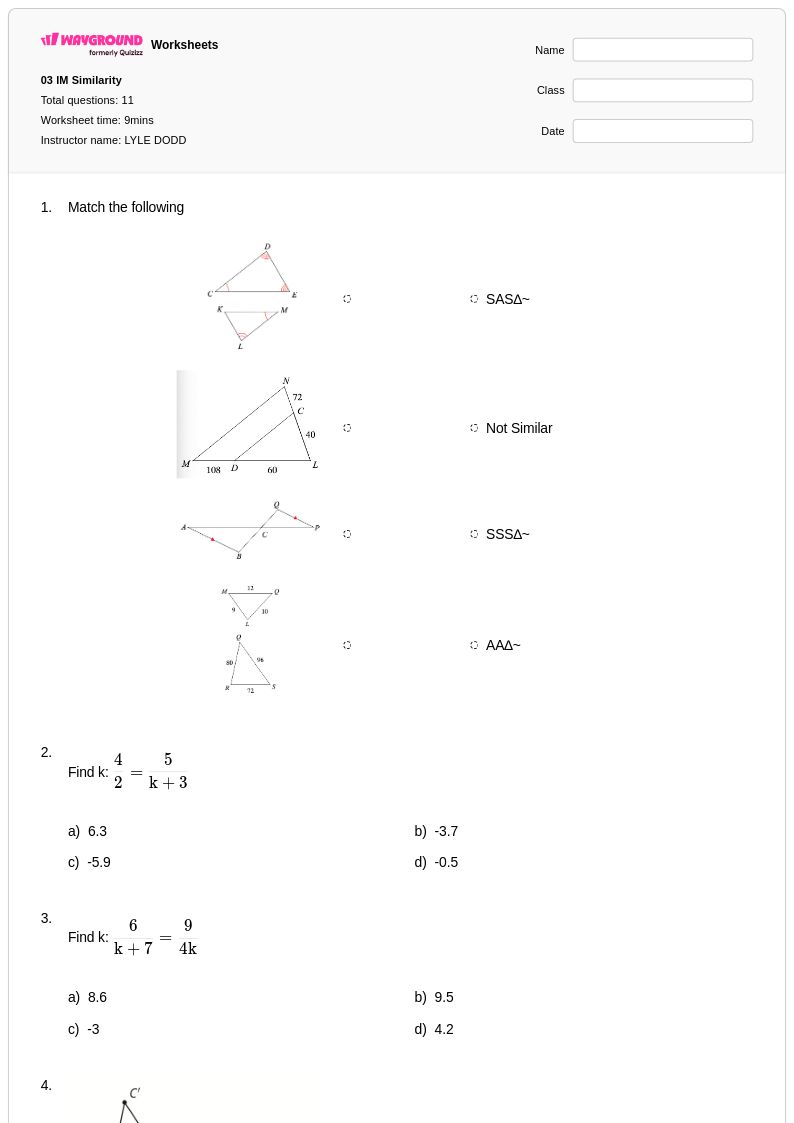
Similarity worksheets available through Wayground (formerly Quizizz) provide comprehensive practice with one of geometry's most fundamental concepts, helping students master the identification and application of similar figures across various mathematical contexts. These carefully designed resources strengthen critical skills including recognizing corresponding angles and proportional sides, calculating scale factors, solving proportion equations, and applying similarity theorems such as AA, SAS, and SSS similarity criteria. Students work through systematic practice problems that progress from basic similar triangle identification to complex real-world applications involving indirect measurement and geometric proofs. Each worksheet collection includes detailed answer keys and is available as free printable pdf resources, allowing educators to seamlessly integrate similarity practice into their curriculum while providing students with immediate feedback on their understanding of proportional relationships and geometric transformations.
Wayground's extensive mathematics worksheet library supports teachers with millions of educator-created similarity resources that can be easily located through robust search and filtering capabilities, enabling quick identification of materials that align with specific learning objectives and curriculum standards. The platform's differentiation tools allow instructors to customize worksheets based on individual student needs, offering multiple difficulty levels and problem types within the same similarity concept to support both remediation and enrichment activities. Teachers can access these geometry resources in flexible formats, including downloadable pdf printables for traditional classroom use and interactive digital versions for online learning environments. This comprehensive approach to similarity instruction helps educators efficiently plan lessons, provide targeted skill practice, and assess student progress while ensuring that learners develop a deep conceptual understanding of proportional reasoning and geometric relationships that will serve as a foundation for advanced mathematical study.
FAQs
How do I teach geometric similarity?
What exercises help students practice similarity?
What are common student mistakes when learning similarity?
How does this topic fit into the geometry curriculum?
How can I use this Wayground worksheet with my class?
How can I differentiate similarity practice for diverse learners?