
20 T
10th
13 T
9th - 12th
18 T
9th
20 T
10th
10 T
10th
14 T
10th
25 T
9th - 12th
20 T
5th - Uni
20 T
7th - Uni
16 T
12th
15 T
9th
20 T
10th
23 T
5th
10 T
5th
20 T
5th - Uni
20 T
7th - Uni
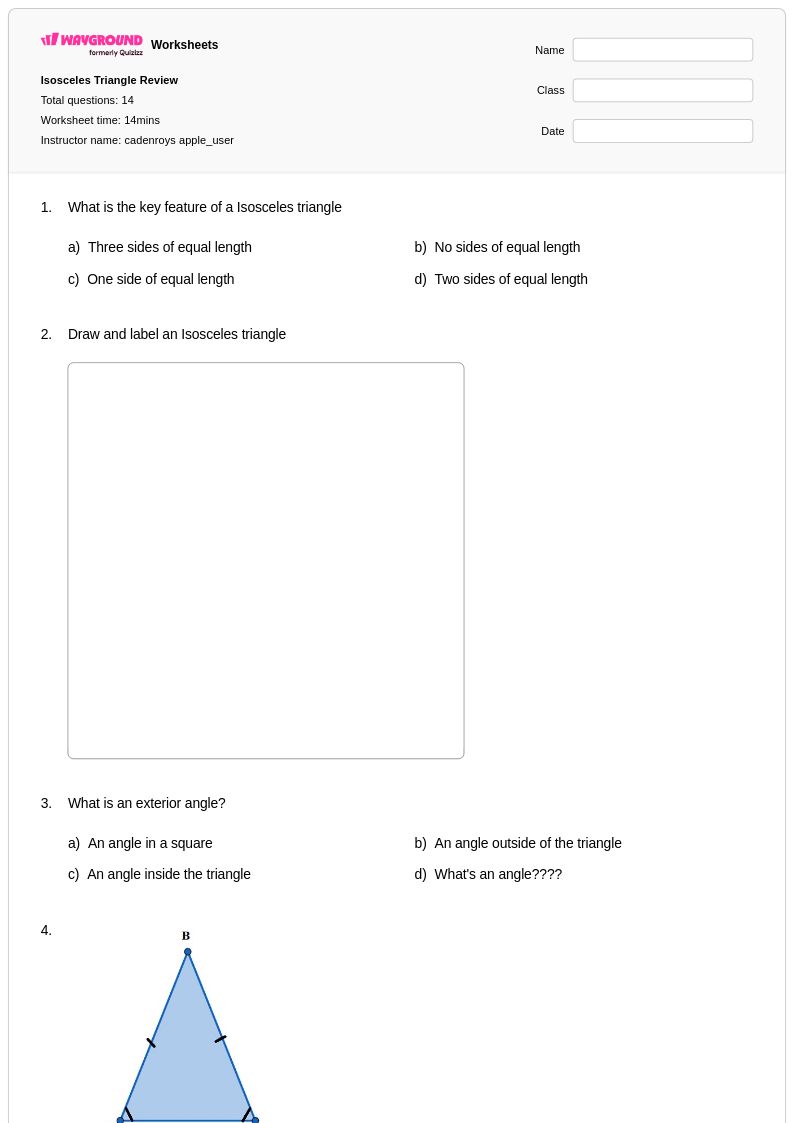
14 T
10th
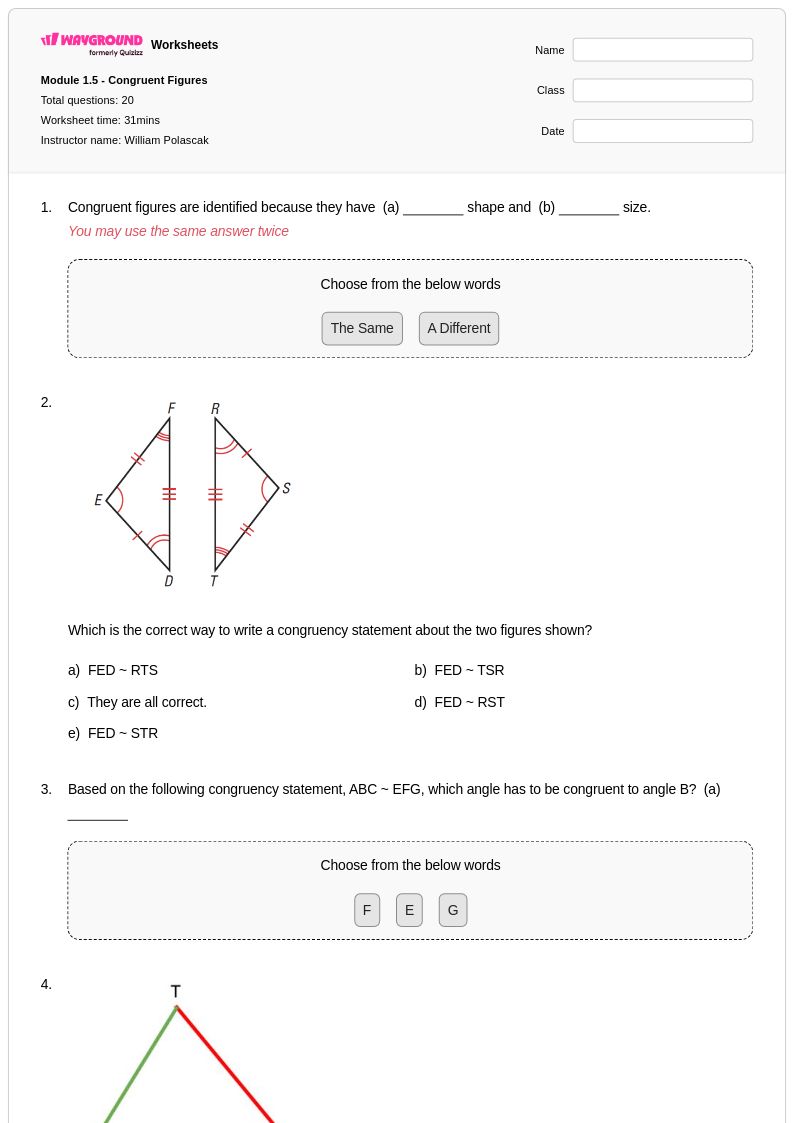
20 T
8th
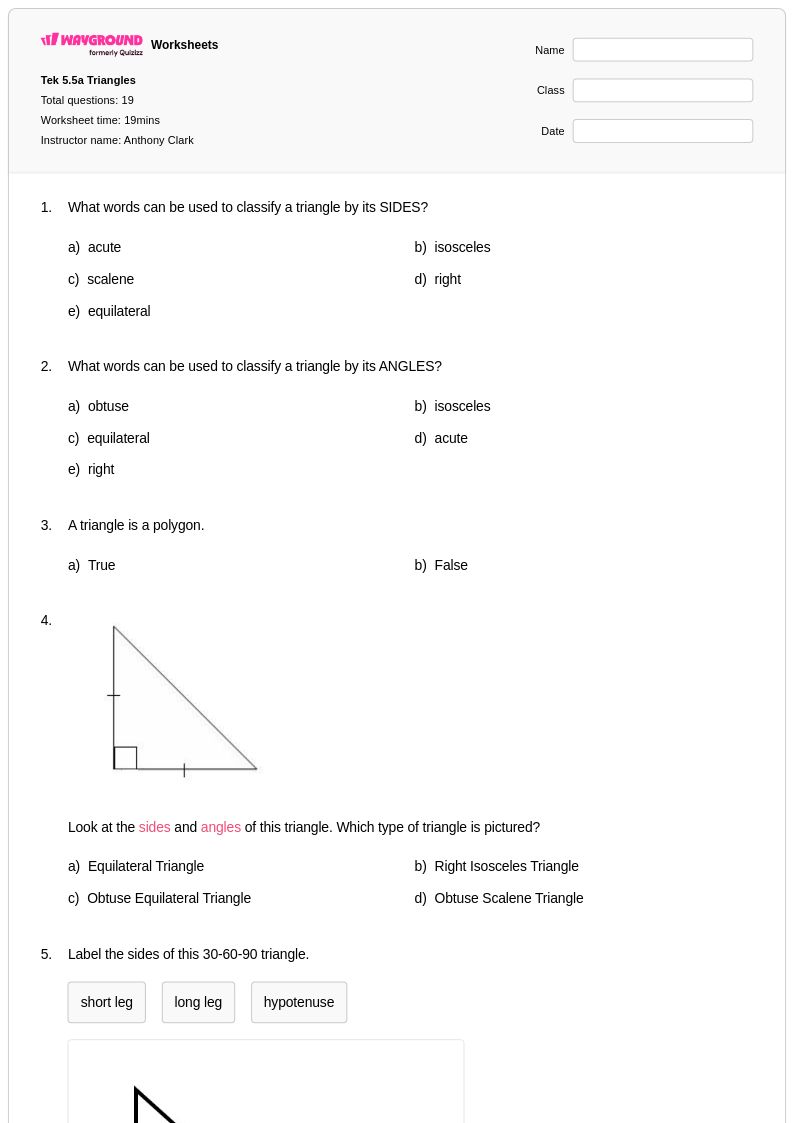
19 T
7th - Uni
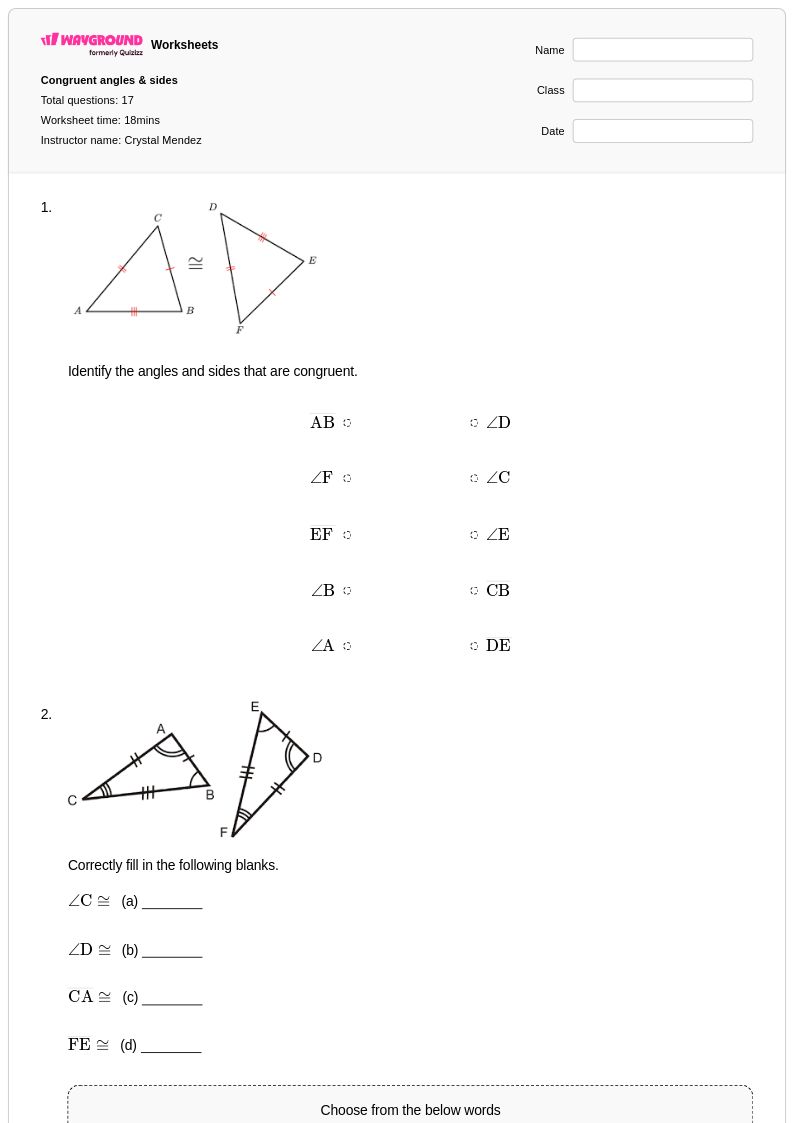
17 T
10th
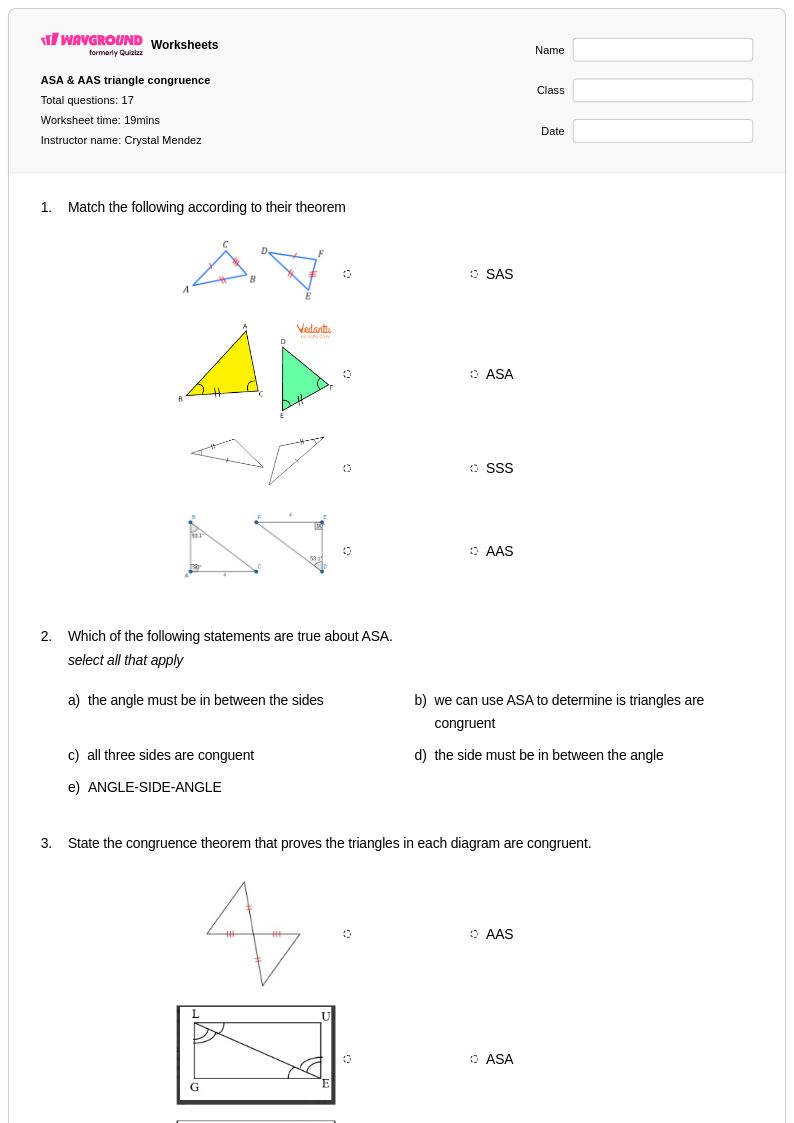
17 T
10th
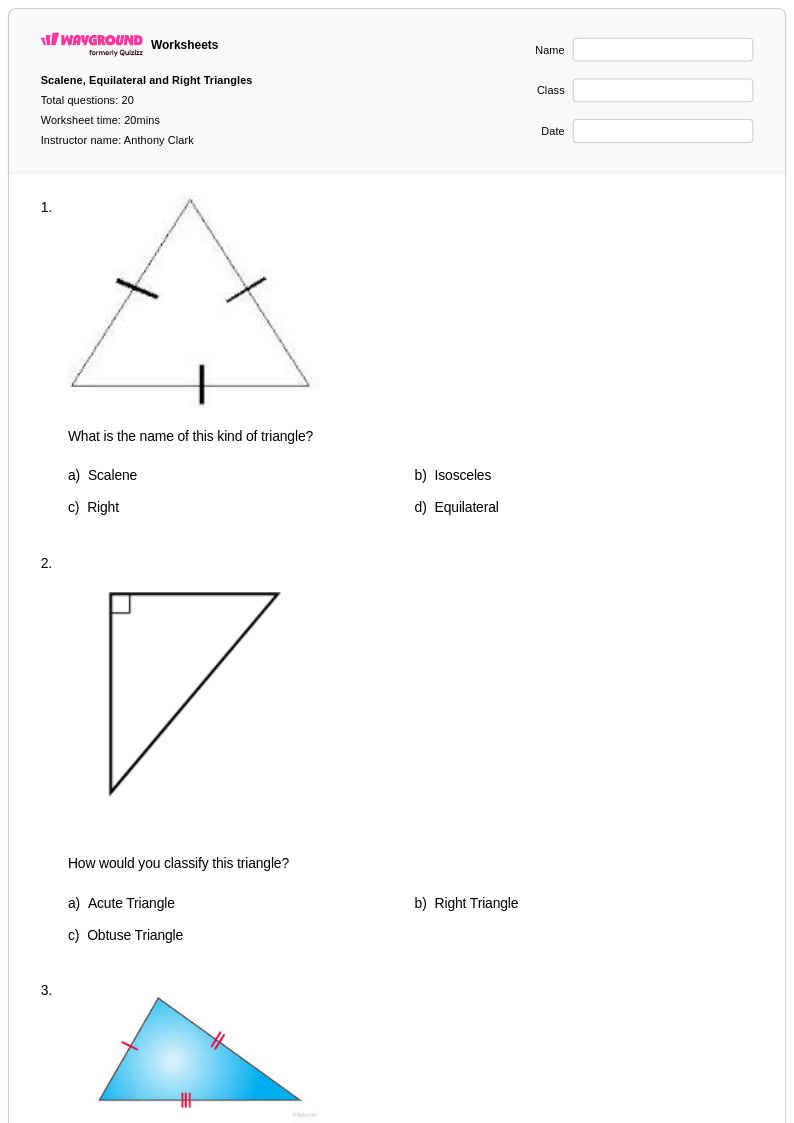
20 T
5th - Uni
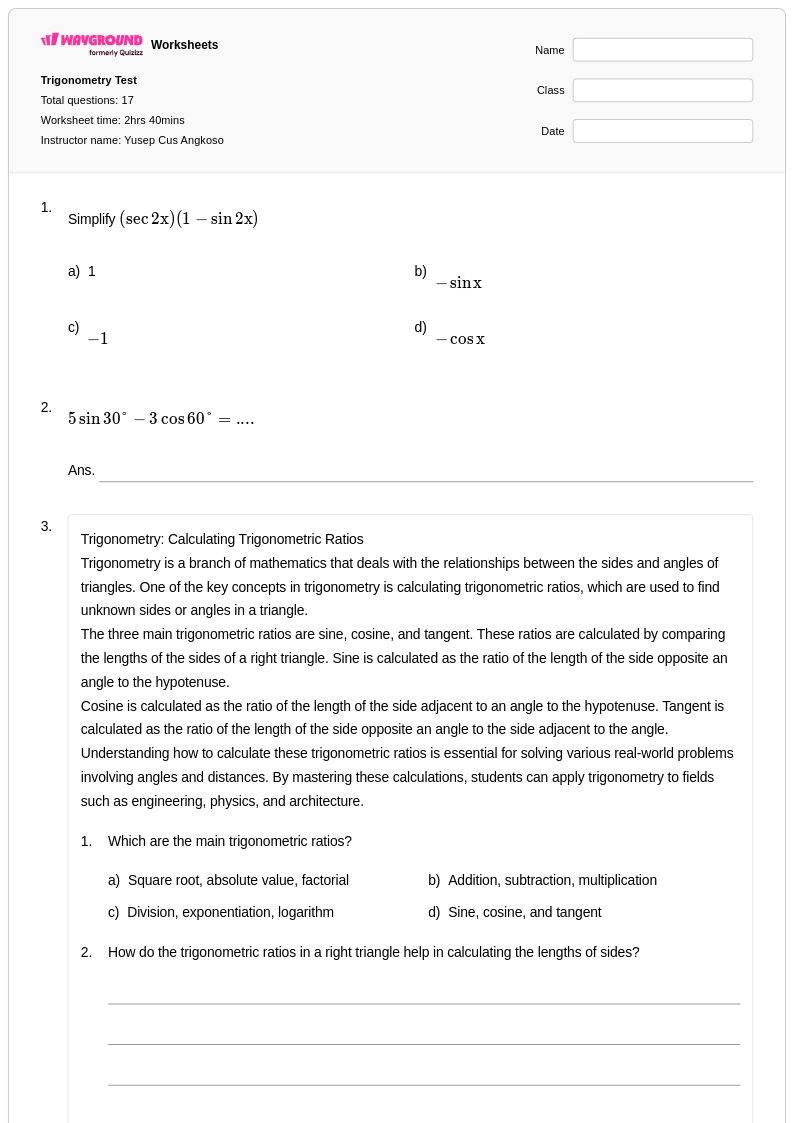
20 T
10th
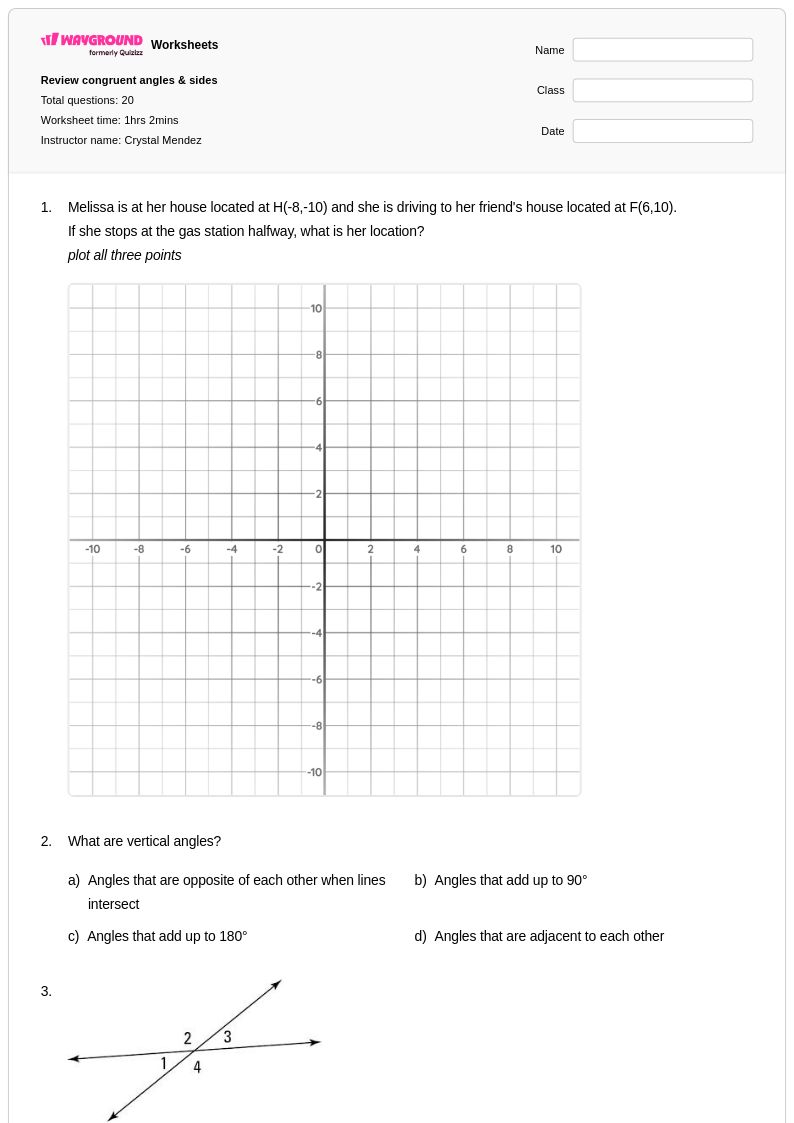
20 T
10th
Jelajahi Lembar Kerja berdasarkan Subjek
Explore printable Congruency in Isosceles and Equilateral Triangles worksheets
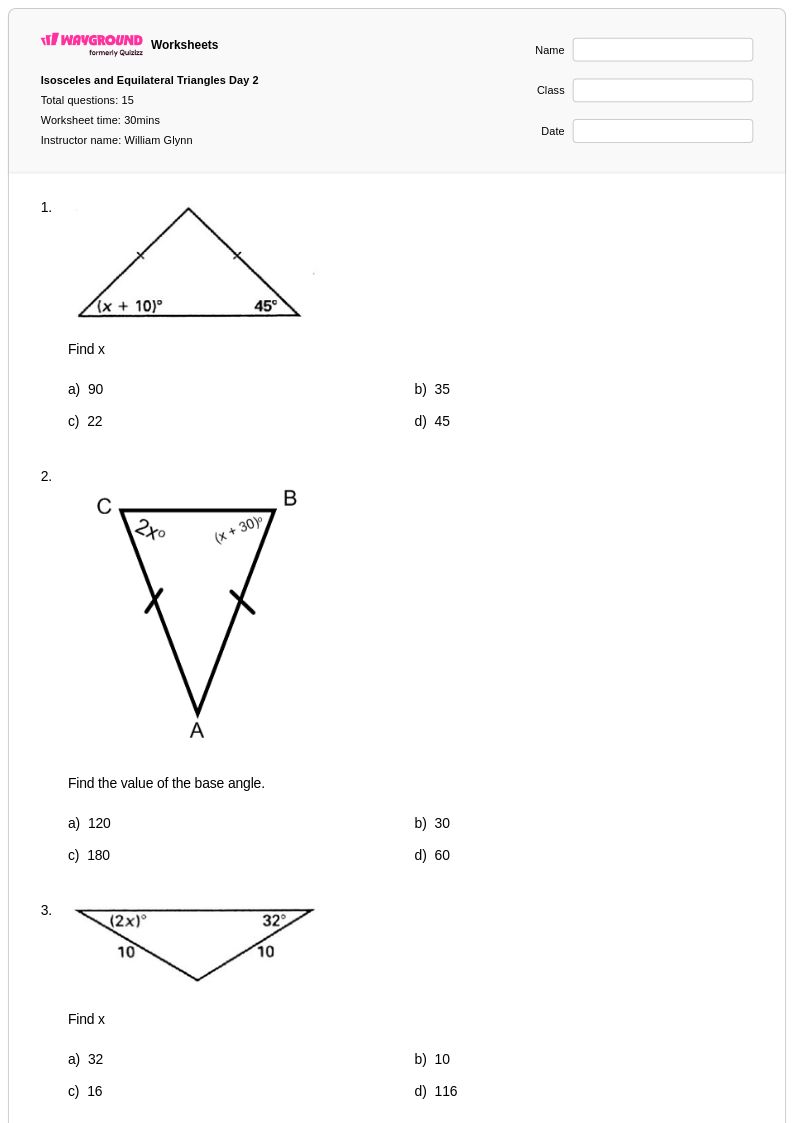
Congruency in isosceles and equilateral triangles represents a fundamental geometric concept that students must master to develop strong spatial reasoning and proof-writing abilities. Wayground's comprehensive worksheet collection focuses specifically on this critical subtopic, providing students with systematic practice in identifying congruent segments, angles, and triangular relationships within these special triangle classifications. These carefully crafted worksheets strengthen essential skills including recognizing base angles in isosceles triangles, understanding the properties of equilateral triangles where all sides and angles are congruent, and applying triangle congruence theorems in geometric proofs. Each worksheet comes with a complete answer key and is available as a free printable pdf, ensuring students can work through practice problems systematically while teachers can efficiently assess understanding and provide targeted feedback on this challenging geometric concept.
Wayground supports mathematics educators with an extensive collection of teacher-created resources that make instruction in triangle congruency both effective and accessible. The platform's millions of worksheets include robust search and filtering capabilities that allow teachers to quickly locate materials aligned with specific geometry standards and differentiated for various skill levels. Teachers can customize these digital and printable worksheet collections to match their classroom needs, whether for initial skill introduction, targeted remediation, or advanced enrichment activities. The flexible pdf format ensures seamless integration into lesson planning while supporting both traditional classroom instruction and independent student practice, making it easier for educators to reinforce the complex relationships between congruent elements in isosceles and equilateral triangles across diverse learning environments.
FAQs
How do I teach congruency in isosceles and equilateral triangles?
What exercises help students practice congruency in isosceles and equilateral triangles?
What mistakes do students make with isosceles and equilateral triangle congruency?
How can I use these triangle congruency worksheets in class?
How does triangle congruency fit into the Common Core geometry progression?
How can I differentiate practice with isosceles and equilateral triangle congruency?