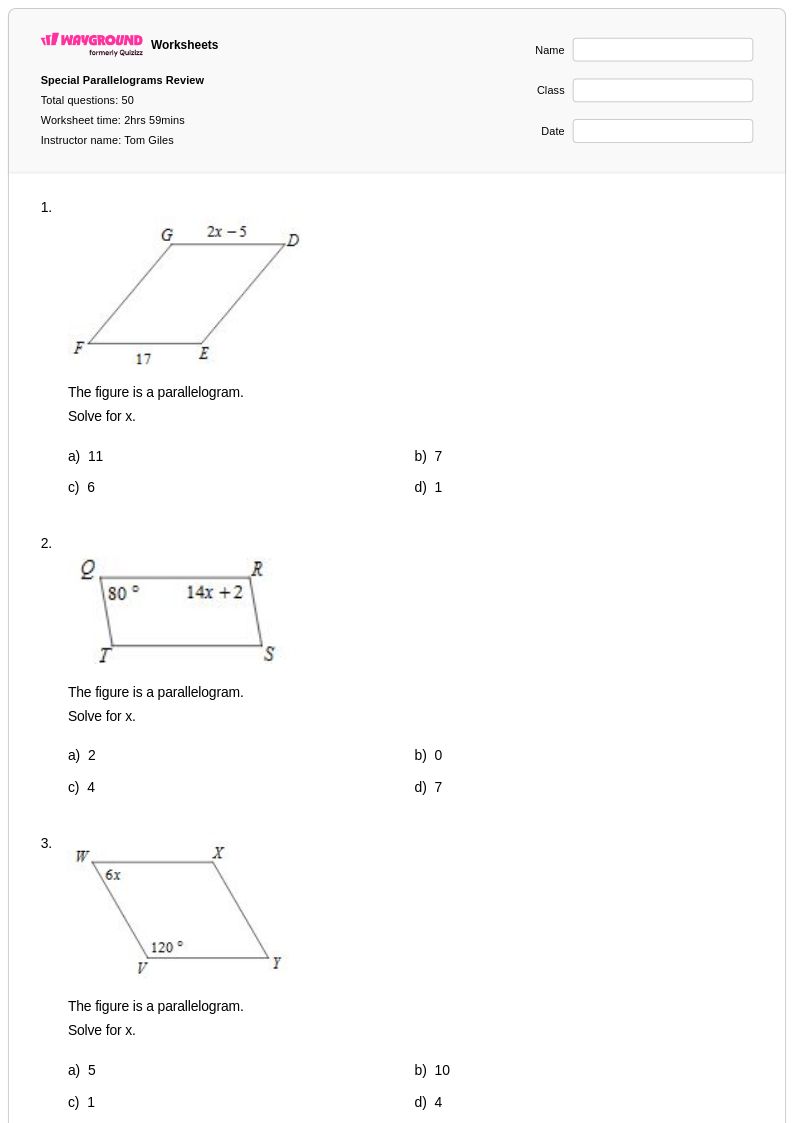
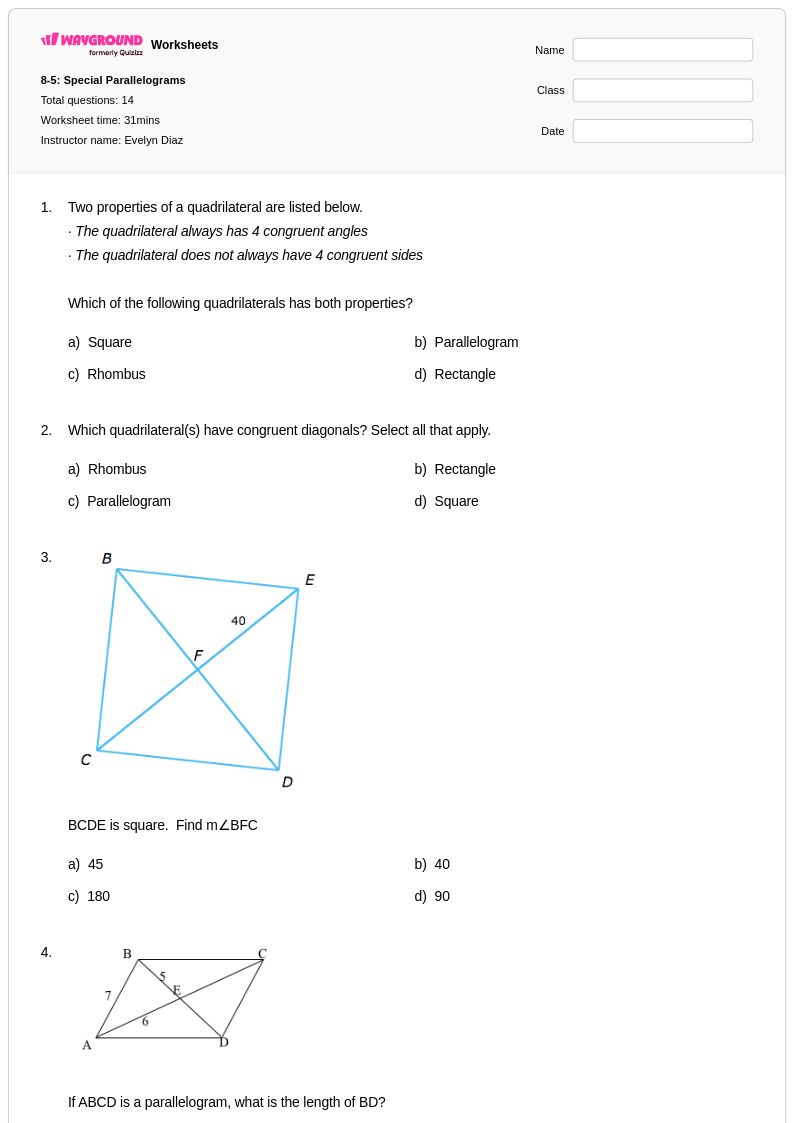
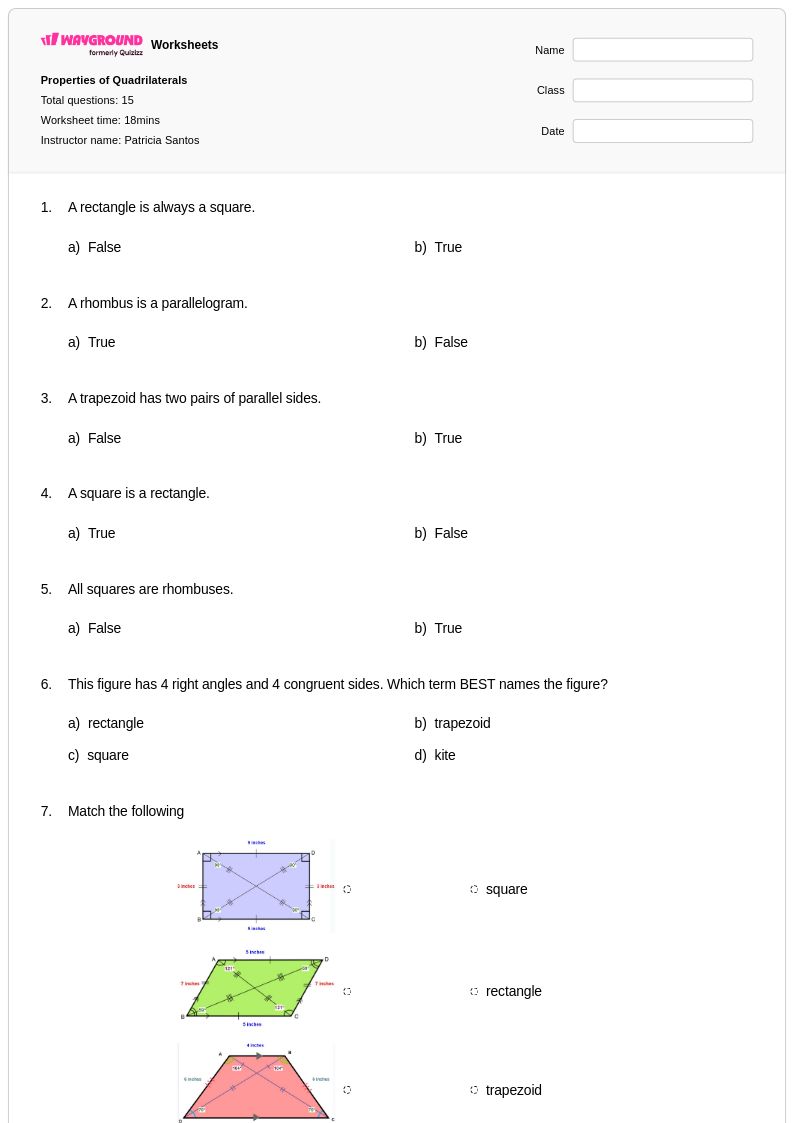
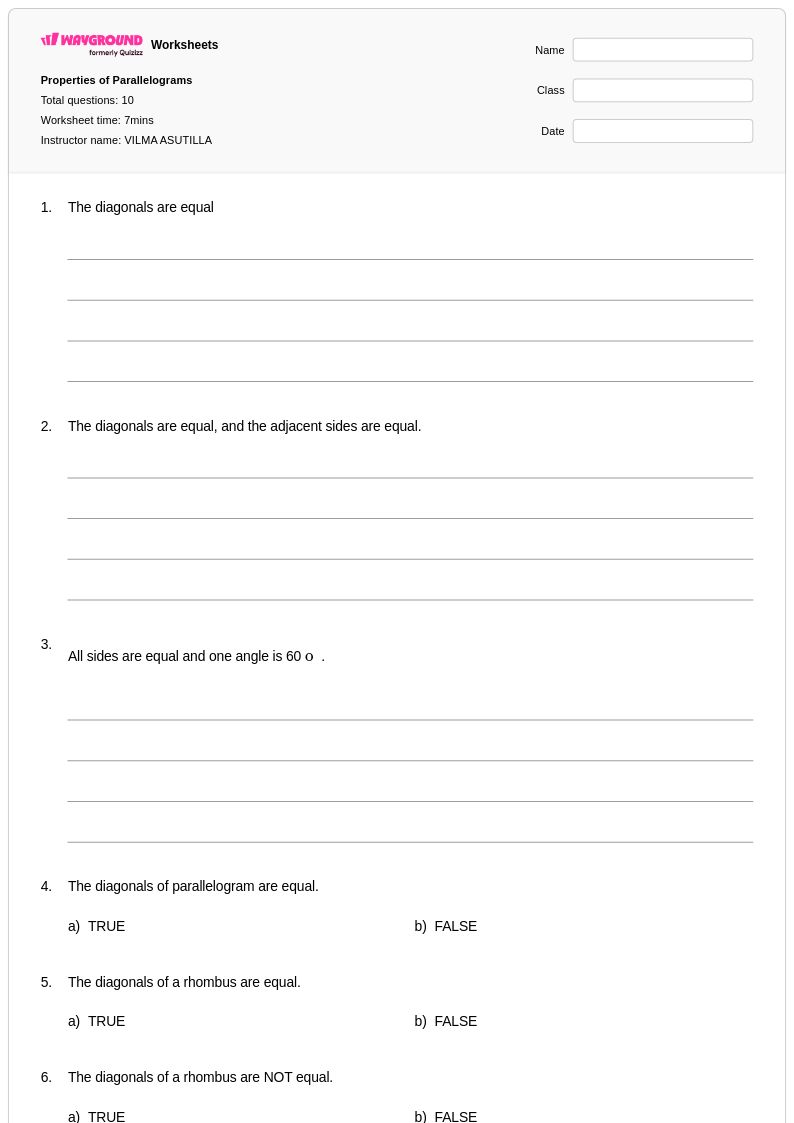
Master properties of rhombuses with Wayground's comprehensive collection of free worksheets and printables, featuring practice problems and answer keys to help students understand angles, diagonals, and side relationships in these special parallelograms.
Explore printable Properties of Rhombuses worksheets
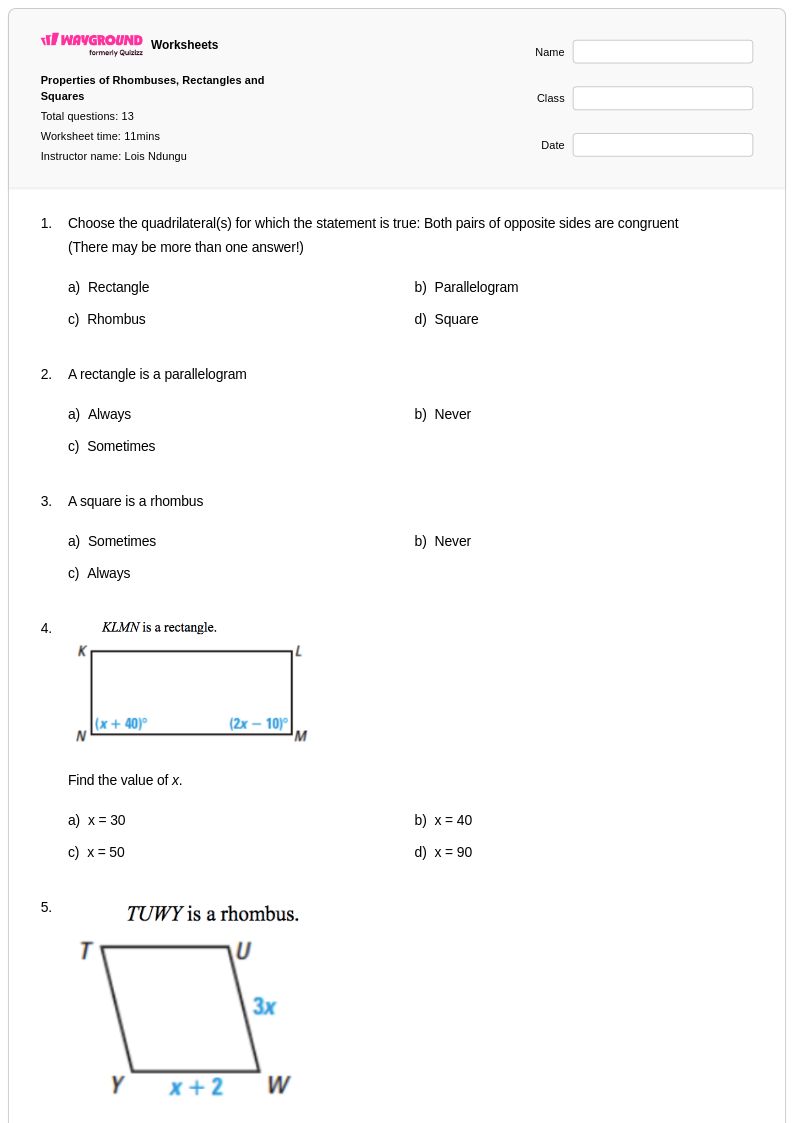
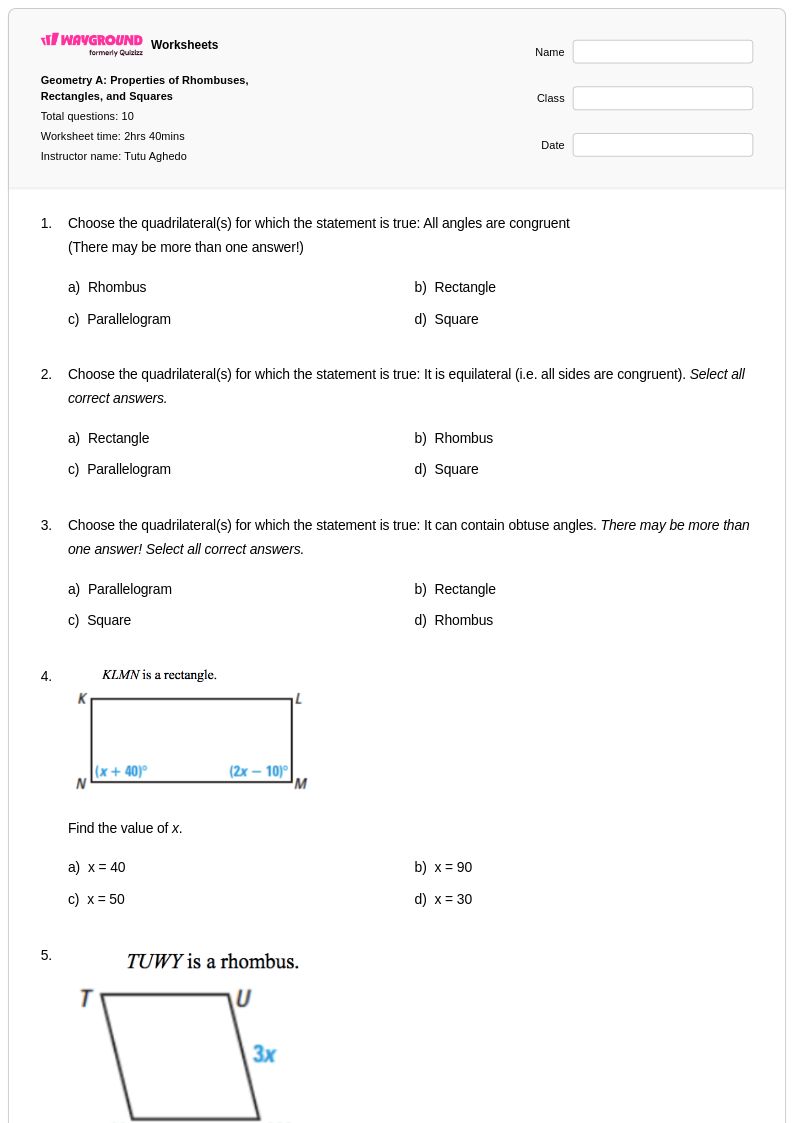
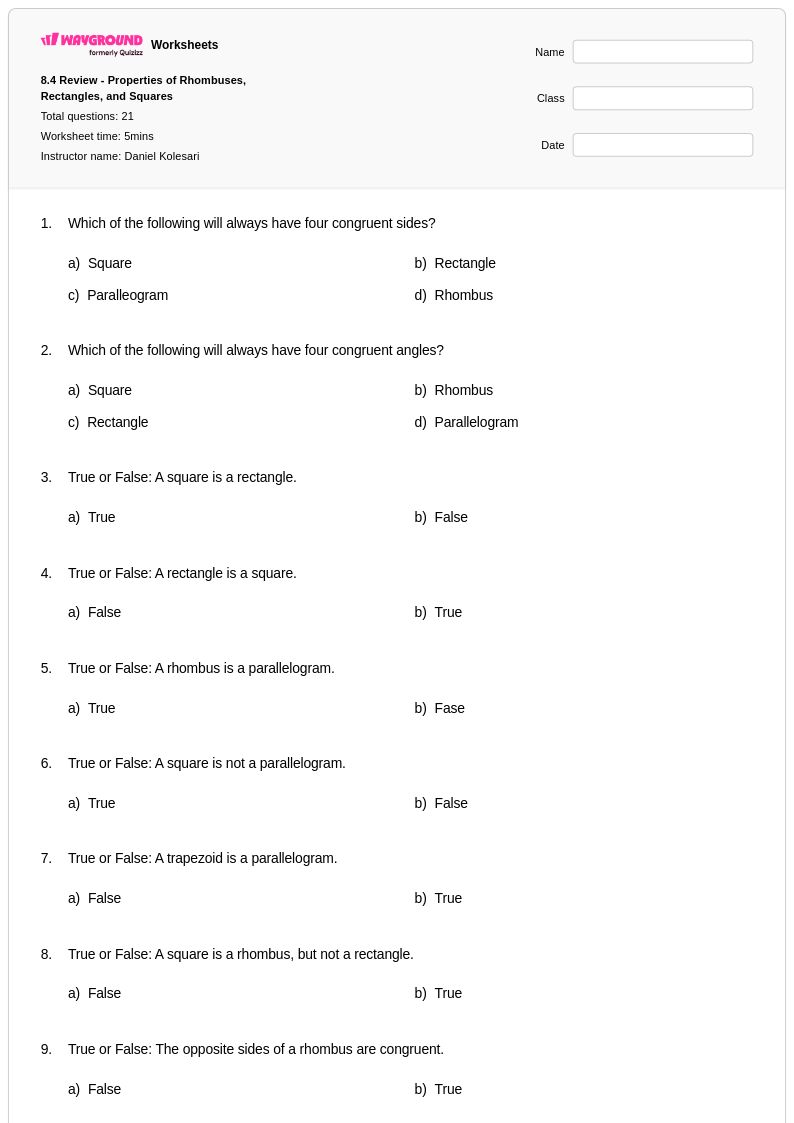
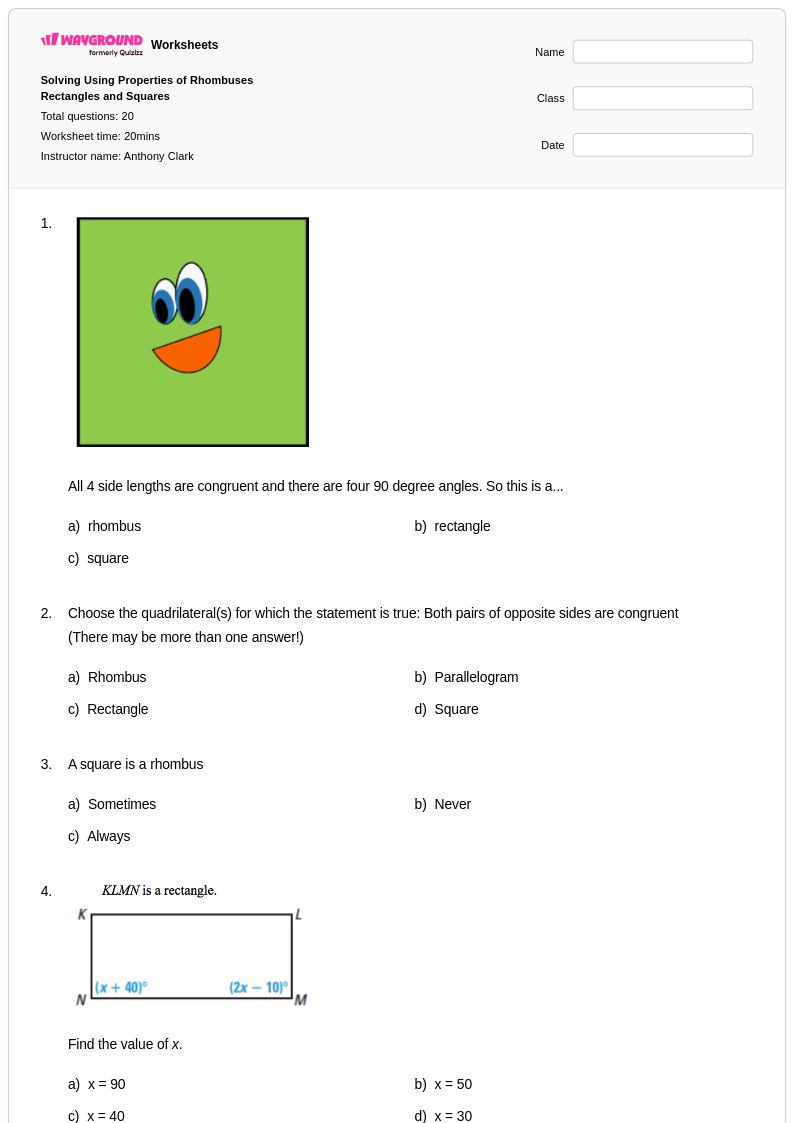
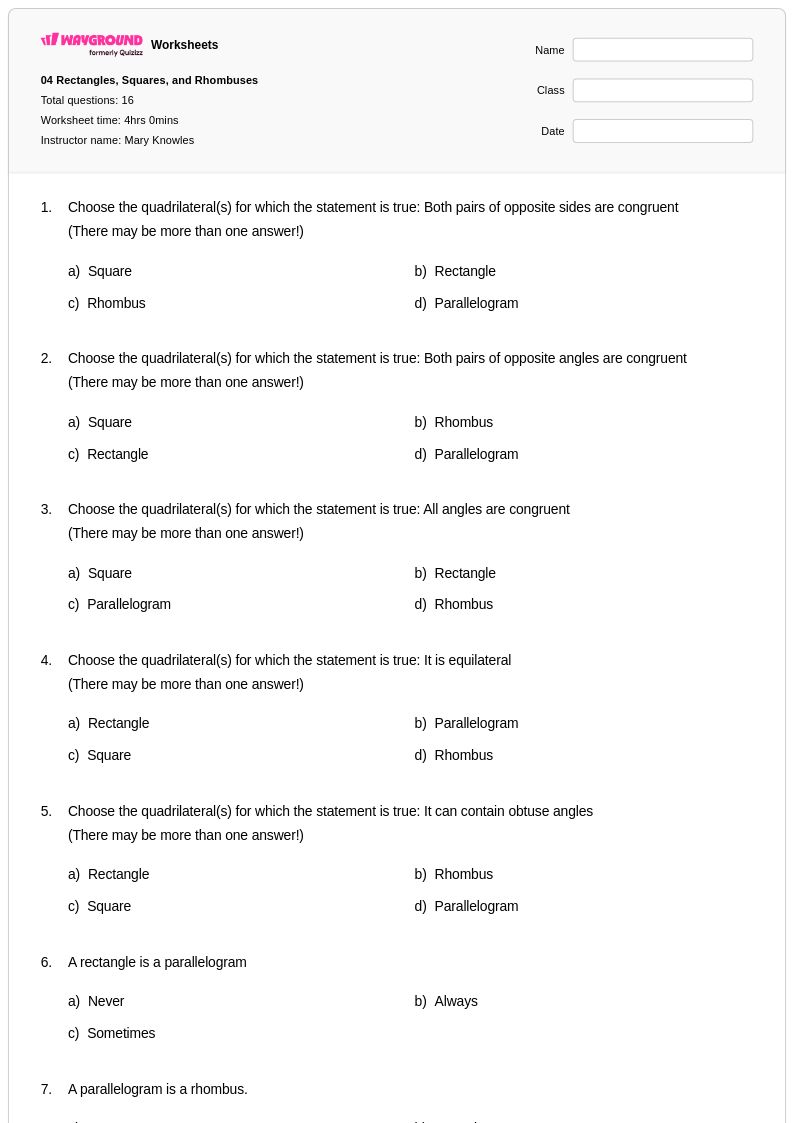
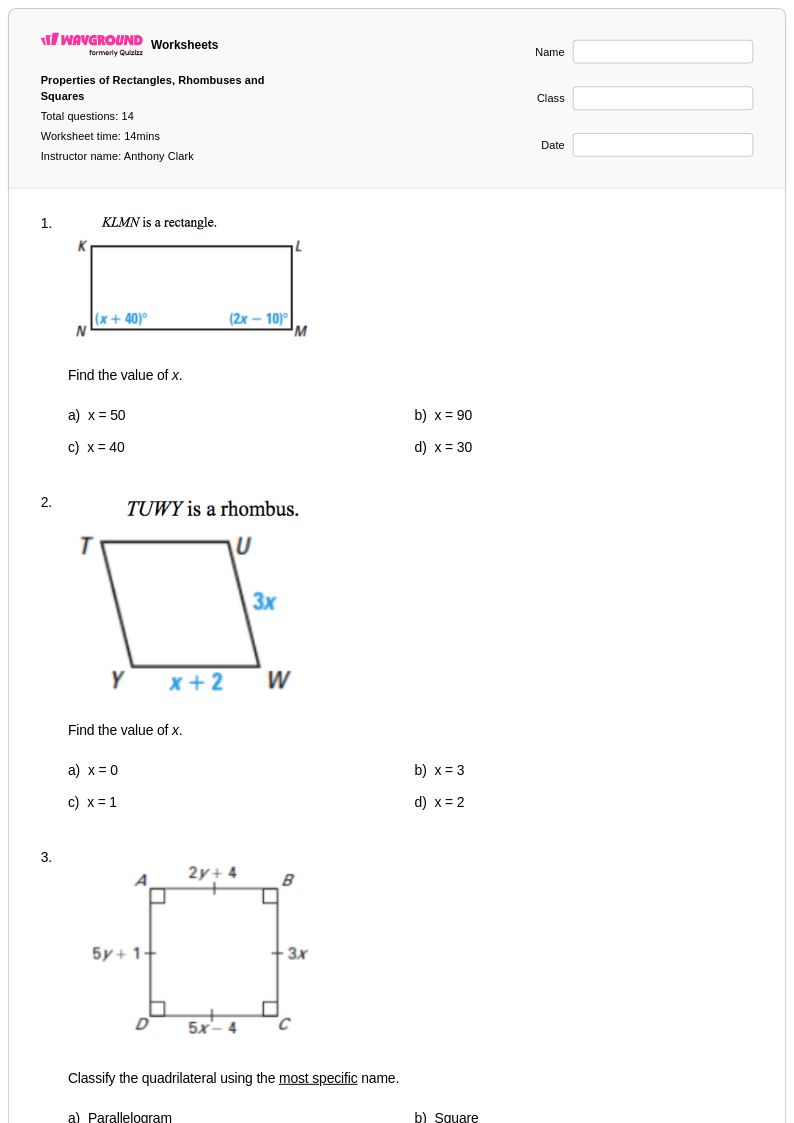
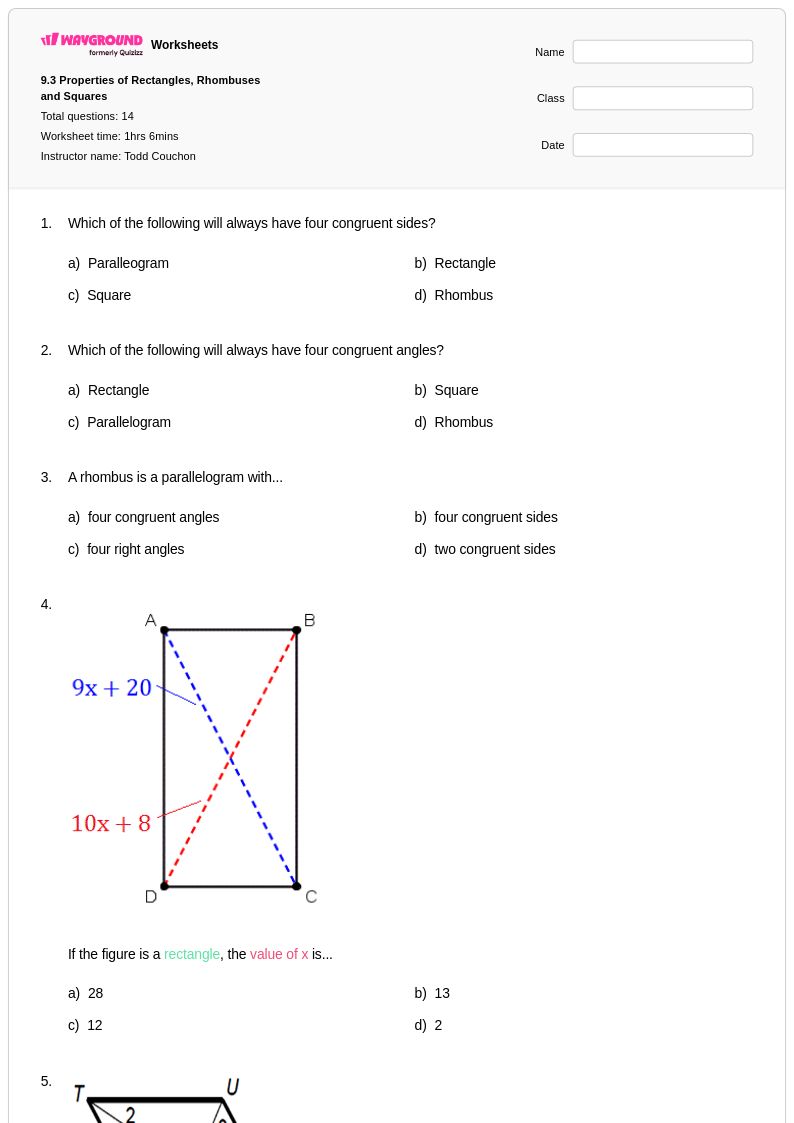
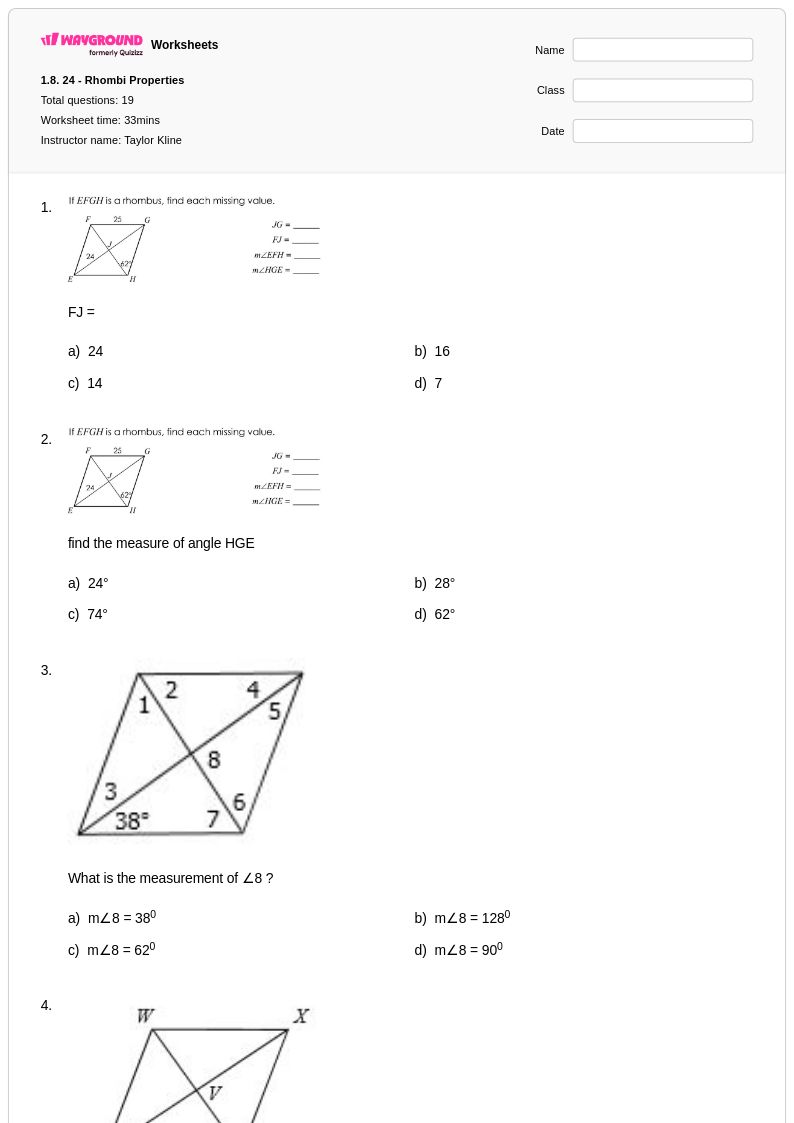
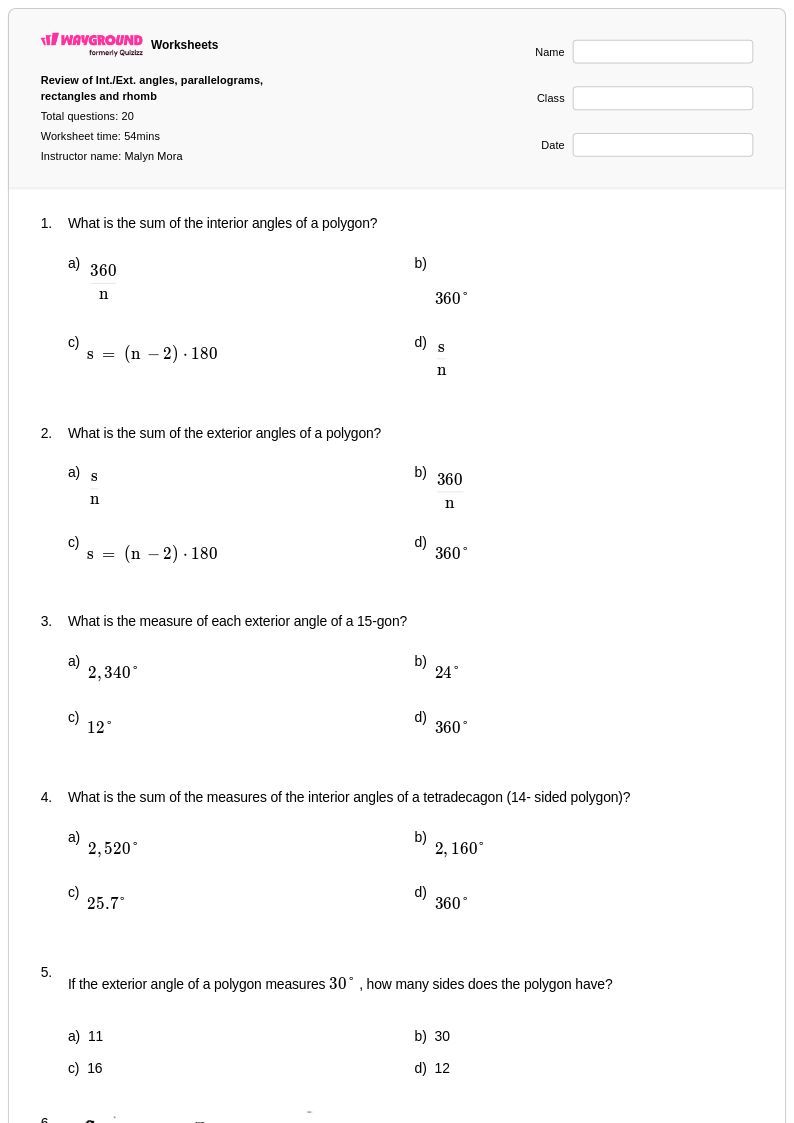
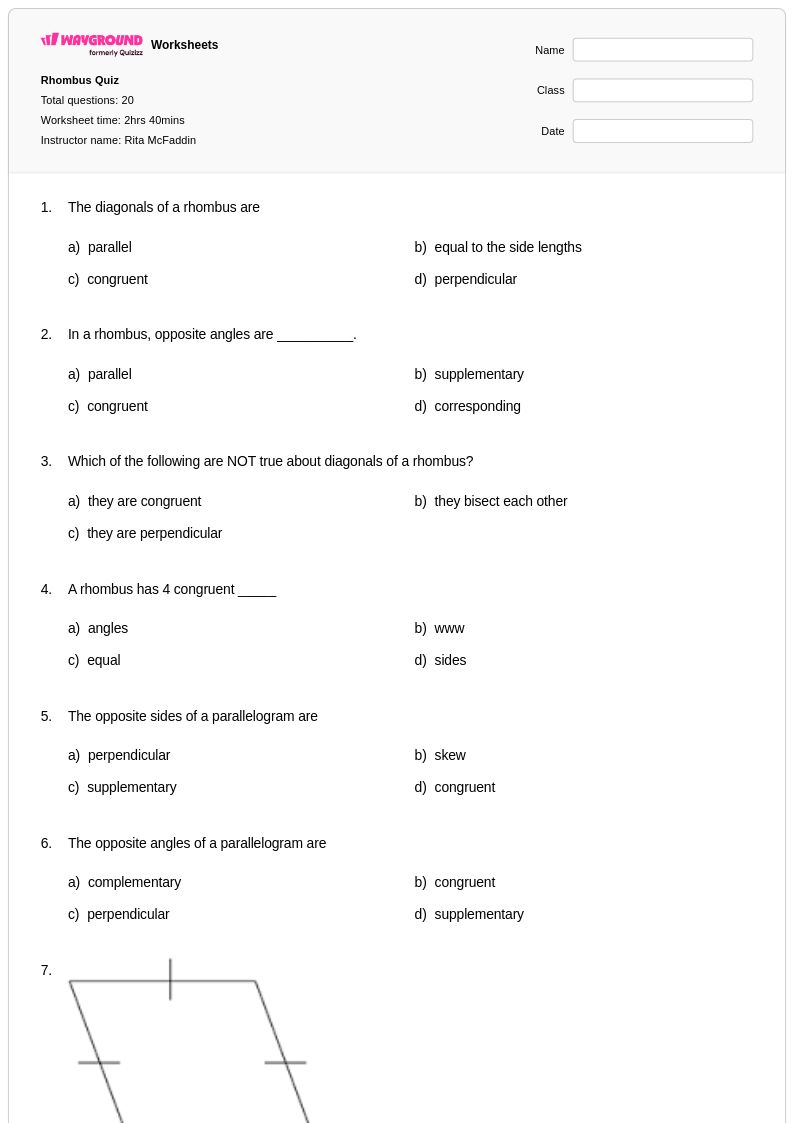
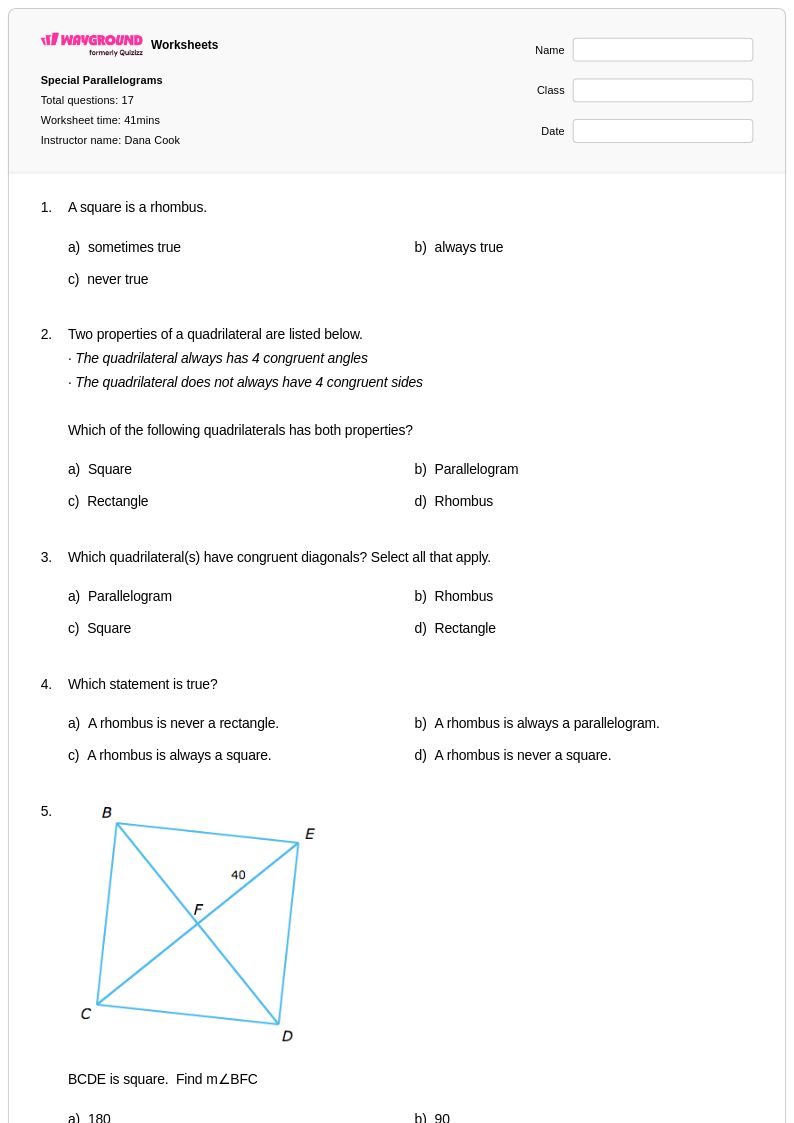
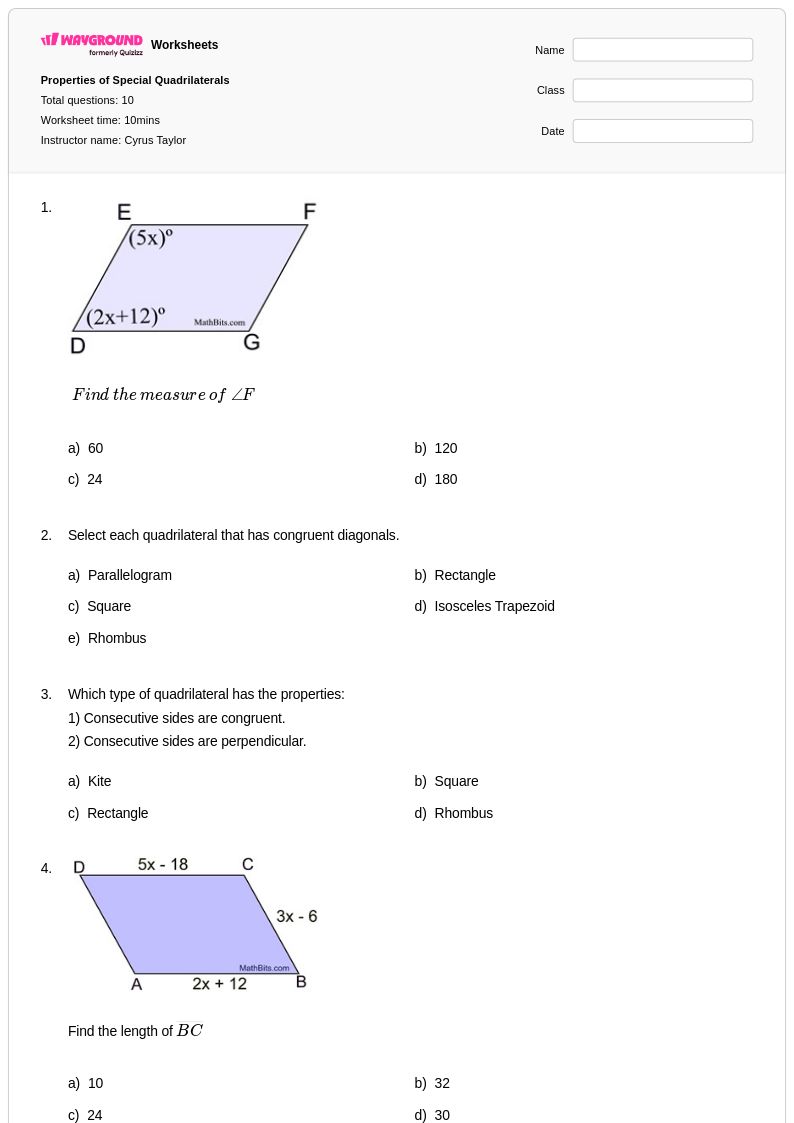
Properties of rhombuses worksheets available through Wayground (formerly Quizizz) provide comprehensive practice opportunities for students to master the unique characteristics of these special parallelograms. These carefully designed educational materials focus on developing proficiency with key rhombus properties including congruent sides, bisecting diagonals that meet at right angles, and the relationship between diagonal lengths and rhombus dimensions. Students work through practice problems that reinforce understanding of how rhombuses differ from other quadrilaterals while strengthening their geometric reasoning skills. The worksheet collections include detailed answer keys and are available as free printables in convenient pdf format, allowing educators to seamlessly integrate rhombus property exploration into their geometry instruction.
Wayground (formerly Quizizz) empowers mathematics teachers with an extensive library of millions of teacher-created resources specifically designed to support geometry instruction on rhombus properties. The platform's robust search and filtering capabilities enable educators to quickly locate worksheets that align with specific learning standards and match their students' skill levels. Teachers benefit from powerful differentiation tools that allow customization of content difficulty and problem types, ensuring appropriate challenges for diverse learners. These flexible resources are available in both printable and digital formats, including downloadable pdf versions, making them ideal for classroom instruction, homework assignments, remediation sessions, and enrichment activities that deepen students' understanding of rhombus characteristics and geometric relationships.
FAQs
How do I teach the properties of a rhombus?
Start by defining a rhombus as a parallelogram with four equal sides. Use visual aids to compare it directly with a square (which has right angles) and a kite (which doesn't require parallel sides). Emphasize the three key properties: all four sides are congruent, diagonals bisect each other at right angles (90°), and opposite angles are congruent.
What exercises help students practice rhombus properties?
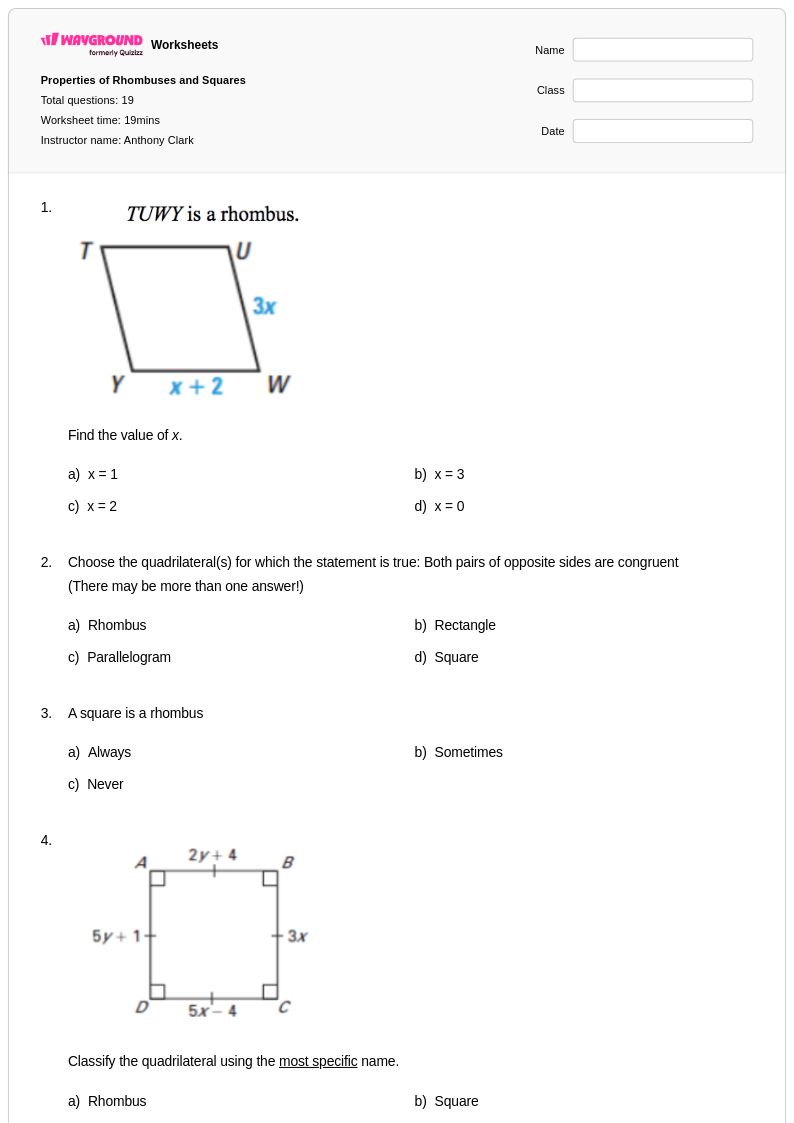
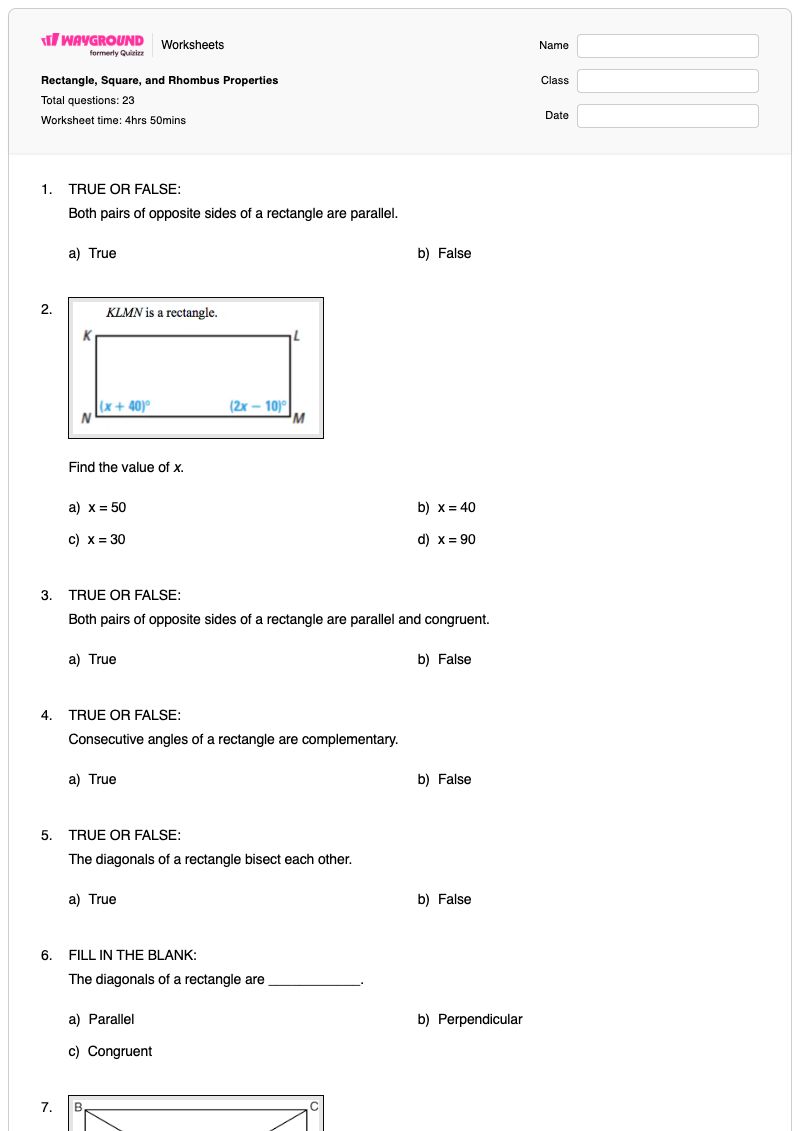
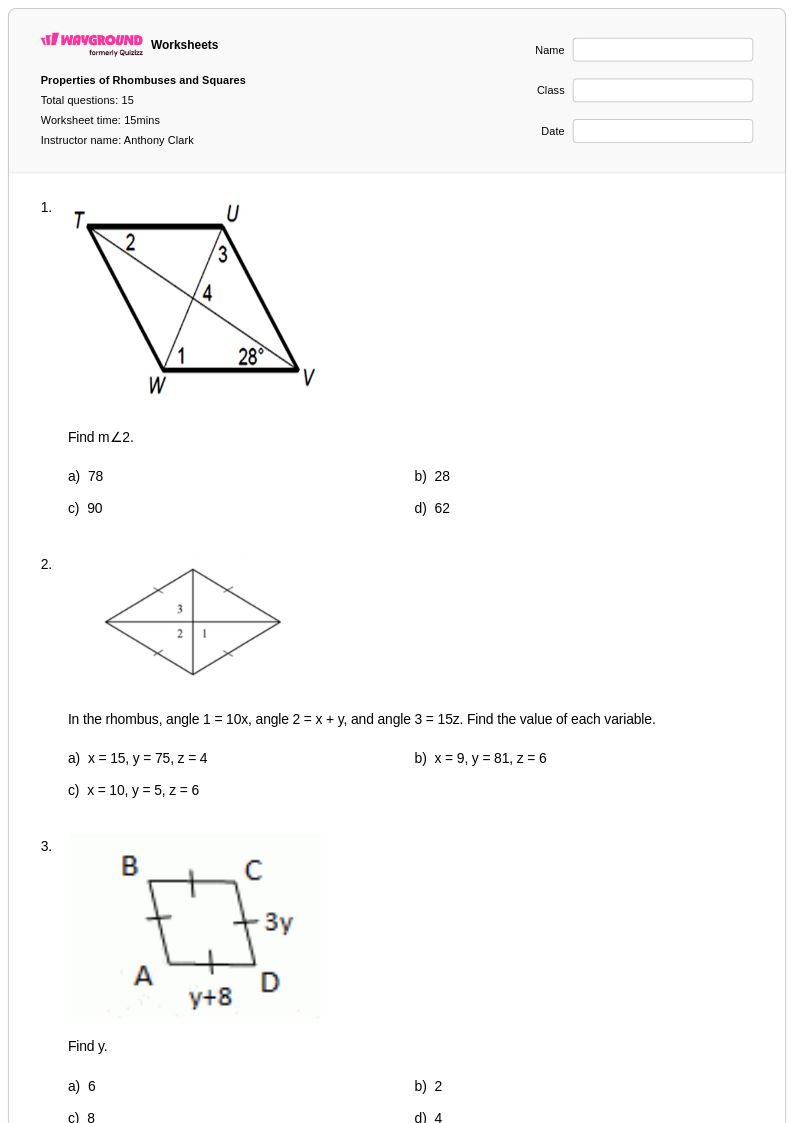
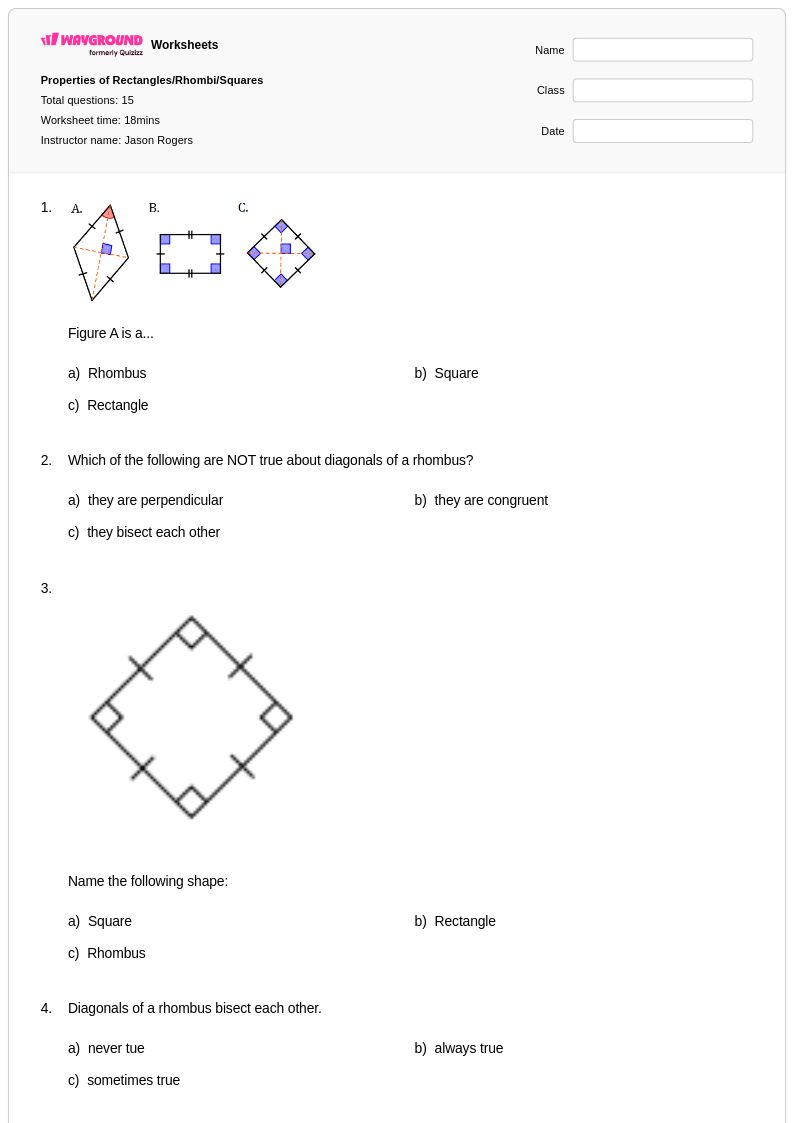
Effective practice involves a mix of problem types. These worksheets provide exercises where students must: identify rhombuses from a group of quadrilaterals, use the properties of diagonals to find missing lengths, and calculate unknown angle measures based on the relationships within the rhombus.
What are common mistakes students make with rhombuses?
A frequent error is assuming all rhombuses are squares, leading them to incorrectly assume all angles are 90°. Students also commonly confuse the properties of a rhombus with those of a general parallelogram, forgetting that the diagonals of a rhombus are perpendicular.
How can I use this rhombus properties worksheet?
This worksheet is available as a printable PDF for offline practice or as an interactive digital assignment on Wayground. The printable version allows you to grade student work quickly using the Wayground for Teachers mobile app. Every worksheet, in either format, includes a complete answer key for efficient assessment.
How does this topic fit into the geometry curriculum?
In a curriculum aligned with Common Core, studying rhombuses is part of the broader high school geometry domain of Congruence (G-CO). After learning about parallelograms, students prove theorems specific to rhombuses, such as their perpendicular diagonals. This builds a foundation for classifying and proving properties of all quadrilaterals.
How can I differentiate this topic for diverse learners?
For students who need support, use Wayground's digital accommodation features like Read Aloud for word problems or Reduced Answer Choices to lower cognitive load. For visual learners, encourage them to draw and label the properties on the printable PDF before solving, reinforcing the concepts through hands-on interaction.