
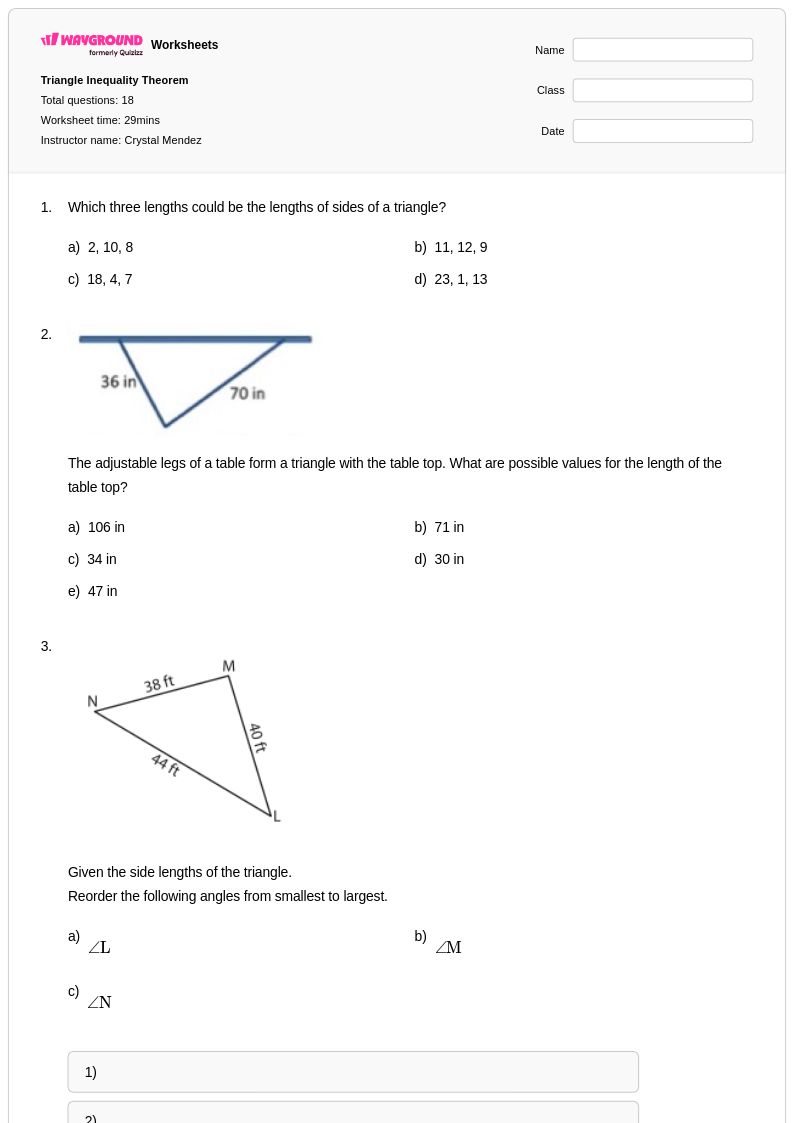
18Q
10th
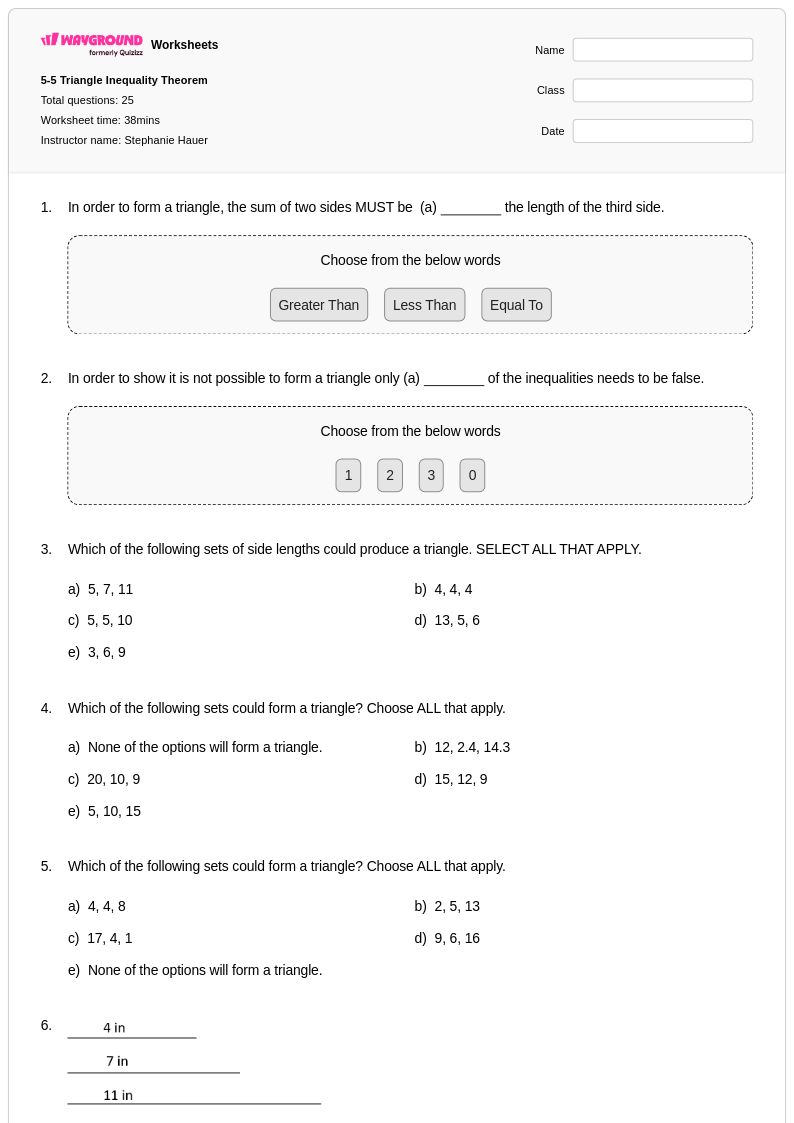
25Q
9th - 12th
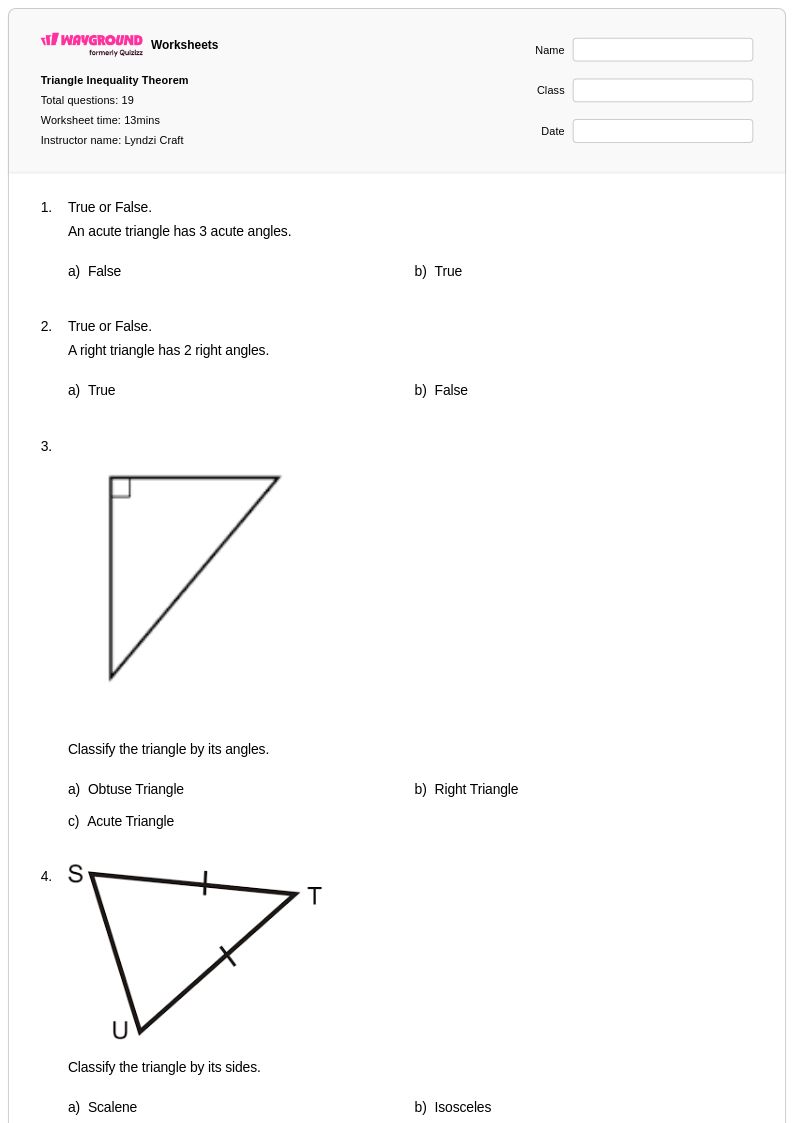
19Q
7th
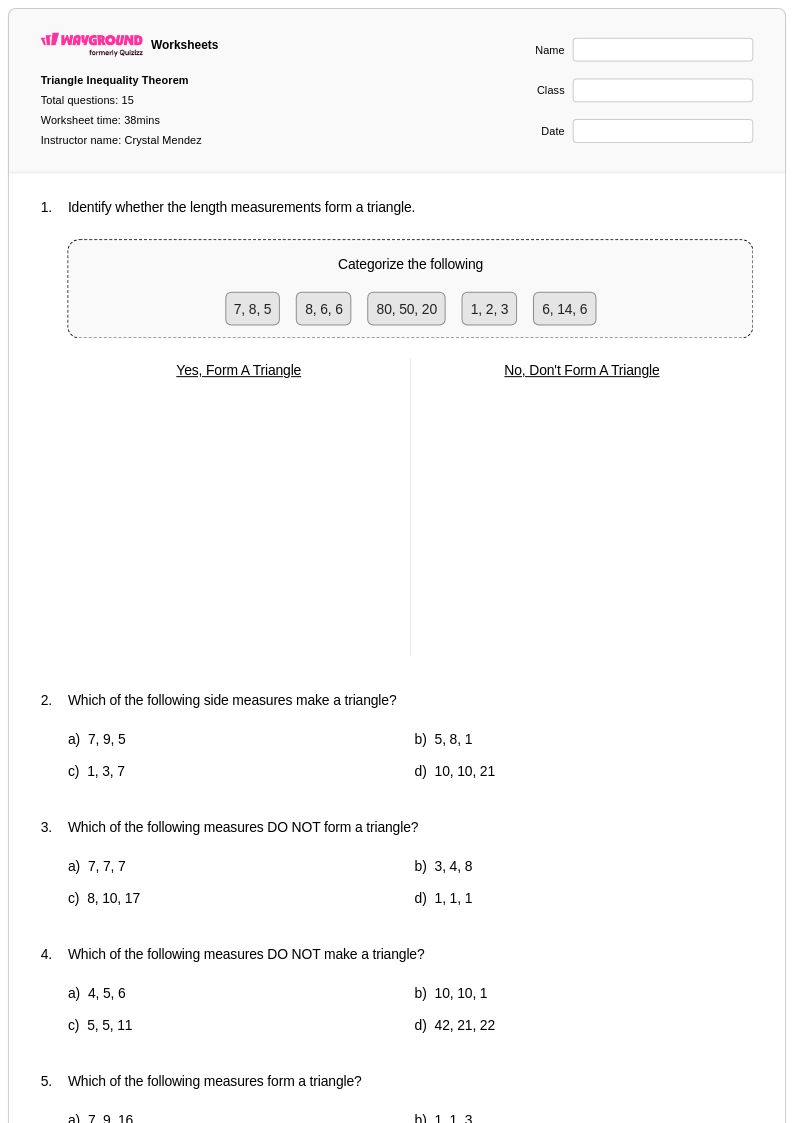
15Q
10th
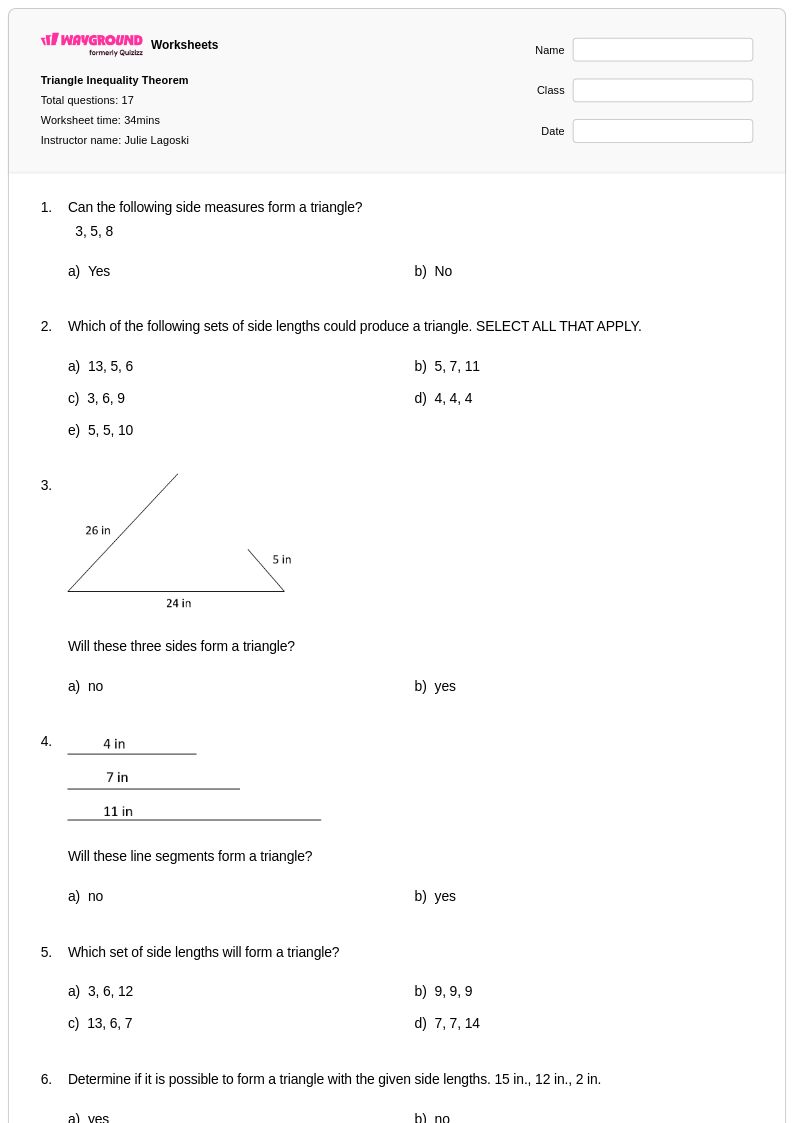
17Q
7th
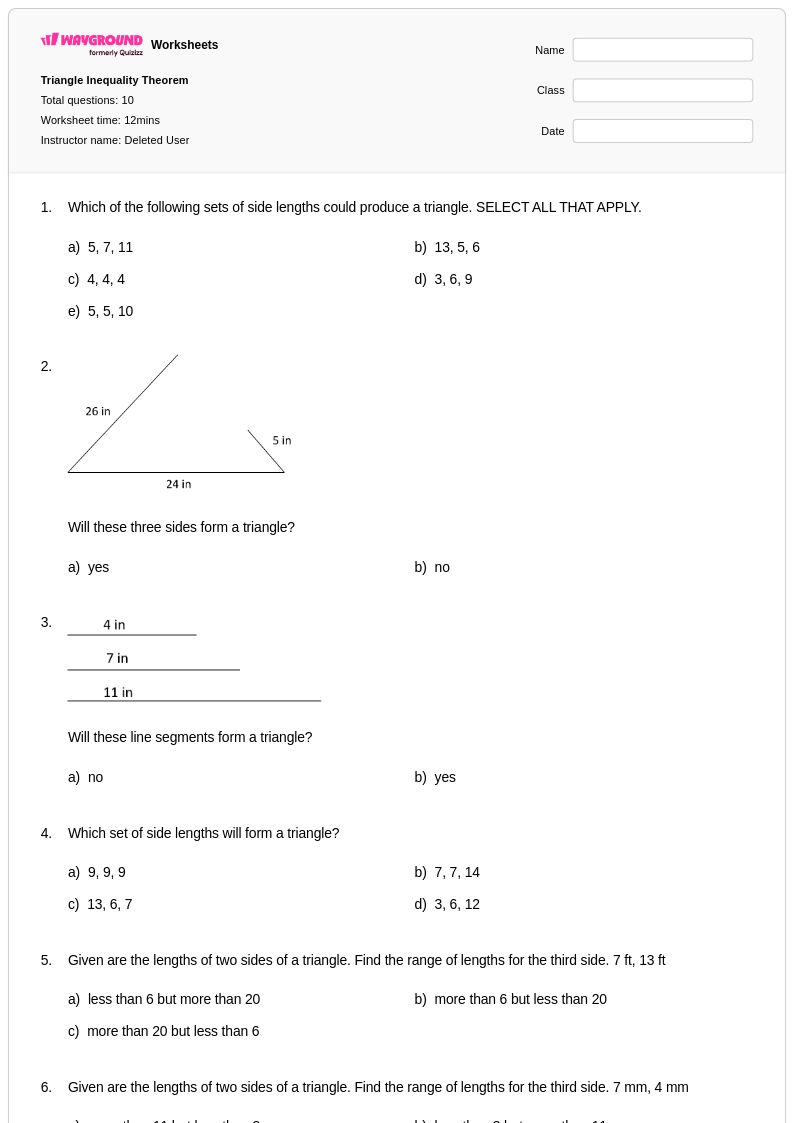
10Q
7th
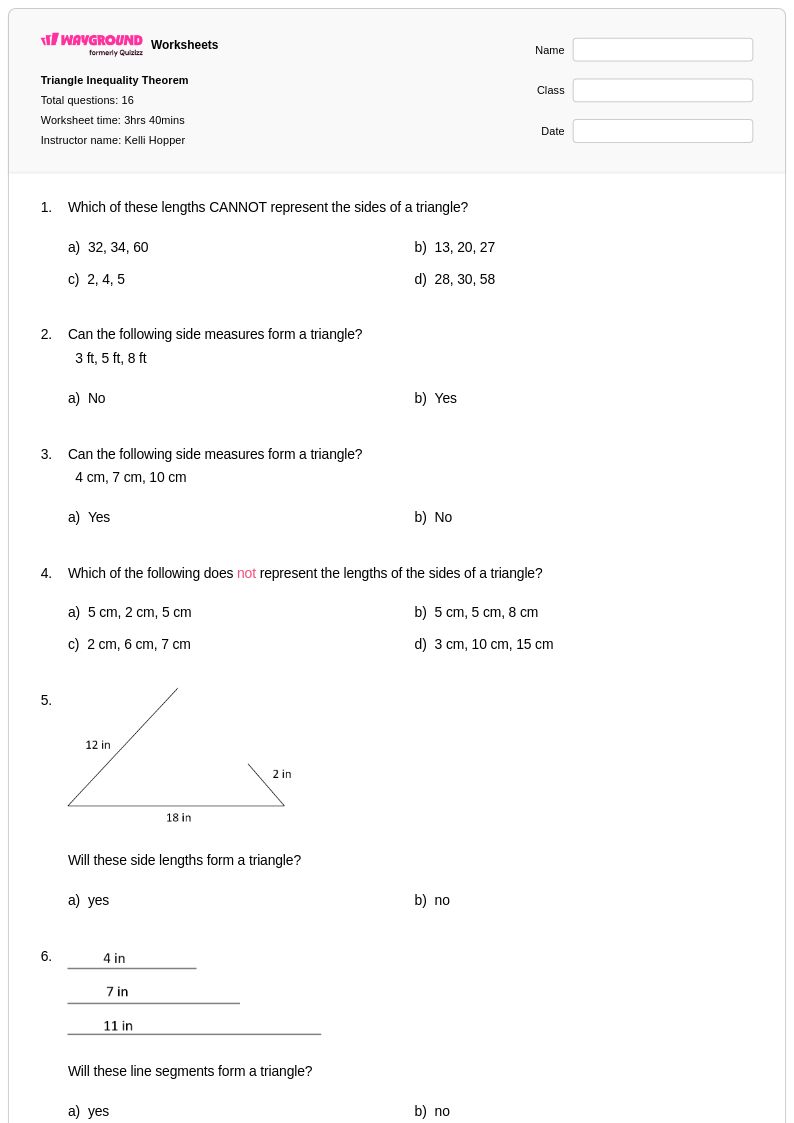
16Q
7th
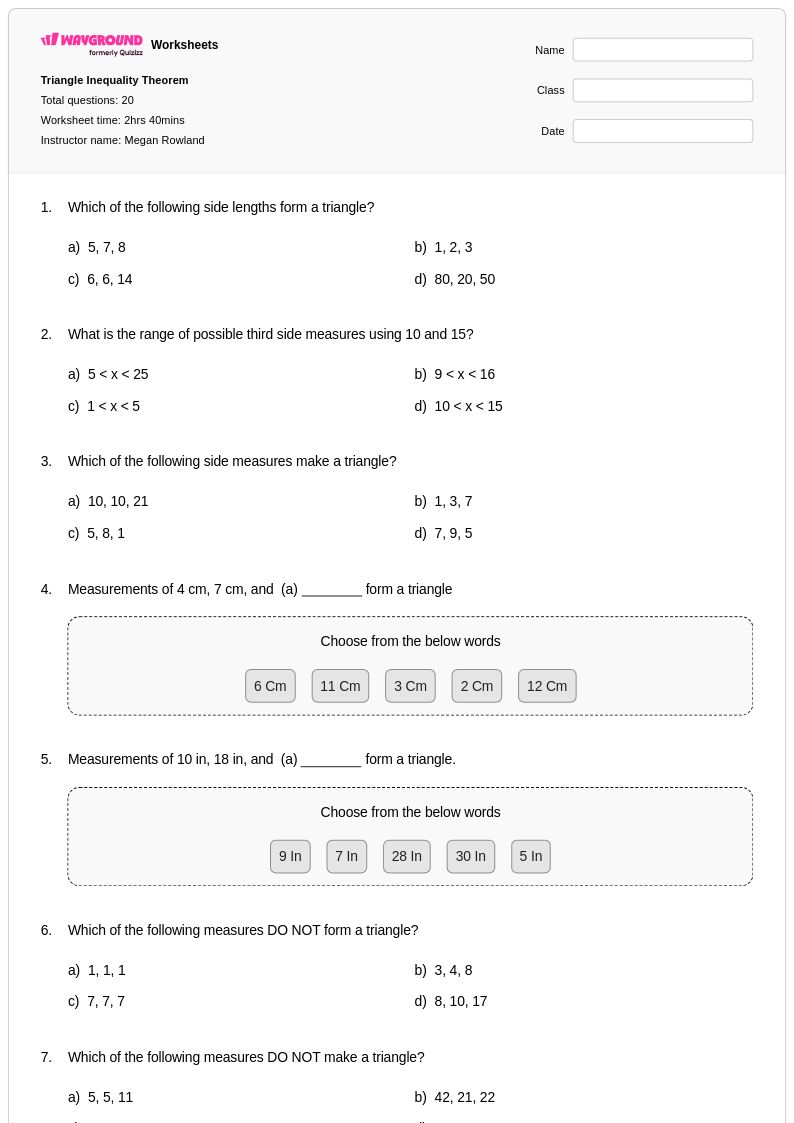
20Q
7th
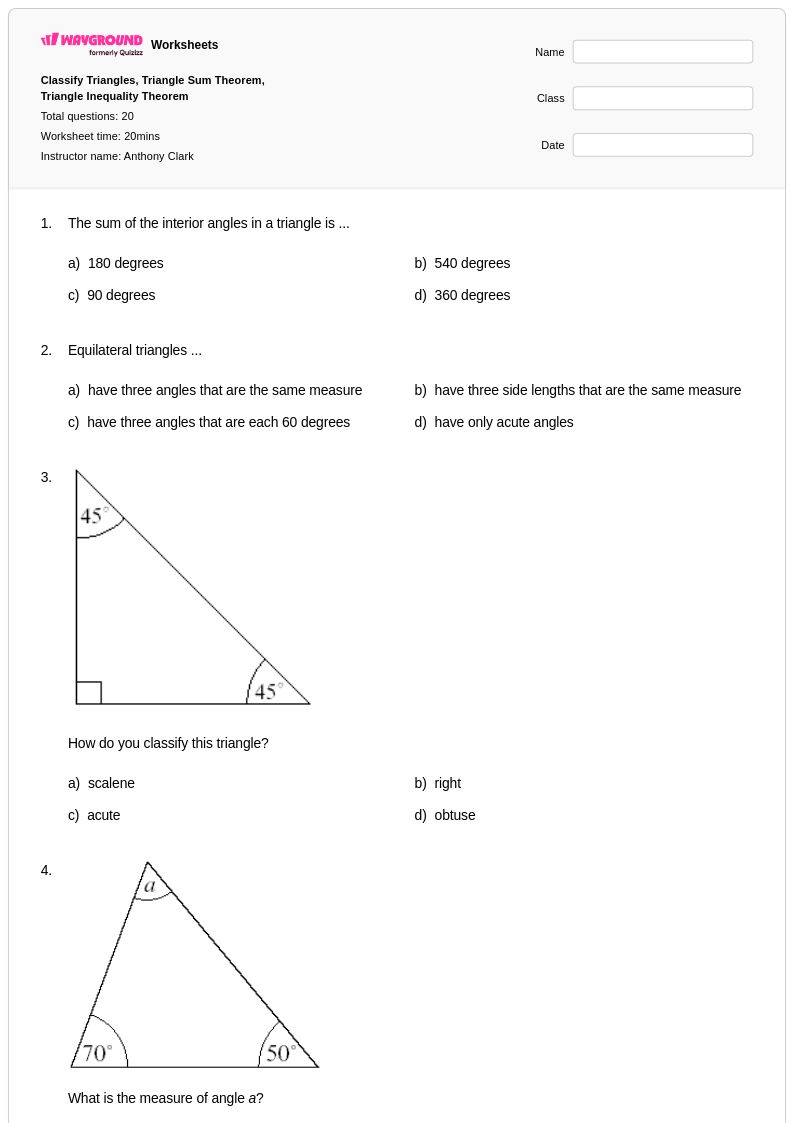
20Q
7th - Uni
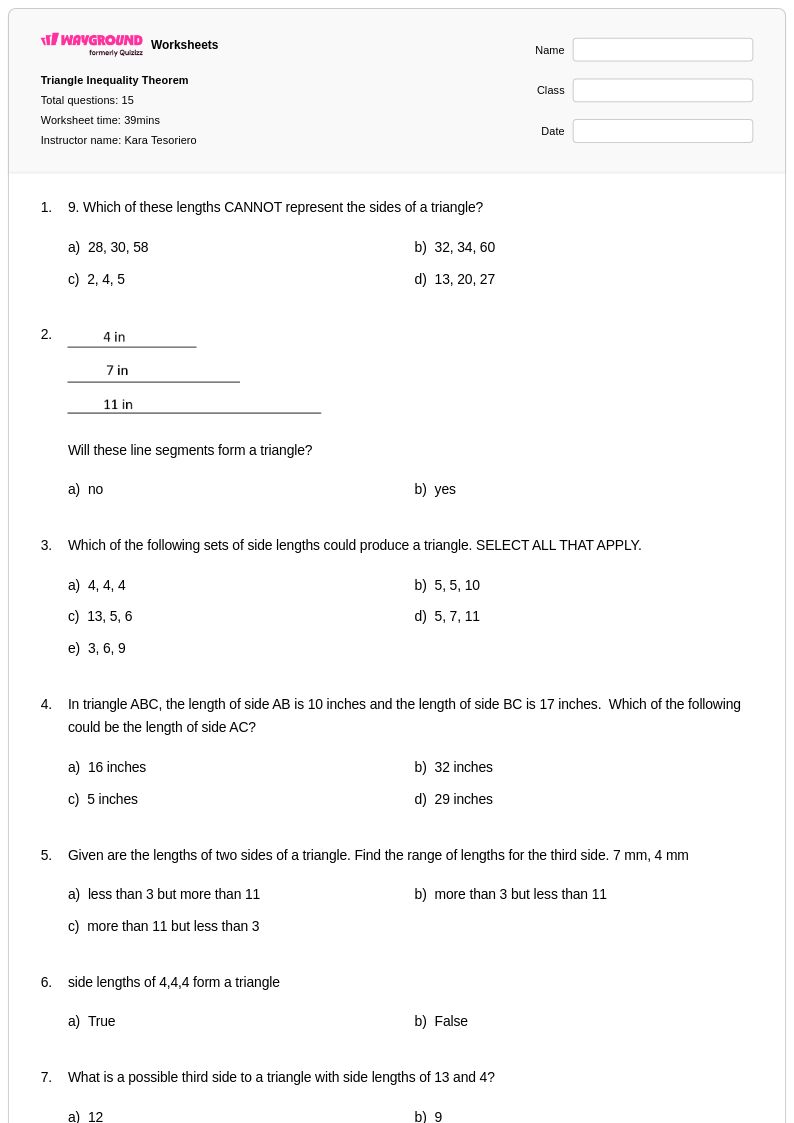
15Q
6th - 8th
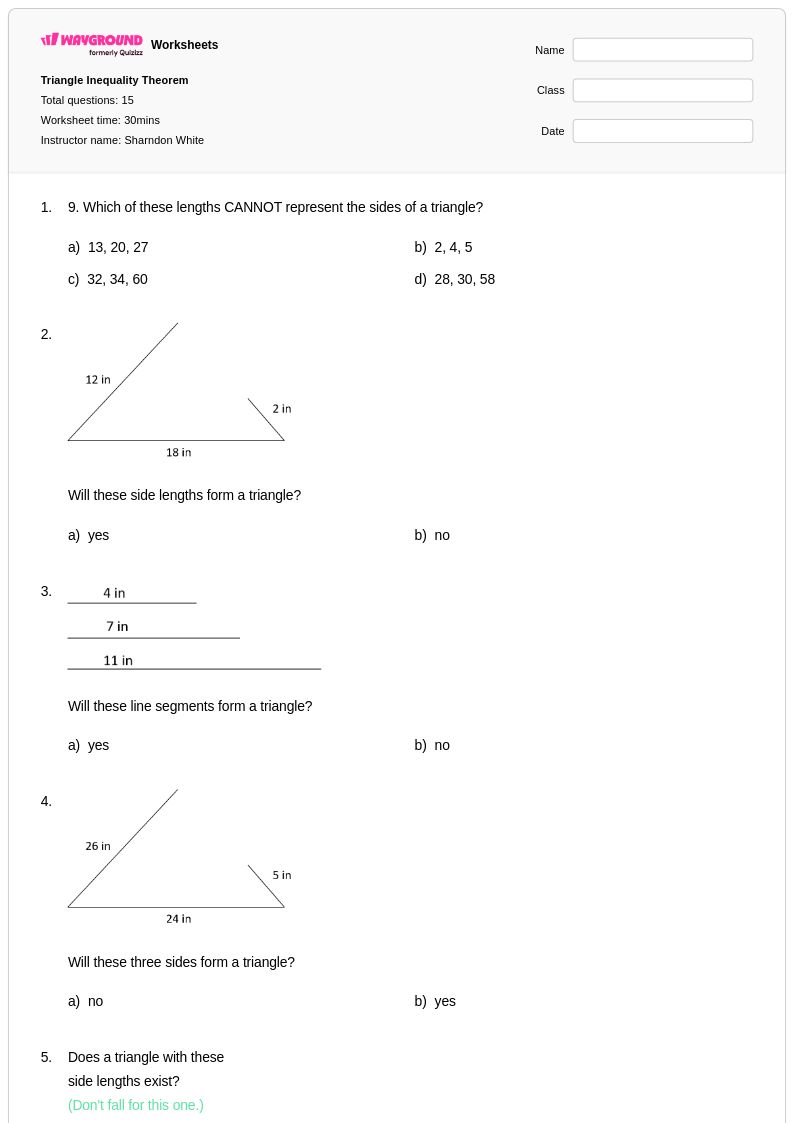
15Q
6th
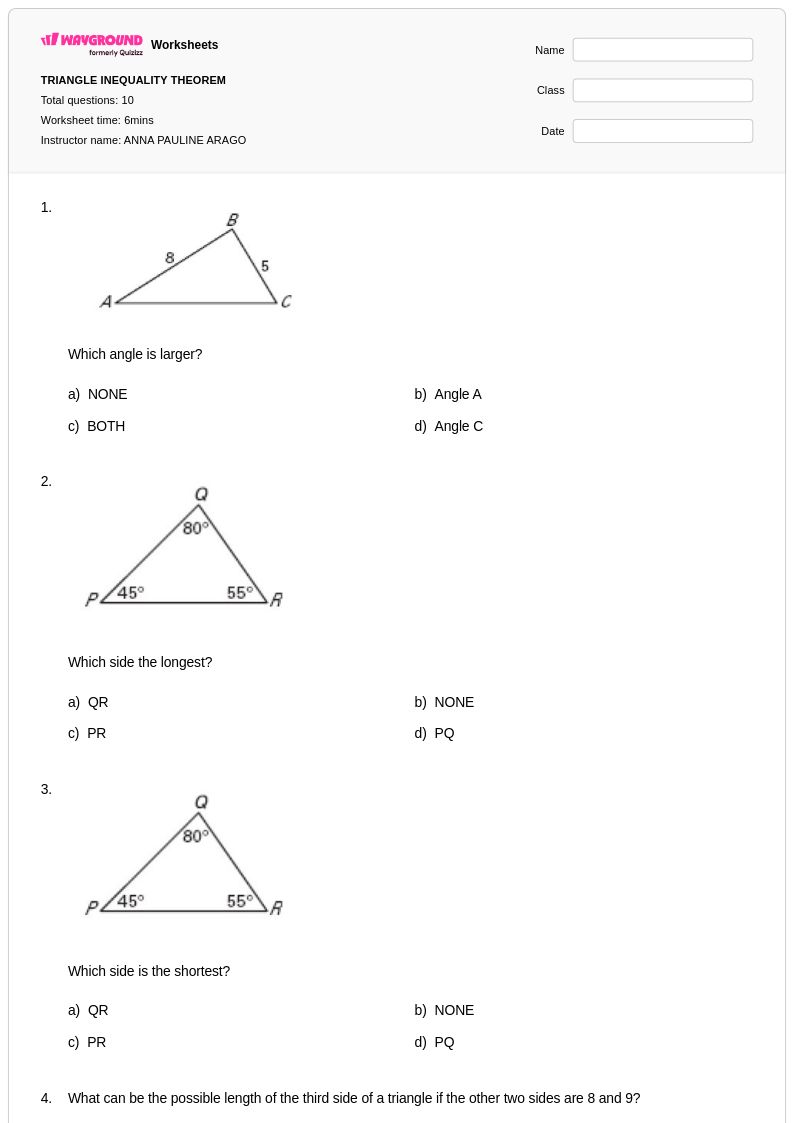
10Q
8th
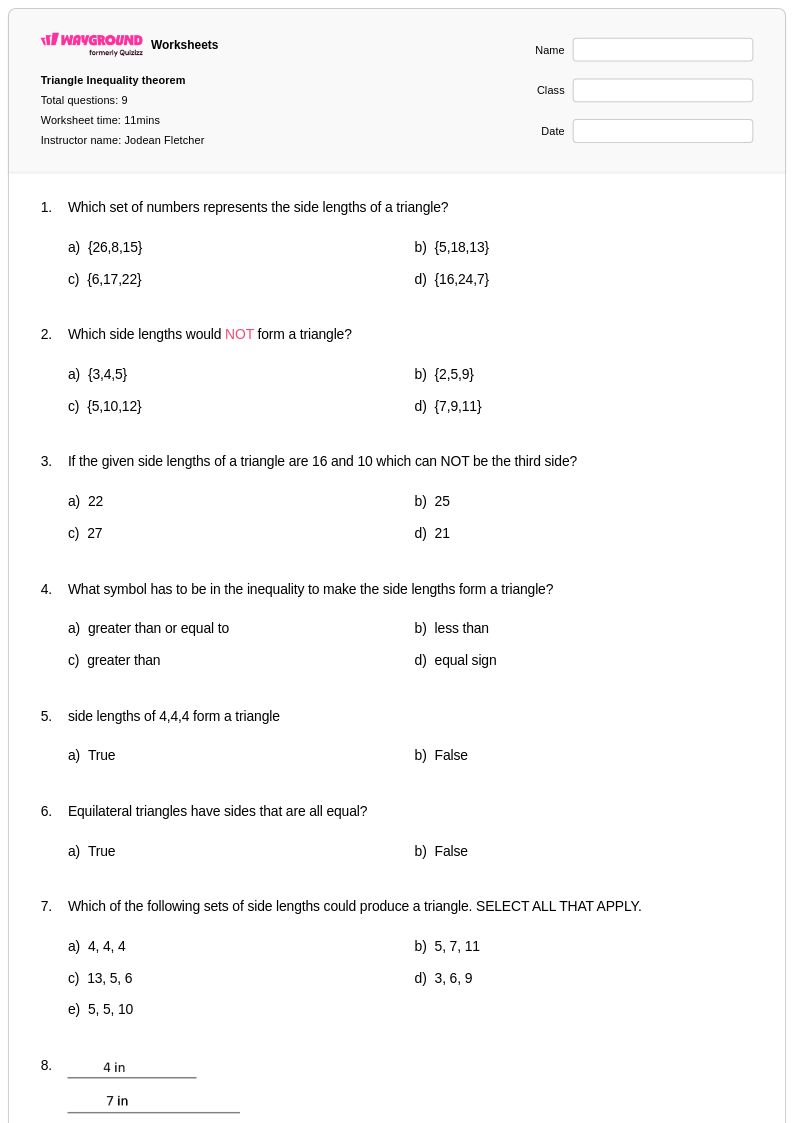
9Q
6th - 7th
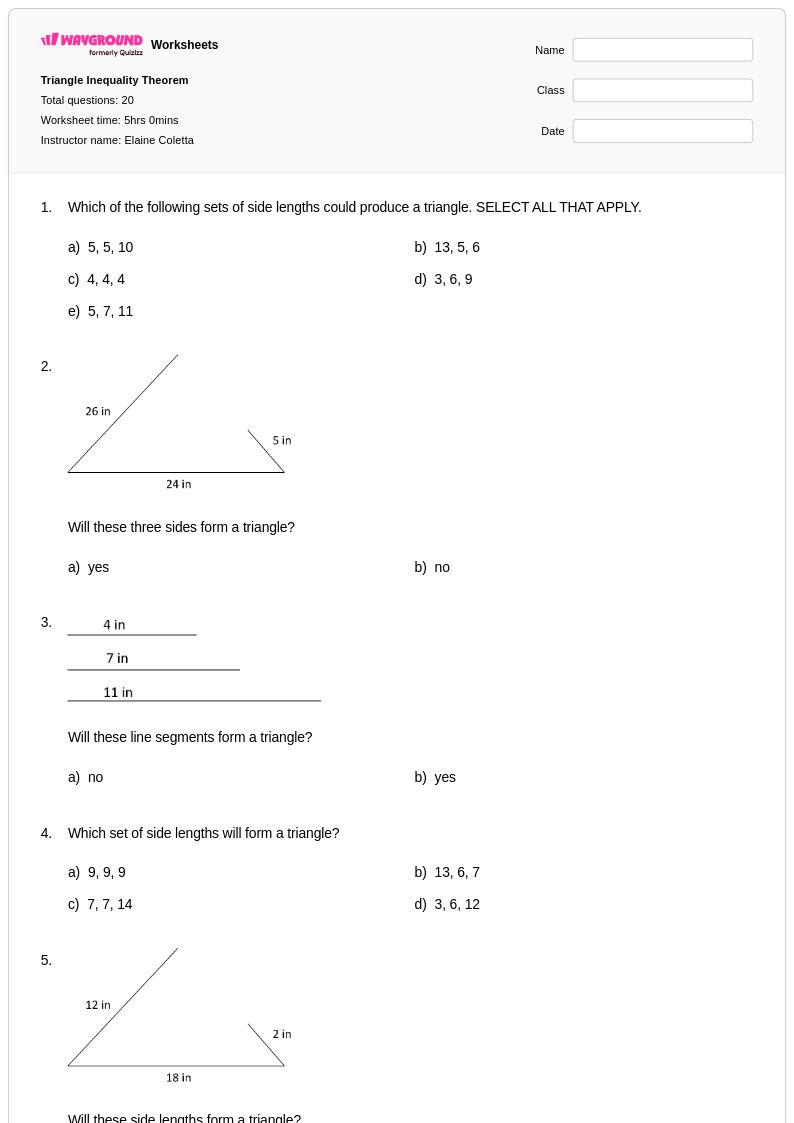
20Q
7th - 8th
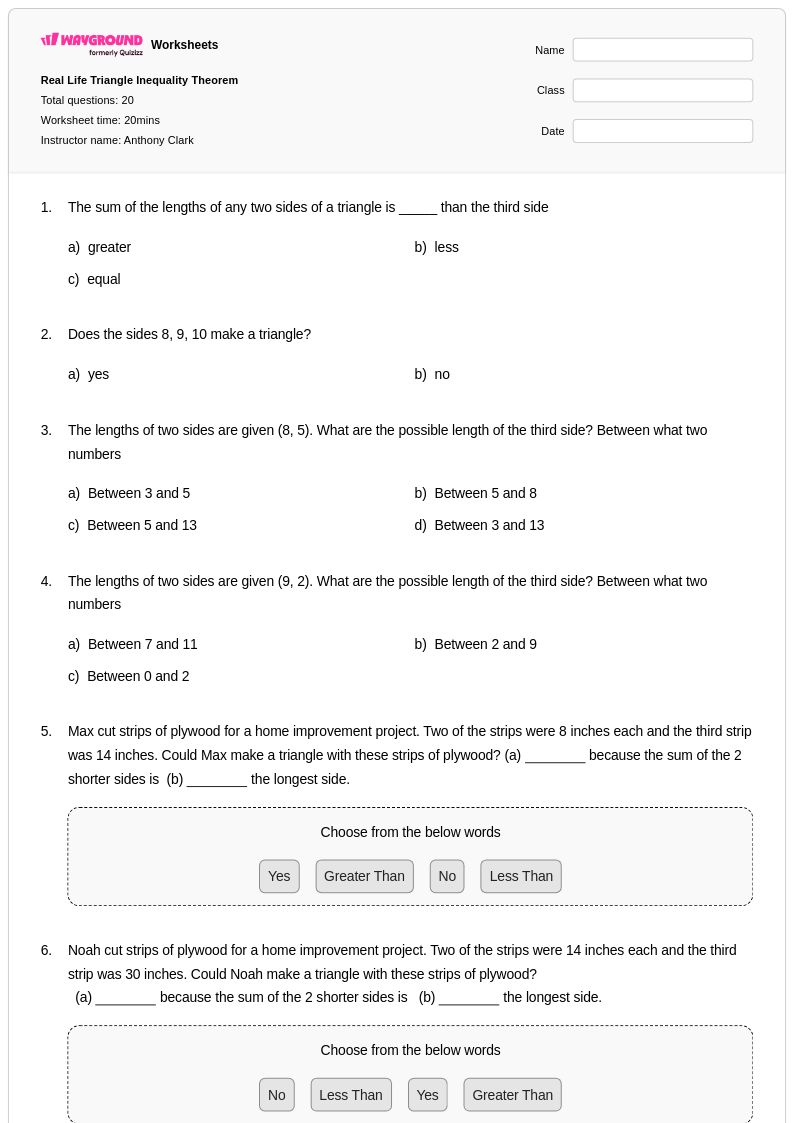
20Q
7th - Uni
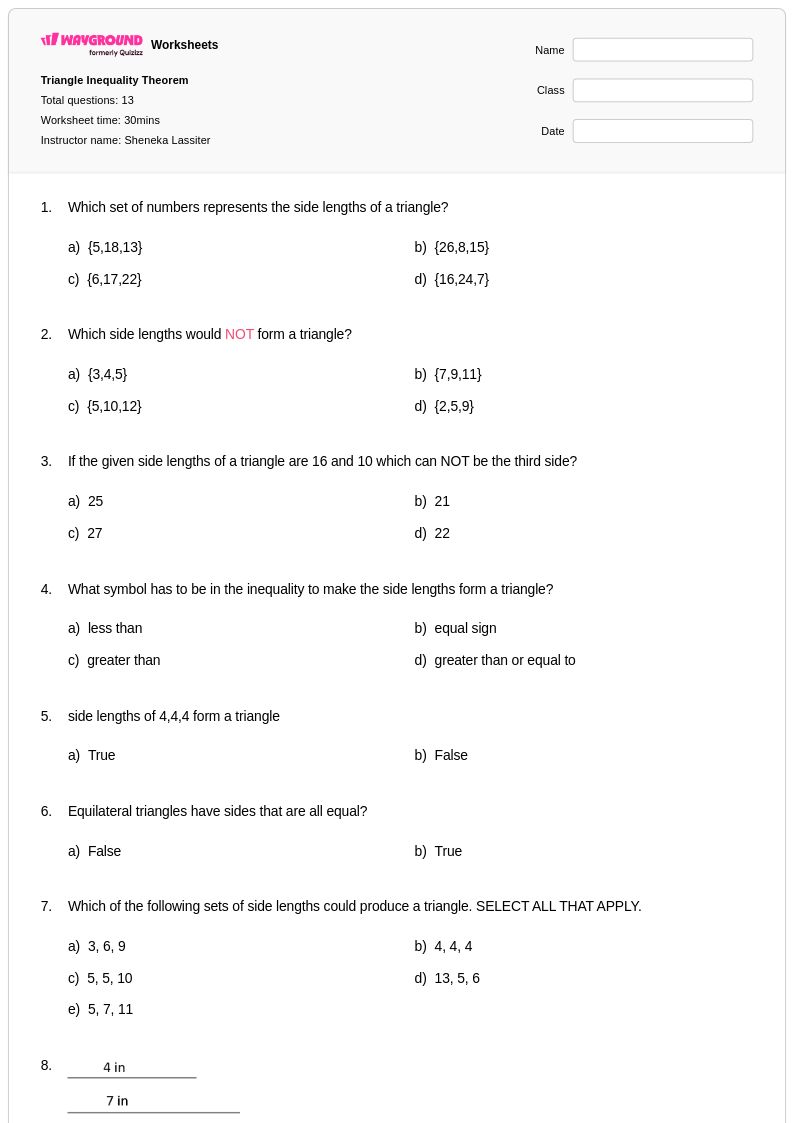
13Q
9th - 12th
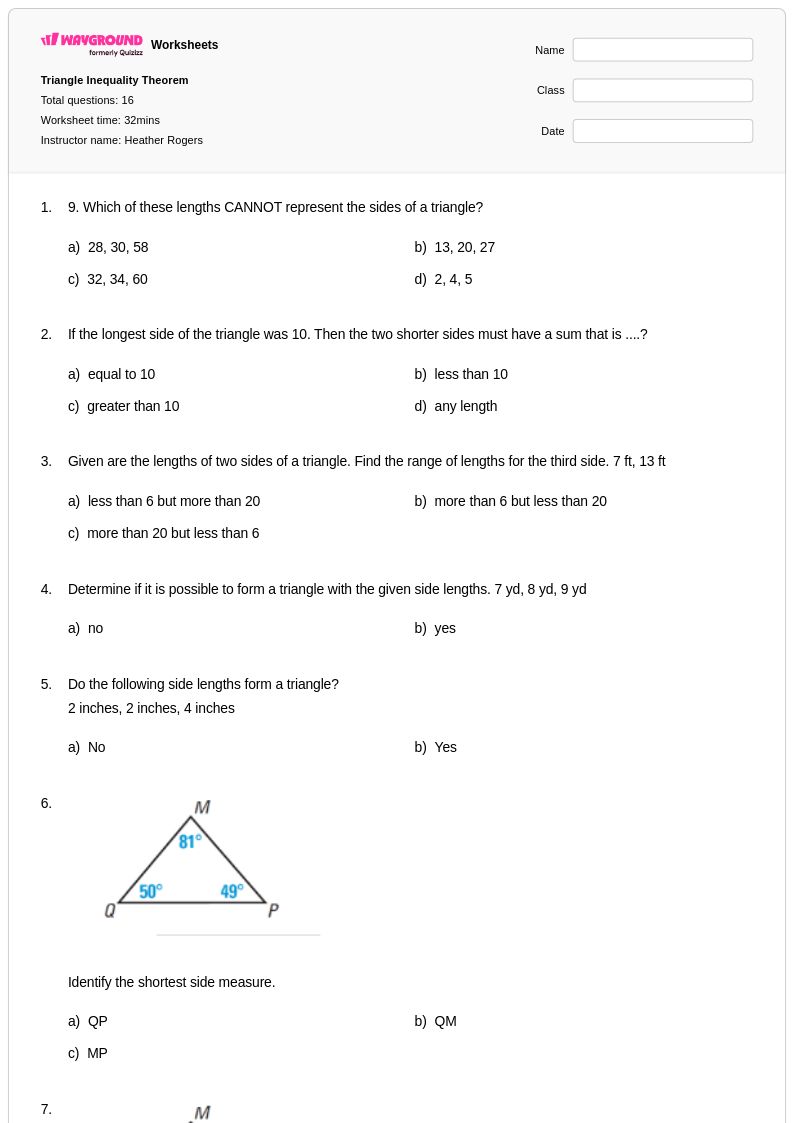
16Q
9th - 12th

11Q
10th
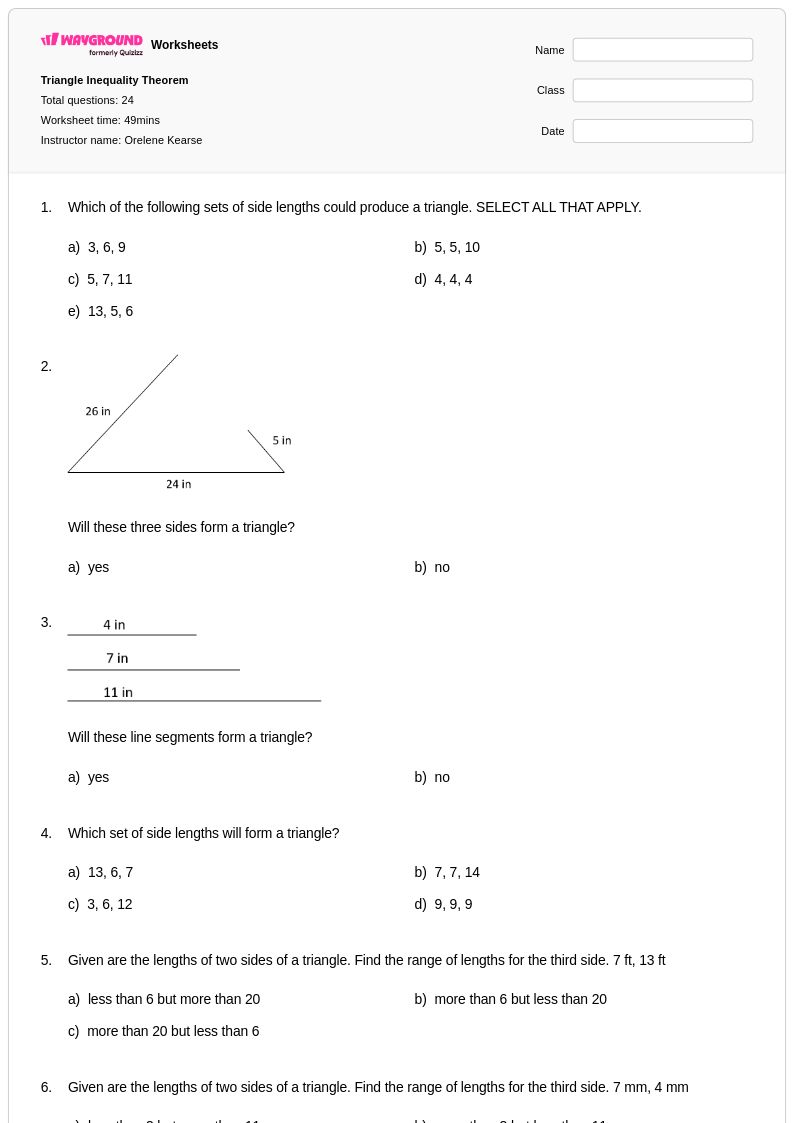
24Q
10th
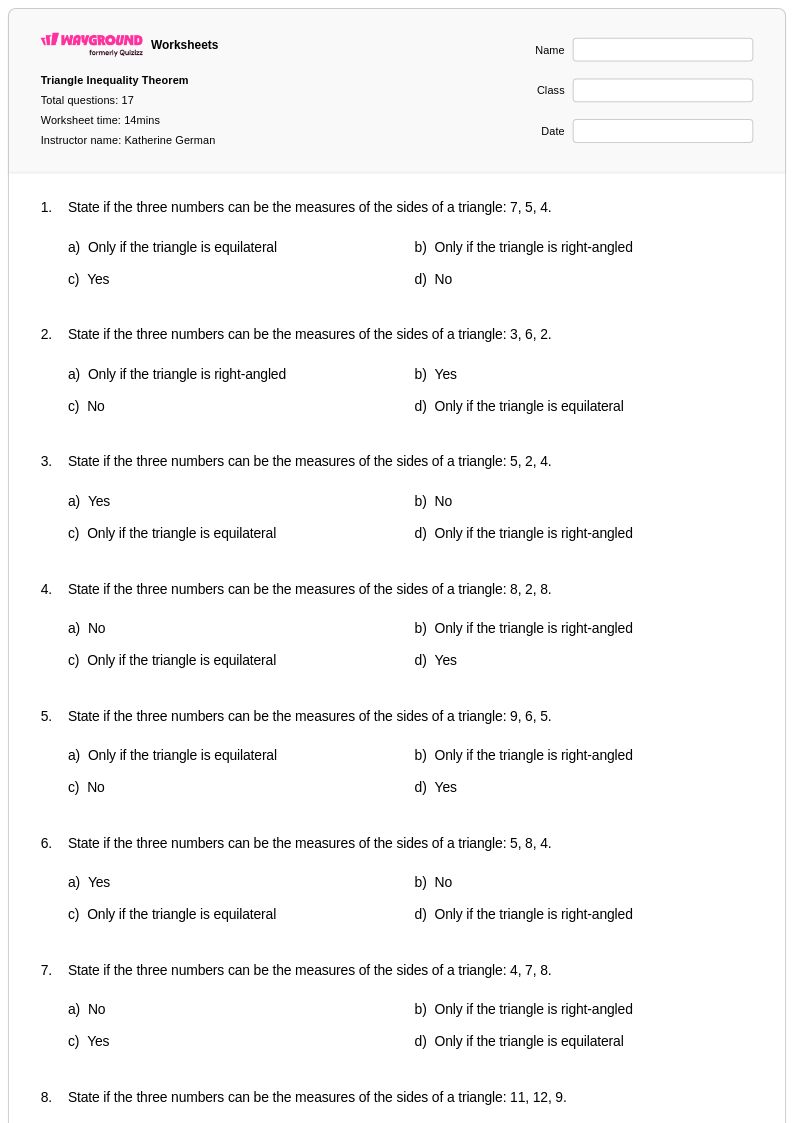
17Q
7th
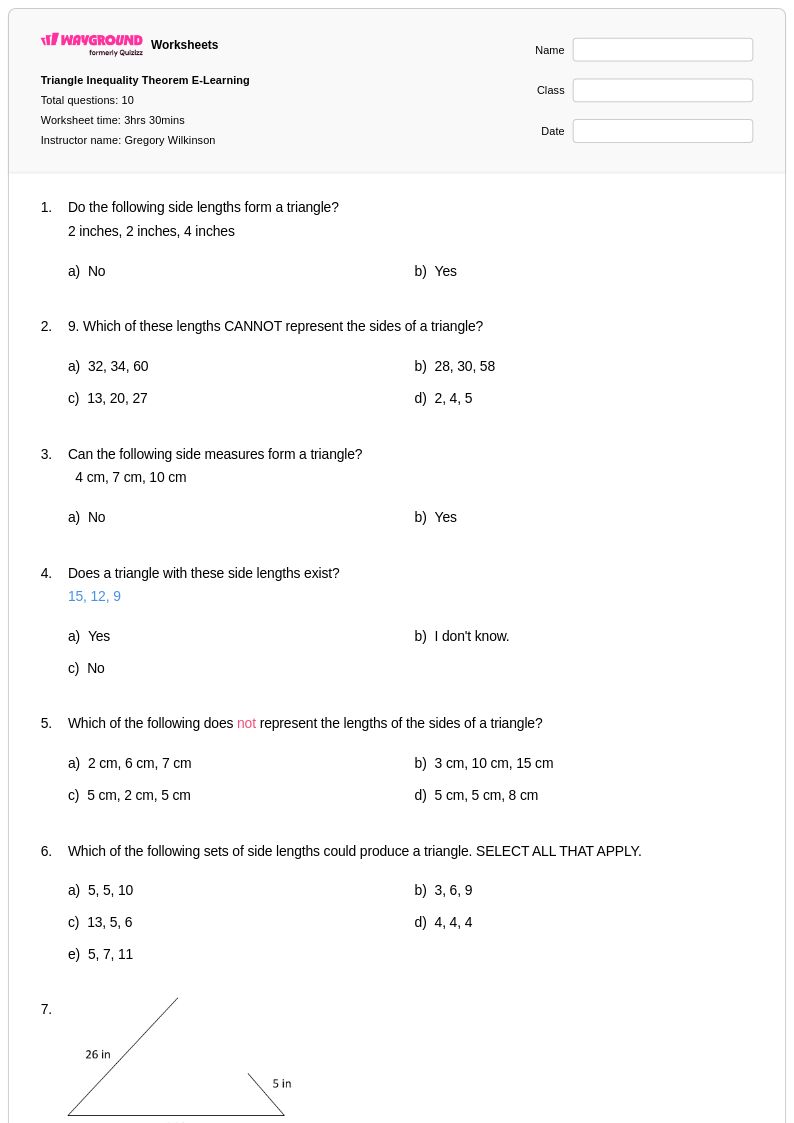
10Q
7th
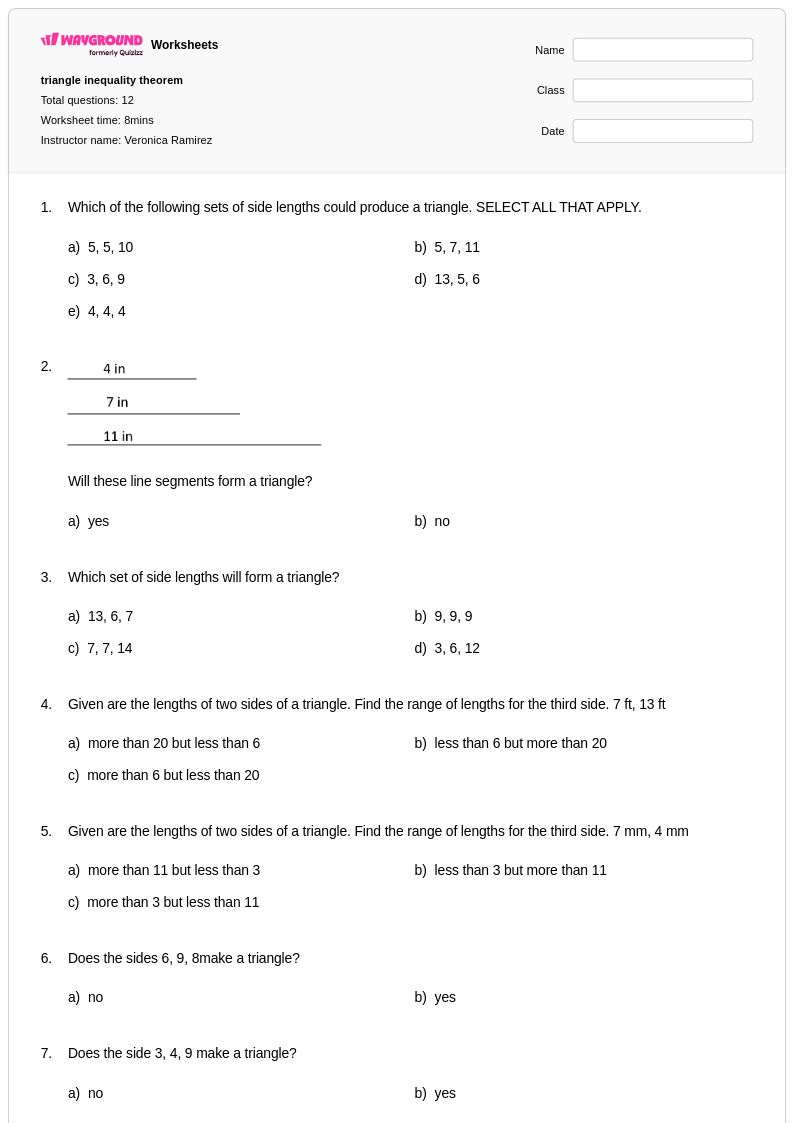
12Q
7th
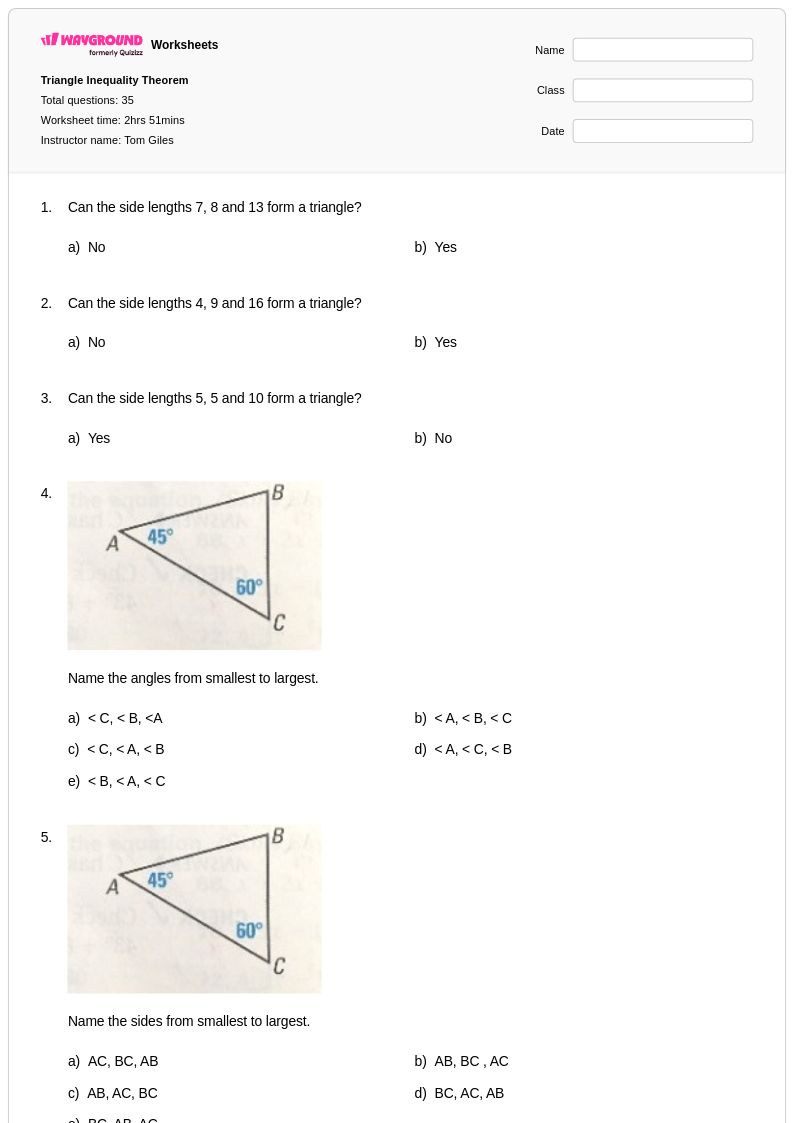
35Q
10th
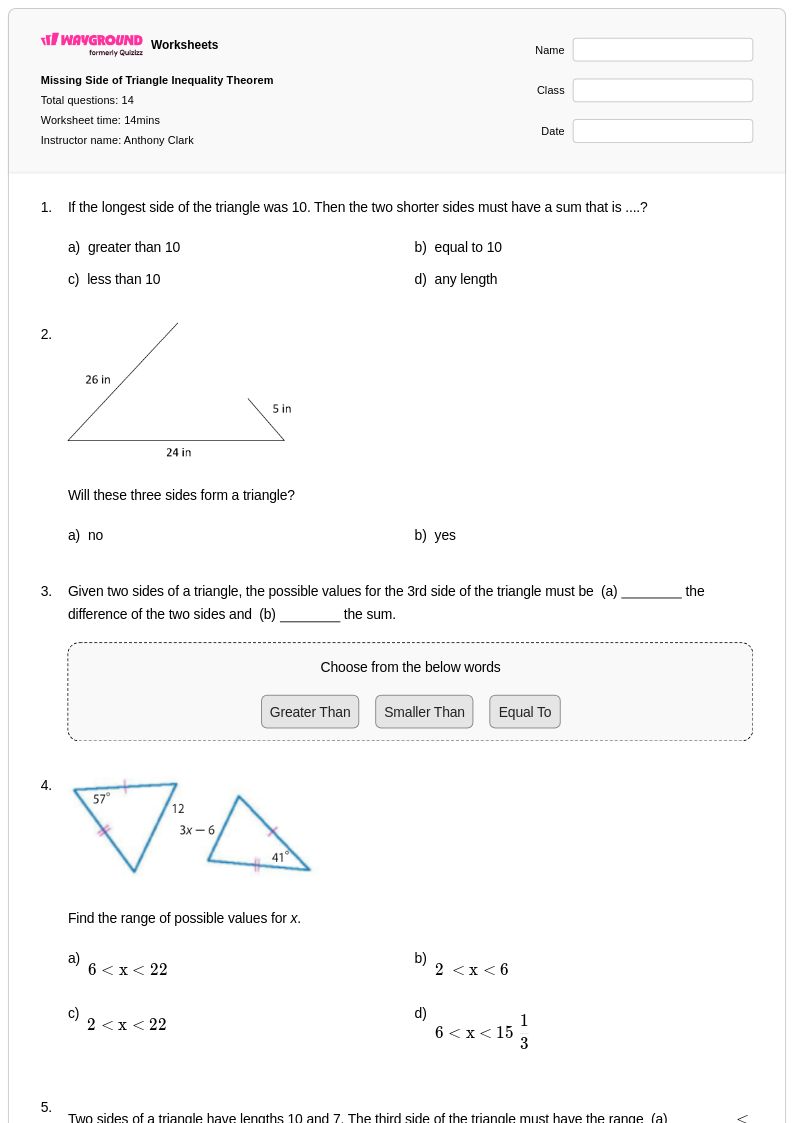
14Q
7th - Uni
Explore planilhas por assuntos
Explore printable Triangle Inequality Theorem worksheets
Triangle Inequality Theorem worksheets available through Wayground (formerly Quizizz) provide comprehensive practice for students mastering one of geometry's fundamental principles. These expertly designed resources help students understand that the sum of any two sides of a triangle must be greater than the third side, developing critical geometric reasoning skills through systematic exploration of side length relationships. The worksheets feature diverse practice problems that challenge students to determine whether given side lengths can form valid triangles, identify possible ranges for unknown side lengths, and apply the theorem in real-world contexts. Each printable resource includes a complete answer key, making these free materials invaluable for both independent study and classroom instruction, while pdf formats ensure consistent formatting across different devices and printing scenarios.
Wayground (formerly Quizizz) empowers educators with millions of teacher-created Triangle Inequality Theorem resources that streamline lesson planning and support differentiated instruction. The platform's robust search and filtering capabilities allow teachers to quickly locate worksheets aligned with specific mathematical standards and tailored to diverse skill levels, from introductory concepts to advanced applications. These customizable materials are available in both printable and digital formats, including downloadable pdf versions that maintain professional quality whether used for in-class activities, homework assignments, or assessment preparation. Teachers can leverage these comprehensive collections for targeted remediation with struggling students, enrichment opportunities for advanced learners, and systematic skill practice that builds geometric understanding progressively, ensuring all students develop mastery of this essential theorem through varied and engaging problem-solving experiences.