Free Printable Acids and Bases Worksheets for Class 10
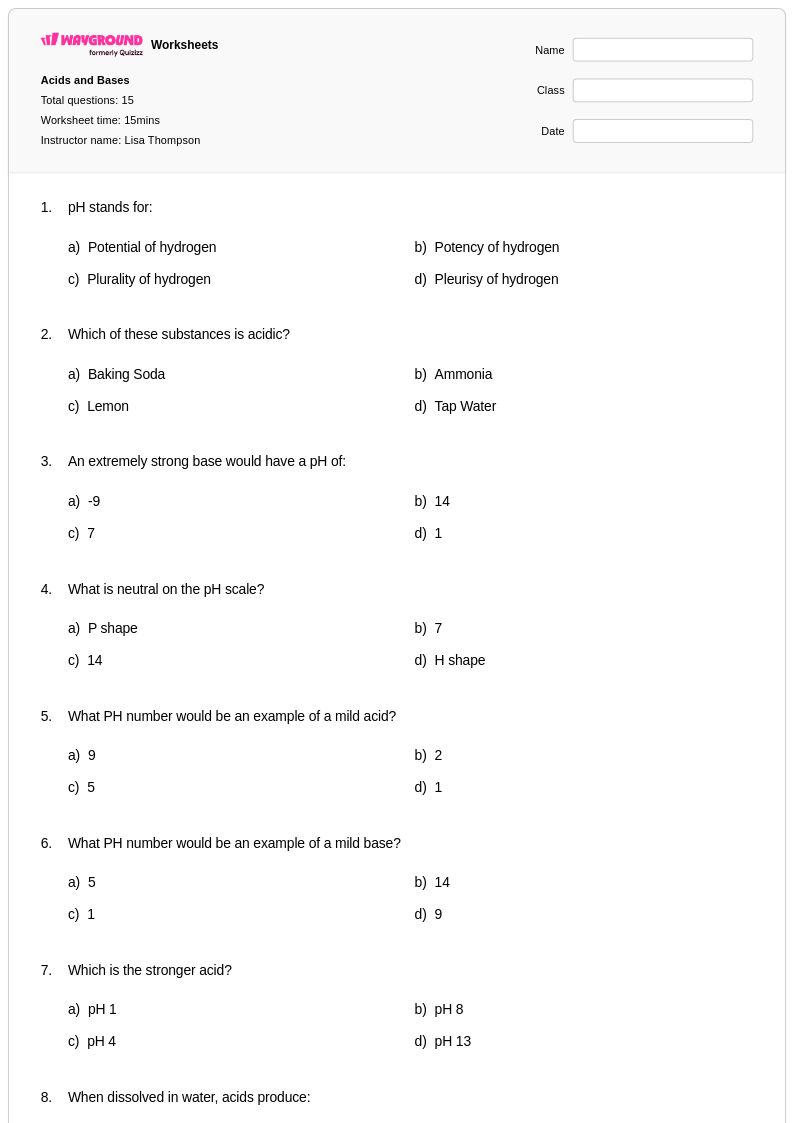
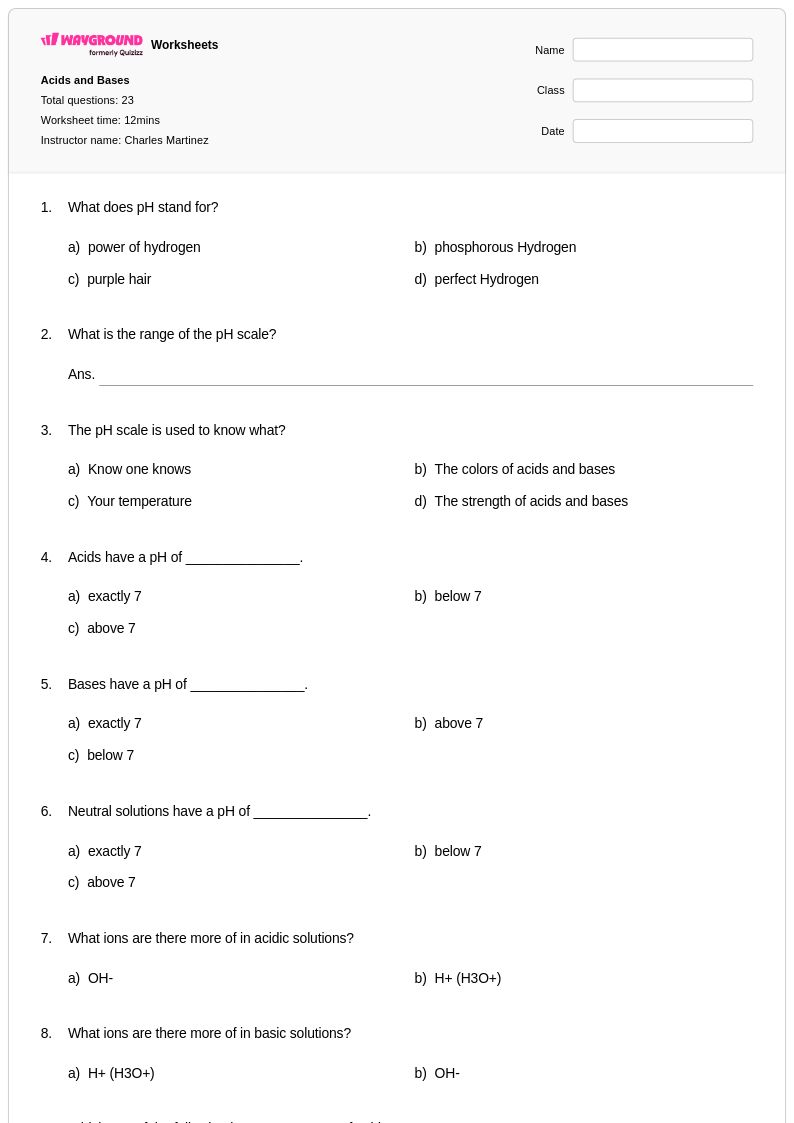
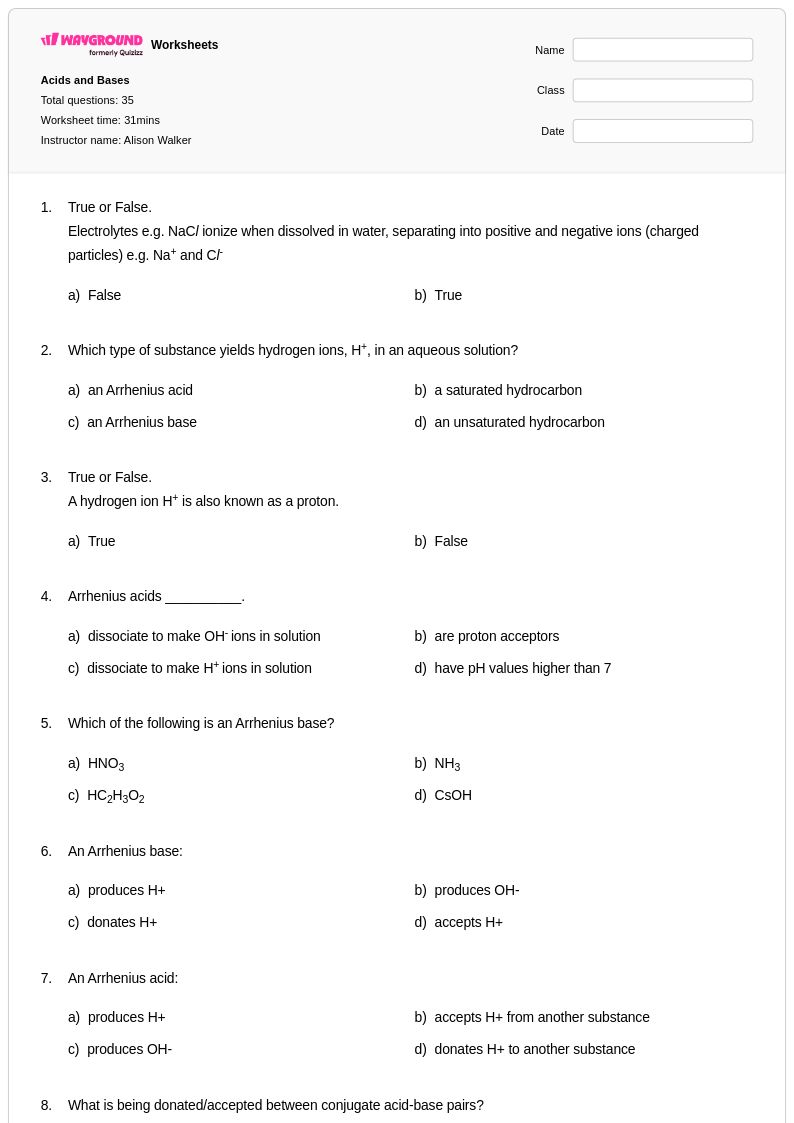
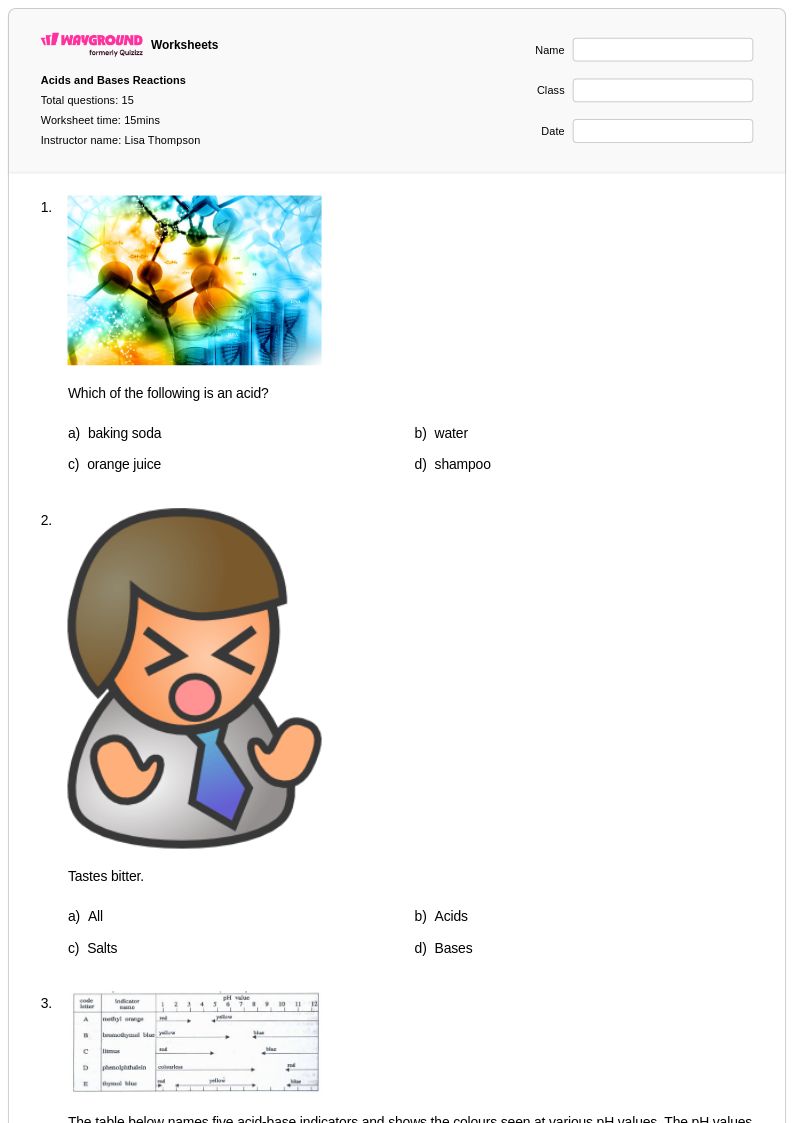
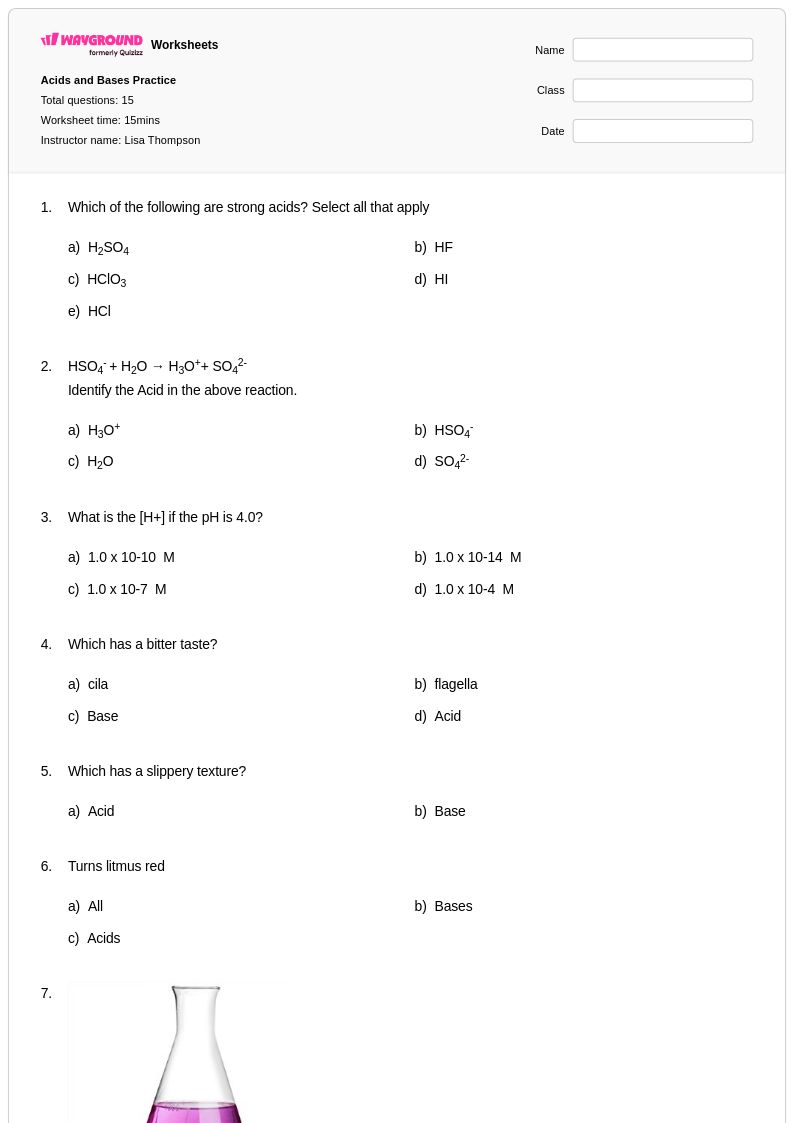
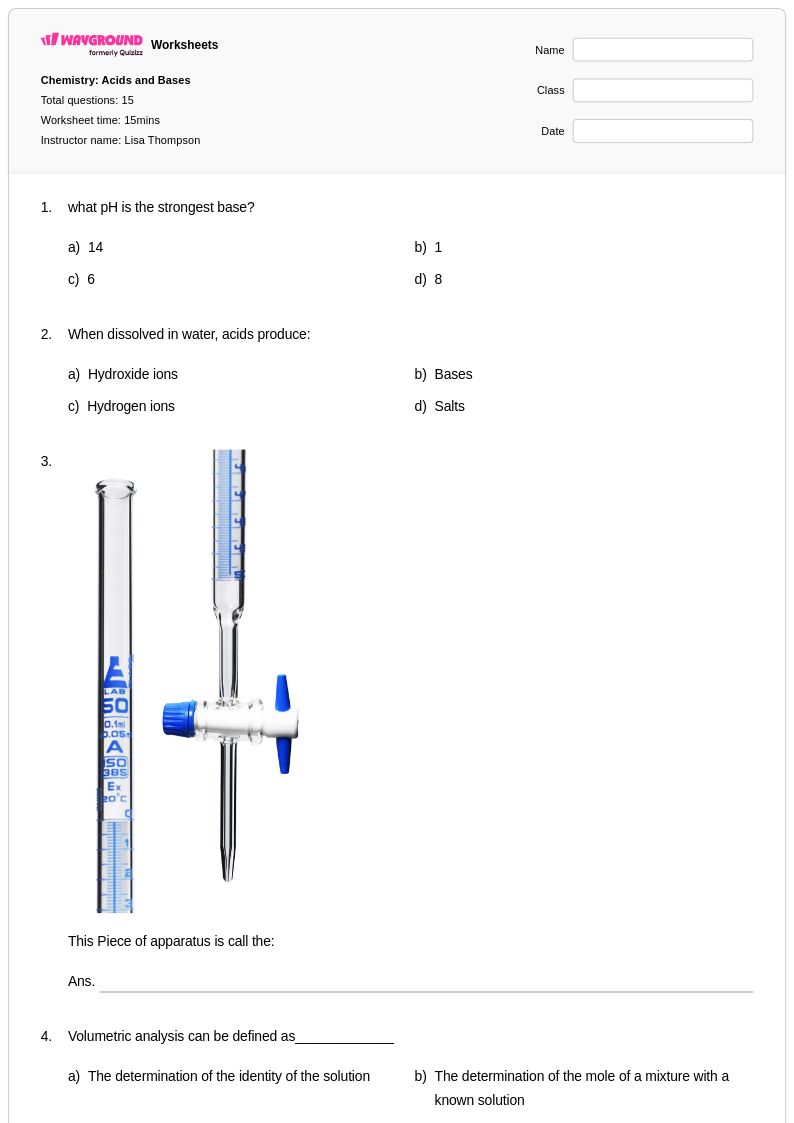
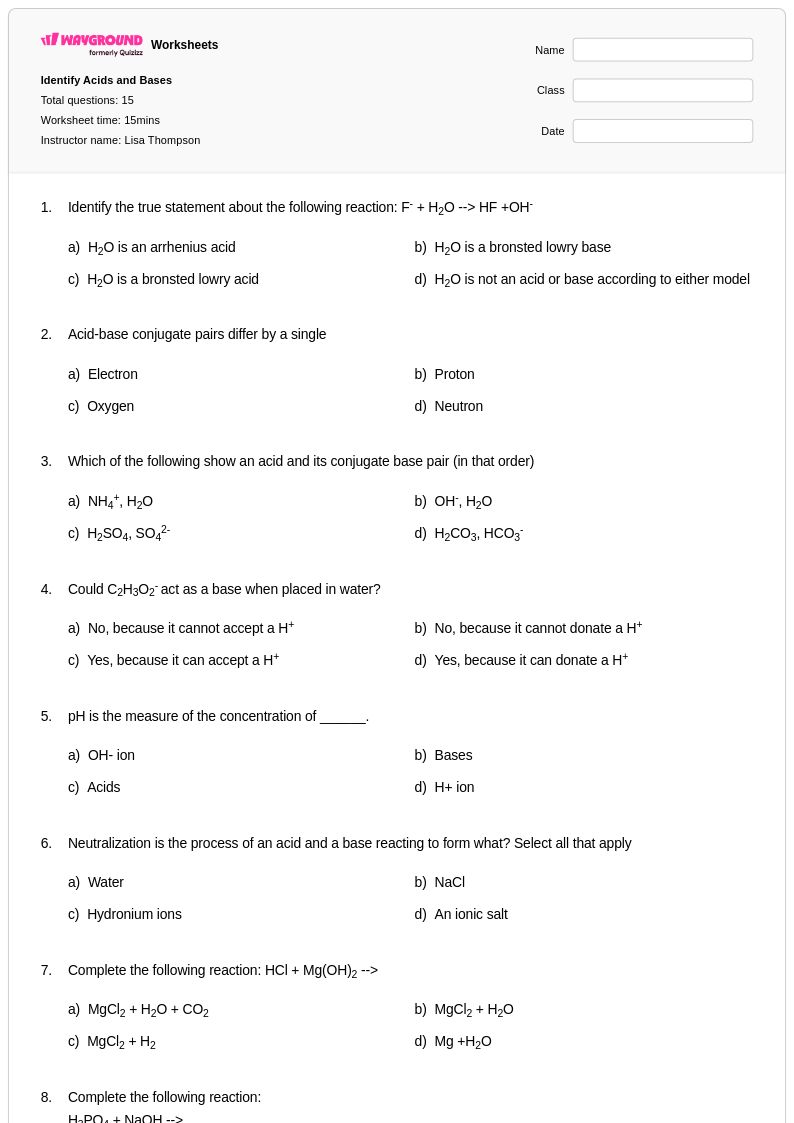
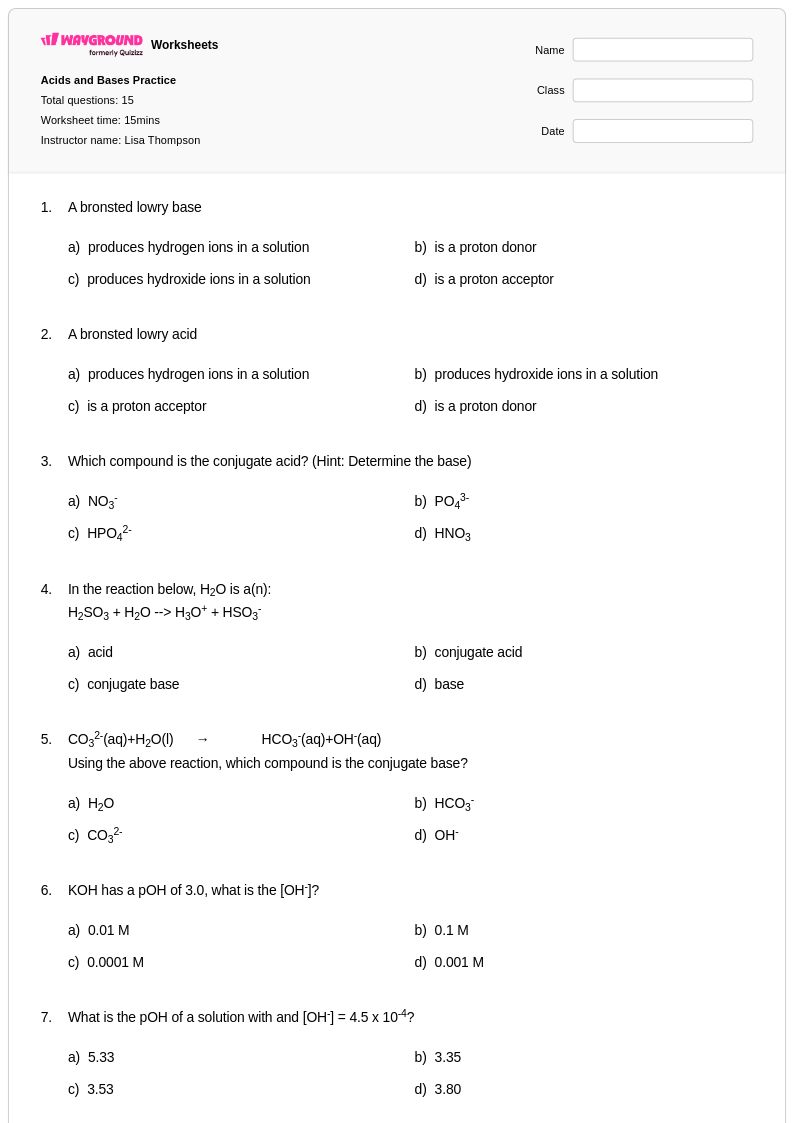
Enhance Class 10 students' understanding of acids and bases with Wayground's comprehensive collection of free printable chemistry worksheets, featuring practice problems and complete answer keys in PDF format.
Explore printable Acids and Bases worksheets for Class 10
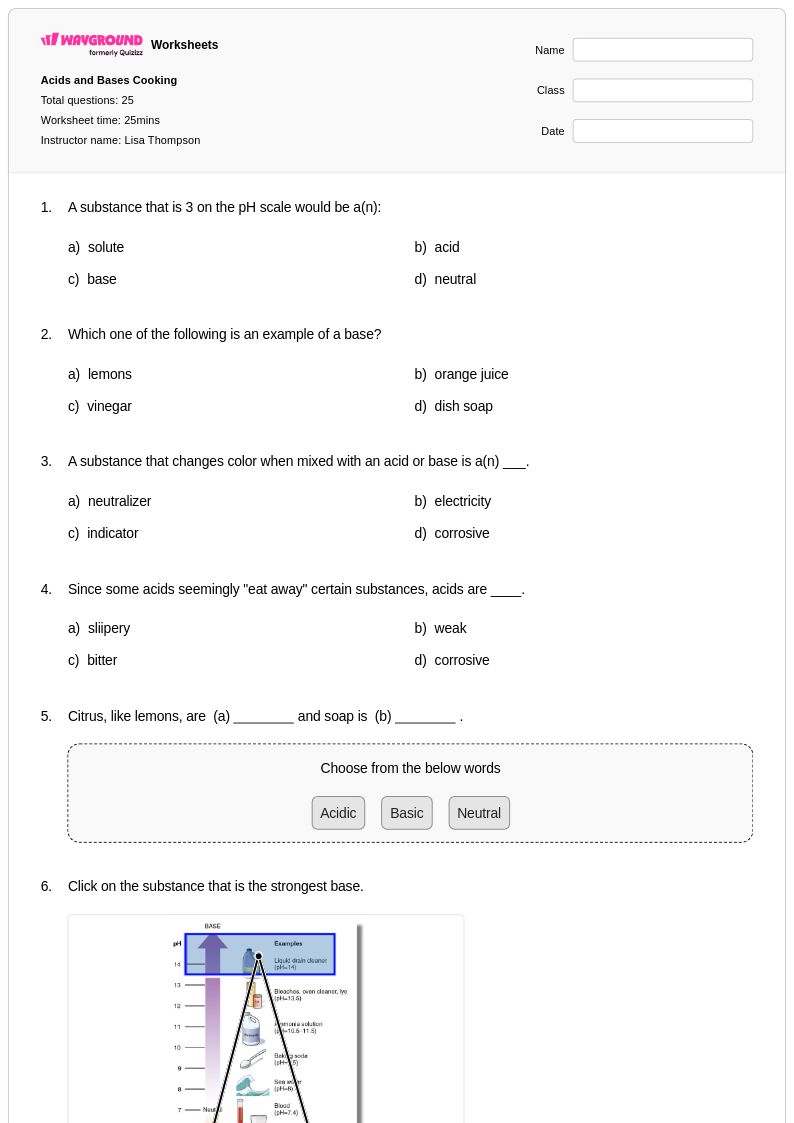
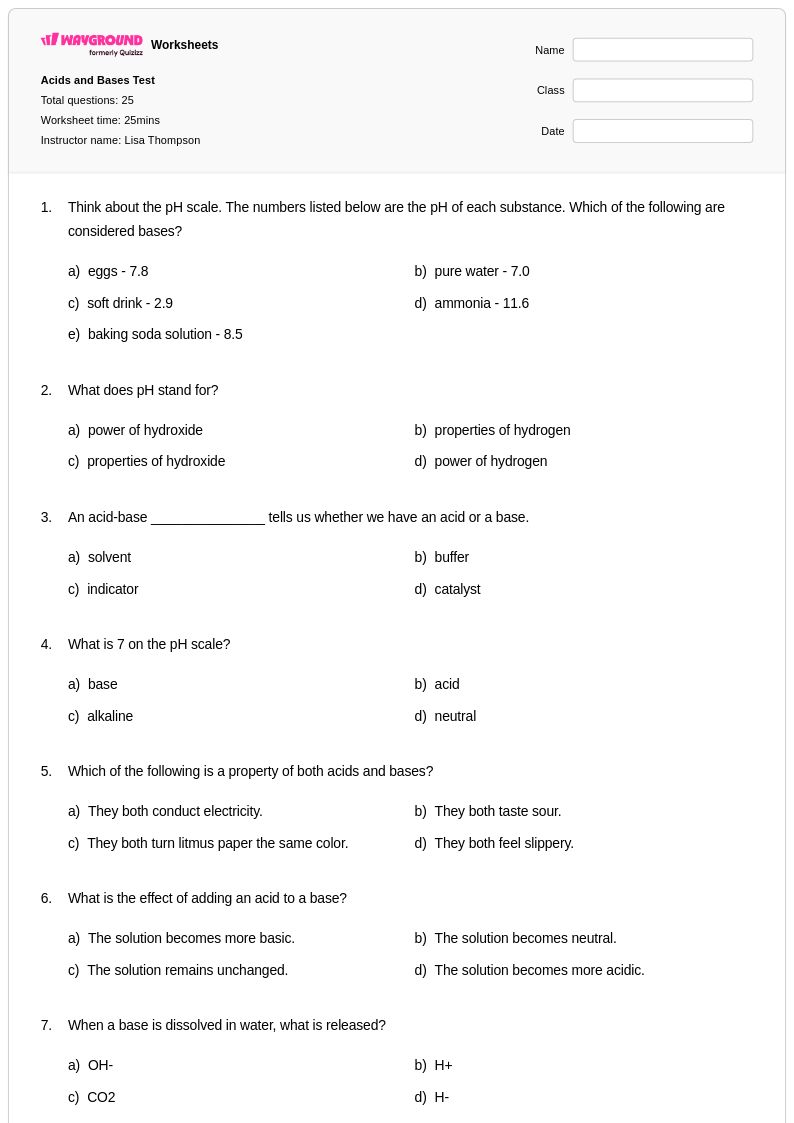
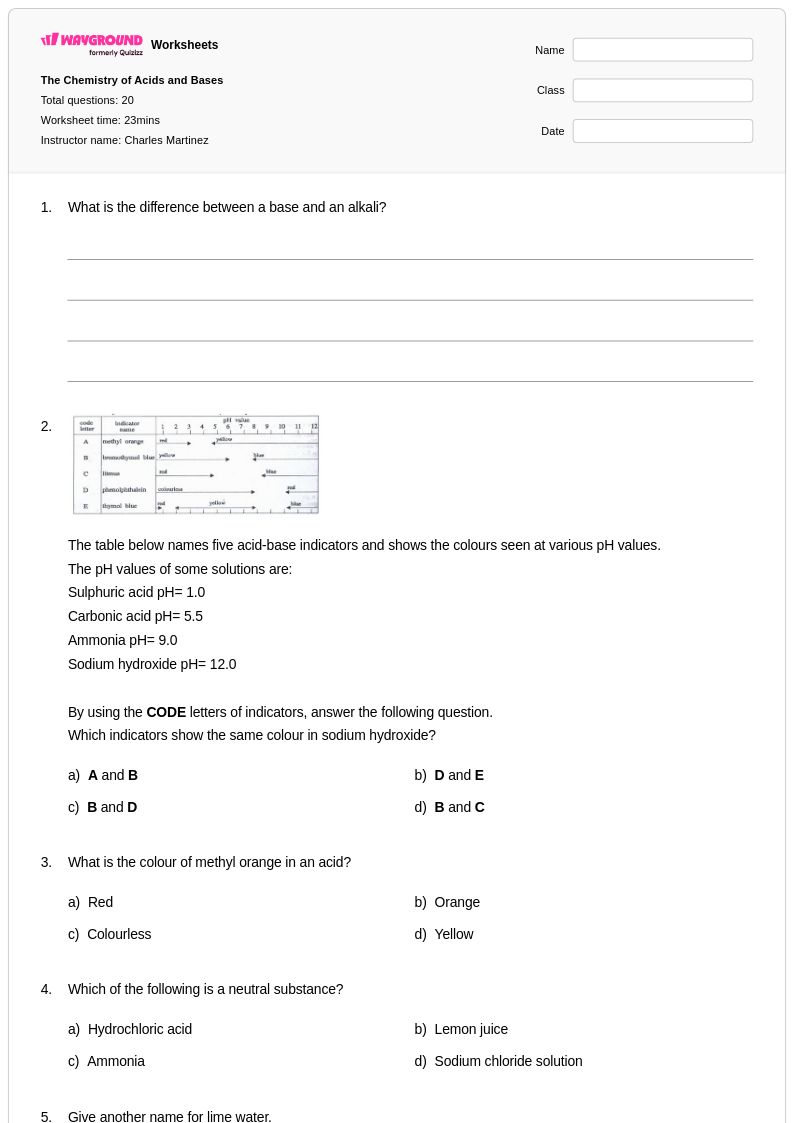
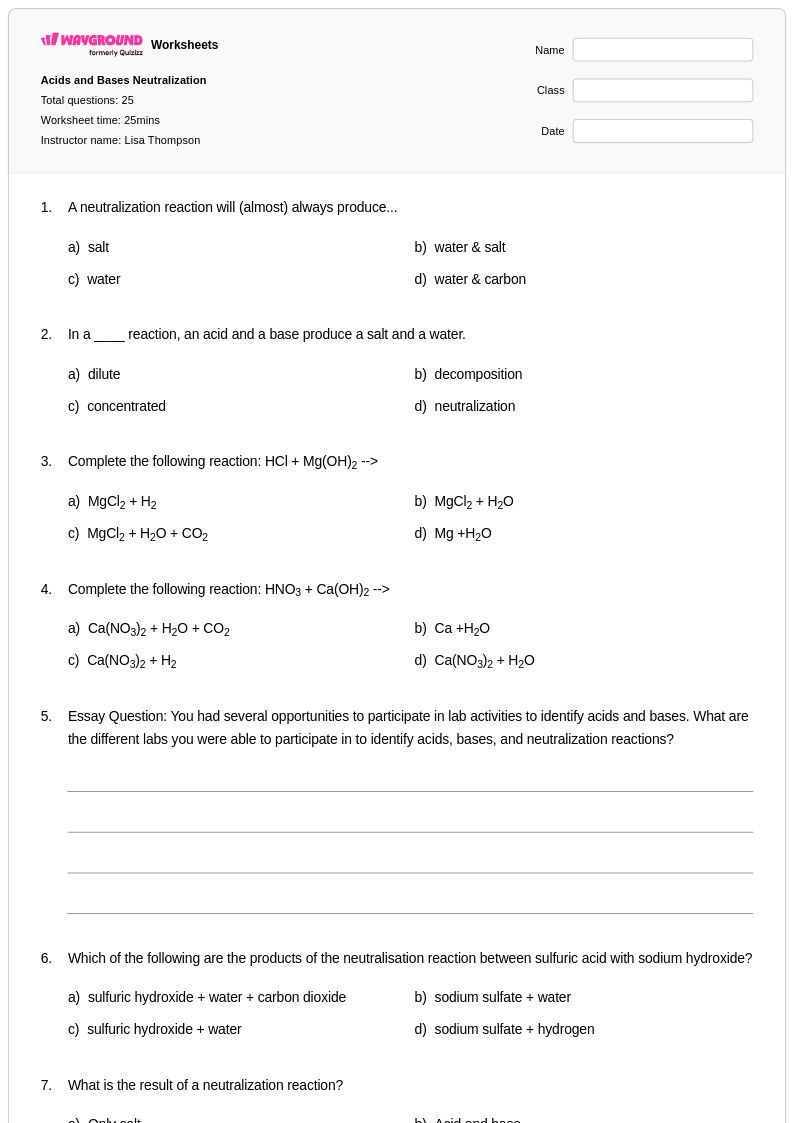
Acids and bases worksheets for Class 10 students available through Wayground (formerly Quizizz) provide comprehensive coverage of fundamental chemical concepts including pH scales, neutralization reactions, and the properties of acidic and basic solutions. These carefully designed practice problems strengthen students' understanding of acid-base theory, chemical equations, and laboratory procedures while building critical thinking skills essential for advanced chemistry coursework. Each worksheet collection includes detailed answer keys and is available as free printables in convenient PDF format, allowing educators to seamlessly integrate these resources into their existing curriculum whether for initial instruction, homework assignments, or assessment preparation.
Wayground (formerly Quizizz) supports chemistry teachers with an extensive library of millions of teacher-created resources specifically focused on acids and bases concepts, offering robust search and filtering capabilities that align with state and national science standards. The platform's differentiation tools enable educators to customize worksheets based on individual student needs, while flexible formatting options provide both printable PDF versions and interactive digital formats suitable for various classroom environments. These comprehensive features streamline lesson planning by offering ready-to-use materials for skill practice, targeted remediation for struggling learners, and enrichment opportunities for advanced students, ensuring that all Class 10 chemistry students can master the complex relationships between acids, bases, and chemical equilibrium.
FAQs
How do I teach acids and bases to chemistry students?
Start by grounding students in the three major acid-base theories: Arrhenius, Brønsted-Lowry, and Lewis. Use the pH scale as an anchor concept before introducing neutralization reactions and titration, since students grasp the continuum of acidity more readily when it's tied to familiar substances like lemon juice or baking soda. Connecting chemical properties to real-world applications, such as stomach acid or household cleaners, builds conceptual relevance before moving into more abstract calculations like pOH and conjugate pairs.
What are the most common mistakes students make when learning about acids and bases?
One of the most frequent errors is confusing pH and pOH, particularly when calculating one from the other or interpreting the pH scale direction. Students often assume that a lower number always means weaker, when in fact a pH of 1 is far more acidic than a pH of 6. Another persistent misconception is treating neutralization as always producing a neutral solution, when in reality salt hydrolysis can yield acidic or basic products depending on the strength of the parent acid and base.
What practice exercises help students get better at pH and acid-base calculations?
Targeted exercises should progress from basic identification tasks, such as classifying substances as acidic or basic using pH values, to multi-step calculations involving pH, pOH, and hydrogen ion concentration. Titration problems and neutralization equation balancing are especially effective for reinforcing stoichiometric reasoning in an acid-base context. Including both conceptual and computational problems in the same practice set helps students connect the 'why' of acid-base behavior to the 'how' of solving related calculations.
How can I differentiate acids and bases instruction for students at different levels?
For students who are still building foundational understanding, focus practice on identifying acidic and basic substances and interpreting the pH scale before introducing calculations. More advanced students can be challenged with buffer systems, conjugate acid-base pair identification, and Lewis acid-base theory. On Wayground, teachers can apply accommodations at the individual student level, including reduced answer choices to lower cognitive load for struggling learners and read-aloud support for students who need it, while the rest of the class works through standard settings without disruption.
How do I use Wayground's acids and bases worksheets in my classroom?
Wayground's acids and bases worksheets are available as printable PDFs for traditional classroom distribution and in digital formats for technology-integrated learning environments, so you can use them for in-class practice, homework, or remote assignments. You can also host any worksheet as a quiz directly on Wayground, which allows for streamlined grading and immediate feedback. Each worksheet includes a complete answer key, making it practical for independent student review as well as teacher-led instruction.
How do I help students who struggle with understanding neutralization reactions?
Students who struggle with neutralization often have gaps in understanding ionic dissociation or balancing equations, so it helps to revisit those prerequisites before tackling full neutralization problems. Use concrete examples like the reaction between hydrochloric acid and sodium hydroxide to show how an acid and base combine to form water and a salt, then have students practice predicting products before moving to quantitative work. Worked examples followed immediately by parallel practice problems are particularly effective at building procedural confidence with this reaction type.