Free Printable Types of Reactions Worksheets for Class 10
Explore Wayground's comprehensive collection of Class 10 chemistry worksheets focusing on types of reactions, featuring free printable PDFs with practice problems and answer keys to help students master chemical reaction classification and mechanisms.
Explore printable Types of Reactions worksheets for Class 10
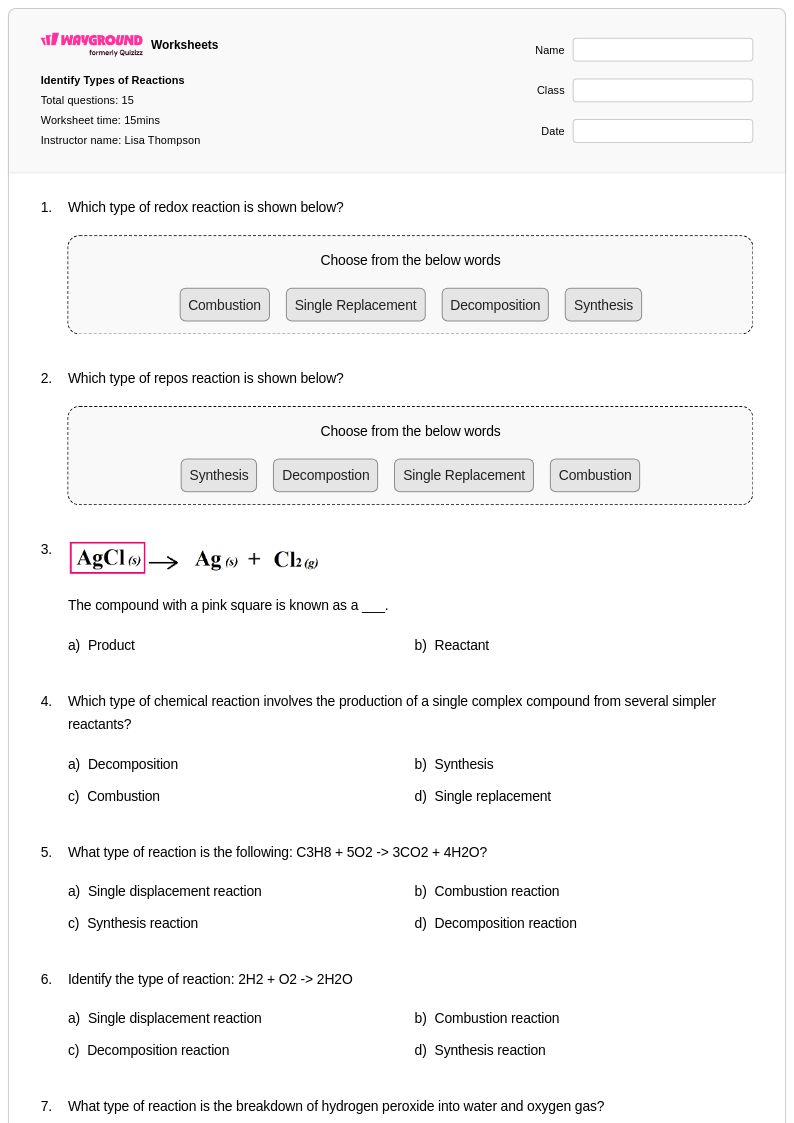
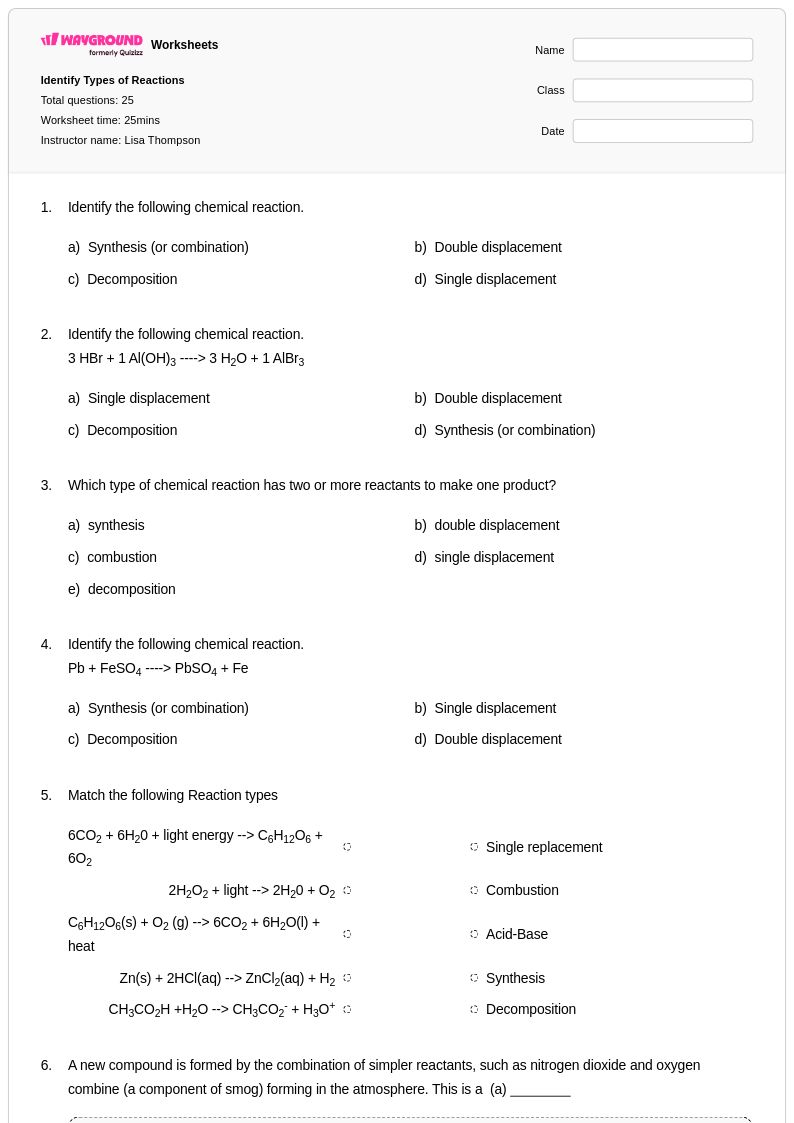
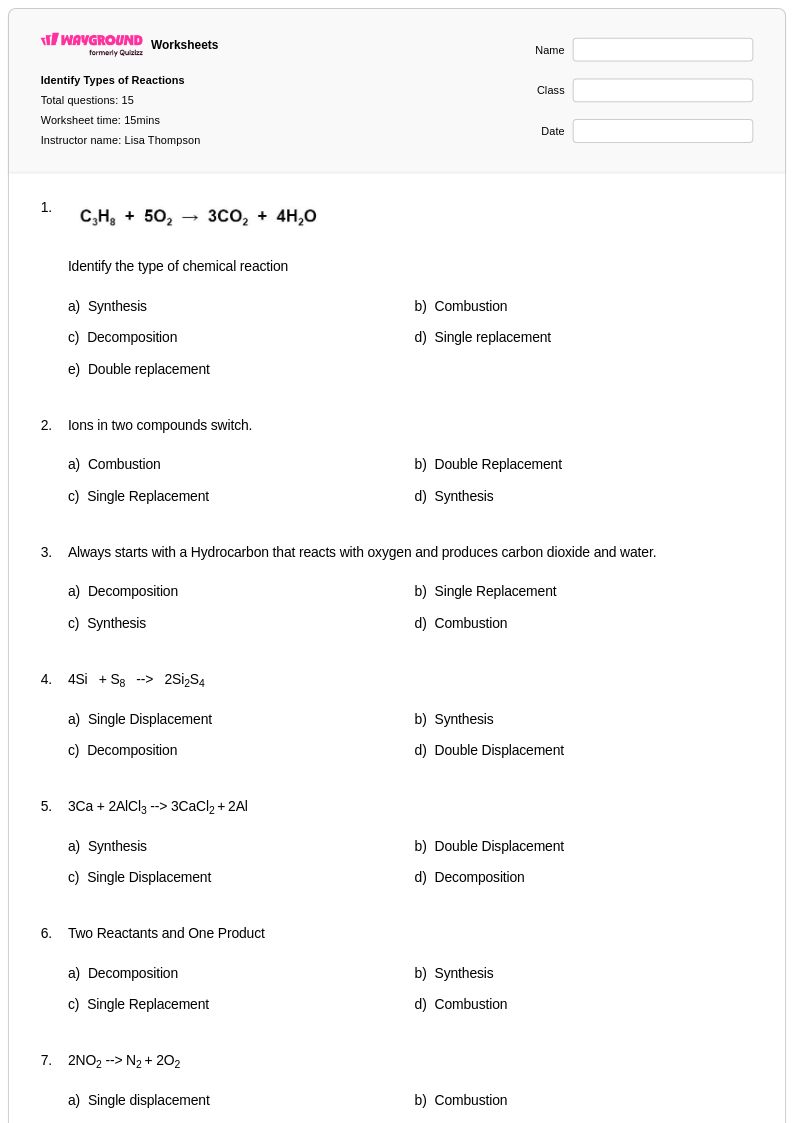
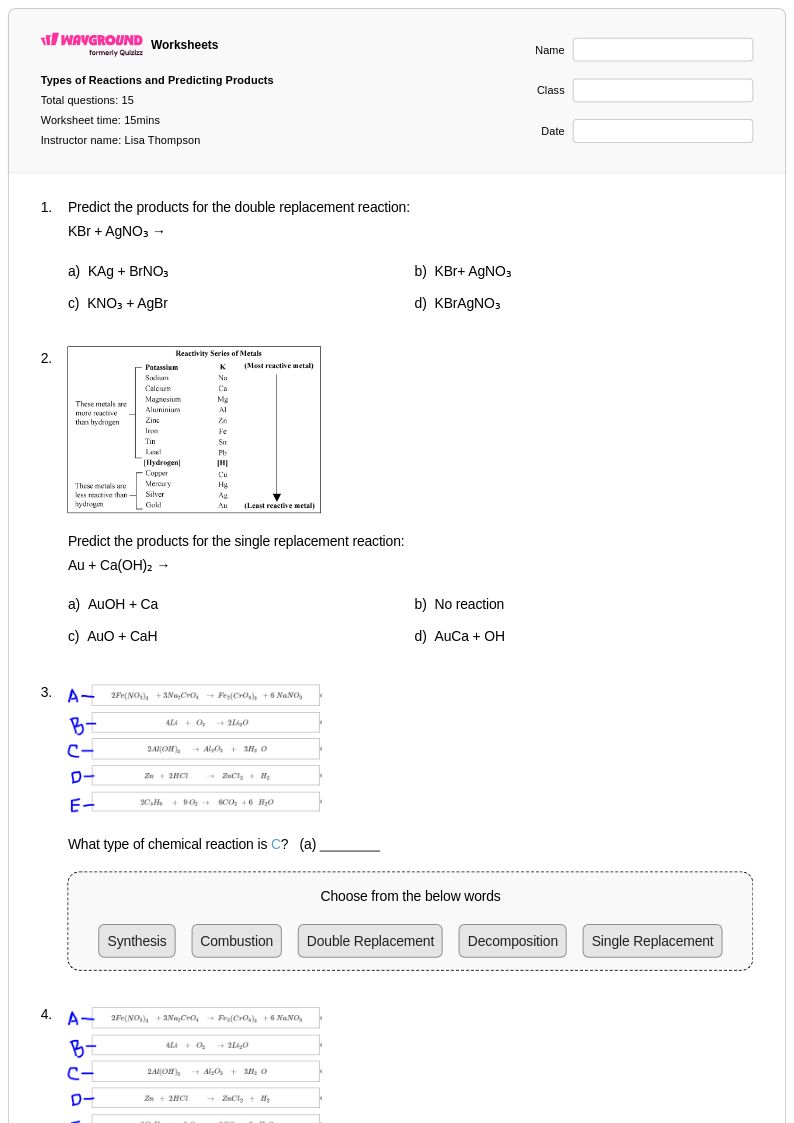
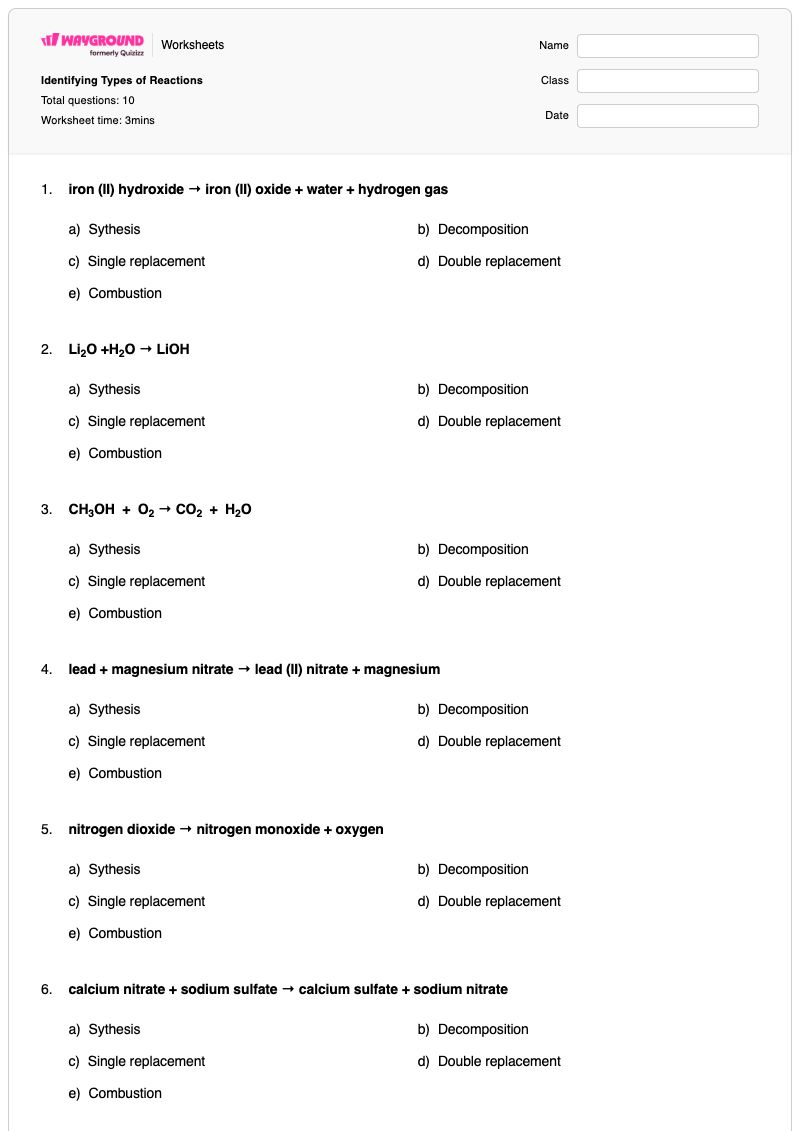
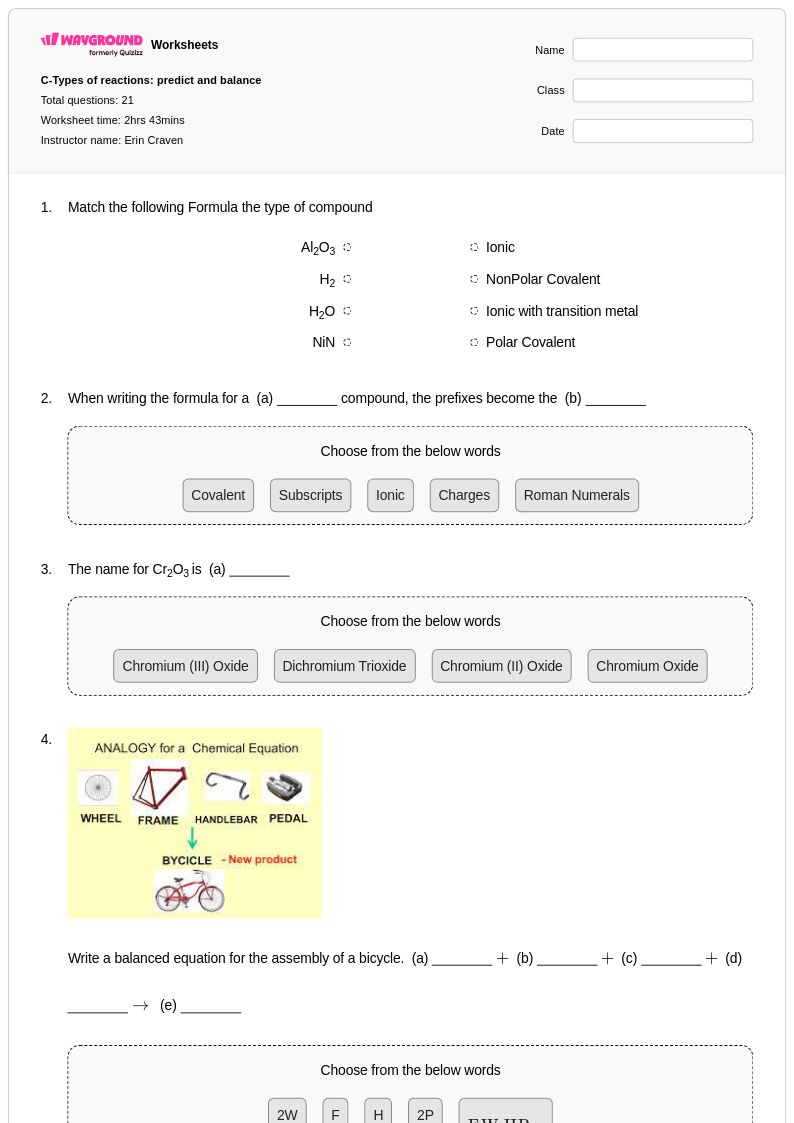
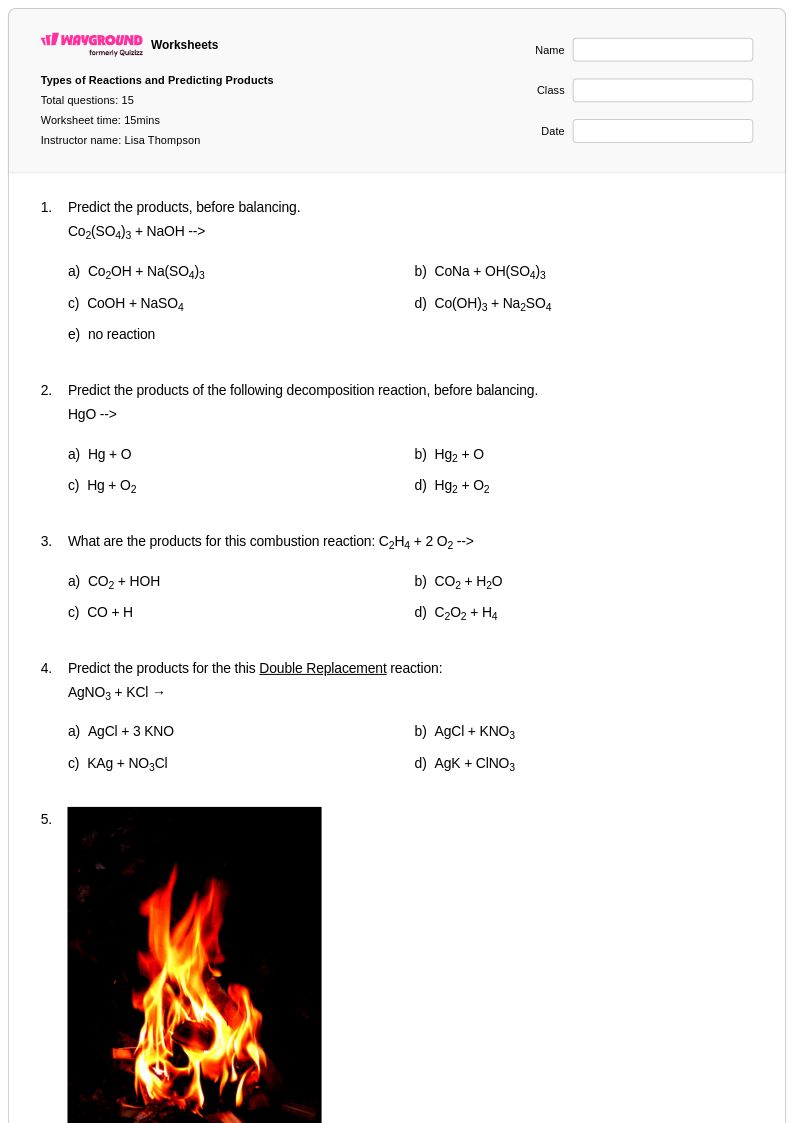
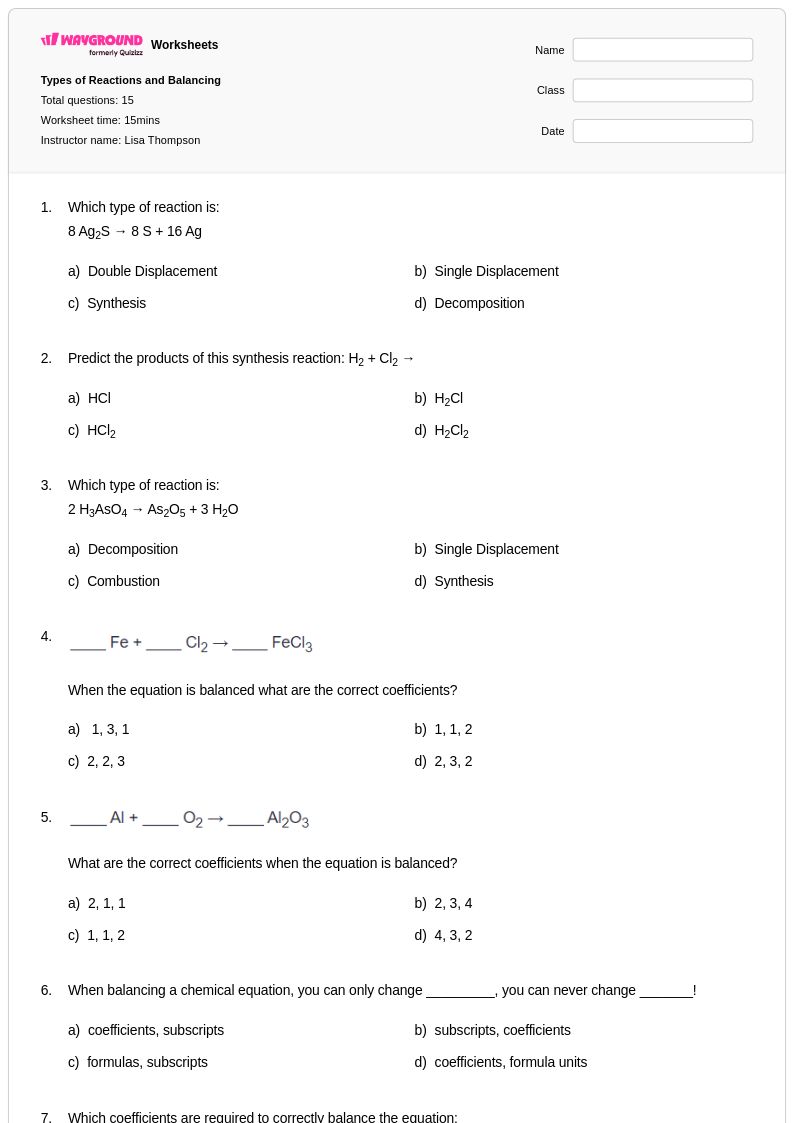
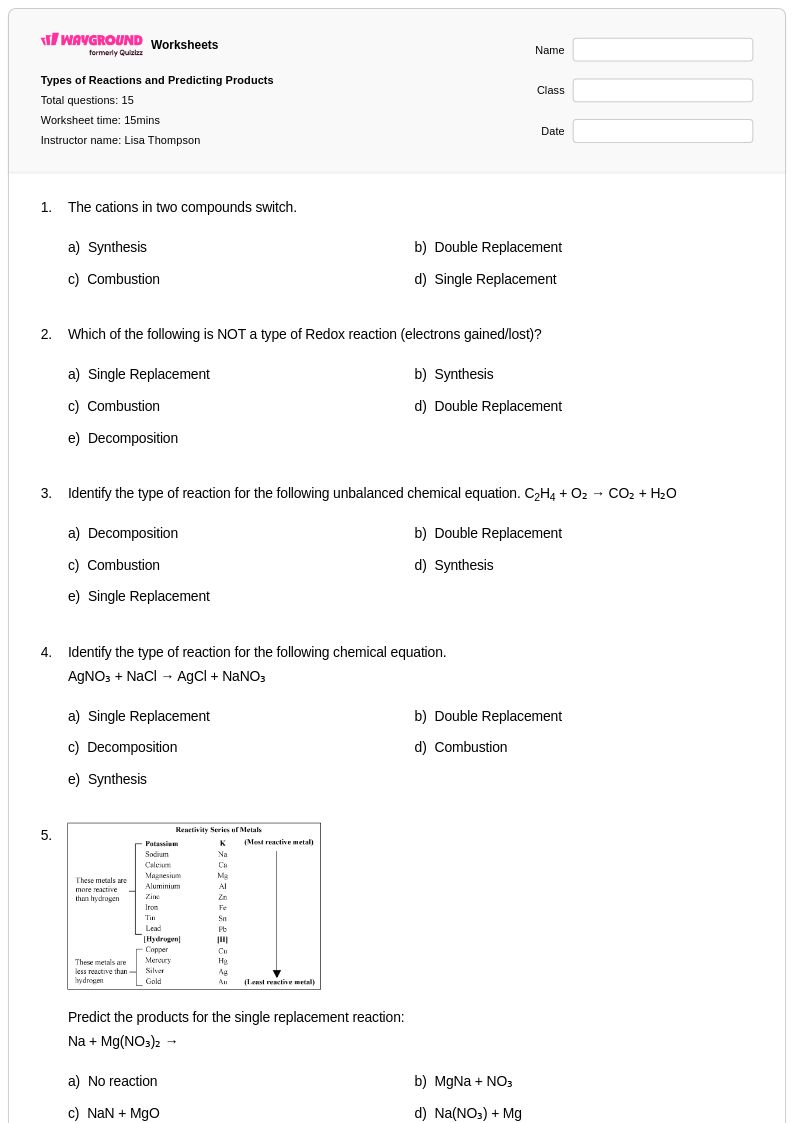
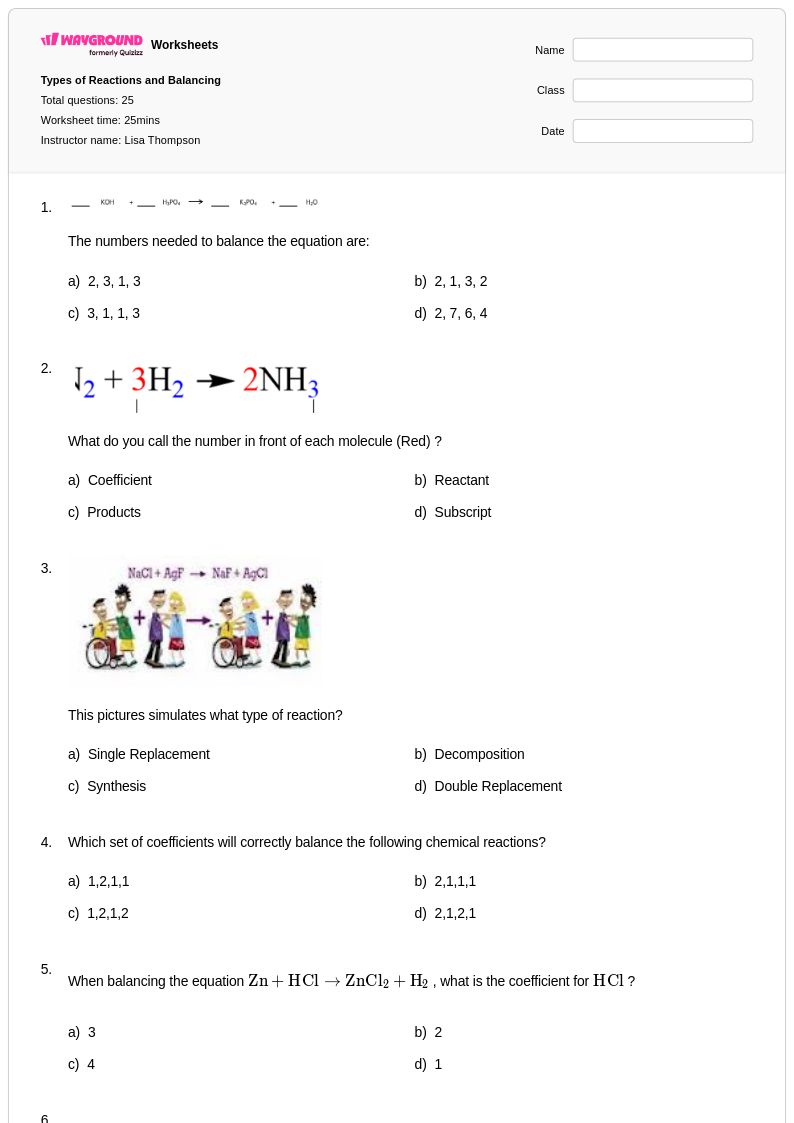
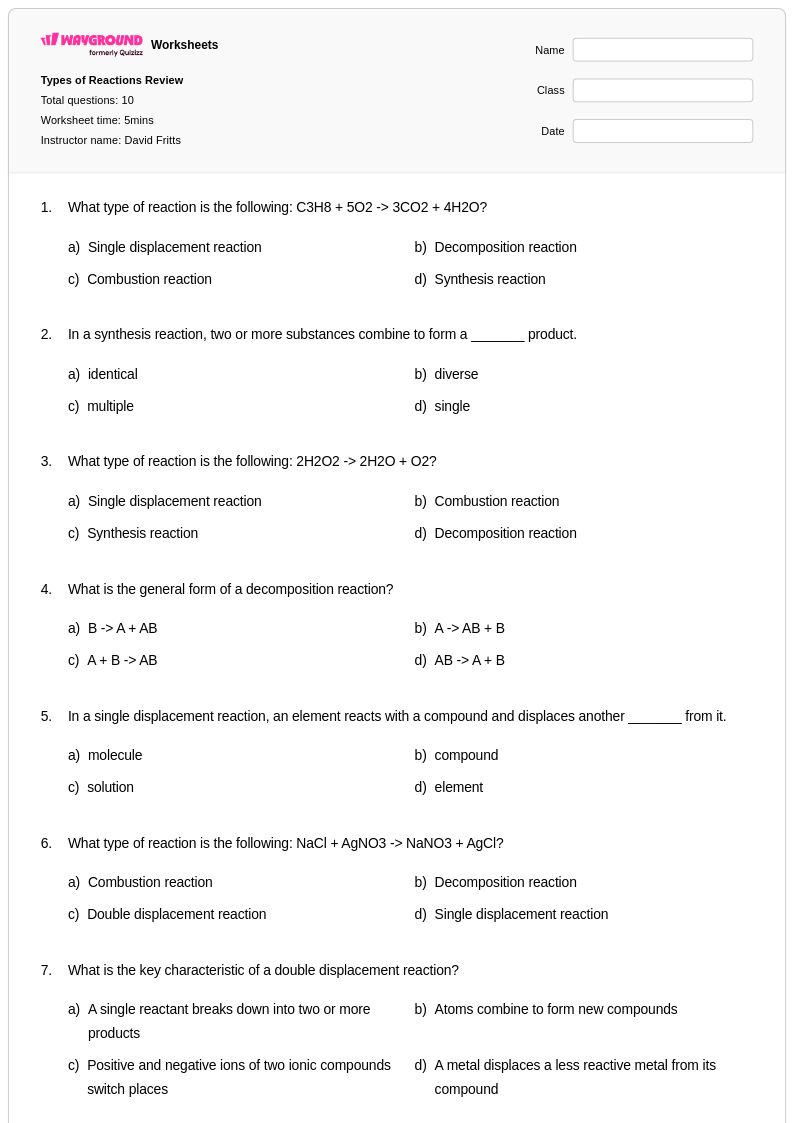
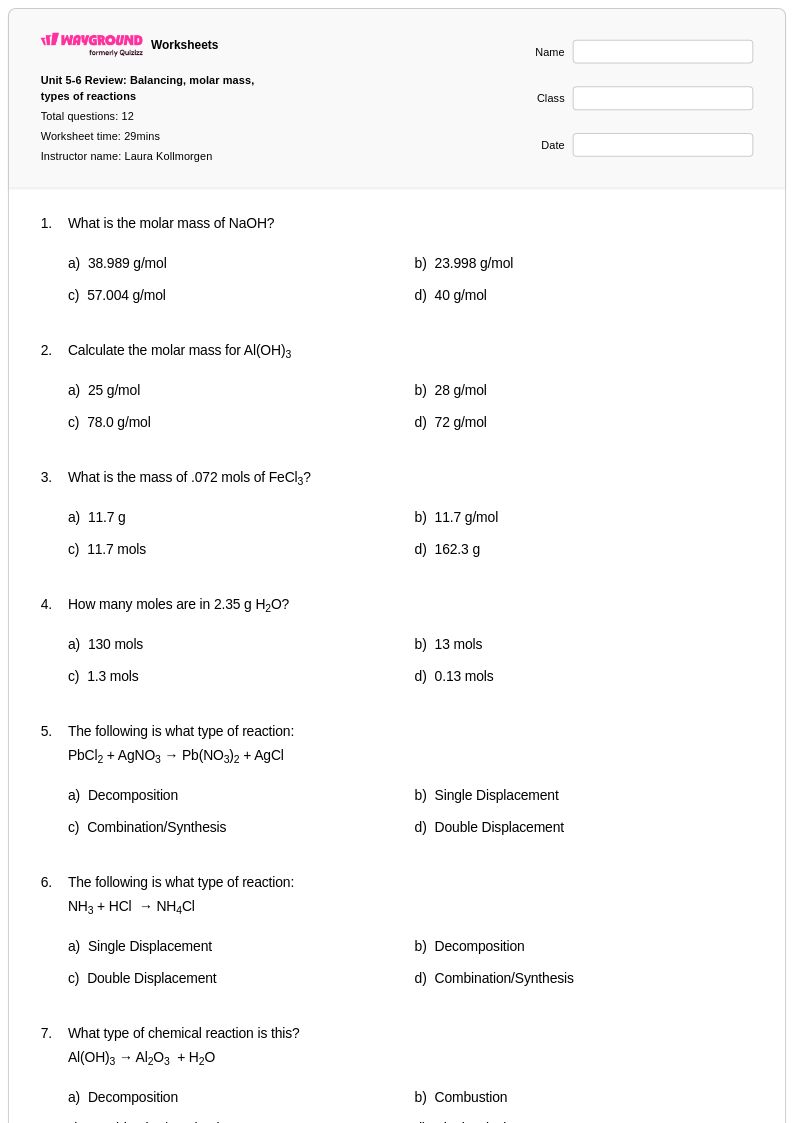
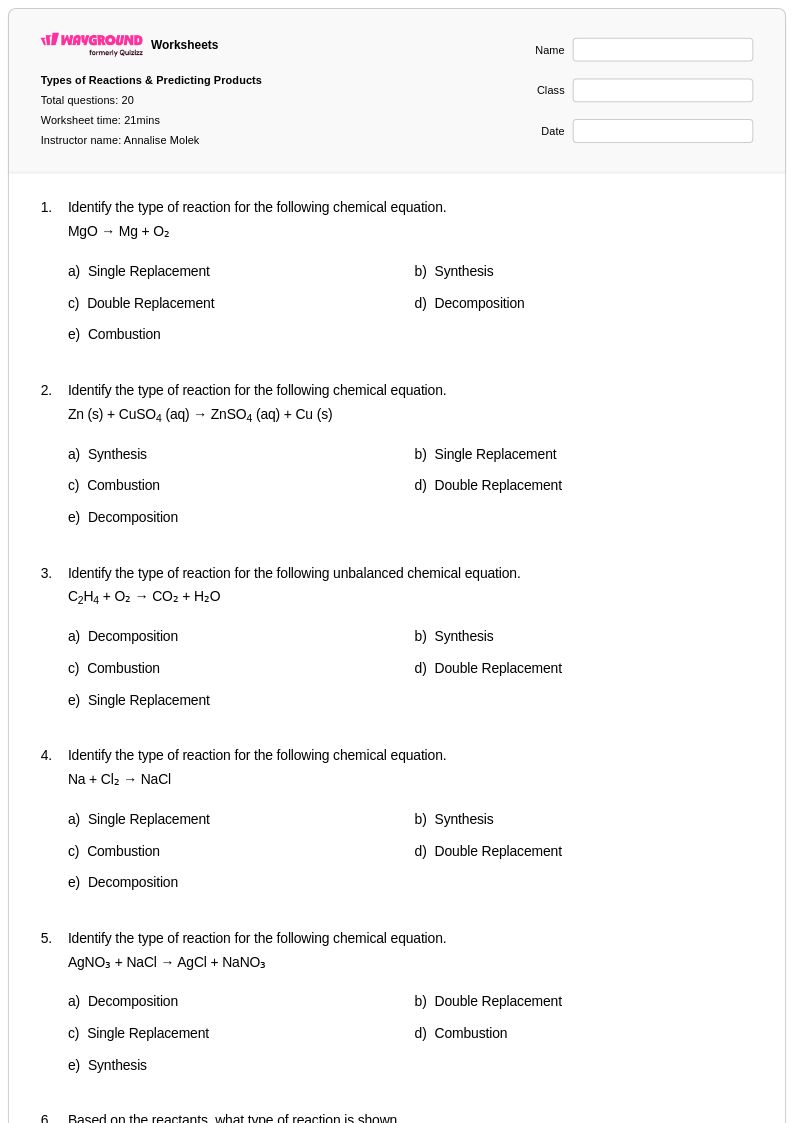
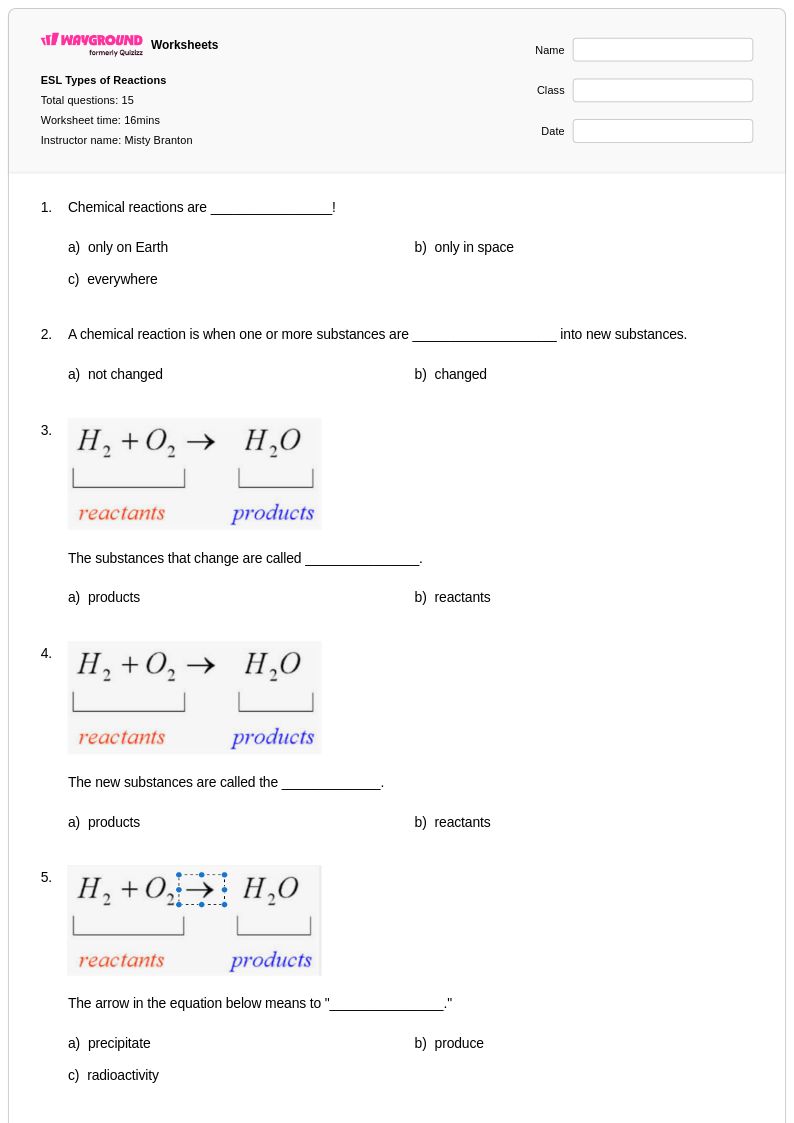
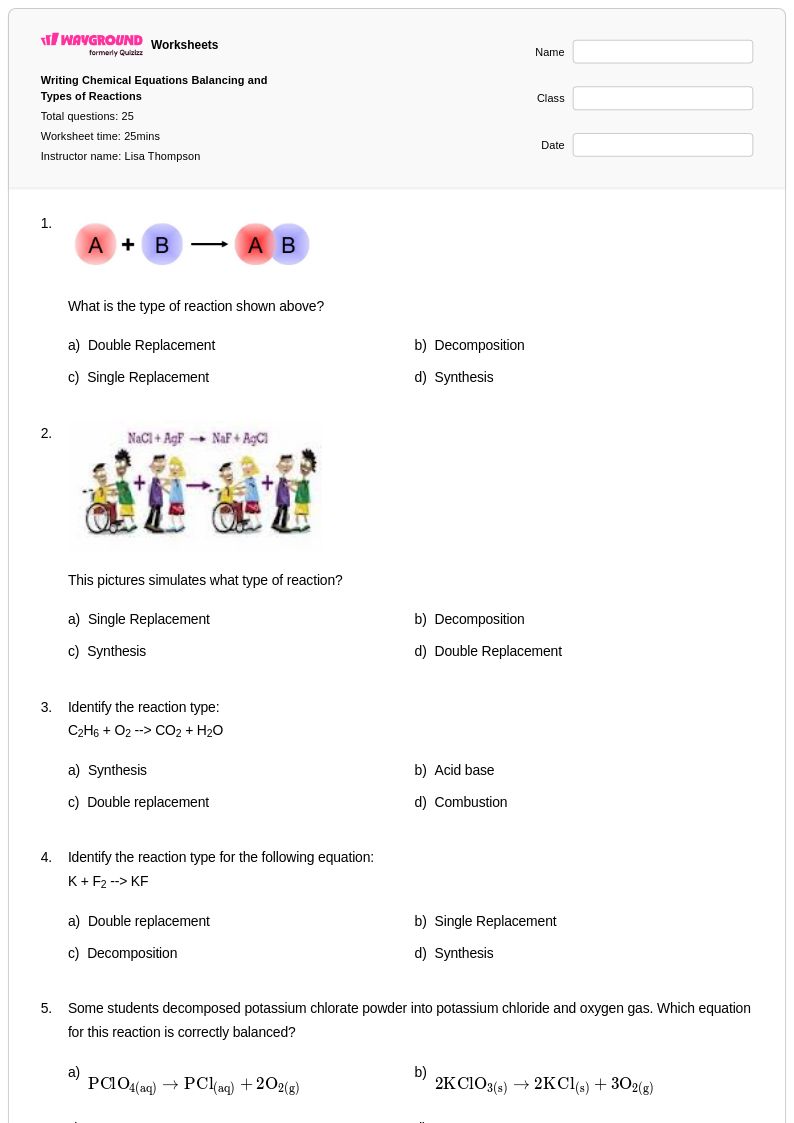
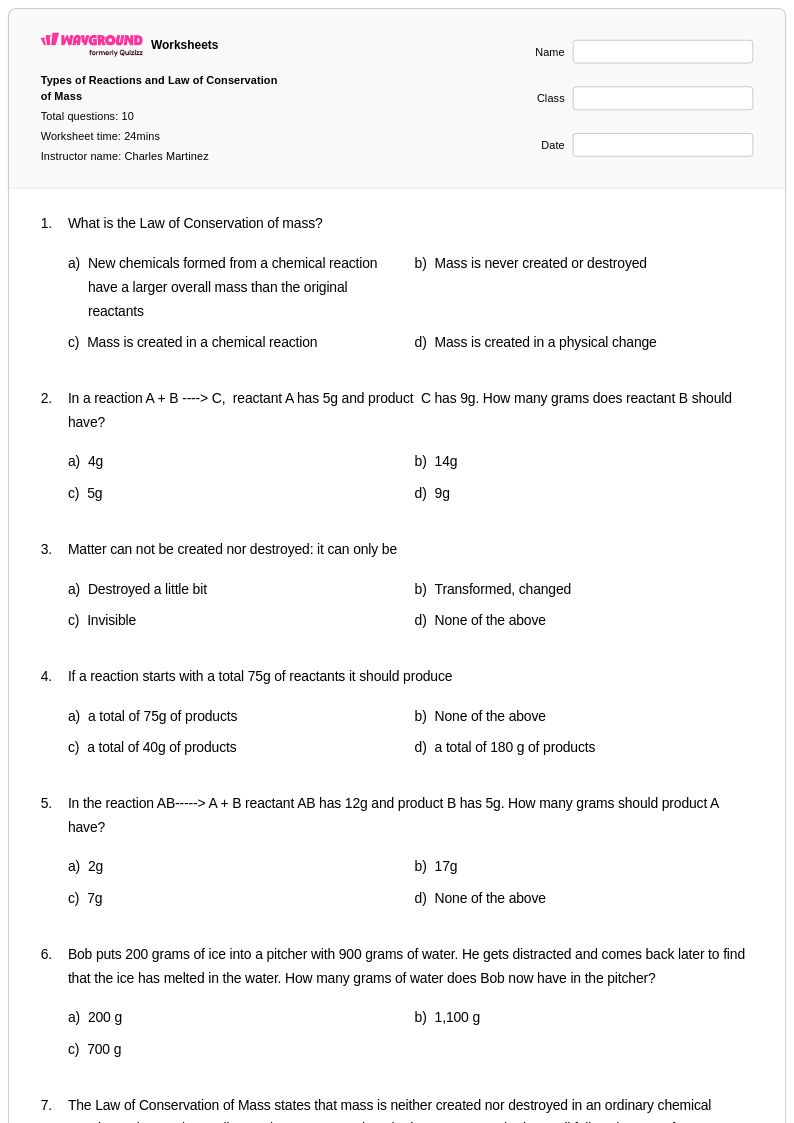
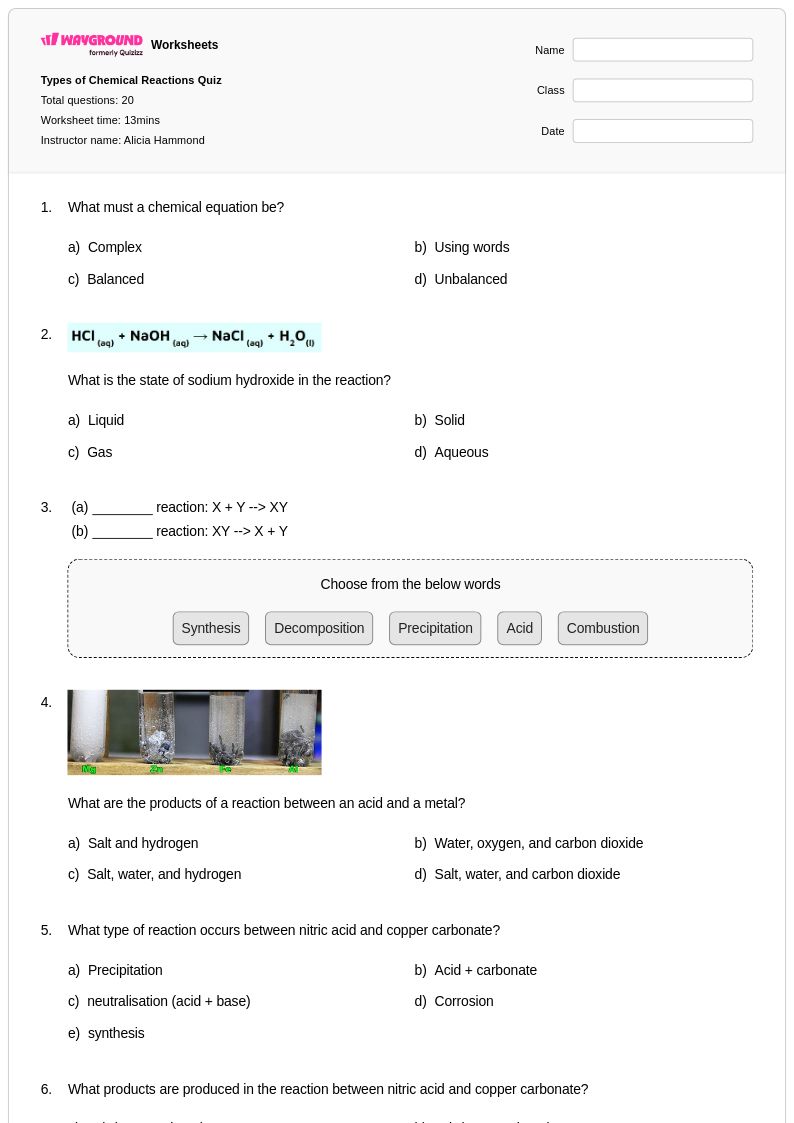
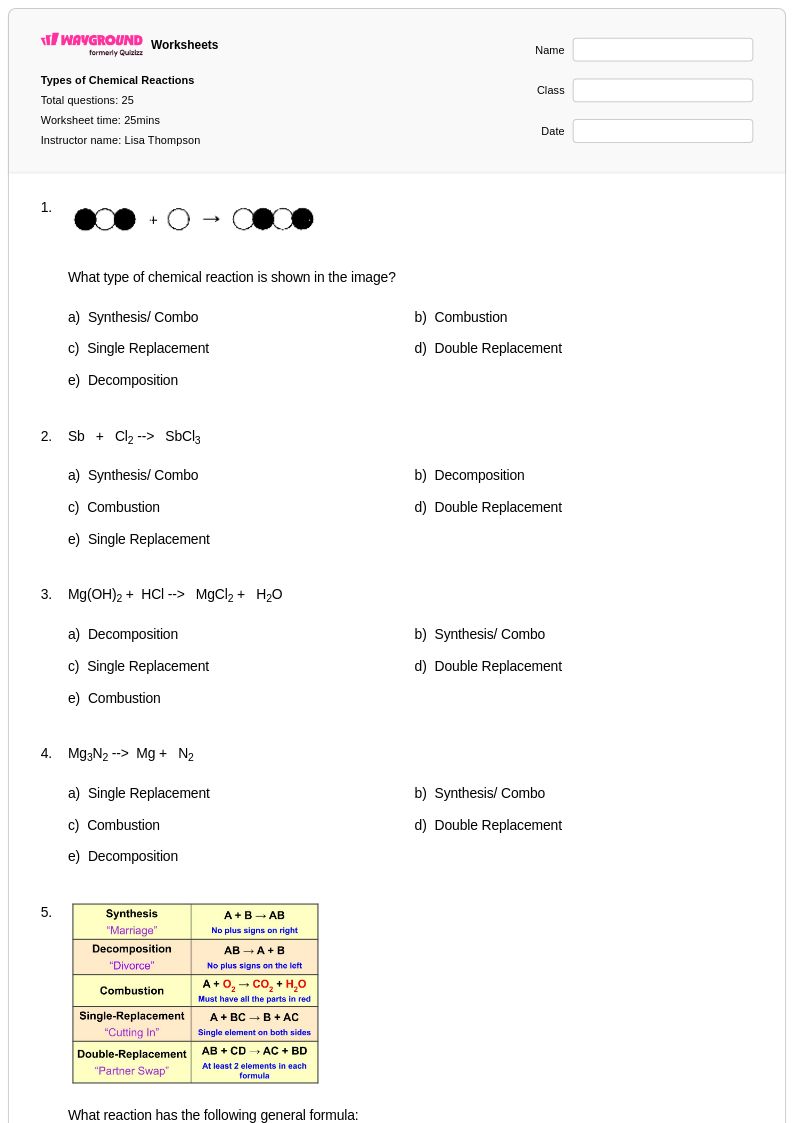
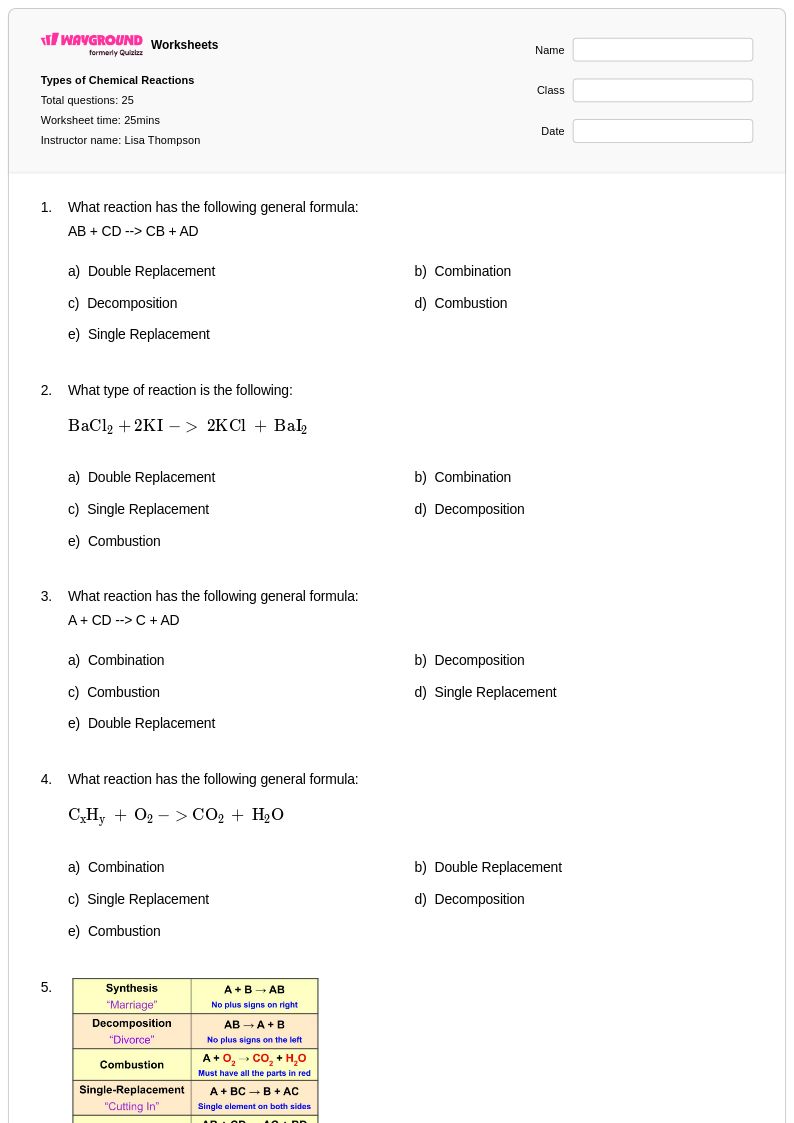
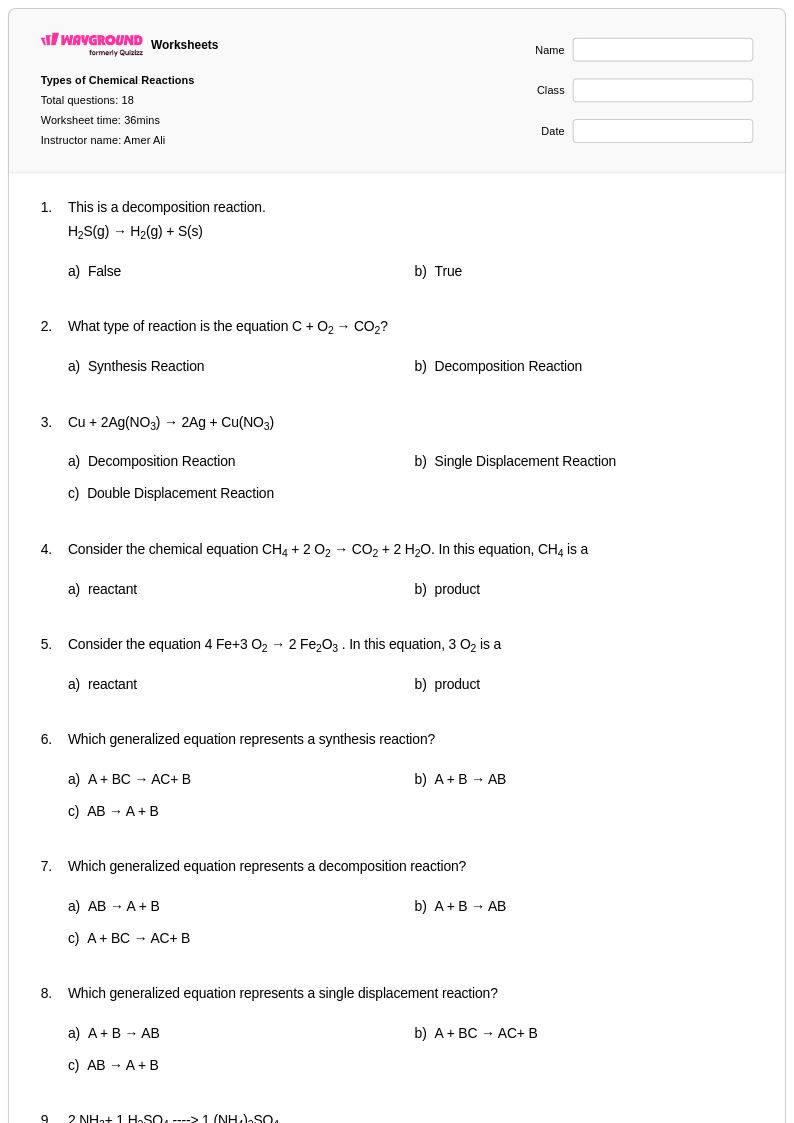
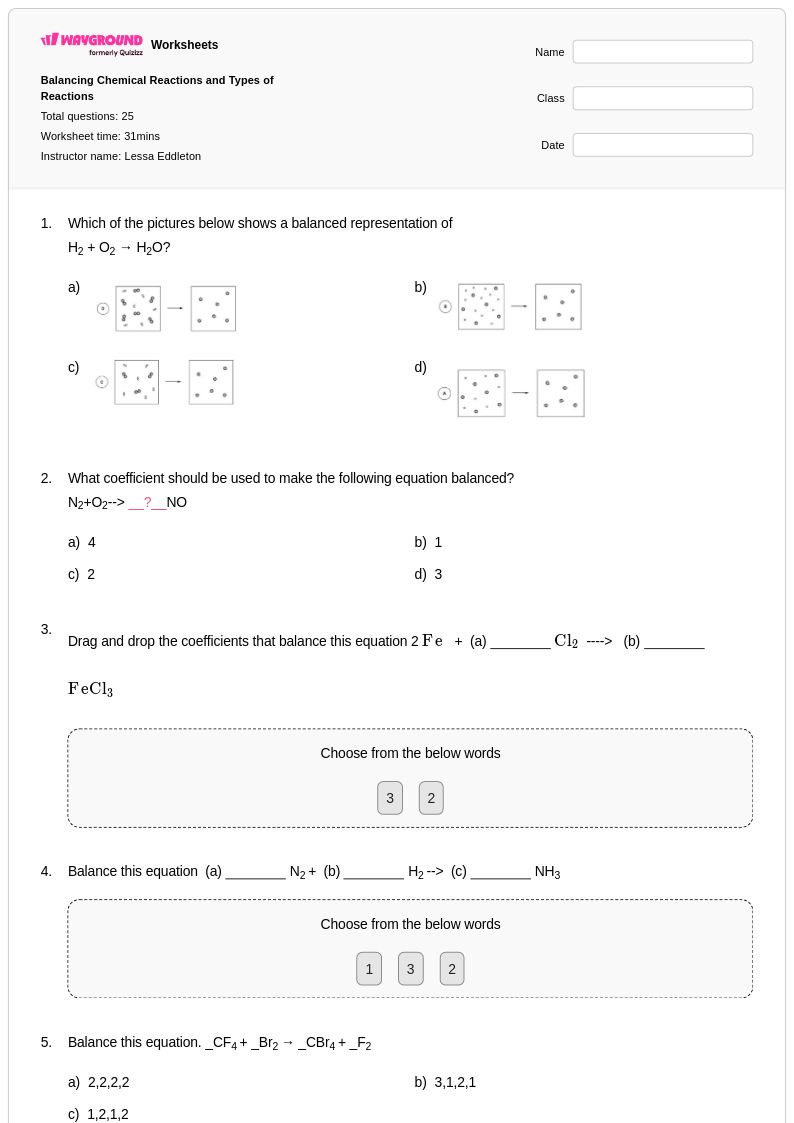
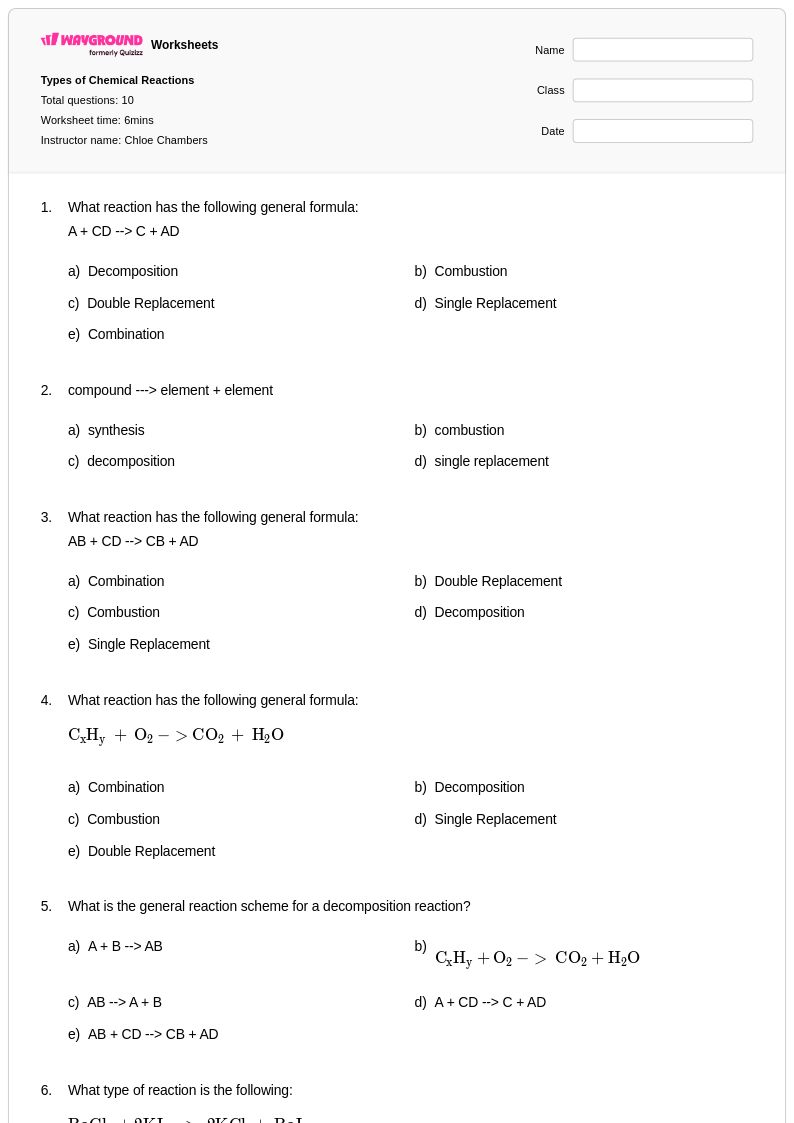
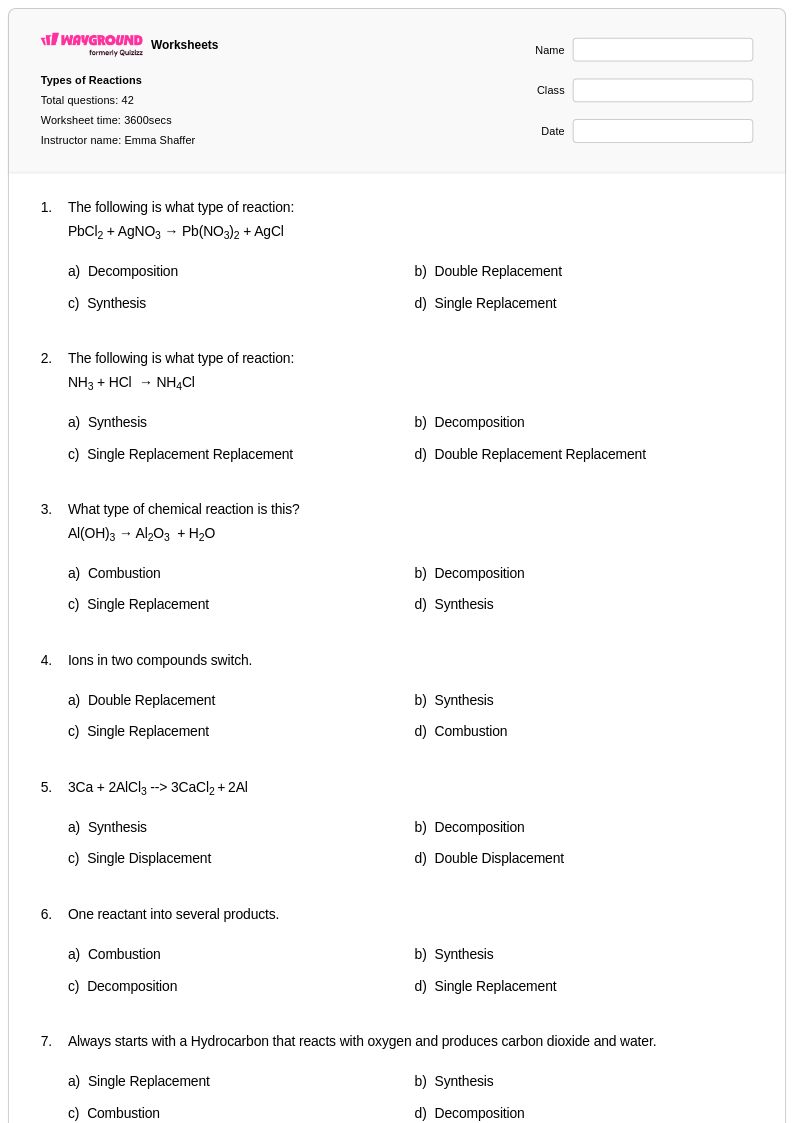
Types of reactions worksheets for Class 10 students available through Wayground (formerly Quizizz) provide comprehensive coverage of the fundamental chemical reaction categories that form the backbone of high school chemistry education. These expertly designed resources help students master the identification and classification of synthesis, decomposition, single replacement, double replacement, and combustion reactions through systematic practice problems that progress from basic pattern recognition to complex equation balancing. The worksheets strengthen critical analytical skills by requiring students to predict products, identify reactants, and apply reaction principles across diverse chemical scenarios, with each printable resource including detailed answer keys that support both independent study and classroom instruction. Teachers can access these free materials in convenient pdf formats that facilitate seamless integration into lesson plans, homework assignments, and assessment preparation.
Wayground (formerly Quizizz) empowers educators with an extensive collection of millions of teacher-created resources specifically designed for types of reactions instruction, featuring robust search and filtering capabilities that allow quick identification of materials aligned with specific curriculum standards and learning objectives. The platform's sophisticated differentiation tools enable teachers to customize worksheets based on individual student needs, offering multiple difficulty levels and varied problem types that support both remediation for struggling learners and enrichment opportunities for advanced students. These flexible resources are available in both printable and digital formats, including downloadable pdf versions, making them ideal for diverse instructional settings from traditional classroom environments to hybrid and remote learning scenarios. The comprehensive nature of these materials streamlines lesson planning while providing targeted skill practice that helps students build confidence in reaction classification and chemical equation manipulation.
FAQs
How do I teach the five types of chemical reactions to high school students?
Start by teaching each reaction type — synthesis, decomposition, single replacement, double replacement, and combustion — as a distinct pattern rather than a memorized definition. Show students how to recognize the number and type of reactants and products as diagnostic clues. Once students can identify reaction types from completed equations, move to predicting products from reactants alone, which requires deeper pattern recognition and reinforces classification skills simultaneously.
What's the best way to help students practice identifying types of chemical reactions?
The most effective practice combines classification exercises with equation balancing so students work with both the structural pattern of a reaction and its quantitative form. Worksheets that present unbalanced equations and ask students to first identify the reaction type, then balance, build both skills in sequence. Including a mix of straightforward and ambiguous examples — such as reactions that could appear to fit two categories — strengthens students' analytical thinking and reduces surface-level pattern matching.
What mistakes do students commonly make when classifying types of chemical reactions?
The most frequent error is confusing single and double replacement reactions, particularly when students focus on the number of products rather than which elements or ions are actually exchanging partners. Students also frequently misclassify combustion reactions as synthesis because both produce compounds from simpler reactants. A targeted misconception is assuming all reactions with two reactants are synthesis — reinforcing that synthesis specifically produces one product from two or more reactants helps correct this.
How do I differentiate types of reactions instruction for students at different skill levels?
For struggling students, begin with combustion and synthesis reactions, which have the most visually distinct patterns, before introducing replacement reactions. Wayground supports differentiation through built-in accommodation tools including reduced answer choices to lower cognitive load for individual students, read-aloud features for students who need audio support, and extended time settings that can be assigned per student without disrupting the rest of the class. Advanced learners can be challenged with net ionic equations and prediction tasks that require applying reaction type knowledge to unfamiliar compound combinations.
How do I use Wayground's types of reactions worksheets in my classroom?
Wayground's types of reactions worksheets are available as printable PDFs for traditional classroom use and in digital formats for technology-integrated environments, giving teachers flexibility depending on their setup. Digital versions can be hosted as a quiz directly on Wayground, which supports formative assessment with immediate feedback. Each worksheet includes an answer key, making them practical for independent practice, homework, or in-class review without additional preparation.
How do I help students predict the products of chemical reactions based on reaction type?
Product prediction requires students to first correctly classify the reaction type, then apply the structural rule for that category — for example, knowing that a single replacement reaction swaps one element into a compound while displacing another. Practice should progress from identification to prediction in stages, starting with reaction types the student has already classified correctly. Providing a reference sheet of reaction type rules during early prediction practice helps students focus on applying logic rather than retrieving memorized patterns simultaneously.