Free Printable Chemical Bonding Worksheets for Class 10
Explore Wayground's comprehensive collection of Class 10 chemical bonding worksheets featuring free printables, practice problems, and answer keys to help students master ionic, covalent, and metallic bonds through engaging PDF activities.
Explore printable Chemical Bonding worksheets for Class 10
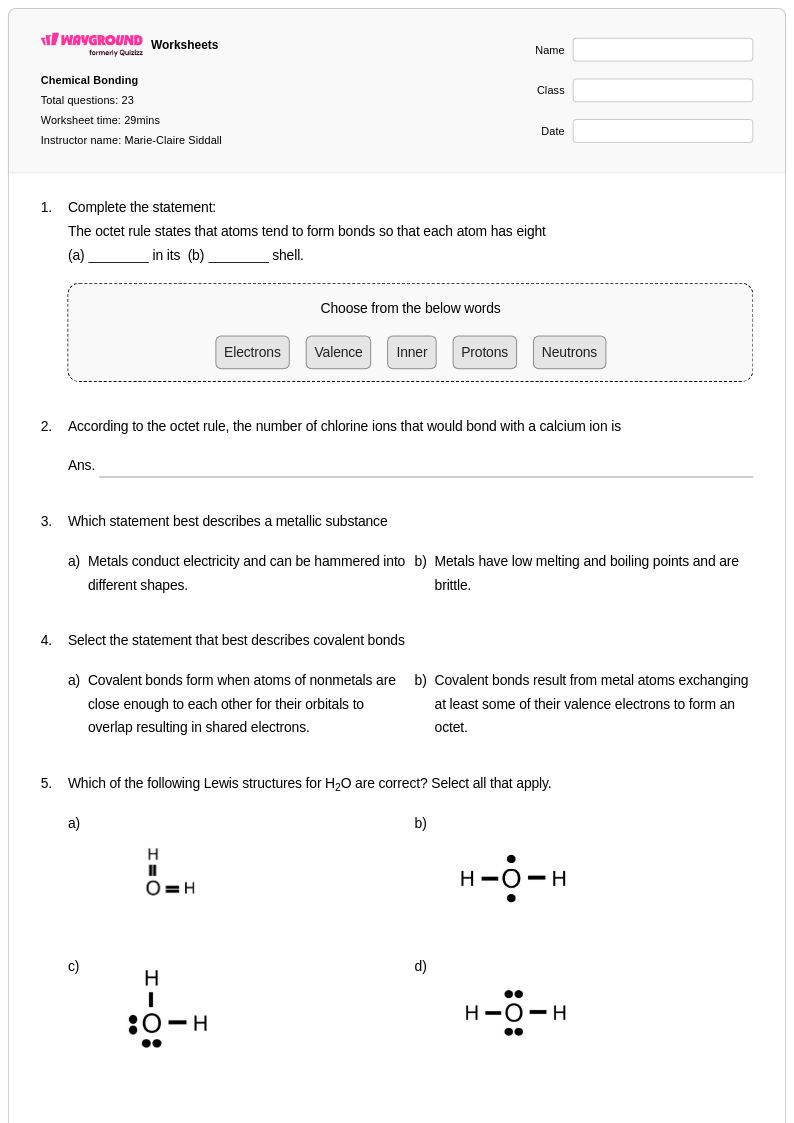
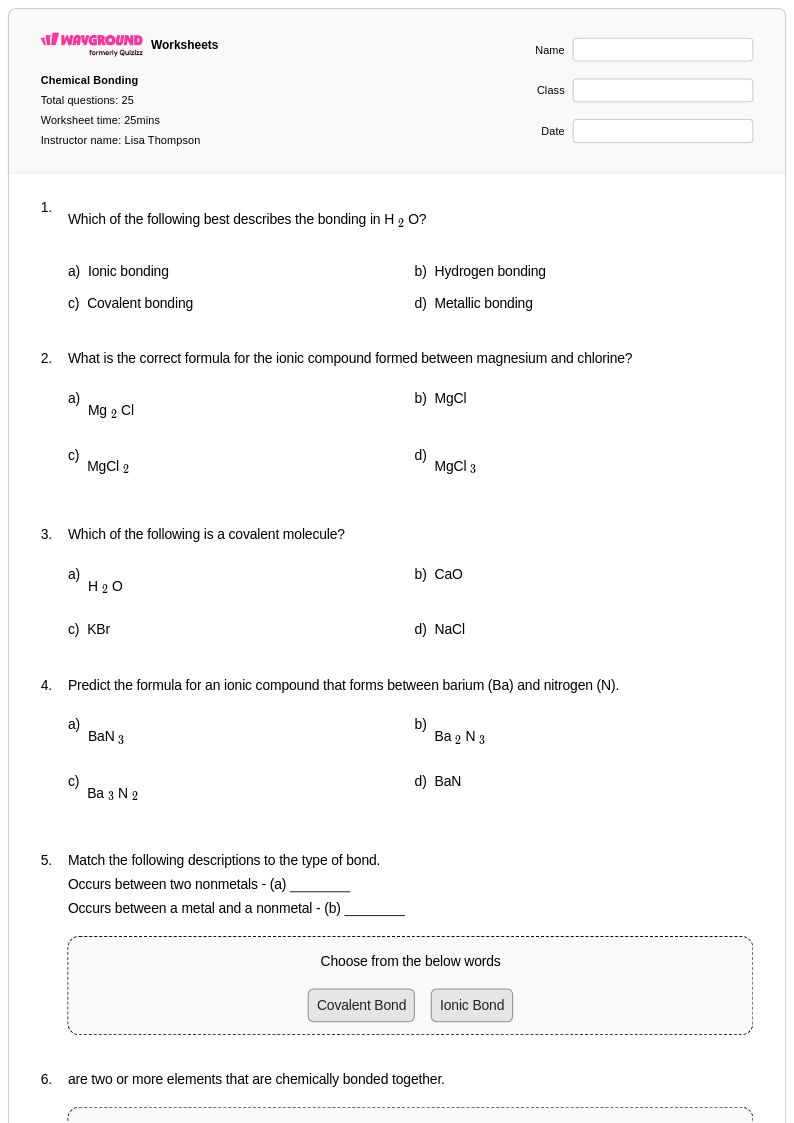
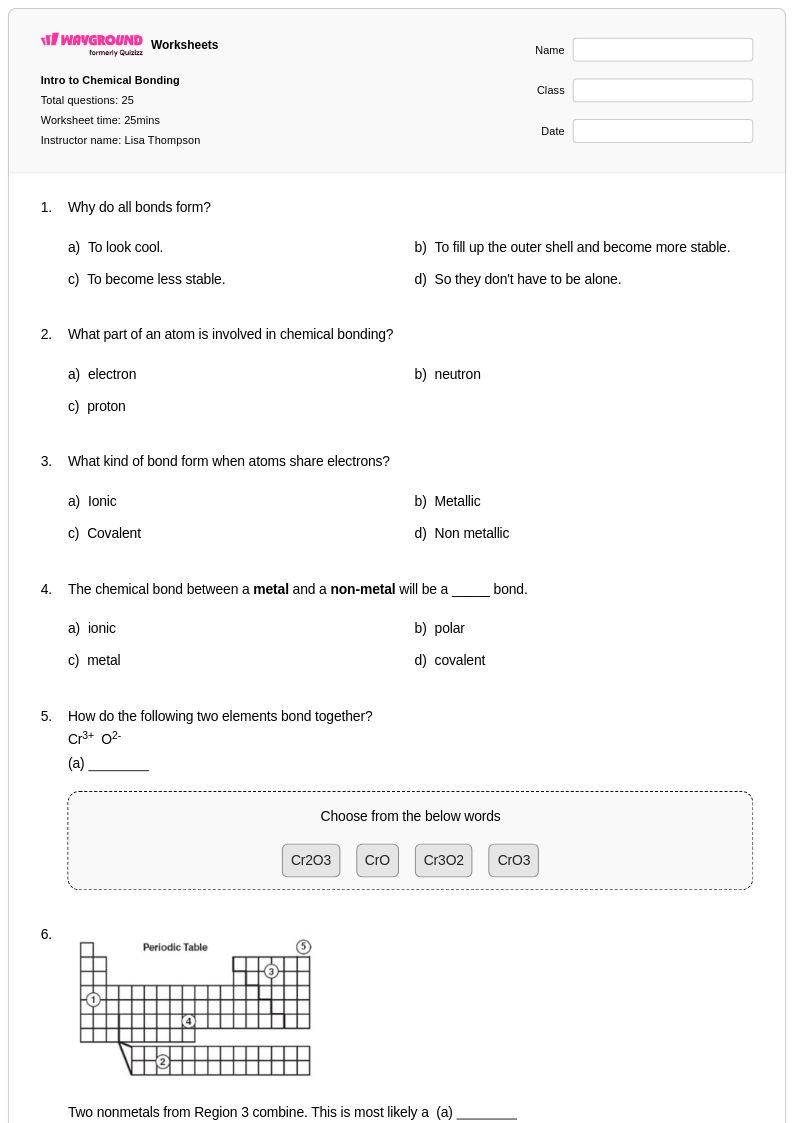
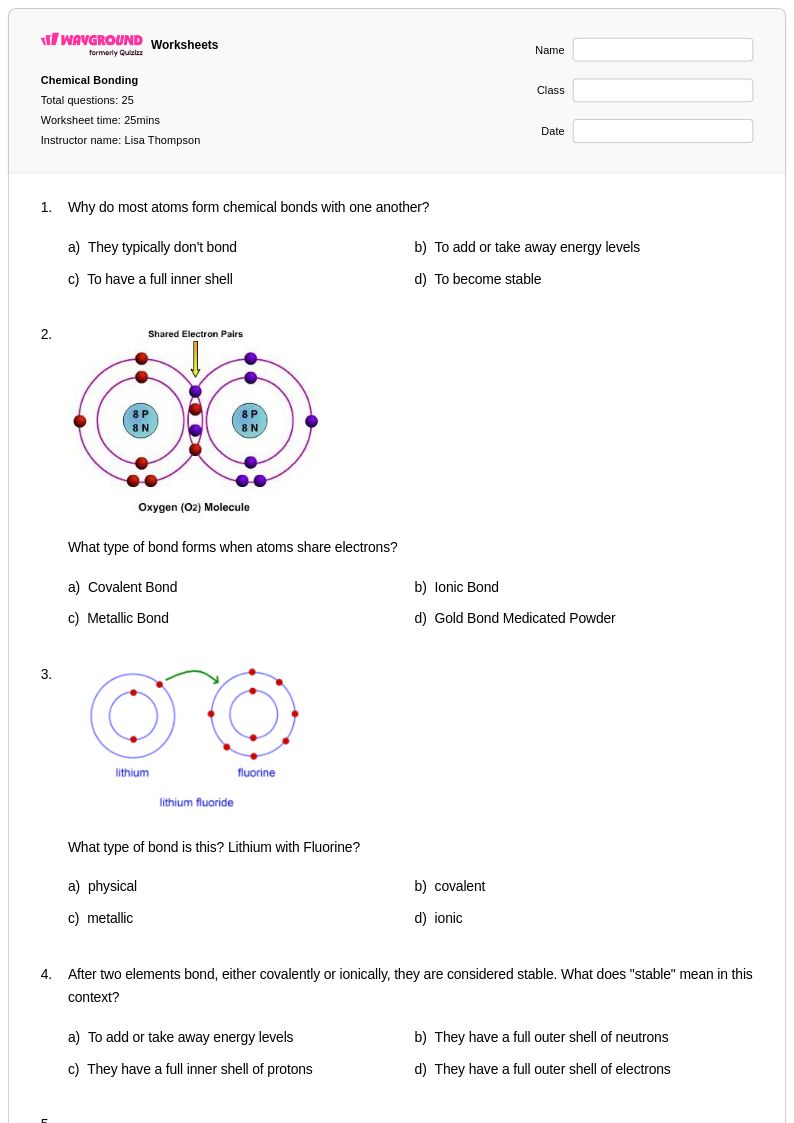
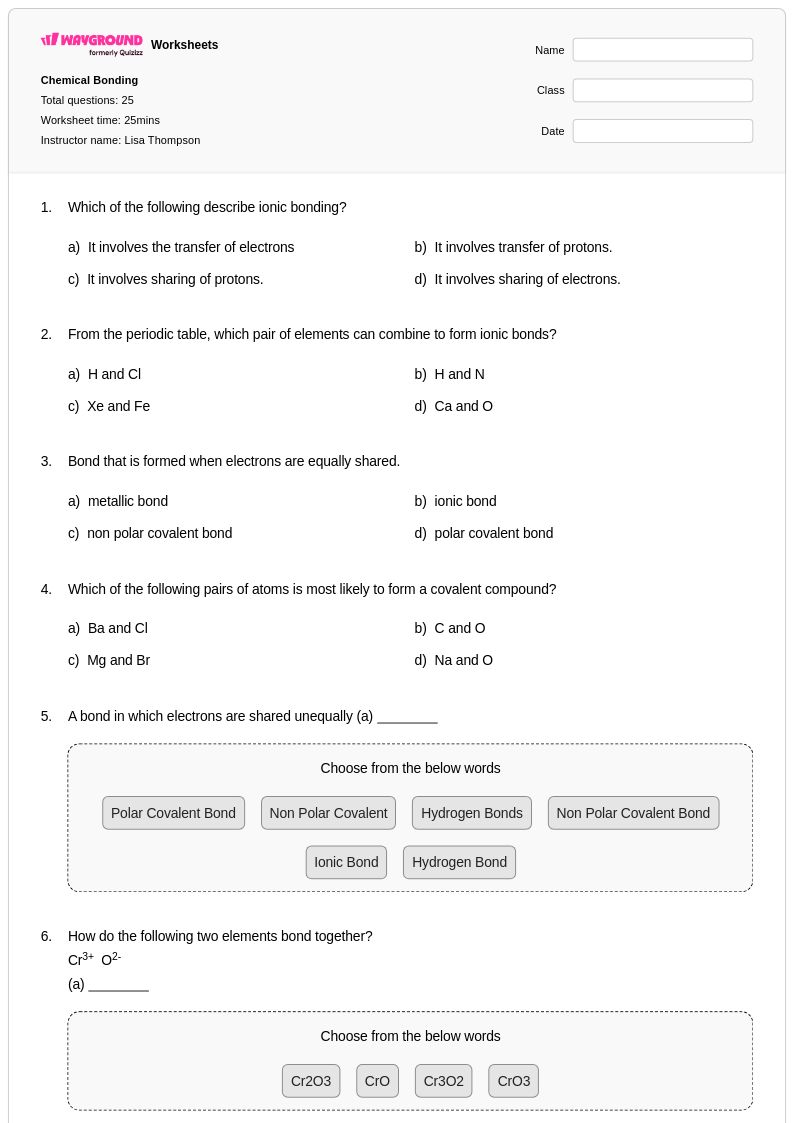
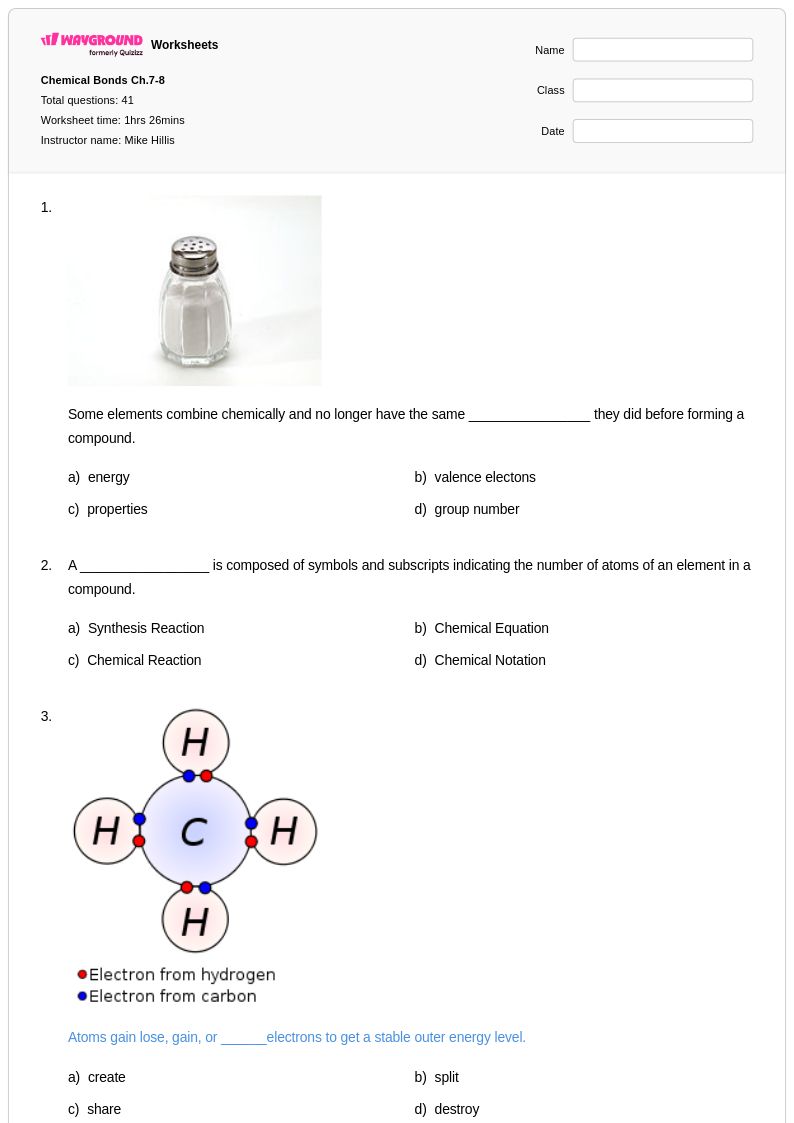
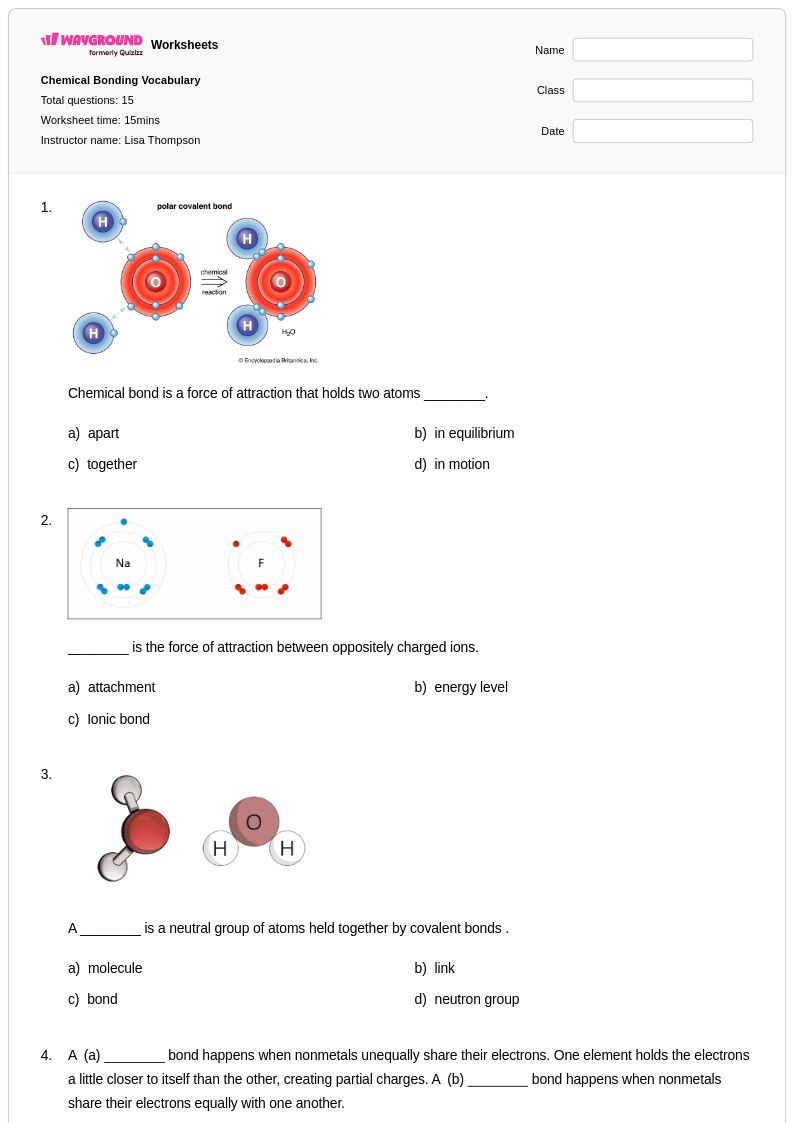
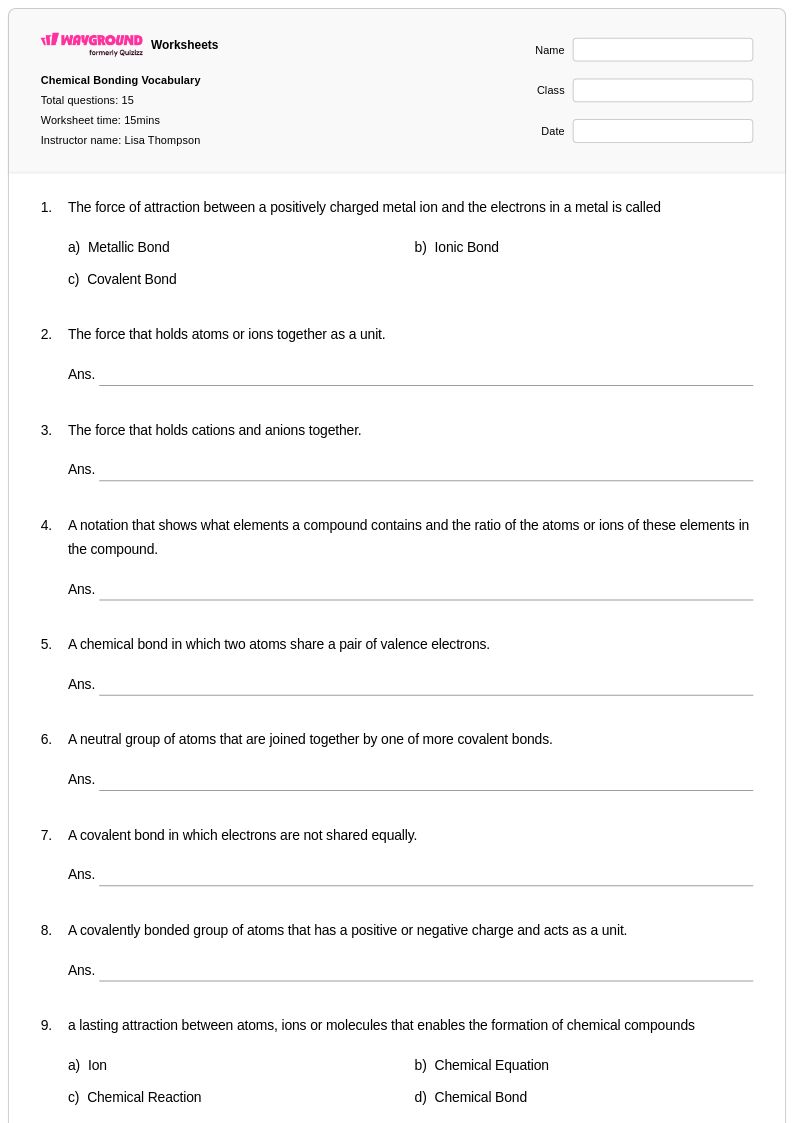
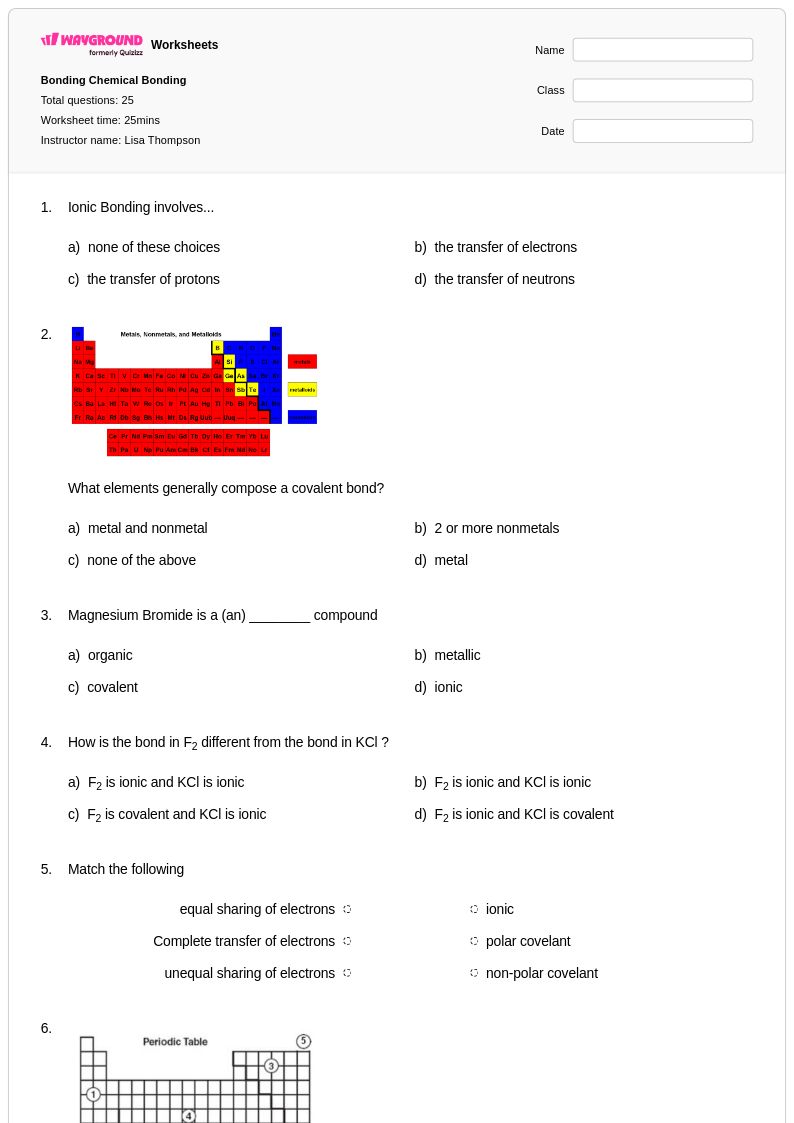
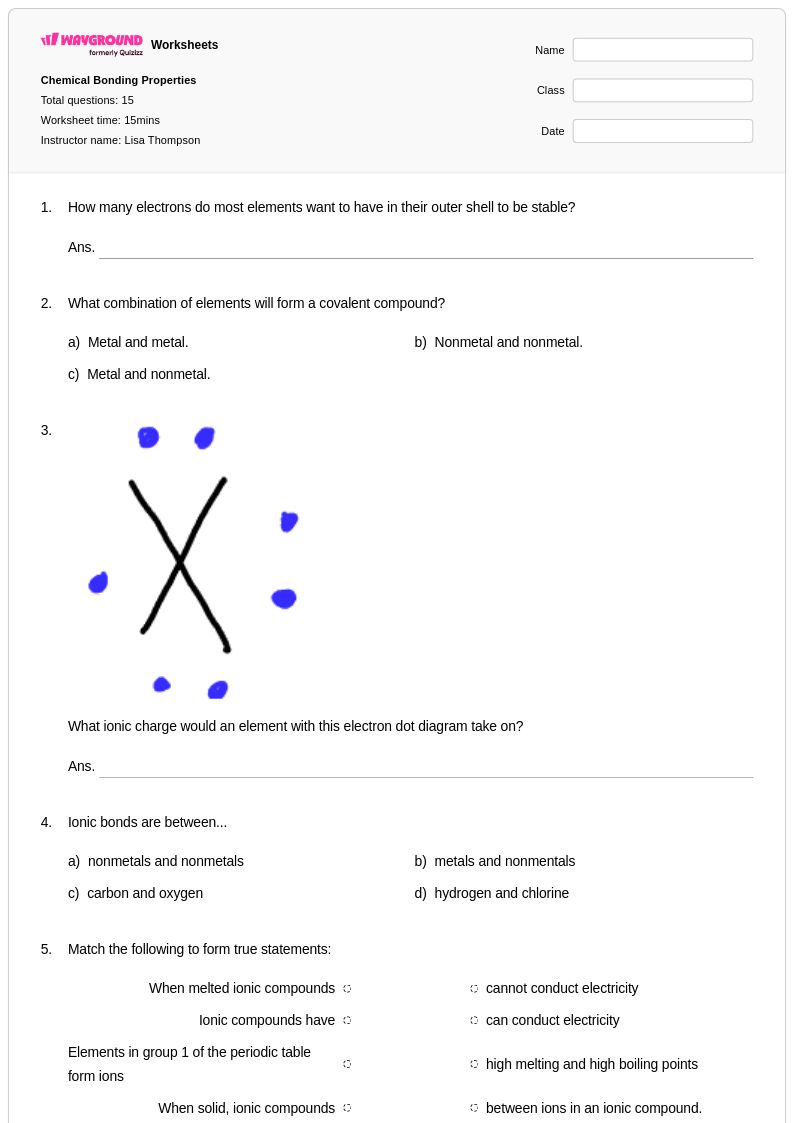
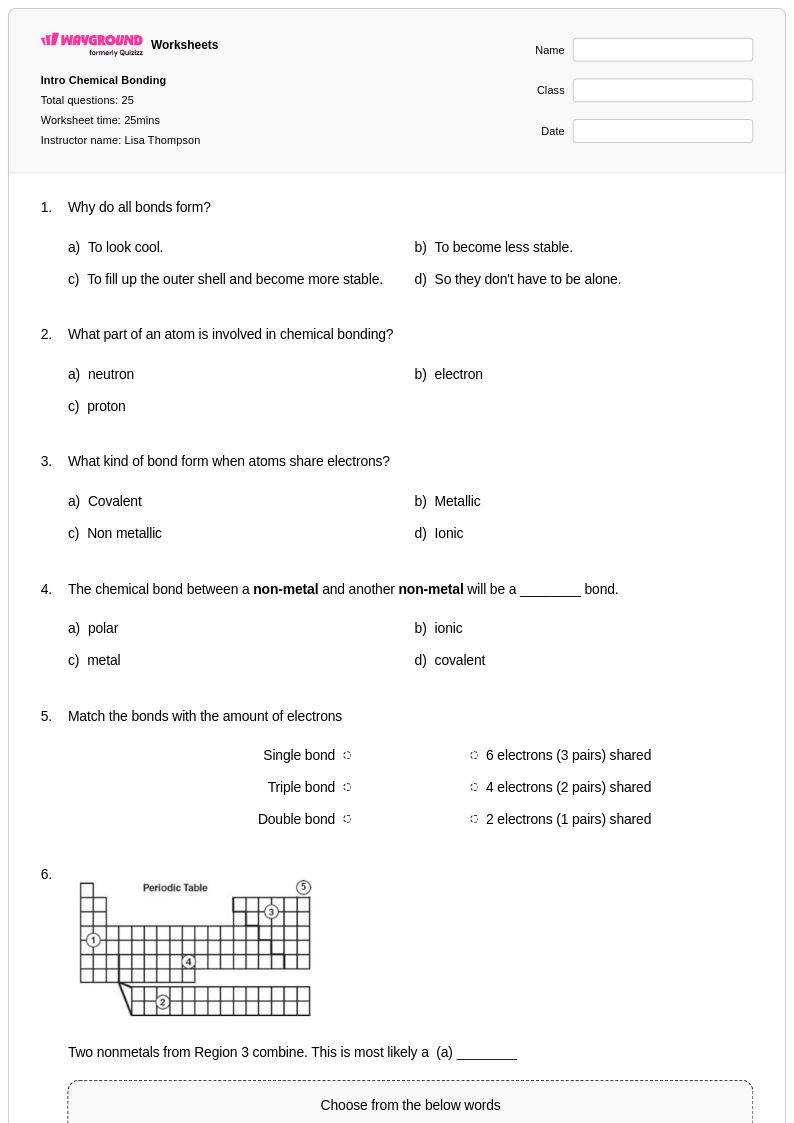
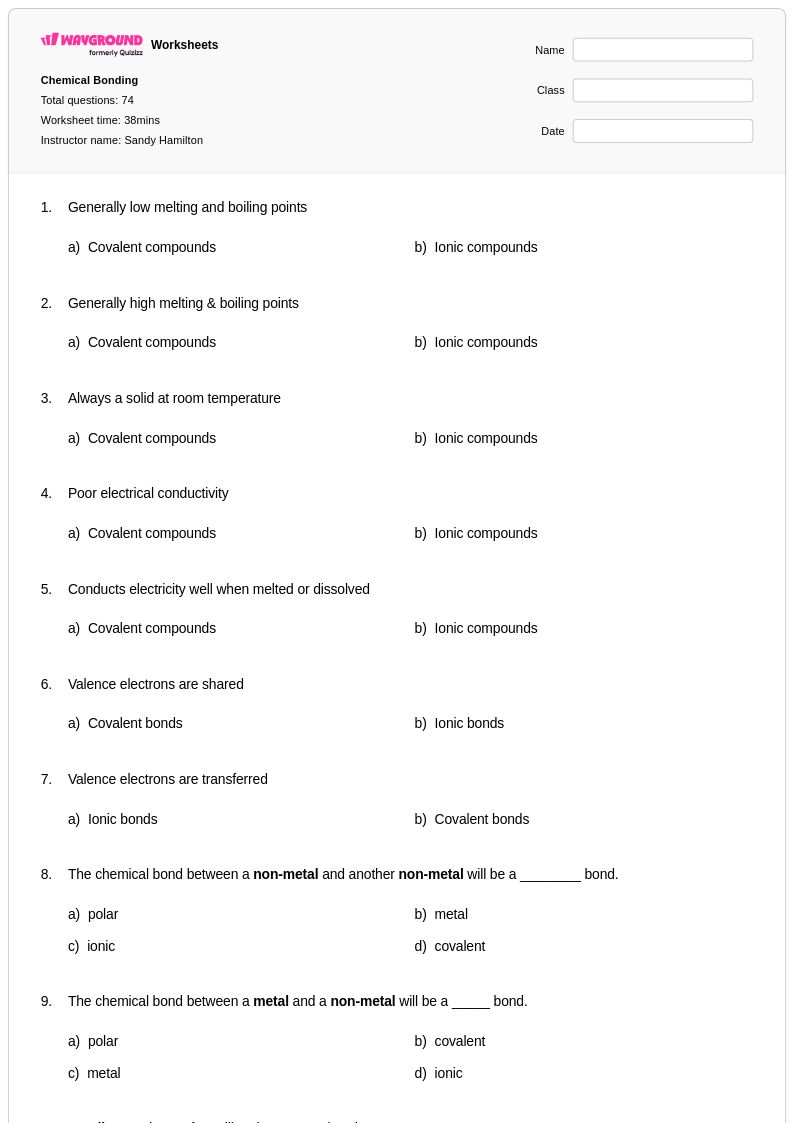
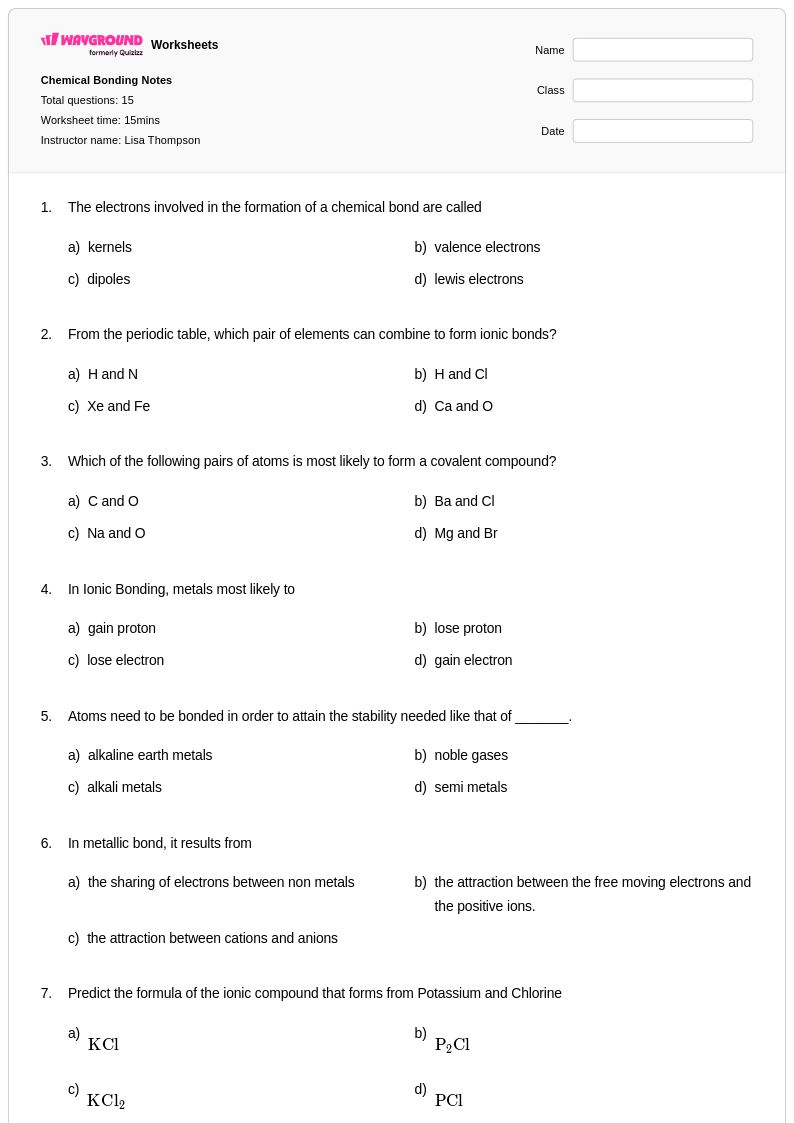
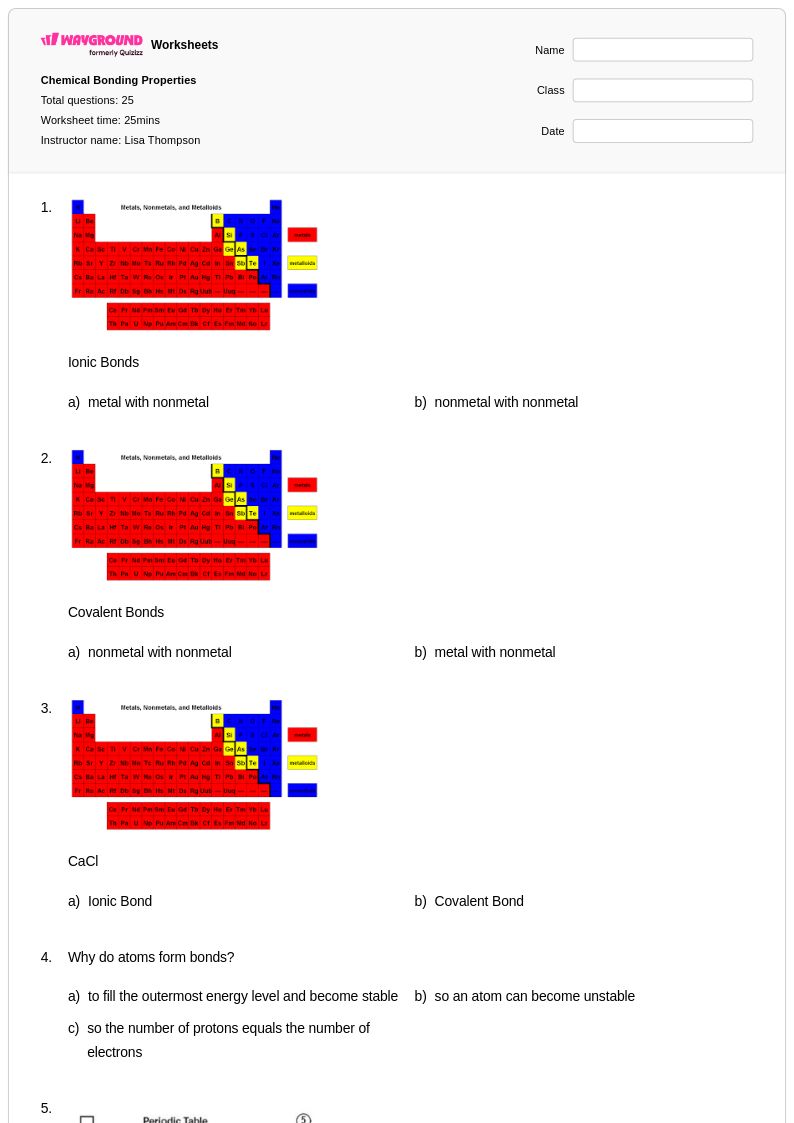
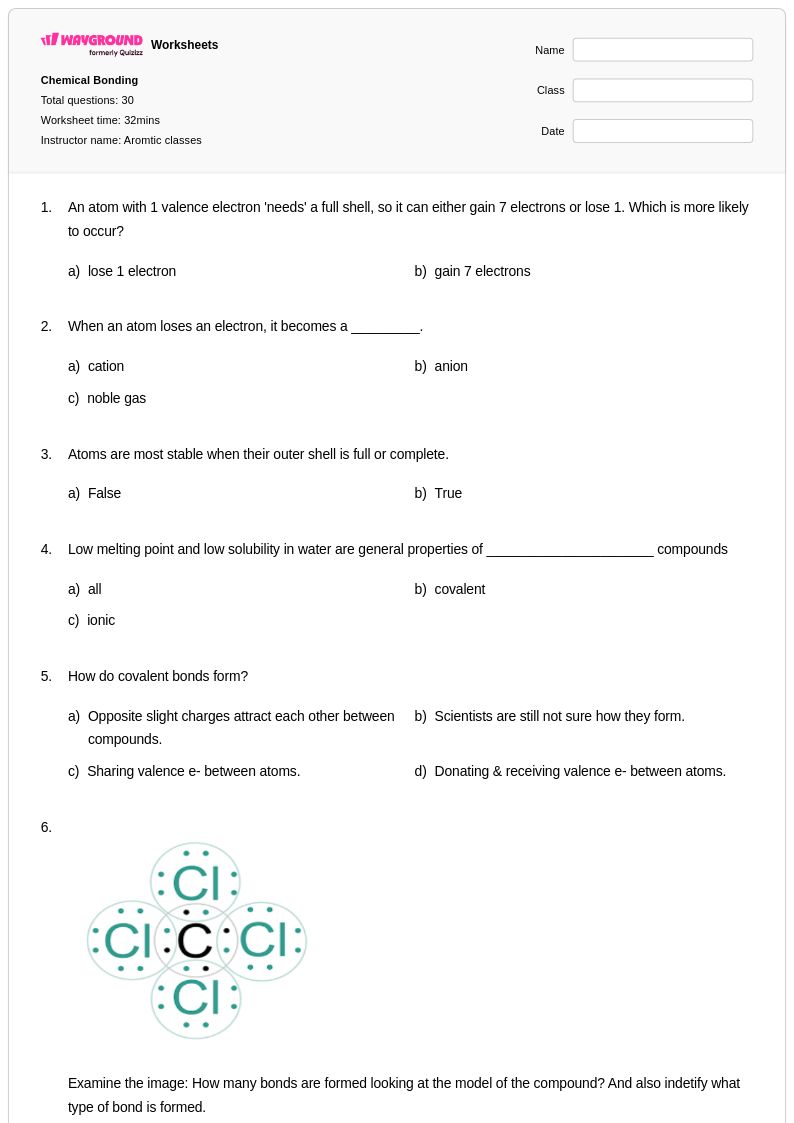
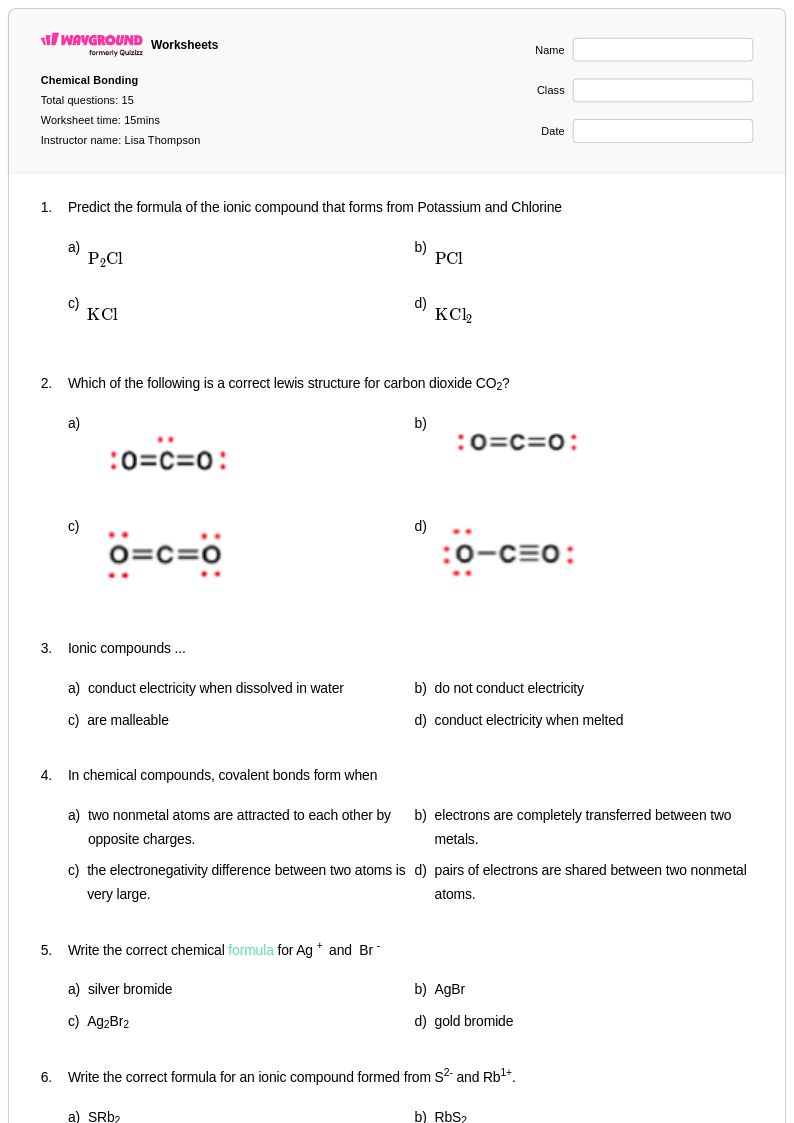
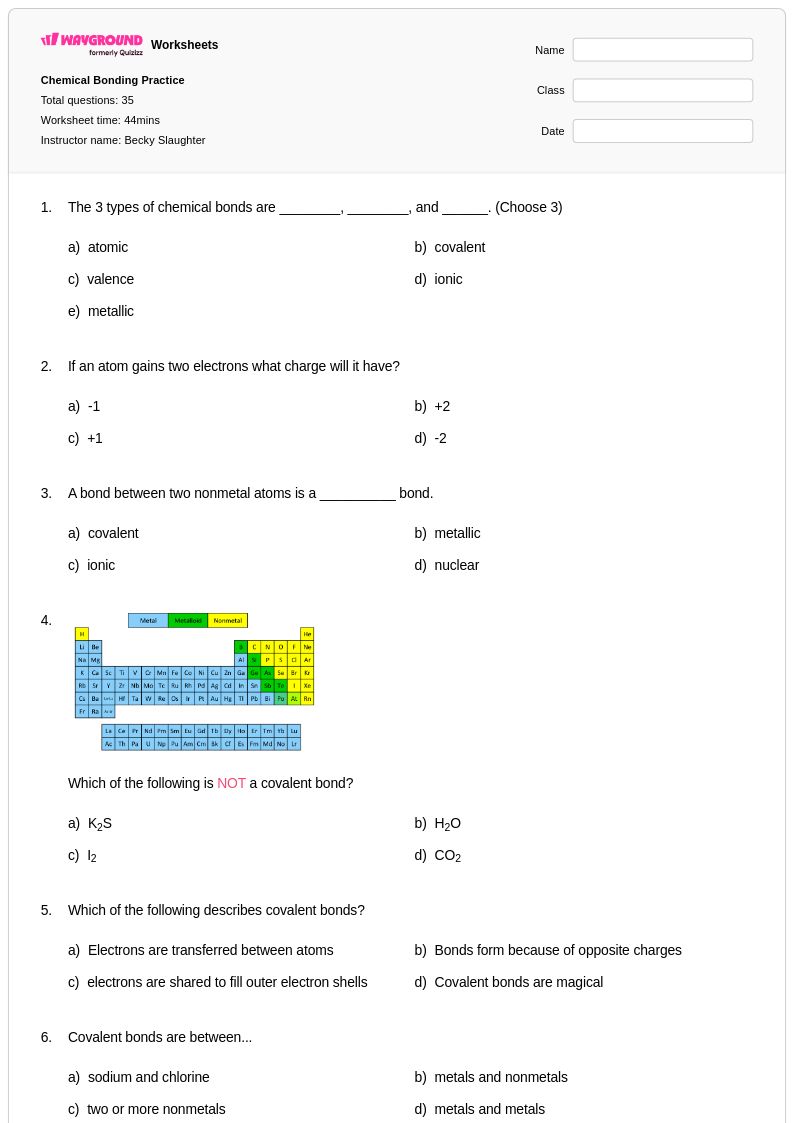
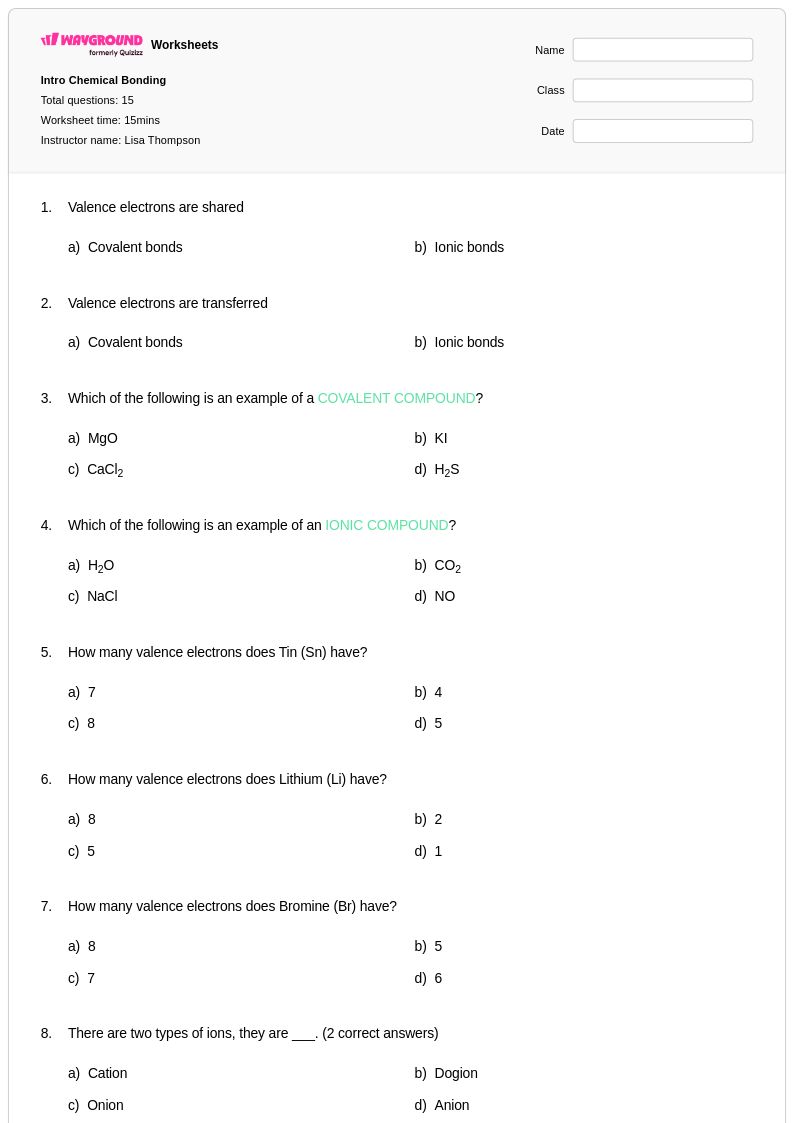
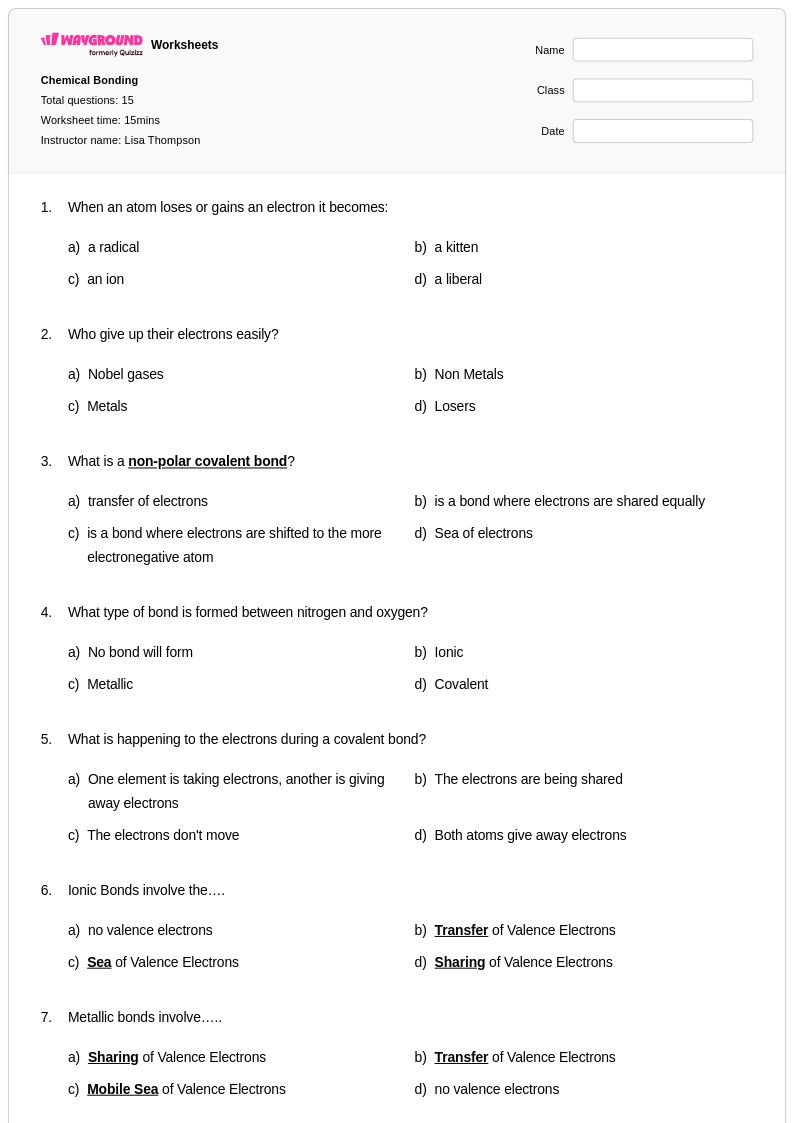
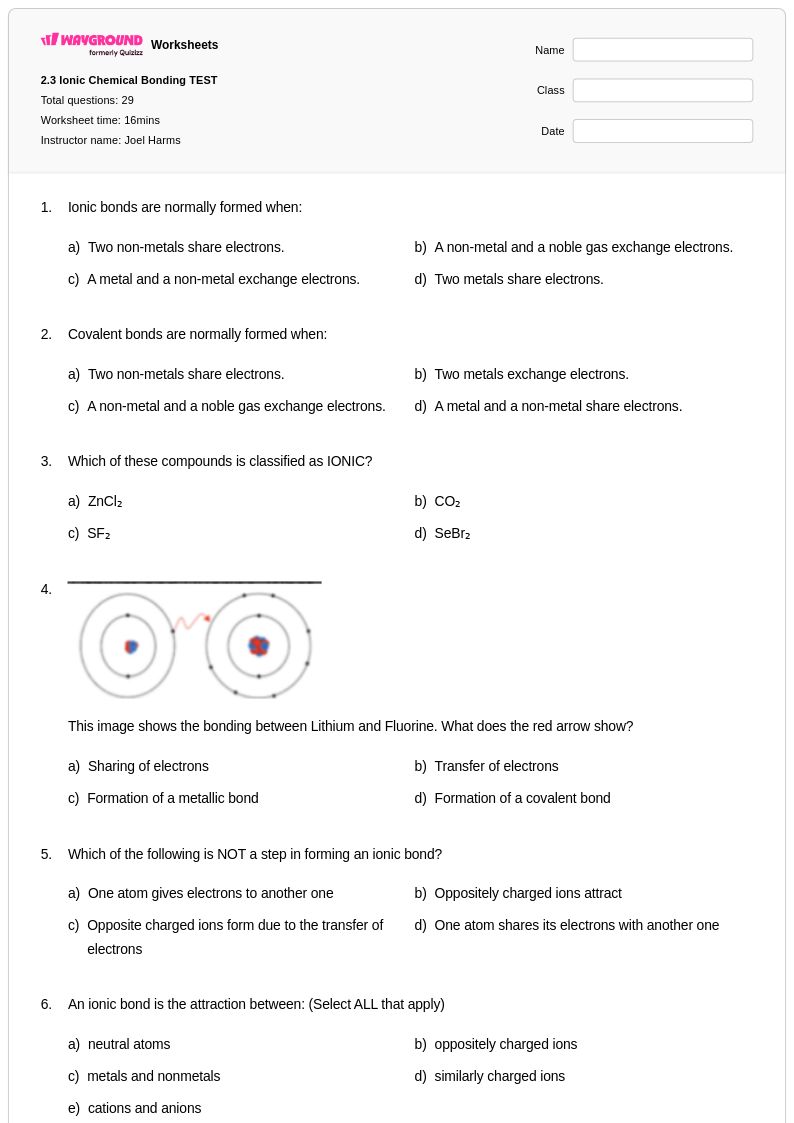
Chemical bonding worksheets for Class 10 students available through Wayground (formerly Quizizz) provide comprehensive coverage of how atoms combine to form compounds through ionic, covalent, and metallic bonds. These expertly crafted resources strengthen students' understanding of electron transfer and sharing mechanisms, electronegativity differences, Lewis structures, and molecular geometry principles that govern chemical interactions. The practice problems systematically guide learners through bond formation processes, polarity determinations, and the relationship between bonding types and material properties, with each worksheet including detailed answer keys to support independent learning and self-assessment. These free printables offer varied question formats from basic bond identification to complex molecular analysis, ensuring students develop both conceptual understanding and problem-solving proficiency in this foundational chemistry topic.
Wayground's extensive collection of millions of teacher-created chemical bonding resources empowers educators with sophisticated search and filtering capabilities to locate materials perfectly aligned with curriculum standards and individual classroom needs. The platform's differentiation tools allow teachers to customize worksheets for diverse learning levels, from remedial practice focusing on basic ionic and covalent concepts to enrichment activities exploring advanced topics like hybridization and resonance structures. Available in both printable pdf format and interactive digital versions, these resources seamlessly integrate into lesson planning for initial instruction, targeted skill practice, or assessment preparation. Teachers can efficiently modify existing worksheets or combine multiple resources to create comprehensive practice sets that address specific learning gaps while reinforcing the critical connections between atomic structure, periodic trends, and chemical bonding patterns essential for Class 10 chemistry success.
FAQs
How do I teach chemical bonding to high school students?
Effective chemical bonding instruction typically begins with electron configuration and valence electrons before introducing ionic, covalent, and metallic bonding as distinct mechanisms. Teachers often sequence lessons so students first predict bond types based on electronegativity differences, then practice drawing Lewis structures, and finally connect bond type to observable molecular properties. Grounding each bond type in real-world examples — such as table salt for ionic bonds or water for covalent bonds — helps students build intuitive understanding before tackling more abstract concepts like molecular geometry and intermolecular forces.
What exercises help students practice ionic and covalent bonding?
Practice exercises that ask students to predict bond formation, write chemical formulas, and draw Lewis structures are particularly effective for reinforcing ionic and covalent bonding concepts. Problems that require students to classify a compound as ionic or covalent based on its component elements, then justify their reasoning using electronegativity values, build both procedural fluency and conceptual understanding. Including molecular geometry questions — such as determining VSEPR shapes from Lewis structures — extends practice beyond basic bond identification into more analytical territory.
What mistakes do students commonly make when learning about chemical bonding?
One of the most persistent misconceptions is that electrons are physically transferred in covalent bonds rather than shared, which causes students to confuse ionic and covalent bonding mechanisms. Students also frequently miscount valence electrons when drawing Lewis structures, leading to incorrect bond counts and faulty molecular geometries. Another common error is assuming that all ionic compounds are solids and all covalent compounds are gases, which overlooks the role of intermolecular forces in determining physical states.
How do I differentiate chemical bonding instruction for students at different ability levels?
For struggling students, scaffolding tasks — such as providing partially completed Lewis structures or limiting practice to binary ionic compounds before introducing polyatomic ions — reduces cognitive load while maintaining conceptual rigor. Advanced learners benefit from extension problems involving formal charge calculations, resonance structures, or the relationship between bond polarity and molecular dipole moments. On Wayground, teachers can apply accommodations such as reduced answer choices and read-aloud support to individual students, allowing the same worksheet to serve multiple ability levels without creating entirely separate materials.
How can I use Wayground's chemical bonding worksheets in my classroom?
Wayground's chemical bonding worksheets are available as printable PDFs for traditional classroom use and in digital formats for technology-integrated or hybrid learning environments, including the option to host them as a quiz directly on Wayground. Teachers can use these resources for direct instruction support, independent practice, remediation with struggling students, or enrichment activities for advanced learners. The included answer keys allow students to self-assess their work, which is especially useful for homework assignments or independent study sessions.
How do I help students understand the relationship between bond type and molecular properties?
Students grasp this relationship most effectively when instruction explicitly connects bond characteristics — such as polarity, bond strength, and electron distribution — to measurable properties like melting point, solubility, and electrical conductivity. For example, comparing the high melting point of ionic compounds like NaCl with the low boiling point of covalent molecules like CO2 makes the property differences concrete and testable. Asking students to predict and then verify these properties through data analysis tasks reinforces the cause-and-effect logic that underpins bonding theory.