Free Printable Counting Atoms Worksheets for Class 10
Explore Wayground's free Class 10 counting atoms worksheets with printable PDFs, practice problems, and answer keys to help students master calculating the number of atoms in chemical compounds and molecular formulas.
Explore printable Counting Atoms worksheets for Class 10
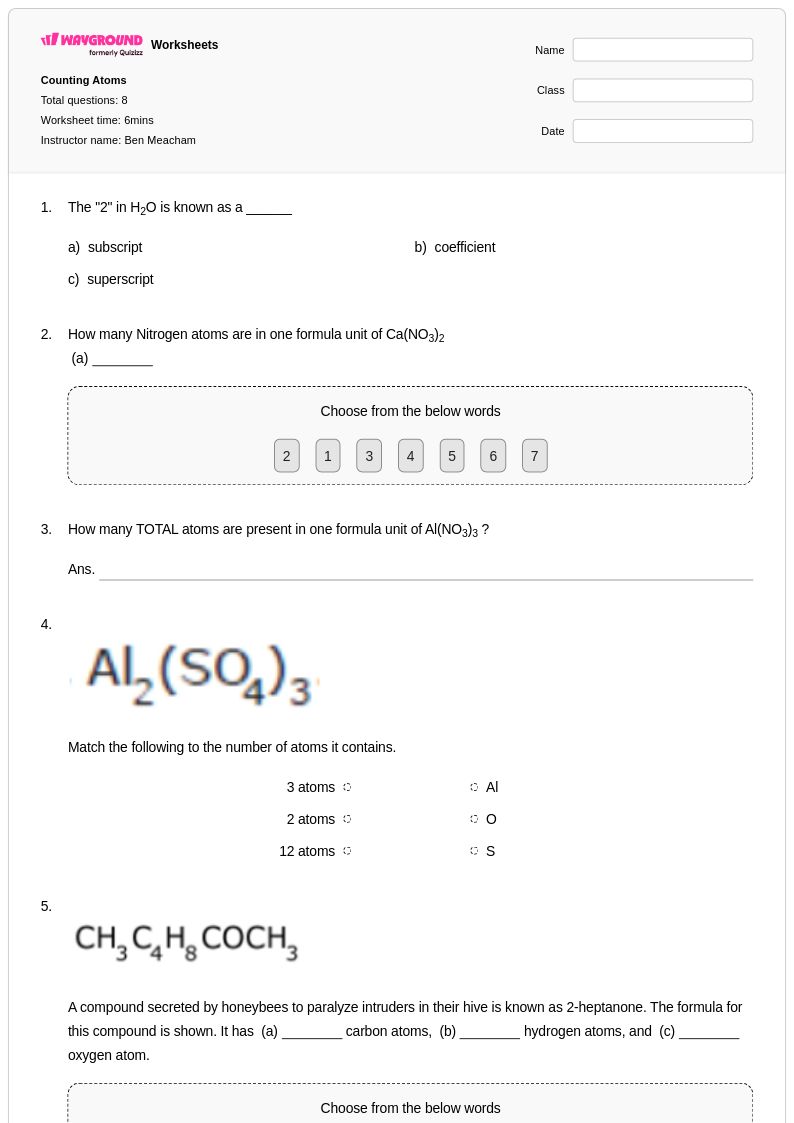
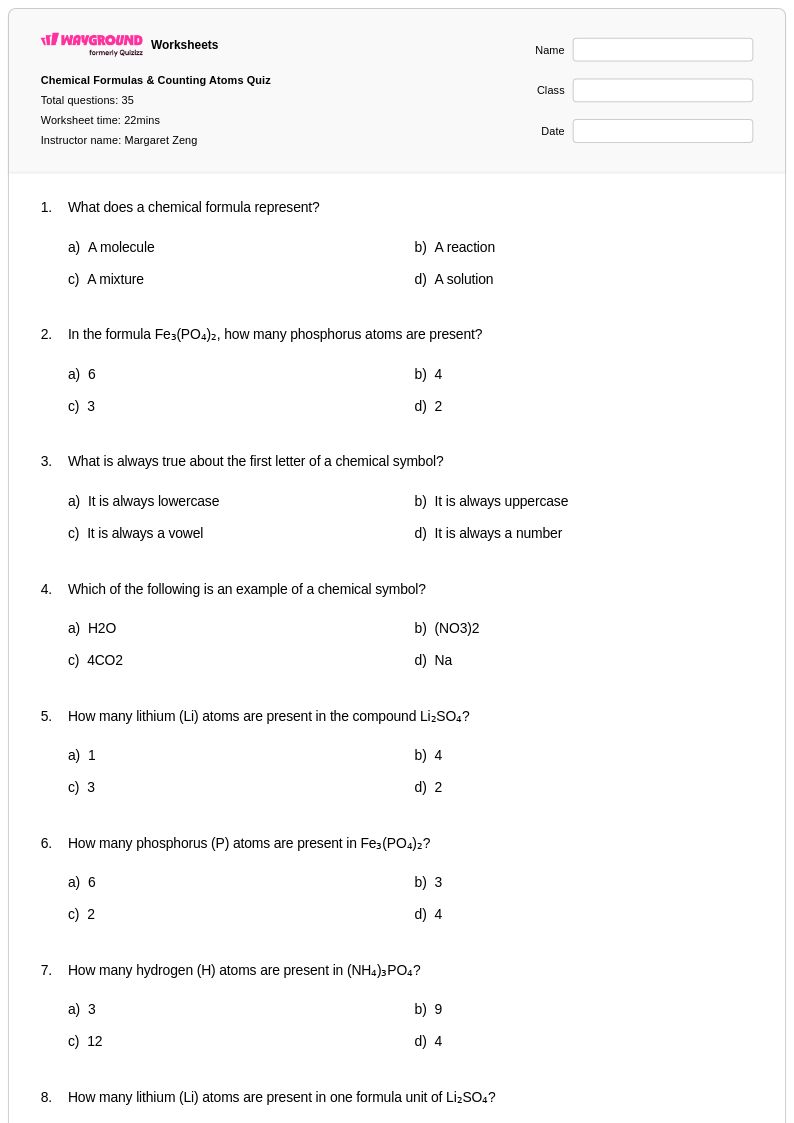
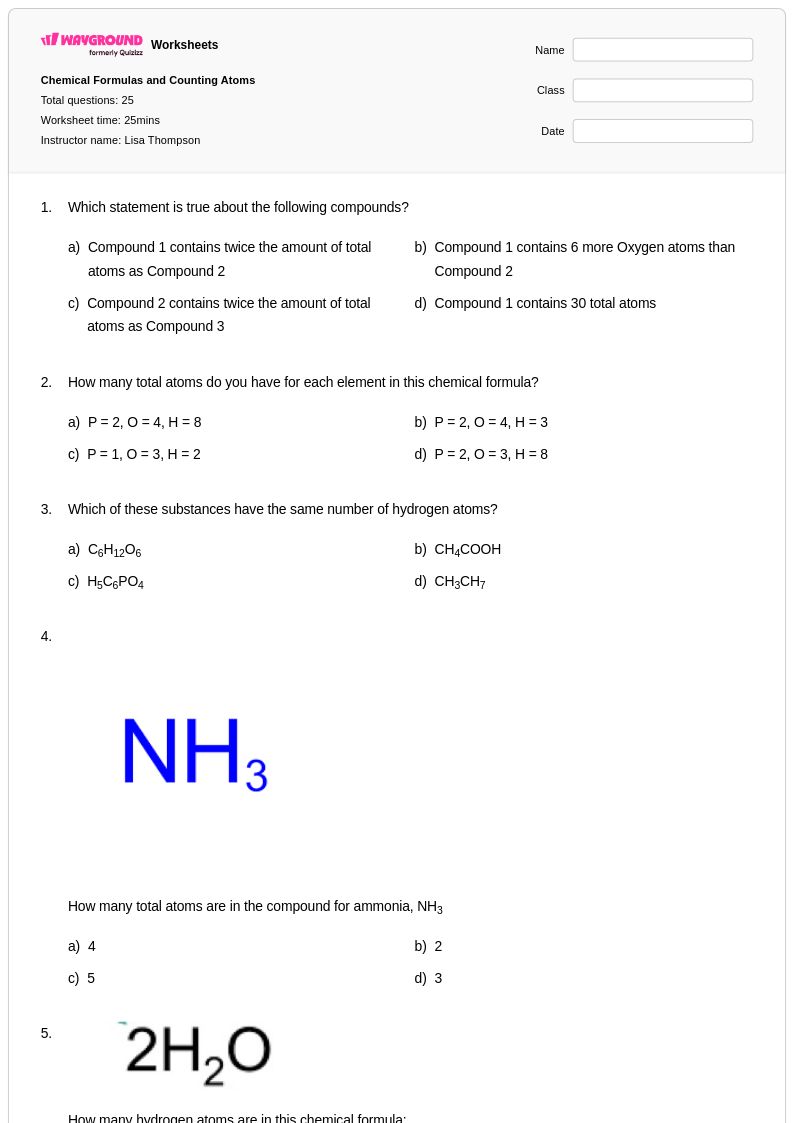
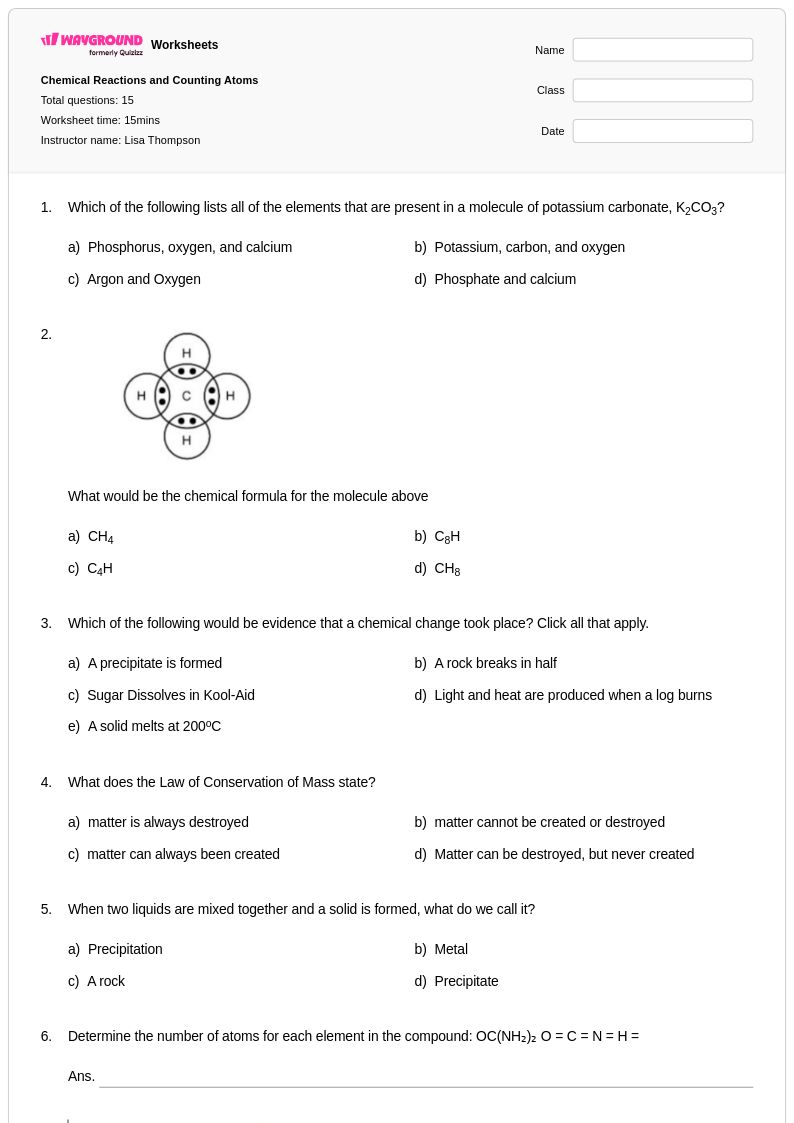
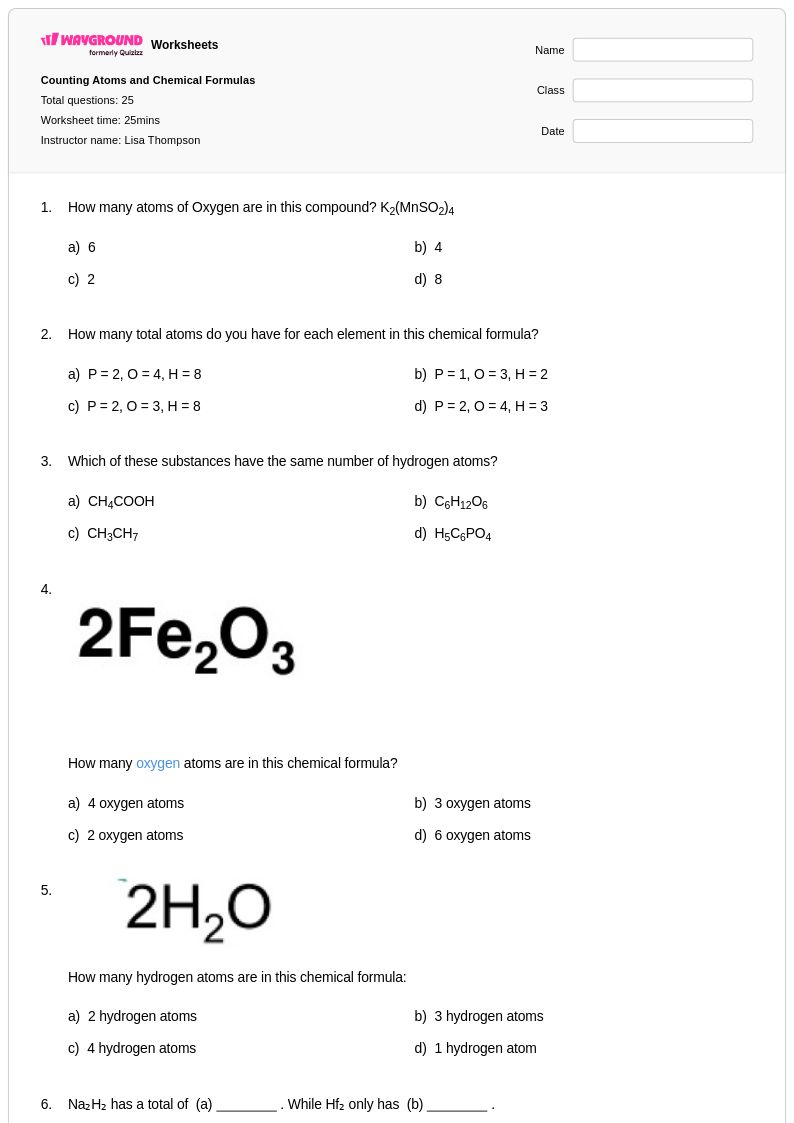
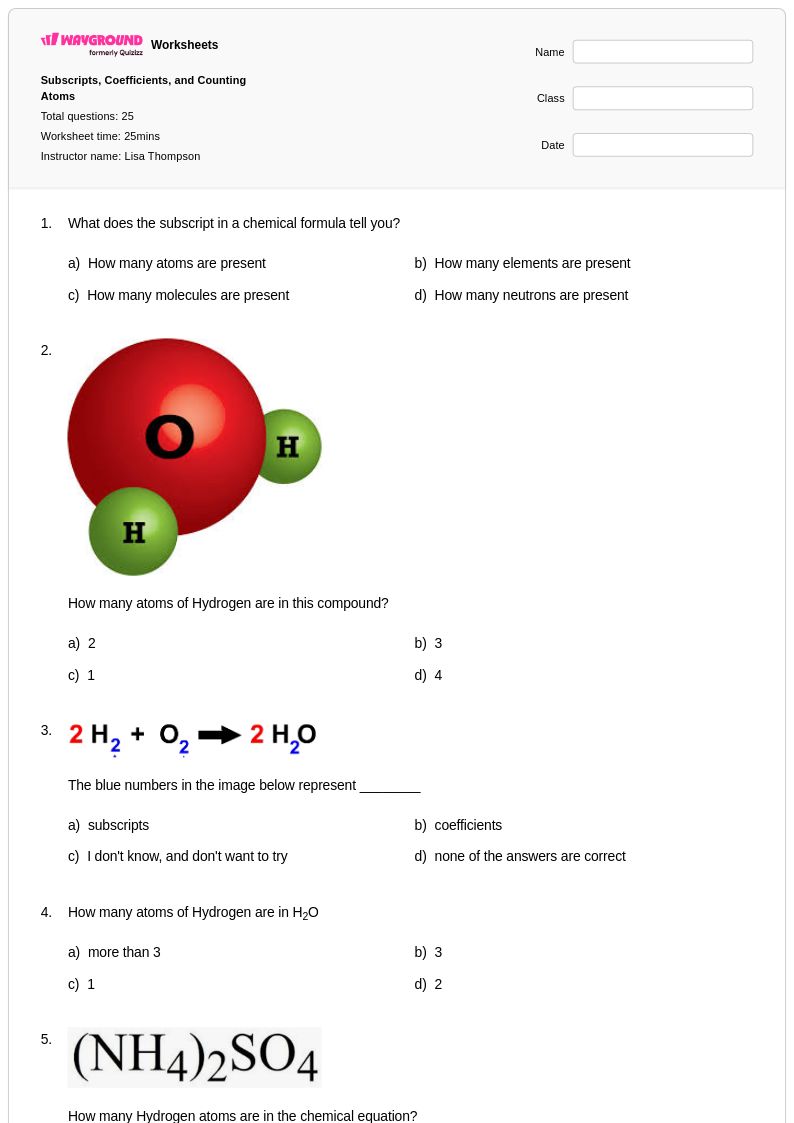
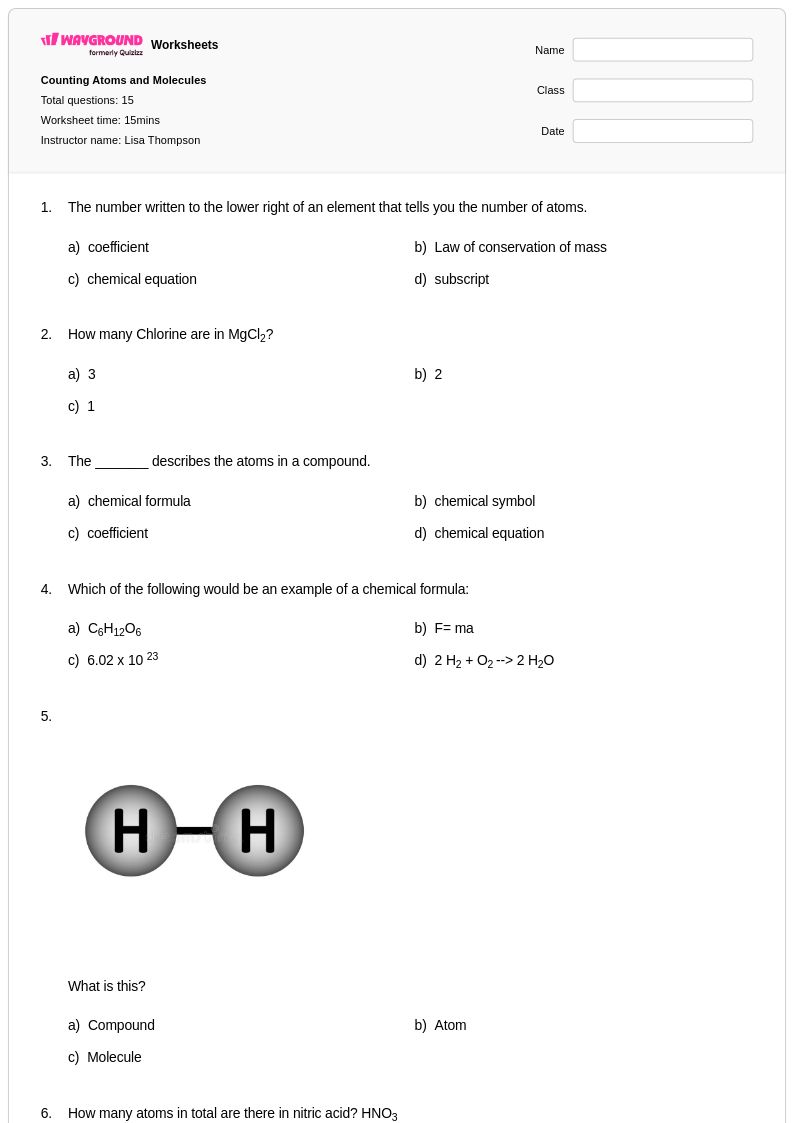
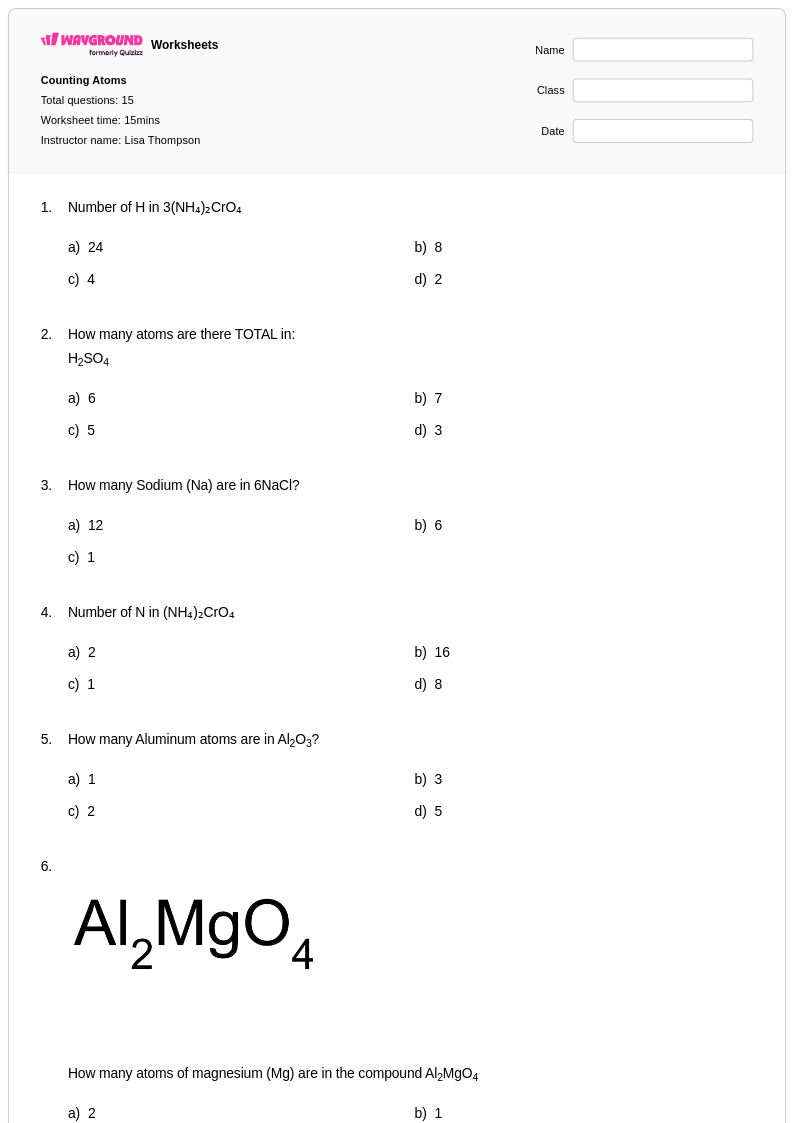
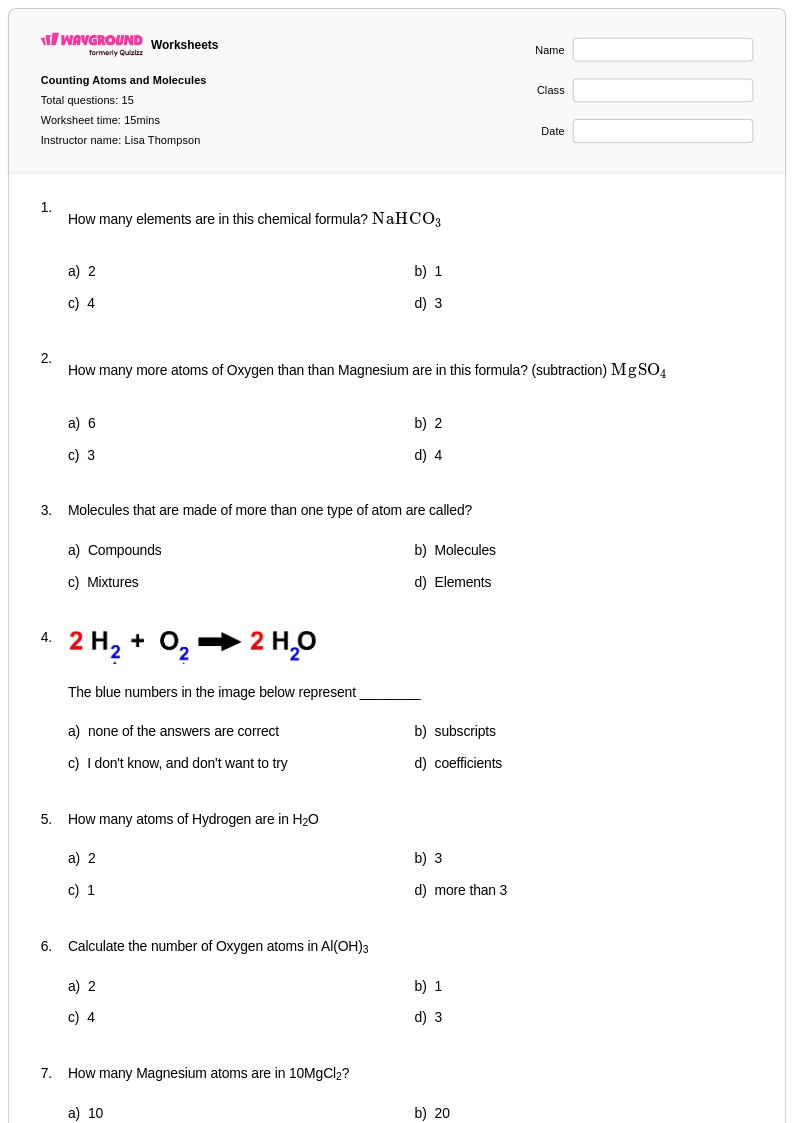
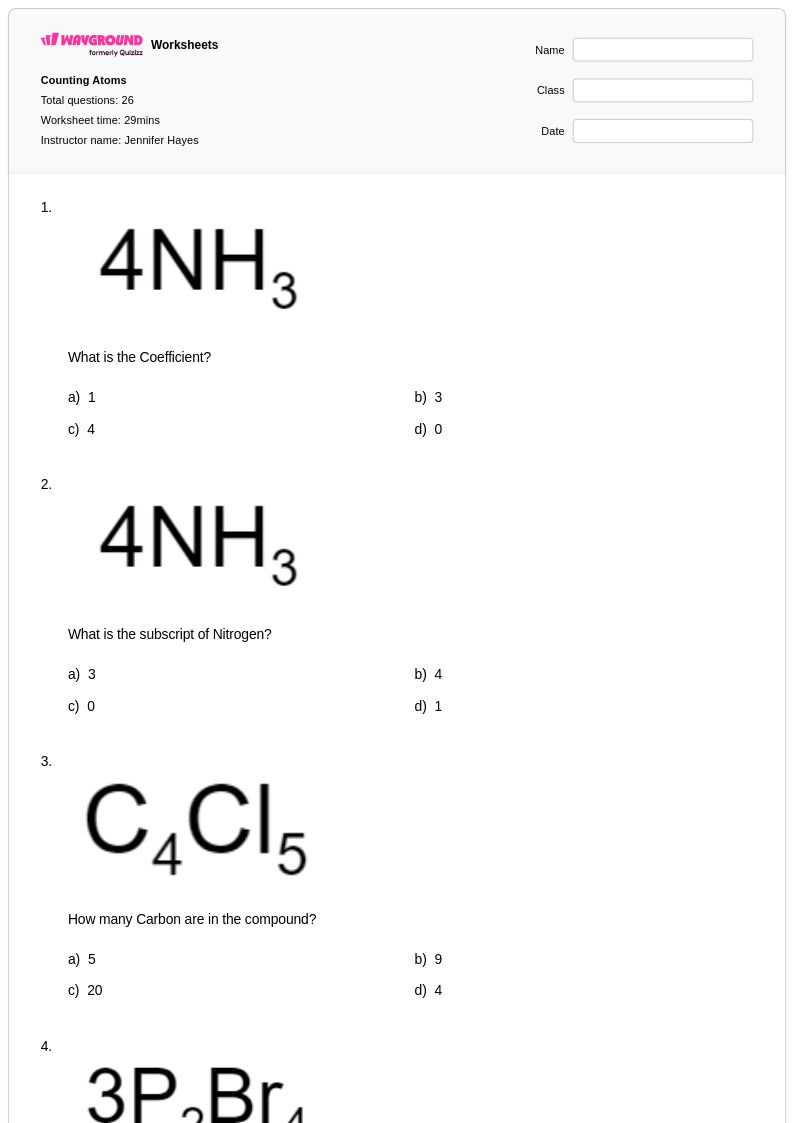
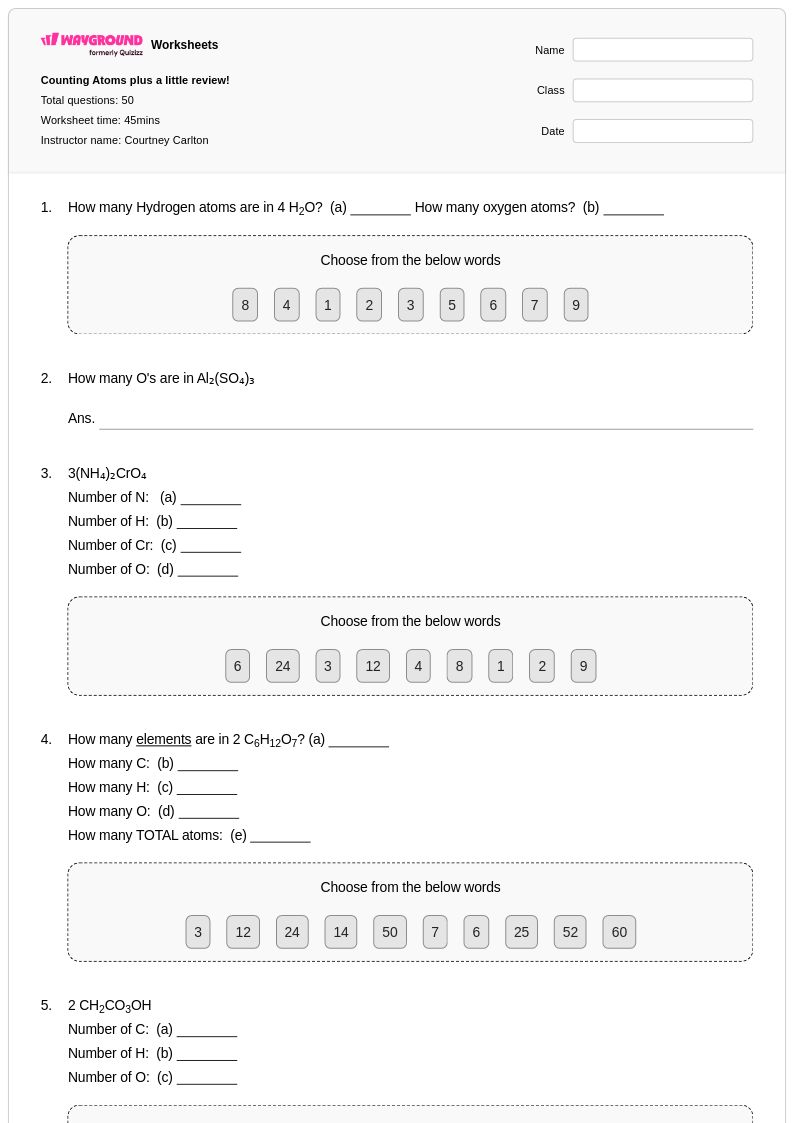
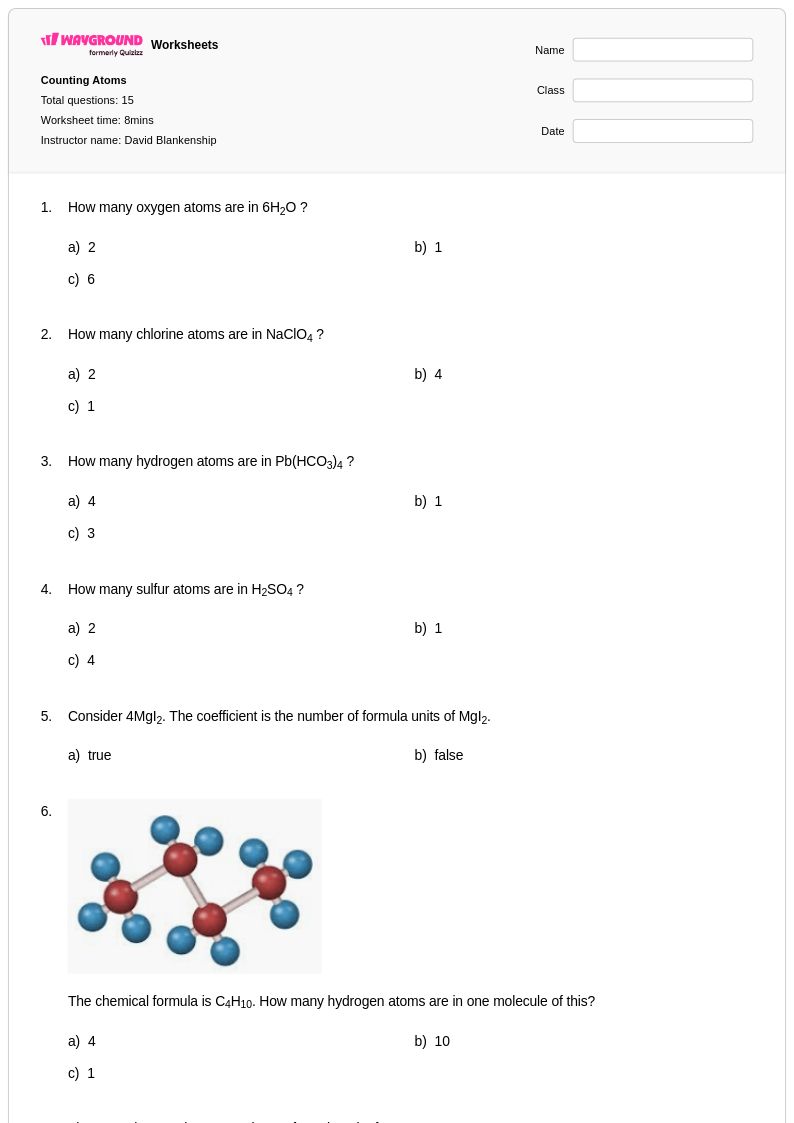
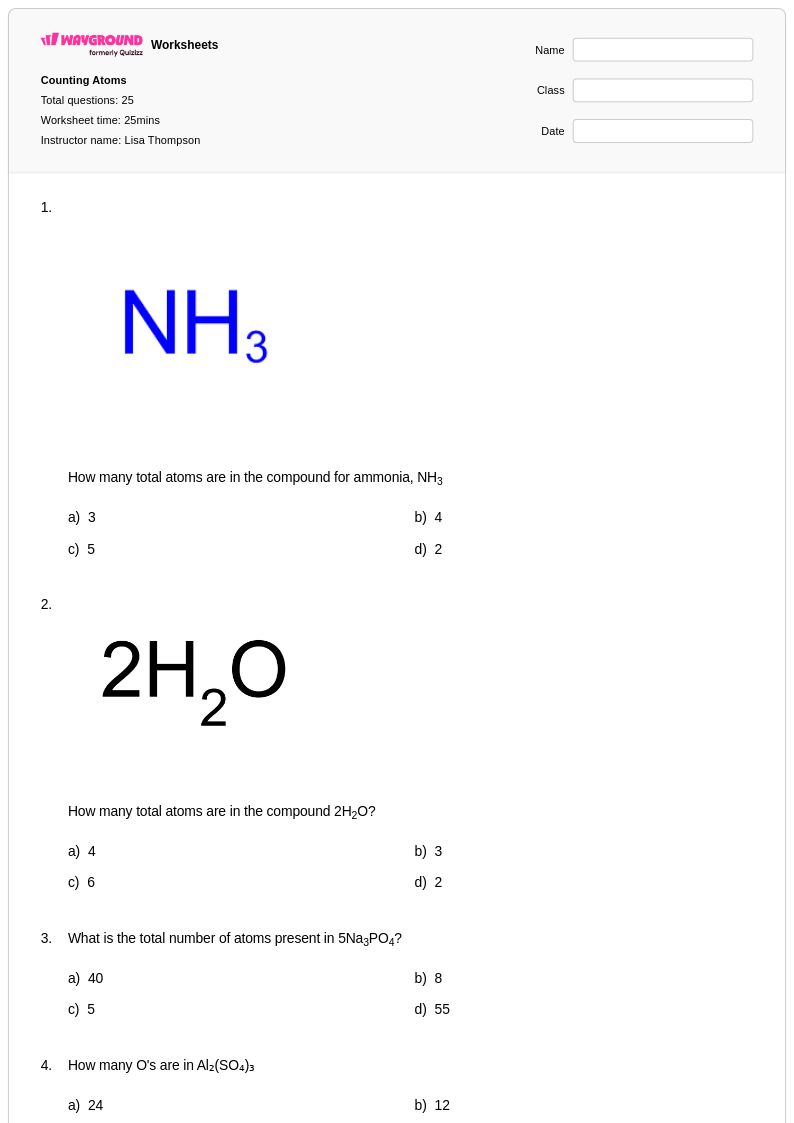
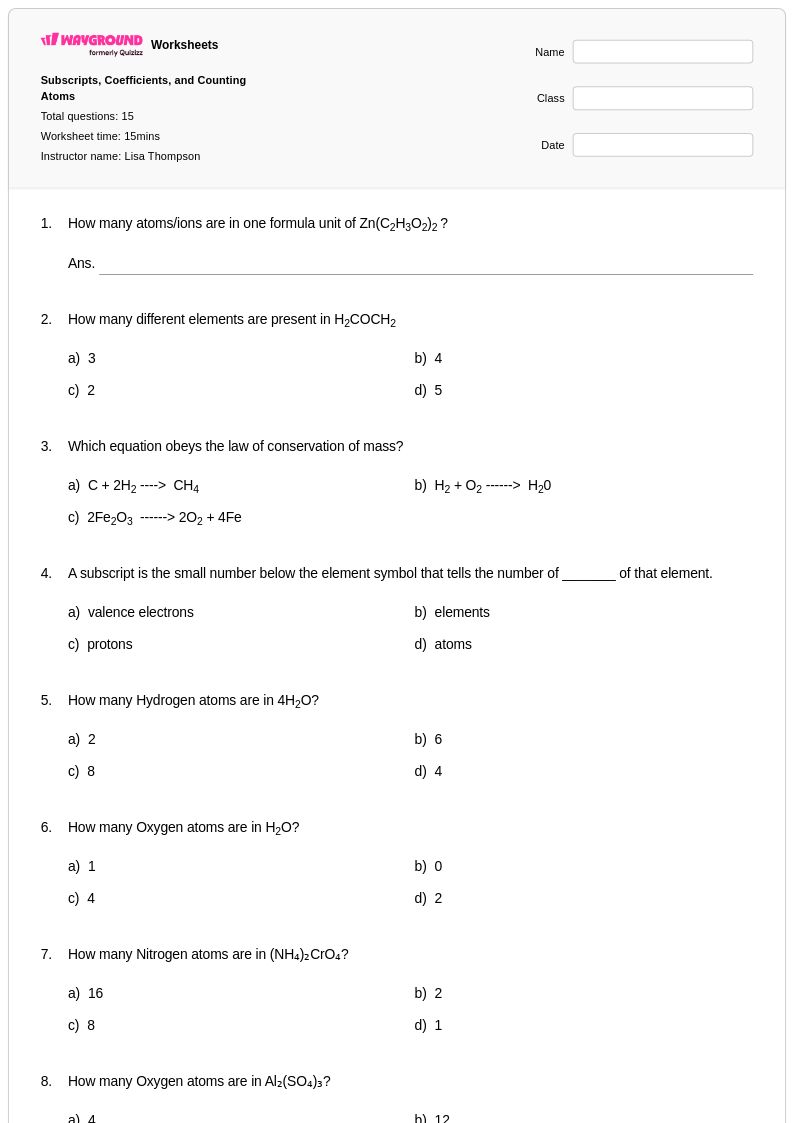
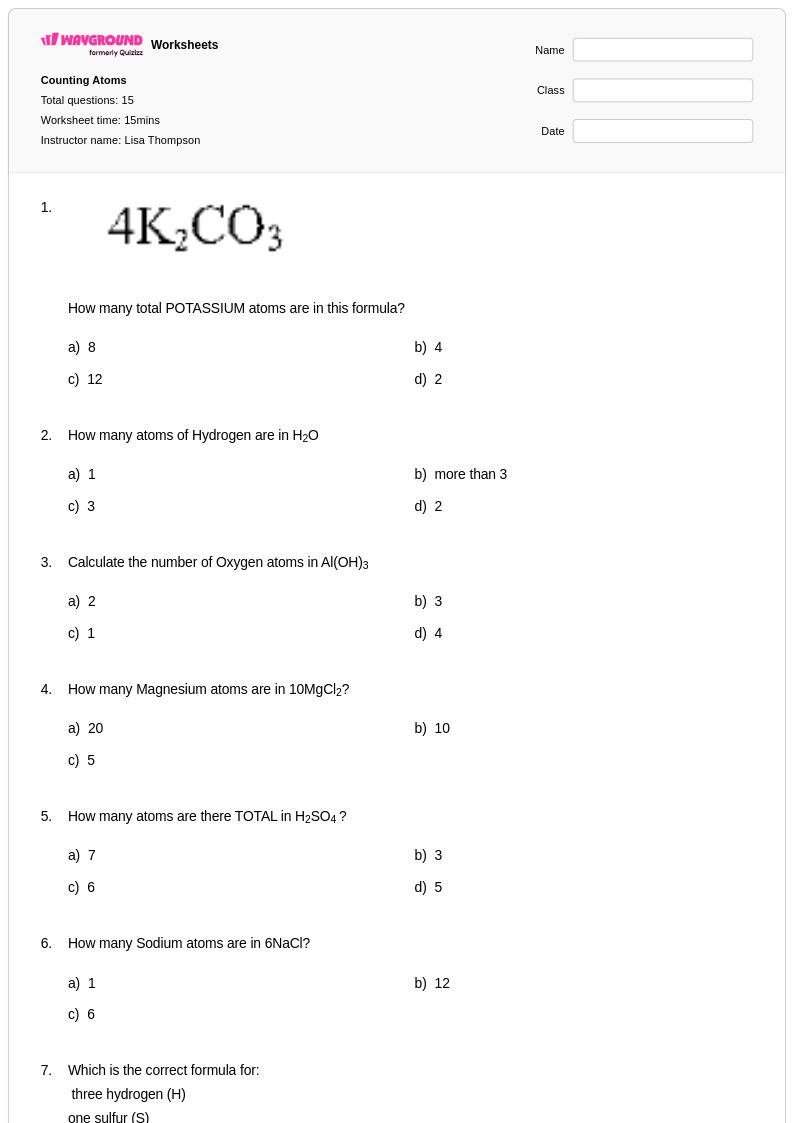
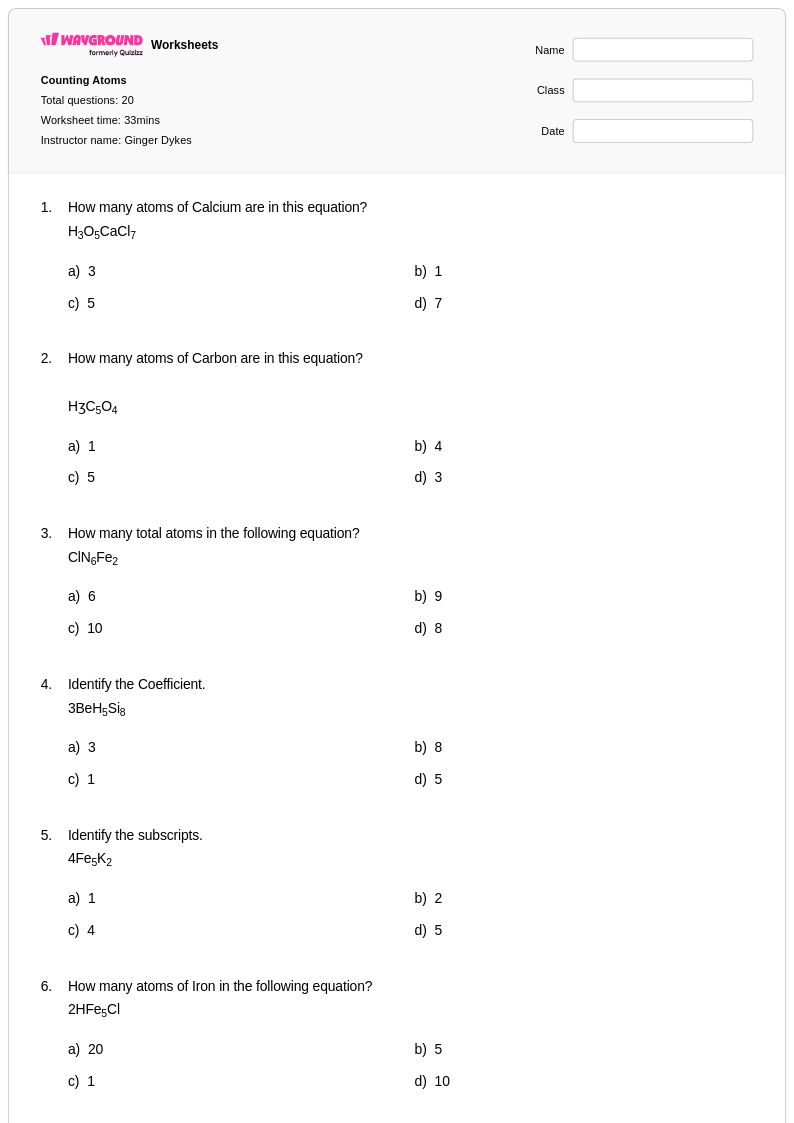
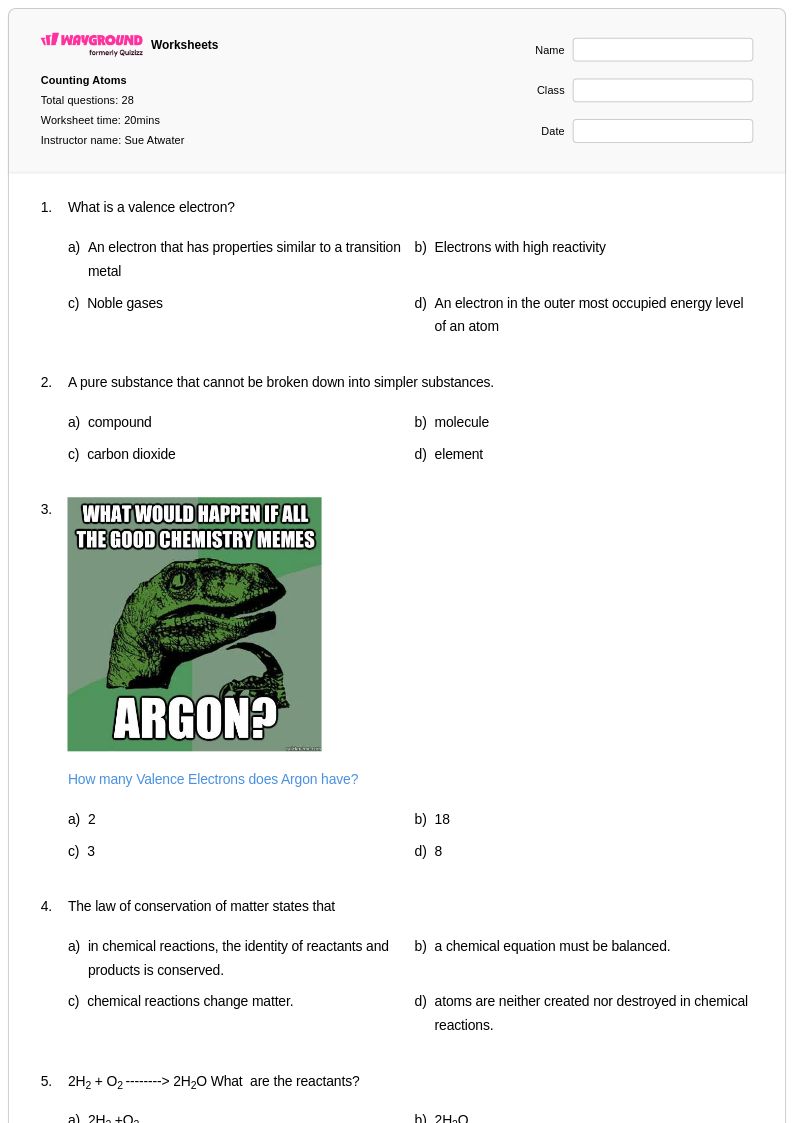
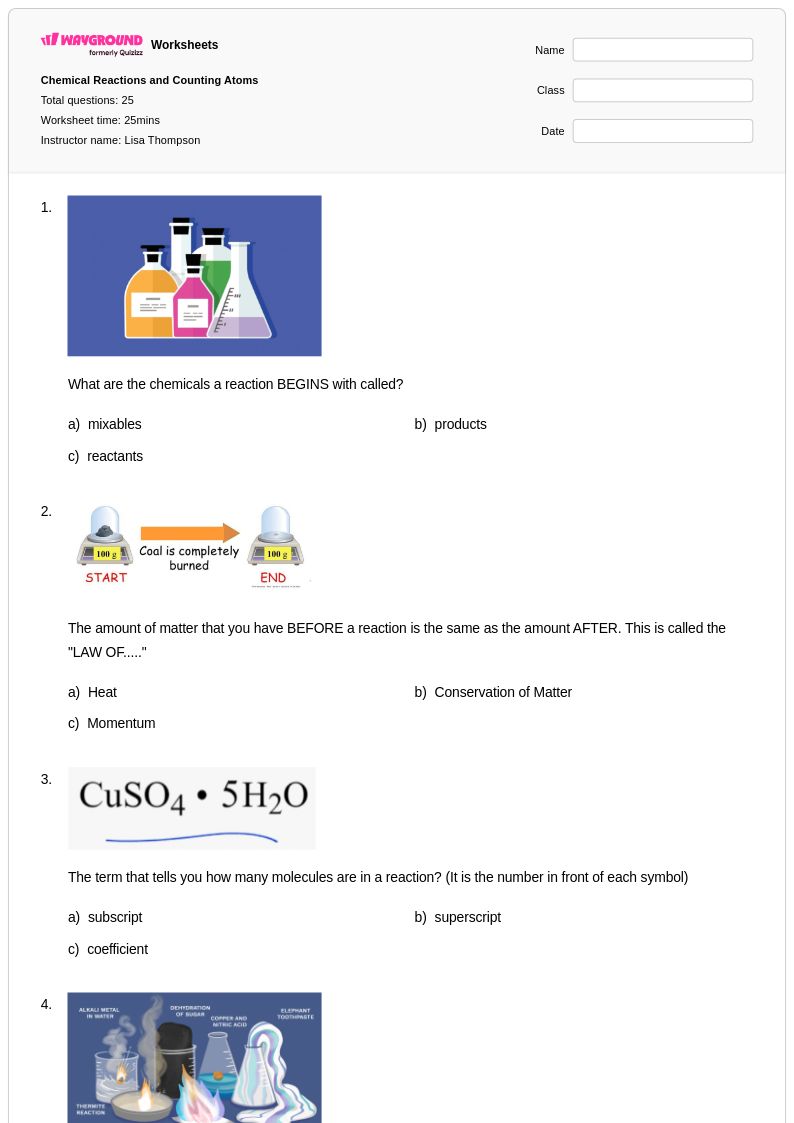
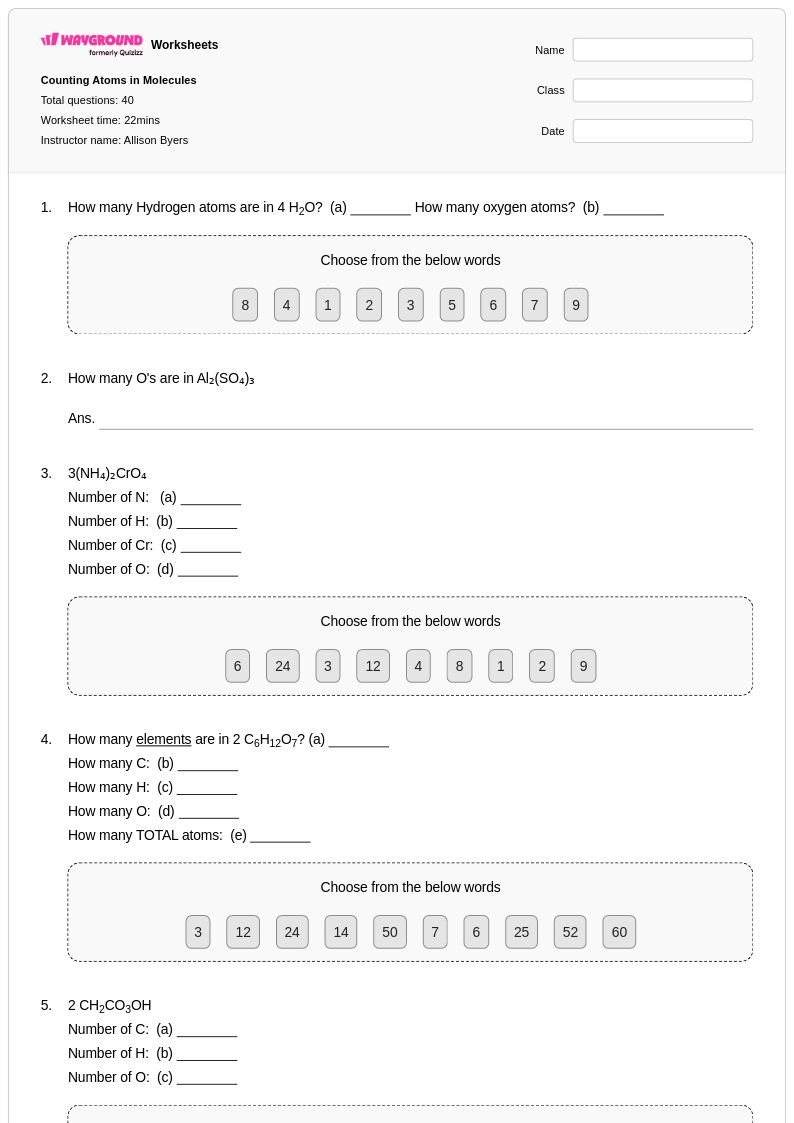
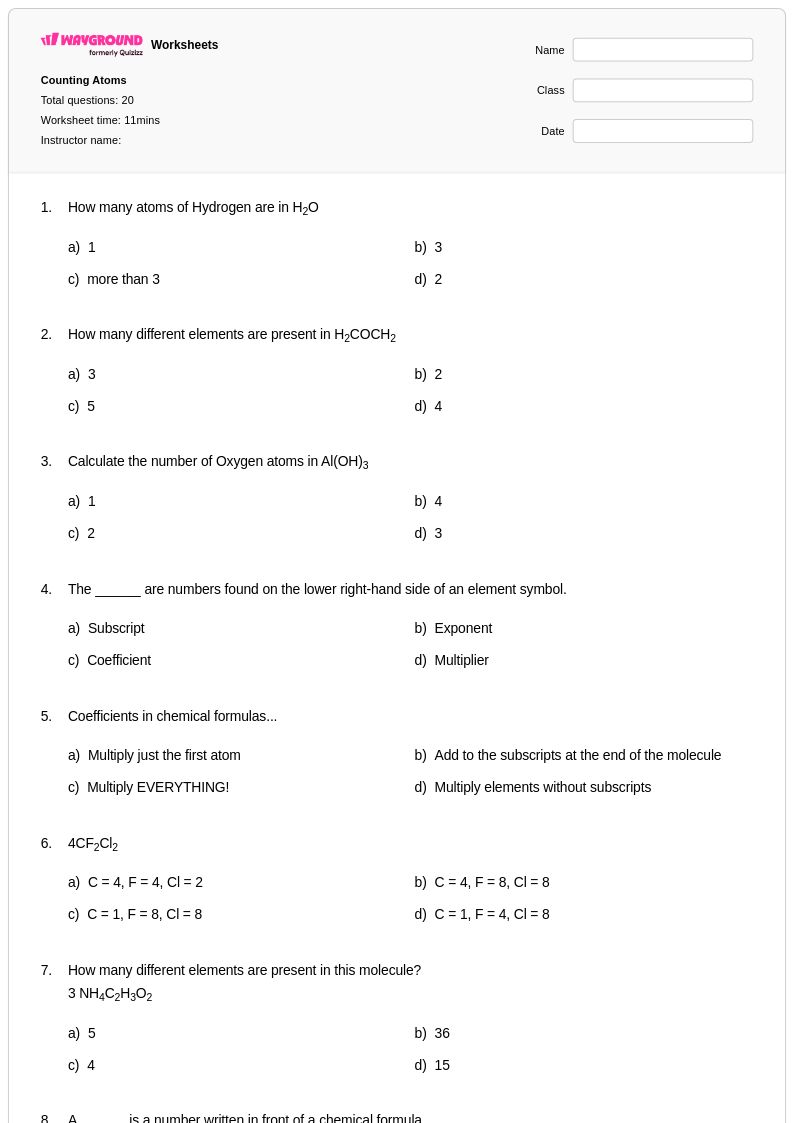
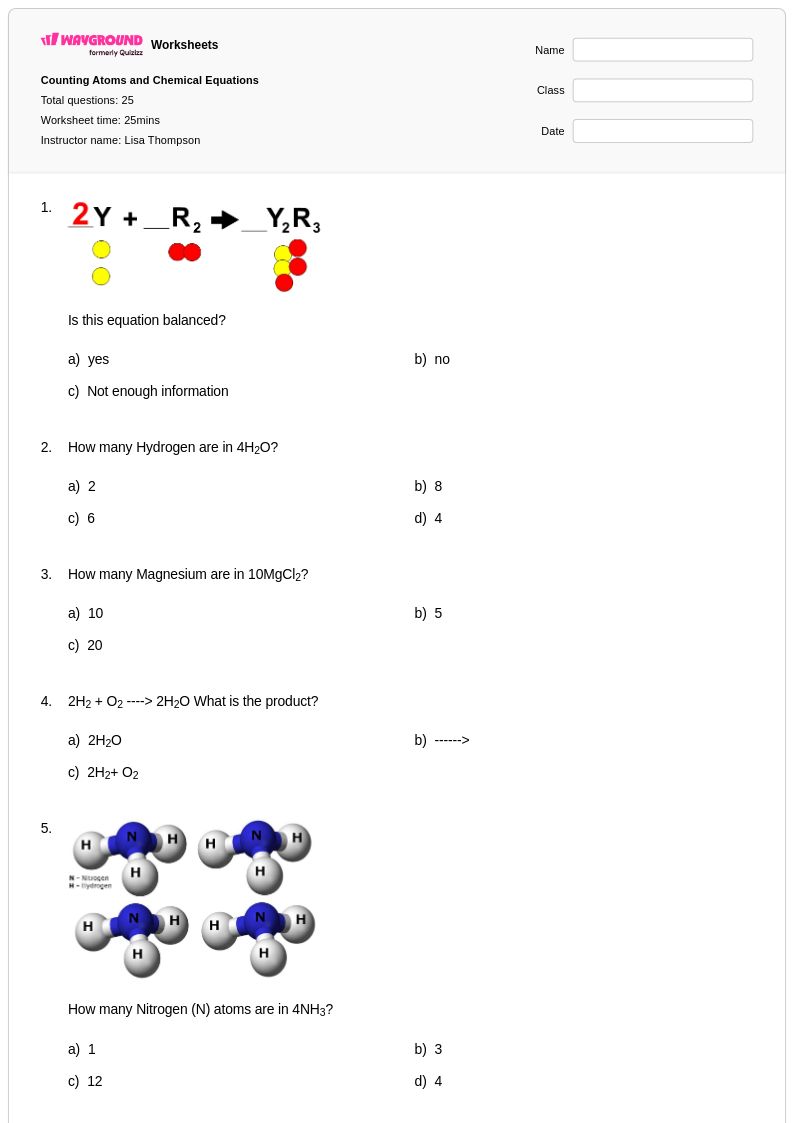
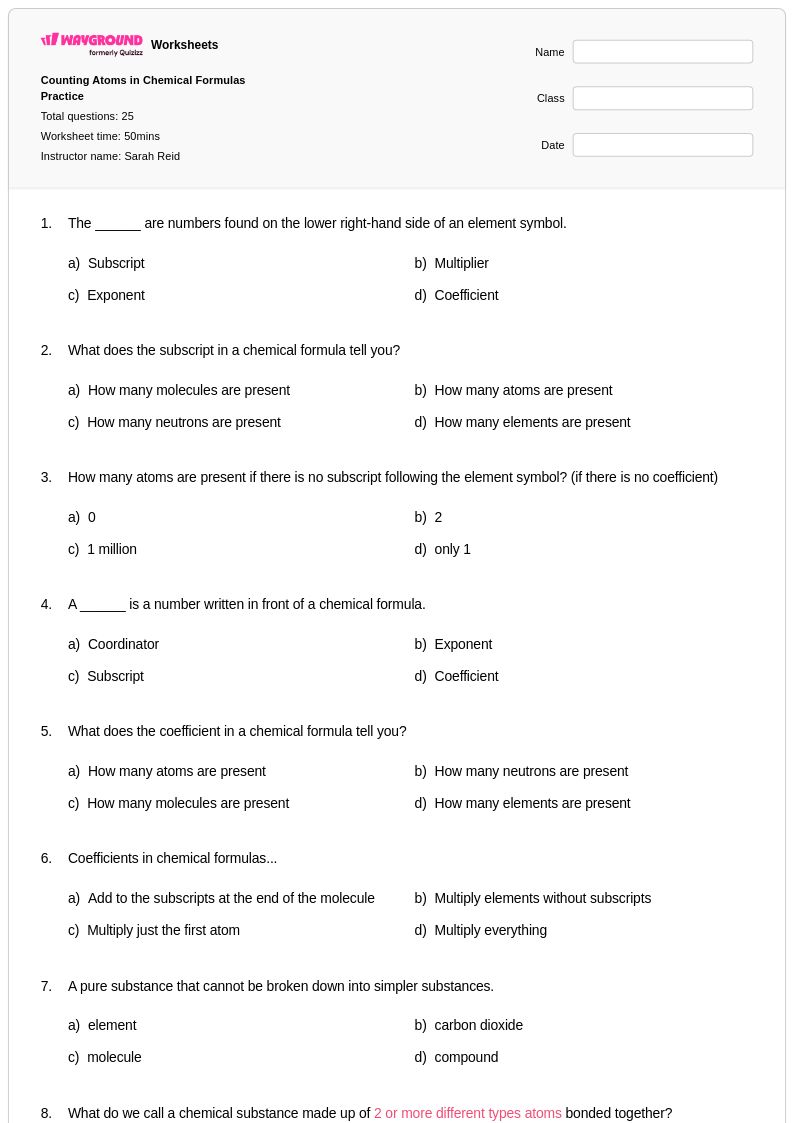
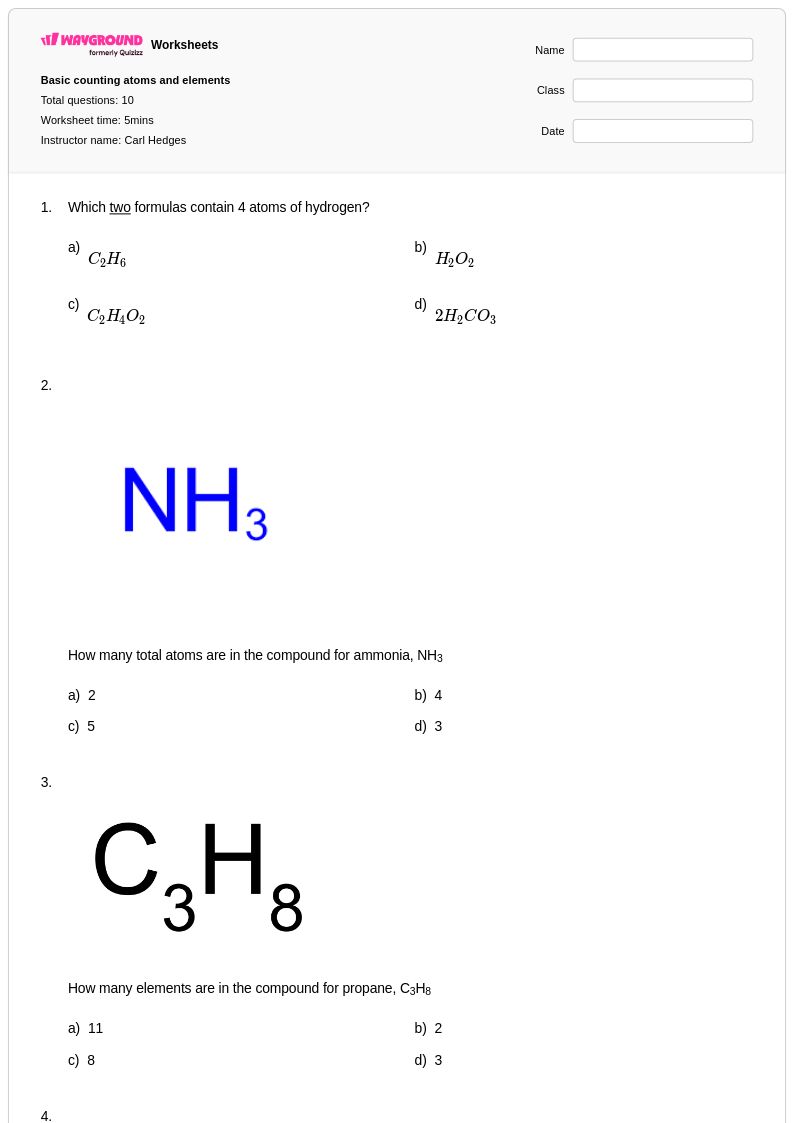
Counting atoms worksheets for Class 10 students available through Wayground (formerly Quizizz) provide comprehensive practice with the fundamental skill of determining the number of atoms in chemical formulas and compounds. These expertly designed worksheets strengthen students' understanding of molecular composition, subscripts, coefficients, and polyatomic ions while building essential quantitative chemistry skills. The practice problems progress systematically from simple ionic compounds to complex molecular structures, helping students master the mathematical relationships between chemical formulas and atomic quantities. Each worksheet includes detailed answer keys and explanations, making these free printables valuable resources for both independent study and classroom instruction in PDF format.
Wayground (formerly Quizizz) supports chemistry educators with millions of teacher-created counting atoms worksheets that can be easily searched, filtered, and customized to match specific curriculum standards and student needs. The platform's robust differentiation tools allow teachers to modify difficulty levels, adjust problem sets, and create targeted practice materials for remediation or enrichment purposes. These resources are available in both printable PDF format and interactive digital versions, providing maximum flexibility for lesson planning and skill practice sessions. The extensive collection enables educators to quickly locate age-appropriate materials aligned with Class 10 chemistry standards, streamlining preparation time while ensuring students receive consistent, high-quality practice with atomic counting concepts across different molecular structures and chemical equations.
FAQs
How do I teach students to count atoms in chemical formulas?
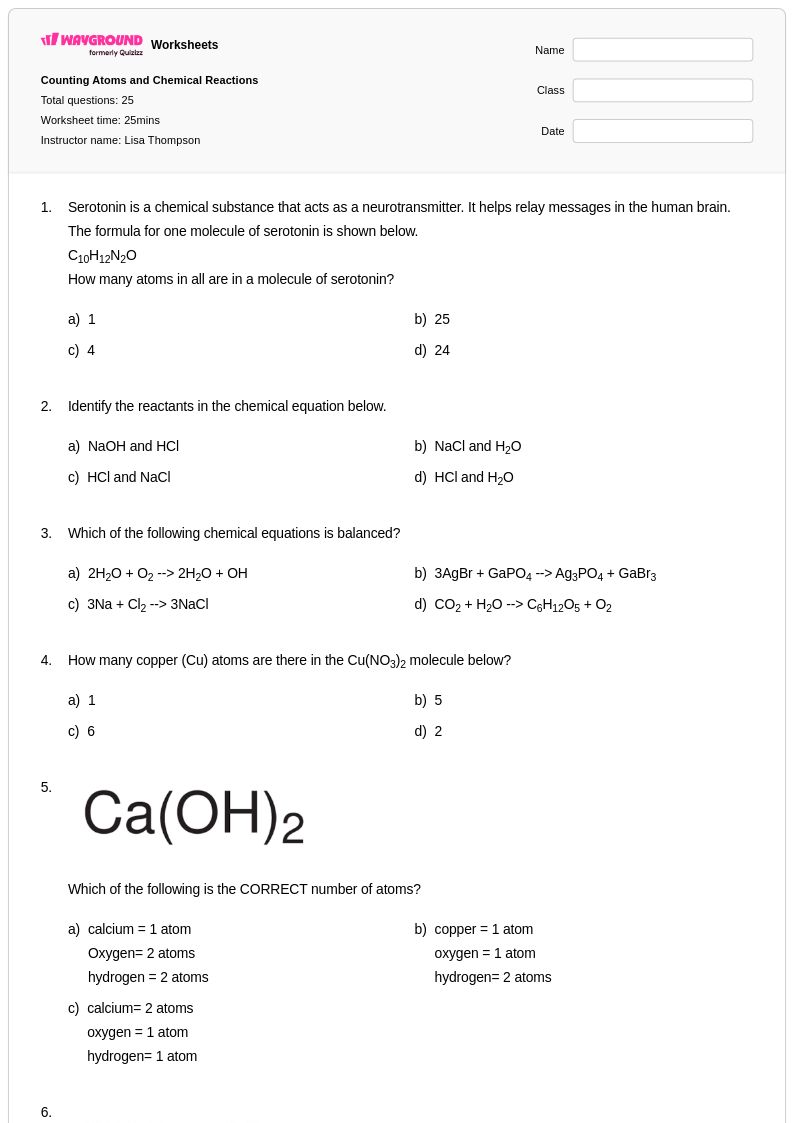
Start by teaching students to identify and interpret the three key components of chemical notation: subscripts (numbers written below and after an element symbol), coefficients (numbers in front of a formula), and parentheses enclosing polyatomic groups. A reliable instructional sequence moves from simple binary compounds like NaCl to more complex molecules with parentheses, such as Ca(OH)₂, before introducing coefficients in balanced equations. Color-coding each element and its associated subscript is a highly effective visual strategy that helps students track atoms across multi-element formulas without losing count.
What exercises help students practice counting atoms?
Effective practice exercises progress from identifying atoms in simple two-element compounds to calculating totals in formulas with parentheses and coefficients. Structured worksheets that require students to build an atom inventory table — listing each element and its total count — reinforce systematic thinking rather than guessing. Practice problems should include a mix of molecular formulas and ionic compounds with polyatomic ions to ensure students can apply the skill across different formula types.
What mistakes do students commonly make when counting atoms in chemical formulas?
The most frequent error is failing to distribute a subscript outside parentheses to every element inside the group — for example, treating Ca(OH)₂ as having one oxygen and one hydrogen rather than two of each. Students also commonly ignore coefficients when counting atoms, treating them as irrelevant to the formula rather than as multipliers applied to every atom in the compound. A third common misconception is assuming that the absence of a subscript means zero atoms rather than one, which leads to systematic undercounting.
Why is counting atoms an important foundational skill in chemistry?
Counting atoms accurately is a prerequisite for stoichiometry and chemical equation balancing, both of which depend on knowing the exact number of each atom in a compound. Without this skill, students cannot verify whether an equation is balanced, calculate molar mass, or interpret empirical and molecular formulas correctly. Mastery at this stage prevents compounding errors later in the curriculum when atomic ratios become central to quantitative chemistry problems.
How can I use Wayground's counting atoms worksheets in my classroom?
Wayground's counting atoms worksheets are available as printable PDFs for traditional classroom use and in digital formats for technology-integrated learning environments, and teachers can also host them as a quiz directly on Wayground. The collection spans simple binary compounds through polyatomic ions and complex molecular structures, making it practical to assign worksheets that match where students currently are in the progression. Complete answer keys are included, so worksheets can be used for independent practice, homework, or self-paced remediation without requiring additional teacher preparation.
How do I support students who are struggling with counting atoms while keeping the rest of the class on track?
For students who need additional scaffolding, Wayground's differentiation tools allow teachers to customize worksheets by difficulty level and specific learning objectives, making it straightforward to assign simpler binary compound problems to struggling learners while advanced students work on complex polyatomic ion problems. On the digital platform, accommodations such as read aloud and reduced answer choices can be applied to individual students without notifying the rest of the class, so targeted support remains discreet. These settings are saved and reusable across future sessions, reducing setup time for ongoing differentiation.