Free Printable Periodic Trends Worksheets for Class 10
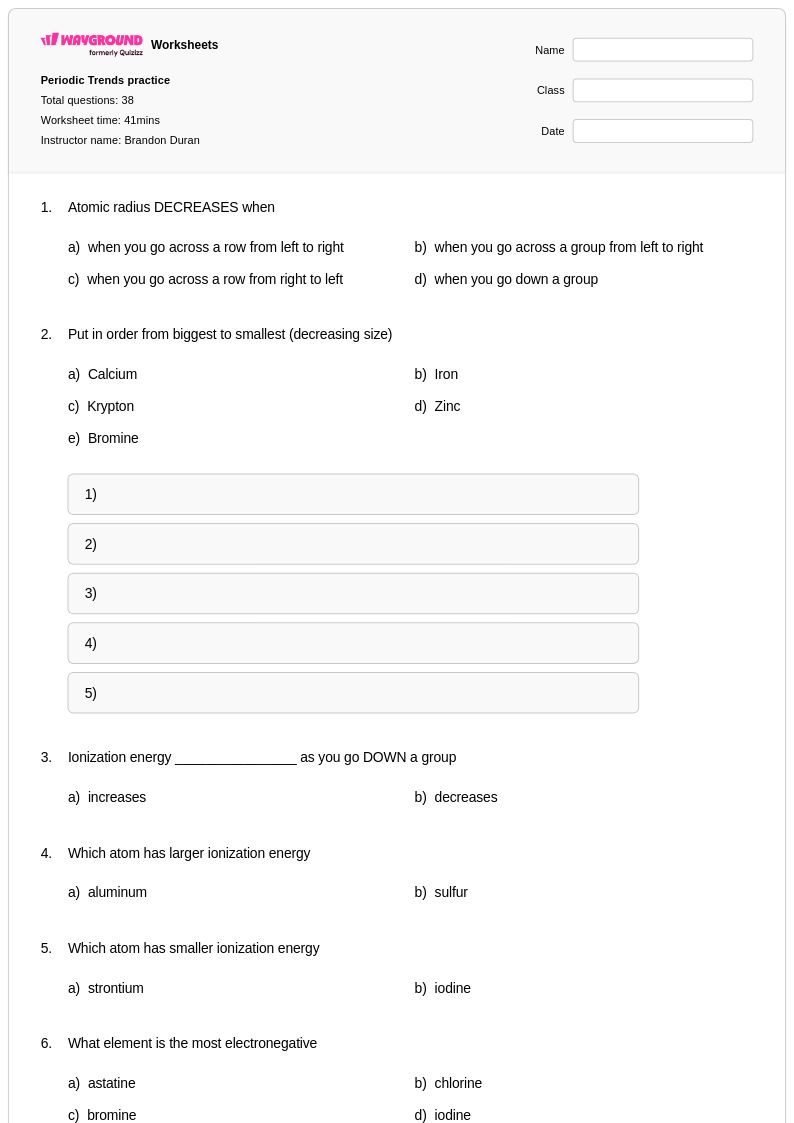
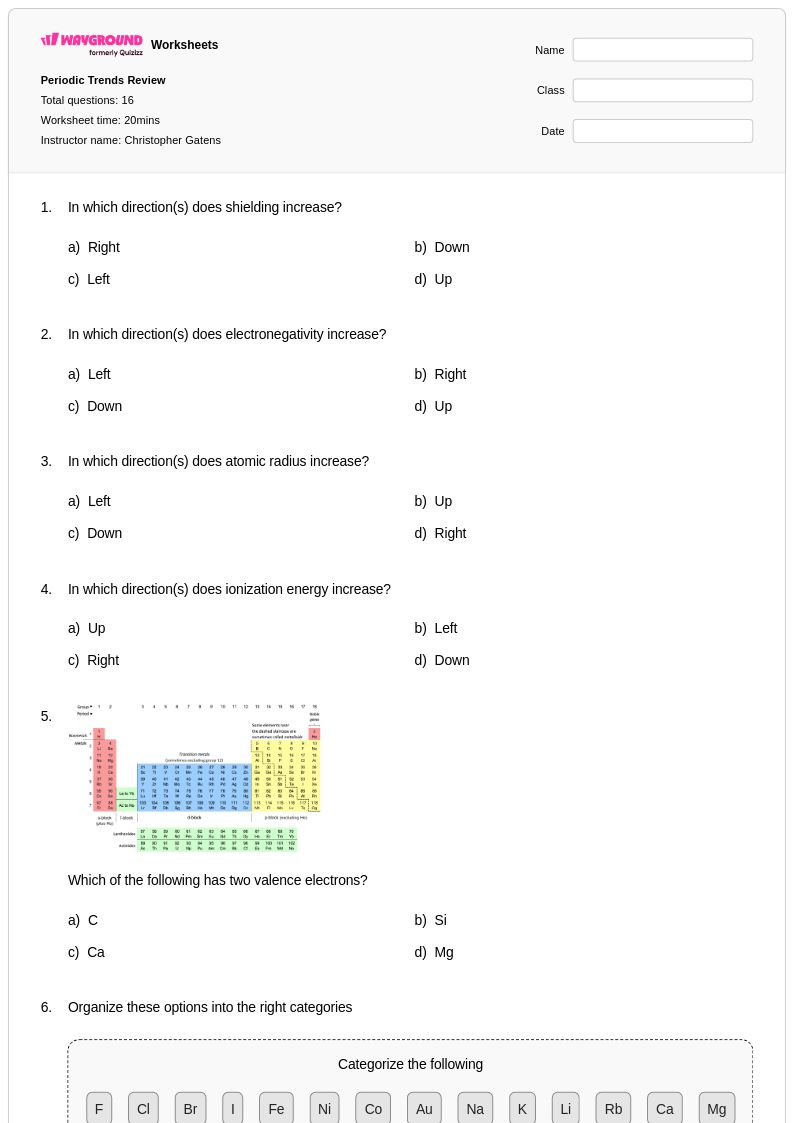
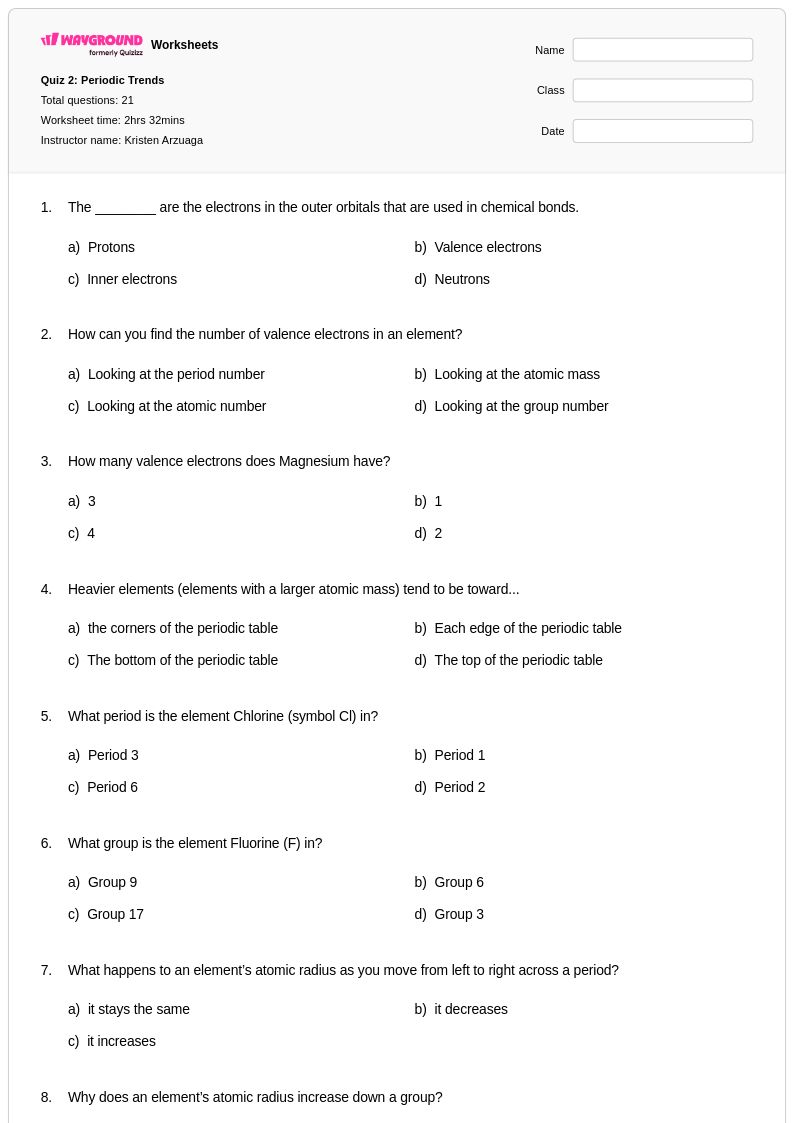
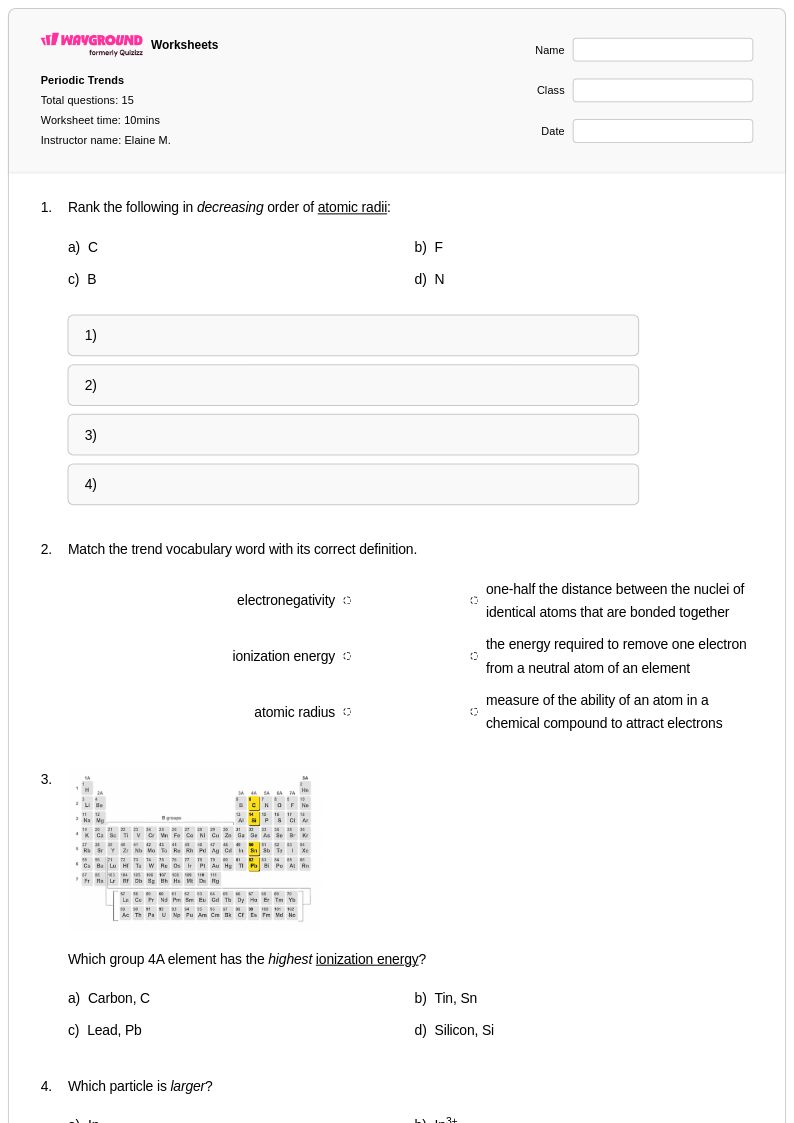
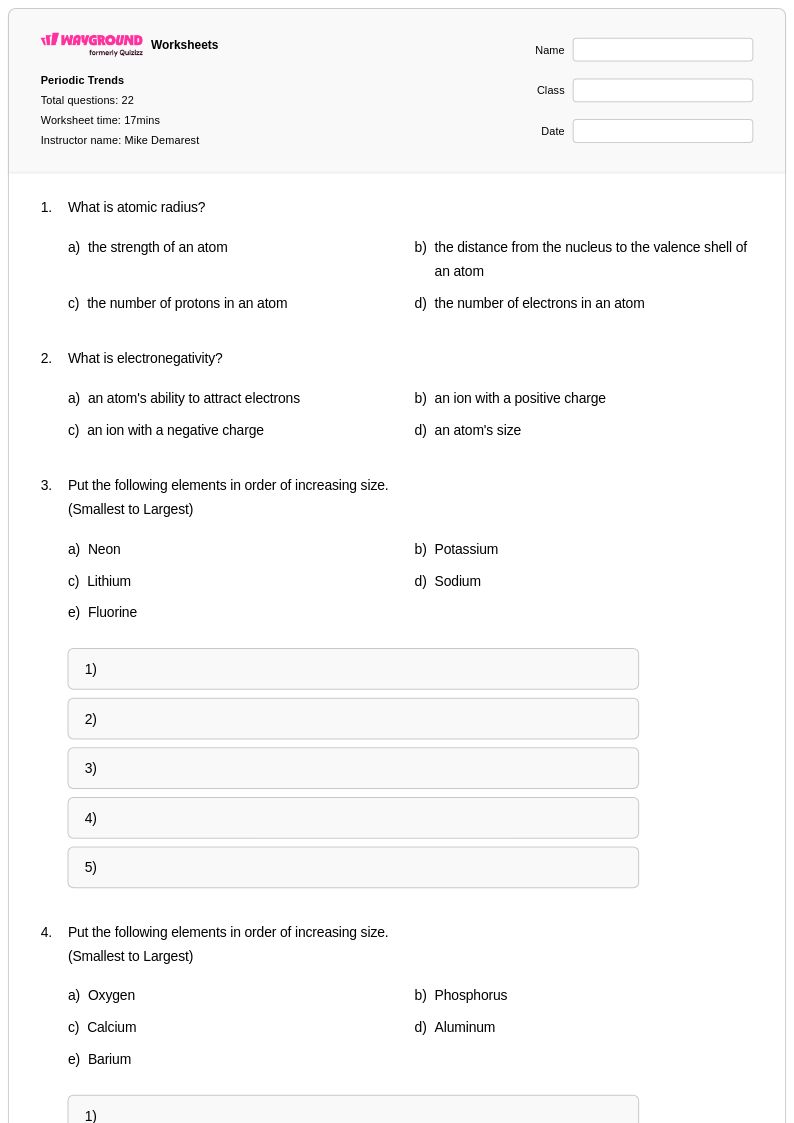
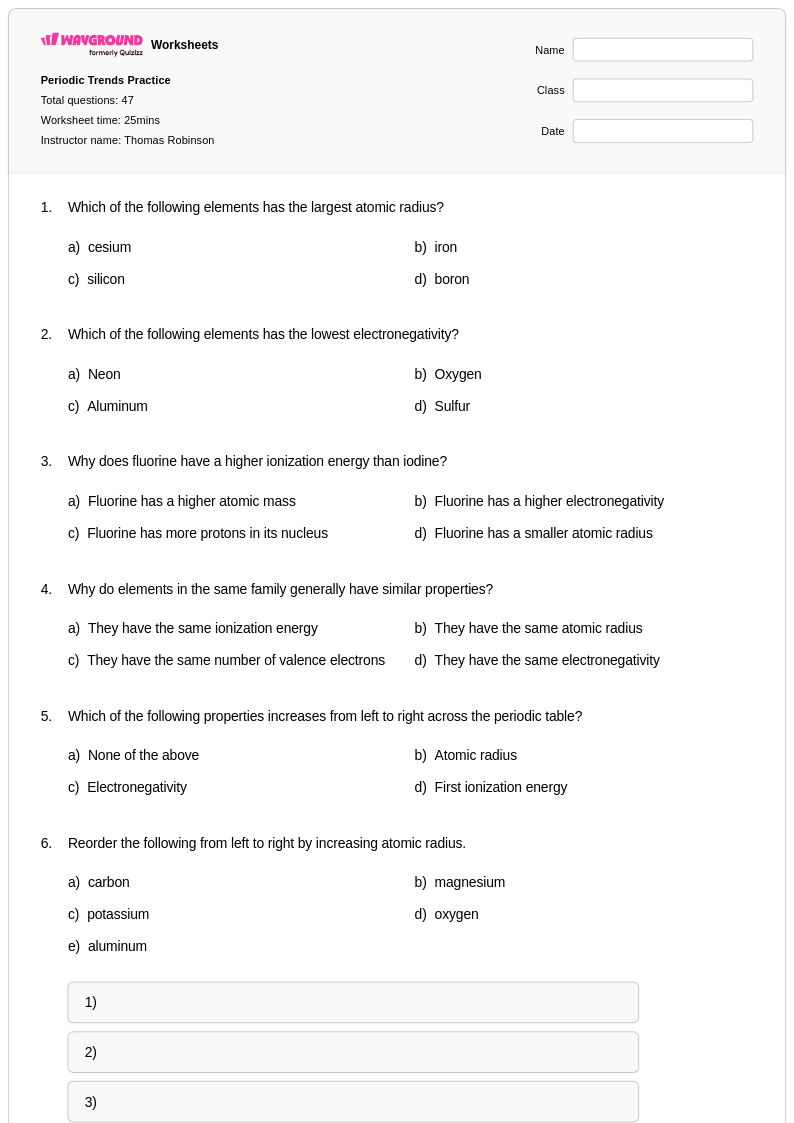
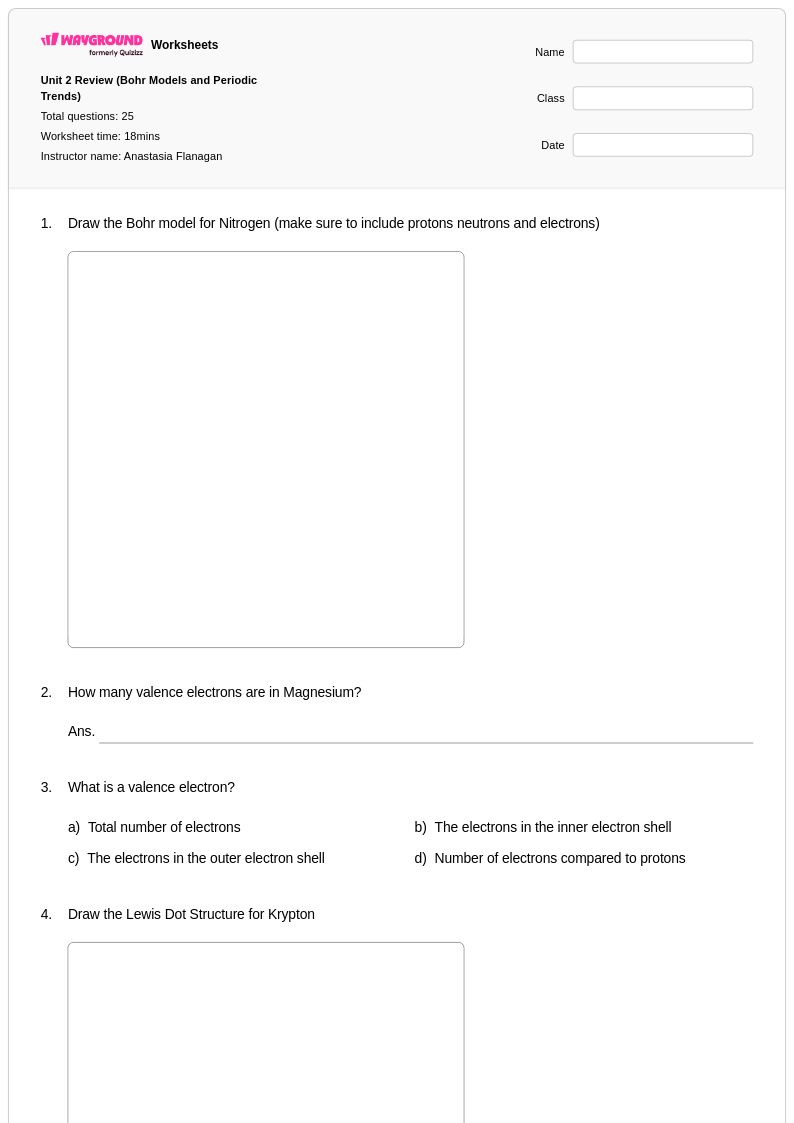
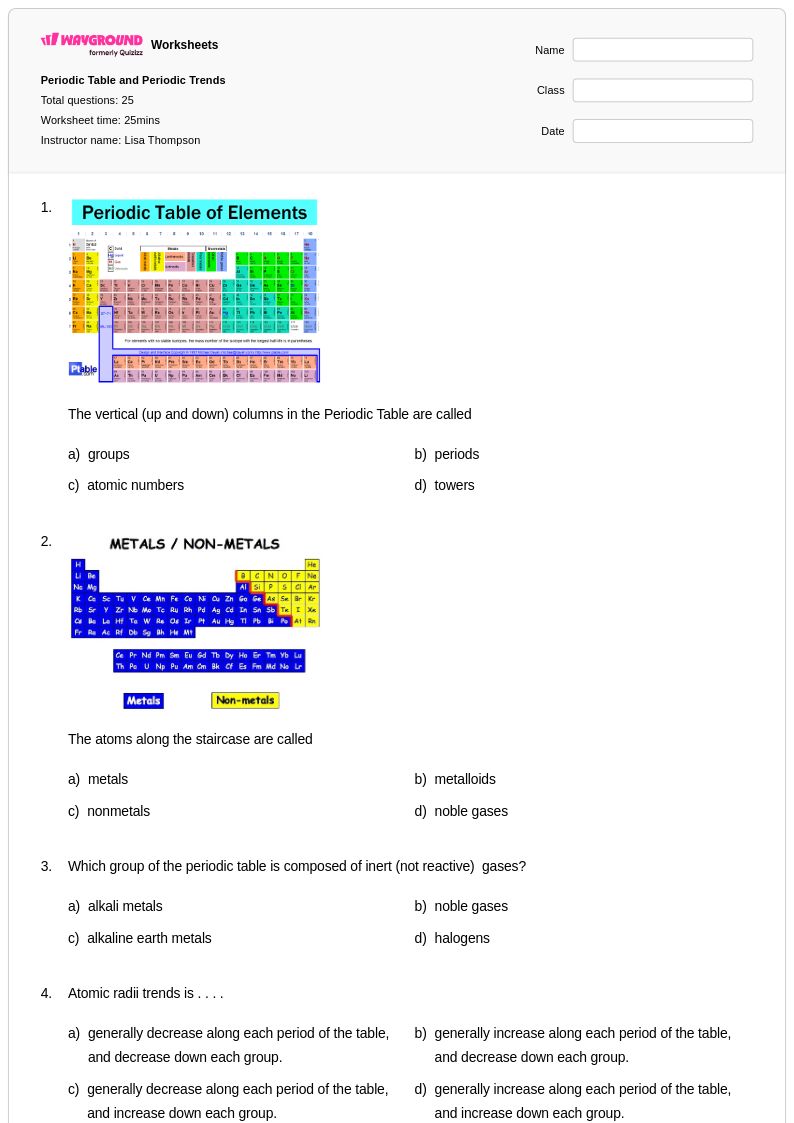
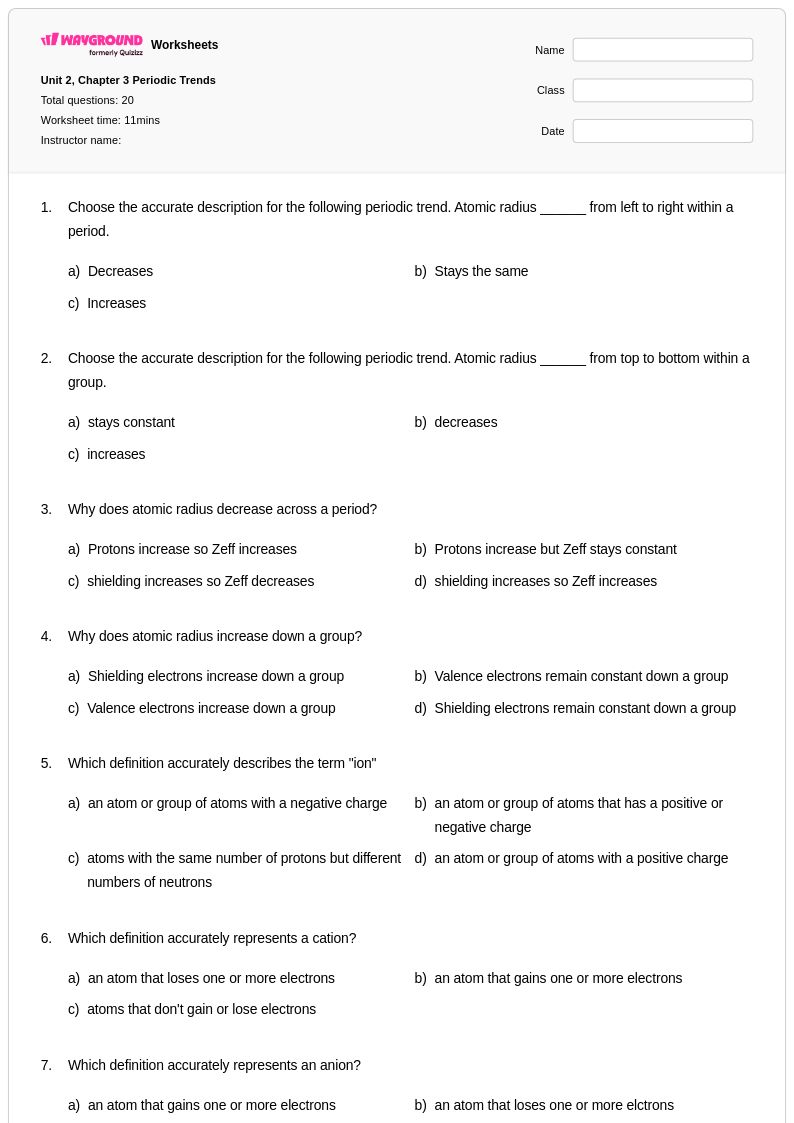
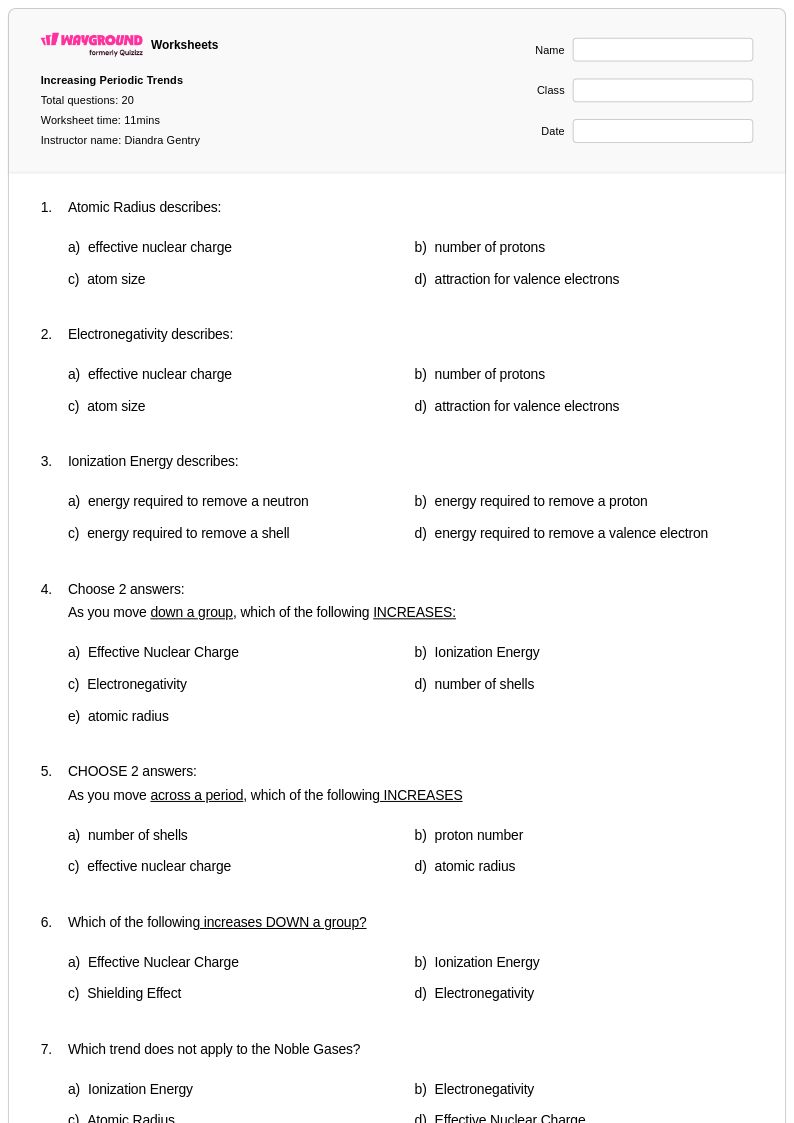
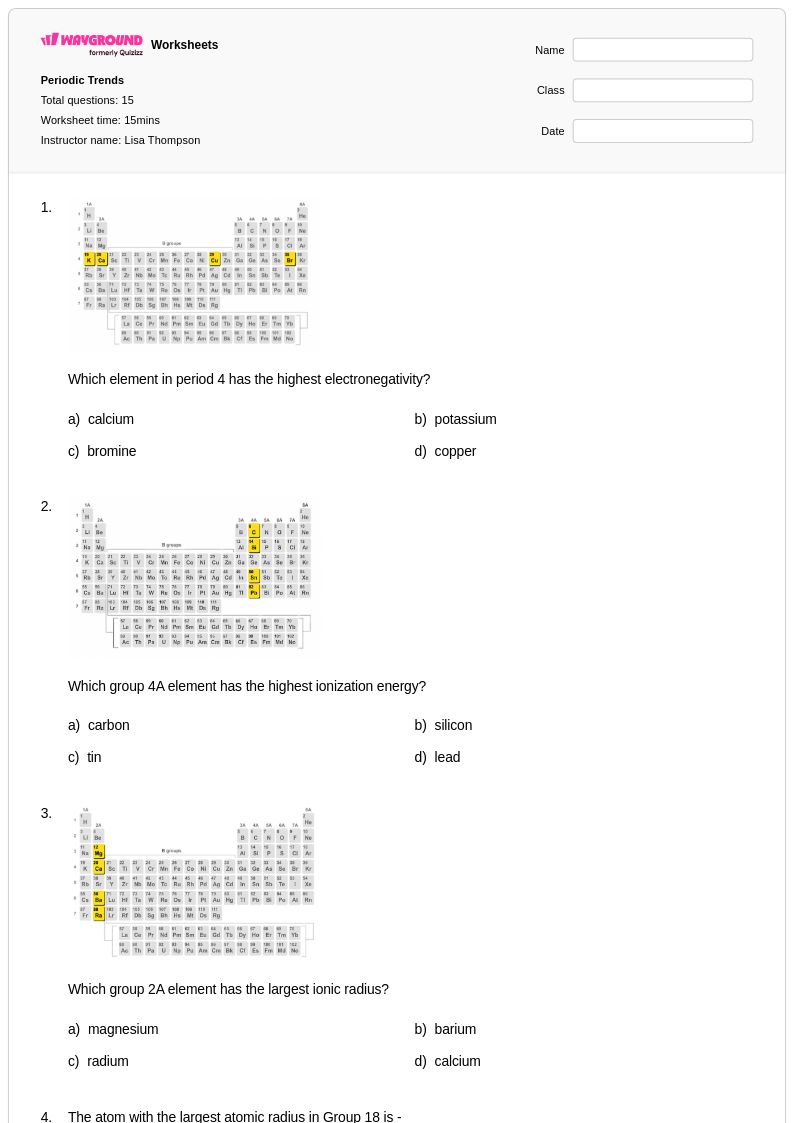
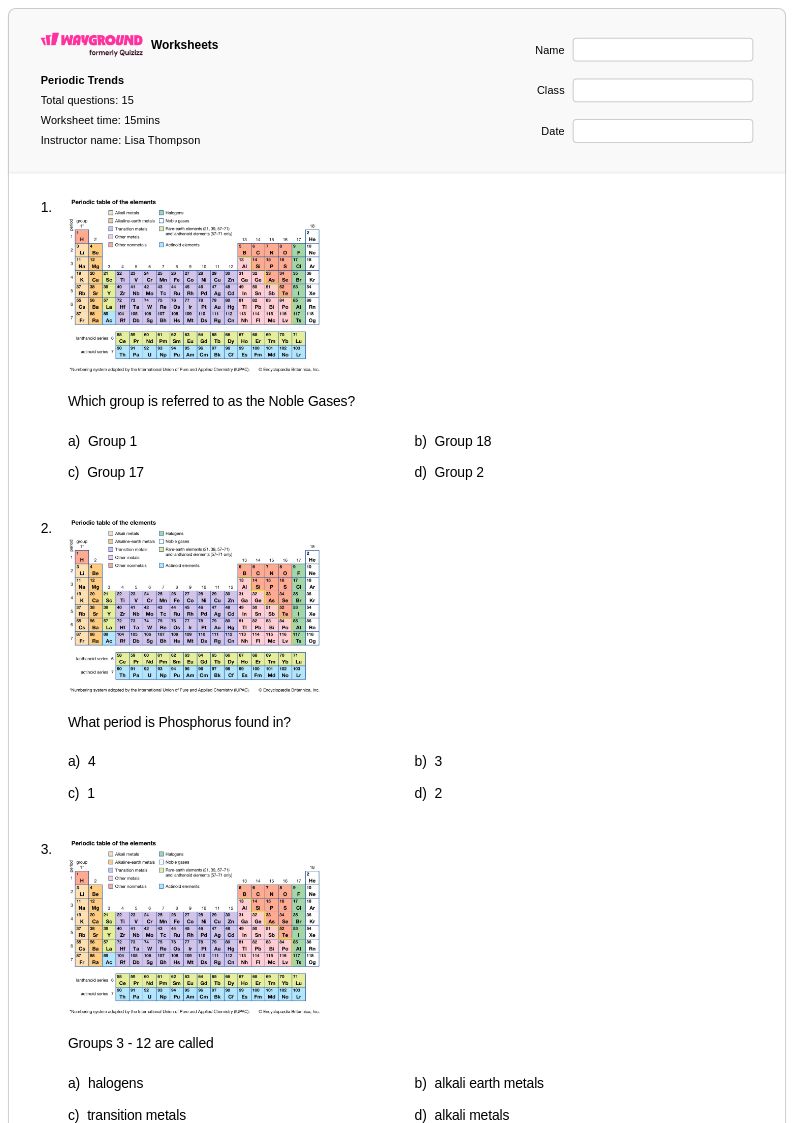
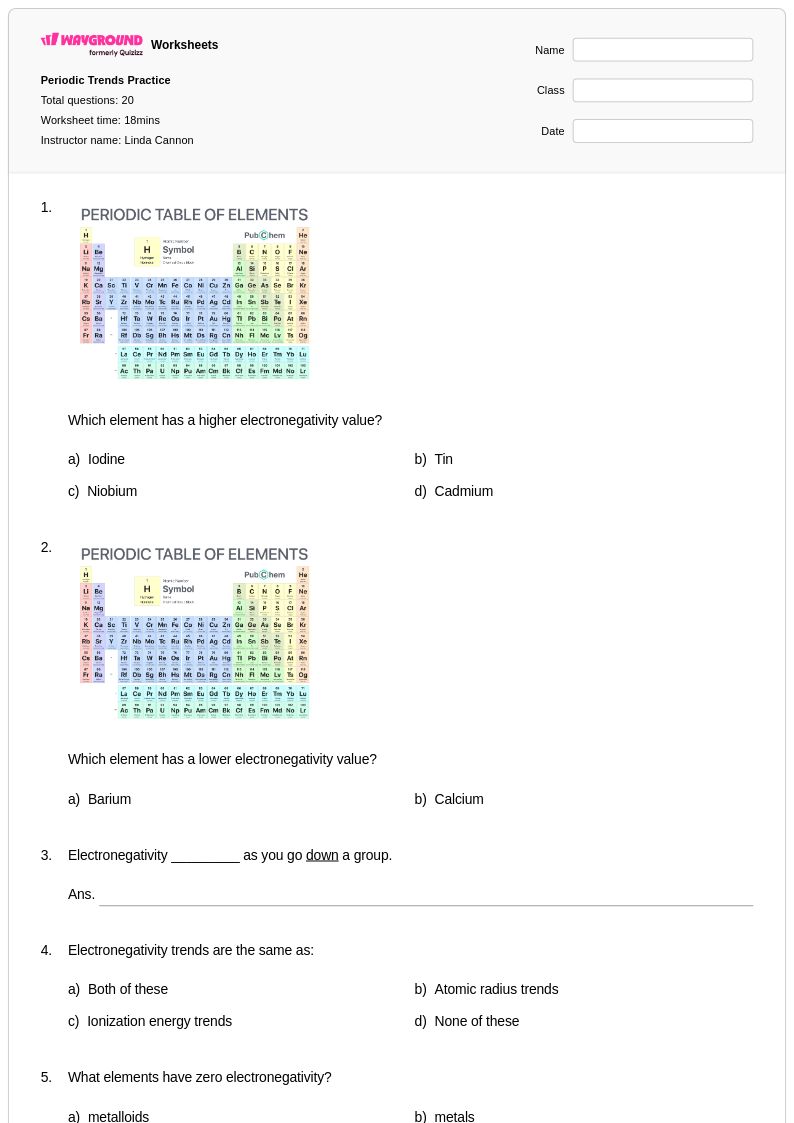
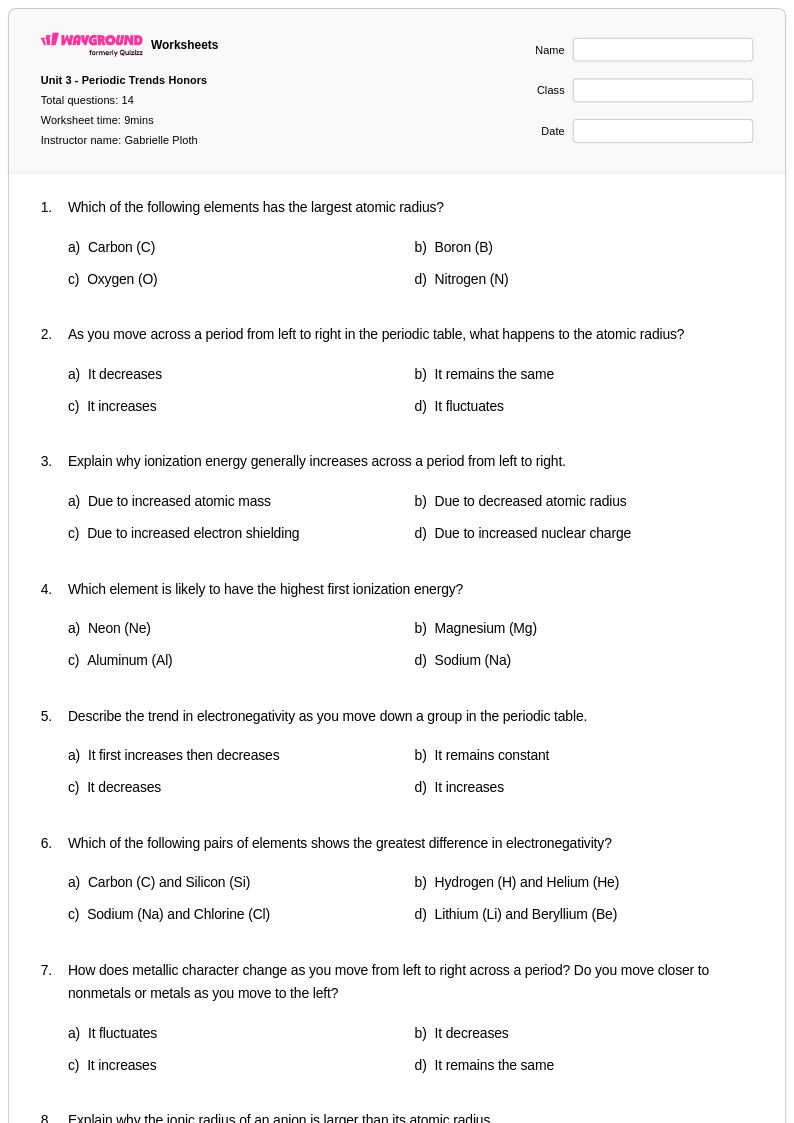
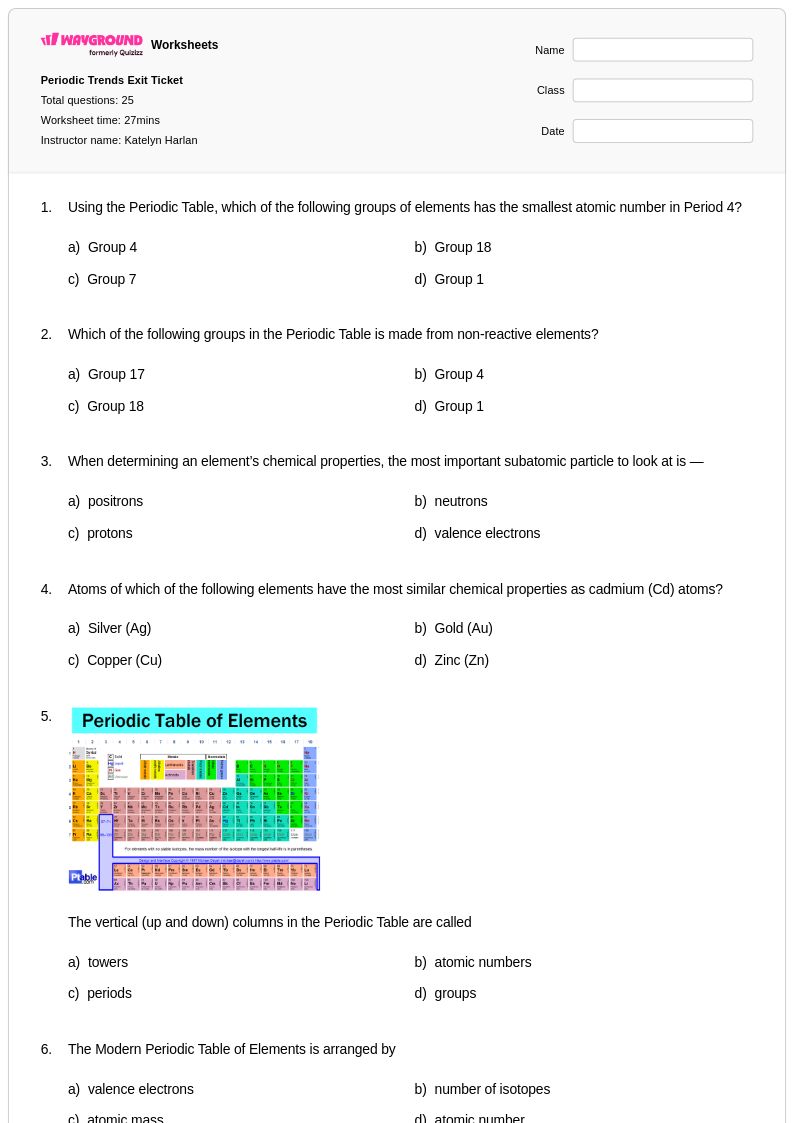
Explore Class 10 periodic trends through Wayground's comprehensive collection of free chemistry worksheets, featuring printable PDFs with practice problems and answer keys to help students master atomic radius, ionization energy, and electronegativity patterns.
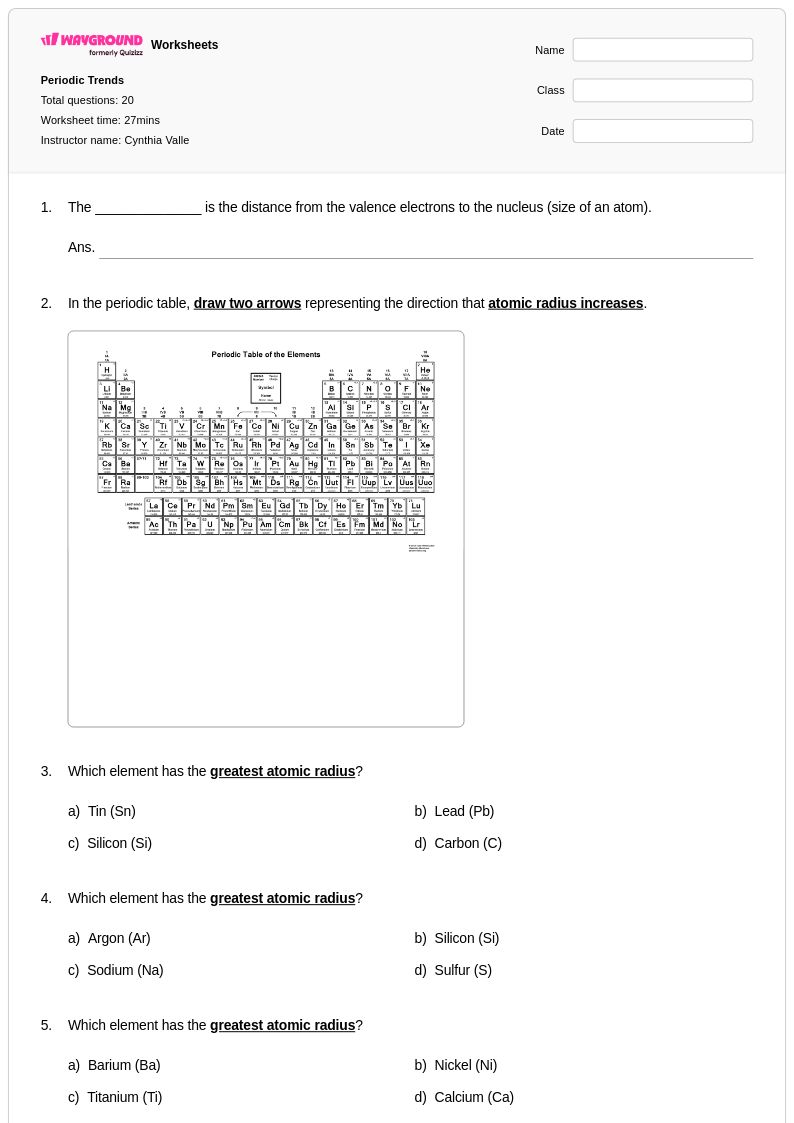
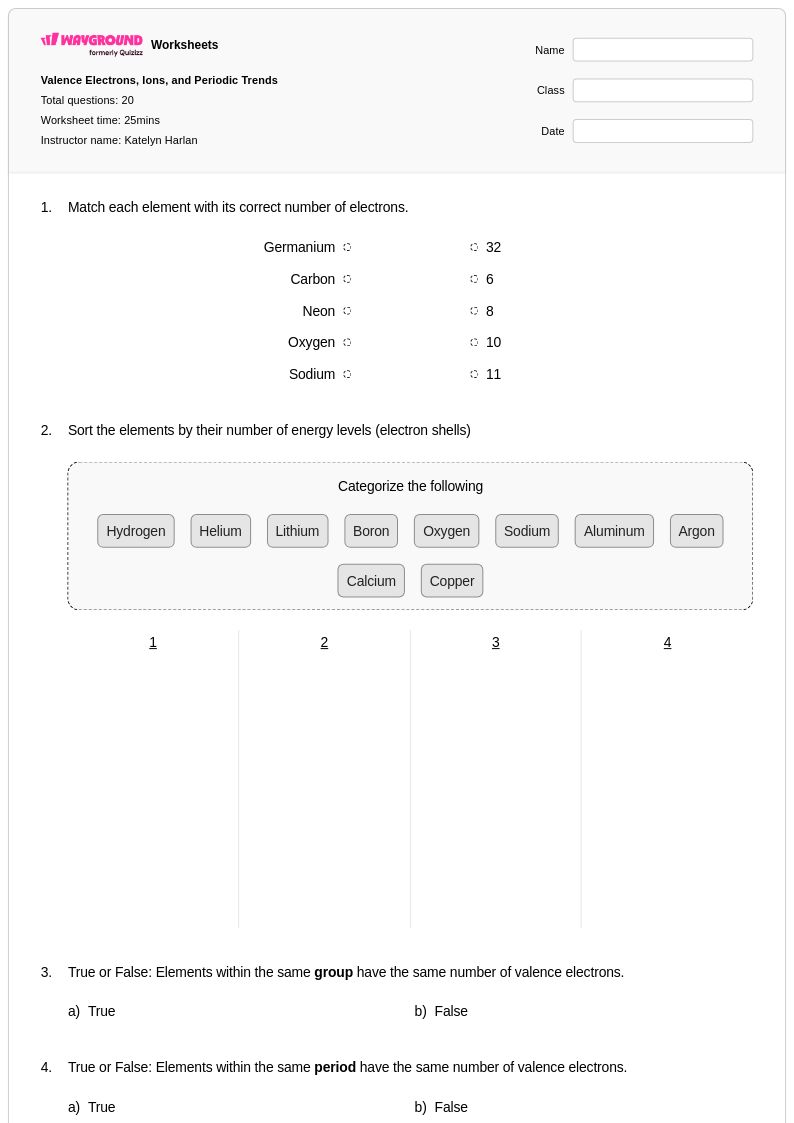
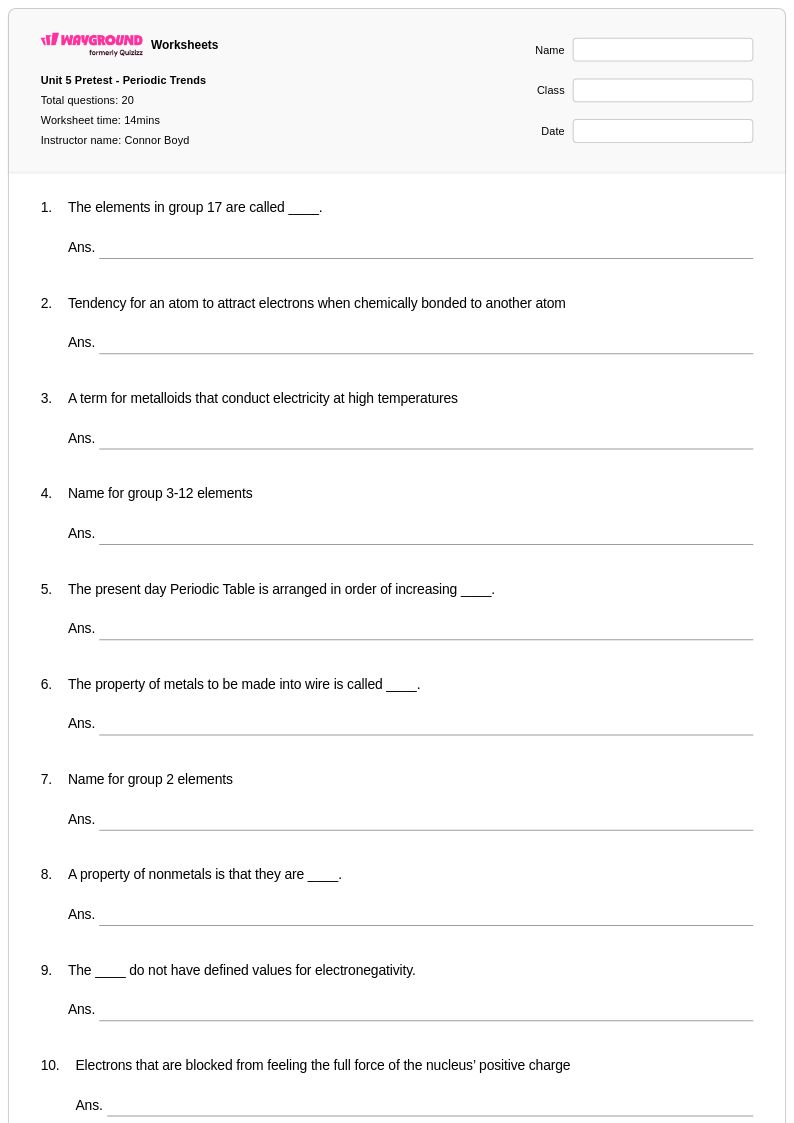
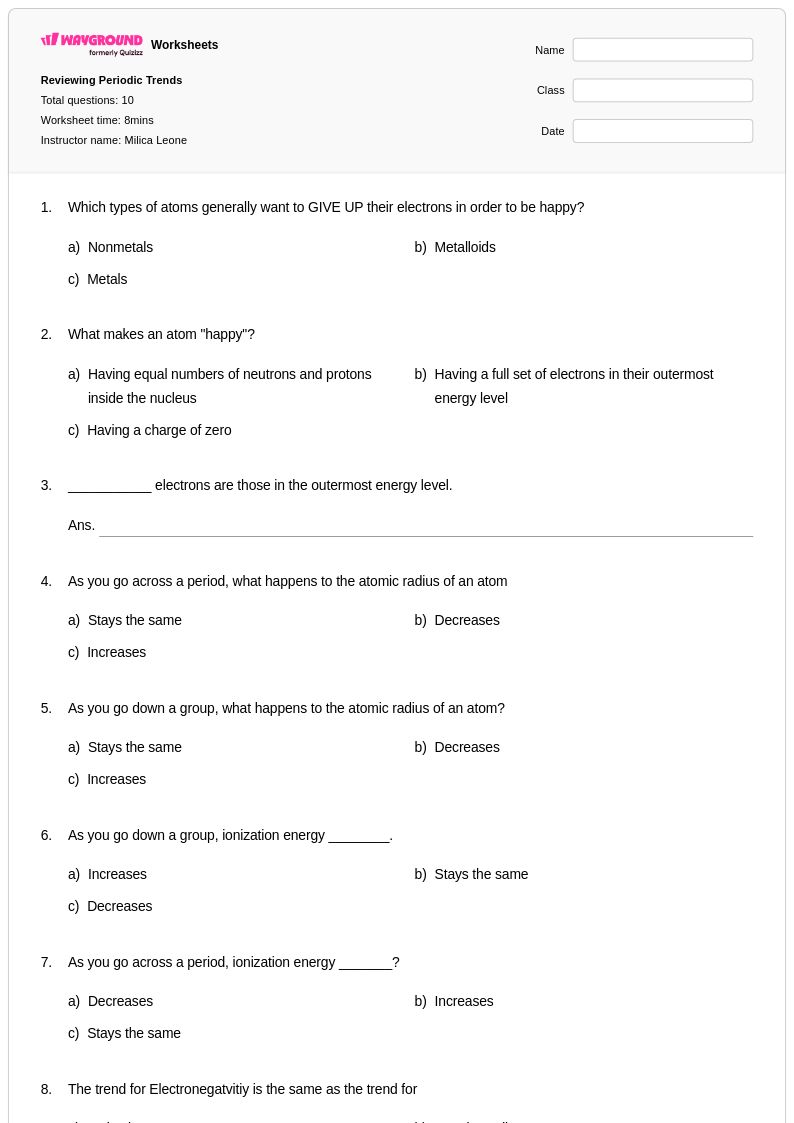
Explore printable Periodic Trends worksheets for Class 10
Class 10 periodic trends worksheets available through Wayground (formerly Quizizz) provide comprehensive practice with the predictable patterns that emerge across the periodic table of elements. These expertly designed resources strengthen students' understanding of atomic radius, ionization energy, electronegativity, and metallic character trends as they relate to atomic structure and electron configuration. Students develop critical analytical skills by working through practice problems that require them to predict and explain how properties change across periods and down groups, connecting theoretical knowledge to real-world chemical behavior. Each worksheet includes detailed answer keys that guide students through step-by-step solutions, while the free printable pdf format ensures accessibility for both classroom instruction and independent study.
Wayground (formerly Quizizz) supports chemistry educators with an extensive collection of millions of teacher-created periodic trends resources that streamline lesson planning and differentiated instruction. The platform's robust search and filtering capabilities allow teachers to quickly locate worksheets aligned with specific standards and learning objectives, whether they need introductory atomic radius comparisons or advanced electronegativity trend analysis. Teachers can easily customize existing materials or create new assessments using the flexible digital tools, then seamlessly transition between printable pdf versions for traditional classroom work and interactive digital formats for technology-enhanced learning. These versatile resources prove invaluable for targeted remediation of struggling students, enrichment activities for advanced learners, and systematic skill practice that builds confidence in interpreting periodic table relationships essential for success in advanced chemistry concepts.
FAQs
How do I teach periodic trends in chemistry class?
Start by grounding students in atomic structure and electron configuration before introducing trends, since understanding effective nuclear charge and electron shielding is essential for making sense of why properties change across periods and down groups. Teach one trend at a time, using the periodic table visually to show directional changes, and connect each trend to a real-world chemical behavior so the pattern feels meaningful rather than arbitrary. Comparing atomic radius and ionization energy together early on helps students see how the trends are interrelated rather than isolated facts.
What exercises help students practice identifying periodic trends?
Effective practice exercises ask students to rank a set of elements by a given property, predict whether a value increases or decreases along a given direction on the table, and explain their reasoning using electron configuration or effective nuclear charge. Trend interpretation problems that require students to compare elements across both periods and groups simultaneously push beyond simple memorization and build genuine analytical skill. Structured practice problems that scaffold from recognition to explanation are especially useful for building conceptual fluency with atomic radius, ionization energy, electronegativity, and metallic character.
What mistakes do students commonly make when learning periodic trends?
The most common error is treating periodic trends as isolated memorization tasks rather than understanding the underlying causes, which means students can recite a trend but cannot apply it to an unfamiliar element or explain an anomaly. Students frequently confuse the direction of atomic radius and ionization energy trends, particularly when moving down a group versus across a period, because they conflate the effect of added electron shells with the effect of increasing nuclear charge. Another persistent misconception is assuming that a larger atom always has a higher ionization energy, when in fact increased shielding and greater distance from the nucleus in larger atoms typically lower it.
How can I use periodic trends worksheets to differentiate instruction in my chemistry class?
Periodic trends worksheets can be tiered so that foundational versions ask students to identify and label directional changes on the table, while more advanced versions require written explanations grounded in electron configuration and effective nuclear charge. For students who need additional support, Wayground allows teachers to enable accommodations such as read aloud, reduced answer choices, and extended time on a per-student basis without disrupting the rest of the class. These settings are saved and reusable, making it straightforward to consistently support diverse learners across multiple worksheet sessions.
How do I use Wayground's periodic trends worksheets in my classroom?
Wayground's periodic trends worksheets are available as printable PDFs, making them easy to distribute for in-class practice or homework, and in digital formats for technology-integrated classrooms. Teachers can also host worksheets directly as a quiz on Wayground, enabling real-time student response tracking. Each worksheet includes an answer key, supporting both teacher-led review and independent student self-assessment.