Free Printable Chemical Nomenclature Worksheets for Class 10
Explore Class 10 chemical nomenclature worksheets and printables that help students master naming compounds, practice IUPAC conventions, and build essential chemistry skills with free PDFs and answer keys.
Explore printable Chemical Nomenclature worksheets for Class 10
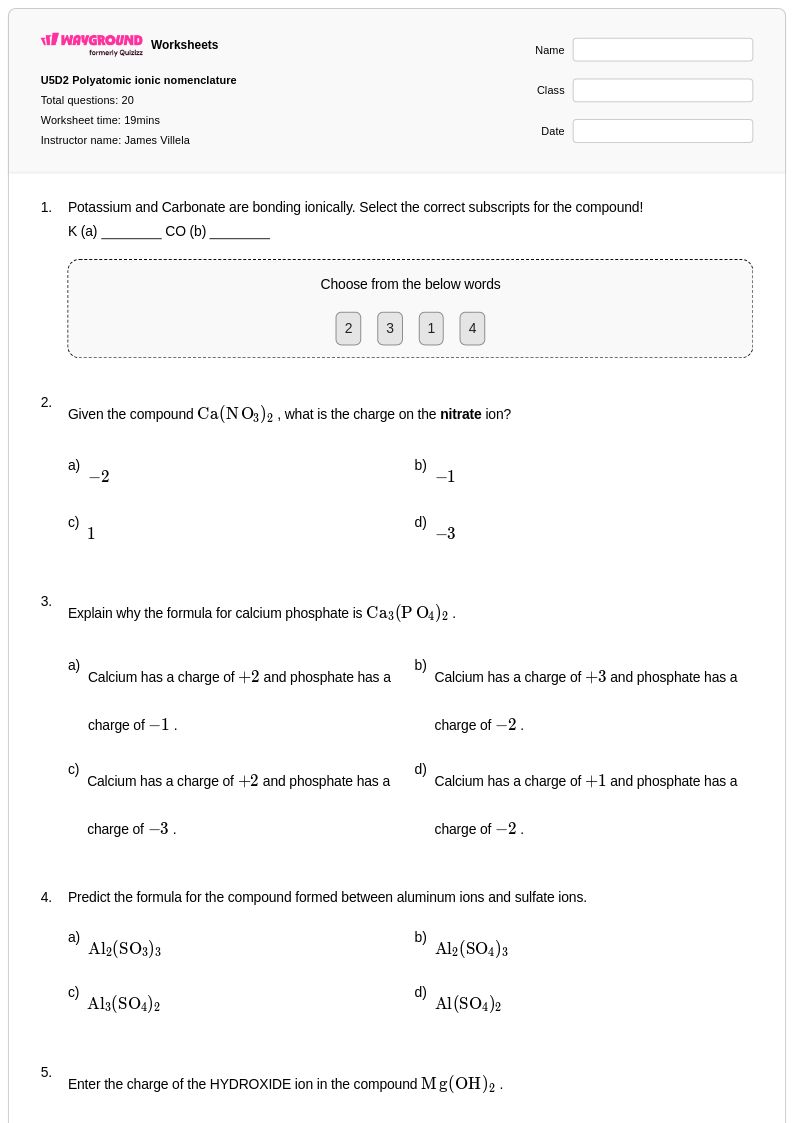
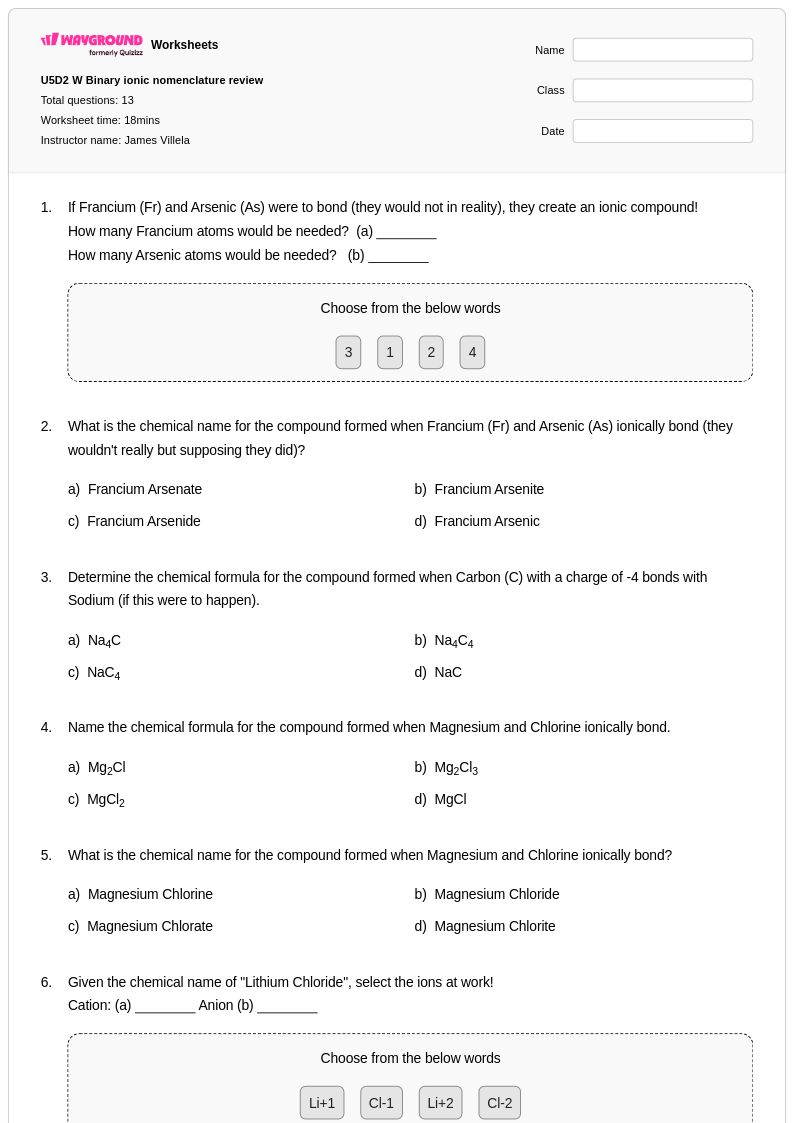
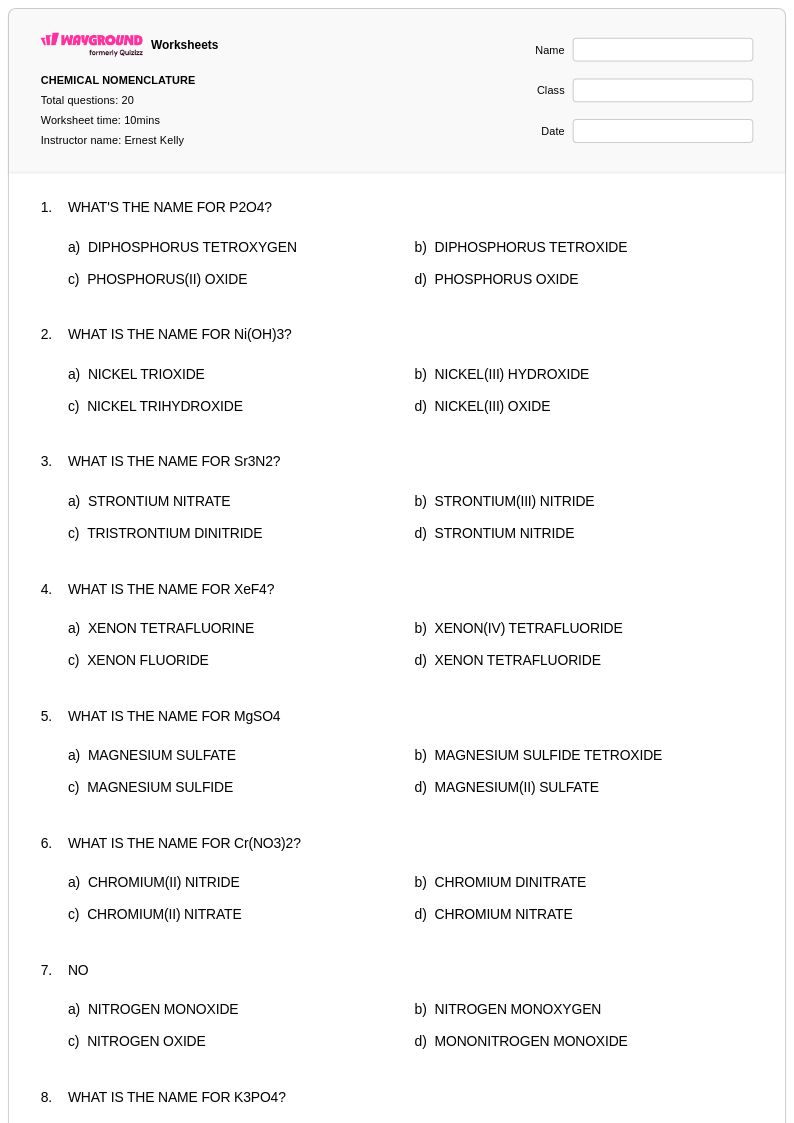
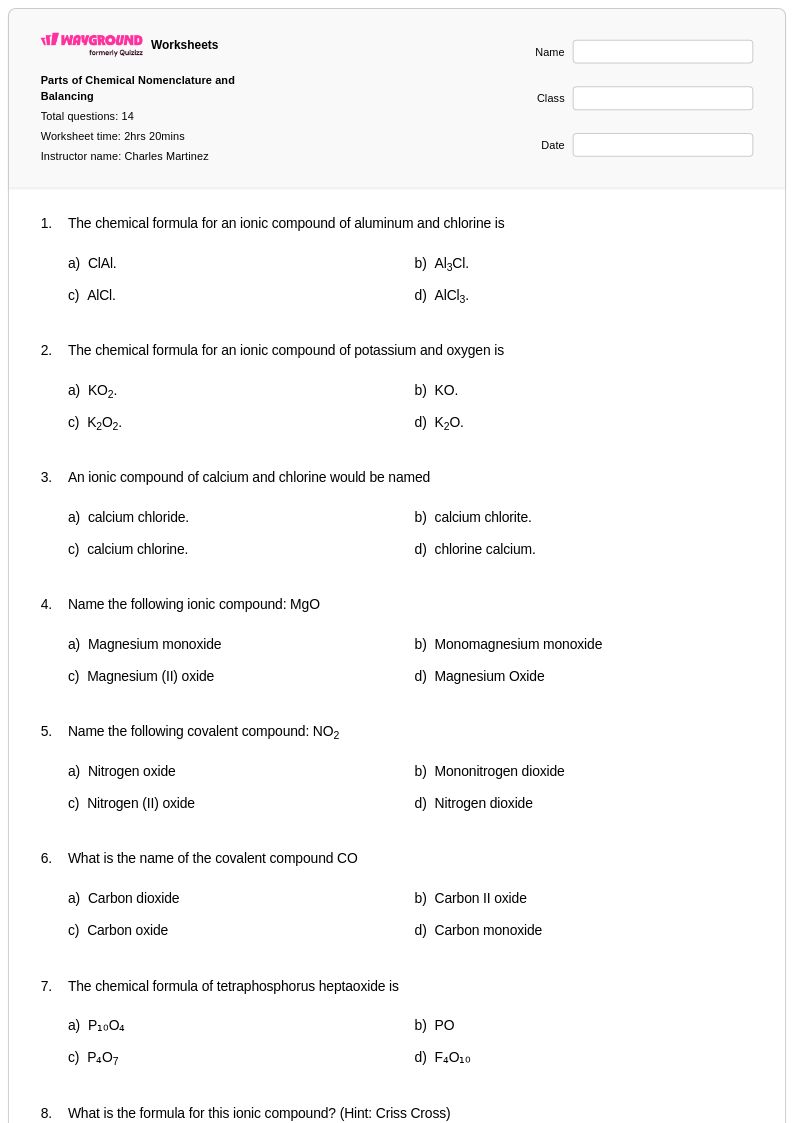
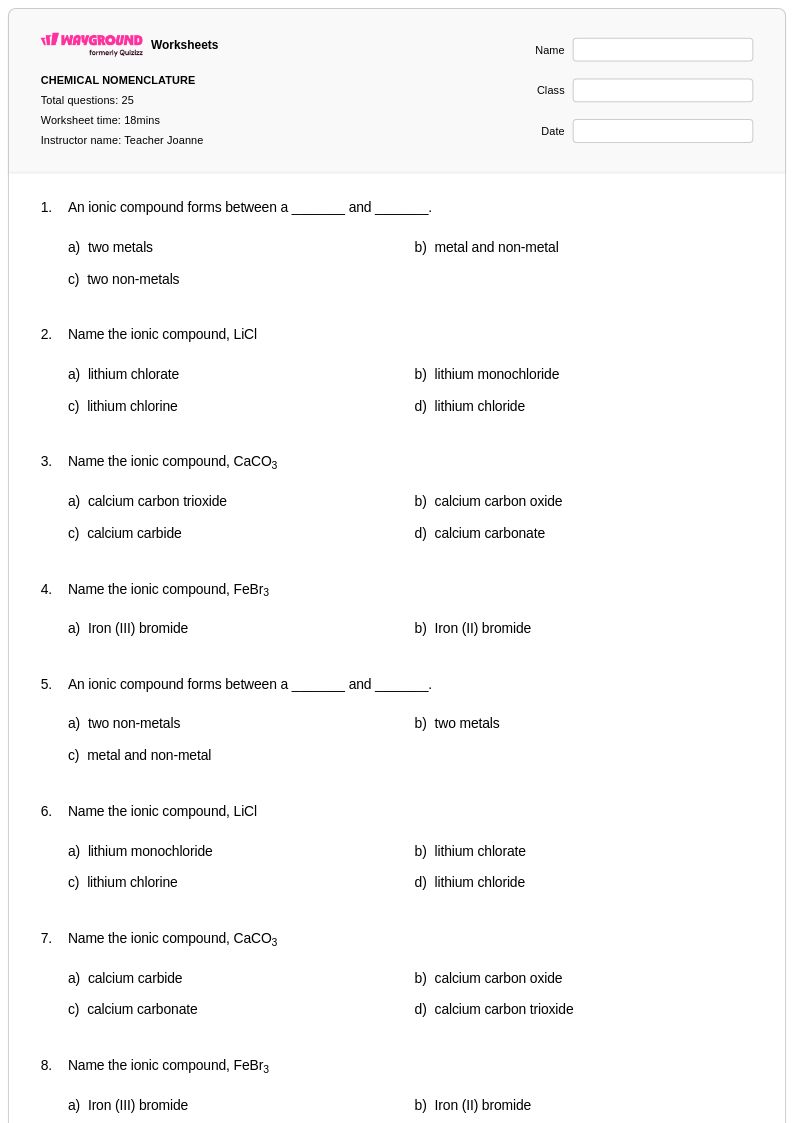
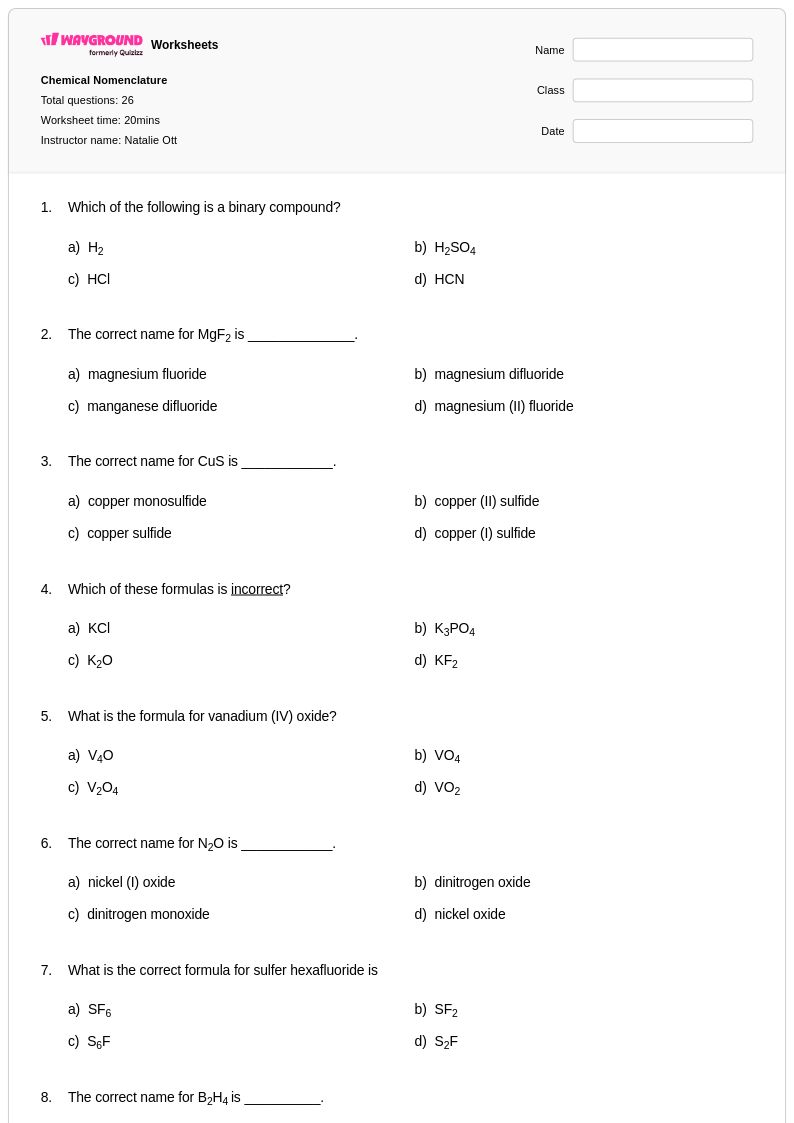
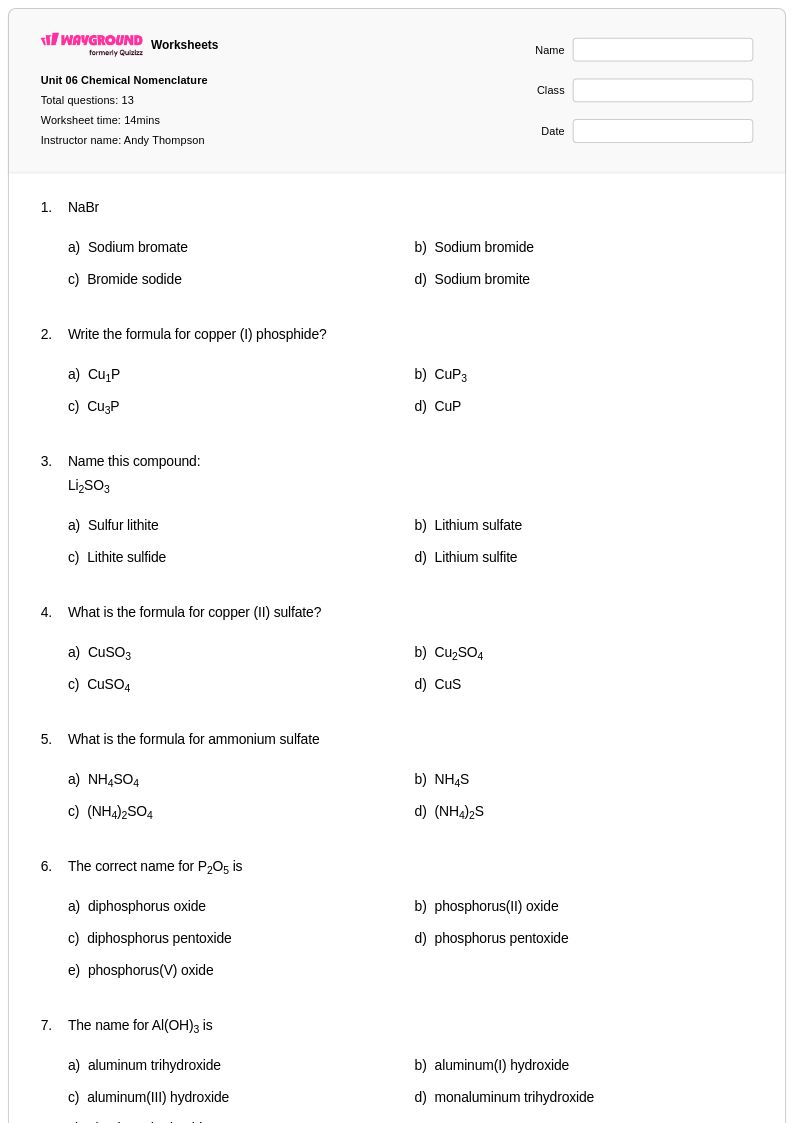
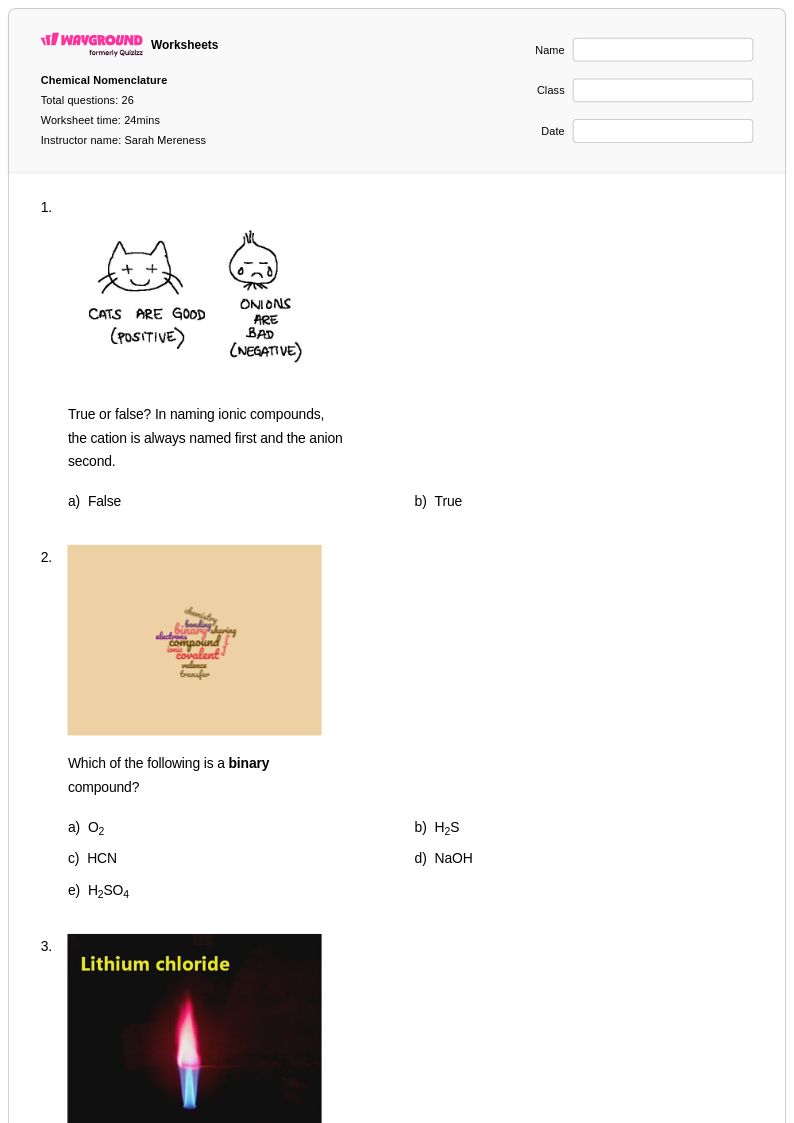
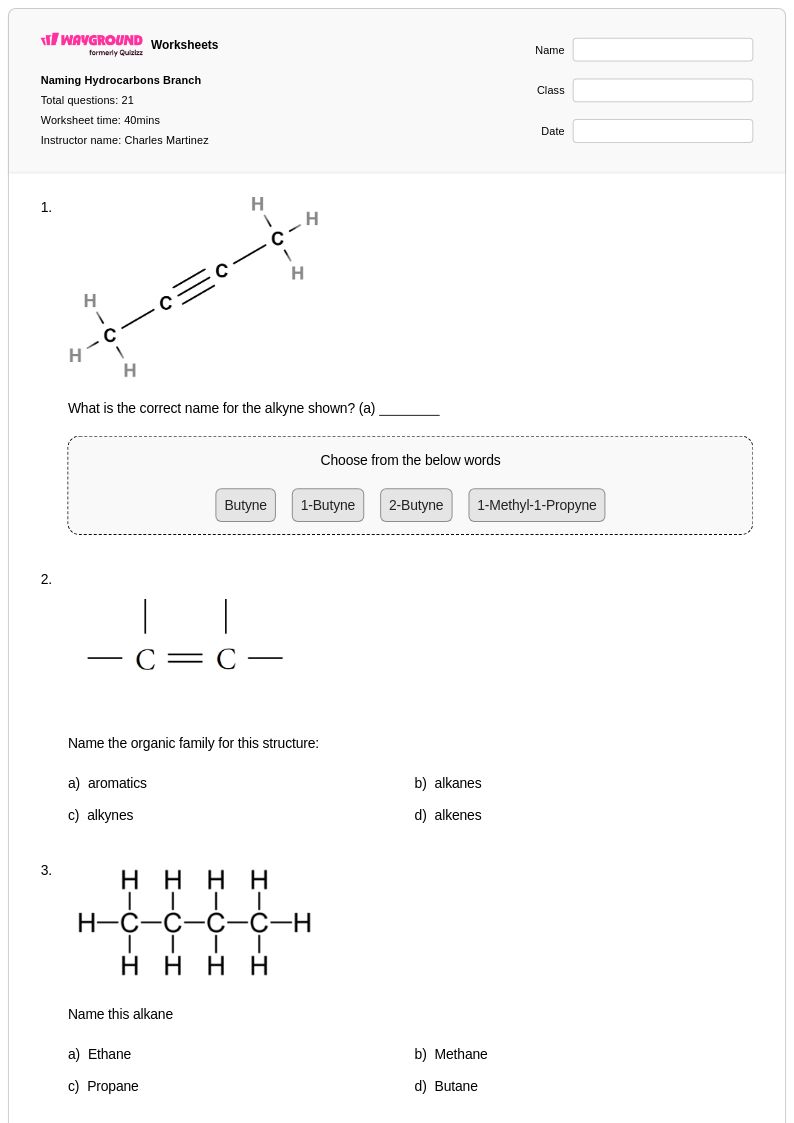
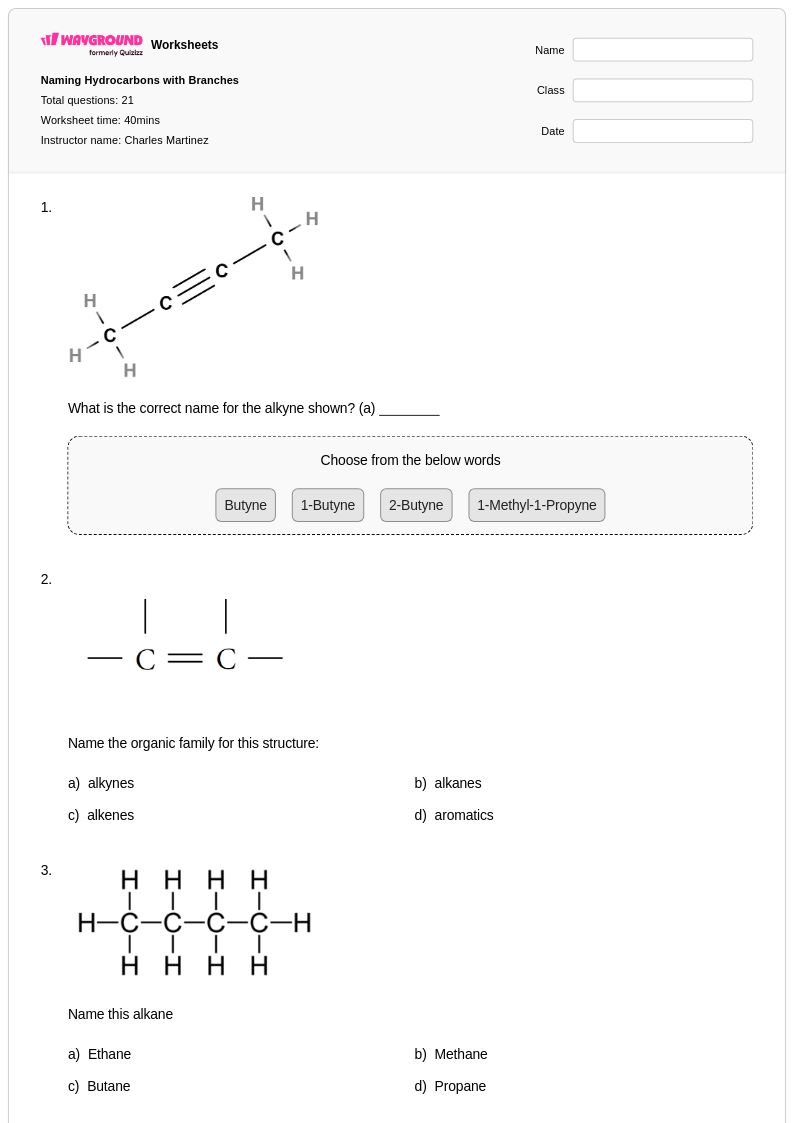
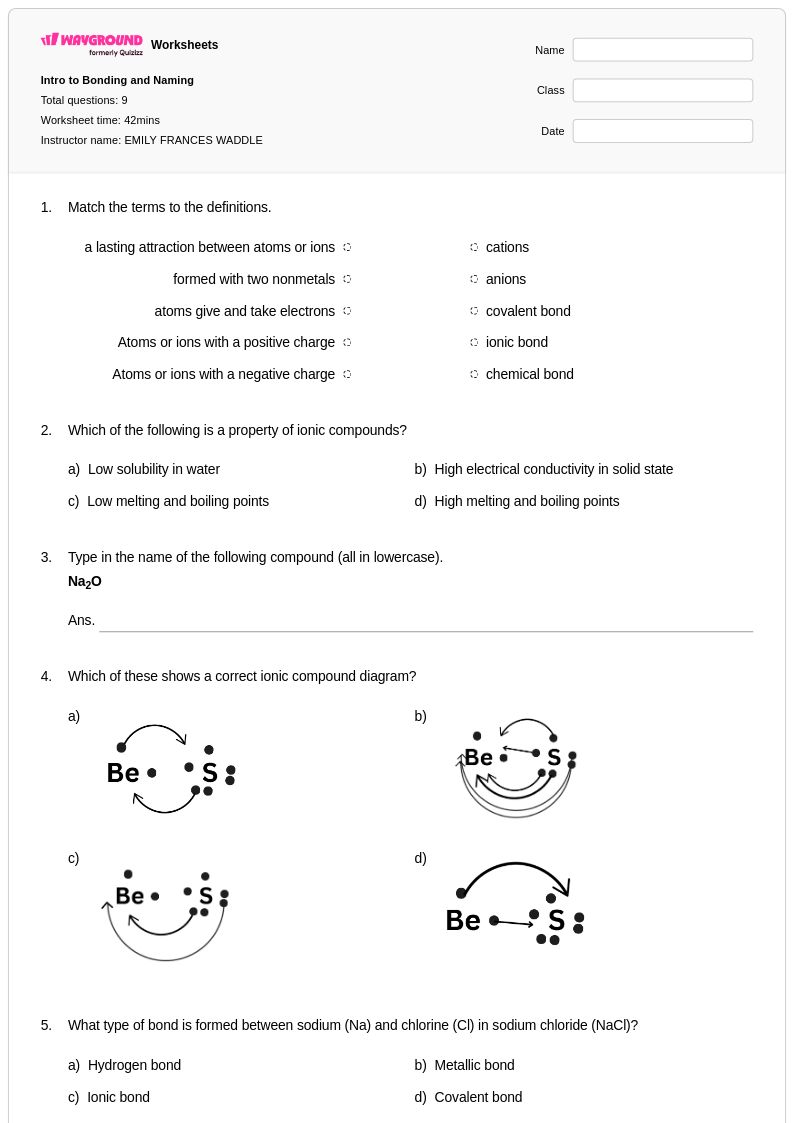
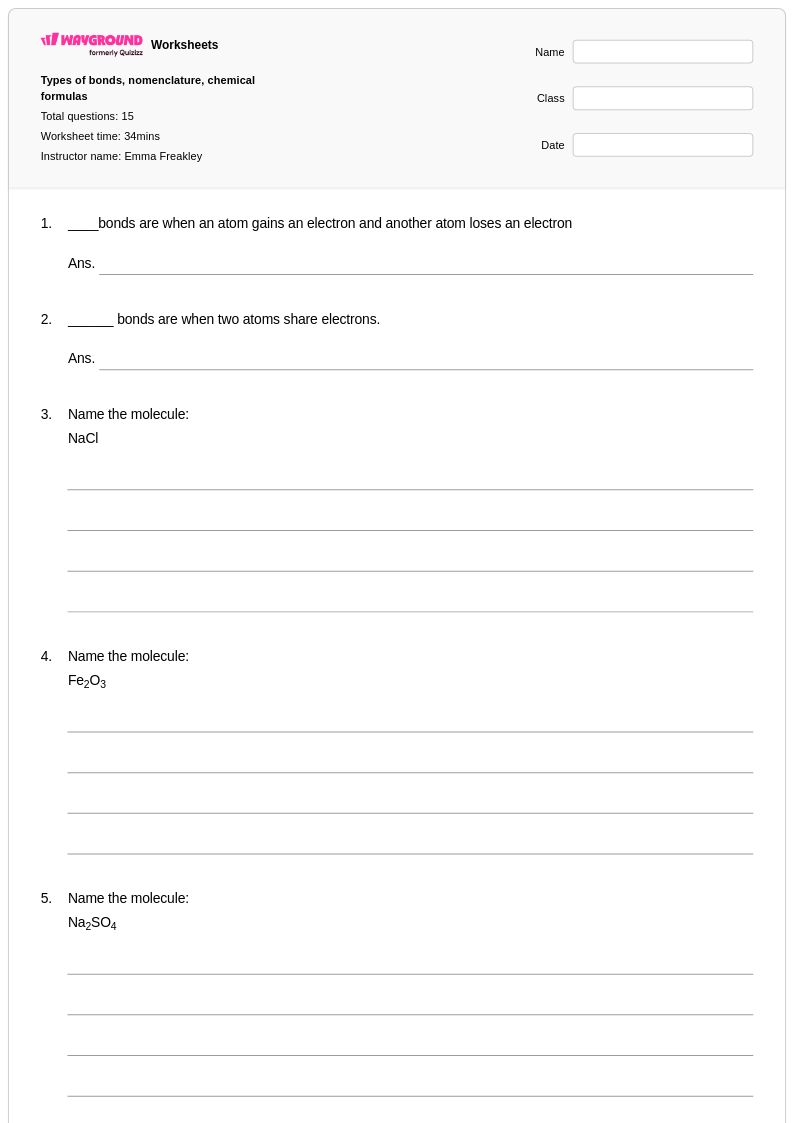
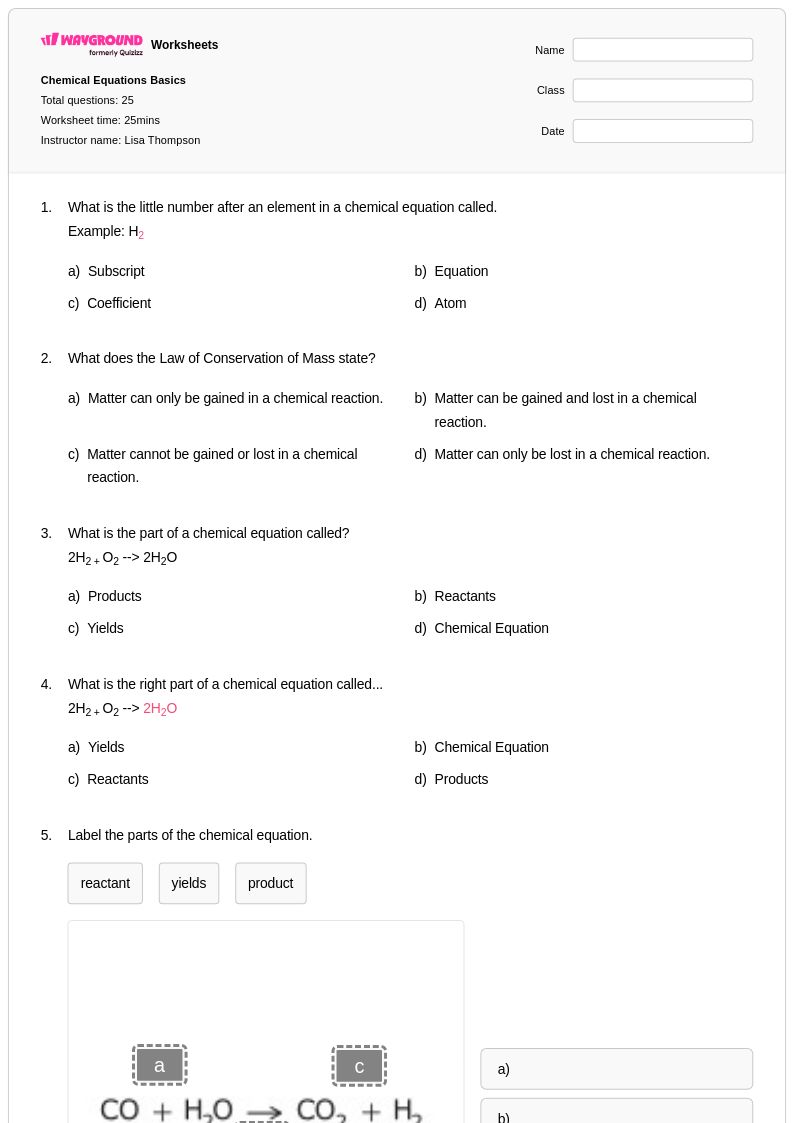
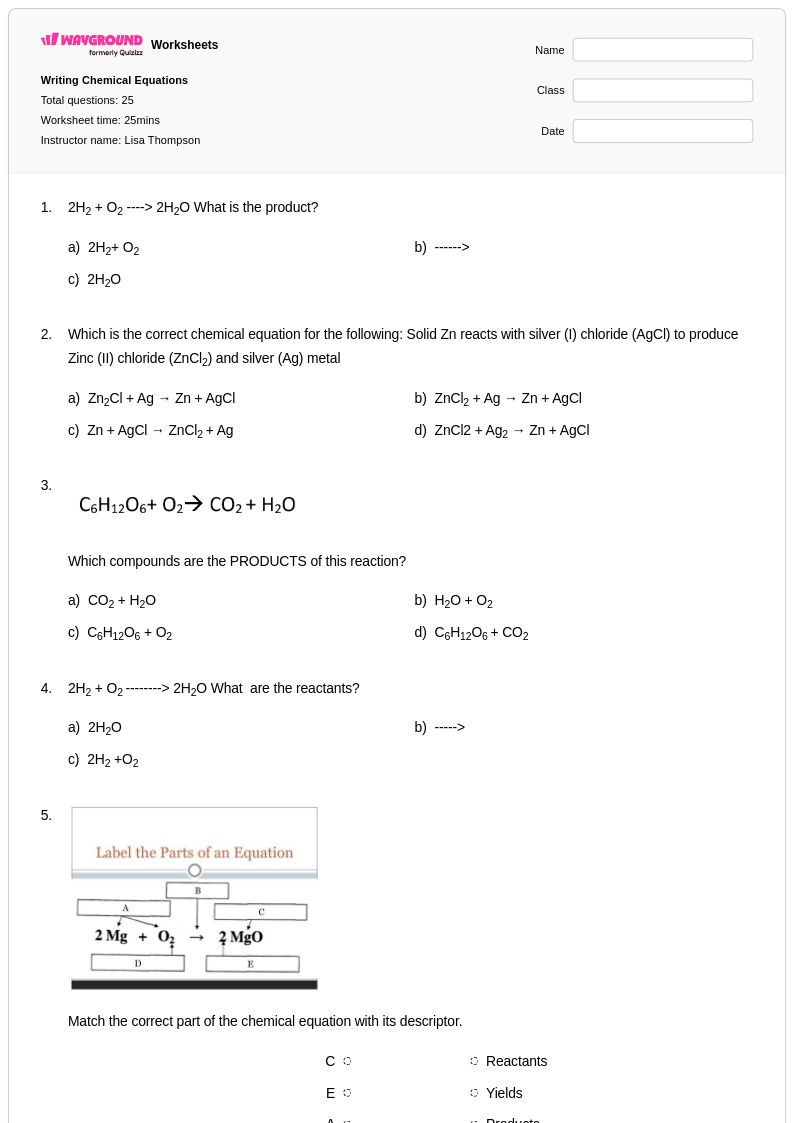
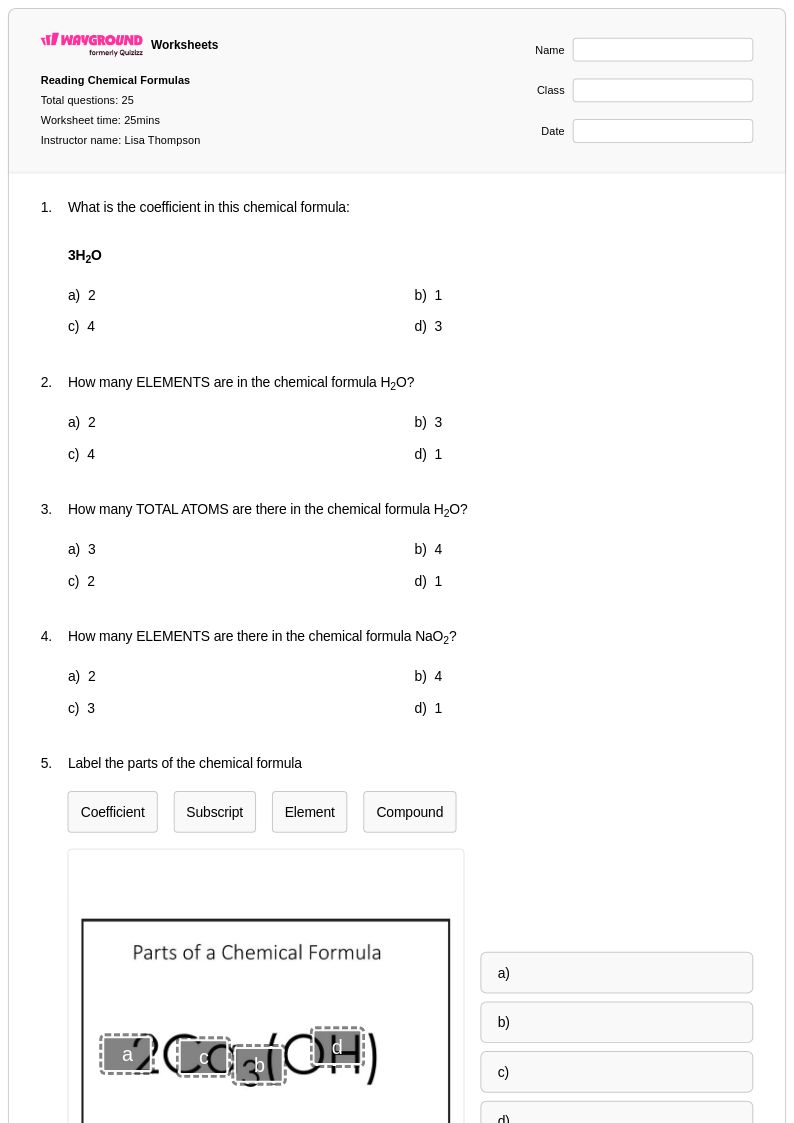
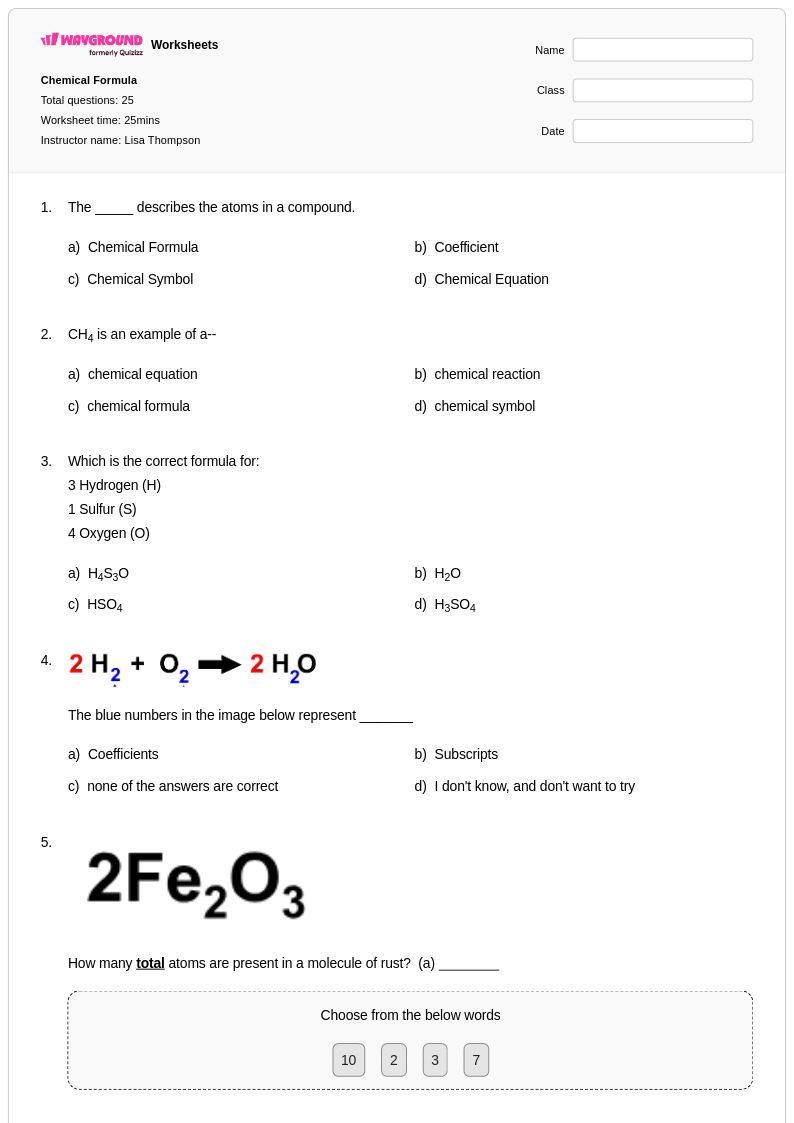
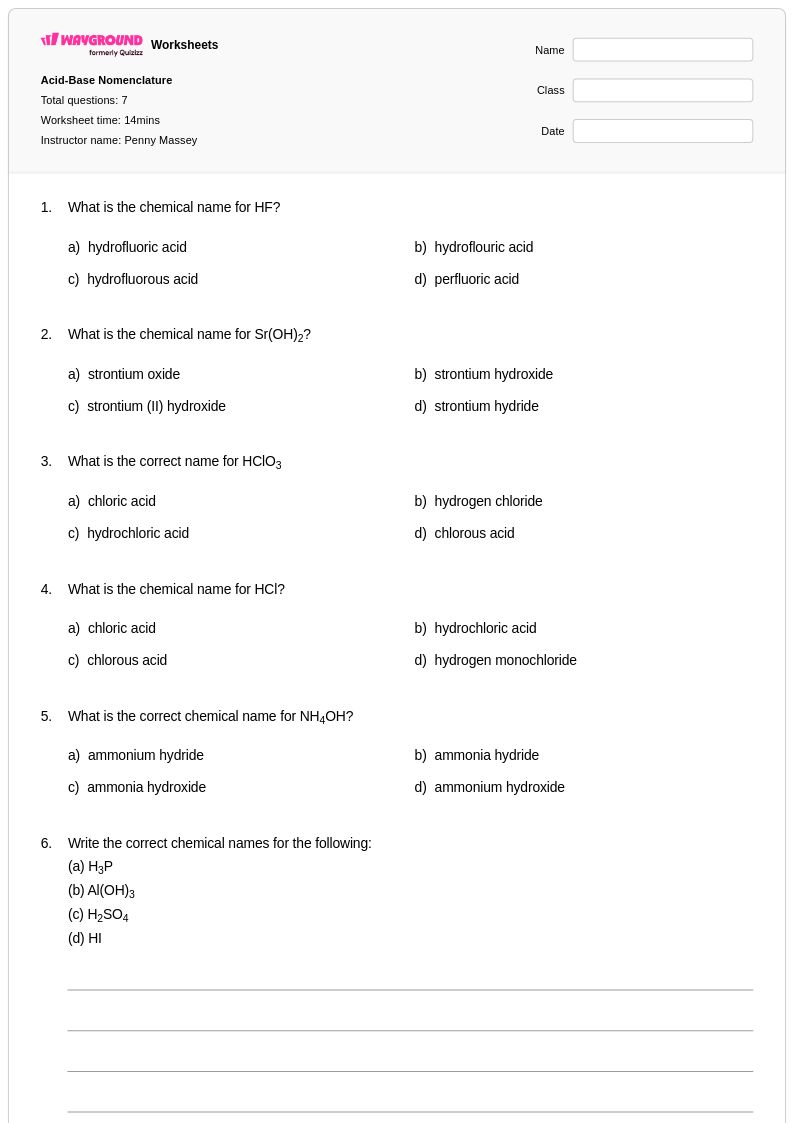
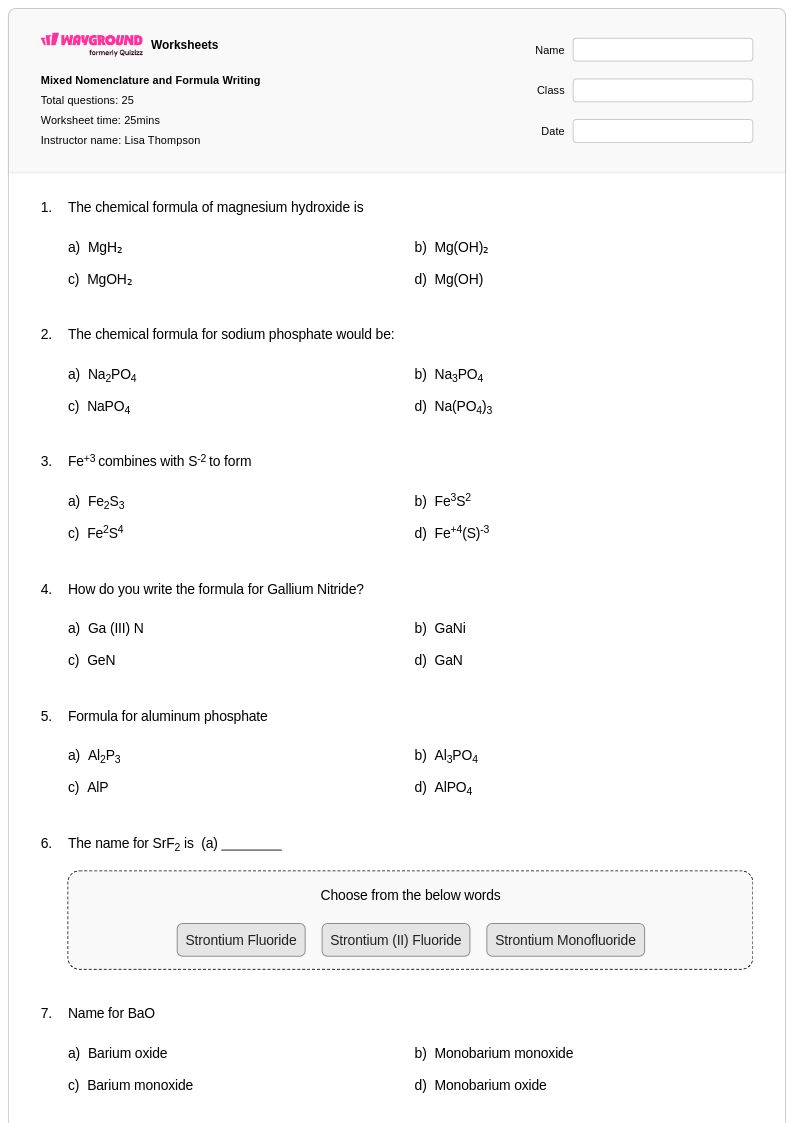
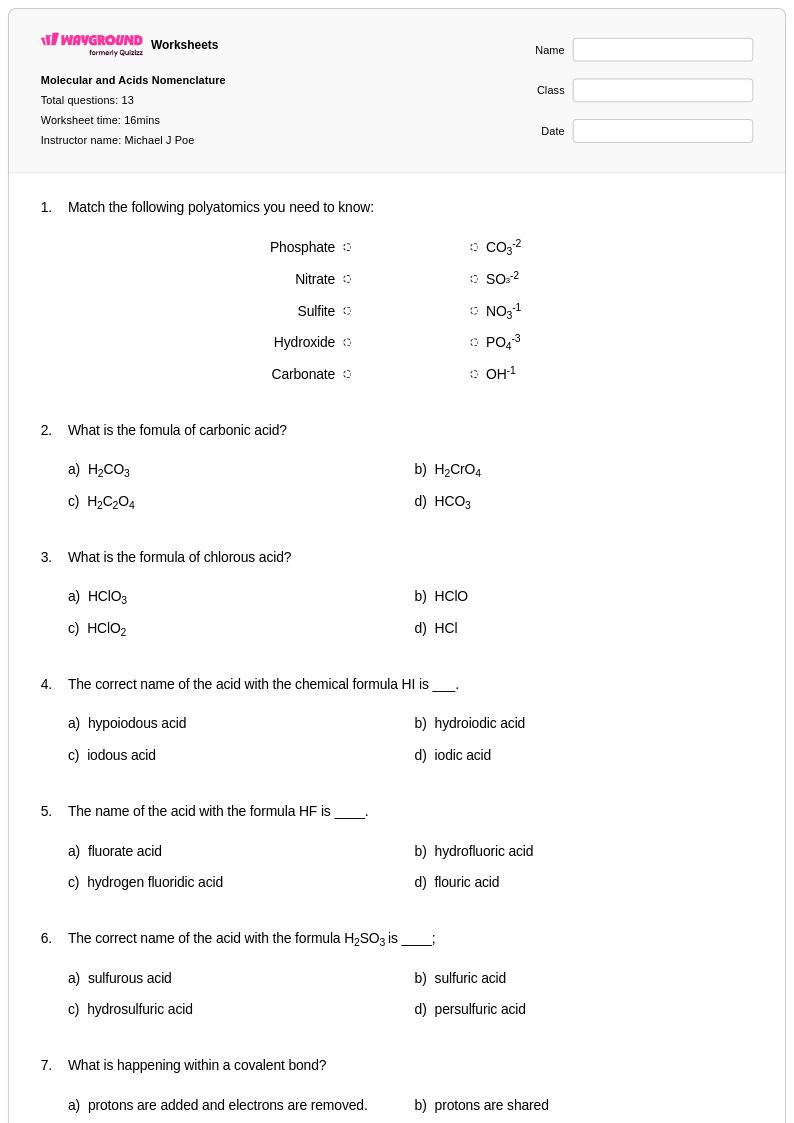
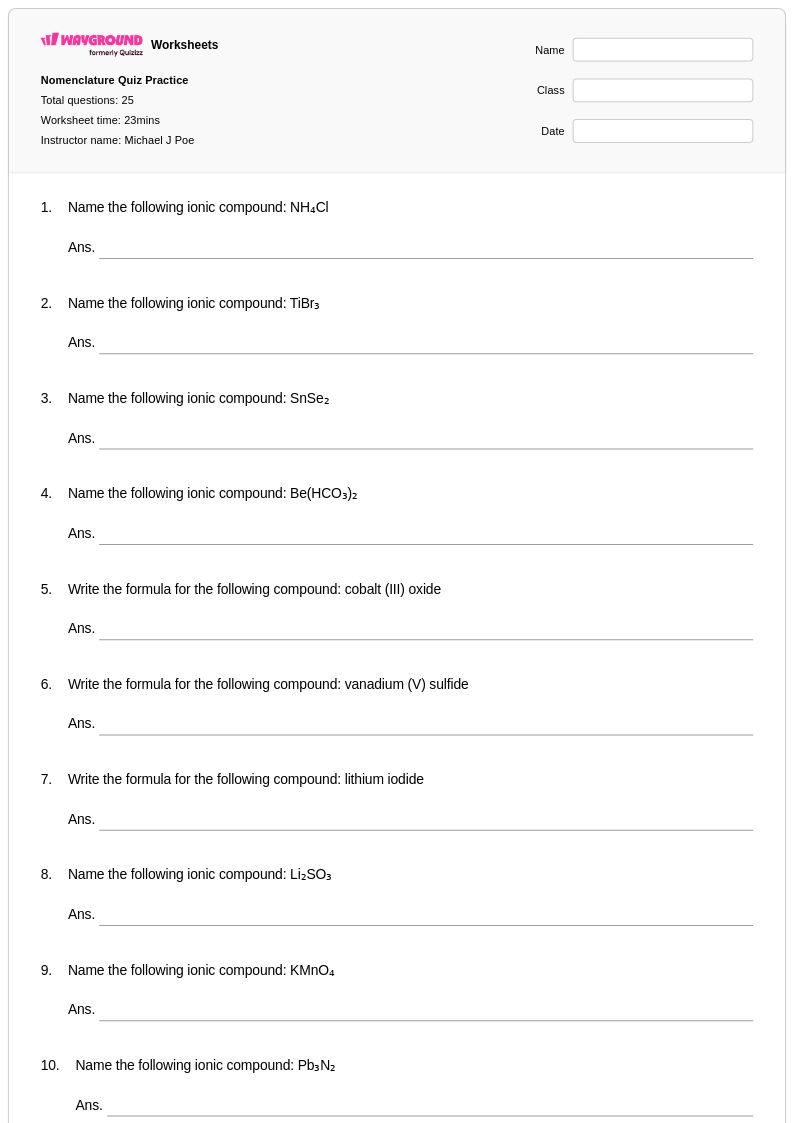
Chemical nomenclature worksheets for Class 10 chemistry students available through Wayground (formerly Quizizz) provide comprehensive practice in the systematic naming of chemical compounds and the interpretation of chemical formulas. These expertly crafted worksheets strengthen essential skills including identifying ionic and covalent compounds, applying IUPAC naming conventions, recognizing polyatomic ions, and converting between chemical names and formulas. Students develop proficiency in naming binary compounds, acids, bases, and complex molecular structures while building the foundational vocabulary necessary for advanced chemistry coursework. Each worksheet includes detailed answer keys and is available as free printables in convenient pdf format, allowing students to work through practice problems at their own pace while receiving immediate feedback on their understanding of nomenclature rules and conventions.
Wayground (formerly Quizizz) empowers chemistry educators with access to millions of teacher-created resources specifically designed for chemical nomenclature instruction at the Class 10 level. The platform's robust search and filtering capabilities enable teachers to quickly locate worksheets that align with state and national chemistry standards, while built-in differentiation tools allow for seamless customization based on individual student needs and learning objectives. These versatile resources are available in both printable pdf formats for traditional classroom use and digital formats for online learning environments, providing maximum flexibility for lesson planning and implementation. Teachers can effectively utilize these comprehensive worksheet collections for targeted skill practice, remediation of challenging nomenclature concepts, enrichment activities for advanced learners, and formative assessment to gauge student mastery of chemical naming conventions and formula writing techniques.
FAQs
How do I teach chemical nomenclature to chemistry students?
Start by establishing the two major compound categories — ionic and molecular — before introducing naming rules, since students need a clear framework before memorizing prefixes, suffixes, and oxidation state conventions. Teach IUPAC rules systematically: begin with binary ionic compounds using fixed-charge metals, then progress to variable-charge metals using Roman numerals, then molecular compounds using Greek prefixes. Reinforce each category with targeted practice problems before moving to the next, so students build confidence incrementally rather than trying to juggle all naming systems at once.
What are the most common mistakes students make when naming chemical compounds?
The most frequent error is applying molecular naming rules (Greek prefixes) to ionic compounds or vice versa, which signals that students haven't internalized how to distinguish compound types from a formula. Students also commonly forget to use Roman numerals for transition metals with variable oxidation states, defaulting to a single name regardless of the metal's charge. A third persistent mistake is misidentifying polyatomic ions, often confusing sulfate with sulfite or nitrate with nitrite due to the subtle suffix difference.
What exercises help students practice chemical nomenclature effectively?
The most effective practice alternates between two directions: giving students a chemical formula and asking for the systematic name, then giving a name and asking for the formula. This bidirectional approach forces students to internalize the rules rather than pattern-match in one direction only. Exercises that progress from binary compounds to polyatomic ions and then to simple organic molecules ensure that foundational rules are secure before complexity increases.
How do I differentiate chemical nomenclature practice for students at different readiness levels?
For struggling students, reduce the scope to a single compound category at a time and provide a reference sheet of common polyatomic ions while they build fluency. Advanced learners benefit from mixed-category problems that require them to first identify the compound type before applying the correct naming convention, along with introductory organic nomenclature problems. On Wayground, teachers can apply accommodations such as reduced answer choices for selected students to lower cognitive load, while other students receive standard problem sets, all within the same assignment.
How can I use Wayground's chemical nomenclature worksheets in my classroom?
Wayground's chemical nomenclature worksheets are available as printable PDFs for traditional classroom use and in digital formats for technology-integrated environments, making them flexible for homework, in-class practice, or lab prep. Teachers can also host worksheets as a quiz directly on Wayground, allowing for streamlined review sessions with automatic scoring. Each worksheet includes a detailed answer key, so students can self-assess after independent practice, which is particularly useful for flipped classroom models or test review.
How do I help students translate between chemical formulas and systematic names?
Students struggle most with translation when they haven't fully memorized polyatomic ions and common transition metal charges, so flashcard drill on those two sets is a necessary prerequisite. Once those are secure, teach a consistent decision procedure: Is it ionic or molecular? If ionic, does the metal have a variable charge? Working through that decision tree explicitly for each problem builds the habit of systematic reasoning rather than guessing. Repeated bidirectional practice, formula to name and name to formula, is the most reliable path to fluency.