Free Printable Percent Composition by Mass Worksheets for Class 10
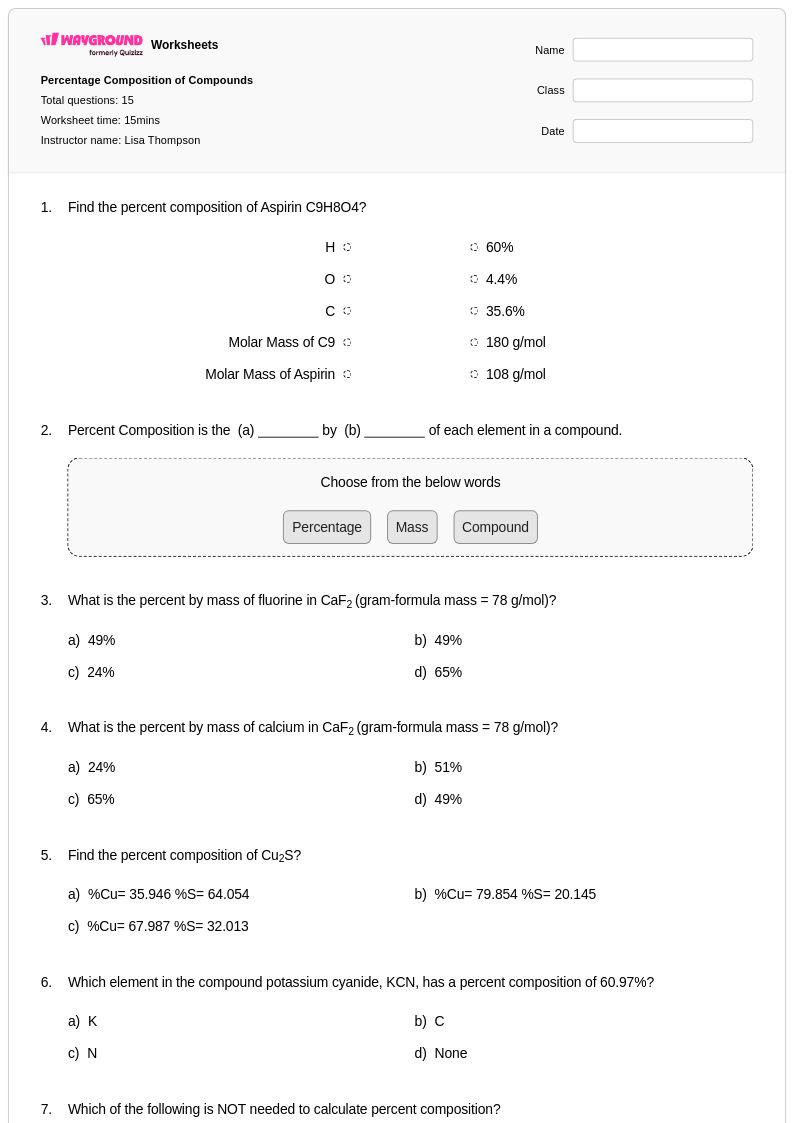
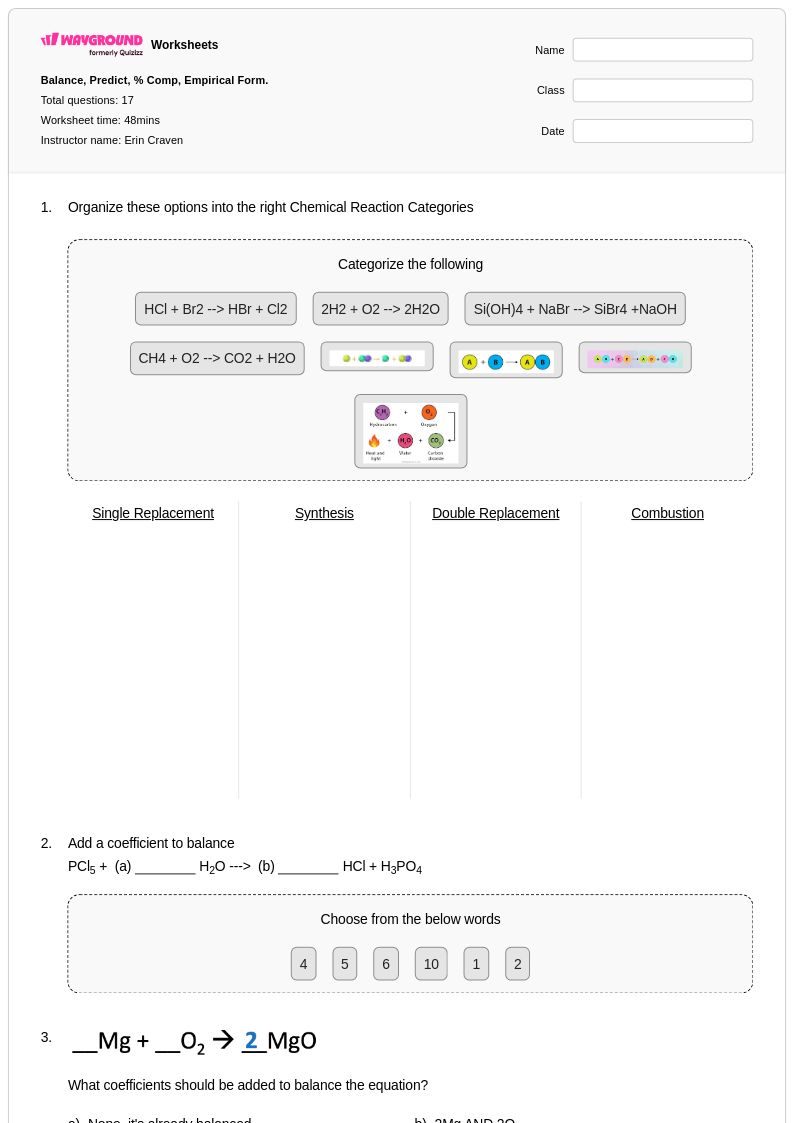
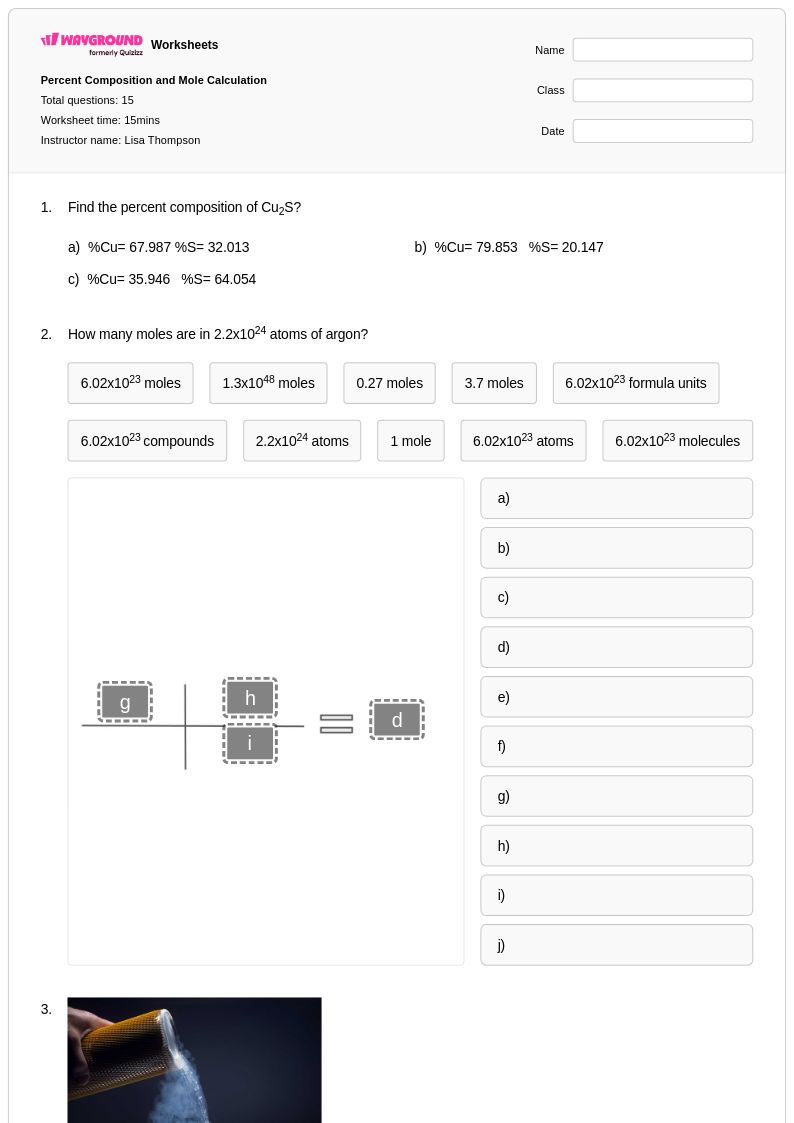
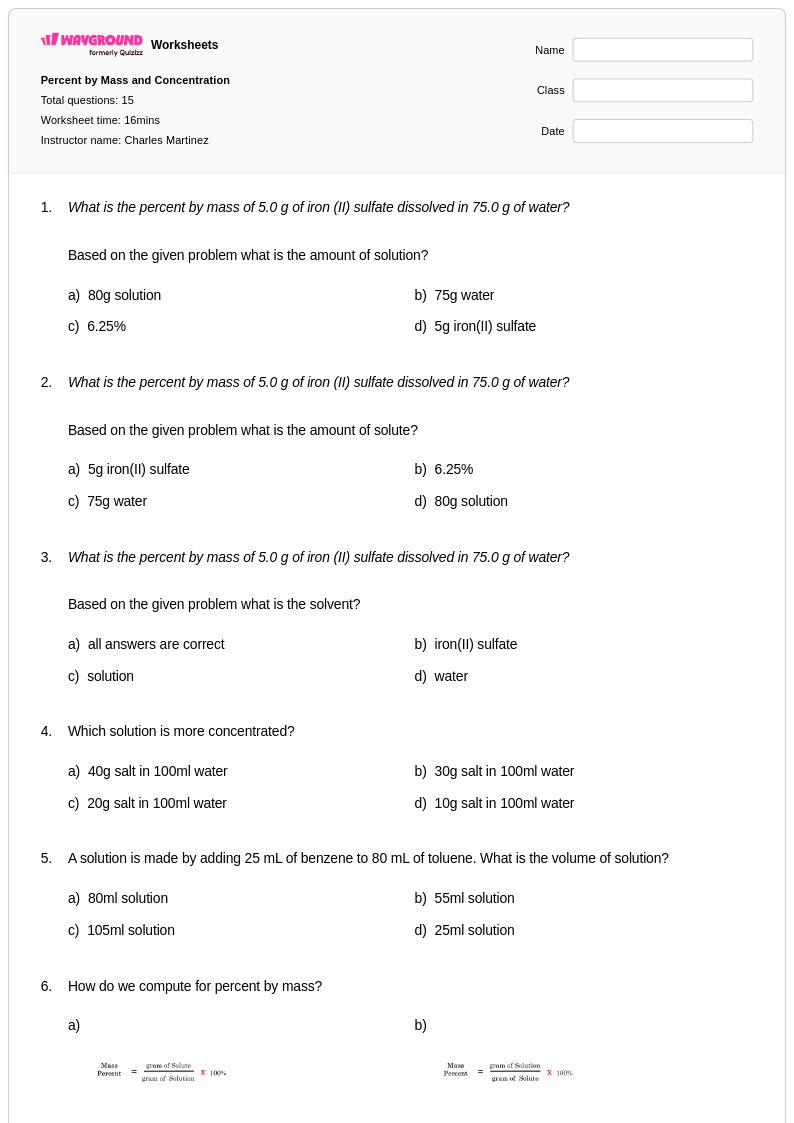
Class 10 percent composition by mass worksheets from Wayground offer free printables and practice problems with answer keys to help students master calculating the percentage of each element in chemical compounds.
Explore printable Percent Composition by Mass worksheets for Class 10
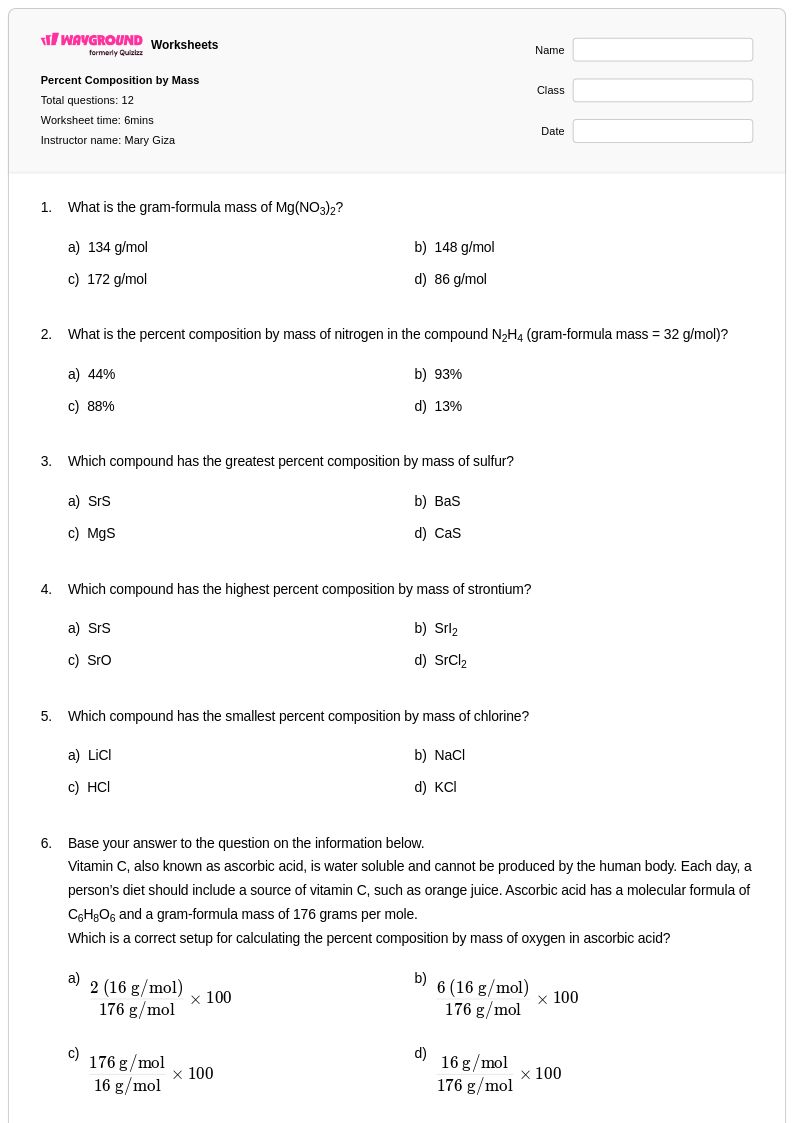
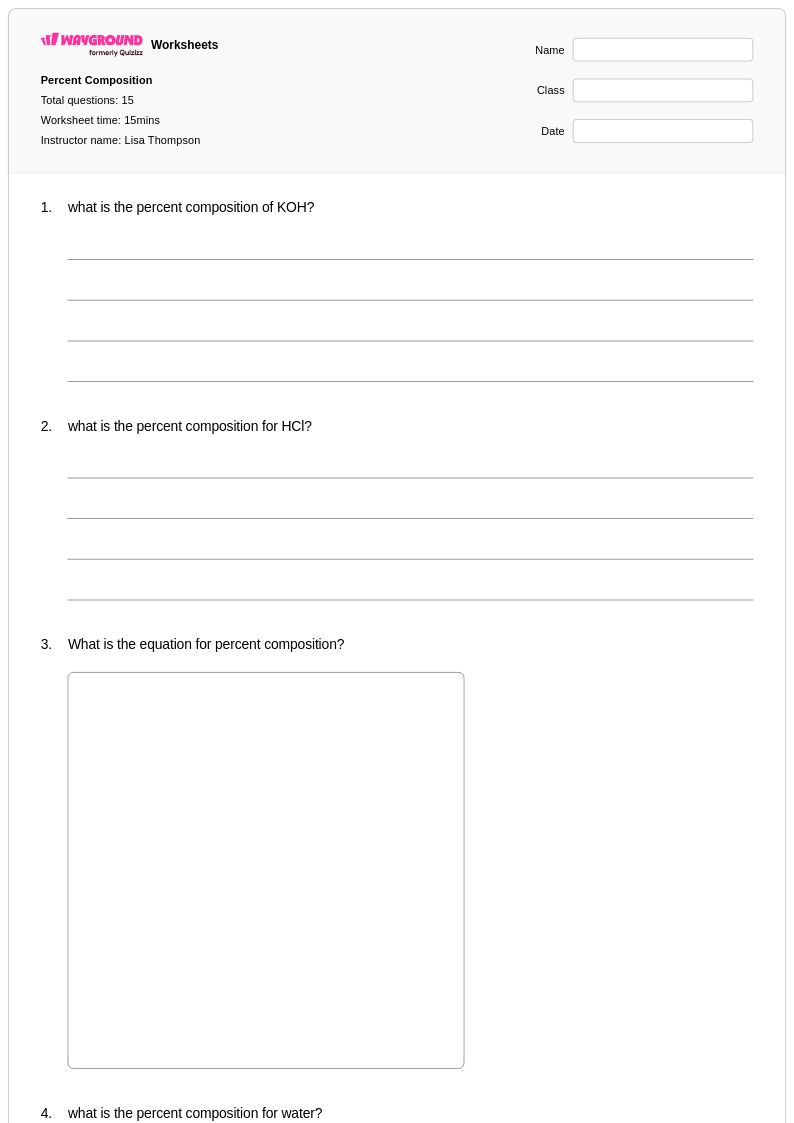
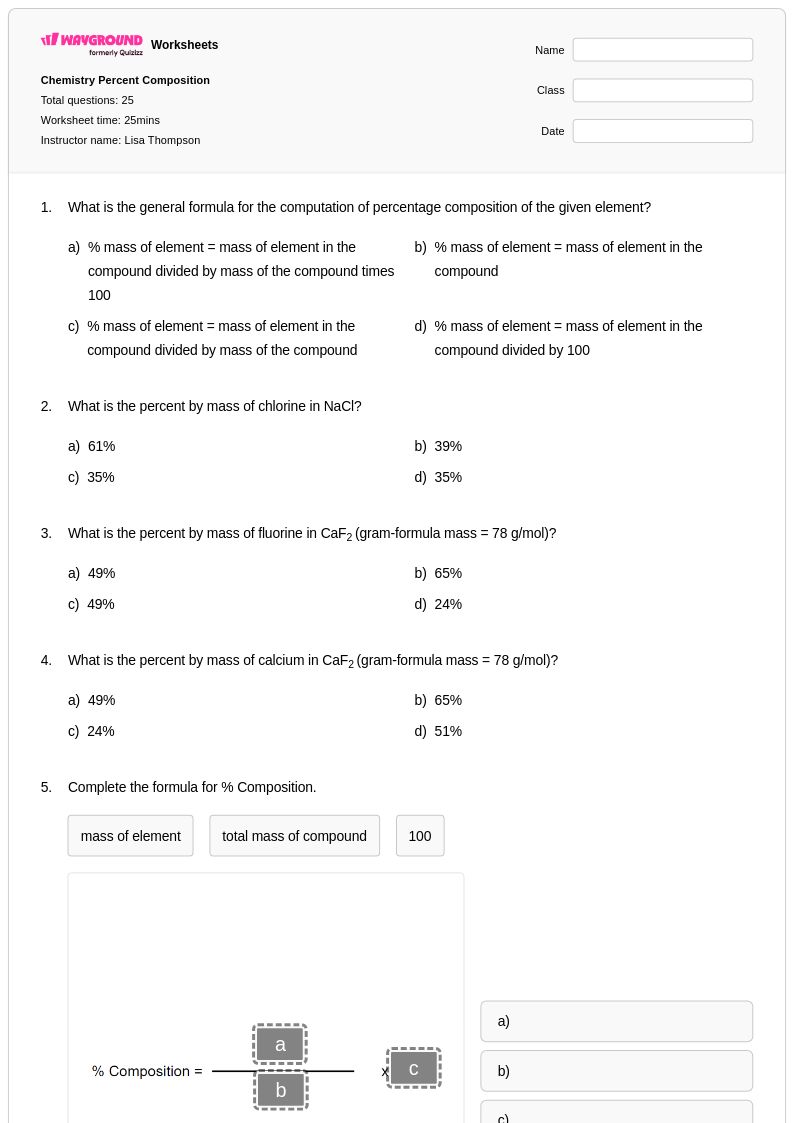
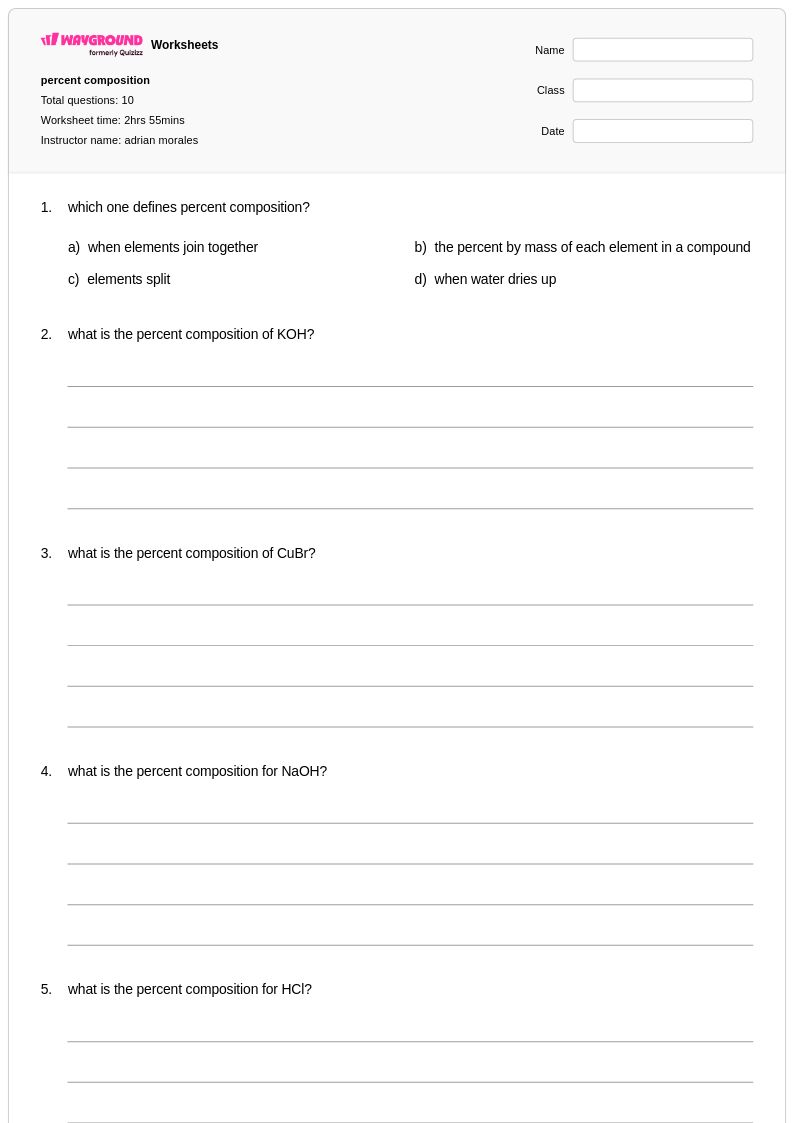
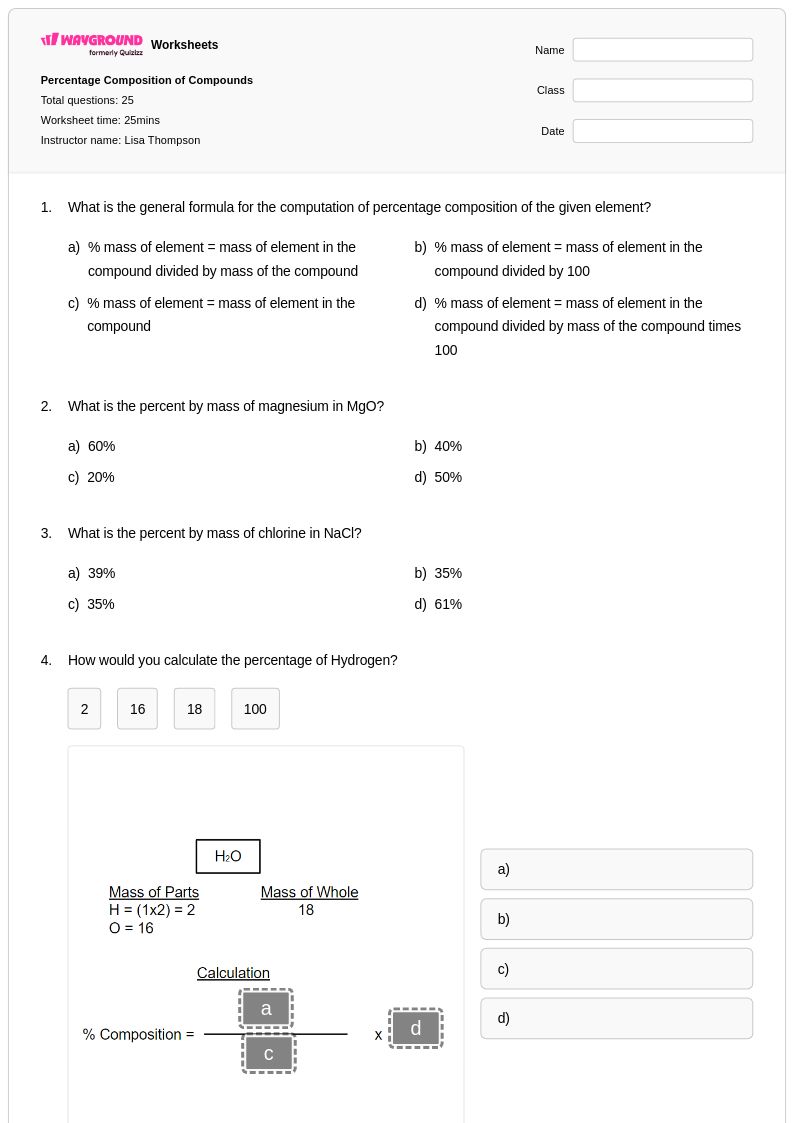
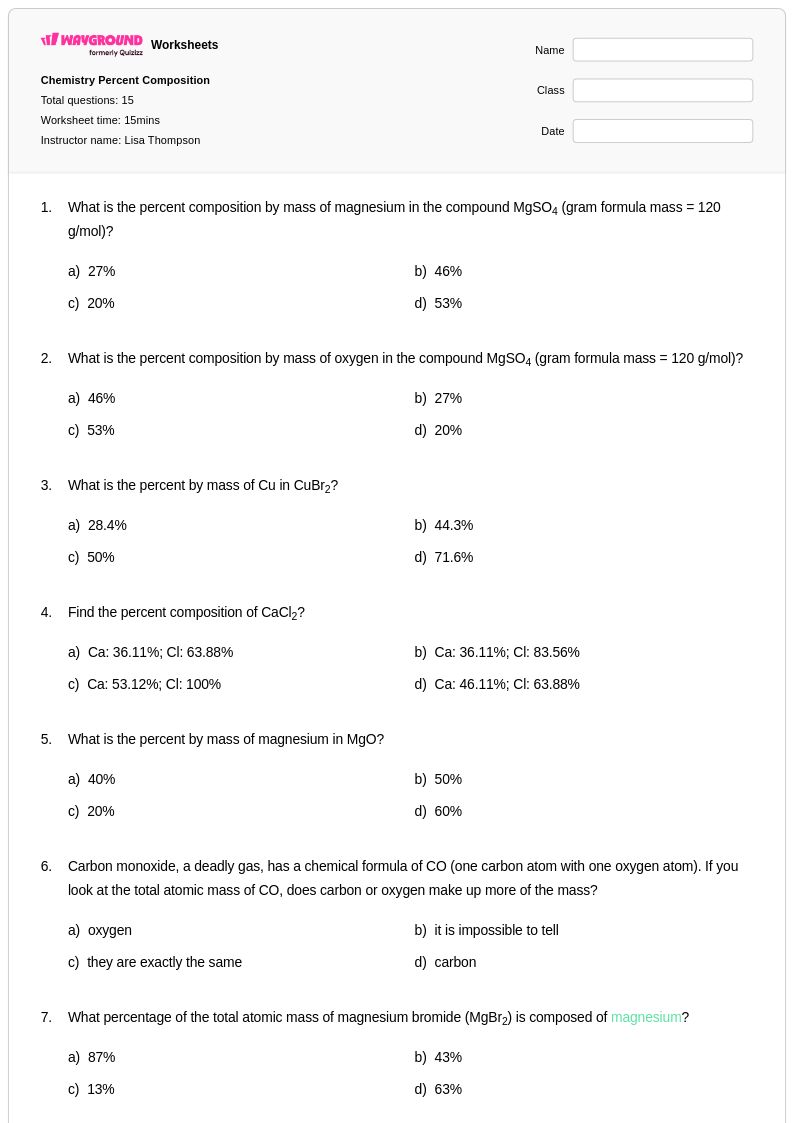
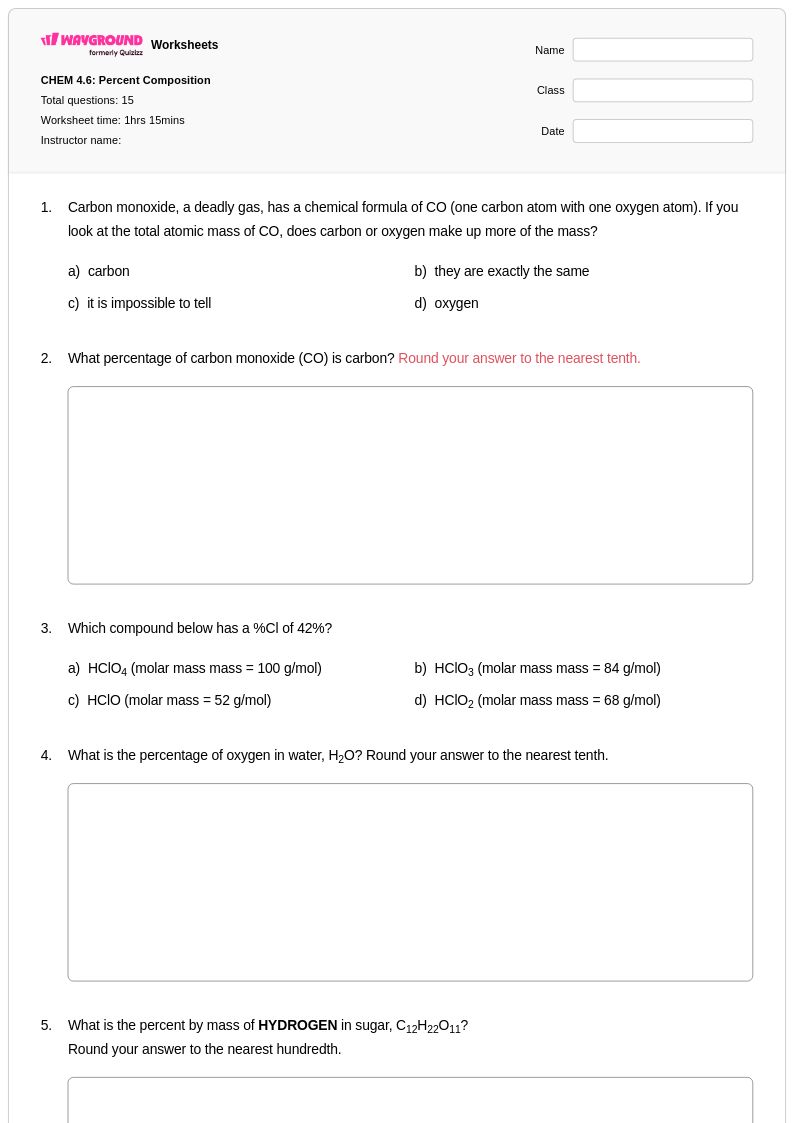
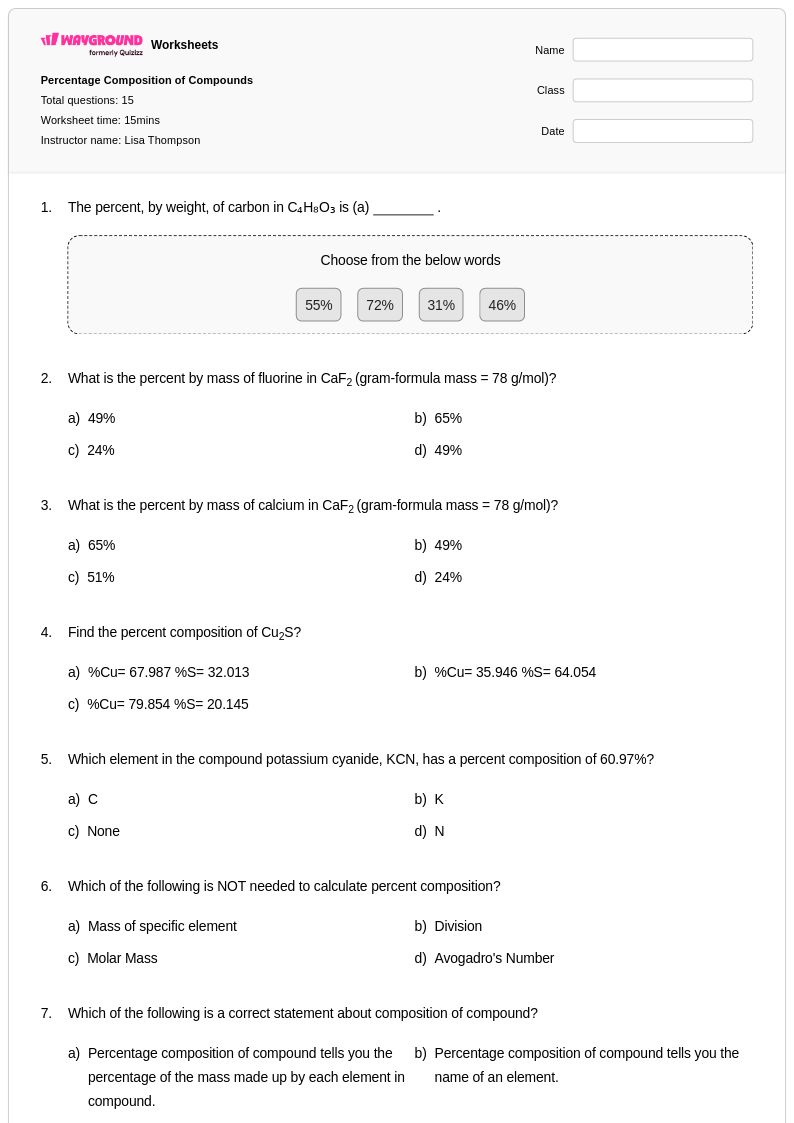
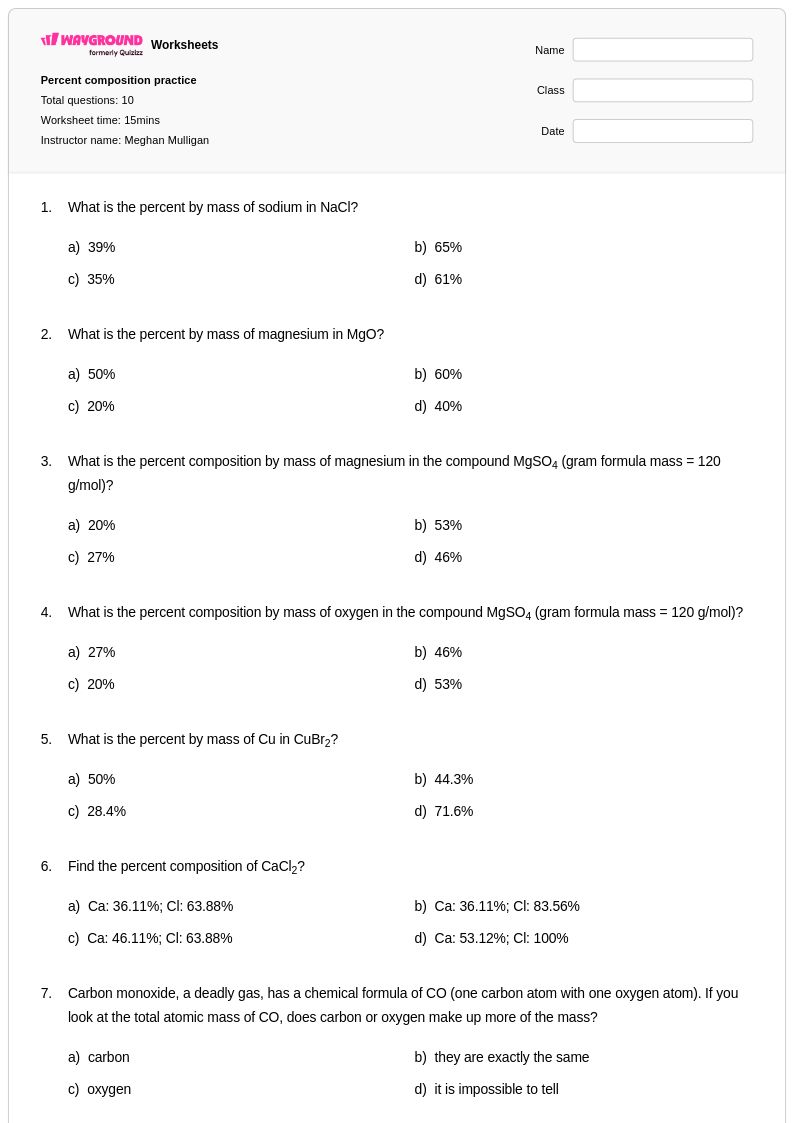
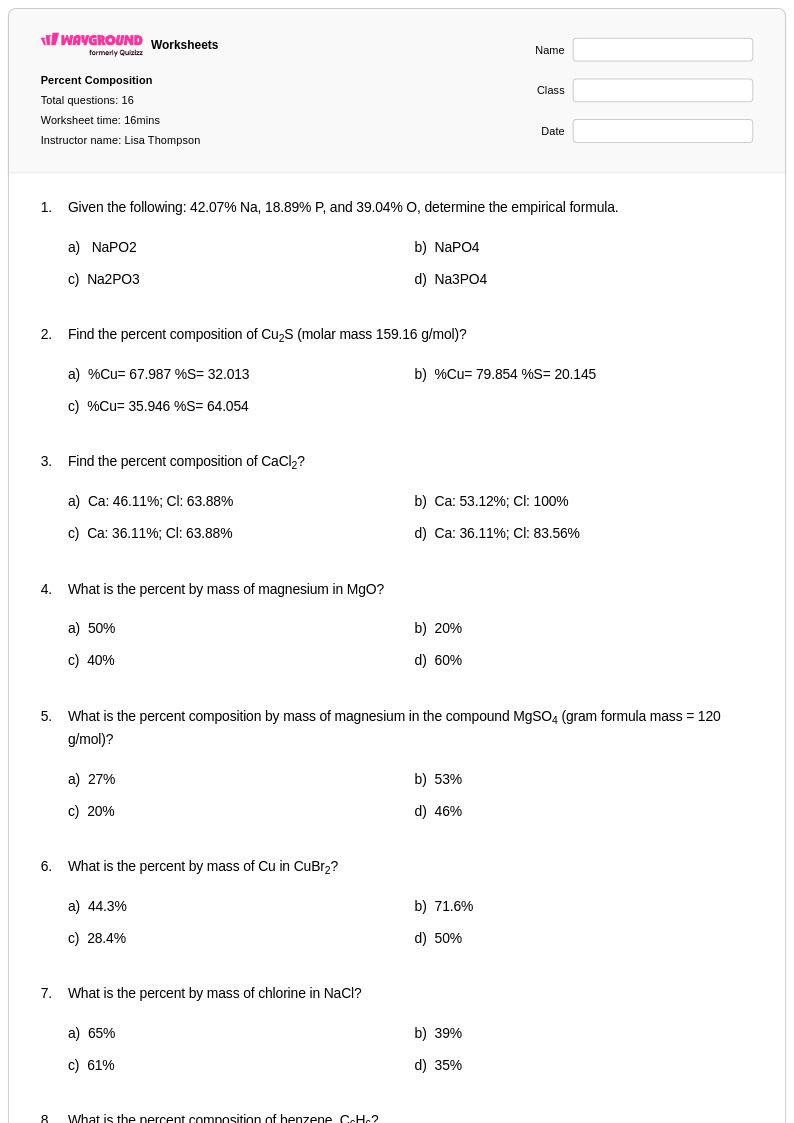
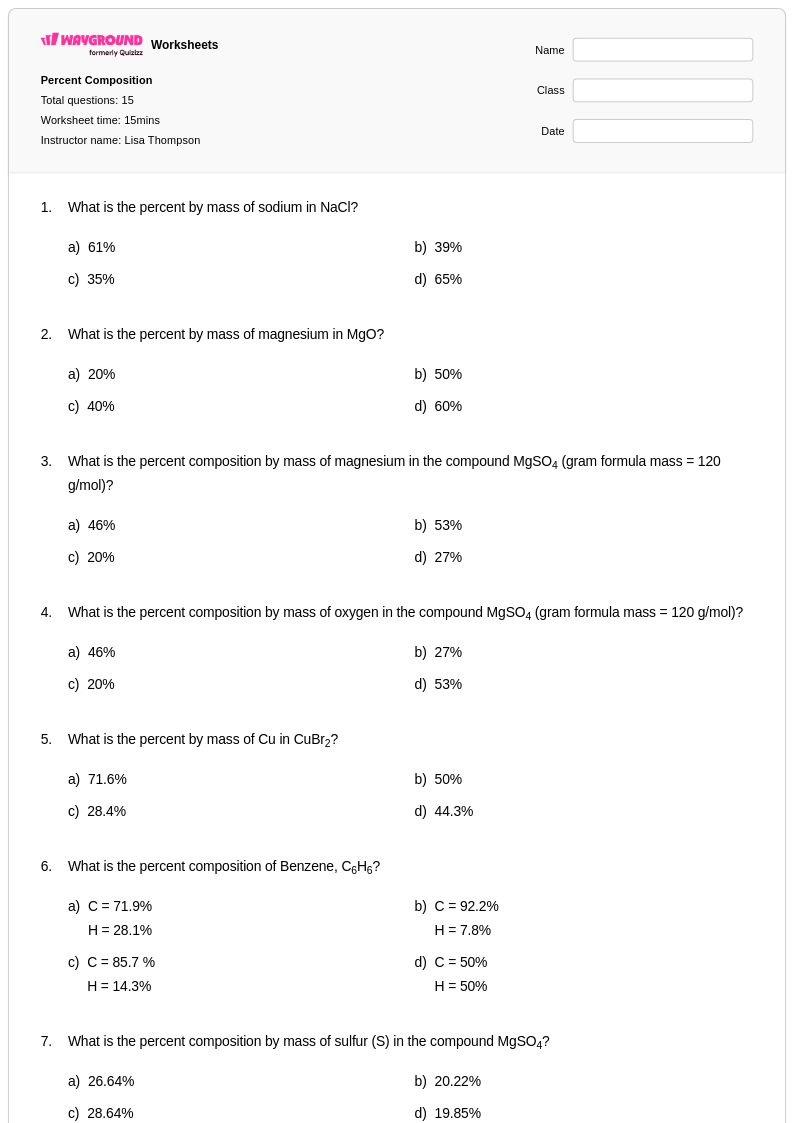
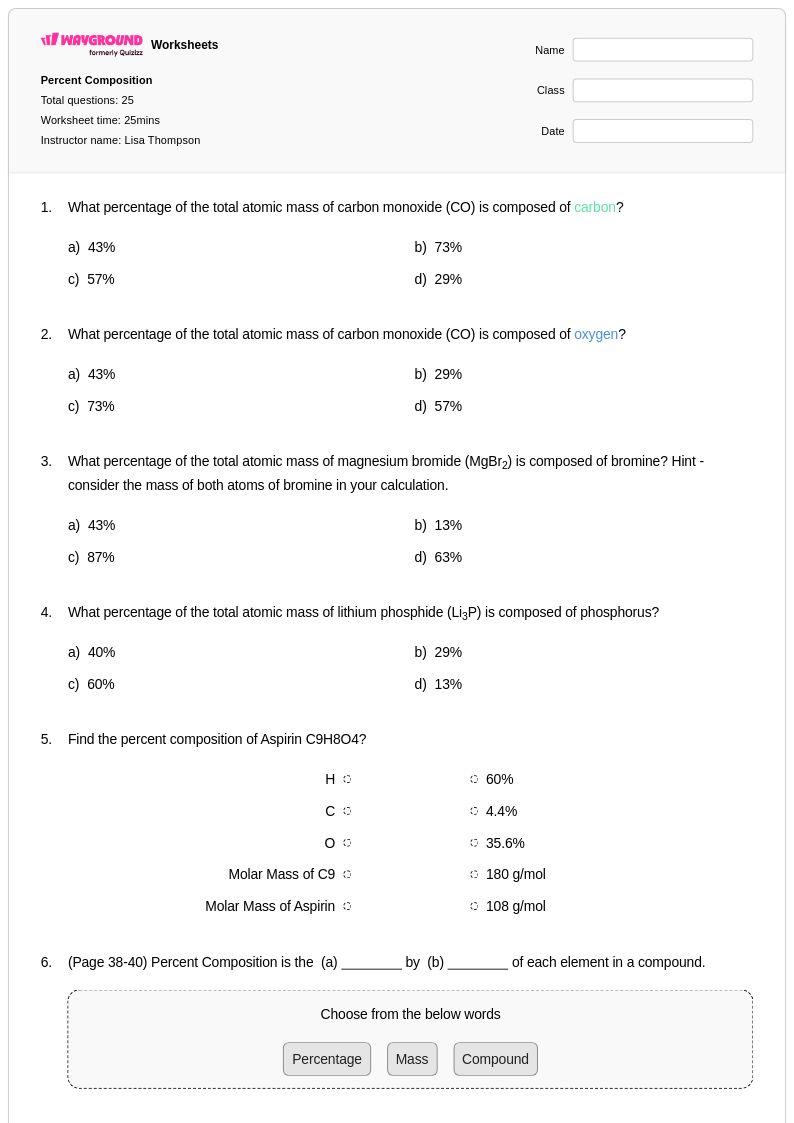
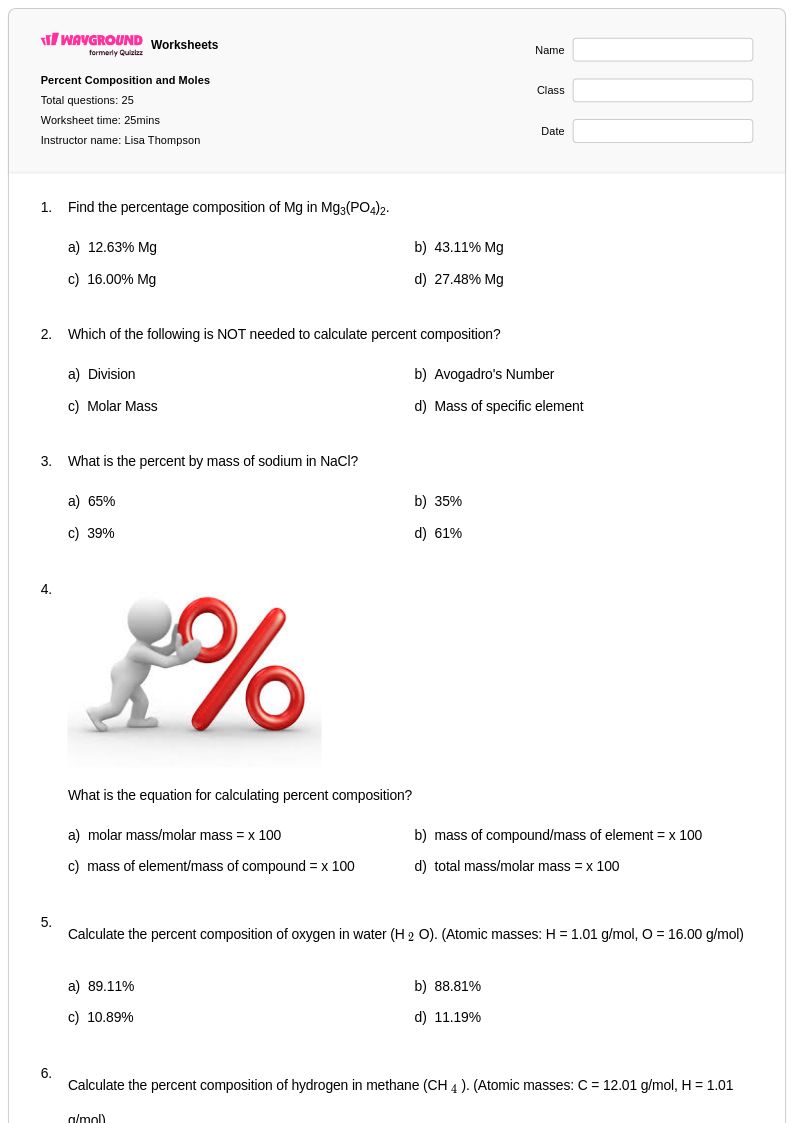
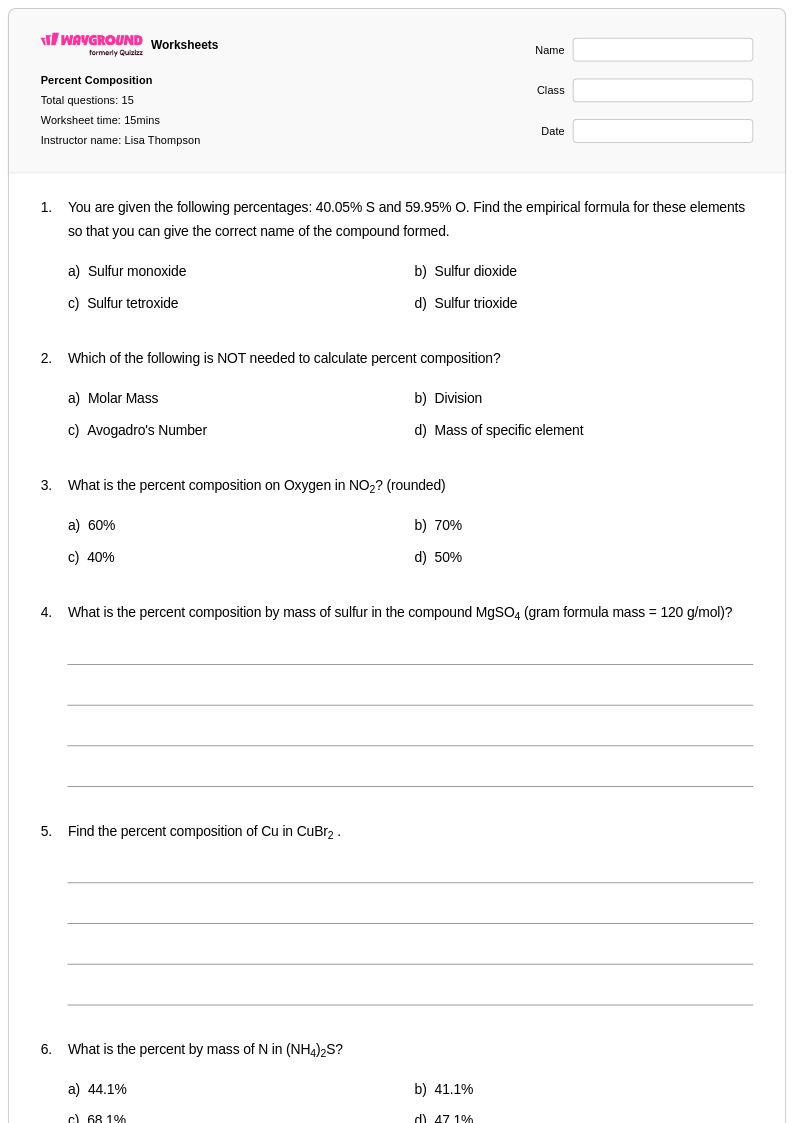
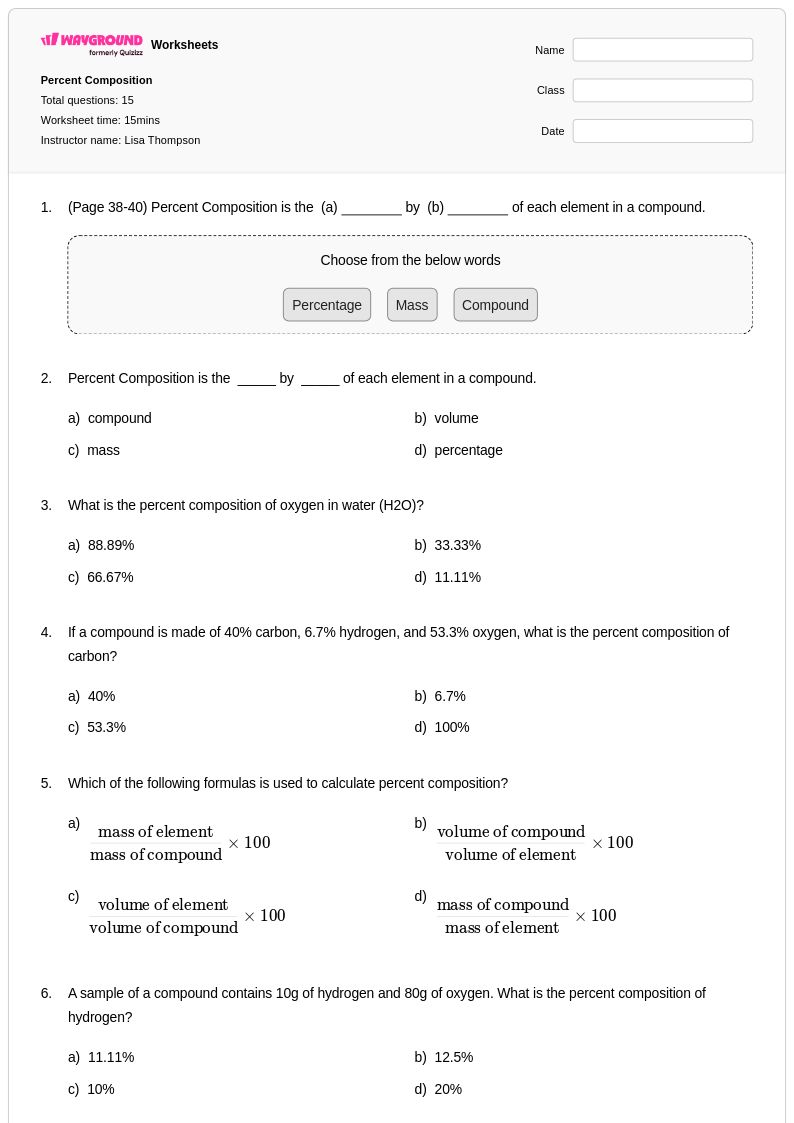
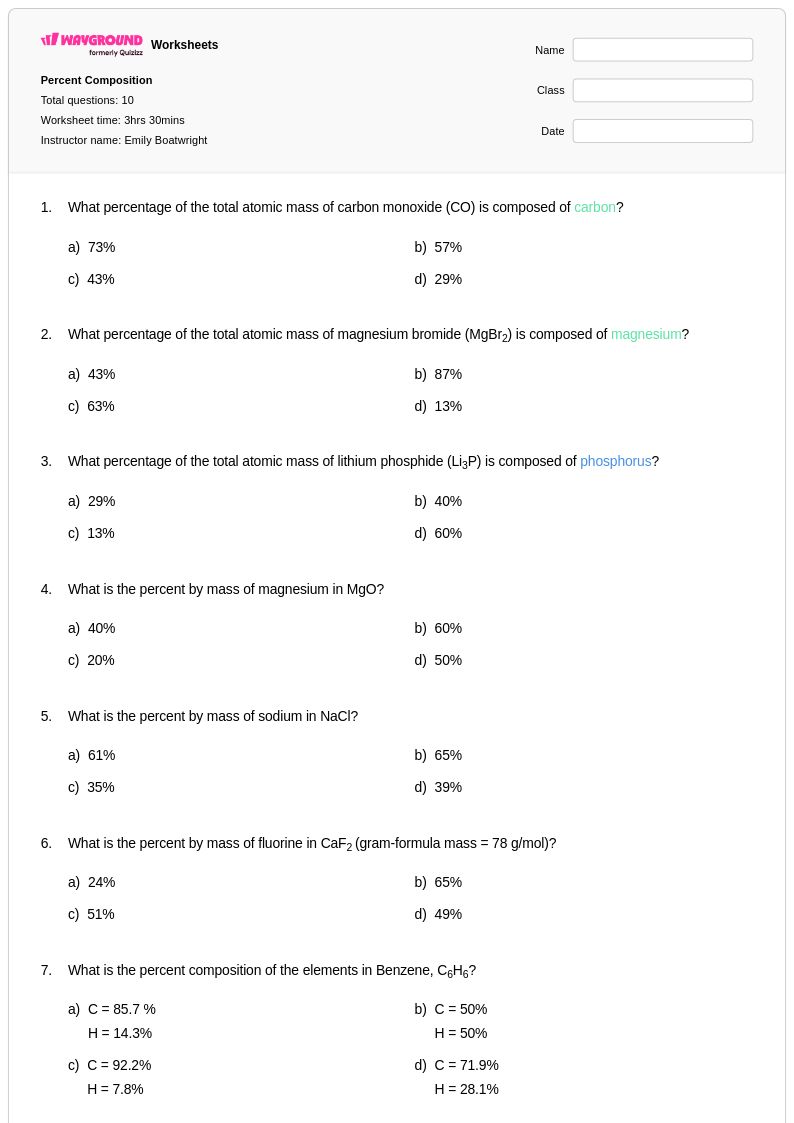
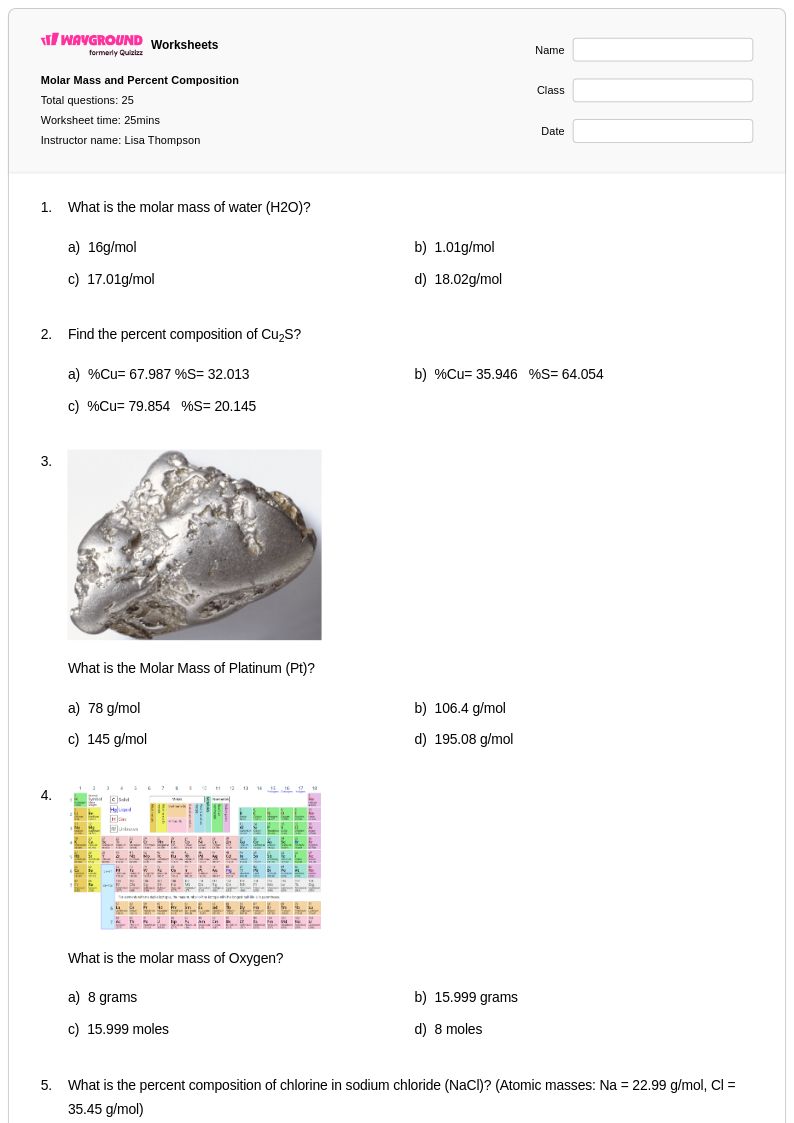
Percent composition by mass worksheets for Class 10 chemistry students available through Wayground (formerly Quizizz) provide comprehensive practice in calculating the relative mass contributions of elements within chemical compounds. These expertly designed resources strengthen students' ability to determine what percentage each element contributes to a compound's total molecular mass, a fundamental skill that bridges stoichiometry and molecular analysis. Students work through practice problems that require them to calculate molar masses, apply percentage formulas, and interpret their results in the context of chemical formulas and empirical data. Each worksheet collection includes detailed answer keys that guide students through step-by-step solutions, while printable pdf formats ensure accessibility for both classroom instruction and independent study. These free educational materials help students master the mathematical relationships between atomic masses and compound composition, preparing them for advanced topics in analytical chemistry.
Wayground (formerly Quizizz) supports chemistry educators with millions of teacher-created resources specifically designed for percent composition by mass instruction at the Class 10 level. The platform's robust search and filtering capabilities allow teachers to quickly locate worksheets that align with specific curriculum standards and match their students' current skill levels. Advanced differentiation tools enable educators to customize problem complexity, adjust numerical values, and modify question formats to accommodate diverse learning needs within their classrooms. Teachers can seamlessly transition between printable pdf versions for traditional paper-based practice and digital formats for interactive online learning environments. These flexible worksheet collections serve multiple instructional purposes, from initial concept introduction and guided practice to targeted remediation for struggling students and enrichment activities for advanced learners, making percent composition by mass concepts accessible and engaging for all Class 10 chemistry students.
FAQs
How do I teach percent composition by mass to chemistry students?
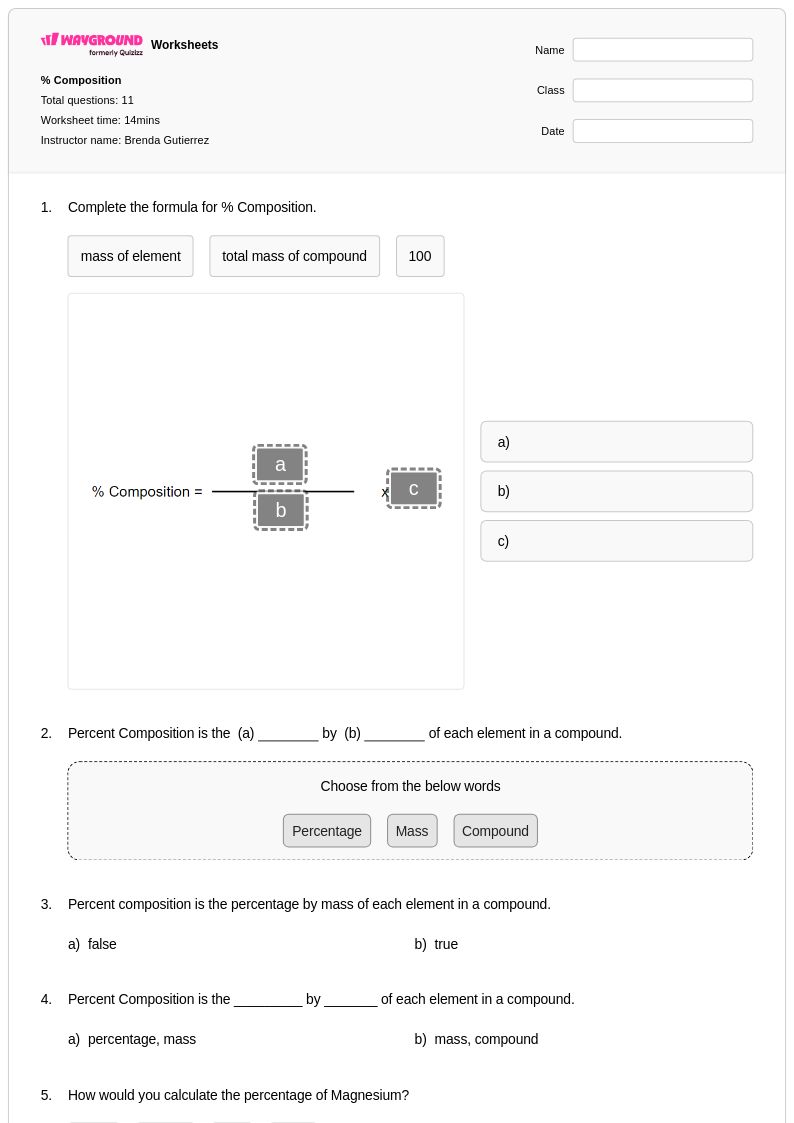
Start by ensuring students are comfortable with molar mass calculations, since percent composition depends on knowing the total molecular mass of a compound. Introduce the core formula — dividing each element's mass contribution by the compound's total molar mass and multiplying by 100 — using a simple binary compound like water or sodium chloride before moving to more complex molecules. Worked examples with color-coded element contributions help students see the proportional relationship visually before they attempt independent calculations.
What practice problems help students get better at calculating percent composition by mass?
Effective practice should progress from simple binary compounds (e.g., NaCl, H₂O) to polyatomic molecules and hydrates, which require students to account for multiple elements and water of crystallization. Problems that ask students to work backwards — identifying a compound given its percent composition — are especially valuable because they deepen conceptual understanding rather than just procedural fluency. Mixed problem sets that combine forward and reverse calculations prepare students for the range of question types they encounter on assessments.
What mistakes do students commonly make when calculating percent composition by mass?
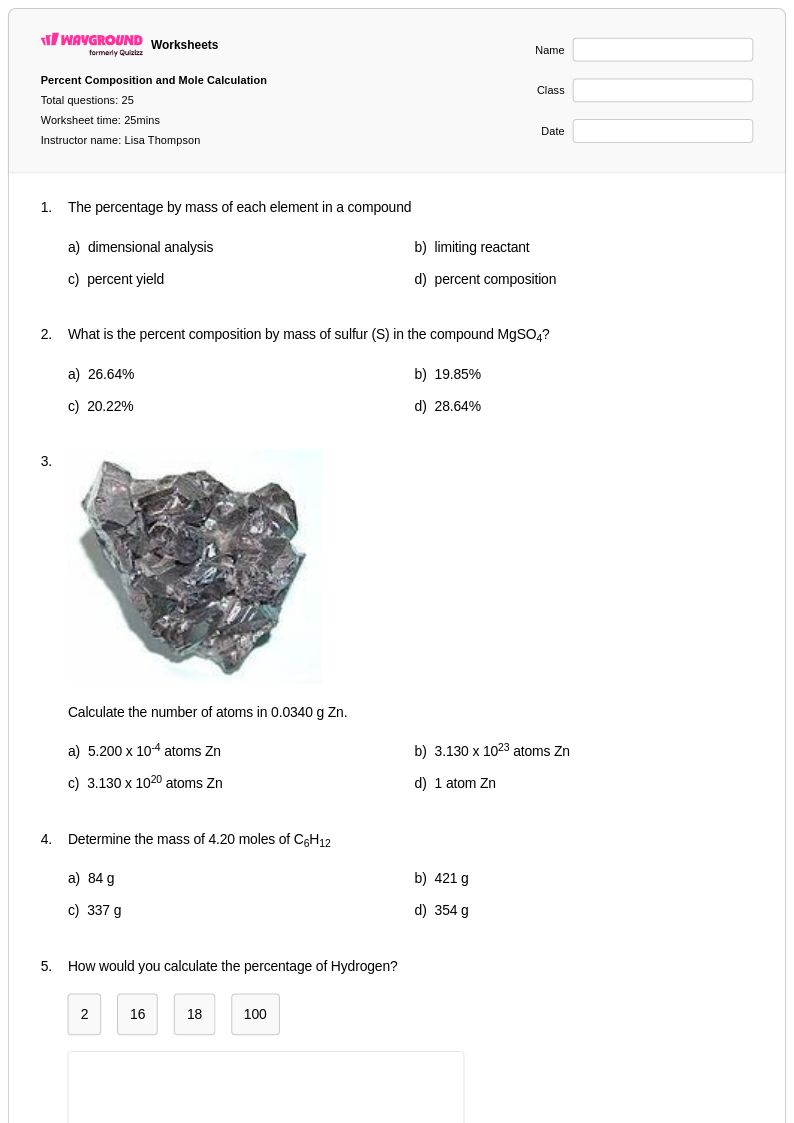
The most frequent error is dividing by the atomic mass of a single atom rather than the total molar mass of the entire compound, which produces percentages that don't add up to 100%. Students also frequently forget to multiply the atomic mass by the subscript when an element appears more than once in a formula — for example, treating H₂O as if hydrogen contributes only one atomic mass unit instead of two. A quick self-check habit of summing all calculated percentages to verify they equal 100% catches both of these errors before they become ingrained.
How do I use Wayground's percent composition by mass worksheets in my classroom?
Wayground's percent composition by mass worksheets are available as free printable PDF downloads for traditional classroom use and in digital formats for technology-integrated or remote learning environments, giving teachers flexibility in how they assign and collect student work. Teachers can also host worksheets as a quiz directly on Wayground, allowing for streamlined grading and immediate student feedback. Each worksheet includes detailed answer keys and step-by-step solution guides, making them practical for independent practice, homework assignments, or in-class problem-solving sessions.
How does percent composition by mass connect to other chemistry topics like empirical formulas and stoichiometry?
Percent composition is a foundational skill that feeds directly into empirical formula determination — once students know the mass percentage of each element, they can convert those percentages to mole ratios and derive a compound's simplest formula. It also connects to stoichiometry because understanding the mass fraction of components within a compound is essential for calculating theoretical yields and analyzing reaction products quantitatively. Teaching percent composition early in the year provides a conceptual anchor that makes these later topics significantly more accessible.
How can I differentiate percent composition by mass instruction for students at different skill levels?
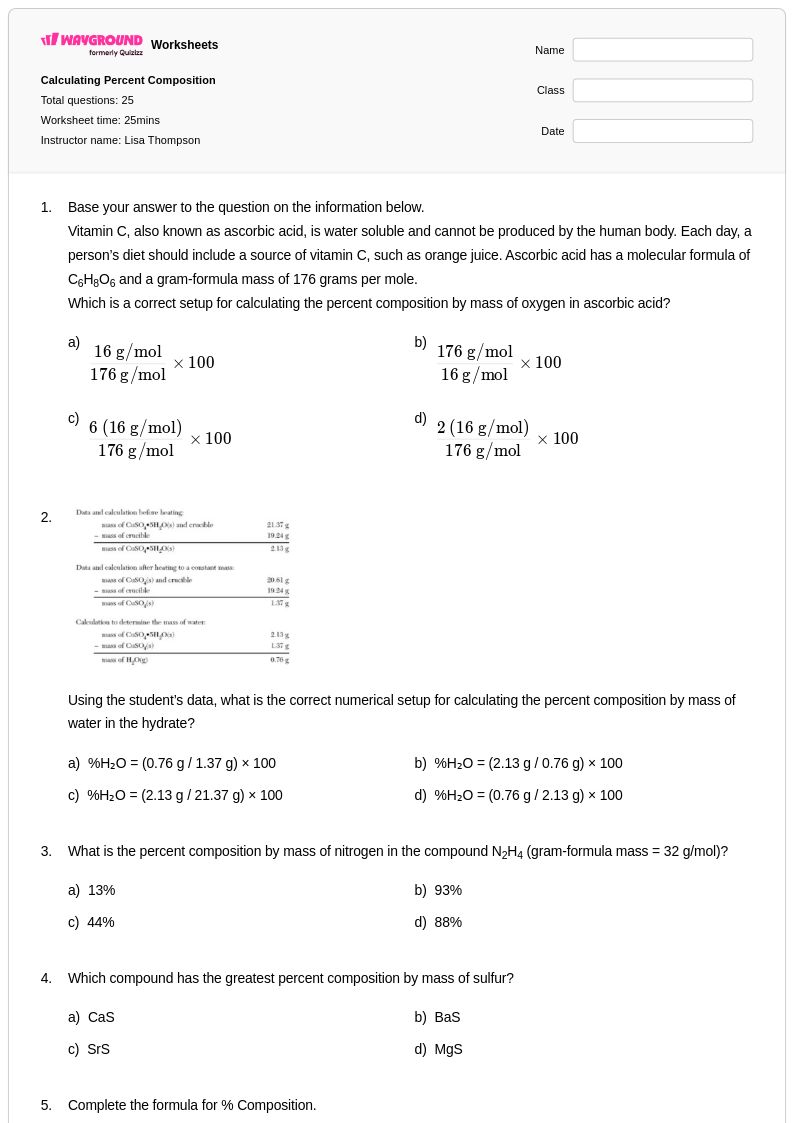
For students who are still developing confidence, start with compounds that have whole-number subscripts and a small number of elements, and provide a formula reference card so cognitive load stays focused on the calculation steps. Advanced students benefit from multi-step problems that require calculating percent composition as part of a larger analytical task, such as verifying a compound's identity or determining water content in a hydrate. On Wayground, teachers can apply accommodations such as reduced answer choices or read-aloud support to individual students, allowing the same worksheet to serve a mixed-ability class without singling anyone out.