Free Printable Calorimetry Worksheets for Class 10
Discover free Class 10 calorimetry worksheets and printable PDFs from Wayground that help students master heat transfer calculations, specific heat capacity, and thermal energy concepts through engaging practice problems with comprehensive answer keys.
Explore printable Calorimetry worksheets for Class 10
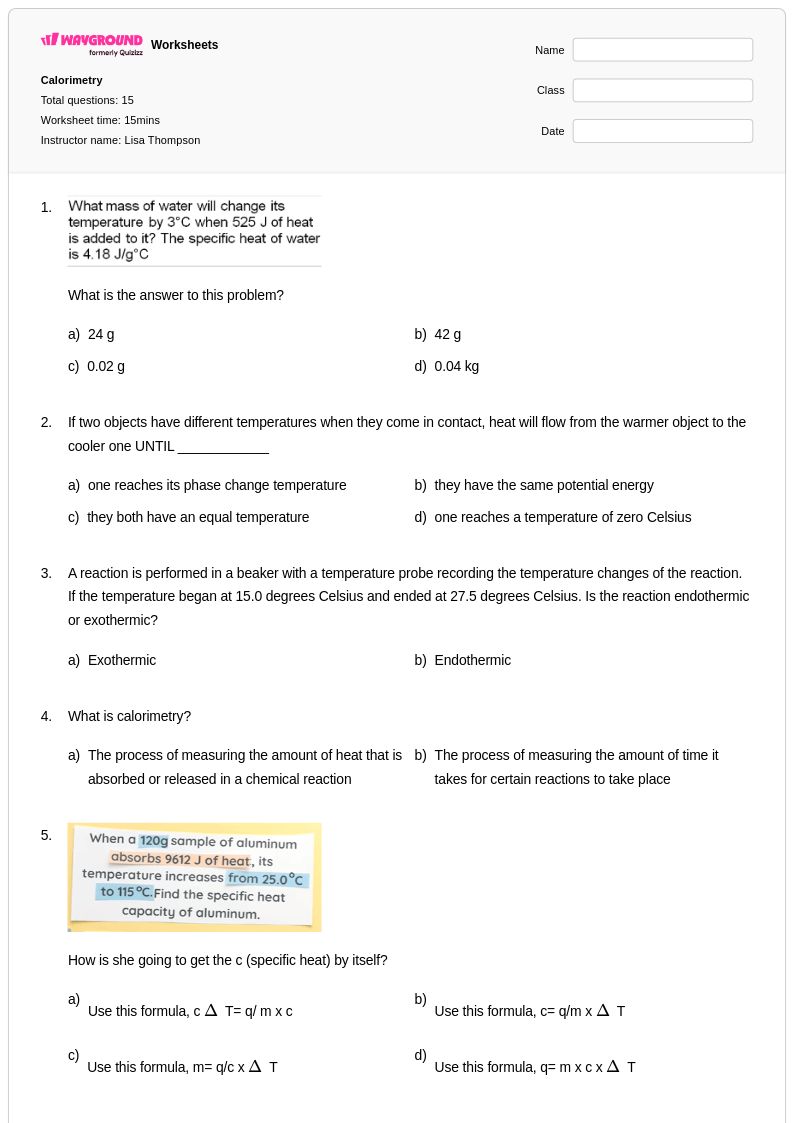
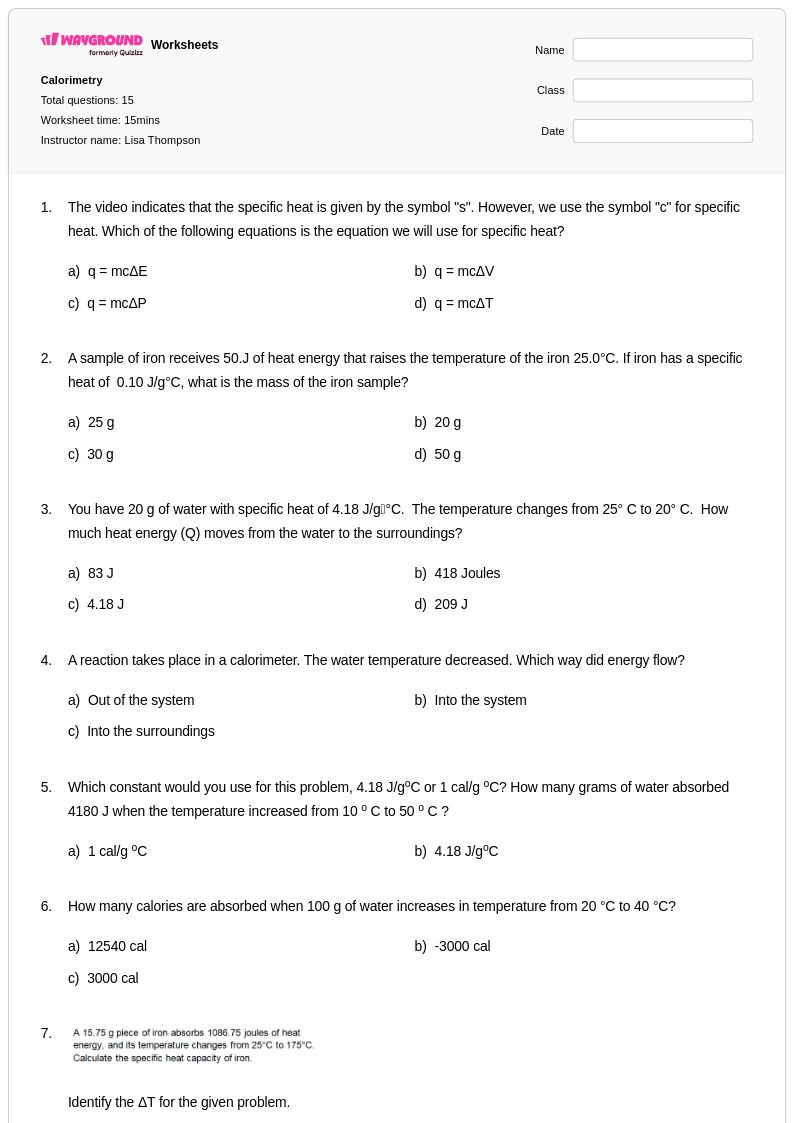
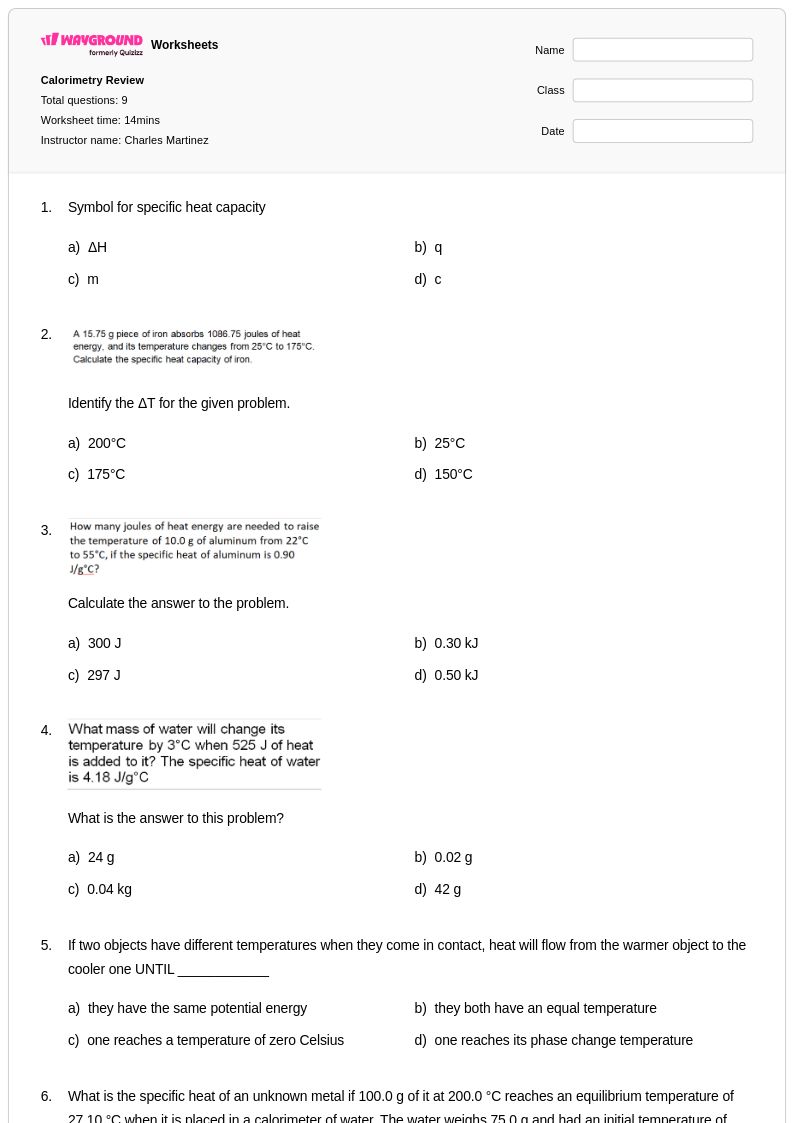
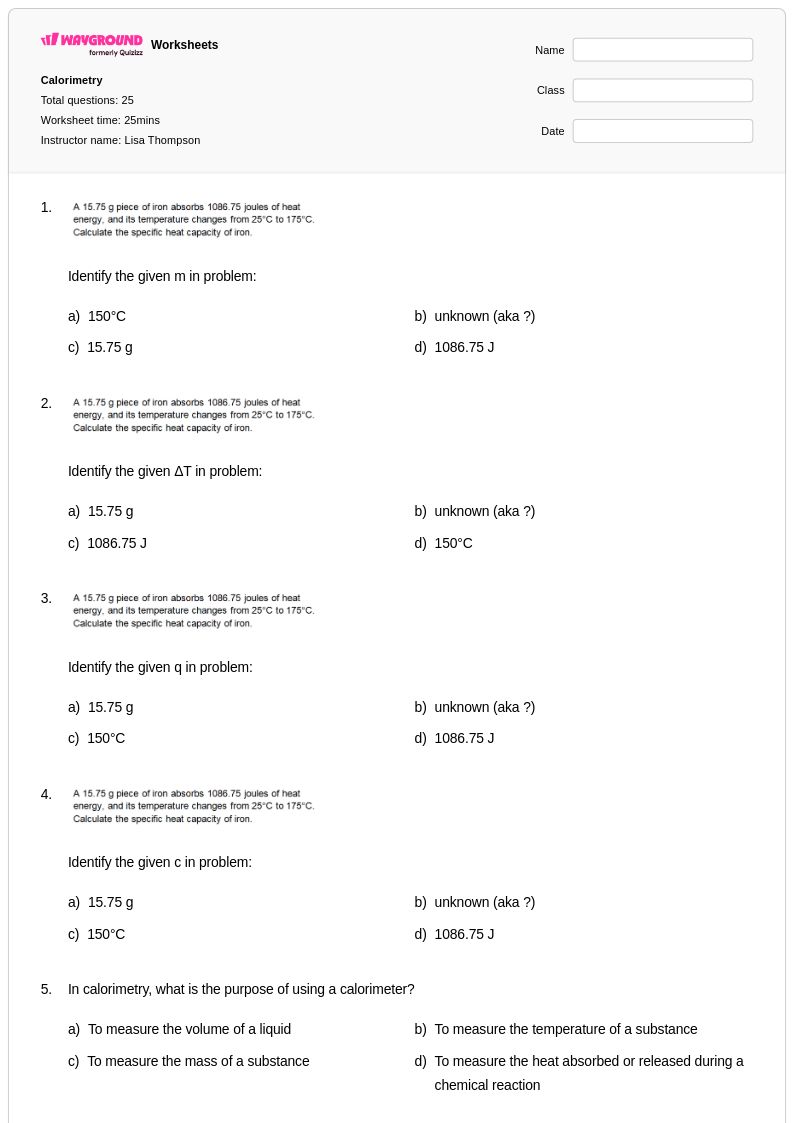
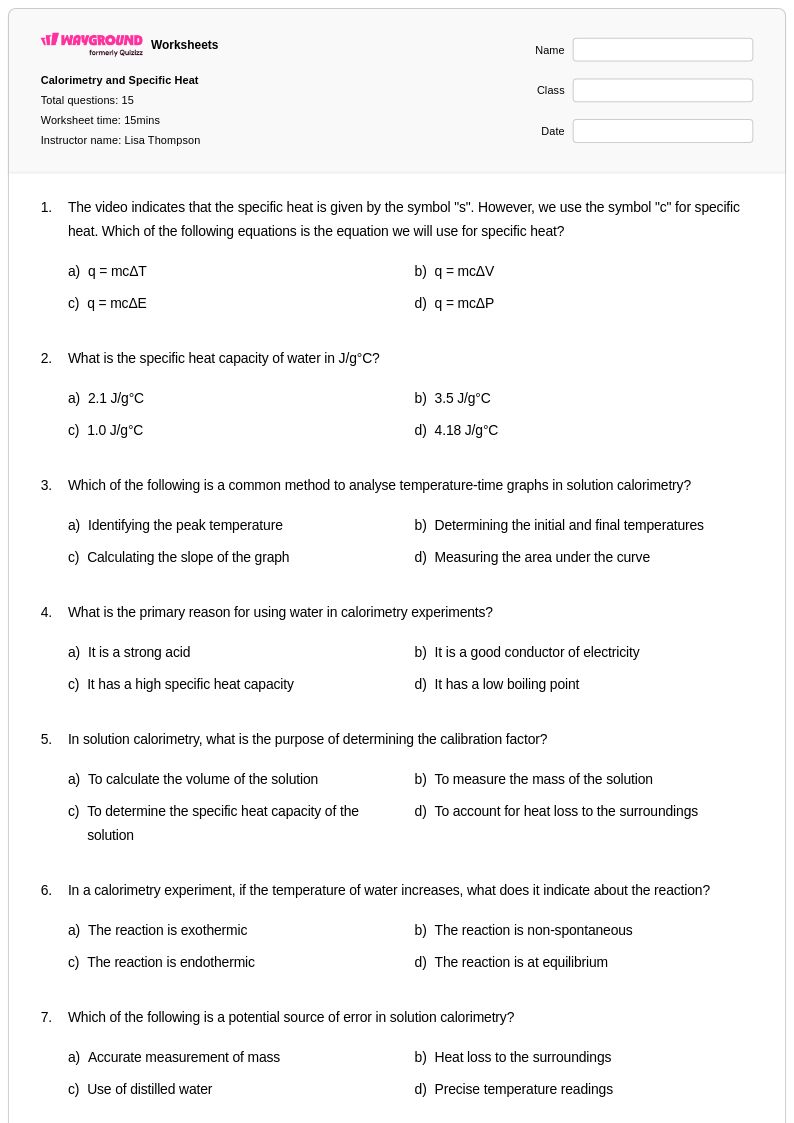
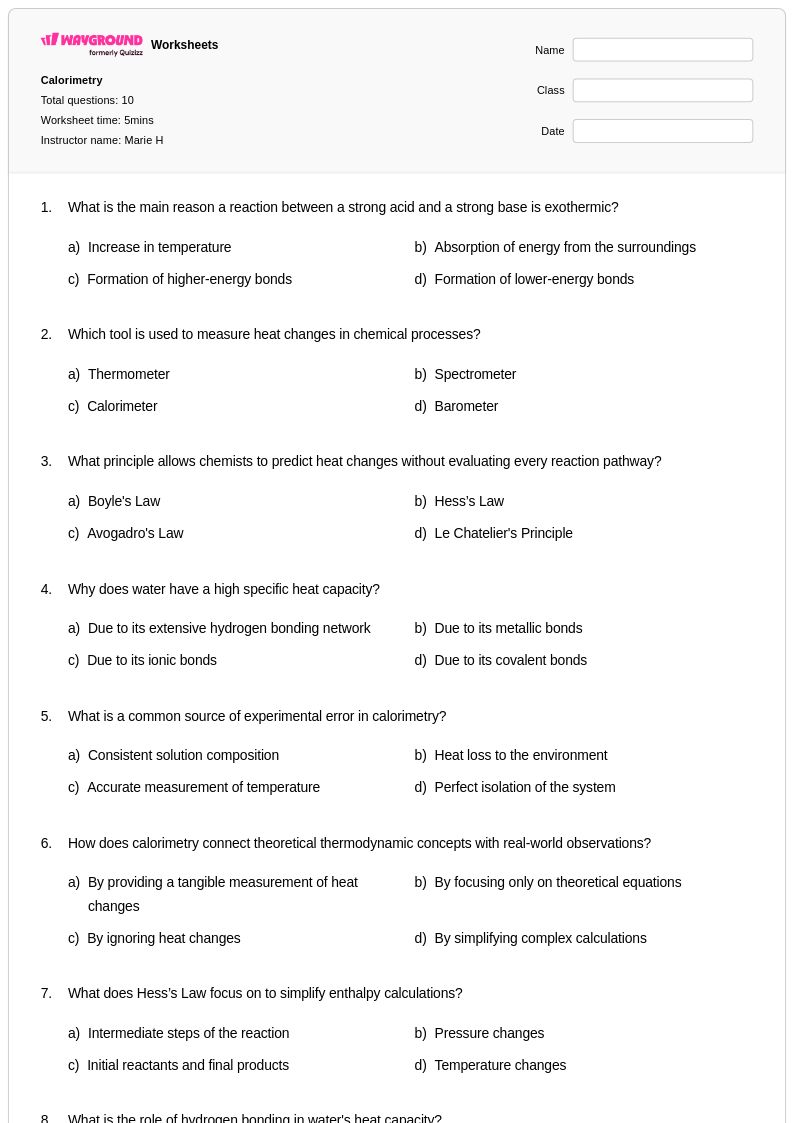
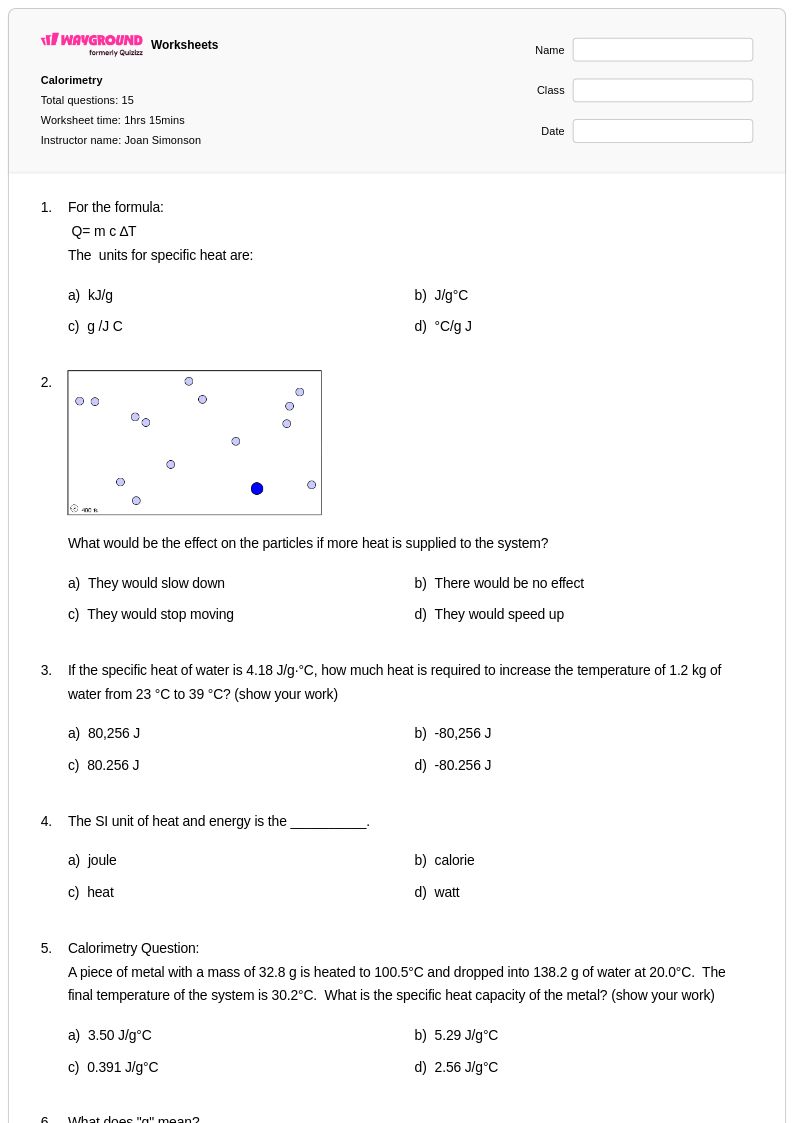
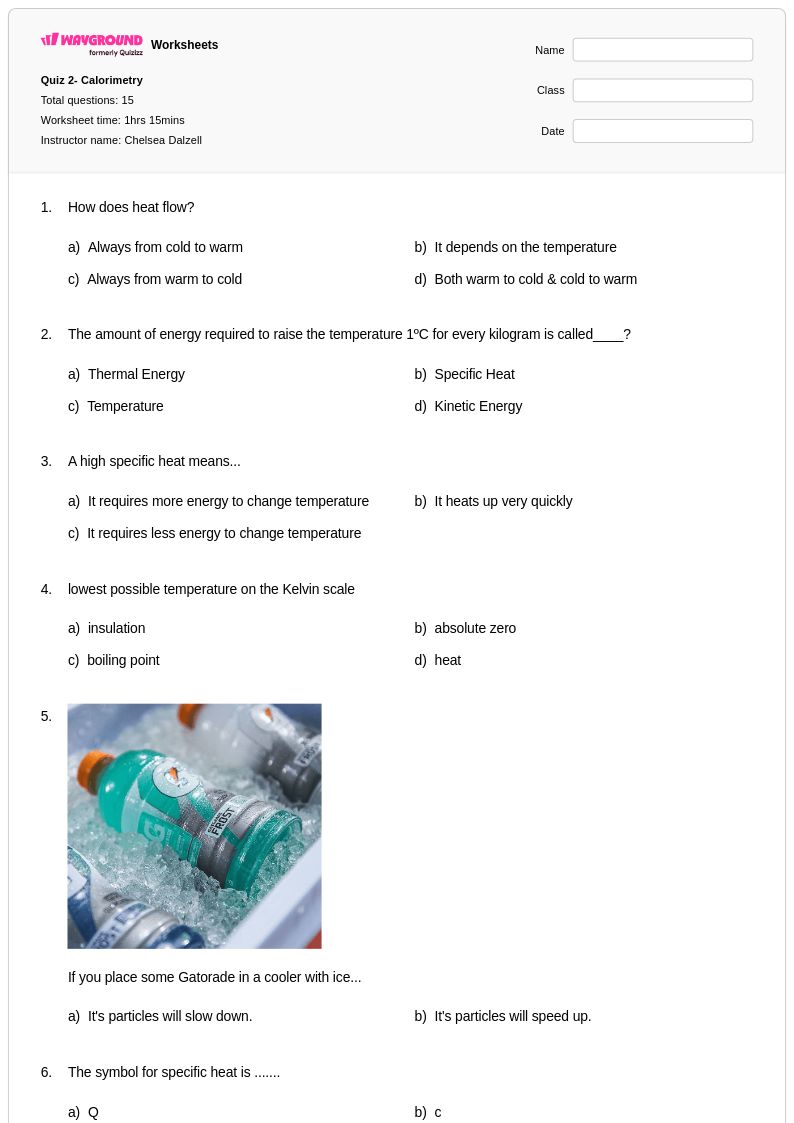
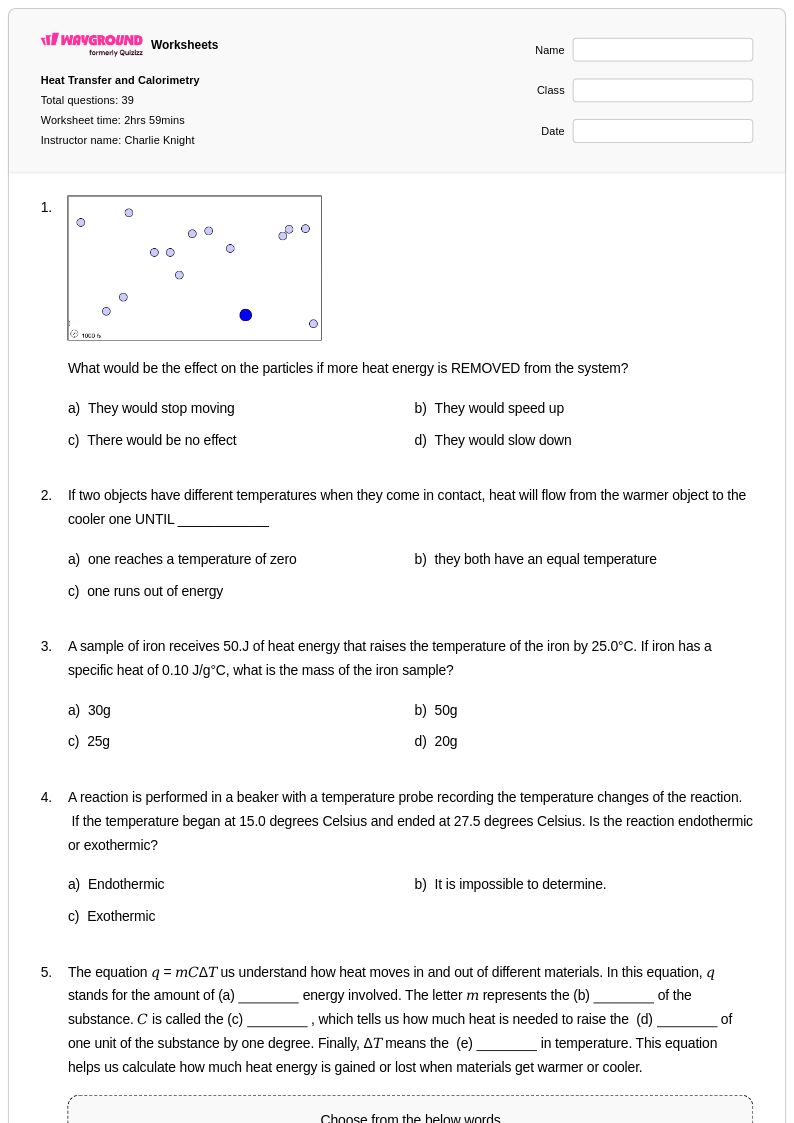
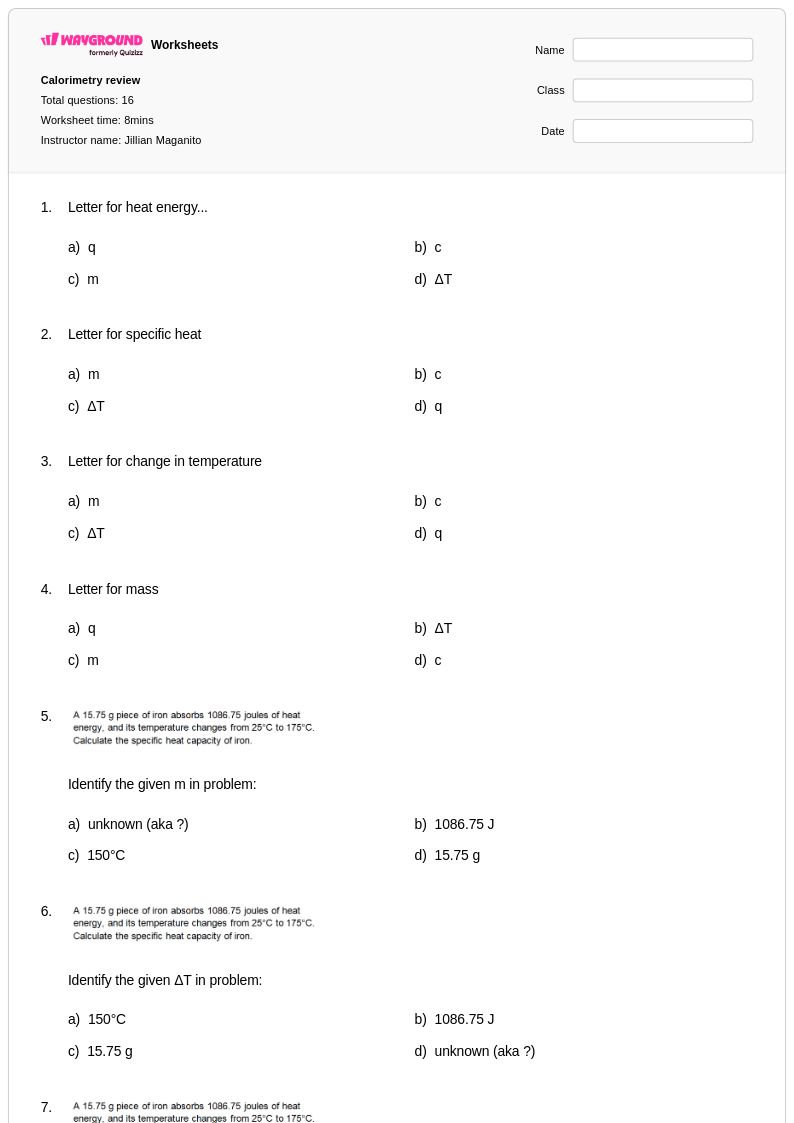
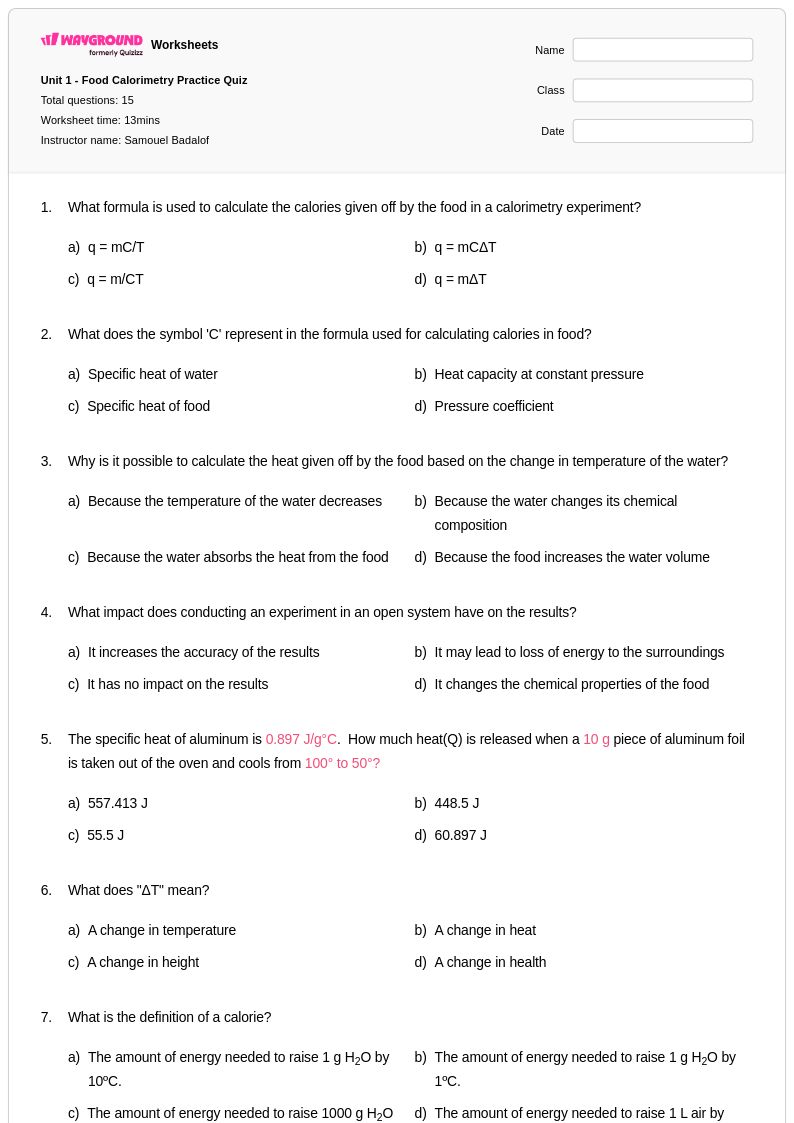
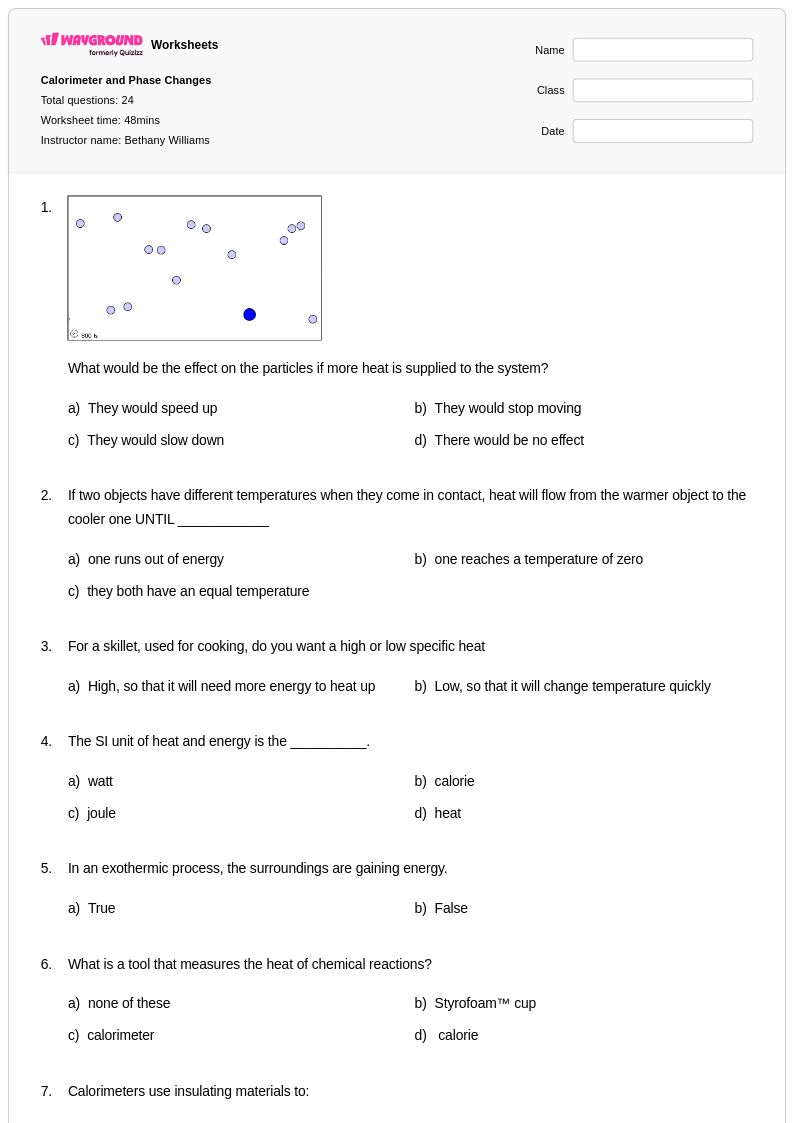
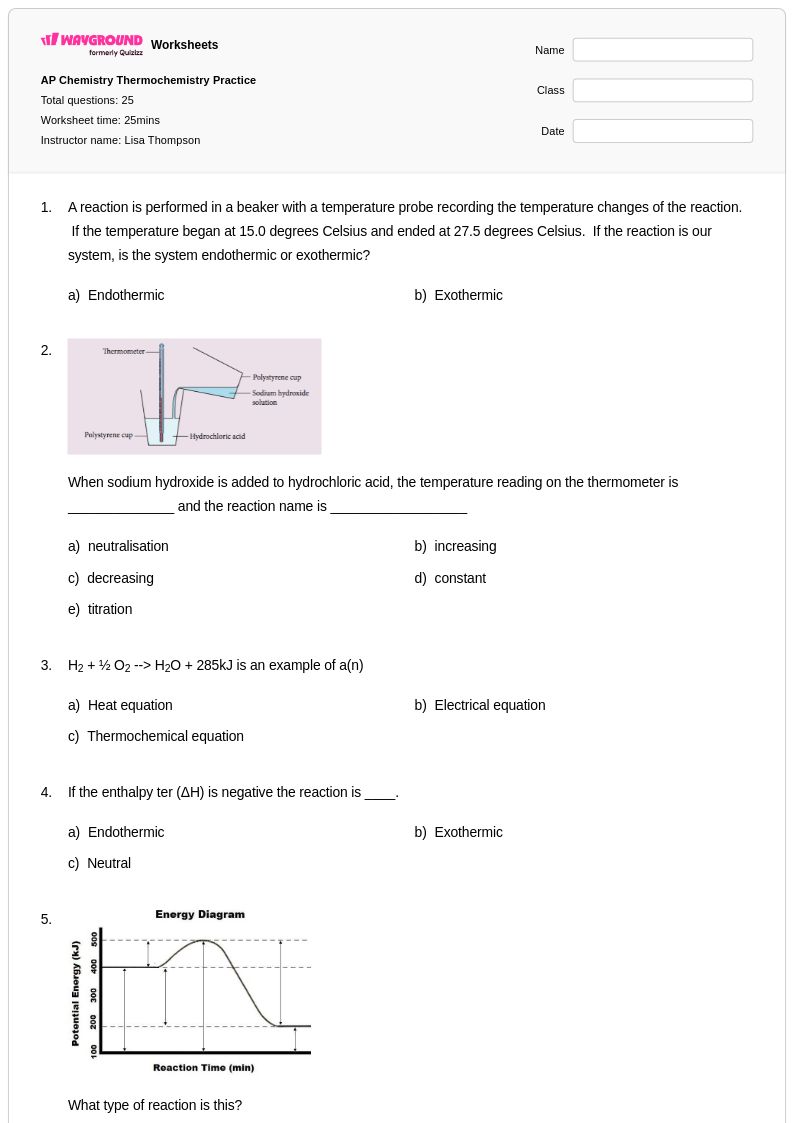
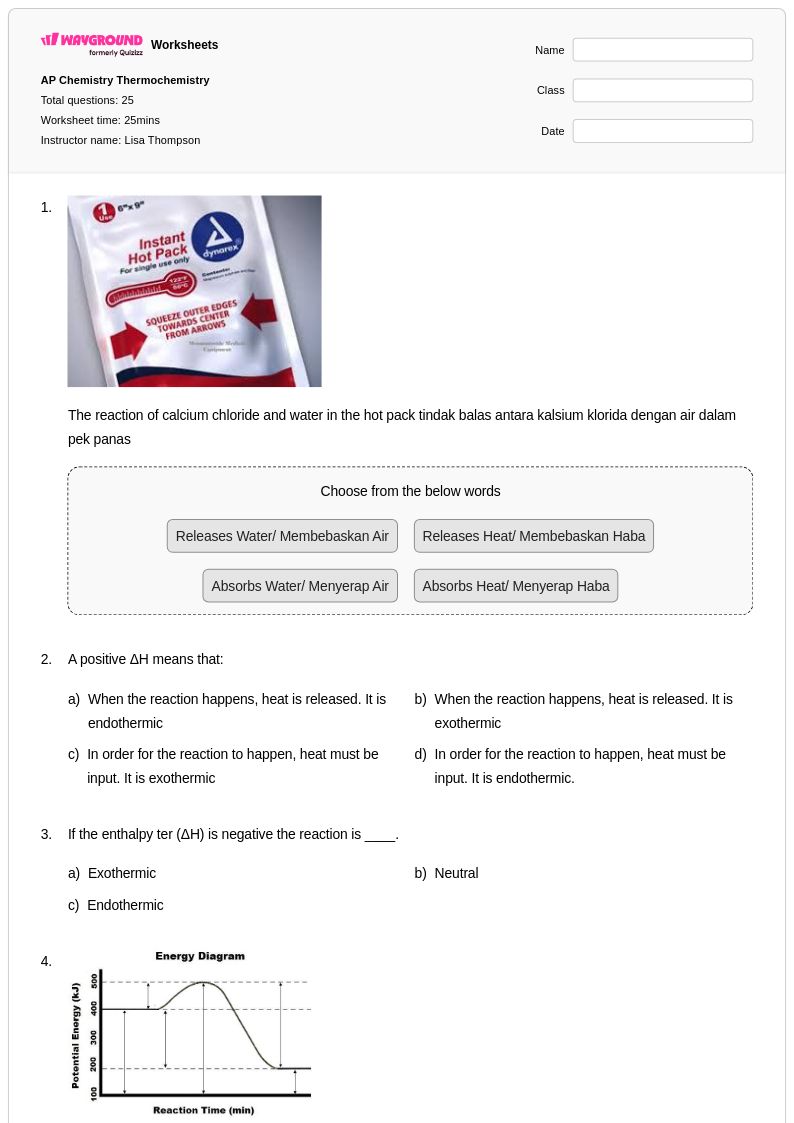
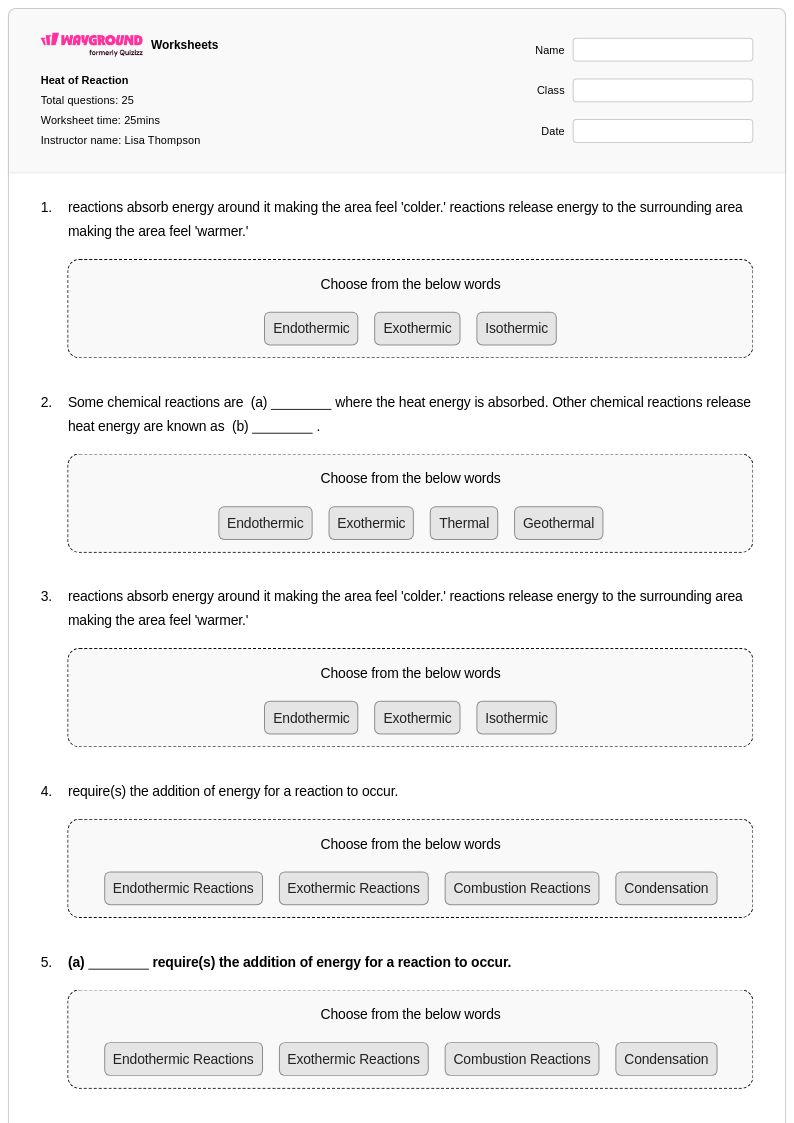
Class 10 calorimetry worksheets available through Wayground (formerly Quizizz) provide comprehensive practice with heat transfer calculations, specific heat capacity problems, and thermal energy measurements that form the foundation of thermochemistry studies. These expertly designed resources strengthen students' abilities to analyze heat flow in chemical reactions, calculate energy changes using calorimetry data, and apply the principles of conservation of energy to real-world scenarios. Each worksheet collection includes detailed answer keys and step-by-step solutions that guide students through complex problem-solving processes, from basic temperature change calculations to advanced bomb calorimetry interpretations. The free printables offer extensive practice problems covering coffee cup calorimeters, constant pressure calorimetry, and the mathematical relationships between mass, specific heat, and temperature changes that are essential for mastering this challenging chemistry concept.
Wayground (formerly Quizizz) supports chemistry educators with millions of teacher-created calorimetry resources that can be easily searched and filtered by specific learning objectives, problem difficulty, and curriculum standards alignment. The platform's differentiation tools allow teachers to customize worksheets for varying skill levels, providing additional scaffolding for students struggling with heat capacity calculations while offering enrichment problems involving enthalpy changes and thermodynamic principles for advanced learners. These flexible resources are available in both printable pdf formats for traditional classroom use and digital formats for interactive online practice, making lesson planning more efficient and enabling targeted remediation of specific calorimetry concepts. Teachers can seamlessly integrate these materials into their thermochemistry units, using the diverse problem sets for initial skill practice, formative assessment, and comprehensive review of heat measurement techniques essential for Class 10 chemistry success.
FAQs
How do I teach calorimetry to high school chemistry students?
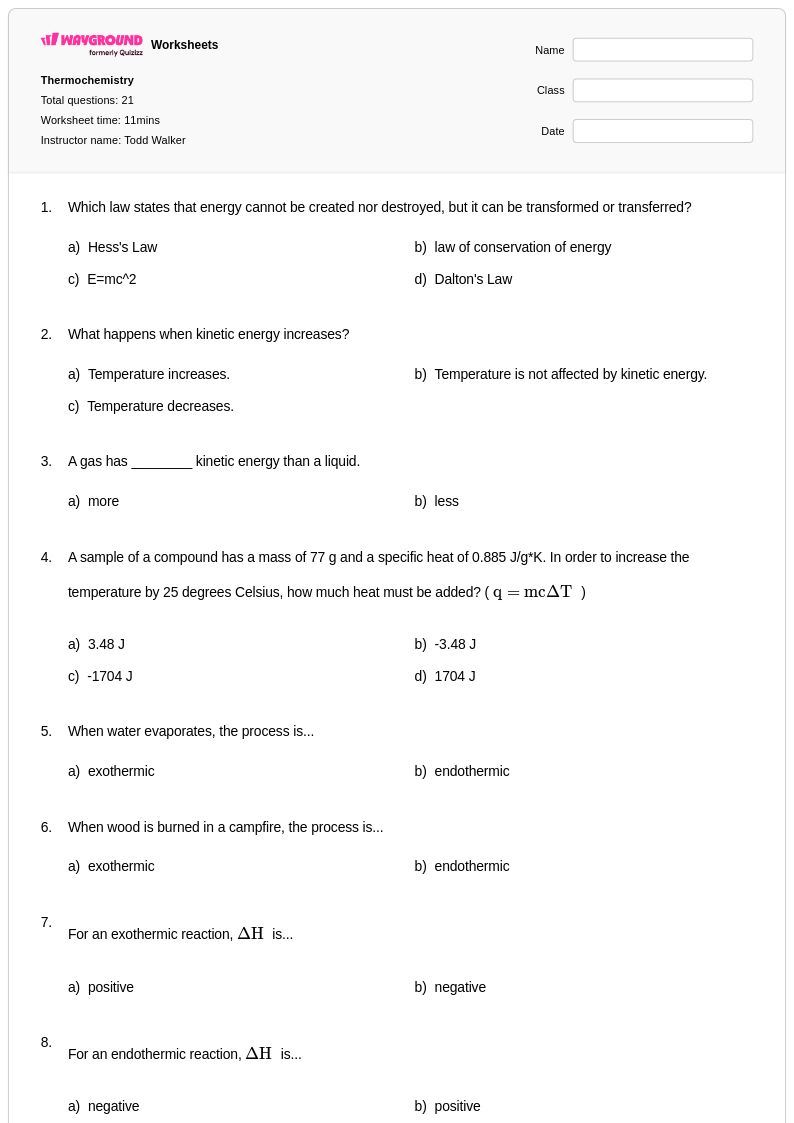
Begin by grounding students in the concept of heat as energy transfer, distinguishing it from temperature before introducing the equation q = mcΔT. Use a simple coffee cup calorimeter lab to make the math concrete before moving to bomb calorimetry and enthalpy calculations. Connecting each equation to a physical event, such as dissolving a salt in water and measuring the temperature change, helps students build intuition rather than just memorizing formulas. From there, scaffolded problem sets that gradually increase in complexity keep students building on prior understanding without losing the conceptual thread.
What practice problems help students get better at calorimetry calculations?
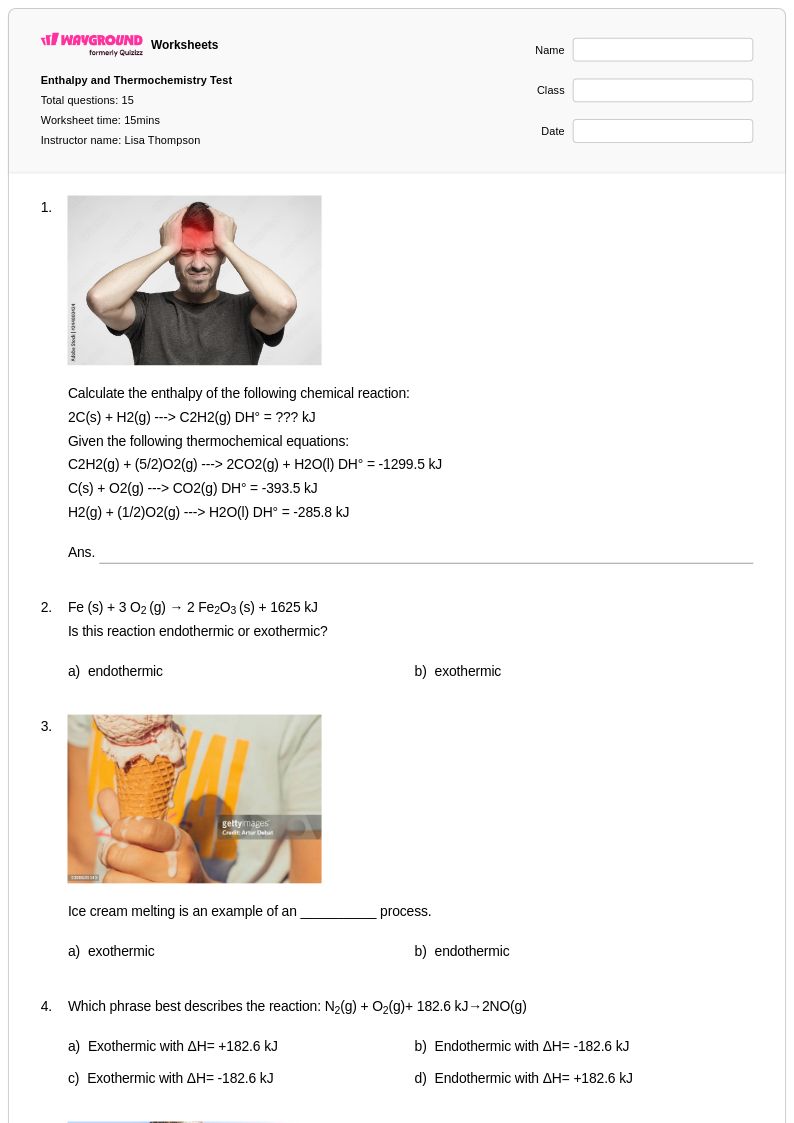
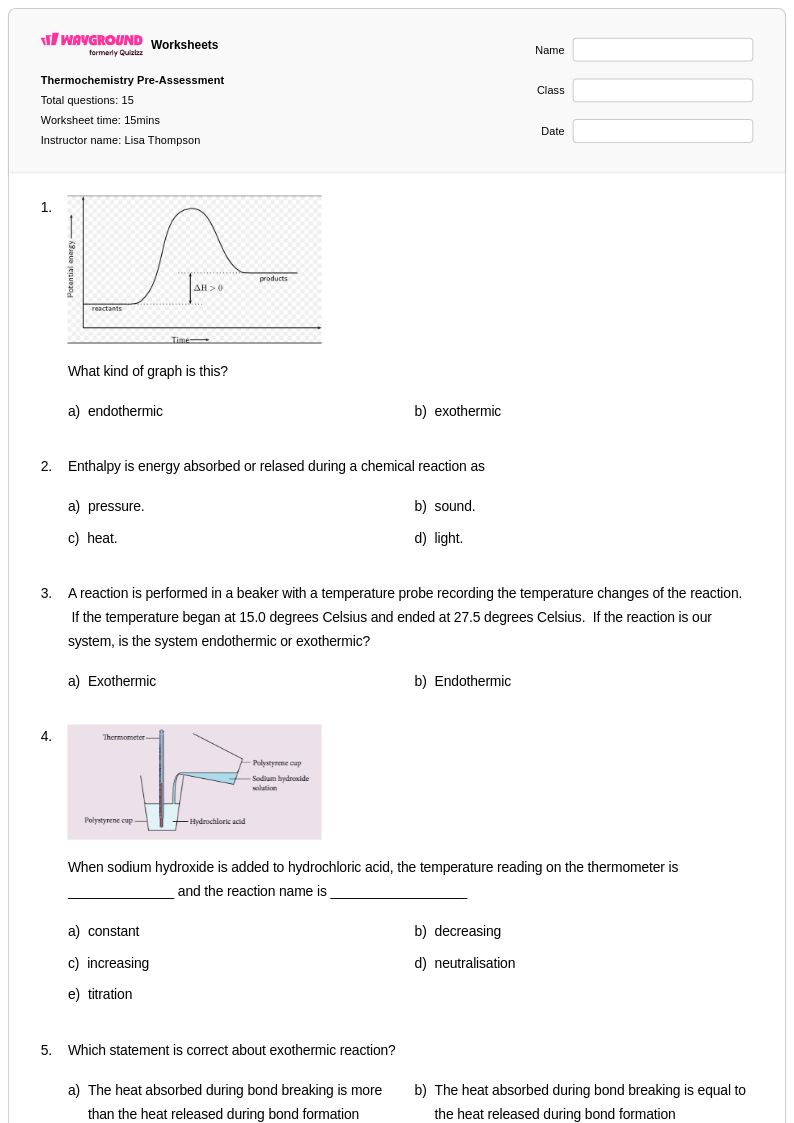
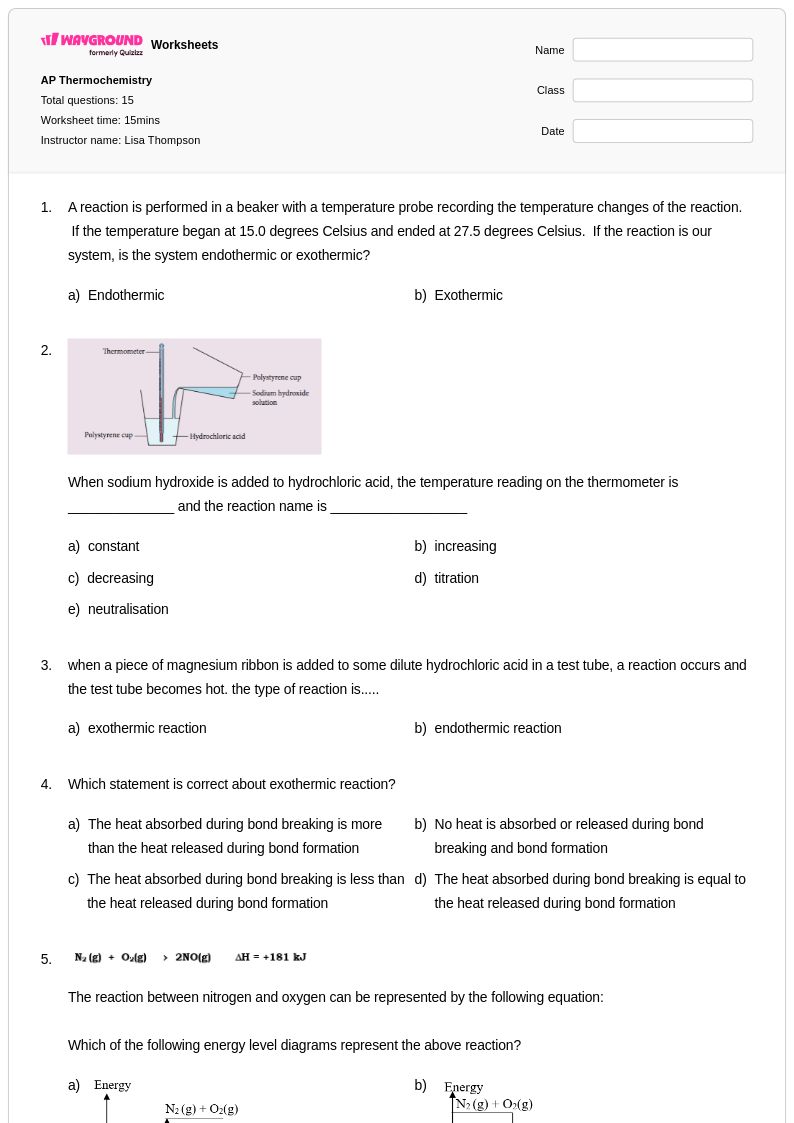
The most effective calorimetry practice problems move students through a progression: first calculating heat gained or lost using q = mcΔT, then applying conservation of energy to two-substance mixing problems, and finally working with enthalpy and Hess's Law. Problems that require students to interpret temperature-time graphs or identify the heat exchange between a calorimeter and its surroundings are especially valuable because they test conceptual understanding alongside calculation skills. Including problems with unit conversion embedded in the data forces students to slow down and track their reasoning carefully.
What mistakes do students commonly make in calorimetry problems?
The most frequent error is sign confusion: students misapply the negative sign when writing that heat lost by one substance equals heat gained by another, leading to inverted answers. A second common mistake is conflating heat and temperature, causing students to skip mass or specific heat in their setup. Students also frequently misidentify which substance is gaining heat versus losing it in calorimeter problems, especially when two solutions are mixed. Targeted practice problems that force students to explicitly label q_gained and q_lost before solving can interrupt these patterns early.
How do I use Wayground's calorimetry worksheets in my classroom?
Wayground's calorimetry worksheets are available as free printable PDFs, making them straightforward to distribute in a traditional lab or classroom setting, and in digital formats for technology-integrated environments where students work on devices. Teachers can also host the worksheet as a quiz directly on Wayground, enabling automatic grading and immediate feedback. Each worksheet includes a detailed answer key, so the resources work equally well for guided practice, independent work, or review sessions without requiring additional prep from the teacher.
How can I support struggling students during calorimetry problem sets?
For students who find multi-step calorimetry problems overwhelming, reducing the problem to labeled parts, identifying known variables, the target unknown, and the equation before any calculation, builds procedural confidence. On Wayground, teachers can apply accommodations such as extended time and Read Aloud for individual students, ensuring that language or processing demands do not obscure a student's actual understanding of the chemistry. Reducing answer choices is another option for students who need to lower cognitive load while still engaging with the core calculation.
How do I assess whether students truly understand calorimetry versus just plugging numbers into formulas?
Genuine understanding shows when students can correctly assign signs to heat values, explain why q_system = -q_surroundings, and identify errors in a worked example rather than just solve clean problems. Assessment items that present a flawed calorimetry calculation and ask students to locate the mistake are particularly diagnostic. Temperature-time graph interpretation questions also reveal whether students understand what is physically happening during heating and cooling curves versus whether they are pattern-matching to an equation.