Free Printable Animal Behavior Worksheets for Class 6
Explore Wayground's free Class 6 animal behavior worksheets and printables that help students understand how animals interact, communicate, and survive through engaging practice problems with complete answer keys.
Explore printable Animal Behavior worksheets for Class 6
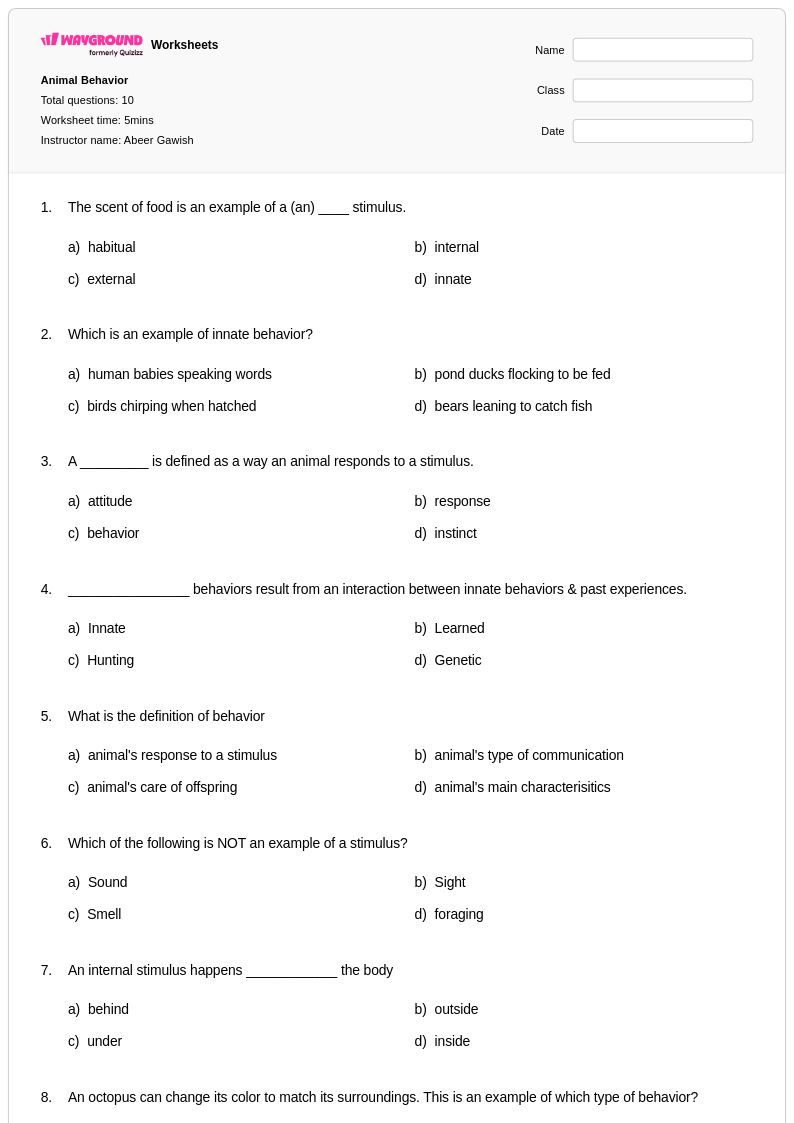
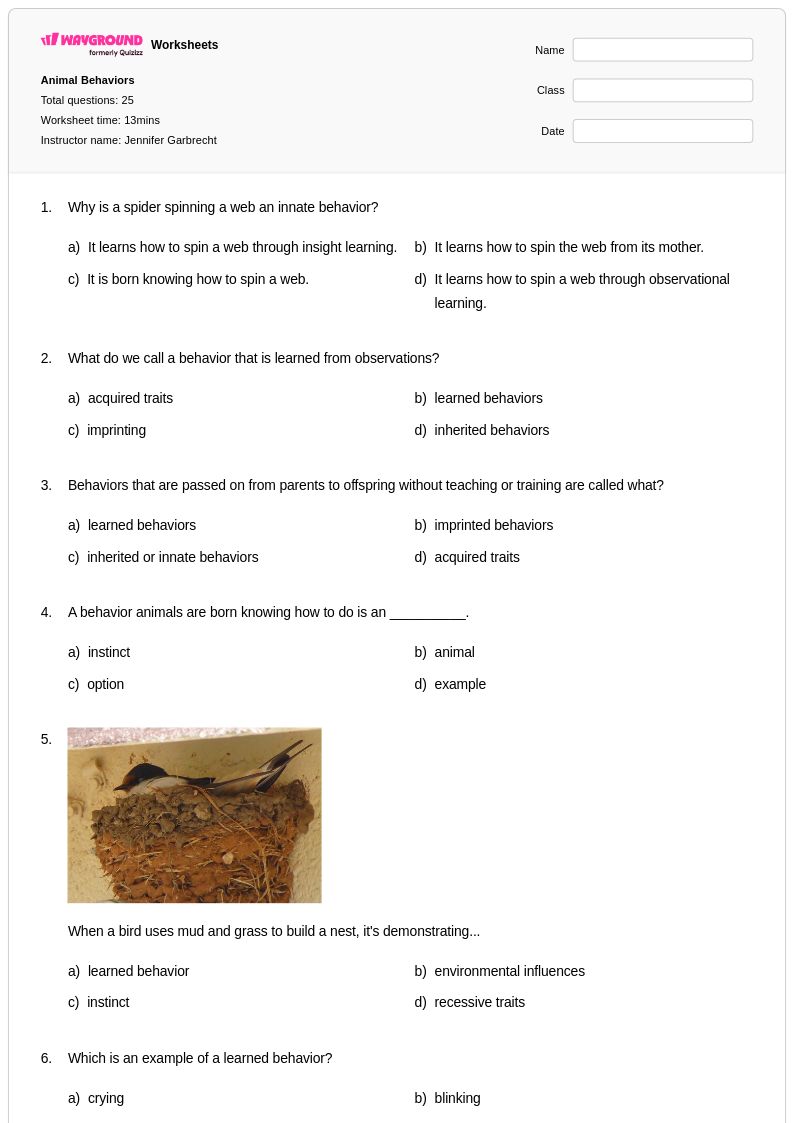
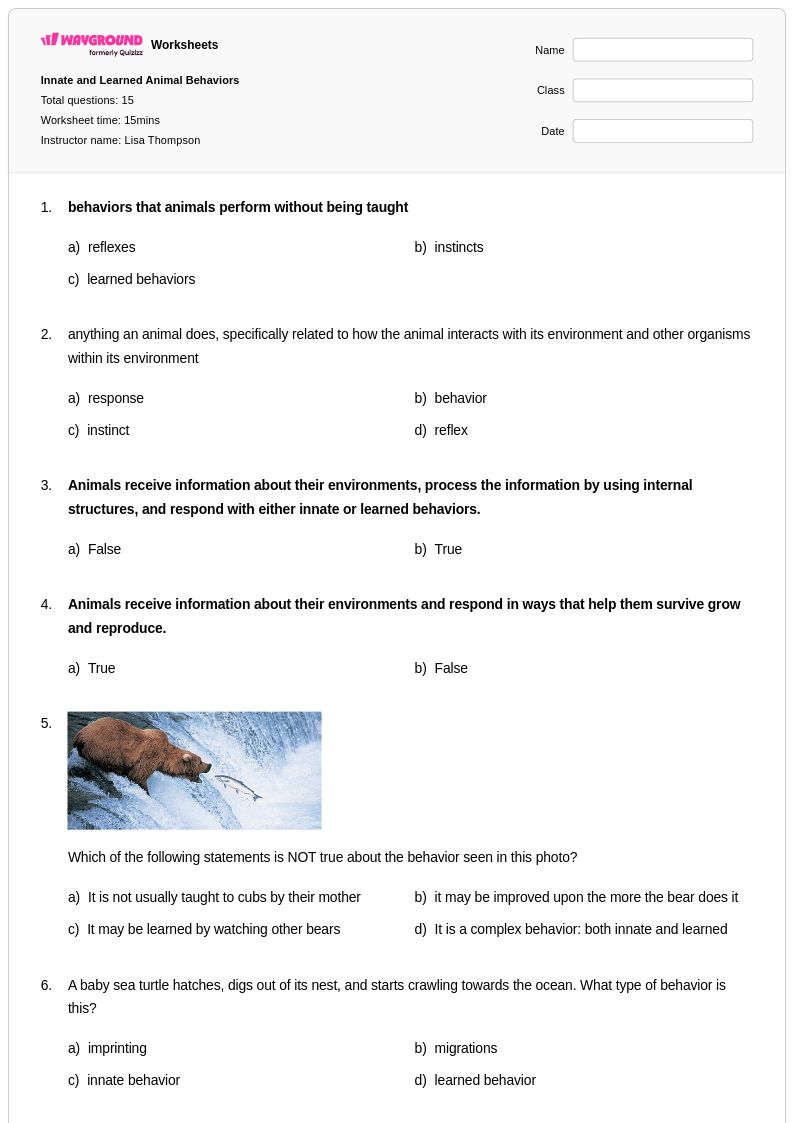
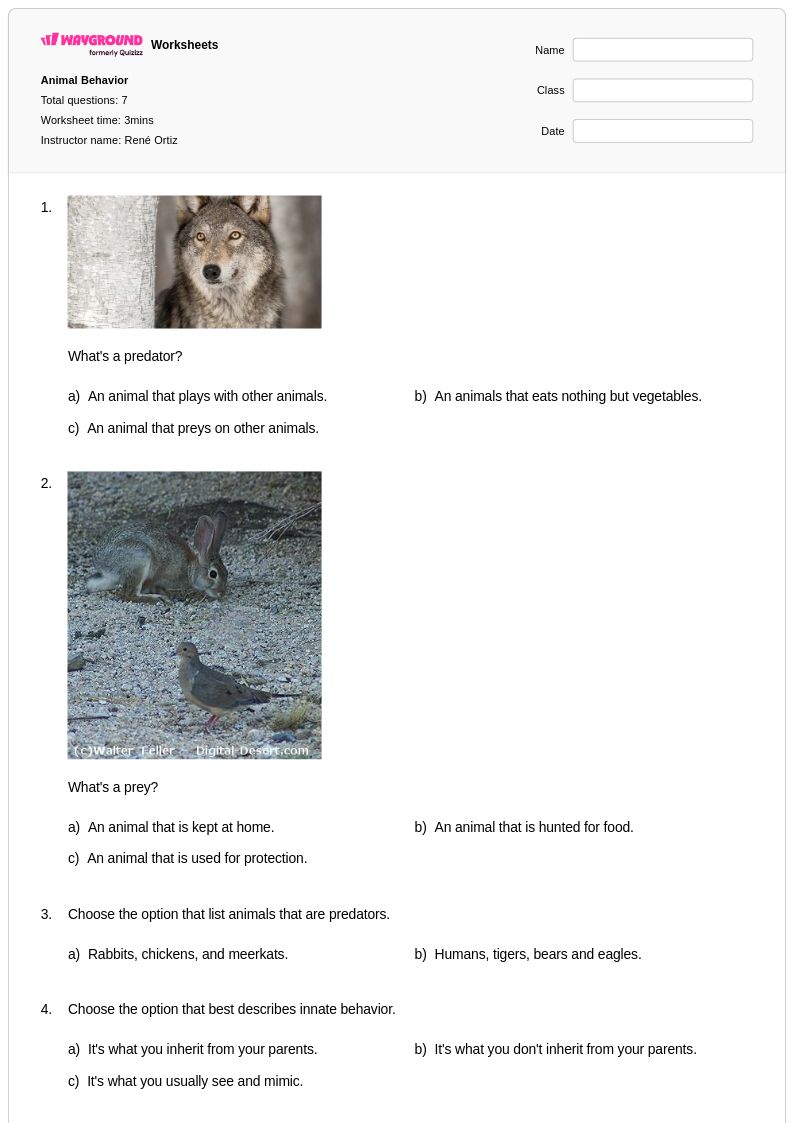
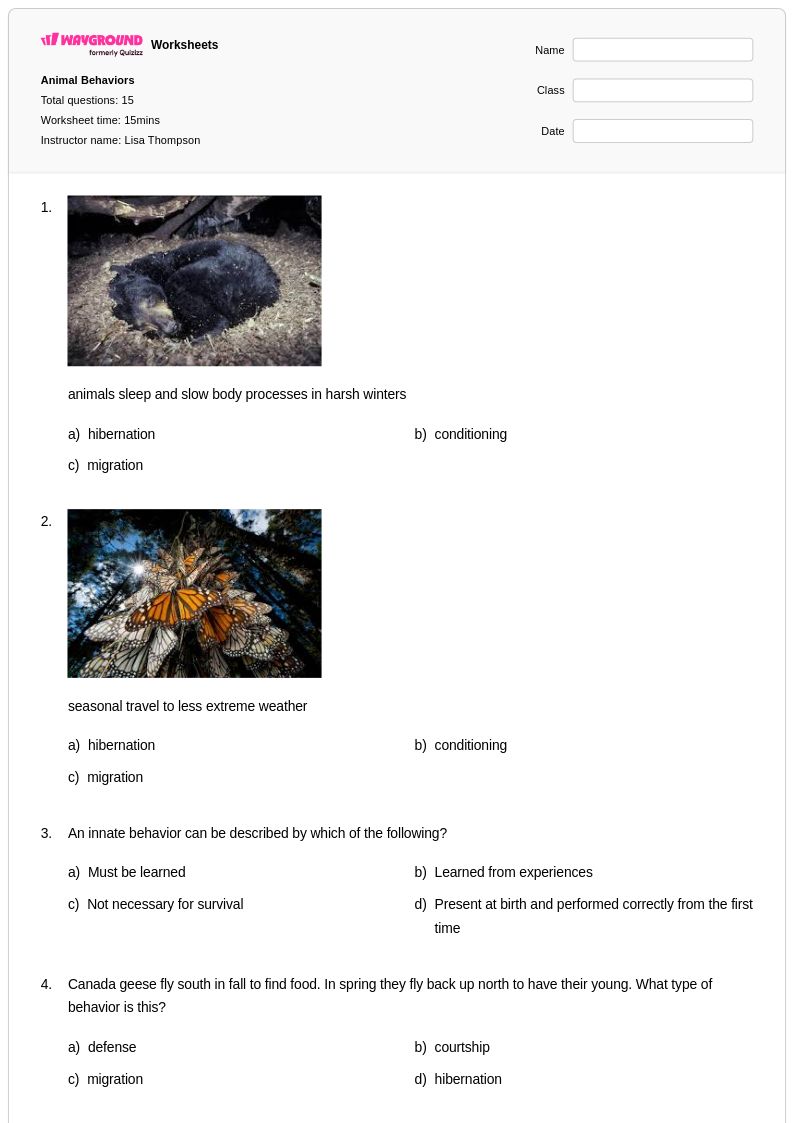
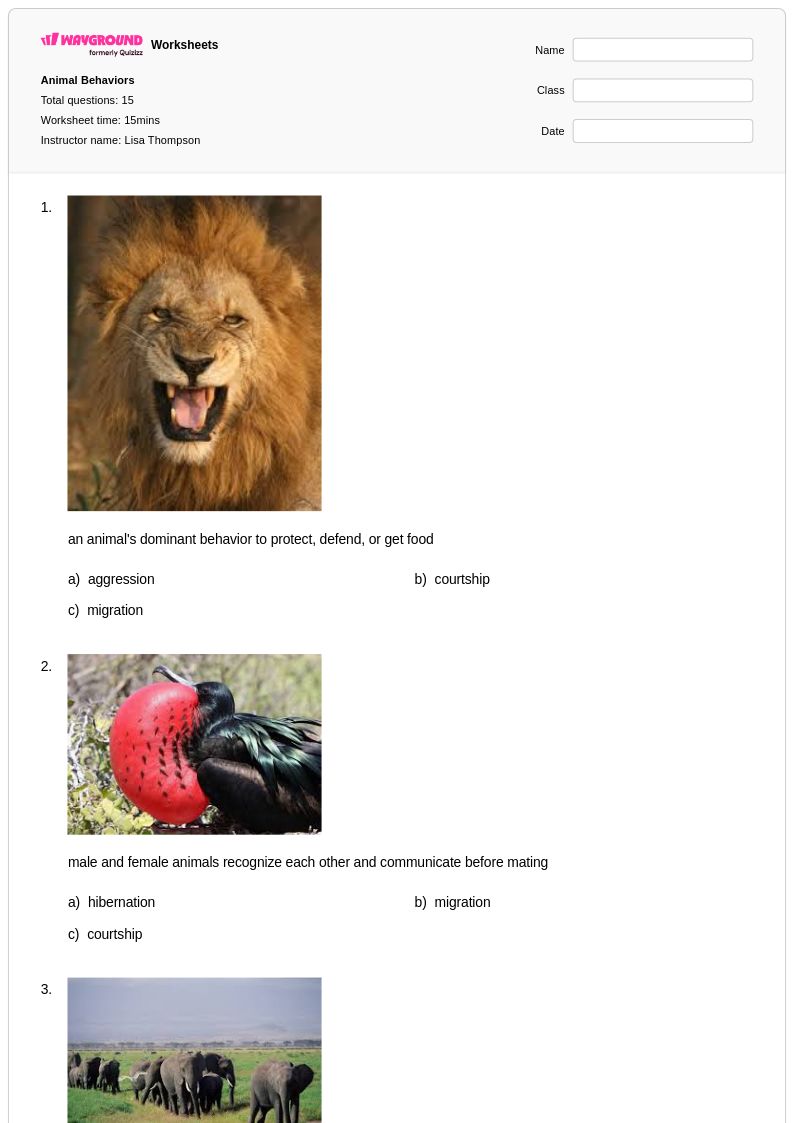
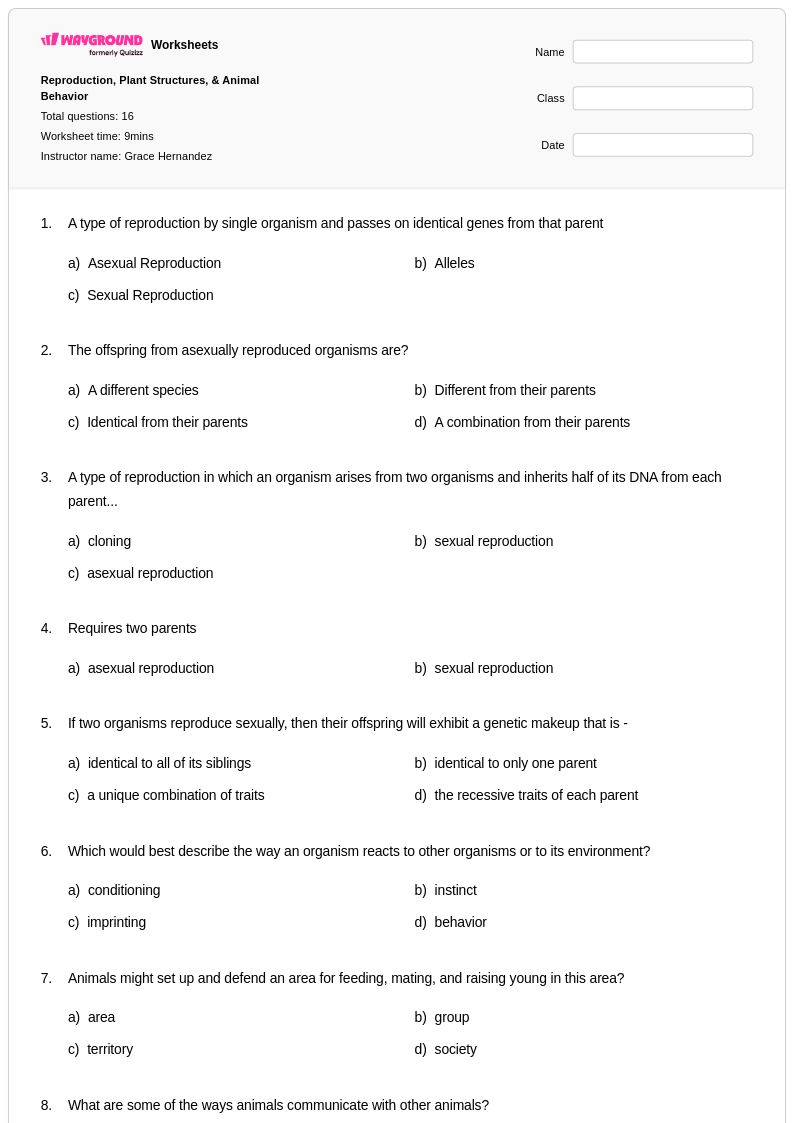
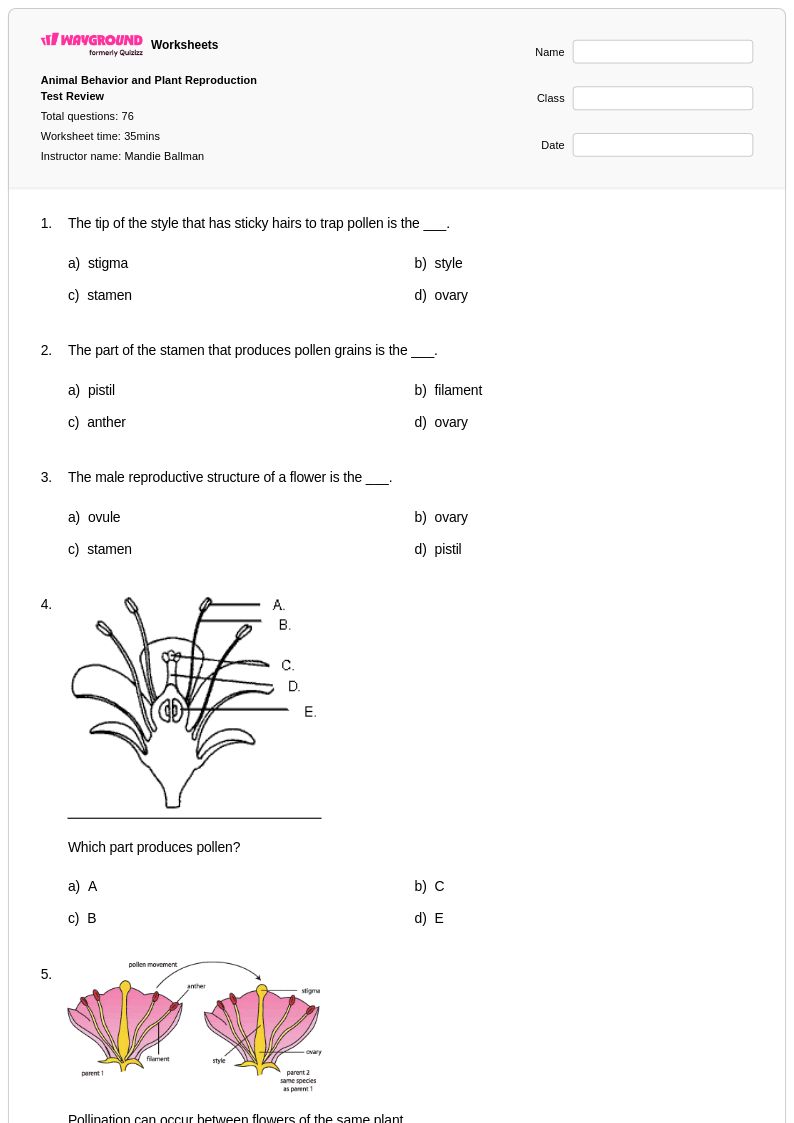
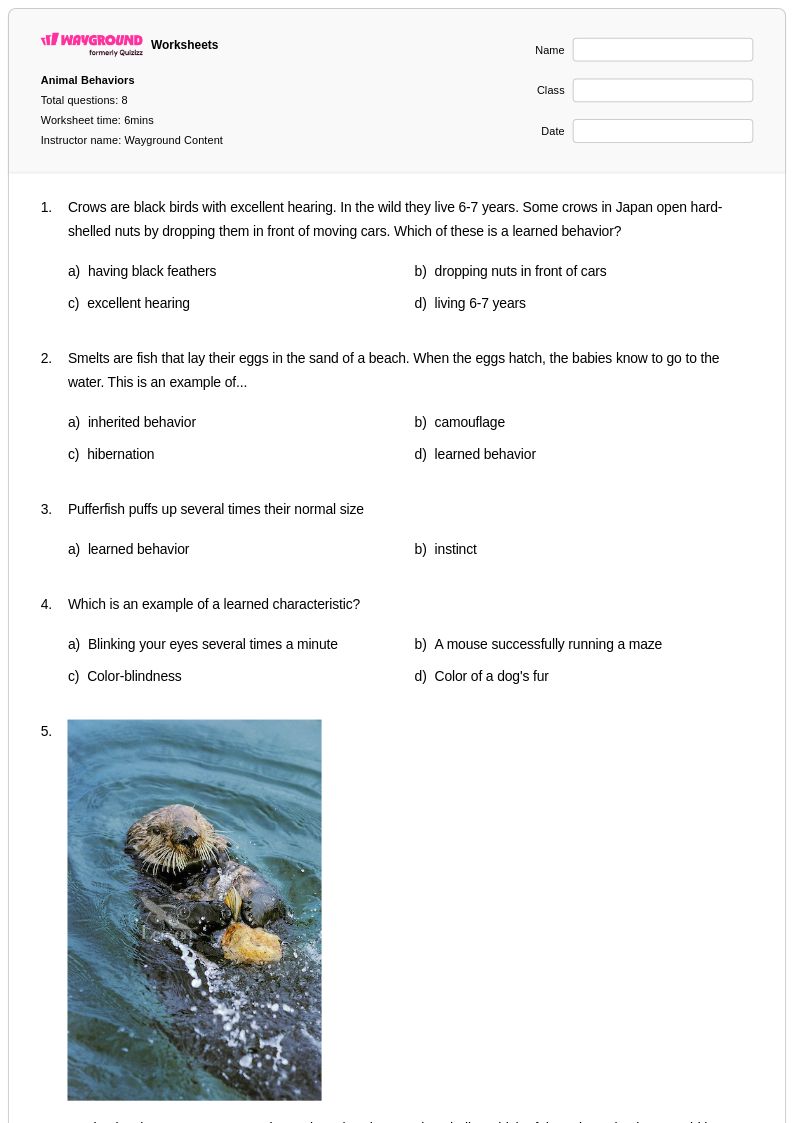
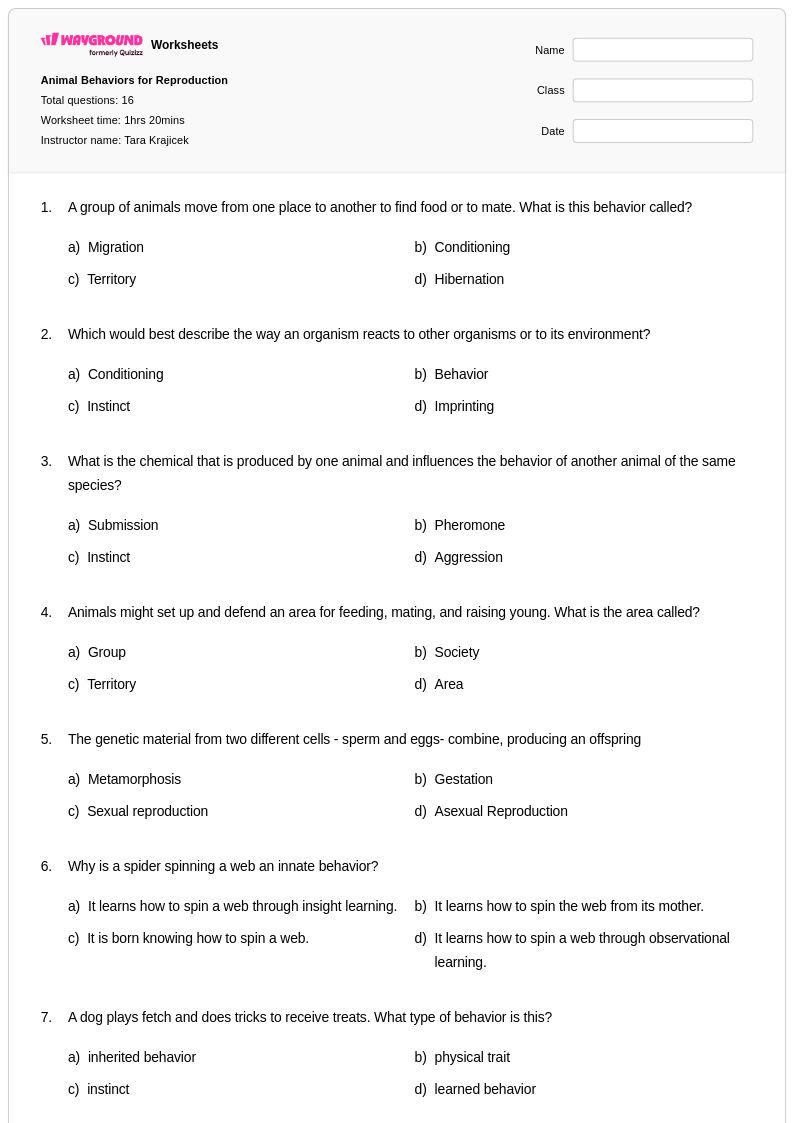
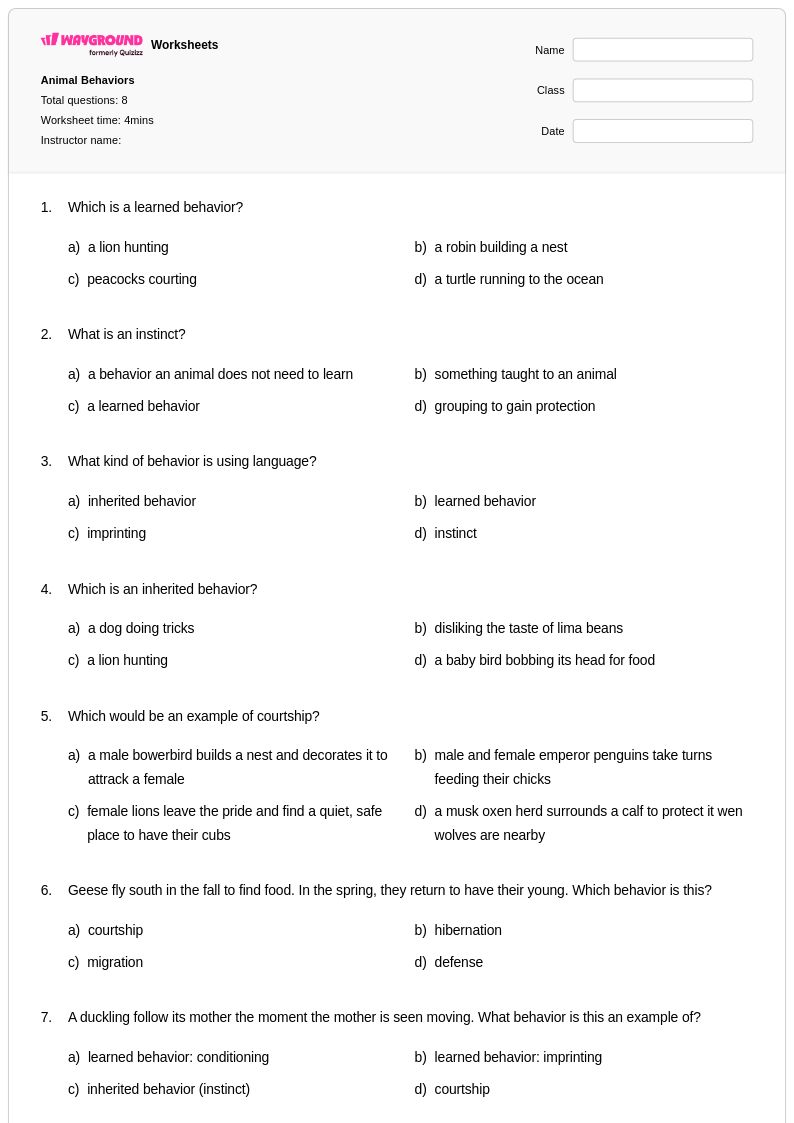
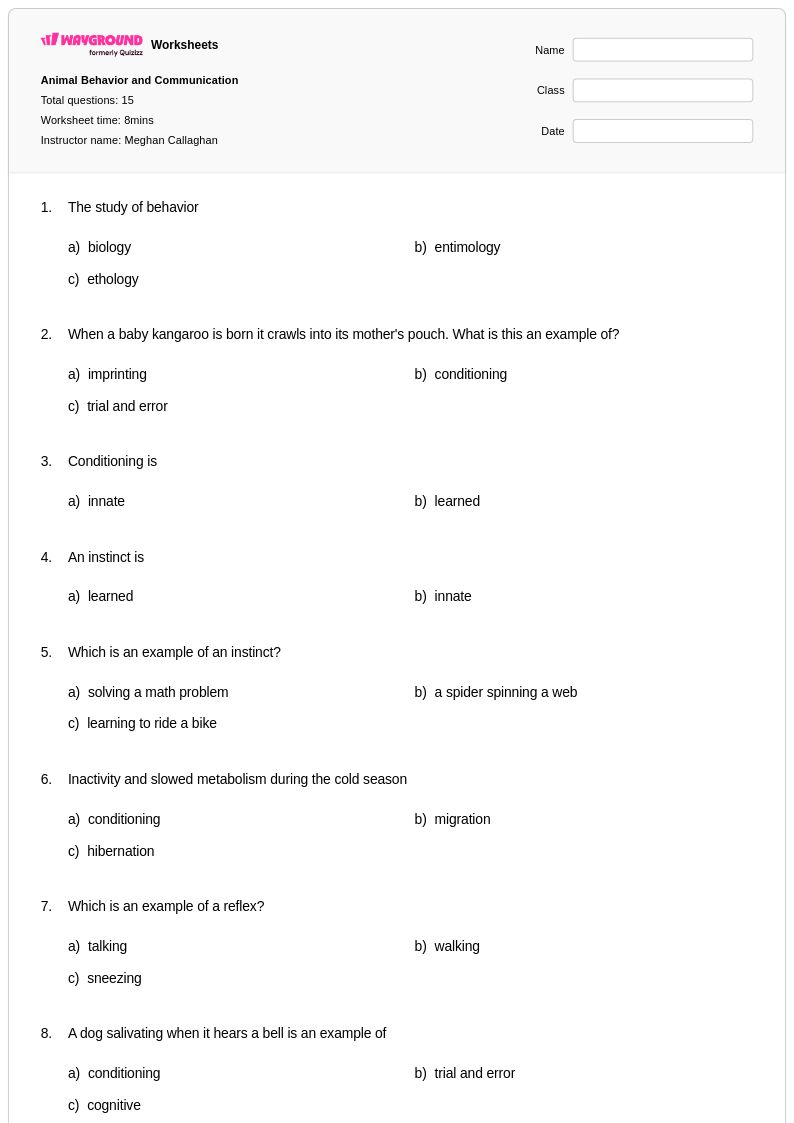
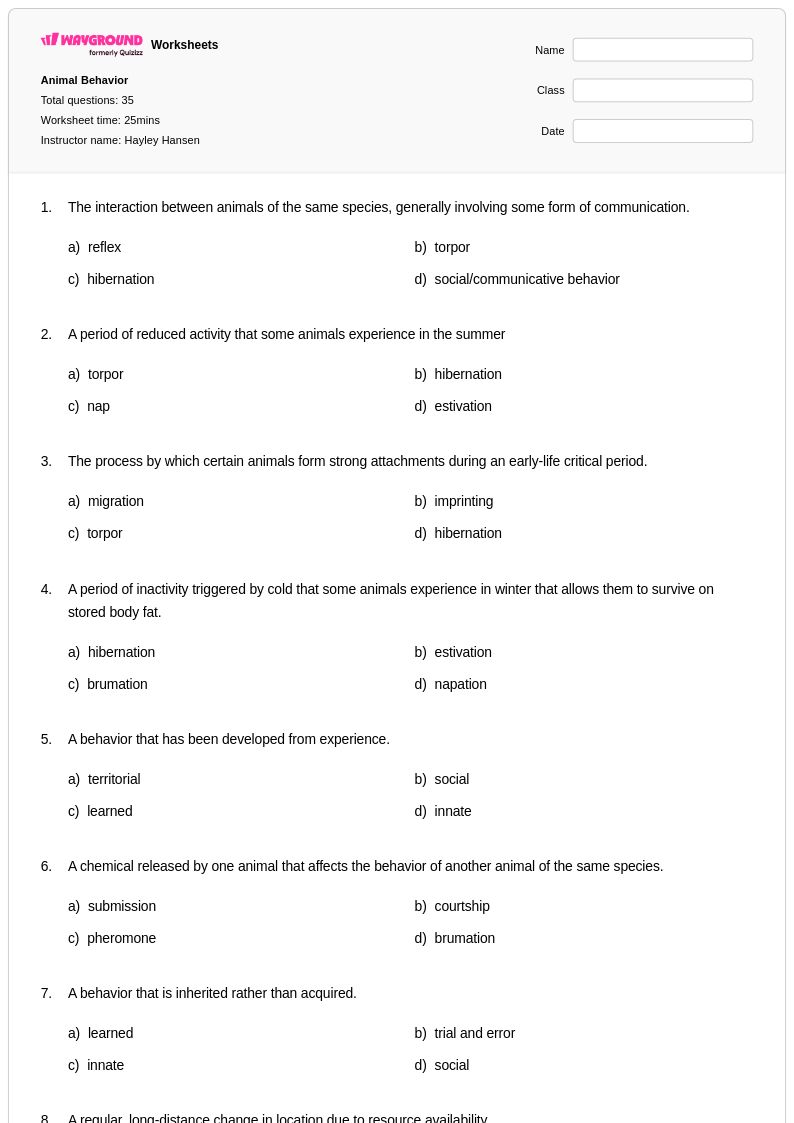
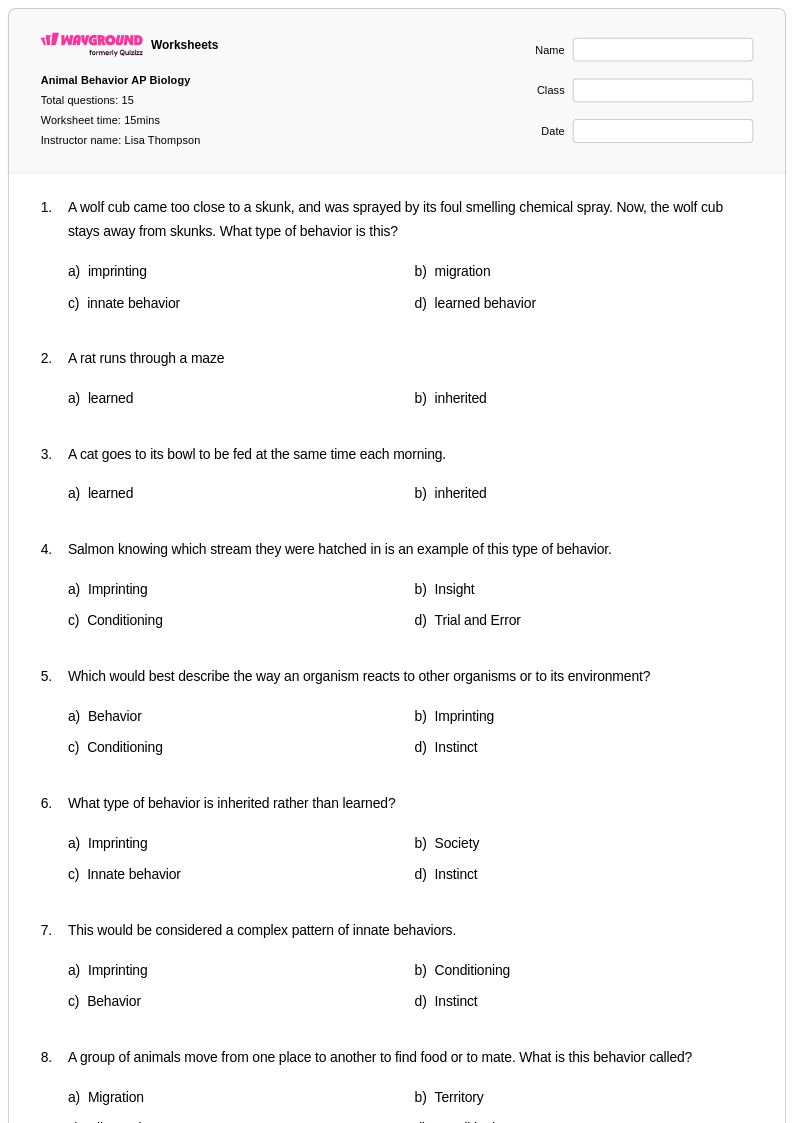
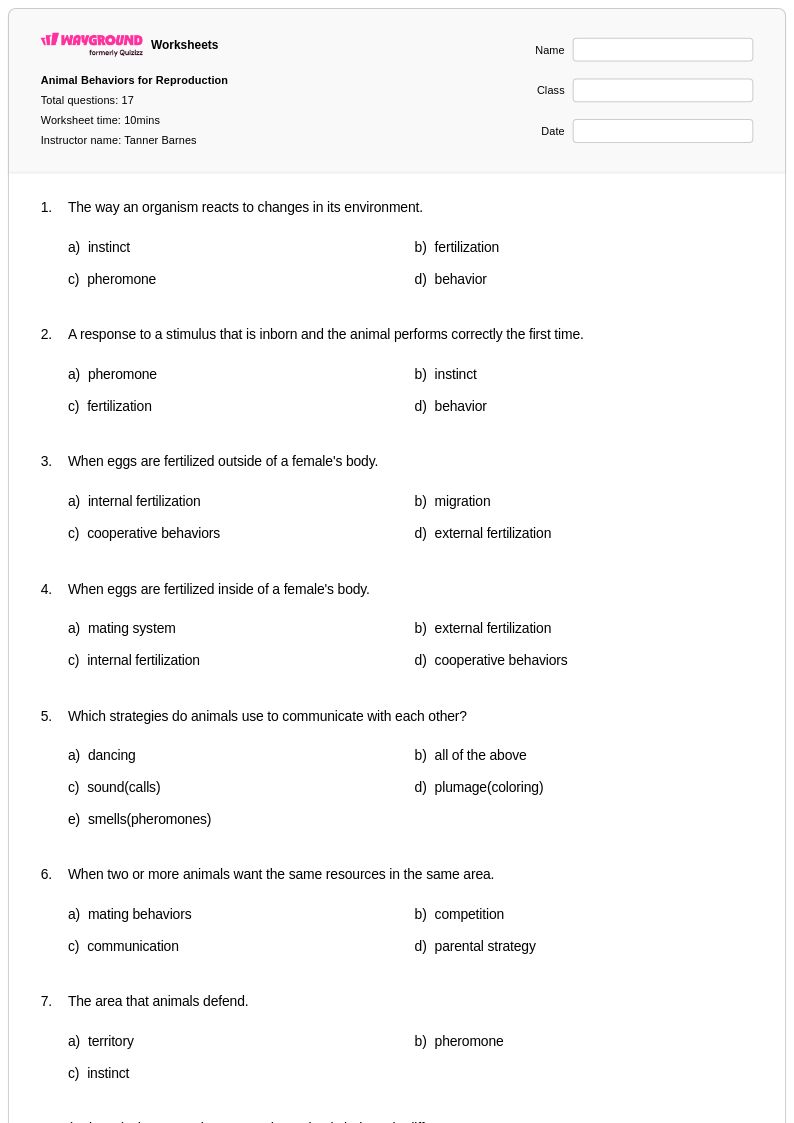
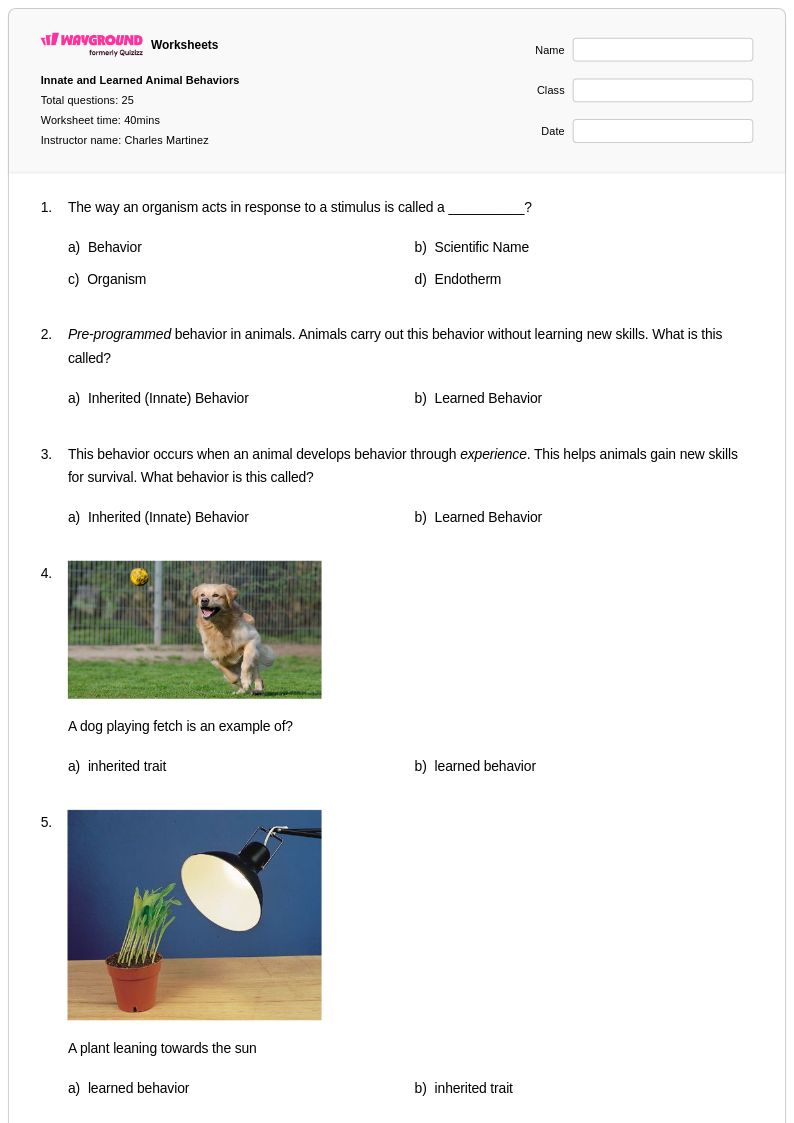
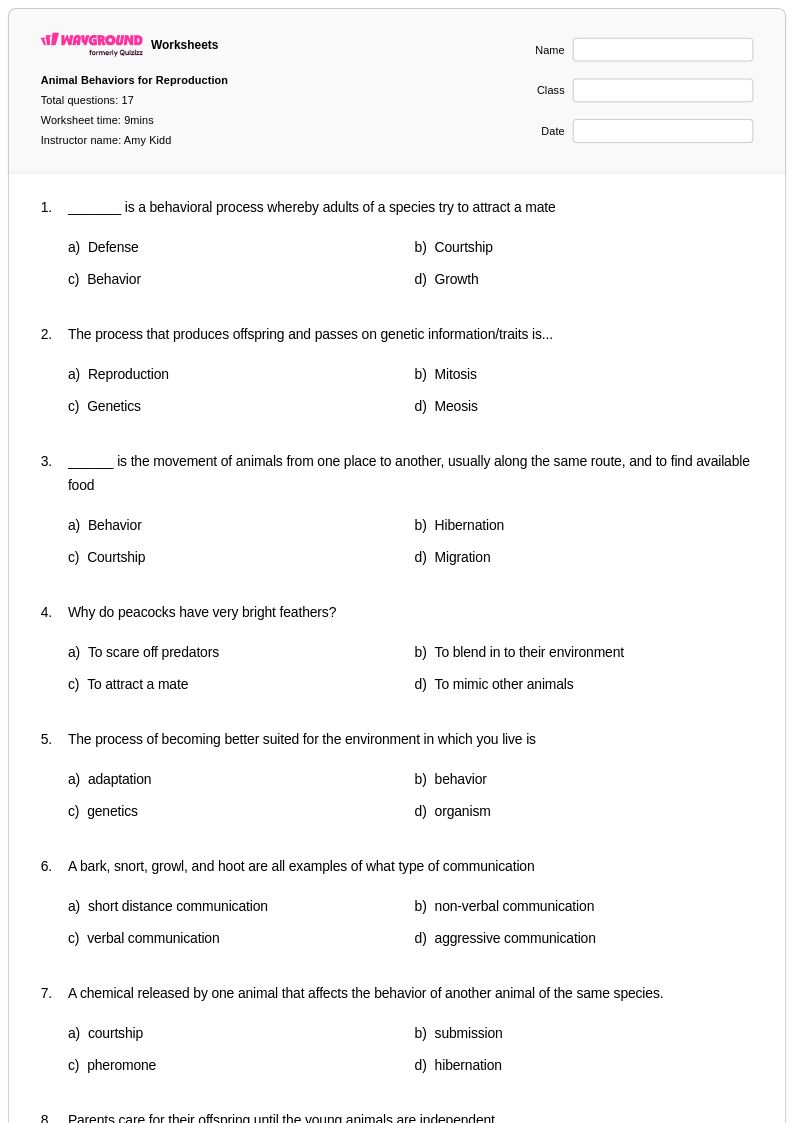
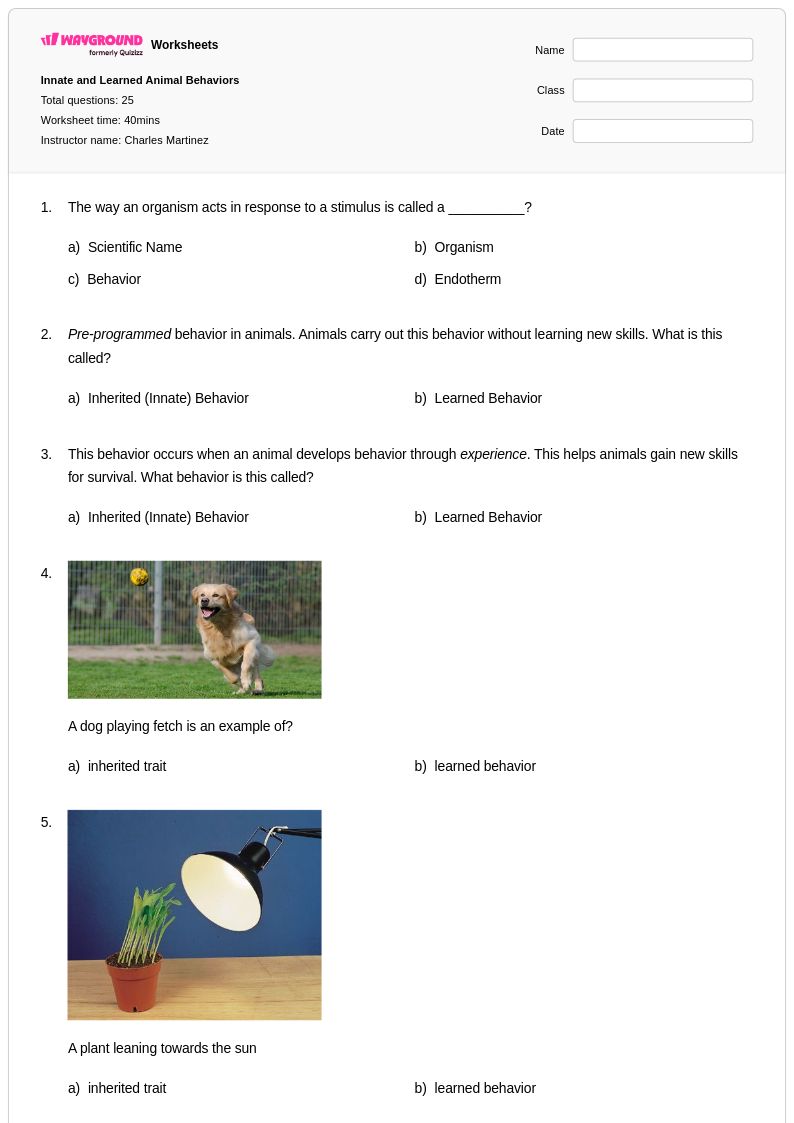
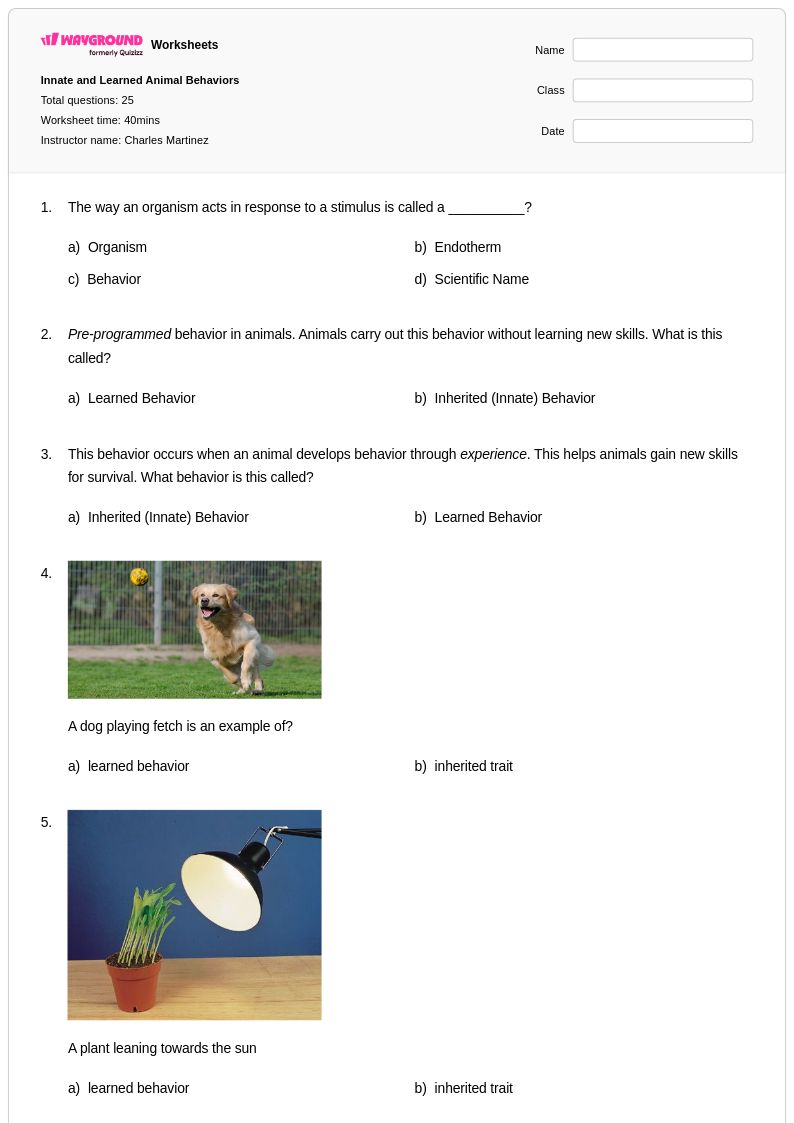
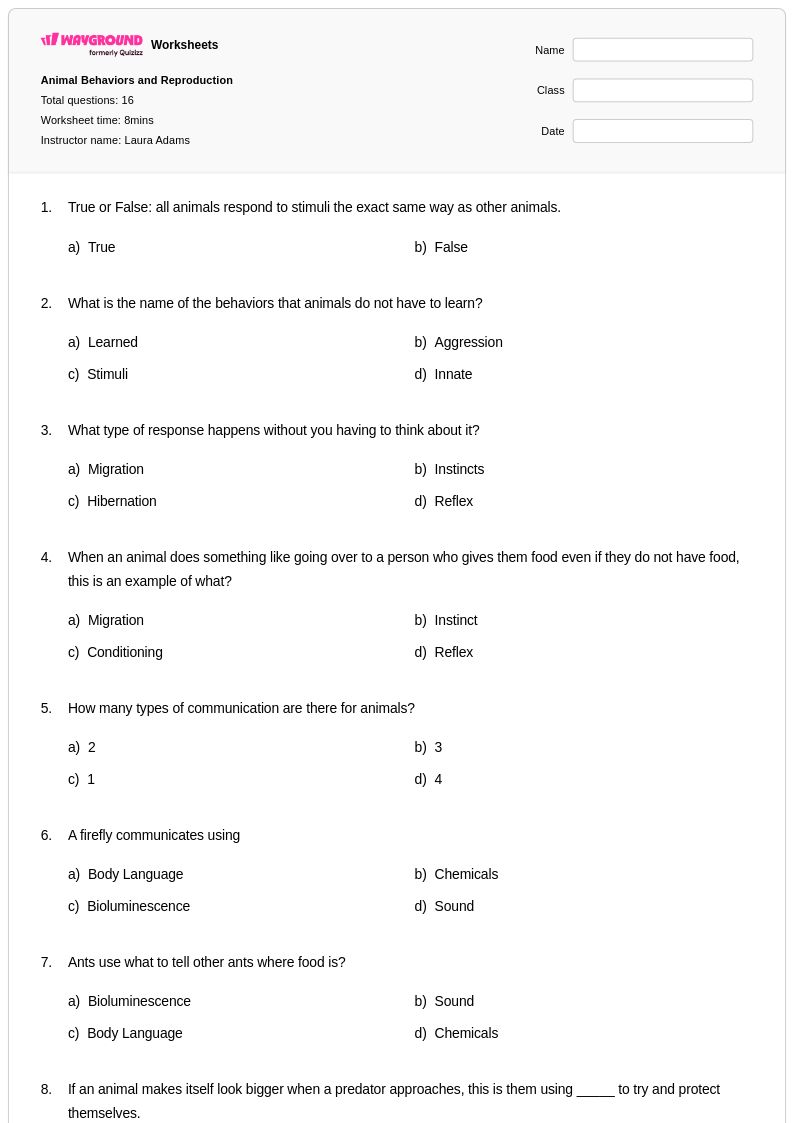
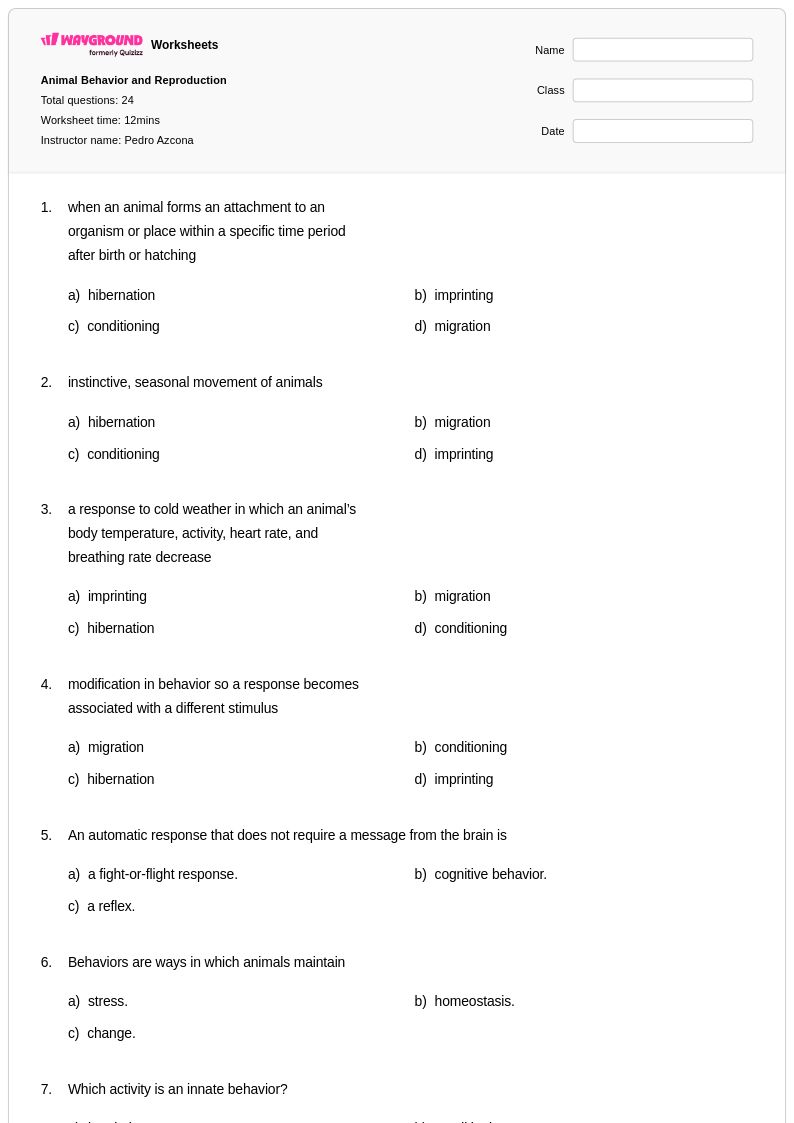
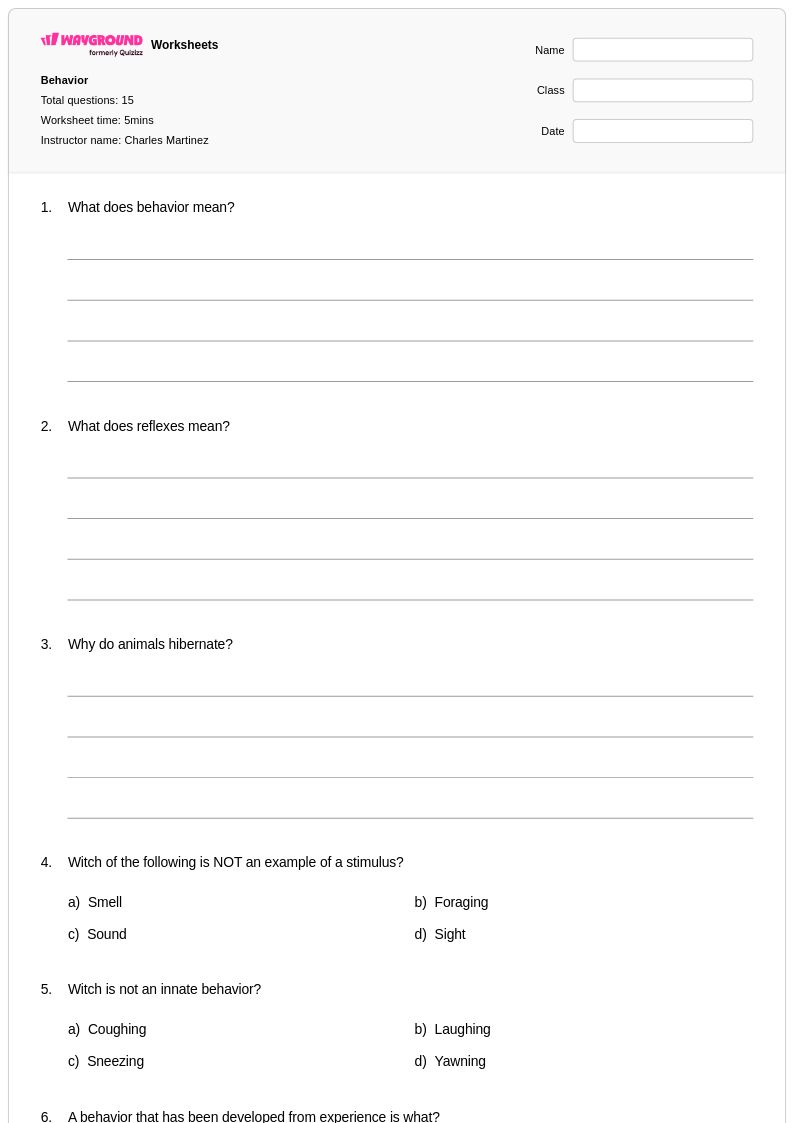
Animal behavior worksheets for Class 6 students available through Wayground (formerly Quizizz) provide comprehensive resources for exploring how animals interact with their environment and respond to various stimuli. These carefully designed worksheets strengthen critical observation skills, scientific reasoning, and understanding of behavioral patterns across different species. Students engage with practice problems that cover instinctive behaviors, learned behaviors, migration patterns, communication methods, and survival strategies. Each worksheet includes detailed answer keys to support independent learning and self-assessment, while printable pdf formats ensure easy classroom distribution. The free resources encompass diverse activities from analyzing animal adaptation case studies to interpreting behavioral data, helping sixth graders develop scientific literacy and analytical thinking skills essential for biological sciences.
Wayground (formerly Quizizz) empowers teachers with access to millions of teacher-created animal behavior resources specifically designed for Class 6 science instruction. The platform's robust search and filtering capabilities allow educators to quickly locate worksheets aligned with curriculum standards and specific learning objectives. Teachers can differentiate instruction by selecting from various complexity levels and customize content to meet individual student needs, whether for remediation of foundational concepts or enrichment activities for advanced learners. The flexible format options include both digital and printable pdf versions, enabling seamless integration into diverse classroom environments and teaching styles. These comprehensive tools streamline lesson planning while providing targeted skill practice opportunities that reinforce understanding of animal behavior concepts through structured, standards-aligned activities.
FAQs
How do I teach animal behavior in a science class?
Teaching animal behavior effectively starts with distinguishing between innate (instinctive) behaviors and learned behaviors, giving students a clear conceptual framework before exploring specific examples like imprinting, conditioning, or habituation. From there, case studies comparing behaviors across species help students connect individual actions to evolutionary advantages. Incorporating ethograms, where students observe and record behavioral sequences, builds scientific literacy alongside content knowledge.
What activities help students practice understanding animal behavior?
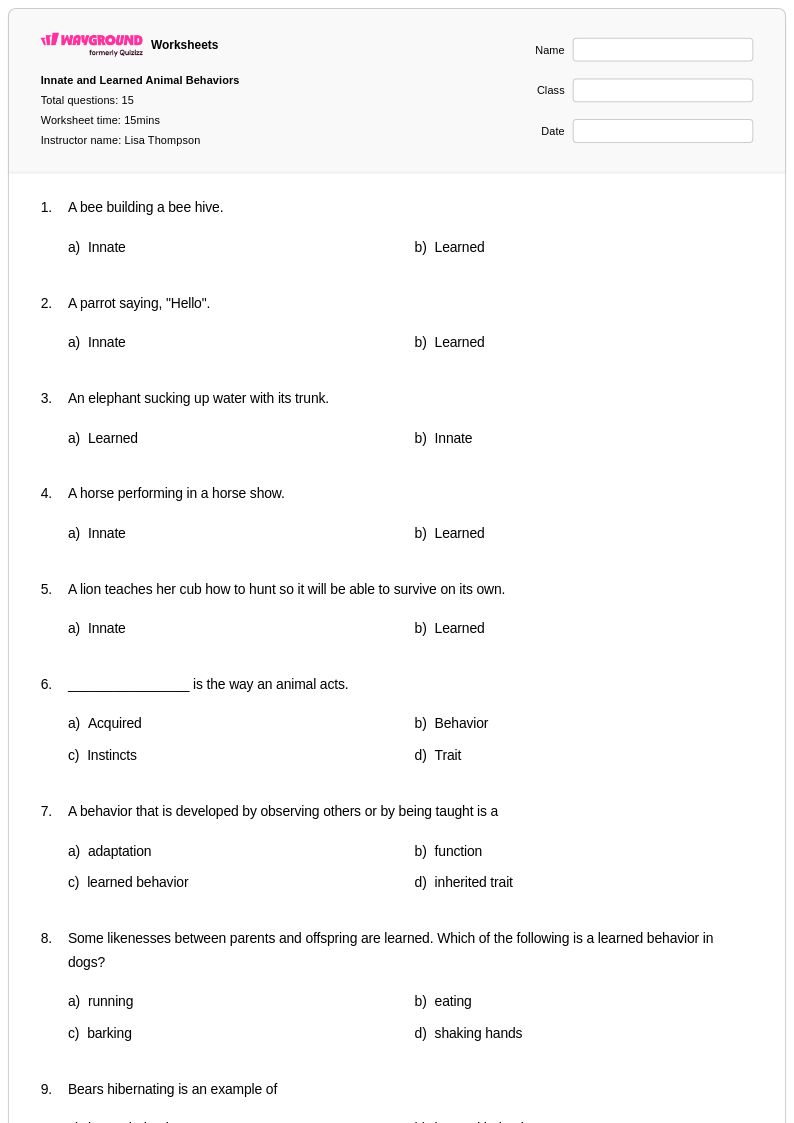
Worksheets that ask students to classify behaviors as innate or learned, analyze ethogram data, or evaluate how specific behaviors support survival and reproduction are highly effective for reinforcing core concepts. Practice problems that present real or simulated behavioral scenarios challenge students to apply their understanding rather than simply recall definitions. These exercises build the analytical skills needed to interpret animal behavior through an evolutionary lens.
What misconceptions do students commonly have about animal behavior?
One of the most common misconceptions is that all animal behaviors are either purely instinctive or purely learned, when in reality most behaviors involve an interaction between genetics and environment. Students also frequently confuse communication with language, assuming animals communicate in ways that mirror human speech rather than through chemical signals, body posture, or sound patterns. Addressing these errors early prevents students from oversimplifying complex behavioral concepts.
How can I differentiate animal behavior lessons for students at different levels?
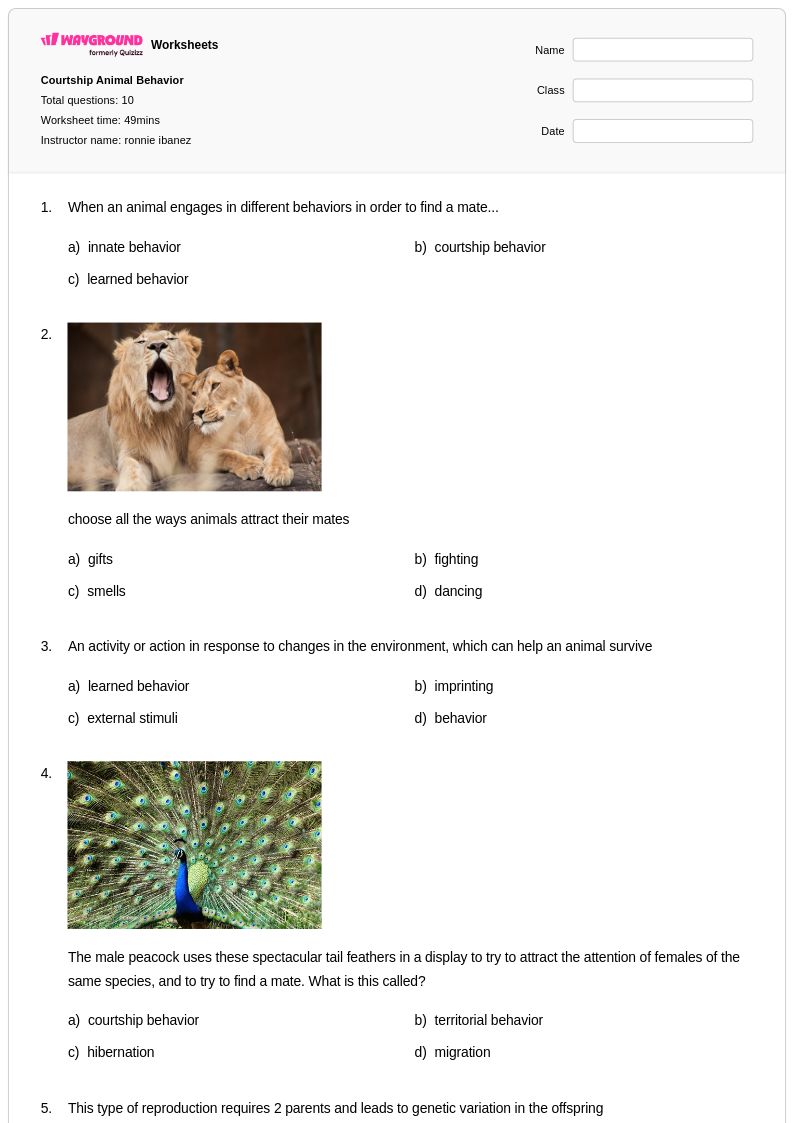
For struggling students, reducing the number of behavioral categories or providing labeled diagrams of ethograms can lower cognitive load while keeping content rigorous. Advanced students benefit from open-ended analysis tasks, such as comparing territorial or mating behaviors across multiple species and drawing evolutionary conclusions. On Wayground, teachers can apply accommodations like reduced answer choices or read-aloud support to individual students without disrupting the rest of the class.
How do I use Wayground's animal behavior worksheets in my classroom?
Wayground's animal behavior worksheets are available as printable PDFs for traditional classroom use and in digital formats for technology-integrated or remote learning environments, and teachers can also host them as a quiz directly on Wayground. Each worksheet includes a complete answer key, making them practical for independent practice, homework, or formative assessment. Teachers can search and filter resources by concept or standard to quickly find materials that match their current unit.
How do animal behavior worksheets support standards-aligned science instruction?
Animal behavior is a core component of life science standards that address how organisms respond to their environment and how behavioral traits contribute to survival and reproduction. Worksheets aligned to these benchmarks ensure that practice tasks connect directly to what students are expected to know and demonstrate. Using standards-aligned materials reduces planning time while keeping instruction focused on measurable learning outcomes.