Explore Wayground's free Class 6 cladogram worksheets and printables that help students master evolutionary relationships through engaging practice problems, complete with answer keys and downloadable PDFs.
Explore printable Cladogram worksheets for Class 6
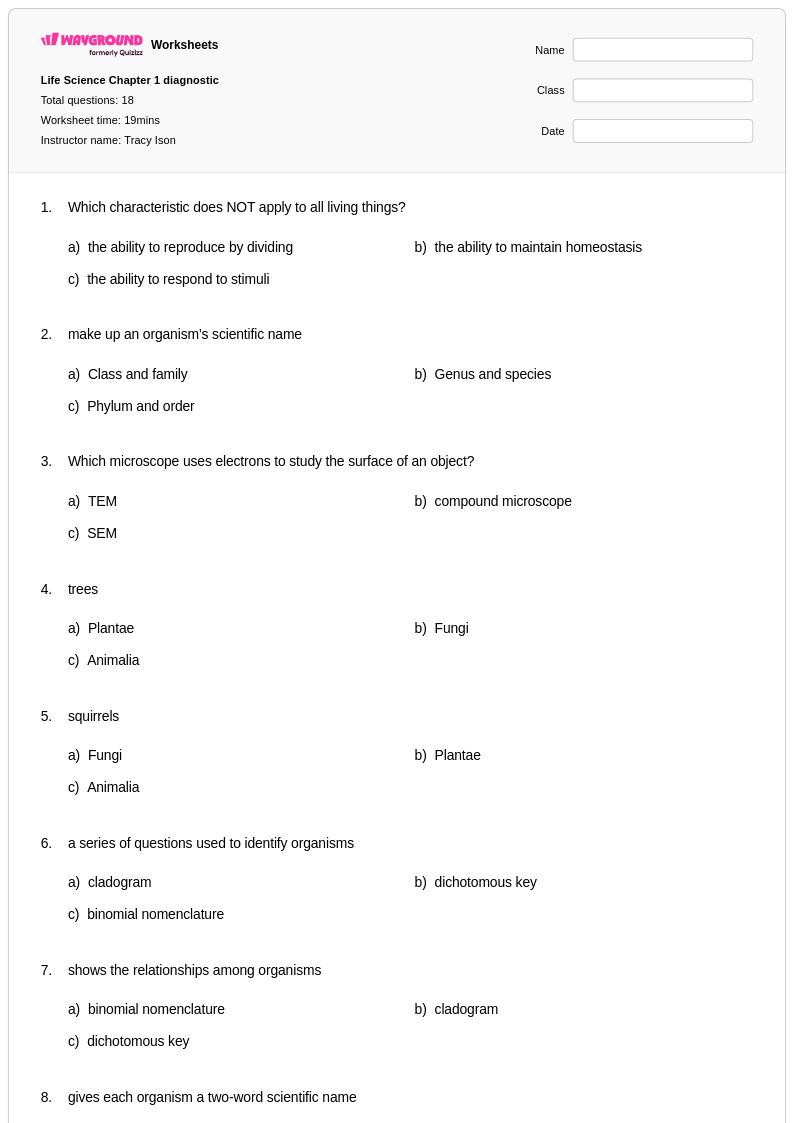
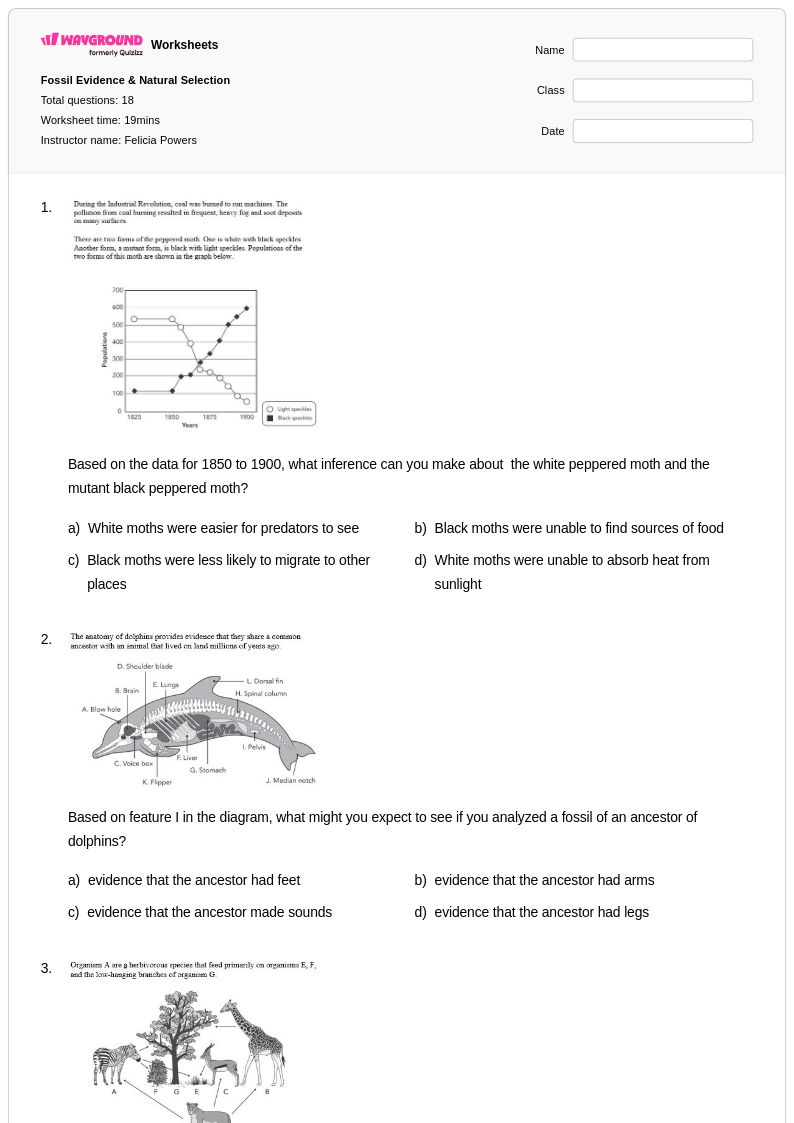
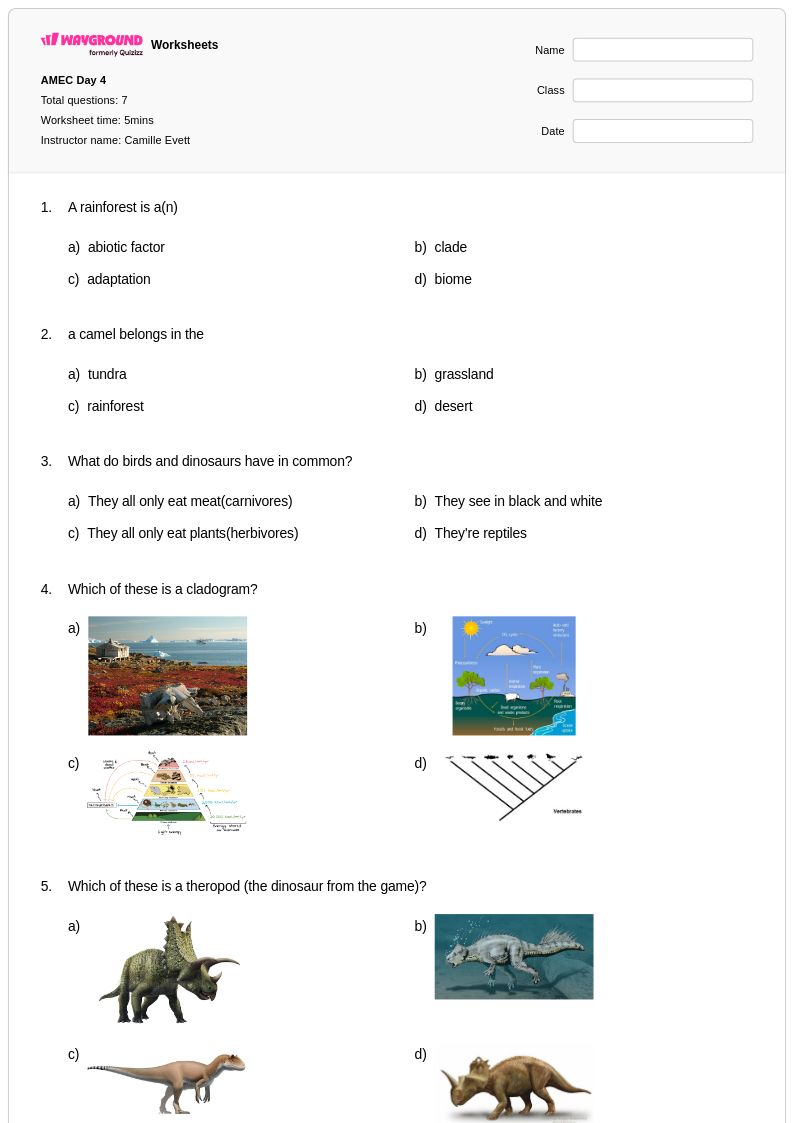
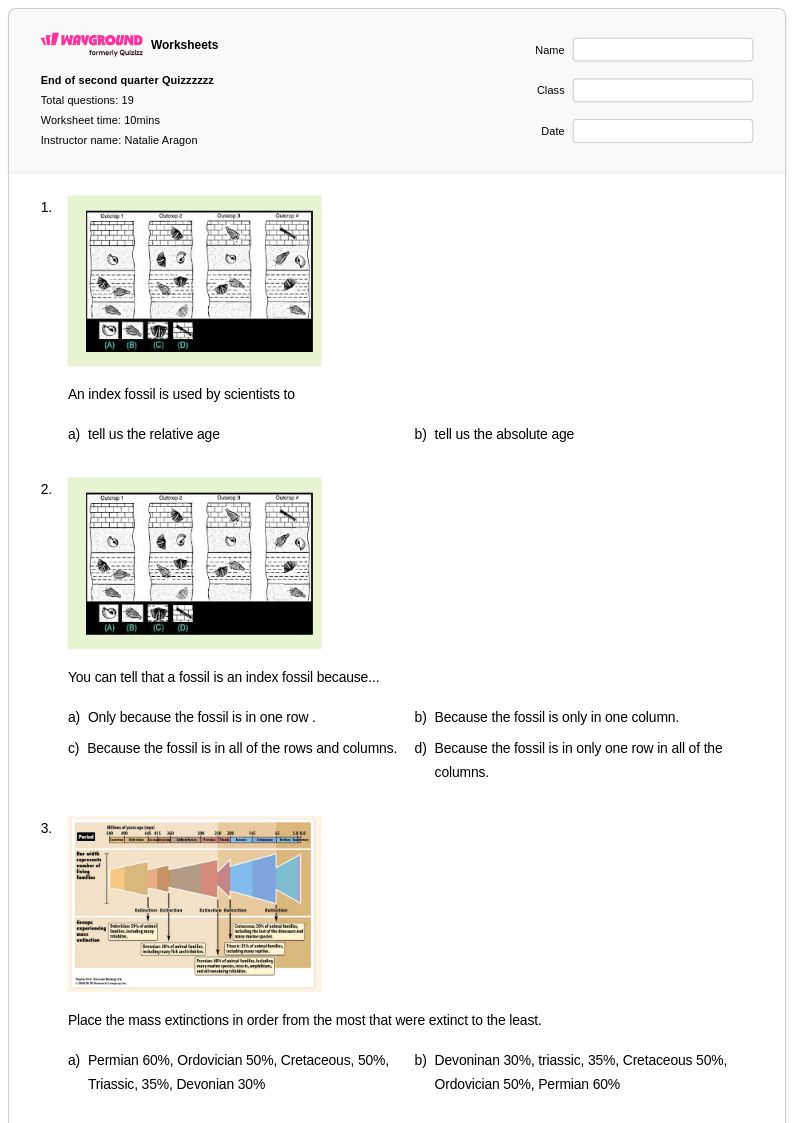
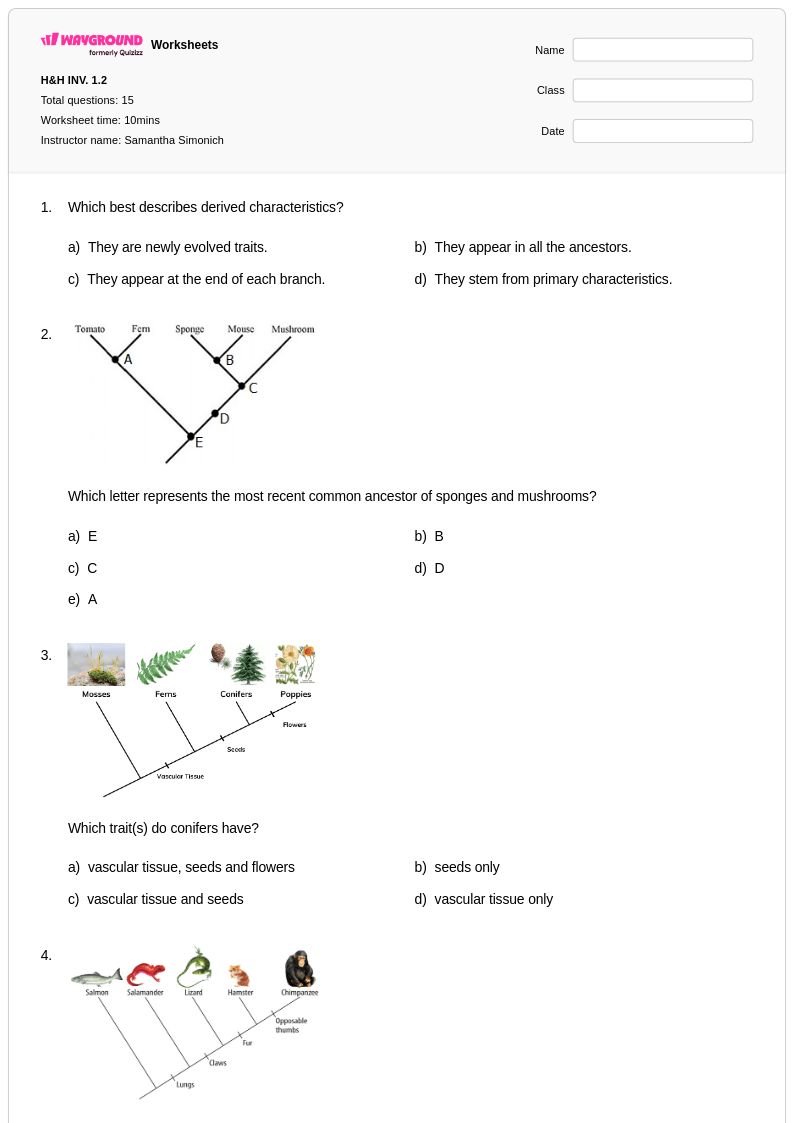
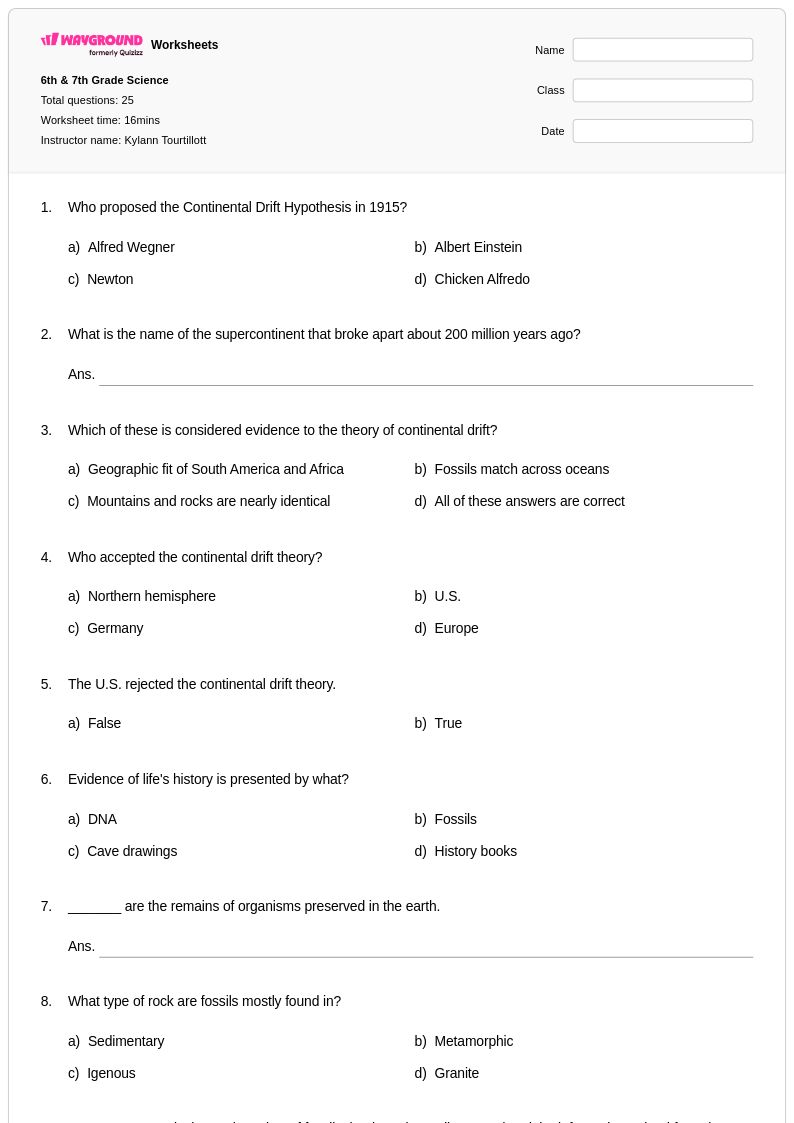
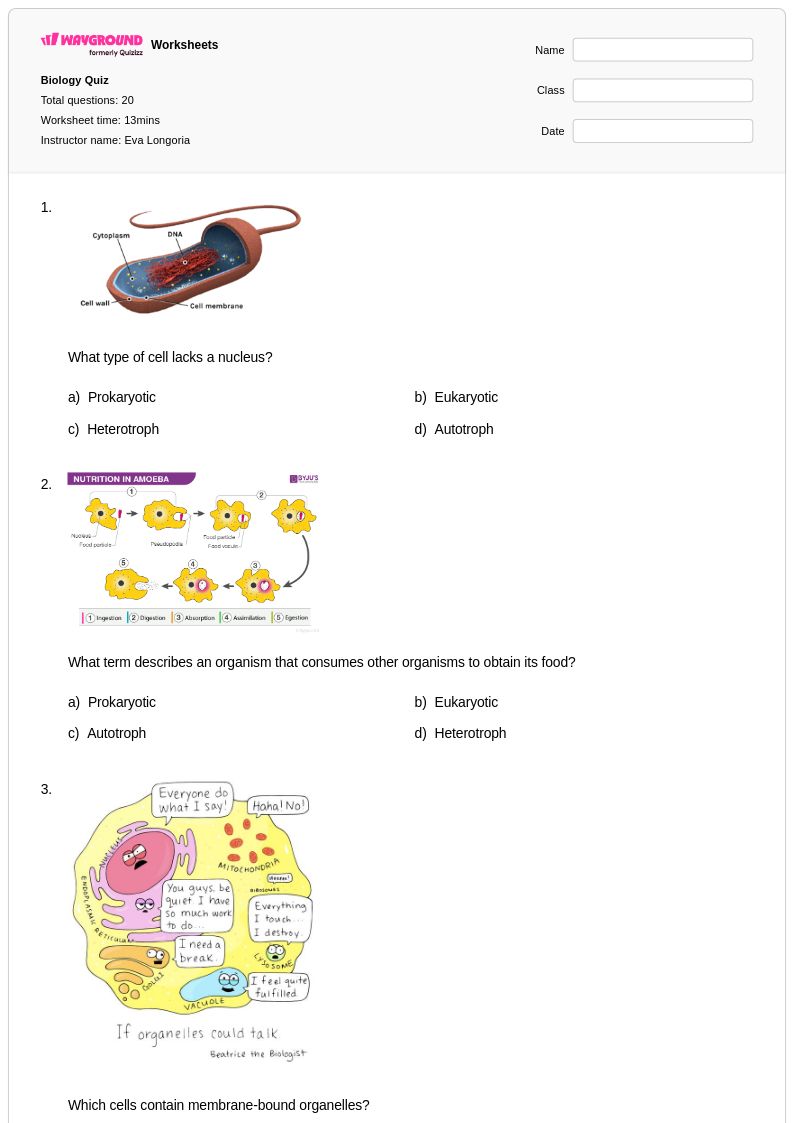
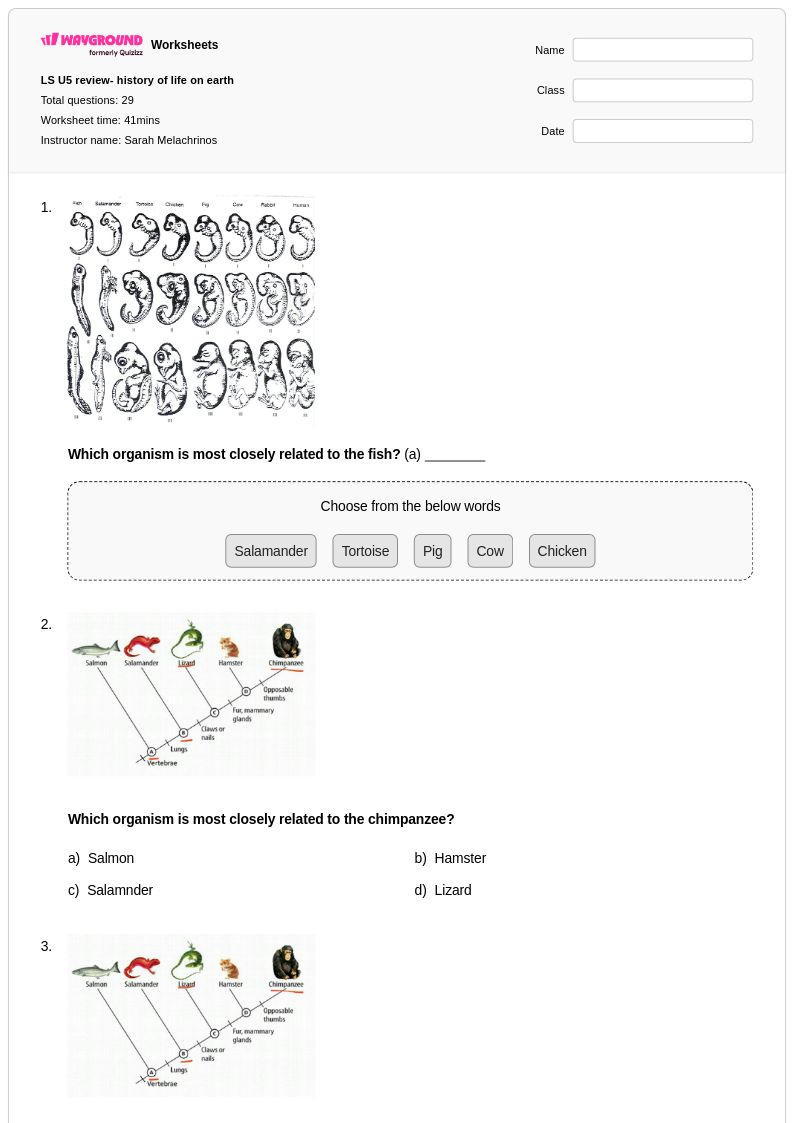
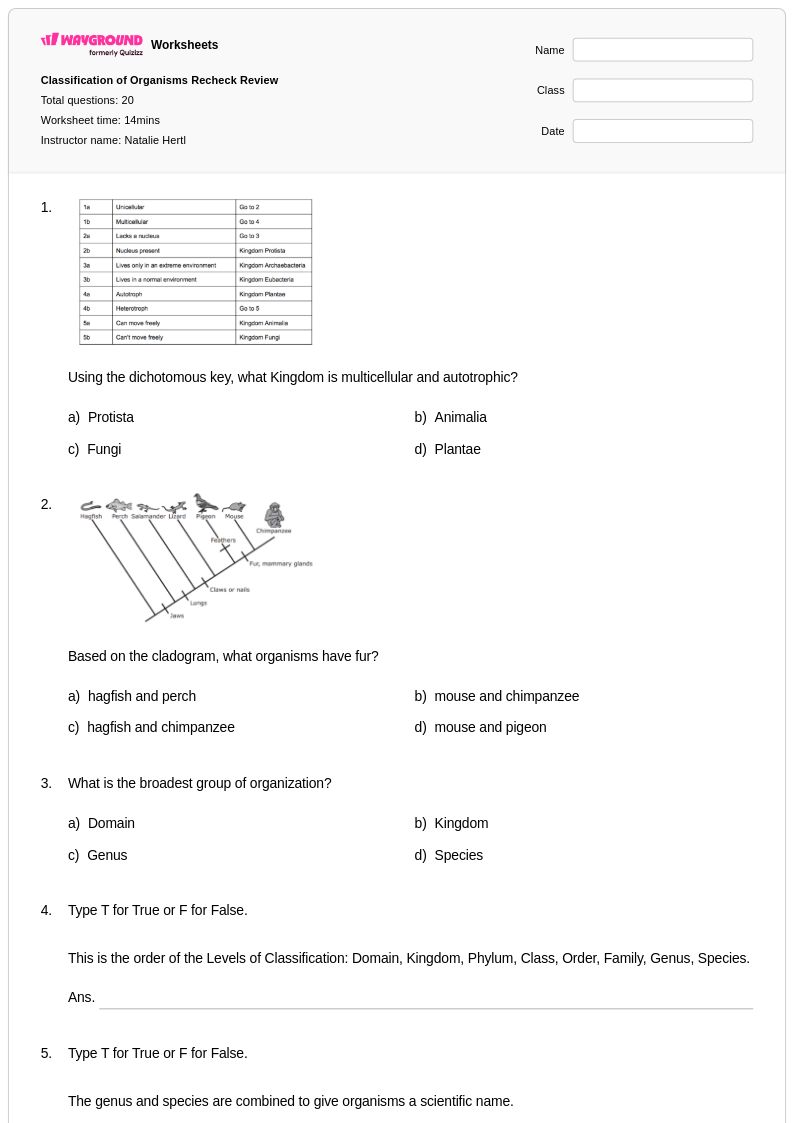
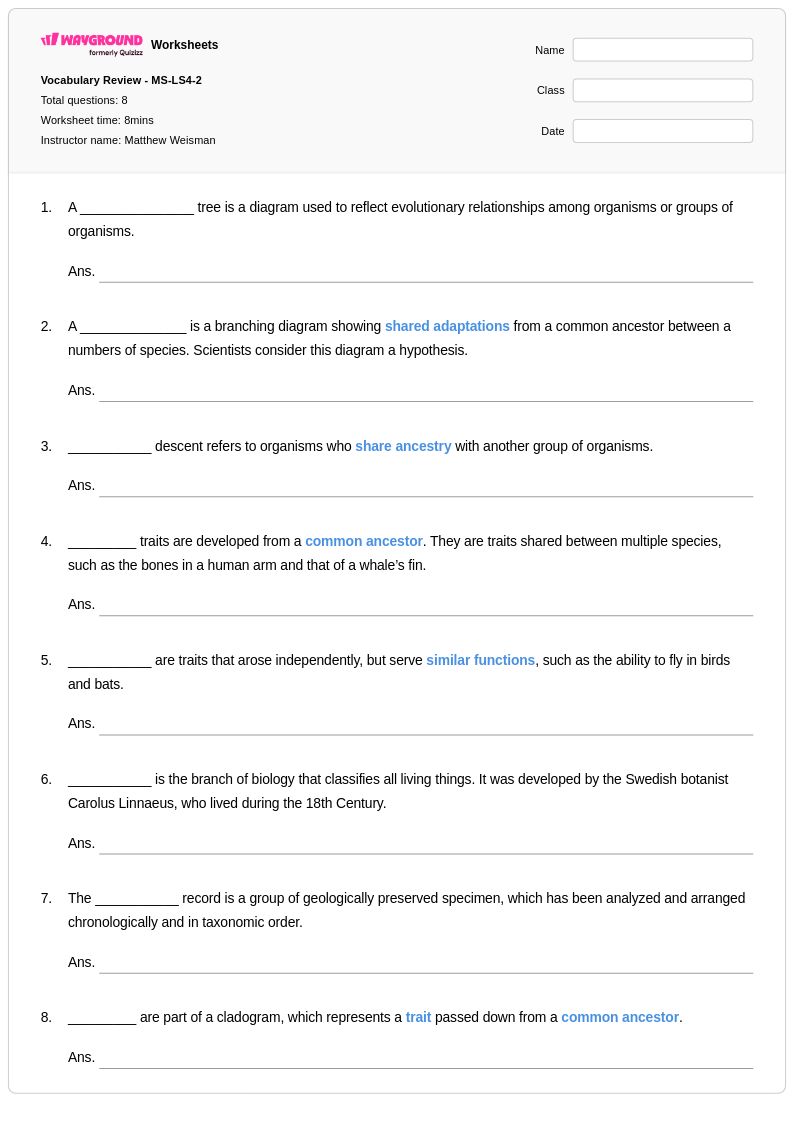
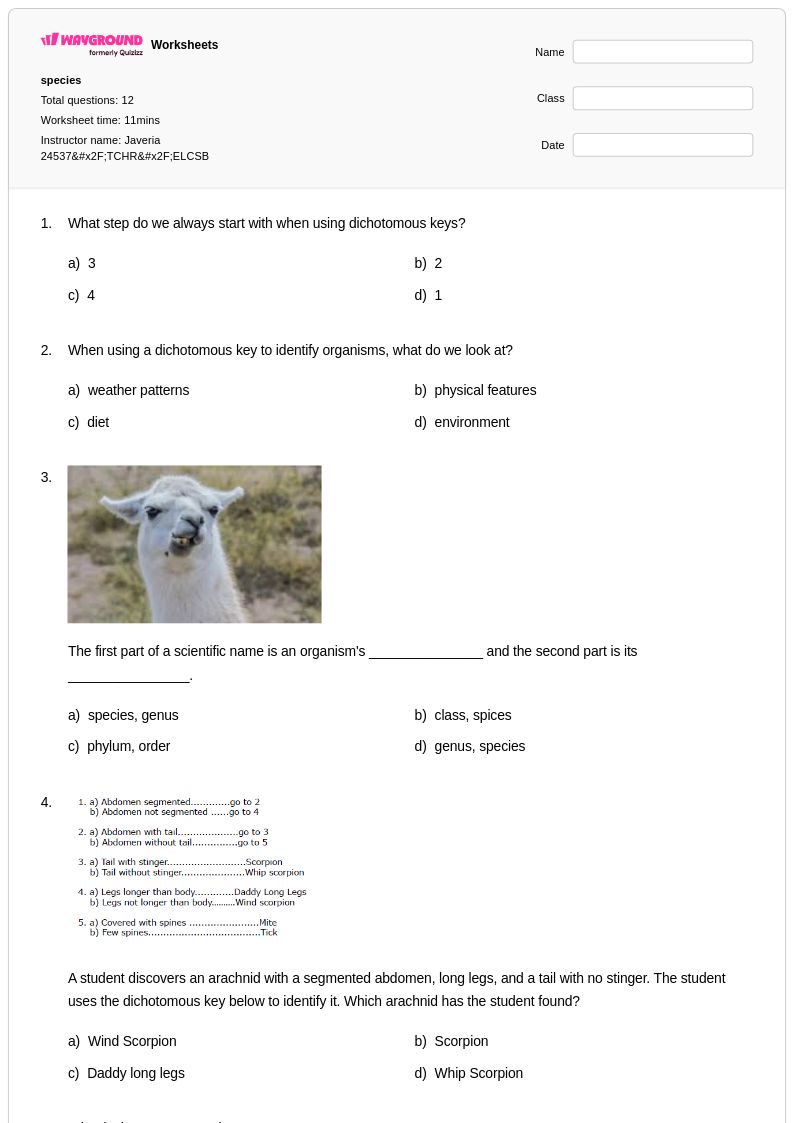
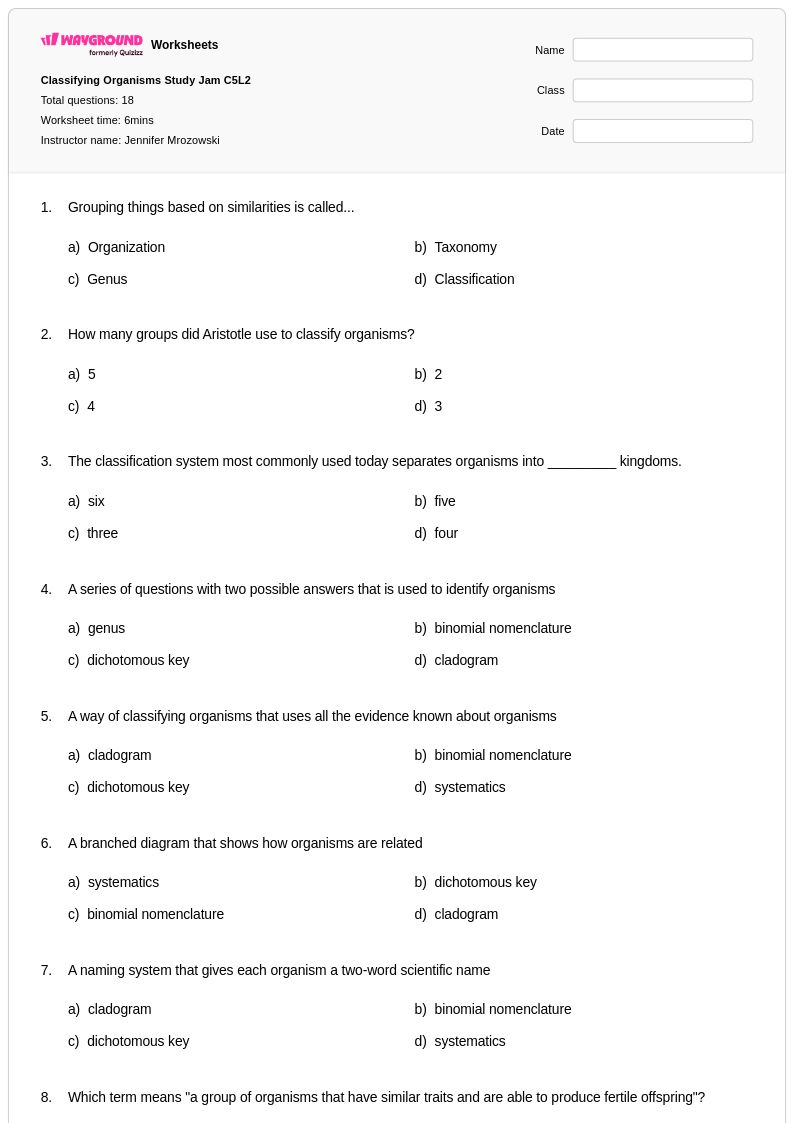
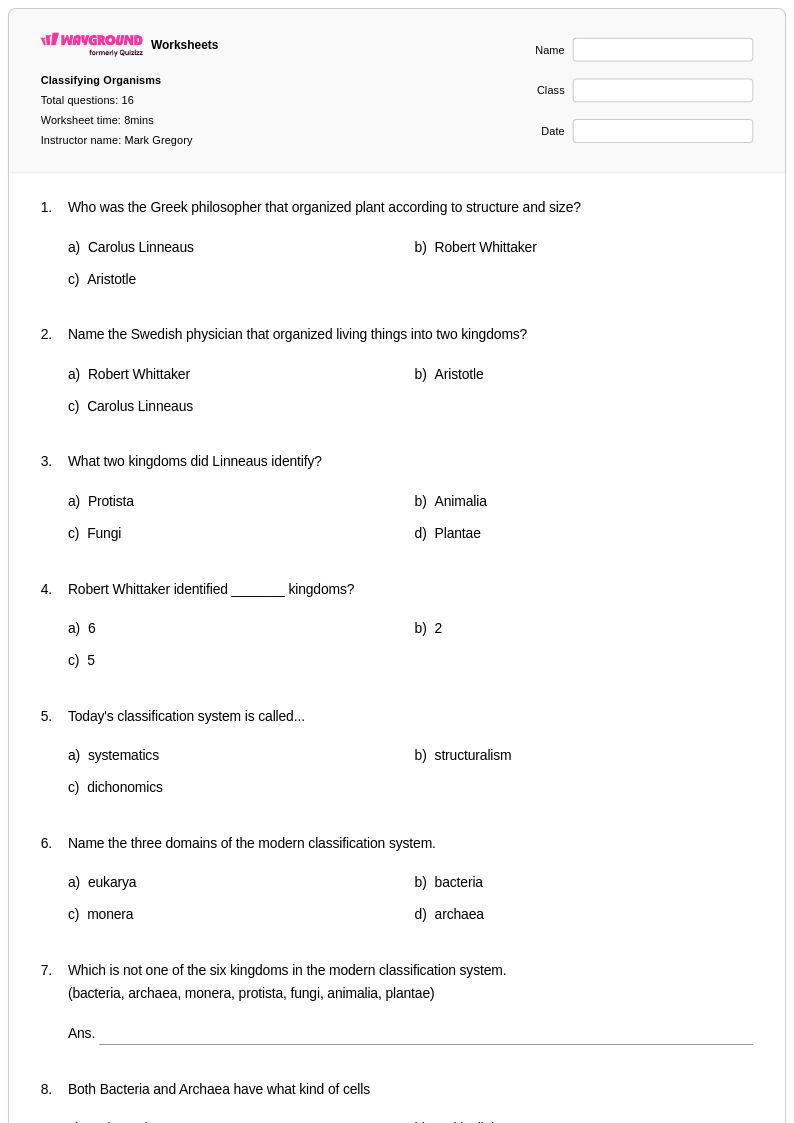
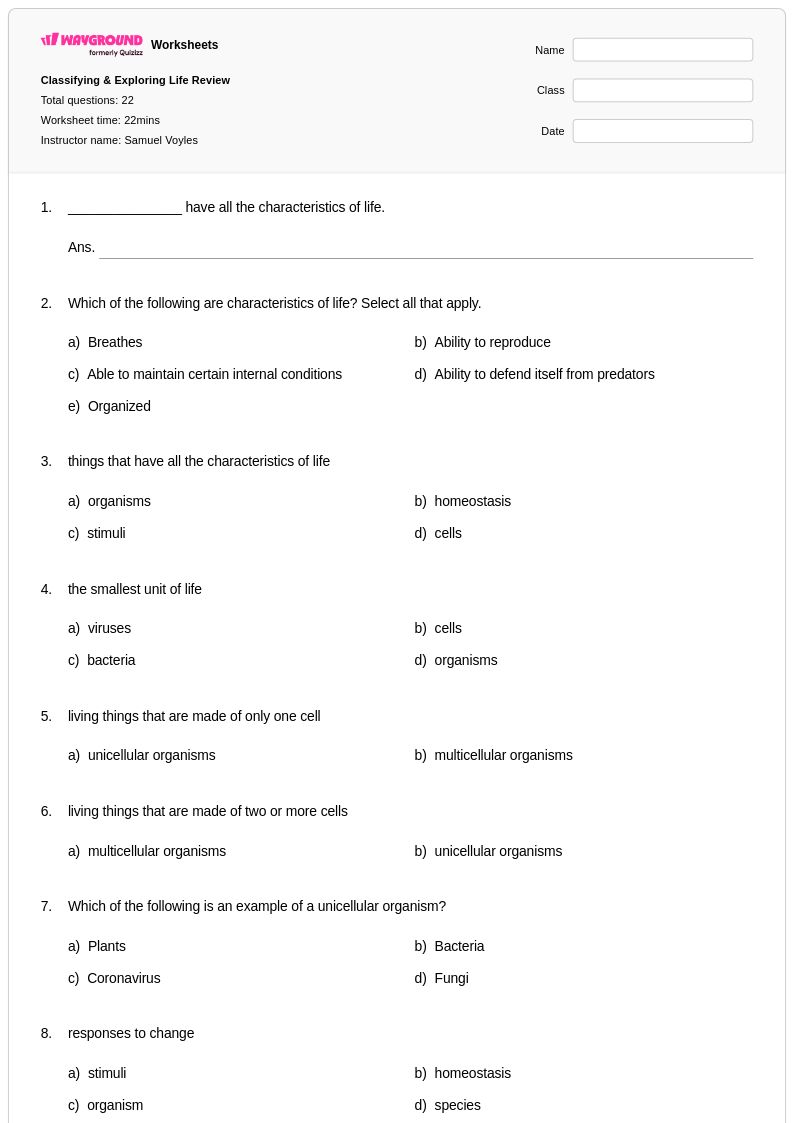
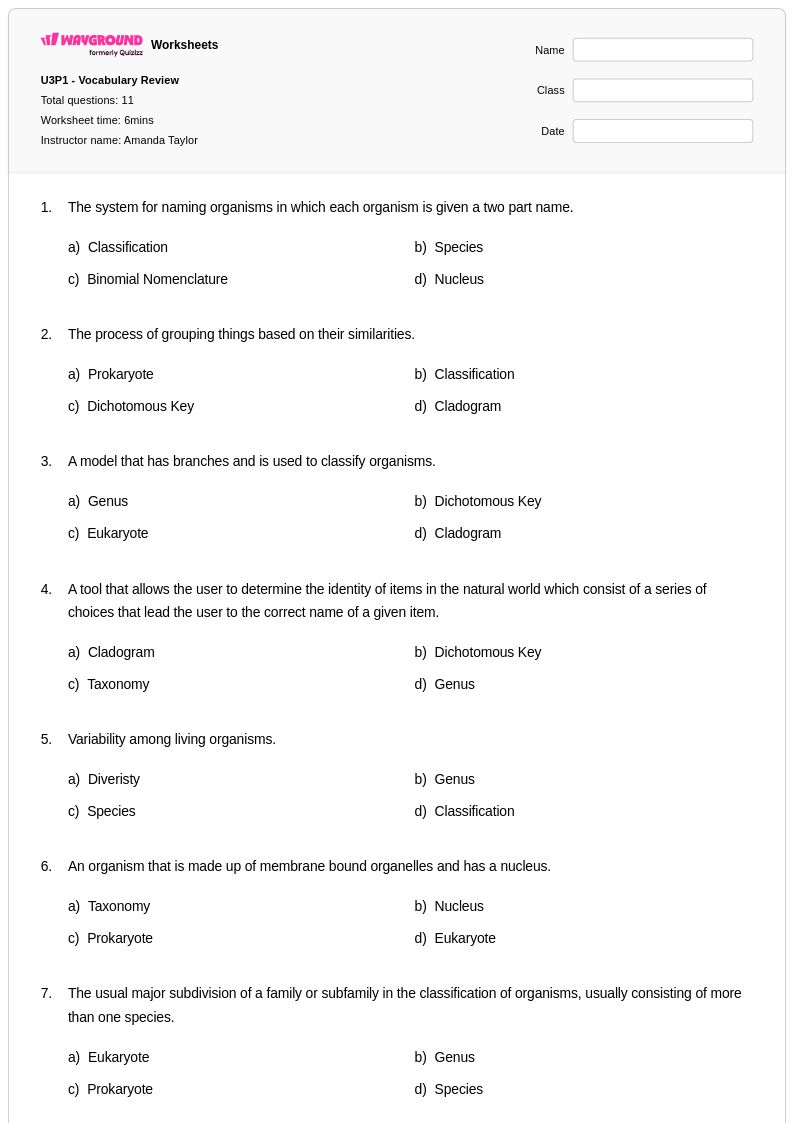
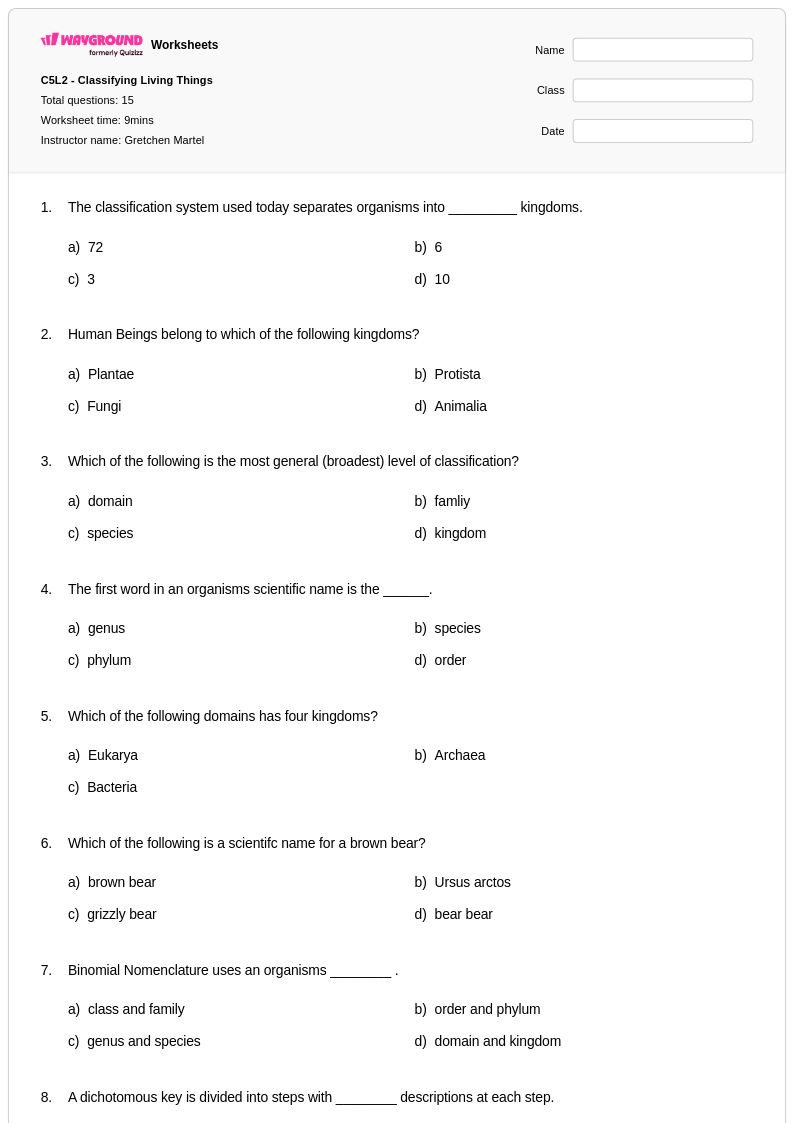
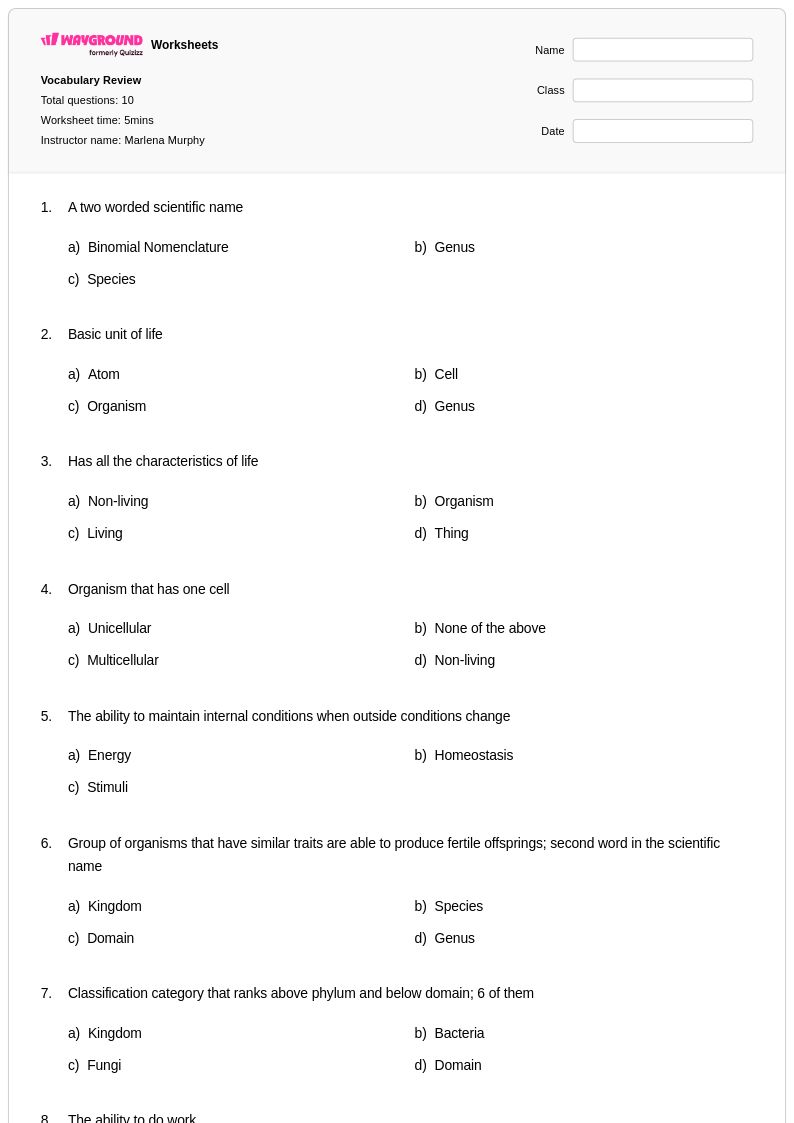
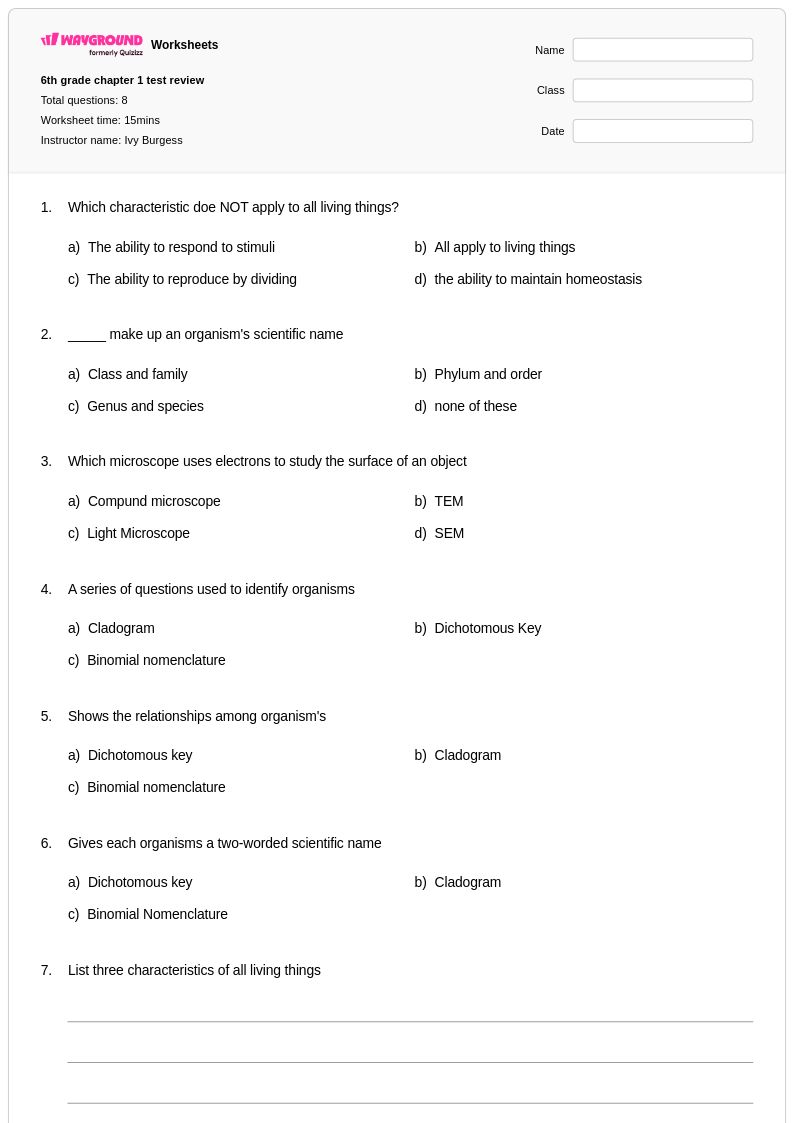
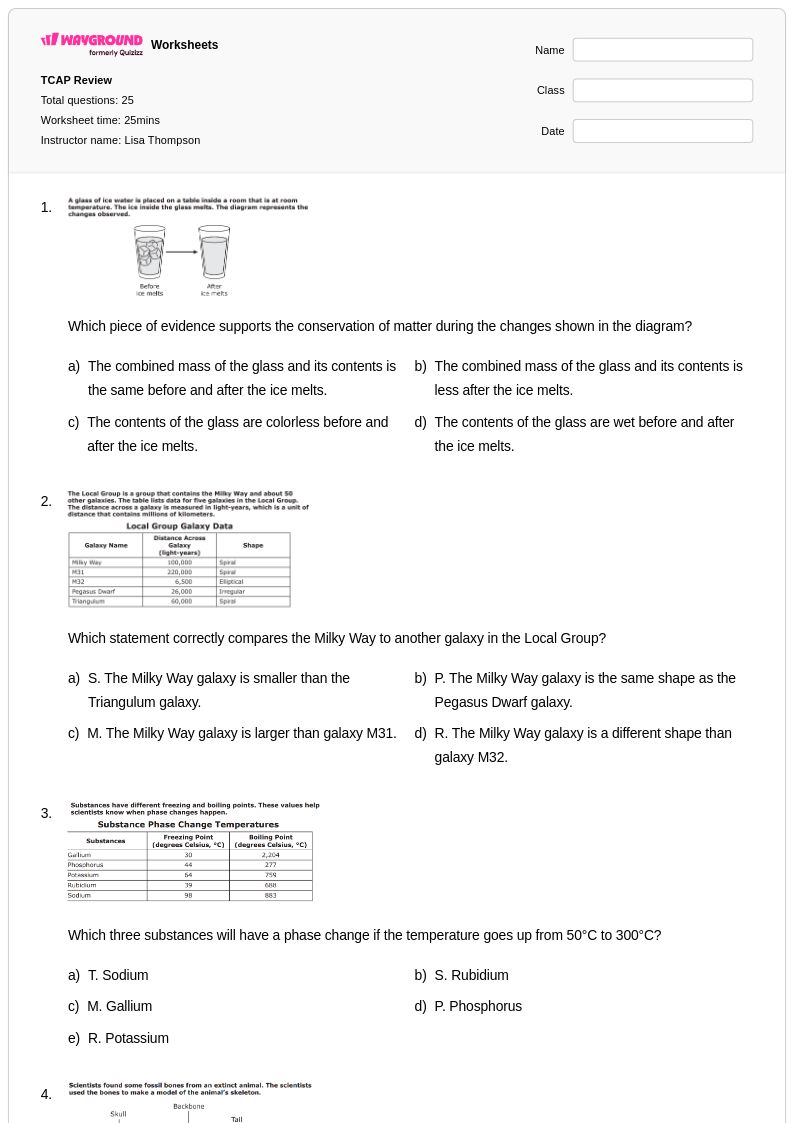
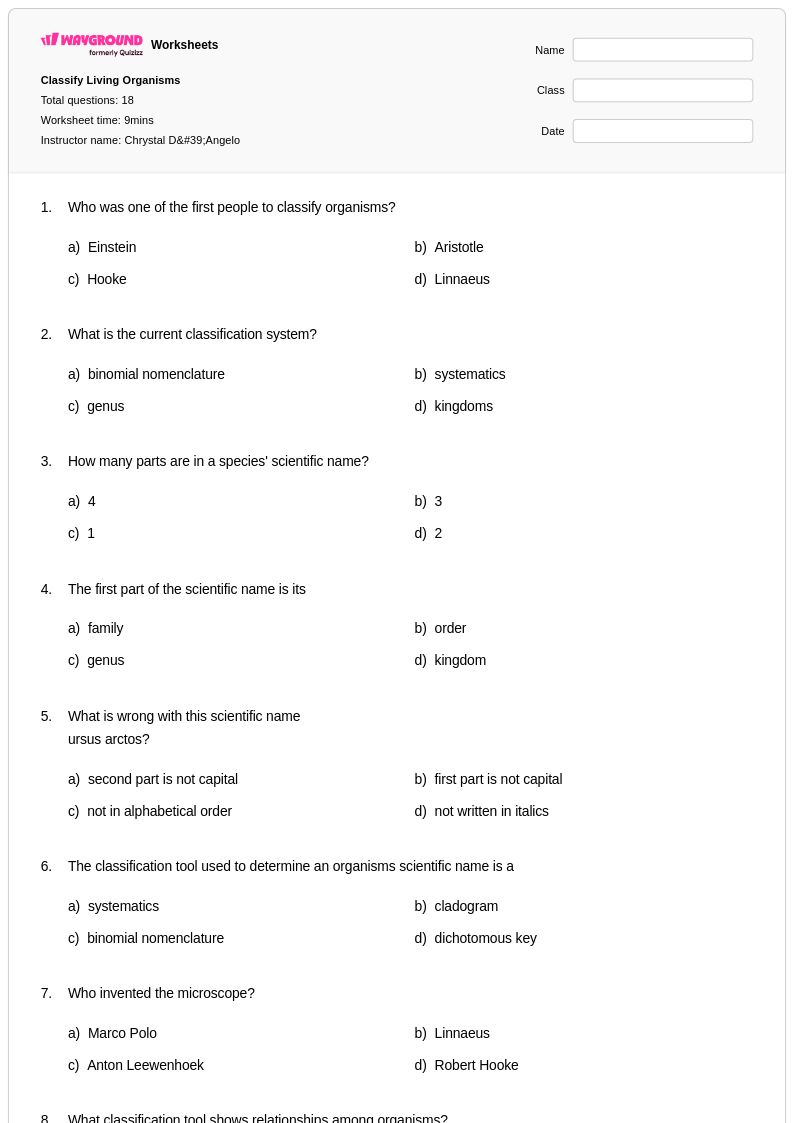
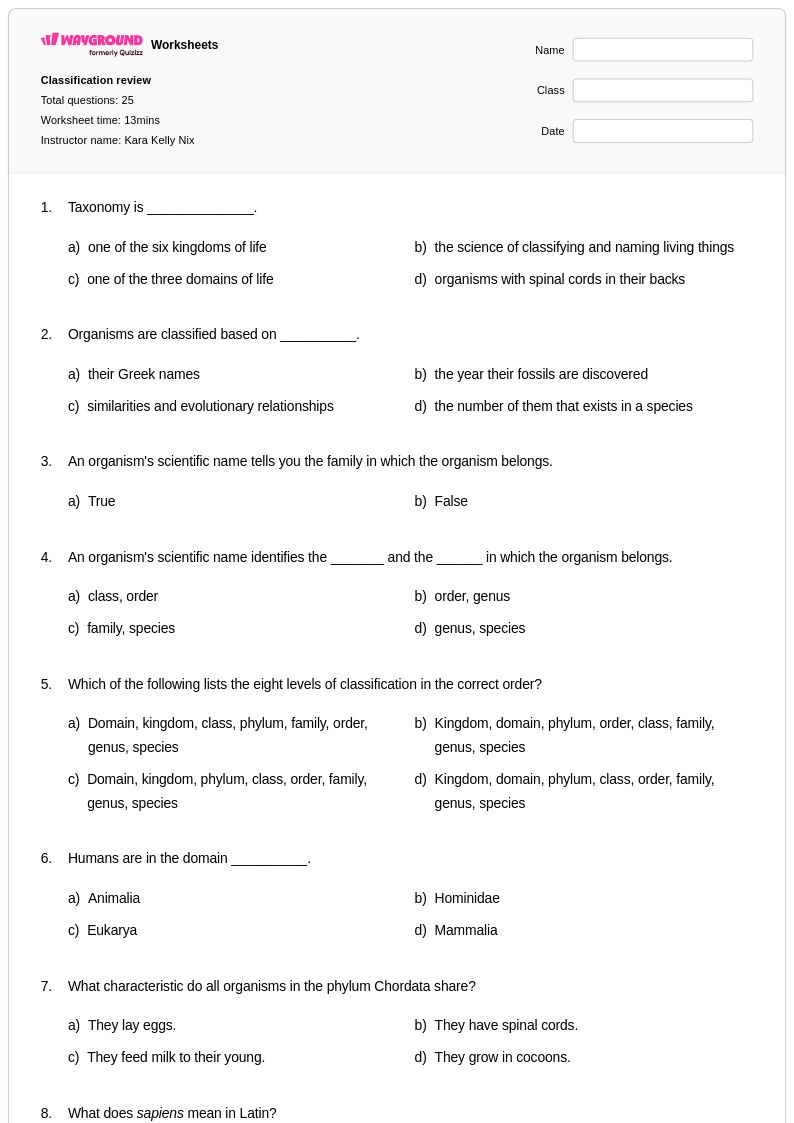
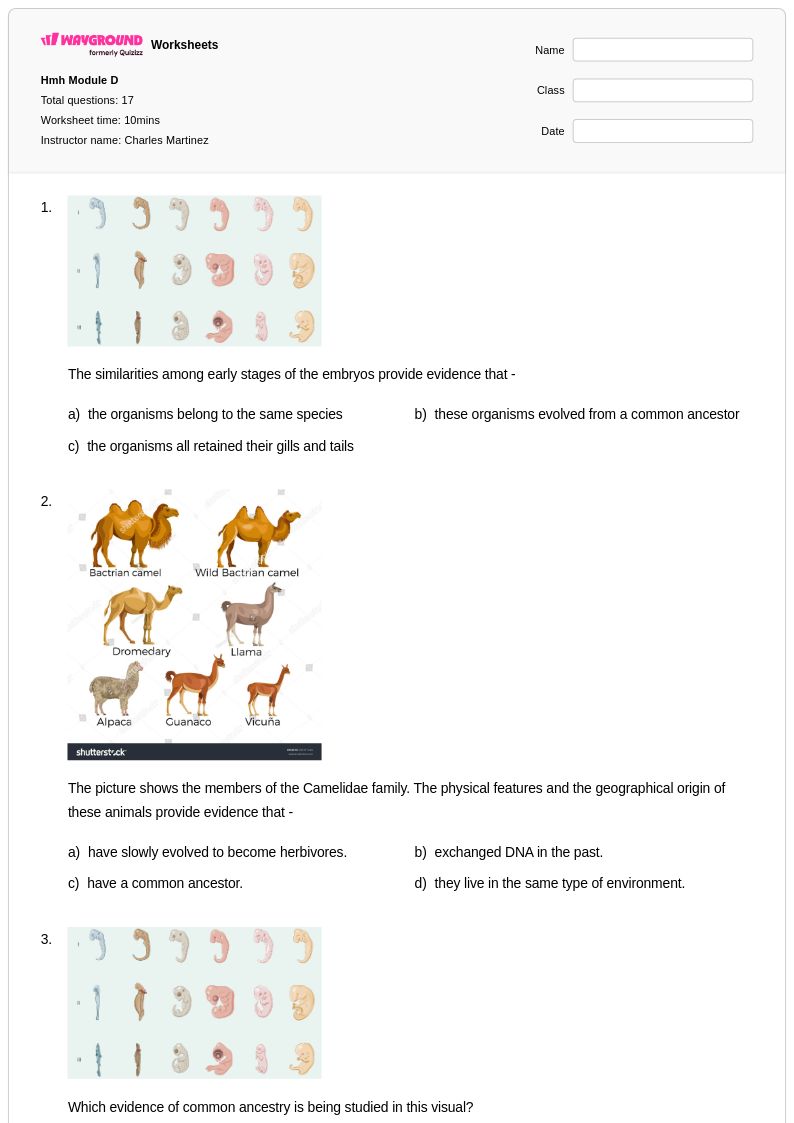
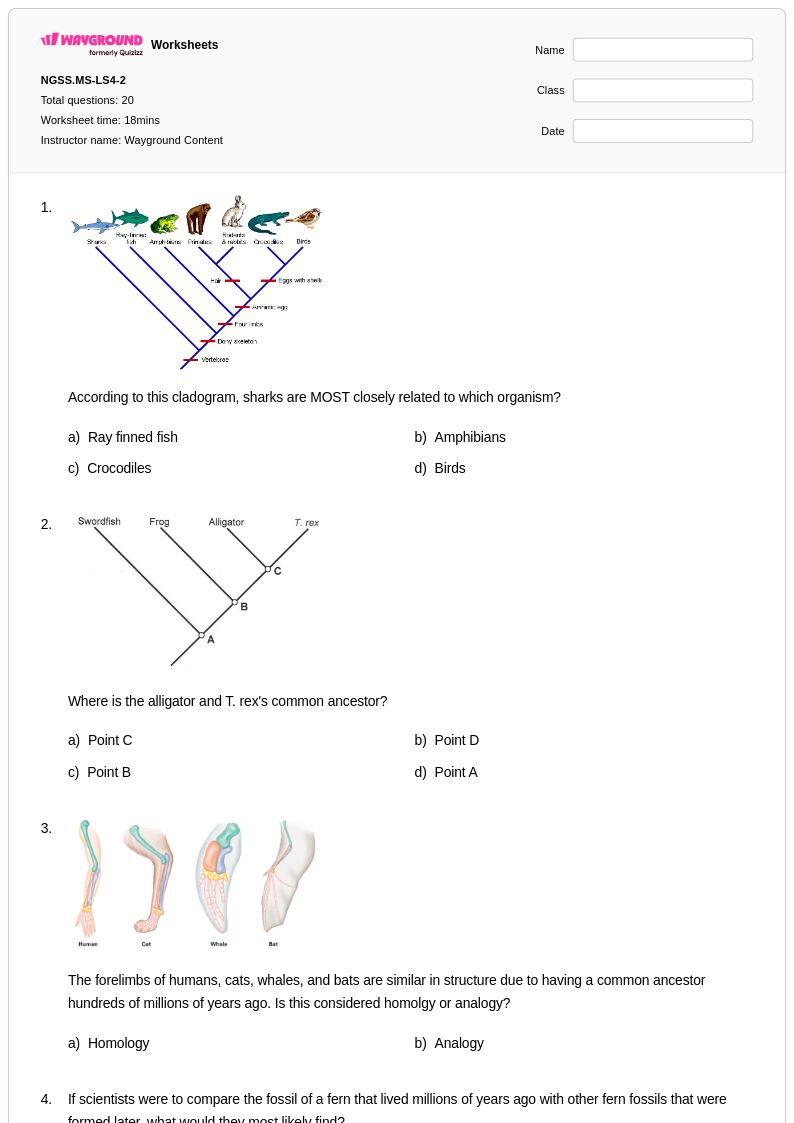
Cladogram worksheets for Class 6 students available through Wayground (formerly Quizizz) provide comprehensive practice in understanding evolutionary relationships and phylogenetic trees. These carefully designed educational resources help students develop critical thinking skills in biological classification by teaching them to interpret branching diagrams that show how different species are related through common ancestors. The worksheets strengthen key competencies including analyzing shared characteristics, identifying evolutionary pathways, and understanding how scientists organize living organisms based on their evolutionary history. Students work through practice problems that guide them in reading cladograms, determining which organisms are most closely related, and recognizing the significance of branching points in evolutionary timelines. Each worksheet includes an answer key to support independent learning and comes in convenient pdf format as free printables that teachers can easily distribute for classroom or homework assignments.
Wayground (formerly Quizizz) empowers educators with an extensive collection of teacher-created cladogram resources that streamline lesson planning and enhance student understanding of evolutionary biology concepts. The platform's millions of educational materials include worksheets specifically aligned with Class 6 science standards, featuring robust search and filtering capabilities that allow teachers to quickly locate age-appropriate content focused on phylogenetic relationships and biological classification systems. Advanced differentiation tools enable instructors to customize worksheets based on individual student needs, while the flexible format options support both traditional printable pdf worksheets and interactive digital activities. These comprehensive resources facilitate targeted skill practice, support remediation for students who need additional reinforcement of evolutionary concepts, and provide enrichment opportunities for advanced learners ready to explore more complex phylogenetic relationships and taxonomic classifications.
FAQs
How do I teach students to read a cladogram?
Start by teaching students the core vocabulary: nodes represent common ancestors, branches represent lineages, and taxa at the tips represent the organisms being compared. Have students practice identifying sister taxa first, since recognizing shared branching points is the foundational skill before moving to more complex tasks like tracing derived characteristics or interpreting evolutionary sequences. Using a simple, familiar example such as vertebrates helps students build confidence with the structure before applying it to less familiar organisms.
What exercises help students practice interpreting cladograms?
Effective practice exercises include identifying the most recent common ancestor between two taxa, determining which organisms share a derived characteristic, and ranking branching events chronologically. Construction tasks, where students build a cladogram from a provided data matrix of ancestral and derived traits, push students to apply analytical reasoning rather than passive reading. These types of structured problems directly mirror the skills assessed on biology exams and reinforce the logic behind phylogenetic classification.
What mistakes do students commonly make when analyzing cladograms?
The most common misconception is that organisms positioned closer together on a cladogram are more closely related regardless of branching structure, leading students to compare tip-to-tip distance rather than counting shared nodes. Students also frequently confuse ancestral characteristics with derived ones, which undermines their ability to correctly group taxa into clades. Another common error is assuming that organisms at the far right or bottom of a diagram are the most evolved, when cladograms represent branching relationships, not linear progression.
How do I use Wayground's cladogram worksheets in my classroom?
Wayground's cladogram worksheets are available as printable PDFs for traditional classroom use and in digital formats for technology-integrated learning environments, and they can also be hosted as a quiz directly on Wayground. Each worksheet includes a detailed answer key, making them practical for independent practice, homework assignments, or guided in-class work. The digital format allows teachers to assign cladogram activities remotely or in a 1:1 device setting, while the printable option works seamlessly for lab days or low-tech classrooms.
How do I differentiate cladogram instruction for students at different skill levels?
For students who are newer to phylogenetics, begin with pre-built cladograms and ask simple identification questions before introducing construction tasks. Advanced learners can be challenged with molecular data sets or multi-taxa trees that require them to evaluate conflicting character evidence. On Wayground, teachers can apply accommodations such as reduced answer choices to lower cognitive load for struggling students, or use read-aloud features for students who need additional accessibility support, all without disrupting the experience for the rest of the class.
How are cladograms different from other classification diagrams like phylogenetic trees or Linnaean taxonomy?
A cladogram specifically shows the branching pattern of evolutionary relationships based on shared derived characteristics, without necessarily indicating the amount of evolutionary change or time elapsed between branching events. Phylogenetic trees can include branch length to represent evolutionary distance or time, making them more detailed but also more complex to interpret. Linnaean taxonomy organizes organisms into hierarchical ranked groups, but unlike cladograms, it does not inherently reflect the nested pattern of evolutionary ancestry and descent.