
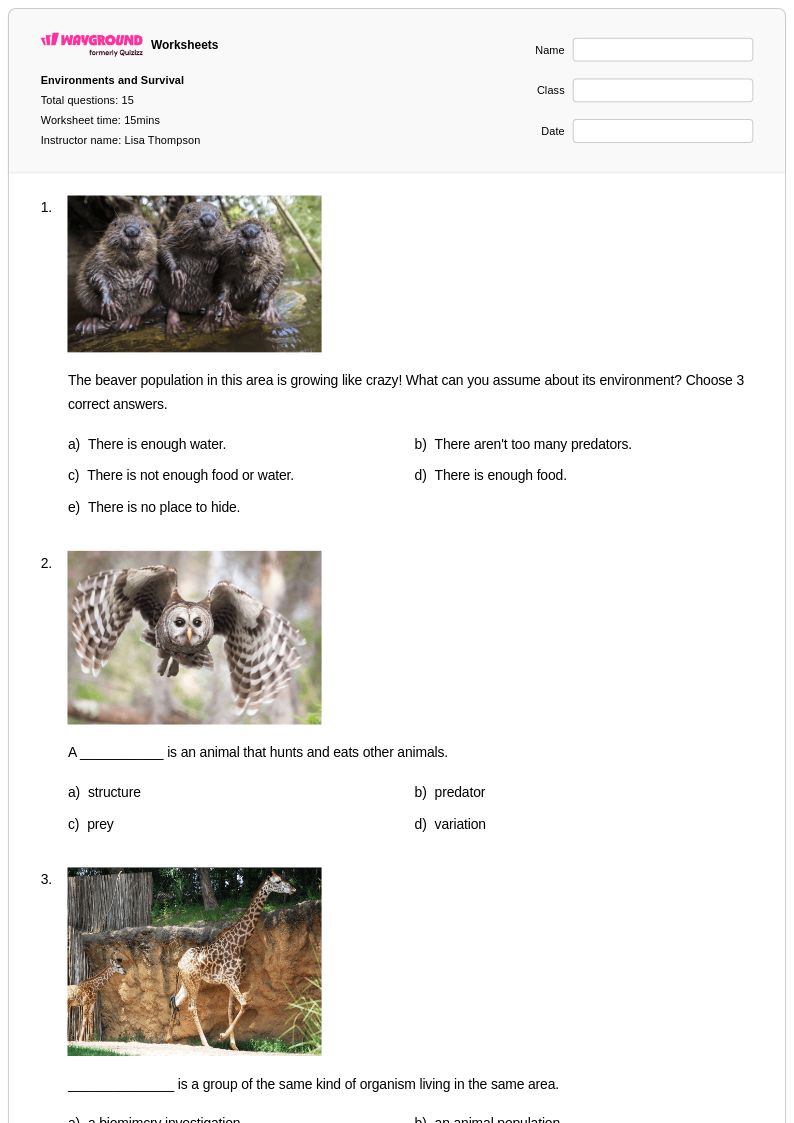
15 Q
3rd - Uni
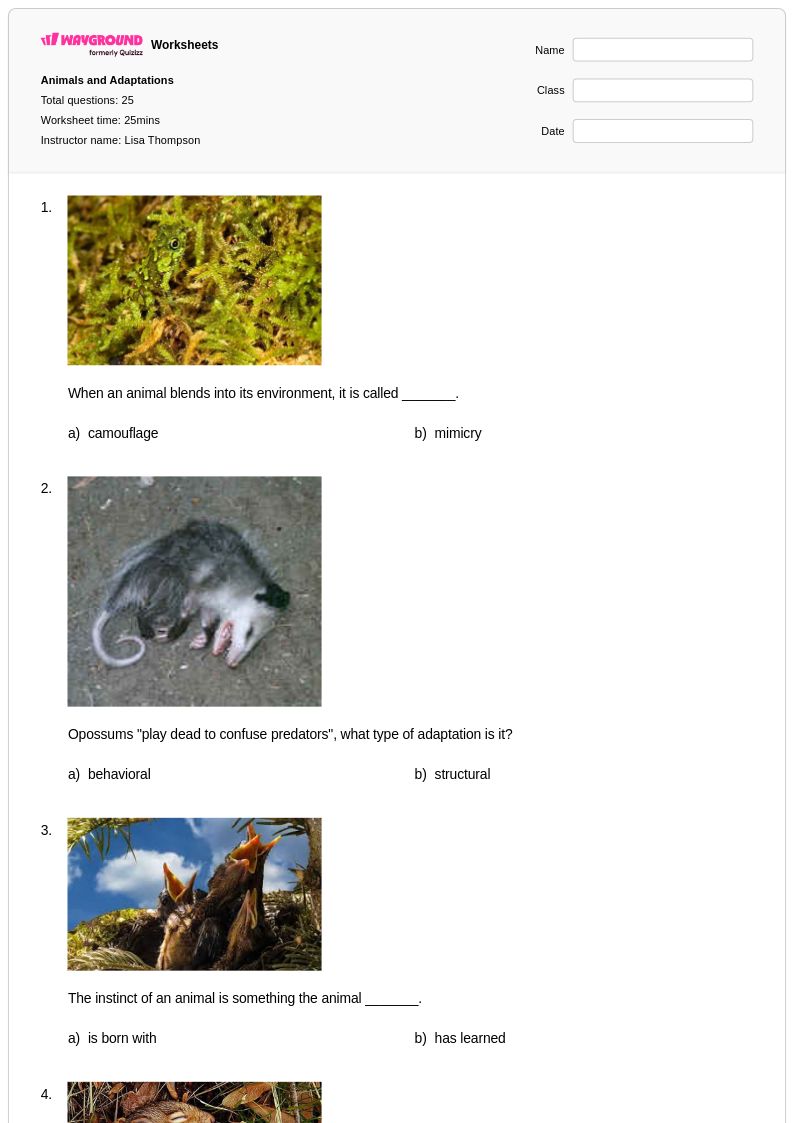
25 Q
3rd - Uni
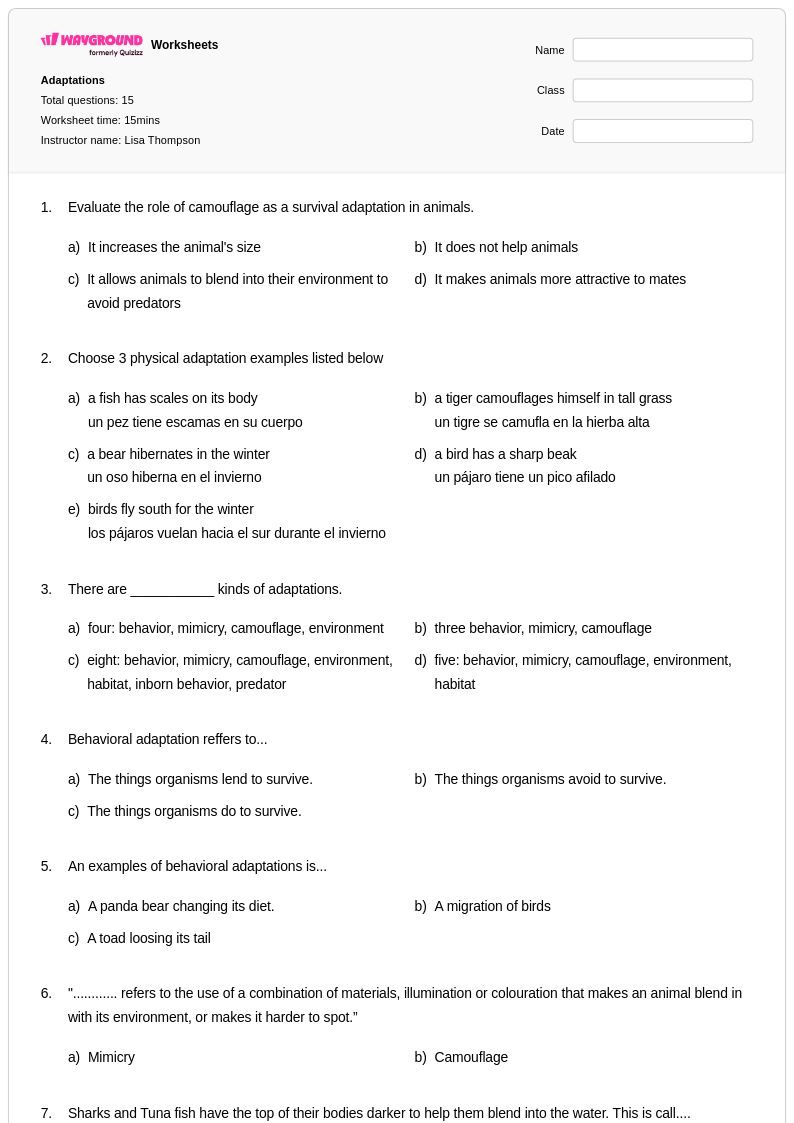
15 Q
4th - Uni
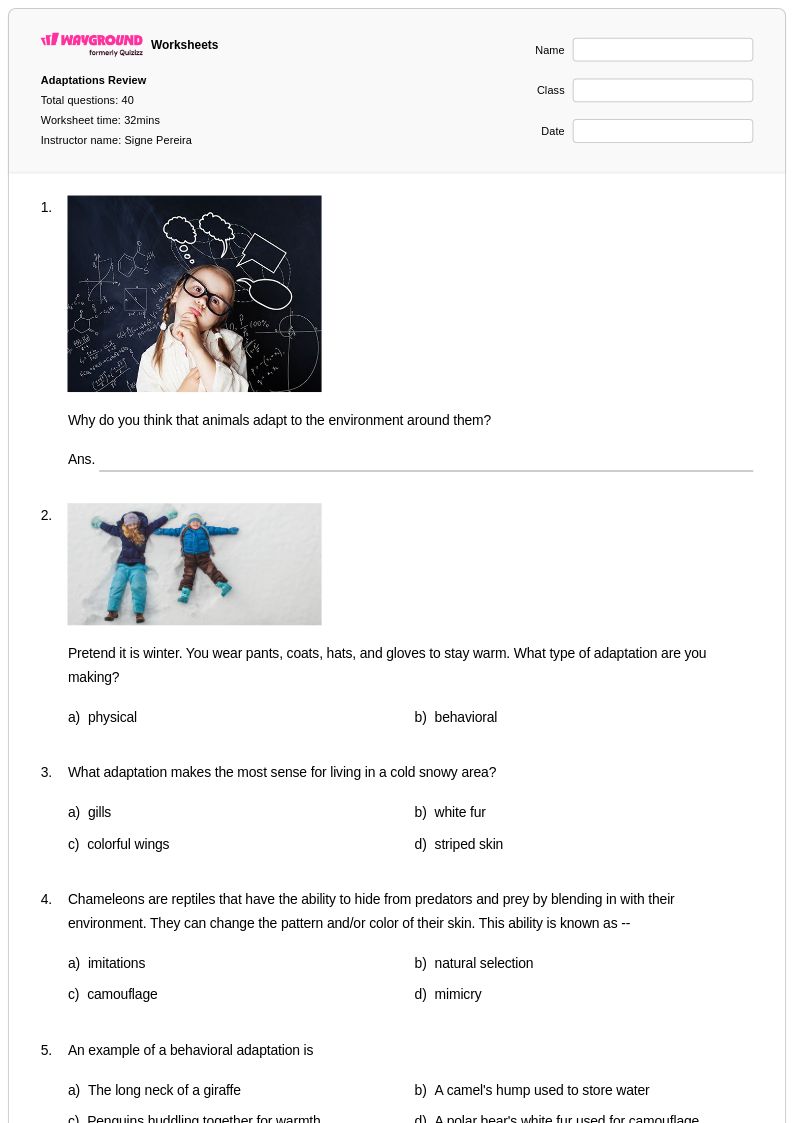
40 Q
6th
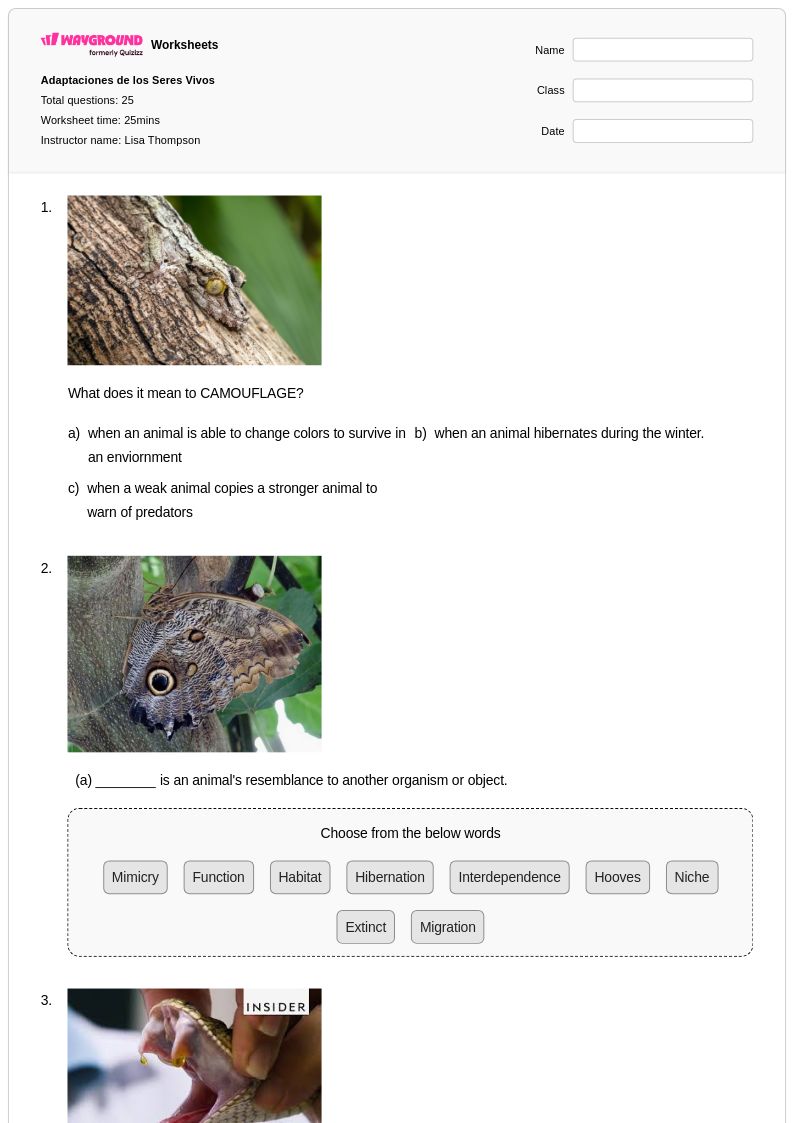
25 Q
4th - Uni
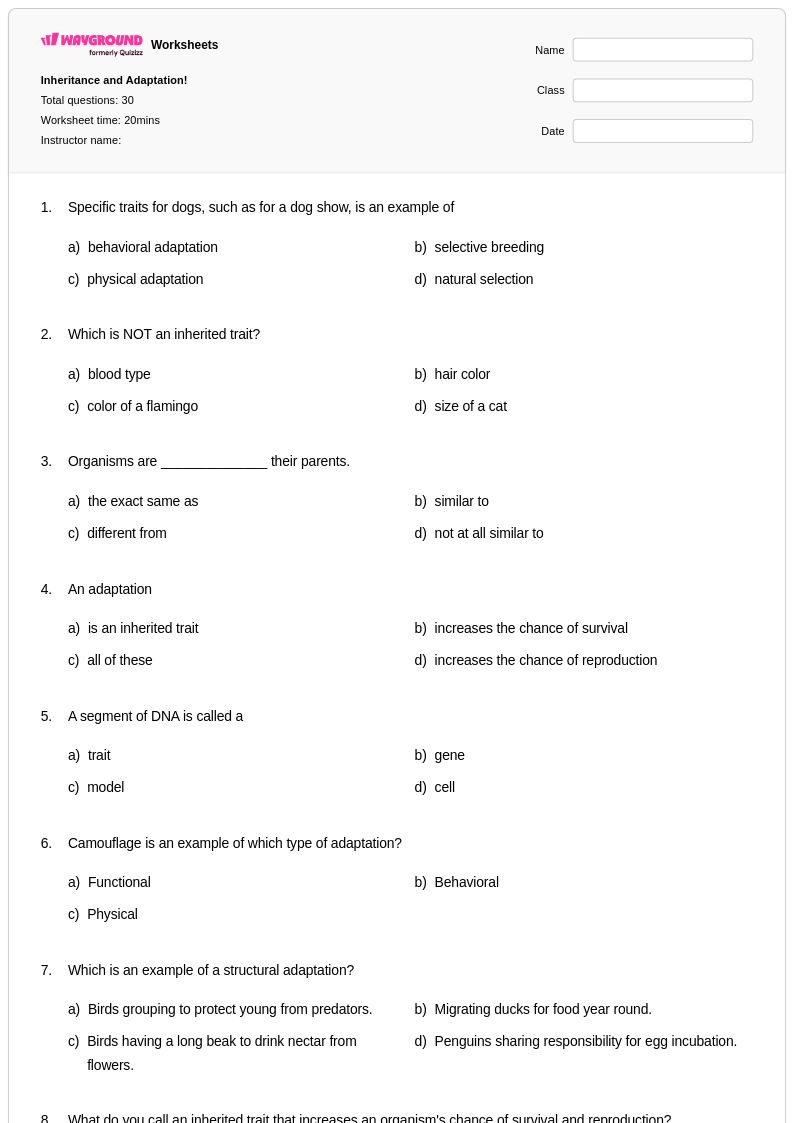
30 Q
6th
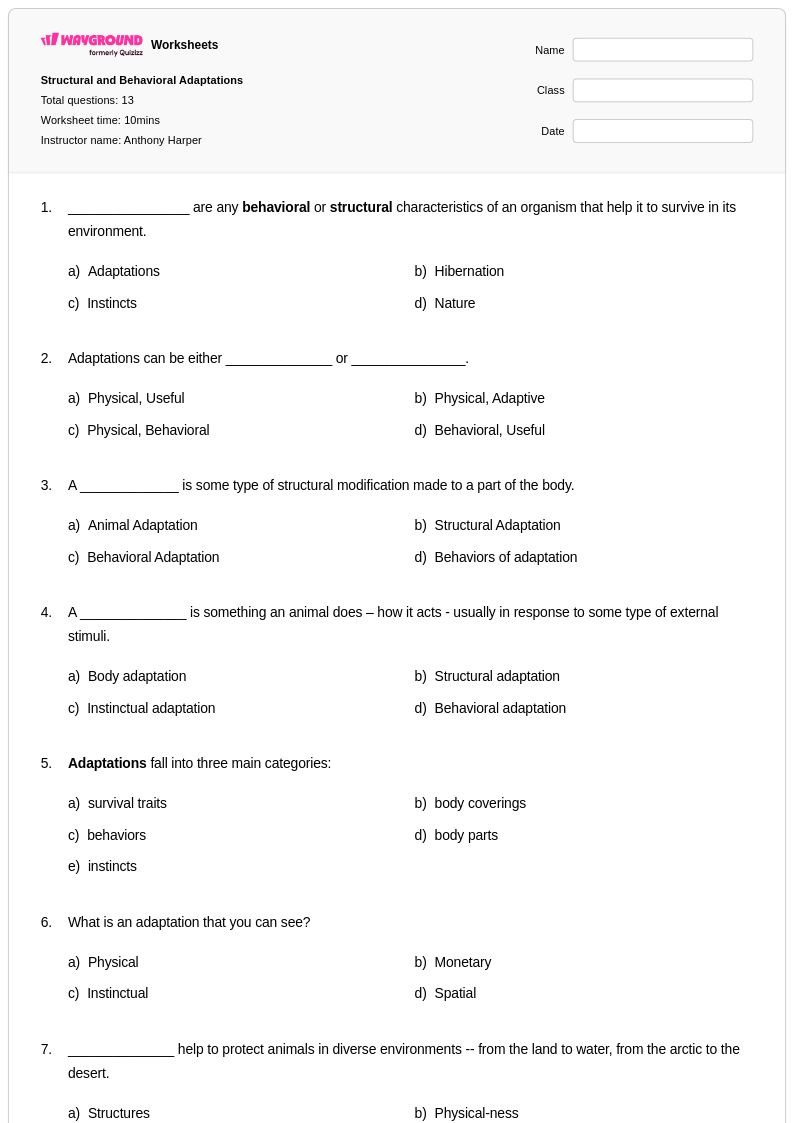
13 Q
6th - 8th
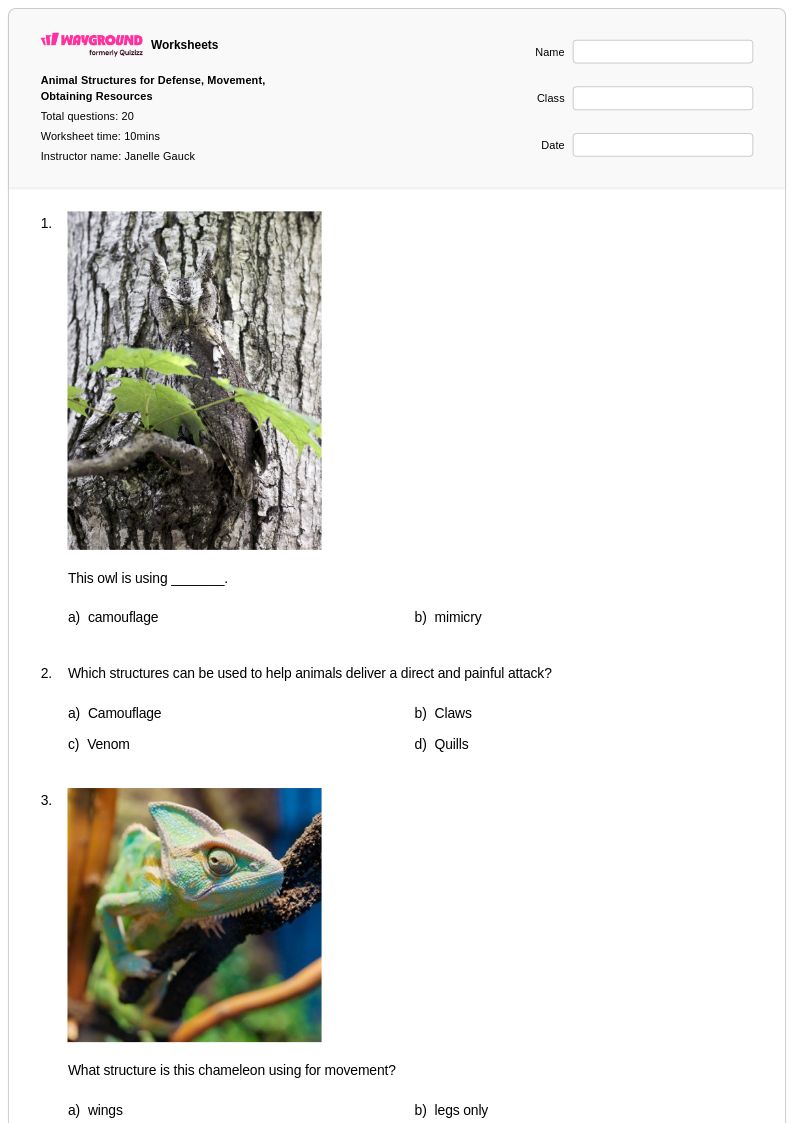
20 Q
6th
15 Q
3rd - Uni
15 Q
3rd - Uni
25 Q
2nd - Uni
25 Q
4th - Uni
25 Q
3rd - Uni
9 Q
6th
8 Q
6th
15 Q
5th - Uni
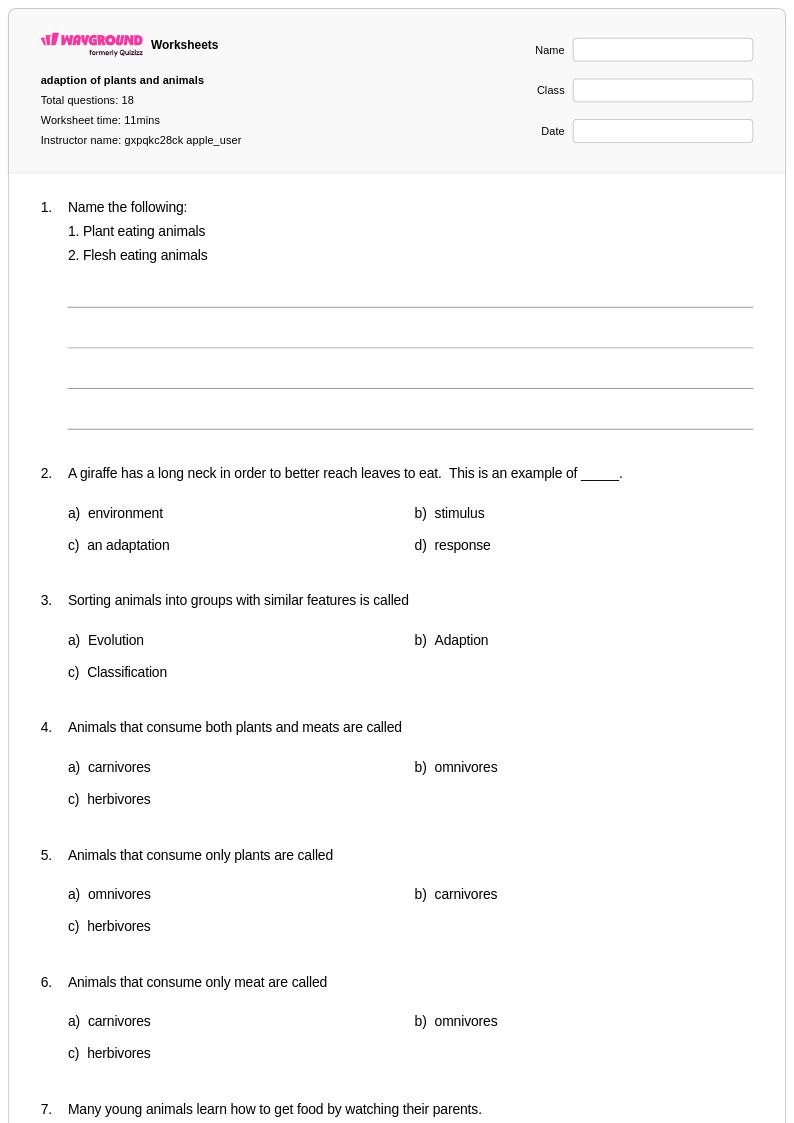
18 Q
6th
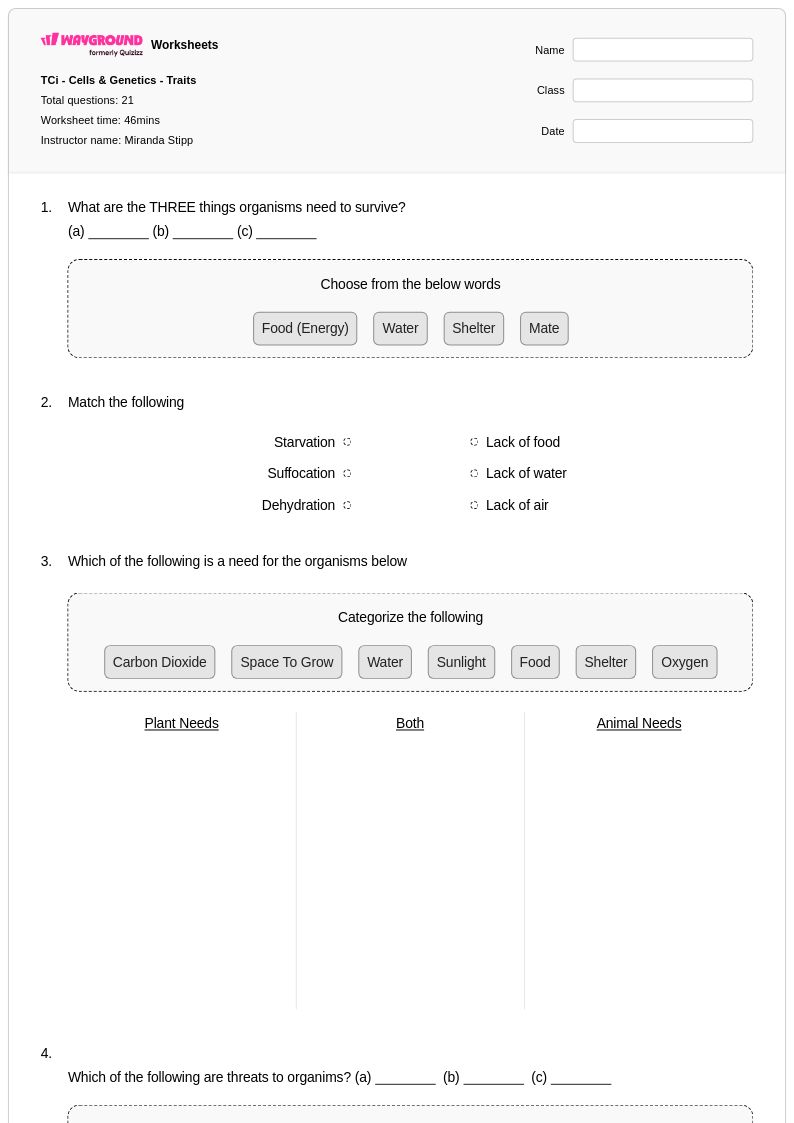
21 Q
6th - 8th
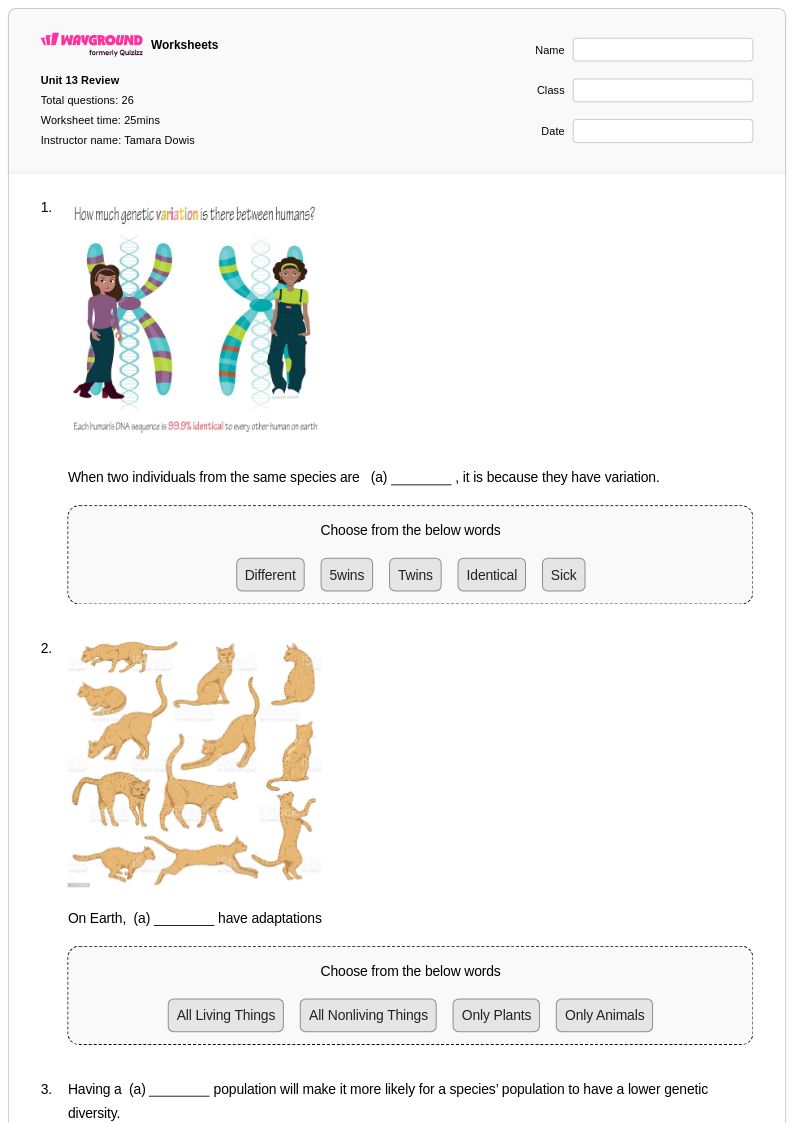
26 Q
6th
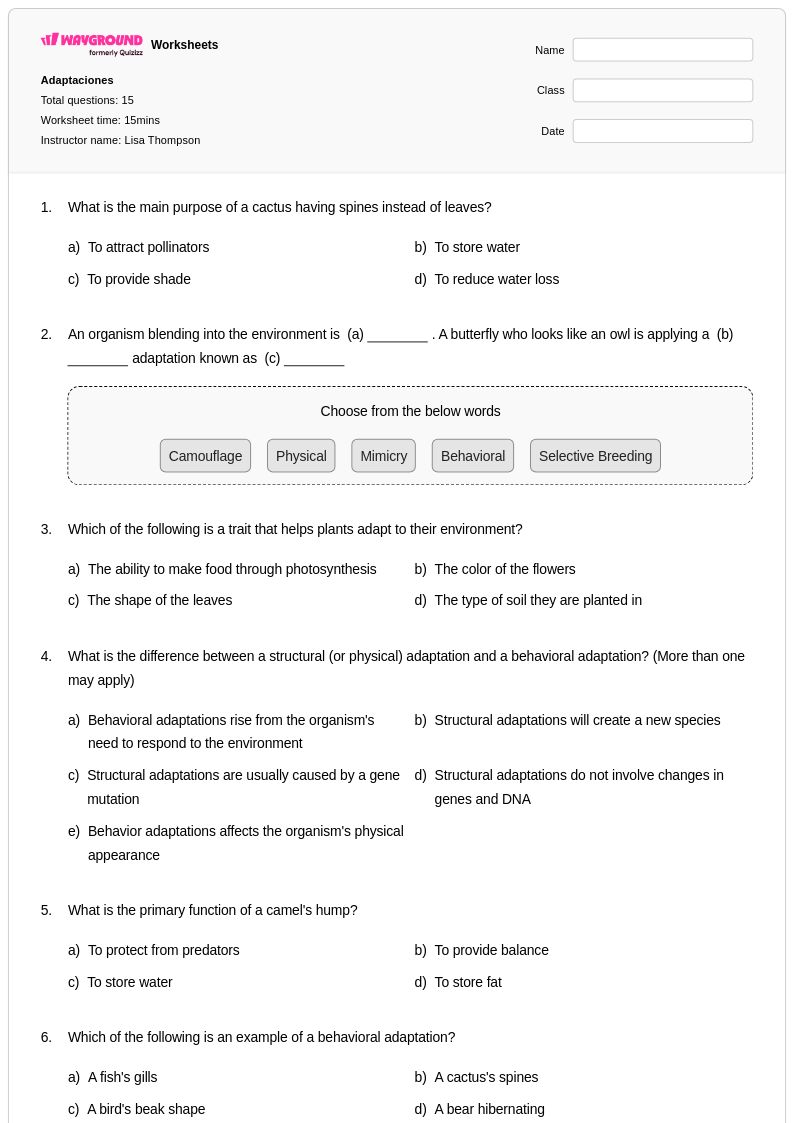
15 Q
5th - Uni
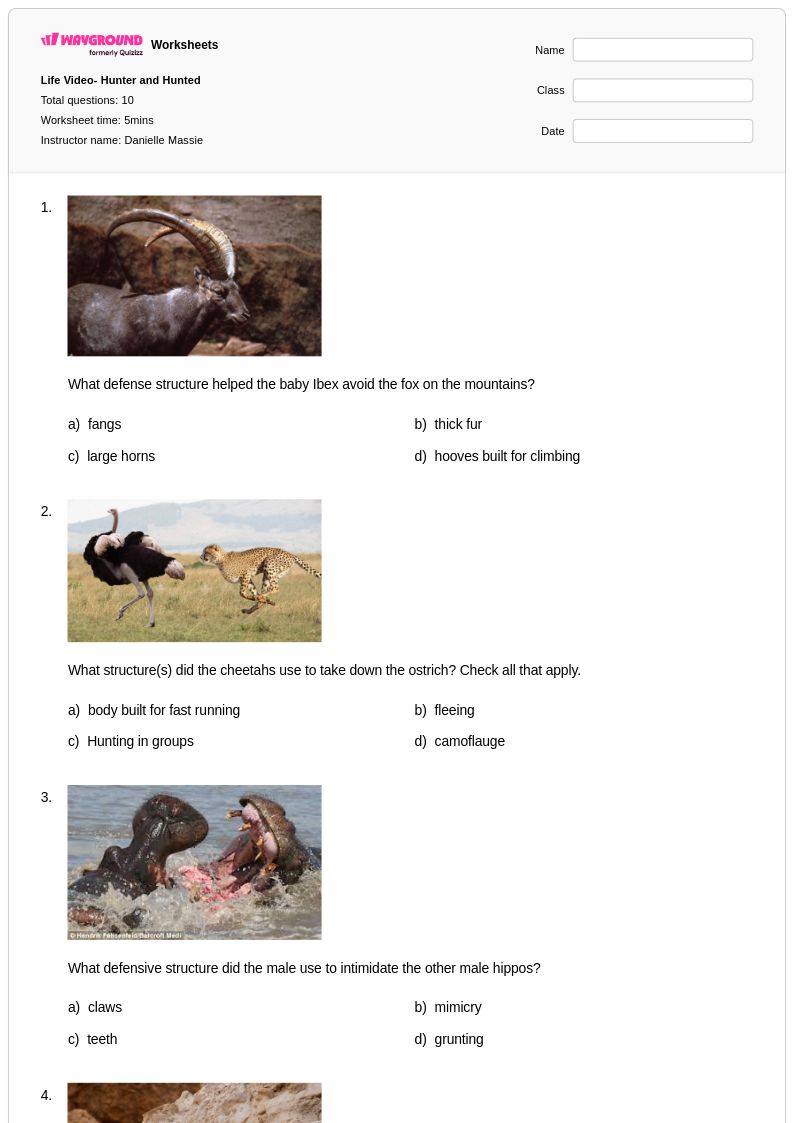
10 Q
6th
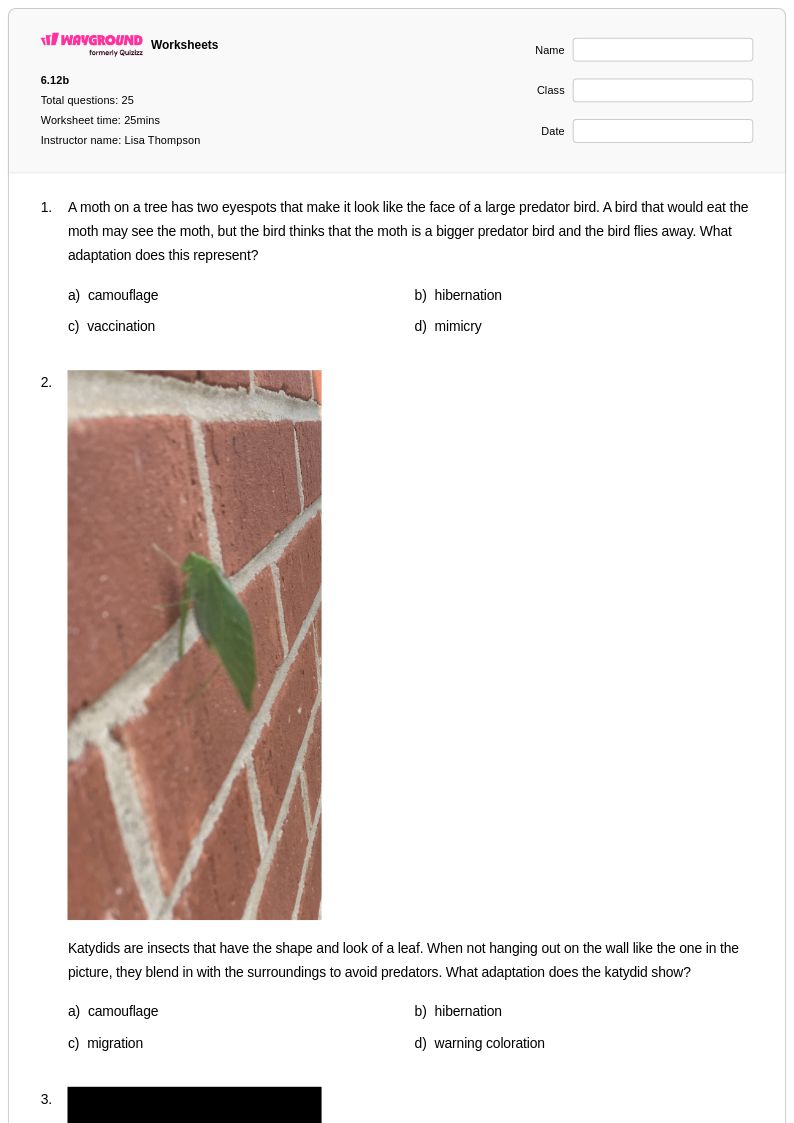
25 Q
2nd - Uni
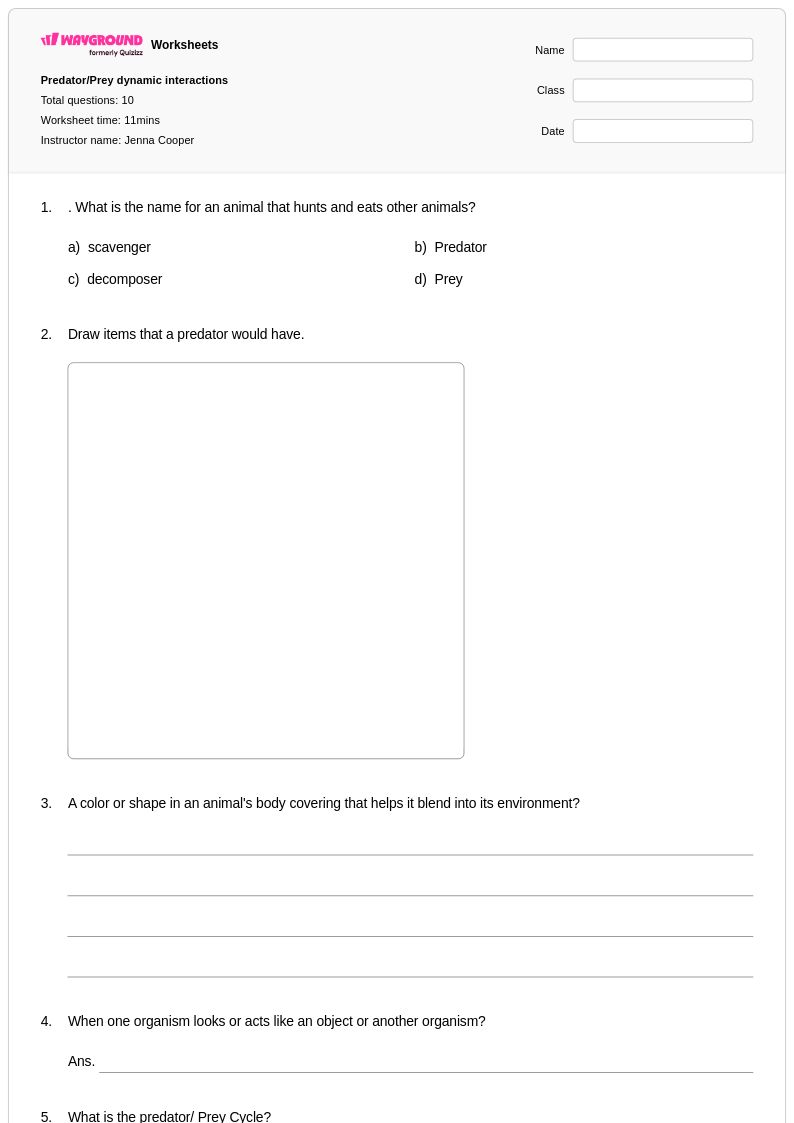
10 Q
6th - 8th
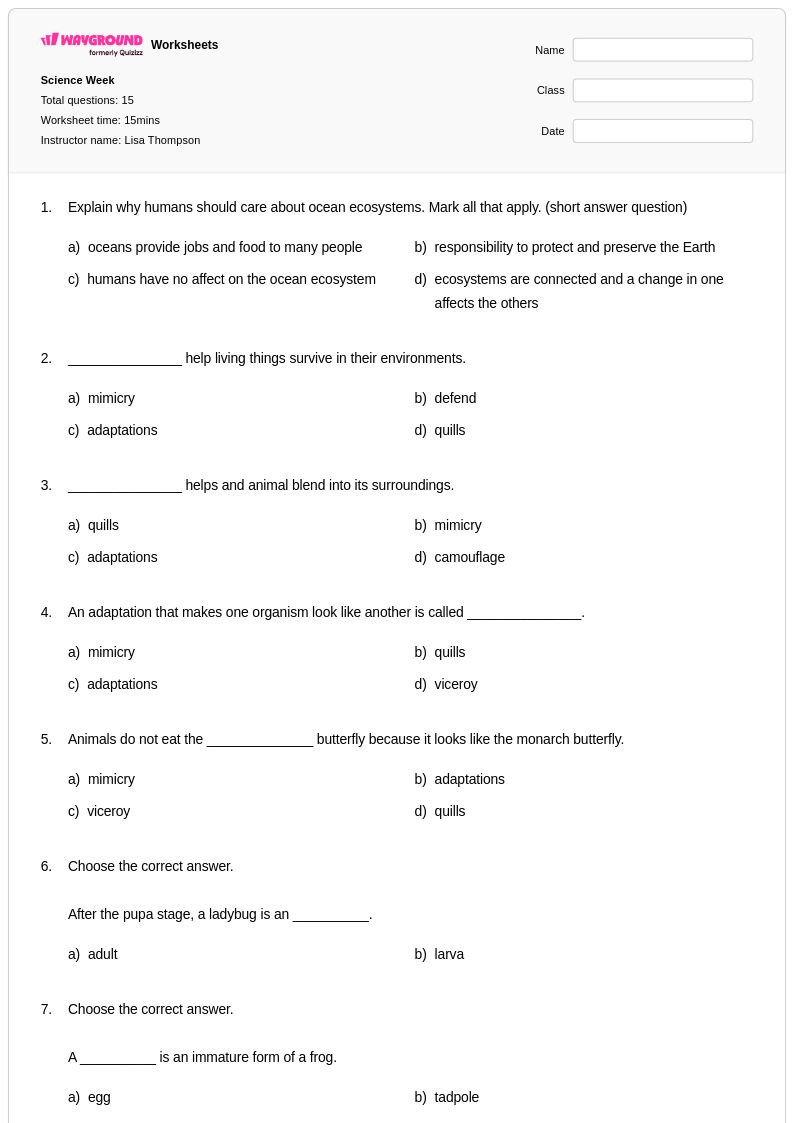
15 Q
3rd - Uni
Explore Other Subject Worksheets for class 6
Explore printable Mimicry worksheets for Class 6
Mimicry worksheets for Class 6 students available through Wayground (formerly Quizizz) provide comprehensive exploration of one of nature's most fascinating survival strategies. These educational resources help students understand how organisms evolve to resemble other species, objects, or environments to gain survival advantages such as protection from predators or improved hunting success. The worksheets strengthen critical thinking skills by challenging students to analyze different types of mimicry, including Batesian mimicry where harmless species imitate dangerous ones, and Müllerian mimicry where multiple harmful species share similar warning signals. Each printable resource includes detailed answer keys and practice problems that guide students through identifying mimicry examples in nature, from harmless butterflies that copy toxic species to stick insects that blend seamlessly with their surroundings. These free pdf worksheets reinforce key biological concepts while developing students' observational and analytical abilities essential for scientific inquiry.
Wayground (formerly Quizizz) supports educators with an extensive collection of teacher-created mimicry worksheets drawn from millions of resources developed by experienced biology instructors. The platform's robust search and filtering capabilities allow teachers to quickly locate grade-appropriate materials that align with specific learning standards and curriculum requirements. Teachers can easily differentiate instruction by selecting from various difficulty levels and worksheet formats, whether they need basic identification exercises for struggling learners or advanced comparative analysis activities for enrichment. The flexible customization tools enable educators to modify existing worksheets or combine multiple resources to meet their specific classroom needs, while the availability of both printable and digital pdf formats ensures seamless integration into any teaching environment. These comprehensive features streamline lesson planning and provide valuable resources for targeted skill practice, remediation sessions, and assessment preparation that help students master this complex biological concept.
FAQs
How do I teach Batesian vs. Müllerian mimicry in a biology class?
What are good practice exercises for helping students understand mimicry as an evolutionary adaptation?
What misconceptions do students commonly have about mimicry in biology?
How can I use mimicry worksheets to support different skill levels in my classroom?
How do I use Wayground's mimicry worksheets in my classroom?