Free Printable Neuromuscular Junction Worksheets for Grade 11
Grade 11 Biology neuromuscular junction worksheets from Wayground provide comprehensive printables and practice problems that help students master nerve-muscle communication, synaptic transmission, and motor unit function with detailed answer keys.
Explore printable Neuromuscular Junction worksheets for Grade 11
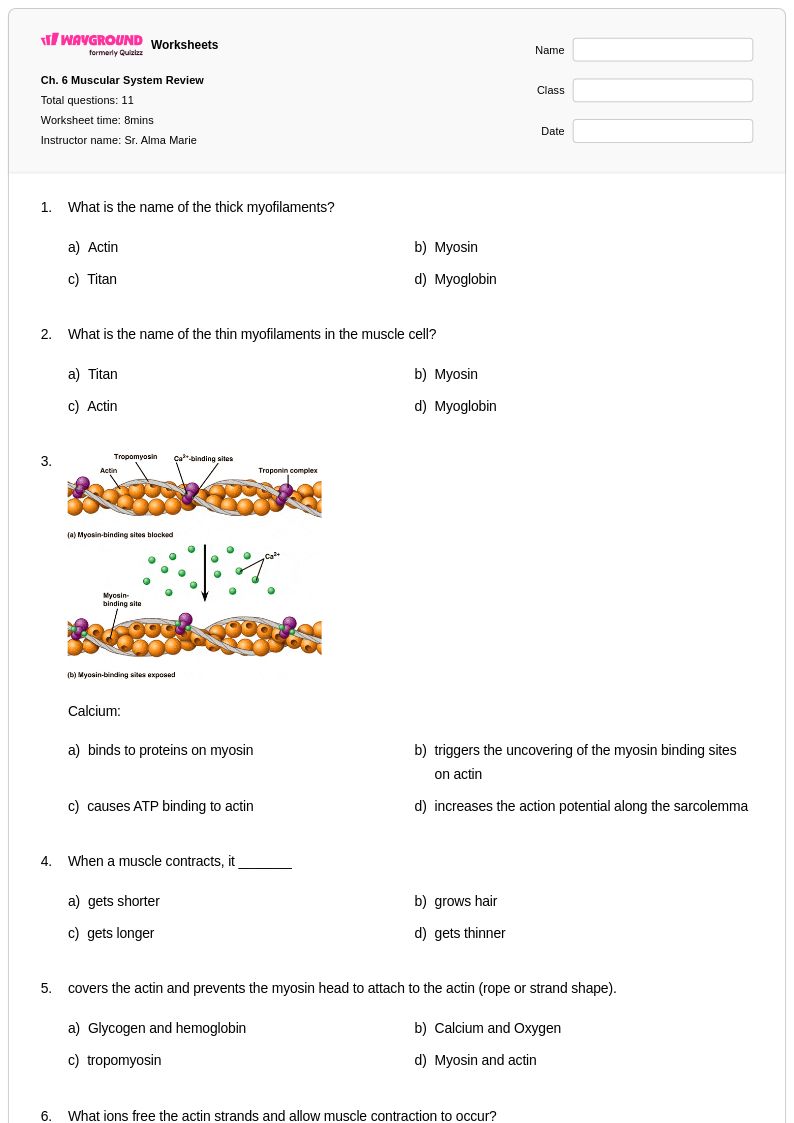
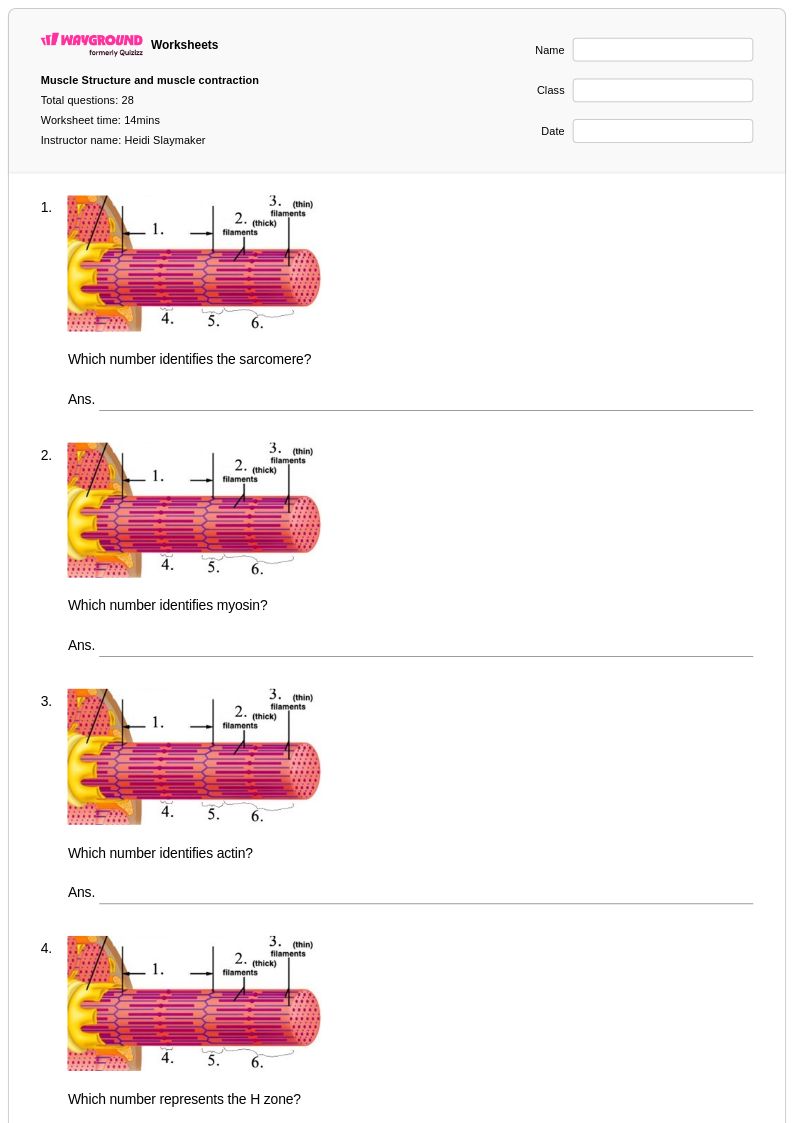
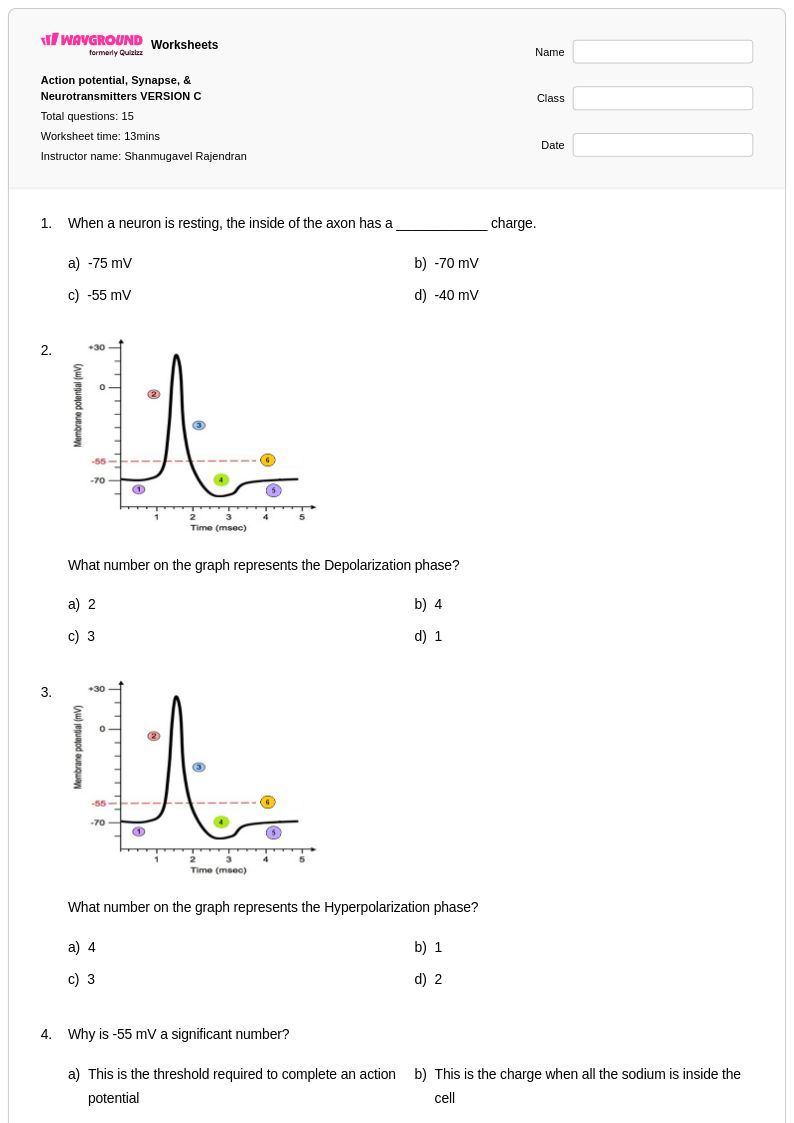
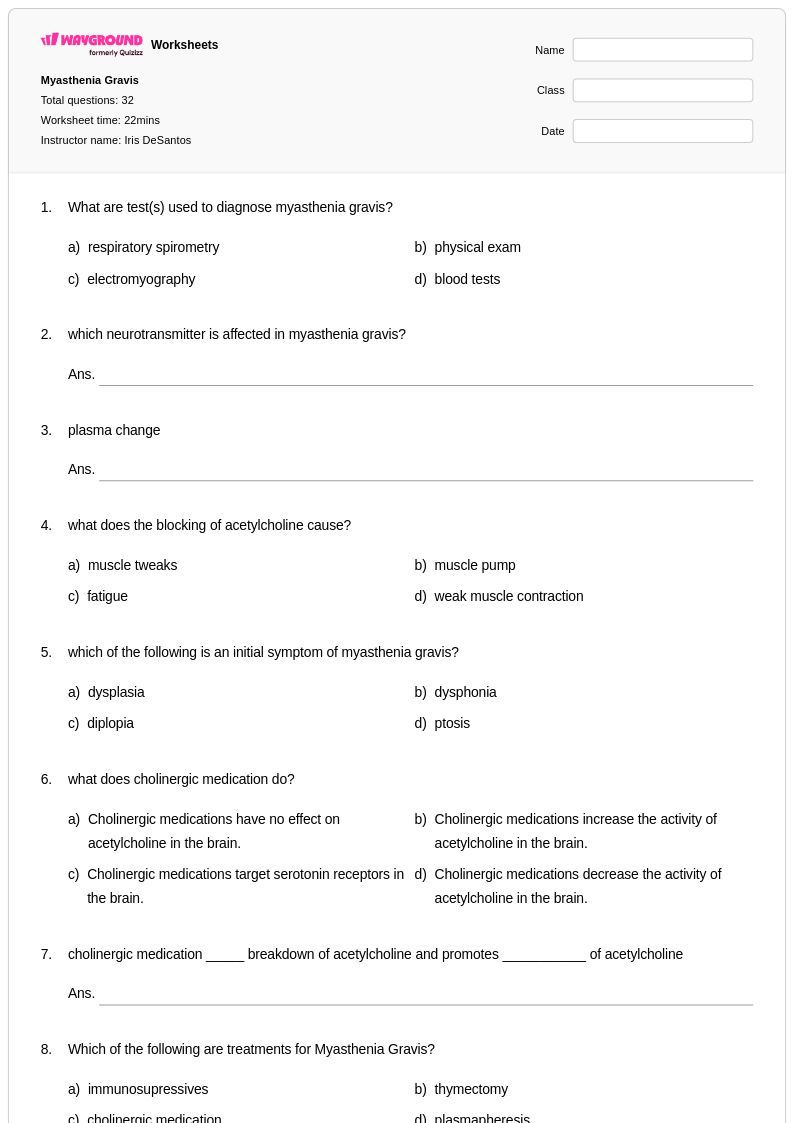
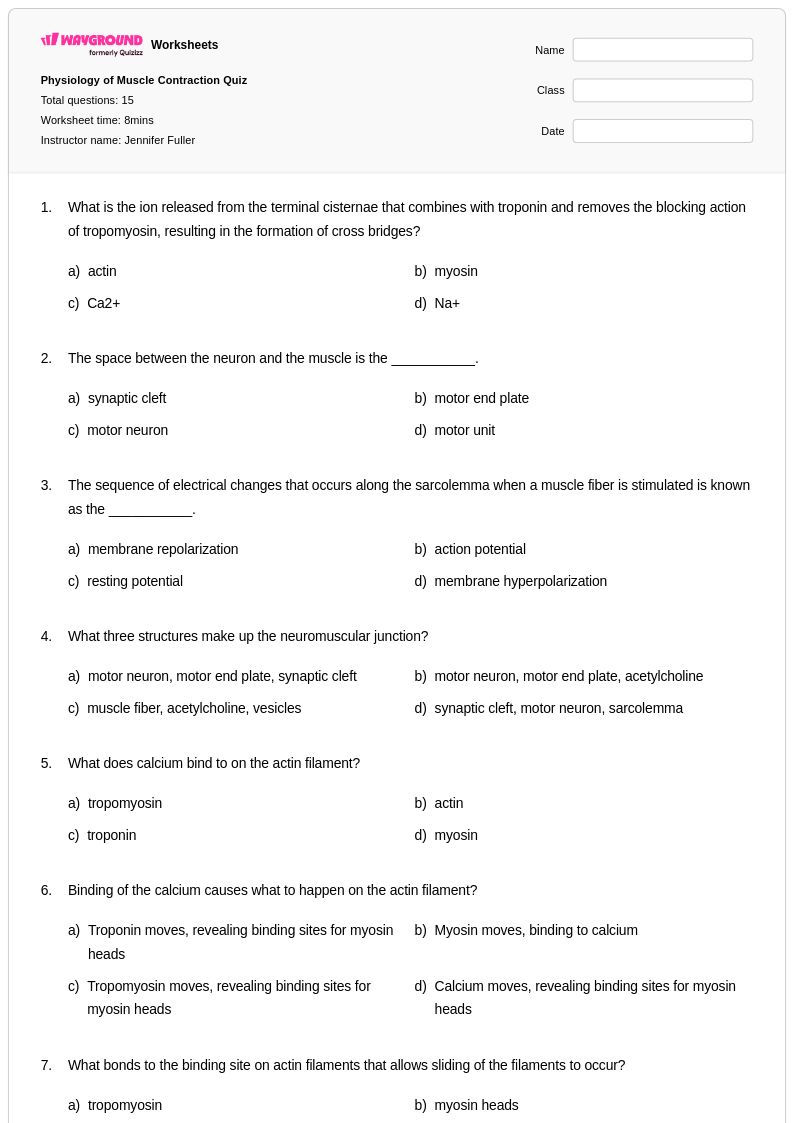
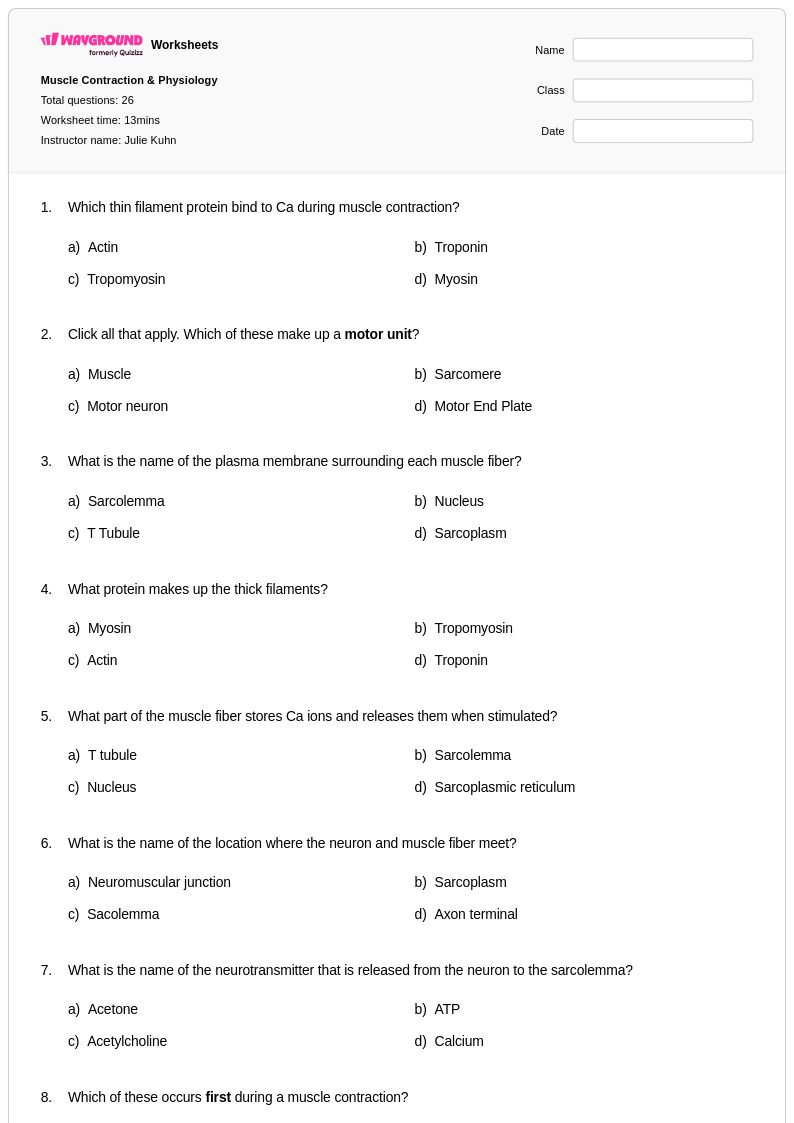
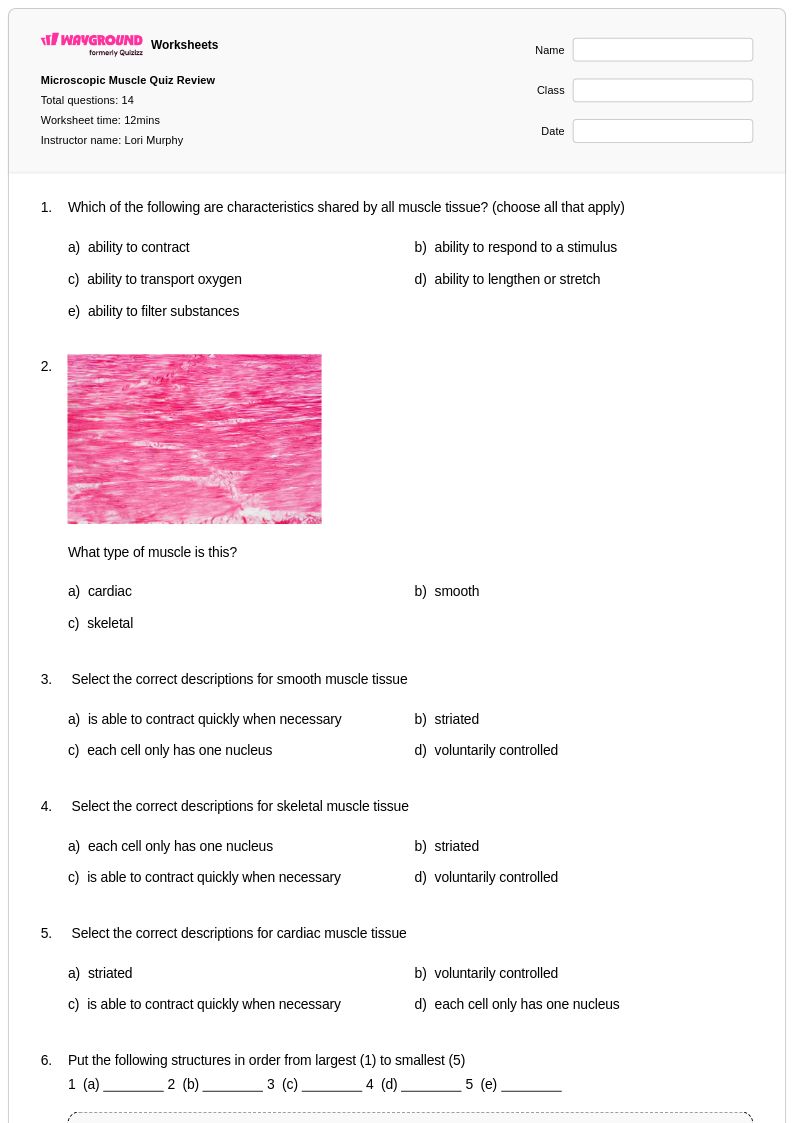
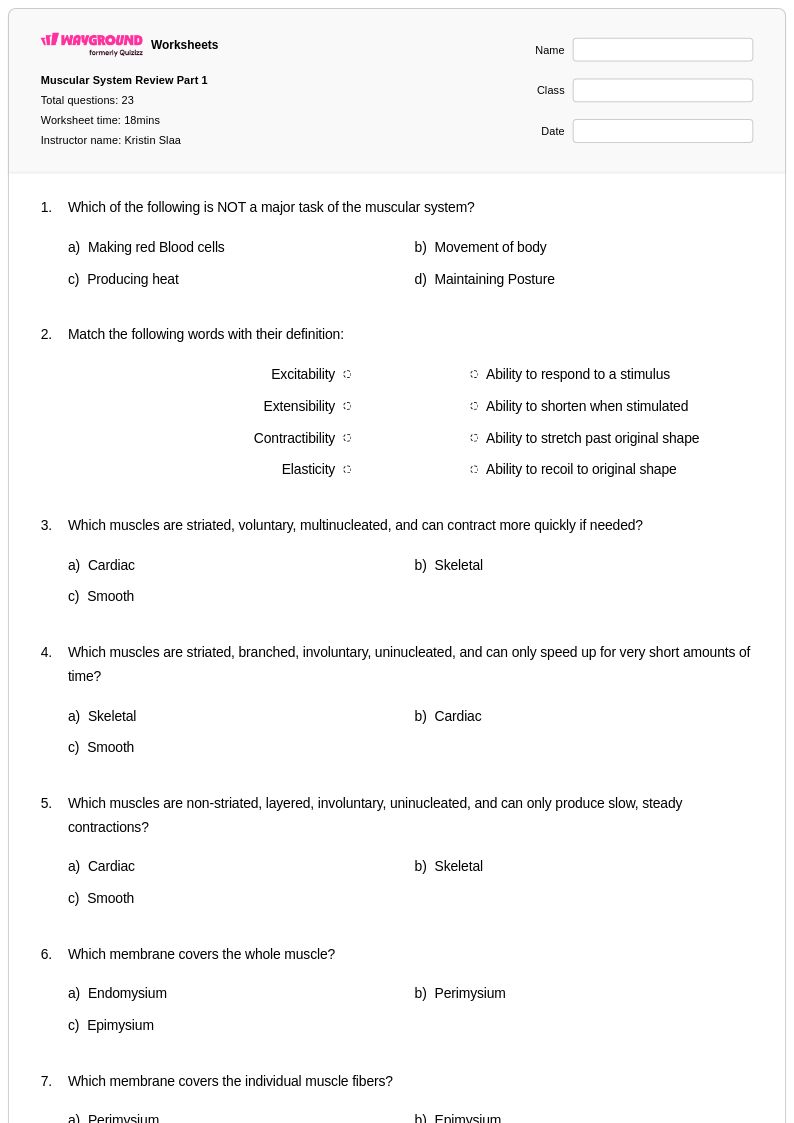
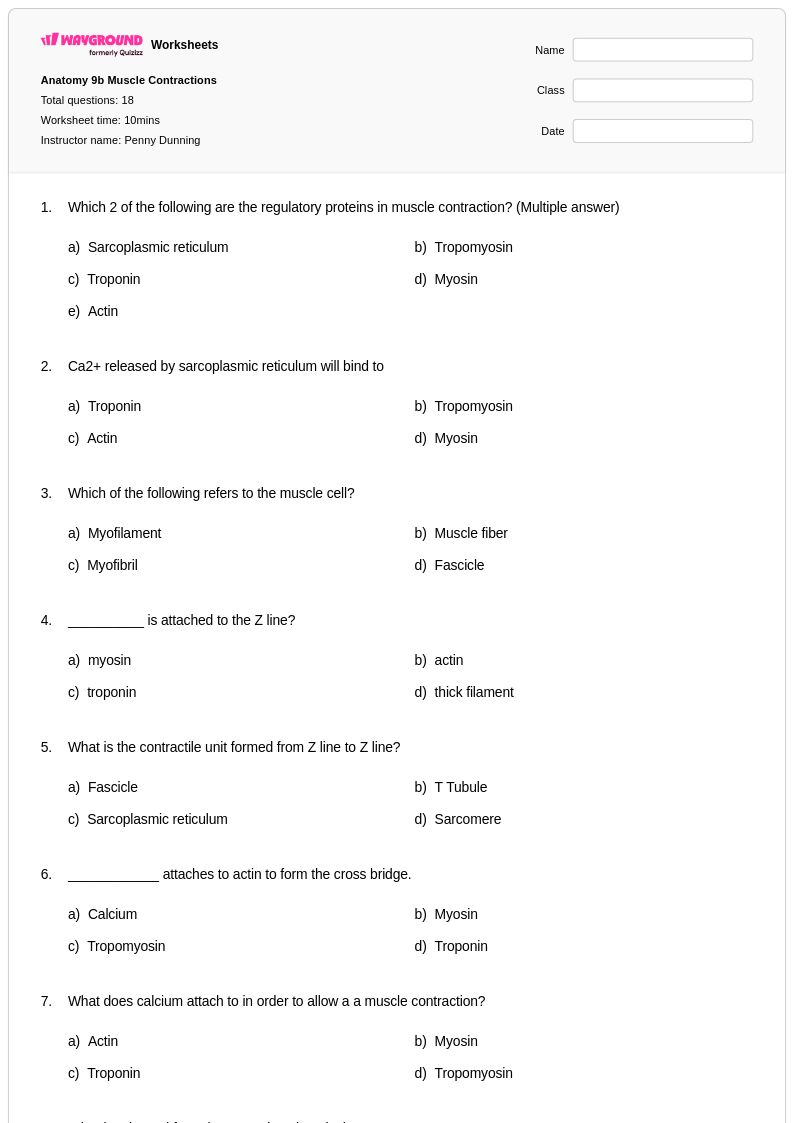
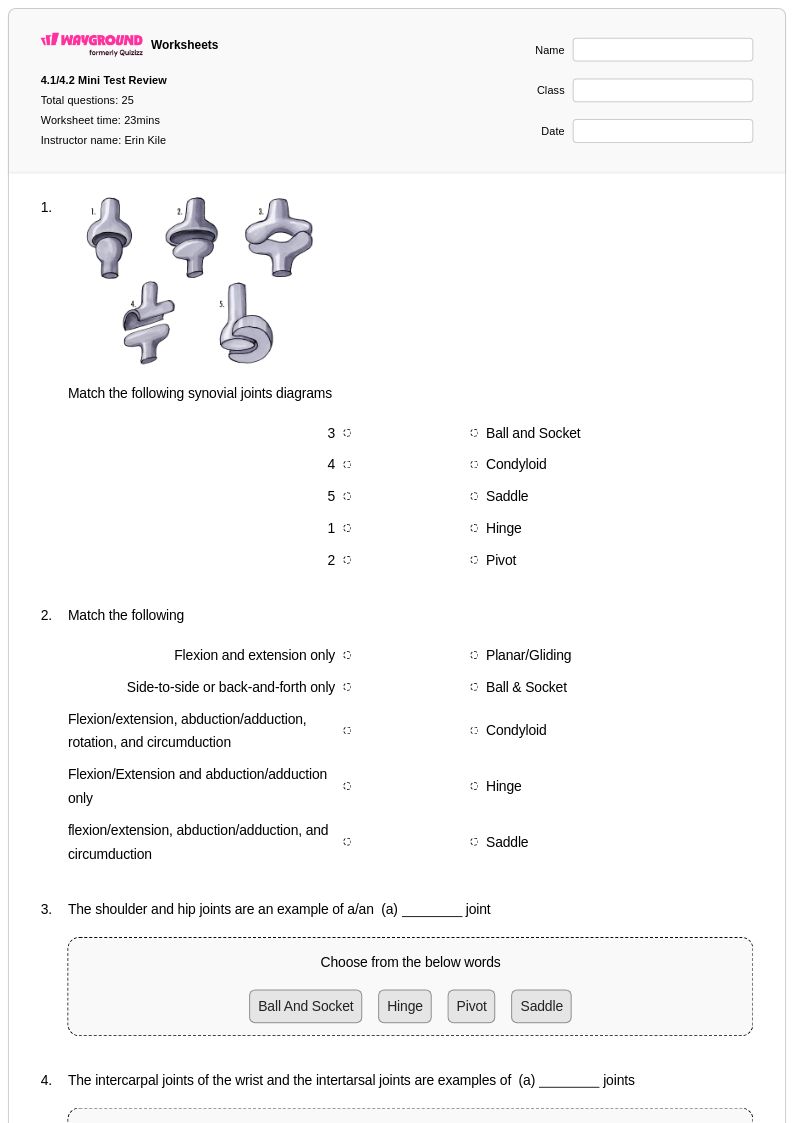
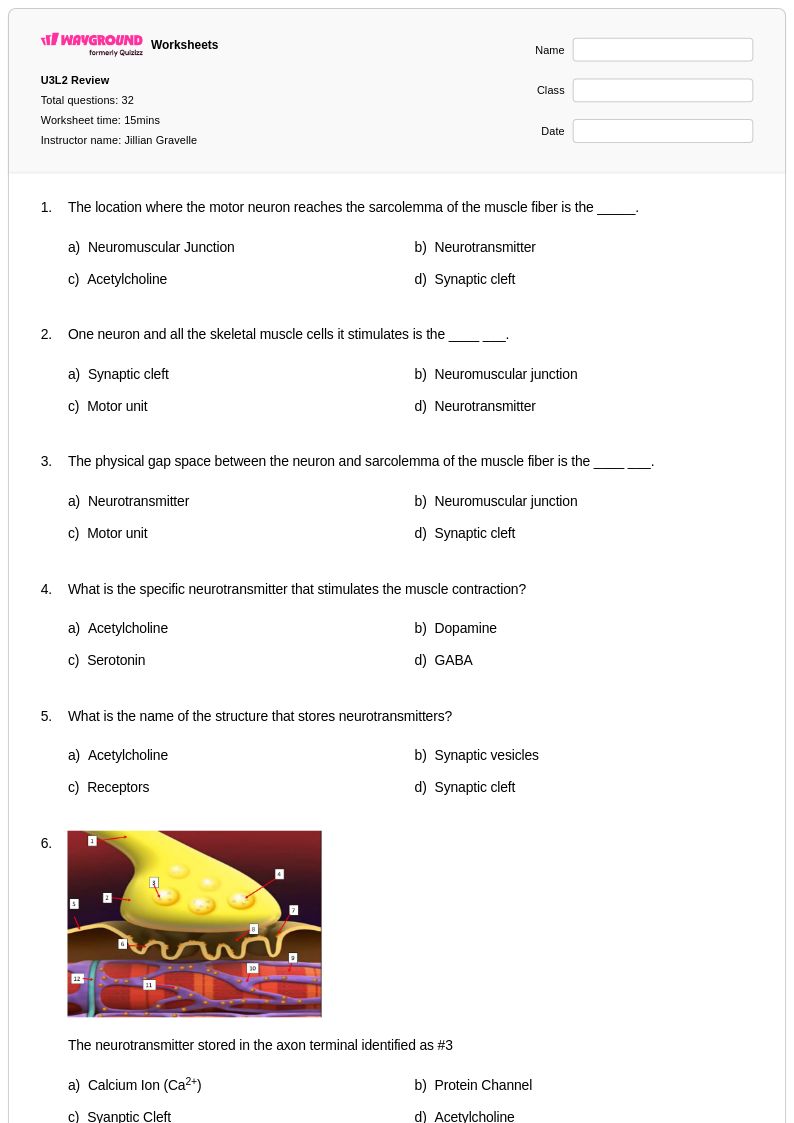
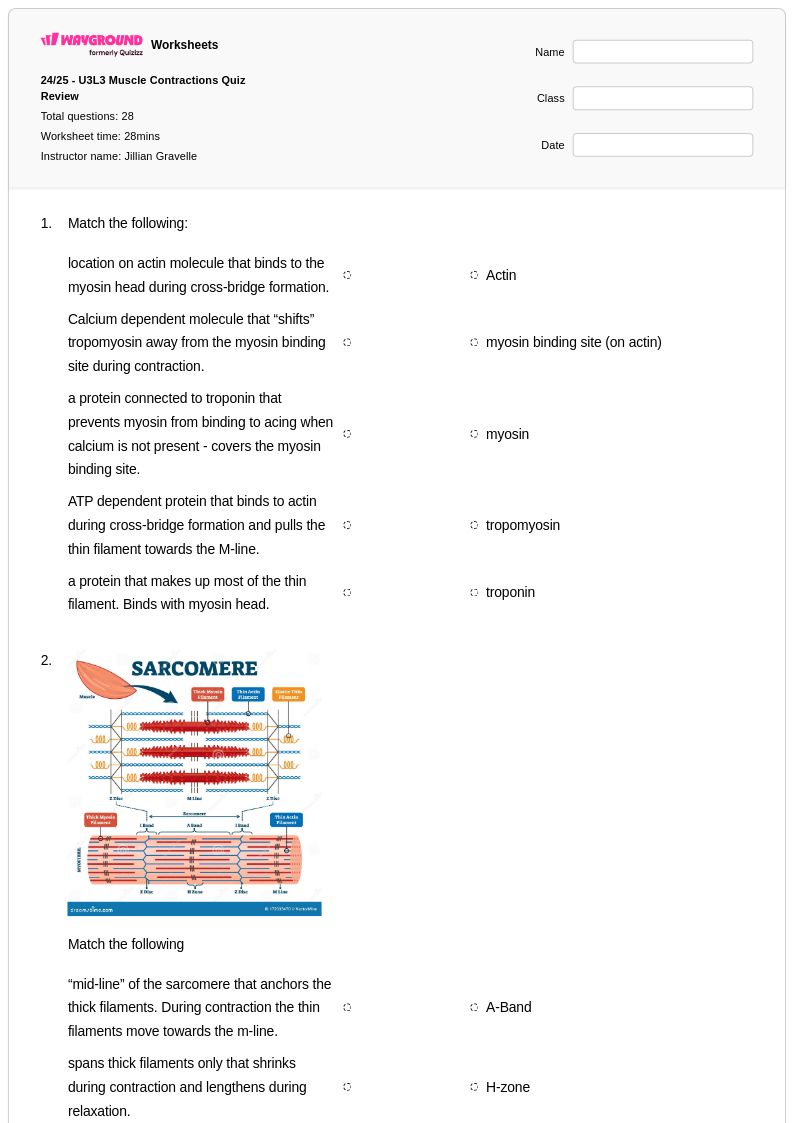
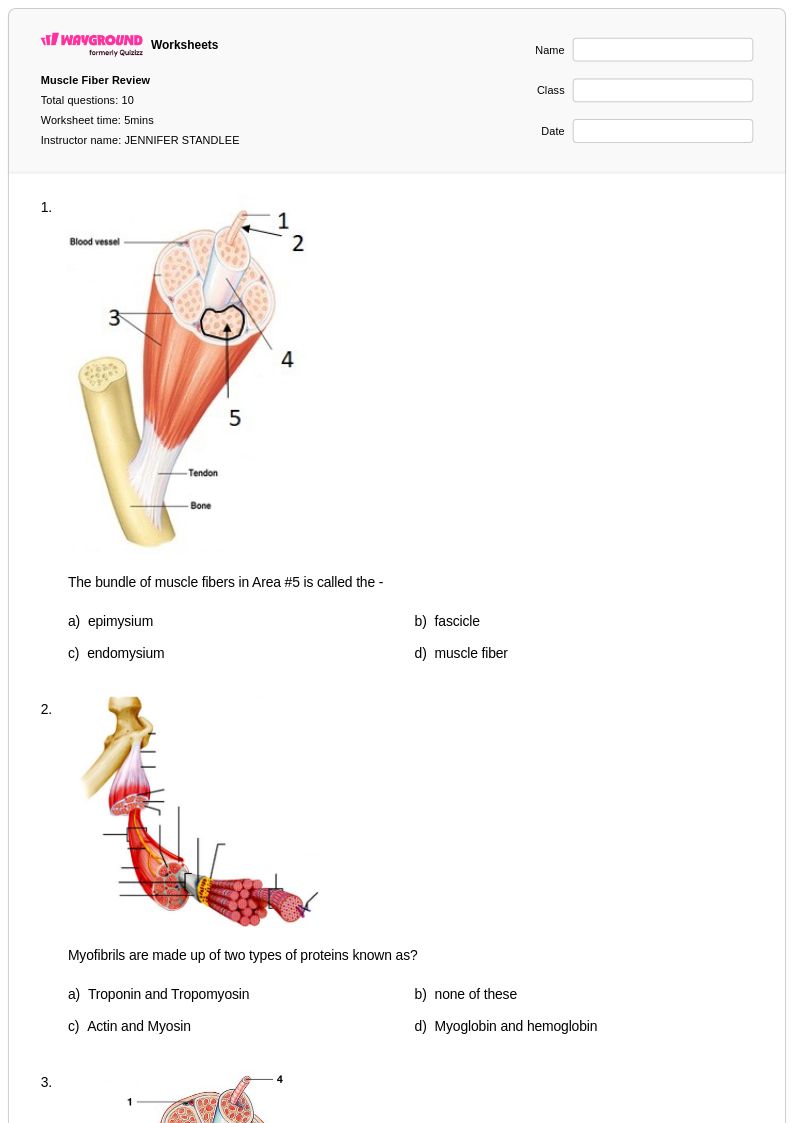
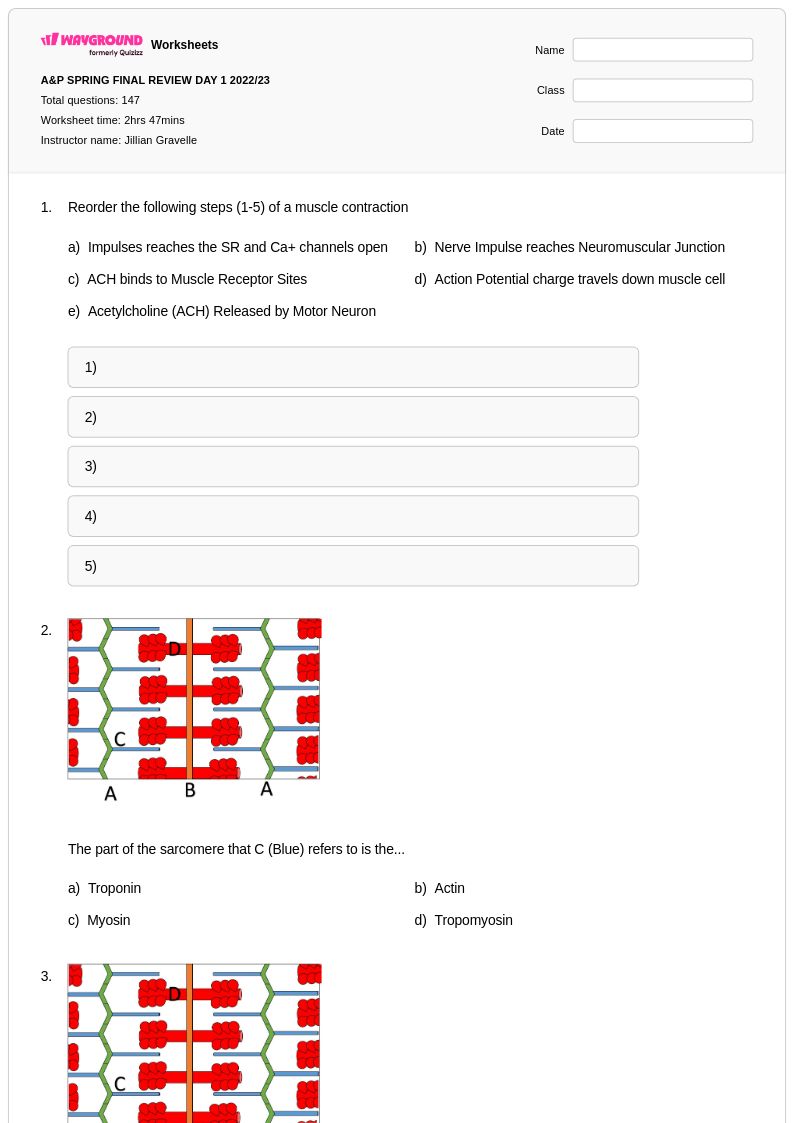
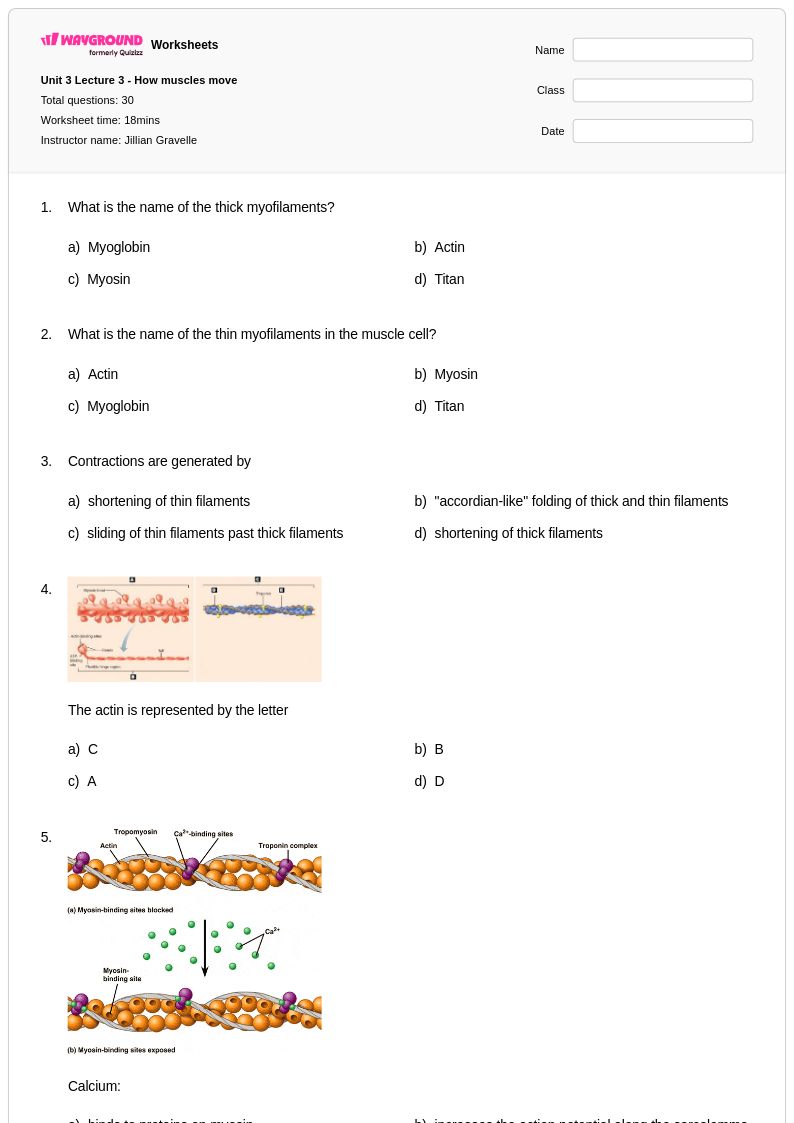
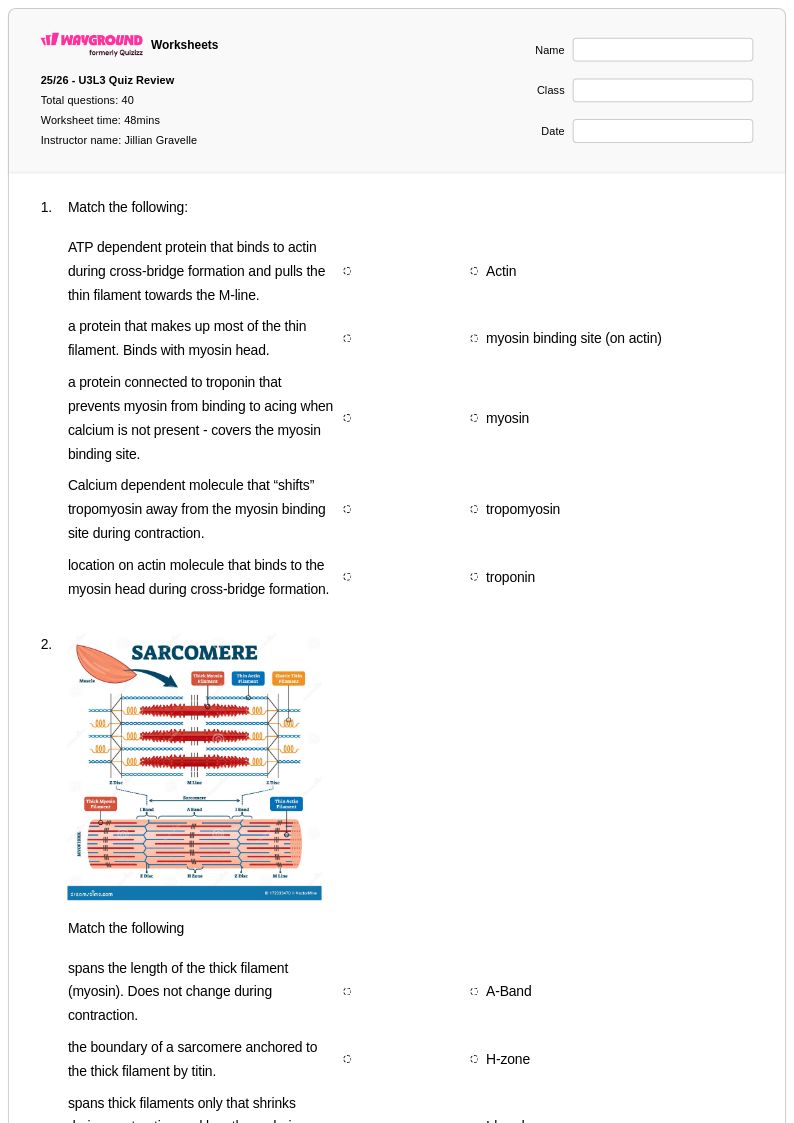
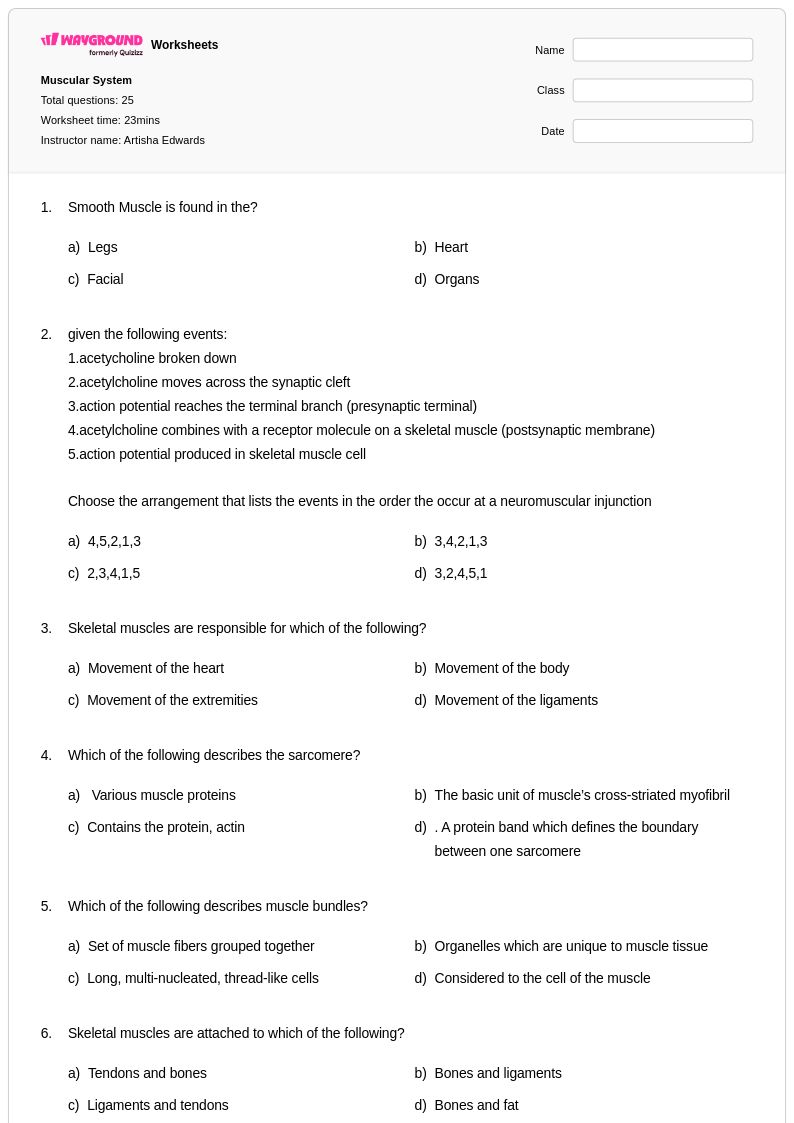
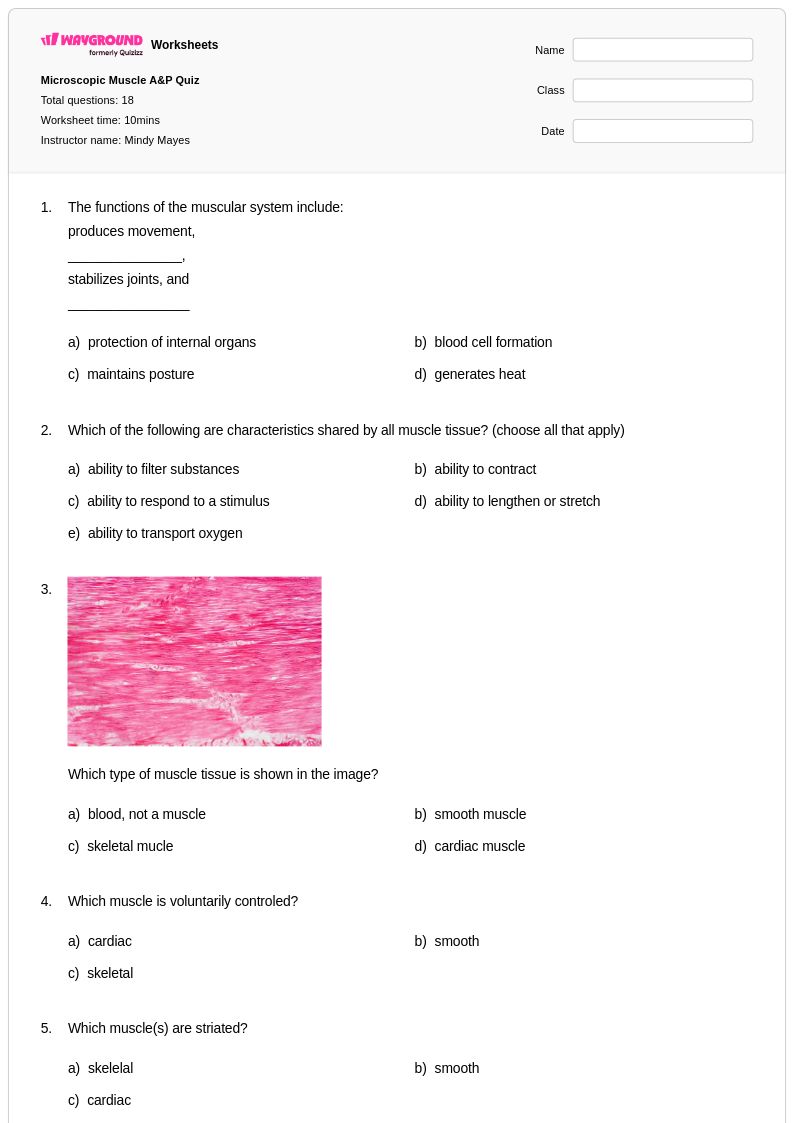
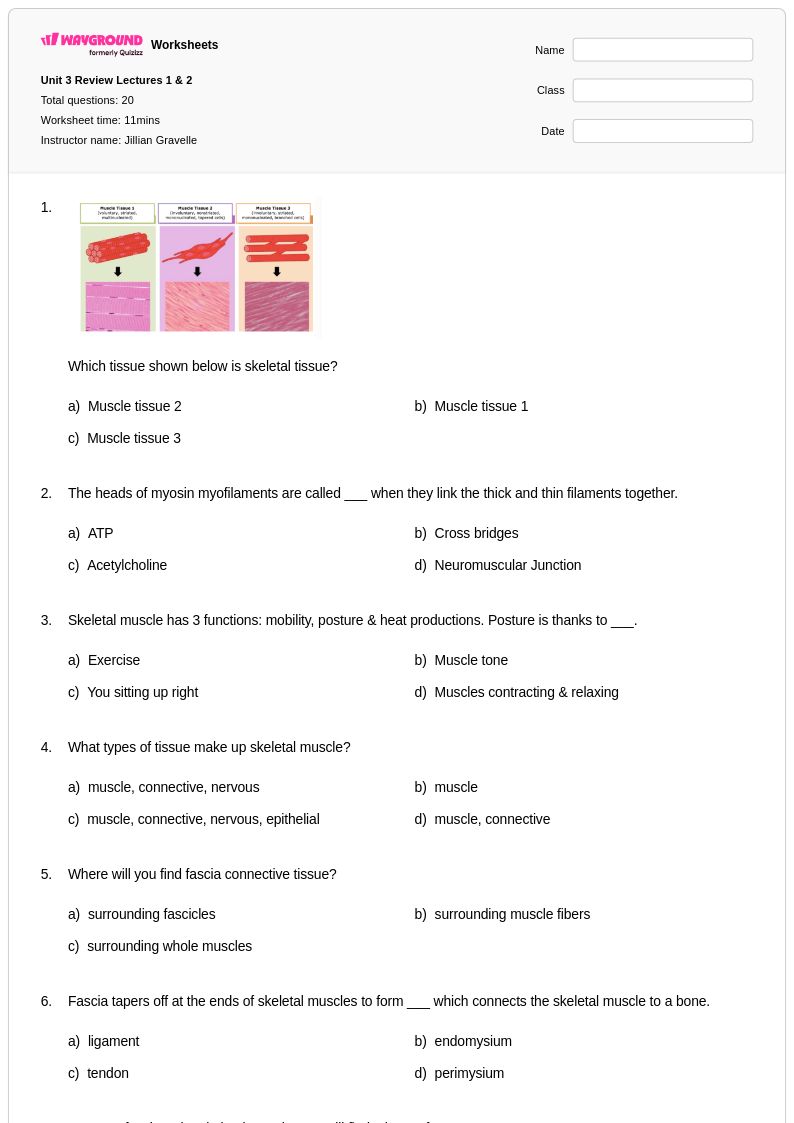
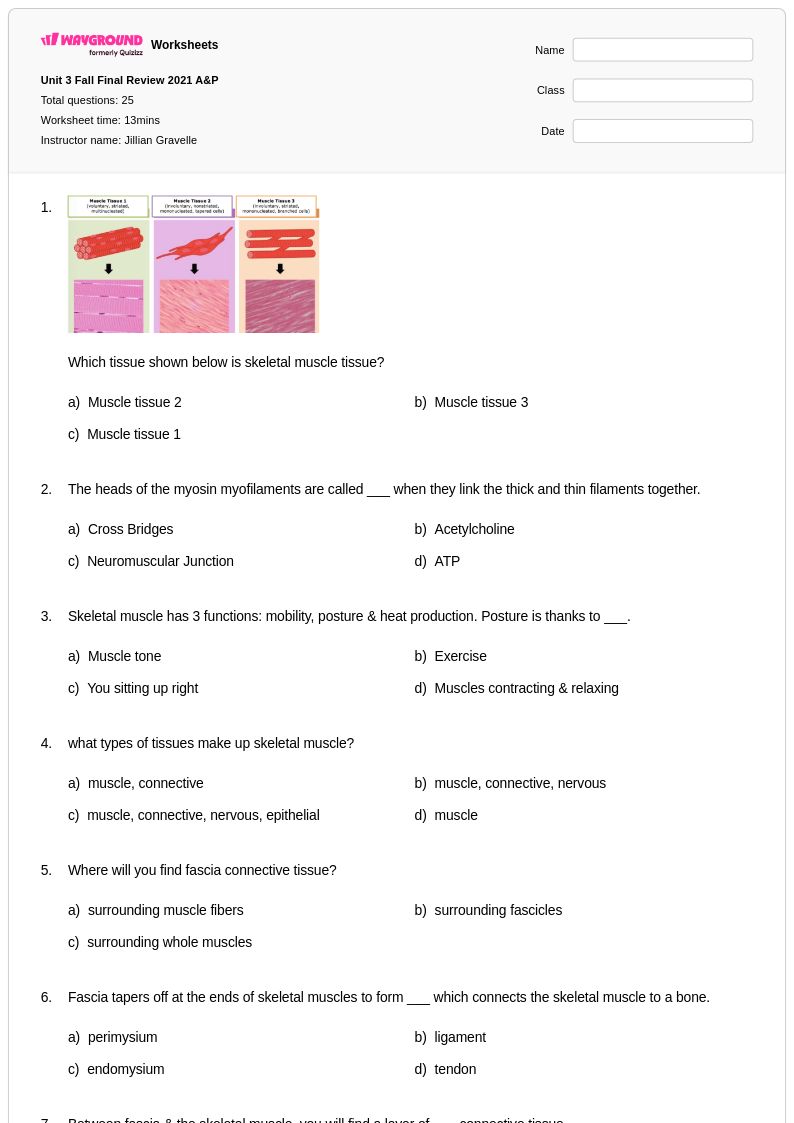
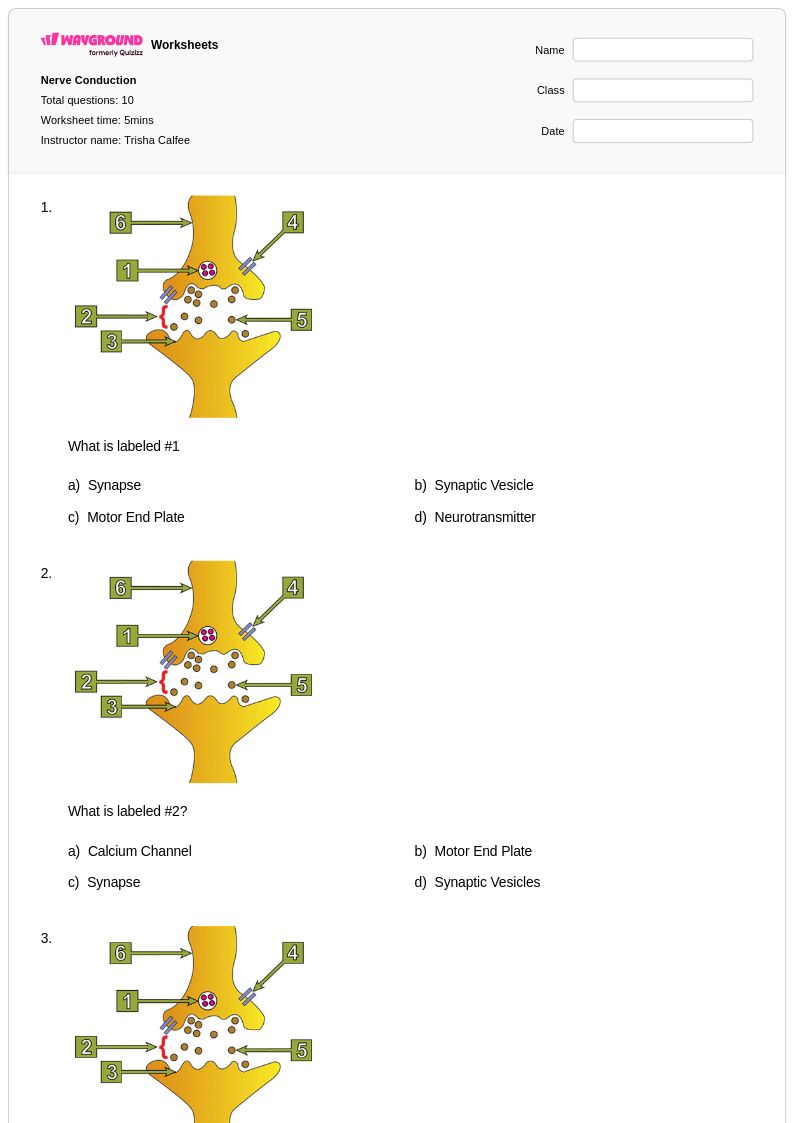
Neuromuscular junction worksheets for Grade 11 students available through Wayground (formerly Quizizz) provide comprehensive practice materials that deepen understanding of this critical connection point between motor neurons and skeletal muscle fibers. These expertly crafted worksheets strengthen essential skills in identifying anatomical structures like the synaptic cleft, motor end plate, and acetylcholine receptors, while reinforcing knowledge of neurotransmitter release mechanisms and muscle contraction initiation. Students engage with detailed practice problems that explore the molecular events of synaptic transmission, from action potential propagation to acetylcholinesterase function, with complete answer keys provided to support independent learning. The free printables include diagram labeling exercises, process sequencing activities, and analytical questions that challenge students to connect neuromuscular junction dysfunction to various medical conditions and physiological responses.
Wayground (formerly Quizizz) empowers educators with access to millions of teacher-created resources specifically designed for neuromuscular junction instruction at the Grade 11 level. The platform's robust search and filtering capabilities allow teachers to quickly locate worksheets aligned with specific curriculum standards and learning objectives, while differentiation tools enable customization for diverse learning needs and academic abilities. These comprehensive worksheet collections are available in both printable pdf formats and interactive digital versions, providing flexibility for classroom instruction, homework assignments, and independent study sessions. Teachers can seamlessly integrate these resources into lesson planning for initial concept introduction, targeted skill remediation, advanced student enrichment, and comprehensive exam preparation, ensuring that all students develop mastery of this fundamental neurophysiological concept.
FAQs
How do I teach the neuromuscular junction to high school biology students?
Start by grounding students in the structural relationship between motor neurons and muscle fibers before introducing the chemical signaling sequence. Walk through synaptic transmission step by step: action potential arrival, acetylcholine release from synaptic vesicles, binding to receptors on the motor end plate, and the resulting muscle fiber depolarization. Diagram-based activities work especially well here because students can trace each stage spatially rather than memorizing an abstract sequence. Connecting the process to real-world examples like neuromuscular blocking agents or myasthenia gravis gives students a clinical anchor that strengthens retention.
What exercises help students practice neuromuscular junction concepts?
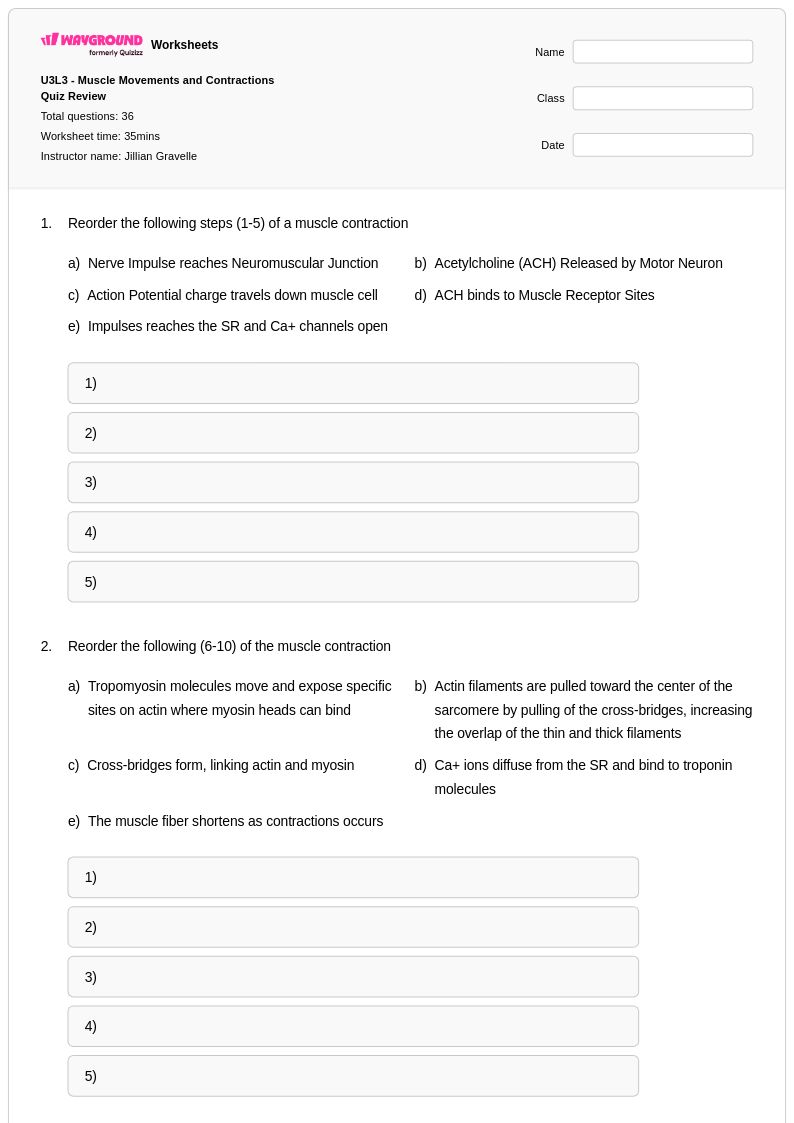
Sequencing exercises that ask students to order the steps of synaptic transmission from action potential to muscle contraction are highly effective for building procedural understanding. Labeling diagrams of the neuromuscular junction, including the synaptic cleft, motor end plate, and acetylcholine receptors, reinforces structural vocabulary. Analytical practice problems that ask students to predict outcomes when specific components fail, such as blocked acetylcholinesterase or absent calcium ions, push students beyond recall into application-level thinking.
What mistakes do students commonly make when learning about the neuromuscular junction?
A frequent misconception is conflating the neuromuscular junction with a standard synapse between two neurons. Students often overlook that the postsynaptic cell is a muscle fiber, not another neuron, which changes the outcome of receptor activation from a new action potential to a muscle contraction. Many students also confuse acetylcholine release with acetylcholinesterase breakdown, treating the two as simultaneous rather than sequential. Another common error is assuming the nerve impulse directly causes contraction rather than understanding that acetylcholine binding triggers a separate electrical event in the muscle membrane.
How can I differentiate neuromuscular junction instruction for students at different levels?
For students who need additional support, reduce the complexity of diagrams to a single labeled cross-section and focus sequencing tasks on four or five core steps rather than the full transmission pathway. Advanced students can be extended into clinical applications such as how organophosphate poisoning inhibits acetylcholinesterase or how botulinum toxin blocks acetylcholine release. On Wayground, teachers can apply accommodations individually, including read-aloud support for students who struggle with dense scientific text and reduced answer choices for students who need lower cognitive load during practice, without other students being aware of those adjustments.
How do I use Wayground's neuromuscular junction worksheets in my classroom?
Wayground's neuromuscular junction worksheets are available as printable PDFs for traditional classroom use and in digital formats for technology-integrated environments, giving teachers flexibility depending on their setup. You can assign them directly as digital quizzes hosted on Wayground, which is useful for formative checks after an introductory lesson. Each worksheet includes a complete answer key, so they work equally well for independent practice, guided review, or remediation. Wayground also allows you to customize content complexity and adjust focus areas to match specific learning objectives.