Free Printable Alkenes and Alkynes Worksheets for Class 11
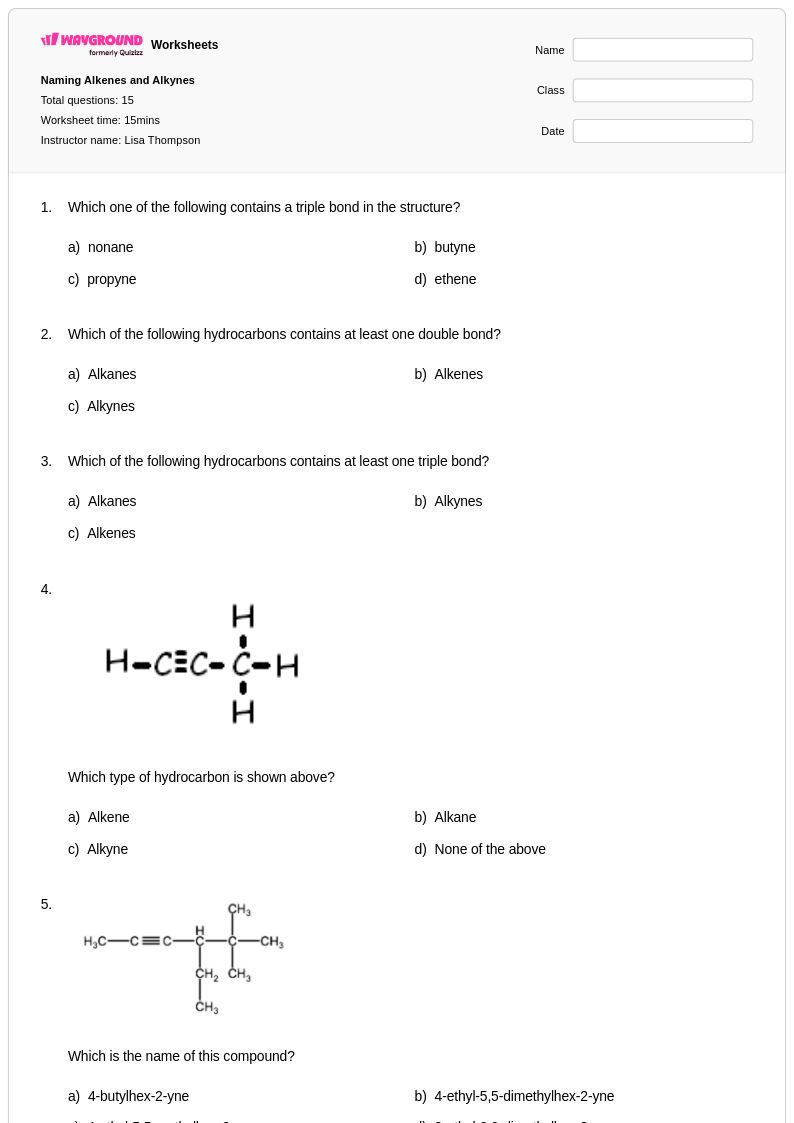
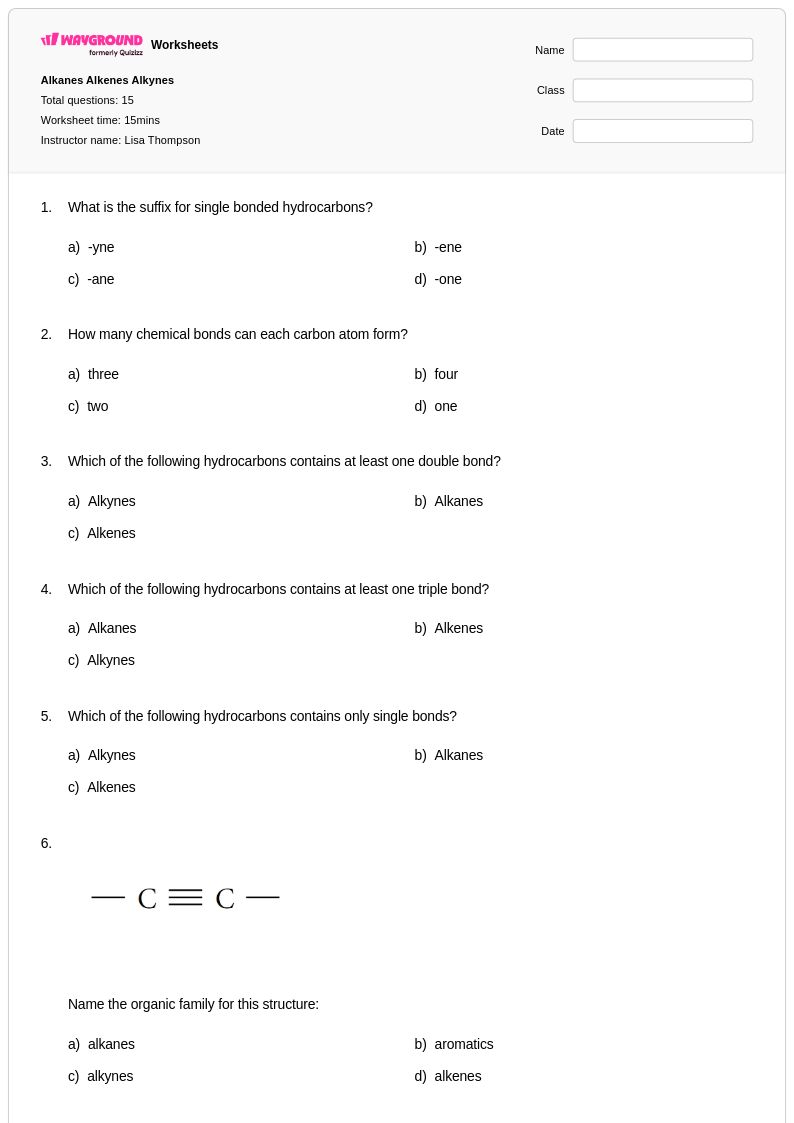
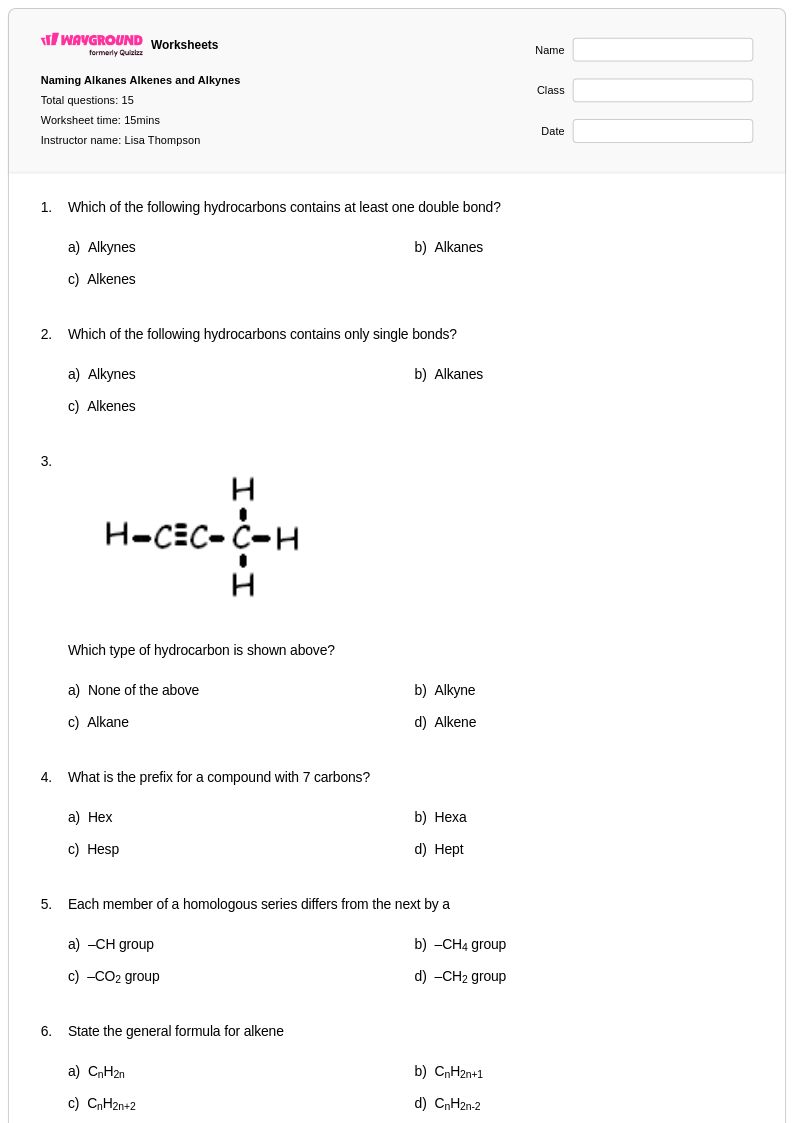
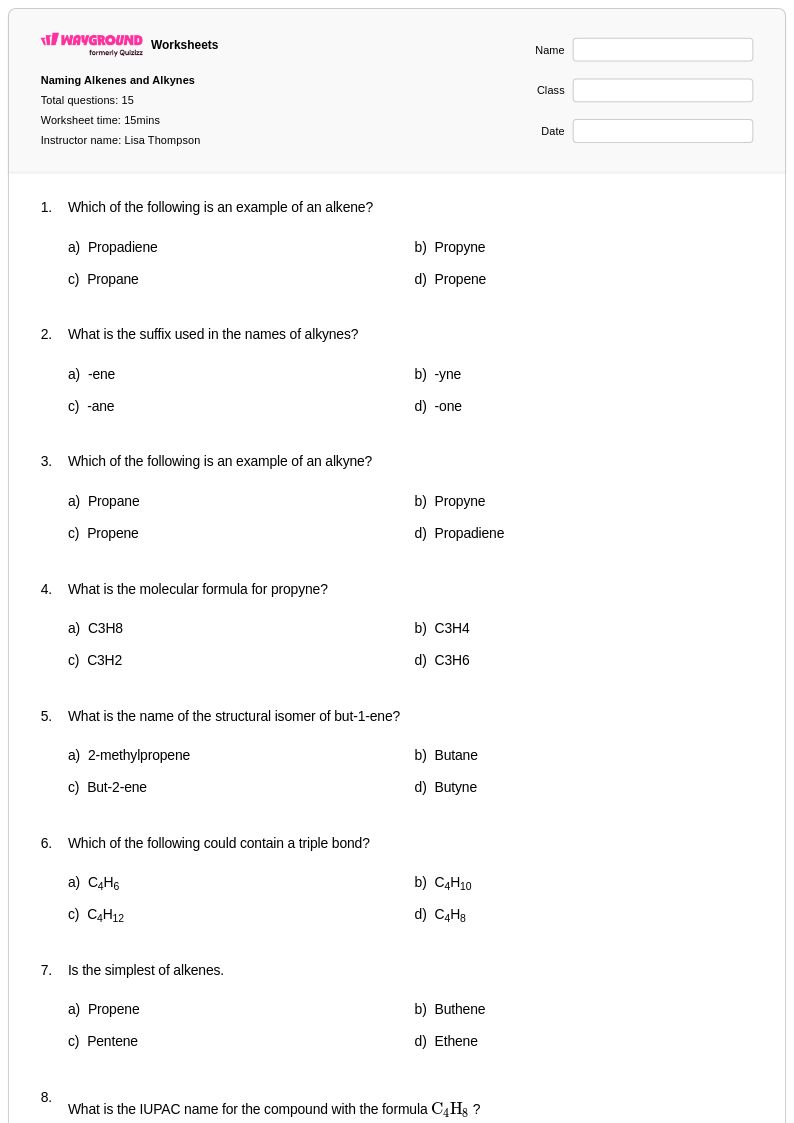
Class 11 alkenes and alkynes chemistry worksheets from Wayground offer free printable PDFs with practice problems and answer keys to help students master unsaturated hydrocarbon structures, reactions, and nomenclature.
Explore printable Alkenes and Alkynes worksheets for Class 11
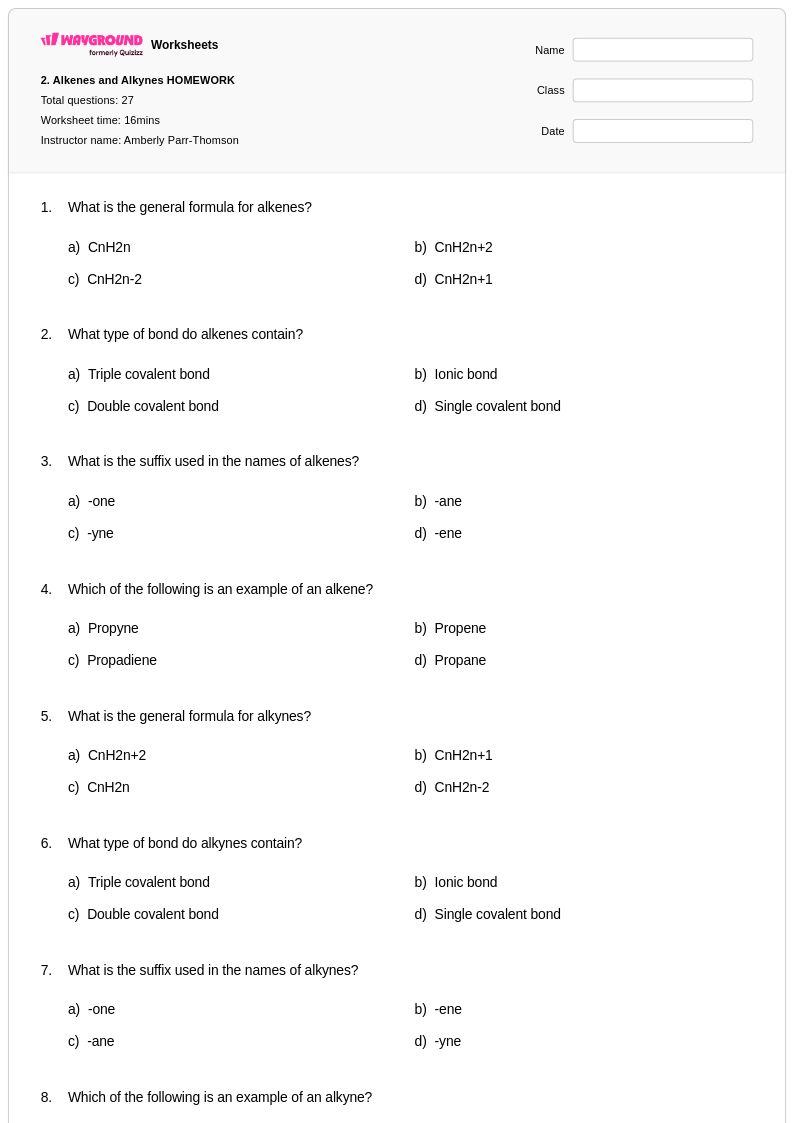
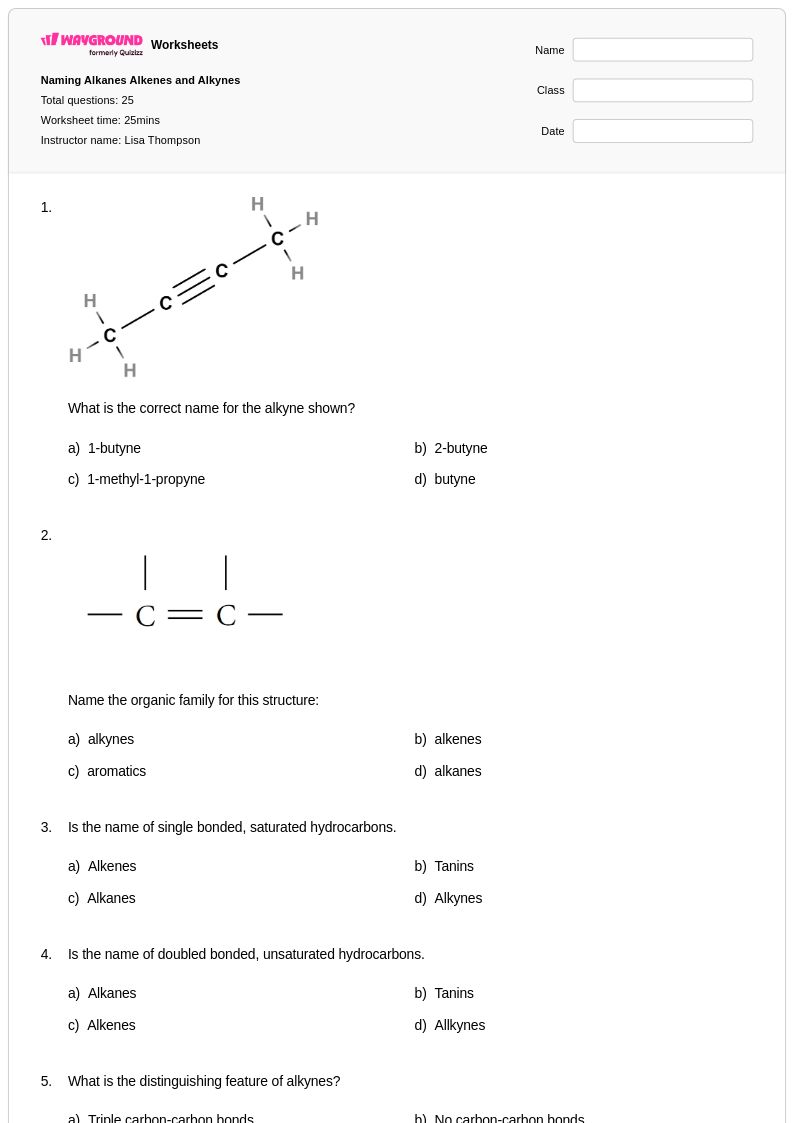
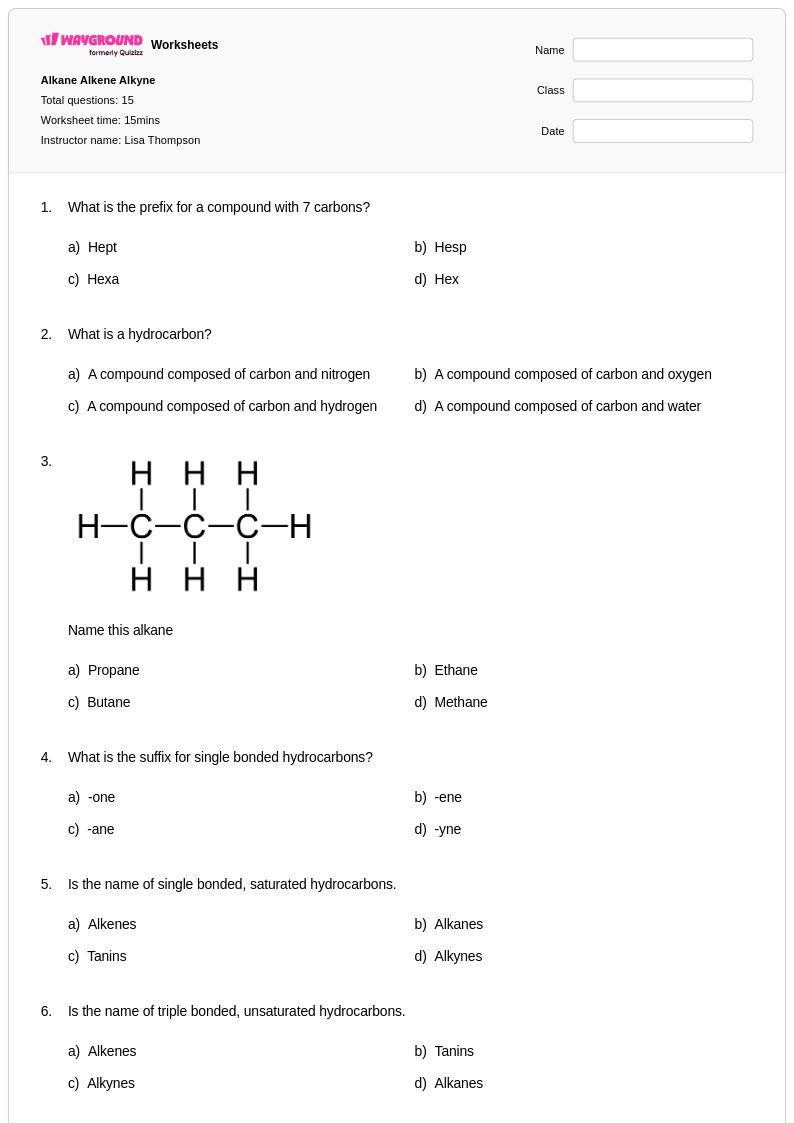
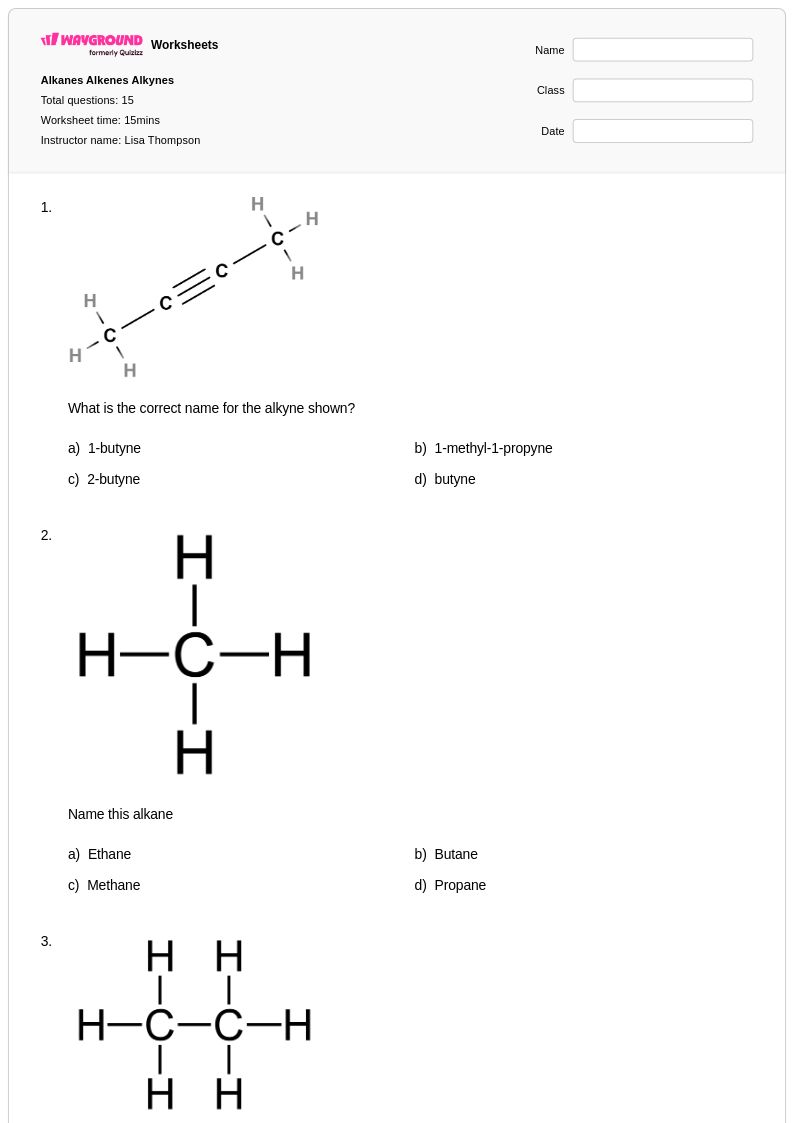
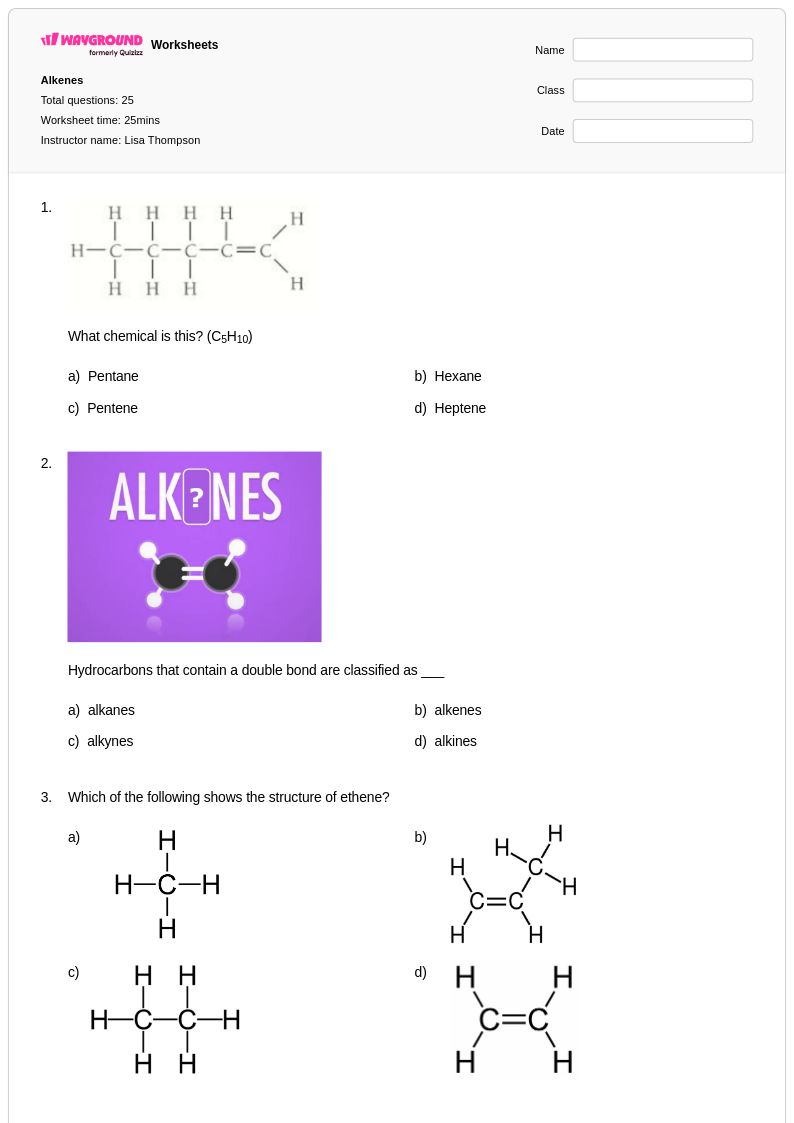
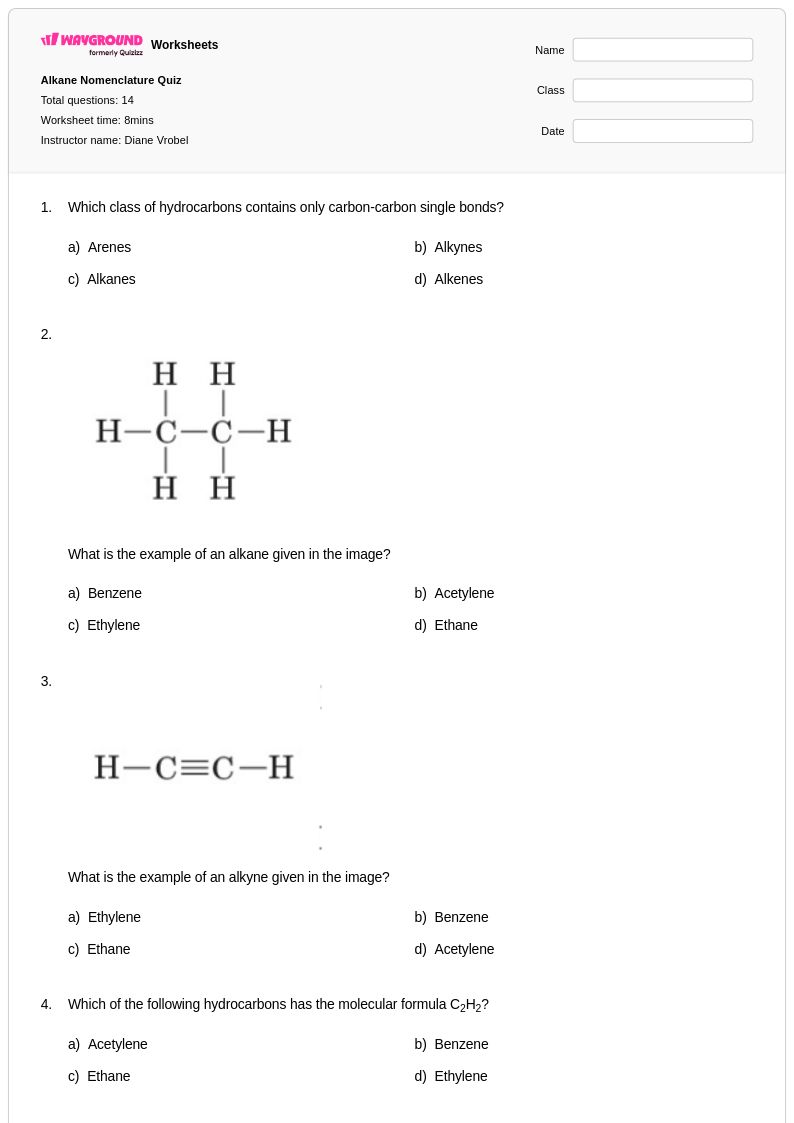
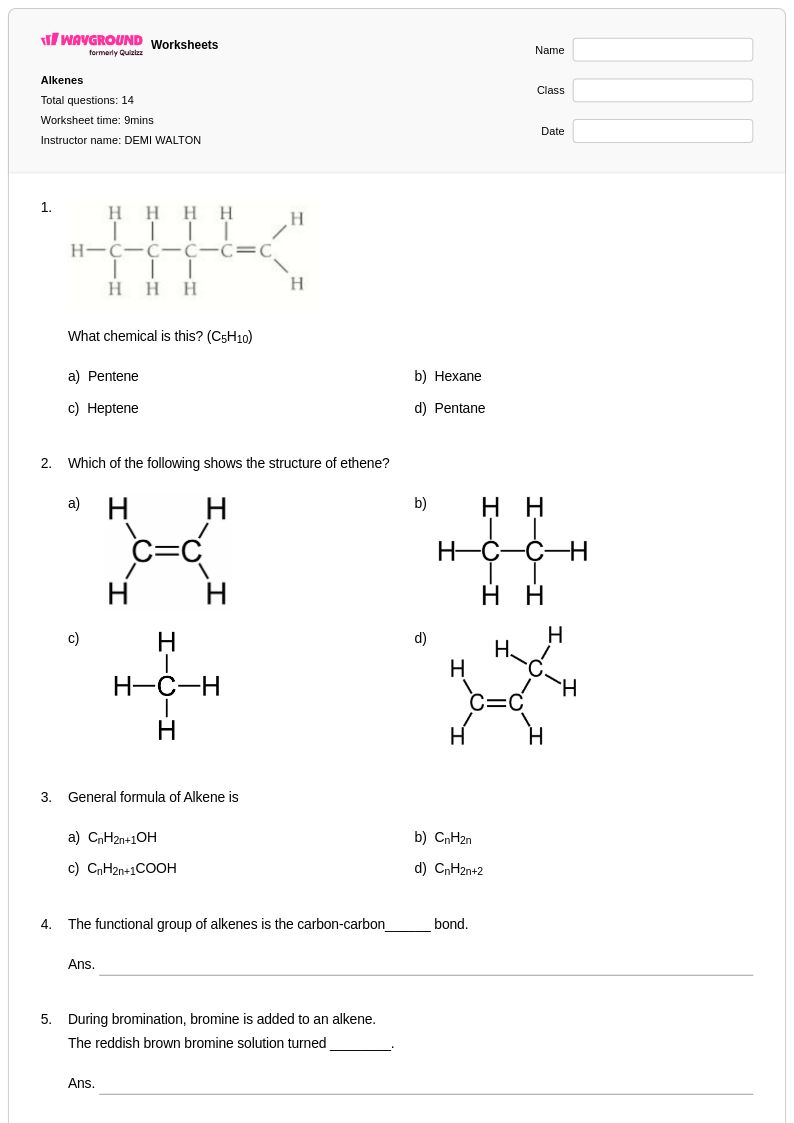
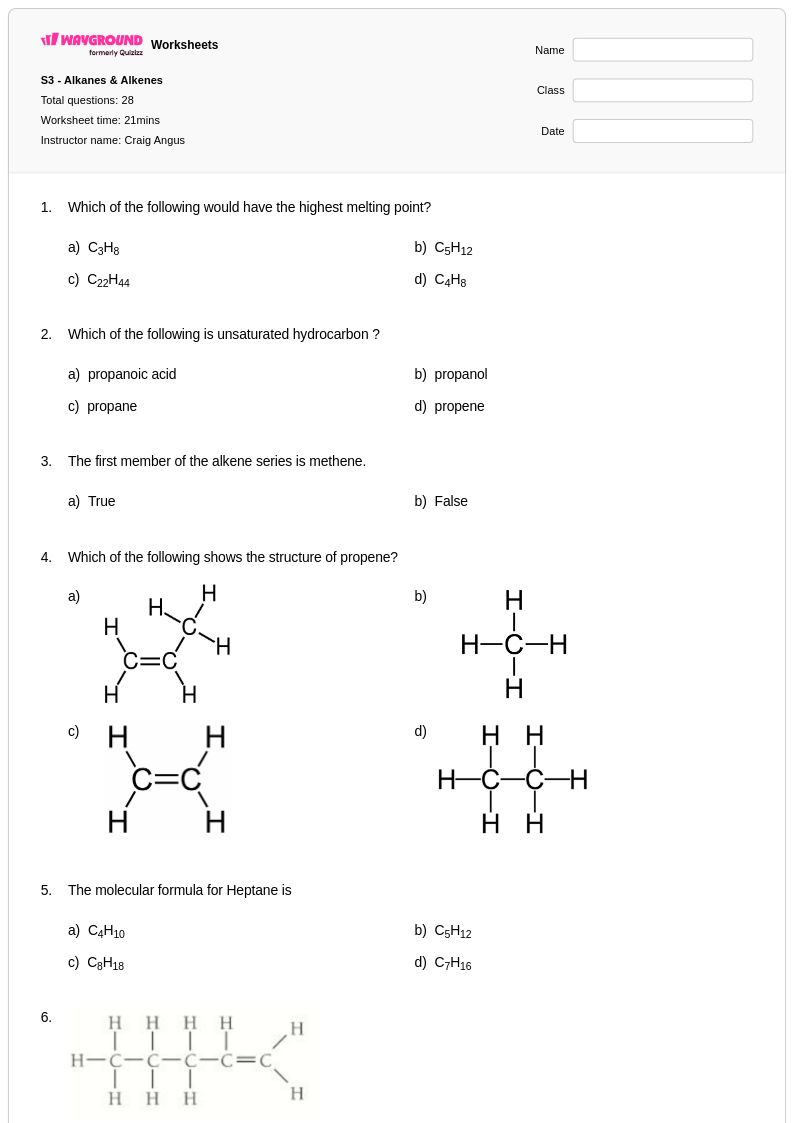
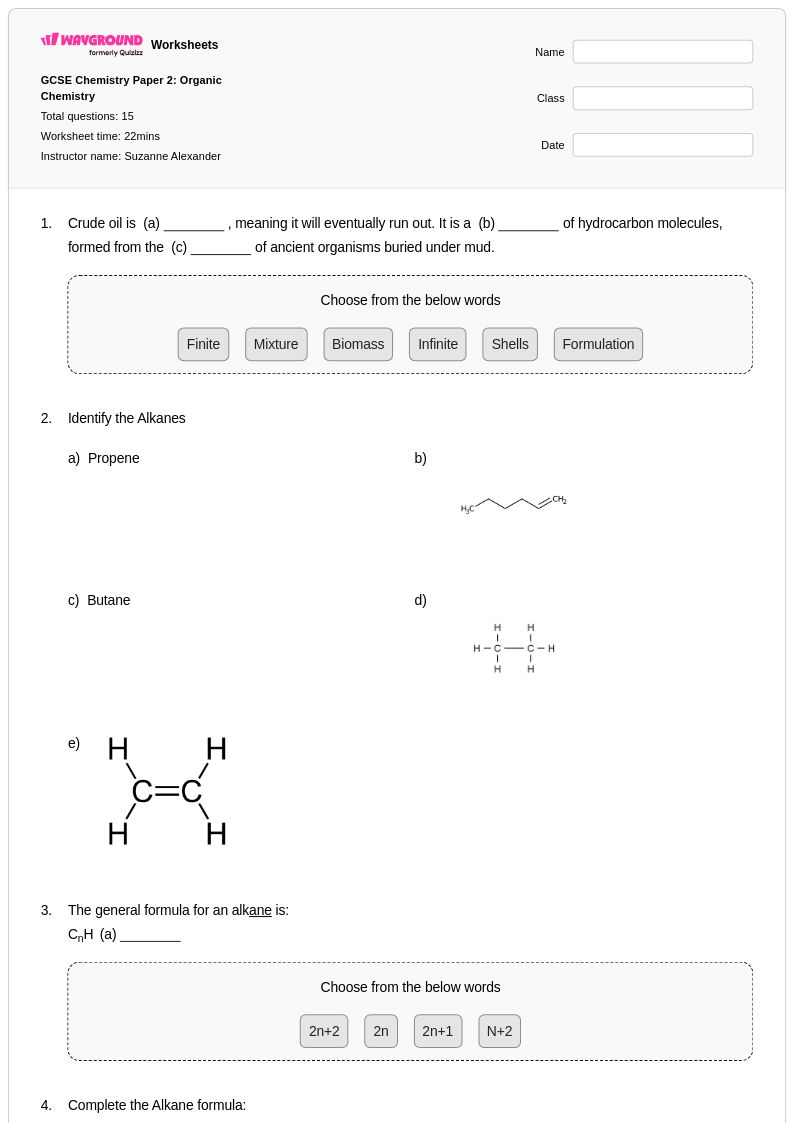
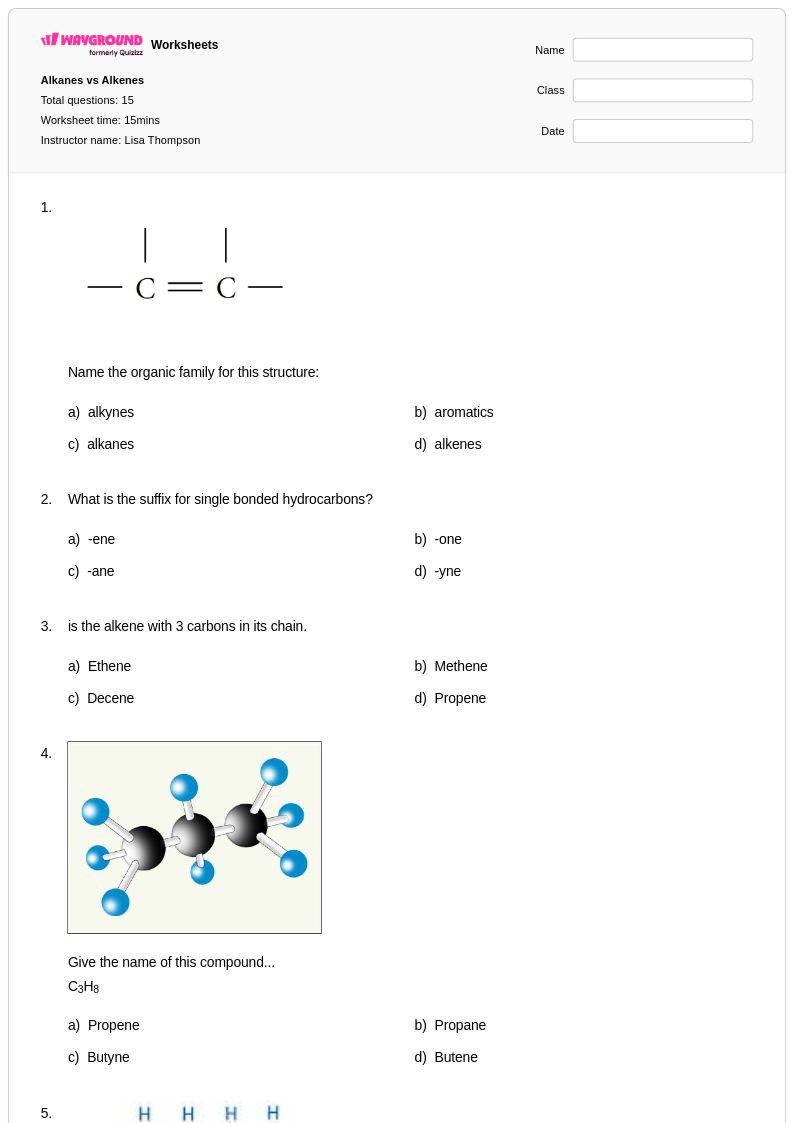
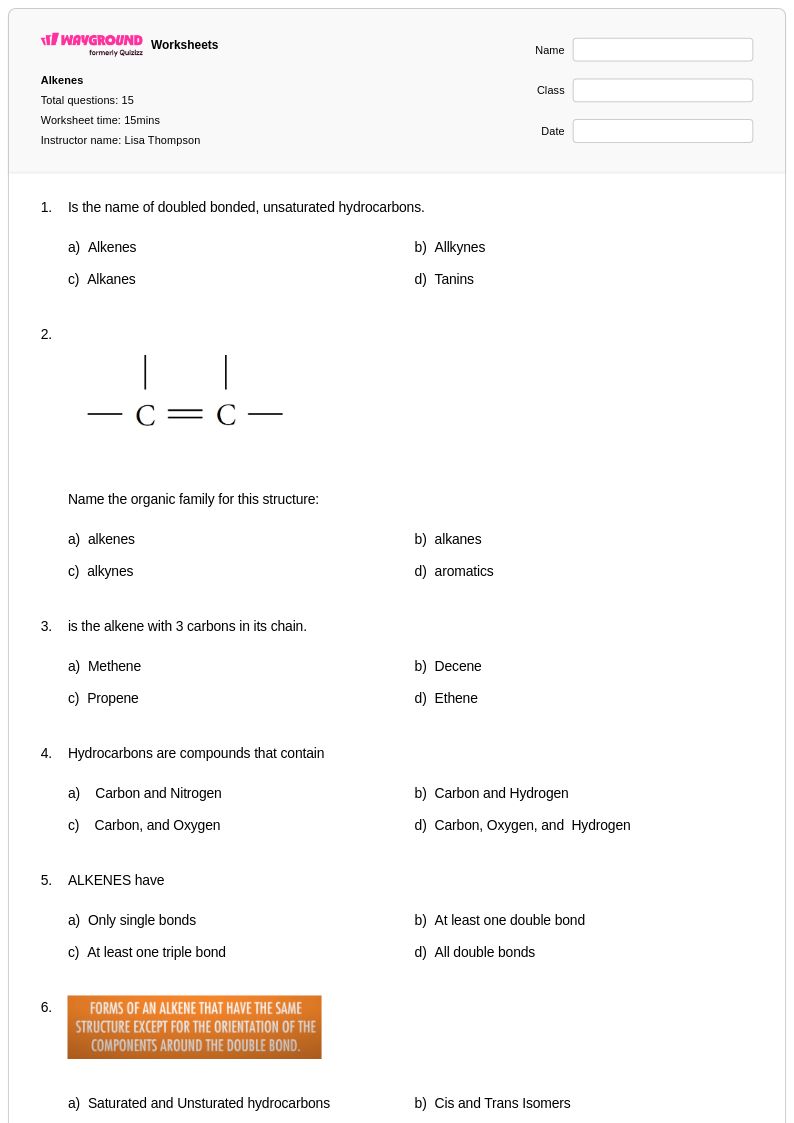
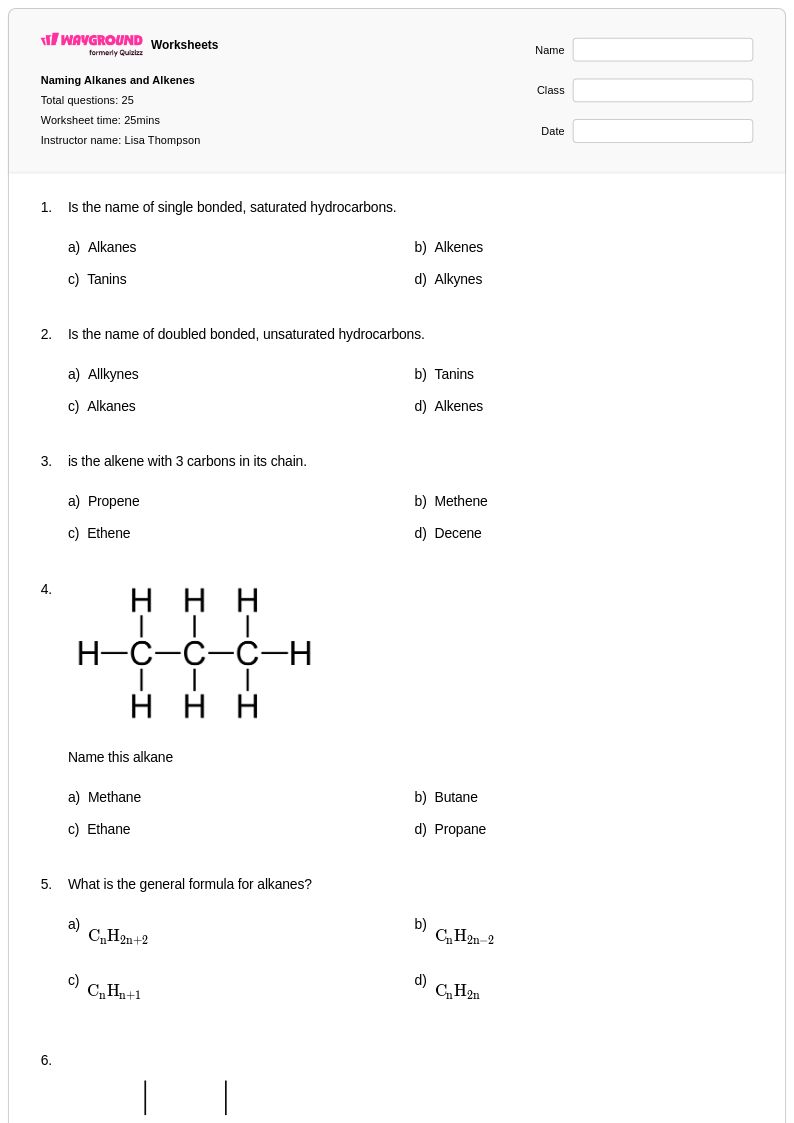
Alkenes and alkynes worksheets for Class 11 chemistry students available through Wayground (formerly Quizizz) provide comprehensive practice with these essential hydrocarbon functional groups. These expertly designed resources strengthen students' understanding of carbon-carbon double and triple bonds, covering nomenclature rules, structural formulas, isomerism, and characteristic reactions including addition reactions, polymerization, and oxidation processes. Students develop critical analytical skills through practice problems that challenge them to identify alkene and alkyne structures, predict reaction products, and apply Markovnikov's rule and other mechanistic principles. Each worksheet collection includes detailed answer keys and is available as free printables in convenient pdf format, making it easy for educators to incorporate systematic practice into their organic chemistry curriculum.
Wayground (formerly Quizizz) empowers chemistry teachers with millions of teacher-created alkenes and alkynes resources that support diverse instructional needs across Class 11 chemistry programs. The platform's robust search and filtering capabilities allow educators to quickly locate worksheets aligned with specific chemistry standards and learning objectives, while differentiation tools enable customization for varying student ability levels. Teachers can access these materials in both printable pdf formats for traditional classroom use and digital formats for interactive online learning, providing flexibility for lesson planning, targeted remediation, and enrichment activities. The extensive collection supports systematic skill practice through carefully scaffolded problems that build student confidence with hydrocarbon nomenclature, reaction mechanisms, and structural analysis, helping educators create comprehensive learning experiences that prepare students for advanced organic chemistry concepts.
FAQs
How do I teach students to name alkenes and alkynes using IUPAC nomenclature?
Start by ensuring students can identify and name simple alkanes before introducing the rules for alkenes and alkynes, since the naming logic builds directly on that foundation. Teach students to locate the longest carbon chain containing the double or triple bond, number the chain so the unsaturated bond gets the lowest possible locant, and apply the correct suffix: -ene for double bonds and -yne for triple bonds. Practice with progressively complex structures, including branched chains and compounds with multiple substituents, helps students internalize the rules rather than memorize them as isolated steps.
What exercises help students practice identifying cis and trans configurations in alkenes?
Students benefit most from exercises that ask them to draw both configurations of the same compound side by side, which forces them to actively distinguish the spatial arrangement of groups around the double bond rather than passively recognize it. Practice problems that require students to classify given structural diagrams as cis or trans, then explain their reasoning, are especially effective for catching surface-level understanding early. Pairing these with problems on geometric isomerism in reaction products reinforces why the distinction matters chemically.
What are the most common mistakes students make when working with alkenes and alkynes?
One of the most frequent errors is incorrect numbering of the parent chain — students often number from the wrong end, giving the double or triple bond a higher locant than required by IUPAC rules. Another common mistake is confusing structural isomers with geometric isomers, particularly when students see two compounds with the same molecular formula but don't recognize that cis-trans relationships require restricted rotation around a double bond. Students also routinely misapply Markovnikov's rule in addition reactions, adding the hydrogen to the more substituted carbon rather than the less substituted one.
How can I use alkenes and alkynes worksheets to support students at different skill levels?
Differentiated practice sets work well here: students who are still building foundational skills benefit from problems focused on naming simple, unbranched alkenes and alkynes, while more advanced students can tackle structural isomer identification and reaction mechanism problems. On Wayground, teachers can apply accommodations such as reduced answer choices for students who need lower cognitive load, or enable the Read Aloud feature for students who process text better through audio. These settings are saved per student and can be applied individually without affecting the experience of other students in the class.
How do I use these alkenes and alkynes worksheets in my classroom?
Wayground's alkenes and alkynes worksheets are available as printable PDFs for traditional classroom use and in digital formats for technology-integrated learning environments, giving teachers flexibility in how they assign practice. Teachers can also host the worksheets as a live quiz on Wayground, which adds interactivity and allows for real-time monitoring of student responses. Each worksheet includes an answer key, making them practical for independent practice, homework, or formative assessment without requiring additional teacher prep.
How do addition reactions differ between alkenes and alkynes in terms of what students need to know?
Both alkenes and alkynes undergo addition reactions, but alkynes can undergo two sequential additions because the triple bond provides two pi bonds for reagents to add across, which is a critical distinction students often overlook. For alkenes, students need to understand electrophilic addition and be able to predict products using Markovnikov's rule for unsymmetrical alkenes. For alkynes, students should also be aware that partial hydrogenation can produce either cis or trans alkenes depending on the catalyst used, adding another layer of stereochemical reasoning to their analysis.