Free Printable History of Chemistry Worksheets for Class 11
Explore Class 11 History of Chemistry worksheets and printables that help students learn about scientific discoveries, key figures, and major developments in chemical science through engaging practice problems with answer keys.
Explore printable History of Chemistry worksheets for Class 11
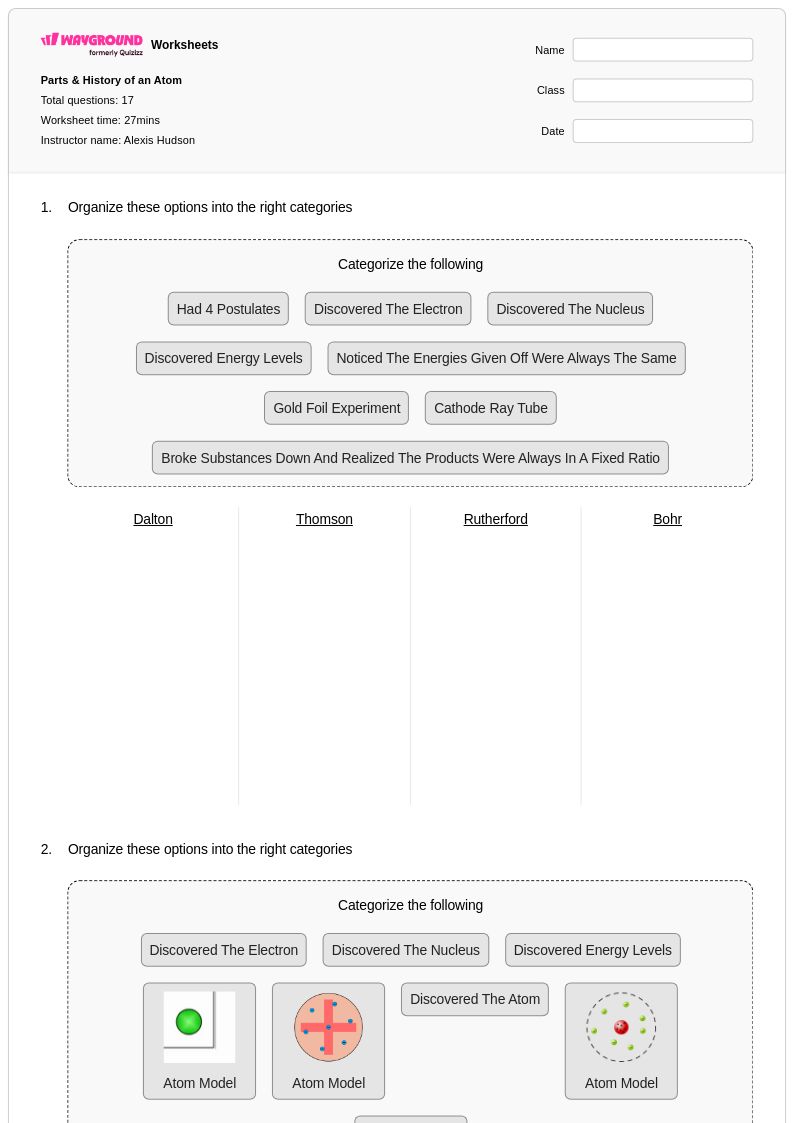
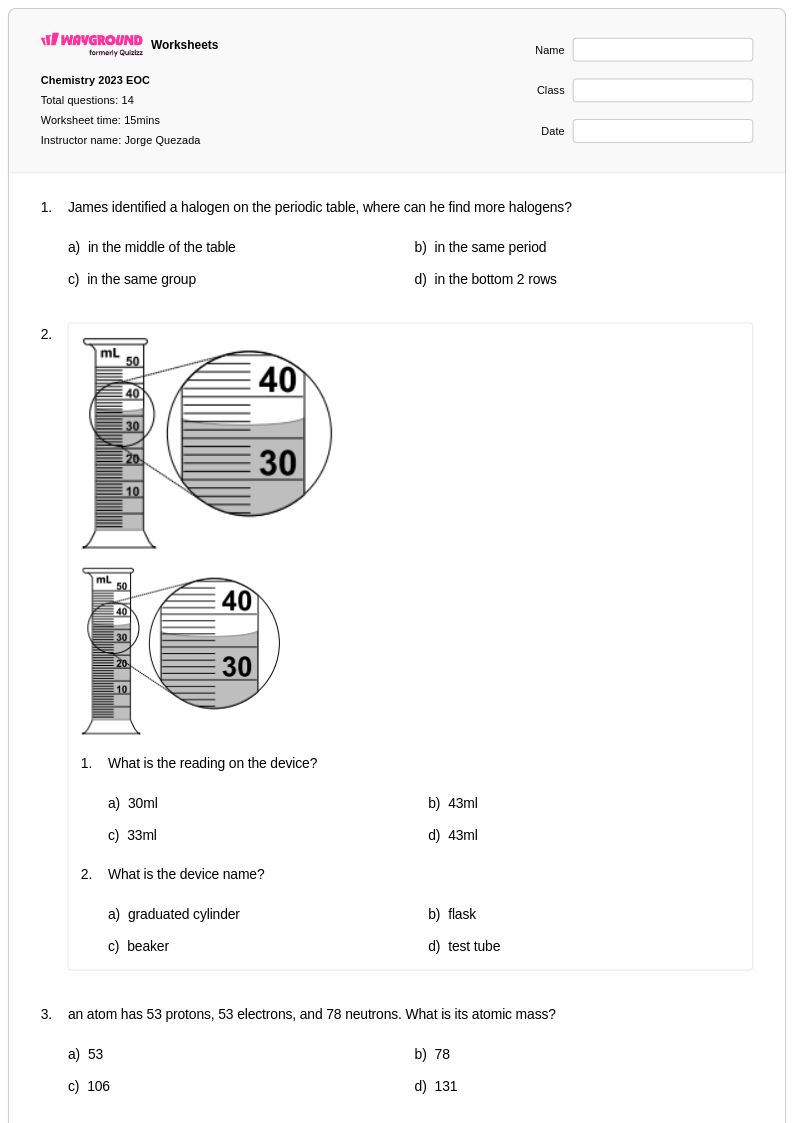
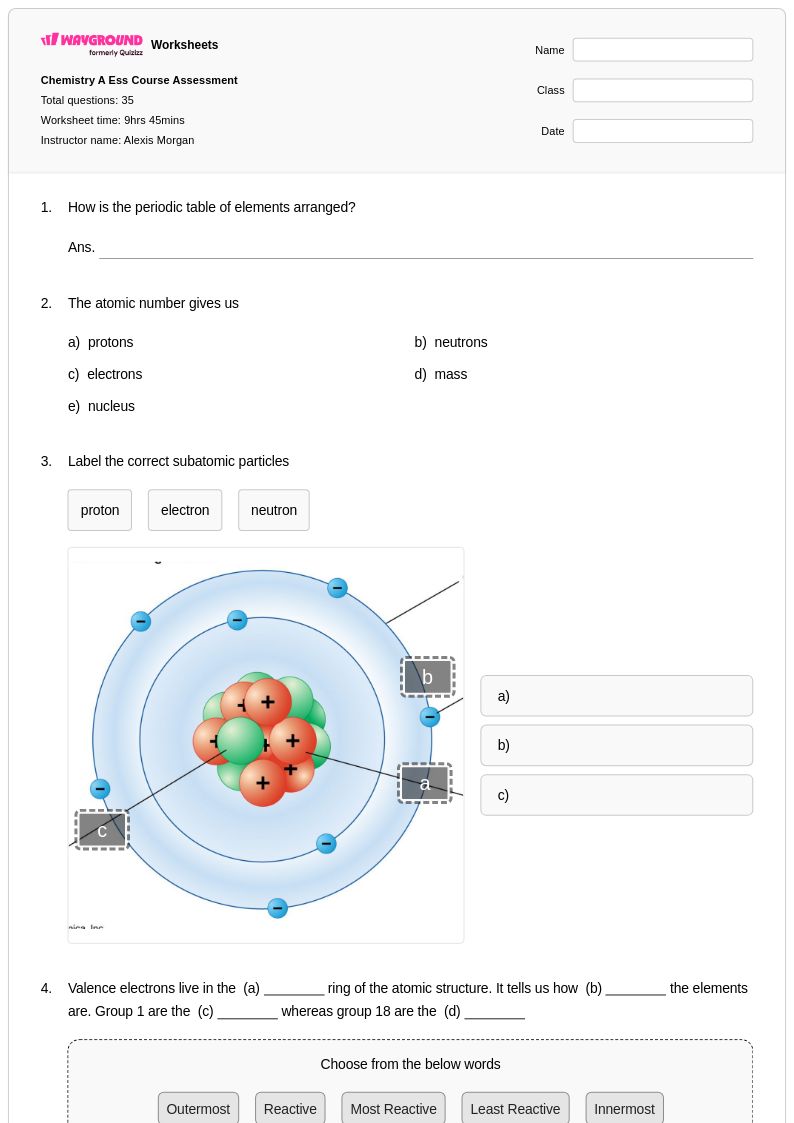
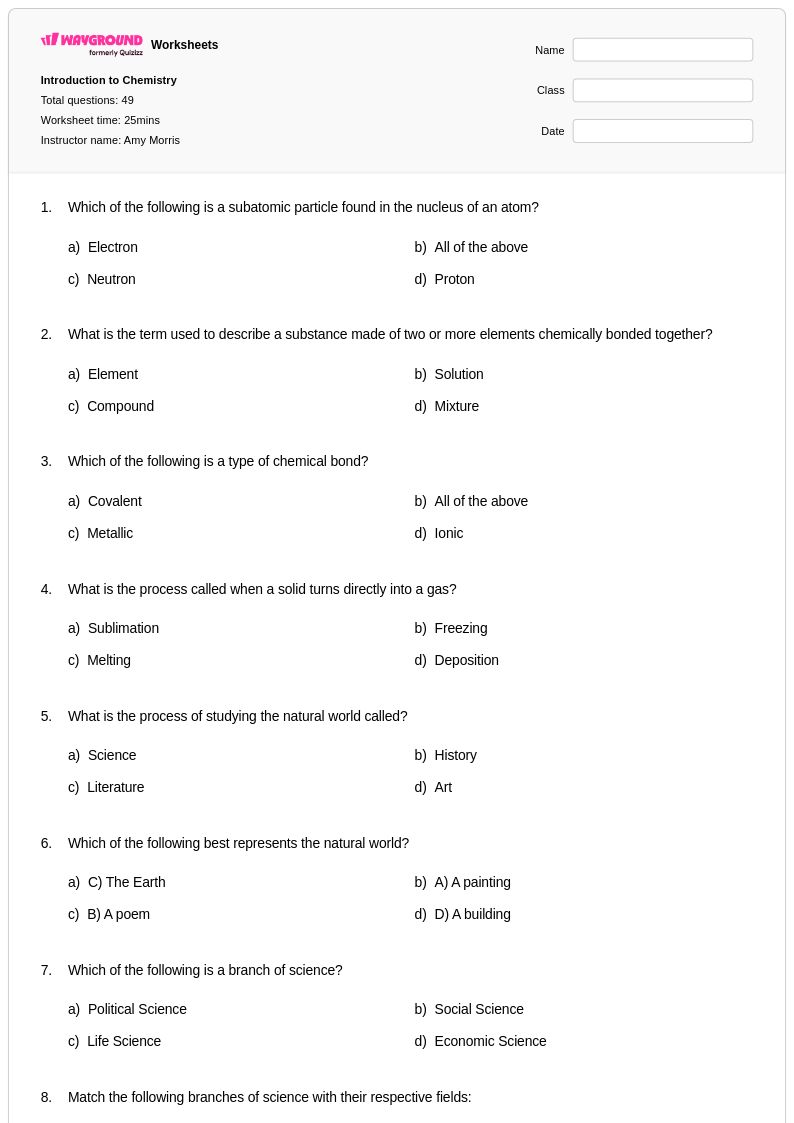
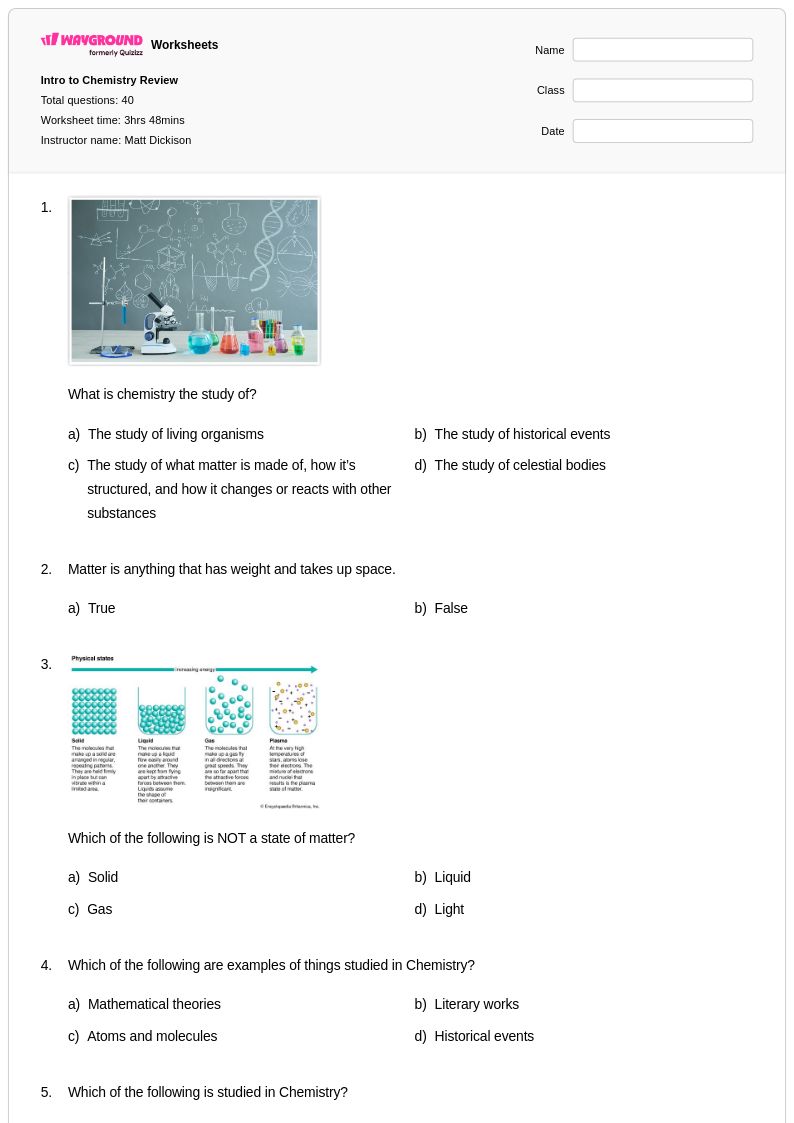
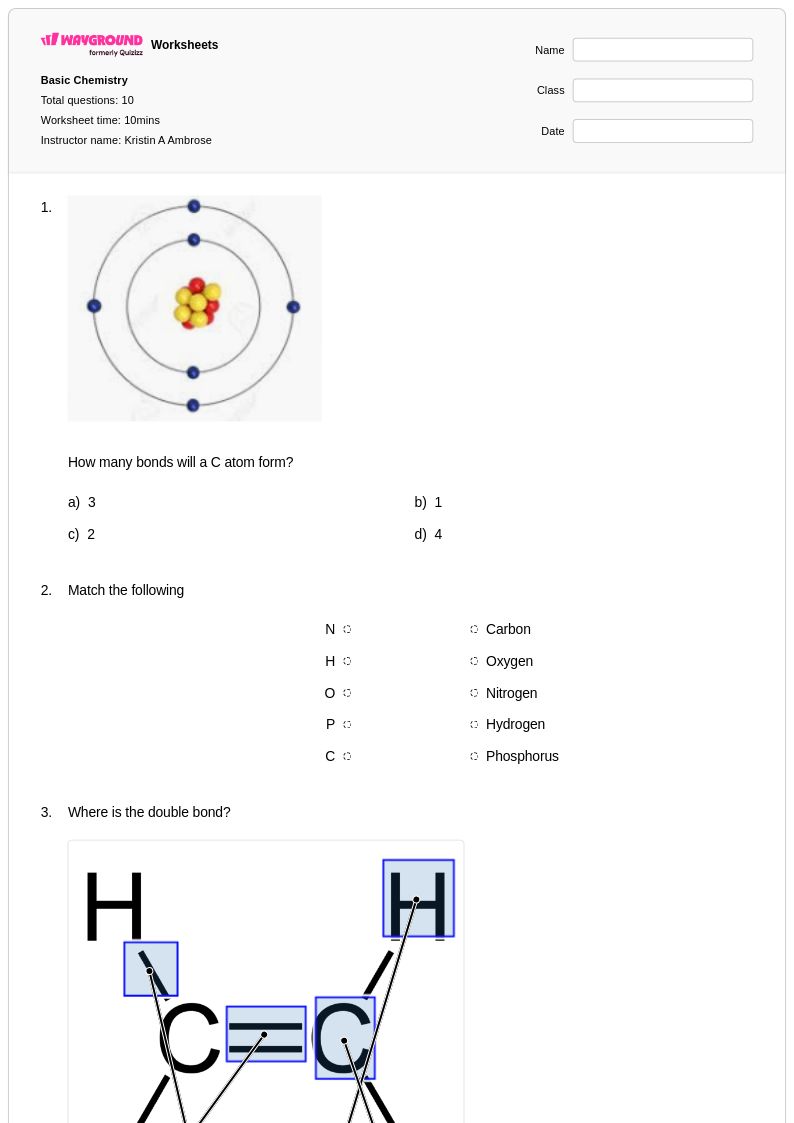
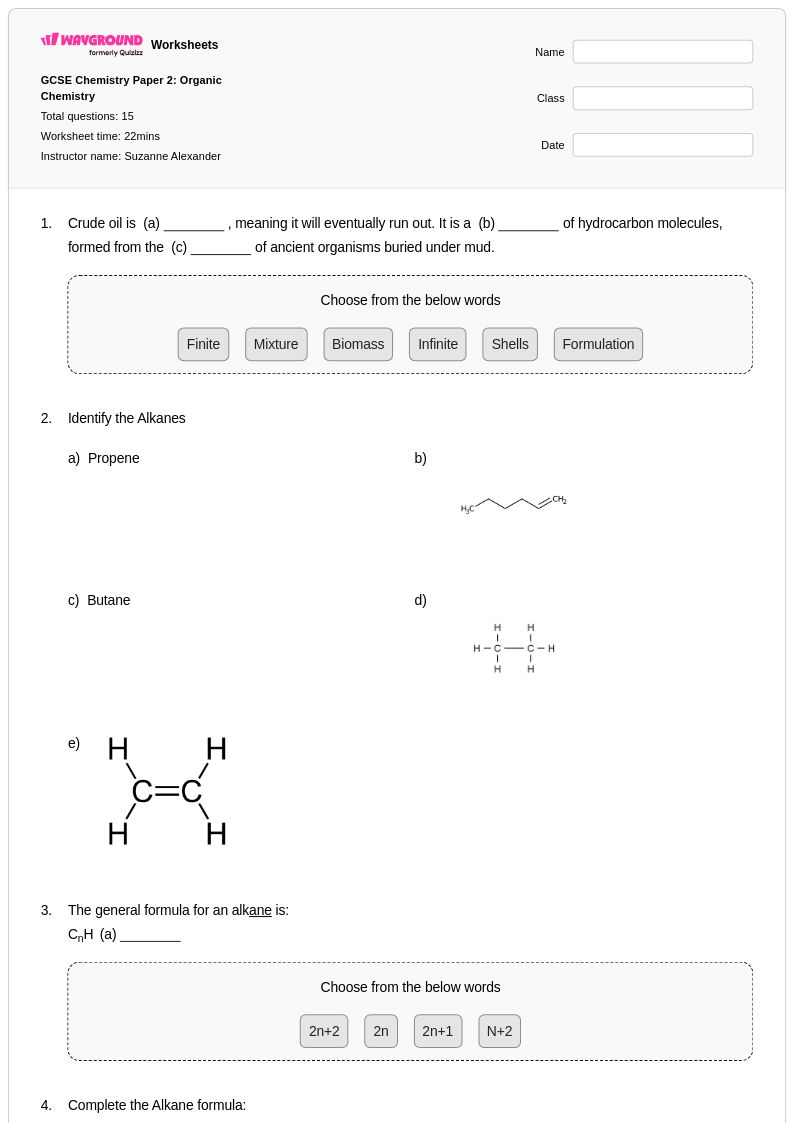
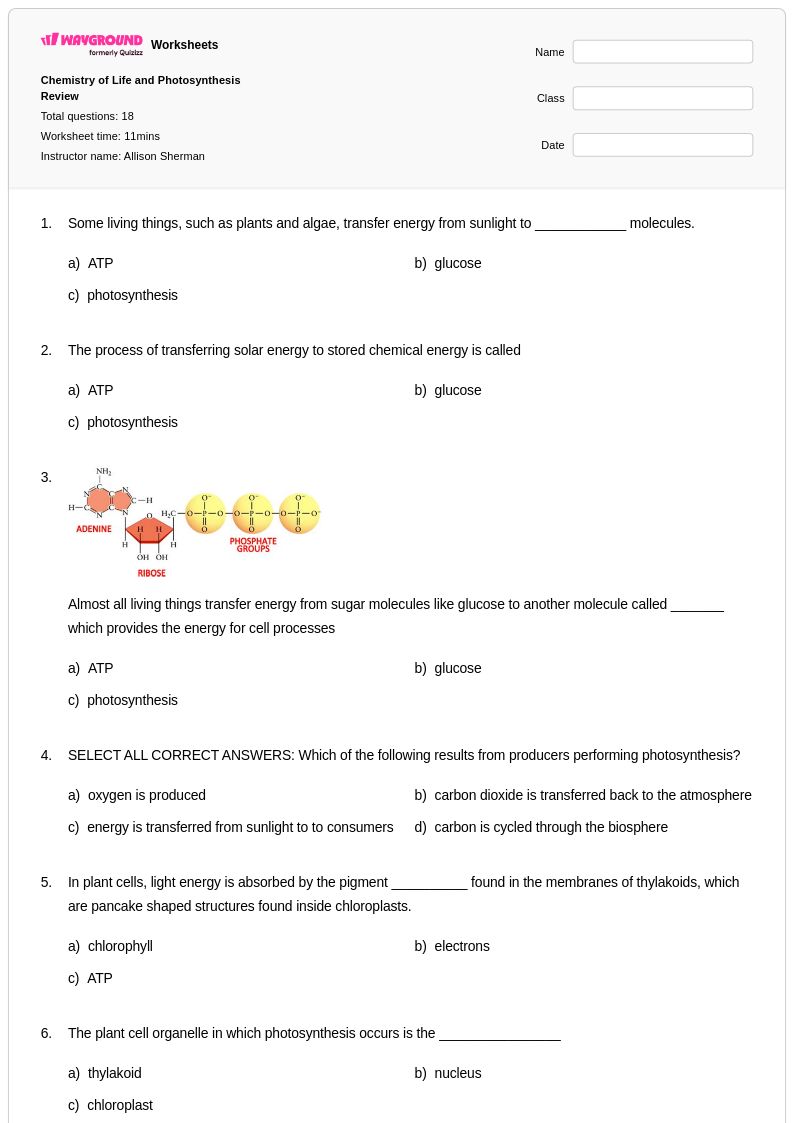
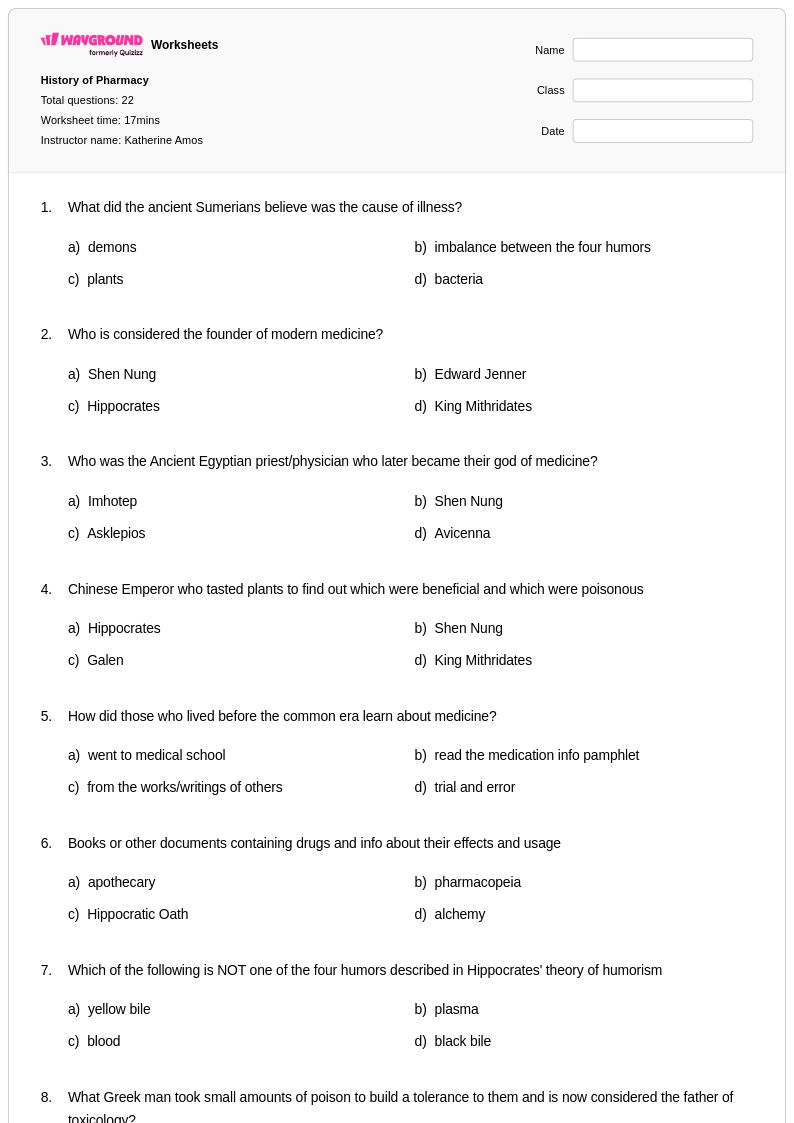
History of Chemistry worksheets for Class 11 students available through Wayground (formerly Quizizz) provide comprehensive coverage of chemistry's foundational developments, key discoveries, and influential scientists who shaped our understanding of matter and chemical processes. These educational resources strengthen students' ability to connect historical scientific breakthroughs with modern chemical principles, helping them understand how concepts like atomic theory, the periodic table, and chemical bonding evolved through centuries of experimentation and observation. The collection includes practice problems that challenge students to analyze primary source documents, timeline activities exploring major discoveries from alchemy to quantum chemistry, and assessment materials complete with answer keys that support both independent study and classroom instruction. Available as free printables and digital resources, these worksheets help students develop critical thinking skills while building essential knowledge about chemistry's rich scientific heritage.
Wayground (formerly Quizizz) empowers educators with an extensive collection of millions of teacher-created History of Chemistry resources specifically designed for Class 11 instruction, featuring robust search and filtering capabilities that allow teachers to quickly locate materials aligned with specific curriculum standards and learning objectives. The platform's differentiation tools enable instructors to customize worksheet difficulty levels and content focus areas, ensuring appropriate challenge levels for diverse learners while supporting both remediation for struggling students and enrichment opportunities for advanced learners. Teachers benefit from flexible formatting options including printable pdf versions for traditional classroom use and interactive digital formats that facilitate remote learning and technology integration. These comprehensive resources streamline lesson planning by providing ready-to-use materials for skill practice, formative assessment, and summative evaluation, allowing educators to focus on delivering engaging instruction about chemistry's fascinating historical development and its connection to contemporary scientific understanding.
FAQs
How do I teach the history of chemistry in a way that feels relevant to students?
Ground the history of chemistry in human stories rather than abstract timelines. Show students how each breakthrough, such as Lavoisier's identification of oxygen or Curie's discovery of radioactivity, was a response to a problem scientists were actively trying to solve. Framing discoveries as moments of conflict, error, and revision helps students see science as a living process rather than a fixed body of facts.
What exercises help students practice understanding the history of chemistry?
Timeline sequencing activities are effective because they require students to order key discoveries and explain causal relationships between them, not just memorize dates. Comparison tasks, such as contrasting ancient alchemical theories with modern atomic theory, push students to evaluate how scientific thinking evolved. Practice problems that ask students to analyze the impact of specific chemists on later discoveries build both content knowledge and critical thinking.
What are common misconceptions students have when learning the history of chemistry?
Students often assume that science progresses in a straight line, with each discovery neatly building on the last, when in reality many breakthroughs involved dead ends, competing theories, and overturned assumptions. Another common error is conflating alchemy with pseudoscience without recognizing its role as a precursor to systematic chemical experimentation. Students also frequently underestimate how long debated concepts like atomic structure took to reach scientific consensus.
How can I use history of chemistry worksheets to assess student understanding?
Worksheets that ask students to evaluate the significance of specific discoveries, rather than simply identify them, reveal the depth of their understanding. Prompts comparing ancient and modern theories about matter or asking students to explain why a particular experiment was a turning point require analysis, not just recall. These types of tasks are particularly effective for identifying students who can recite facts but struggle to connect them causally.
How do I use Wayground's history of chemistry worksheets in my classroom?
Wayground's history of chemistry worksheets are available as free printable PDFs for traditional classroom use and in digital formats for technology-integrated environments, including the option to host them as a quiz directly on Wayground. Each worksheet includes a complete answer key, making them practical for both instruction and independent student work. Teachers can use the platform's search and filtering tools to locate materials aligned to specific topics, such as the development of the periodic table or the emergence of organic chemistry, and can customize worksheets to match their curriculum goals.
How can I differentiate history of chemistry instruction for students at different levels?
Access materials at varying complexity levels, from foundational overviews of major milestones to more detailed analyses of specific experiments and their scientific implications, to match content to student readiness. On Wayground, teachers can apply individual accommodations such as read aloud support for students who need audio access to text, reduced answer choices to lower cognitive load, and extended time settings, all configurable per student without notifying peers. These settings are saved and reusable across sessions, making differentiation sustainable rather than a one-time adjustment.