
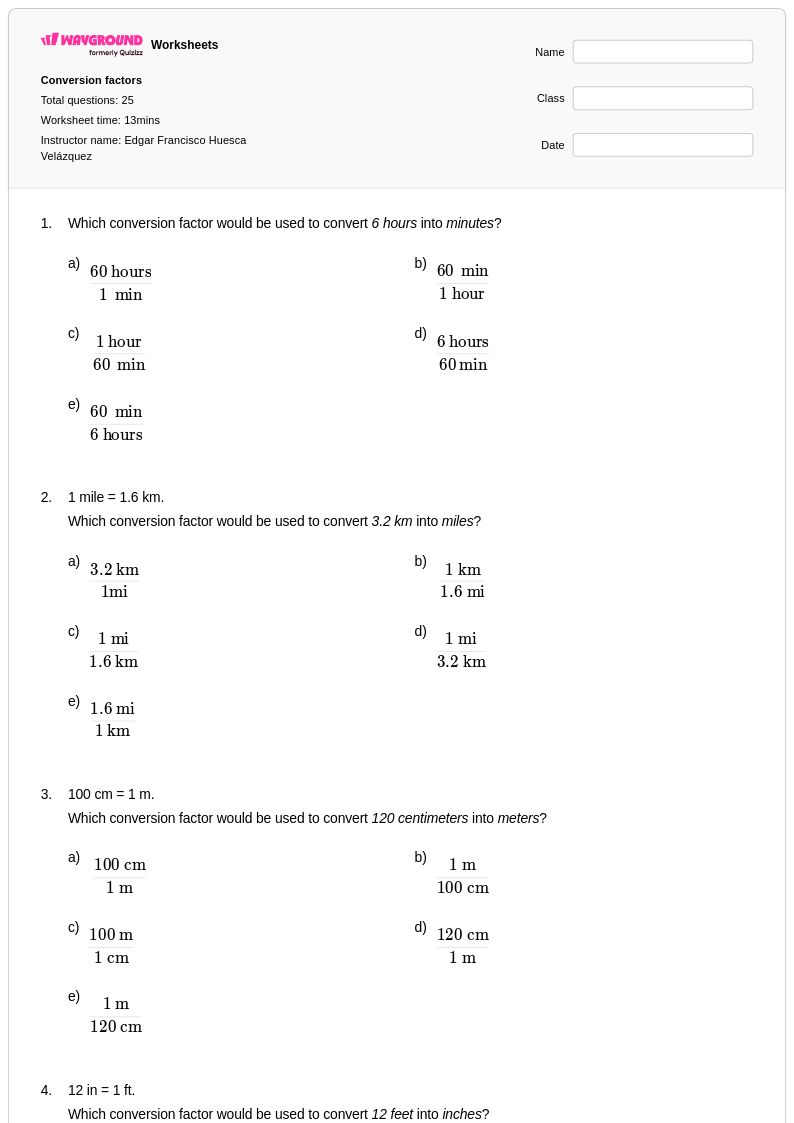
25 Q
9th - 12th
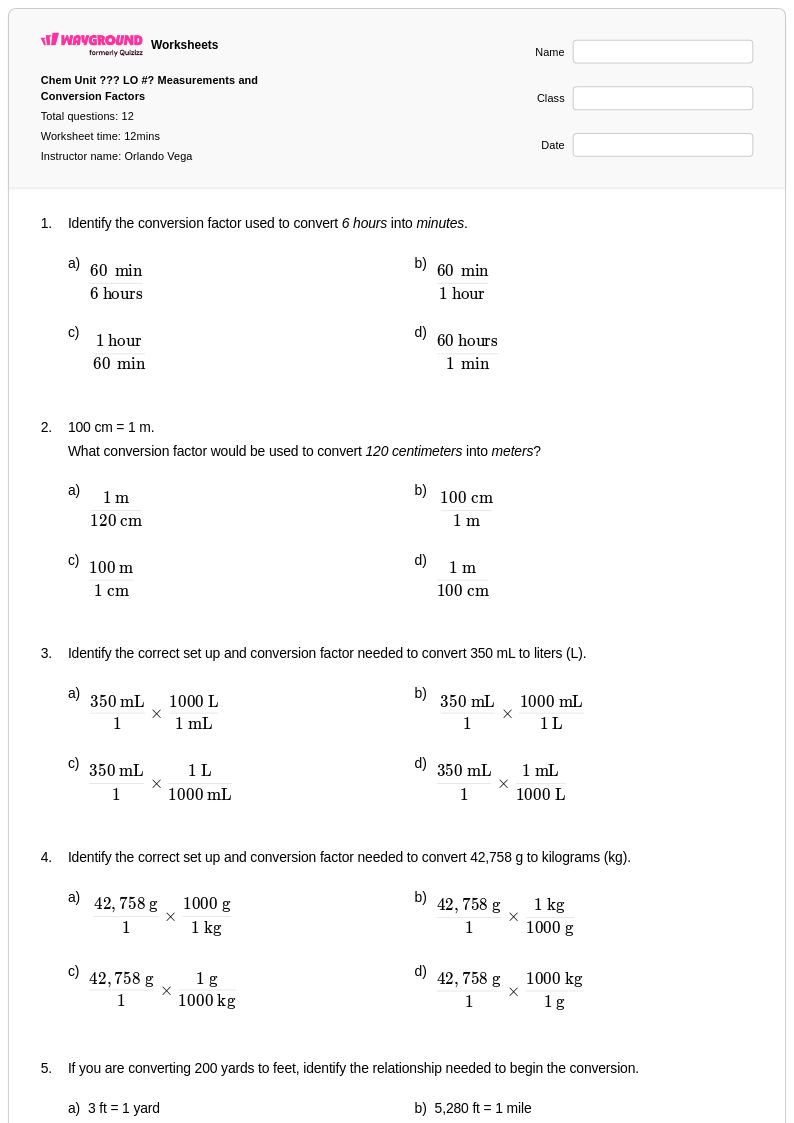
12 Q
9th - 12th
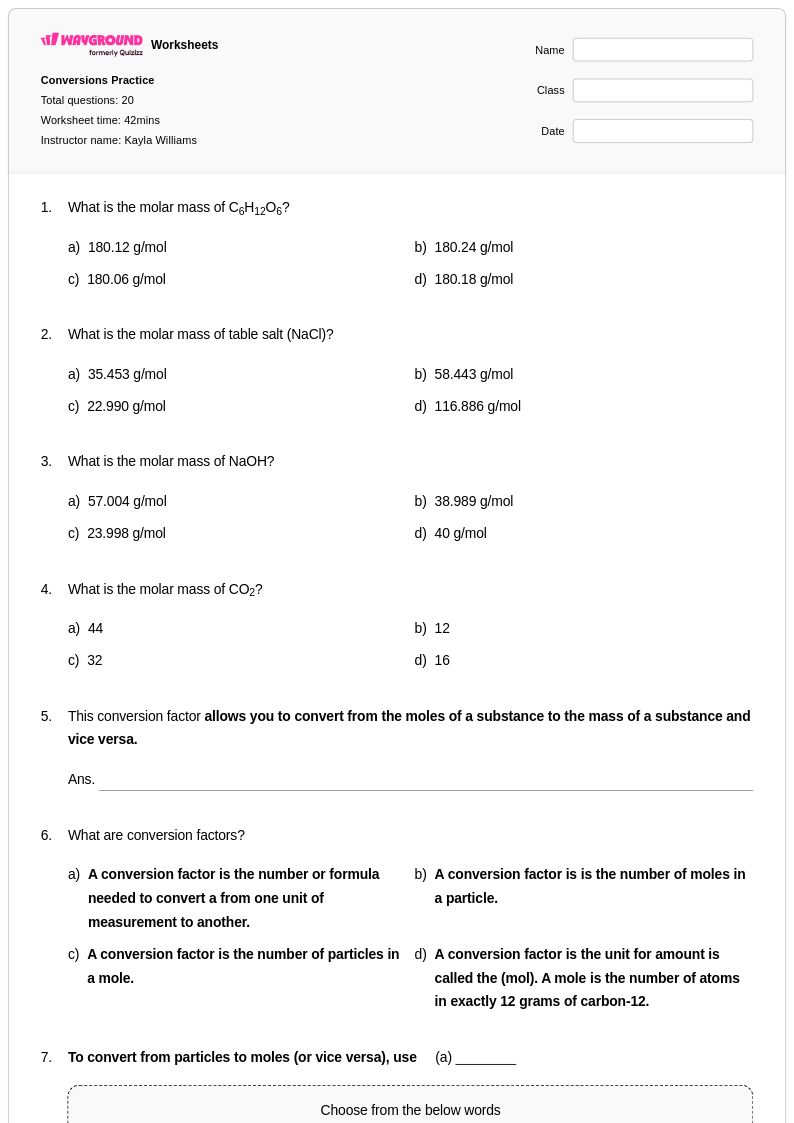
20 Q
11th
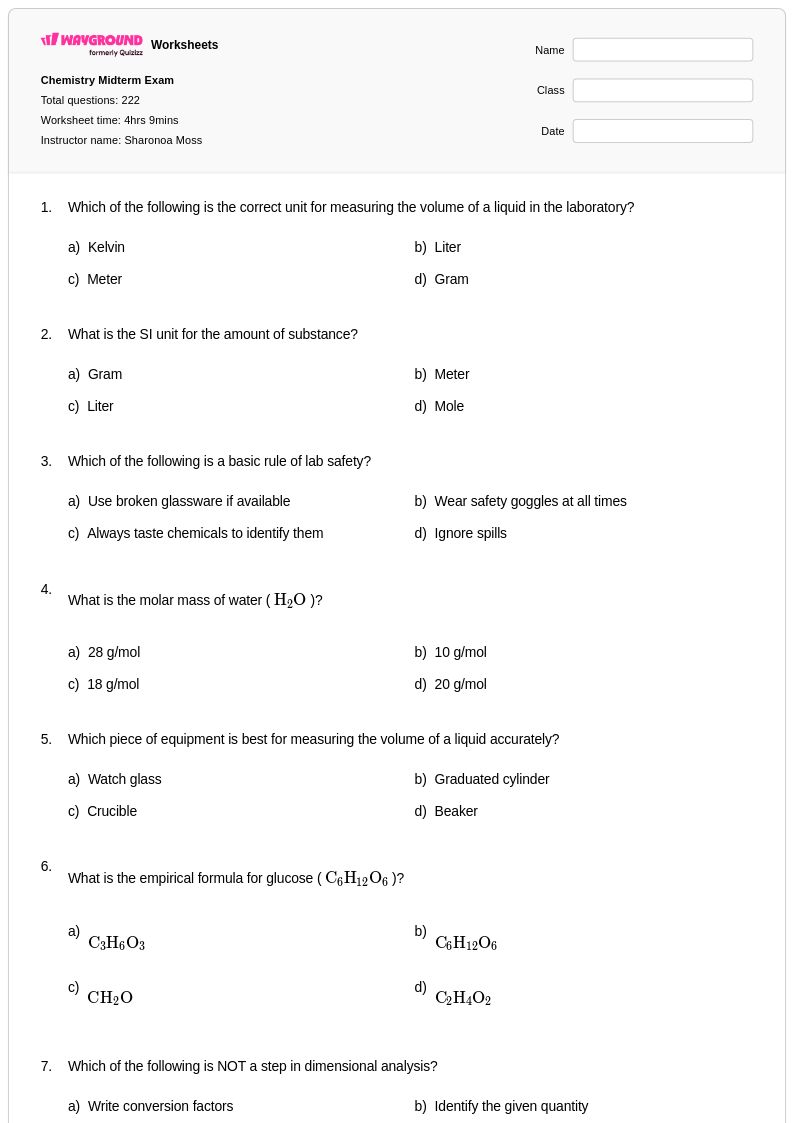
222 Q
11th
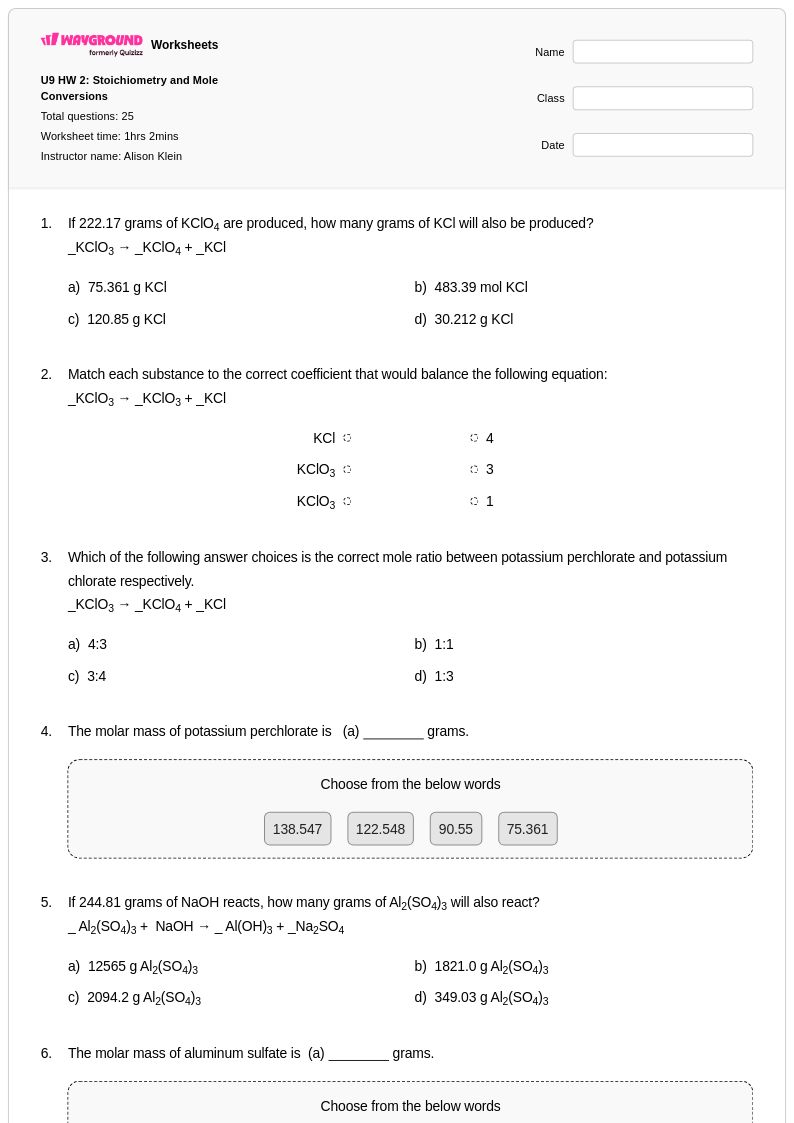
25 Q
9th - 12th
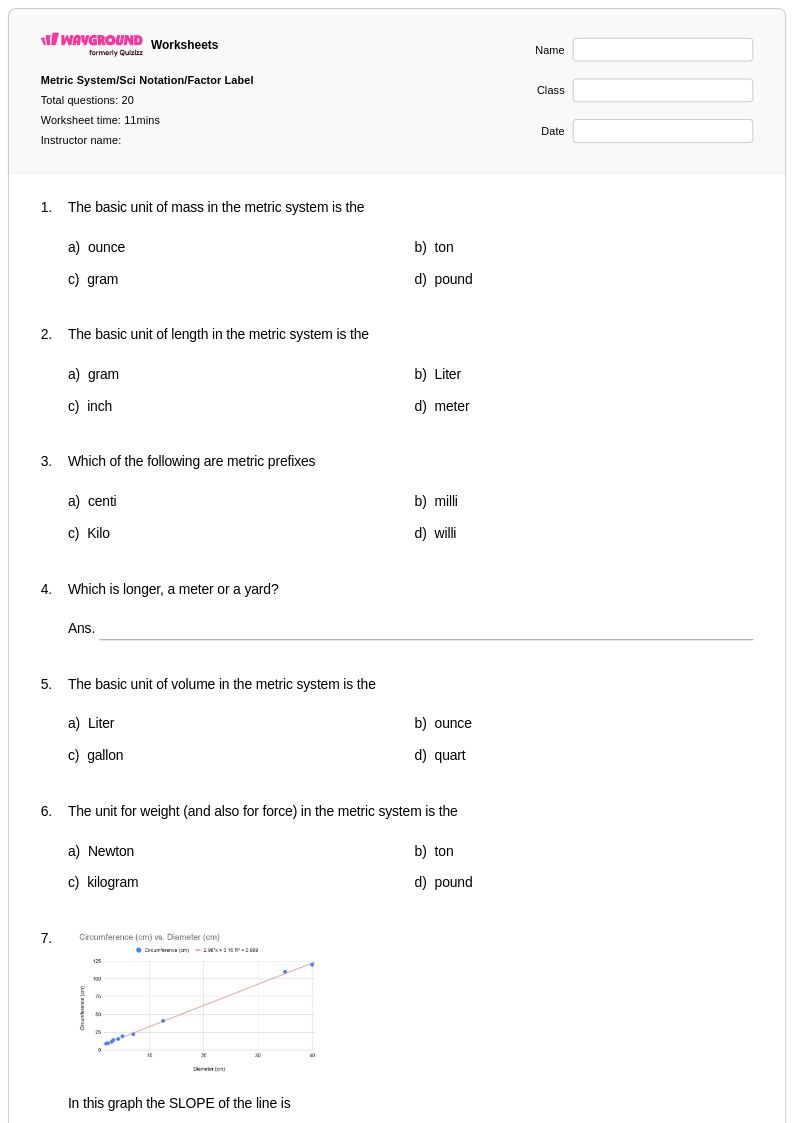
20 Q
10th - 11th
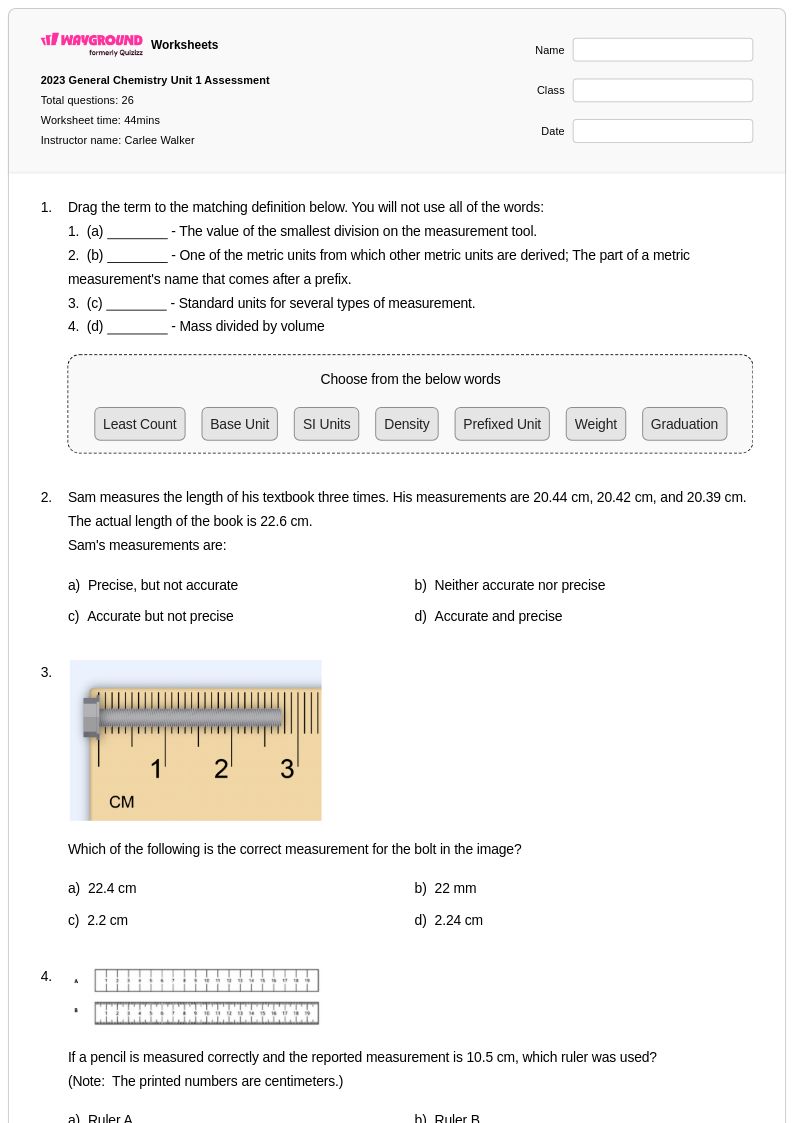
26 Q
9th - 12th
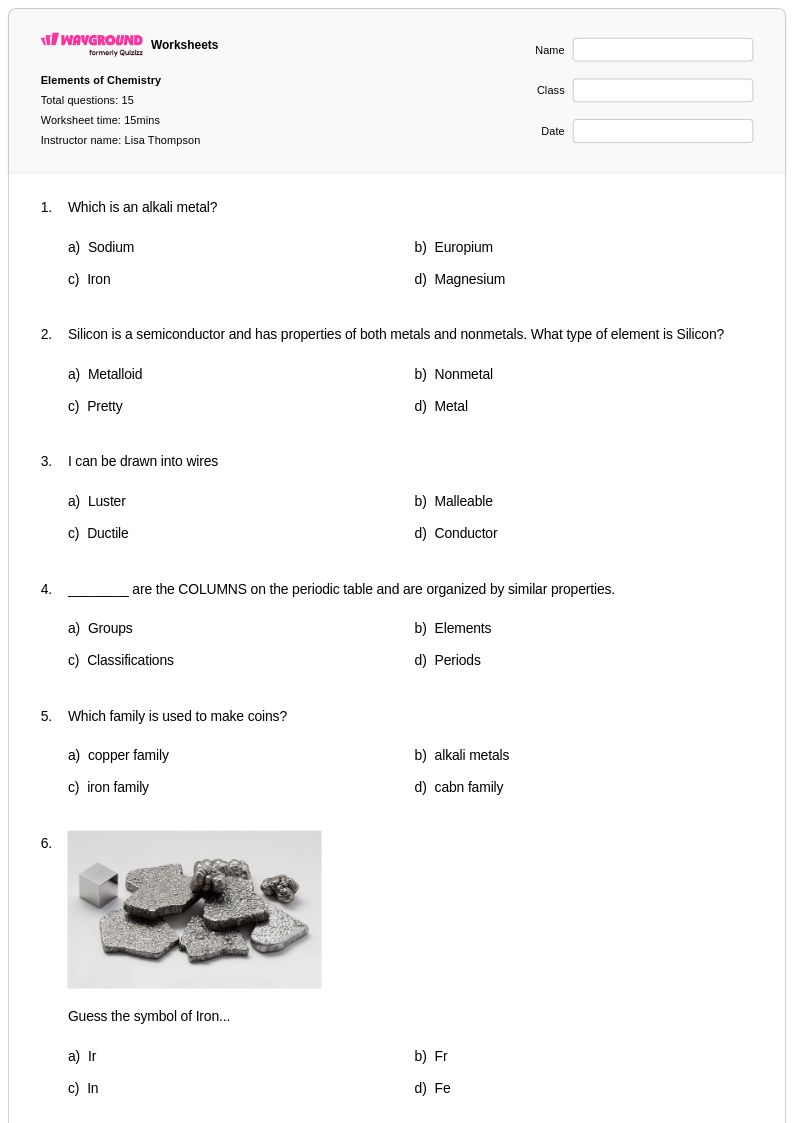
15 Q
8th - Uni
20 Q
7th - Uni
32 Q
9th - 12th
12 Q
9th - Uni
74 Q
11th - Uni
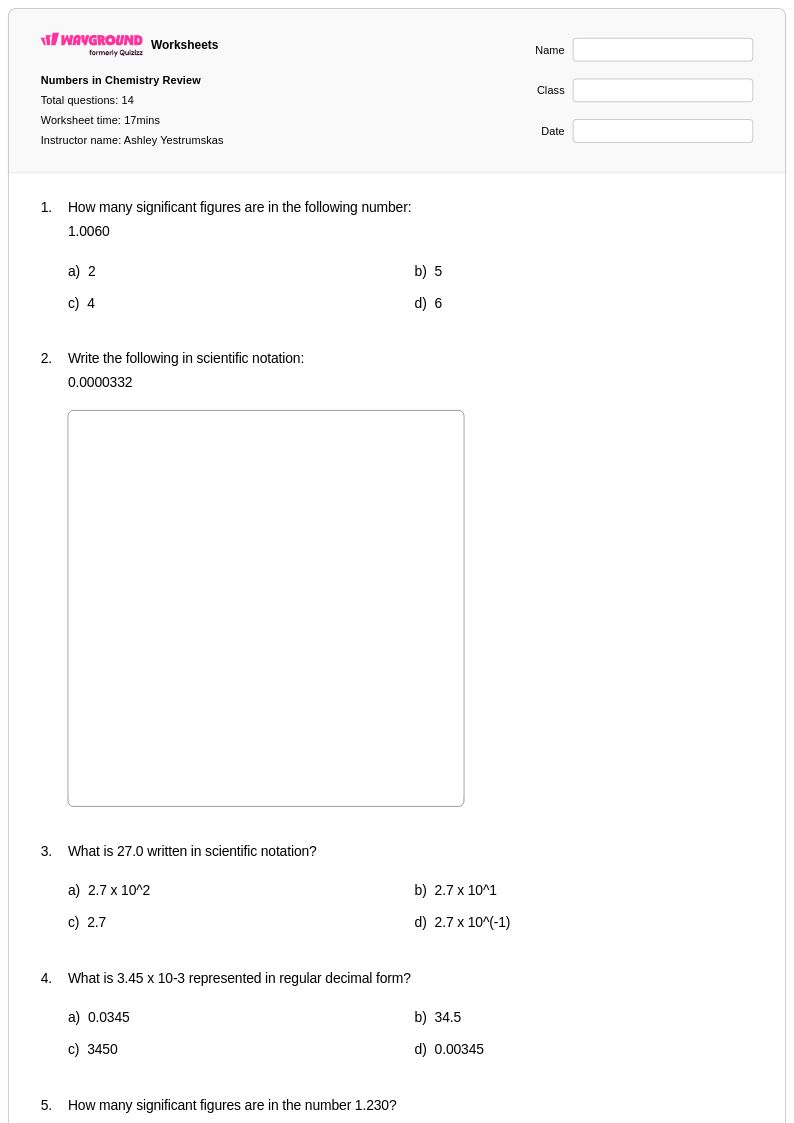
14 Q
11th
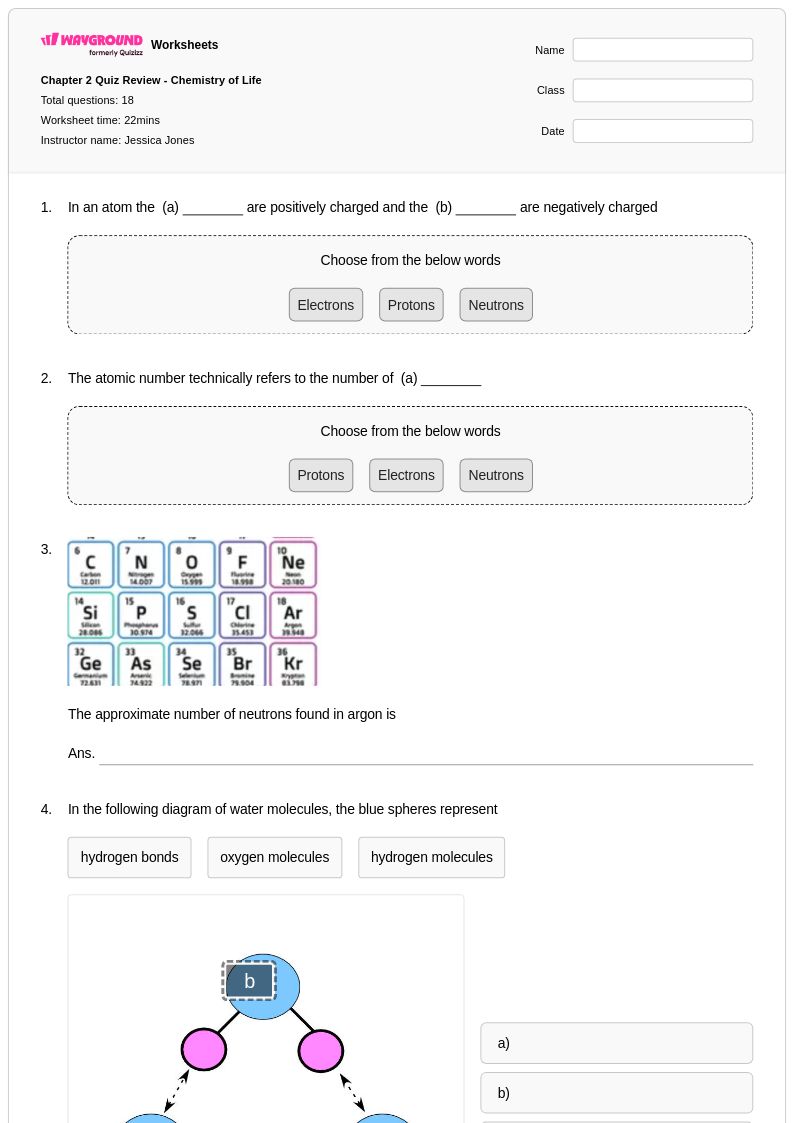
18 Q
11th
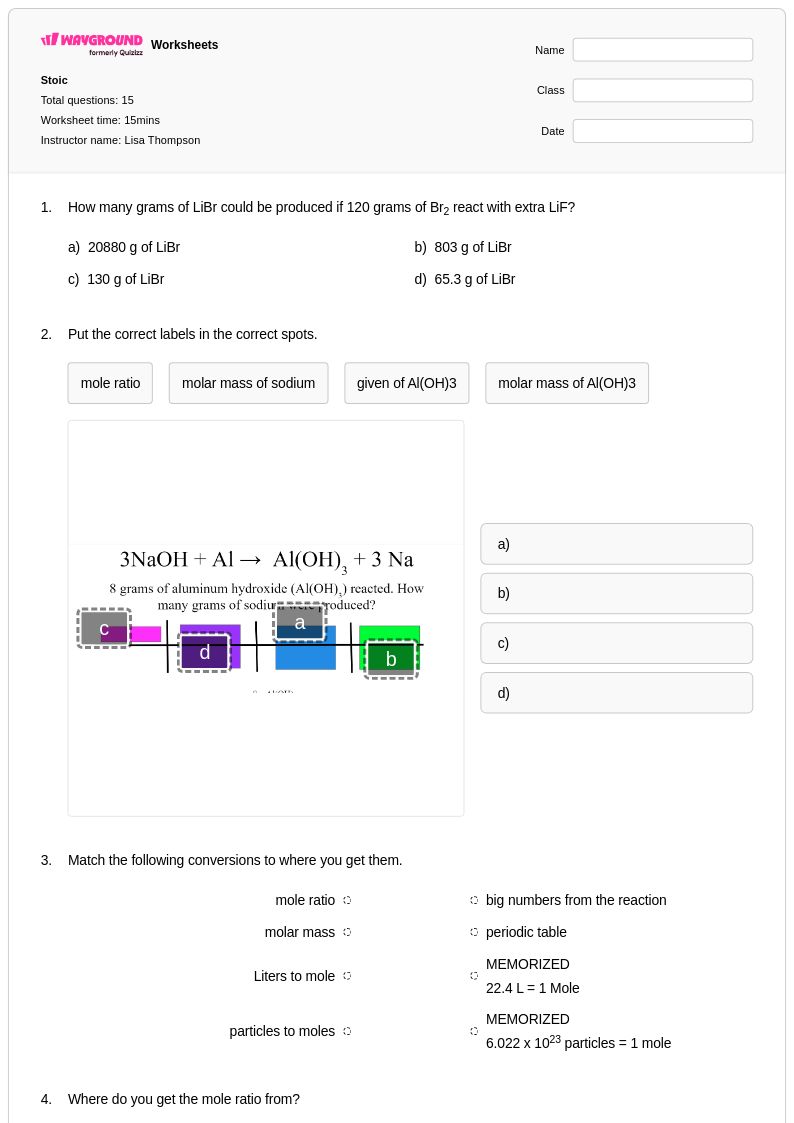
15 Q
11th - Uni
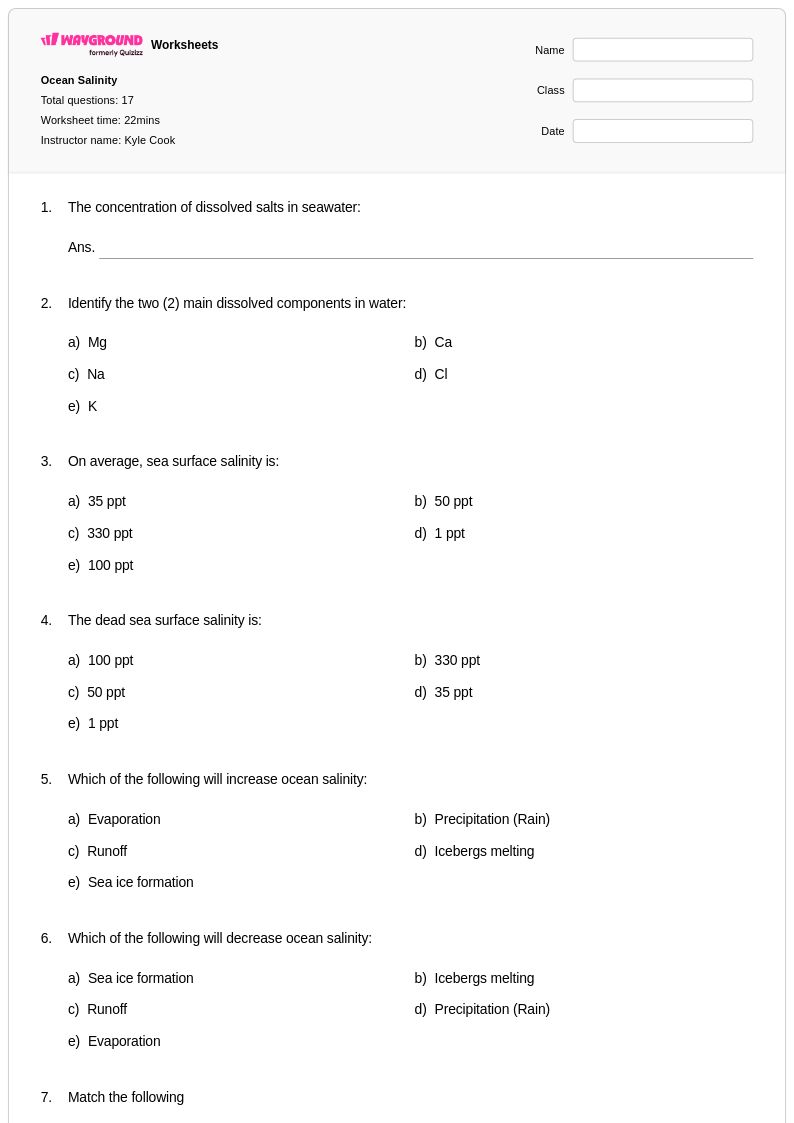
17 Q
9th - 12th
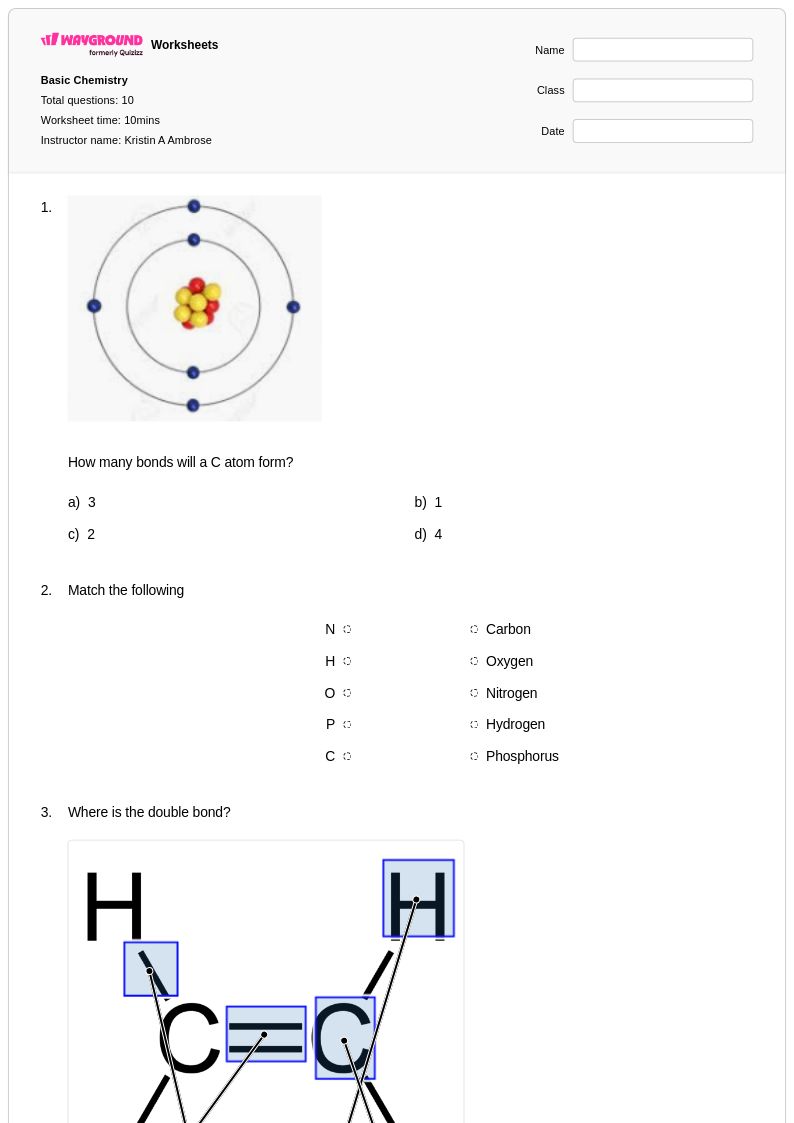
10 Q
9th - 12th
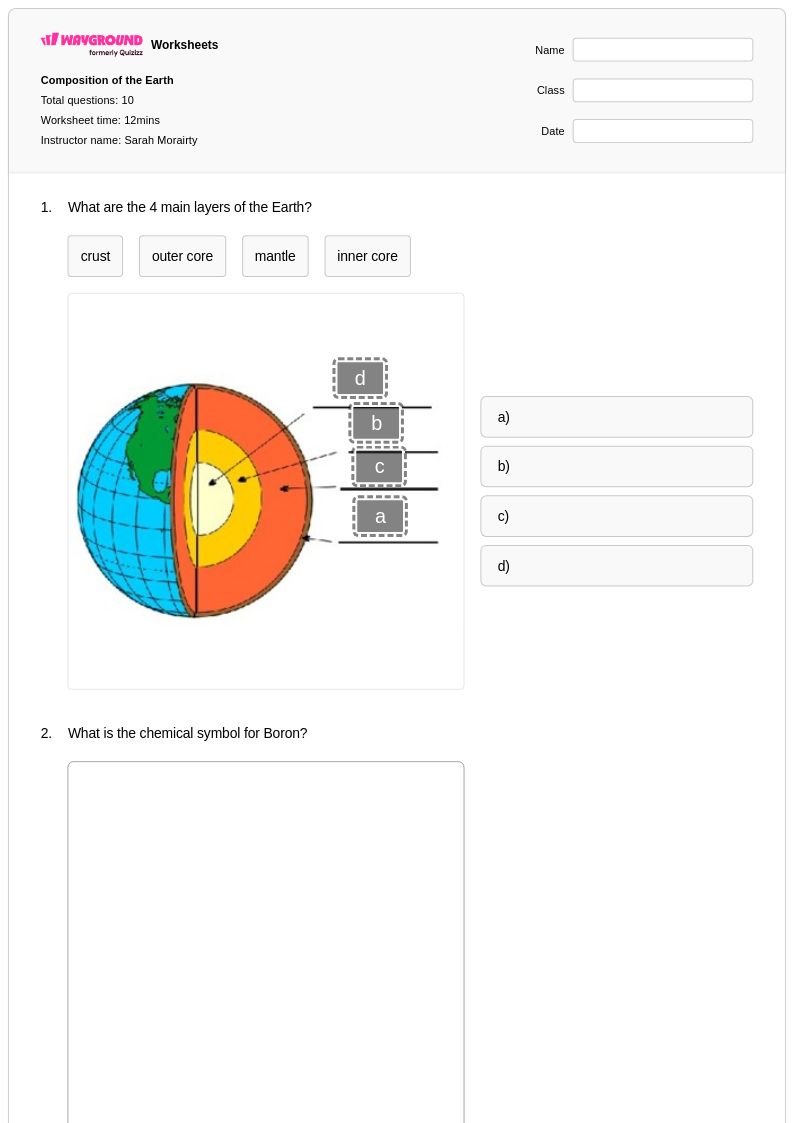
10 Q
9th - 12th
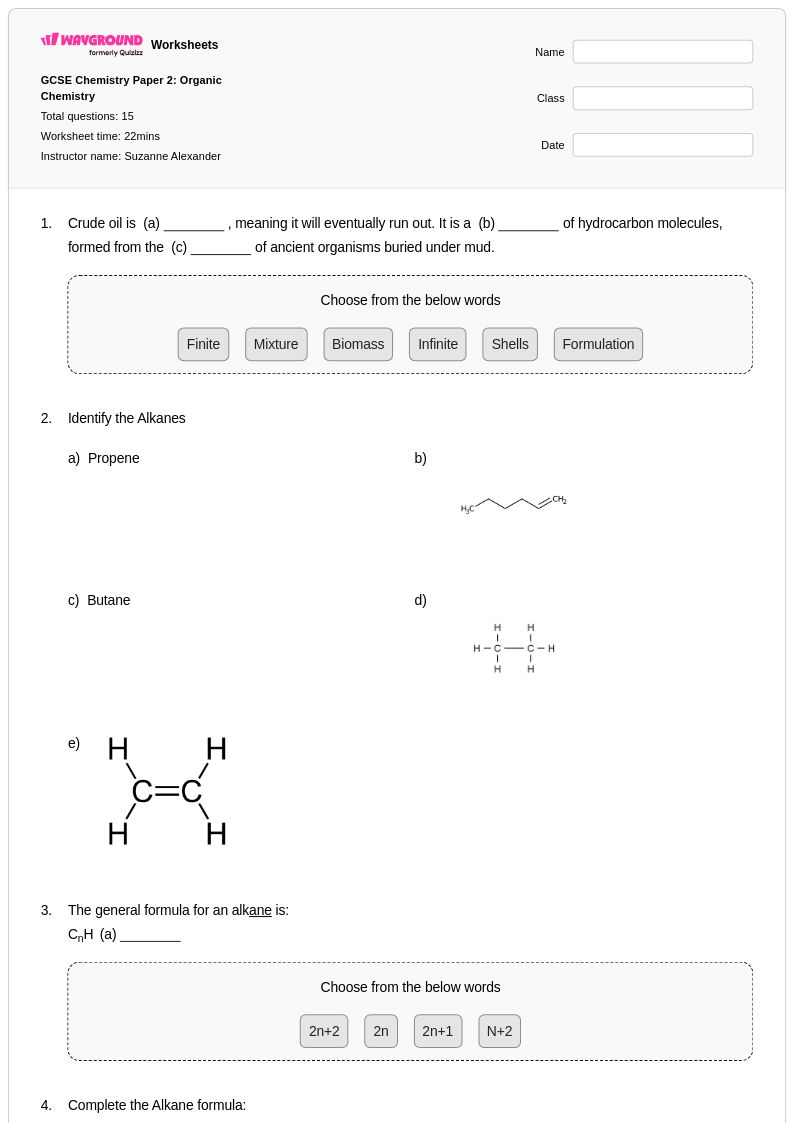
15 Q
9th - 12th
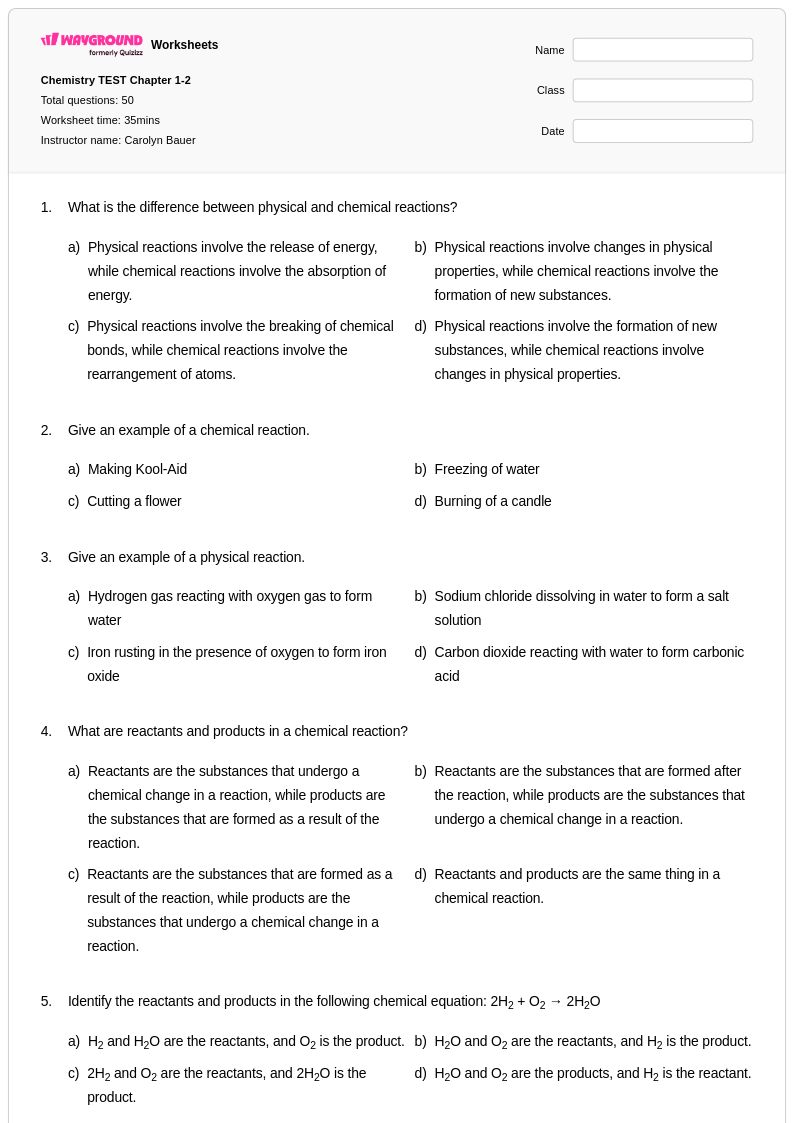
50 Q
11th
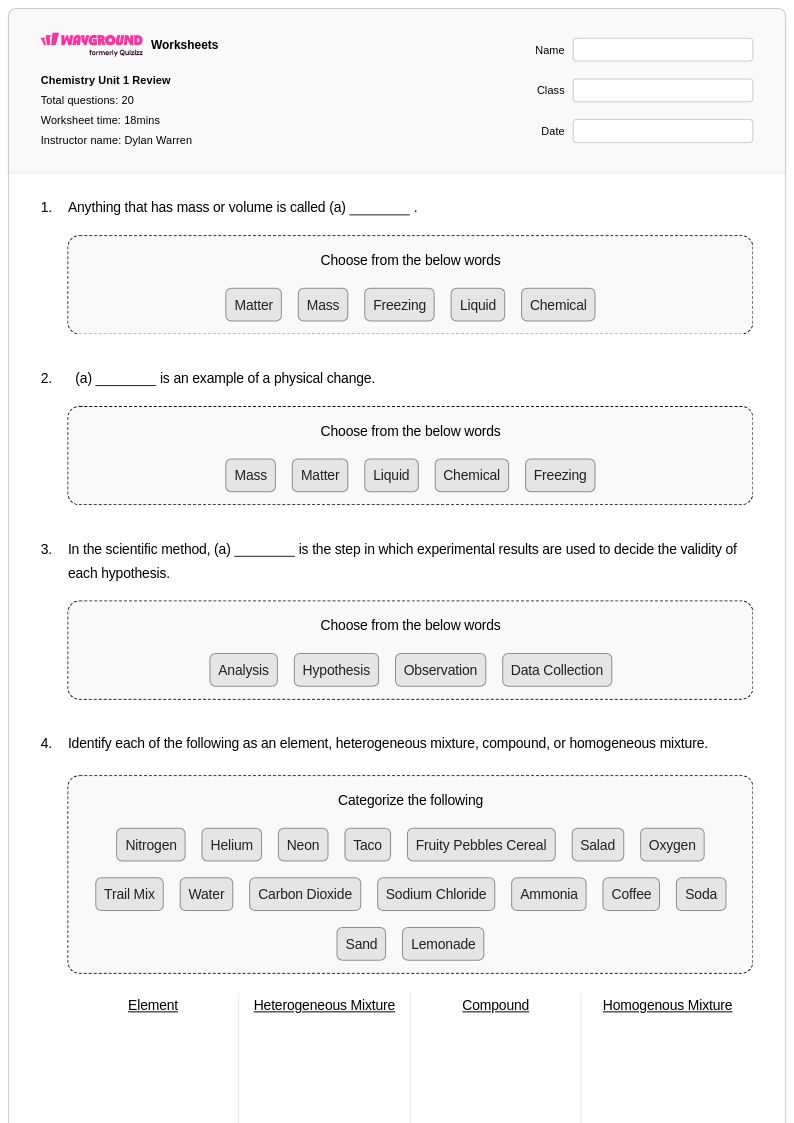
20 Q
9th - 12th
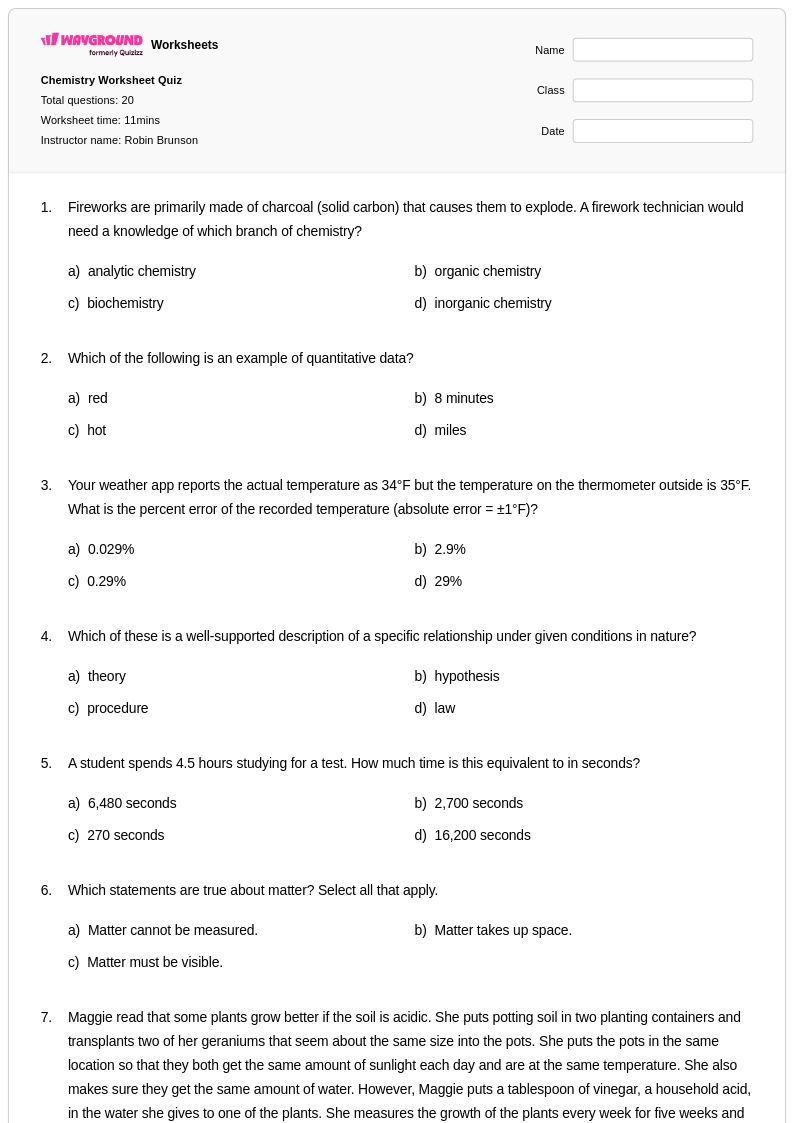
20 Q
11th - Uni
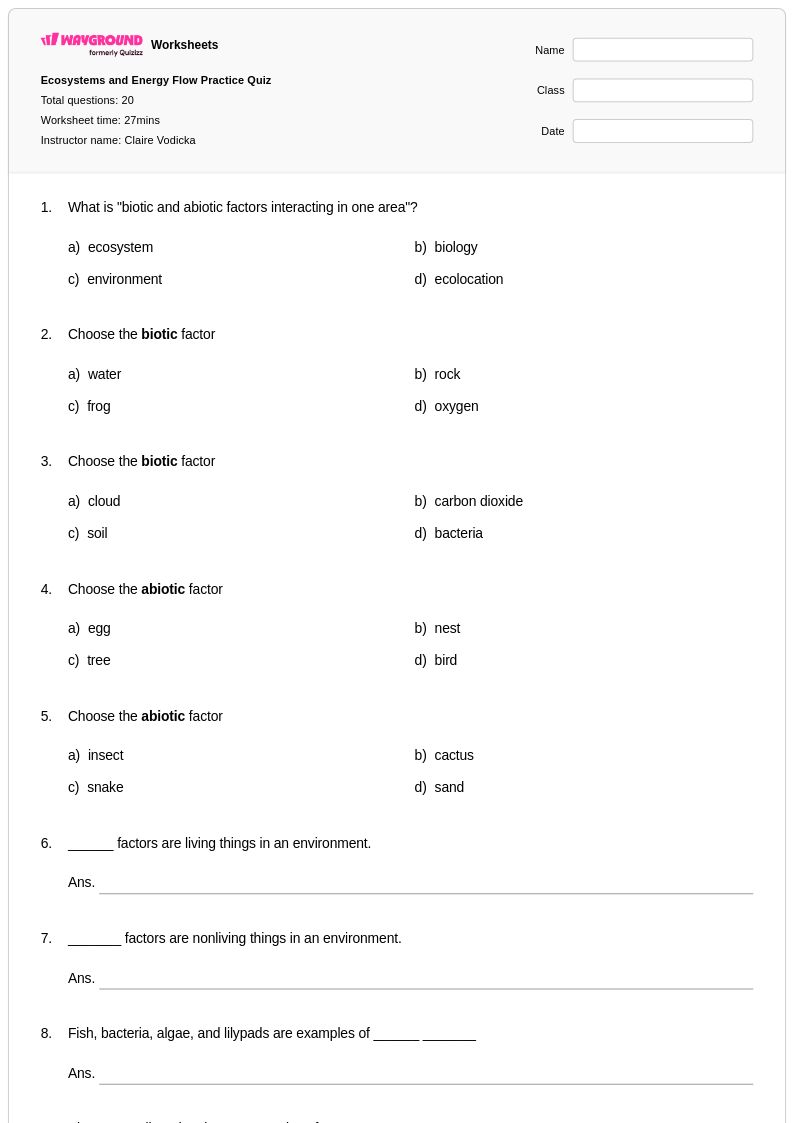
21 Q
9th - 12th
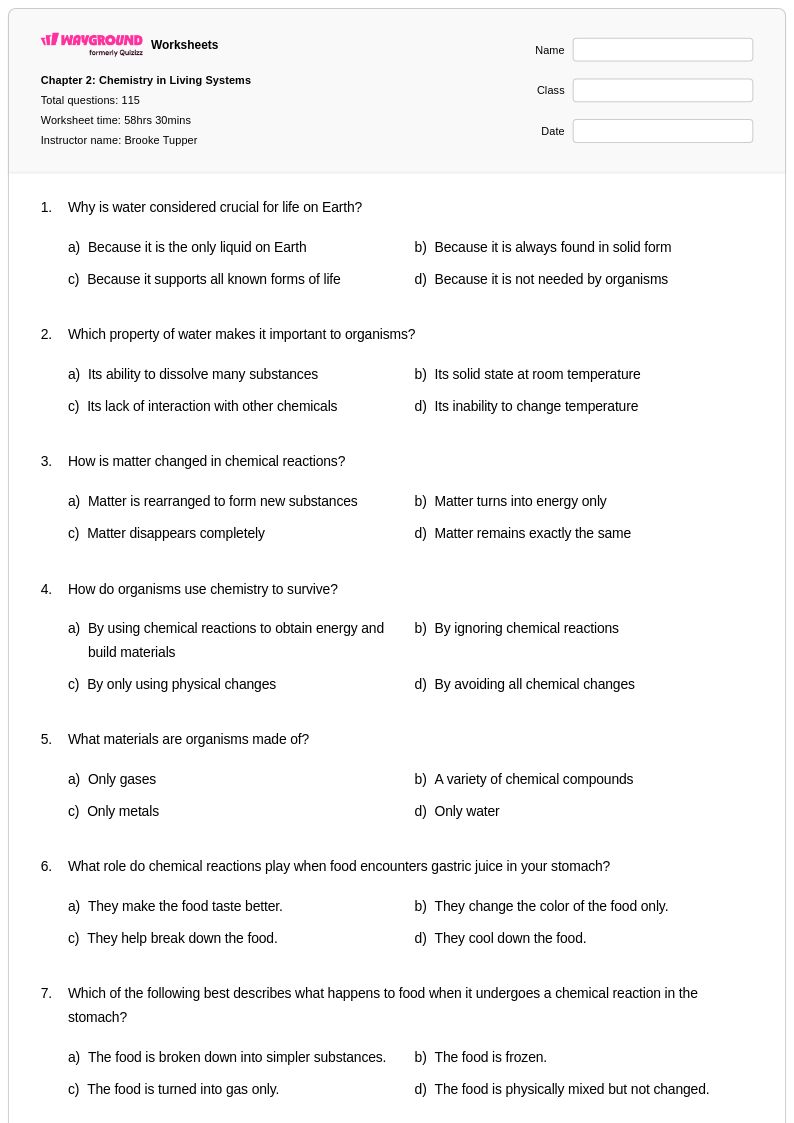
115 Q
9th - Uni
Explore Conversion Factors in Chemistry Worksheets by Grades
Explore Other Subject Worksheets for class 11
Explore printable Conversion Factors in Chemistry worksheets for Class 11
Conversion factors in chemistry represent one of the most fundamental skills that Class 11 students must master to succeed in advanced chemical calculations and problem-solving. Wayground's extensive collection of conversion factor worksheets provides comprehensive practice with dimensional analysis, unit conversions, and stoichiometric calculations that form the backbone of quantitative chemistry. These carefully designed worksheets strengthen students' ability to convert between different units of measurement, calculate molar quantities, and solve complex multi-step problems involving mass, volume, and molecular relationships. Each worksheet includes detailed answer keys and step-by-step solutions, making them invaluable resources for independent study and homework practice. Available as free printable PDFs, these practice problems cover everything from basic metric conversions to advanced stoichiometry applications, ensuring students develop confidence with the mathematical foundations essential for success in chemistry.
Wayground's platform empowers chemistry teachers with access to millions of educator-created resources specifically focused on conversion factors and dimensional analysis for Class 11 students. The robust search and filtering capabilities allow teachers to quickly locate worksheets that align with specific curriculum standards and target particular skill levels, from introductory unit conversions to complex stoichiometric calculations. These versatile resources support differentiated instruction through customizable difficulty levels and can be seamlessly integrated into lesson planning for skill practice, remediation sessions, or enrichment activities. Teachers can access materials in both printable and digital formats, including downloadable PDFs that maintain formatting consistency across different devices and printing systems. This flexibility enables educators to efficiently address diverse learning needs while providing students with structured practice opportunities that build mastery of conversion factors, ultimately preparing them for advanced chemistry concepts and standardized assessments.