Free Printable Isotope Notation Worksheets for Class 11
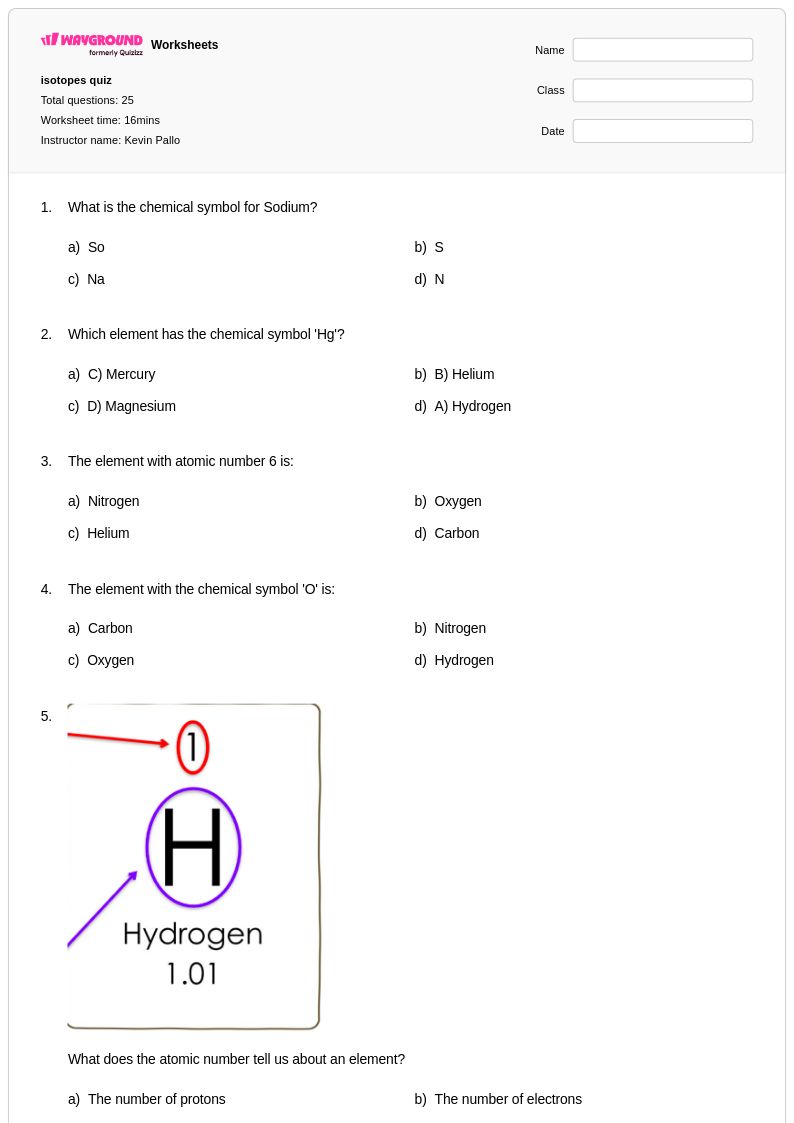
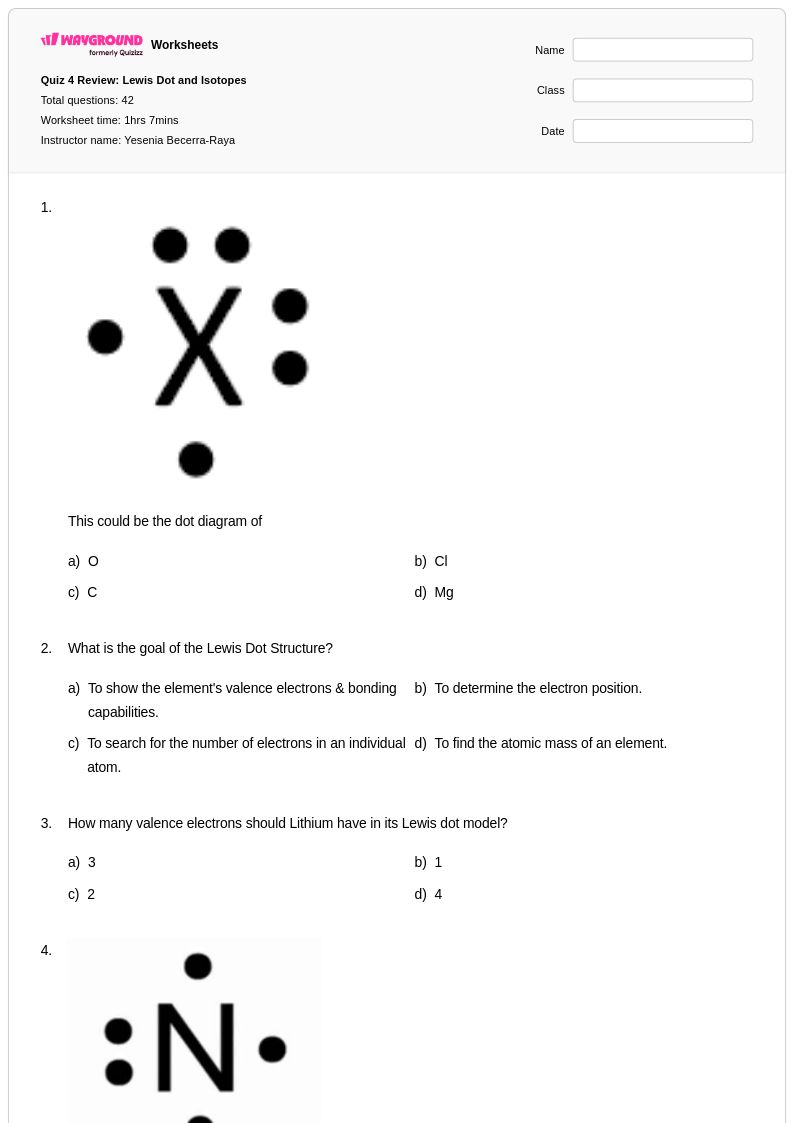
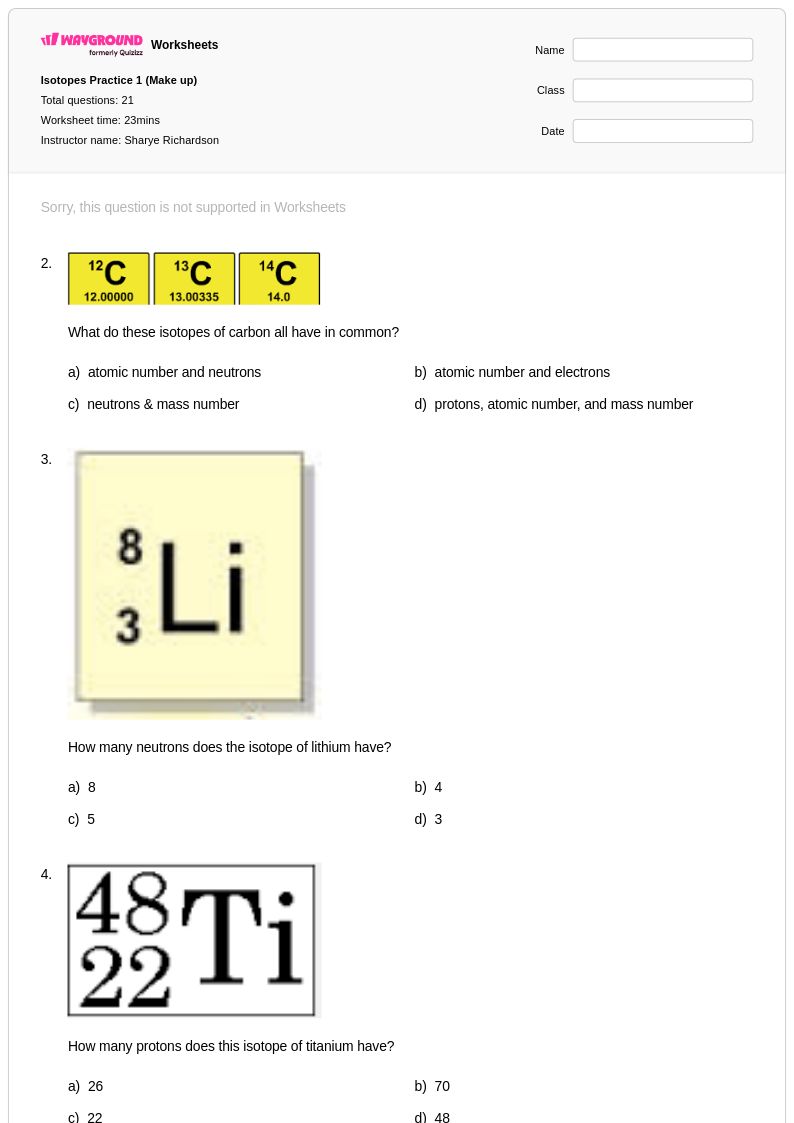
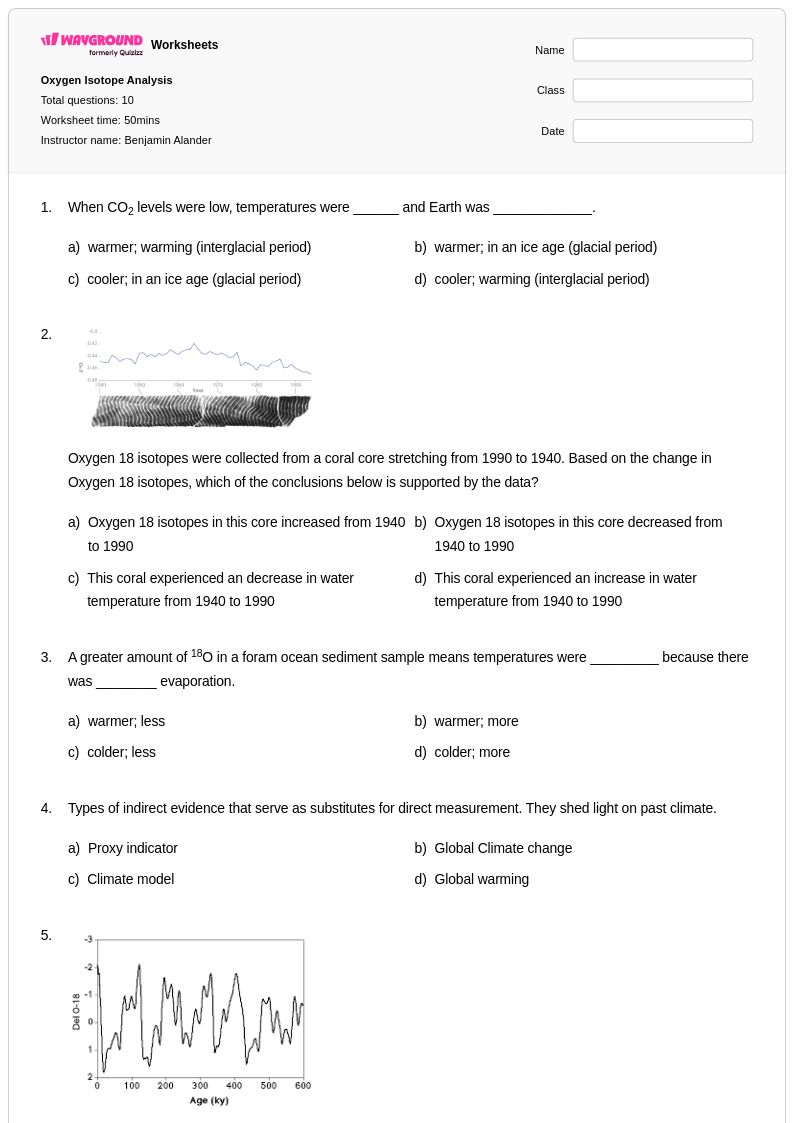
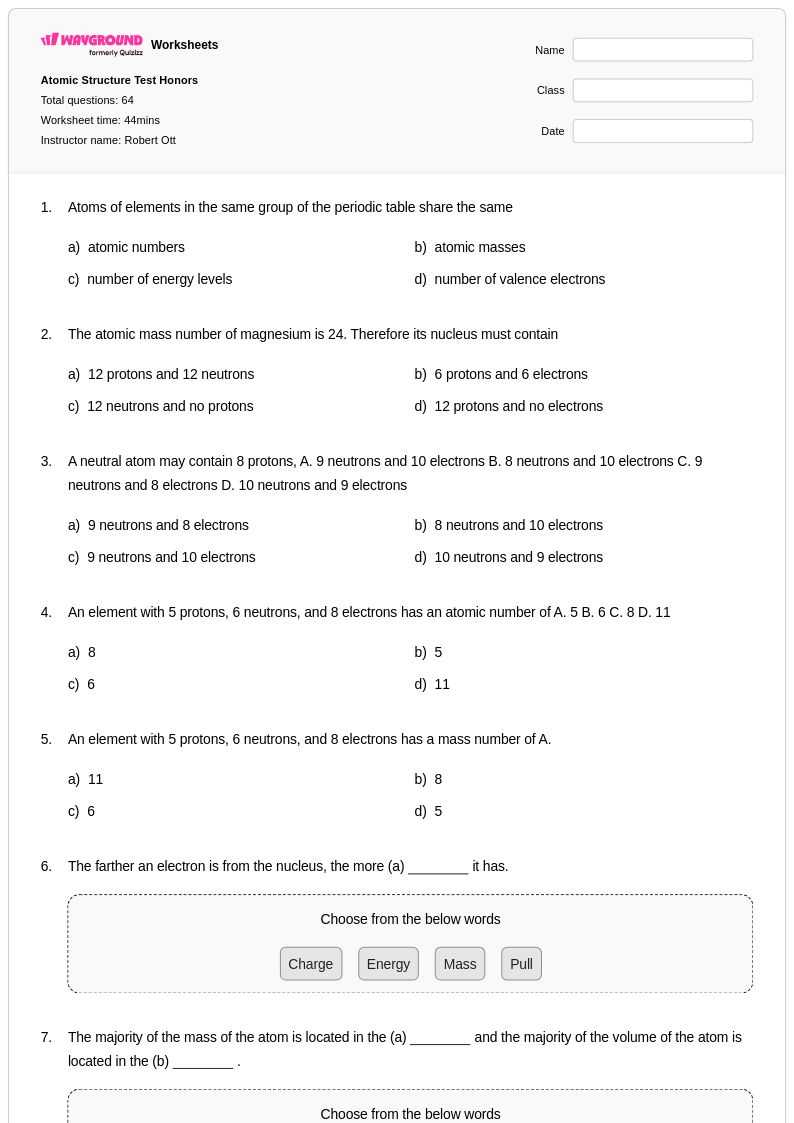
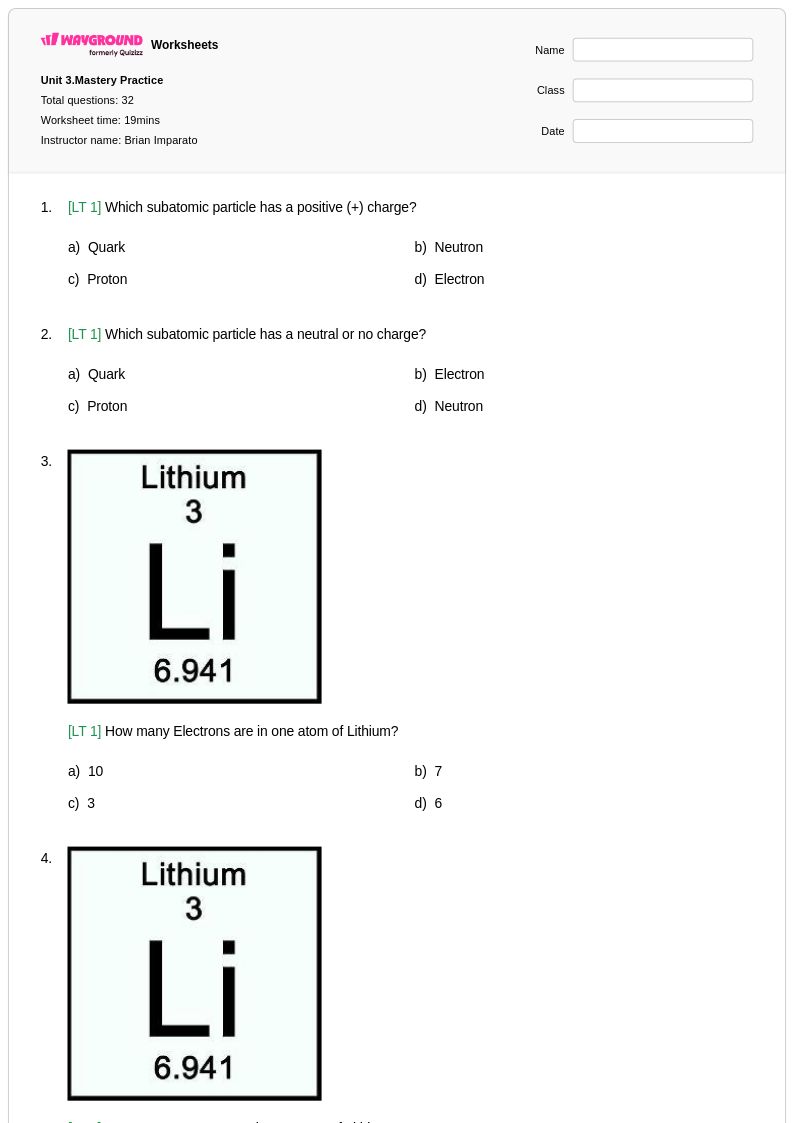
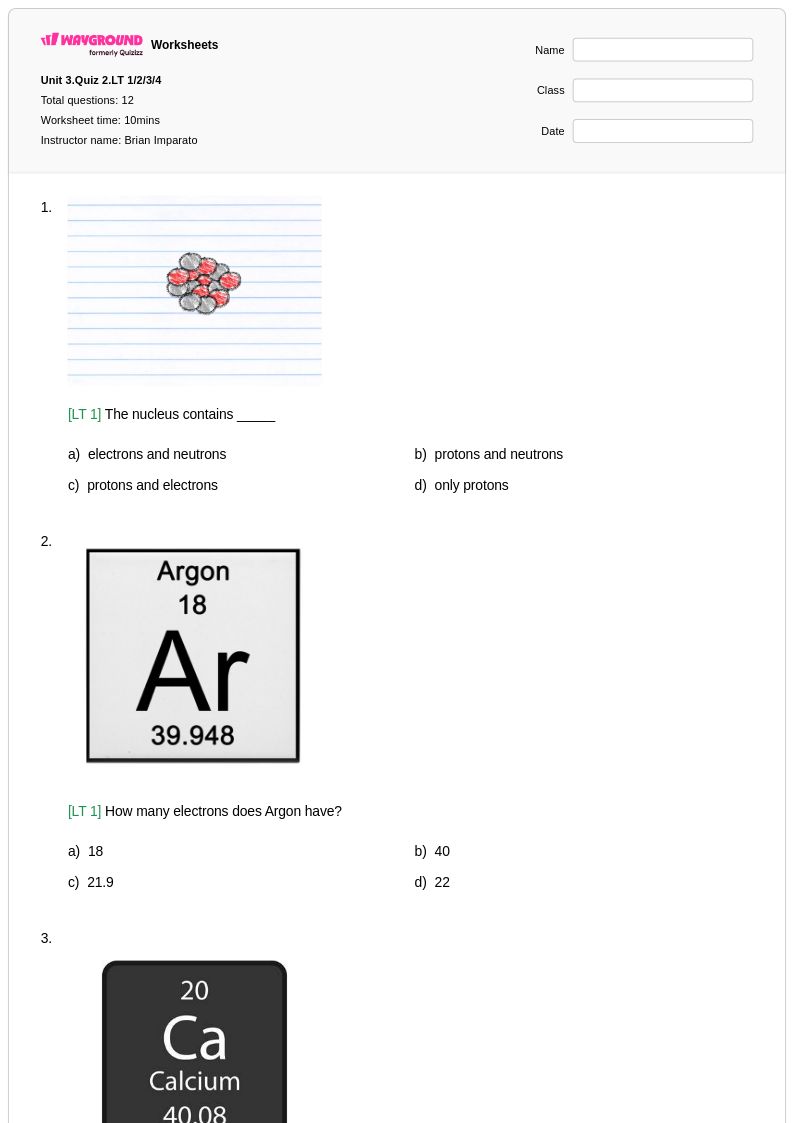
Class 11 isotope notation worksheets from Wayground provide comprehensive practice problems and answer keys to help students master atomic symbols, mass numbers, and nuclear notation through engaging printable PDFs and free worksheet activities.
Explore printable Isotope Notation worksheets for Class 11
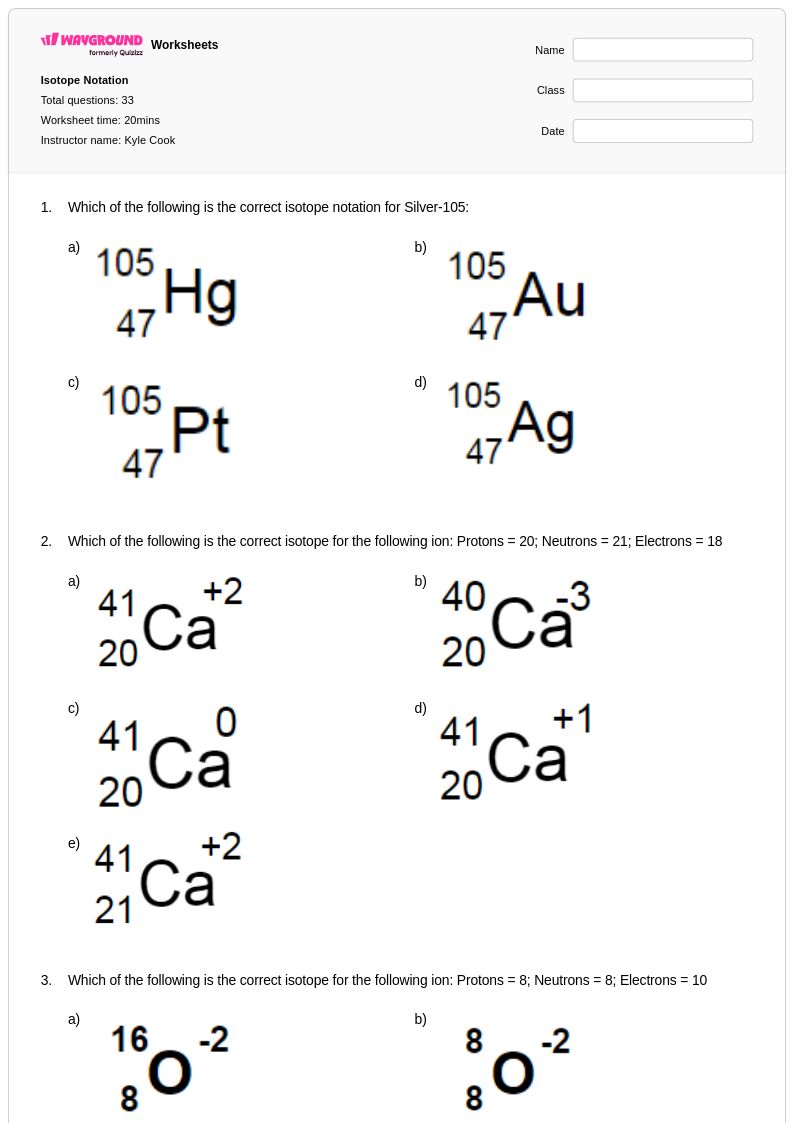
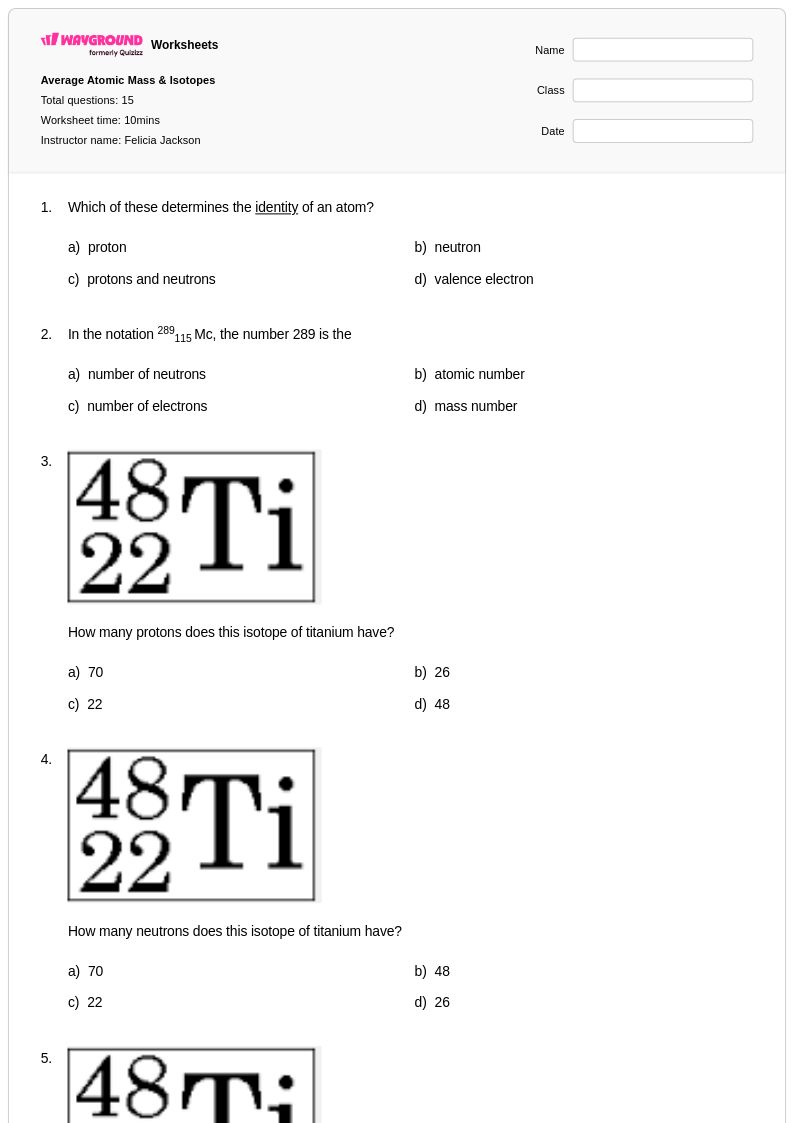
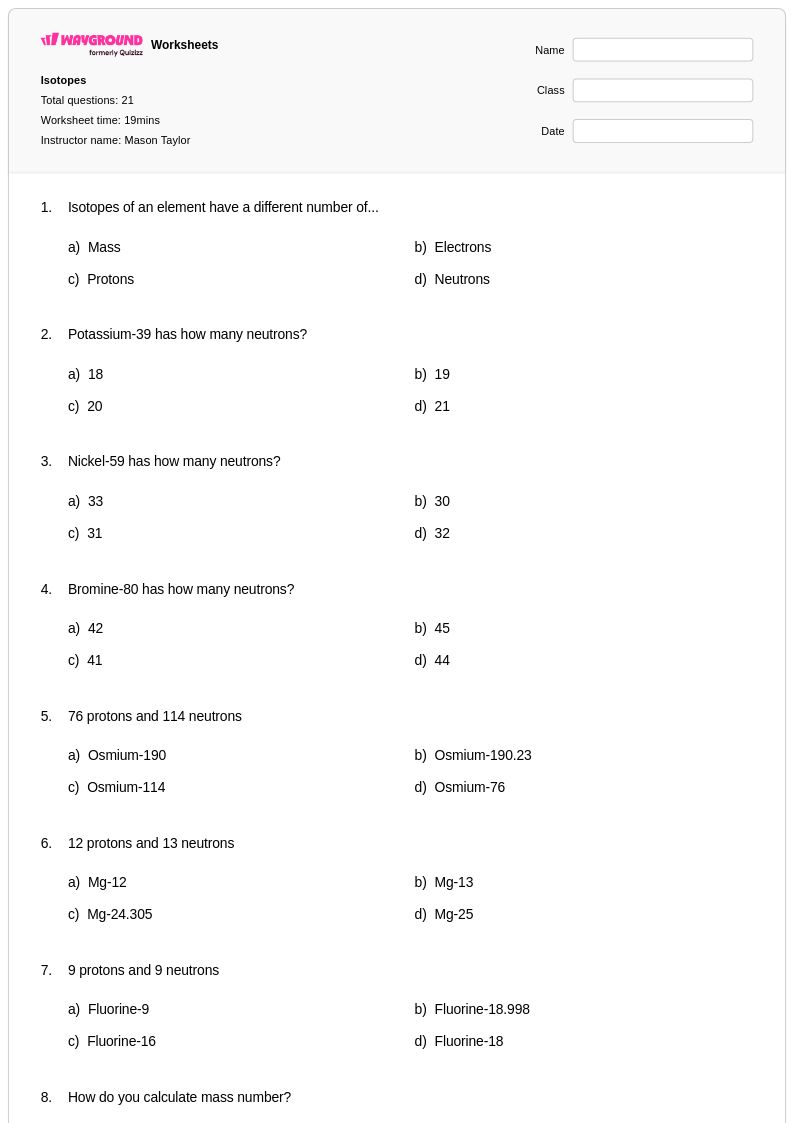
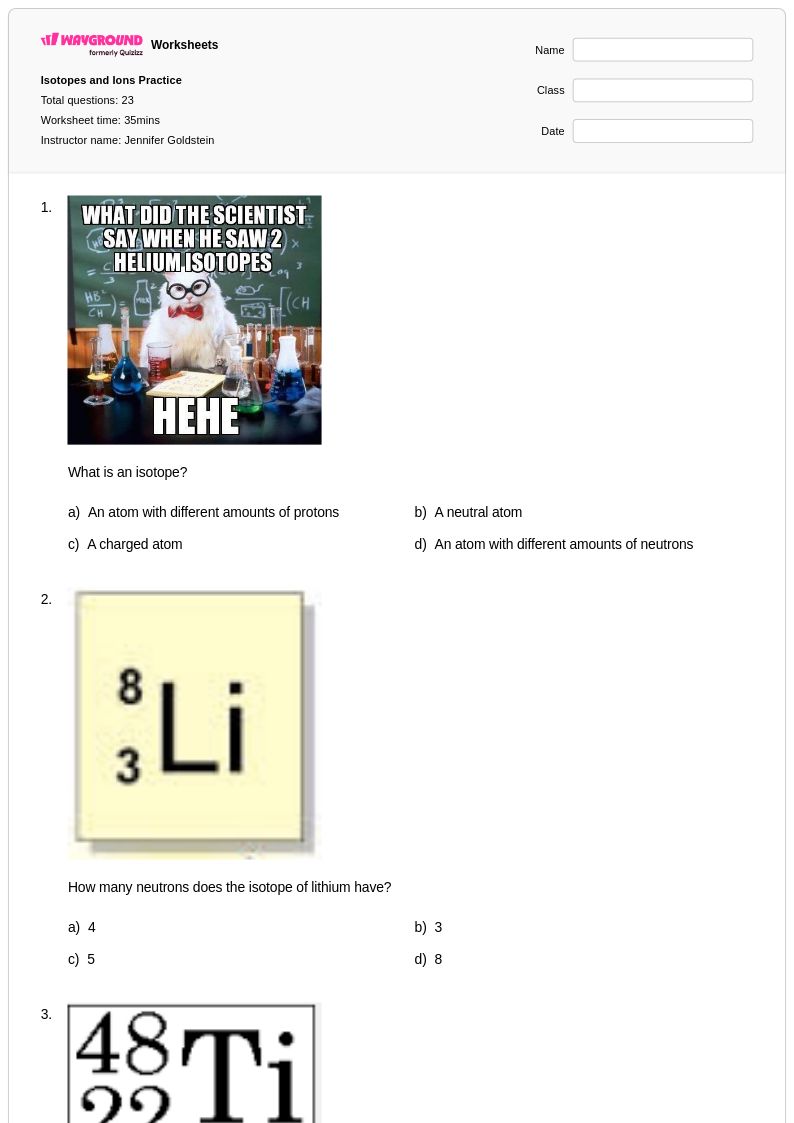
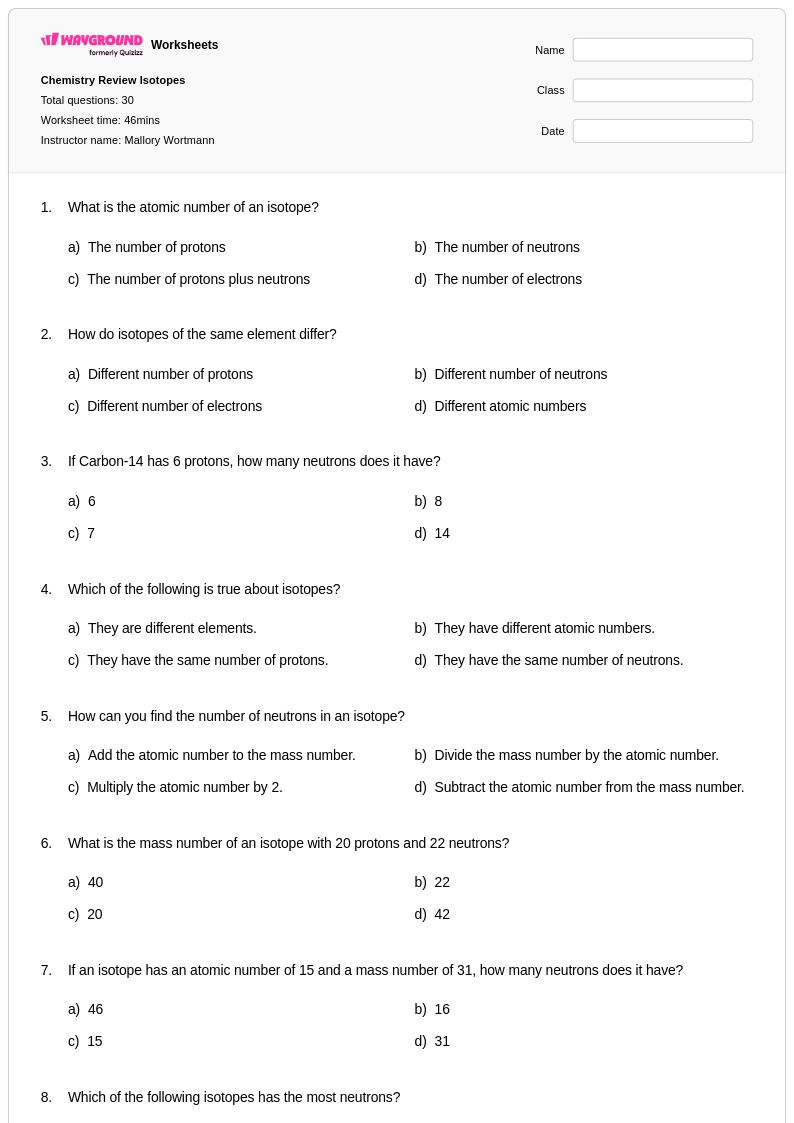
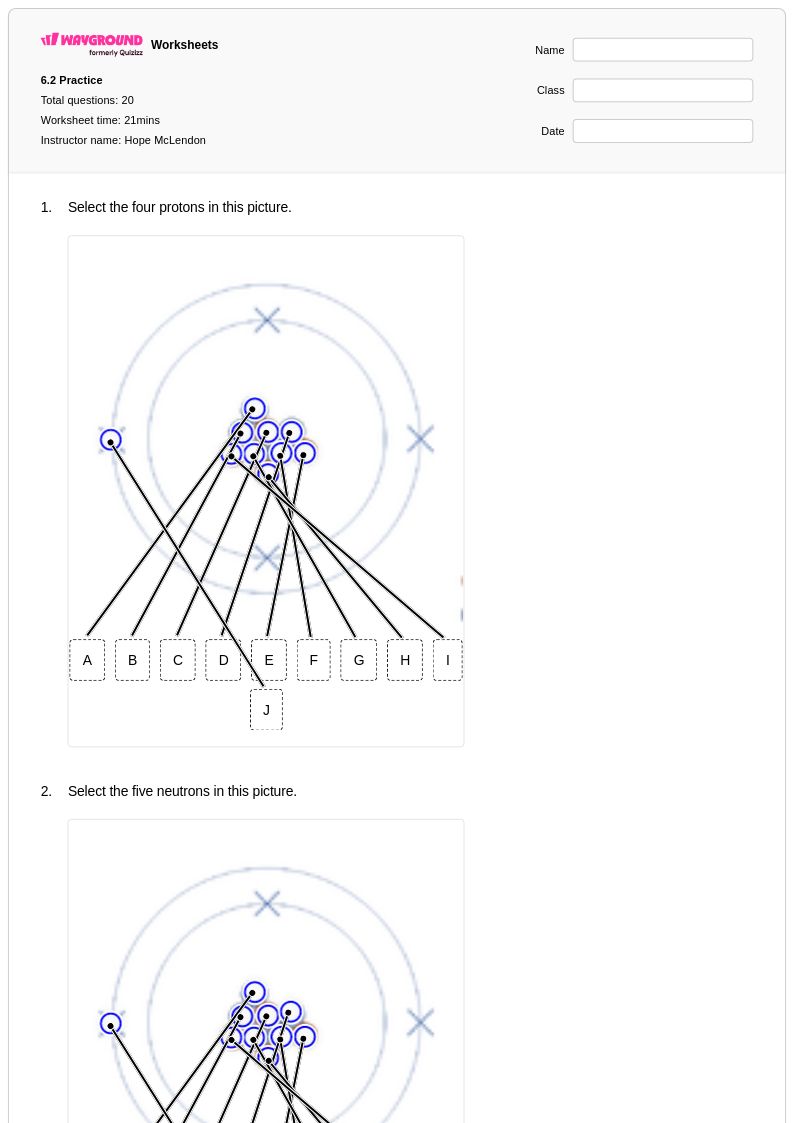
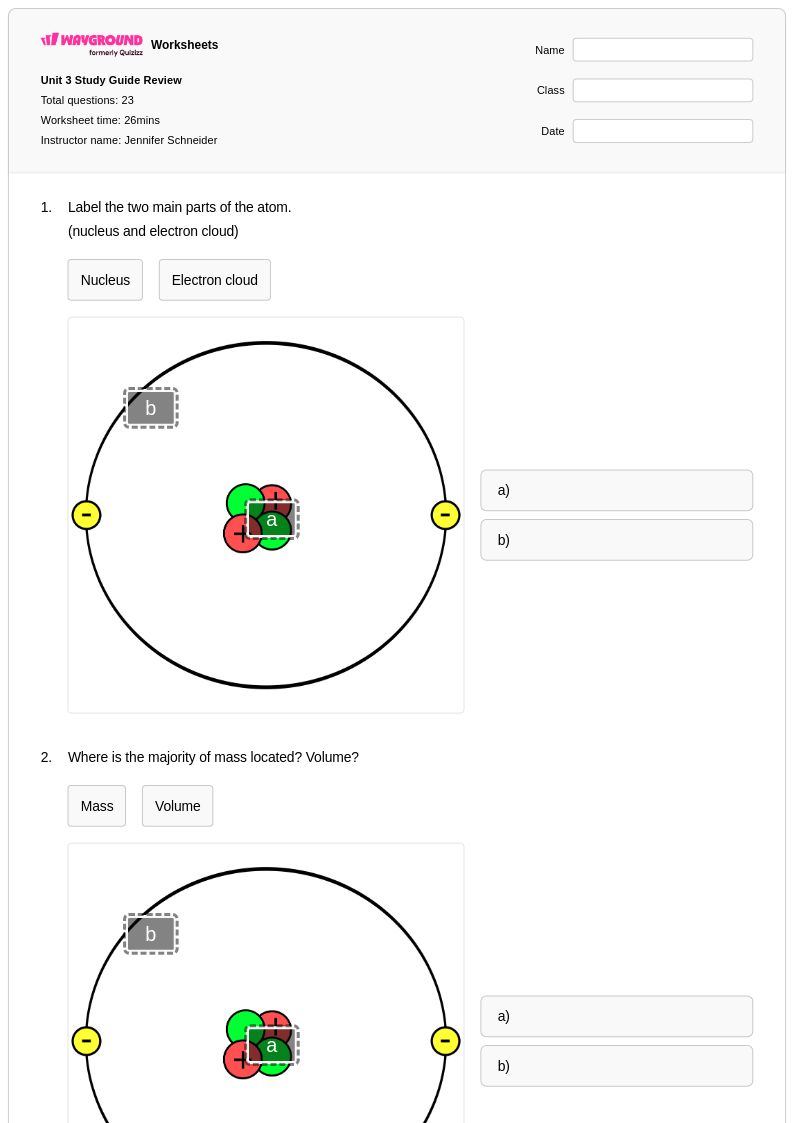
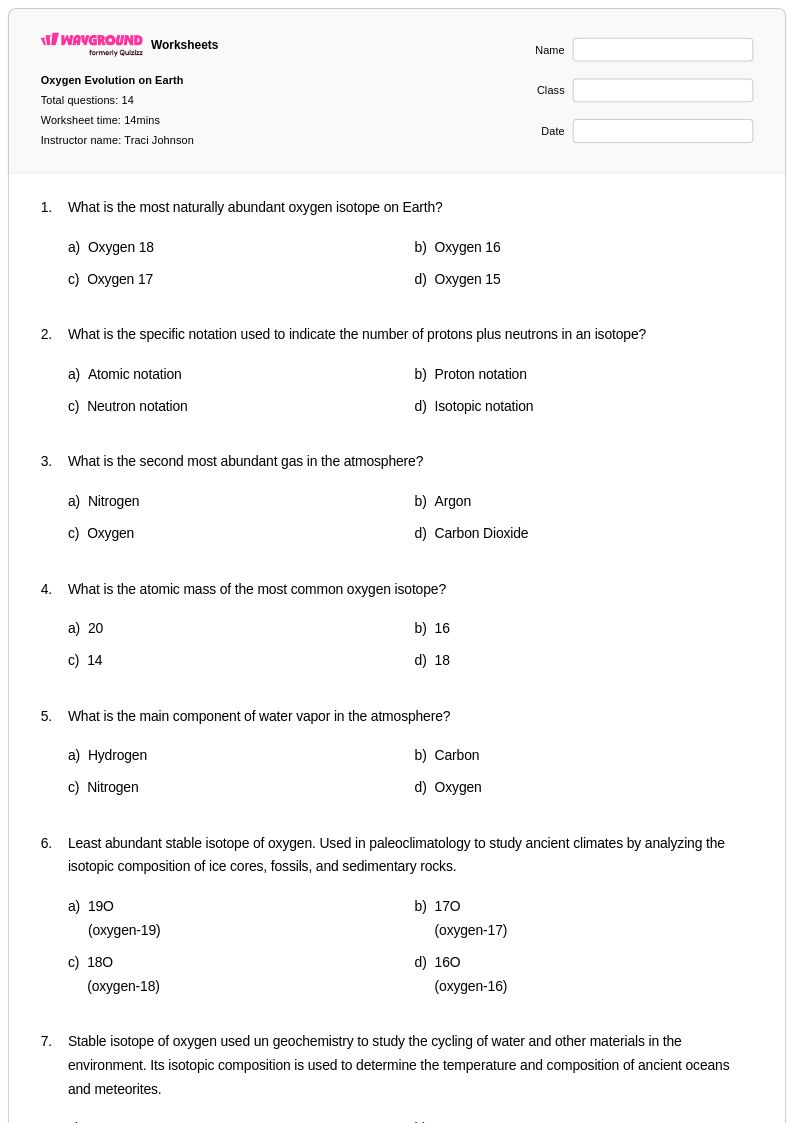
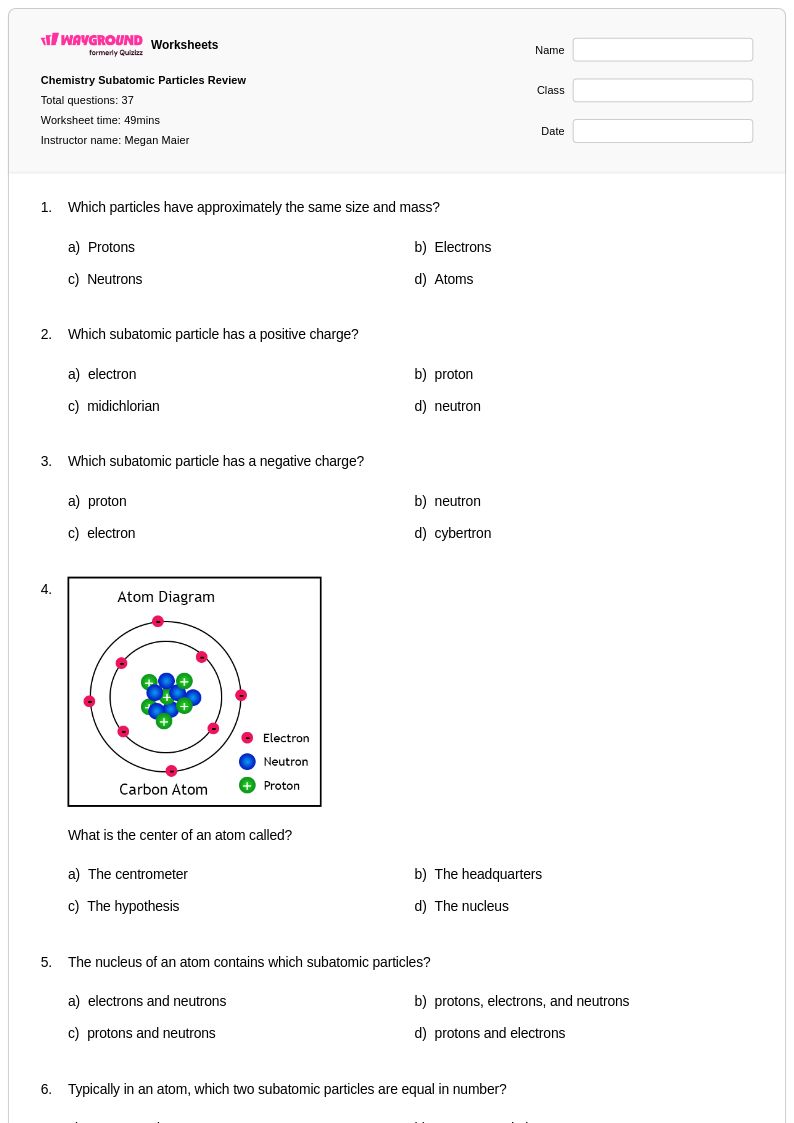
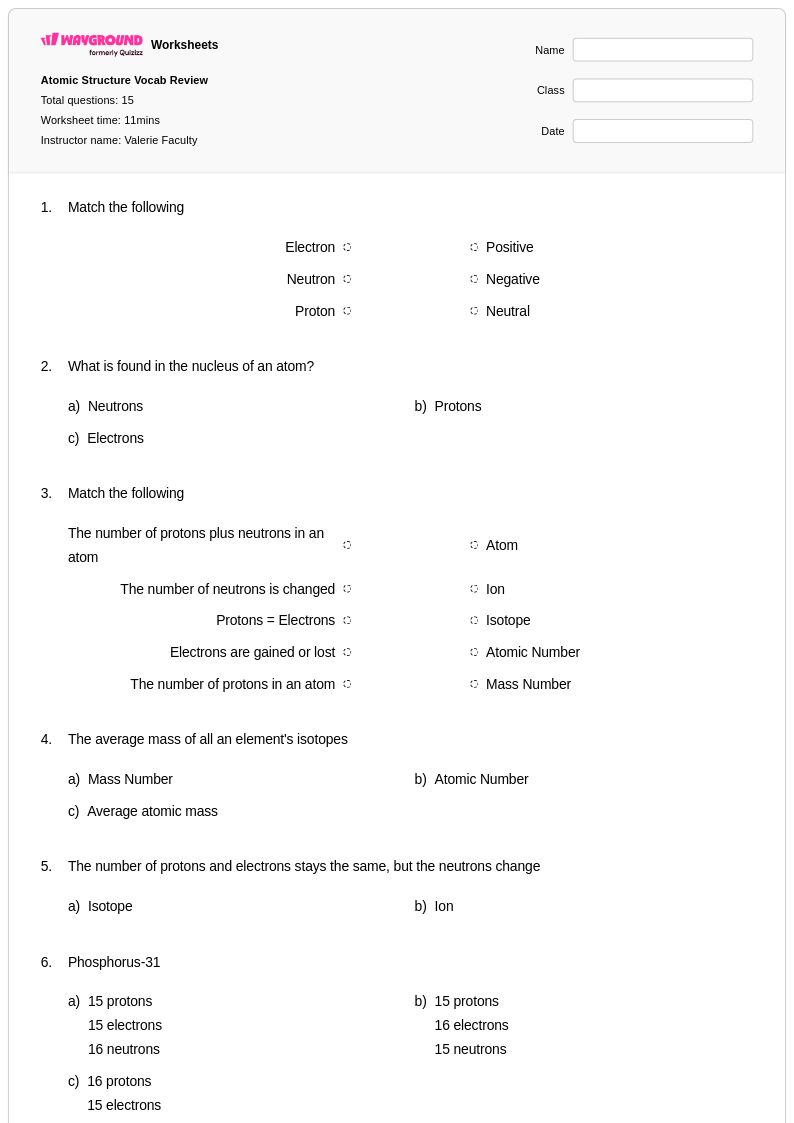
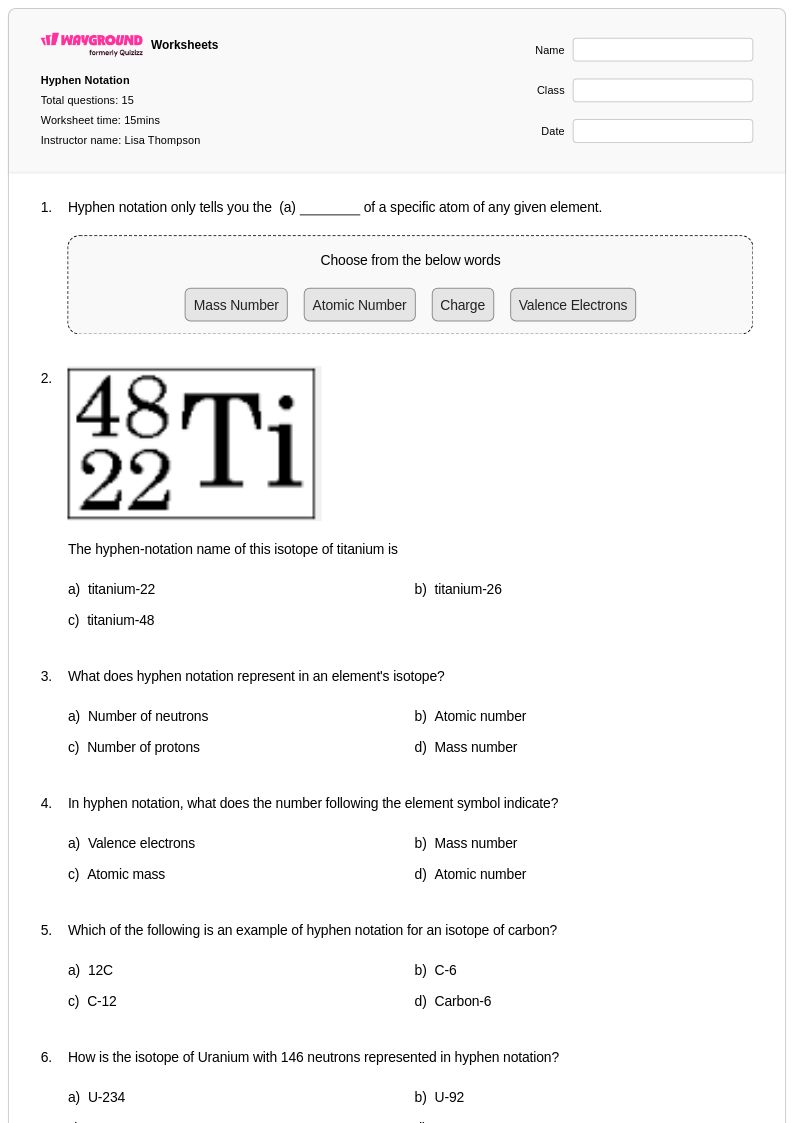
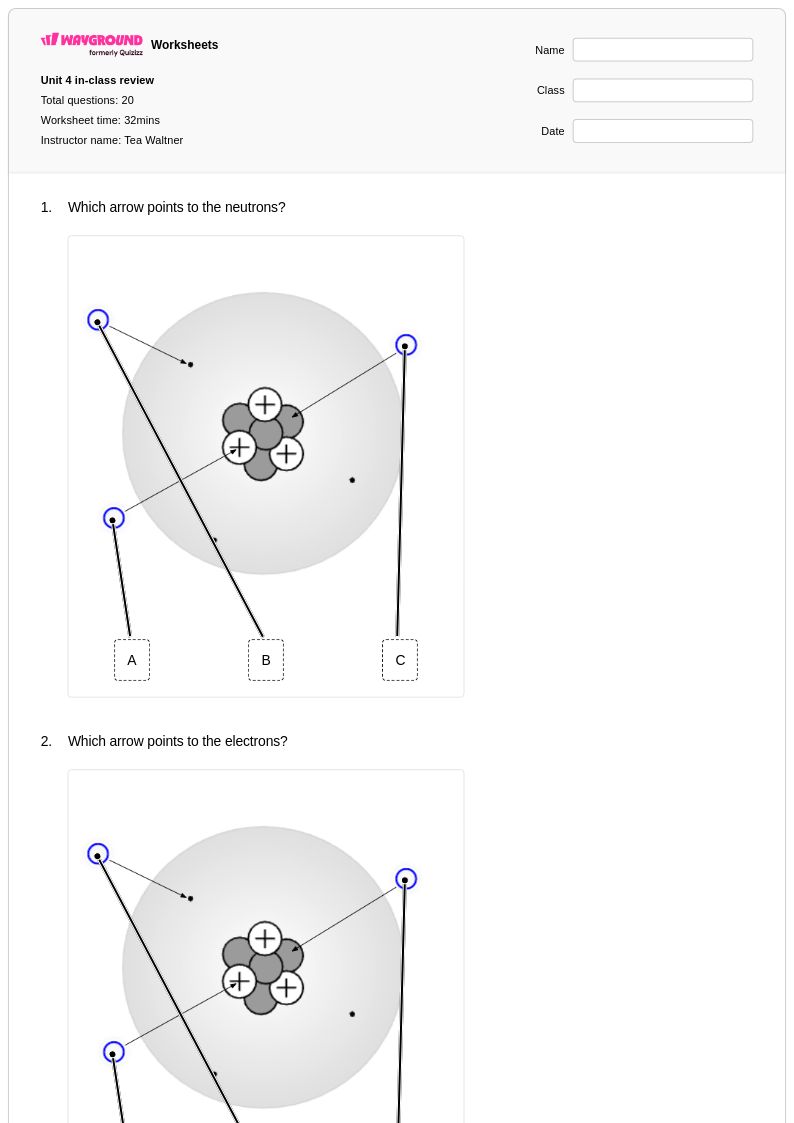
Isotope notation worksheets for Class 11 chemistry students available through Wayground (formerly Quizizz) provide comprehensive practice with atomic structure representation and nuclear chemistry fundamentals. These expertly designed worksheets strengthen students' ability to interpret and write isotope symbols using both hyphen notation and nuclear symbol format, while reinforcing understanding of atomic number, mass number, and neutron calculations. Students work through practice problems that cover naturally occurring isotopes, radioactive decay patterns, and relative atomic mass concepts, with each worksheet including detailed answer keys to support independent learning. The free printable resources systematically build proficiency in distinguishing between different isotopic forms of elements and applying isotope notation in chemical equations and nuclear reactions.
Wayground's extensive collection of teacher-created isotope notation worksheets draws from millions of educational resources, offering Class 11 chemistry educators powerful search and filtering capabilities to locate materials aligned with specific curriculum standards and learning objectives. The platform's differentiation tools enable teachers to customize worksheets for varying skill levels, from introductory isotope identification to advanced nuclear chemistry applications, while maintaining consistent formatting across both printable pdf versions and interactive digital formats. These flexible resources support comprehensive lesson planning by providing targeted skill practice for remediation, standard instruction, and enrichment activities, allowing educators to seamlessly integrate isotope notation practice into laboratory work, homework assignments, and assessment preparation while accommodating diverse learning preferences and classroom management needs.
FAQs
How do I teach isotope notation to chemistry students?
Start by establishing the relationship between atomic number, mass number, and neutron count before introducing notation formats. Teach hyphen notation first (e.g., Carbon-14) as the most intuitive entry point, then progress to nuclear symbol notation, which requires students to correctly position the mass number and atomic number relative to the element symbol. Using periodic table reference sheets during early instruction helps students focus on notation structure rather than memorizing atomic numbers.
What exercises help students practice reading and writing isotope notation?
Effective practice exercises include conversion drills where students translate between hyphen notation, nuclear symbols, and element names, as well as fill-in-the-blank problems that isolate one variable (mass number, atomic number, or neutron count) at a time. Problems that require students to calculate neutrons from mass number and atomic number reinforce the relationship between all three values and are particularly useful for building fluency before assessments.
What mistakes do students commonly make with isotope notation?
The most common error is confusing atomic number with mass number, which leads to incorrect neutron calculations and misidentification of the element. Students also frequently misplace the superscript and subscript positions in nuclear symbol notation, writing the atomic number above and mass number below instead of the reverse. Another persistent misconception is assuming that isotopes of the same element have different chemical properties, when in fact only their nuclear properties differ.
How do I differentiate isotope notation instruction for students at different levels?
For introductory learners, provide periodic table access and focus on single-step problems identifying one value at a time. Advanced students can work through multi-step problems involving isotope abundance, nuclear stability, or mass-charge notation without scaffolding. On Wayground, teachers can apply accommodations such as read aloud for students who need audio support, reduced answer choices to lower cognitive load for struggling learners, and extended time settings configured per individual student.
How do I use Wayground's isotope notation worksheets in my classroom?
Wayground's isotope notation worksheets are available as printable PDFs for traditional classroom use and in digital formats for technology-integrated environments, making them flexible for homework, bell ringers, or structured practice blocks. Teachers can also host the worksheets as a quiz directly on Wayground, enabling real-time student responses and automatic grading. All worksheets include complete answer keys, so they can be used for self-checking, peer review, or teacher-led correction.
How is isotope notation connected to broader nuclear chemistry concepts?
Isotope notation is the foundational language of nuclear chemistry, and fluency with it is prerequisite to understanding radioactive decay, half-life calculations, and nuclear reactions. Students who cannot accurately read a nuclear symbol will struggle to balance nuclear equations or interpret decay series. Building automaticity with notation early in a chemistry or physics course reduces cognitive load when these more complex topics are introduced.