Free Printable Mole Gram Conversion Worksheets for Class 11
Class 11 mole gram conversion worksheets from Wayground help students master stoichiometric calculations through comprehensive practice problems, featuring free printable PDFs with detailed answer keys for chemistry success.
Explore printable Mole Gram Conversion worksheets for Class 11
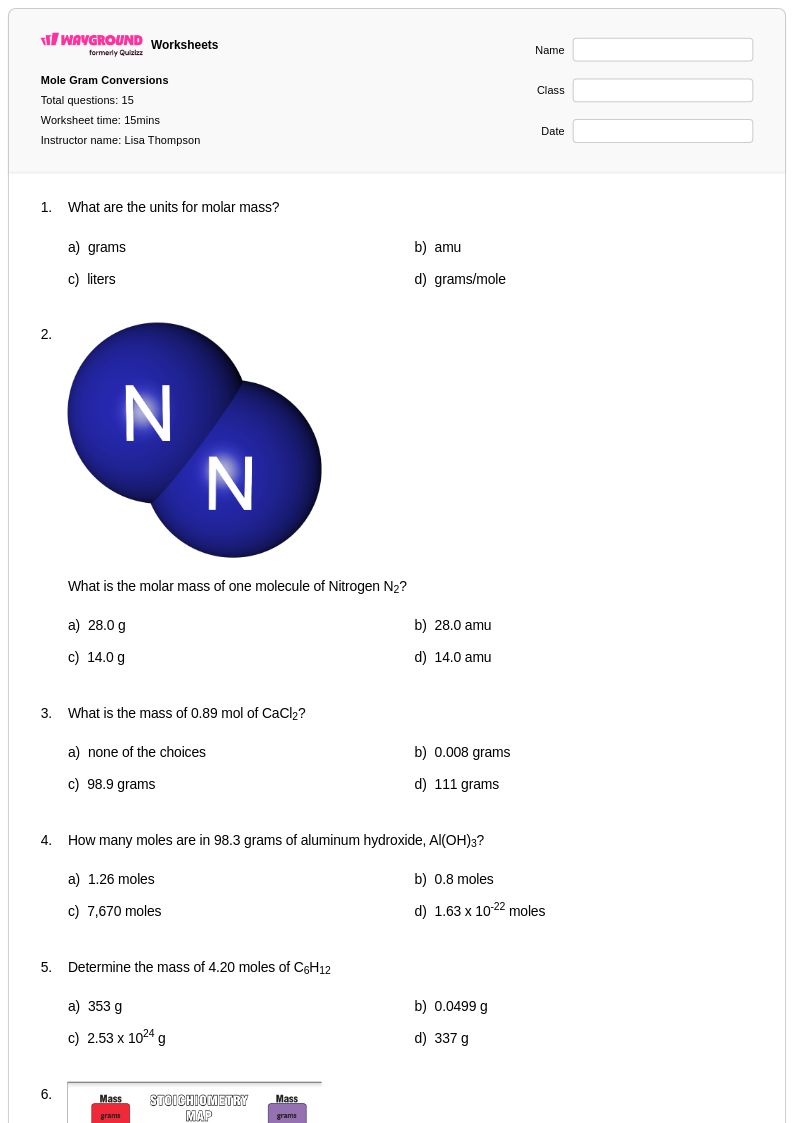
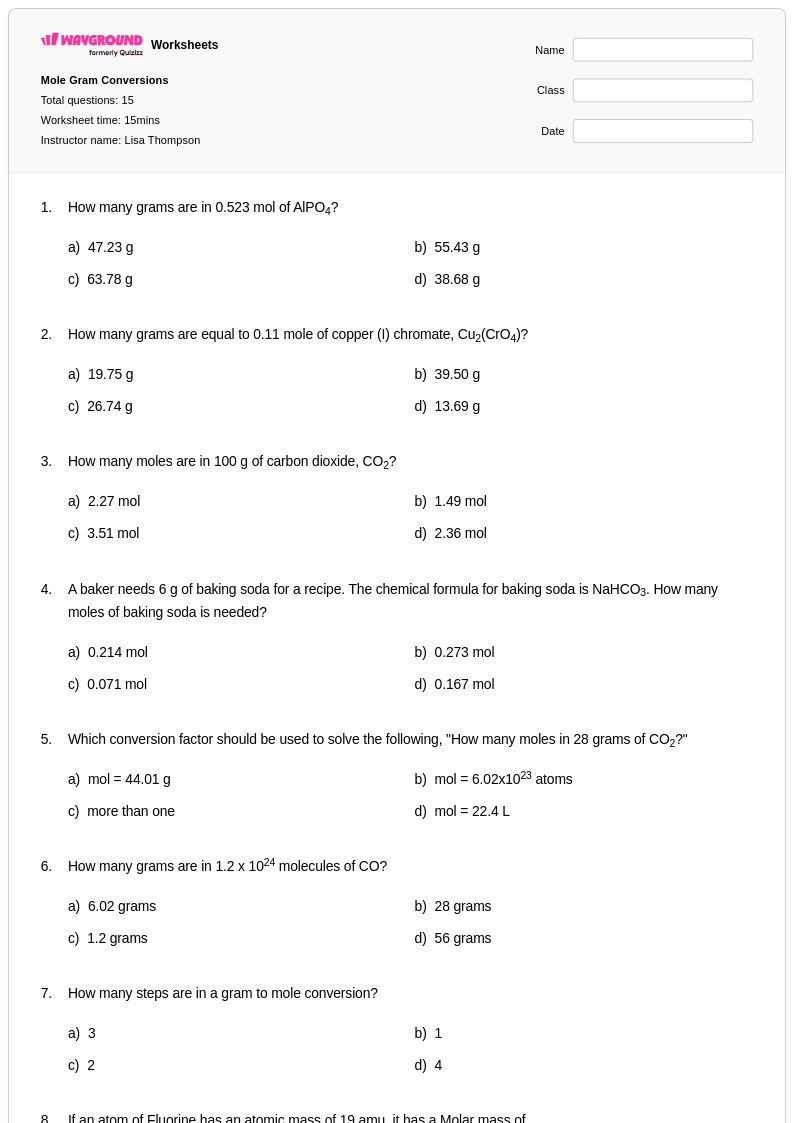
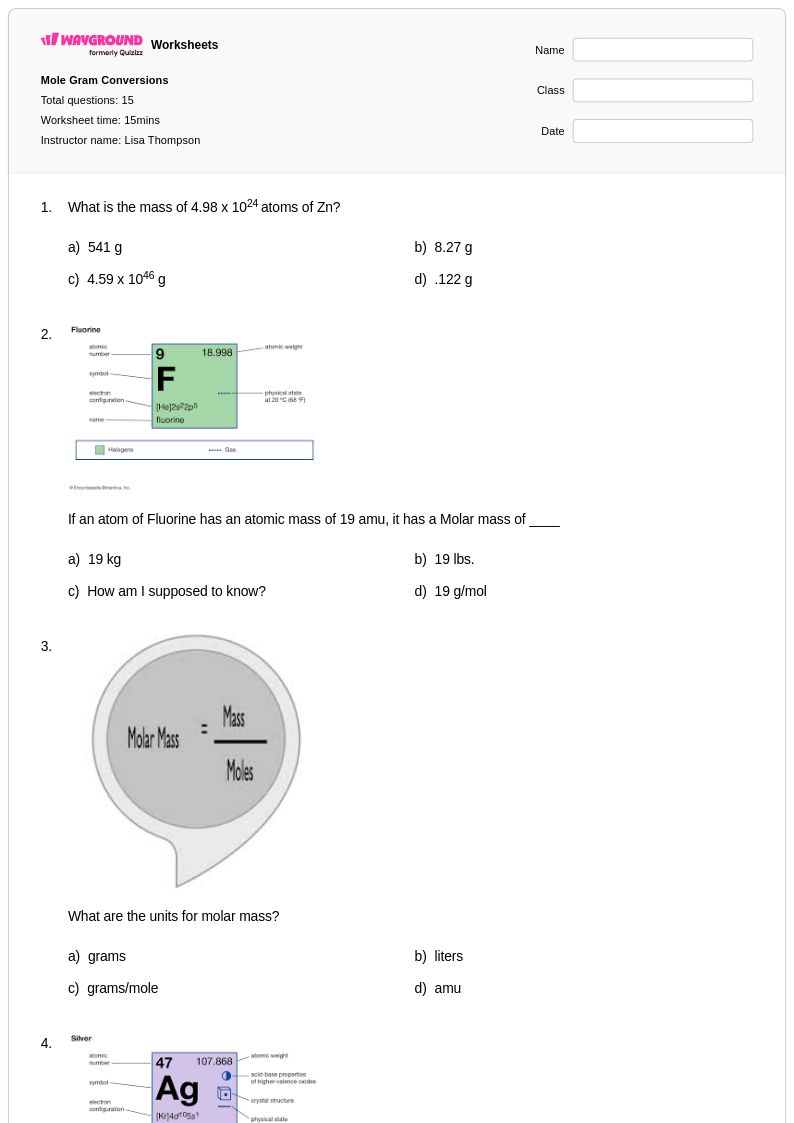
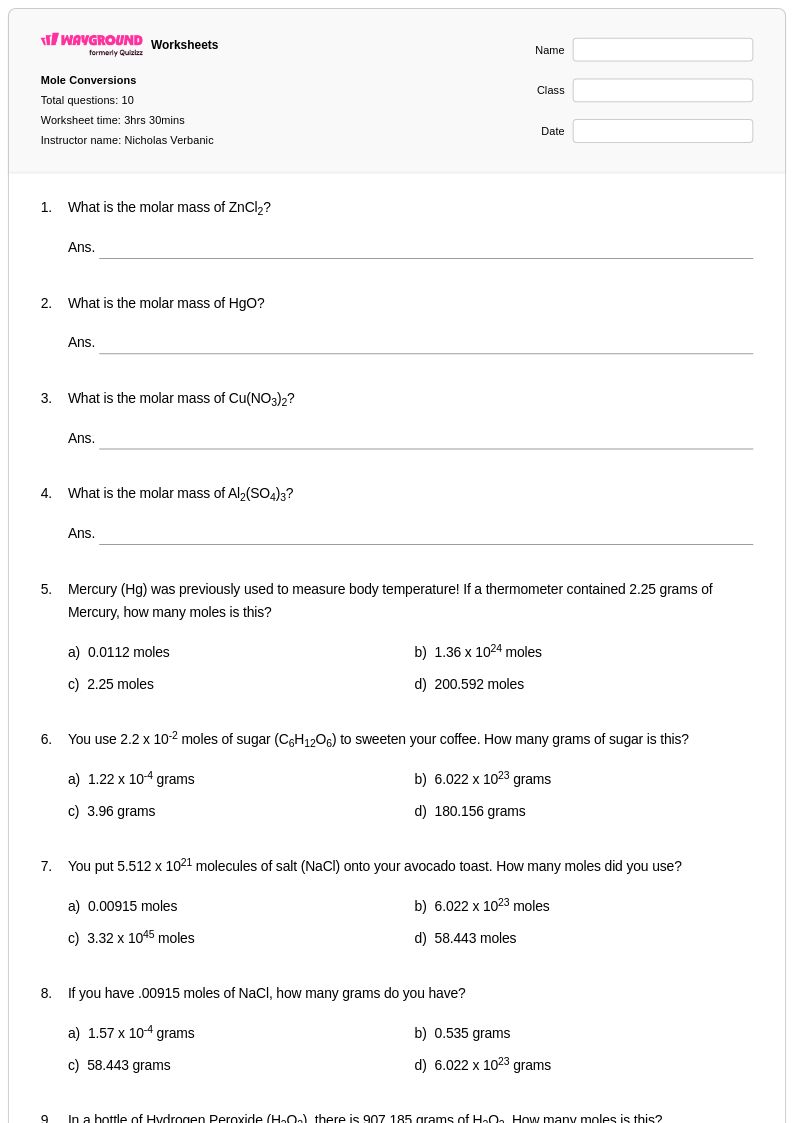
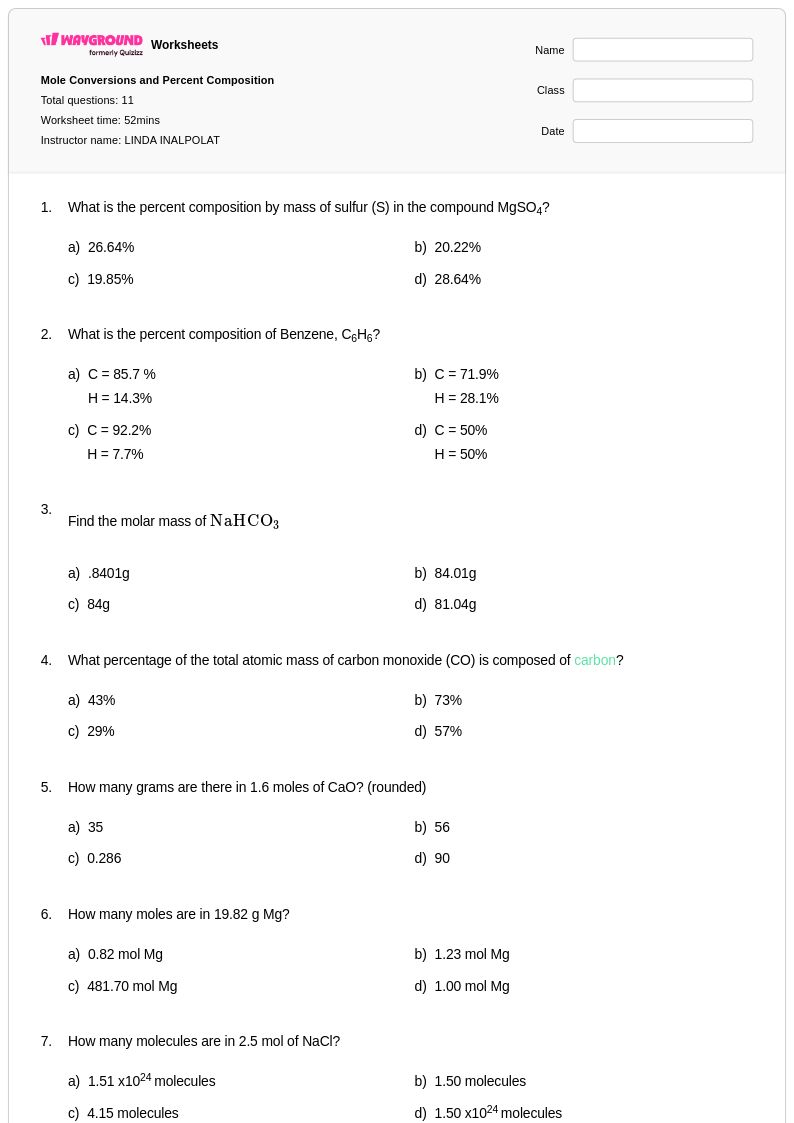
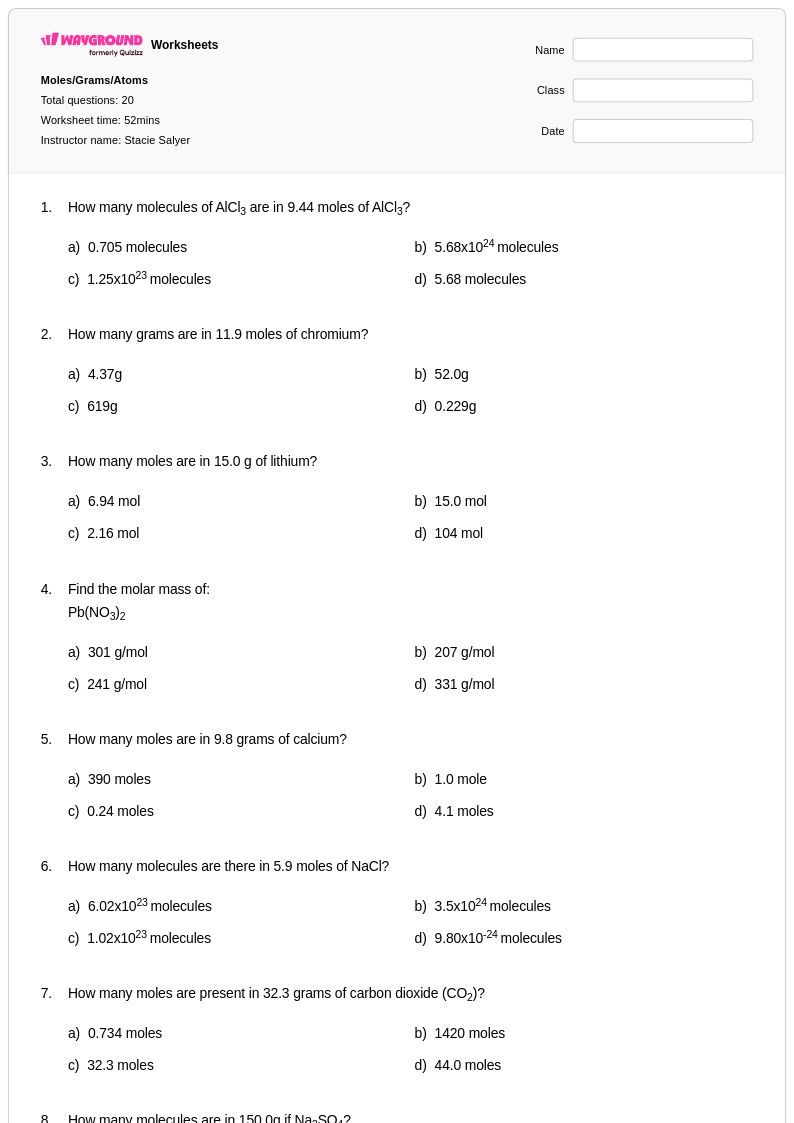
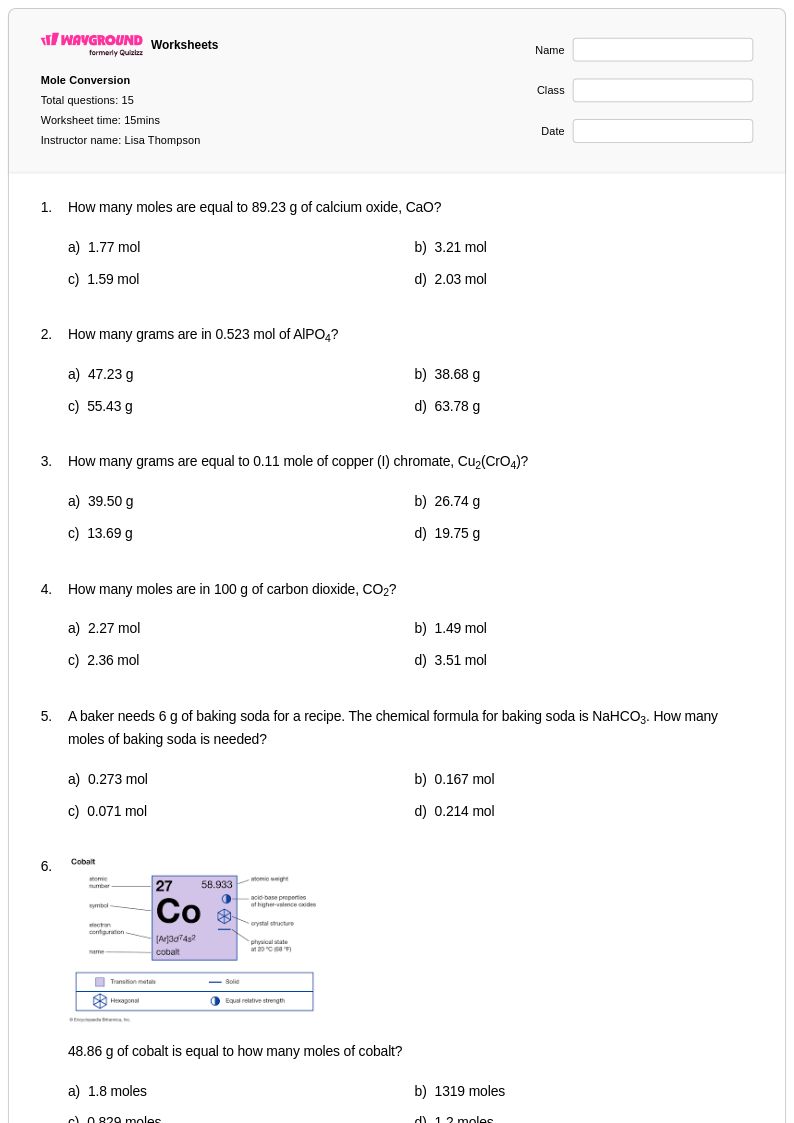
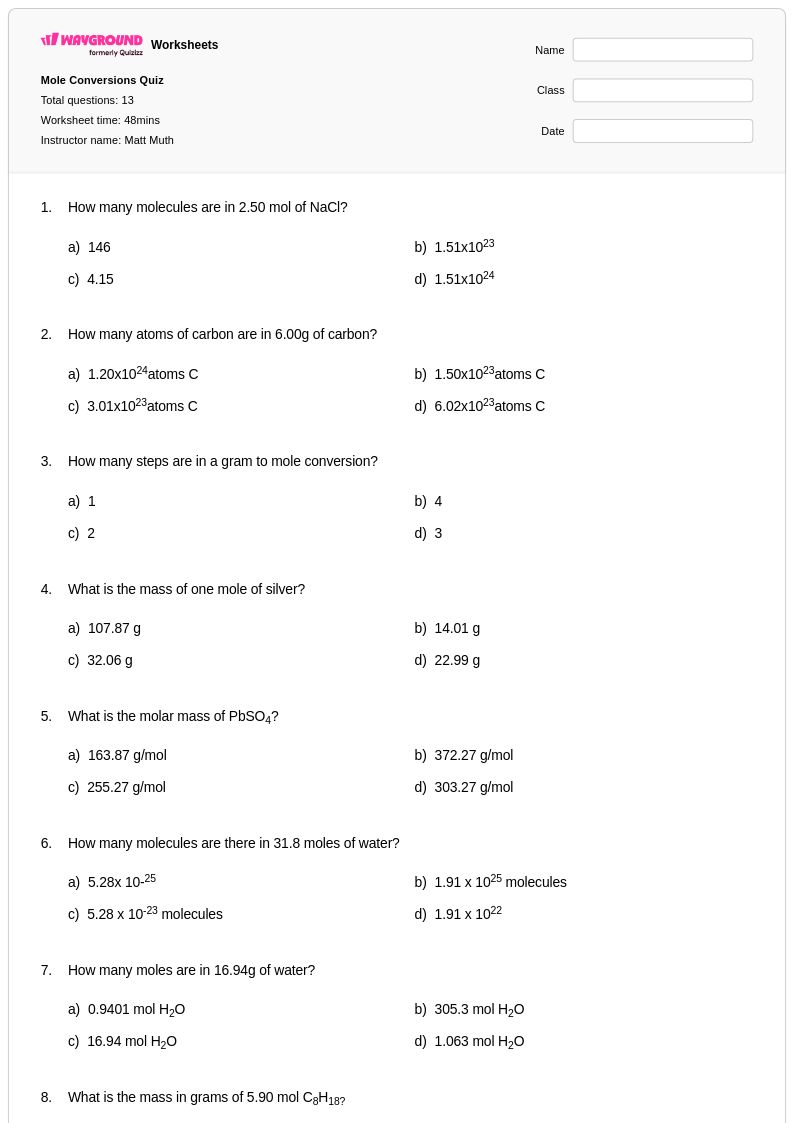
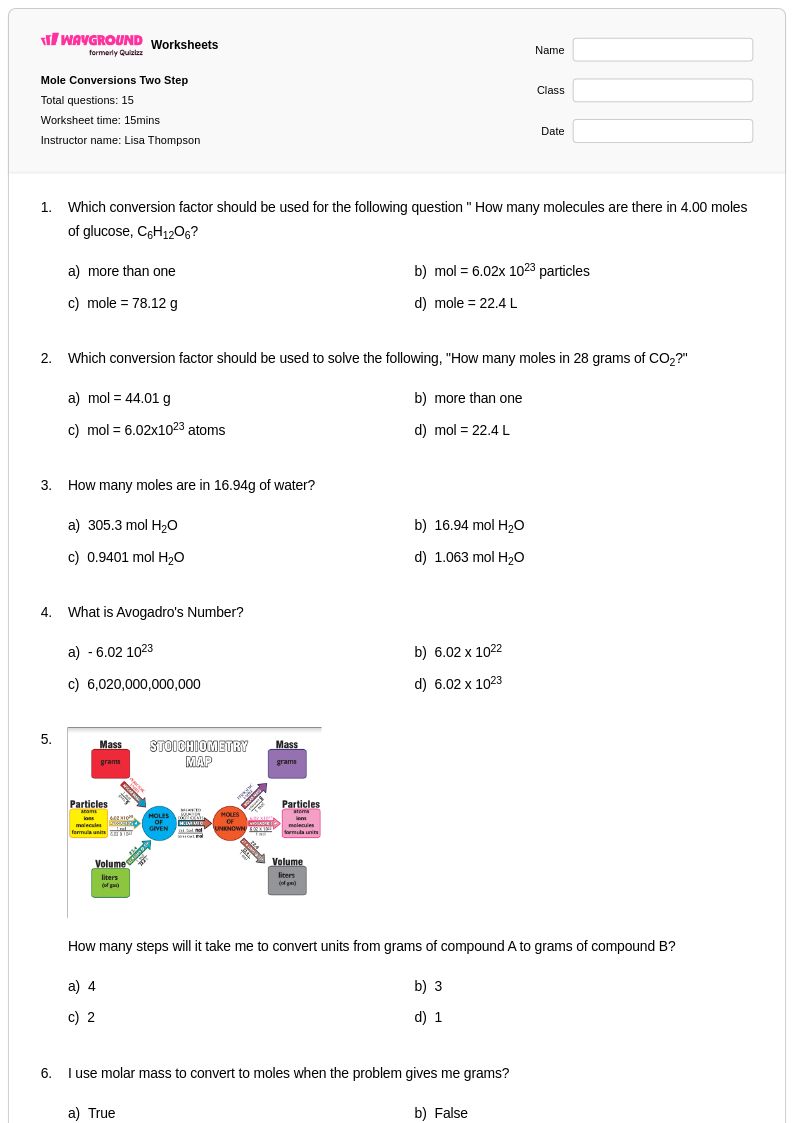
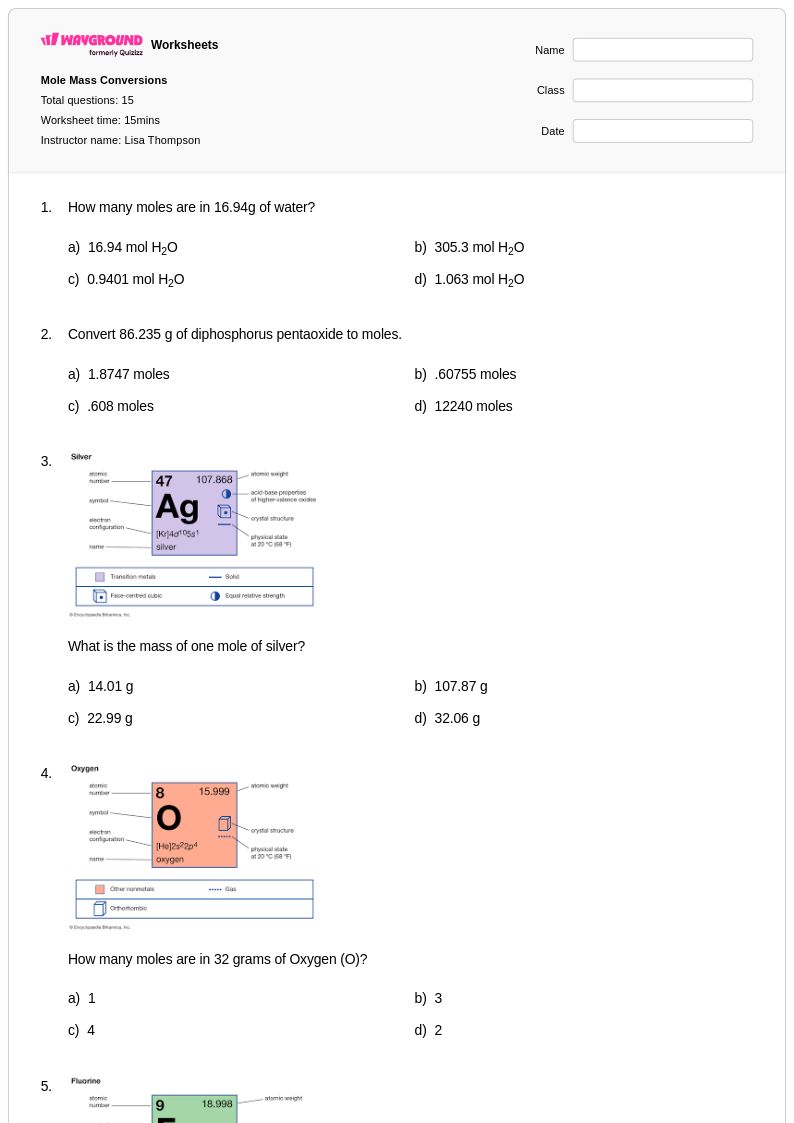
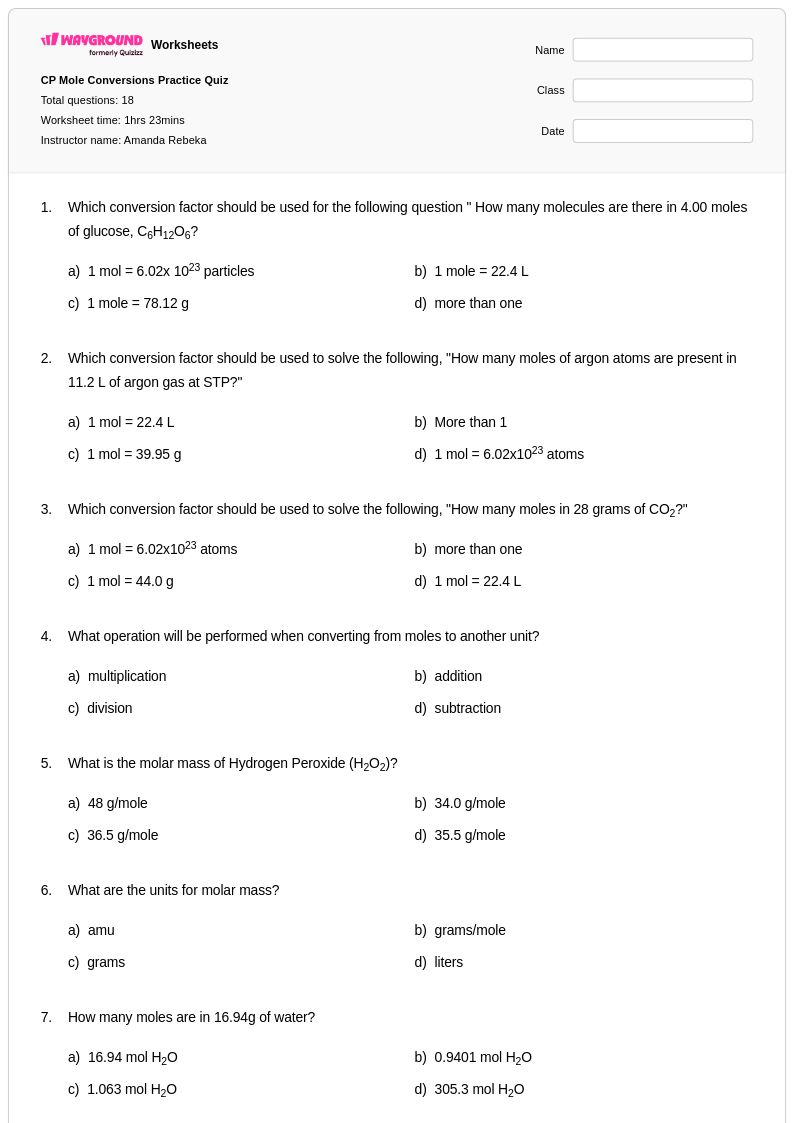
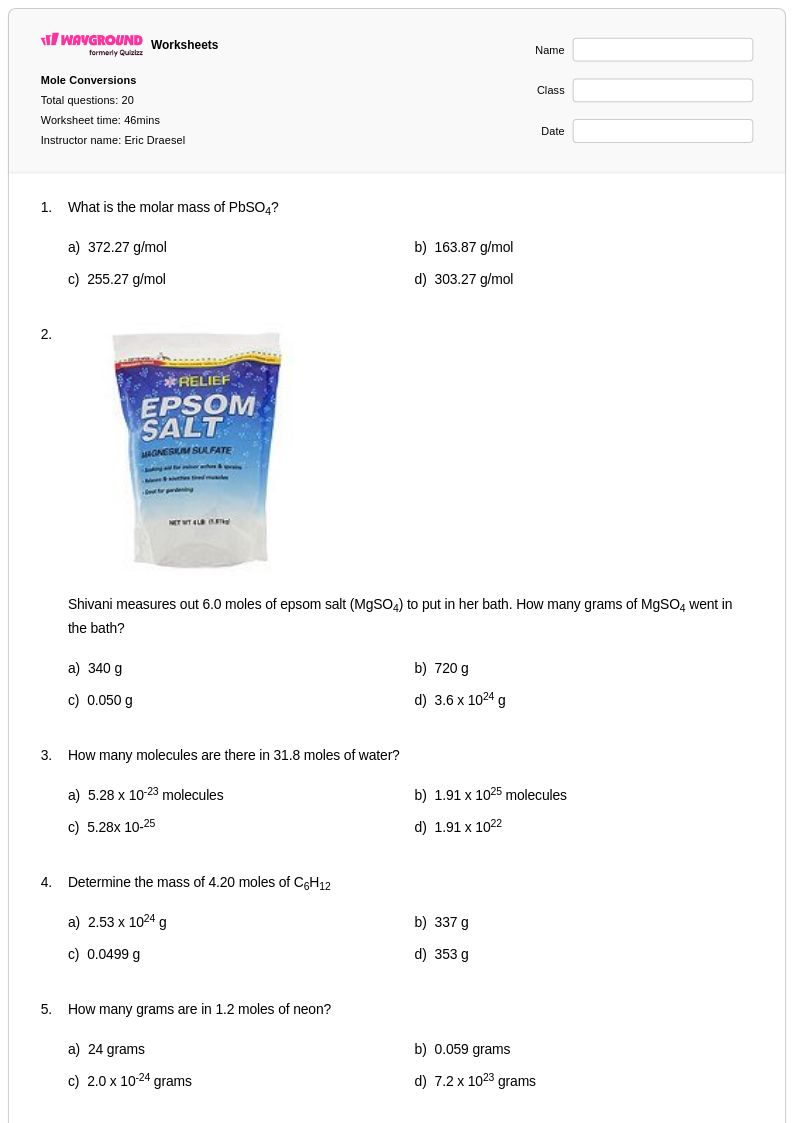
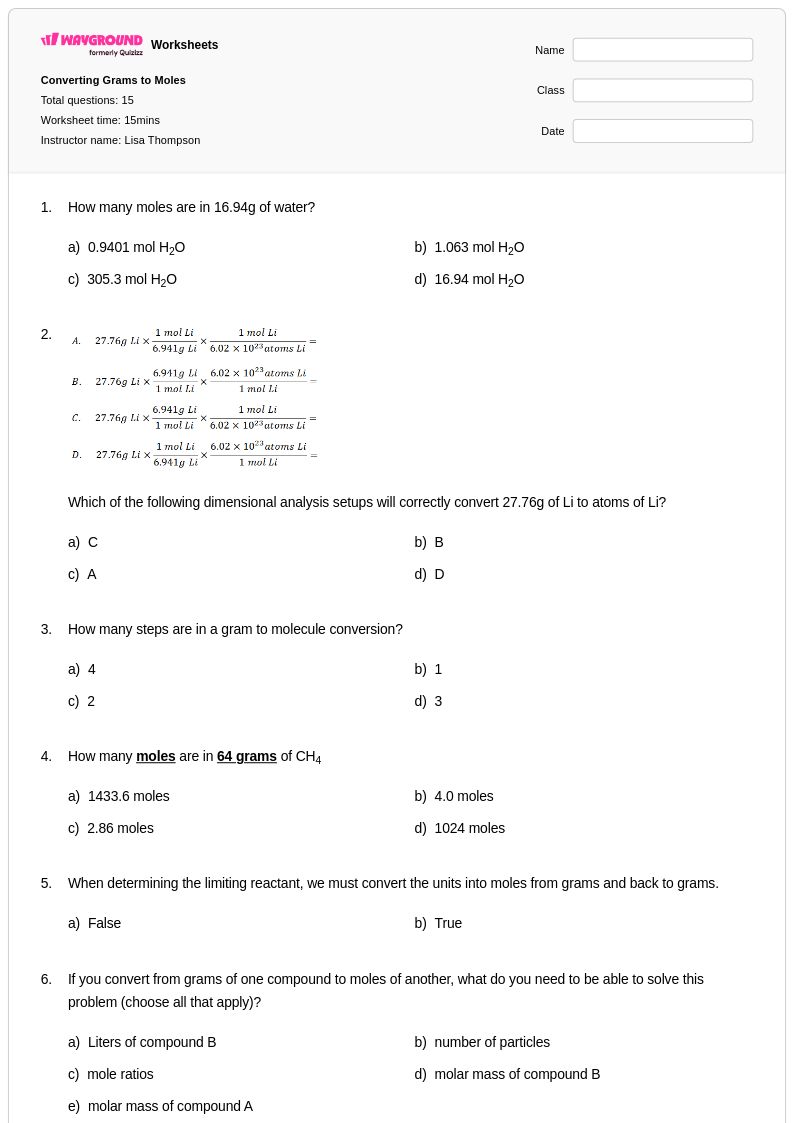
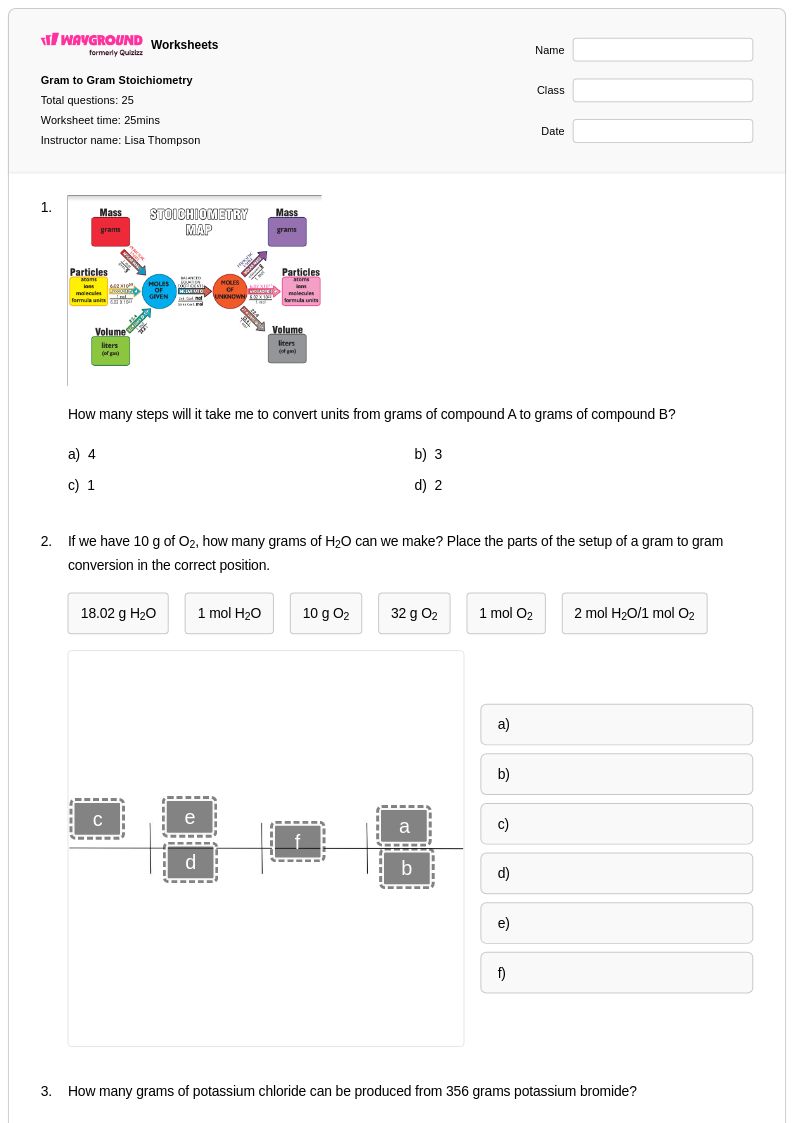
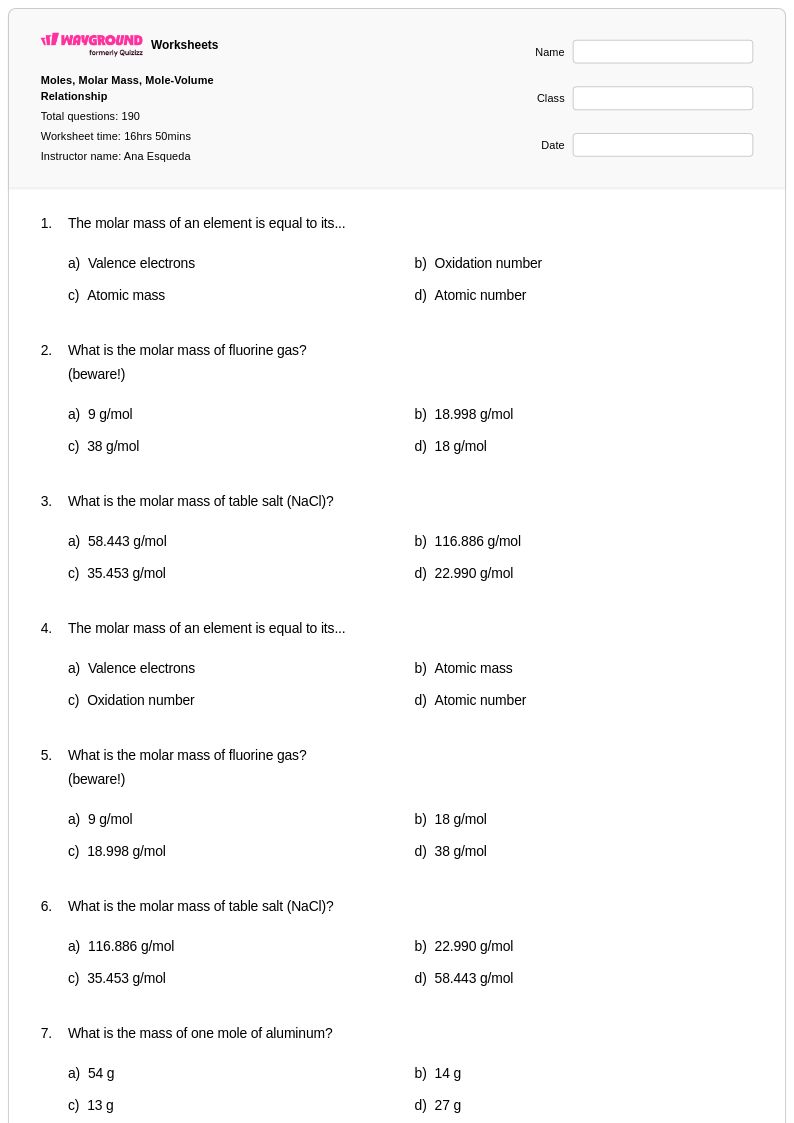
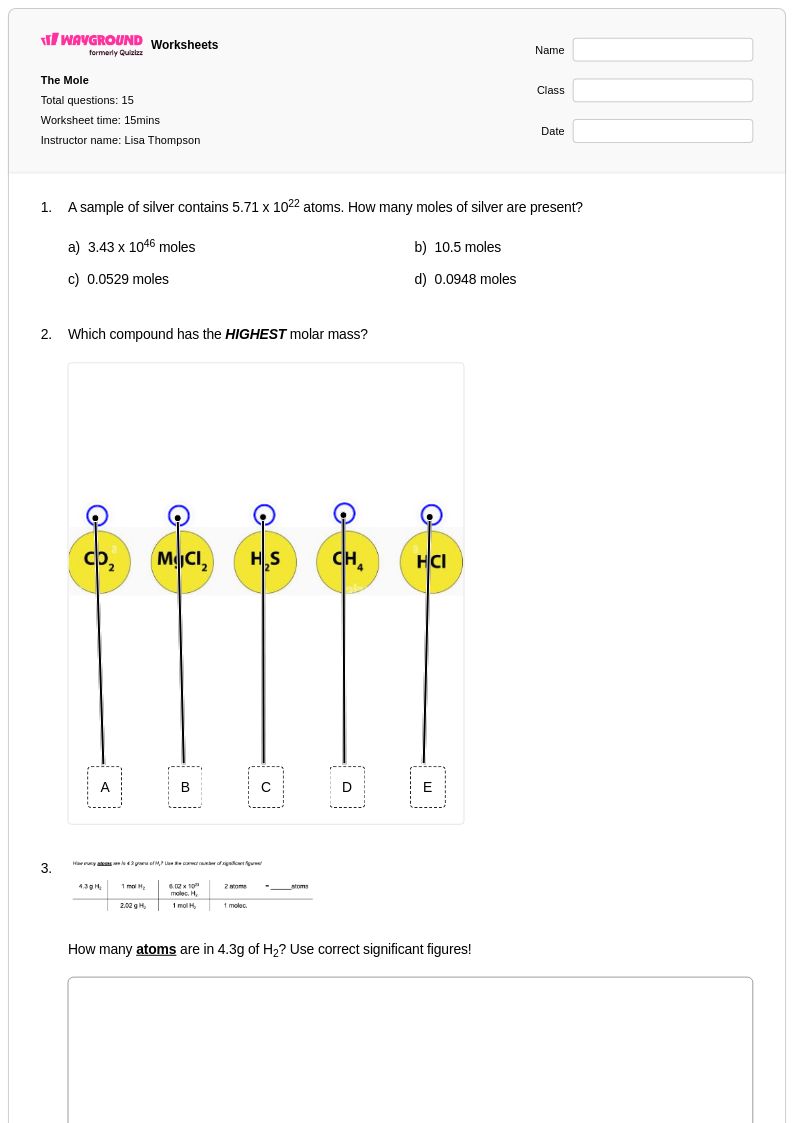
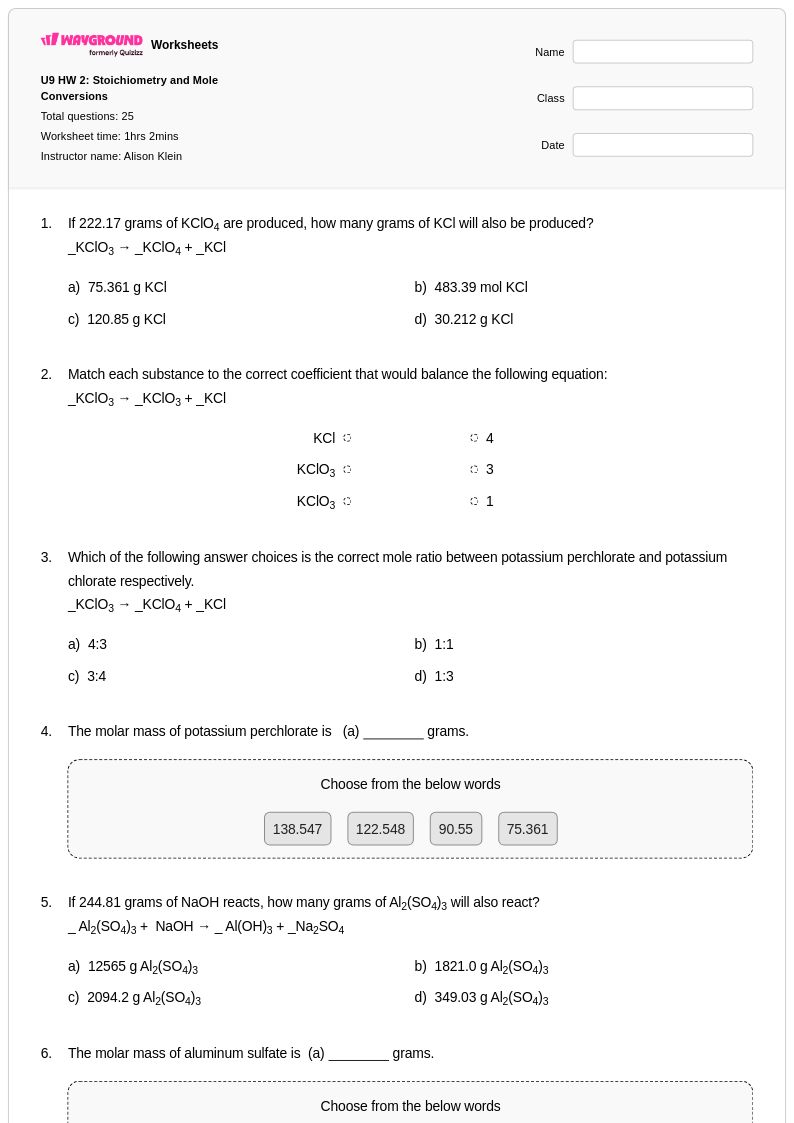
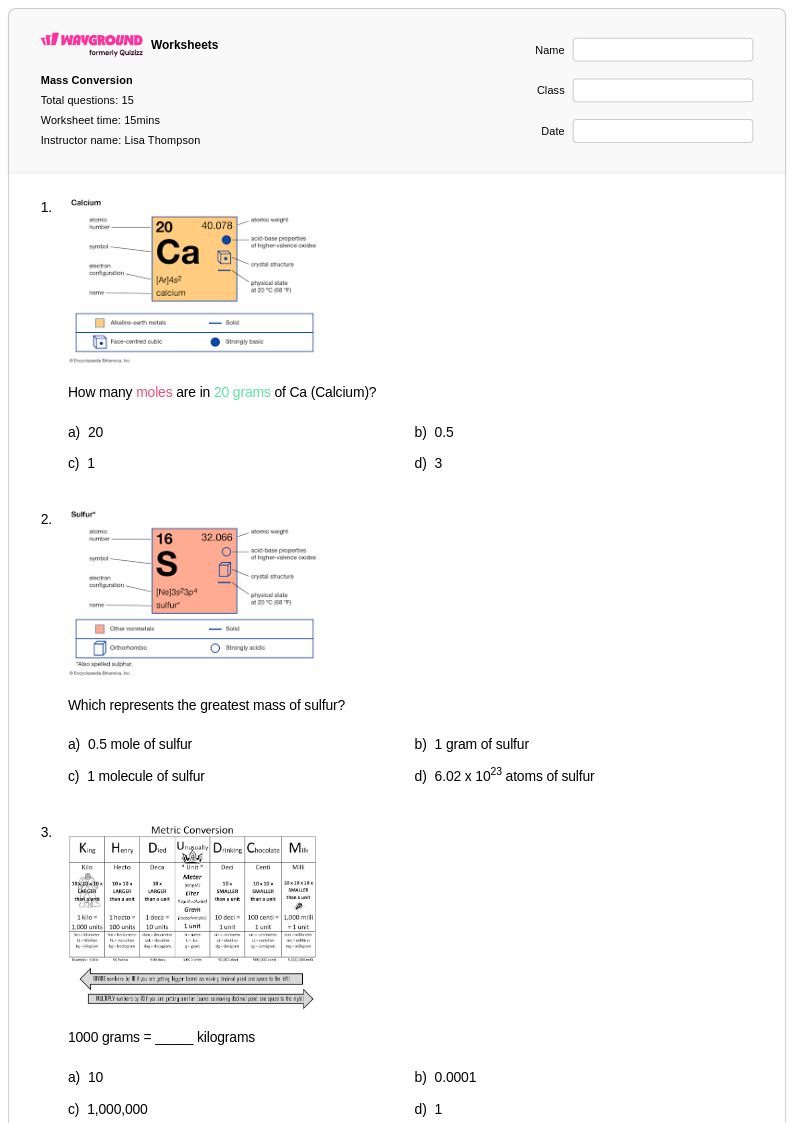
Class 11 mole gram conversion worksheets available through Wayground (formerly Quizizz) provide students with essential practice in one of chemistry's most fundamental quantitative concepts. These comprehensive worksheets guide students through the systematic process of converting between moles and grams using molar mass as the conversion factor, strengthening their ability to navigate stoichiometric calculations with confidence. Students work through carefully structured practice problems that progress from basic single-step conversions to more complex multi-step calculations involving compounds and chemical equations. Each worksheet collection includes detailed answer keys that show complete solution pathways, helping students identify common mistakes and understand proper dimensional analysis techniques. These free printable resources serve as invaluable tools for mastering the mathematical foundations necessary for advanced chemistry coursework and laboratory work.
Wayground (formerly Quizizz) supports chemistry educators with millions of teacher-created worksheet resources specifically designed for mole gram conversion instruction and assessment. The platform's robust search and filtering capabilities allow teachers to quickly locate worksheets that align with specific curriculum standards and match their students' skill levels, from introductory mole concept work to advanced stoichiometry applications. Teachers can customize existing worksheets or create new ones using the platform's flexible tools, adjusting difficulty levels and problem types to support differentiation across diverse learning needs. Available in both digital and printable pdf formats, these worksheet collections streamline lesson planning while providing targeted resources for remediation, skill reinforcement, and enrichment activities that help students develop fluency in this critical chemistry skill set.
FAQs
How do I teach mole to gram conversions in chemistry?
Start by grounding students in the concept of molar mass as a conversion factor derived from the periodic table. Teach the two-step logic explicitly: identify the molar mass of the substance, then multiply or divide by that value depending on the direction of the conversion. Using dimensional analysis with clearly labeled units helps students track their work and reduces errors. Connecting this skill to real lab scenarios, like measuring out a specific number of moles of a reagent, gives the math meaningful context.
What exercises help students practice mole gram conversions?
Effective practice starts with single-step problems converting pure elements before progressing to compounds that require students to first calculate molar mass from a formula. Scaffolded worksheets that increase in complexity, from basic conversions to multi-step stoichiometry problems involving chemical equations, build procedural fluency over time. Mixing both moles-to-grams and grams-to-moles problems within the same set helps students recognize which direction to apply the conversion factor rather than relying on rote memorization.
What mistakes do students commonly make when converting between moles and grams?
The most common error is inverting the conversion factor, multiplying by molar mass when they should divide, or vice versa. Students also frequently misread the periodic table and use atomic number instead of atomic mass. For compounds, a recurring mistake is failing to account for subscripts in the formula when calculating molar mass, for example treating NaCl as simply Na plus Cl without multiplying appropriately. Requiring students to write out their dimensional analysis steps fully, rather than computing mentally, catches most of these errors before they become habits.
How does mole gram conversion connect to broader stoichiometry topics?
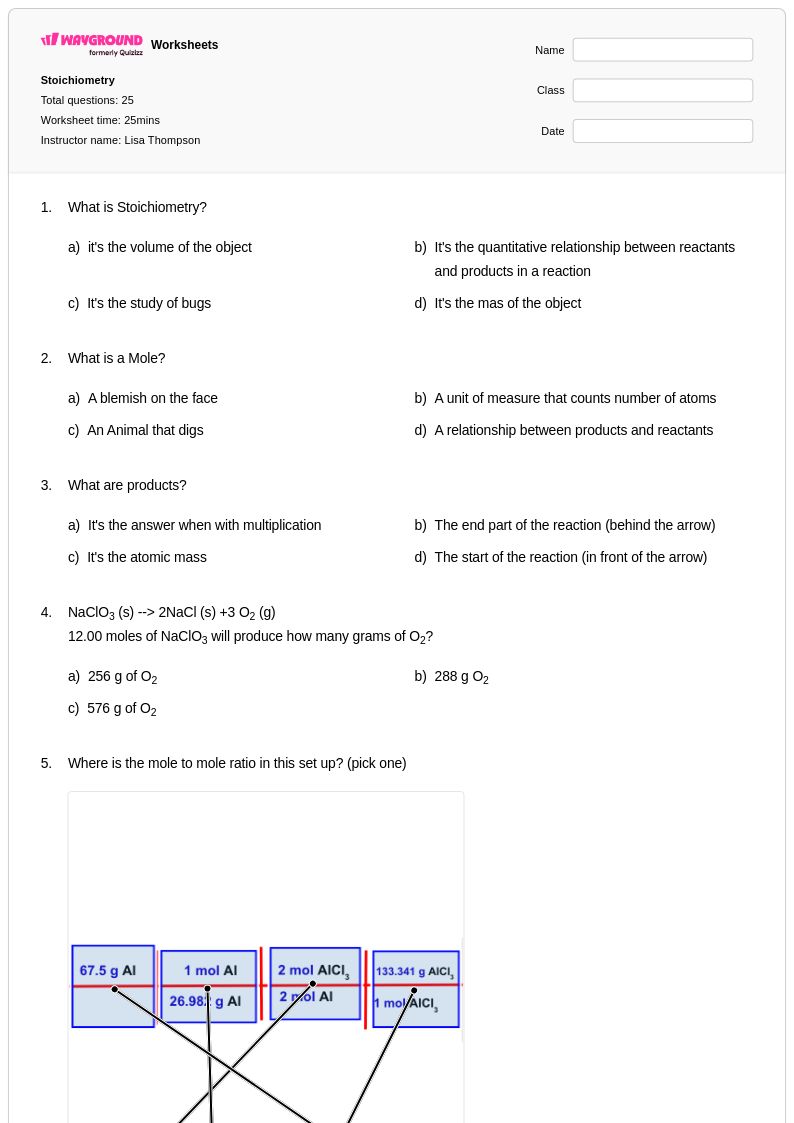
Mole gram conversion is the foundational skill that unlocks the rest of stoichiometry. Students cannot accurately work limiting reactant problems, percent yield calculations, or solution concentration problems without reliably converting between moles and grams. Once students internalize the molar mass conversion factor, they can extend the same dimensional analysis framework to mole-to-mole ratios from balanced equations and eventually to multi-step stoichiometric chains.
How do I use Wayground's mole gram conversion worksheets in my classroom?
Wayground's mole gram conversion worksheets are available as printable PDFs for traditional paper-and-pencil use and in digital formats for technology-integrated classrooms, so they fit easily into both in-person and hybrid environments. Teachers can host the worksheets as a quiz directly on Wayground, which provides students with immediate feedback through integrated answer keys. For students who need additional support, Wayground's accommodation tools, including read aloud and reduced answer choices, can be applied at the individual student level without disrupting the rest of the class.
How can I differentiate mole gram conversion practice for students at different skill levels?
For students who are struggling, begin with single-element conversions and provide a partially completed dimensional analysis template so they focus on the calculation rather than the setup. Advanced students can be challenged with multi-step problems that embed mole gram conversions inside larger stoichiometry equations. On Wayground, teachers can apply accommodations such as extended time or reduced answer choices to individual students, allowing the same digital worksheet to serve the whole class while still meeting varied learning needs.