Free Printable PH and POH Calculations Worksheets for Class 11
Master Class 11 pH and pOH calculations with Wayground's comprehensive collection of free worksheets, printable PDFs, and practice problems complete with answer keys to strengthen your chemistry skills.
Explore printable PH and POH Calculations worksheets for Class 11
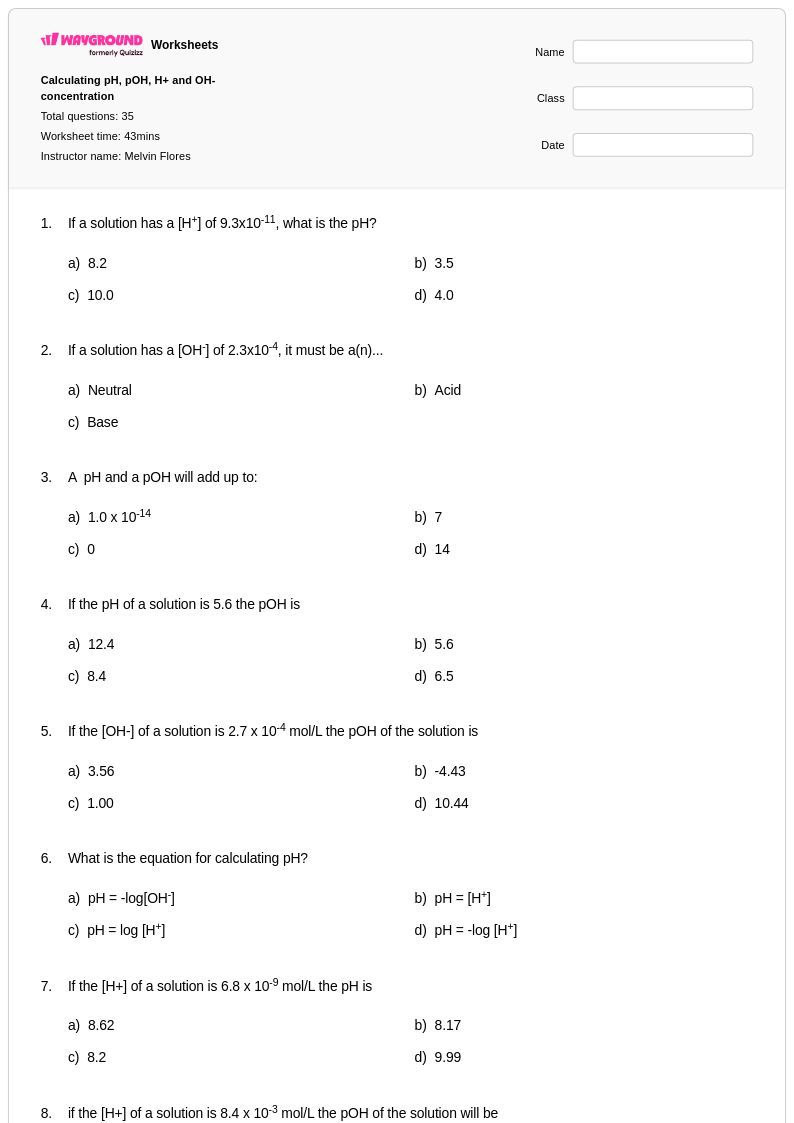
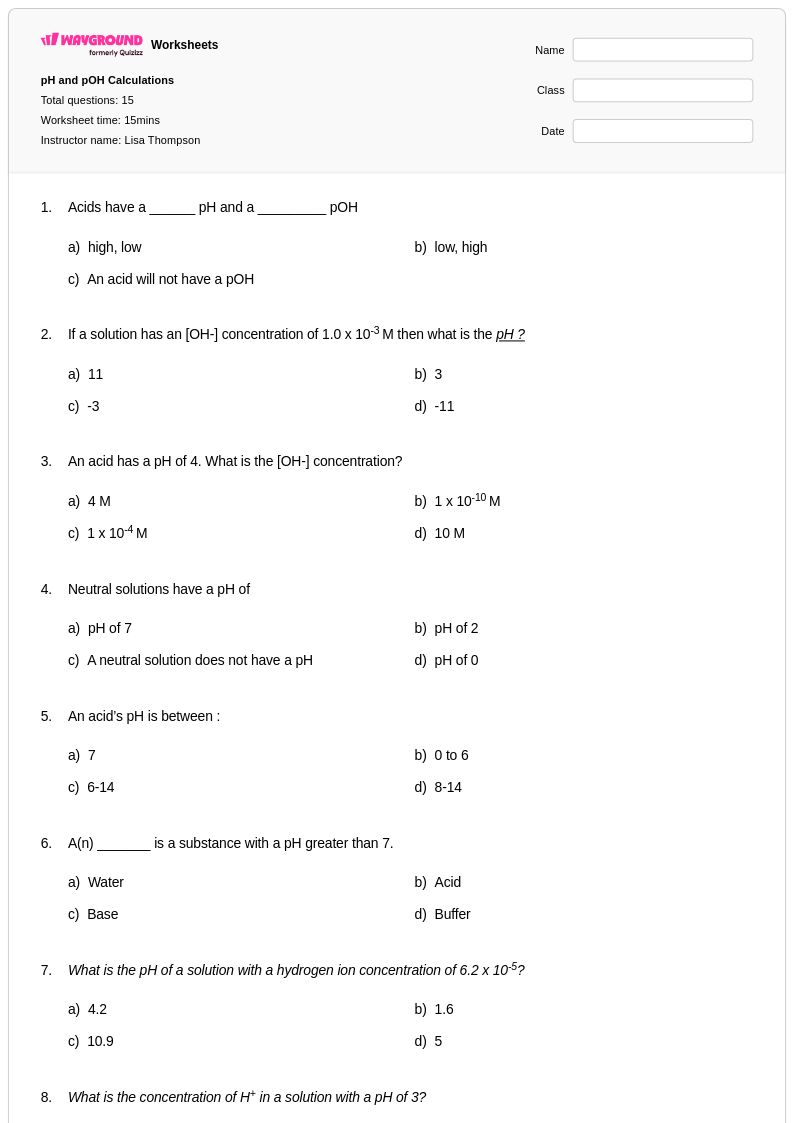
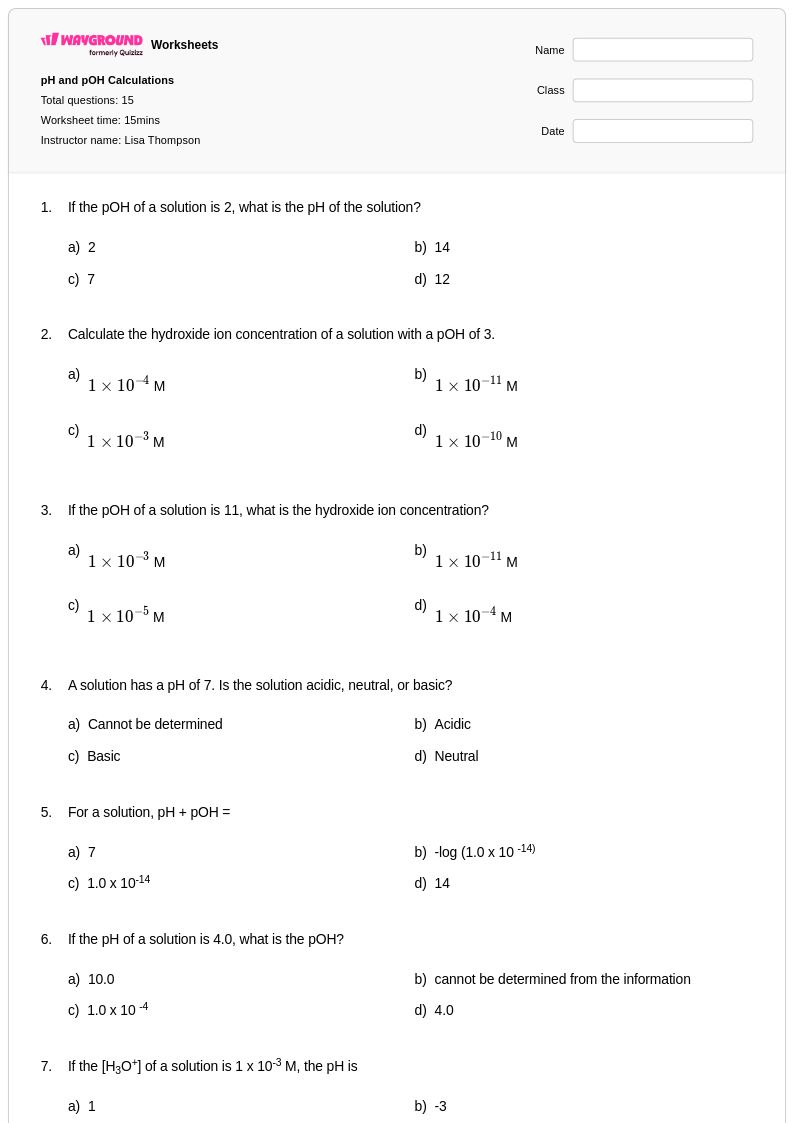
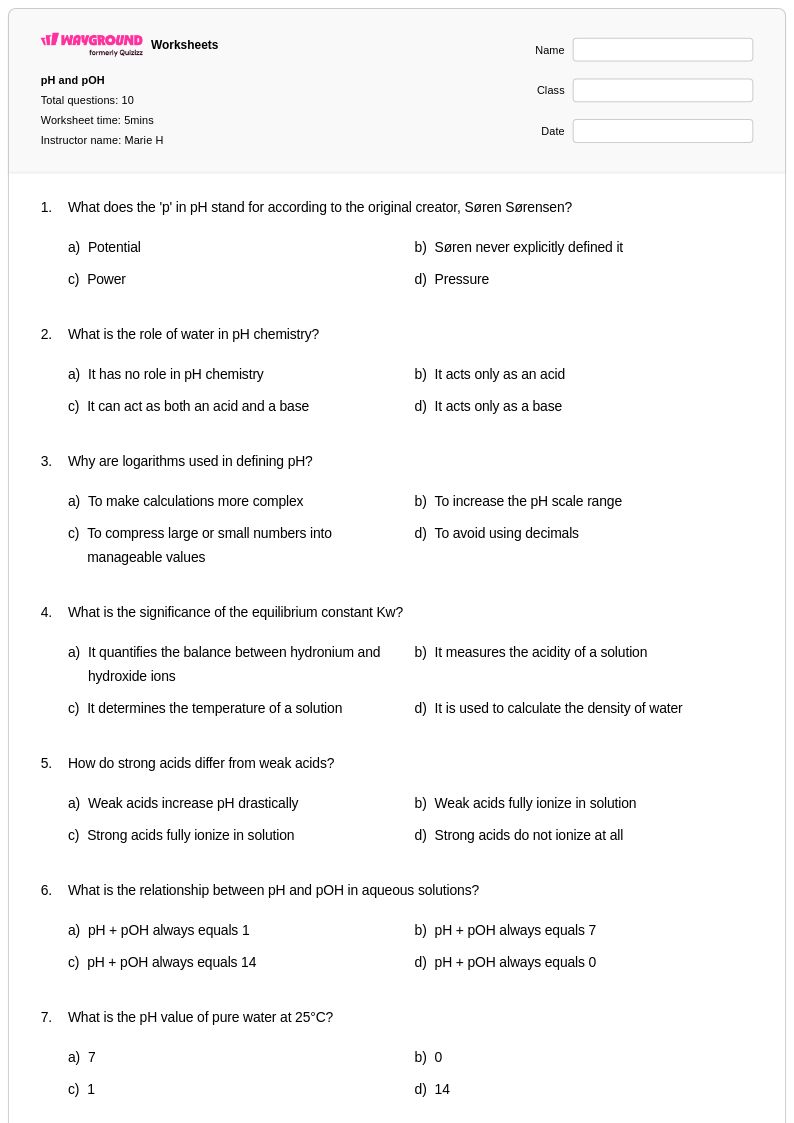
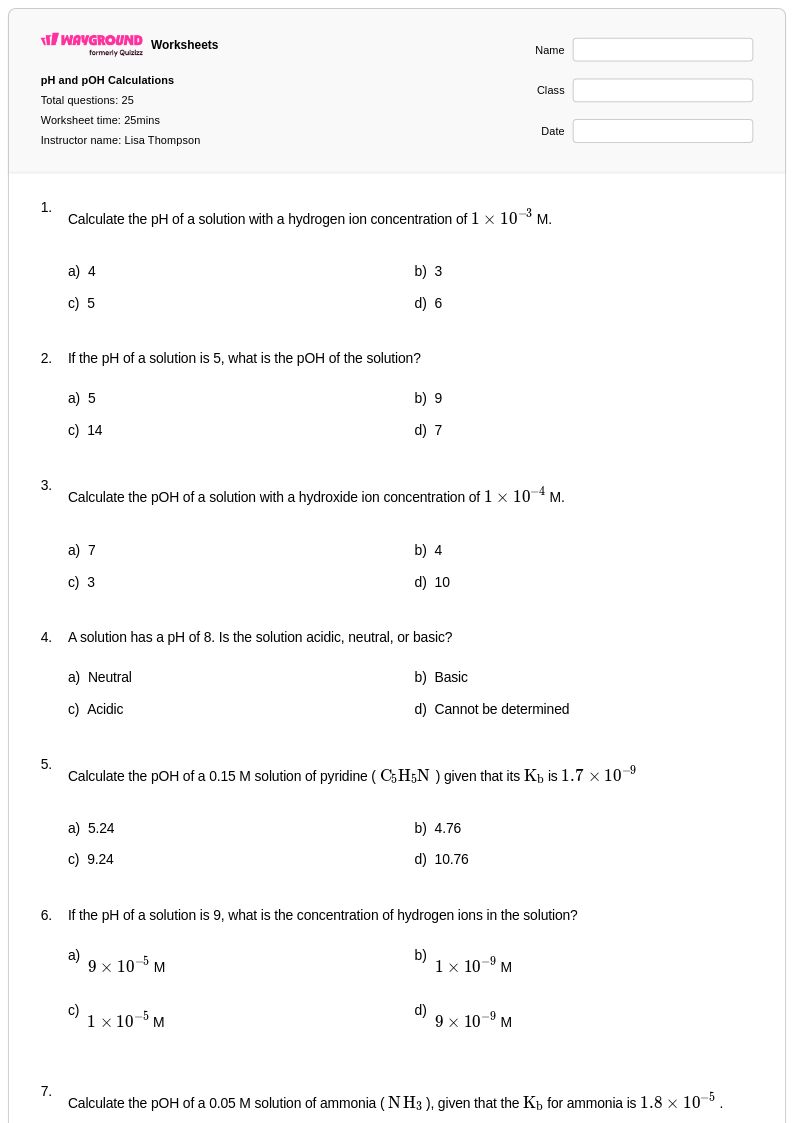
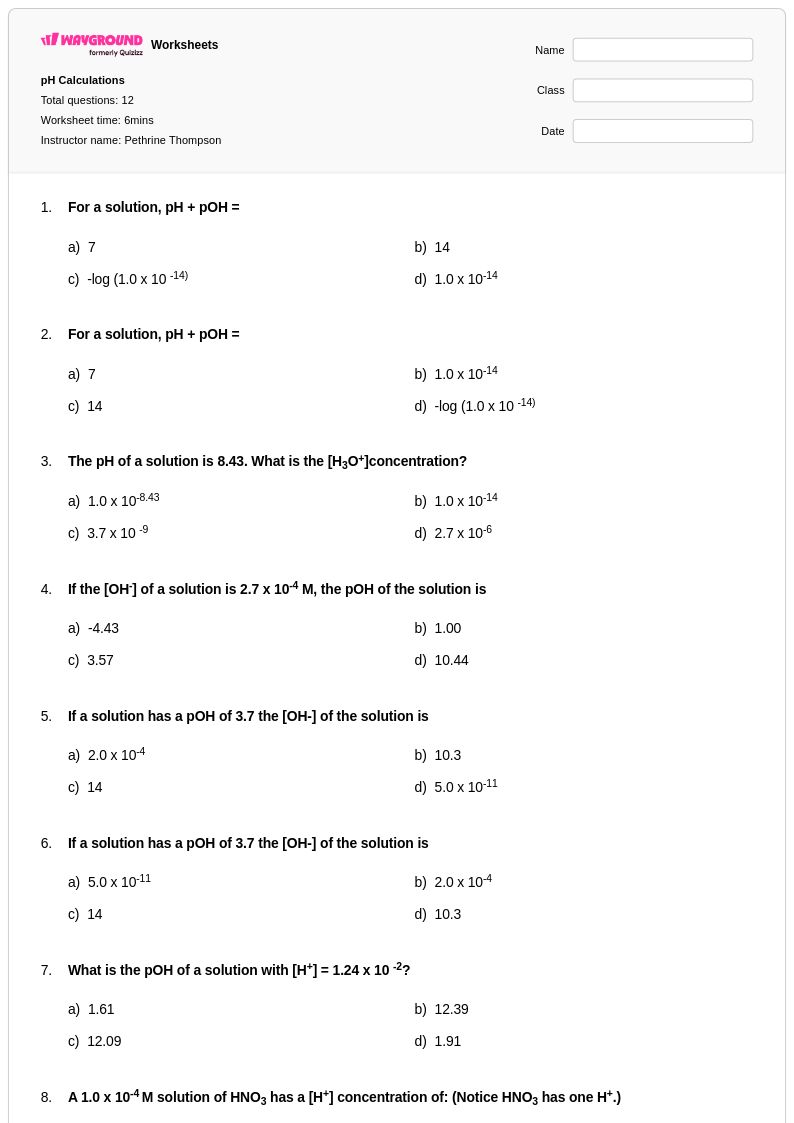
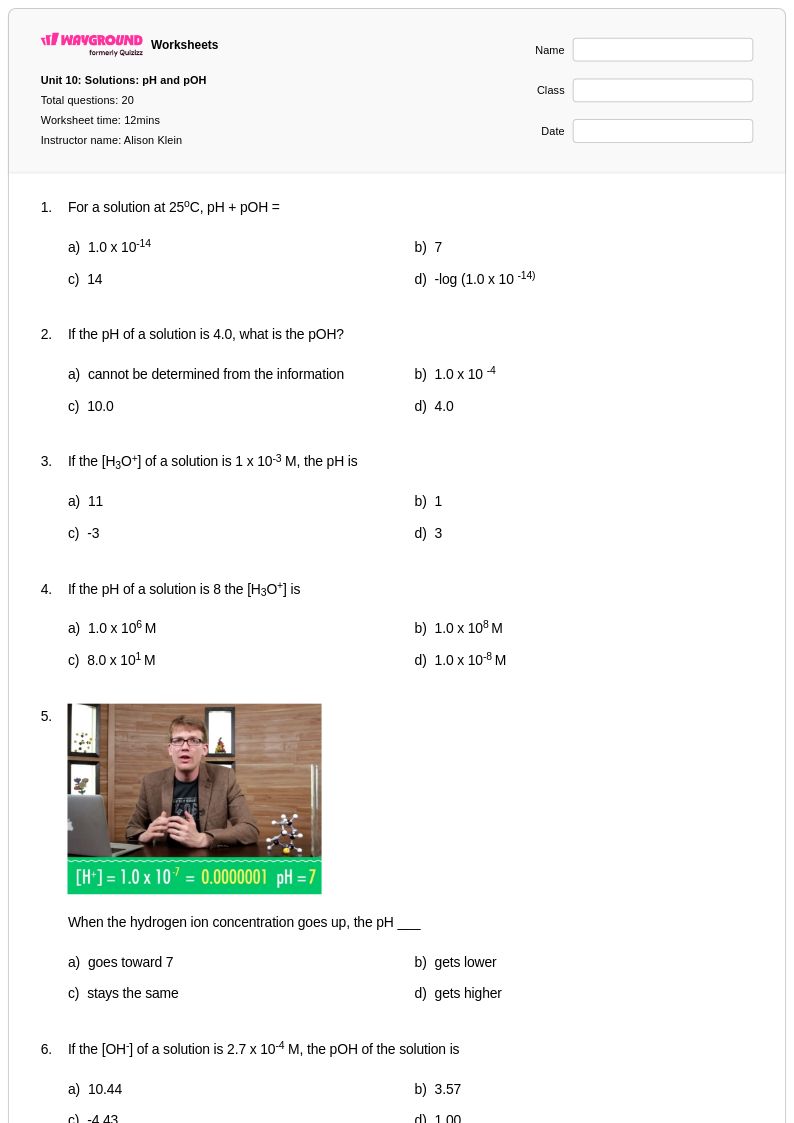
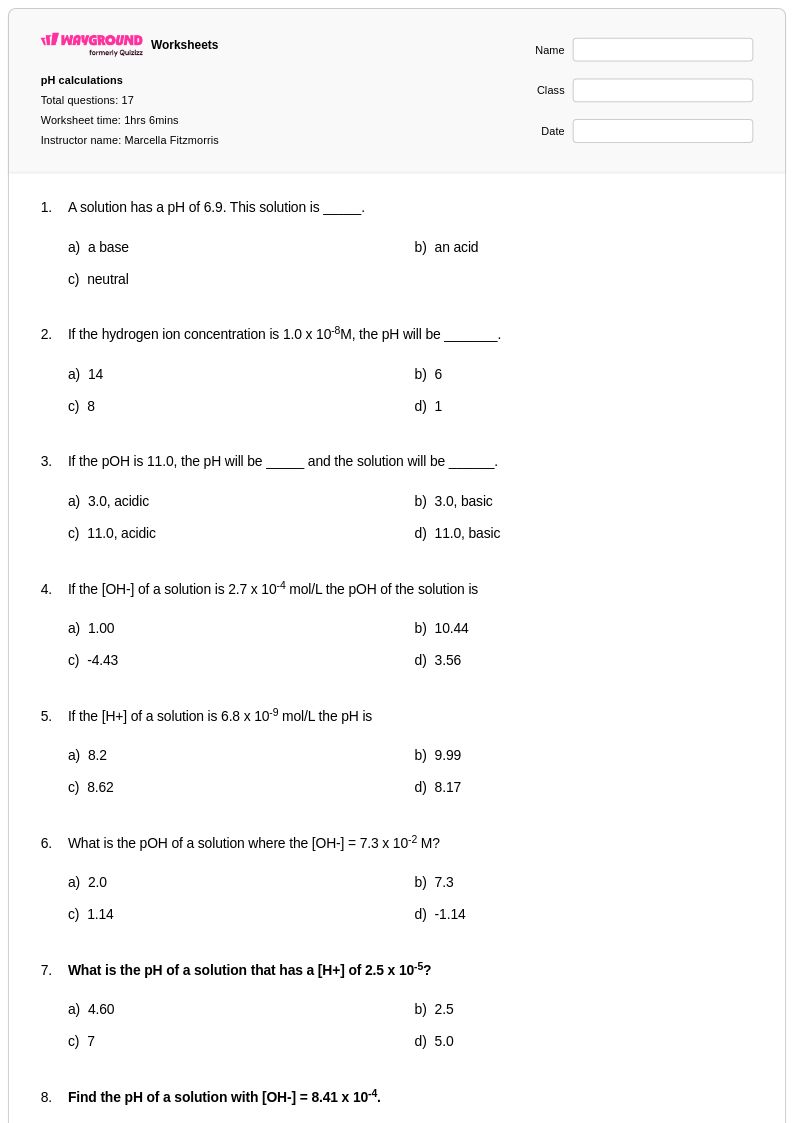
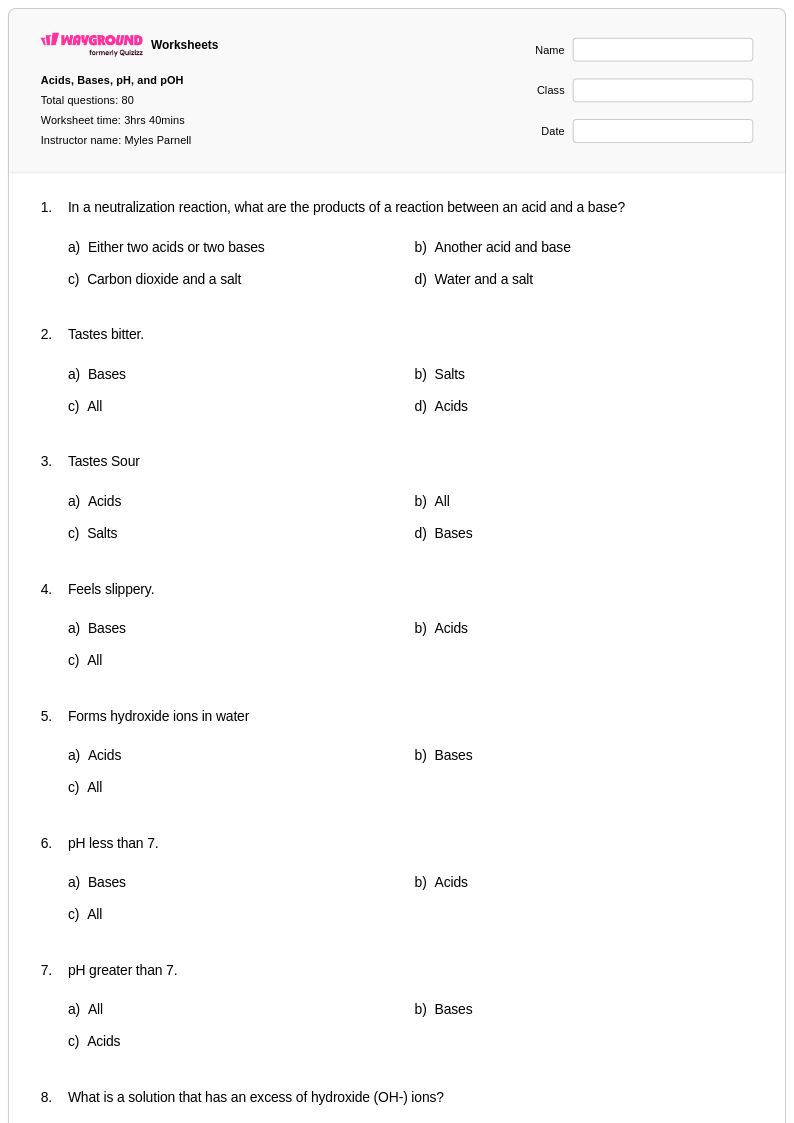
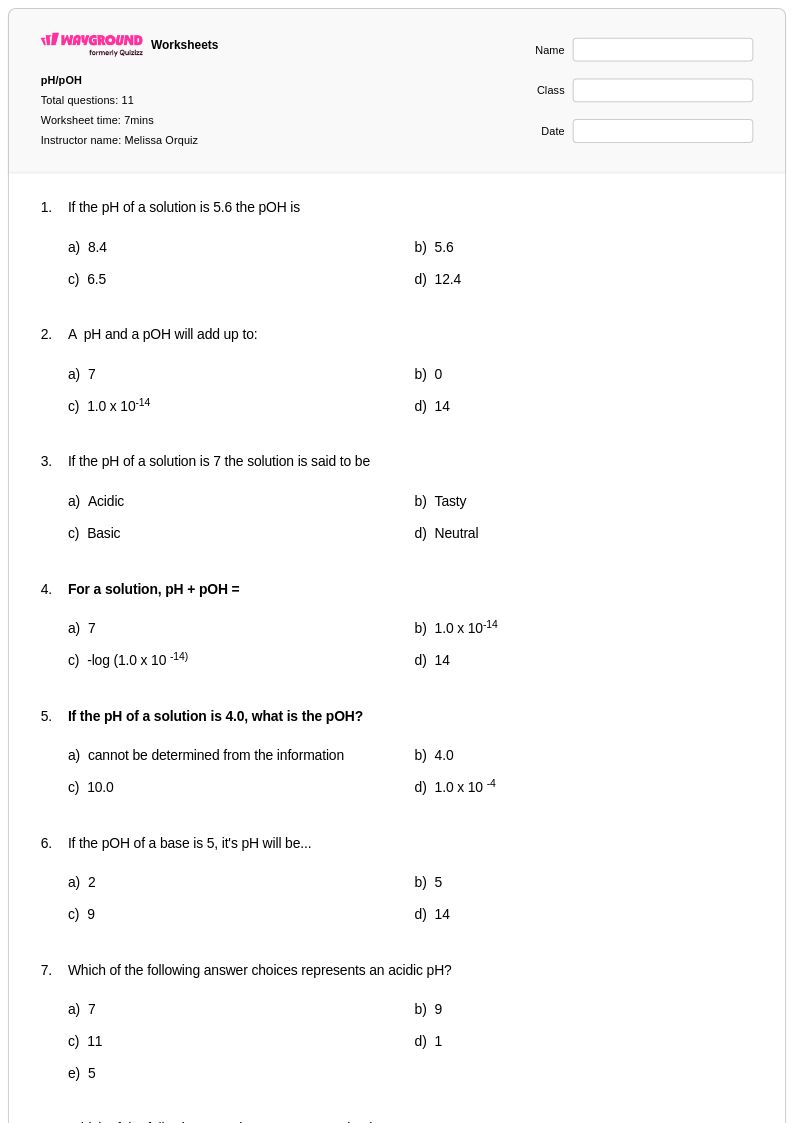
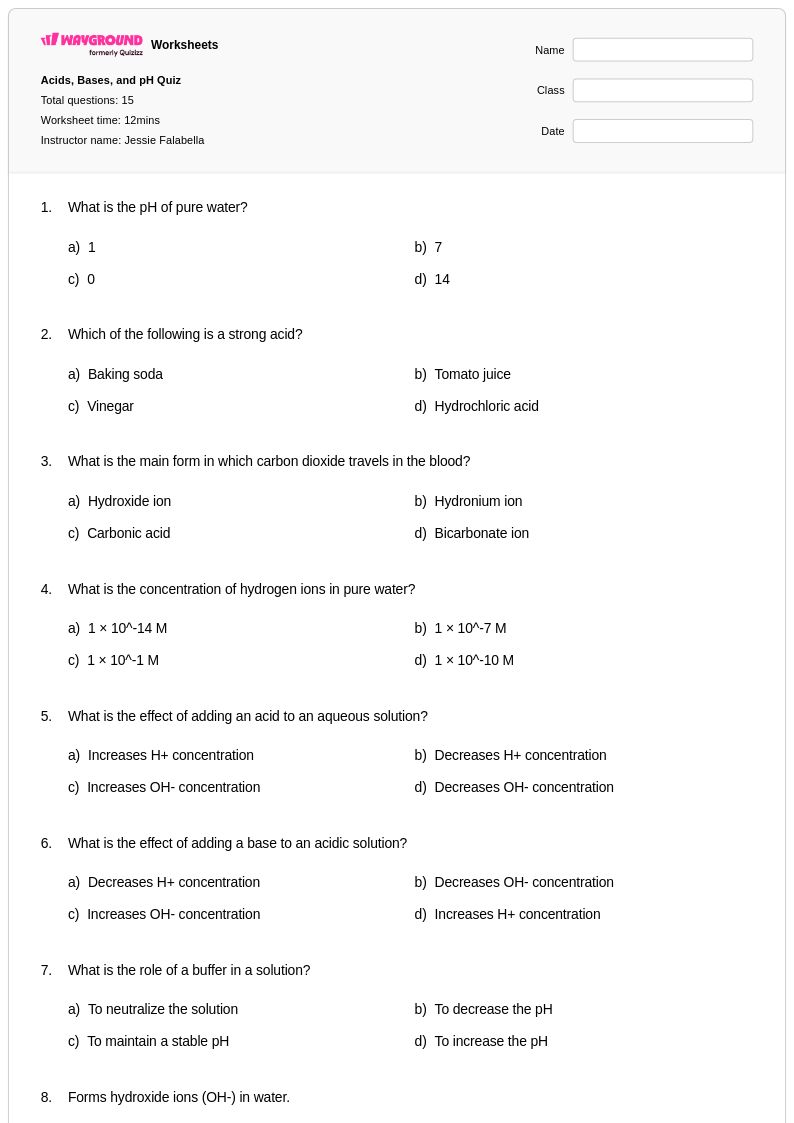
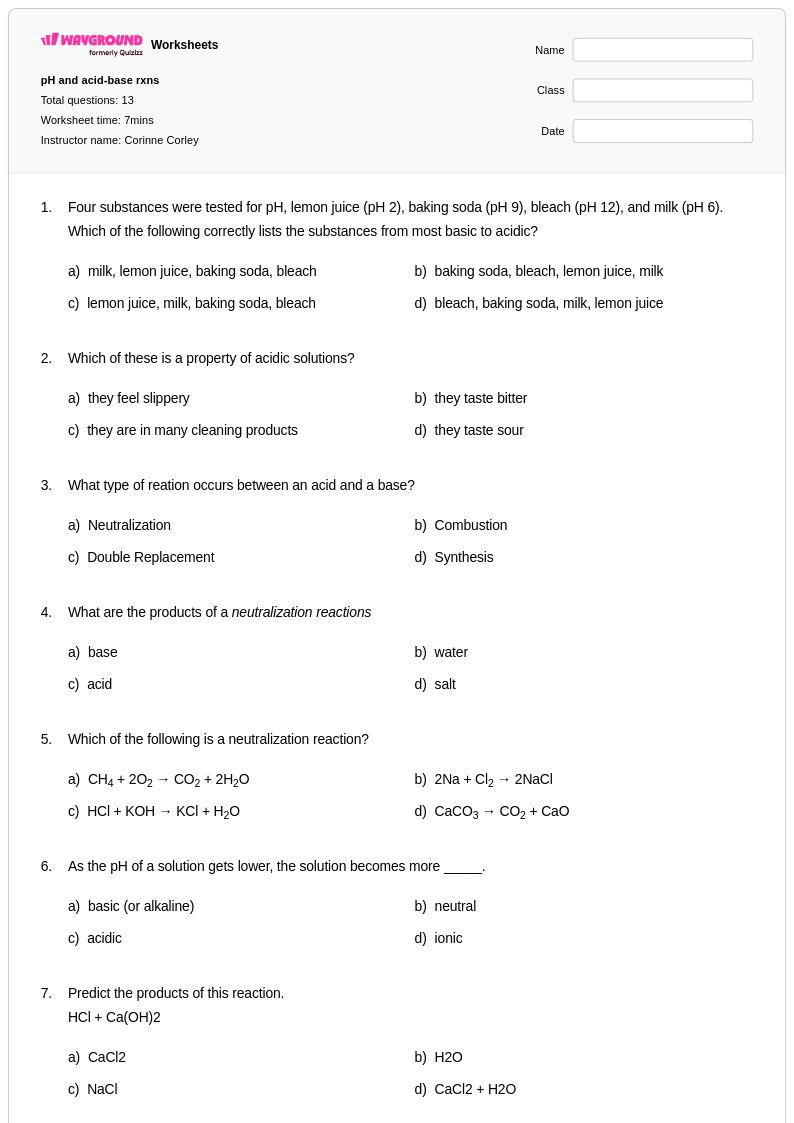
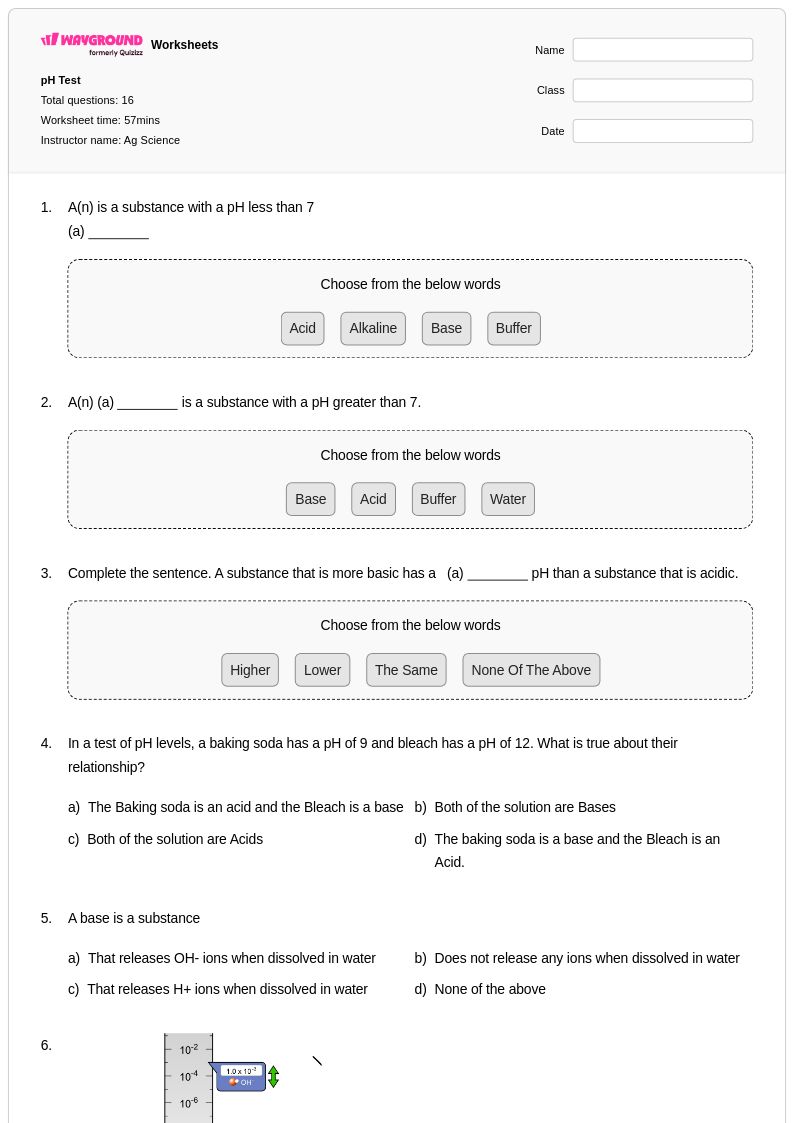
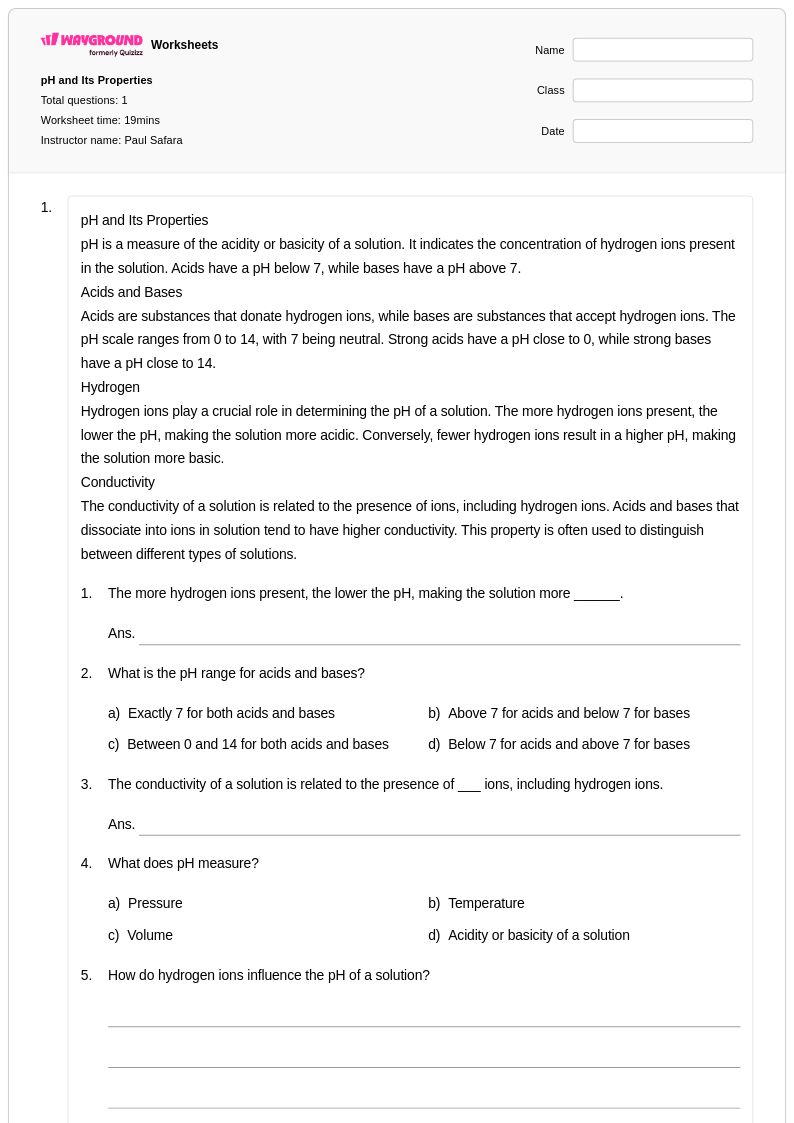
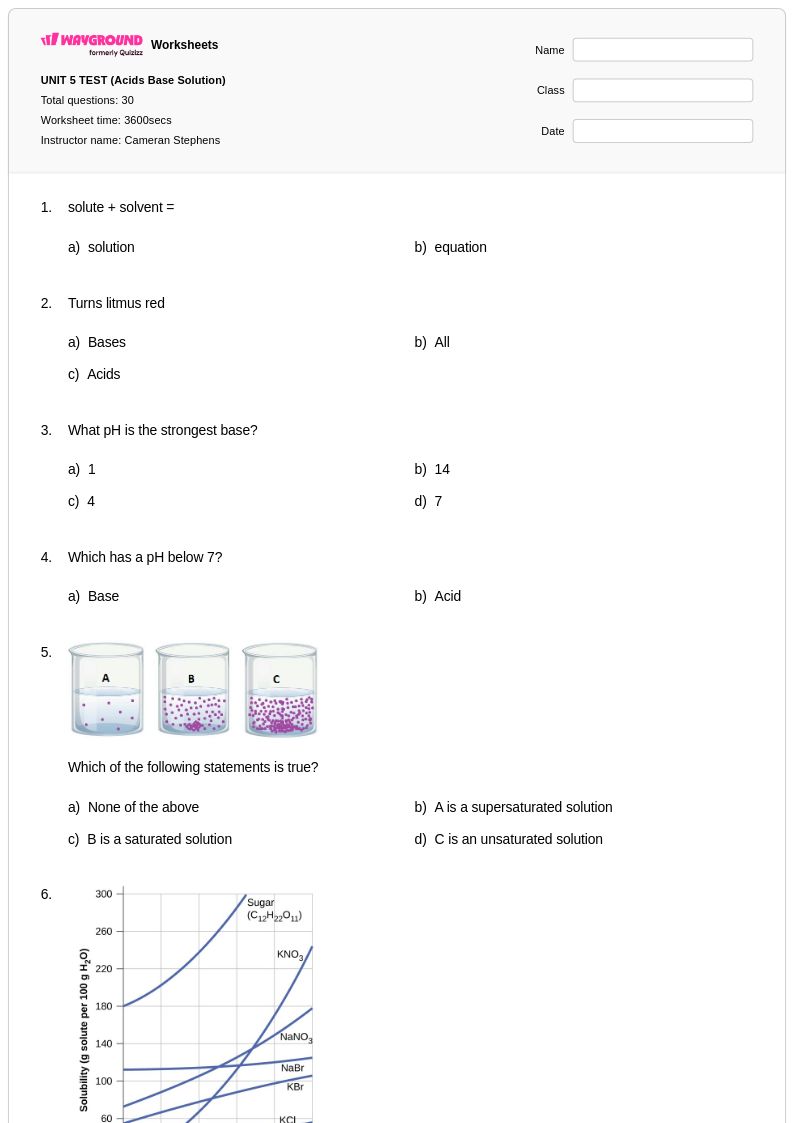
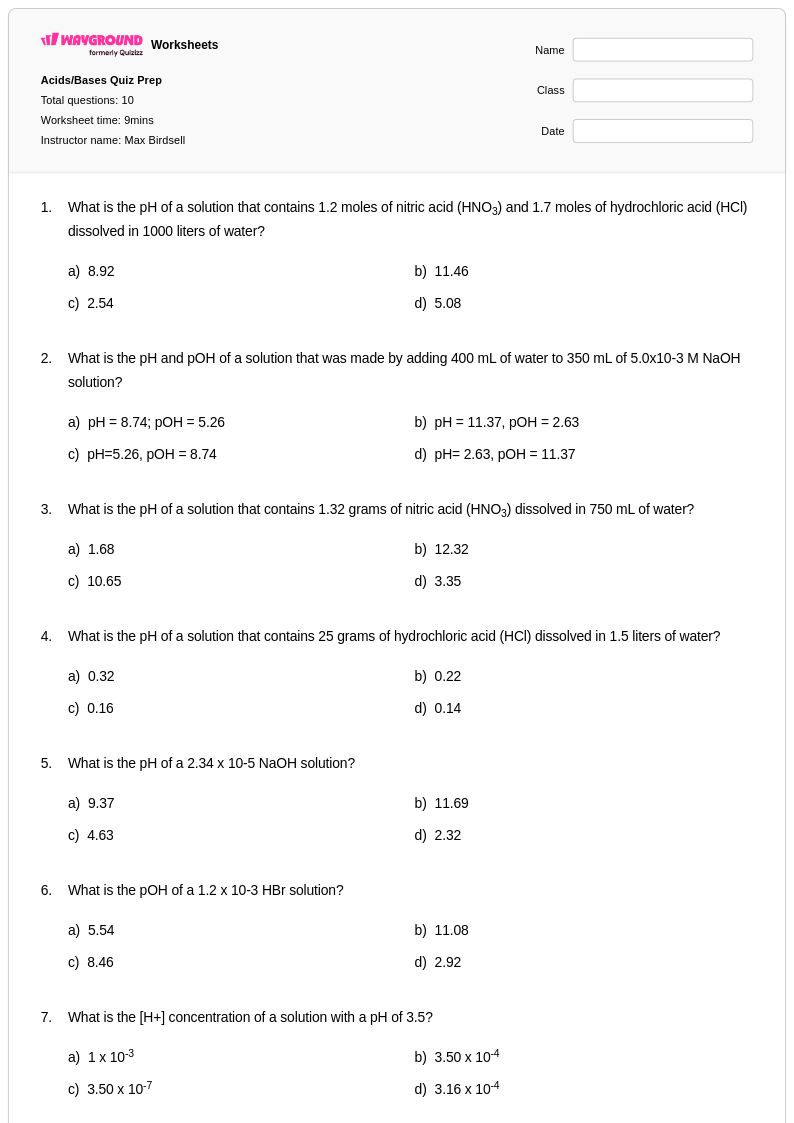
Class 11 pH and pOH calculations represent a fundamental cornerstone of acid-base chemistry, requiring students to master the intricate relationships between hydrogen ion concentration, hydroxide ion concentration, and the logarithmic scales that quantify solution acidity and basicity. Wayground's comprehensive collection of pH and pOH calculation worksheets provides Class 11 chemistry students with extensive practice problems that systematically build proficiency in converting between pH, pOH, [H+], and [OH-] values while reinforcing the critical concept that pH + pOH = 14 at 25°C. These printable resources include detailed answer keys and step-by-step solution guides that help students navigate complex calculations involving strong acids, strong bases, and neutral solutions, ensuring they develop the analytical skills necessary for advanced chemistry coursework and laboratory applications.
Wayground's platform empowers chemistry educators with access to millions of teacher-created pH and pOH calculation worksheets that can be seamlessly integrated into Class 11 curriculum planning and instruction. The robust search and filtering capabilities allow teachers to quickly locate resources aligned with specific learning standards and differentiate instruction based on individual student needs, whether for remediation of fundamental logarithmic concepts or enrichment through challenging buffer system calculations. These flexible worksheet collections are available in both digital and printable PDF formats, enabling teachers to customize problem sets, modify difficulty levels, and create targeted practice sessions that address specific areas of weakness in acid-base chemistry, ultimately supporting more effective skill development and deeper conceptual understanding of solution chemistry principles.
FAQs
How do I teach pH and pOH calculations to chemistry students?
Start by grounding students in the concept of logarithmic scale before introducing the formula pH = -log[H⁺], then connect pOH using the relationship pH + pOH = 14. Use worked examples that progress from straightforward strong acid/base problems to problems requiring students to convert between [H⁺] and [OH⁻] concentrations first. Scaffolded practice is essential here because students need repeated exposure to the logarithmic manipulation before they can work multi-step problems independently.
What exercises help students practice pH and pOH calculations?
Effective practice exercises include calculating pH from given hydrogen ion concentrations, working backwards to find [H⁺] or [OH⁻] from a known pH or pOH, and applying the pH + pOH = 14 relationship to find one value from the other. Problems that sequence these steps together, such as finding pOH from a hydroxide ion concentration and then determining pH, build the multi-step fluency students need for assessments. Structured worksheets with answer keys allow students to self-check their logarithmic arithmetic and catch errors in their own process.
What mistakes do students commonly make with pH and pOH calculations?
The most common error is mishandling the negative sign in the logarithm, leading students to report a negative pH for concentrated acid solutions and assuming that is wrong, or conversely dropping the negative and getting a positive value when they should not. Students also frequently confuse [H⁺] with [OH⁻] when setting up their calculations, especially when the problem gives concentration in terms of hydroxide and asks for pH. A third persistent error is rounding intermediate values too early, which propagates significant inaccuracy through multi-step problems.
How do I use pH and pOH calculation worksheets in my chemistry class?
These worksheets work well as guided practice during instruction, independent seatwork after a lesson, or review before assessments. On Wayground, pH and pOH calculation worksheets are available as printable PDFs for traditional classroom use and in digital formats for technology-integrated environments, and teachers can also host them as a quiz directly on the Wayground platform. The included answer keys make them viable for self-paced or independent study without requiring constant teacher oversight.
How do I differentiate pH and pOH practice for students at different skill levels?
For students still building comfort with logarithms, begin with problems where [H⁺] is an exact power of 10 so no calculator work is required, which isolates the conceptual step before introducing computation. More advanced students can work problems involving non-integer exponents, buffer systems, or problems that require converting between all four values: pH, pOH, [H⁺], and [OH⁻] in a single question. On Wayground, teachers can apply individual accommodations such as read aloud support or reduced answer choices to specific students, allowing the same worksheet session to serve diverse learners without singling anyone out.
How does pH connect to pOH, and why do students need to understand both?
pH measures the concentration of hydrogen ions in a solution, while pOH measures the concentration of hydroxide ions, and the two are linked by the constant relationship pH + pOH = 14 at 25°C. Students need fluency with both because chemistry problems do not always give them the value they need directly — a problem might provide [OH⁻] and ask for pH, requiring students to calculate pOH first and then use the relationship to find pH. Understanding both scales also deepens conceptual understanding of acid-base equilibria, which is foundational for topics like buffer calculations and titration.