Free Printable Classification of Chemical Reactions Worksheets for Class 11
Class 11 chemistry students can master classification of chemical reactions through Wayground's comprehensive collection of free worksheets, printables, and practice problems with detailed answer keys in convenient PDF format.
Explore printable Classification of Chemical Reactions worksheets for Class 11
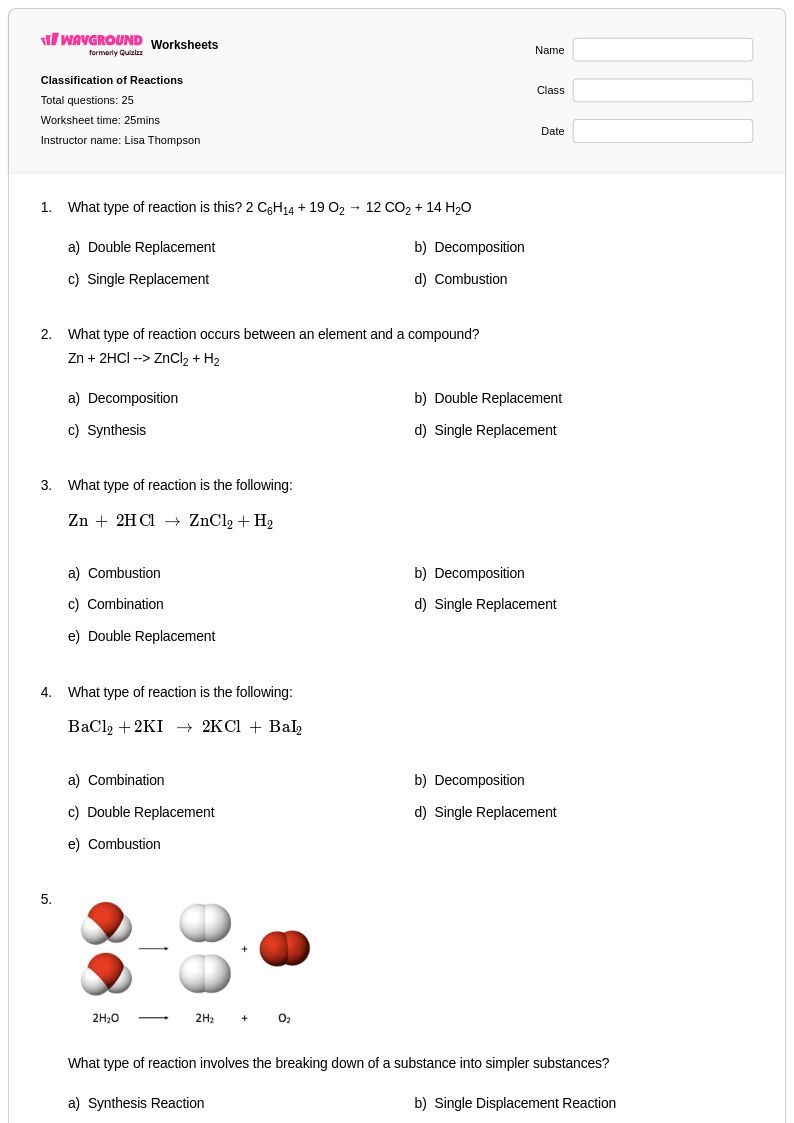
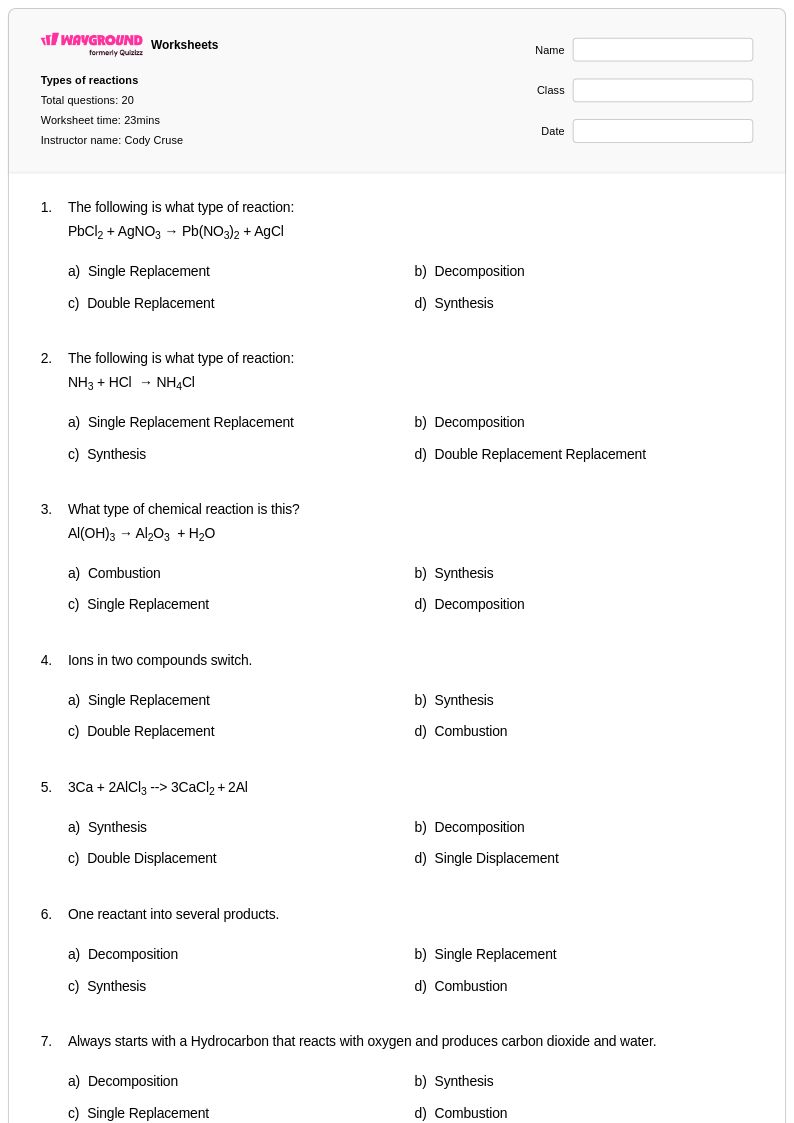
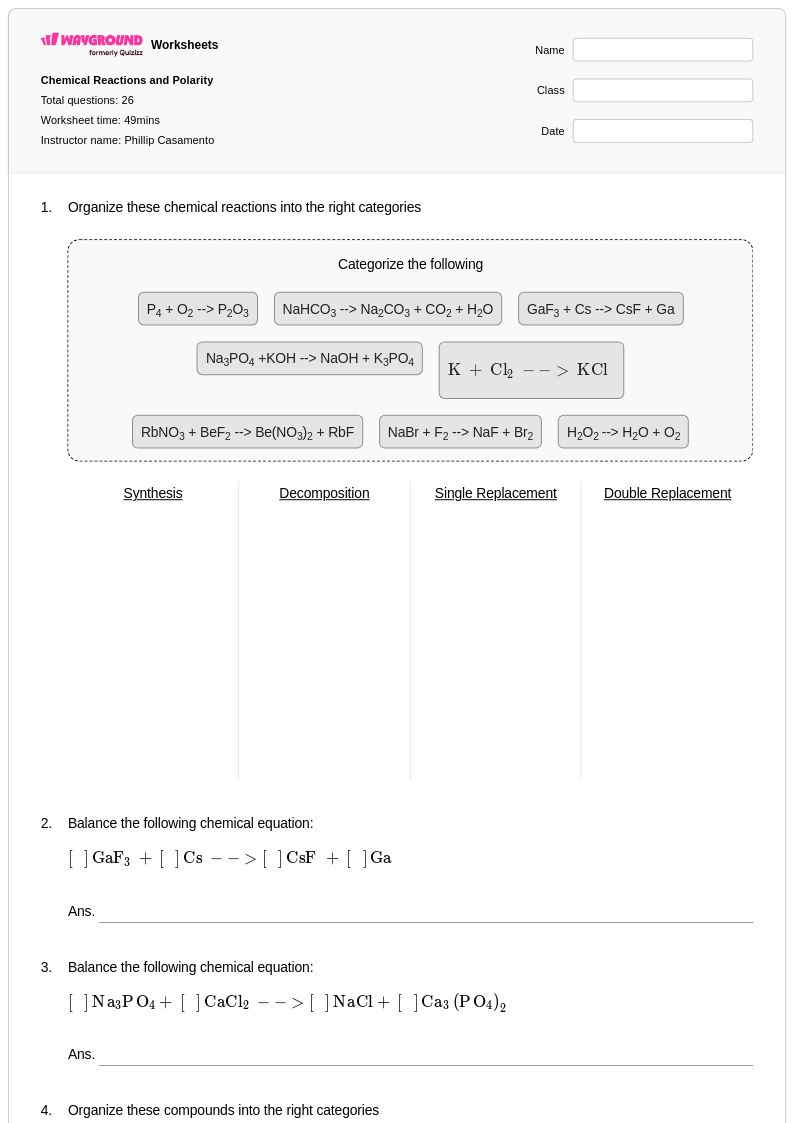
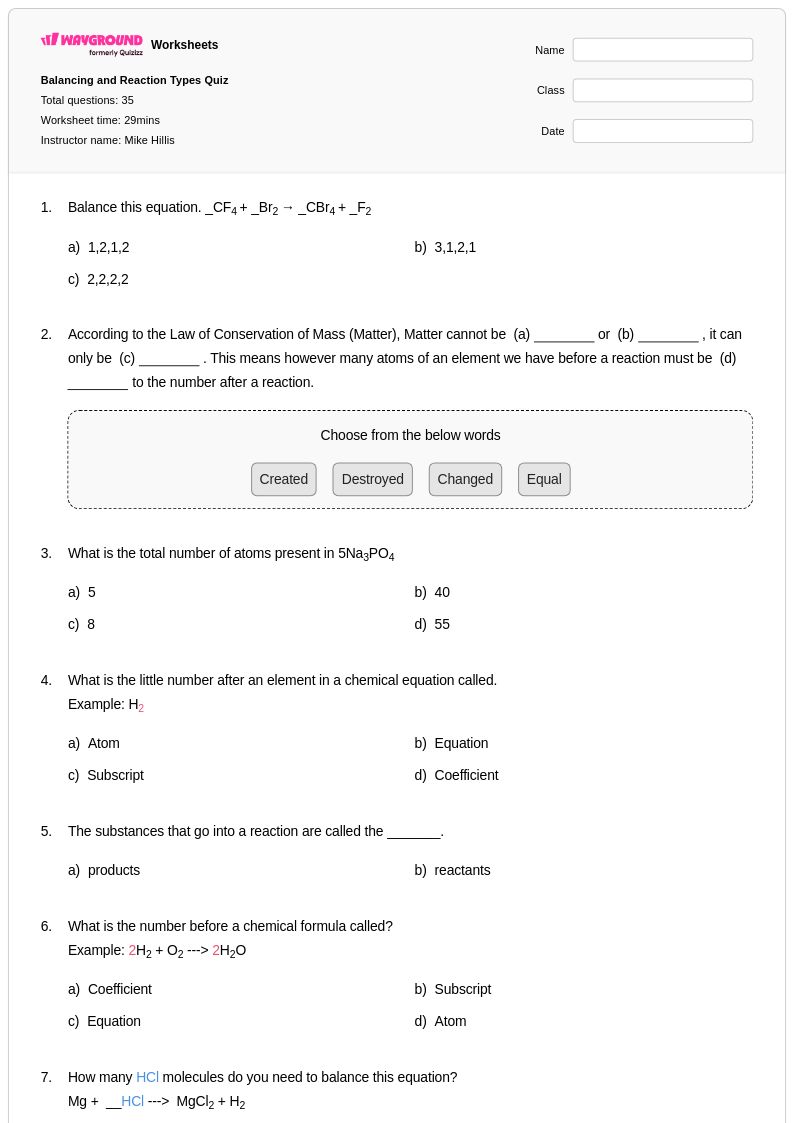
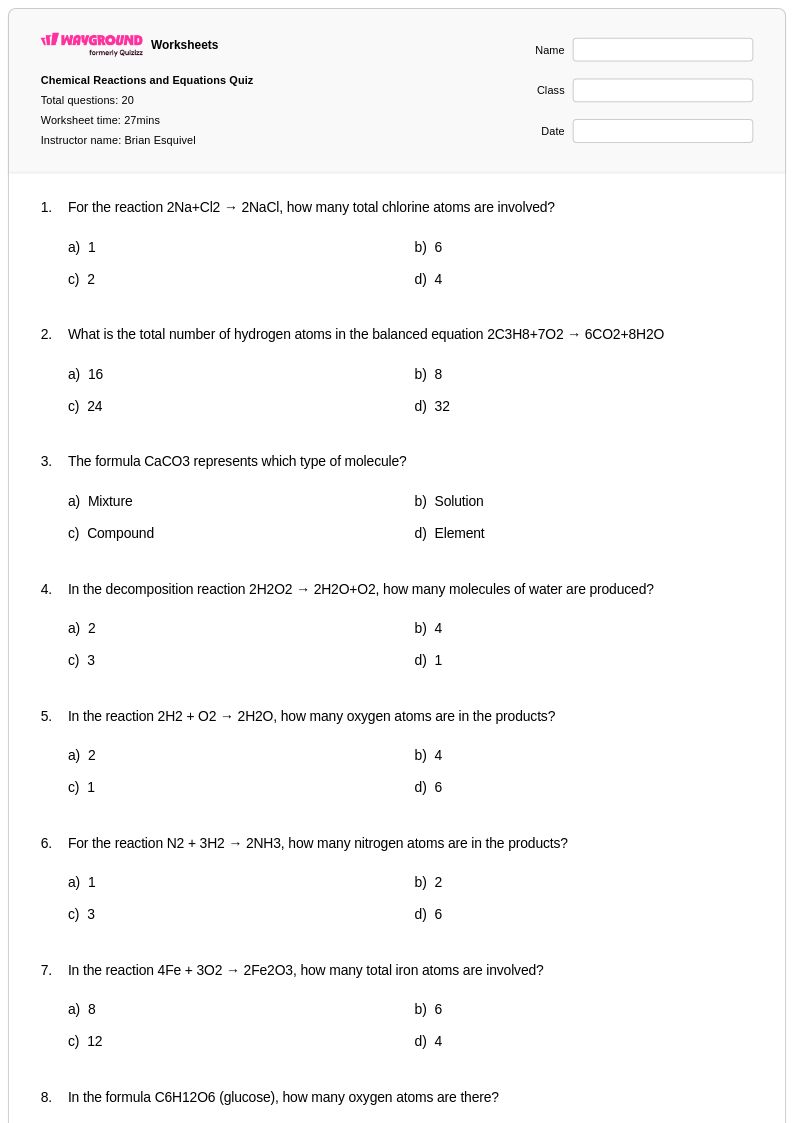
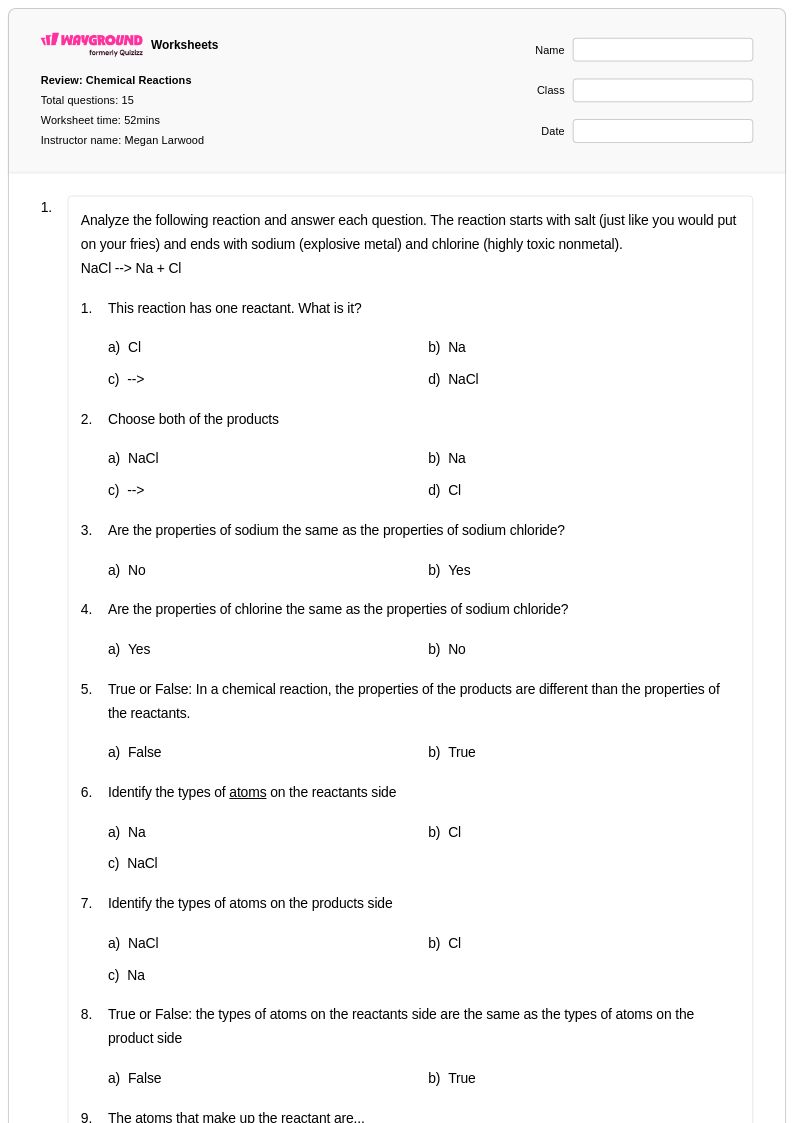
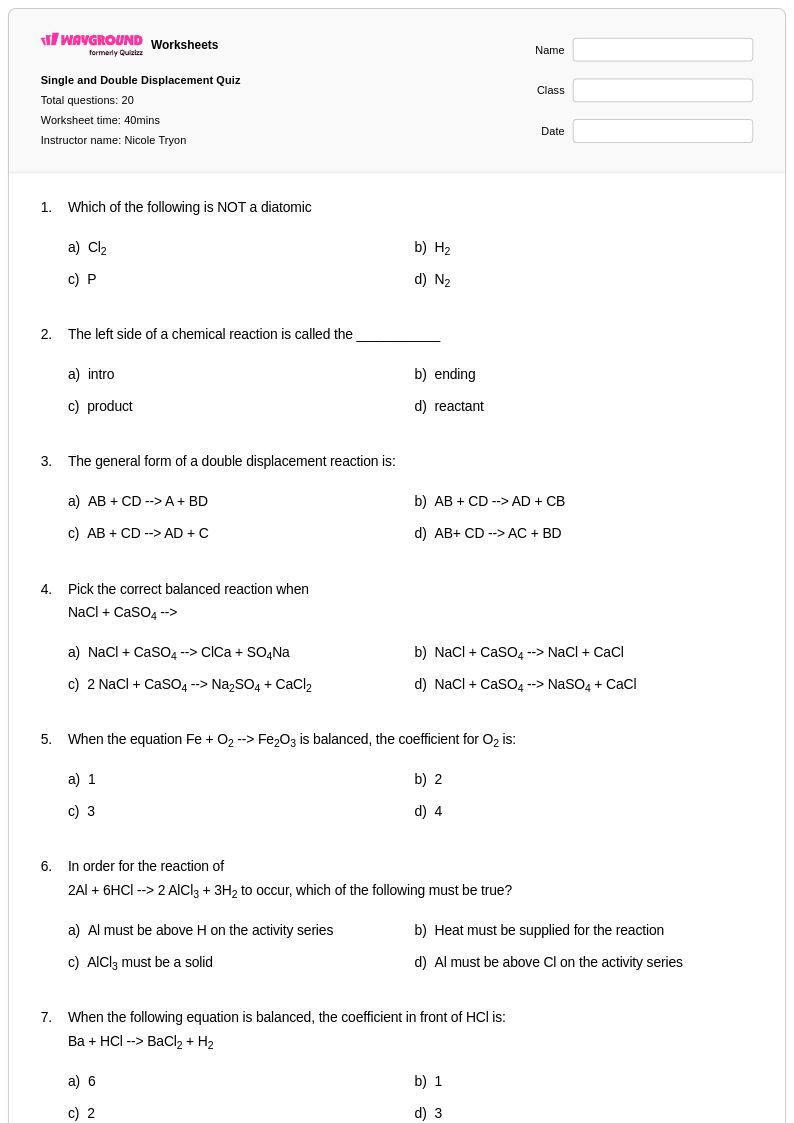
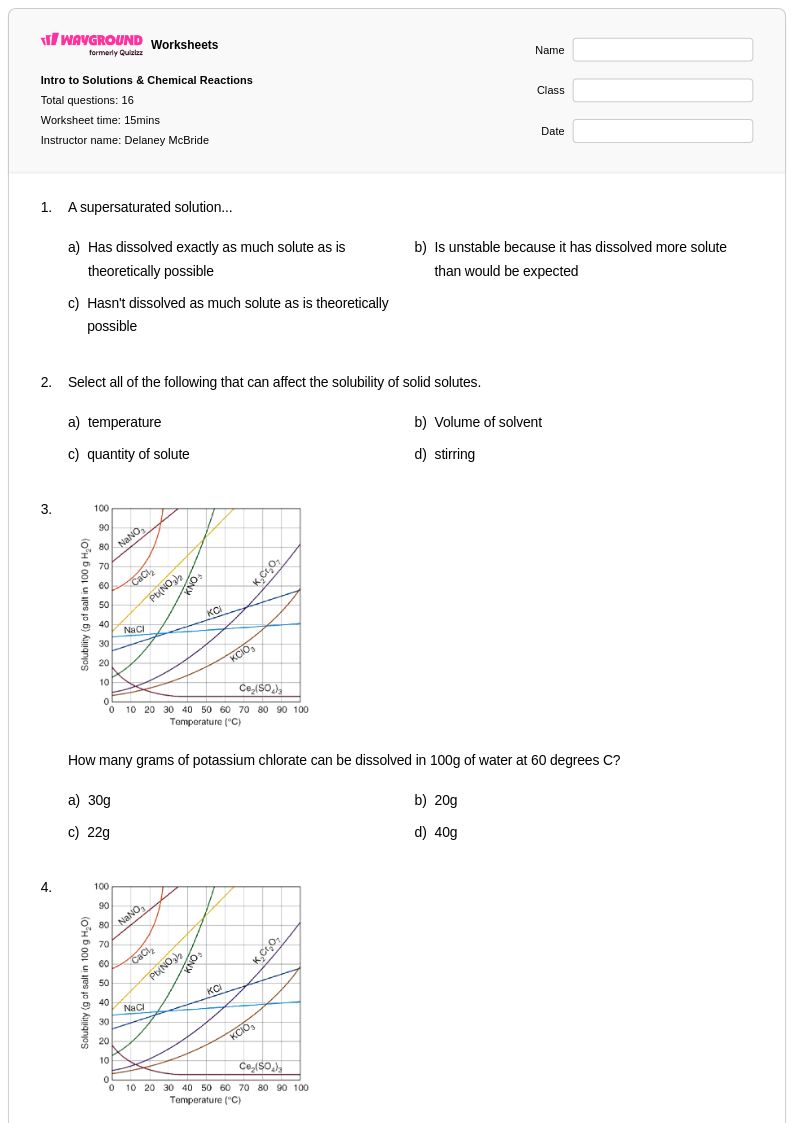
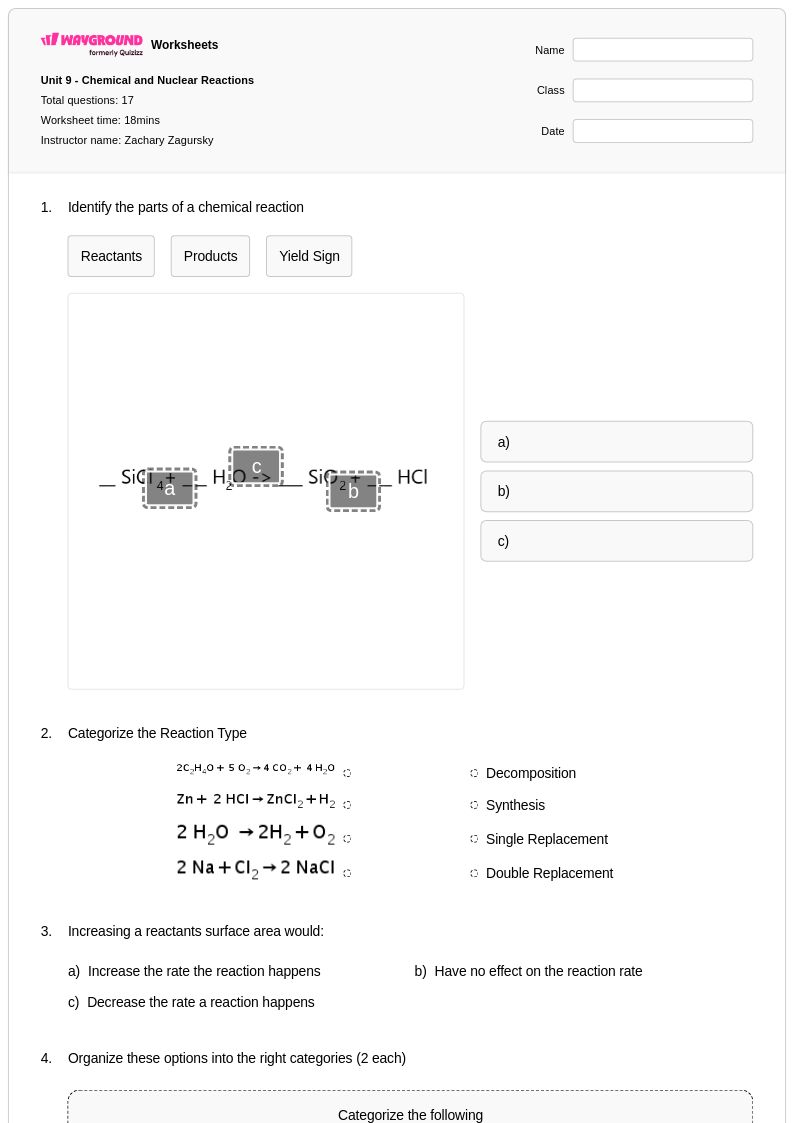
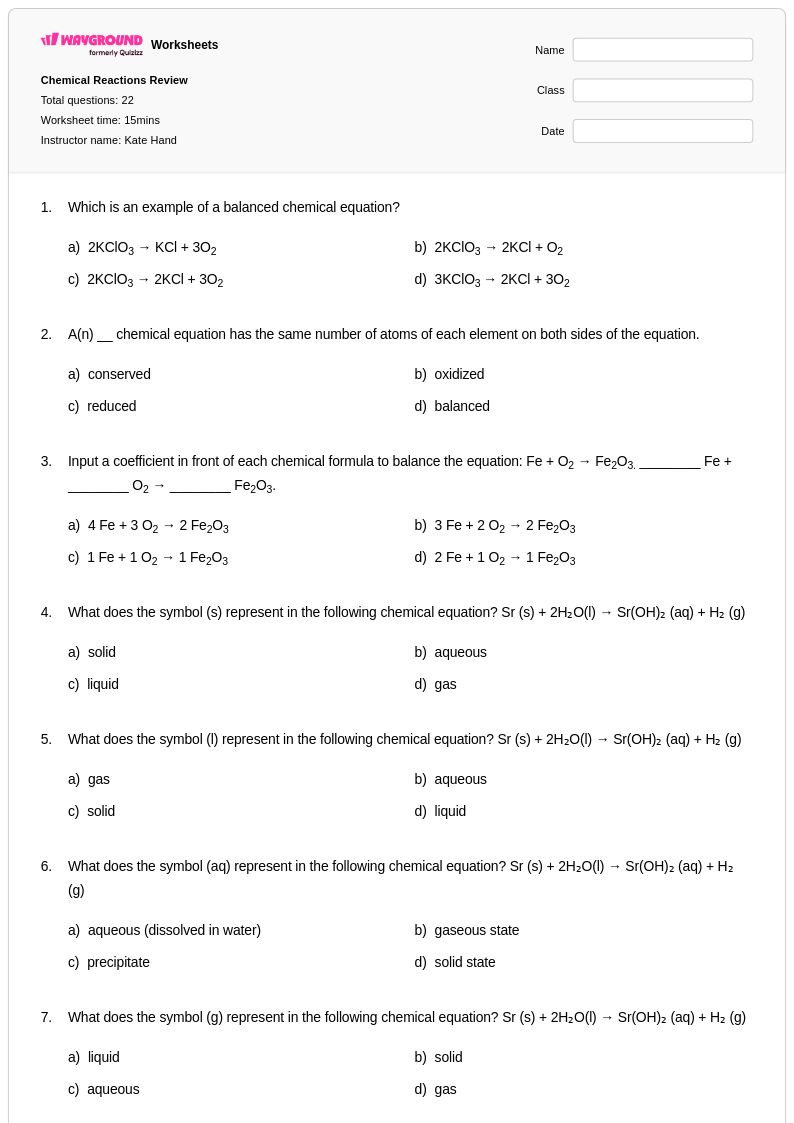
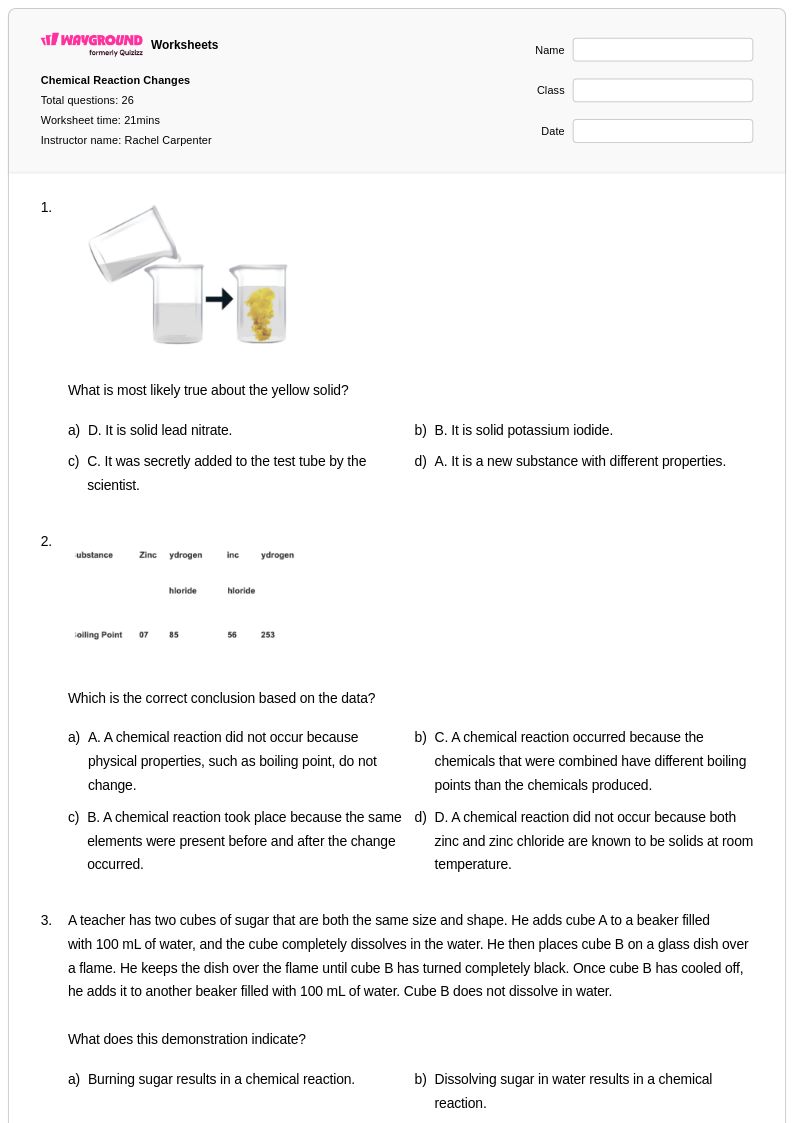
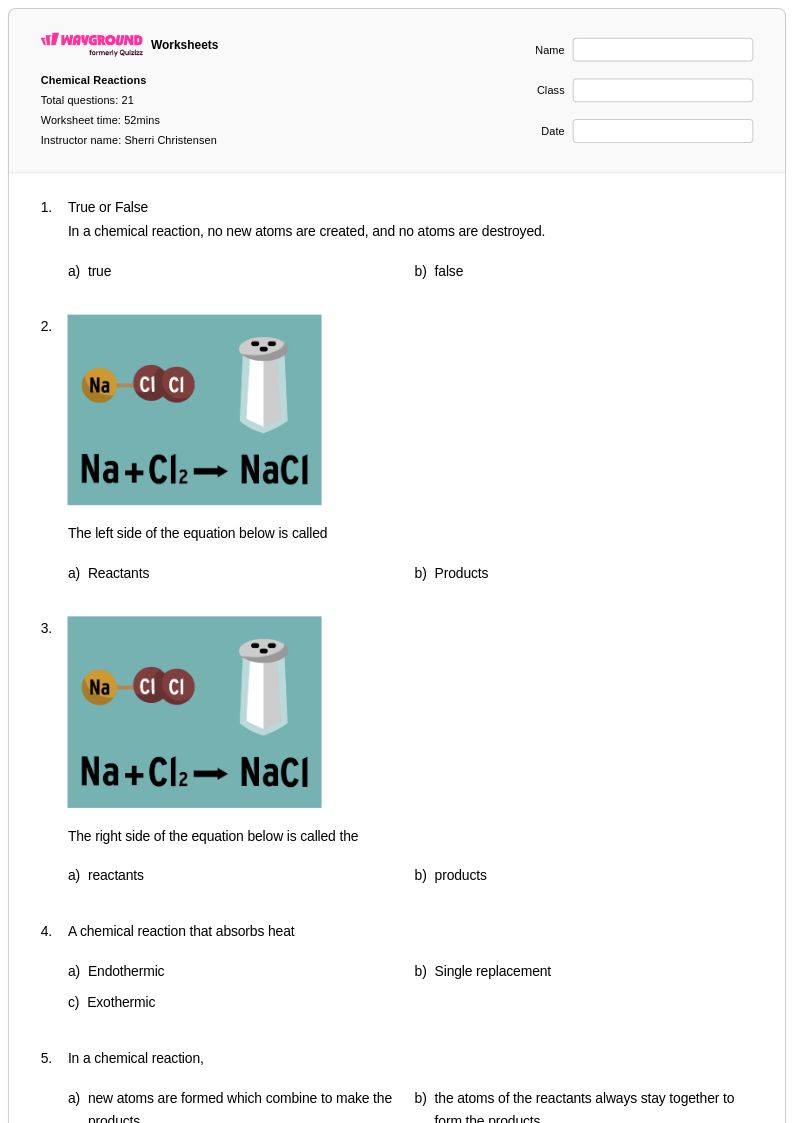
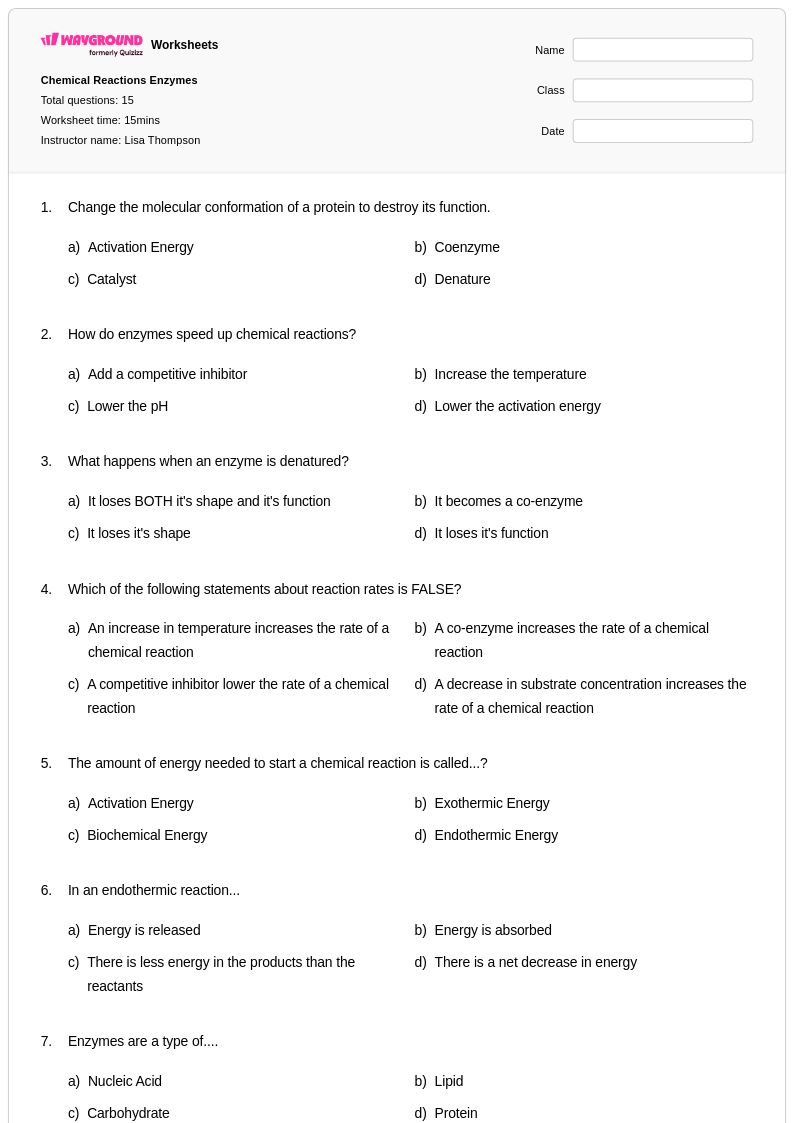
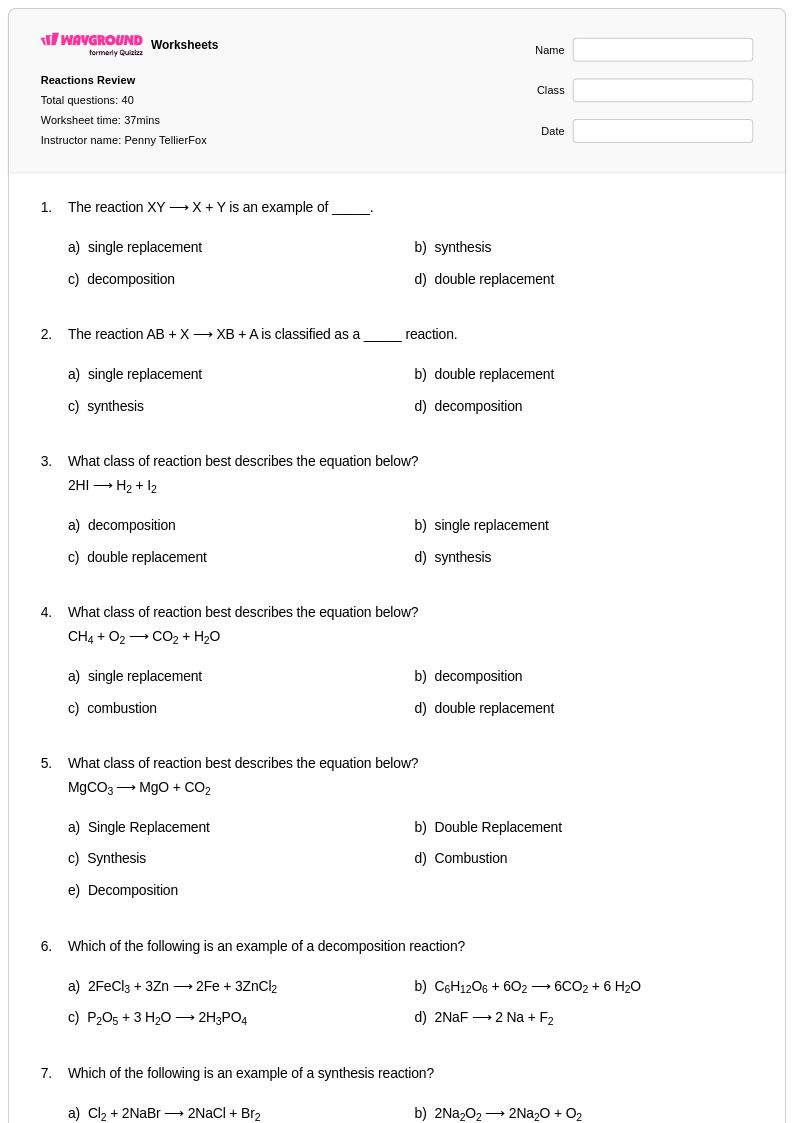
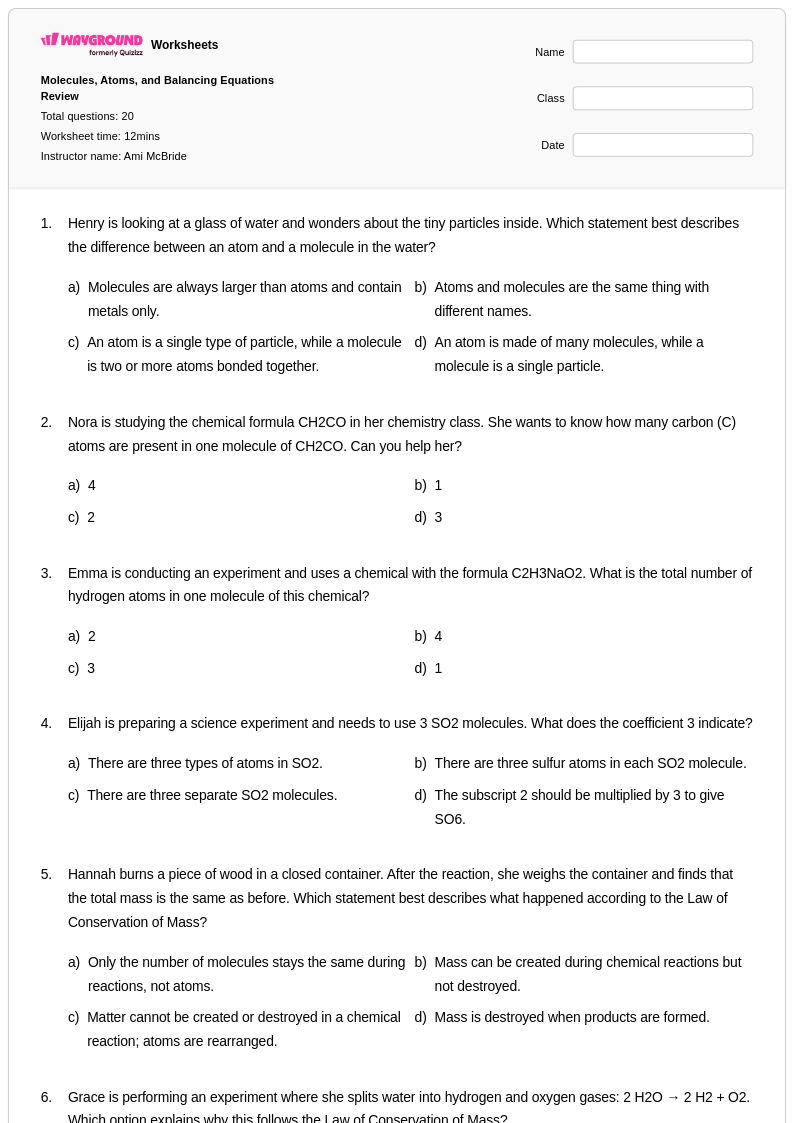
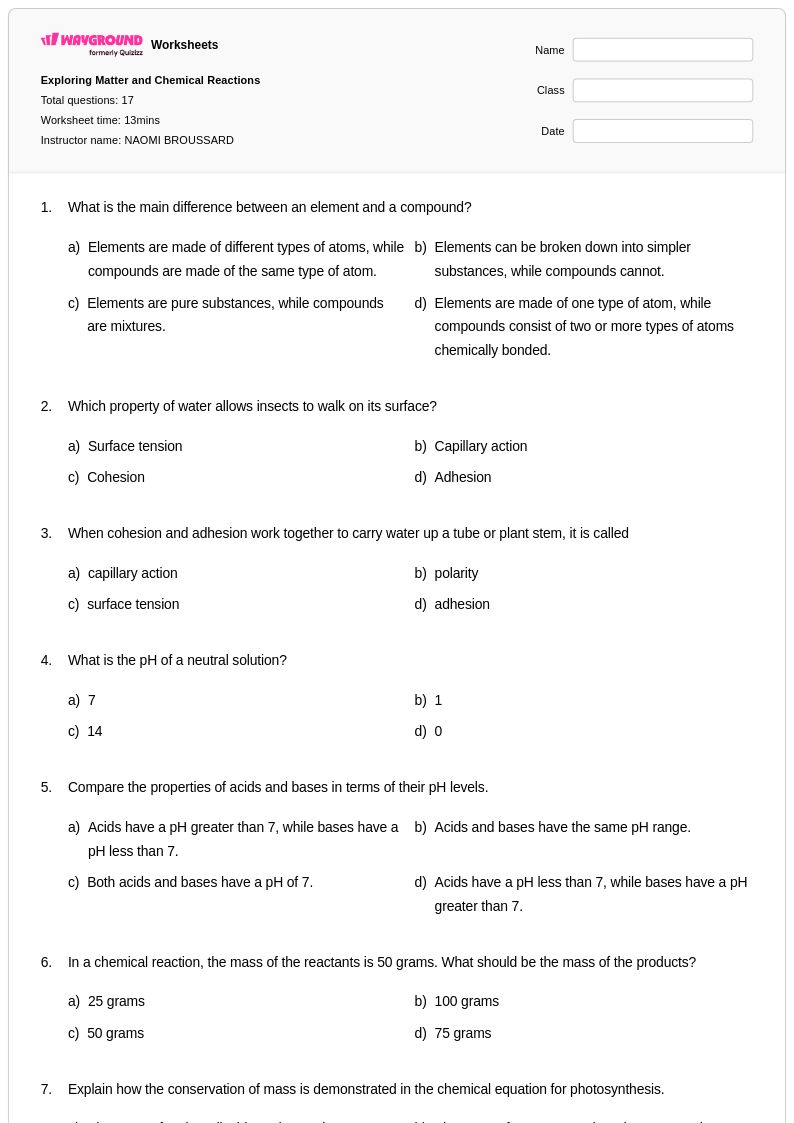
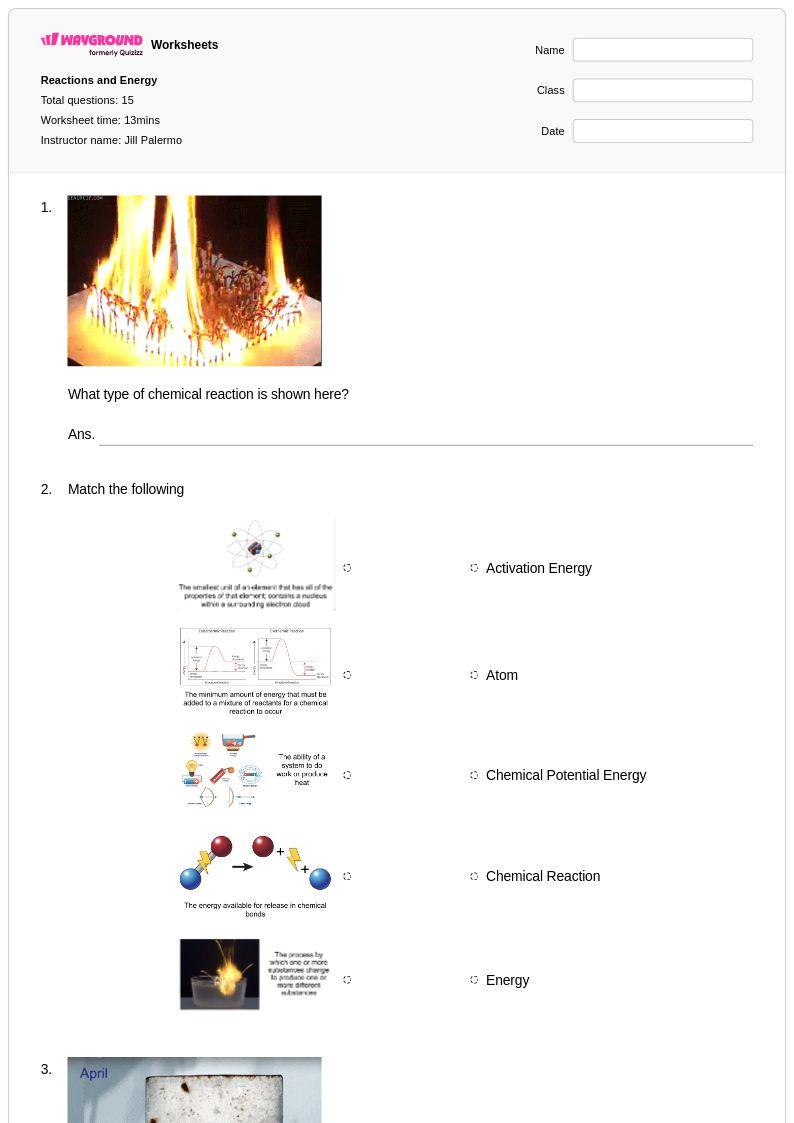
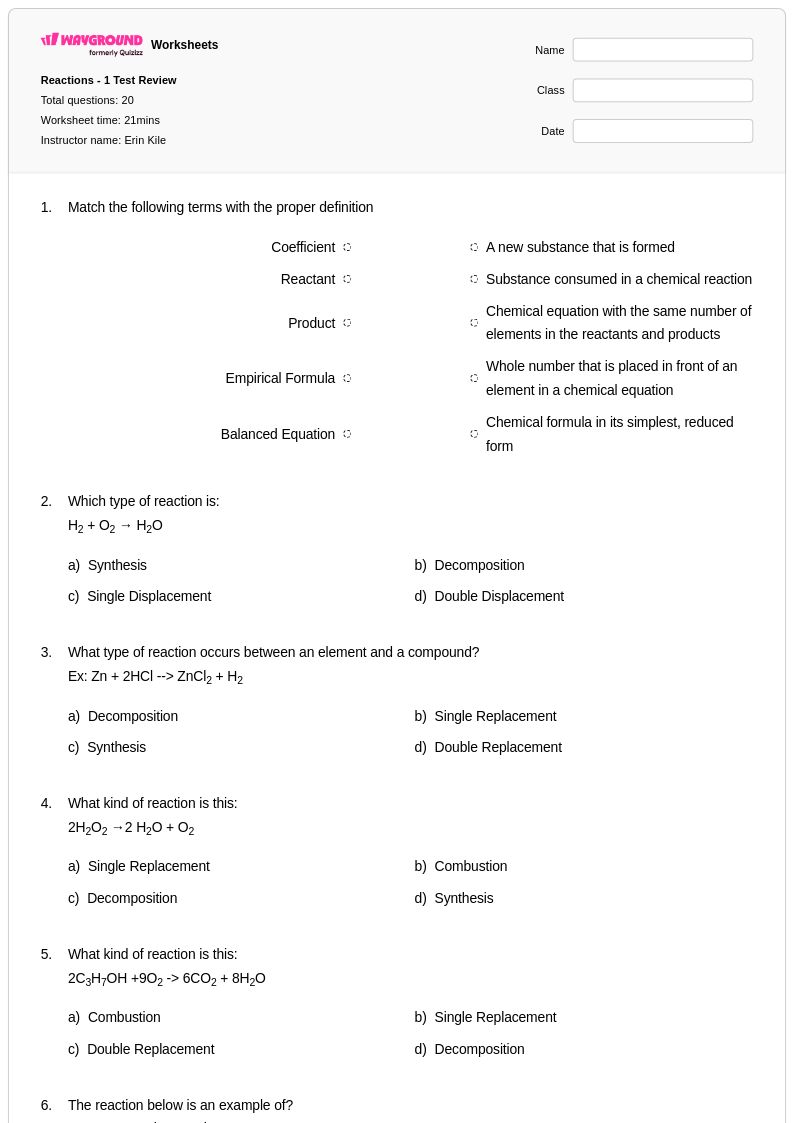
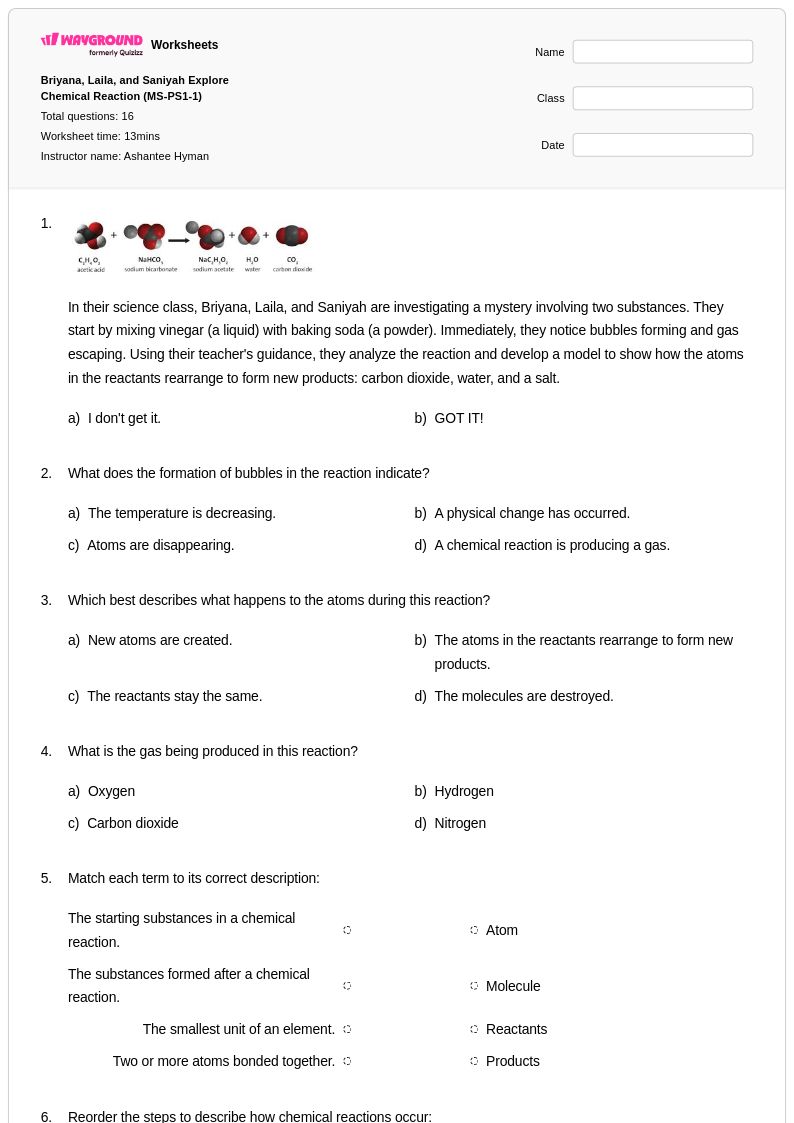
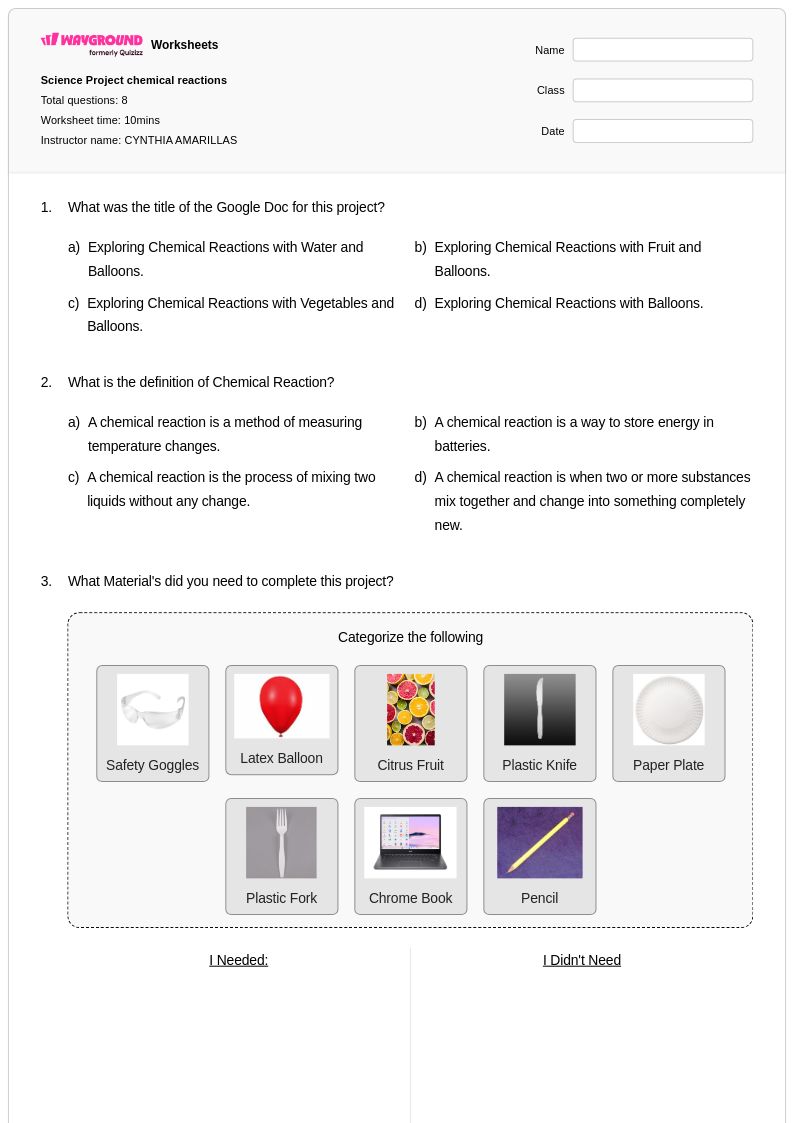
Classification of Chemical Reactions worksheets for Class 11 students available through Wayground (formerly Quizizz) provide comprehensive practice materials that develop students' ability to identify, categorize, and predict different types of chemical transformations. These worksheets strengthen essential skills in recognizing synthesis, decomposition, single replacement, double replacement, and combustion reactions while building proficiency in writing balanced chemical equations and predicting reaction products. Students work through carefully structured practice problems that progress from basic pattern recognition to complex reaction analysis, with each worksheet including detailed answer keys that support independent learning and self-assessment. The free printable resources offer educators flexibility in delivery format, whether distributed as pdf downloads for homework assignments or integrated into classroom activities that reinforce theoretical concepts with hands-on problem solving.
Wayground's extensive collection of teacher-created resources supports chemistry educators with millions of worksheet options specifically designed for classification of chemical reactions instruction at the Class 11 level. The platform's robust search and filtering capabilities allow teachers to locate materials aligned with specific curriculum standards while accessing differentiation tools that accommodate diverse learning needs within the classroom. These customizable worksheets are available in both printable and digital formats, including downloadable pdf versions that facilitate seamless integration into existing lesson plans and assessment strategies. Teachers utilize these resources for targeted skill practice, remediation support for struggling students, and enrichment activities that challenge advanced learners, while the comprehensive answer keys and detailed solutions streamline grading processes and enable efficient feedback delivery that enhances student understanding of chemical reaction mechanisms.
FAQs
How do I teach the five types of chemical reactions to high school chemistry students?
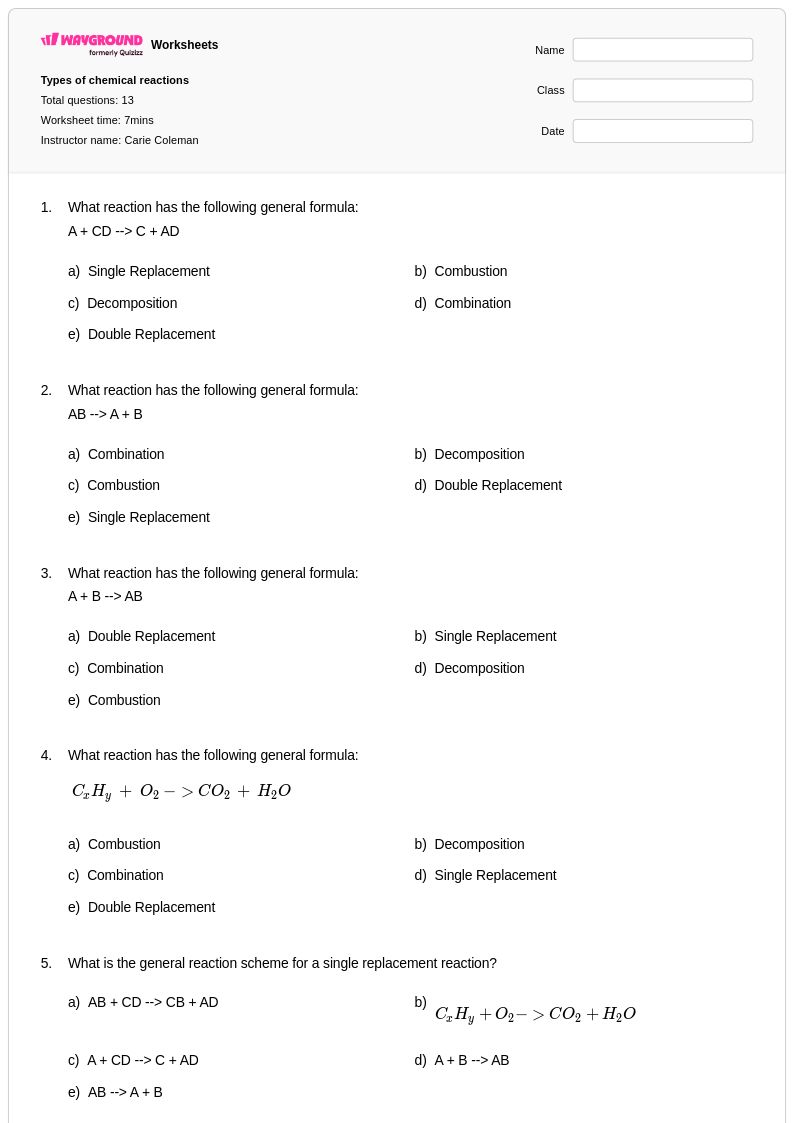
Start by establishing a visual framework: give students a reference chart of the five reaction types (synthesis, decomposition, single replacement, double replacement, and combustion) alongside their general equation patterns. From there, build recognition skills through pattern matching before moving to prediction tasks. A common effective sequence is to have students classify pre-written equations first, then predict products from reactants, and finally balance equations within each category. Anchoring each reaction type to a familiar real-world example (combustion in engines, decomposition in hydrogen peroxide) strengthens retention.
What are the most common mistakes students make when classifying chemical reactions?
The most frequent error is confusing single and double replacement reactions, particularly when students focus on the number of reactants rather than which elements are actually swapping positions. Students also commonly misclassify combustion reactions when the fuel is not an obvious hydrocarbon, or when CO2 and H2O are not both listed as products. Another persistent misconception is treating any two-reactant reaction as synthesis — students need repeated exposure to recognizing that synthesis requires a single product. Targeted practice problems that isolate each confusion point are the most effective remediation strategy.
What practice exercises help students get better at identifying reaction types from chemical equations?
Effective practice progresses from recognition to application: begin with classification-only exercises where students label pre-balanced equations, then advance to product-prediction problems where they must apply reaction type rules to determine what forms. Mixed-set worksheets that require students to distinguish between all five reaction types in a single sitting are especially useful for building confident, automatic recognition. Timed sorting activities or card-matching tasks can also reinforce pattern recognition before formal assessments.
How do I use Wayground's classification of chemical reactions worksheets in my classroom?
Wayground's classification of chemical reactions worksheets are available as both printable PDFs and in digital formats, making them straightforward to deploy whether students are working on paper in a traditional classroom or on devices in a blended or remote setting. Teachers can assign the digital version as a self-paced activity or host it as a quiz directly on Wayground for instant scoring and performance tracking. The printable PDF version works equally well as classwork, homework, or a review tool before unit assessments. All worksheets include answer keys, so they can also be used effectively for independent study or self-checking activities.
How can I differentiate classification of chemical reactions practice for students at different ability levels?
For students who need additional support, reduce cognitive load by providing a reaction type reference sheet alongside the worksheet, or by limiting initial practice sets to two or three reaction types before introducing all five. On Wayground, teachers can apply accommodations such as reduced answer choices or read-aloud settings to individual students without notifying the rest of the class, keeping differentiation discreet. For advanced students, extend the task by requiring product prediction and equation balancing in addition to classification, or by presenting incomplete equations that students must complete before categorizing.
How do I know if my students have mastered classifying chemical reactions before moving on?
Mastery is best assessed through a mixed-format task: ask students to classify a set of equations, predict products for a second set, and explain their reasoning in writing for at least one example from each reaction type. Students who can articulate why a reaction is classified as single replacement rather than double replacement — not just label it correctly — demonstrate conceptual understanding rather than surface pattern matching. A score of 80–85% on a mixed-reaction-type practice set, with errors distributed randomly rather than clustered on one reaction type, is a reasonable benchmark before advancing.