Free Printable Heat of Vaporization Worksheets for Class 11
Explore Class 11 heat of vaporization worksheets and printables through Wayground that help students master phase change calculations, practice problems involving energy transfer, and understand molecular behavior with comprehensive answer keys.
Explore printable Heat of Vaporization worksheets for Class 11
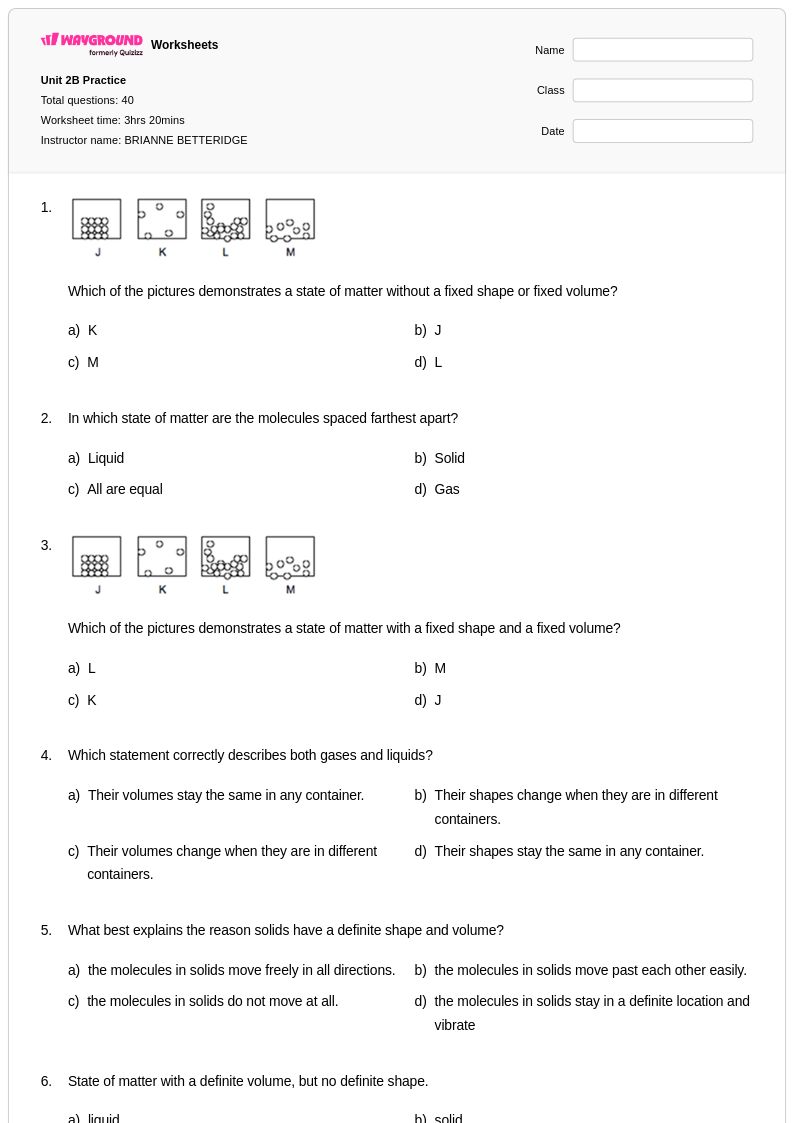
Heat of vaporization worksheets for Class 11 chemistry students available through Wayground (formerly Quizizz) provide comprehensive practice with the energy changes that occur when substances transition from liquid to gas phases. These carefully designed educational materials help students master fundamental thermodynamic concepts including calculating heat energy requirements, understanding molecular behavior during phase transitions, and applying the heat of vaporization formula in various problem-solving scenarios. The worksheet collections feature detailed practice problems that guide students through determining the energy needed to vaporize different substances, comparing vaporization energies across materials, and analyzing real-world applications such as steam generation and cooling systems. Each worksheet includes complete answer keys and is available as free printable pdf resources, allowing students to work through challenging calculations while building confidence in their understanding of intermolecular forces and energy transfer principles.
Wayground (formerly Quizizz) supports chemistry educators with an extensive library of millions of teacher-created heat of vaporization worksheets that streamline lesson planning and enhance student learning outcomes. The platform's robust search and filtering capabilities enable teachers to quickly locate materials aligned with specific curriculum standards and learning objectives, while differentiation tools allow for seamless customization to meet diverse student needs and ability levels. These resources are available in both printable and digital formats, including downloadable pdf versions, making them ideal for traditional classroom instruction, remote learning environments, and hybrid teaching approaches. Teachers can leverage these worksheet collections for targeted skill practice, remediation support for struggling students, enrichment activities for advanced learners, and comprehensive assessment preparation, ensuring that all Class 11 chemistry students develop a solid foundation in thermodynamic principles and phase change calculations.
FAQs
How do I teach heat of vaporization to chemistry students?
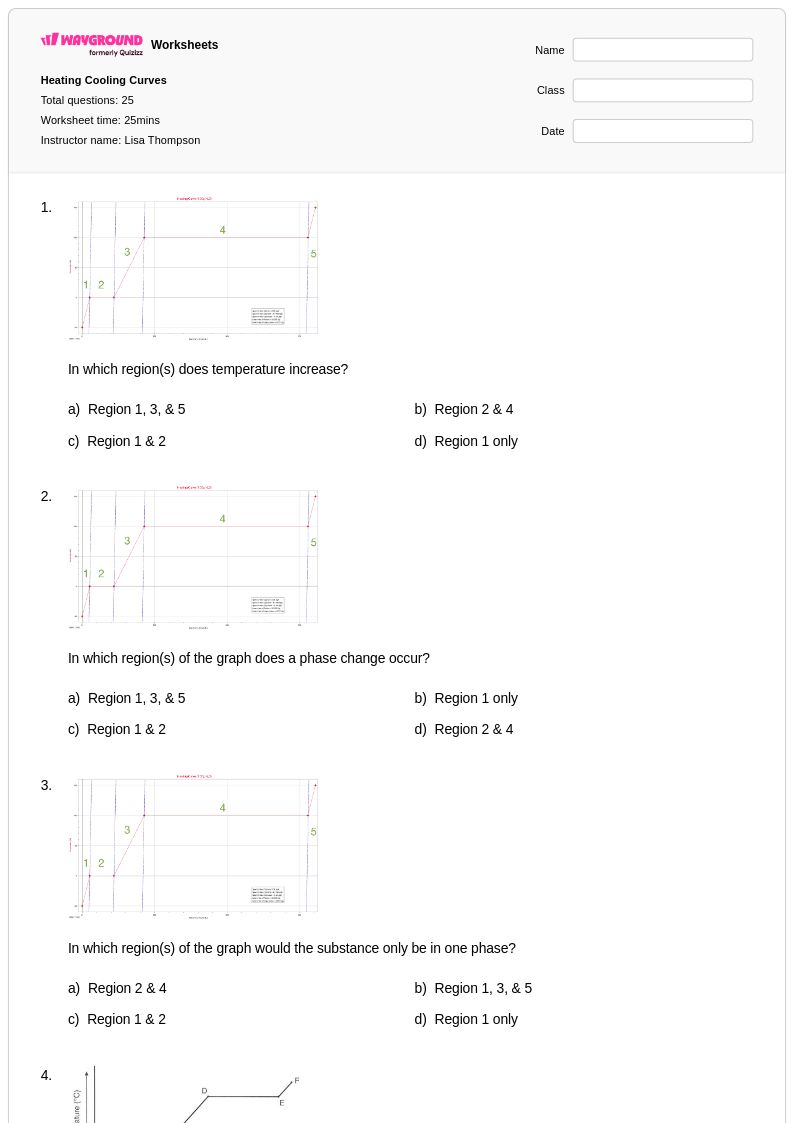
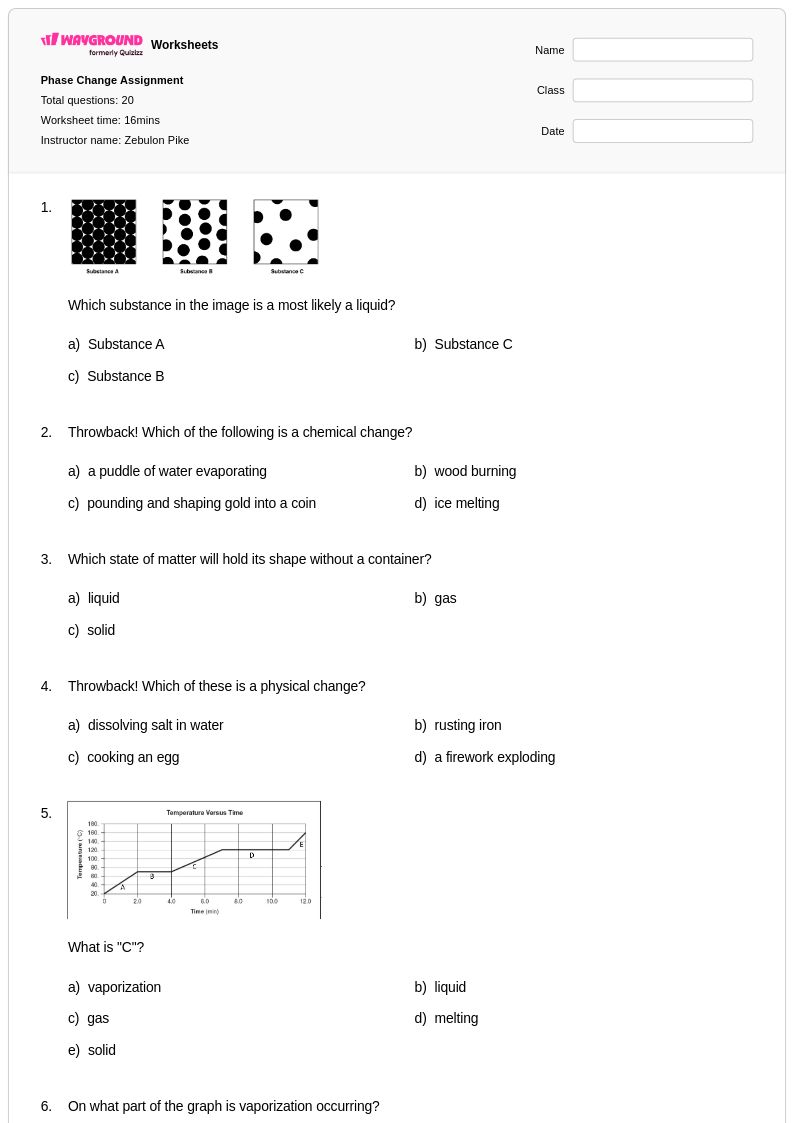
Start by grounding students in the concept of phase changes before introducing the energy calculations involved. Emphasize that heat of vaporization represents the energy needed to convert a liquid to a gas at constant temperature, without a change in temperature itself. Connecting this to molecular behavior, specifically the breaking of intermolecular forces, helps students build conceptual understanding before moving to quantitative problems. Visual aids such as heating curves are especially effective for showing where vaporization energy is absorbed.
What kinds of practice problems help students get better at heat of vaporization calculations?
Effective practice problems ask students to calculate the energy required to vaporize a given mass of a substance using Q = mHv, apply latent heat values for common substances like water and ethanol, and interpret heating curve graphs to identify phase change regions. Problems that vary the substance, mass, or direction of the phase change (condensation vs. vaporization) help students generalize the concept rather than memorize a single procedure. Graduated difficulty, starting with direct substitution and progressing to multi-step energy transfer scenarios, builds lasting proficiency.
What mistakes do students commonly make when solving heat of vaporization problems?
The most common error is confusing heat of vaporization with specific heat capacity and incorrectly applying Q = mcΔT during a phase change, when temperature does not change. Students also frequently forget to convert units, particularly grams to moles or kilojoules to joules, leading to off-by-a-factor errors. Another widespread misconception is assuming all phase changes involve a temperature increase, when in fact vaporization absorbs energy at a fixed temperature until the phase transition is complete.
How can I differentiate heat of vaporization instruction for students with different ability levels?
For struggling students, reduce the complexity of problems by providing the formula and a reference table of latent heat values so they can focus on the calculation procedure itself. Advanced students benefit from multi-step problems that combine specific heat, heat of vaporization, and heat of fusion in a single heating scenario. On Wayground, teachers can apply accommodations such as reduced answer choices or read-aloud support to individual students without affecting the rest of the class, making it straightforward to serve diverse needs within the same assignment.
How do I use Wayground's heat of vaporization worksheets in my classroom?
Wayground's heat of vaporization worksheets are available as printable PDFs for traditional classroom use and in digital formats for technology-integrated environments, so they work whether students are seated with paper or working on devices. Teachers can also host worksheets directly as a quiz on Wayground, enabling real-time progress tracking. Each worksheet includes a complete answer key, supporting both teacher-led review and independent student self-assessment. The range of problem types makes these resources suitable for initial instruction, targeted practice, or remediation.
How does heat of vaporization relate to real-world chemistry and why does it matter?
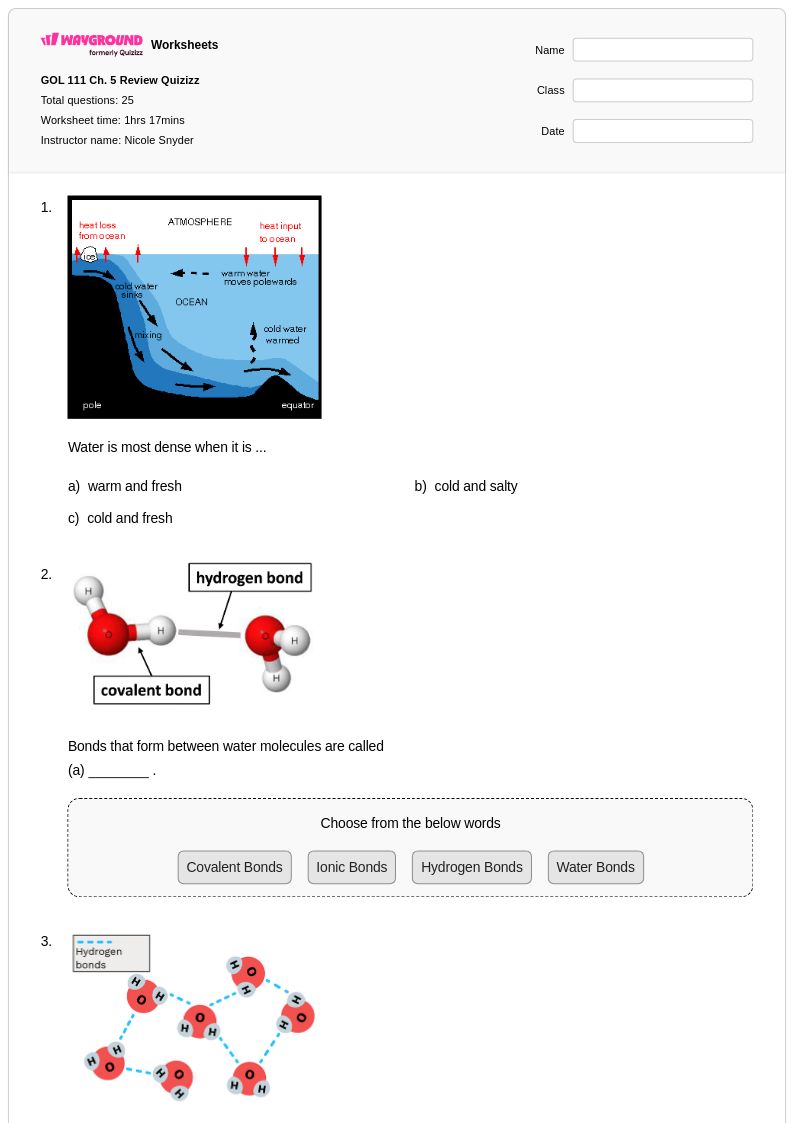
Heat of vaporization explains everyday phenomena such as why sweating cools the body, how industrial distillation processes work, and why water requires significantly more energy to evaporate than most other liquids. Its unusually high value for water, due to extensive hydrogen bonding, is a key reason Earth's climate is stable and biological systems function effectively. Connecting calculations to these contexts helps students see thermodynamics as practically meaningful rather than abstractly numerical.