
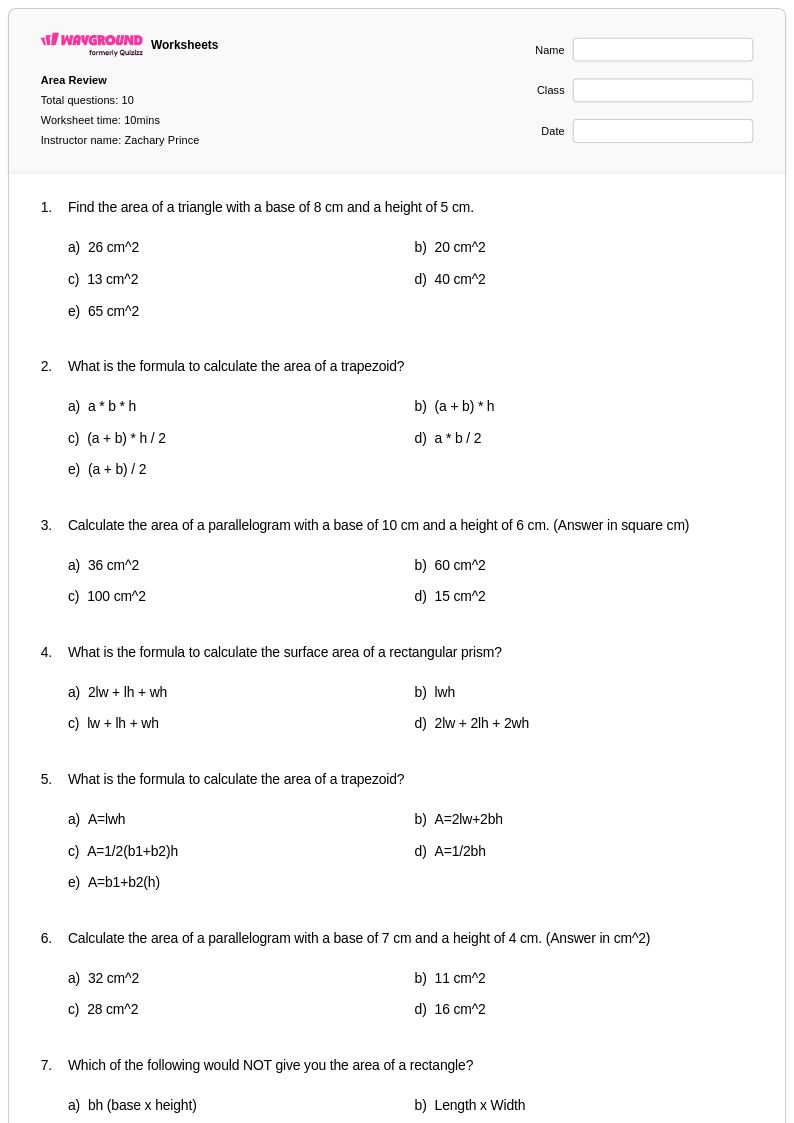
10Q
6th
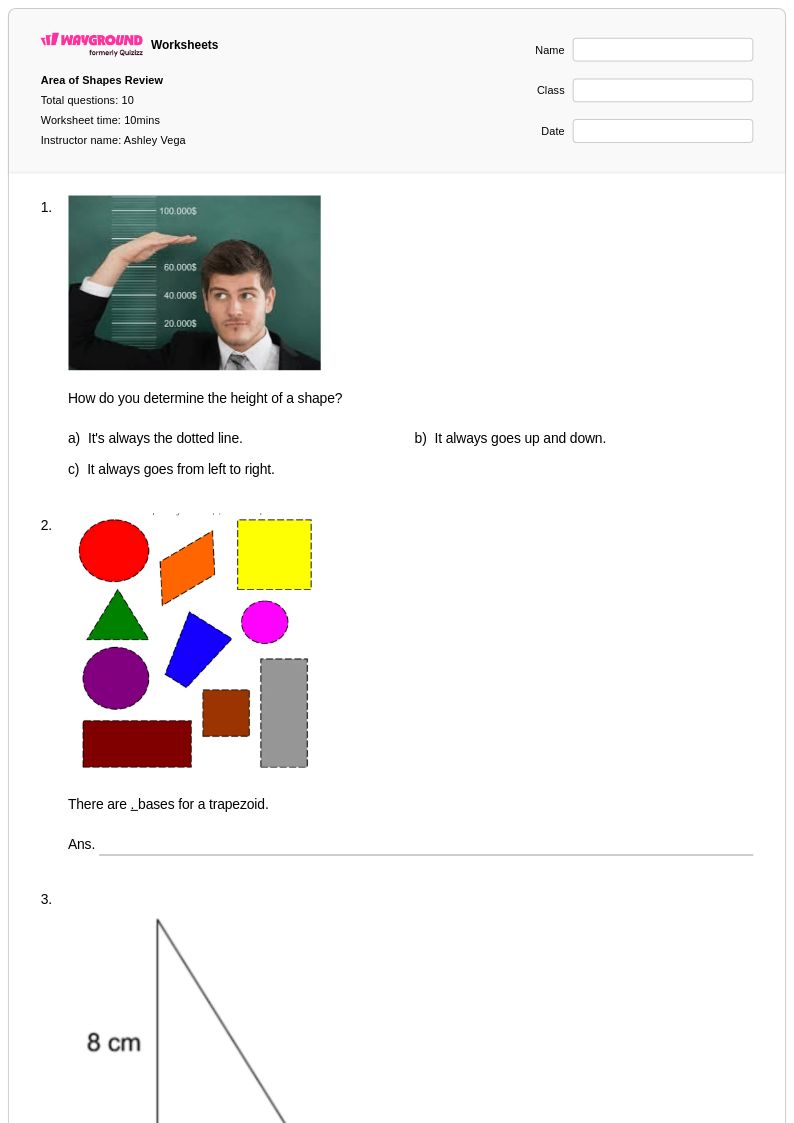
10Q
6th
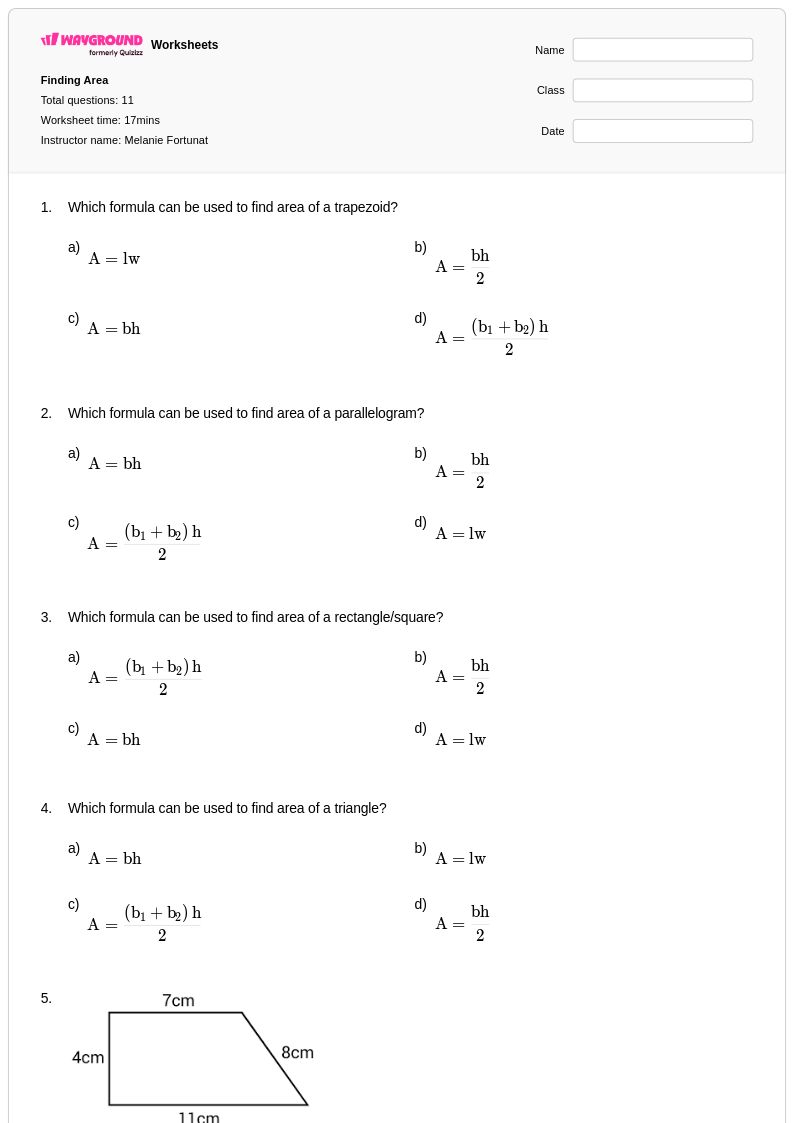
11Q
6th
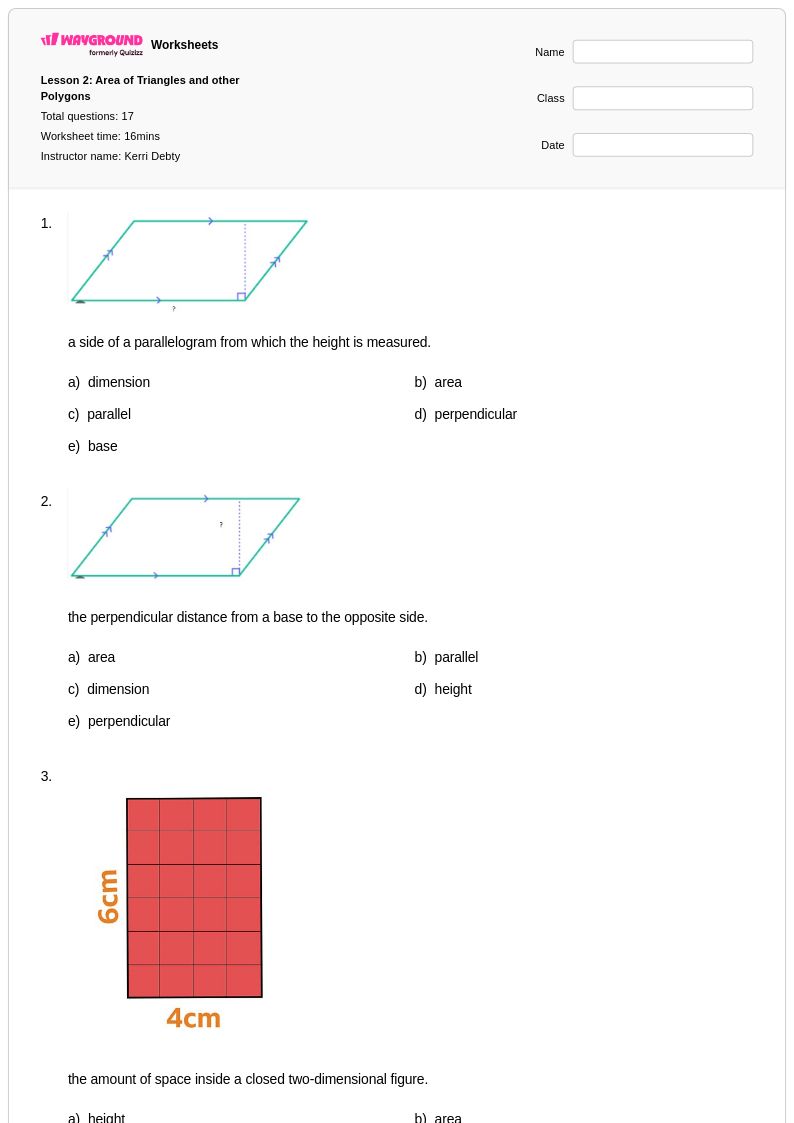
17Q
6th
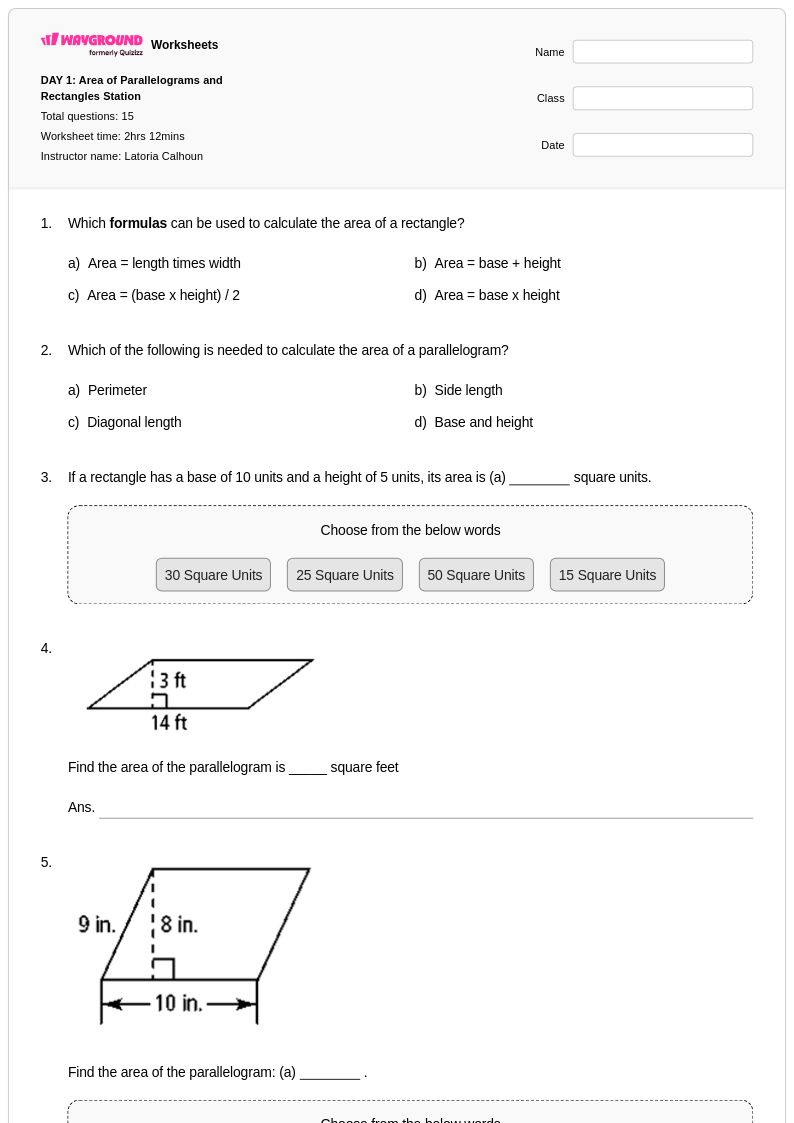
15Q
6th
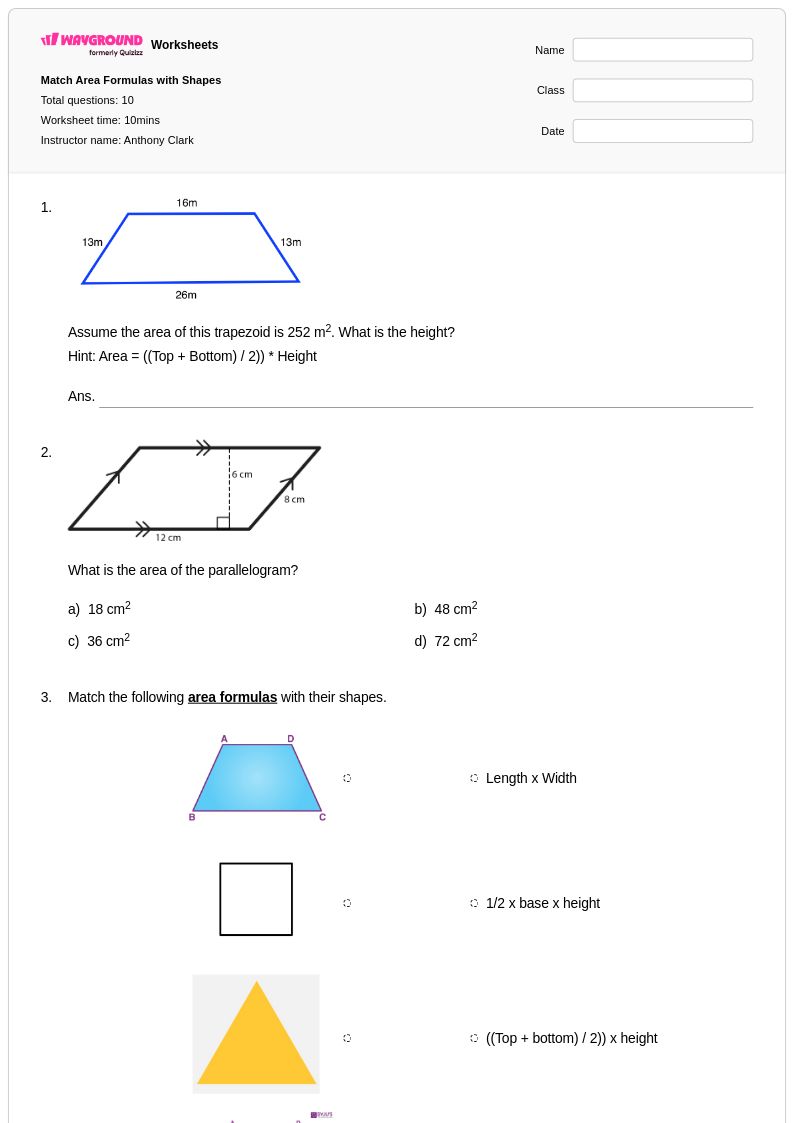
10Q
6th - Uni
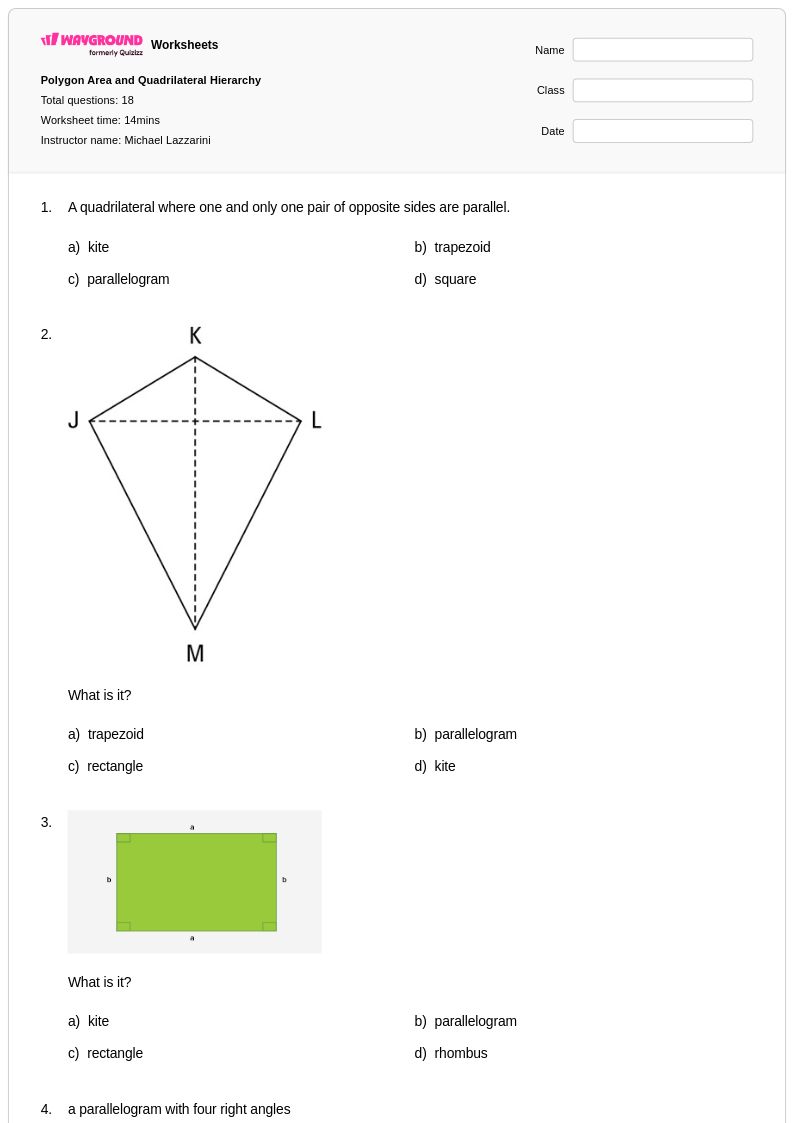
18Q
6th
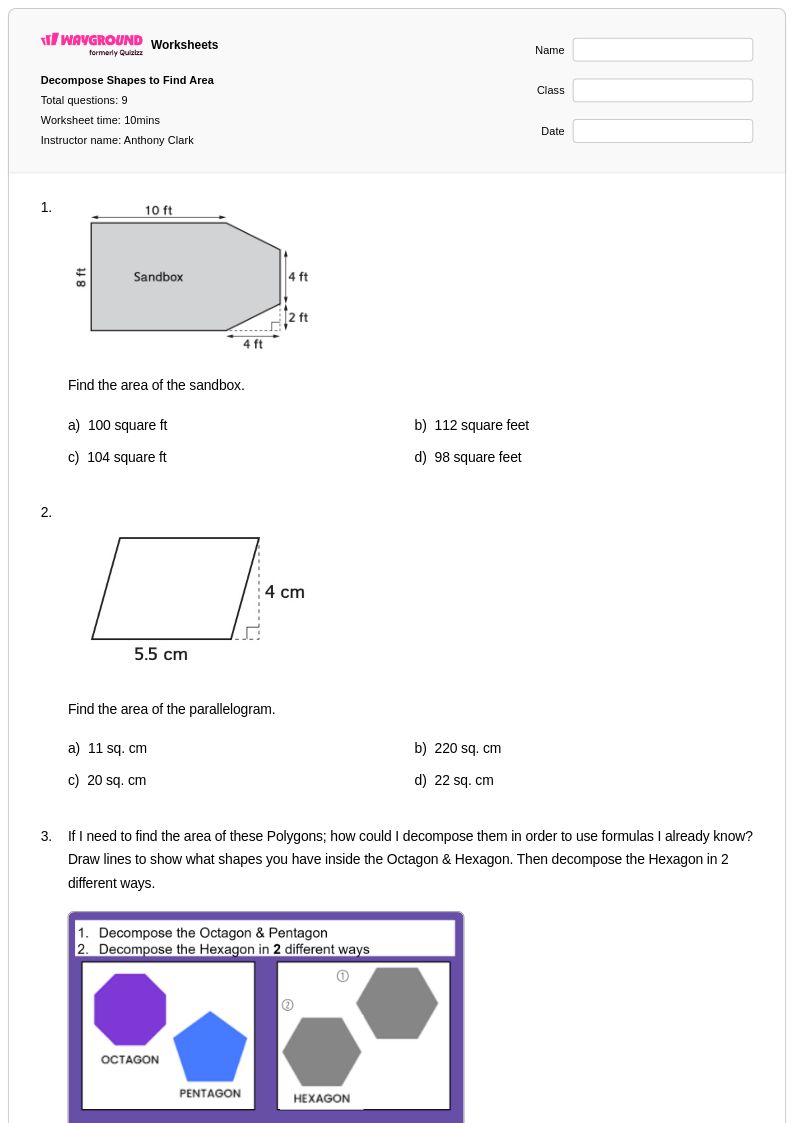
10Q
6th - Uni
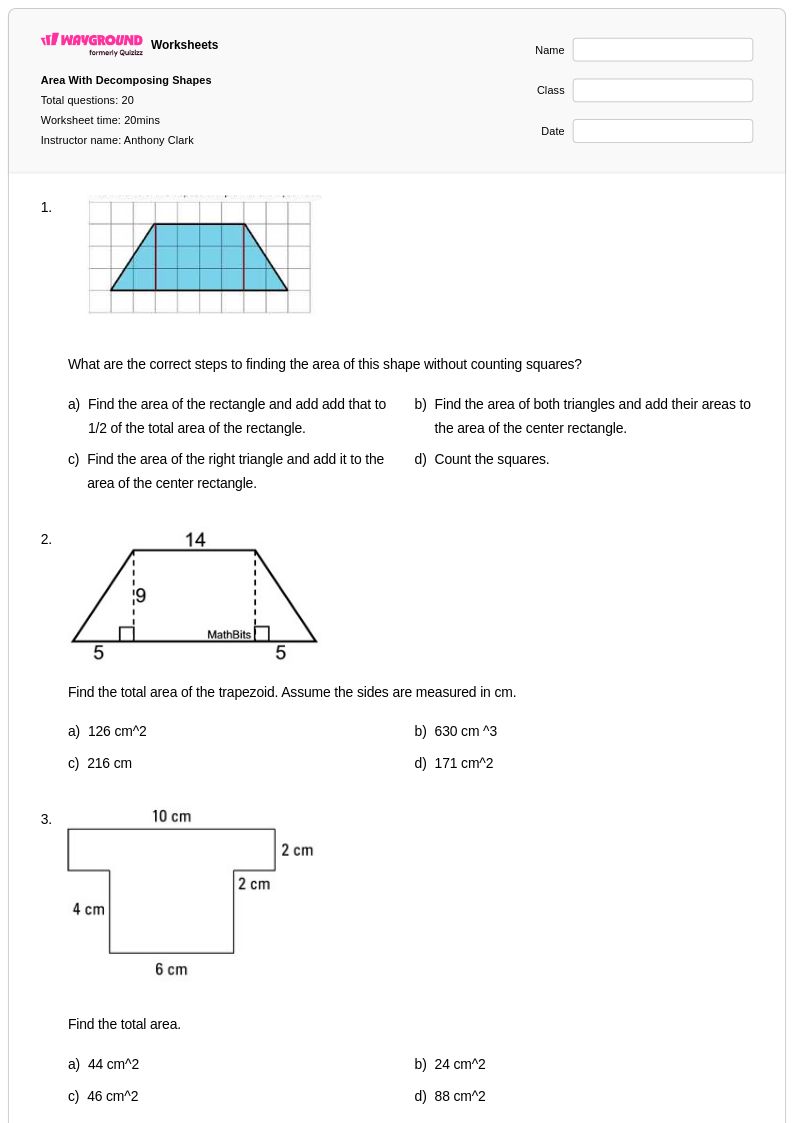
20Q
6th - Uni
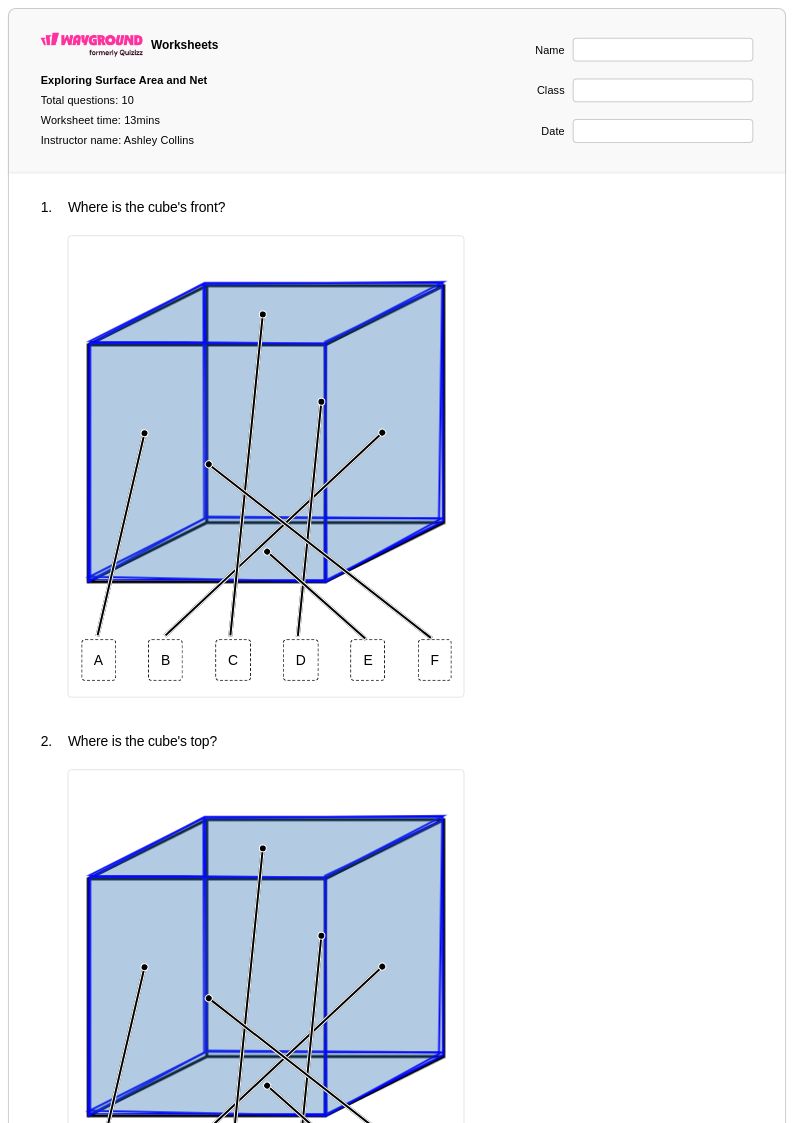
10Q
6th
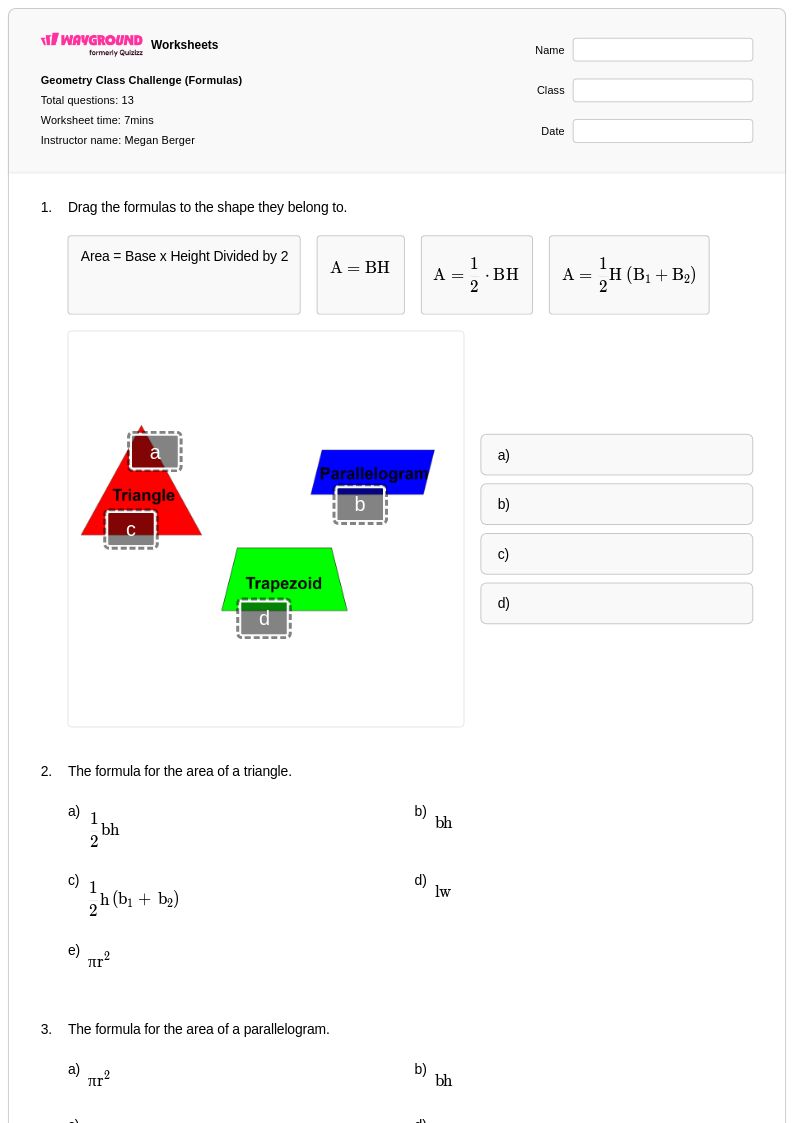
13Q
6th
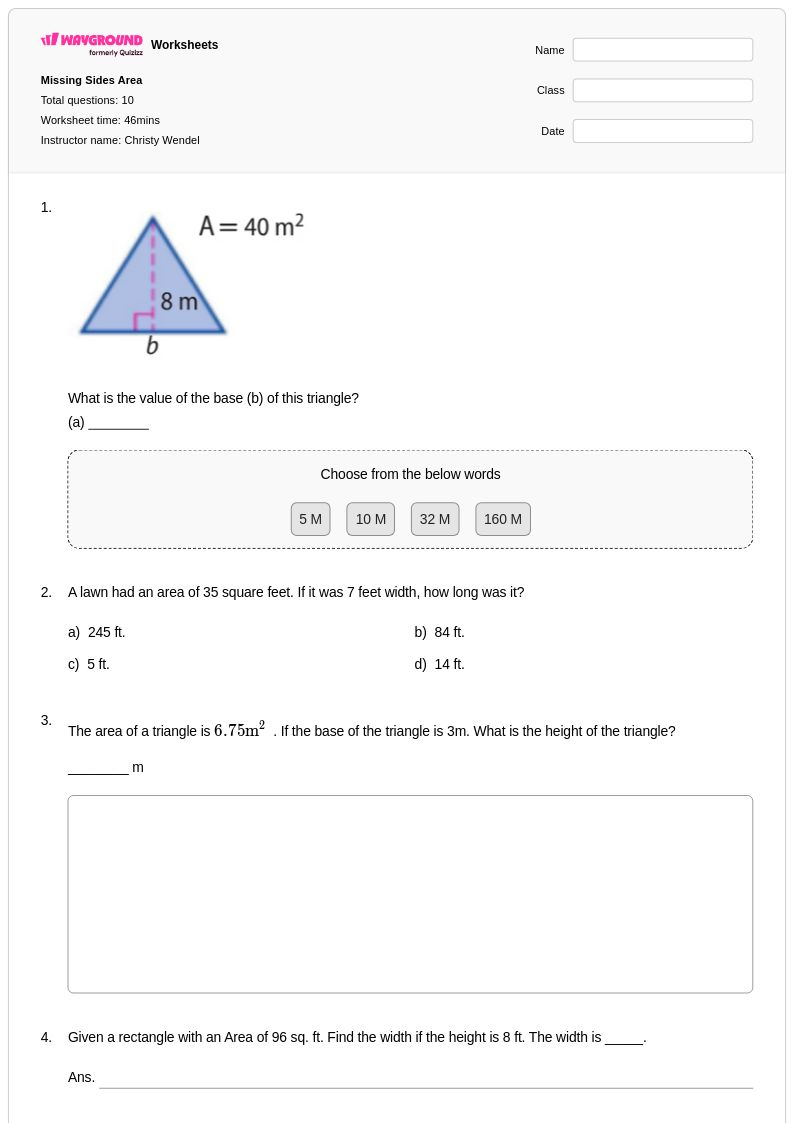
10Q
6th - 8th
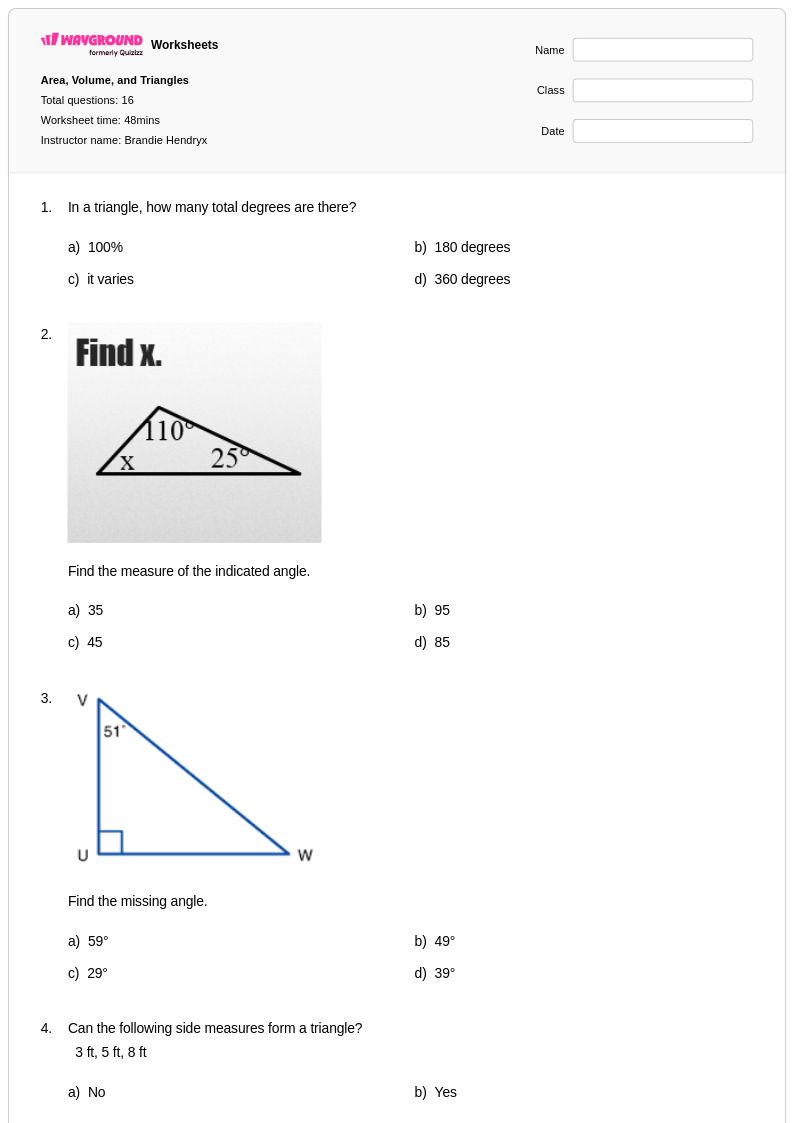
16Q
6th
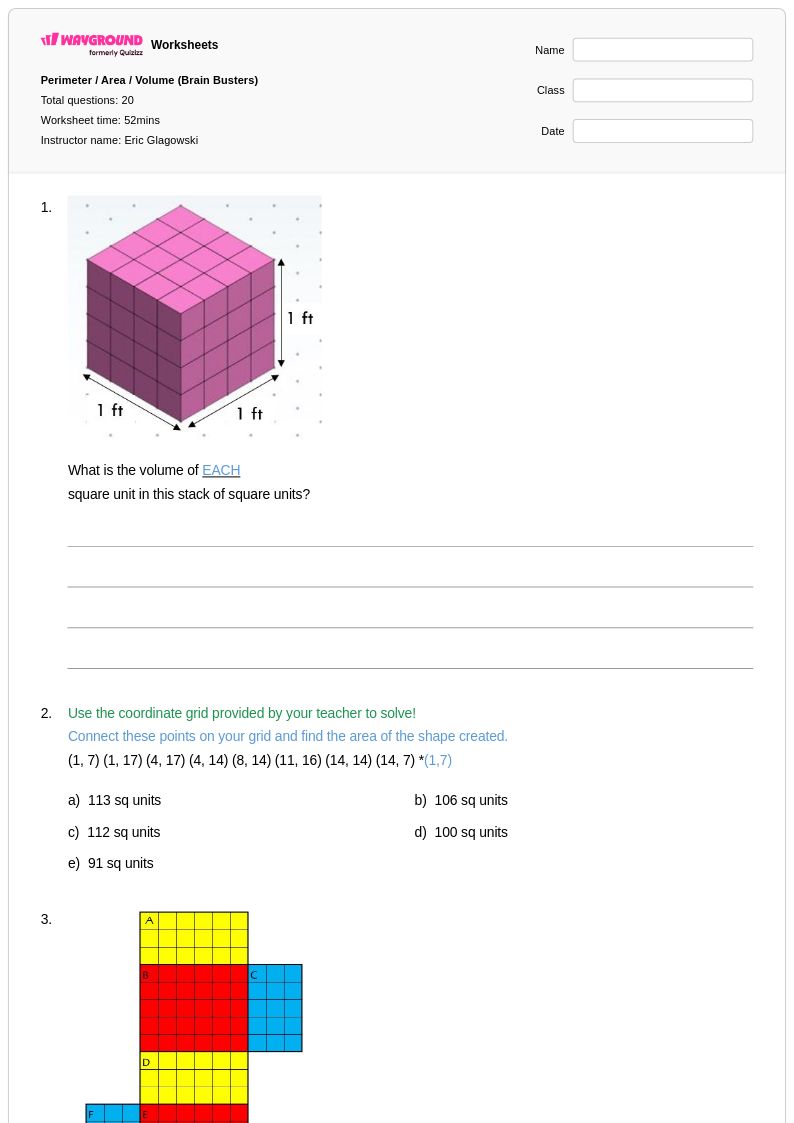
20Q
6th
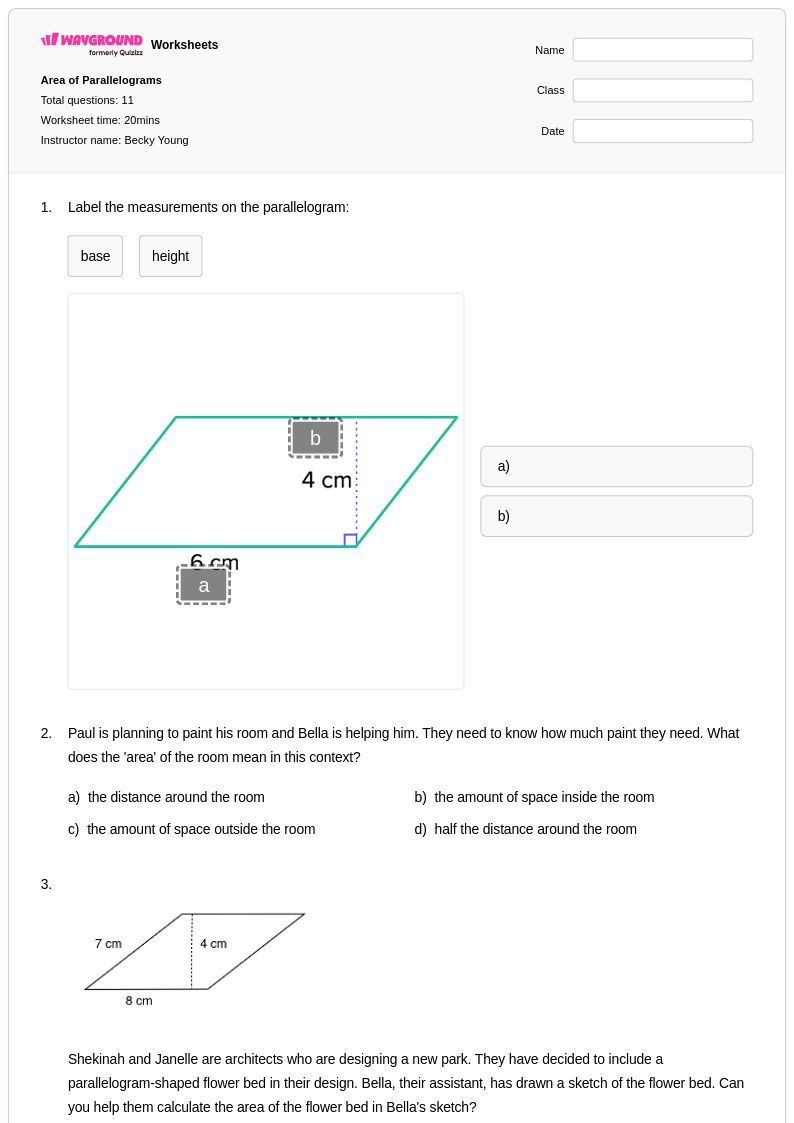
11Q
6th
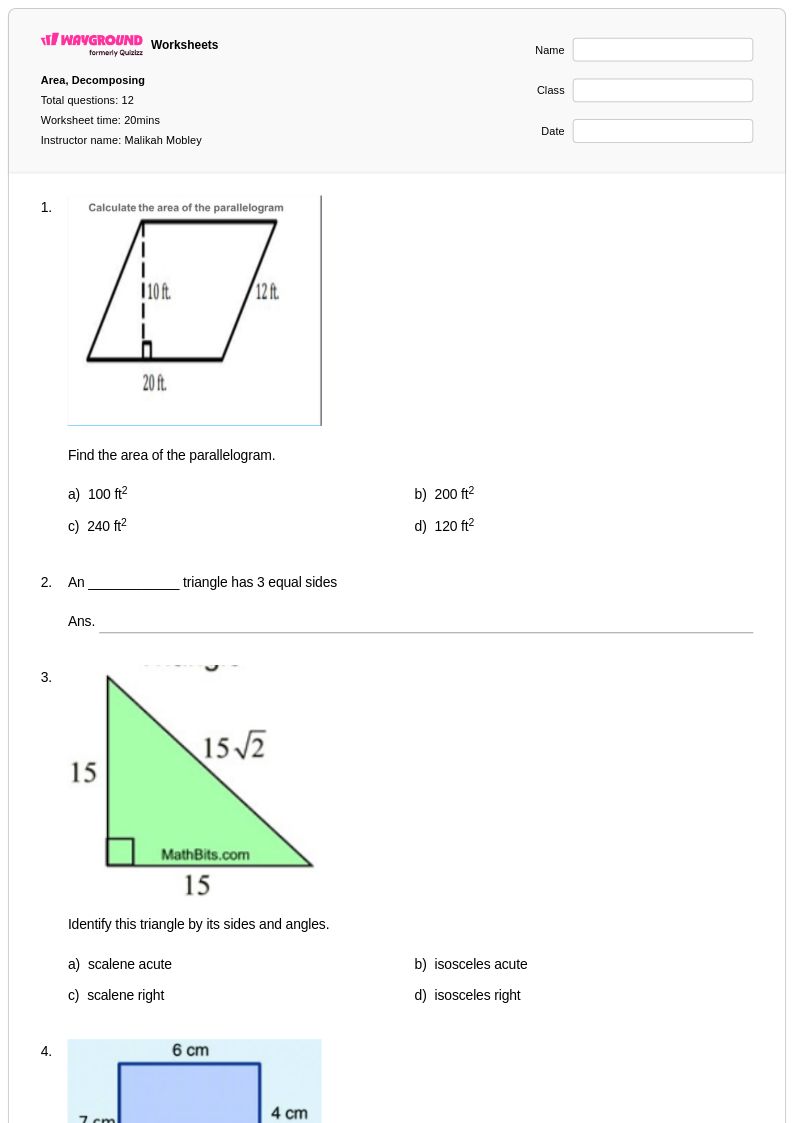
12Q
6th
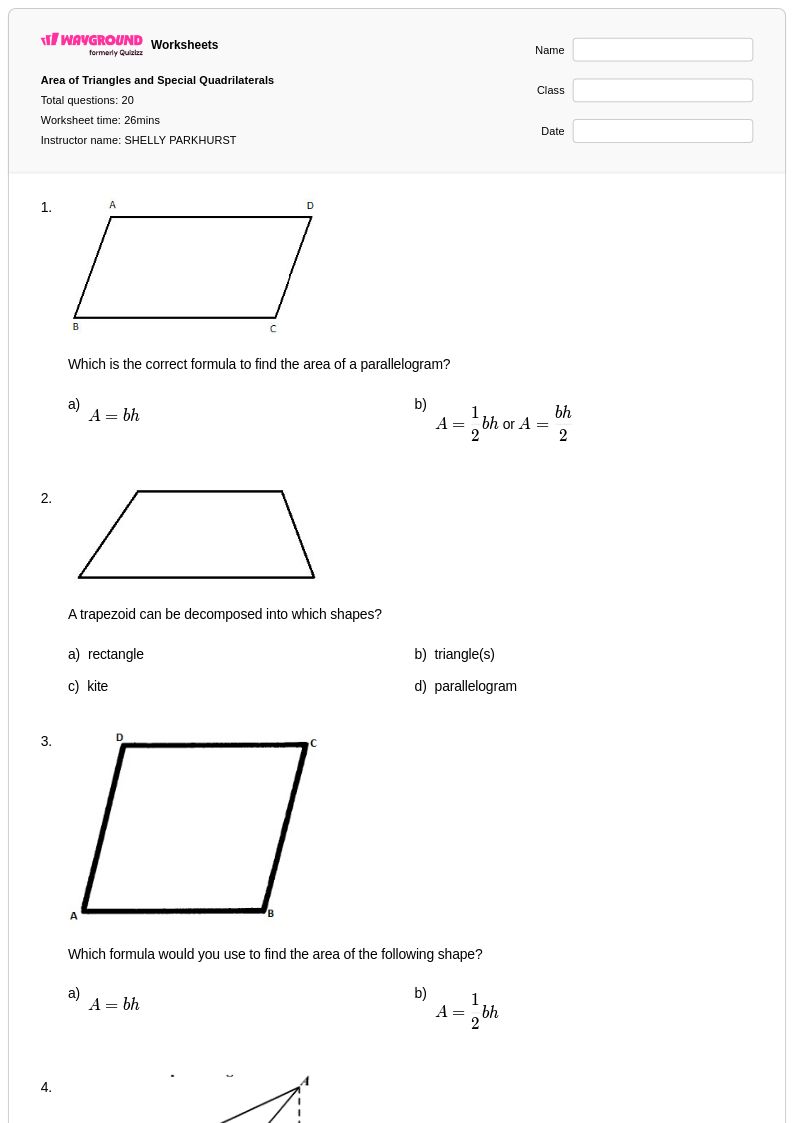
20Q
6th
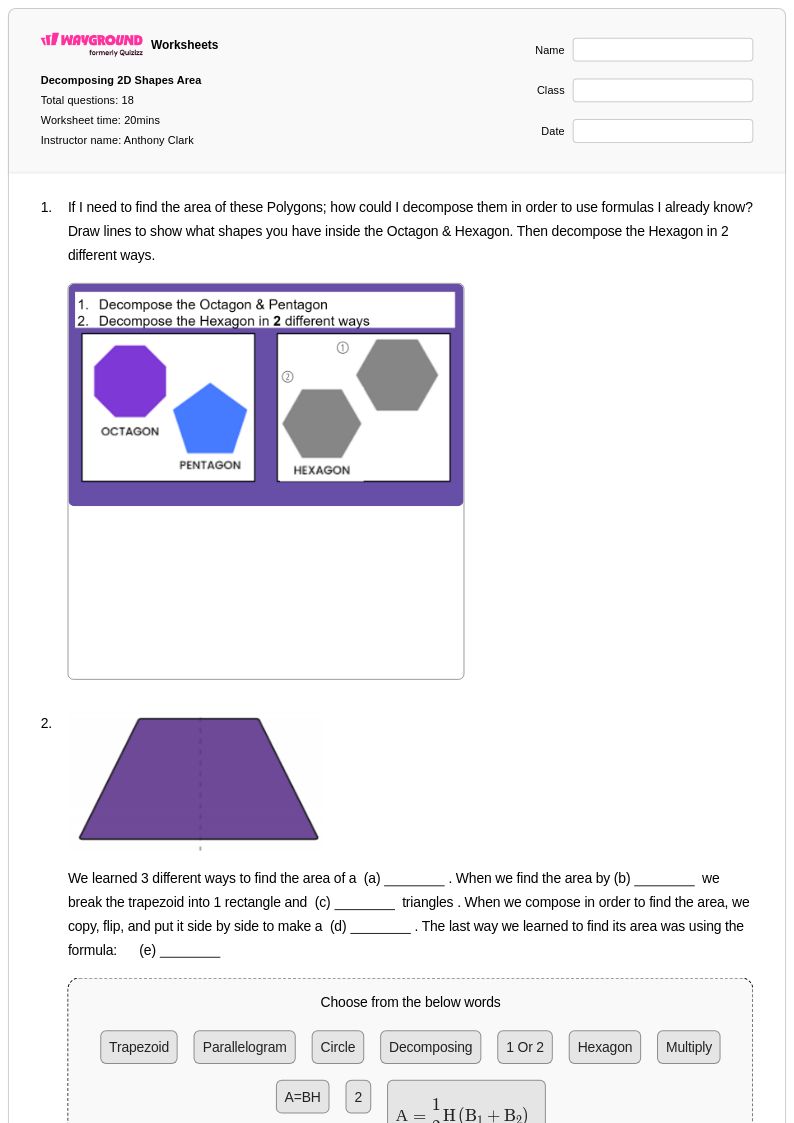
20Q
6th - Uni
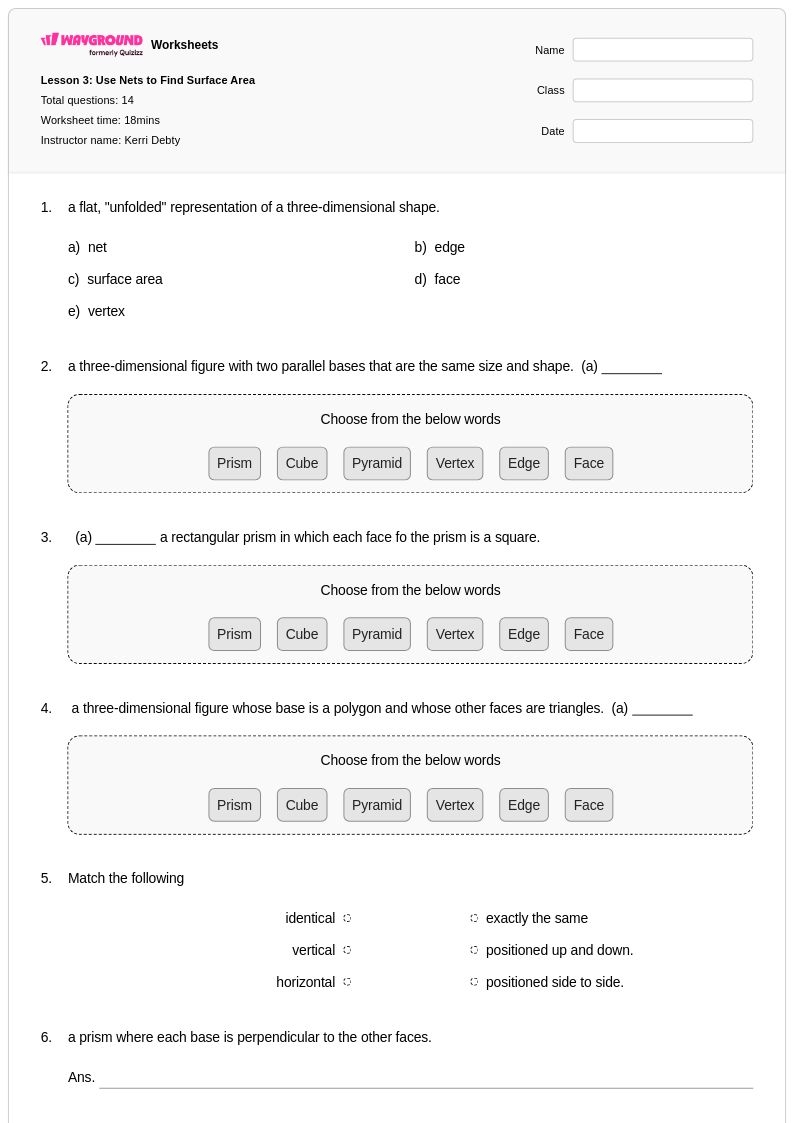
14Q
6th
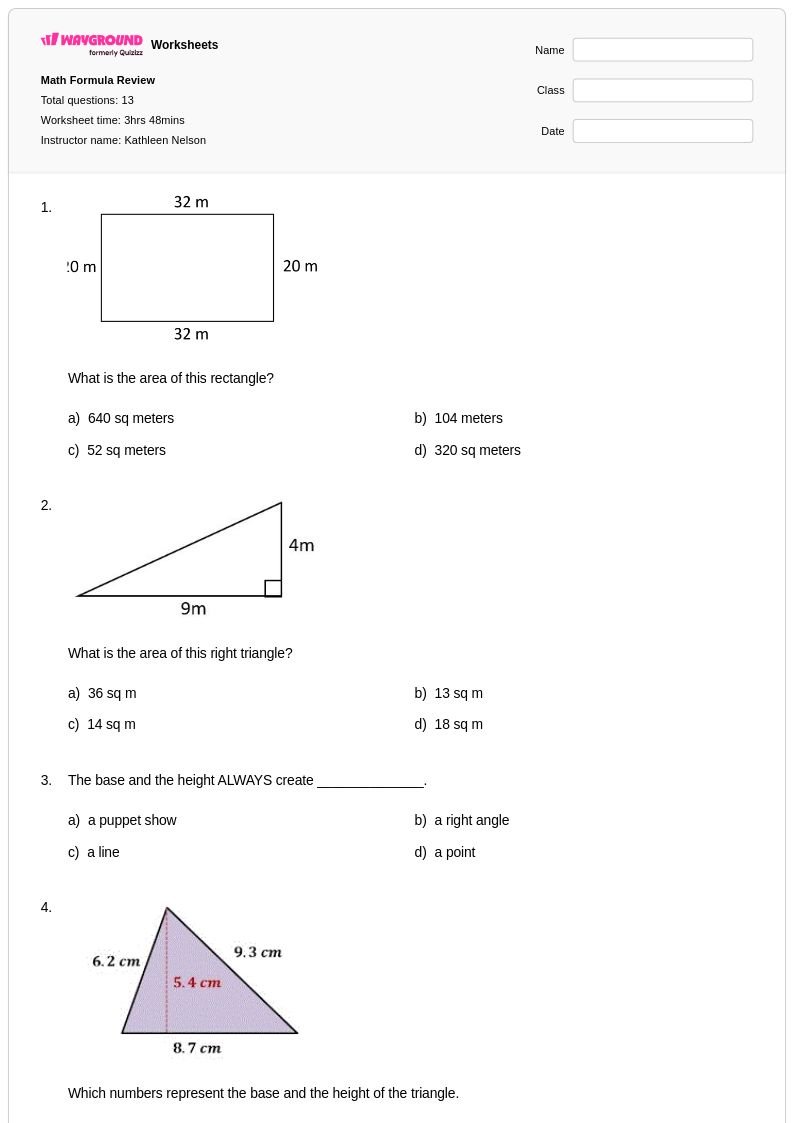
13Q
6th
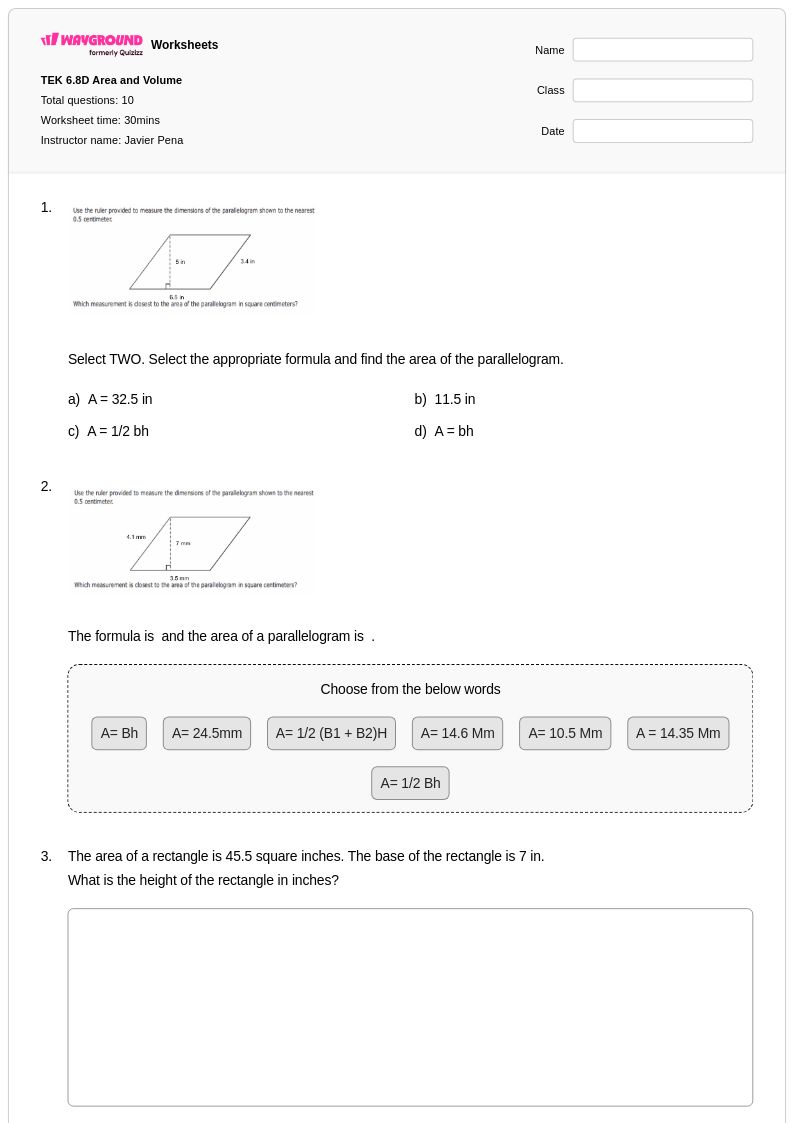
10Q
6th
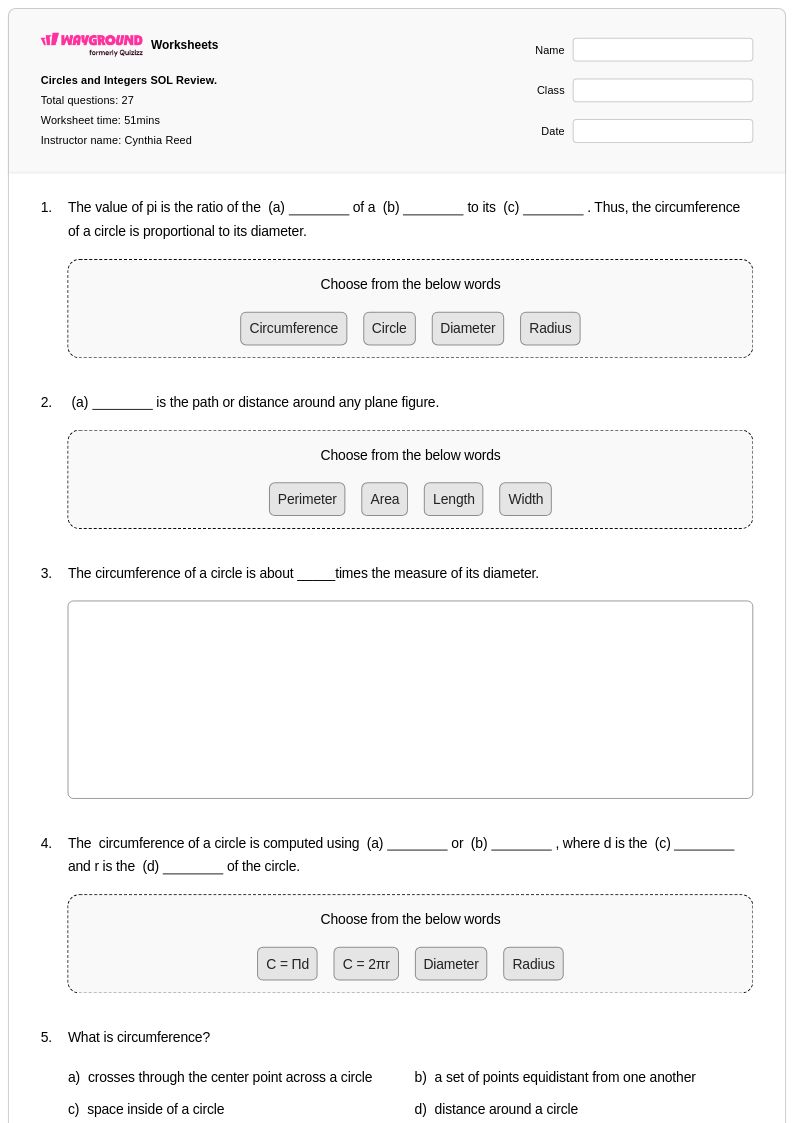
27Q
6th
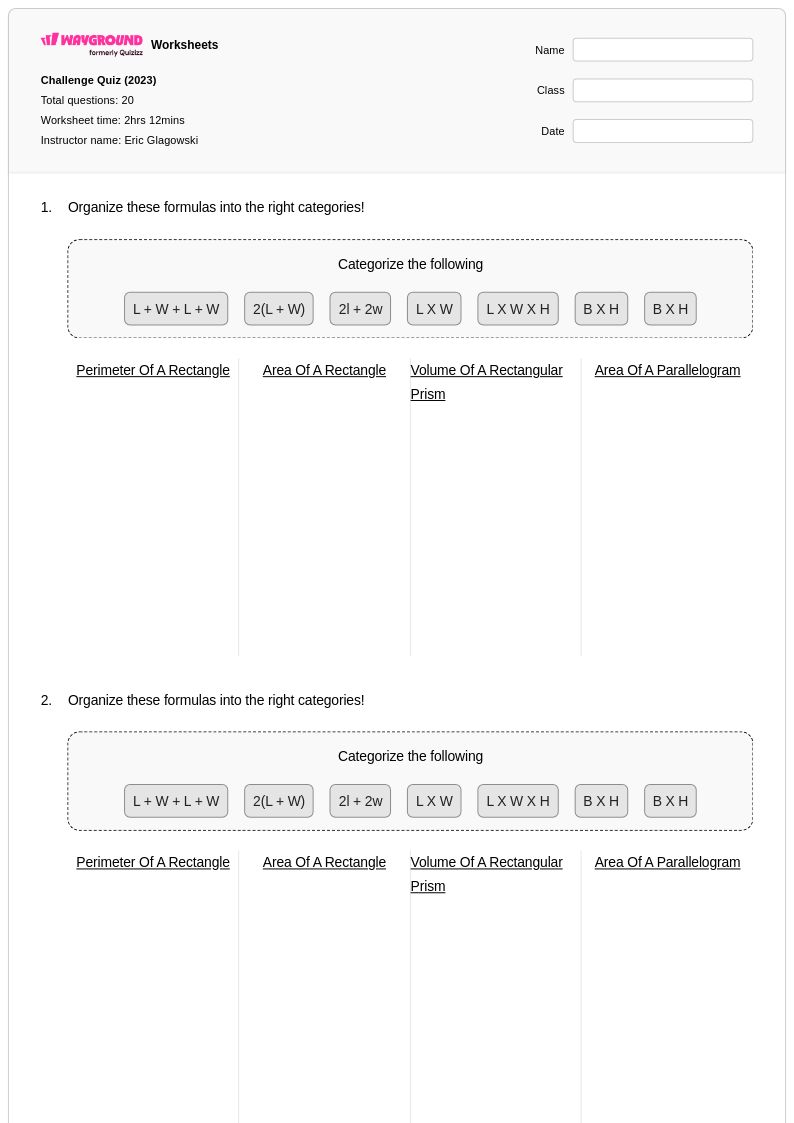
20Q
6th
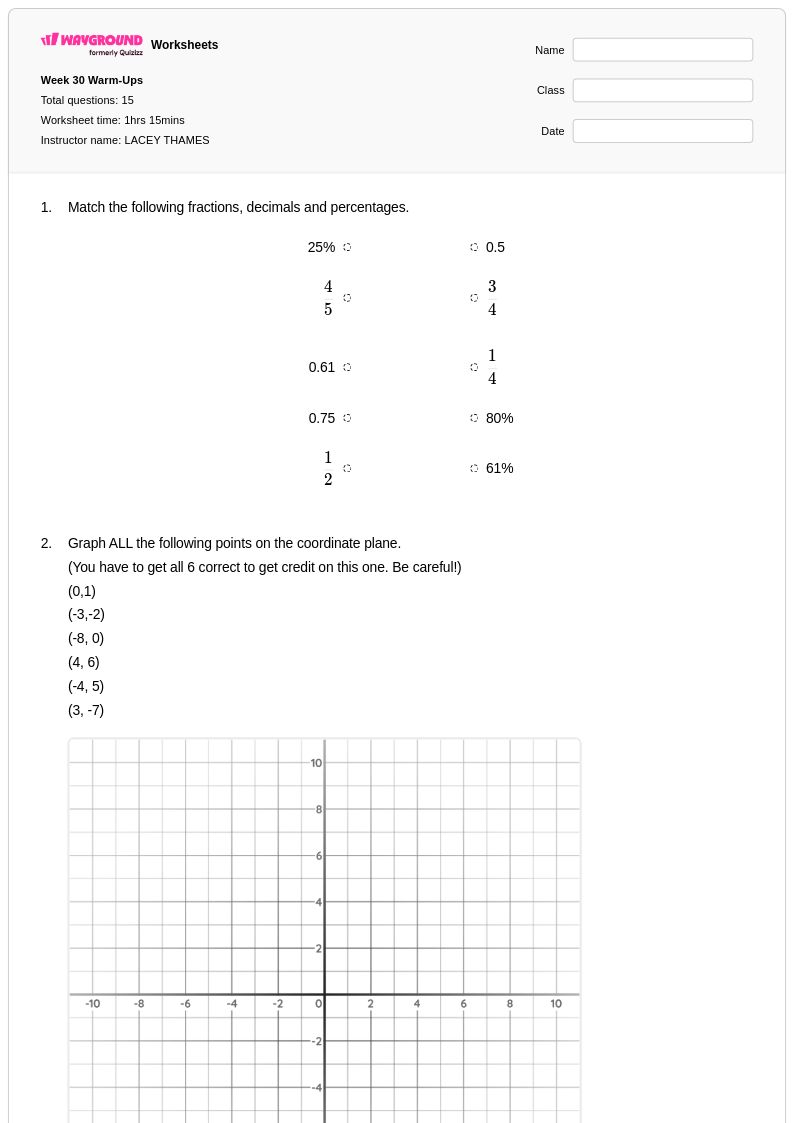
15Q
6th
Explorar Area Formulas hojas de trabajo por grados
Explore otras hojas de trabajo de materias para class 6
Explore printable Area Formulas worksheets for Class 6
Area formulas worksheets for Class 6 students available through Wayground (formerly Quizizz) provide comprehensive practice with calculating the area of fundamental geometric shapes including rectangles, triangles, parallelograms, and trapezoids. These carefully designed practice problems strengthen students' ability to identify appropriate formulas, substitute measurements correctly, and perform accurate calculations while building conceptual understanding of how area relates to the physical space within two-dimensional figures. The collection includes varied problem types from basic formula application to multi-step word problems, with complete answer keys provided to support independent learning and self-assessment. Teachers can access these free printables in convenient pdf format, making it simple to distribute worksheets for homework, classwork, or targeted skill review sessions.
Wayground (formerly Quizizz) empowers educators with an extensive library of millions of teacher-created area formula resources specifically aligned to Class 6 mathematics standards and curriculum expectations. The platform's robust search and filtering capabilities allow teachers to quickly locate worksheets that match their students' current skill levels and learning objectives, whether for initial instruction, remediation, or enrichment activities. These versatile materials are available in both printable pdf formats and interactive digital versions, enabling seamless integration into diverse classroom environments and learning management systems. The built-in differentiation tools and customization options help teachers modify content complexity, adjust problem quantities, and tailor assignments to meet individual student needs, making lesson planning more efficient while ensuring every learner receives appropriate challenge and support in mastering essential area calculation skills.
FAQs
How do I teach area formulas in Grade 6?
What exercises are useful for practicing Grade 6 area formulas?
What area formula mistakes are common in sixth grade?
How can teachers assign these Grade 6 area worksheets?
Are Grade 6 area formulas aligned with Common Core?
How can I differentiate area practice for sixth graders?
What area formulas do students learn in Grade 6?