Free Printable Blood Glucose Worksheets for Class 6
Explore Class 6 blood glucose worksheets and printables from Wayground that help students understand how the body regulates sugar levels through engaging practice problems, free PDFs, and comprehensive answer keys.
Explore printable Blood Glucose worksheets for Class 6
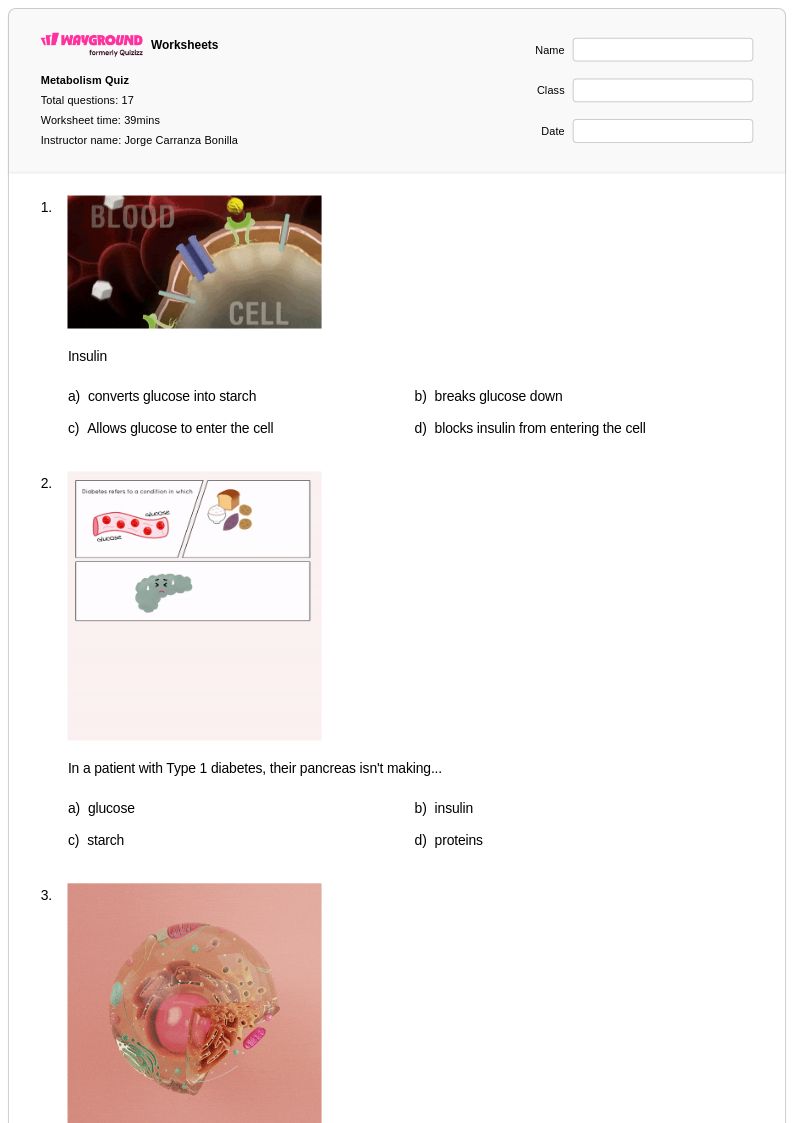
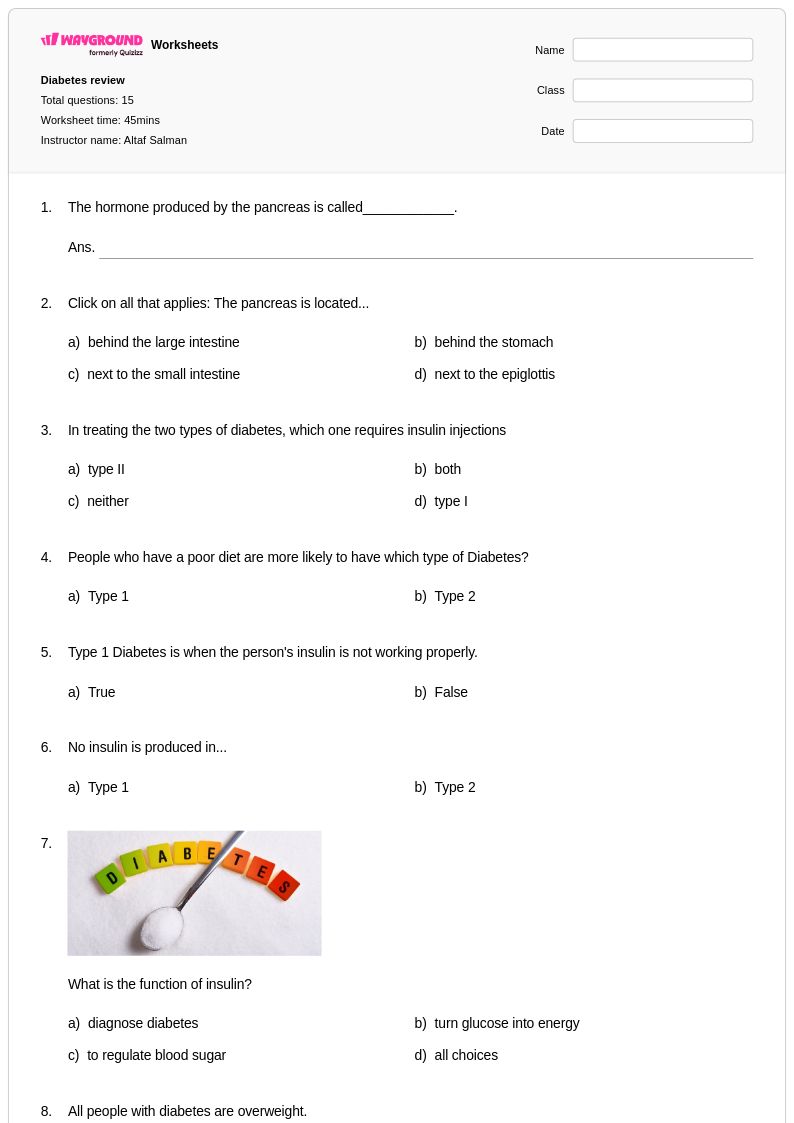
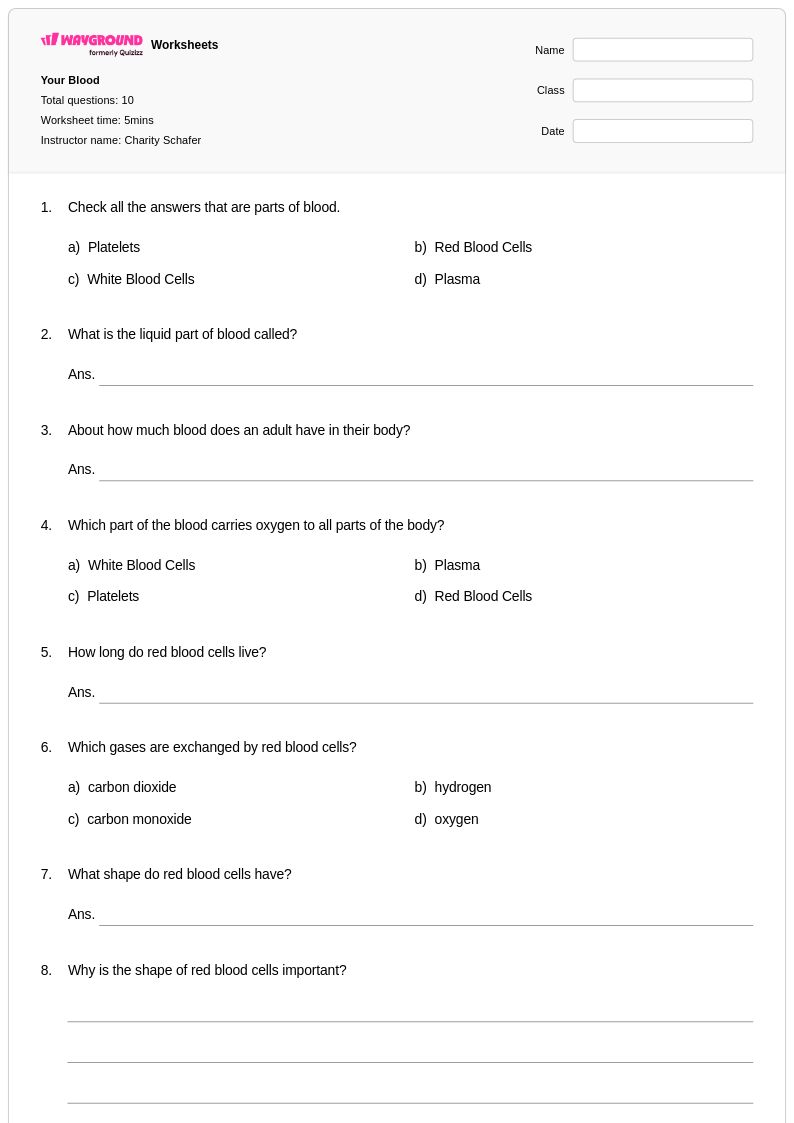
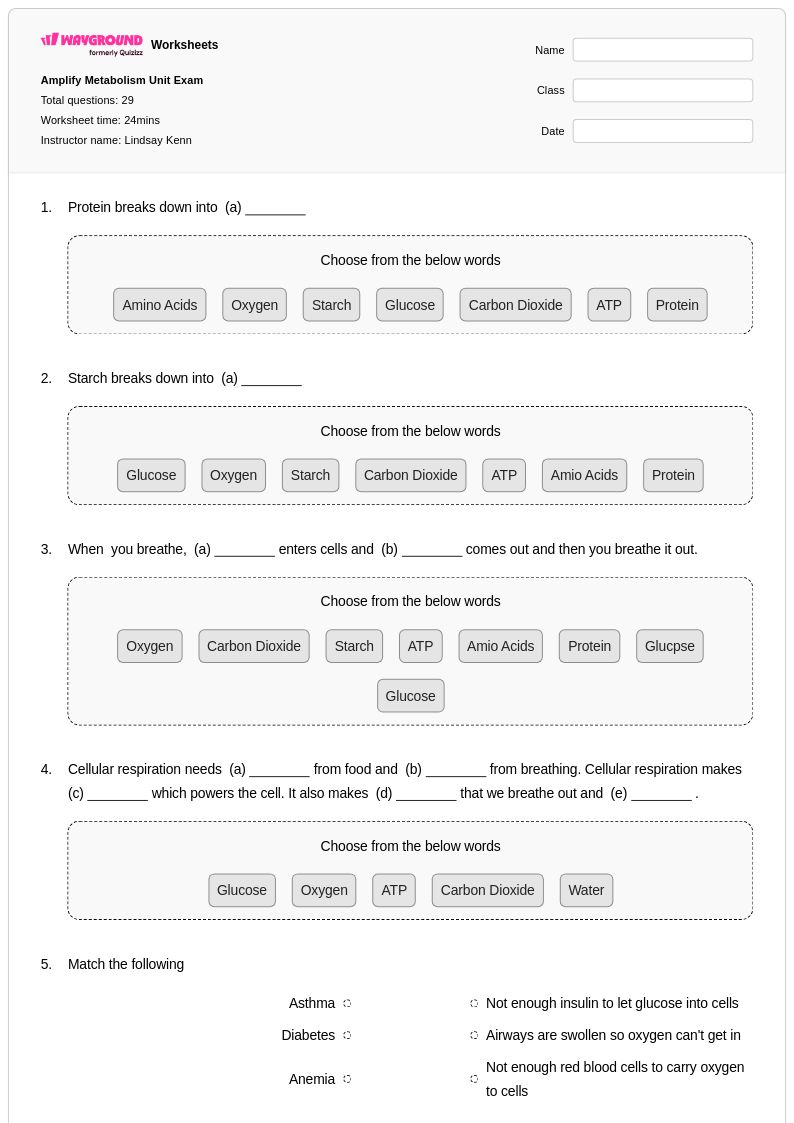
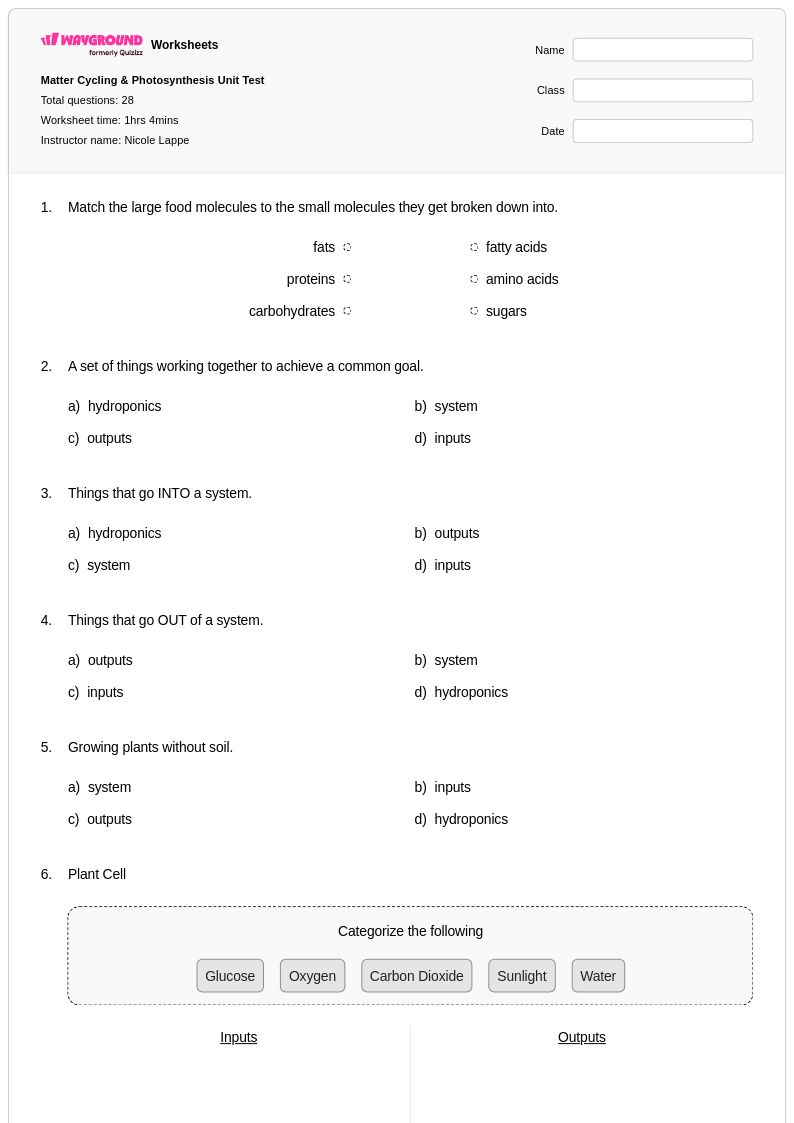
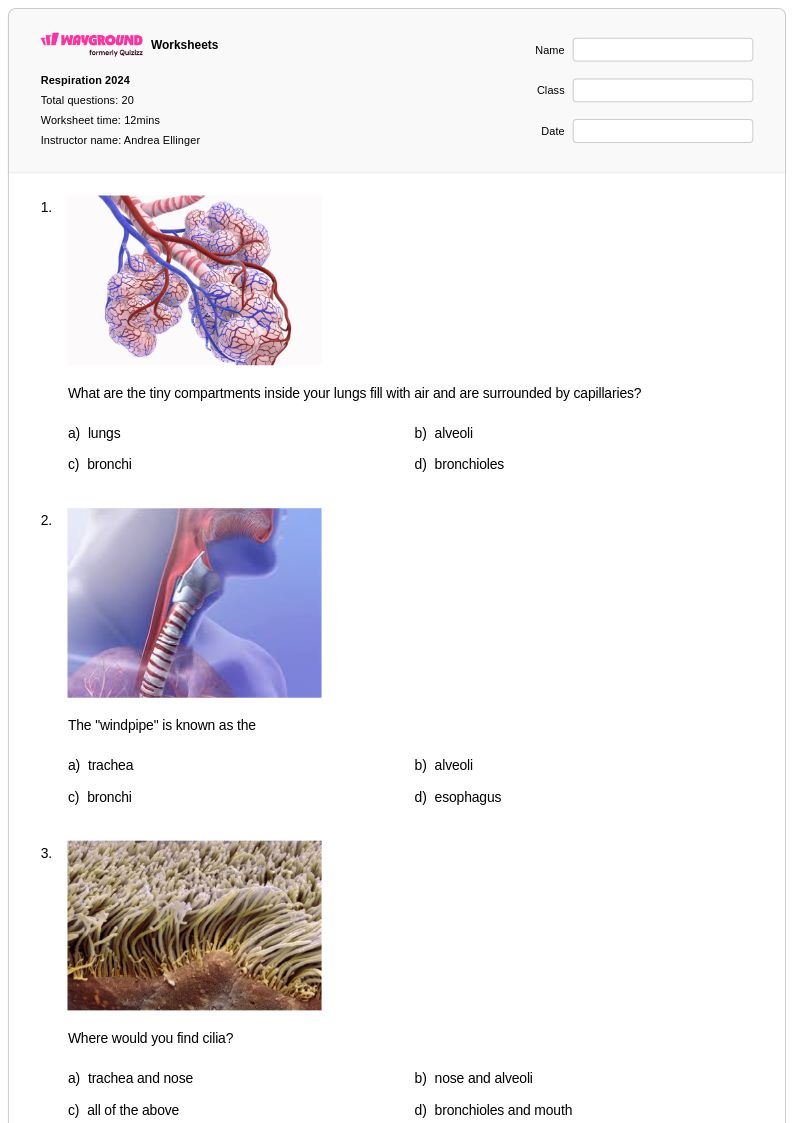
Blood glucose worksheets for Class 6 students available through Wayground (formerly Quizizz) provide comprehensive practice materials that help students understand how the human body regulates blood sugar levels and maintains homeostasis. These educational resources strengthen critical thinking skills as students explore the relationship between insulin, glucose, and cellular energy production, while developing their ability to interpret data from blood glucose monitoring charts and graphs. The worksheet collections include detailed answer keys that support independent learning, and teachers can access both printable pdf versions for traditional classroom use and digital formats for interactive learning experiences. Practice problems within these worksheets challenge students to analyze real-world scenarios involving blood glucose regulation, helping them connect abstract biological concepts to practical health applications.
Wayground's extensive library features millions of teacher-created resources specifically designed for Class 6 biology instruction, with robust search and filtering capabilities that allow educators to quickly locate blood glucose materials aligned with curriculum standards. The platform's differentiation tools enable teachers to customize worksheets based on individual student needs, whether providing additional support for struggling learners or offering enrichment activities for advanced students. These flexible resources are available in both printable and digital pdf formats, making them ideal for lesson planning, targeted remediation sessions, skill-building practice, and enrichment activities that extend beyond basic textbook coverage. Teachers can seamlessly integrate these materials into their existing curriculum while ensuring students develop a solid foundation in understanding how blood glucose regulation exemplifies the body's remarkable ability to maintain internal balance.
FAQs
How do I teach blood glucose regulation in a biology class?
Teaching blood glucose regulation is most effective when you build from the anatomy of the pancreas outward — establish the roles of alpha and beta cells first, then introduce insulin and glucagon as opposing hormones in a negative feedback loop. Use diagrams that trace what happens after a meal versus during fasting so students can visualize the dynamic nature of homeostasis. Connecting glucose regulation to real-world conditions like Type 1 and Type 2 diabetes gives students meaningful context that reinforces why precision in hormonal signaling matters.
What exercises help students practice understanding insulin and glucagon function?
Practice problems that present blood glucose scenarios — such as elevated post-meal glucose or hypoglycemia after exercise — and ask students to identify which hormone responds and what physiological effect follows are highly effective. Hormone feedback loop diagrams where students label the stimulus, receptor, response, and outcome reinforce the logic of homeostasis. Matching and sequencing exercises that trace glucose metabolism pathways help students move from memorization to genuine mechanistic understanding.
What mistakes do students commonly make when learning about blood glucose and diabetes?
A frequent misconception is that insulin 'lowers blood sugar' through a single step, when in reality it triggers a cascade of cellular uptake, glycogen synthesis, and inhibited gluconeogenesis. Students also confuse Type 1 and Type 2 diabetes, often incorrectly assuming both involve absent insulin rather than understanding that Type 2 involves insulin resistance. Another common error is conflating glucagon with glucose — the similar names cause students to misattribute which hormone raises versus lowers blood sugar levels.
How can I use a blood glucose worksheet to assess student understanding of endocrine system function?
Blood glucose worksheets are effective formative assessment tools because they require students to apply hormone function within a physiological context rather than simply recall definitions. Questions that ask students to predict the hormonal response to a specific blood glucose level reveal whether they understand feedback mechanisms or are only memorizing facts. Using scenario-based problems as an exit ticket or post-lesson check allows teachers to quickly identify students who conflate insulin and glucagon roles or misunderstand the pancreas's dual function.
How do I use Wayground's blood glucose worksheets in my classroom?
Wayground's blood glucose worksheets are available as both printable PDFs and in digital formats, making them adaptable for traditional paper-based instruction, homework assignments, or technology-integrated learning environments. Teachers can also host the worksheets as a digital quiz directly on Wayground, enabling automated grading and immediate feedback for students. Each worksheet includes a complete answer key, so they work equally well for in-class practice, independent study, or sub plans.
How do I differentiate blood glucose instruction for students at different levels?
For struggling students, reduce complexity by focusing first on the binary relationship between high glucose and insulin, and low glucose and glucagon, before introducing pathways like glycogenolysis or gluconeogenesis. Advanced learners can explore the cellular mechanisms of insulin resistance, the role of GLUT4 transporters, or the feedback differences seen in Type 1 versus Type 2 diabetes. On Wayground, teachers can apply accommodations such as read aloud, reduced answer choices, and extended time on a per-student basis, allowing differentiation without disrupting the rest of the class.