Free Printable Parts of the Light Microscope Worksheets for Class 6
Class 6 biology students can master the parts of the light microscope with Wayground's free printable worksheets, featuring comprehensive practice problems and detailed answer keys to enhance microscopy skills.
Explore printable Parts of the Light Microscope worksheets for Class 6
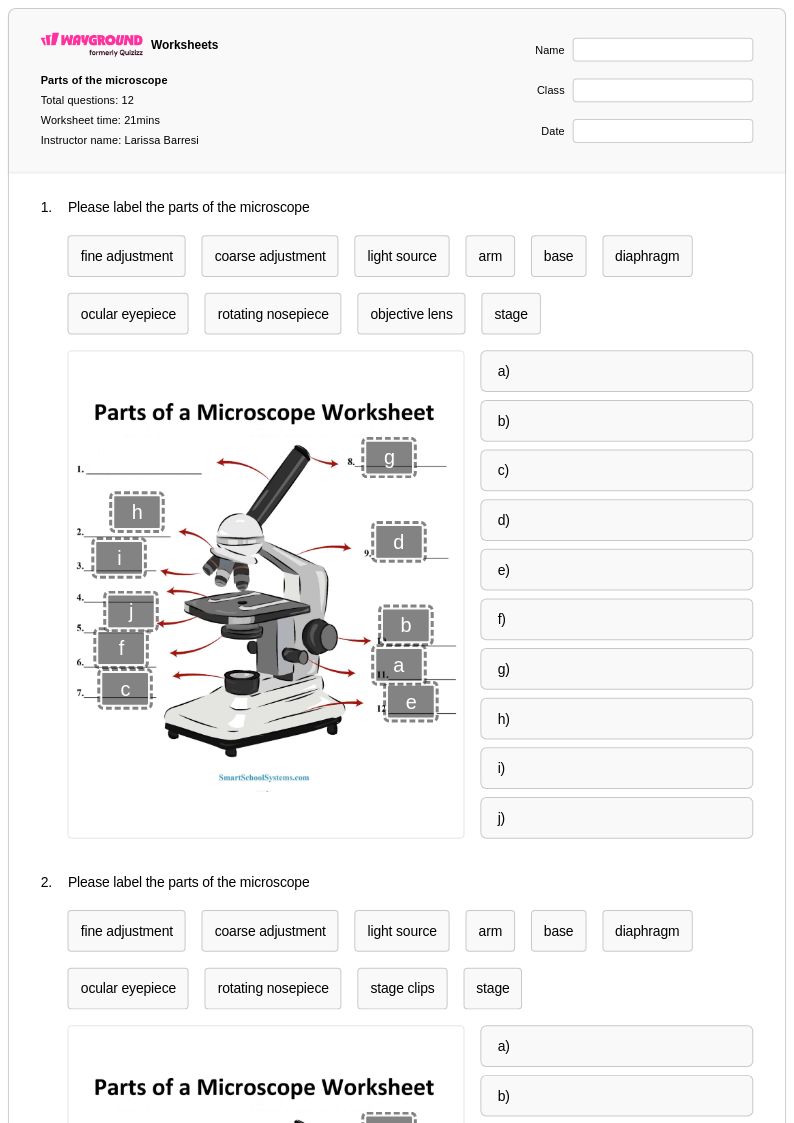
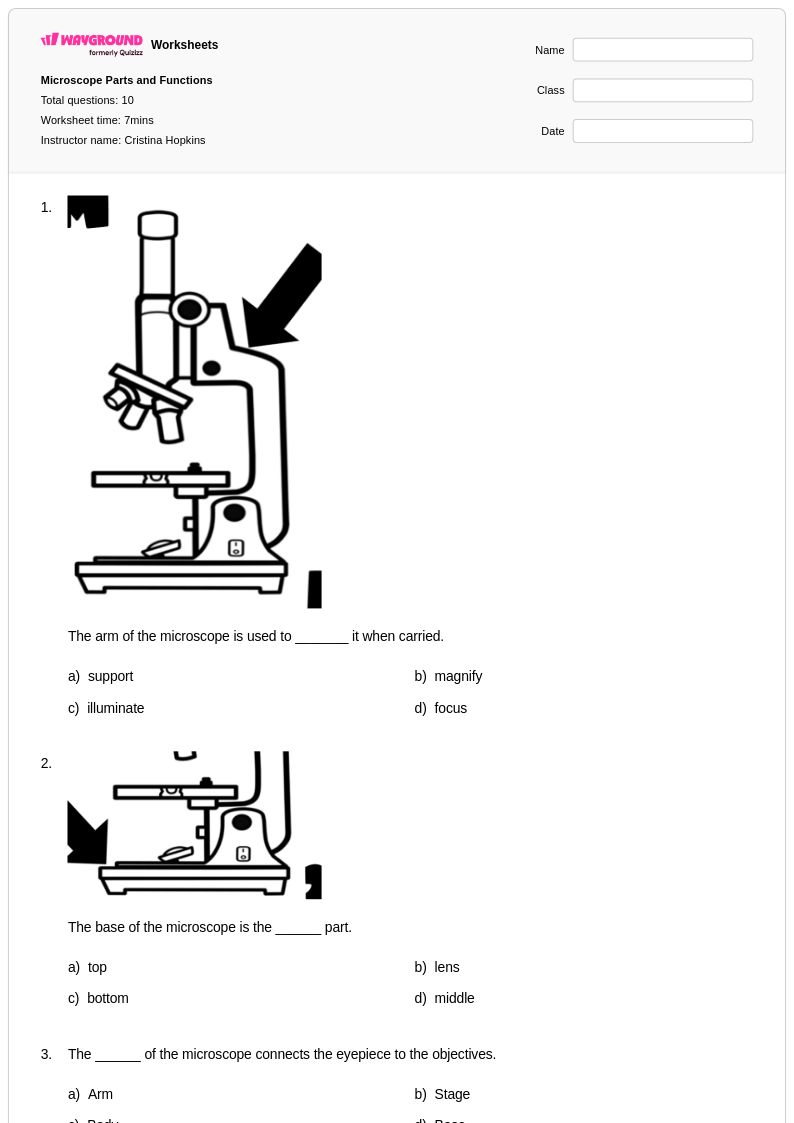
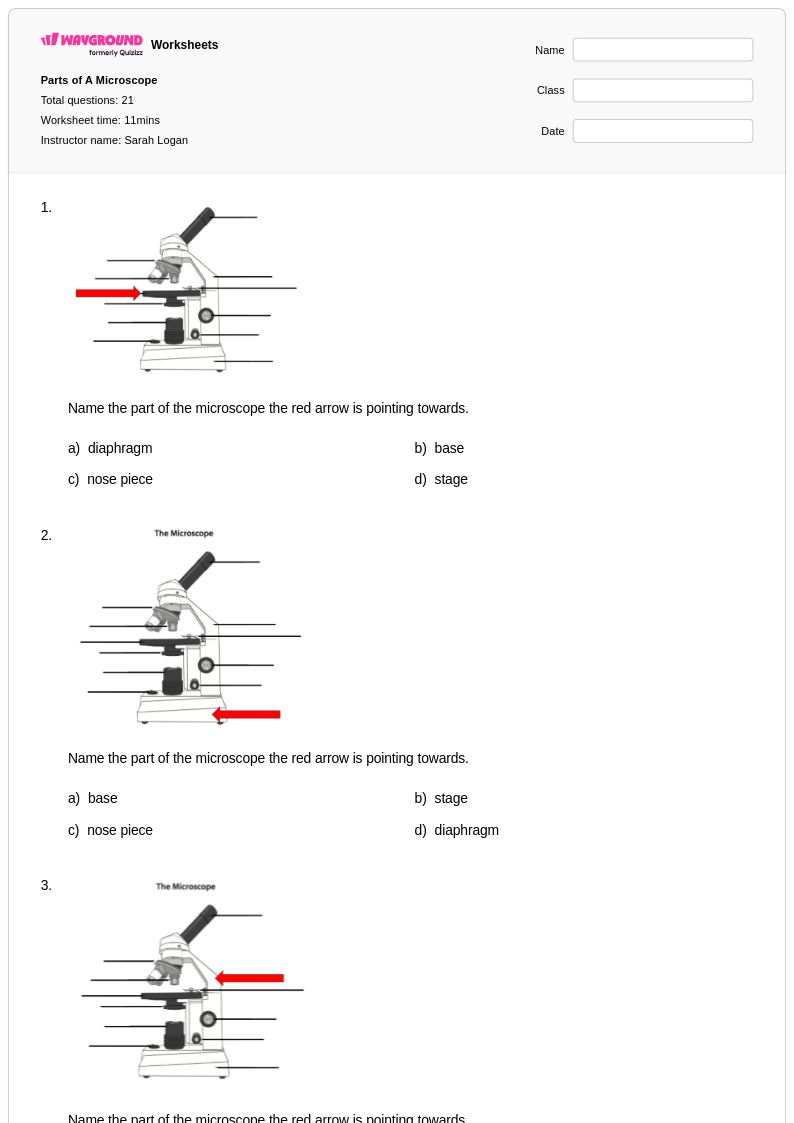
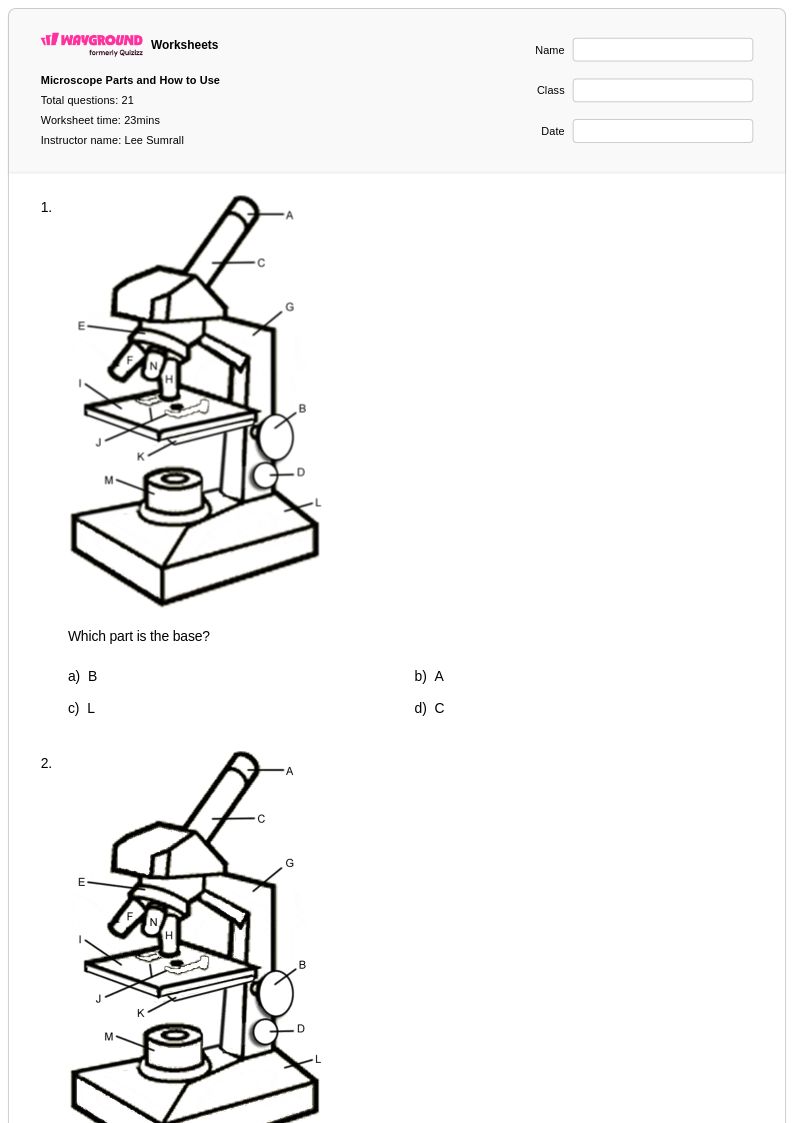
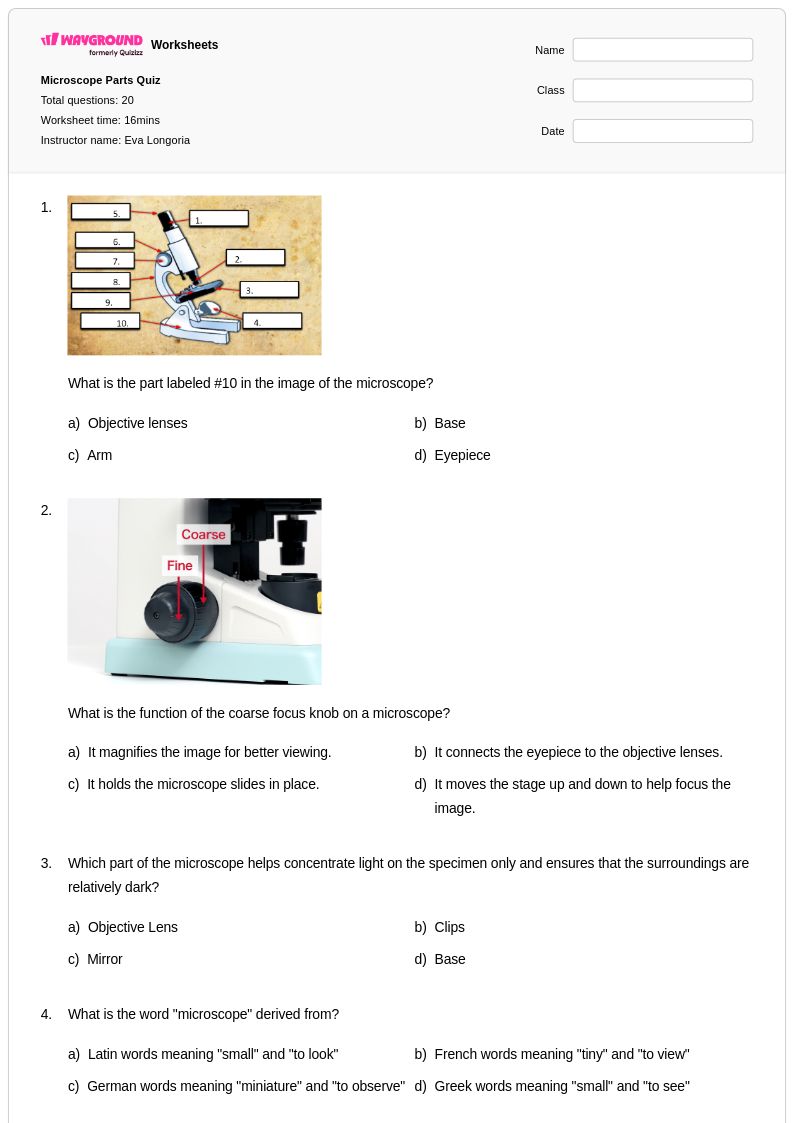
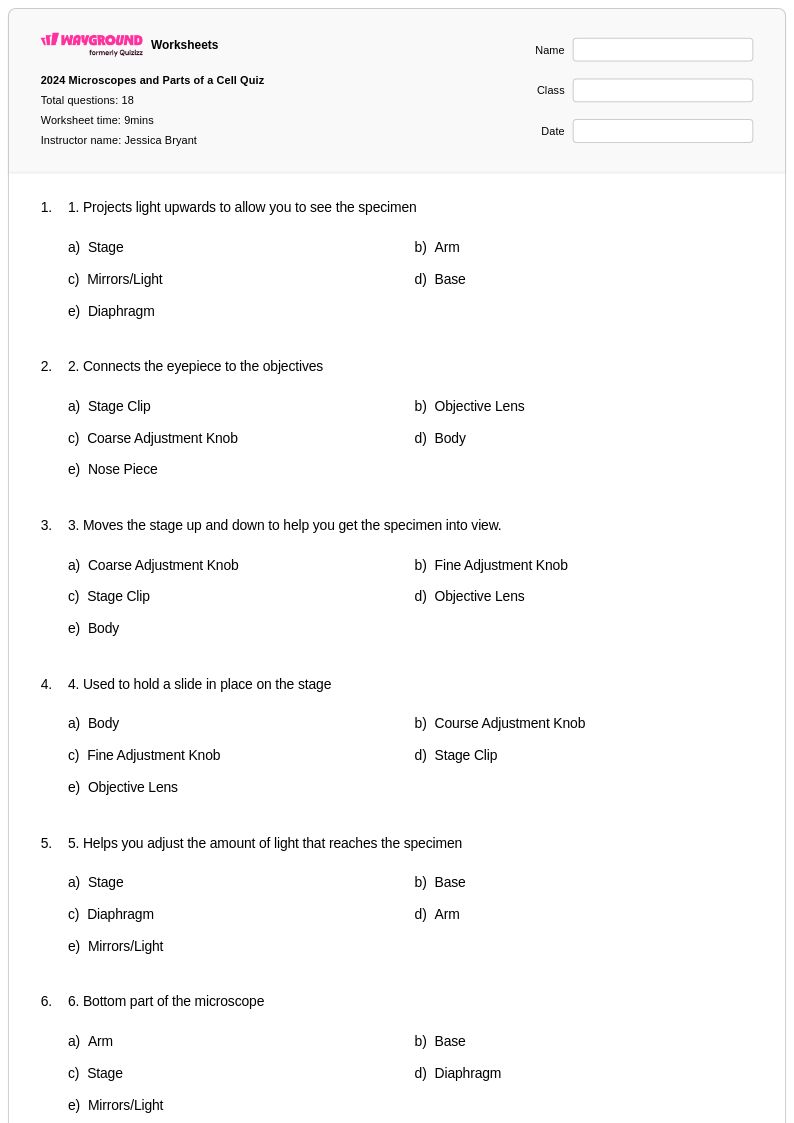
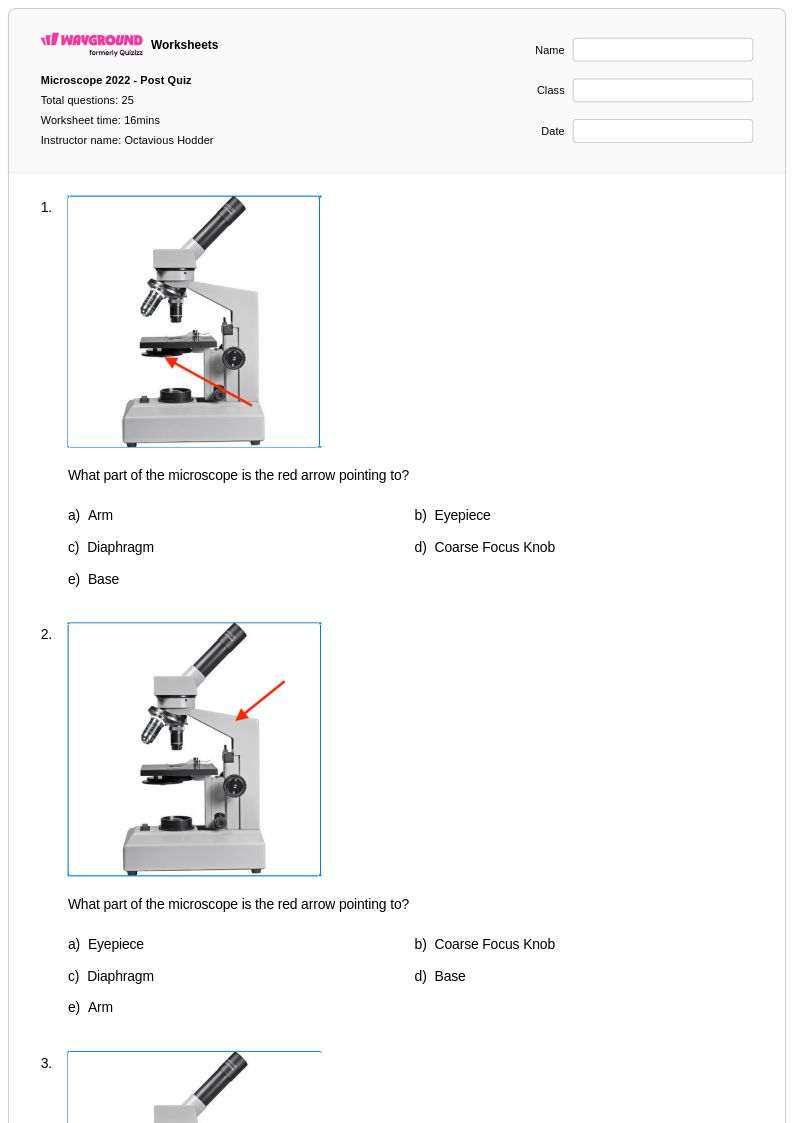
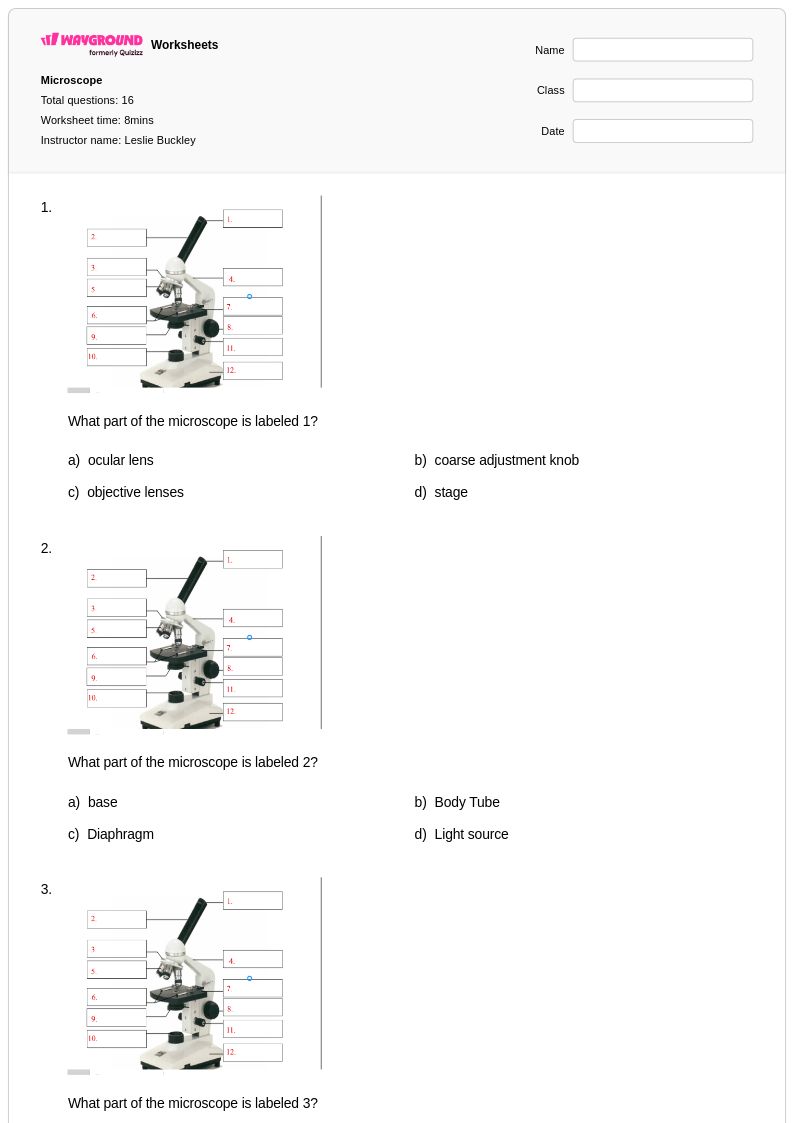
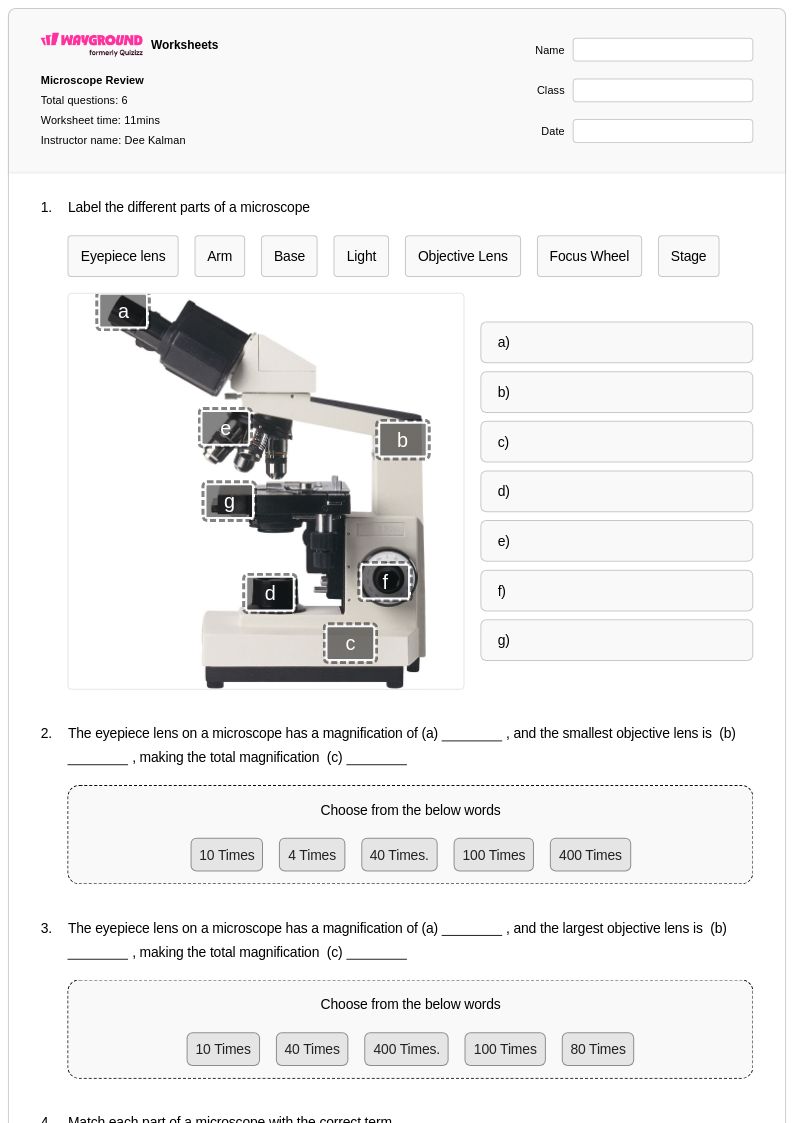
Parts of the Light Microscope worksheets for Class 6 students available through Wayground (formerly Quizizz) provide comprehensive coverage of microscope components and their functions, helping students master this fundamental biology skill. These carefully designed printables guide students through identifying essential parts including the eyepiece, objective lenses, stage, diaphragm, light source, and focusing knobs while explaining how each component contributes to magnification and image clarity. The practice problems progressively build understanding from basic part identification to more complex applications of microscope operation, with each free worksheet including a detailed answer key that supports both independent study and classroom instruction. Students strengthen critical observation skills and develop scientific vocabulary essential for future laboratory work through these structured pdf resources.
Wayground (formerly Quizizz) empowers teachers with millions of educator-created microscope worksheets that offer exceptional flexibility for Class 6 biology instruction. The platform's robust search and filtering capabilities allow teachers to quickly locate resources aligned with specific learning standards and differentiate instruction based on individual student needs. Teachers can seamlessly customize existing worksheets or create new variations to target specific microscope parts or skill levels, while the dual availability of printable and digital formats ensures accessibility across diverse classroom environments. These comprehensive worksheet collections support effective lesson planning by providing ready-to-use materials for initial instruction, targeted remediation for struggling learners, enrichment activities for advanced students, and ongoing skill practice that reinforces proper microscope terminology and usage throughout the unit.
FAQs
How do I teach parts of the light microscope to biology students?
Start by introducing the microscope as a system of interdependent parts, grouping components by function — optical (eyepiece, objective lenses), mechanical (stage, coarse and fine adjustment knobs), and illumination (condenser, diaphragm, light source). Use a physical or projected diagram for initial labeling, then have students trace the light path from the illumination system through the condenser and diaphragm, through the specimen on the stage, and up through the objective and eyepiece. Connecting each part to its specific function helps students move beyond rote memorization toward genuine conceptual understanding.
What exercises help students practice identifying microscope parts?
Labeling diagrams is the most effective starting point, requiring students to identify components like the eyepiece, objective lenses, stage, diaphragm, condenser, and adjustment knobs on a blank or partially labeled image. Function-matching activities that pair each component to its specific role deepen understanding beyond visual recognition. Combining both exercise types in a single worksheet session reinforces both identification and purpose, which mirrors the kind of thinking students need during actual lab work.
What mistakes do students commonly make when learning microscope parts?
Students frequently confuse the coarse and fine adjustment knobs, not understanding that the coarse knob is used only at low magnification and the fine knob is used for precise focusing at higher magnifications. Another common error is conflating the condenser and diaphragm — both affect light, but the condenser focuses it while the diaphragm controls the amount entering the specimen. Students also tend to mislabel the nosepiece as part of the objective lens system rather than as the rotating mount that holds multiple objective lenses.
How can I differentiate microscope parts instruction for students at different levels?
For beginning students, focus on the core structural components — eyepiece, objective lenses, stage, and adjustment knobs — using labeled diagrams and straightforward identification tasks. More experienced learners can be challenged with function-analysis questions that require explaining how components like the diaphragm and condenser work together to control image clarity and contrast. On Wayground, teachers can also apply accommodations such as reduced answer choices for students who need additional support, or read-aloud features for students with reading barriers, without disrupting the experience for the rest of the class.
How do I use Wayground's parts of the light microscope worksheets in my classroom?
Wayground's microscope parts worksheets are available as printable PDFs for traditional classroom distribution and in digital formats for technology-integrated or remote learning environments, and can also be hosted as a quiz directly on the Wayground platform. Each worksheet includes a comprehensive answer key, which reduces prep time and makes them practical for both in-class practice and independent homework assignments. Teachers can use the platform's search and filtering tools to quickly locate resources that match their current unit focus, whether that's basic component identification or more advanced function analysis.
How do I help students understand the function of the diaphragm and condenser on a light microscope?
Explain that the condenser gathers and focuses light onto the specimen from below the stage, while the diaphragm — typically an iris diaphragm built into the condenser — controls how much of that light actually passes through. A useful analogy is a flashlight (condenser) with an adjustable aperture ring (diaphragm): the flashlight directs the beam, while the aperture narrows or widens it. Students understand this distinction better when they physically adjust the diaphragm during lab and observe the change in image contrast and brightness firsthand.