Free Printable Factors Affecting Photosynthesis Worksheets for Class 6
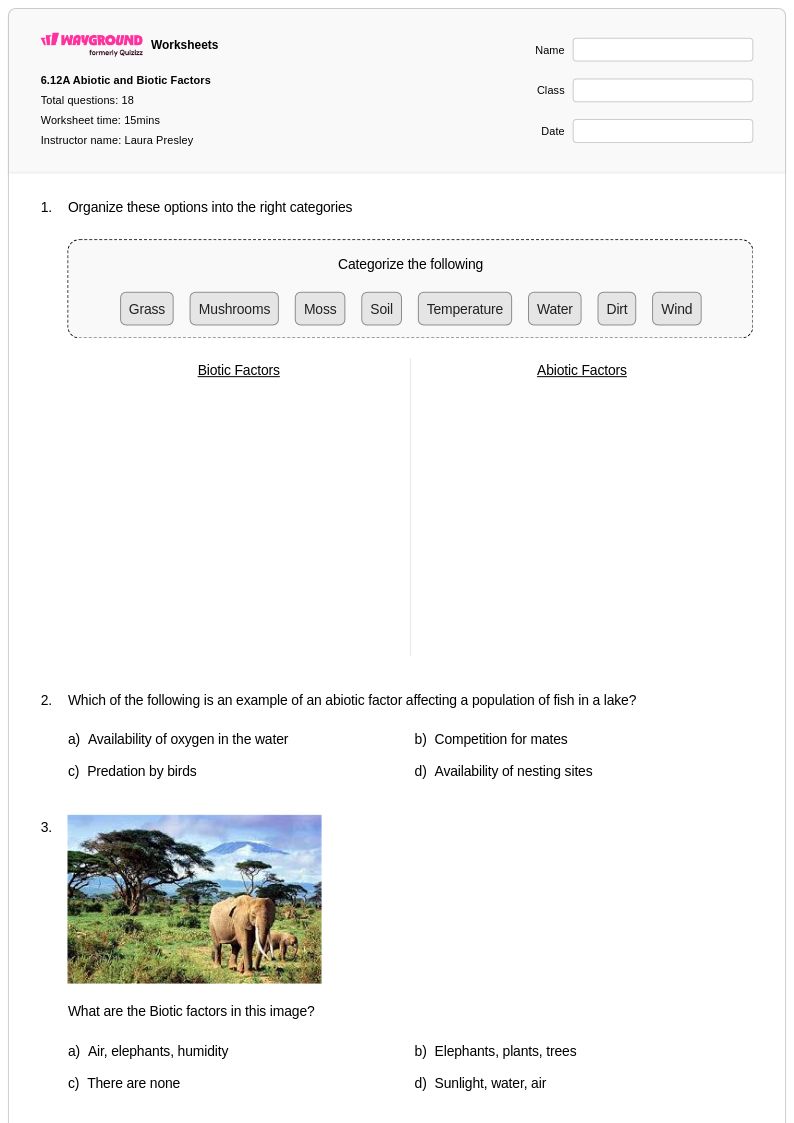
Class 6 Biology worksheets on factors affecting photosynthesis provide free printables and practice problems with answer keys to help students understand how light, temperature, and carbon dioxide influence plant photosynthesis processes.
Explore printable Factors Affecting Photosynthesis worksheets for Class 6
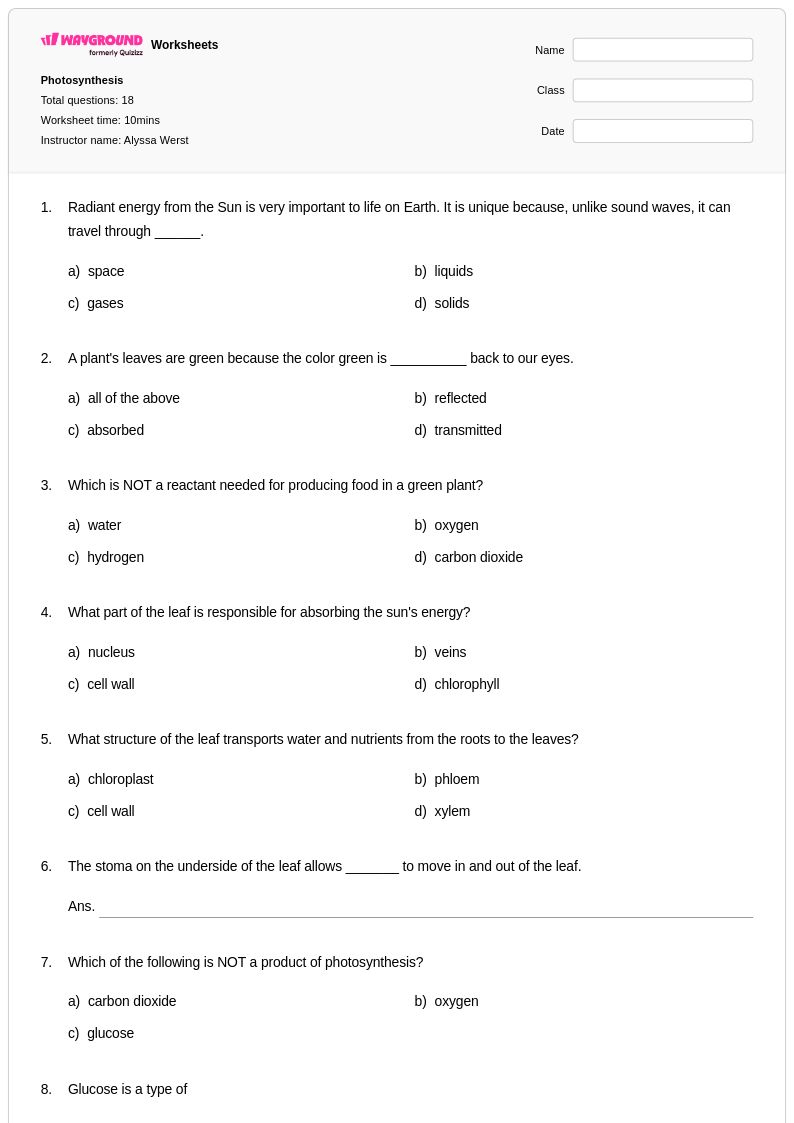
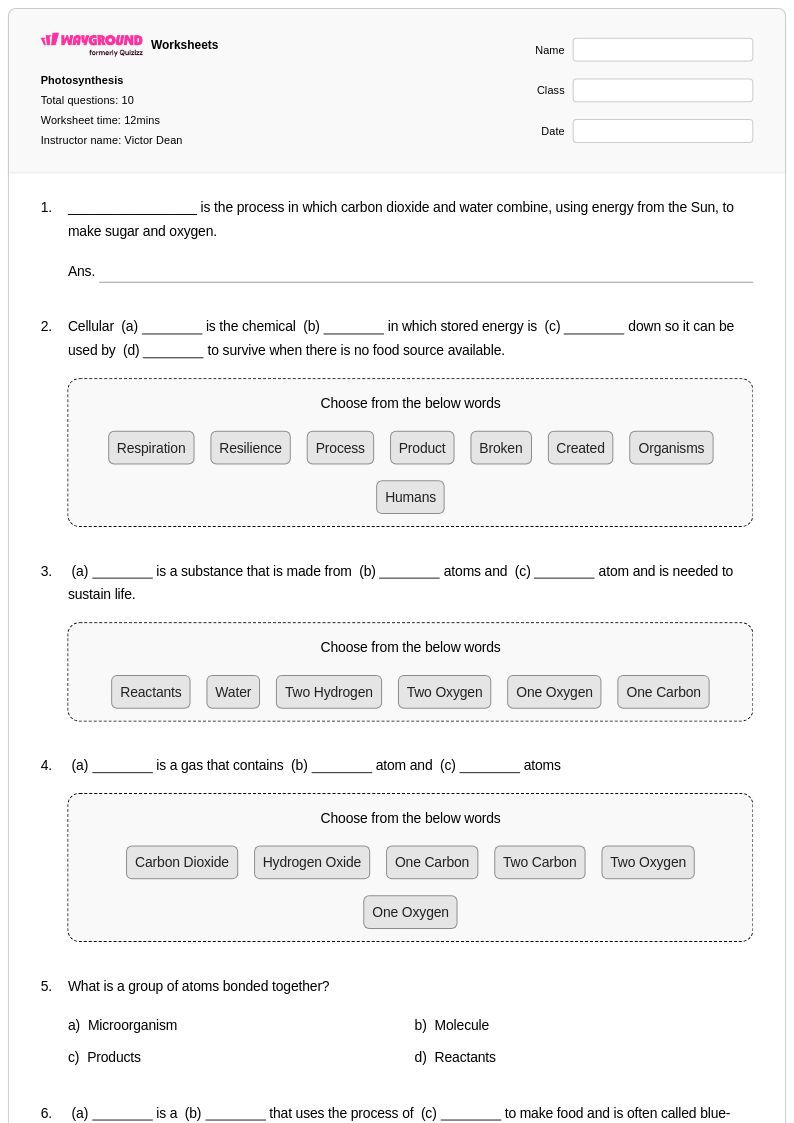
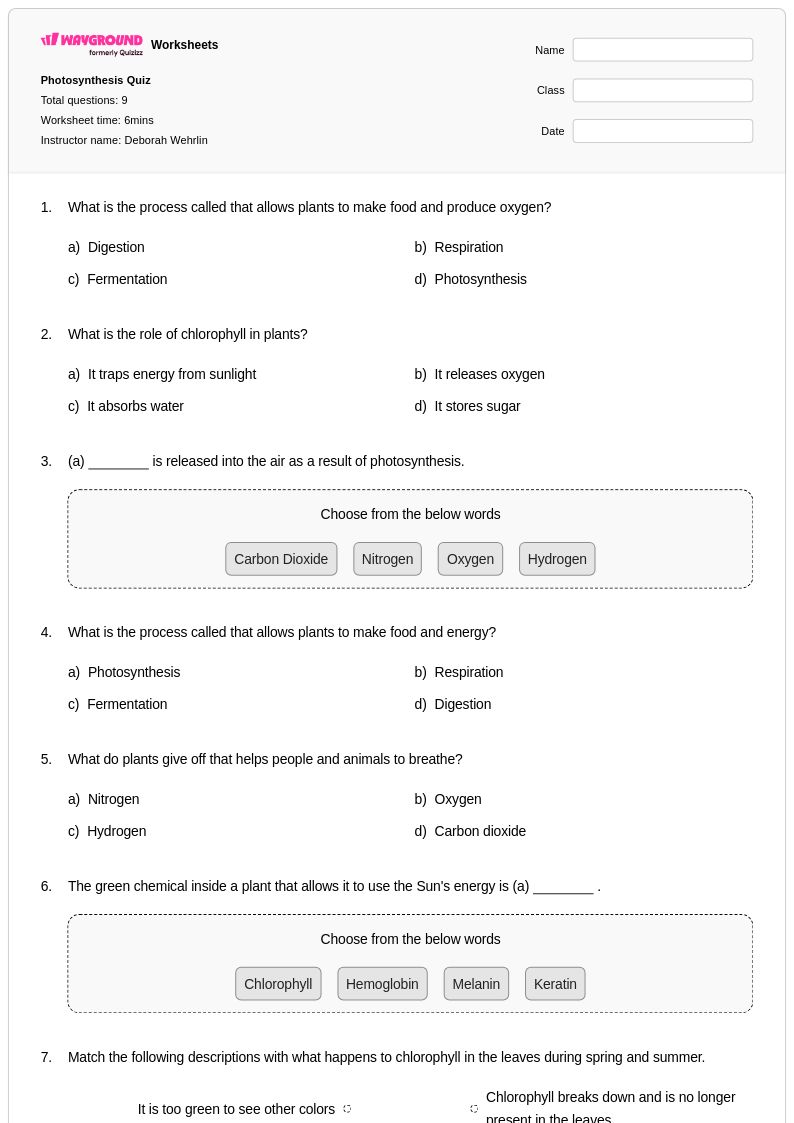
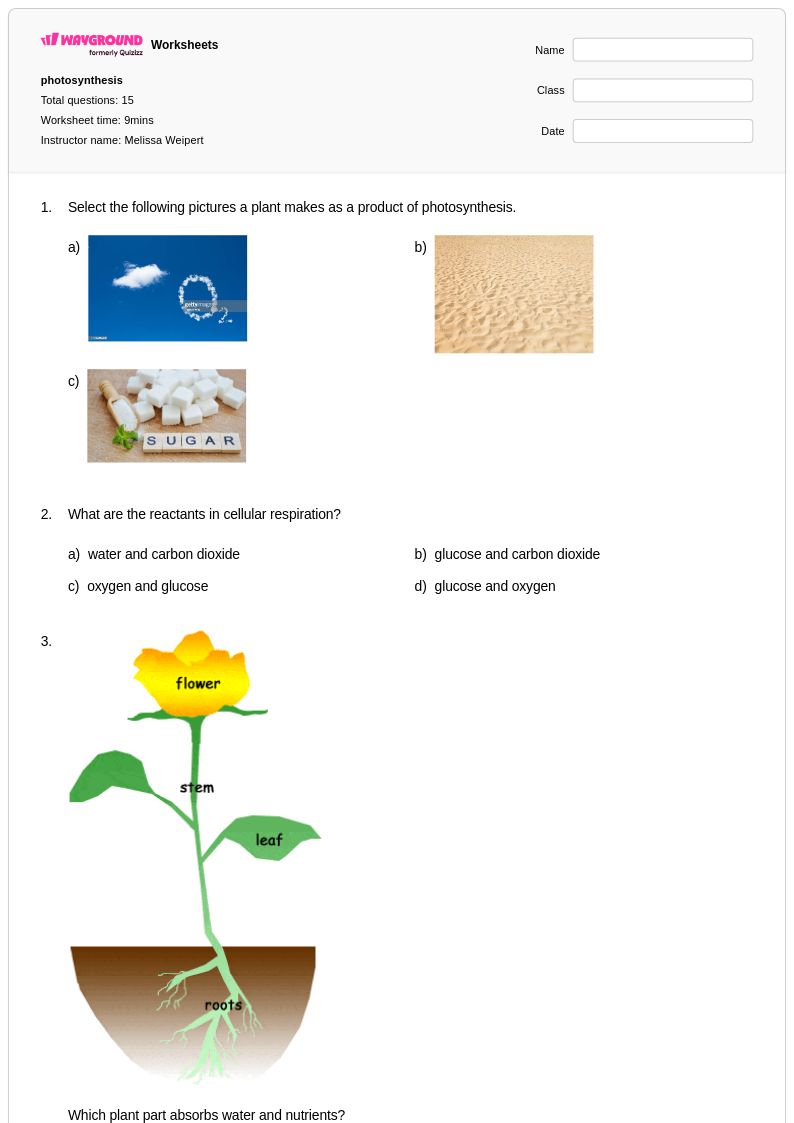
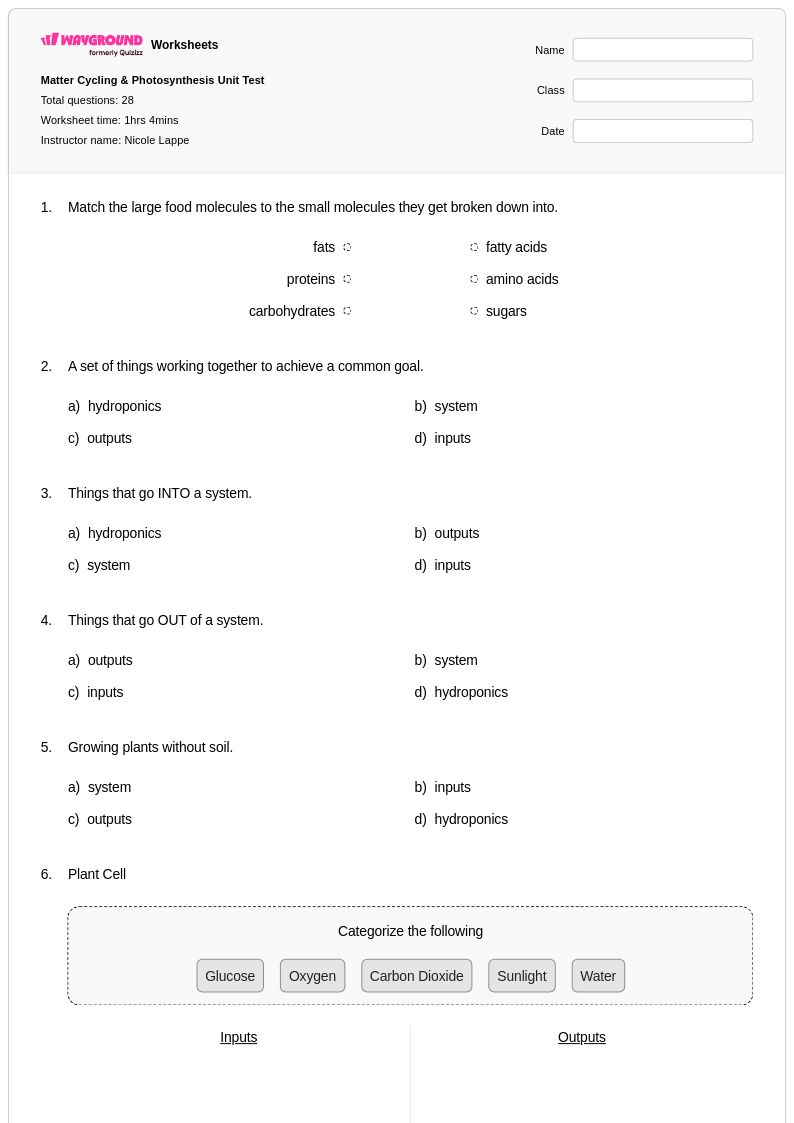
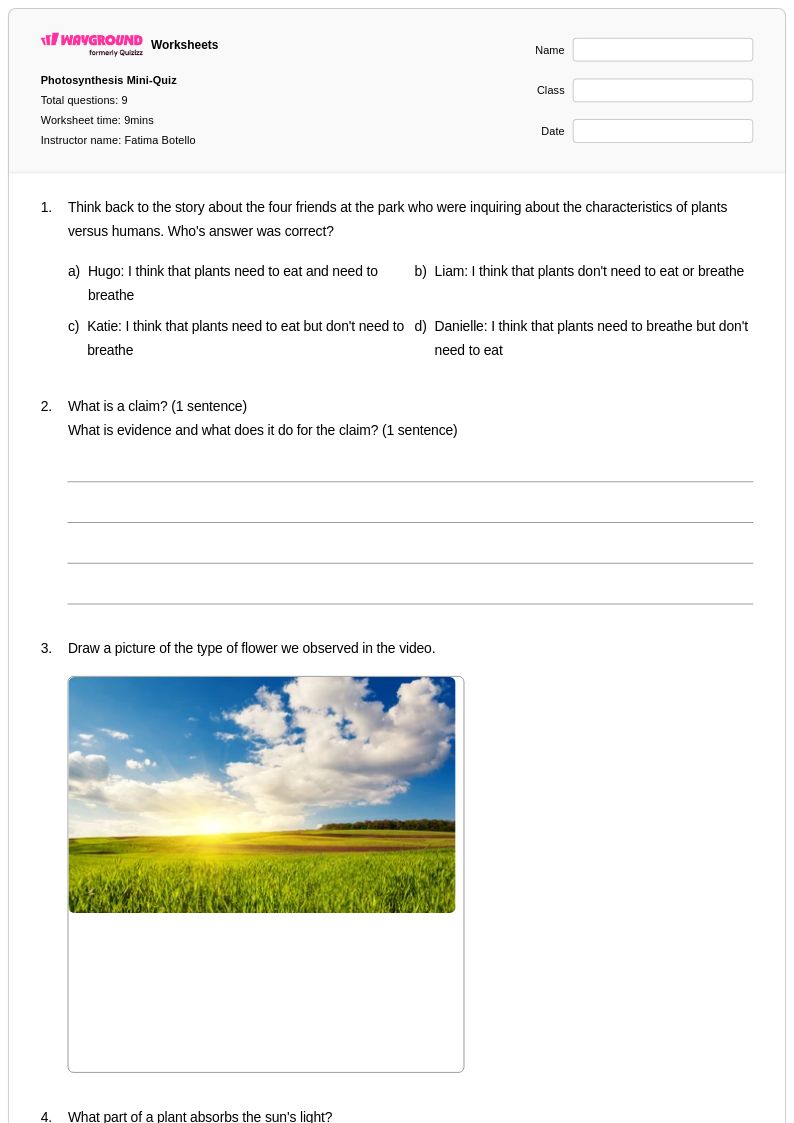
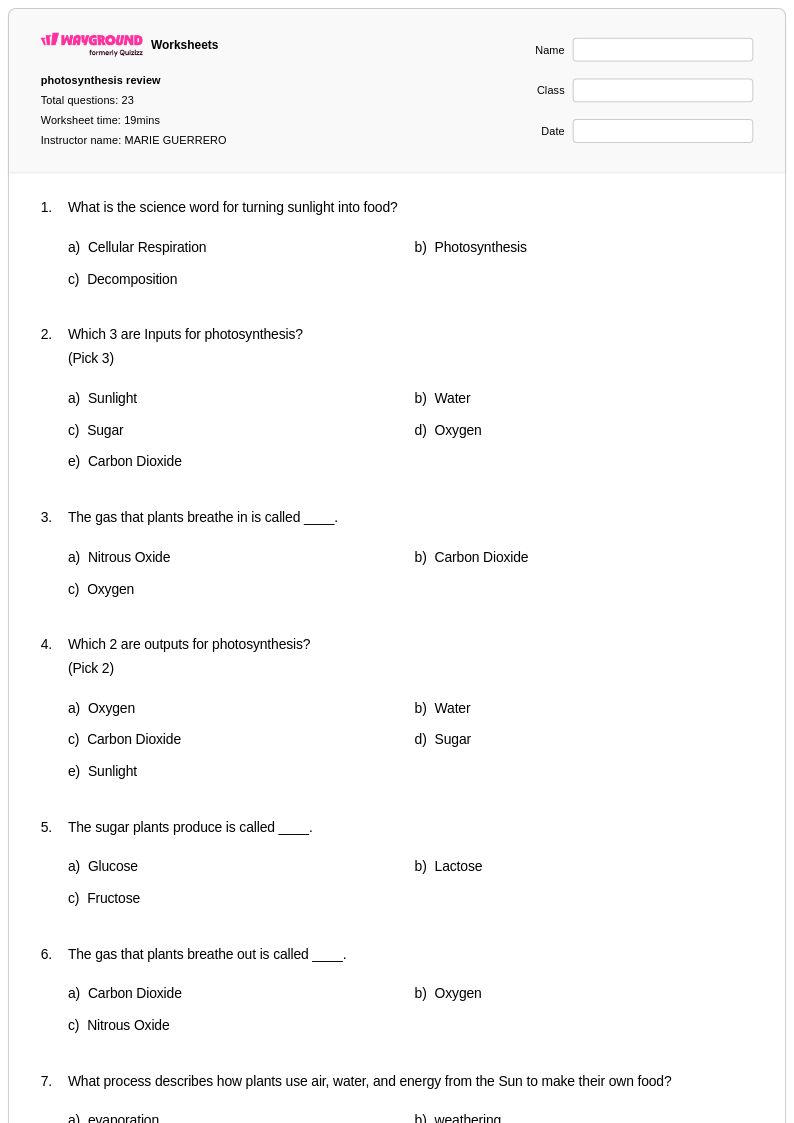
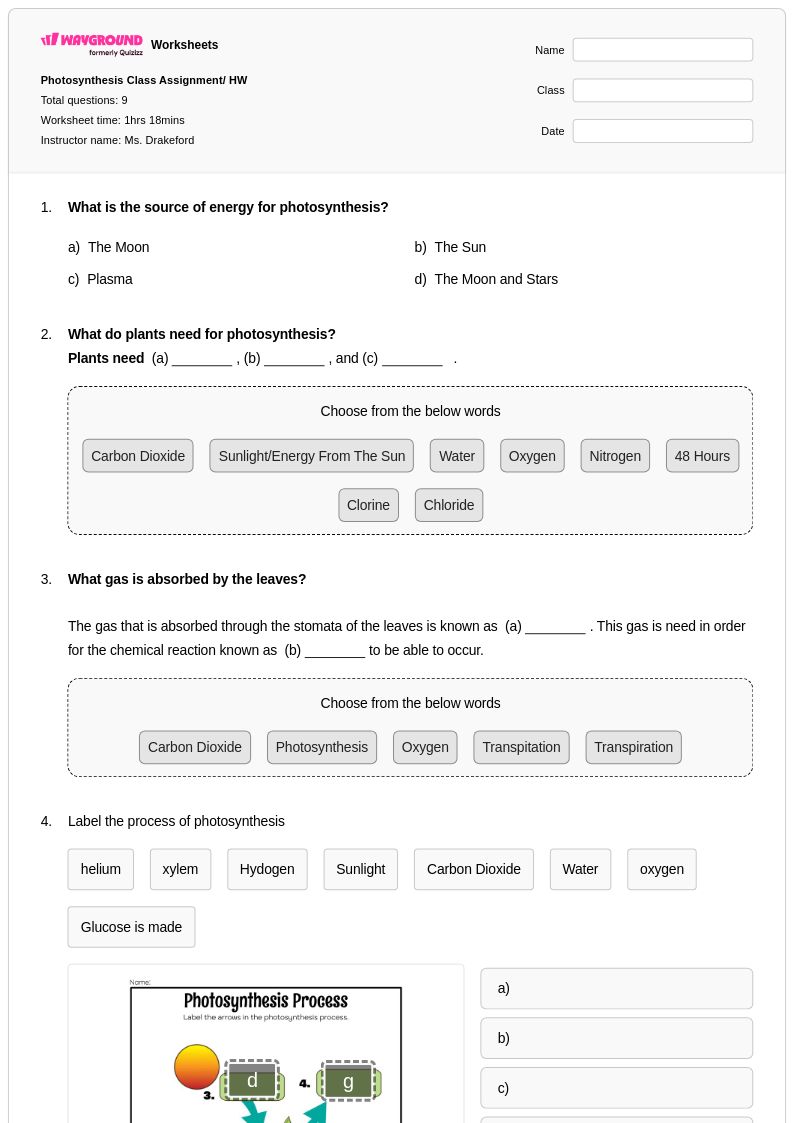
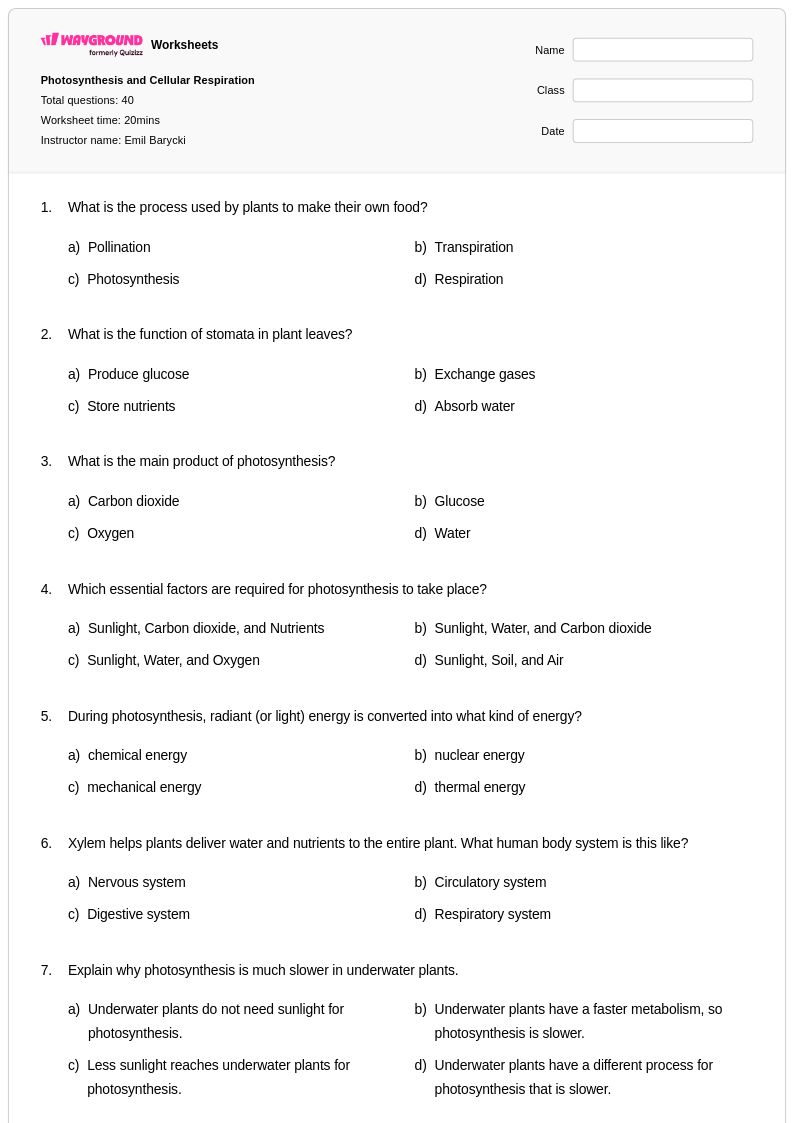
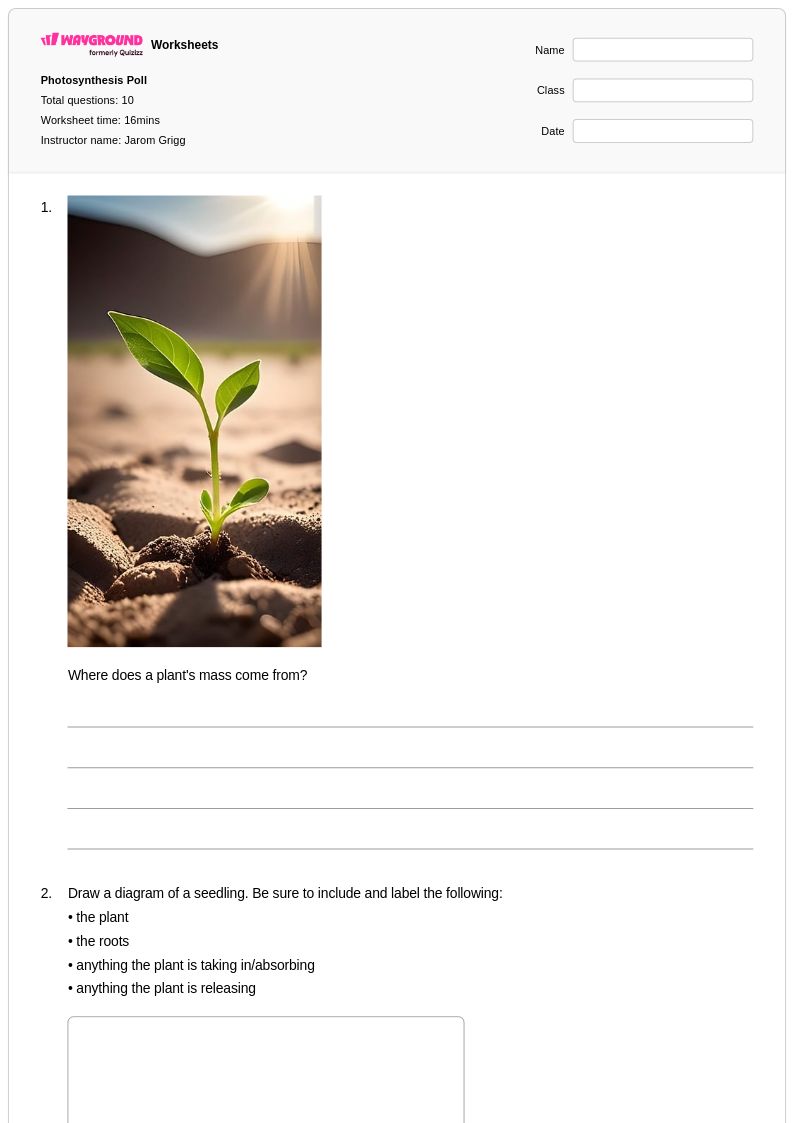
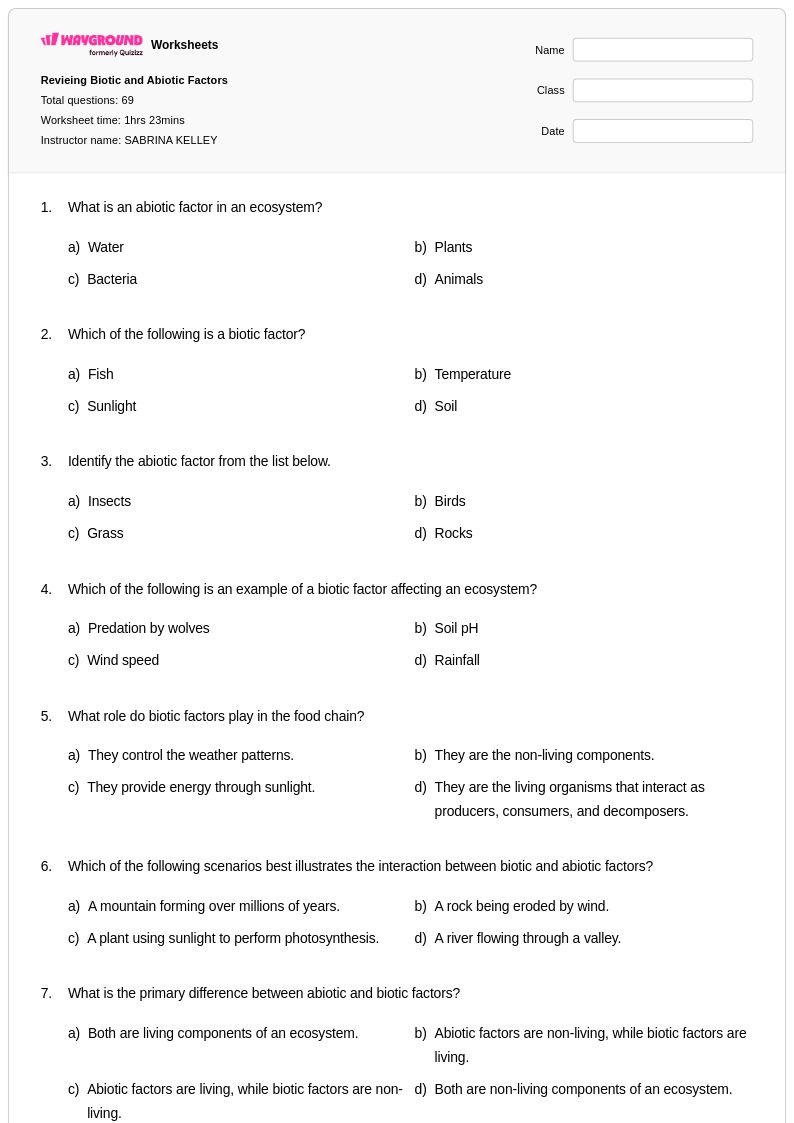
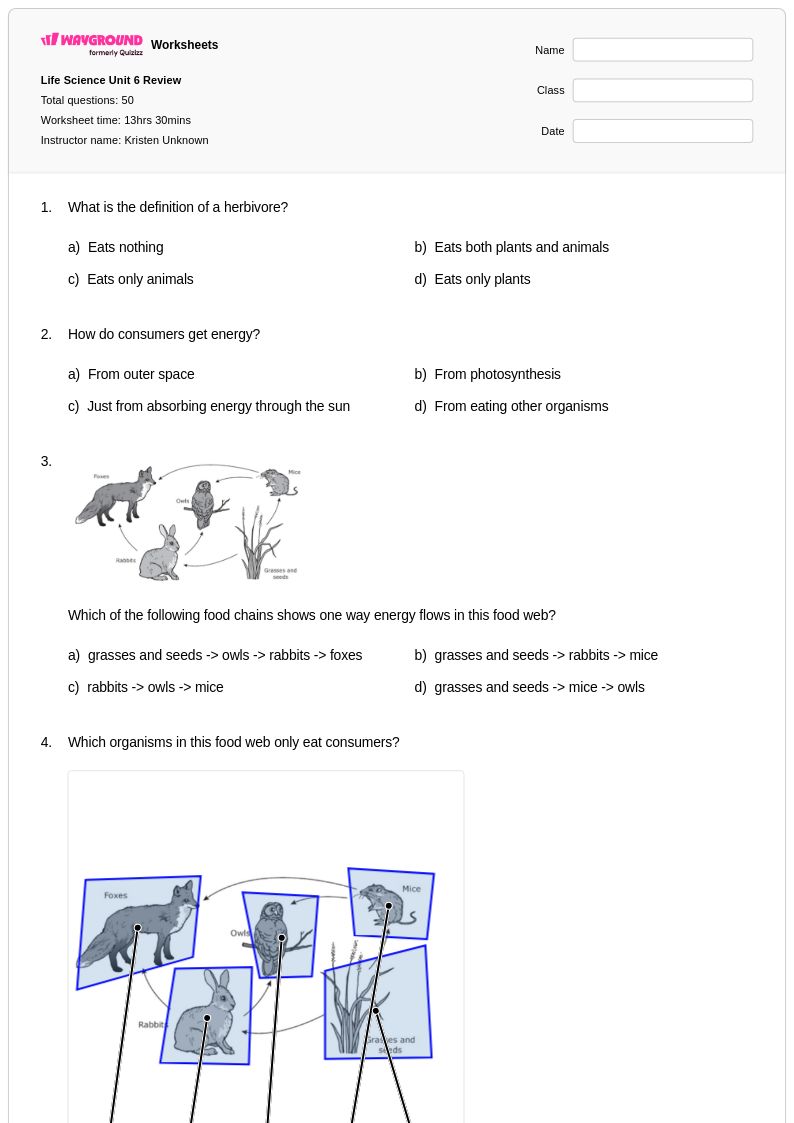
Factors affecting photosynthesis worksheets for Class 6 students available through Wayground provide comprehensive practice with the essential variables that influence how plants produce food and energy. These carefully designed educational materials help students master critical concepts including light intensity, carbon dioxide concentration, temperature, and water availability while developing scientific reasoning skills through hands-on analysis of experimental data and real-world scenarios. The collection features diverse practice problems that challenge students to interpret graphs, analyze controlled experiments, and predict outcomes when environmental conditions change, with each worksheet including a detailed answer key to support independent learning and self-assessment. These free printable resources strengthen students' ability to identify limiting factors, understand optimal conditions for plant growth, and connect photosynthesis concepts to broader ecological principles through engaging activities that make complex biological processes accessible and memorable.
Wayground supports Class 6 science educators with an extensive collection of factors affecting photosynthesis worksheets sourced from millions of teacher-created resources that have been tested in real classroom environments. The platform's advanced search and filtering capabilities allow teachers to quickly locate materials aligned with specific curriculum standards while offering differentiation tools that accommodate diverse learning needs and ability levels within the same classroom. Teachers can easily customize these resources to match their lesson objectives, whether providing remediation for struggling students or enrichment challenges for advanced learners, with all materials available in both printable pdf format and interactive digital versions. This flexibility streamlines lesson planning while ensuring that educators have immediate access to high-quality practice activities, assessment tools, and skill-building exercises that reinforce photosynthesis concepts through varied instructional approaches and learning modalities.
FAQs
How do I teach students about the factors that affect photosynthesis?
Start by establishing photosynthesis as a rate-dependent process, then introduce each limiting factor — light intensity, carbon dioxide concentration, temperature, and chlorophyll availability — one at a time. Use graph analysis to show how increasing each variable affects the rate of photosynthesis up to a saturation or optimum point. Connecting these variables to real-world scenarios, such as greenhouse farming or seasonal plant growth, helps students see why these factors matter beyond the lab.
What practice exercises help students understand limiting factors in photosynthesis?
Graph interpretation exercises are especially effective — students should practice reading rate-of-photosynthesis curves and identifying where a limiting factor is controlling the reaction. Experimental design problems, where students predict what happens when one variable changes while others stay constant, reinforce the concept of limiting factors directly. Scenario-based questions that ask students to explain why a plant in a low-light greenhouse produces less oxygen than one in full sunlight bridge theory to application.
What mistakes do students commonly make when learning about factors affecting photosynthesis?
A frequent misconception is that increasing one factor — such as light intensity — will always increase the rate of photosynthesis indefinitely. Students often fail to recognize that a different variable becomes the limiting factor once the first is no longer restricting the reaction. Another common error is confusing optimal temperature with maximum temperature, leading students to think the highest temperature always produces the fastest rate, when in fact enzyme denaturation causes rates to drop sharply above the optimum.
How do I use factors affecting photosynthesis worksheets in my classroom?
These worksheets are available as printable PDFs for traditional classroom use and in digital formats for technology-integrated or remote learning environments, and teachers can also host them as a quiz directly on Wayground. Printable versions work well for structured lab follow-ups or independent practice sessions, while digital formats allow for self-paced review and instant feedback. Wayground's accommodation settings let teachers enable features like read aloud, extended time, or reduced answer choices for individual students without disrupting the experience for the rest of the class.
How do I differentiate photosynthesis worksheets for students at different skill levels?
For introductory learners, focus on worksheets that ask students to identify which factor is limiting from a graph or match each variable to its effect on photosynthetic rate. More advanced students benefit from experimental design problems and multi-variable data analysis that require them to explain interactions between factors. Wayground's student-level accommodation tools, including reduced answer choices and adjustable reading modes, allow teachers to tailor the same resource to different learners without creating separate assignments.
How does understanding photosynthesis limiting factors connect to broader biology concepts?
Limiting factors in photosynthesis are a gateway concept for understanding energy flow in ecosystems, since photosynthesis underpins most food chains and is the primary source of atmospheric oxygen. Students who grasp how light, CO2, and temperature control photosynthetic rates are better prepared to analyze topics like climate change impacts on plant productivity, crop yield optimization, and the role of producers in biogeochemical cycles. This makes it a high-leverage topic in both introductory and advanced biology courses.