Free Printable Plant Structure and Function Worksheets for Class 6
Explore Class 6 plant structure and function worksheets and printables that help students master botanical anatomy, cellular processes, and how plant parts work together through engaging practice problems with answer keys.
Explore printable Plant Structure and Function worksheets for Class 6
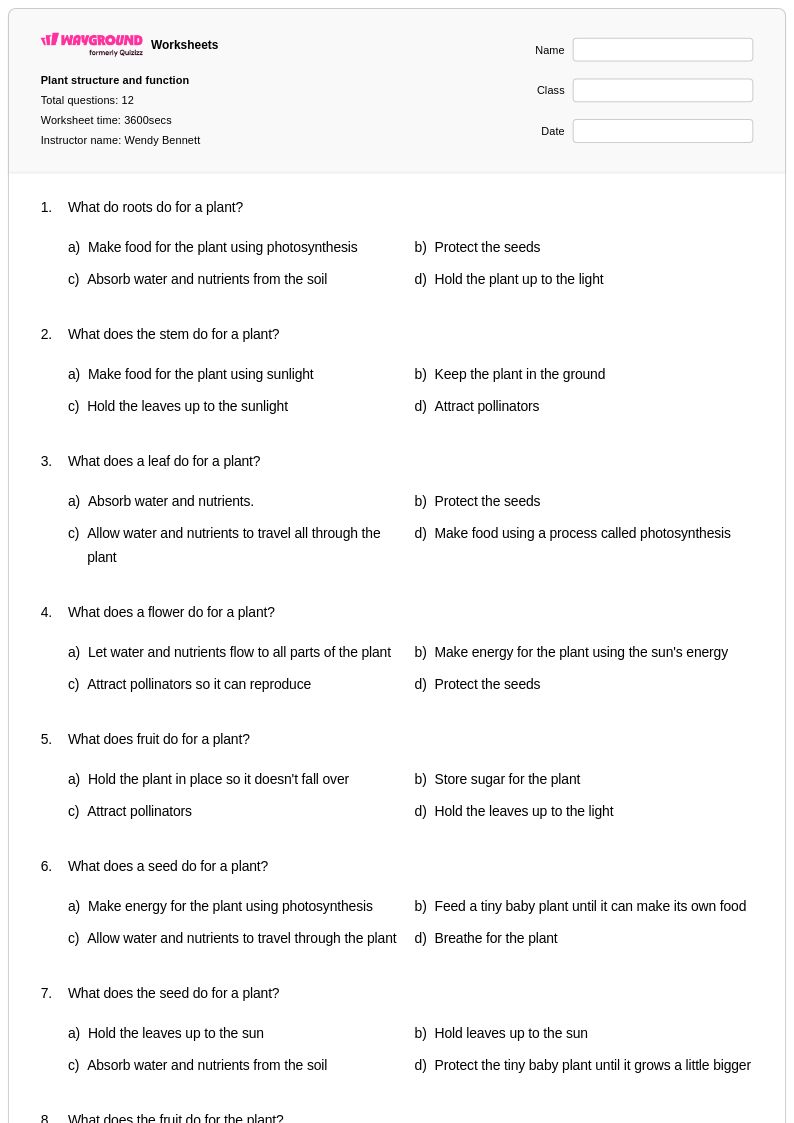
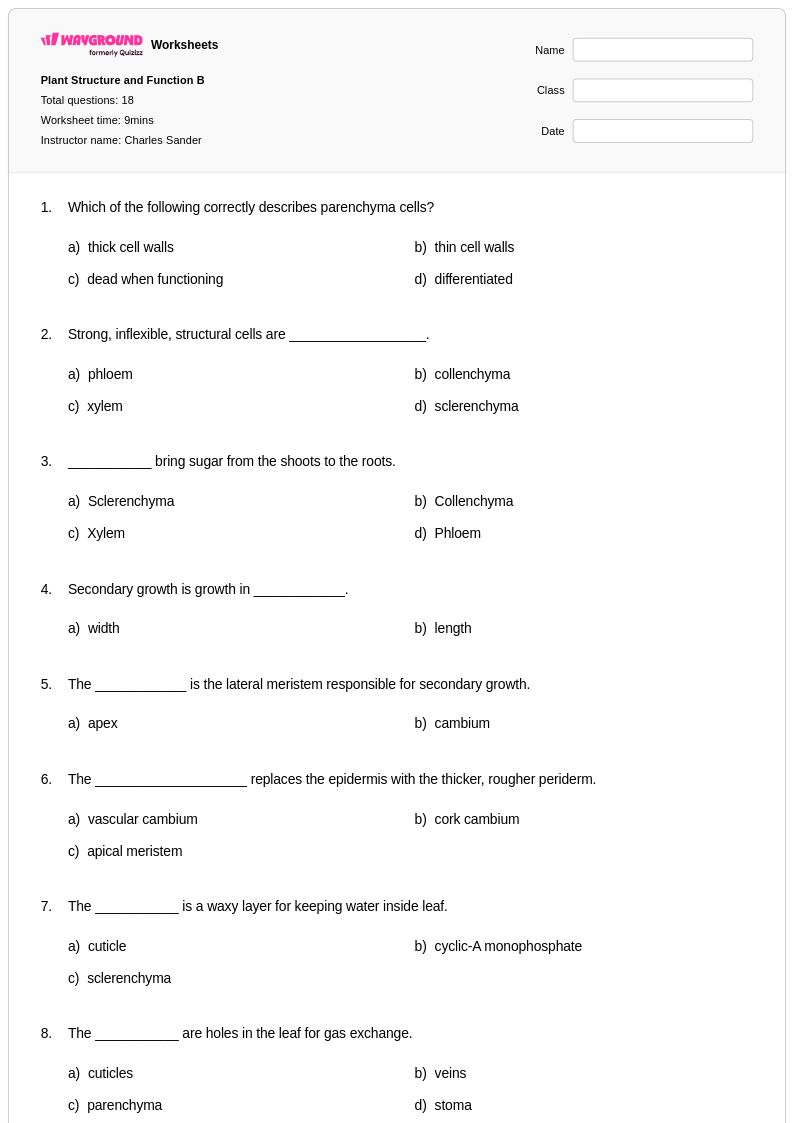
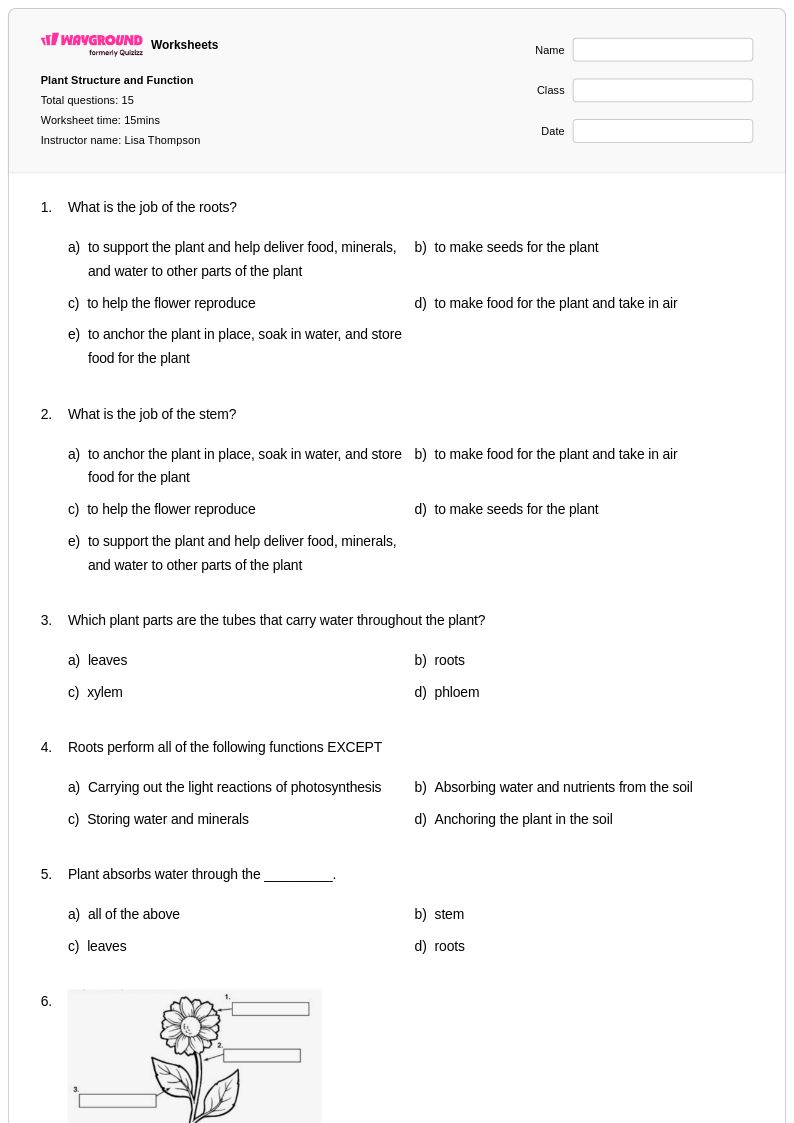
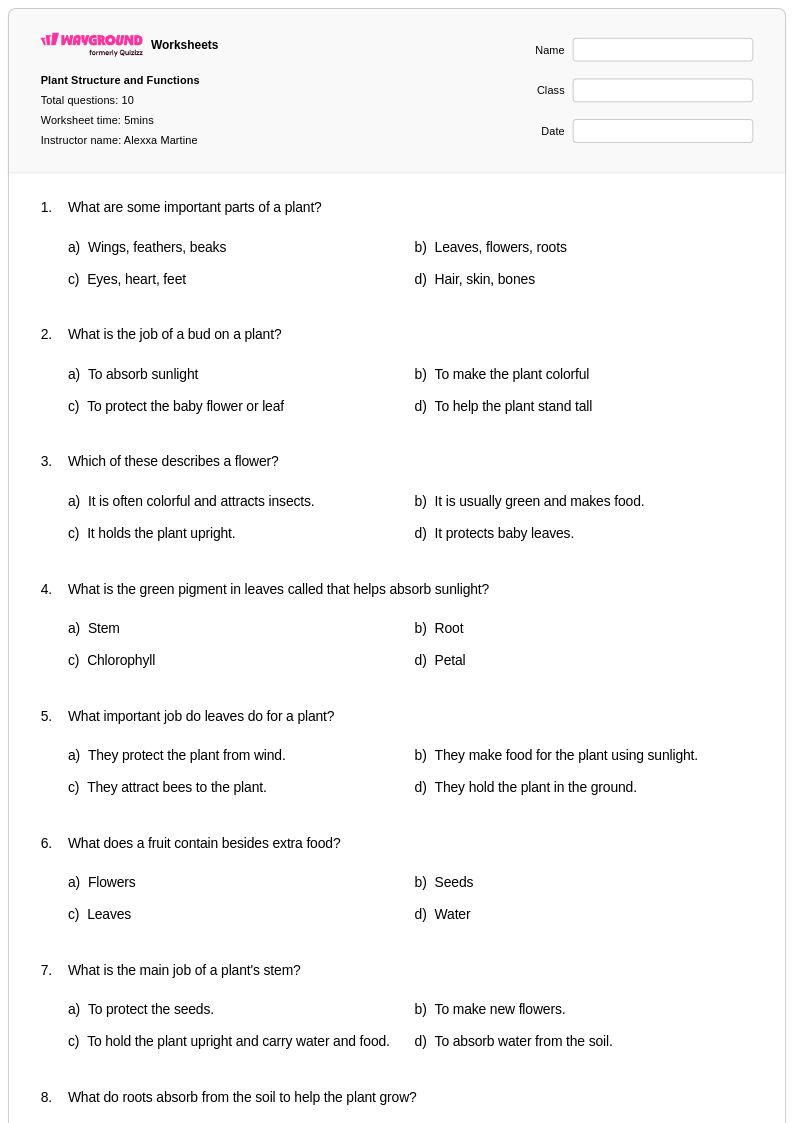
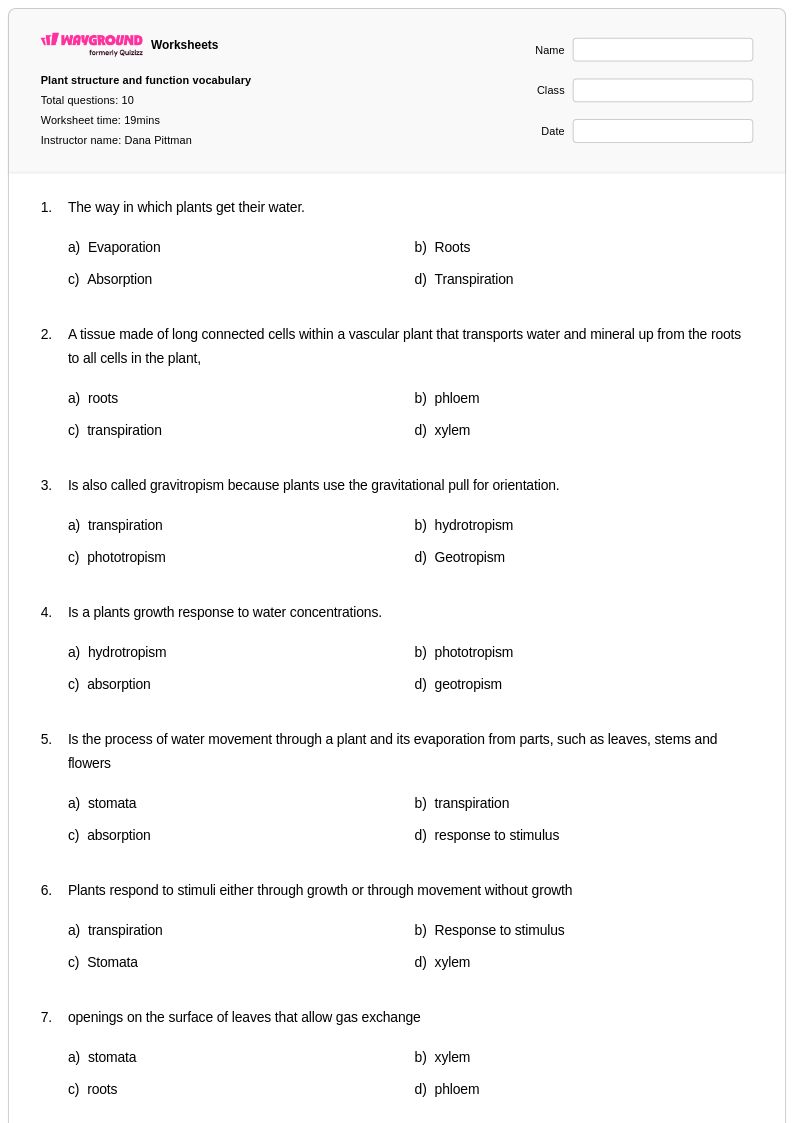
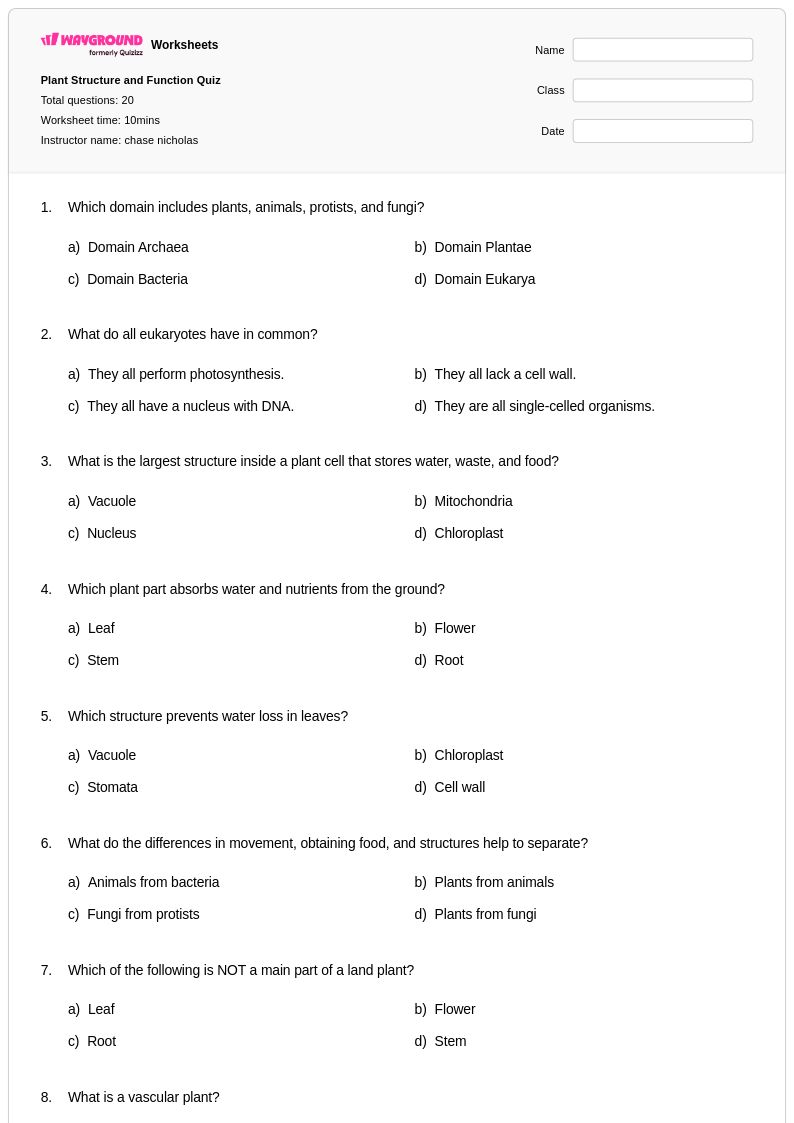
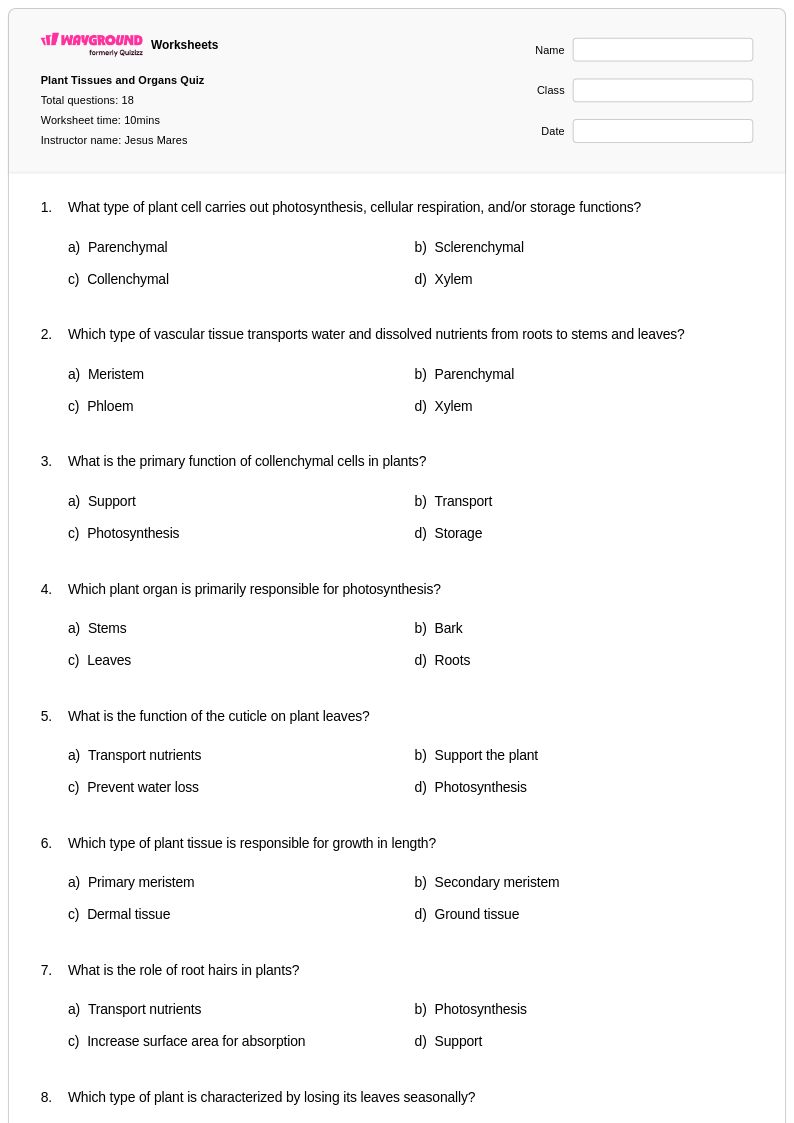
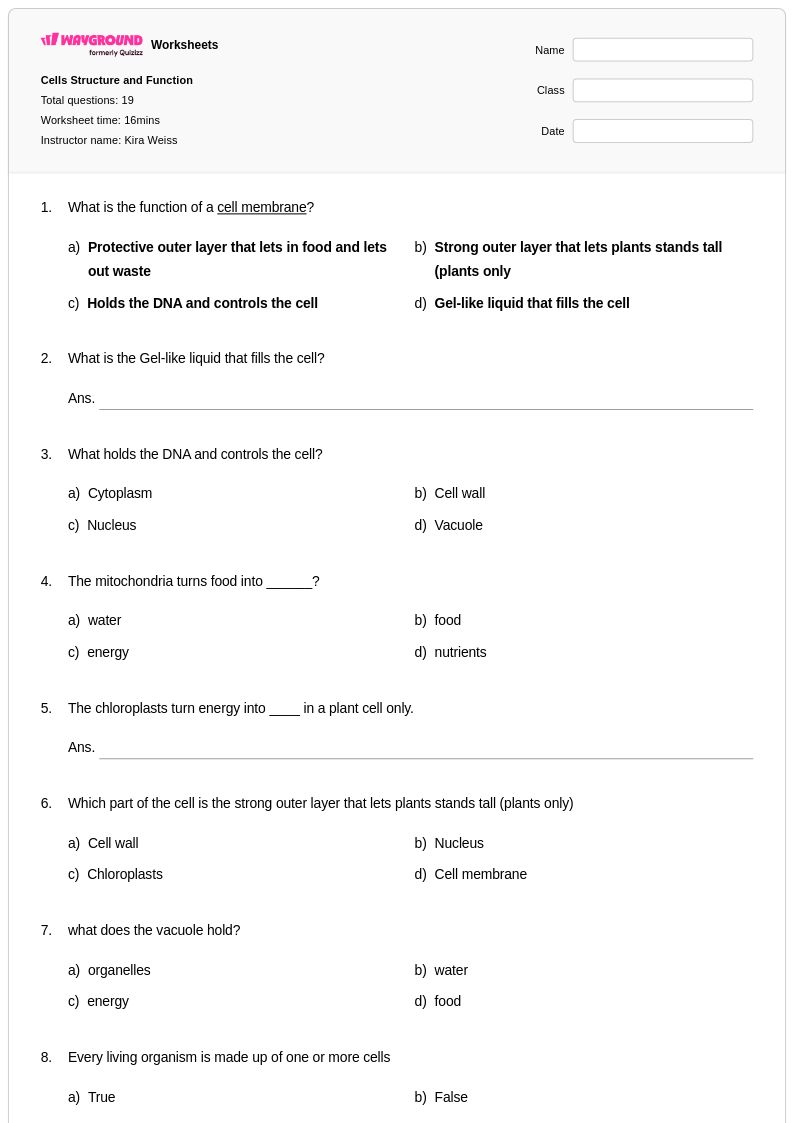
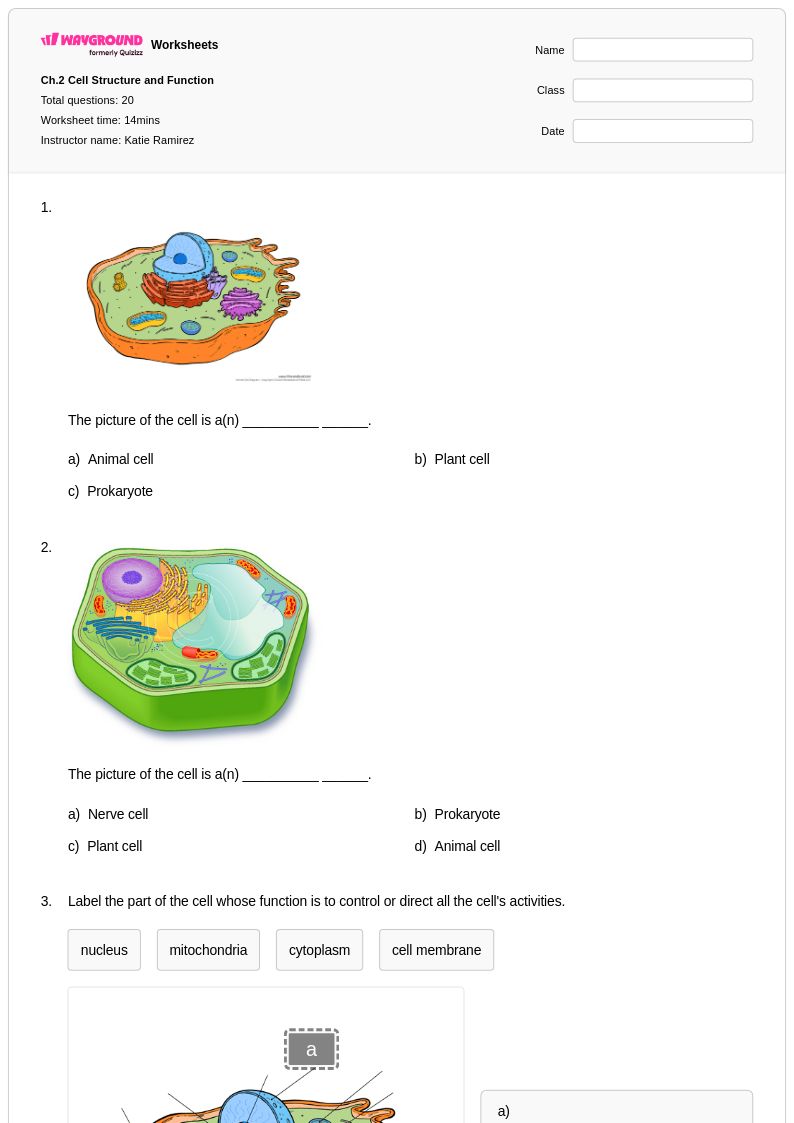
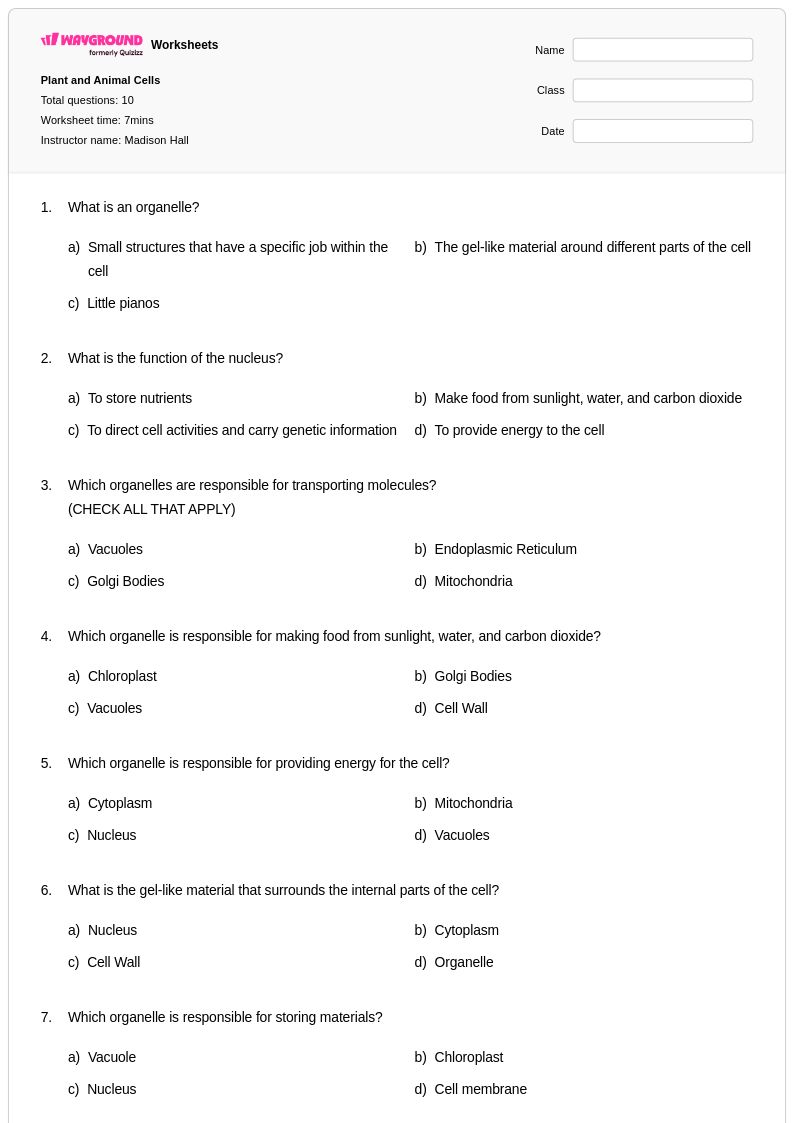
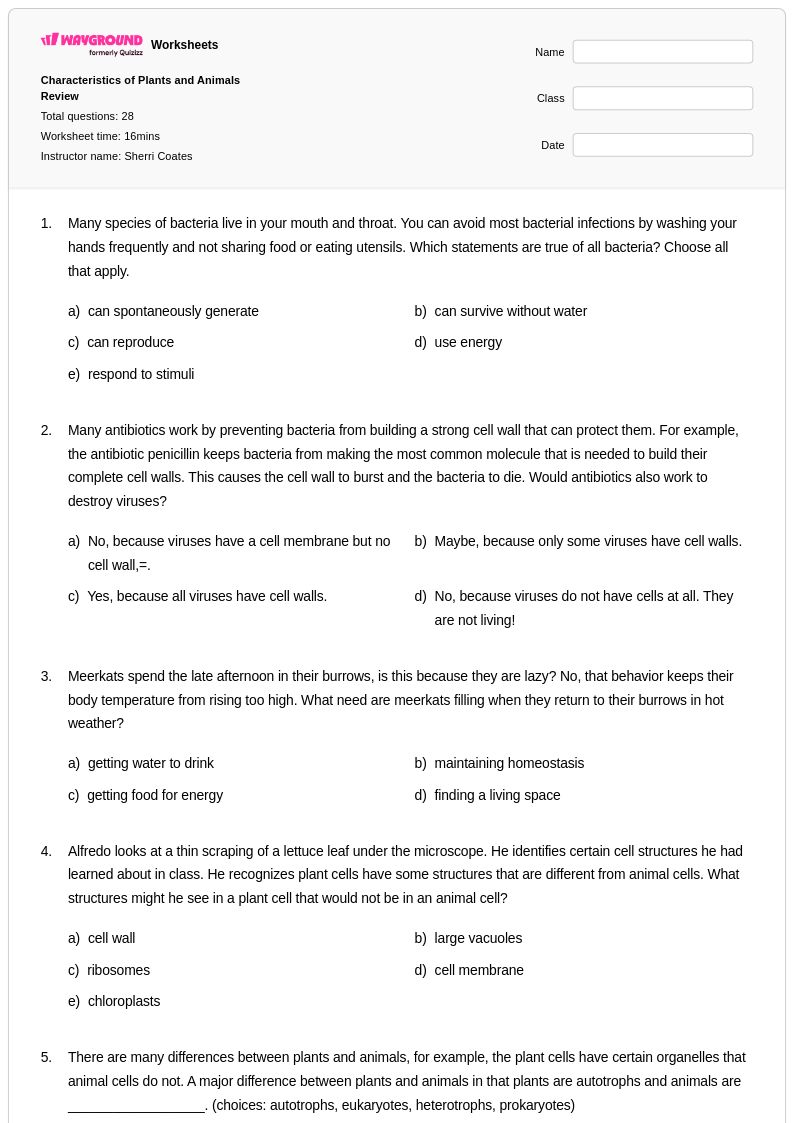
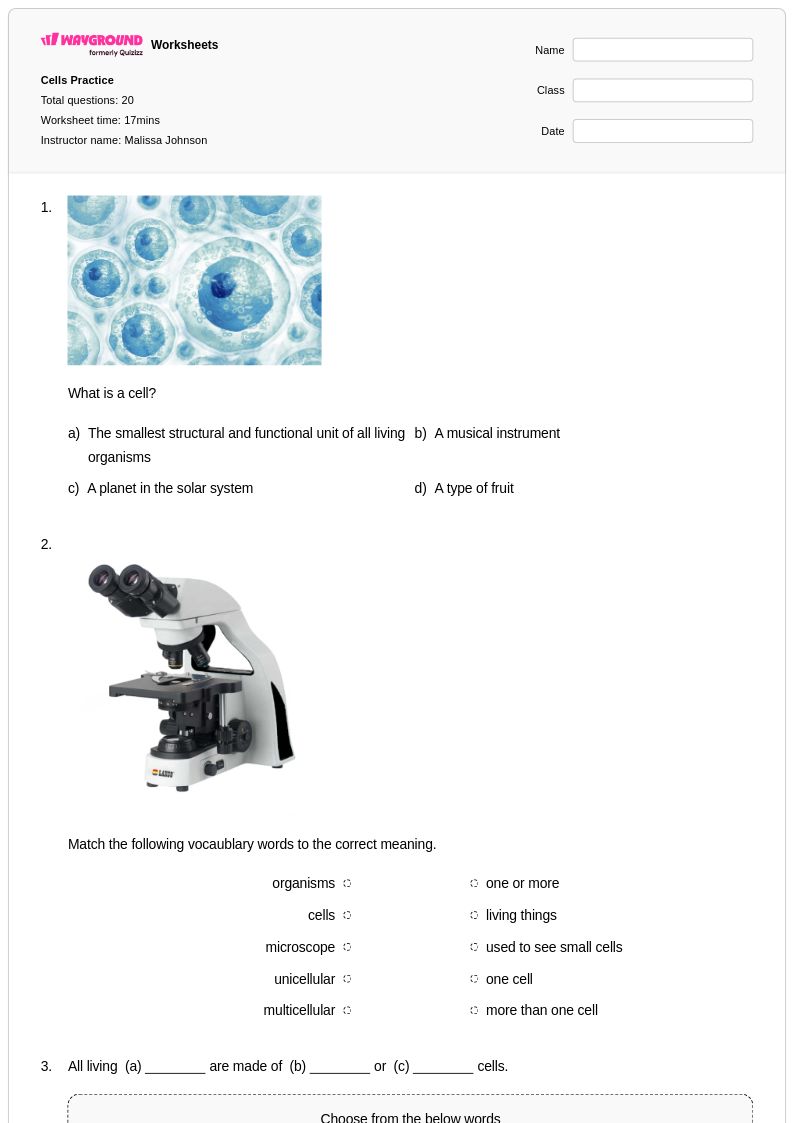
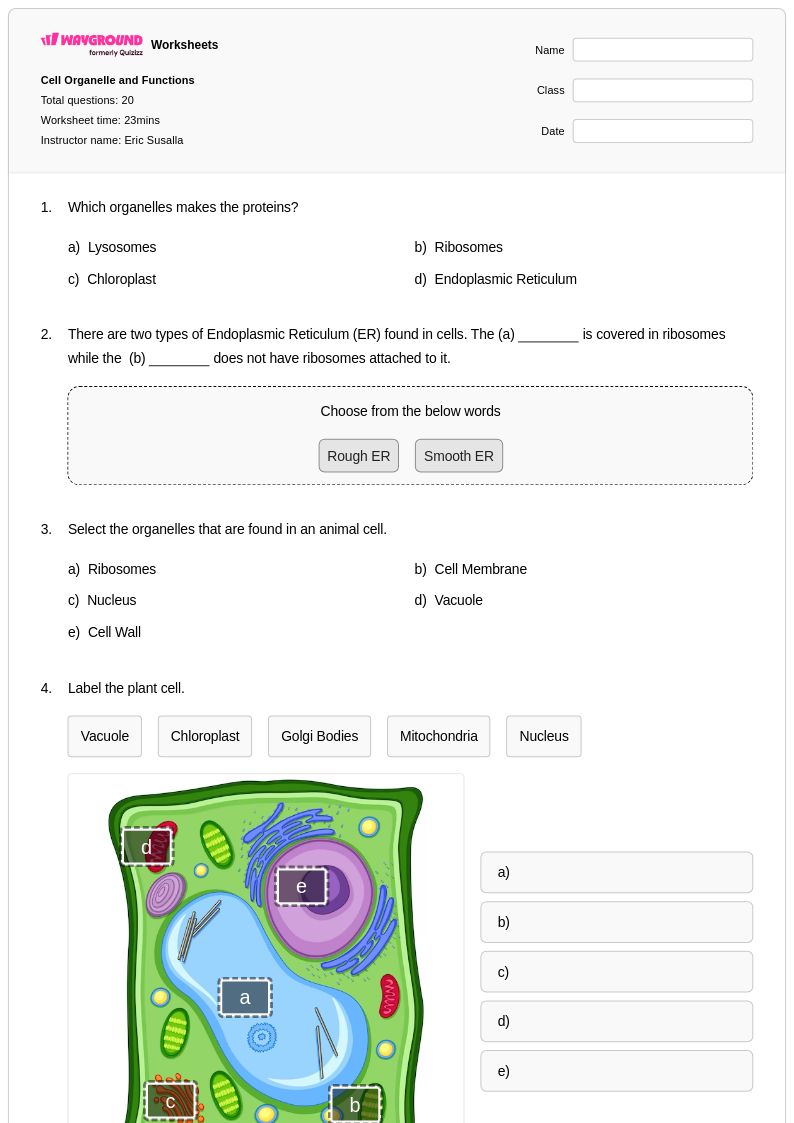
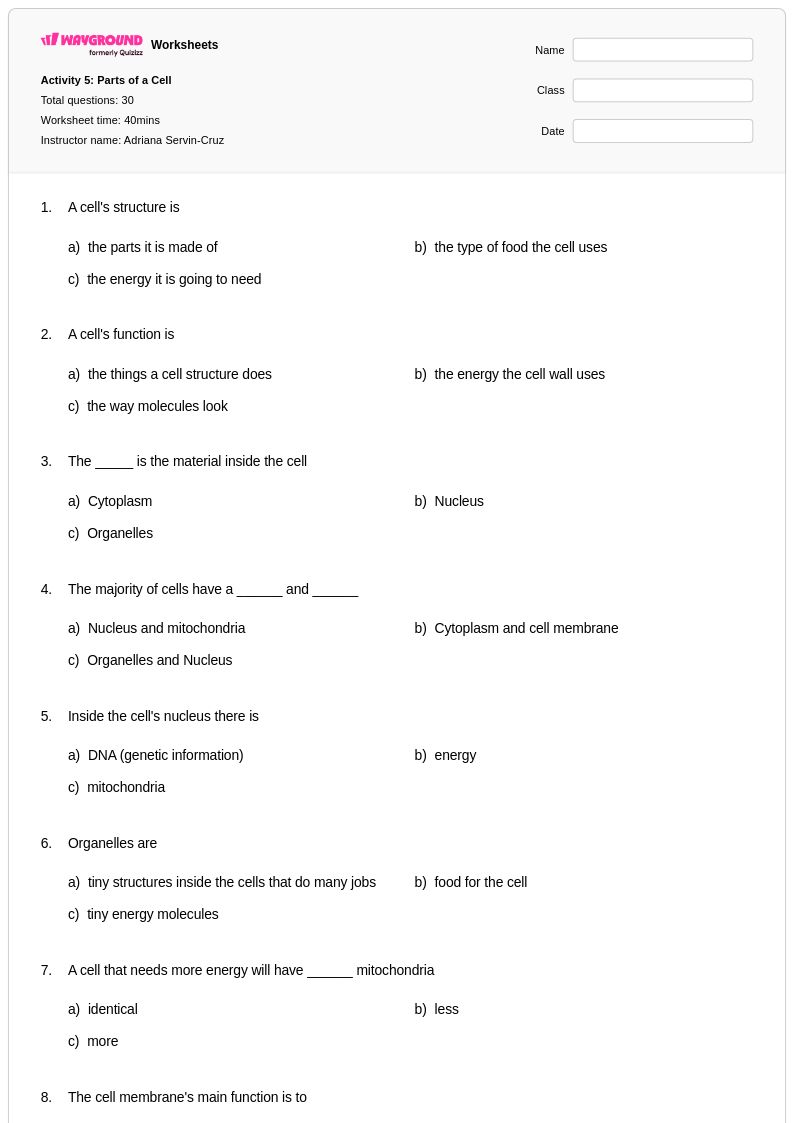
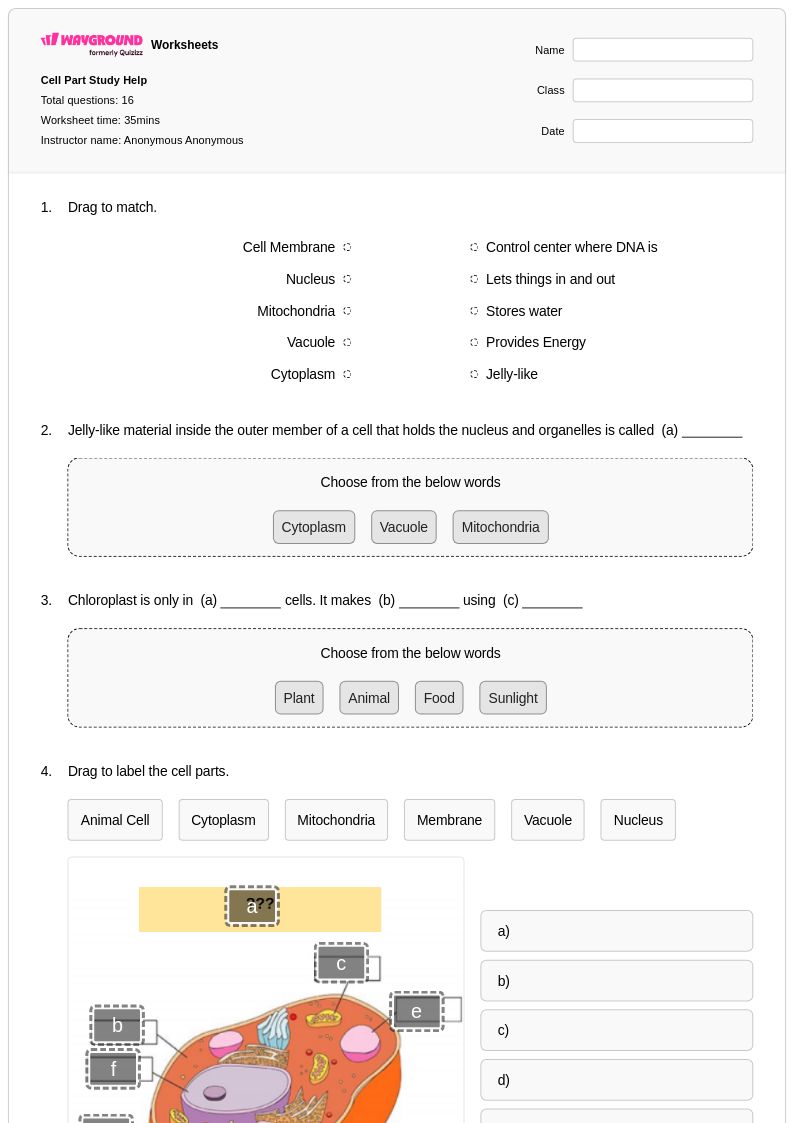
Plant structure and function worksheets for Class 6 students available through Wayground (formerly Quizizz) provide comprehensive coverage of how plant parts work together to support life processes. These educational resources help students master fundamental botanical concepts including root systems, stem transport mechanisms, leaf photosynthesis, and flower reproduction structures. The worksheets strengthen critical thinking skills through detailed diagrams, labeling exercises, and analysis of how each plant part contributes to overall organism survival. Students engage with practice problems that connect form to function, examining how root hairs increase surface area for absorption, how vascular tissues transport materials, and how leaf structures optimize light capture. Each worksheet includes a complete answer key and is available as a free printable pdf, making them accessible for both classroom instruction and independent study.
Wayground (formerly Quizizz) supports educators with an extensive collection of teacher-created plant structure and function resources, drawing from millions of high-quality materials developed by experienced science instructors. The platform's advanced search and filtering capabilities allow teachers to quickly locate worksheets that align with specific curriculum standards and learning objectives for Class 6 biology instruction. Differentiation tools enable educators to customize content complexity, ensuring appropriate challenge levels for diverse learners while maintaining focus on essential botanical concepts. These versatile resources are available in both printable and digital formats, including downloadable pdf versions that facilitate seamless integration into lesson plans. Teachers utilize these materials for initial concept introduction, targeted skill practice, remediation support for struggling students, and enrichment activities for advanced learners, creating a comprehensive approach to plant biology education.
FAQs
How do I teach plant structure and function in a way that connects anatomy to physiology?
The most effective approach is to teach plant structures alongside their functions simultaneously rather than as separate units. For example, when introducing vascular tissue, immediately connect xylem to water transport and phloem to sugar movement so students build cause-and-effect understanding. Using labeled diagrams of roots, stems, and leaves alongside process-based questions helps students see anatomy as purposeful rather than arbitrary memorization.
What exercises help students practice identifying plant structures and their functions?
Practice problems that ask students to label root, stem, and leaf anatomy, trace vascular pathways, and explain the relationship between a structure's form and its function are most effective. Worksheets that combine diagram labeling with short-answer questions about physiological processes like photosynthesis, transpiration, and nutrient transport reinforce both recall and conceptual understanding. Mixing structure identification with process explanation in the same exercise prevents students from learning anatomy in isolation.
What misconceptions do students commonly have about plant structure and function?
A common misconception is that plants only photosynthesize and do not perform cellular respiration — students often conflate the two processes or believe plants only take in carbon dioxide. Another frequent error is confusing the roles of xylem and phloem, particularly the direction of transport in each tissue. Students also frequently misunderstand root function, focusing solely on water absorption and overlooking anchorage and storage roles.
How do I differentiate plant structure and function instruction for students at different skill levels?
For students who need additional support, reduce the complexity of diagrams by pre-labeling some structures and focusing questions on one system at a time, such as just the leaf before introducing whole-plant transport. Advanced learners can be challenged with questions about adaptive mechanisms, hormone regulation, and the evolutionary relationships between form and function. On Wayground, teachers can apply accommodations such as read aloud support and reduced answer choices for individual students without disrupting the rest of the class.
How can I use Wayground's plant structure and function worksheets in my classroom?
Wayground's plant structure and function worksheets are available as printable PDFs for traditional classroom use and in digital formats for technology-integrated or remote learning environments, including the option to host them as a quiz directly on Wayground. Teachers can use these resources for initial instruction, targeted remediation of challenging concepts like transpiration and hormone regulation, or enrichment activities for advanced learners. Each worksheet includes a comprehensive answer key, making them practical for both independent student study and quick teacher assessment of comprehension.
What plant biology topics should I cover when teaching plant structure and function?
A thorough unit on plant structure and function should cover root, stem, and leaf anatomy, vascular tissue organization including xylem and phloem, flower structure and reproduction, photosynthesis, cellular respiration, and transport systems. Students should also explore how plants respond to environmental stimuli through adaptive mechanisms and hormone regulation. Connecting each structural feature to its physiological role gives students a complete picture of how plant form enables function at the cellular, tissue, and organ levels.