Free Printable Properties of Carbon Worksheets for Class 6
Explore Wayground's free Class 6 biology worksheets and printables focusing on properties of carbon, featuring comprehensive practice problems and answer keys to help students master this fundamental chemistry concept.
Explore printable Properties of Carbon worksheets for Class 6
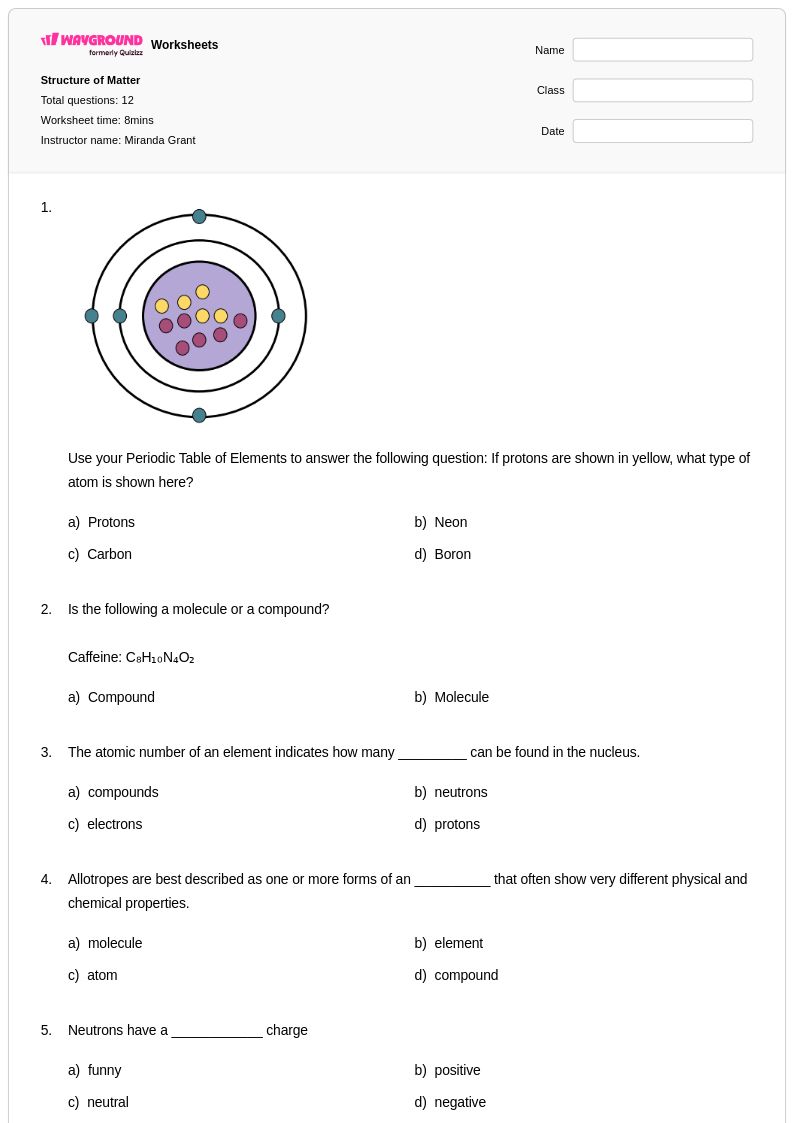
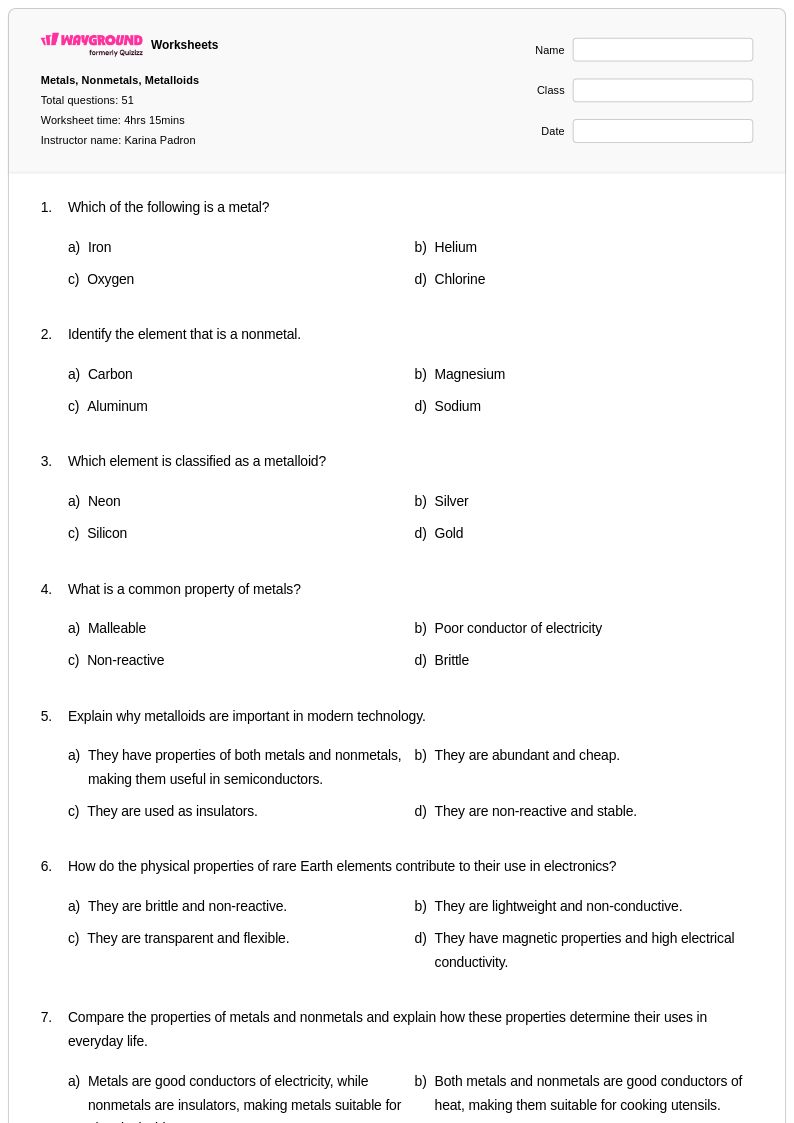
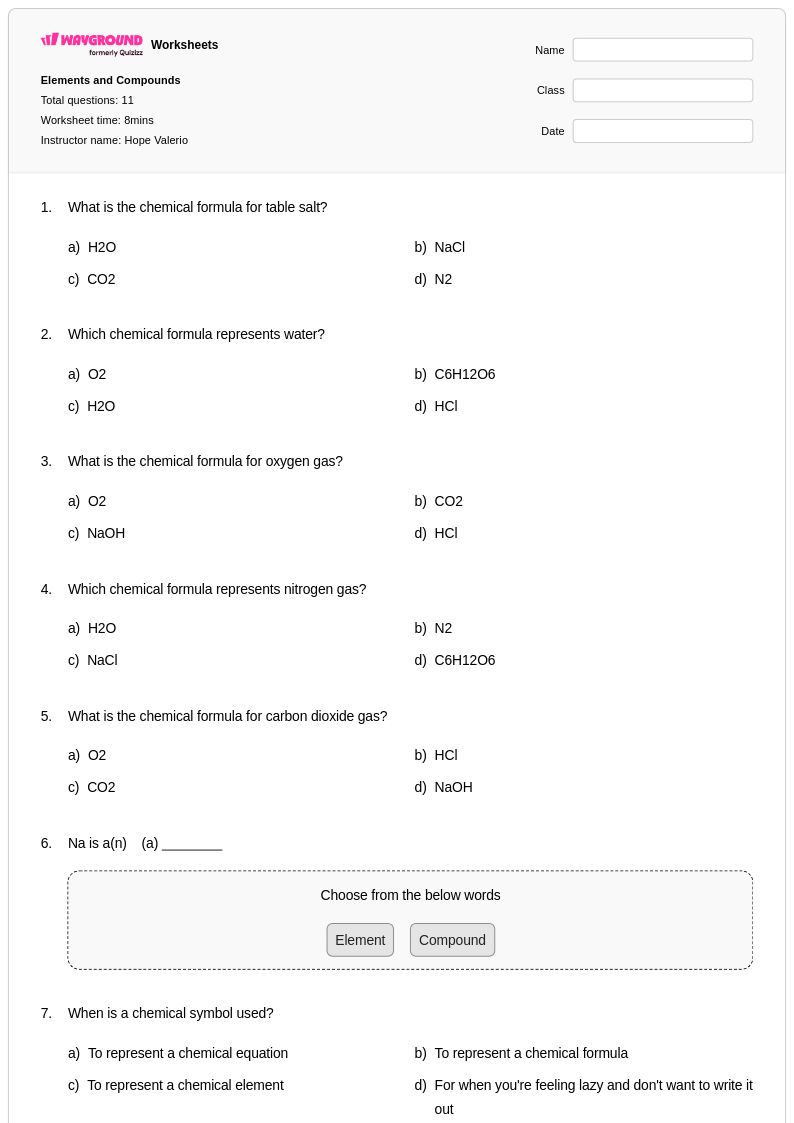
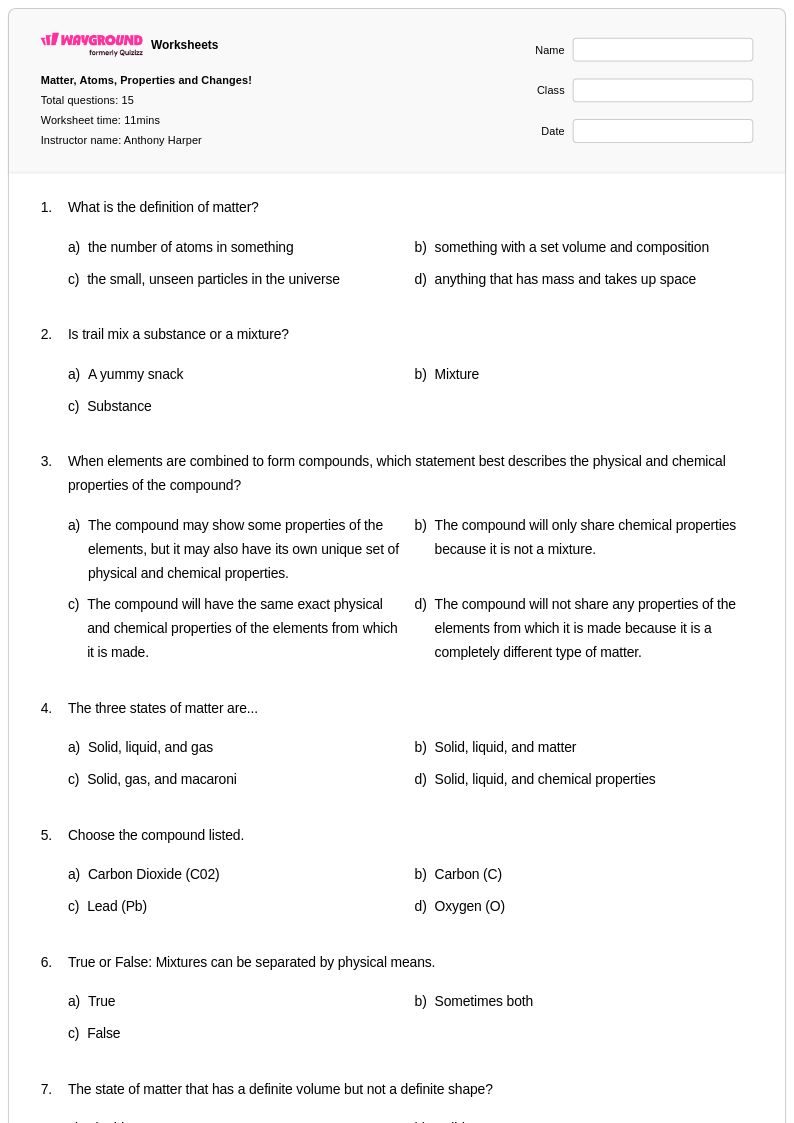
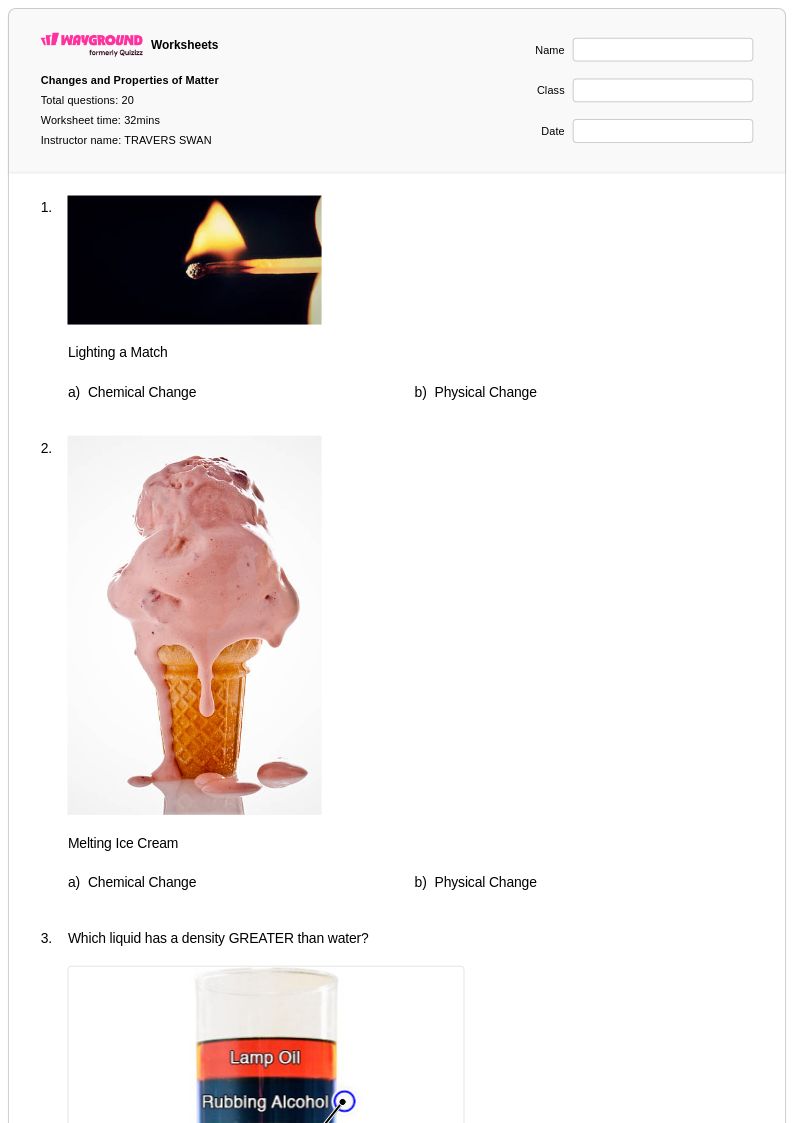
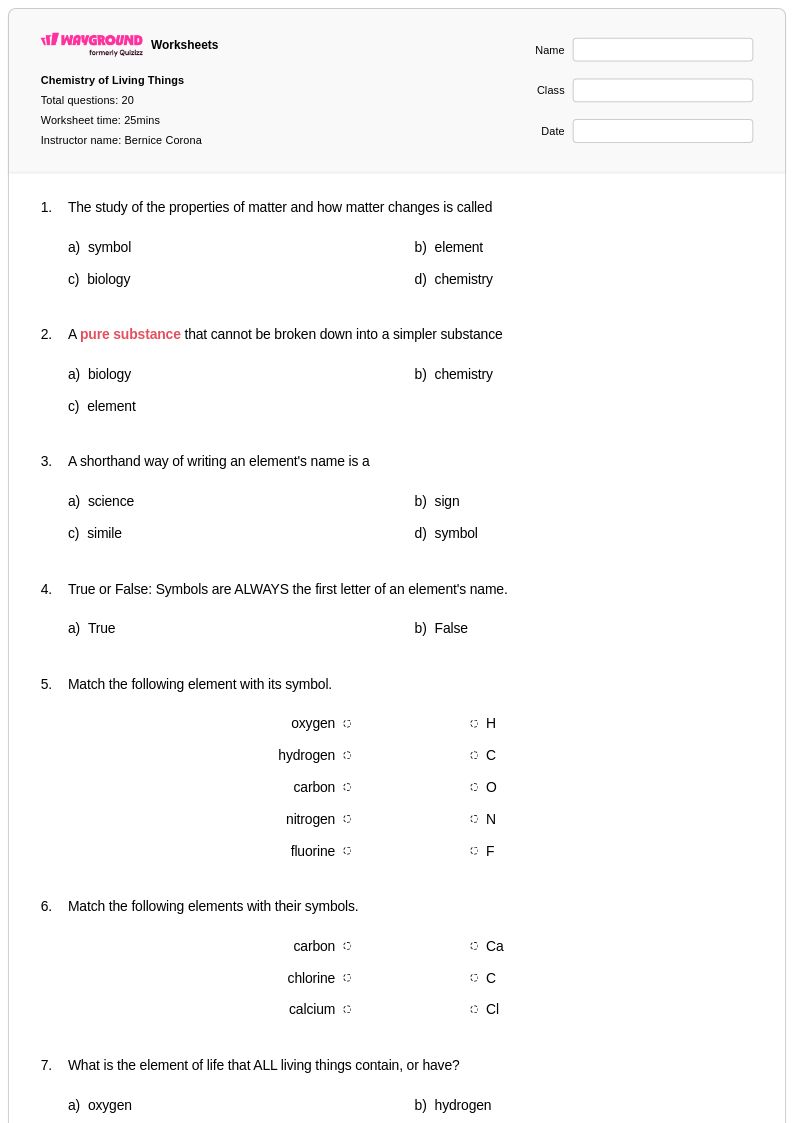
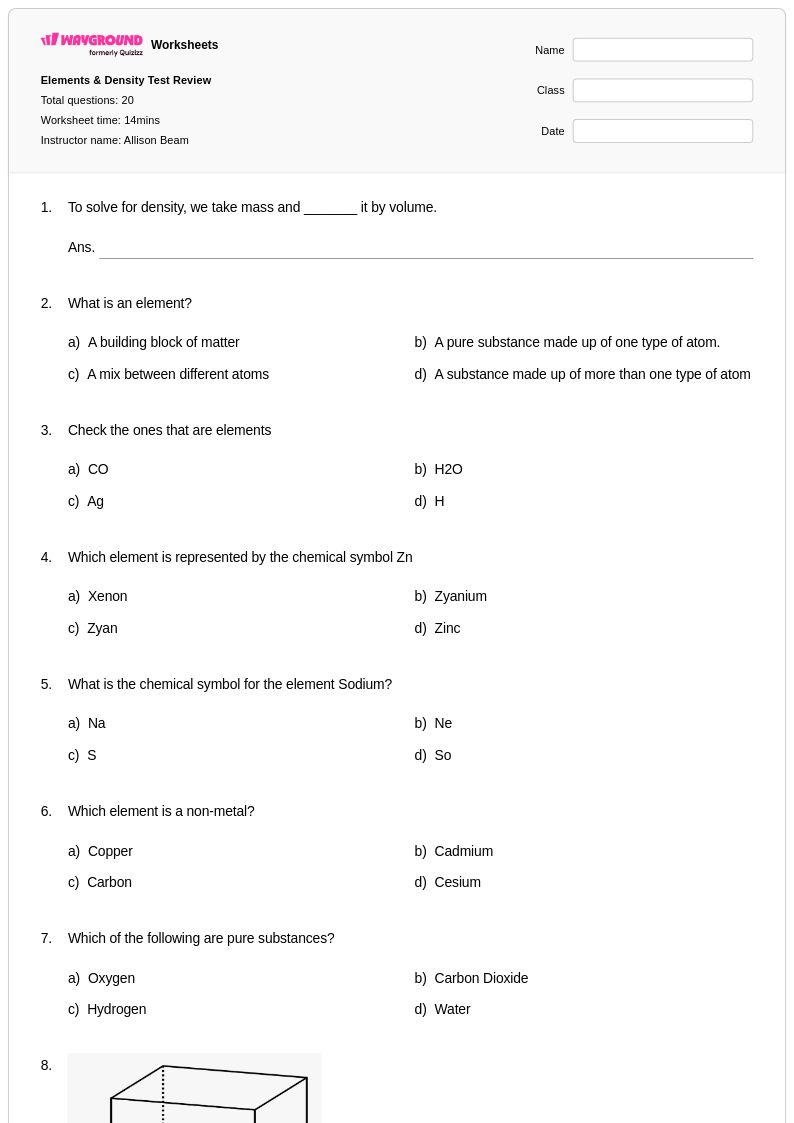
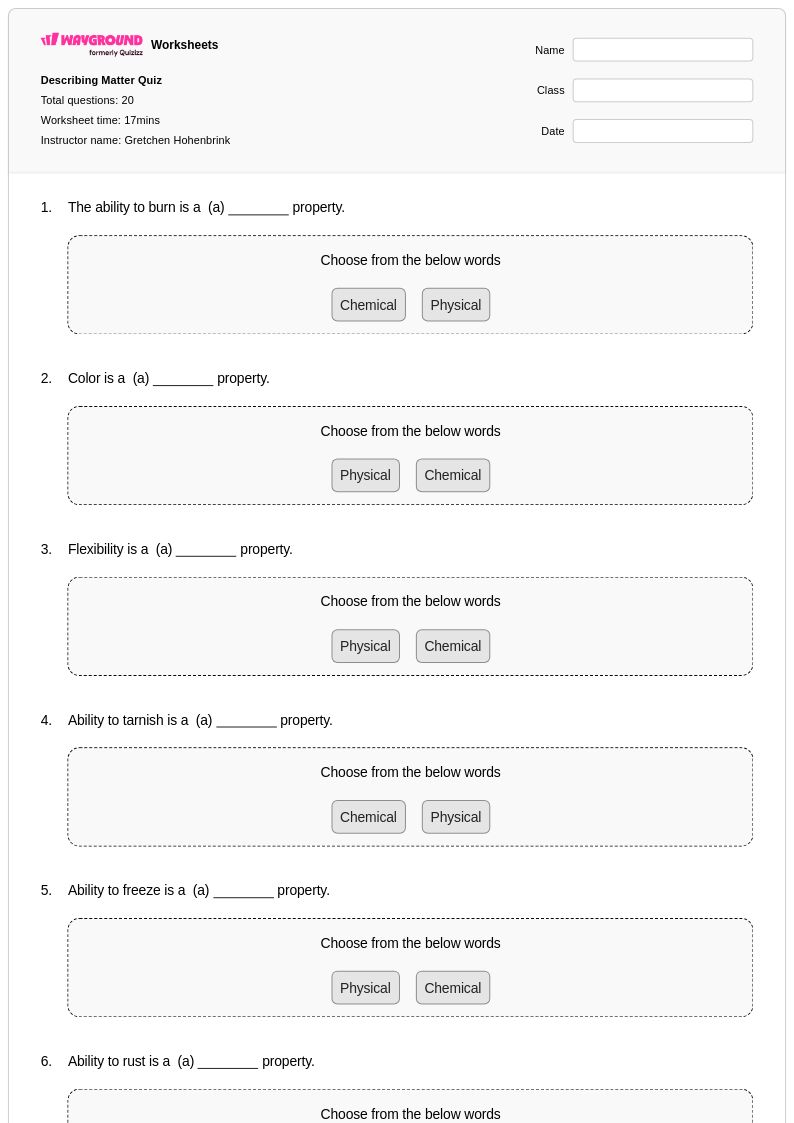
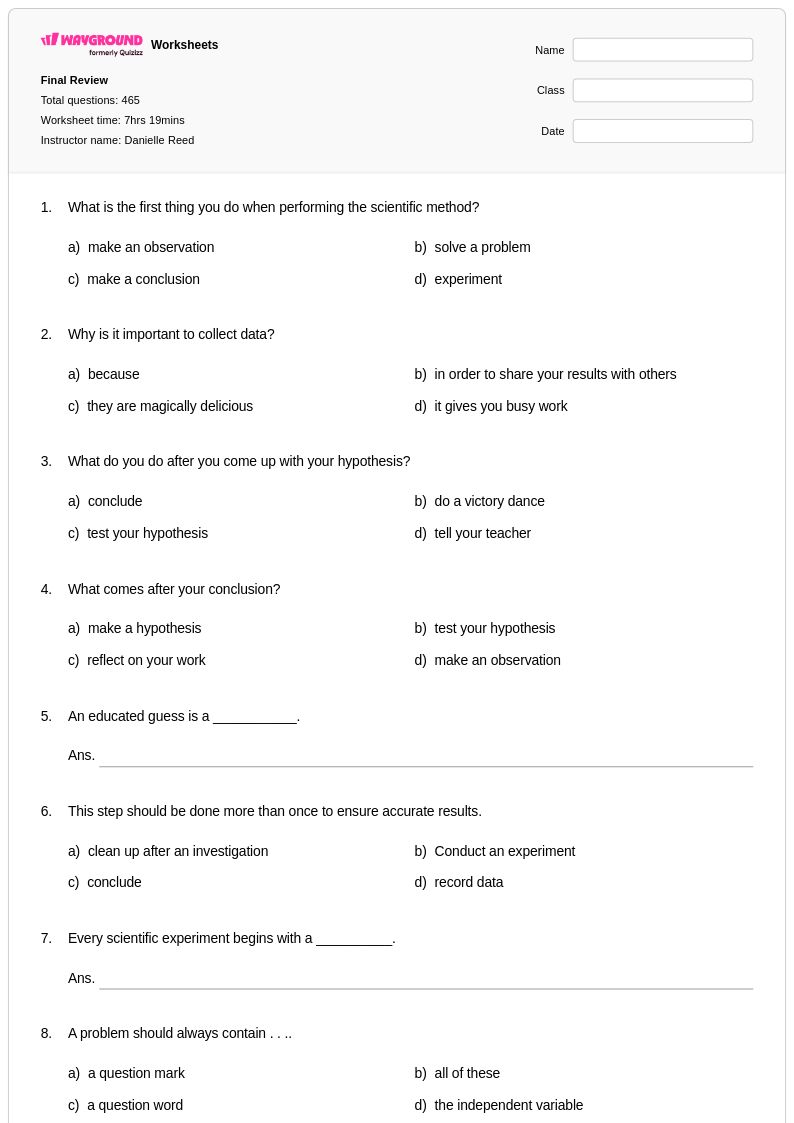
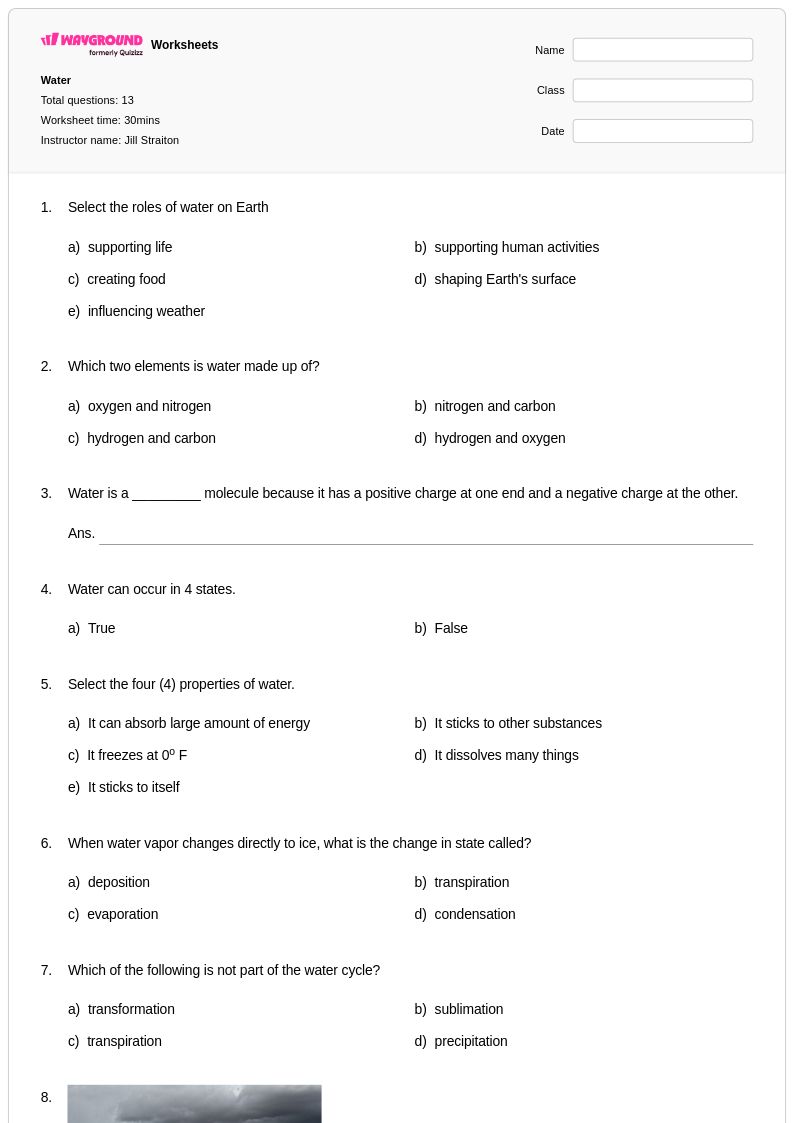
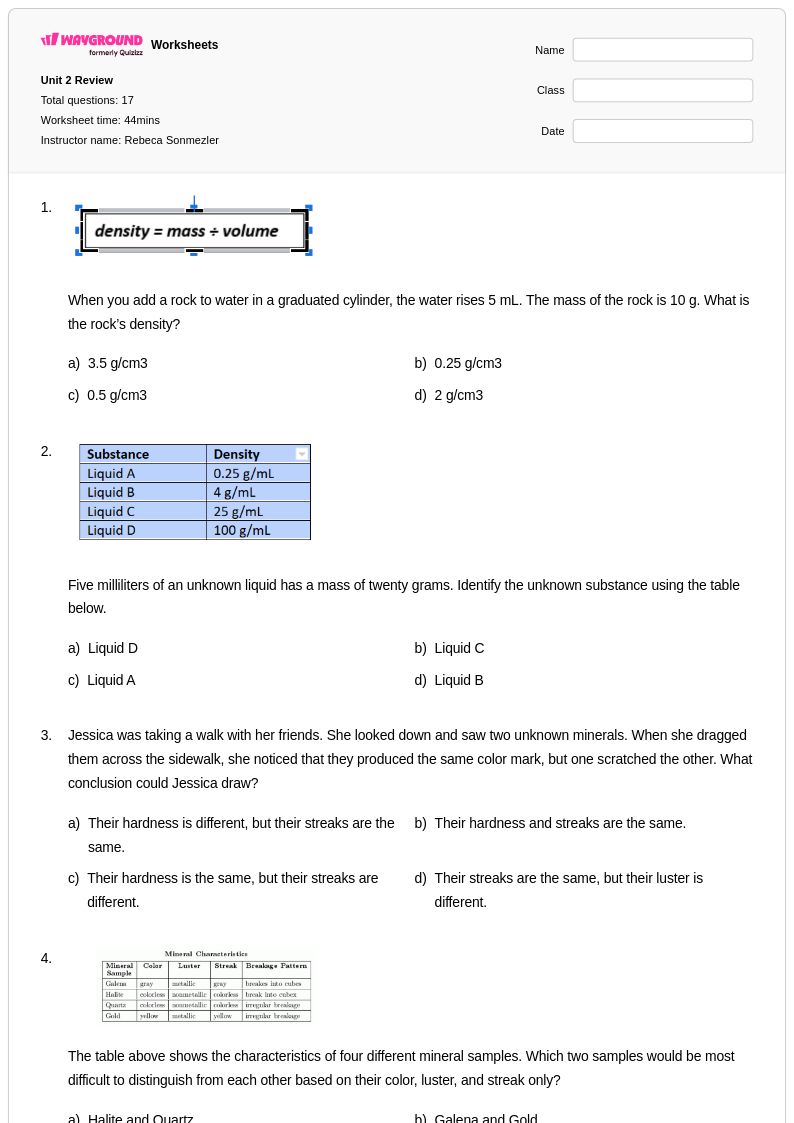
Properties of Carbon worksheets for Class 6 students available through Wayground (formerly Quizizz) provide comprehensive coverage of this fundamental chemistry concept within the biology curriculum. These educational resources help students understand carbon's unique characteristics, including its ability to form four covalent bonds, create long chains and ring structures, and serve as the backbone of organic molecules essential to life. The worksheets strengthen critical thinking skills as students explore carbon's role in biological systems, from simple organic compounds to complex biomolecules like carbohydrates, lipids, and proteins. Each worksheet includes practice problems that reinforce learning objectives, and many come with detailed answer keys to support independent study. These free printable resources are designed as pdf downloads, making them easily accessible for both classroom instruction and home practice.
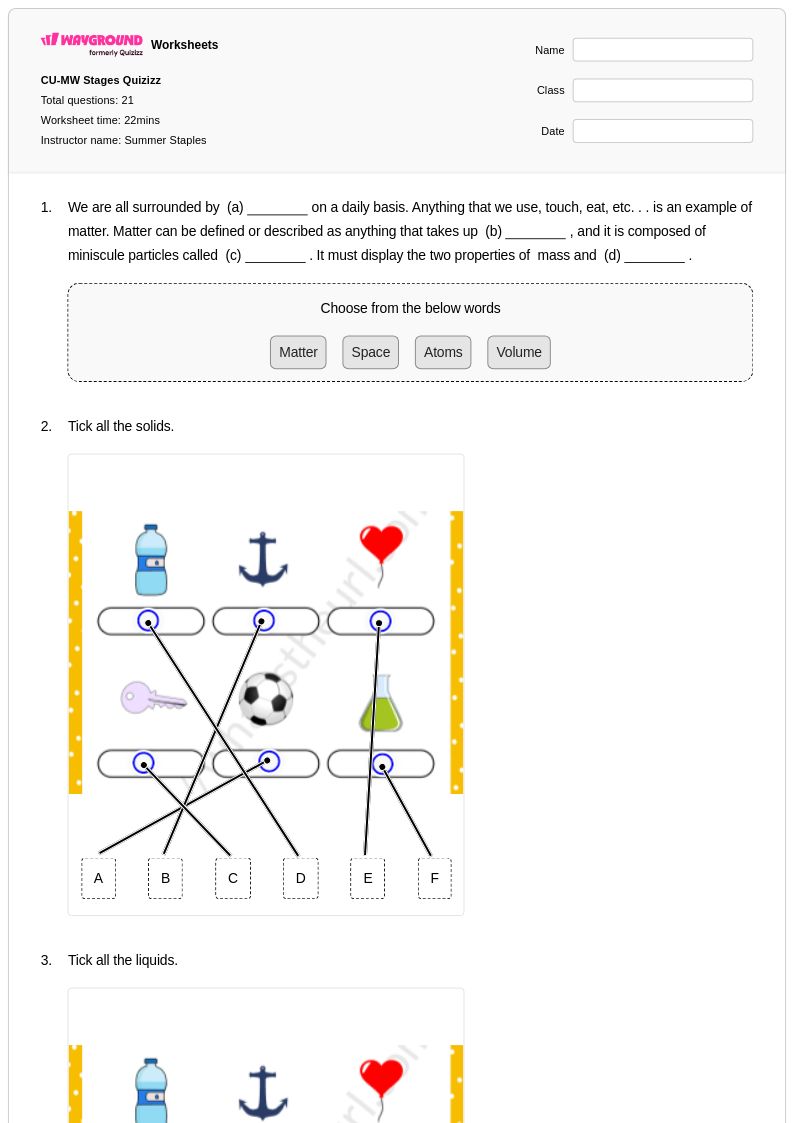
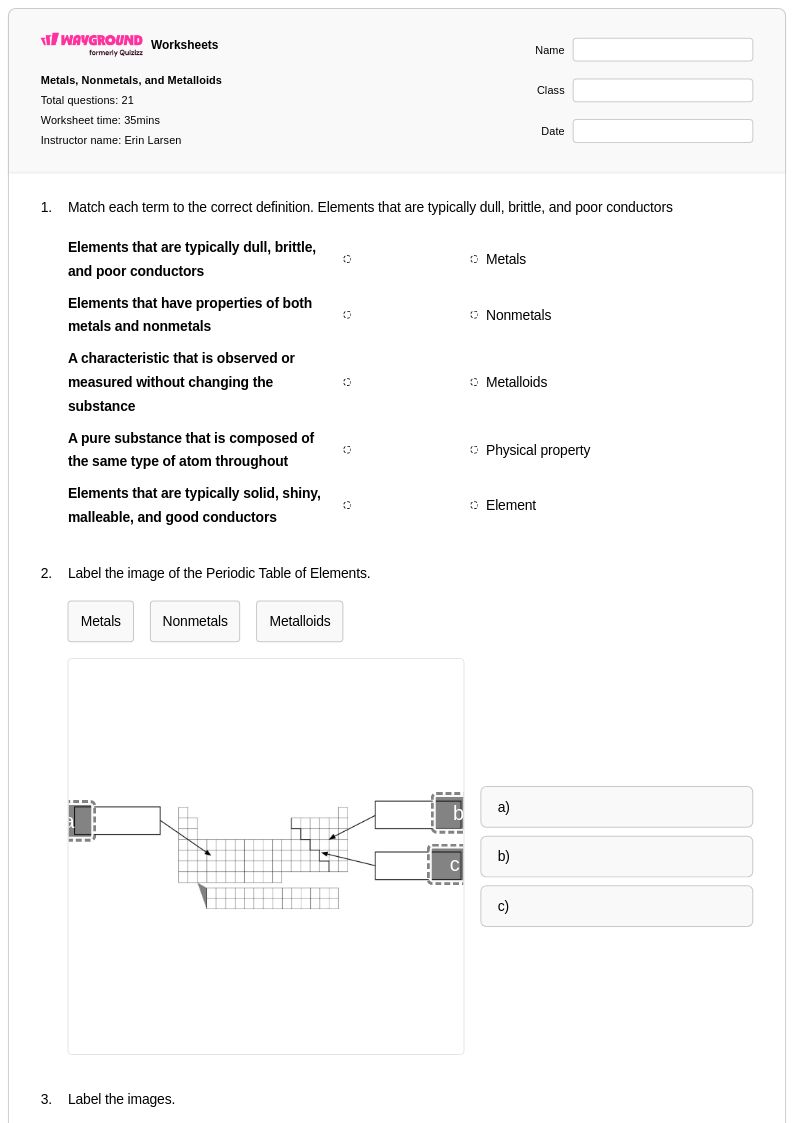
Wayground (formerly Quizizz) supports educators with an extensive collection of teacher-created Properties of Carbon worksheets that can be seamlessly integrated into Class 6 science instruction. The platform's millions of educational resources include materials that align with national and state science standards, ensuring that carbon chemistry concepts are taught with appropriate depth and rigor for middle school learners. Teachers can utilize advanced search and filtering tools to locate worksheets that match specific learning objectives, whether focusing on carbon bonding patterns, organic molecule identification, or carbon cycle connections in biological systems. The platform's differentiation capabilities allow educators to customize content for diverse learning needs, supporting both remediation for struggling students and enrichment opportunities for advanced learners. Available in both printable and digital formats, these resources facilitate flexible lesson planning and provide essential skill practice that prepares students for more advanced chemistry and biology concepts.
FAQs
How do I teach the properties of carbon to chemistry students?
Start by grounding students in carbon's tetravalent nature — its ability to form four covalent bonds — before moving into how this property enables chain formation, branching, and ring structures. Use molecular model kits or structural diagrams to make abstract bonding concepts tangible. From there, connect carbon's bonding behavior to real-world examples like hydrocarbons and biomolecules, which helps students see why carbon is central to both organic chemistry and biology.
What exercises help students practice carbon's bonding and molecular structures?
Effective practice for this topic includes drawing Lewis structures for simple carbon-based molecules, identifying hybridization states (sp, sp², sp³), and comparing the structural differences between alkanes, alkenes, and alkynes. Worksheets that ask students to build or complete structural formulas help reinforce how carbon's four bonds translate into actual molecular geometries. Practice problems that move from simple hydrocarbons toward more complex organic molecules build skill progressively and prepare students for advanced chemistry coursework.
What mistakes do students commonly make when learning about carbon's properties?
A frequent misconception is that carbon always forms single bonds — students often struggle to recognize when double or triple bonds form and how those affect molecular geometry and hybridization. Another common error is conflating the number of bonds carbon can form with the number of atoms it bonds to, leading to incorrect structural drawings. Students also tend to overlook the distinction between structural isomers, drawing the same compound twice without recognizing they've written equivalent structures.
How does carbon's tetravalent nature relate to organic chemistry?
Carbon's ability to form exactly four covalent bonds is the foundational property that makes organic chemistry possible. This tetravalency allows carbon to bond with other carbon atoms in chains, branches, and rings while simultaneously bonding to hydrogen, oxygen, nitrogen, and other elements, producing the enormous diversity of organic compounds. Without this property, the structural complexity needed for biomolecules like proteins, DNA, and carbohydrates could not exist.
How can I use properties of carbon worksheets in my classroom?
Properties of carbon worksheets on Wayground are available as printable PDFs for traditional classroom use and in digital formats for technology-integrated or remote learning environments, giving teachers flexibility in how they deploy them. Teachers can also host these worksheets as a quiz directly on Wayground, enabling real-time student responses and immediate feedback. Each worksheet includes detailed answer keys, making them effective for independent practice, guided instruction, or review sessions before assessments.
How do I differentiate instruction for students who are struggling with carbon's molecular structures?
For students who need additional support, break the topic into smaller steps — start with single bonds before introducing double and triple bonds, and use visual scaffolds like partially completed structural diagrams. On Wayground, teachers can apply individual accommodations such as reduced answer choices to lower cognitive load, extended time for students who need it, and read-aloud support for those with reading-based challenges. These settings can be applied per student without notifying the rest of the class, keeping differentiation seamless.