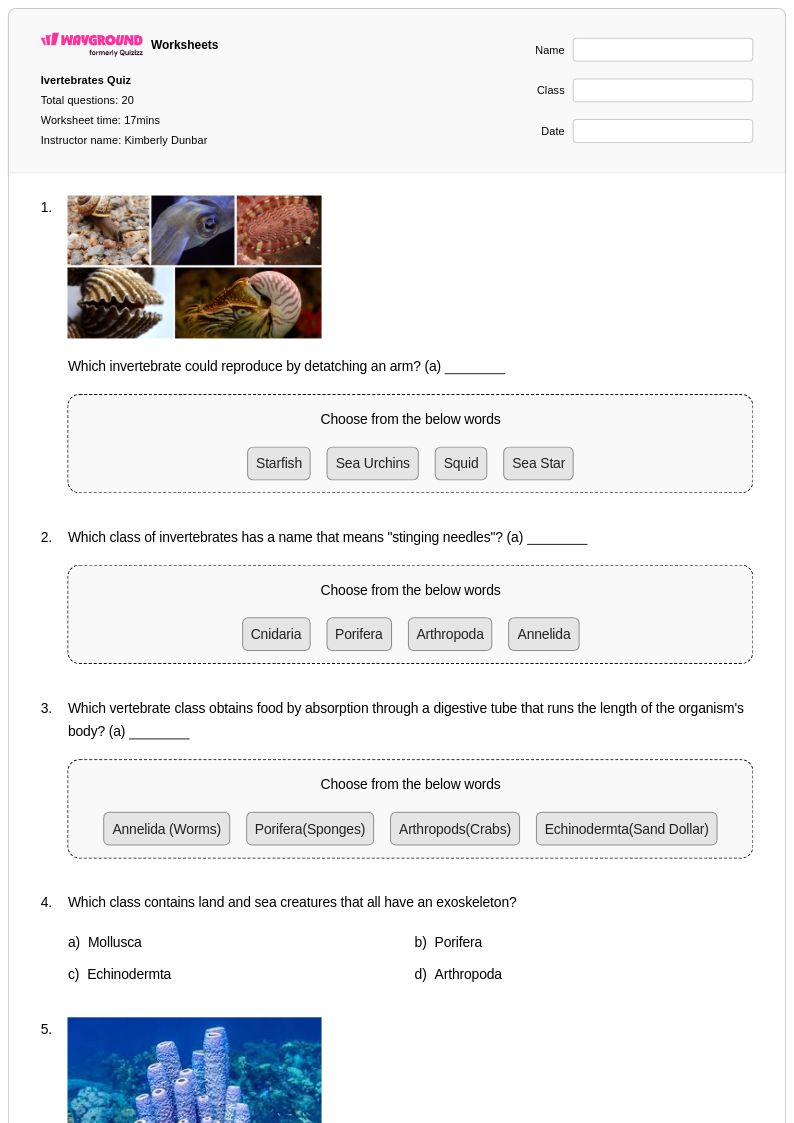
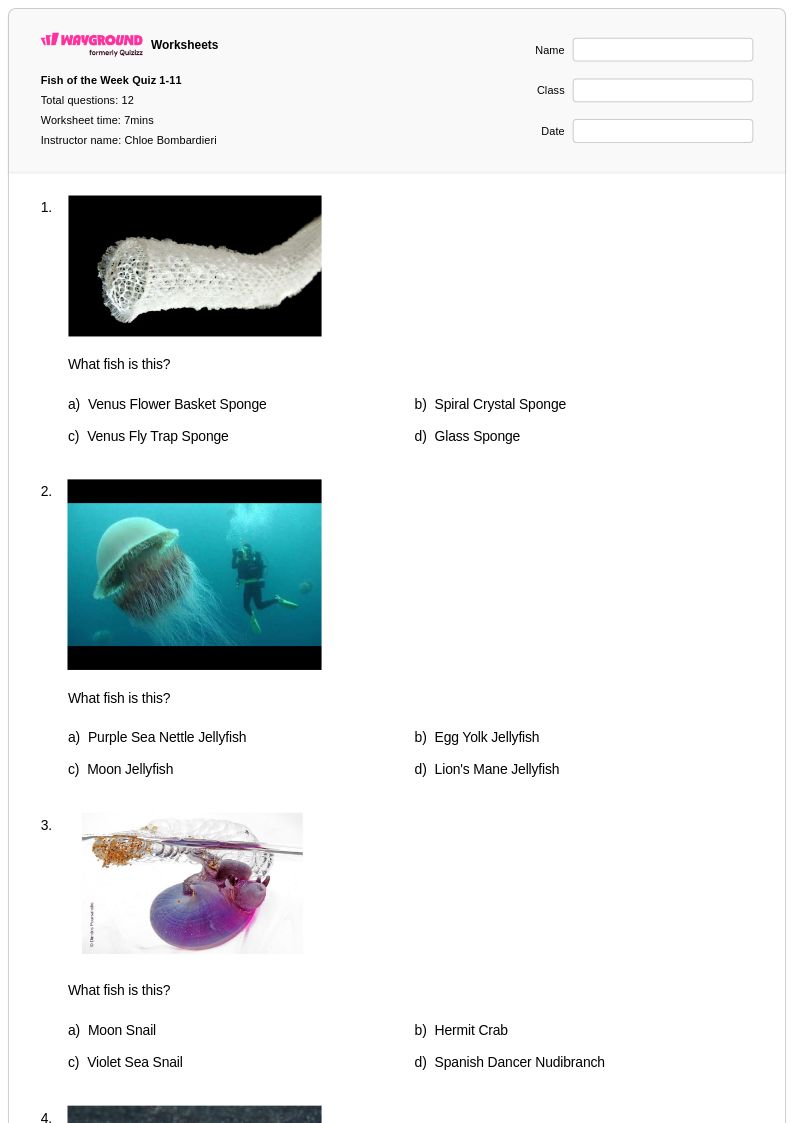
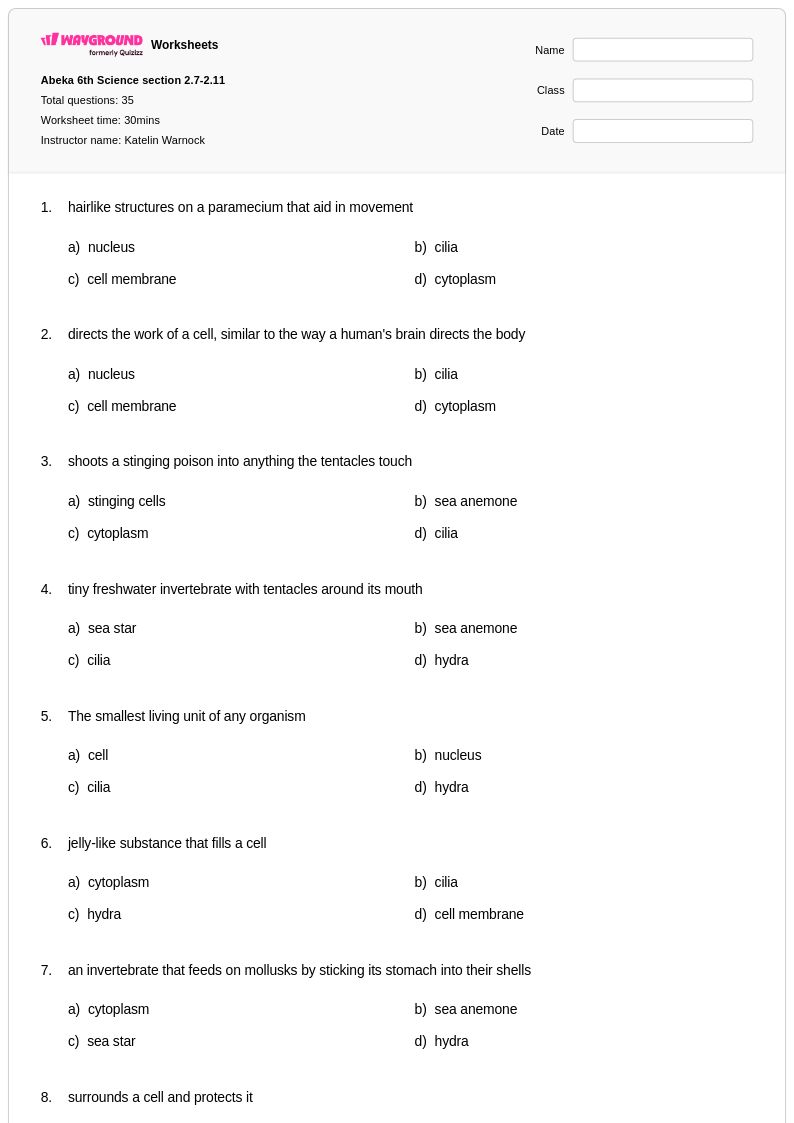
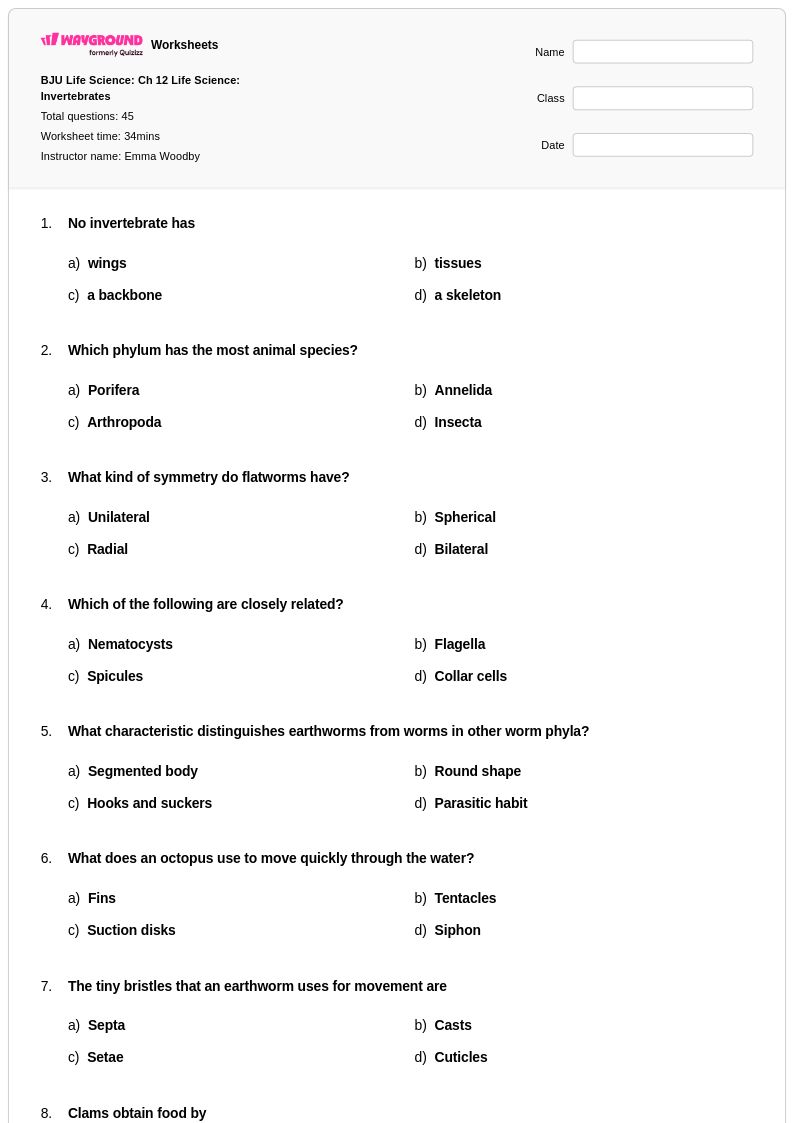
Explore Wayground's free Class 6 jellyfish biology worksheets and printables that help students discover marine life anatomy, life cycles, and adaptations through engaging practice problems with complete answer keys.
Explore printable Jellyfish worksheets for Class 6
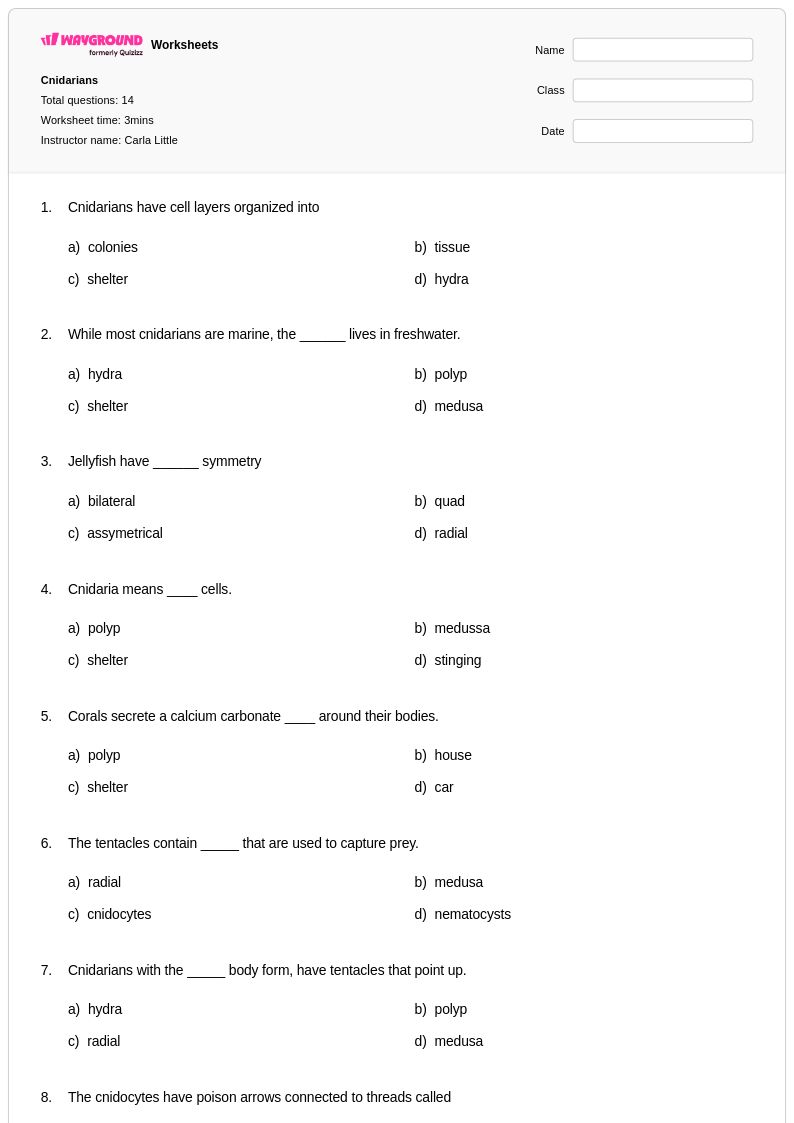
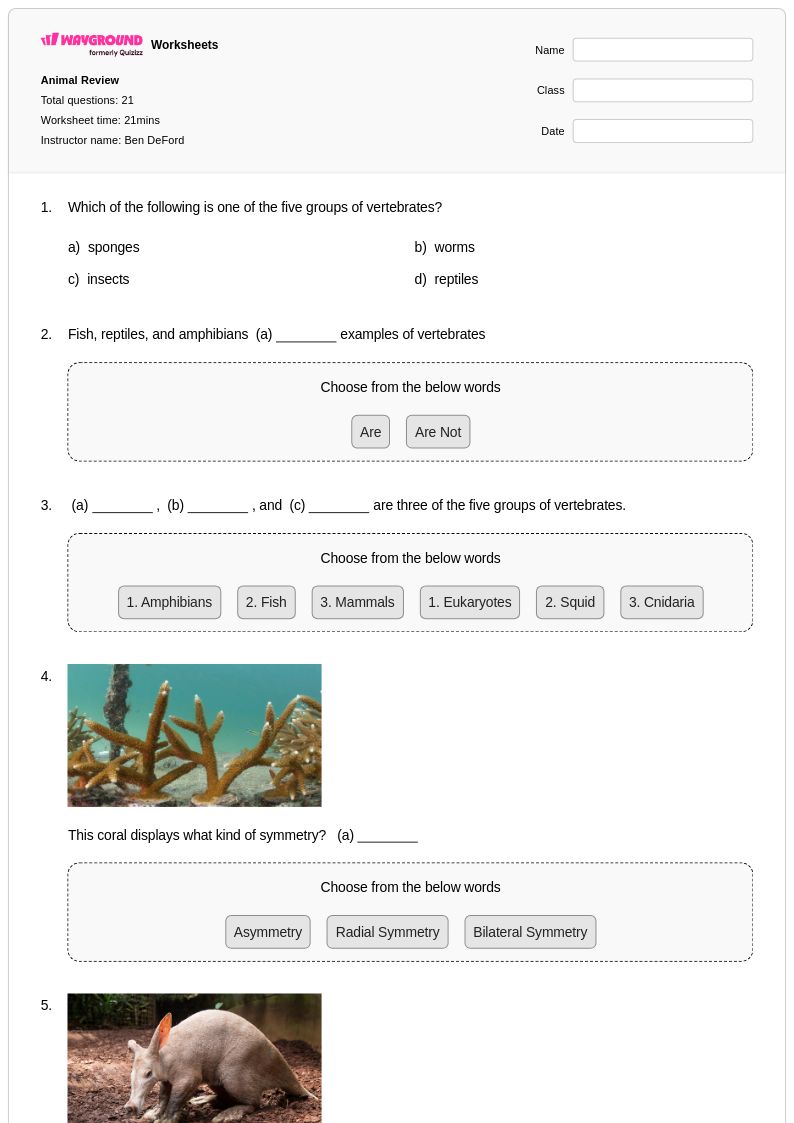
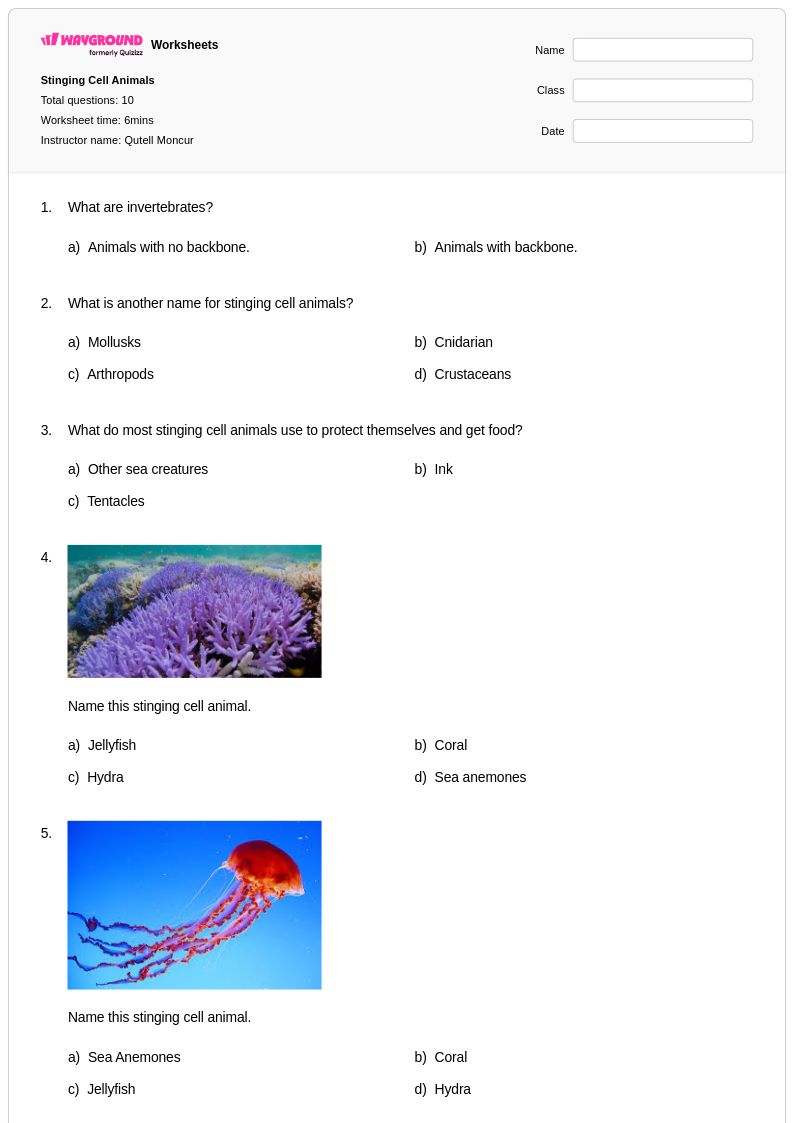
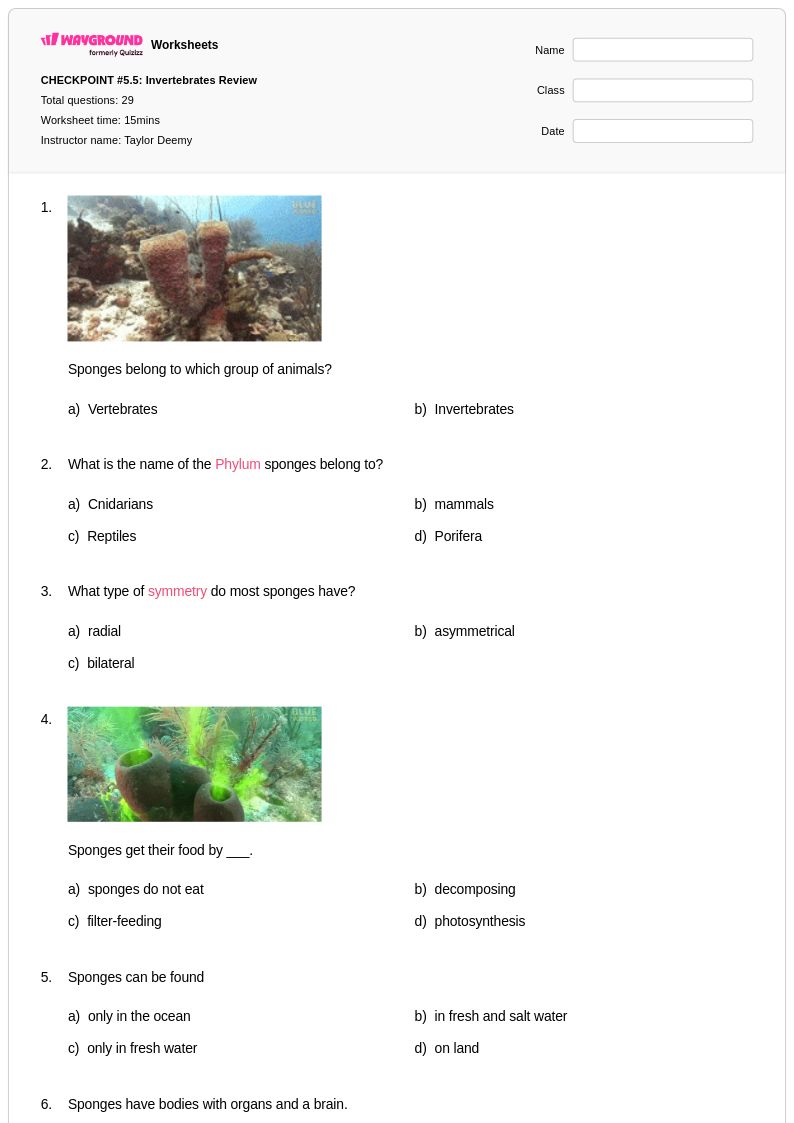
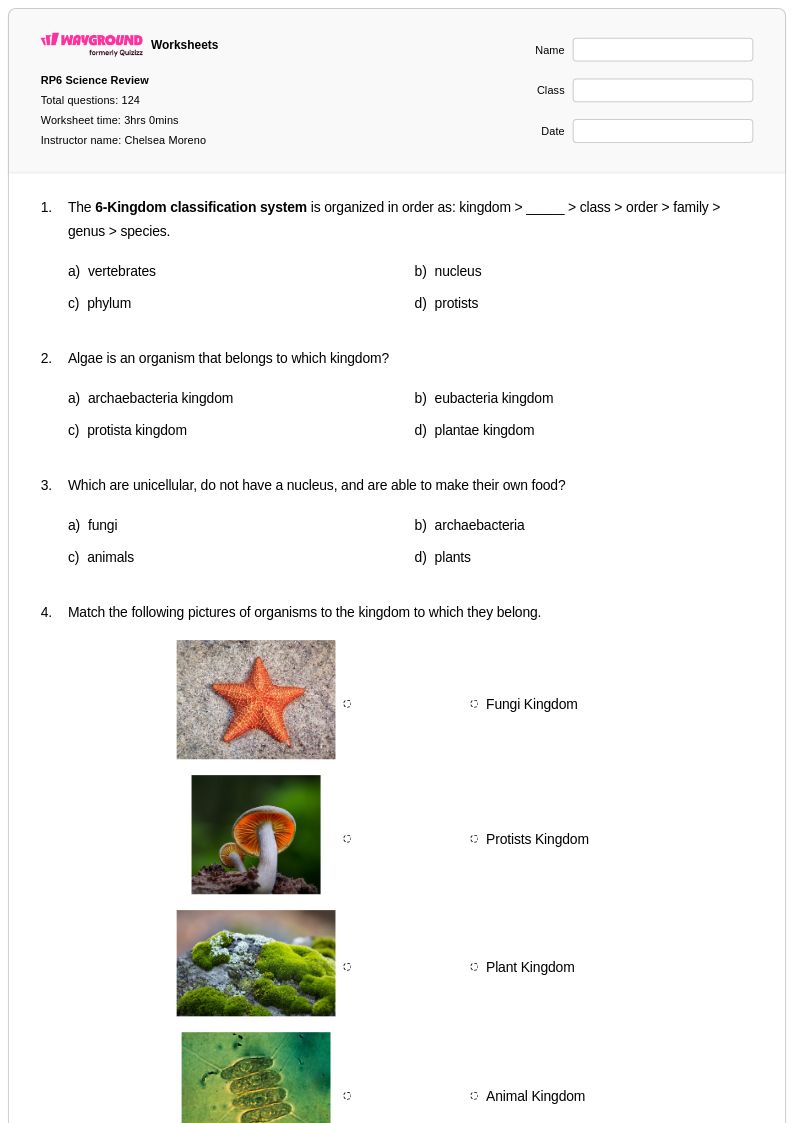
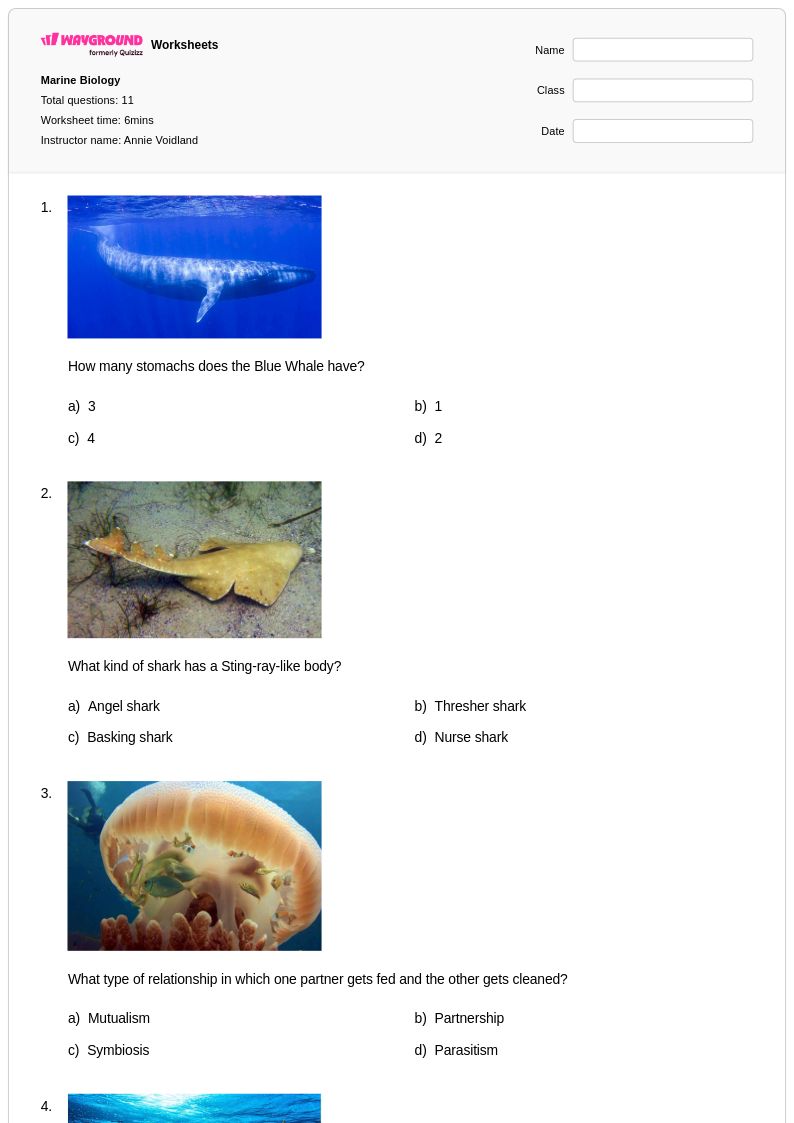
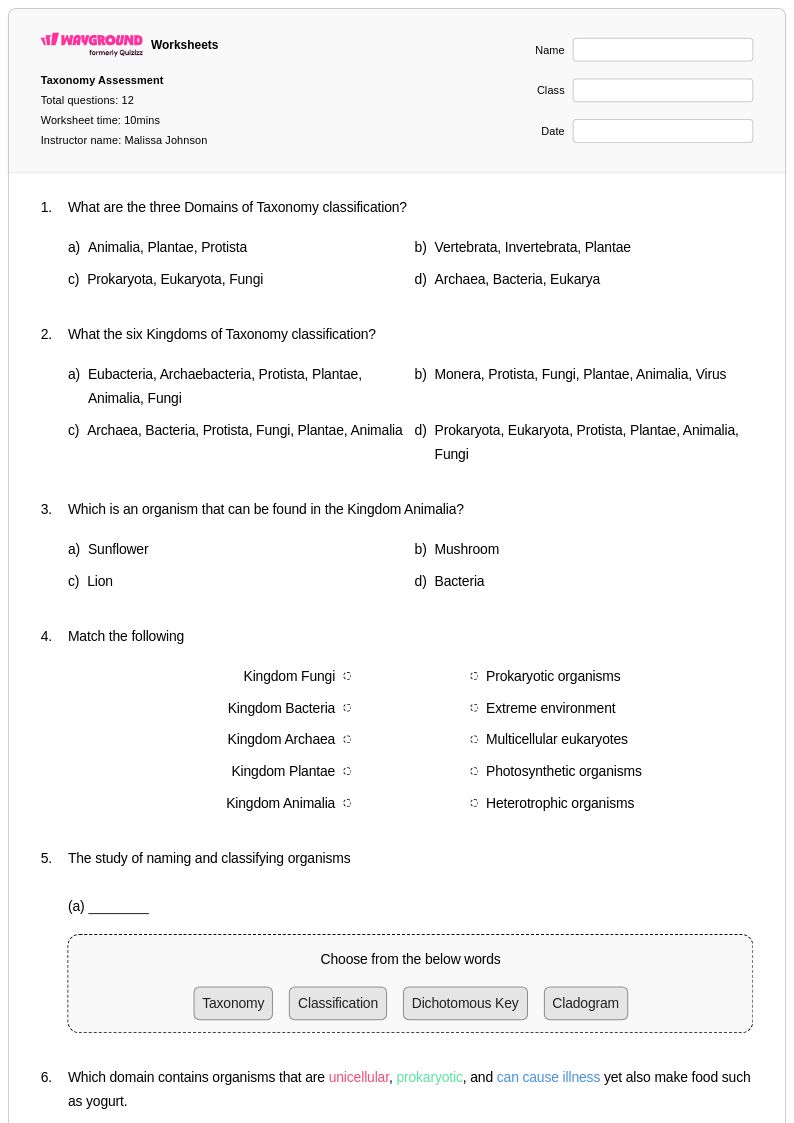
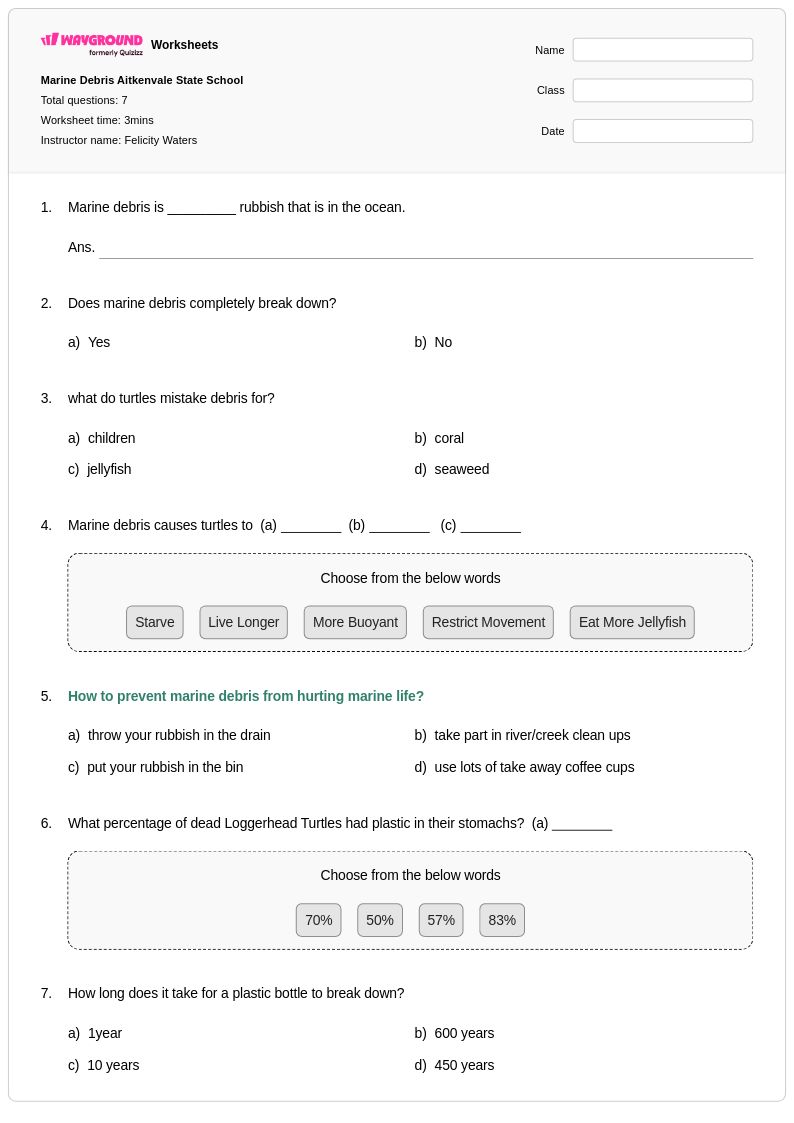
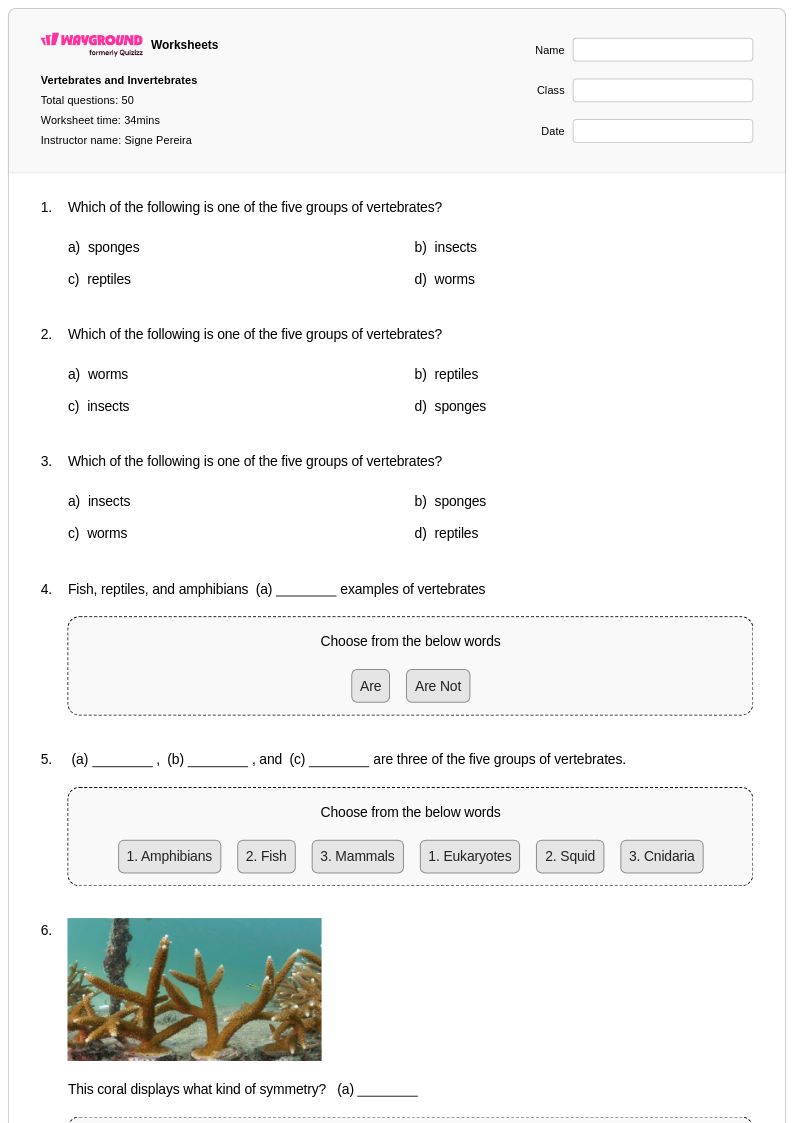
Class 6 jellyfish worksheets available through Wayground (formerly Quizizz) provide comprehensive learning resources that explore the fascinating biology of these ancient marine creatures. These educational materials strengthen students' understanding of cnidarian anatomy, life cycles, and ecological roles while developing critical scientific observation and analysis skills. The worksheet collection includes detailed practice problems covering jellyfish body structure, reproduction methods, feeding mechanisms, and habitat requirements, with accompanying answer keys that support both independent learning and classroom instruction. Available as free printables in convenient pdf format, these resources help sixth-grade students master fundamental concepts about jellyfish biology through engaging activities that connect classroom learning to real-world marine ecosystems.
Wayground (formerly Quizizz) empowers educators with access to millions of teacher-created jellyfish biology resources, featuring robust search and filtering capabilities that align with science education standards for Class 6 instruction. The platform's differentiation tools enable teachers to customize worksheets based on individual student needs, supporting both remediation for struggling learners and enrichment opportunities for advanced students. These flexible resources are available in both printable and digital formats, including downloadable pdf versions, making lesson planning efficient and adaptable to various classroom environments. Teachers can seamlessly integrate these jellyfish-focused materials into their biology curriculum to enhance skill practice, reinforce key concepts about marine invertebrates, and provide targeted support that meets diverse learning objectives in sixth-grade science education.
FAQs
How do I teach jellyfish biology in the classroom?
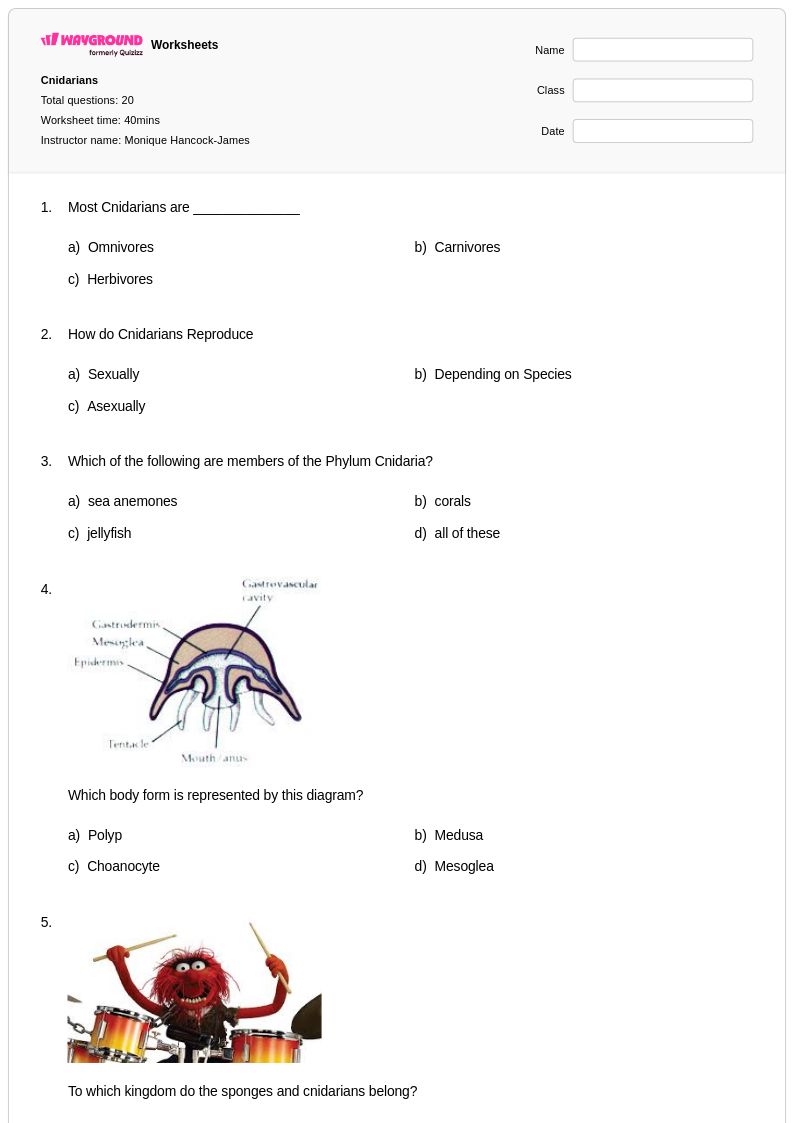
Start by grounding students in cnidarian anatomy before moving to lifecycle and ecological function. Introduce the bell, tentacles, and nematocysts as structural features, then trace the jellyfish lifecycle from polyp to medusa stage. Connecting anatomy to function — for example, explaining how nematocysts enable prey capture — helps students build conceptual understanding rather than memorizing isolated facts. Pairing visual diagrams with short reading passages supports both identification and comprehension.
What exercises help students practice jellyfish anatomy and lifecycle concepts?
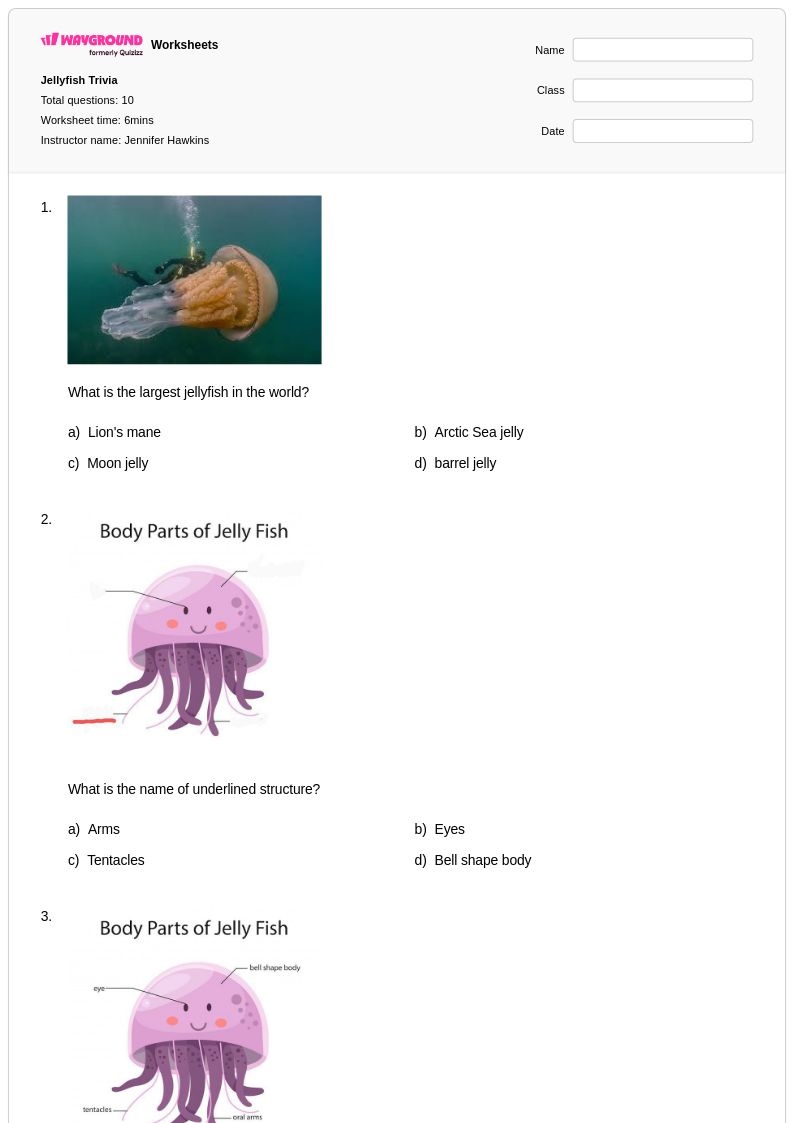
Labeling diagrams of the jellyfish body, including the bell, tentacles, oral arms, and nematocysts, is one of the most effective practice formats for anatomy. For lifecycle content, sequencing activities that ask students to arrange and describe the polyp and medusa stages reinforce developmental understanding. Short-answer and multiple-choice questions that connect structure to function — such as explaining how nematocysts work — push students beyond recall toward applied thinking.
What are the most common misconceptions students have about jellyfish?
A frequent misconception is that jellyfish are fish — students often overlook that they are invertebrates belonging to the phylum Cnidaria. Many students also conflate the polyp and medusa stages without understanding that they represent the same organism at different points in its lifecycle. Another common error is assuming all jellyfish sting humans dangerously; clarifying that nematocysts vary in potency by species adds important nuance. Students may also underestimate the ecological role of jellyfish, viewing them as passive drifters rather than active predators within ocean food webs.
How do jellyfish fit into ocean food webs, and how do I teach this?
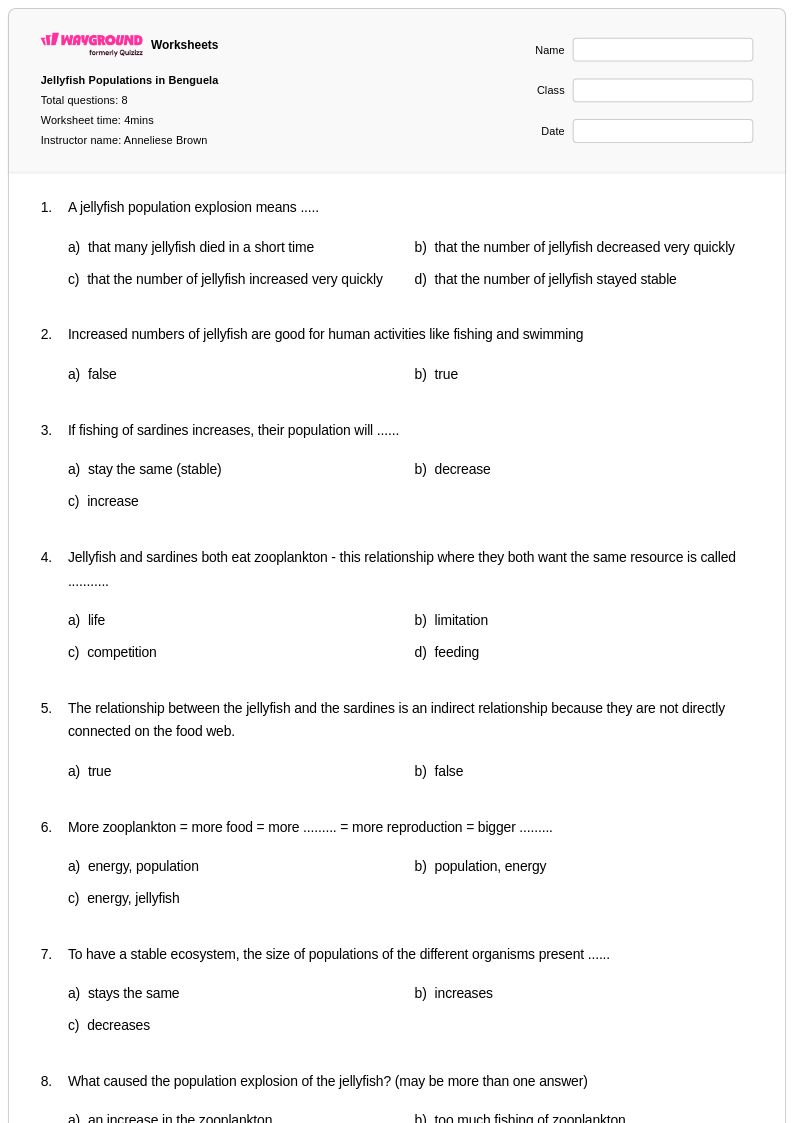
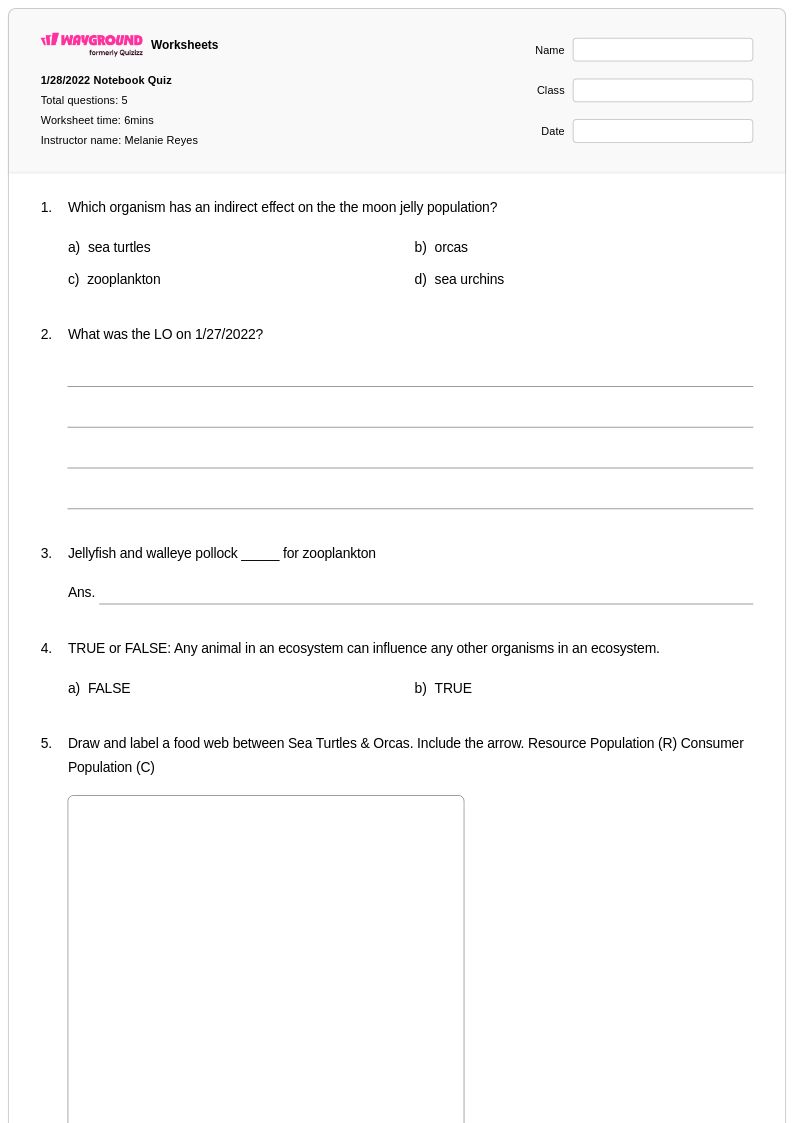
Jellyfish occupy a dual role in marine food webs as both predators and prey, making them a useful case study for teaching energy flow and trophic relationships. They feed on zooplankton, small fish, and fish eggs using their nematocysts, while serving as a food source for sea turtles, sunfish, and some seabirds. Teaching this dual role helps students understand that removing or proliferating a single species can have cascading effects on the broader ecosystem. Food web mapping activities that include jellyfish as a node are an effective way to make this concrete.
How can I use jellyfish worksheets effectively in my classroom?
Jellyfish worksheets on Wayground are available as printable PDFs for traditional classroom use and in digital formats for technology-integrated learning environments, and can also be hosted as a quiz directly on Wayground. Printable versions work well for independent practice, lab follow-ups, or homework assignments, while digital formats allow for self-paced work and immediate feedback. For differentiated instruction, Wayground's accommodation tools — including read-aloud support, reduced answer choices, and extended time — can be applied to individual students so all learners can access the same core content at an appropriate level.
How do I differentiate jellyfish biology instruction for students at different skill levels?
For foundational learners, focus on basic identification and vocabulary — labeling body parts and matching terms to definitions builds the scaffolding needed for more complex concepts. Advanced learners can engage with ecological analysis questions, such as how jellyfish blooms affect local fisheries or how climate change is expanding jellyfish populations. On Wayground, teachers can apply individual accommodations such as reduced answer choices or read-aloud features for students who need additional support, while other students receive standard settings without disruption.