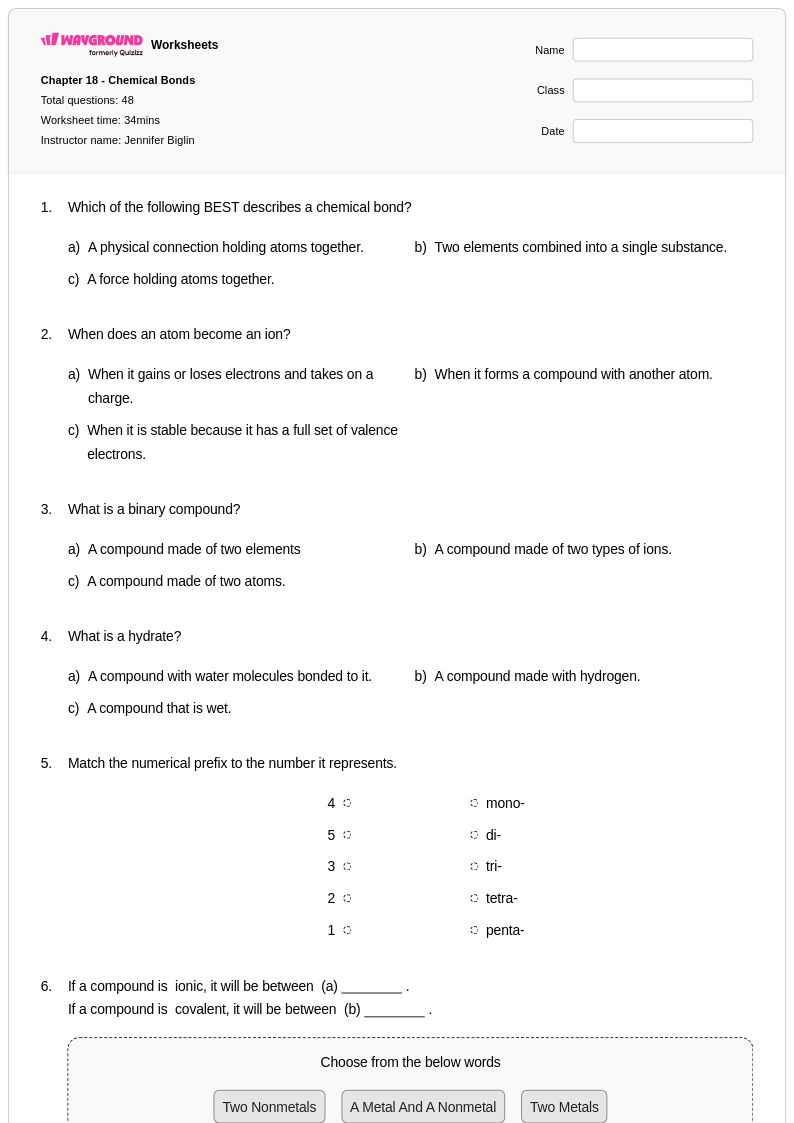
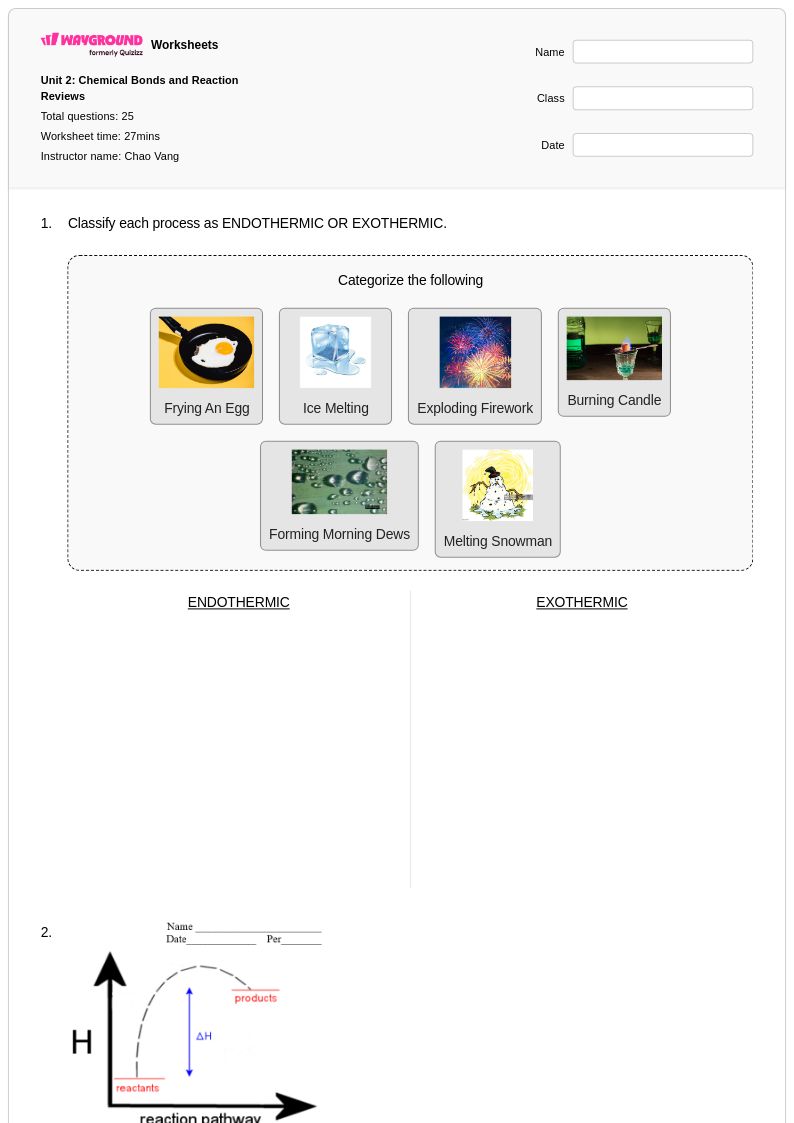
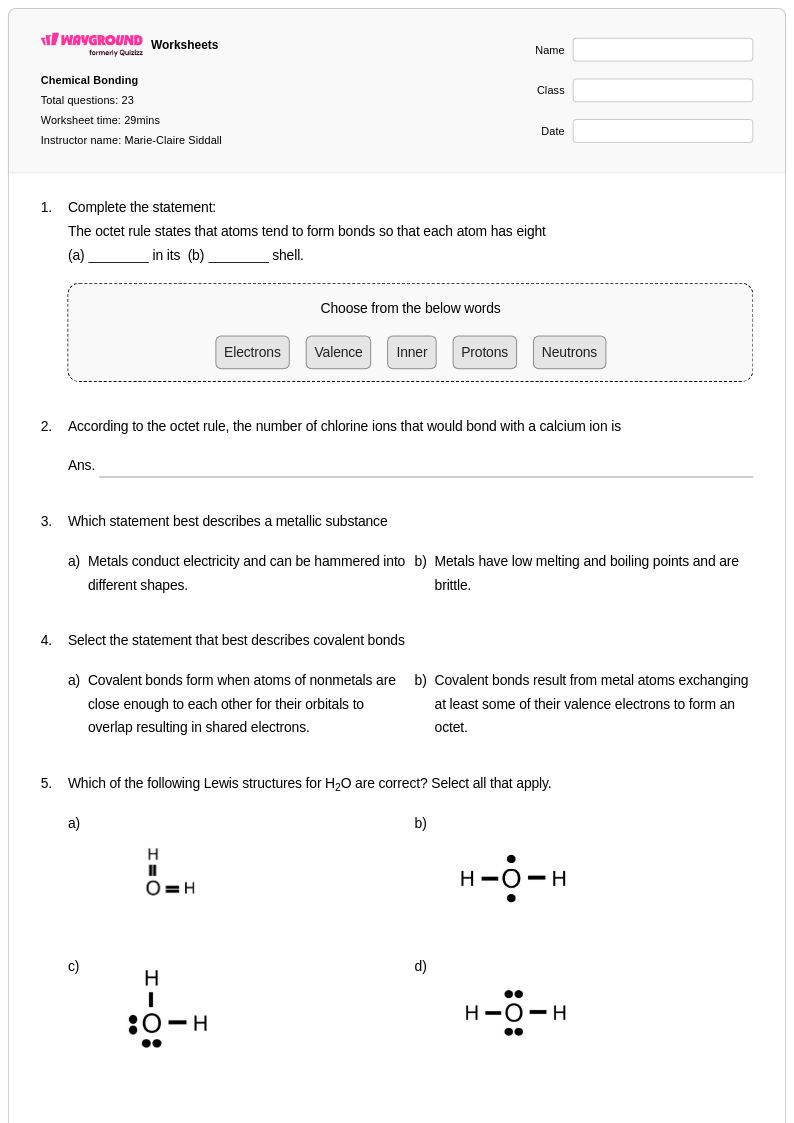
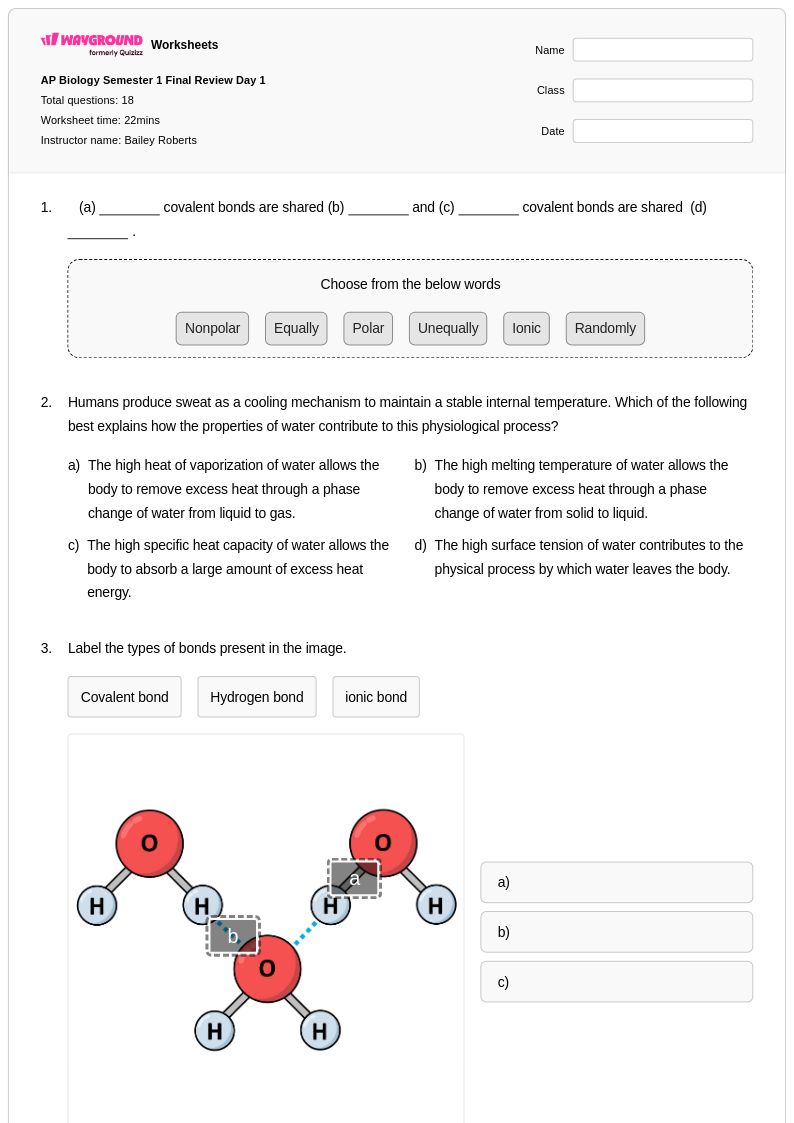
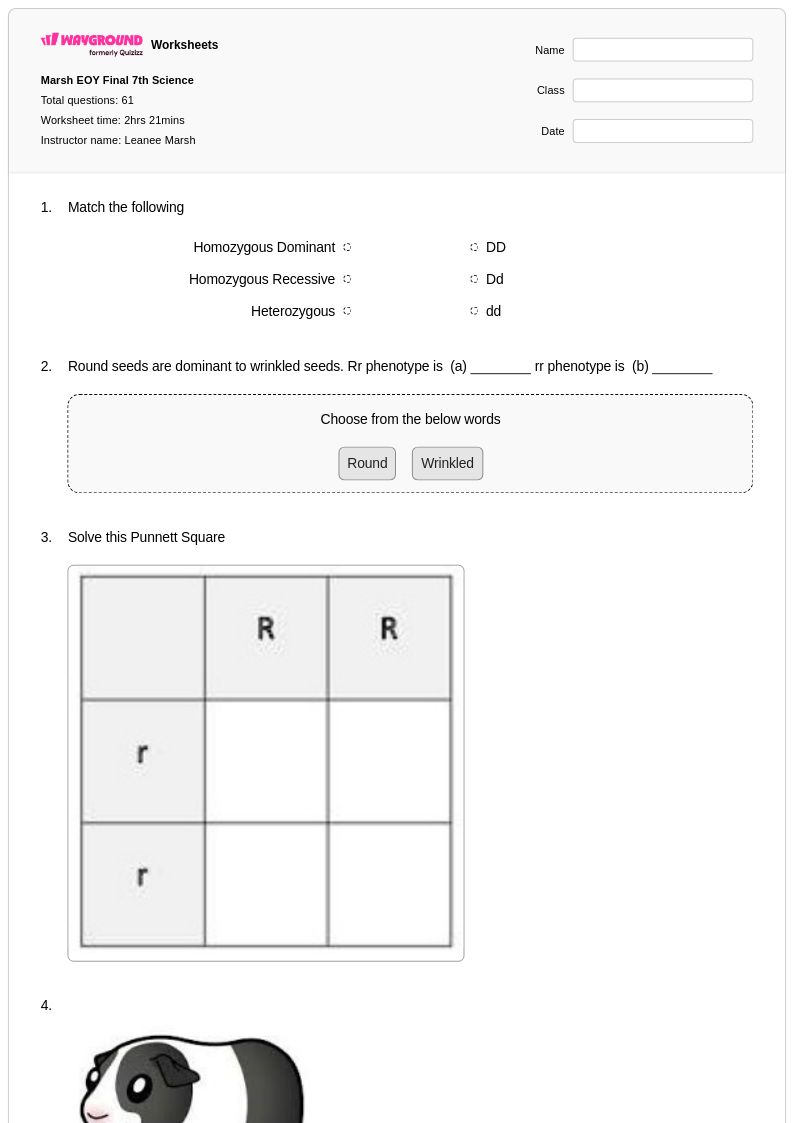
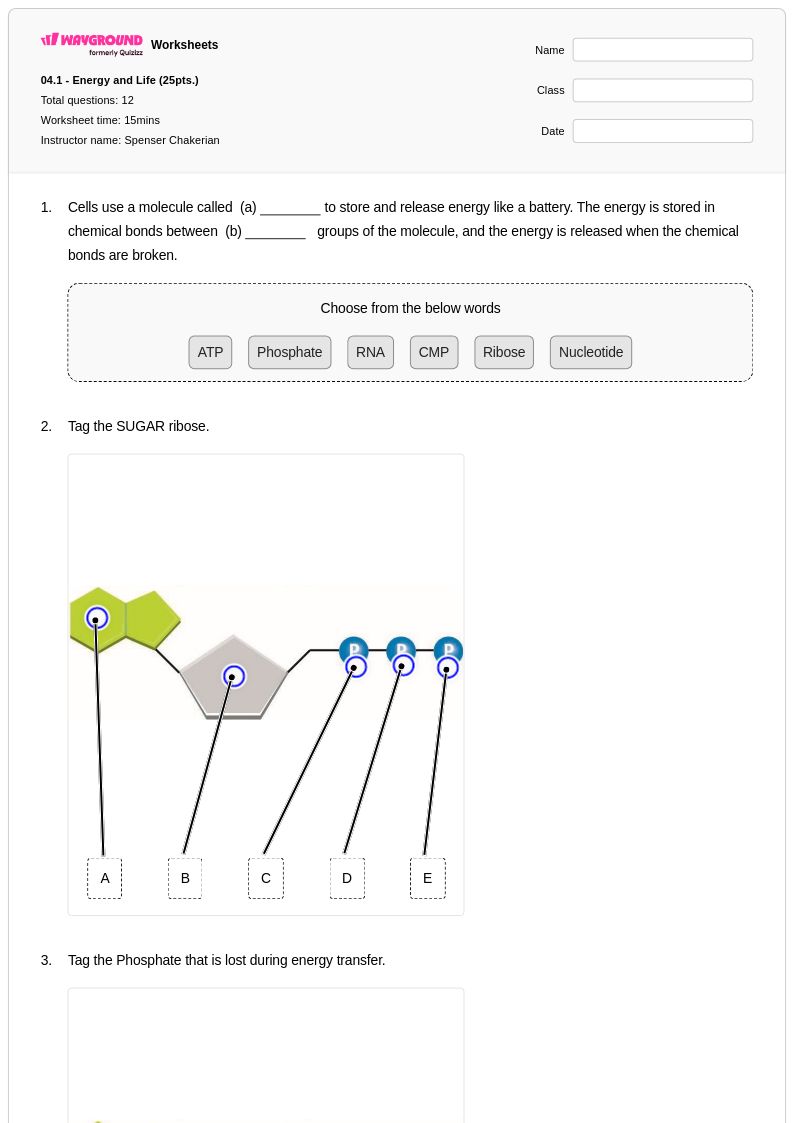
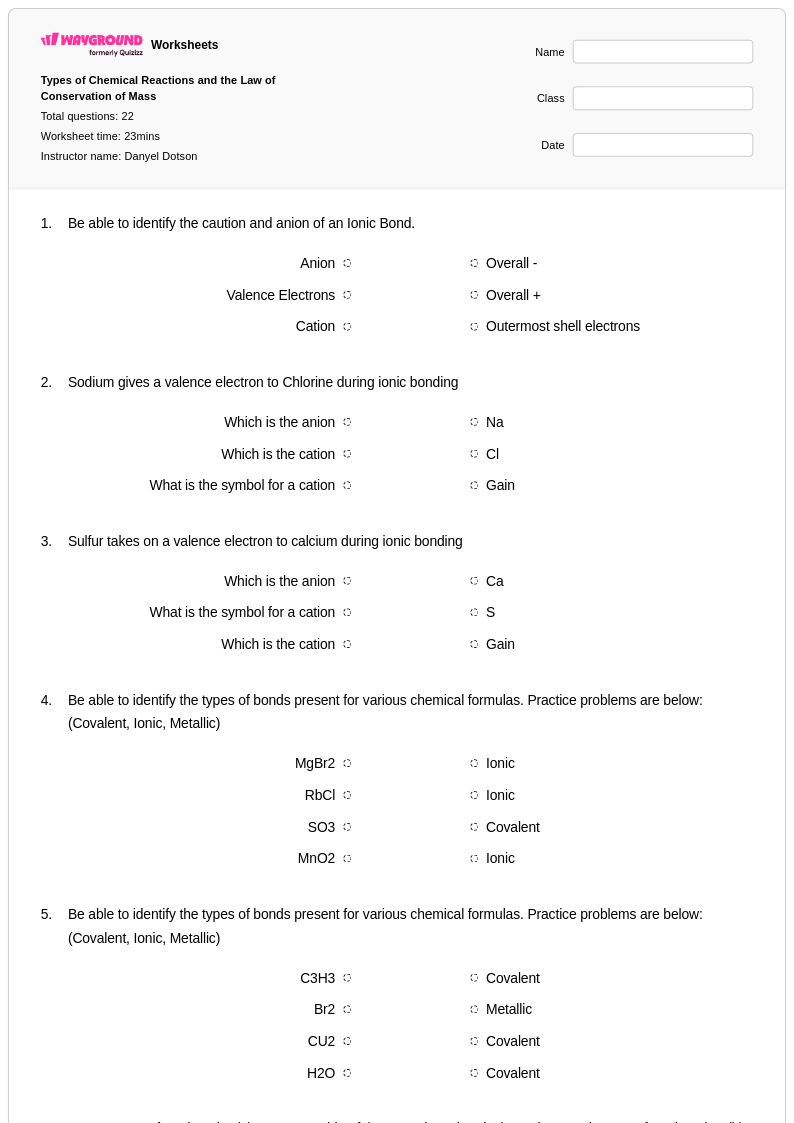
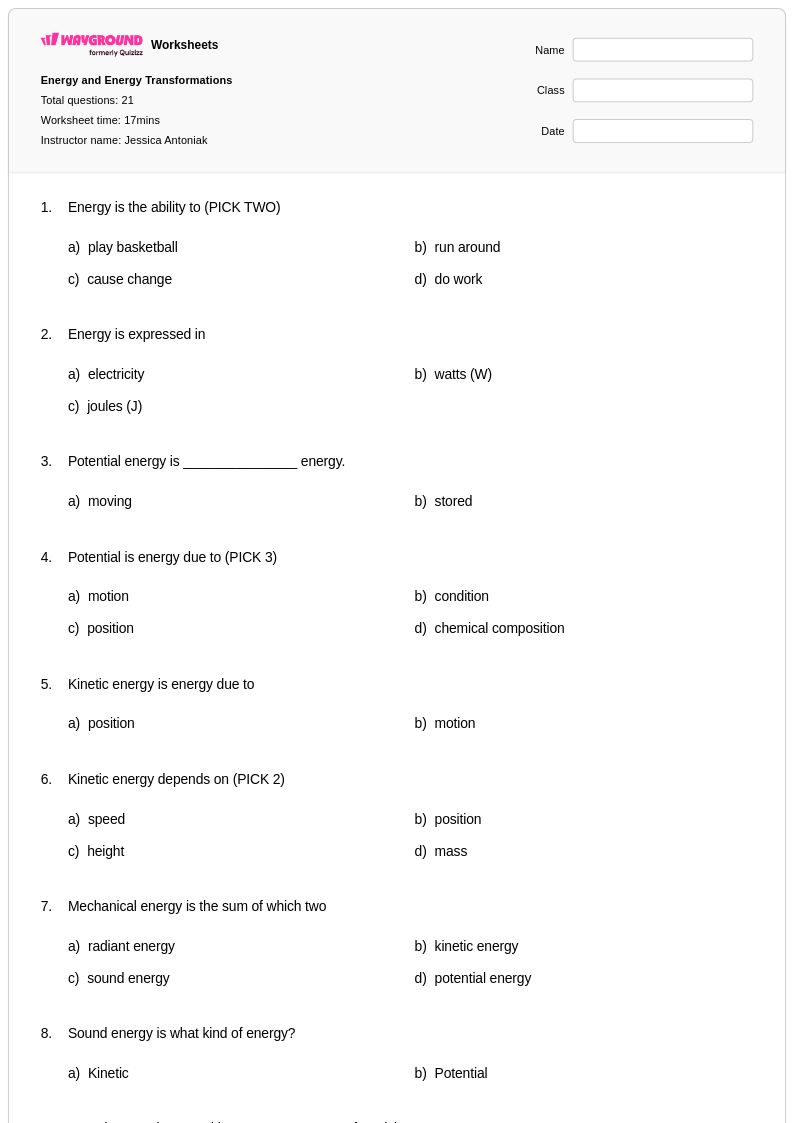
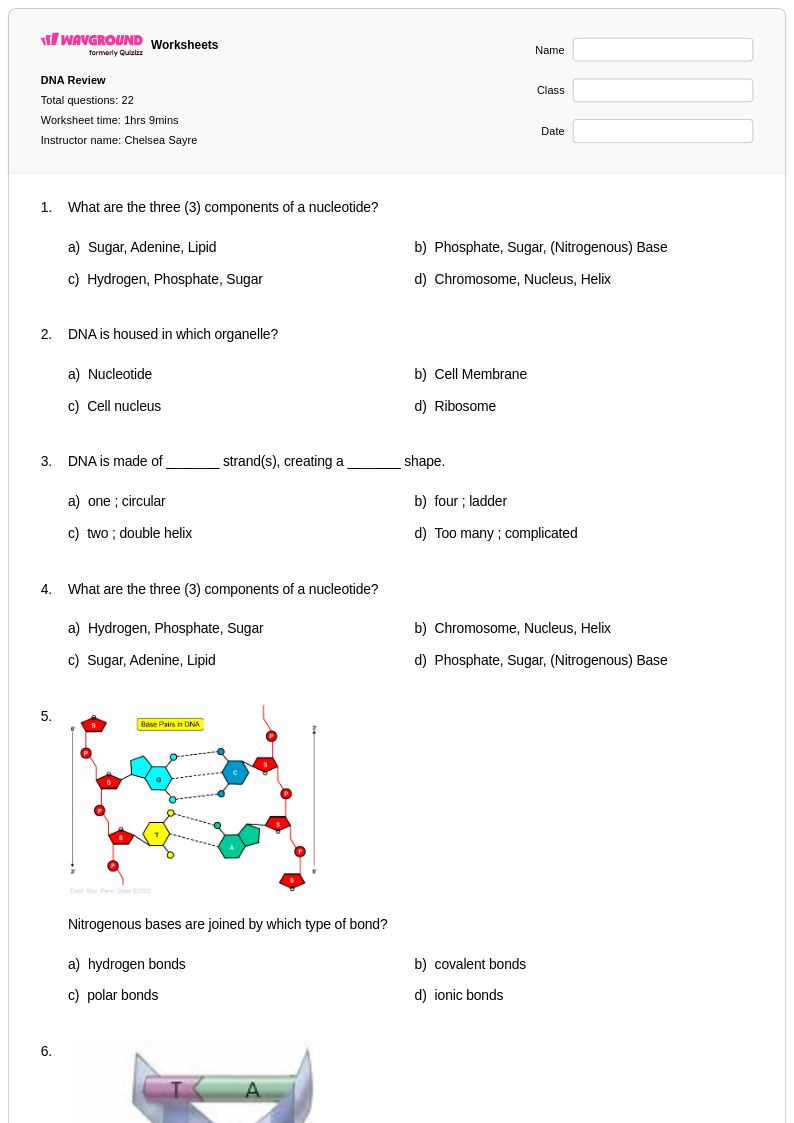
Explore Wayground's comprehensive collection of bond energy worksheets and printables that help students master chemical bond calculations through engaging practice problems, free PDFs, and detailed answer keys.
Bond energy worksheets available through Wayground (formerly Quizizz) provide comprehensive practice materials that help students master this fundamental chemistry concept across all academic levels. These educational resources focus on developing critical skills in calculating bond dissociation energies, predicting reaction enthalpies, and understanding the relationship between molecular structure and energy requirements. Students work through carefully designed practice problems that build proficiency in interpreting bond energy tables, applying Hess's law principles, and analyzing energy changes during chemical reactions. Each worksheet comes with detailed answer keys that support both independent study and classroom instruction, while the free printable pdf format ensures accessibility for diverse learning environments.
Wayground (formerly Quizizz) empowers educators with millions of teacher-created bond energy resources that streamline lesson planning and support differentiated instruction. The platform's robust search and filtering capabilities allow teachers to quickly locate worksheets aligned with specific chemistry standards and tailored to their students' skill levels. Advanced customization tools enable educators to modify existing materials or create personalized assessments that target individual learning needs, whether for remediation of struggling students or enrichment of advanced learners. Available in both printable and digital formats including downloadable pdfs, these versatile resources integrate seamlessly into traditional classroom settings, hybrid learning environments, and remote instruction models, providing consistent support for bond energy skill development and practice across diverse educational contexts.
FAQs
How do I teach bond energy to chemistry students?
Start by establishing the distinction between endothermic and exothermic processes at the bond level: energy is always absorbed when bonds break and always released when bonds form. From there, introduce bond dissociation energy tables and walk students through how to calculate the net energy change of a reaction by summing the energies of bonds broken minus bonds formed. Connecting this to Hess's law helps students see bond energy calculations as one method within a broader thermochemical framework. Using worked examples before moving to independent practice problems helps students build procedural fluency before tackling multi-step reactions.
What practice problems help students get better at bond energy calculations?
The most effective practice problems require students to use a bond energy table to calculate the enthalpy change of a reaction from scratch, rather than simply plugging numbers into a formula. Problems that include diatomic molecules, organic compounds, and reactions with multiple bond types force students to carefully count all bonds broken and formed. Scaffolded problem sets that move from simple two-bond reactions to multi-step organic reactions build the stamina and accuracy students need for exam conditions.
What mistakes do students commonly make when calculating bond energy?
The most common error is reversing the sign convention: students often subtract bonds formed from bonds broken but then apply the wrong sign to the final answer, or they confuse which process is endothermic versus exothermic. Another frequent mistake is failing to account for all bonds in a molecule, particularly in structural formulas where double or triple bonds are easy to undercount. Students also regularly forget to multiply bond energies by the number of moles of each bond type present in the balanced equation.
How does bond energy relate to reaction enthalpy, and how do I explain this connection clearly?
Reaction enthalpy can be estimated using bond energies through the relationship: ΔH ≈ Σ(bond energies broken) − Σ(bond energies formed). This works because breaking bonds requires energy input while forming bonds releases energy, so the net difference reflects whether the overall reaction is endothermic or exothermic. A useful classroom analogy is comparing it to a financial transaction: the energy you spend breaking bonds is a cost, and the energy released forming new bonds is a return. Emphasize that bond energy values are averages and therefore this method gives estimates, not exact thermodynamic values.
How can I use Wayground's bond energy worksheets in my chemistry classroom?
Wayground's bond energy worksheets are available as printable PDFs for traditional classroom use and in digital formats for technology-integrated instruction, making them flexible across in-person, hybrid, and remote settings. Teachers can also host the worksheets as a live quiz on Wayground, which allows for real-time student responses and immediate feedback. Each worksheet includes a detailed answer key, so the materials can support independent student practice, small-group work, or teacher-led review equally well.
How do I differentiate bond energy instruction for students at different skill levels?
For students who are struggling, reduce cognitive load by providing a pre-filled bond energy table and limiting early problems to reactions with three or fewer bond types. For advanced learners, introduce problems that require them to predict relative bond strengths from periodic trends or compare the accuracy of bond energy estimates against standard enthalpy values. On Wayground, teachers can apply individual accommodations such as extended time, read-aloud support, or reduced answer choices to specific students without affecting the experience of the rest of the class.