Free Printable Ecological Succession Worksheets for Class 9
Class 9 ecological succession worksheets from Wayground provide comprehensive printables and practice problems that help students master the stages of ecosystem development, complete with answer keys and free PDF resources.
Explore printable Ecological Succession worksheets for Class 9
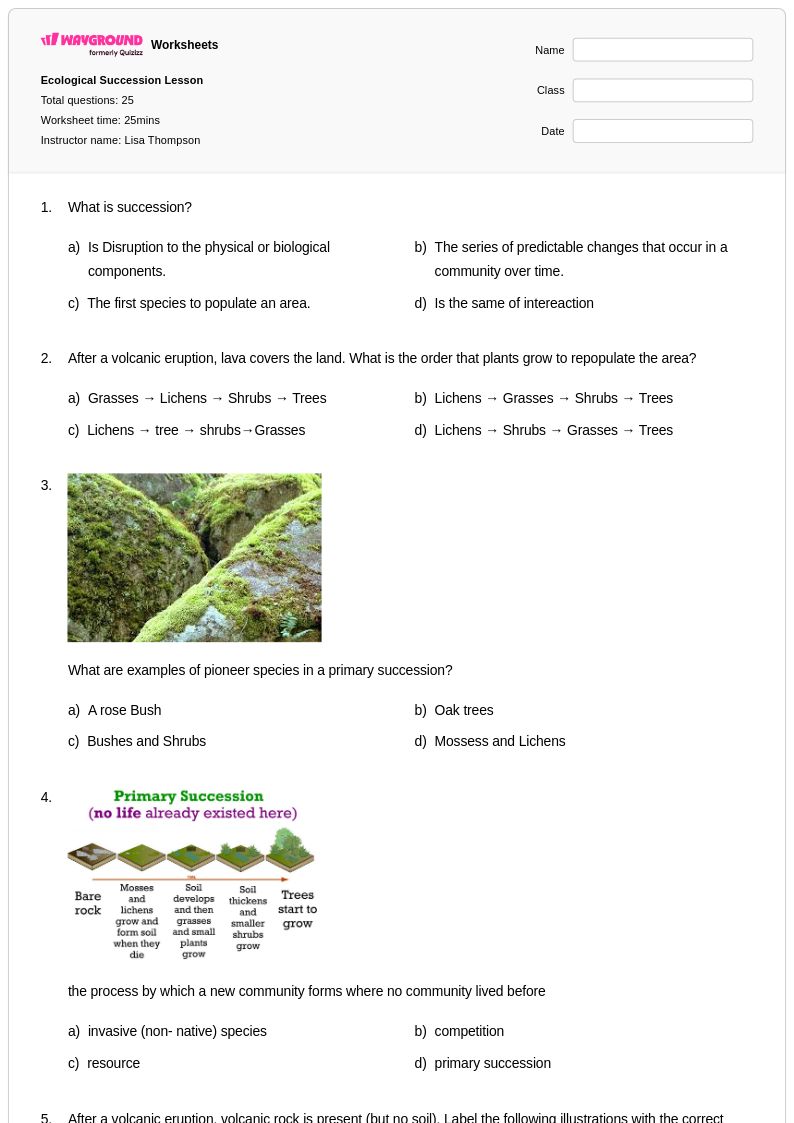
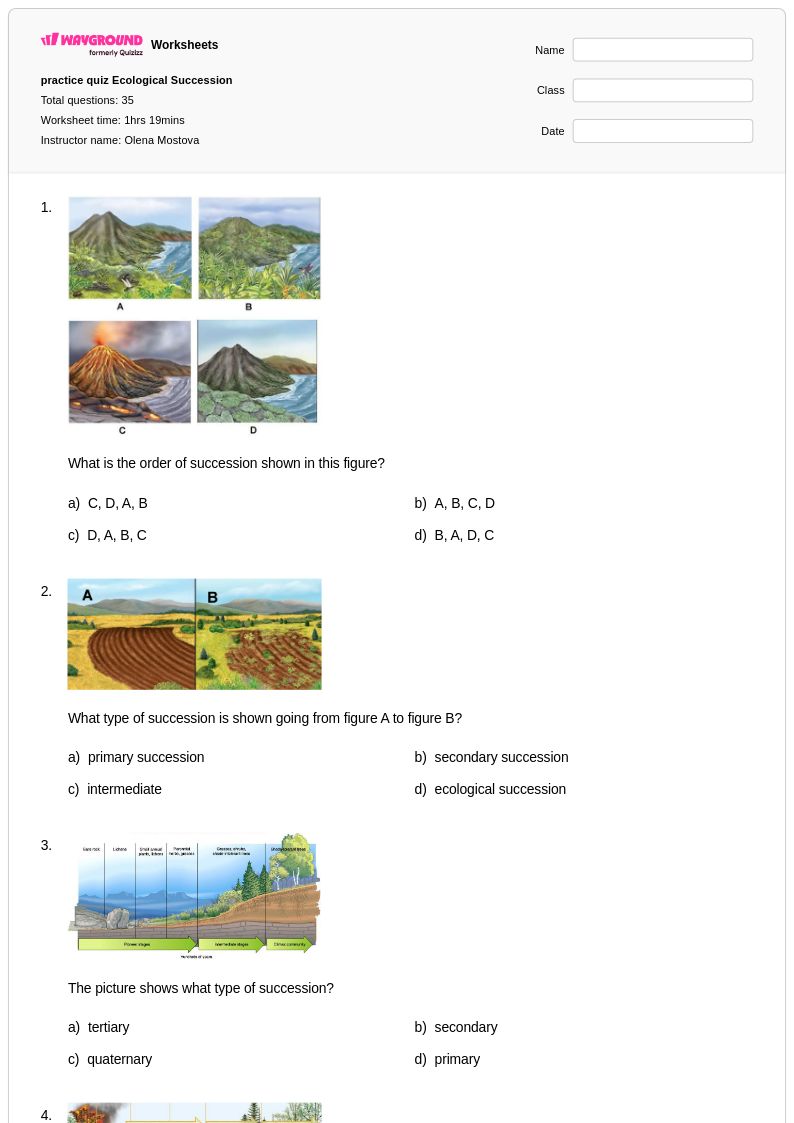
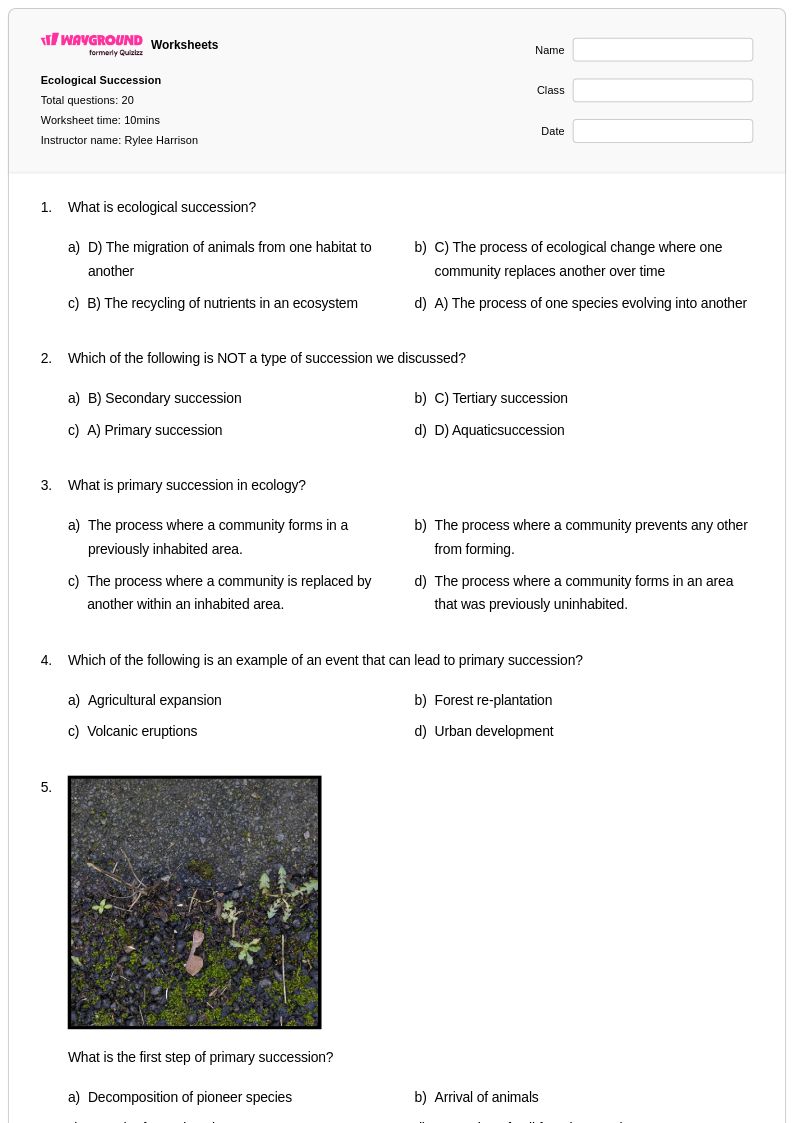
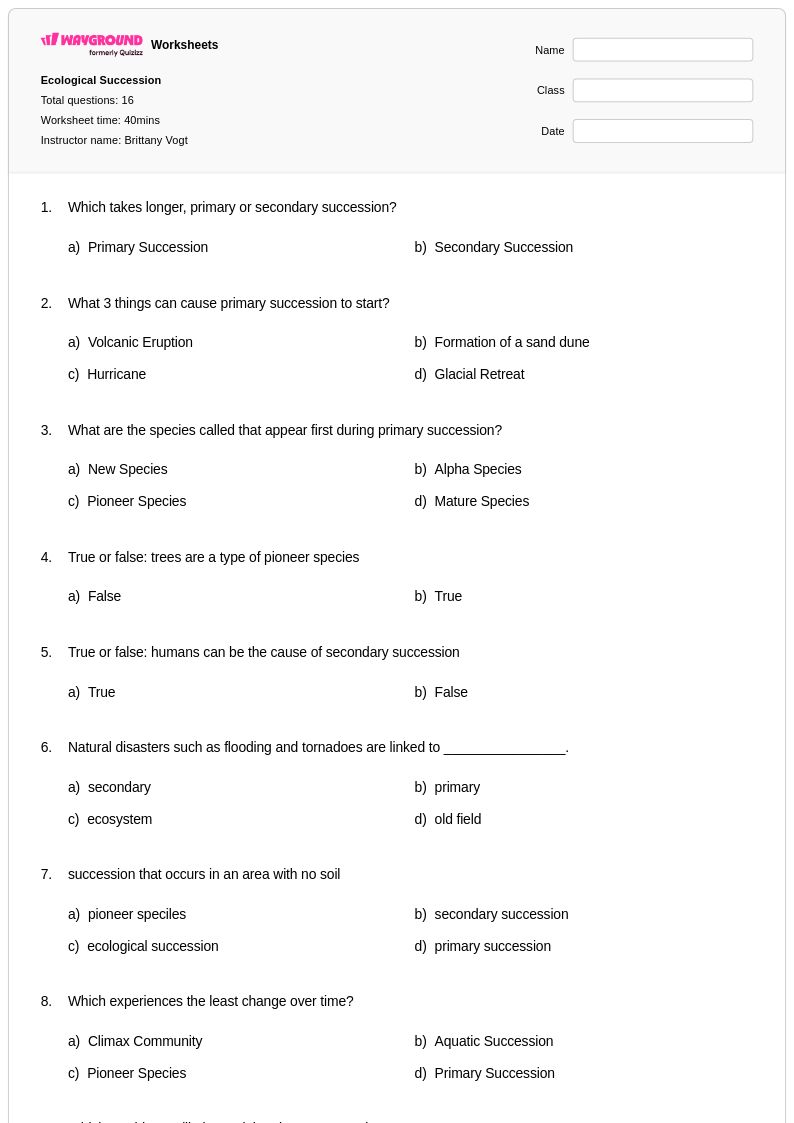
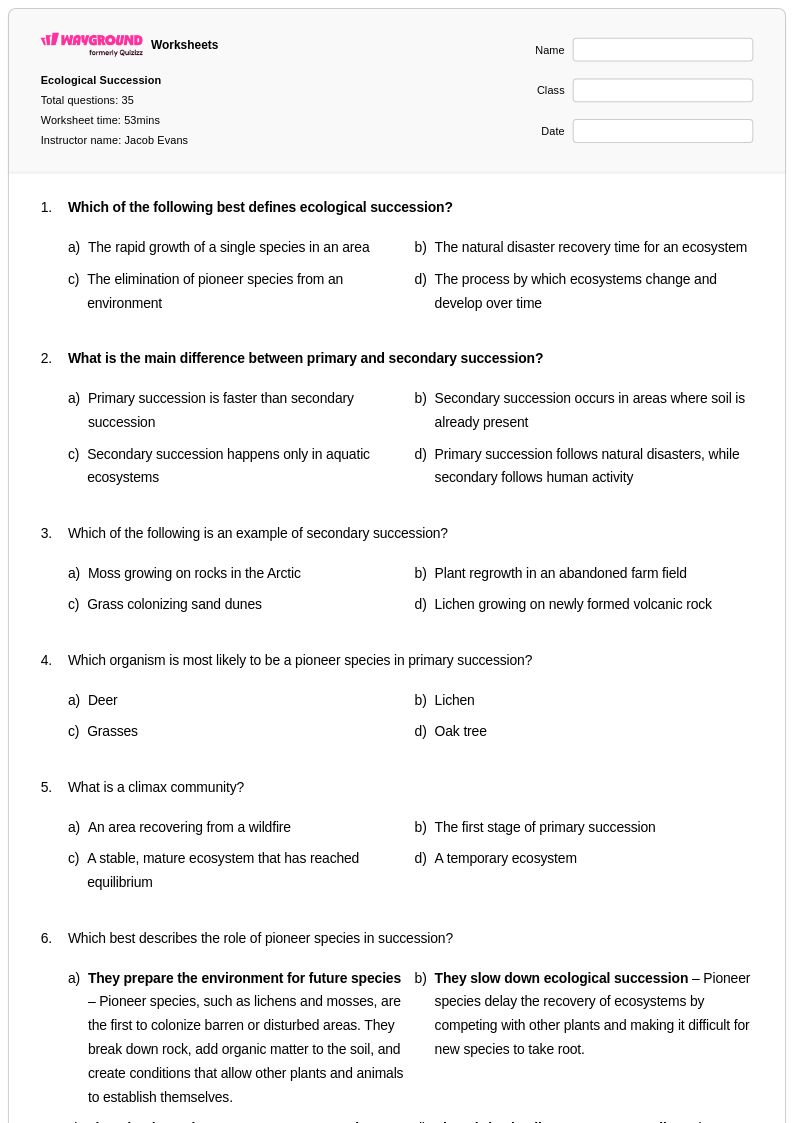
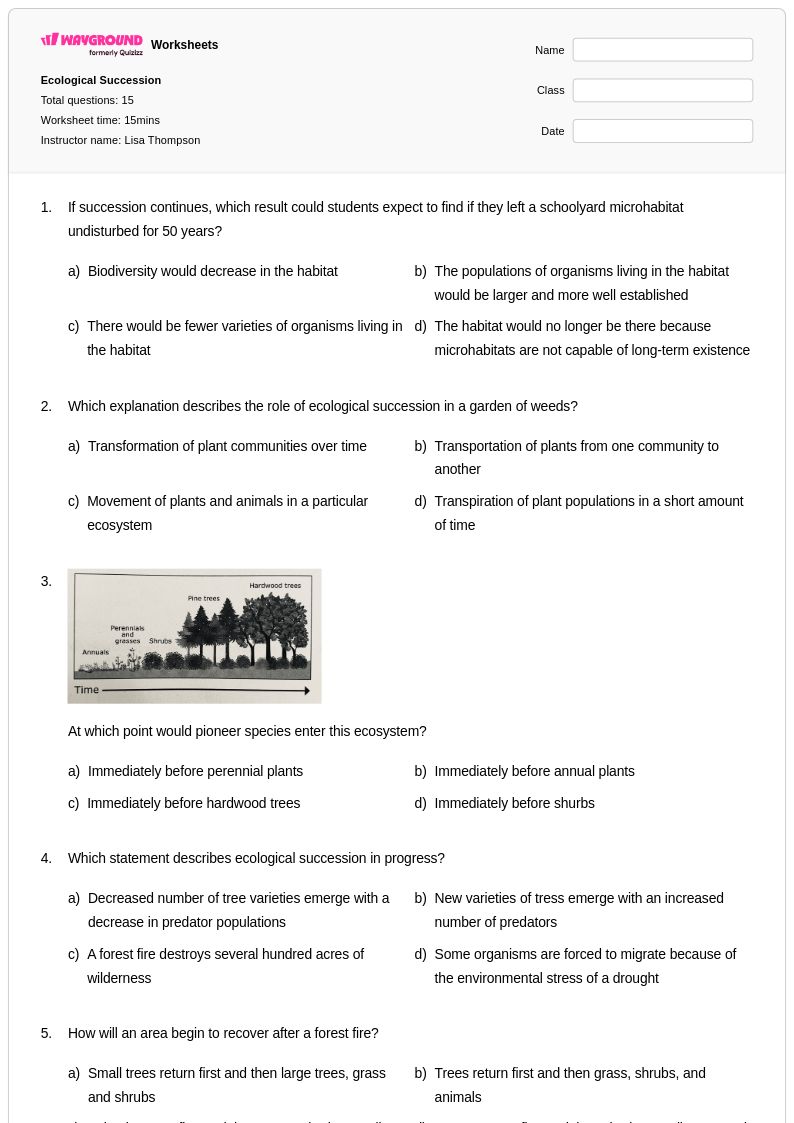
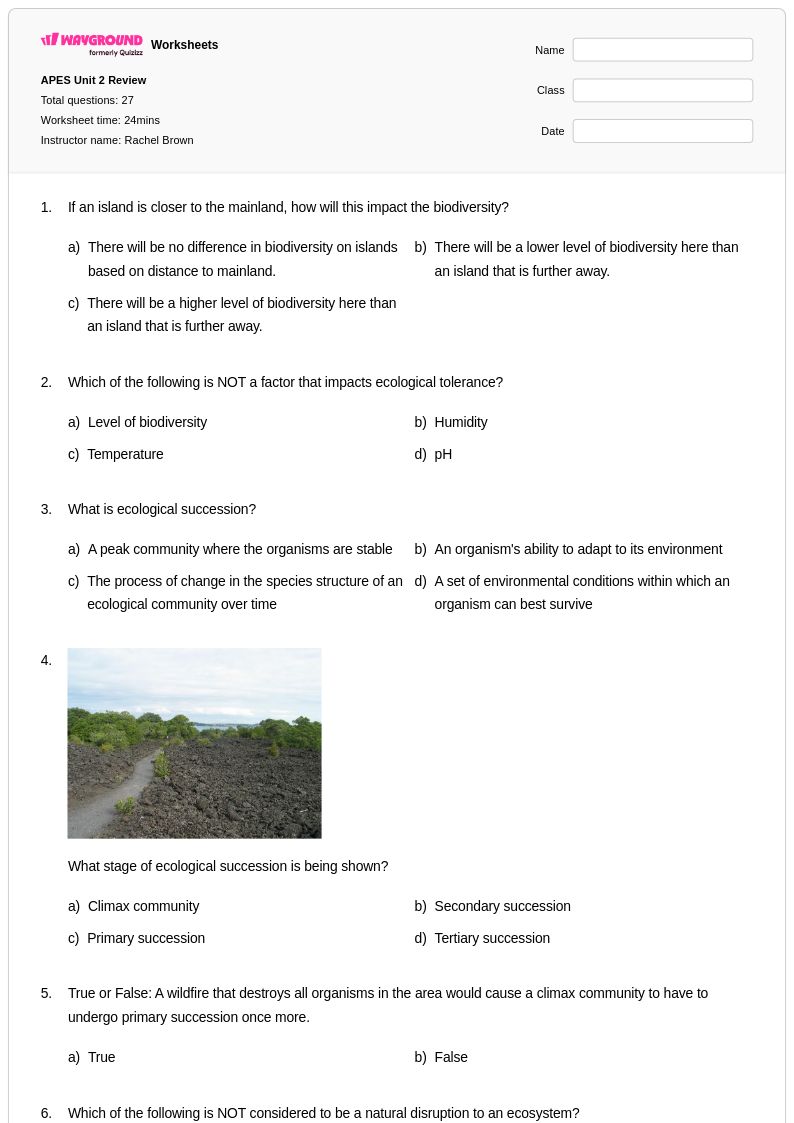
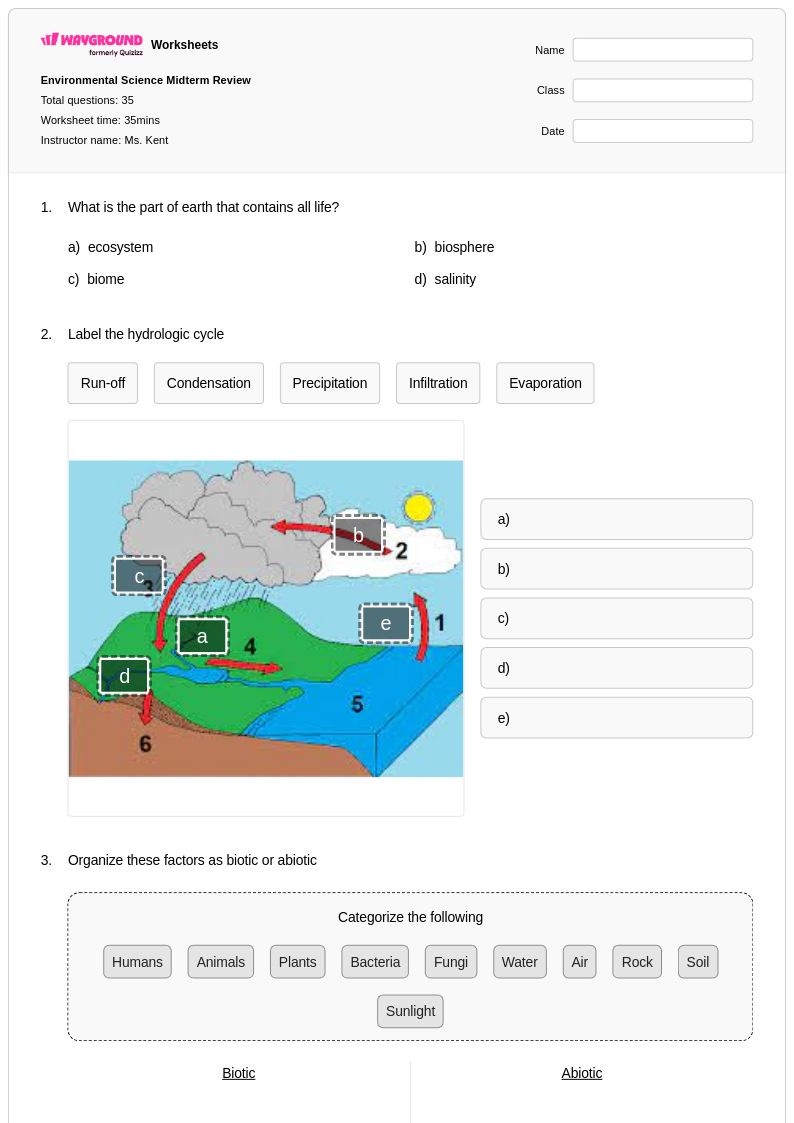
Ecological succession worksheets for Class 9 students available through Wayground (formerly Quizizz) provide comprehensive coverage of this fundamental biological process that demonstrates how ecosystems change and develop over time. These expertly crafted resources strengthen students' understanding of primary and secondary succession, helping them analyze the sequential changes in species composition and community structure following disturbances or in newly formed habitats. The worksheets include detailed practice problems that challenge students to identify pioneer species, climax communities, and intermediate stages of succession, while comprehensive answer keys enable both independent study and teacher-guided instruction. Available as free printables and downloadable pdf resources, these materials reinforce critical thinking skills as students examine real-world scenarios involving forest fires, volcanic eruptions, abandoned farmland, and other ecological disruptions that trigger successional processes.
Wayground (formerly Quizizz) supports educators with an extensive collection of millions of teacher-created resources specifically designed for Class 9 ecological succession instruction, featuring robust search and filtering capabilities that allow teachers to quickly locate materials aligned with specific learning standards and curriculum requirements. The platform's differentiation tools enable instructors to customize worksheets for varying skill levels within their classrooms, ensuring that both struggling learners and advanced students can engage meaningfully with succession concepts through appropriately challenging content. These flexible resources are available in both printable and digital formats, including easily downloadable pdf versions, making them invaluable for lesson planning, targeted remediation sessions, enrichment activities, and regular skill practice that builds students' mastery of ecological principles and their ability to analyze complex environmental changes over time.
FAQs
How do I teach ecological succession in a biology class?
Start by distinguishing primary succession, which begins on bare substrate like volcanic rock or glacial till, from secondary succession, which follows a disturbance such as a wildfire or flood where soil already exists. Use visual timelines or sequence diagrams to walk students through the stages from pioneer species to climax community, emphasizing how each stage modifies the environment to make it habitable for the next. Grounding abstract succession stages in real-world examples, such as the recovery of Mount St. Helens or forest regrowth after logging, helps students connect the concept to observable ecological change.
What practice exercises help students understand primary vs. secondary succession?
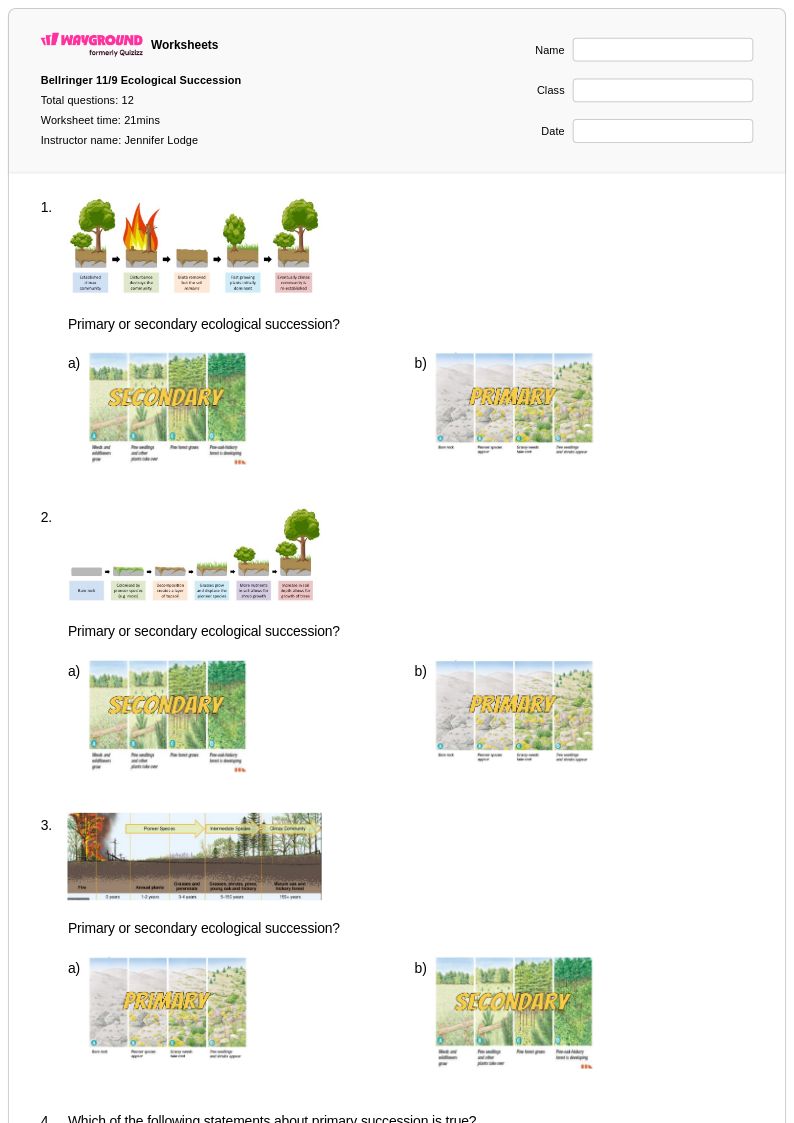
Worksheets that present ecological scenarios and ask students to classify them as primary or secondary succession are highly effective for building this distinction. Practice problems that require students to sequence the stages of succession, identify pioneer and climax species for a given biome, and predict how a specific disturbance will alter community development reinforce both recognition and application-level thinking. Diagram-labeling activities and short-answer questions asking students to justify their reasoning push beyond recall into genuine conceptual understanding.
What mistakes do students commonly make when learning about ecological succession?
A frequent misconception is that climax communities are permanent or static, when in fact ecosystems remain vulnerable to further disturbance and can reset the succession process. Students also commonly conflate primary and secondary succession, overlooking the critical difference that secondary succession begins with intact soil, which dramatically accelerates the recovery timeline. Another common error is treating pioneer species as unimportant because they are temporary, rather than recognizing their essential role in modifying abiotic conditions so that later successional species can establish.
How do I assess whether students understand the stages of ecological succession?
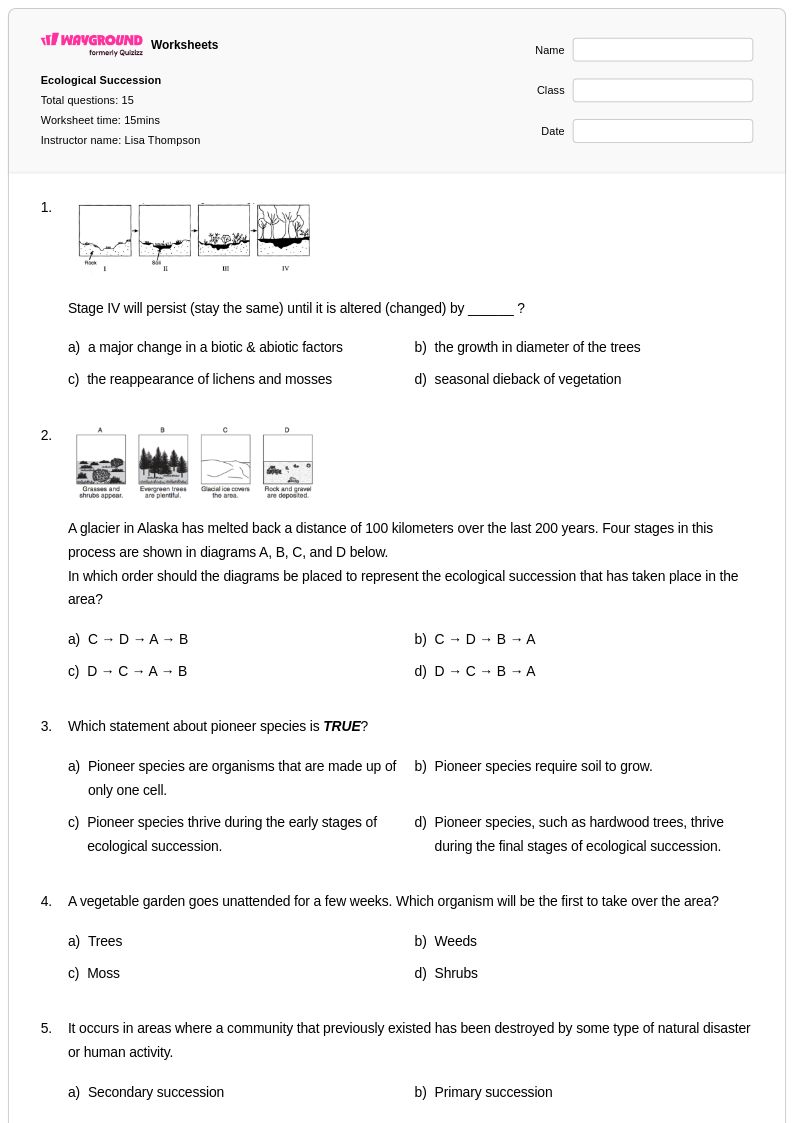
Asking students to arrange an unlabeled succession diagram in the correct sequence is a reliable formative check that reveals whether they understand the directionality and logic of community development. Short-answer questions that require students to explain why a specific organism qualifies as a pioneer species, or to predict what stage a disturbed ecosystem would enter based on described conditions, are strong indicators of conceptual depth. Exit tickets asking students to compare the rate and starting conditions of primary versus secondary succession efficiently expose the most common points of confusion.
How do I use Wayground's ecological succession worksheets in my classroom?
Wayground's ecological succession worksheets are available as printable PDFs for traditional classroom use and in digital formats for technology-integrated environments, giving teachers flexibility based on their instructional setup. Teachers can also host the worksheets as a live or asynchronous quiz directly on Wayground, making them suitable for both in-class assessment and independent practice. Each worksheet includes a complete answer key, so they can be used for guided instruction, independent practice, or self-paced review without requiring additional teacher preparation.
How can I differentiate ecological succession instruction for students at different readiness levels?
For students who are still building foundational understanding, reduce the complexity of scenarios to focus on one type of succession at a time and use visual supports such as labeled diagrams. For more advanced learners, introduce multi-variable scenarios, such as how climate, soil type, or human activity interacts with succession dynamics, and ask predictive or analytical questions rather than recall ones. On Wayground, teachers can apply individual accommodations such as reduced answer choices or read-aloud support for students who need them, while the rest of the class works under default settings.