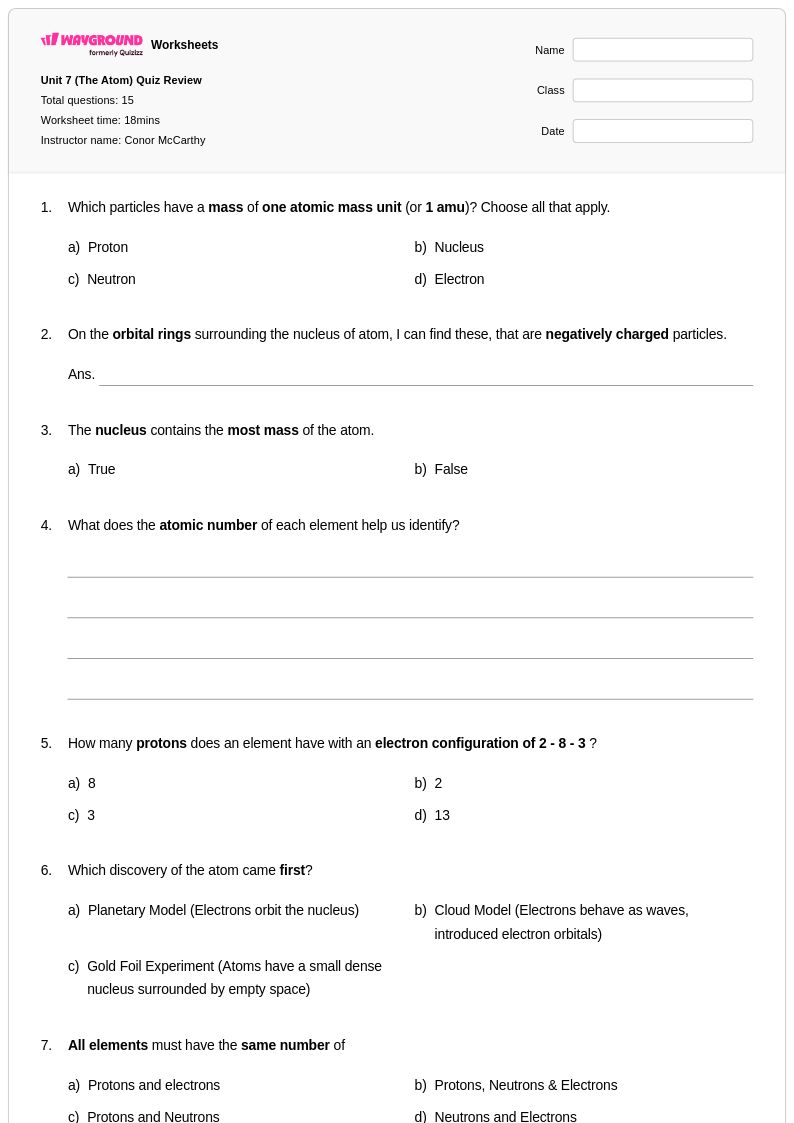
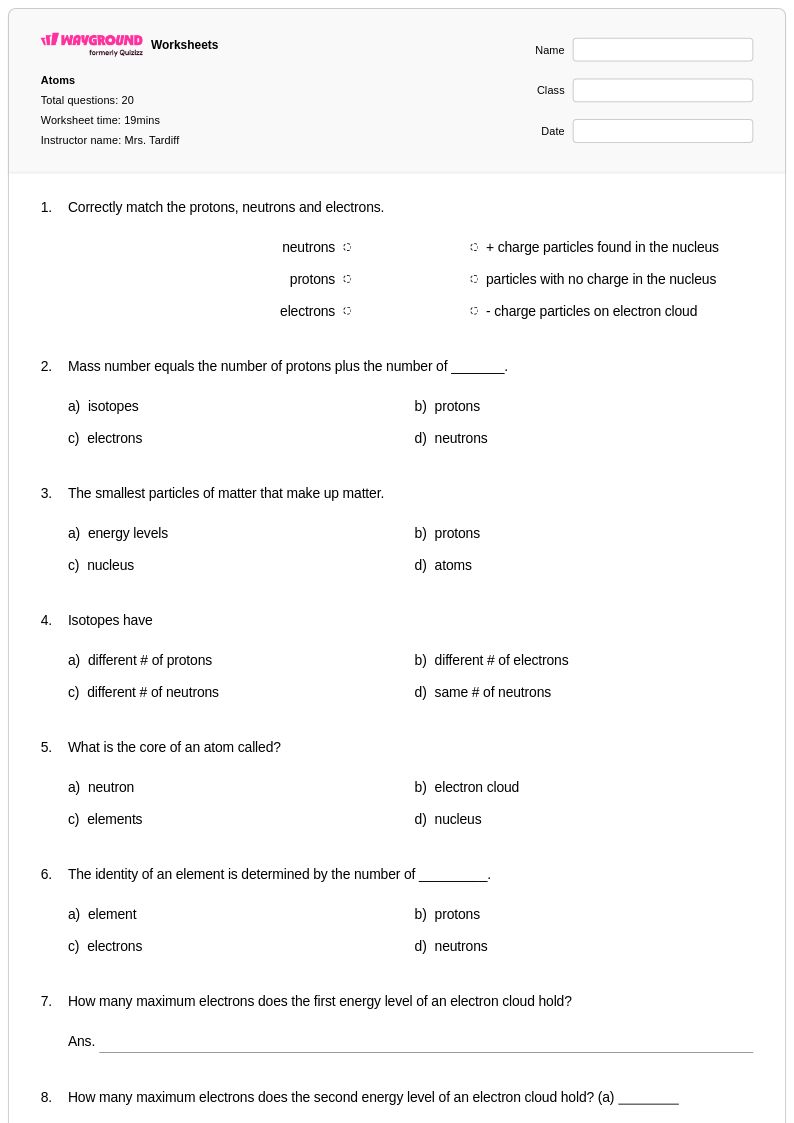
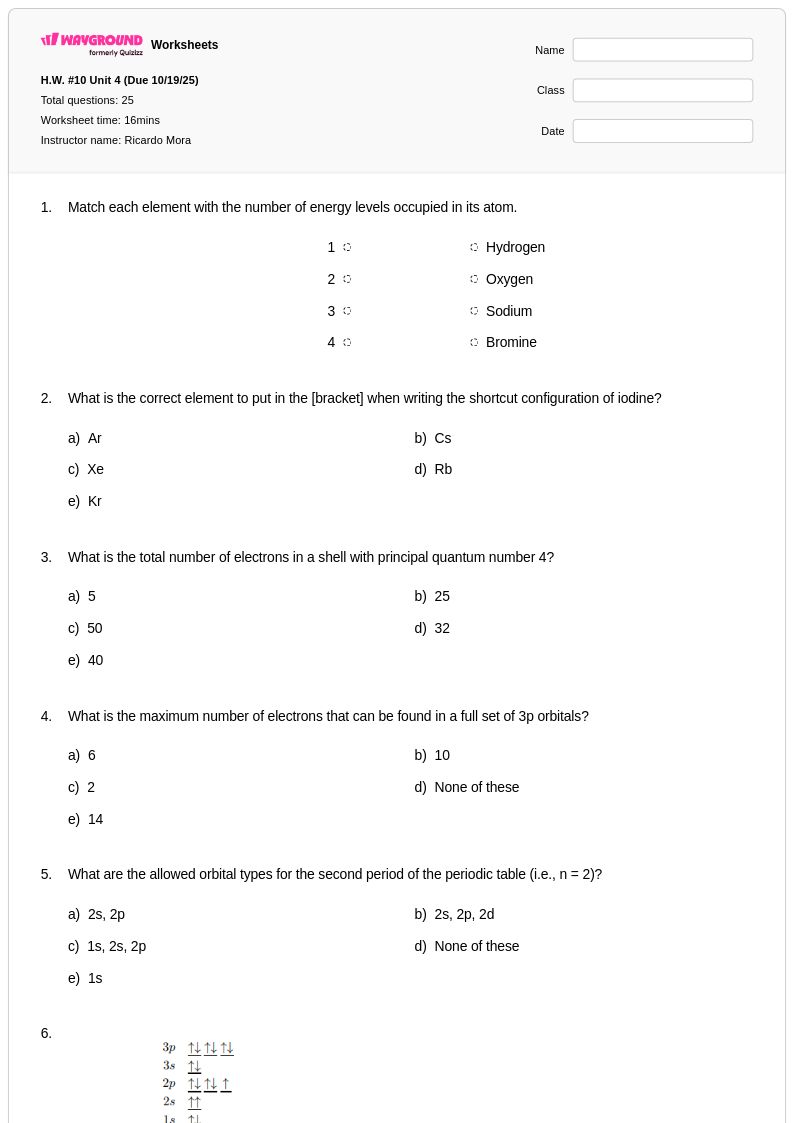
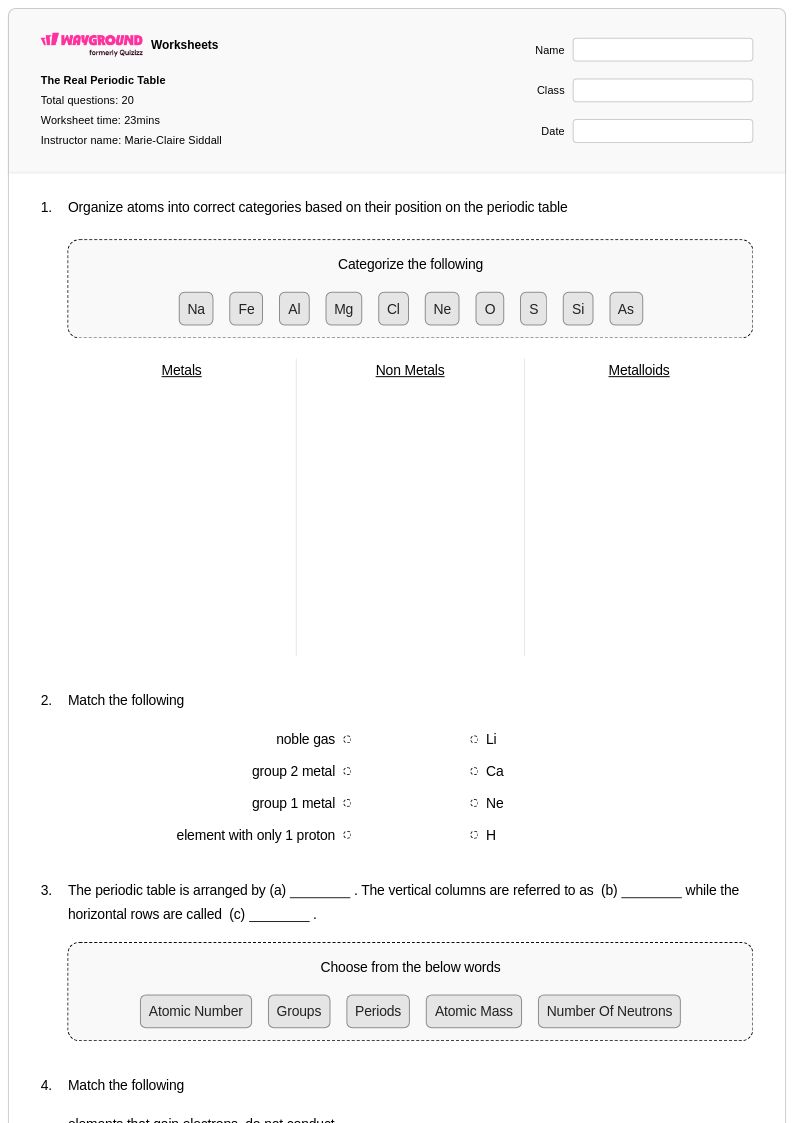
Discover free electron configuration worksheets and printables that help students master atomic structure through engaging practice problems with comprehensive answer keys and downloadable PDFs.
Explore printable Electron Configuration worksheets
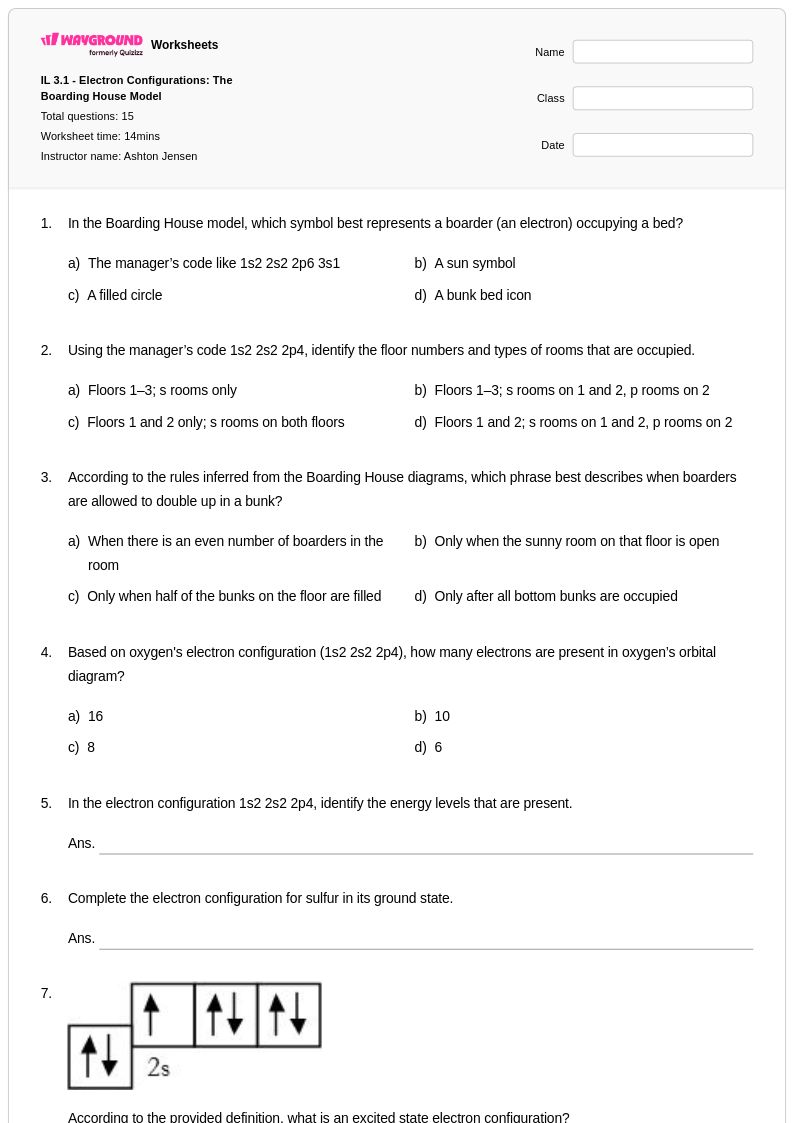
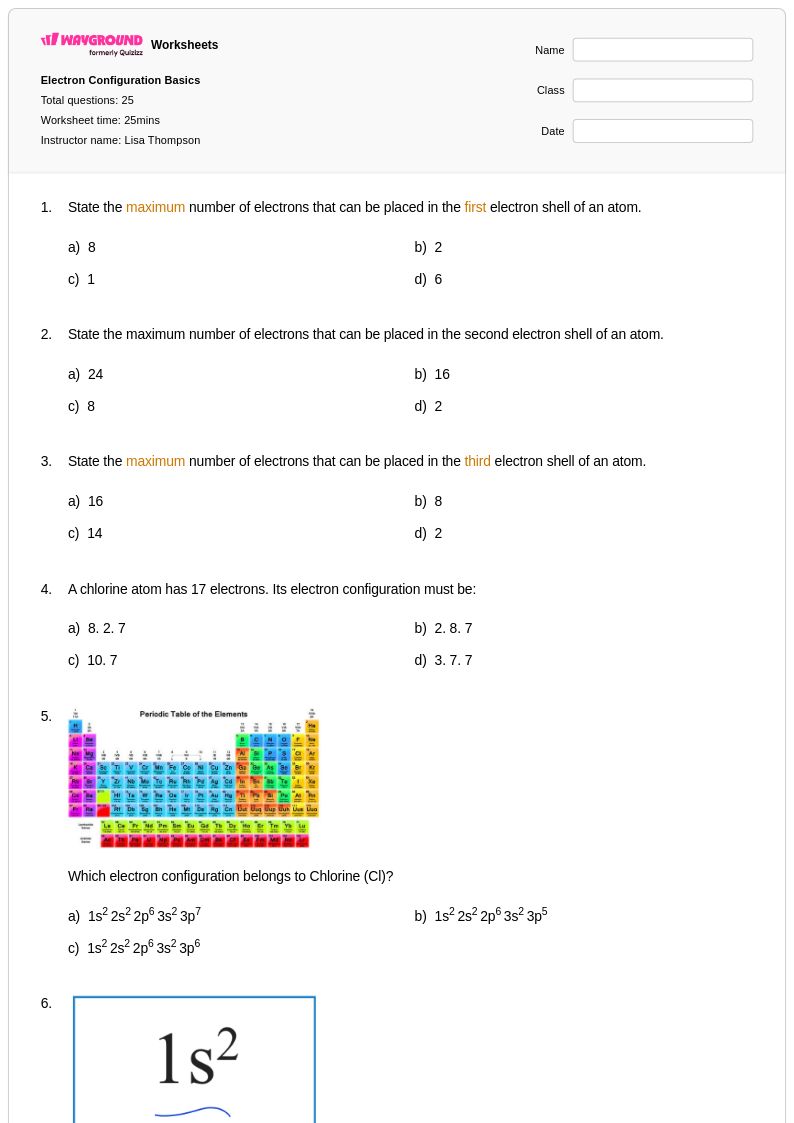
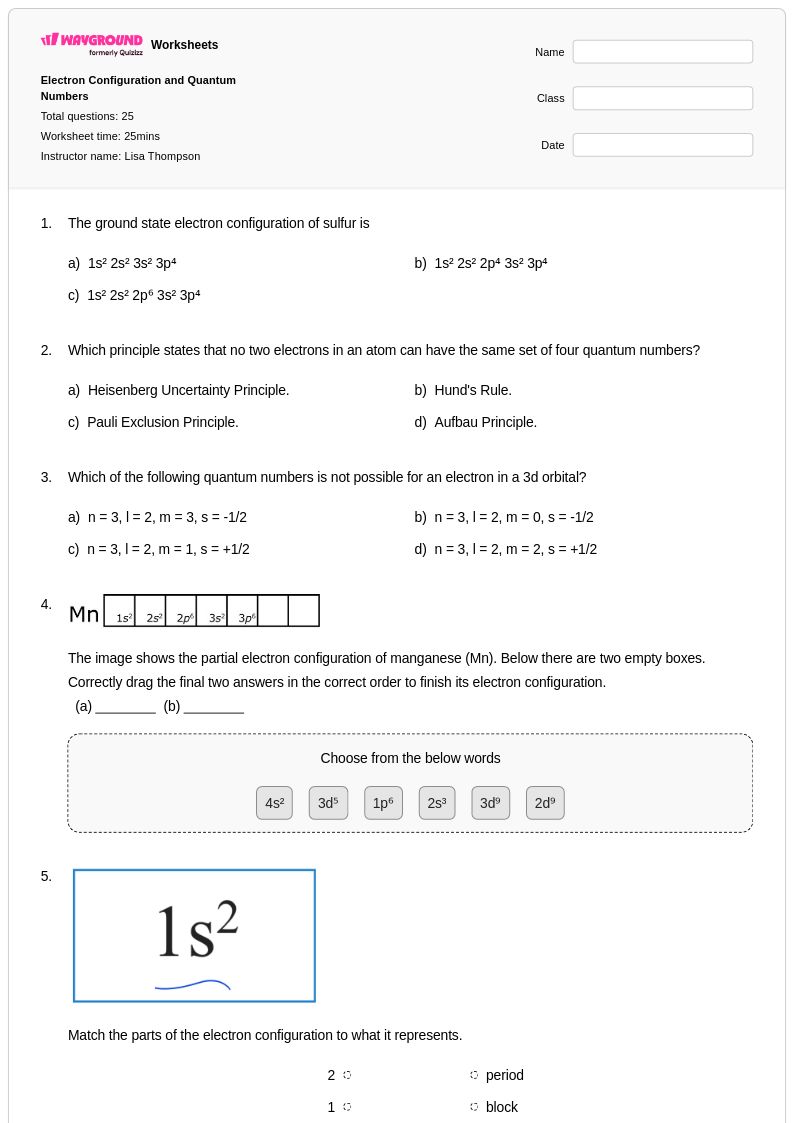
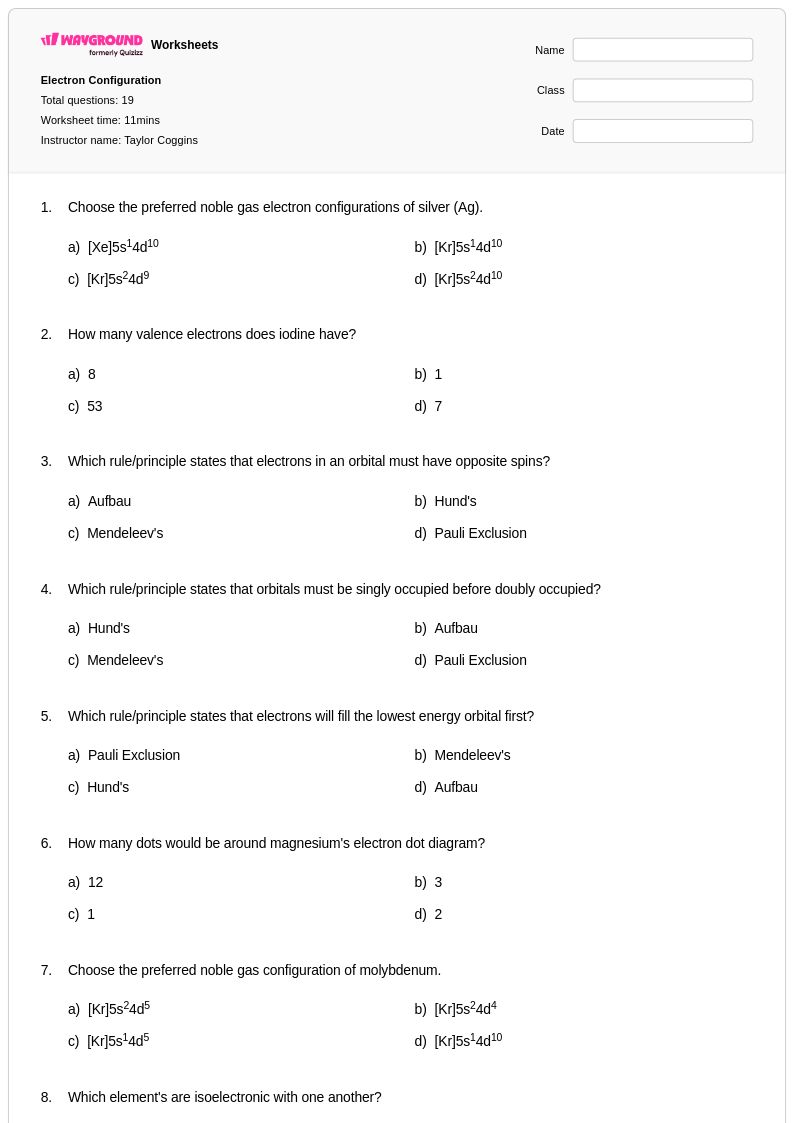
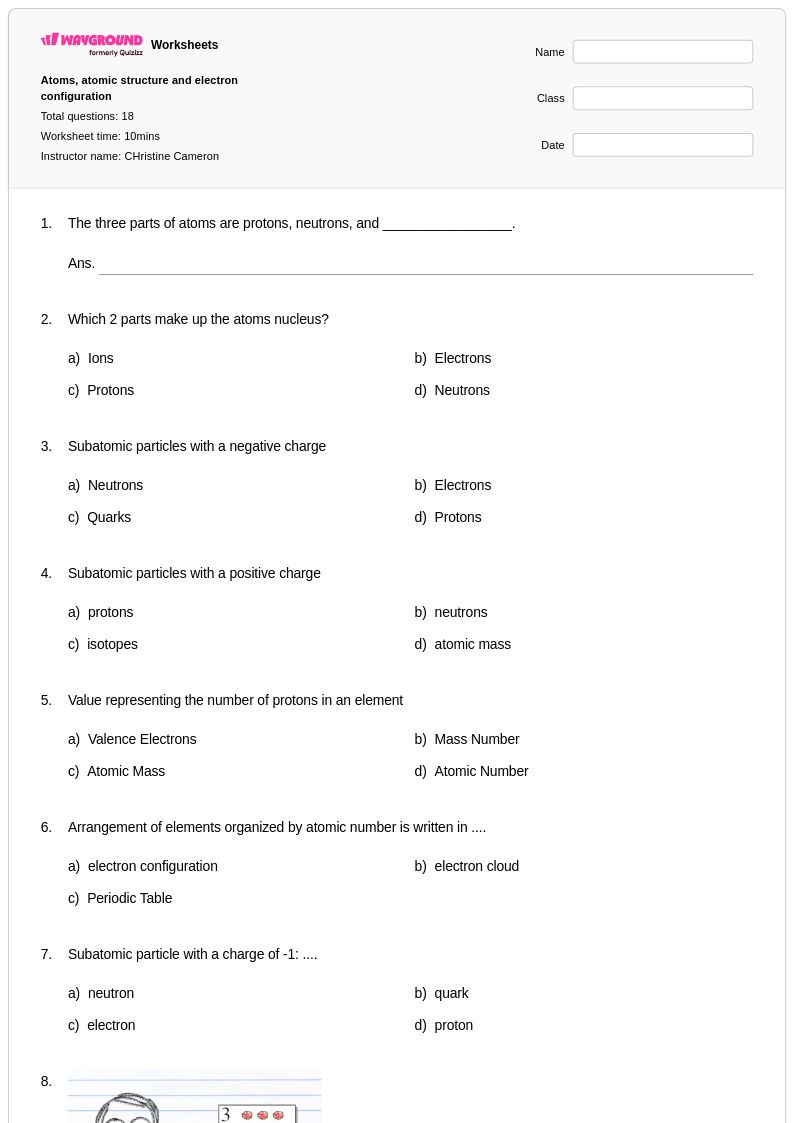
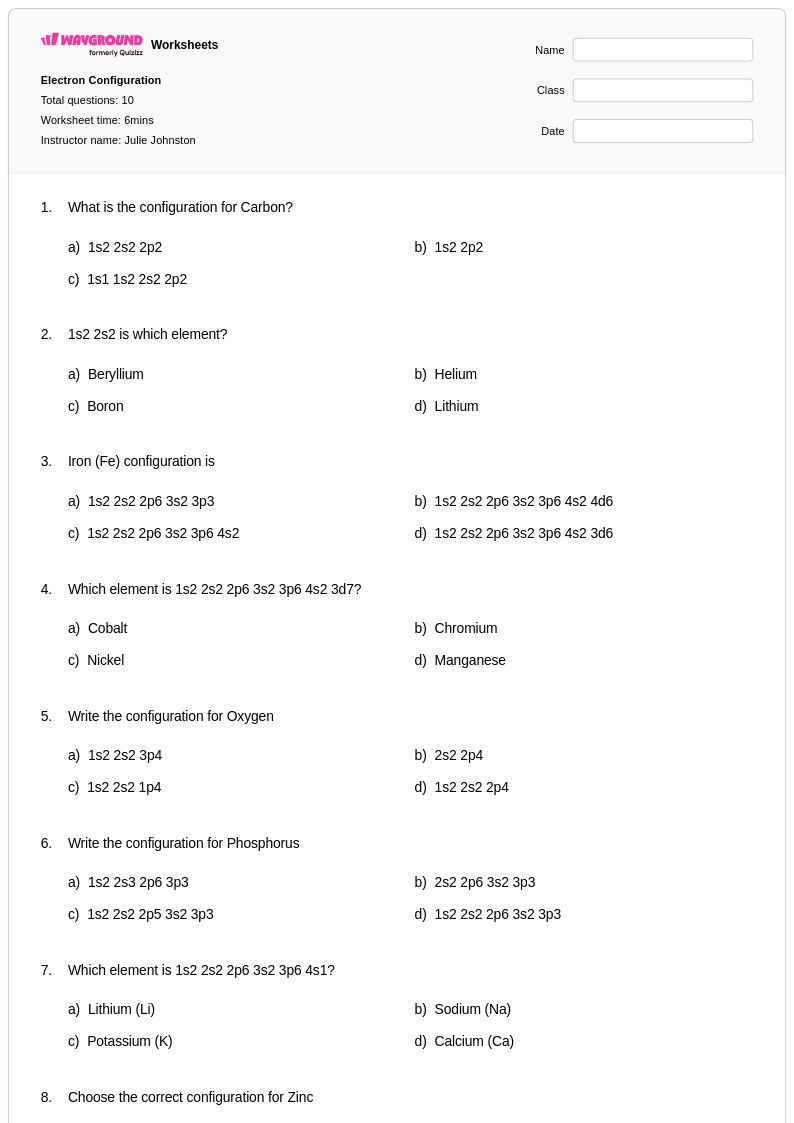
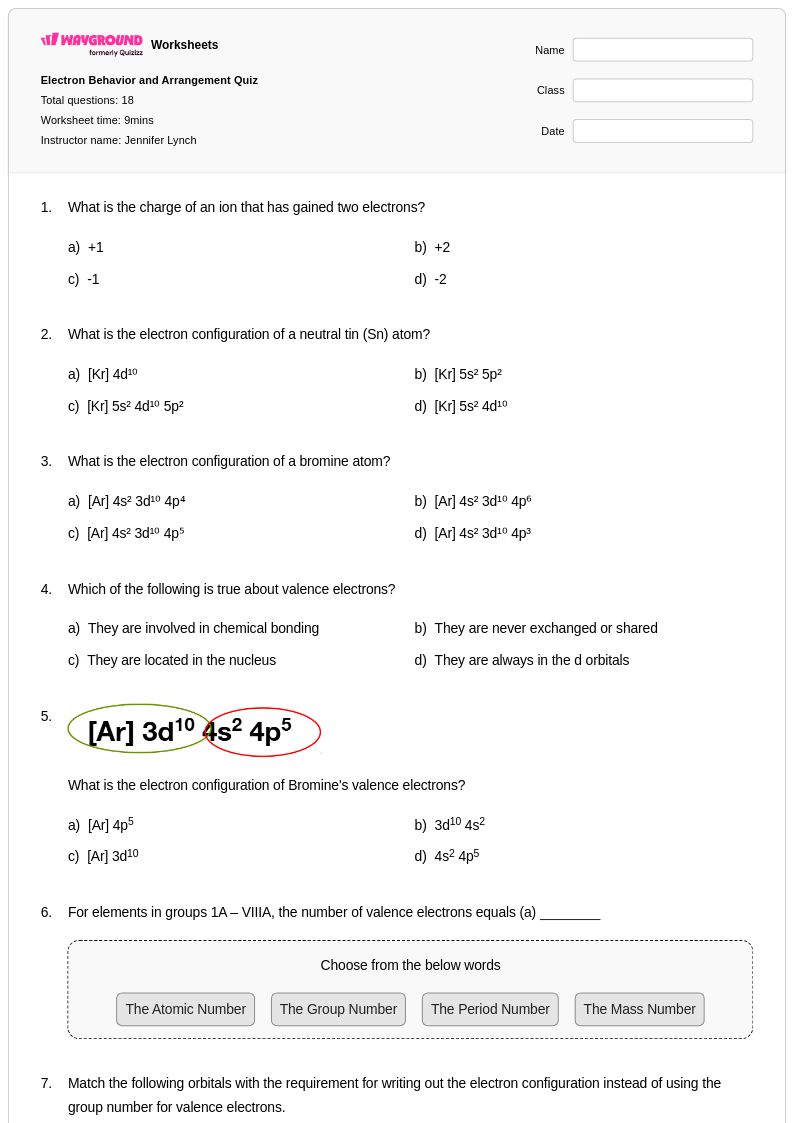
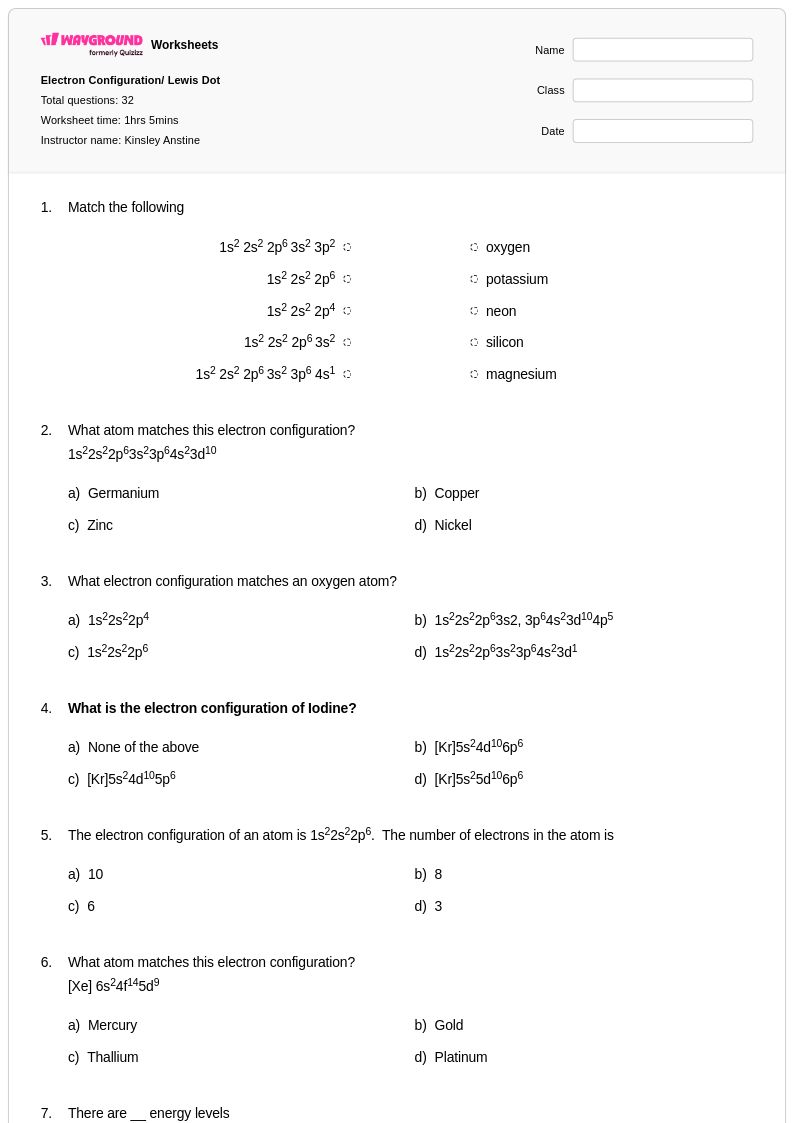
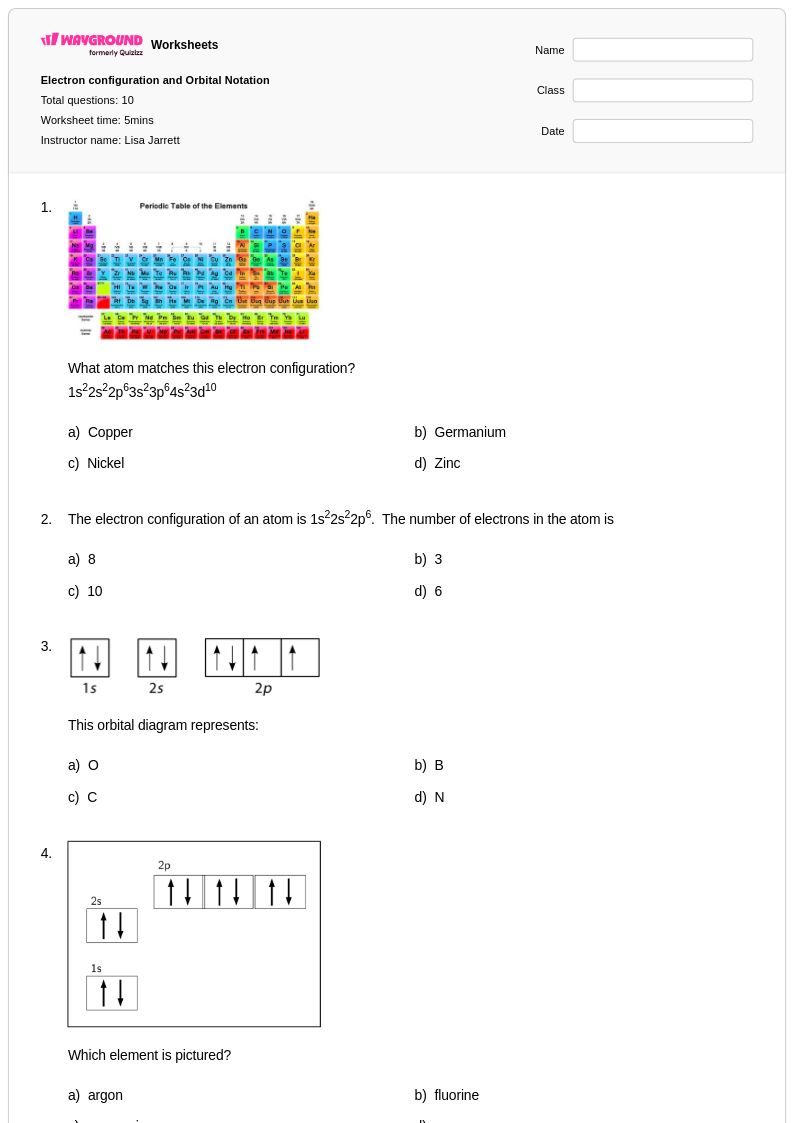
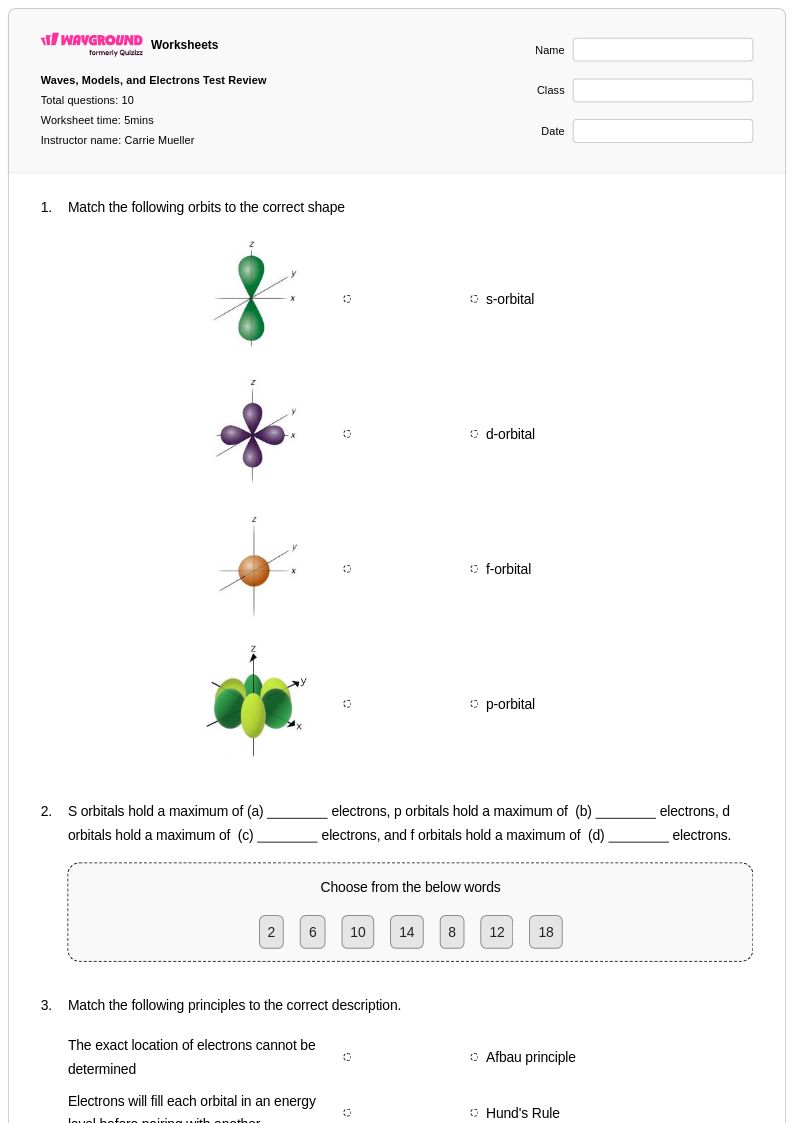
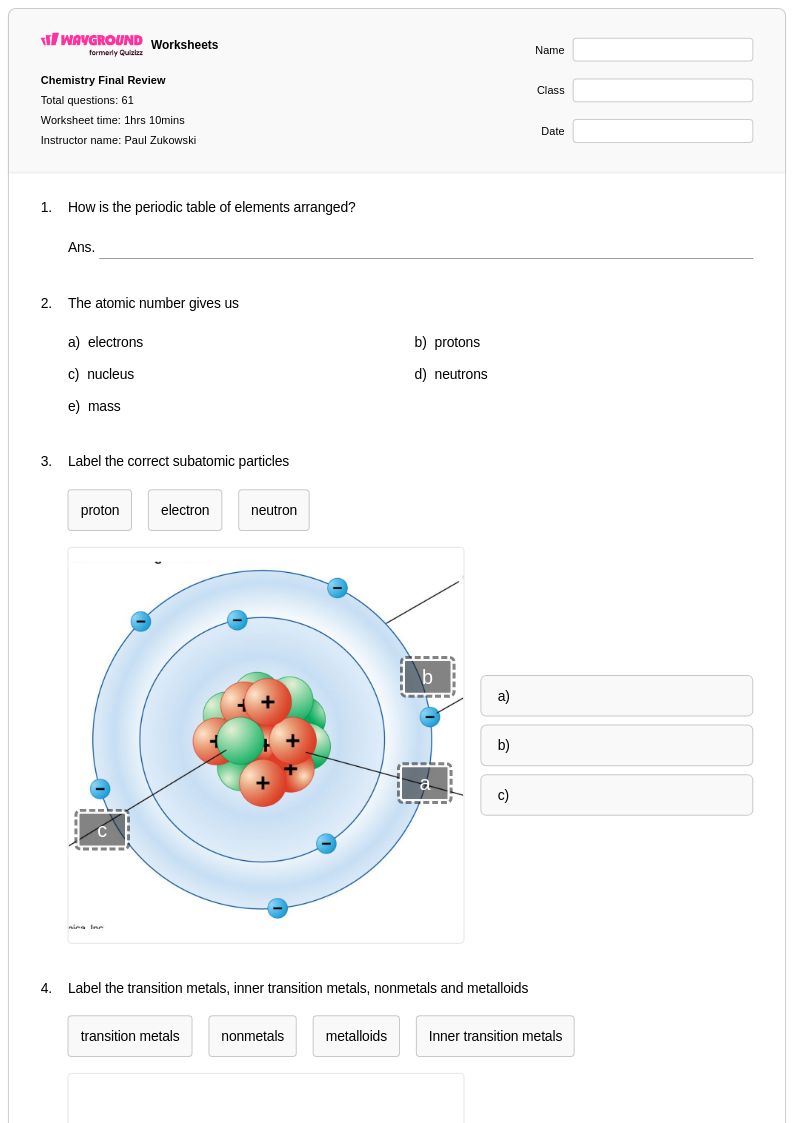
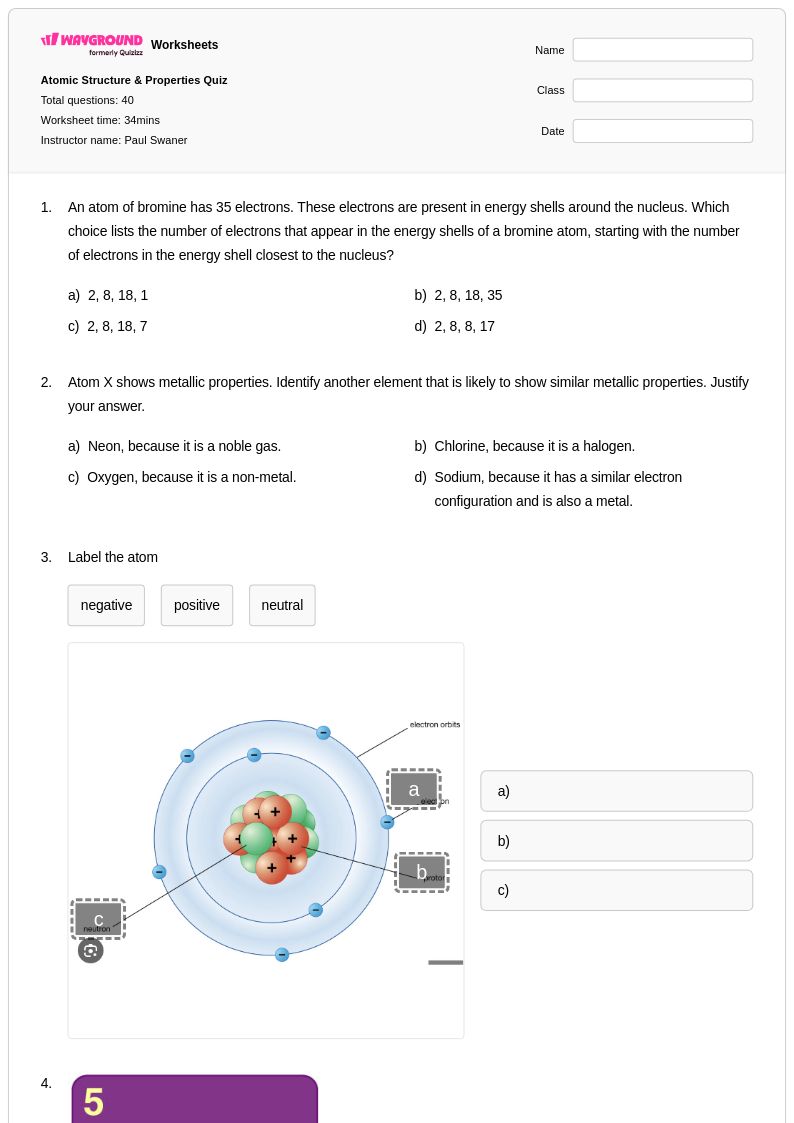
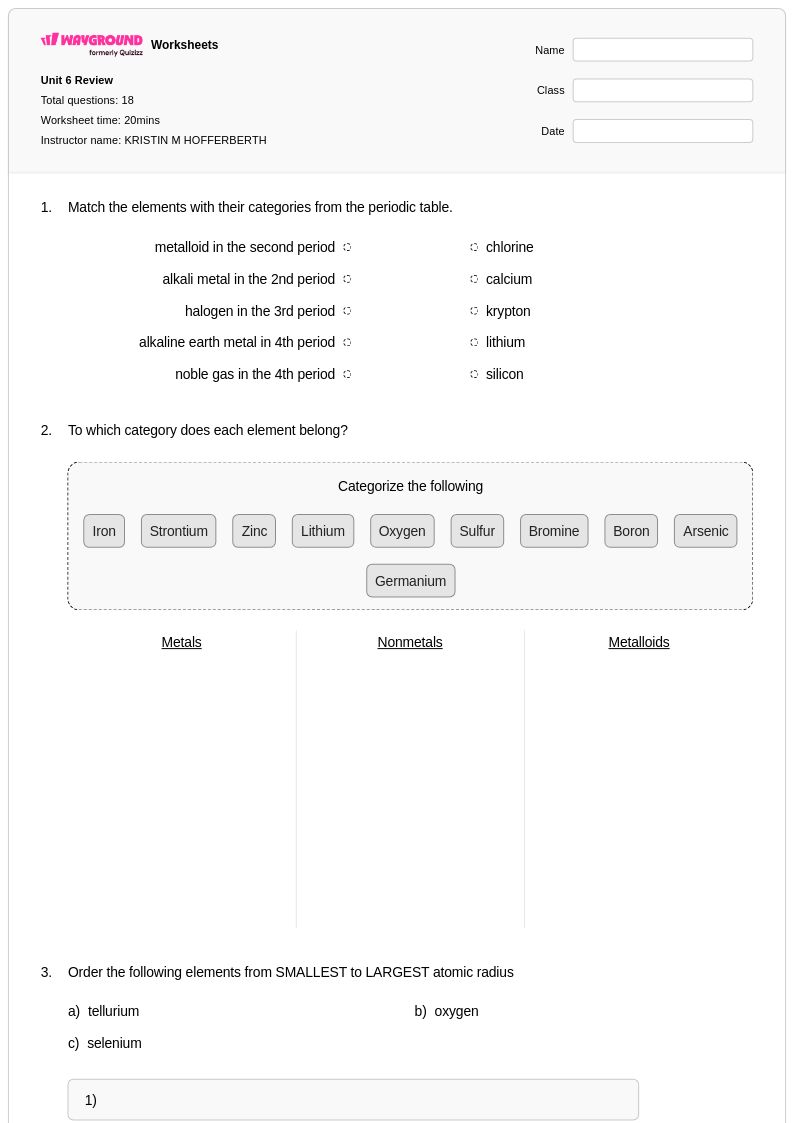
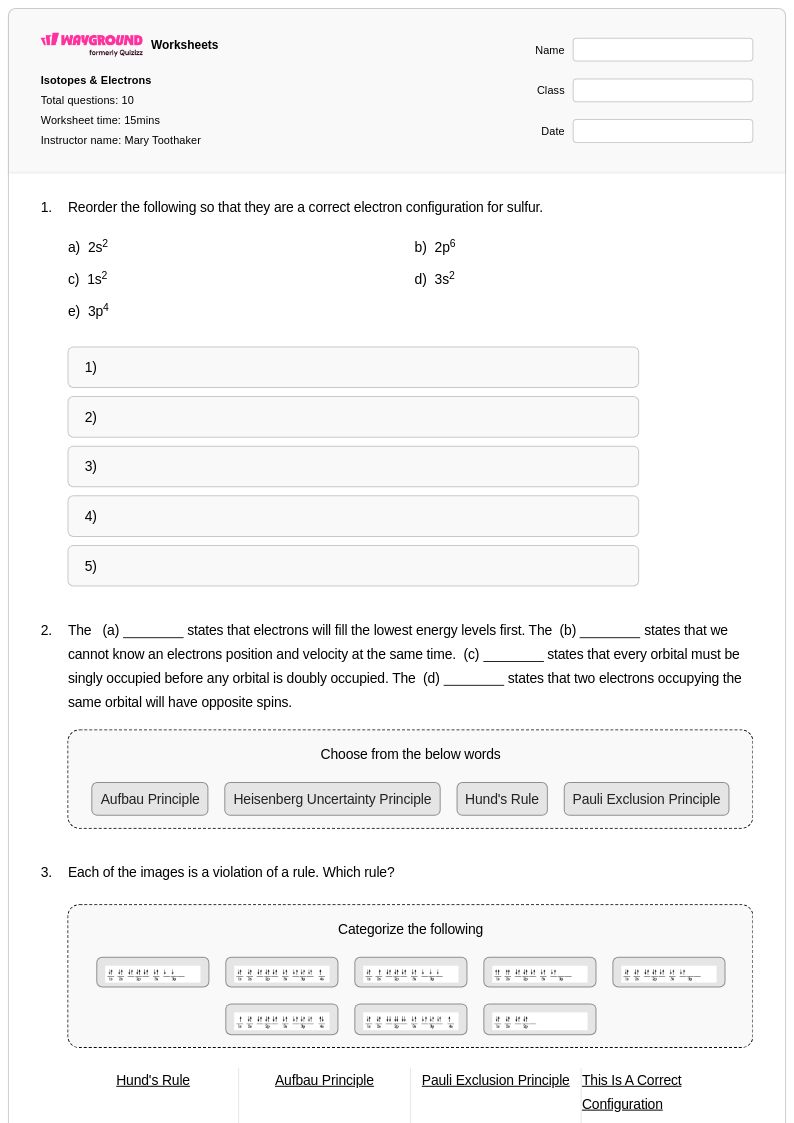
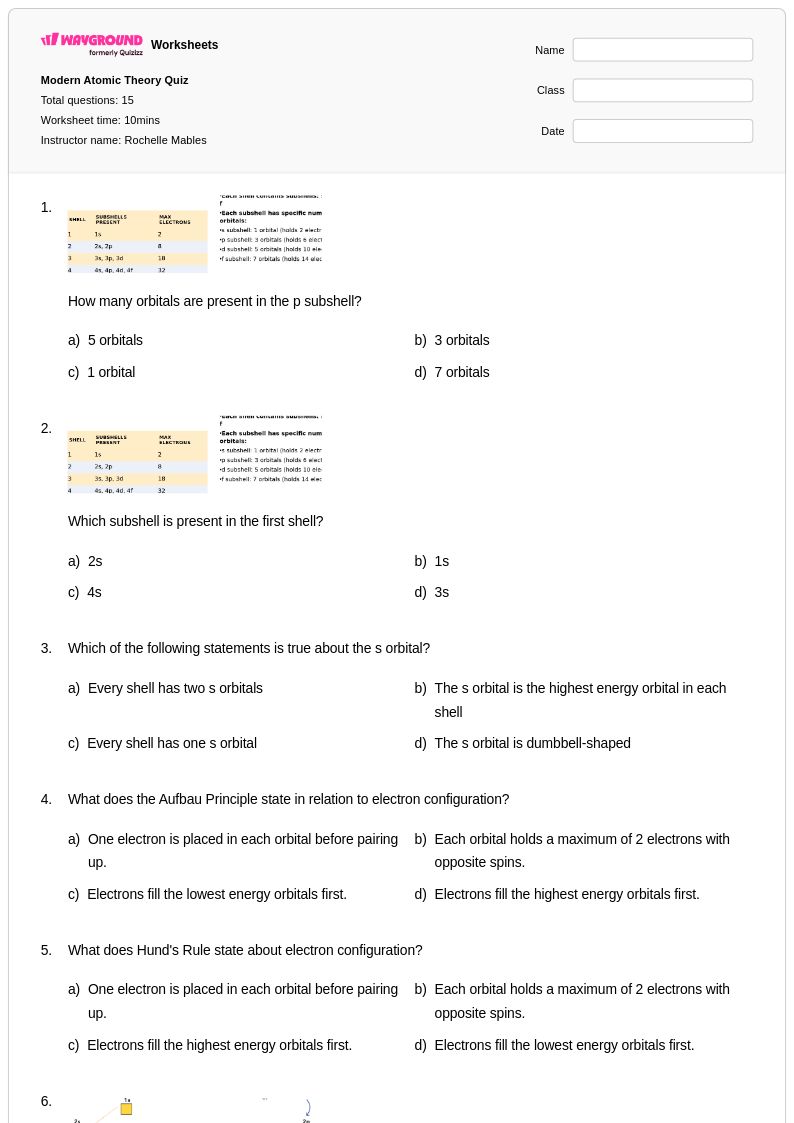
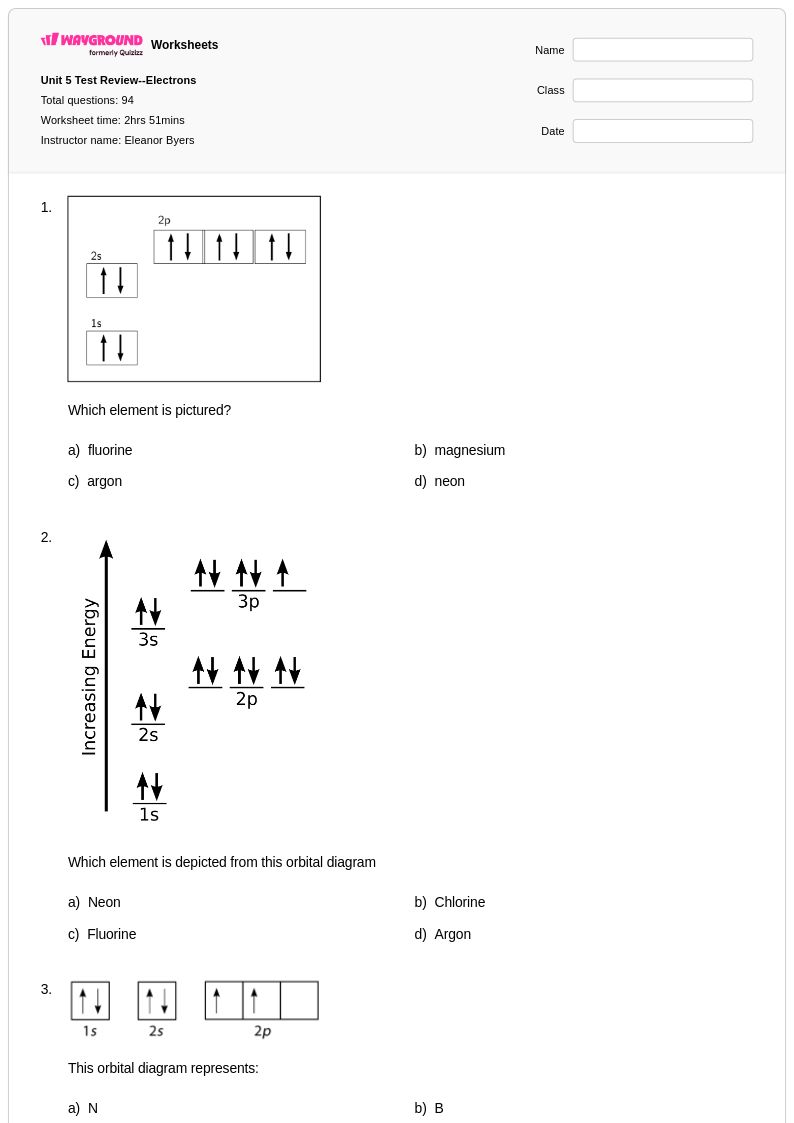
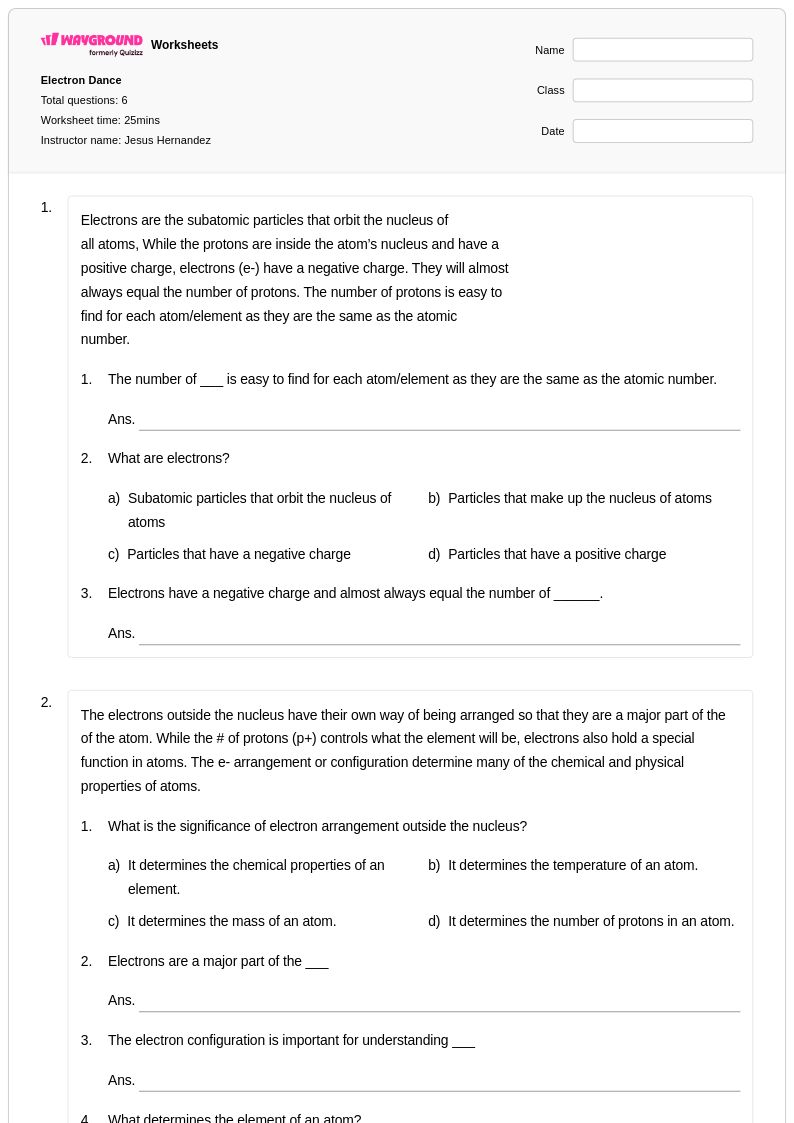
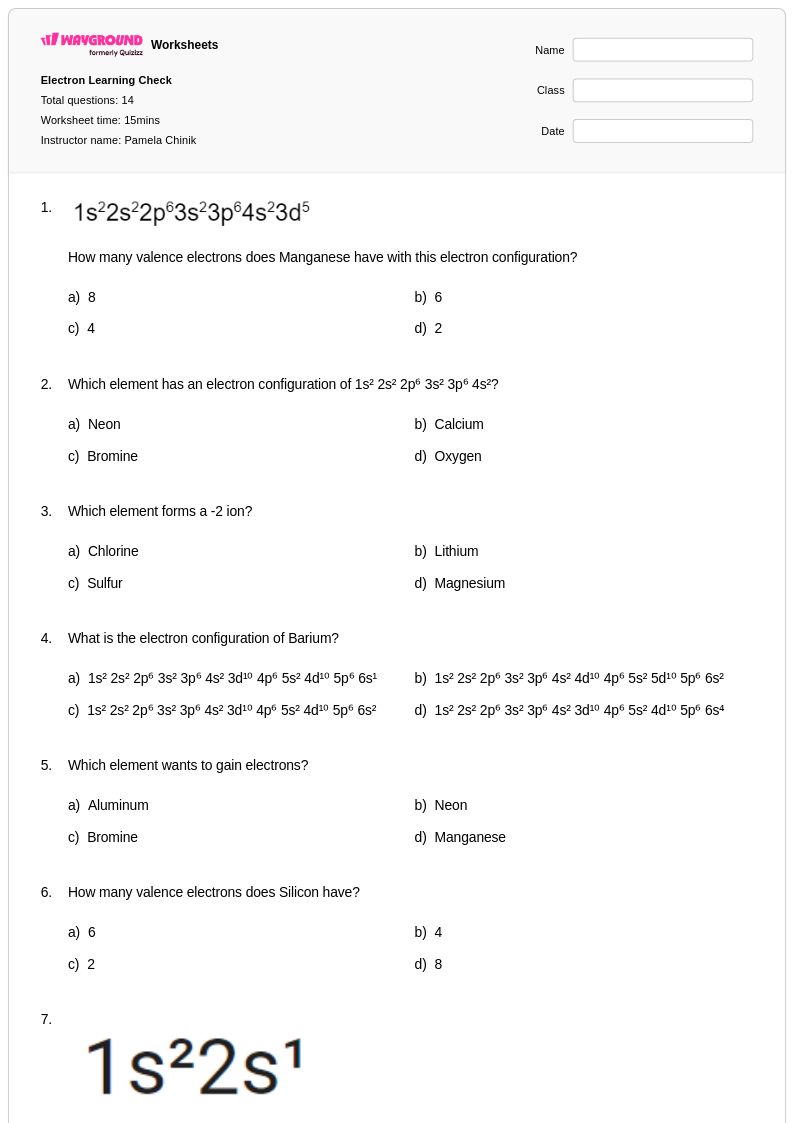
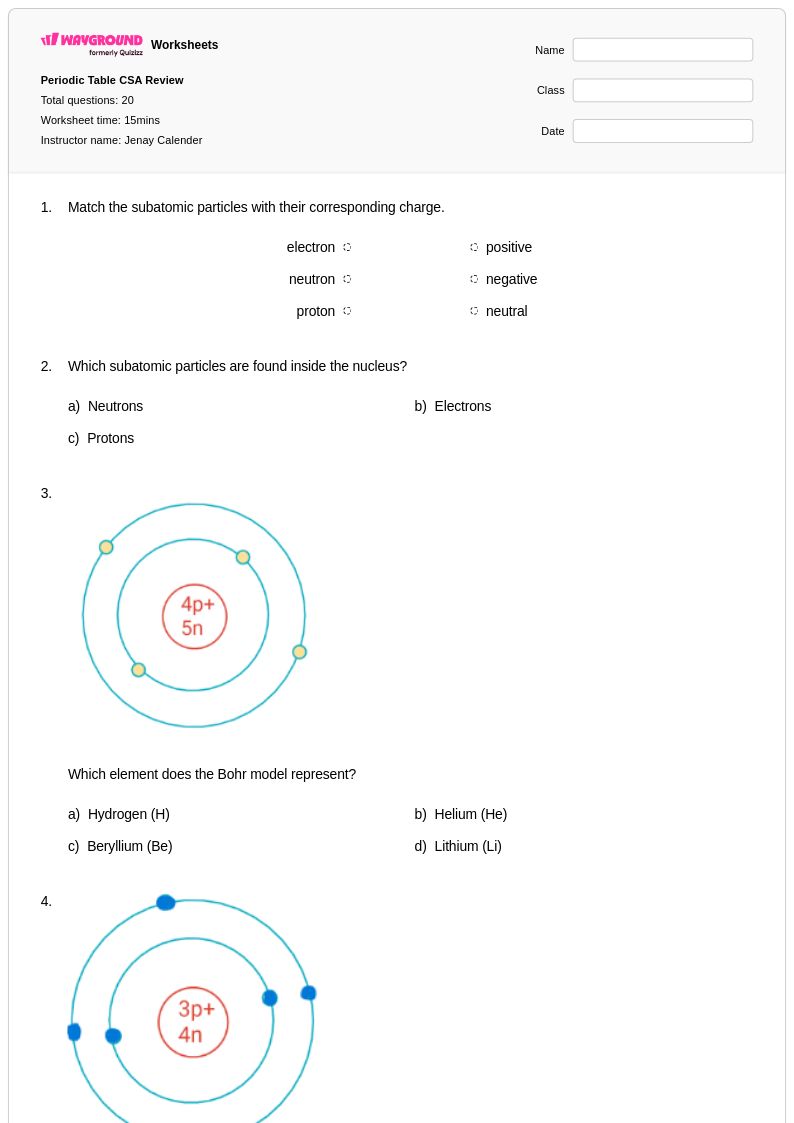
Electron configuration worksheets available through Wayground (formerly Quizizz) provide comprehensive practice for students learning to determine how electrons are distributed in atoms and ions. These expertly designed resources strengthen fundamental chemistry skills including writing electron configurations using orbital notation, noble gas notation, and electron dot diagrams, while helping students understand periodic trends and the relationship between electron arrangement and chemical properties. The extensive collection includes practice problems ranging from basic ground state configurations to more advanced concepts like excited states and ionization, with each worksheet featuring detailed answer keys and available as free printable pdf downloads that support both classroom instruction and independent study.
Wayground (formerly Quizizz) empowers chemistry teachers with millions of teacher-created electron configuration resources that feature robust search and filtering capabilities to quickly locate materials aligned with specific learning standards and student needs. The platform's differentiation tools allow educators to customize worksheets for various skill levels, from introductory atomic structure concepts to advanced quantum mechanical principles, while offering both printable pdf formats for traditional assignments and digital versions for interactive learning experiences. These flexible resources support comprehensive lesson planning by providing teachers with ready-made materials for initial instruction, targeted remediation for struggling students, enrichment activities for advanced learners, and ongoing skill practice that reinforces the critical connection between electron configuration and chemical behavior throughout the periodic table.
FAQs
How do I teach electron configuration to high school chemistry students?
Start by grounding students in the Aufbau principle, Pauli exclusion principle, and Hund's rule before moving to writing configurations. Build from simple elements like hydrogen and helium, then progress to transition metals and ions. Using orbital box diagrams alongside shorthand notation helps students visualize electron placement before memorizing patterns, and connecting configurations to periodic table trends reinforces why the skill matters chemically.
What practice exercises help students learn to write electron configurations?
Effective practice moves from ground state configurations using full notation, to noble gas shorthand, to orbital box notation, and finally to ions and excited states. Worksheets that ask students to write, interpret, and identify configurations from diagrams build both procedural fluency and conceptual understanding. Practice problems that link electron configuration to periodic trends, such as atomic radius or ionization energy, deepen the skill beyond rote memorization.
What are the most common mistakes students make when writing electron configurations?
Students frequently fill subshells in the wrong order, confusing the 4s and 3d ordering, particularly when writing configurations for transition metals. Another common error is forgetting to adjust configurations when forming ions, especially removing electrons from the 4s before the 3d for cations. Students also misapply Hund's rule by pairing electrons in degenerate orbitals before all orbitals in a subshell are singly occupied.
How do I differentiate electron configuration instruction for students at different skill levels?
For introductory learners, focus on elements in the first three periods using full notation before introducing noble gas shorthand. Advanced students can tackle transition metals, exceptions like chromium and copper, and configurations of complex ions. On Wayground, teachers can apply reduced answer choices for students who need additional scaffolding, helping them focus on the correct orbital filling sequence without cognitive overload from too many competing options.
How can I use Wayground's electron configuration worksheets in my classroom?
Wayground's electron configuration worksheets are available as printable PDFs for traditional classroom assignments and in digital formats for technology-integrated learning environments, accommodating a range of teaching setups and student preferences. Teachers can also host the worksheets as a quiz directly on Wayground, enabling real-time student responses and automatic grading. Each worksheet includes a comprehensive answer key, making them practical for independent practice, sub-lesson plans, or targeted remediation.
How does electron configuration connect to the periodic table and chemical properties?
Electron configuration directly determines an element's position on the periodic table, its valence electron count, and its reactivity. Elements in the same group share the same valence shell configuration, which is why they exhibit similar chemical behavior. Understanding this connection allows students to predict bonding patterns, oxidation states, and periodic trends like electronegativity and ionization energy rather than memorizing them in isolation.