Free Printable Glucose Regulation Worksheets for Class 10
Explore our free Class 10 glucose regulation worksheets and printables that help students master blood sugar control mechanisms through engaging practice problems and comprehensive answer keys.
Explore printable Glucose Regulation worksheets for Class 10
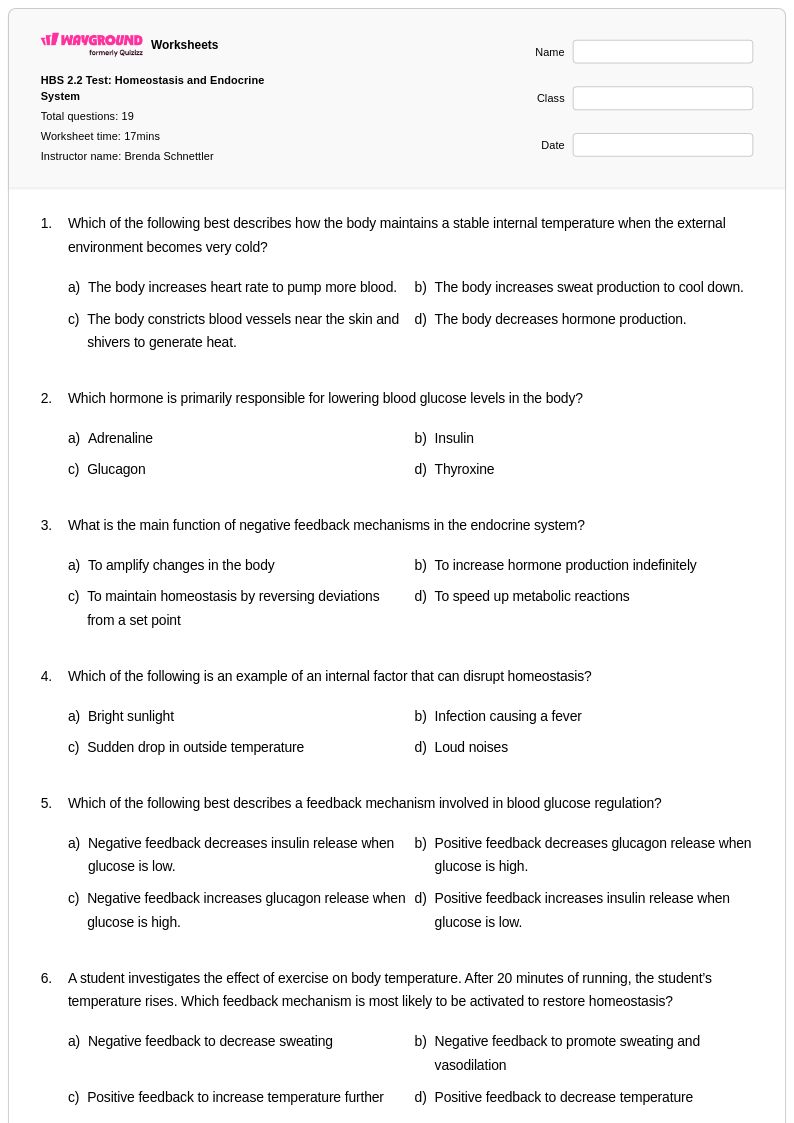
Class 10 glucose regulation worksheets available through Wayground (formerly Quizizz) provide comprehensive coverage of how the human body maintains blood sugar homeostasis through complex feedback mechanisms. These expertly designed educational resources strengthen students' understanding of insulin and glucagon functions, pancreatic beta and alpha cell responses, and the intricate processes of glycogenesis and glycogenolysis. The worksheet collection includes detailed practice problems that guide students through analyzing blood glucose graphs, interpreting hormonal responses to varying glucose levels, and understanding conditions like diabetes mellitus. Each printable resource comes with a complete answer key, allowing students to verify their comprehension of negative feedback loops and metabolic pathways. These free educational materials emphasize the critical role of the liver, muscle tissue, and adipose cells in glucose storage and release, while reinforcing the connection between cellular respiration and glucose availability throughout the body.
Wayground (formerly Quizizz) empowers educators with millions of teacher-created resources specifically designed for glucose regulation instruction, featuring advanced search and filtering capabilities that allow quick access to standards-aligned materials appropriate for Class 10 biology curricula. The platform's differentiation tools enable teachers to customize worksheets based on individual student needs, whether providing additional scaffolding for struggling learners or enrichment activities for advanced students ready to explore gluconeogenesis and complex metabolic disorders. These versatile resources are available in both printable pdf format and interactive digital versions, supporting flexible classroom implementation for initial instruction, targeted remediation, and comprehensive skill practice. Teachers benefit from seamless lesson planning integration, with worksheet collections that systematically build from basic glucose molecule structure through advanced regulatory mechanisms, ensuring students develop a thorough understanding of this fundamental biological process essential for cellular energy management.
FAQs
How do I teach glucose regulation to biology students?
Start by grounding students in the concept of homeostasis before introducing glucose regulation as a specific example of a negative feedback loop. Walk through the roles of insulin and glucagon, explaining how pancreatic beta cells release insulin when blood glucose rises and alpha cells release glucagon when it falls. Connecting this to the liver's role in glycogen storage and breakdown gives students a concrete, mechanistic picture of how the system maintains balance. Visual diagrams showing the feedback loop, followed by structured practice problems, help students internalize the sequence of hormonal responses.
What exercises help students practice understanding blood sugar control mechanisms?
Practice problems that present scenario-based questions work well for glucose regulation, such as asking students to predict the hormonal response to a high-carbohydrate meal or a period of fasting. Exercises that require students to trace the full feedback loop from stimulus to response to correction reinforce the interconnected roles of the pancreas, liver, and target cells. Labeling diagrams of the pancreas and completing hormone-function matching activities also build foundational fluency before students tackle more complex metabolic questions.
What mistakes do students commonly make when learning about insulin and glucagon?
The most common misconception is confusing which hormone does what, with students often reversing insulin and glucagon's roles or misidentifying which pancreatic cell type secretes each. Students also frequently treat blood sugar regulation as a one-way process rather than a continuous feedback loop, failing to account for the body's response when glucose drops too low. Another error is assuming insulin acts directly on the liver without recognizing the distinct cellular mechanisms involved in glucose transport and glycogen synthesis.
How can I use glucose regulation worksheets in my biology class?
Glucose regulation worksheets on Wayground are available as printable PDFs for traditional classroom use and in digital formats for technology-integrated learning environments, including the option to host them as a quiz directly on the Wayground platform. Printable versions work well for guided note-taking, in-class practice, or homework assignments, while digital versions allow for immediate feedback and can be assigned to individual students or the whole class. The included answer keys make them efficient tools for both teacher-led instruction and independent student review.
How do I differentiate glucose regulation instruction for students with different learning needs?
For students who struggle with the density of biochemical vocabulary, simplifying feedback loop diagrams and reducing the number of variables introduced at once can lower cognitive load. On Wayground, teachers can apply individual accommodations such as read aloud support, reduced answer choices, and extended time for specific students when assigning digital worksheets, without affecting the experience of other students in the class. For advanced students, extending practice to metabolic disorders like Type 1 and Type 2 diabetes adds meaningful enrichment that connects glucose regulation to real-world physiology.
How does the liver's role in glucose regulation connect to other concepts in biology?
The liver's function in glycogen storage and breakdown serves as a natural bridge between glucose regulation and broader topics like cellular respiration, metabolic pathways, and energy homeostasis. When students understand that the liver converts excess glucose to glycogen under insulin signaling and releases glucose from glycogen under glucagon signaling, they are better prepared to analyze how the body manages energy across feeding and fasting states. This connection also sets up understanding of conditions like hypoglycemia and hyperglycemia and prepares students for more advanced study of metabolic biochemistry.