
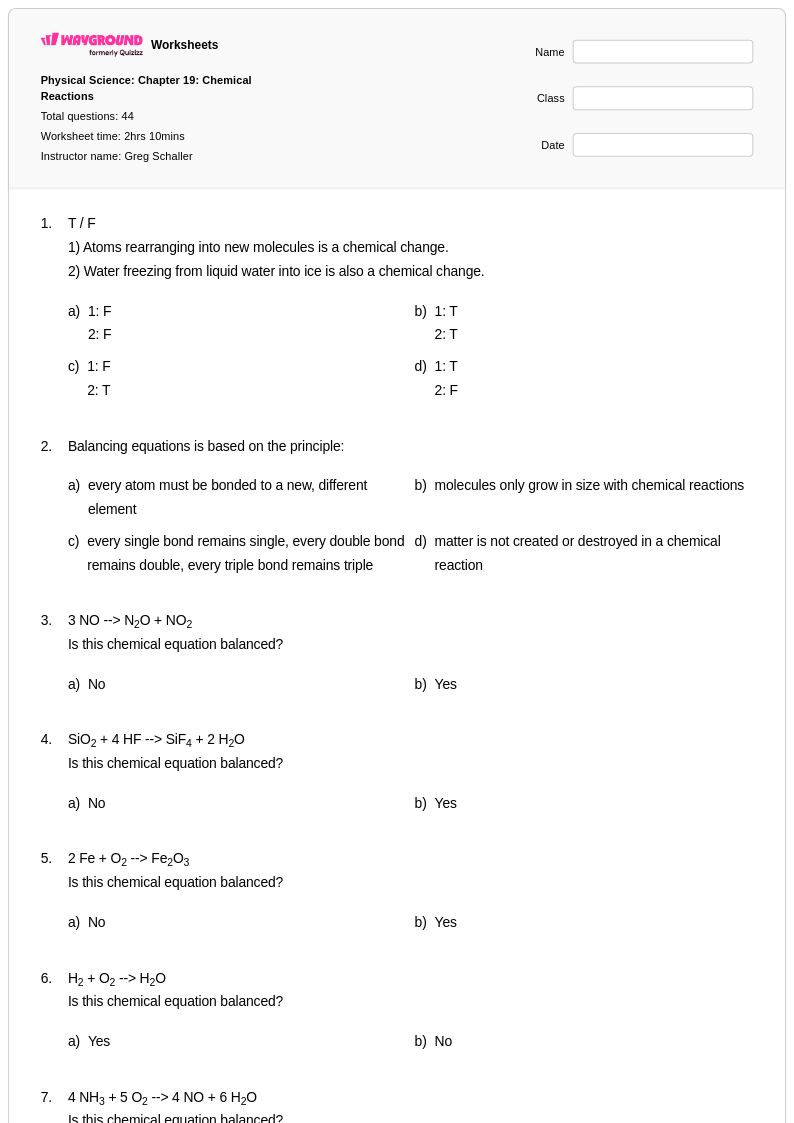
44Q
9th - 12th
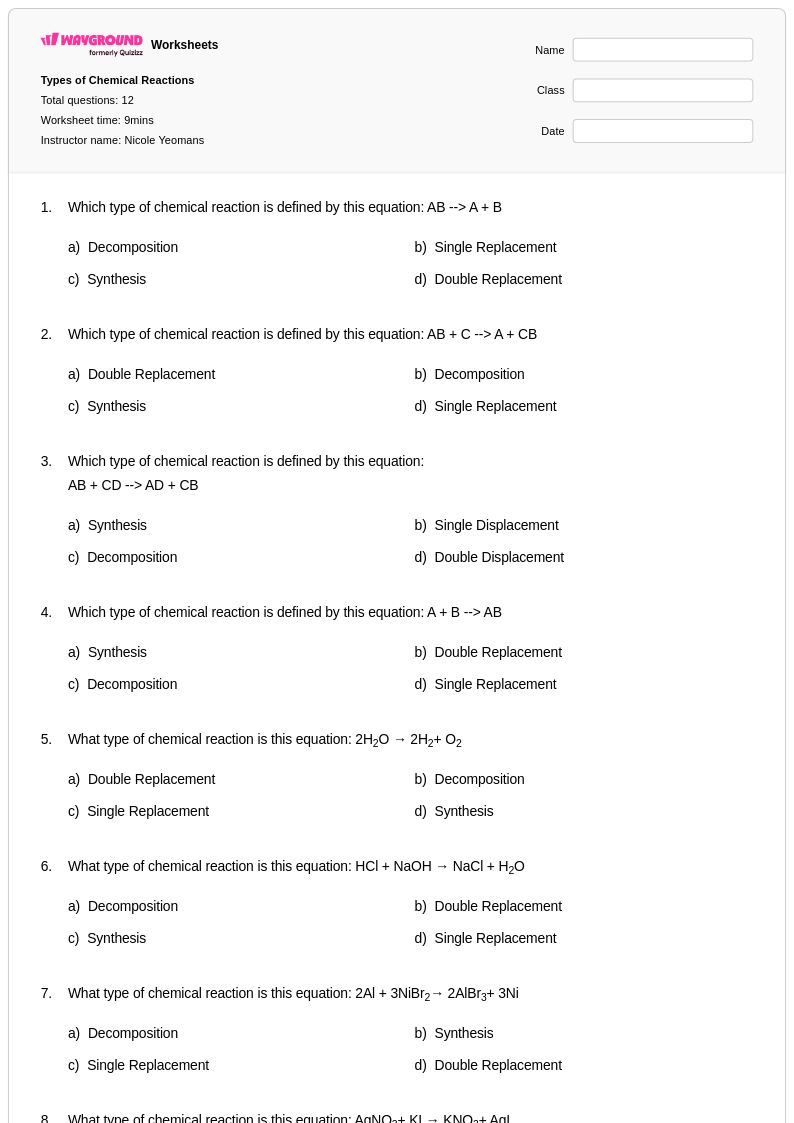
12Q
9th - 11th
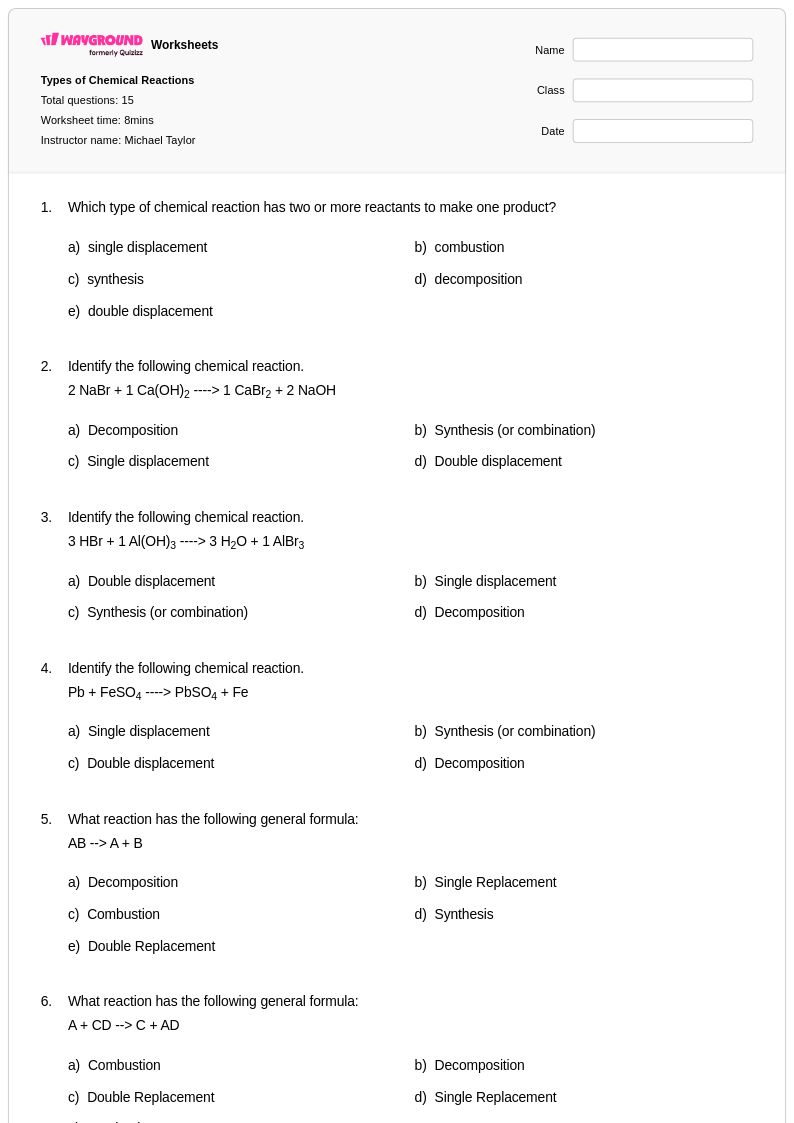
15Q
8th - 10th
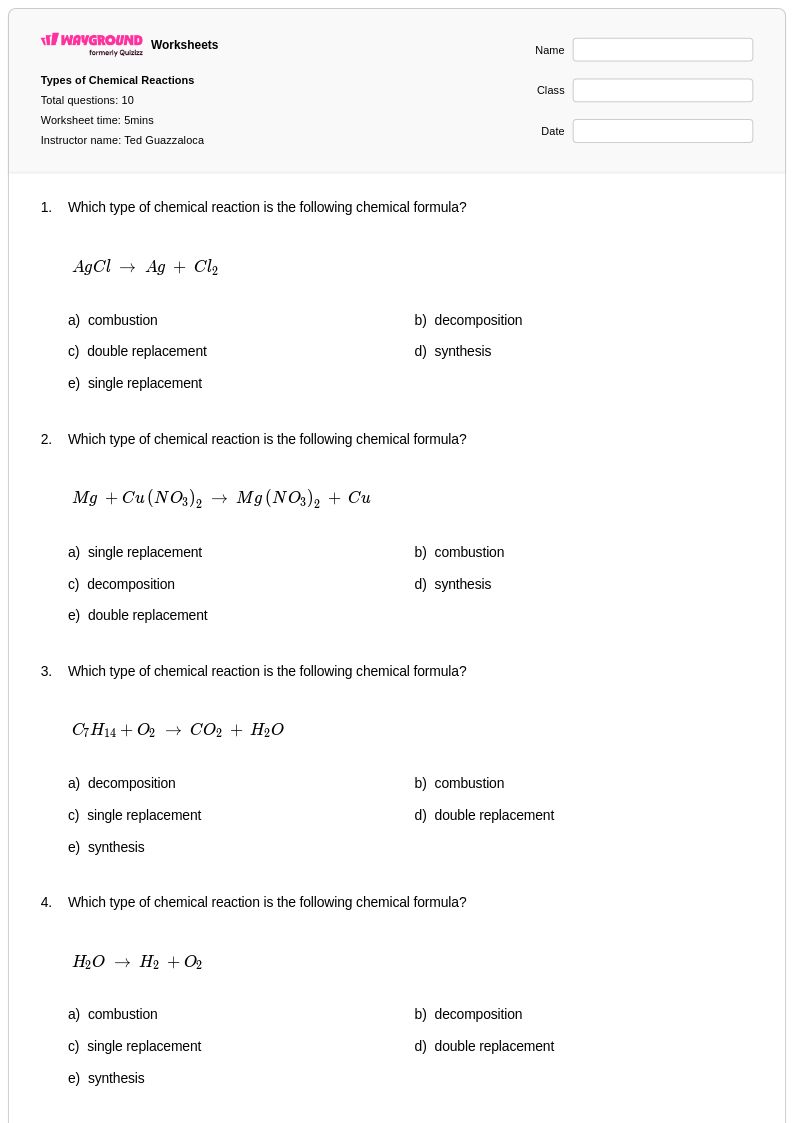
10Q
8th - 11th
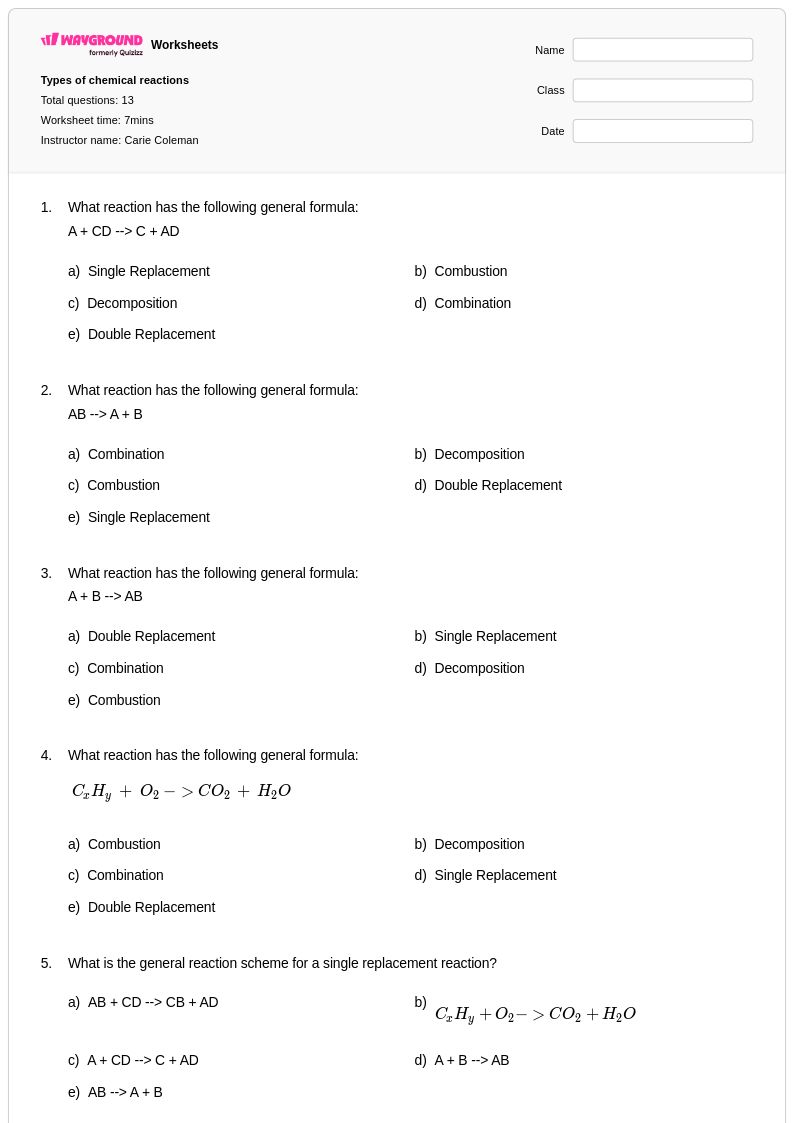
13Q
9th - 11th
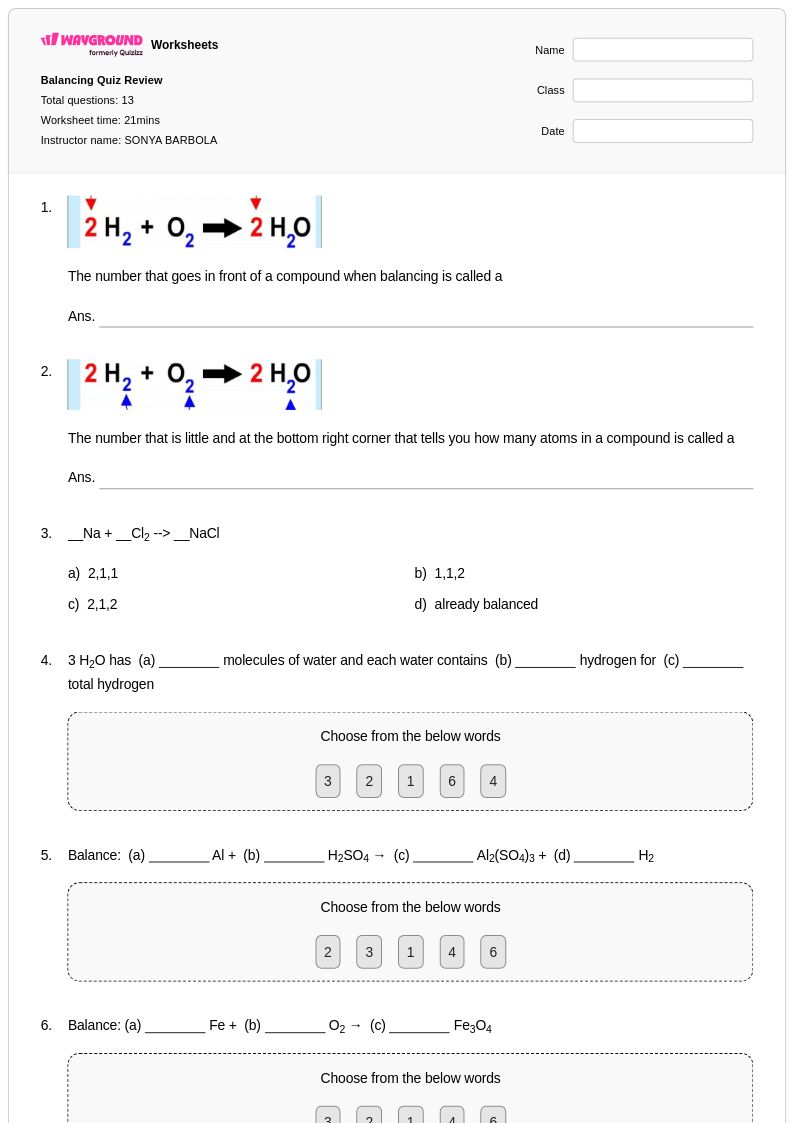
13Q
9th - 12th
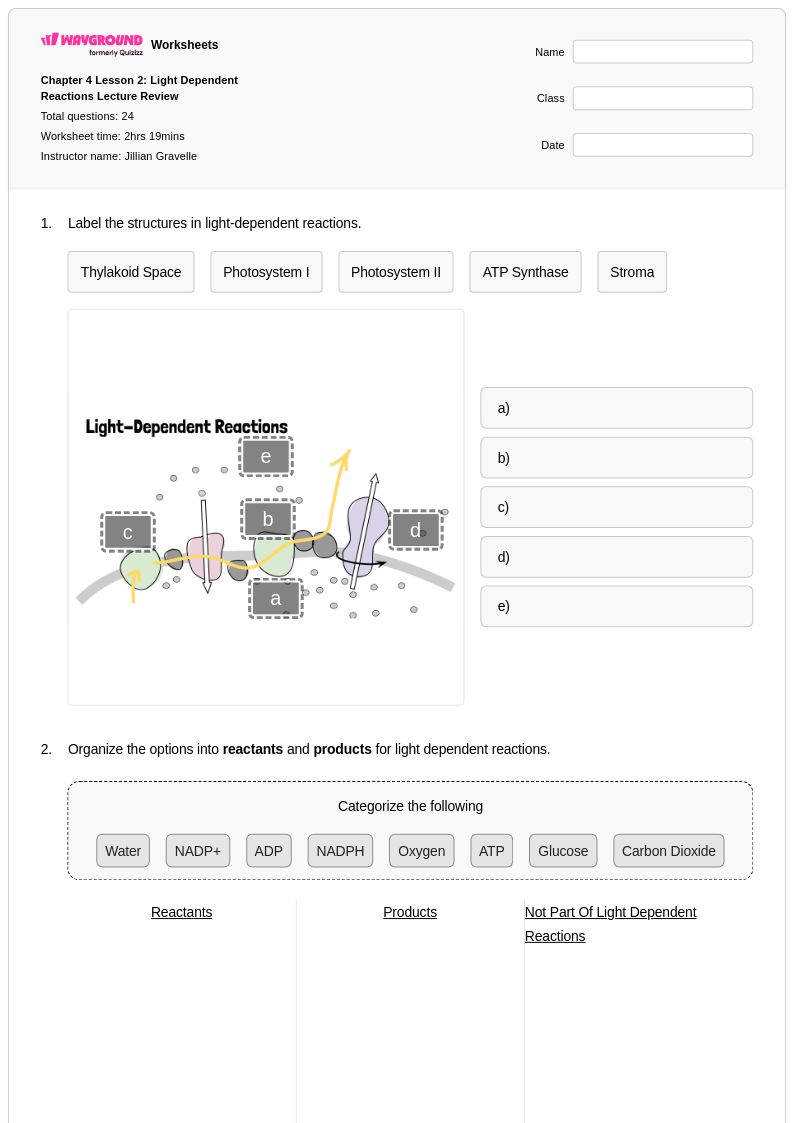
24Q
10th
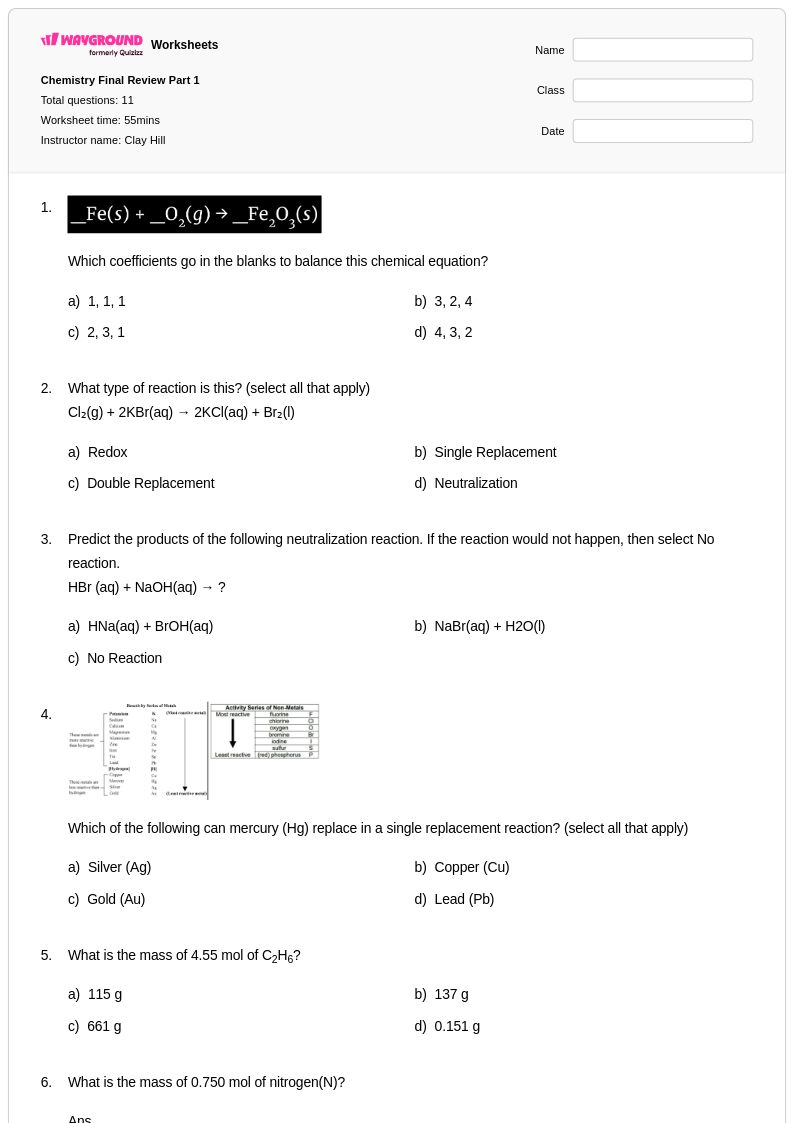
11Q
10th
25Q
10th
21Q
9th - 12th
20Q
9th - 12th
20Q
9th - 12th
7Q
9th - Uni
24Q
9th - Uni
69Q
10th
12Q
10th
18Q
9th - 12th
23Q
10th
40Q
10th
16Q
10th
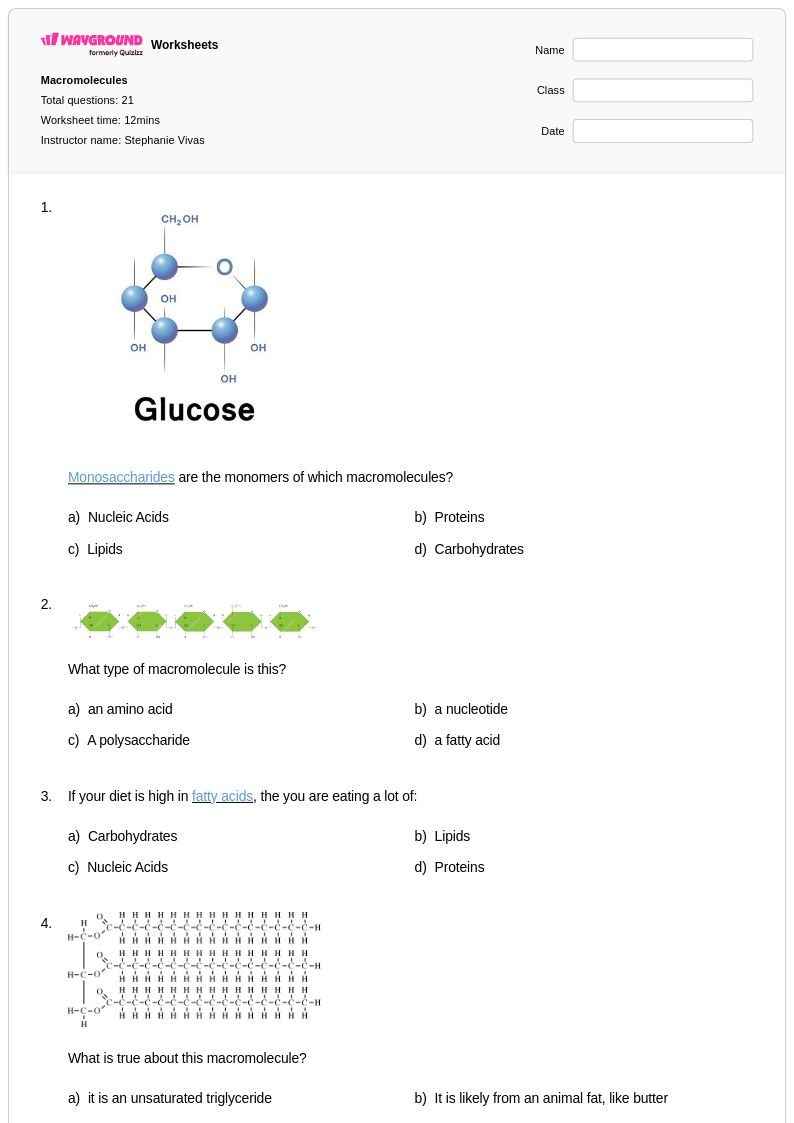
21Q
10th
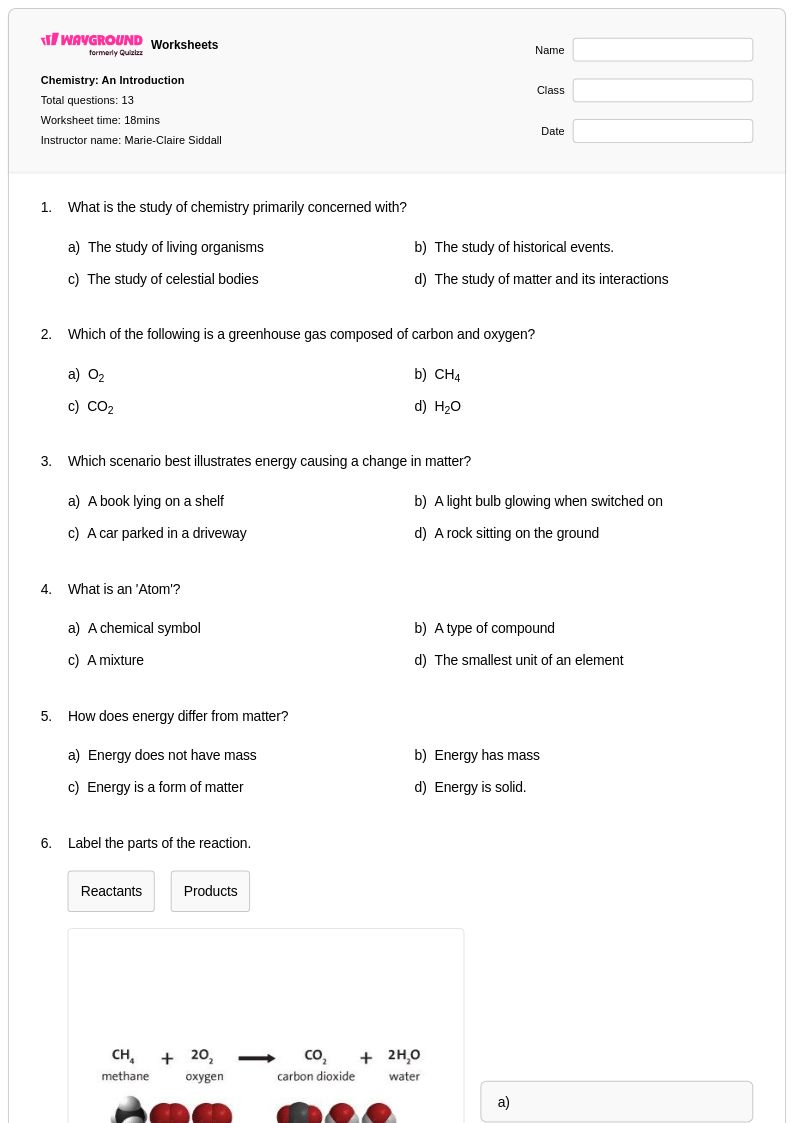
13Q
10th
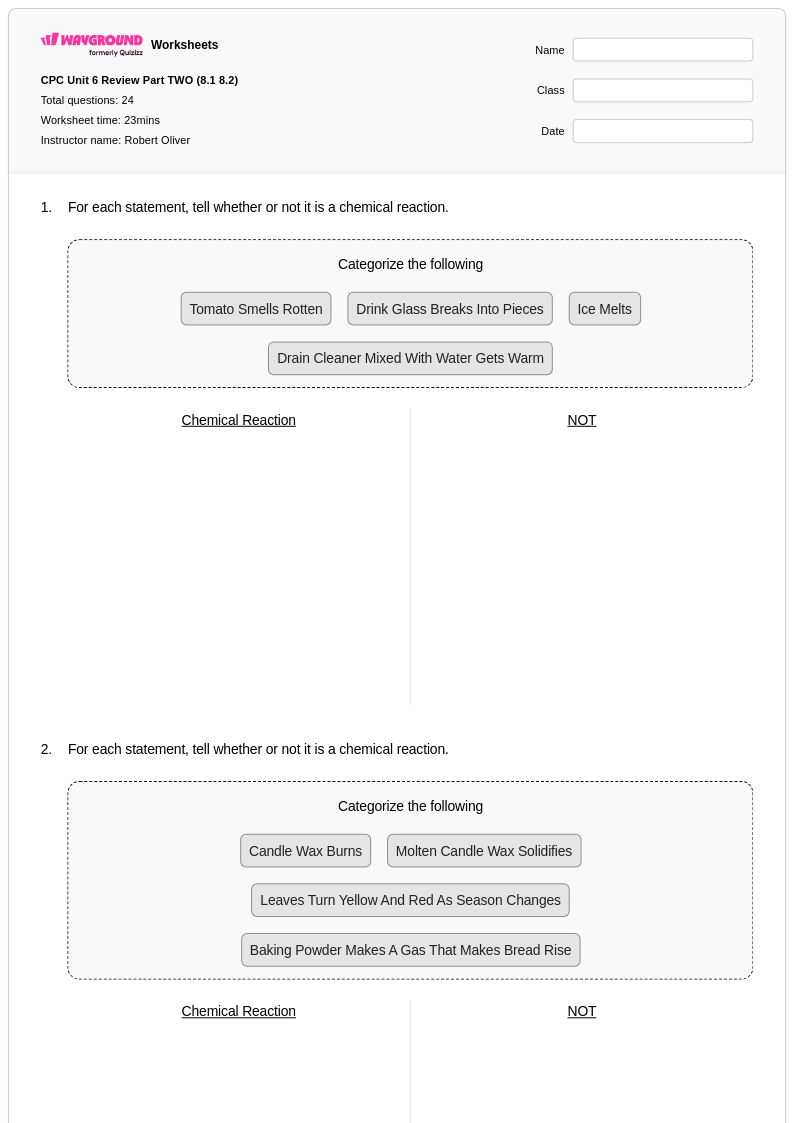
24Q
9th - Uni
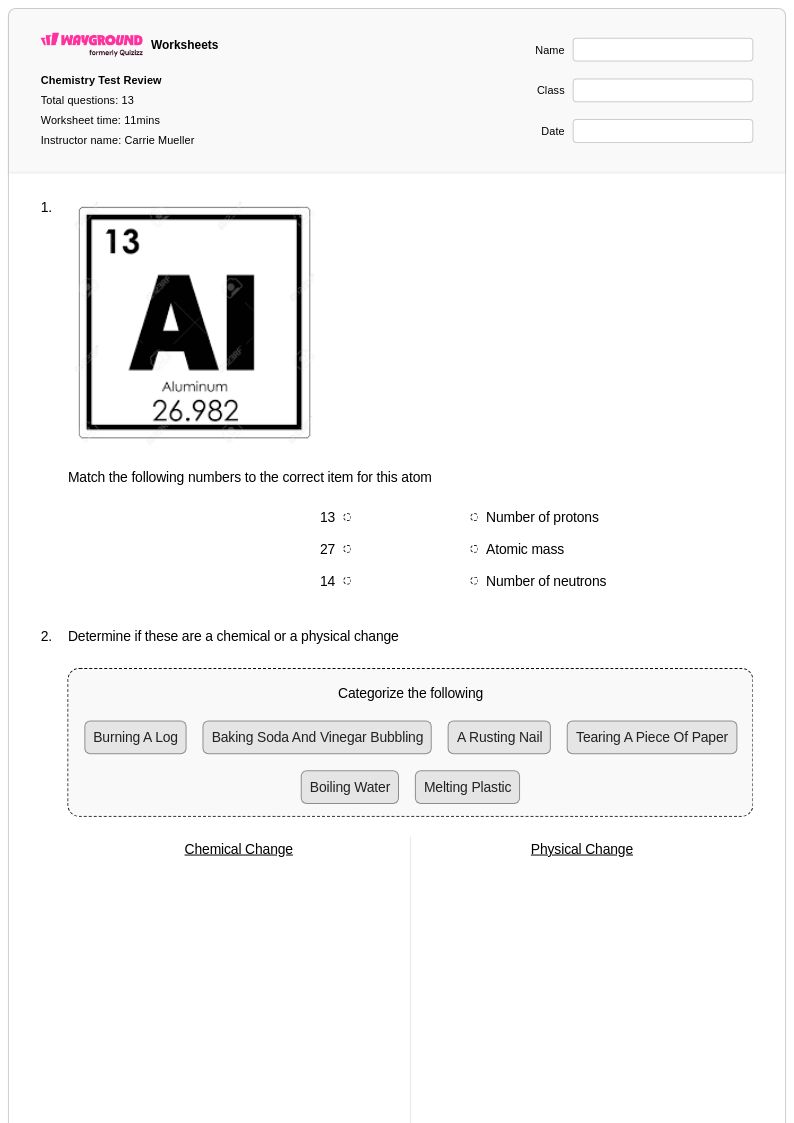
13Q
10th
Explore planilhas Identifying Reactions por notas
Explore outras planilhas de assuntos para class 10
Explore printable Identifying Reactions worksheets for Class 10
Identifying reactions worksheets for Class 10 students available through Wayground (formerly Quizizz) provide comprehensive practice in recognizing and categorizing different types of chemical reactions. These expertly crafted resources strengthen students' analytical skills by presenting various reaction equations and asking them to classify reactions as synthesis, decomposition, single replacement, double replacement, or combustion reactions. The worksheets feature systematic practice problems that guide students through the process of examining reactants and products to determine reaction patterns, while answer keys enable immediate feedback and self-assessment. Available as free printables in pdf format, these resources help students develop the critical thinking skills necessary to identify reaction mechanisms and predict products based on reactant behavior.
Wayground (formerly Quizizz) supports chemistry educators with an extensive collection of millions of teacher-created worksheets focused on identifying reactions and other essential Class 10 chemistry concepts. The platform's robust search and filtering capabilities allow teachers to quickly locate resources that align with specific curriculum standards and learning objectives, while differentiation tools enable customization for students with varying skill levels. These worksheets are available in both printable pdf formats for traditional classroom use and digital formats for online learning environments, providing flexibility for lesson planning and implementation. Teachers can utilize these resources for initial skill introduction, targeted remediation for struggling students, enrichment activities for advanced learners, and regular practice to reinforce reaction identification concepts throughout the academic year.