
16Q
4th - Uni
10Q
4th - Uni
35Q
6th
20Q
4th - Uni
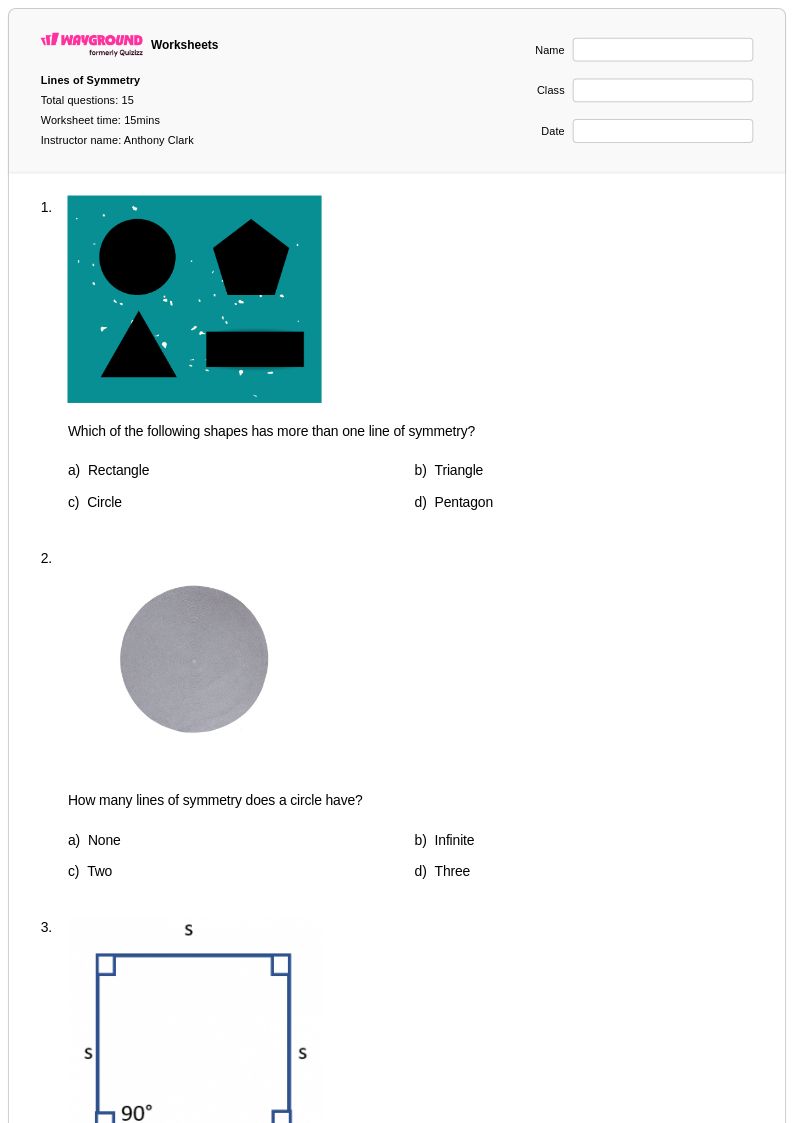
15Q
4th - Uni
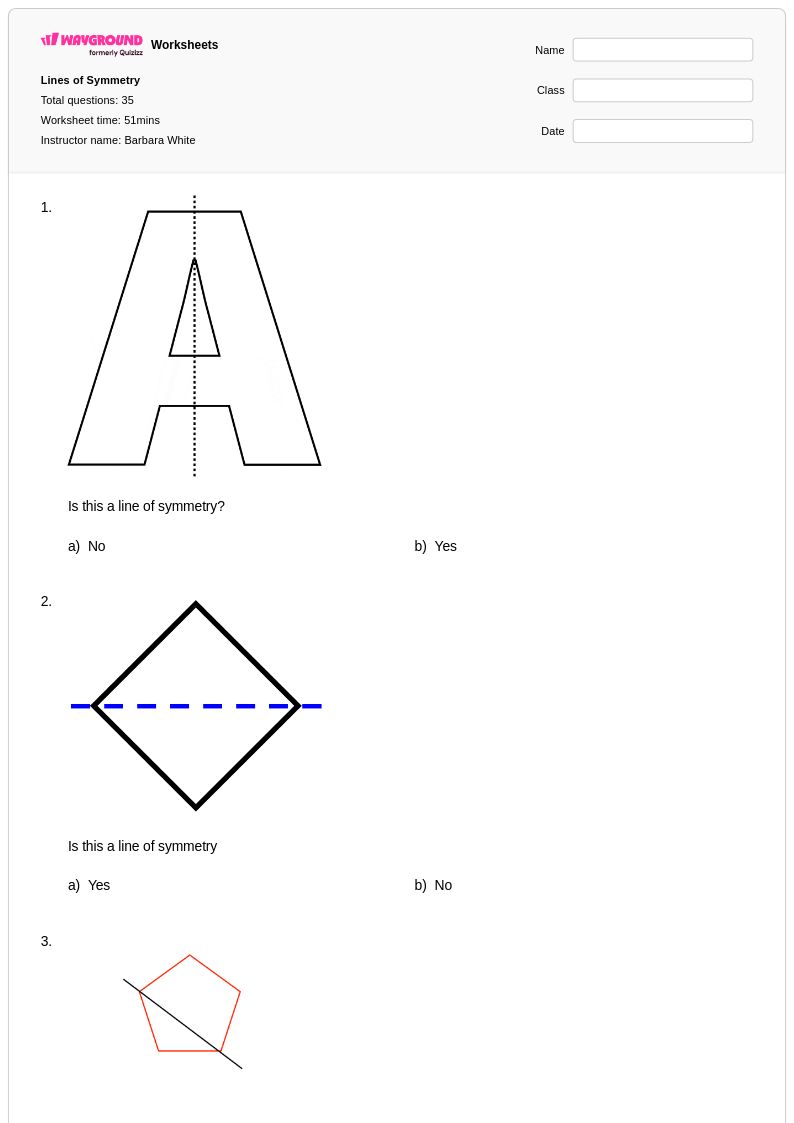
35Q
6th
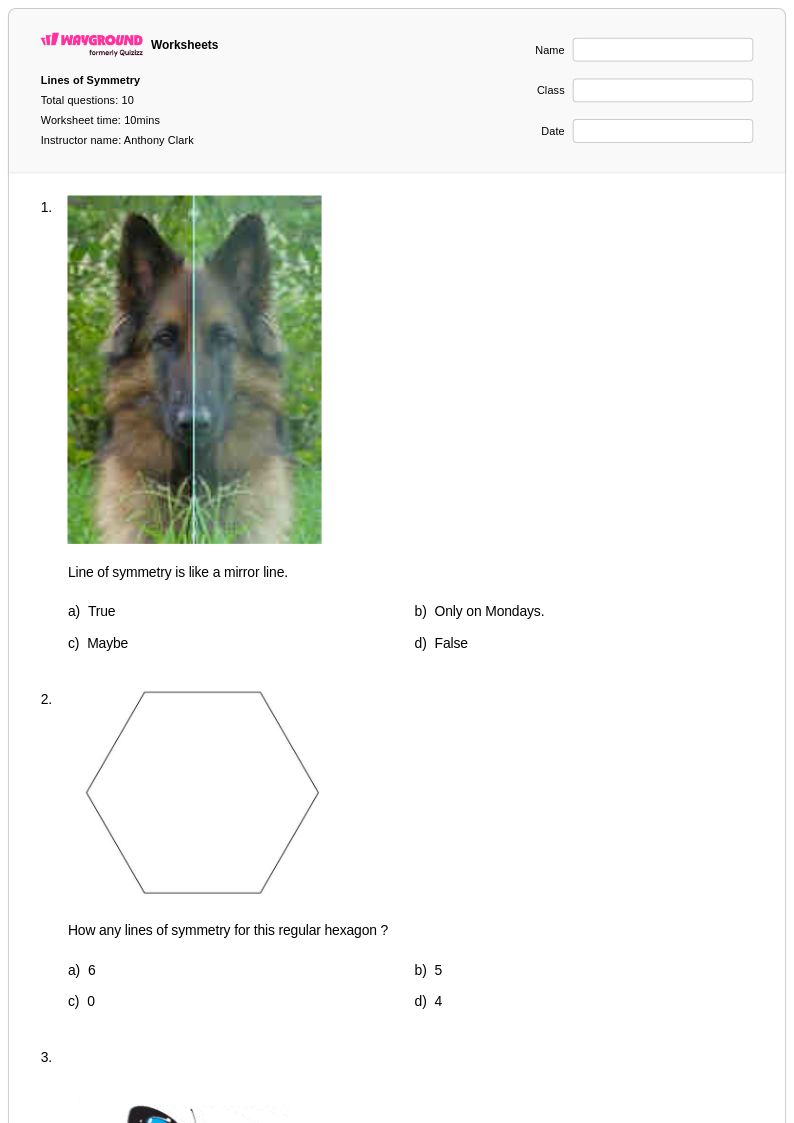
10Q
4th - Uni
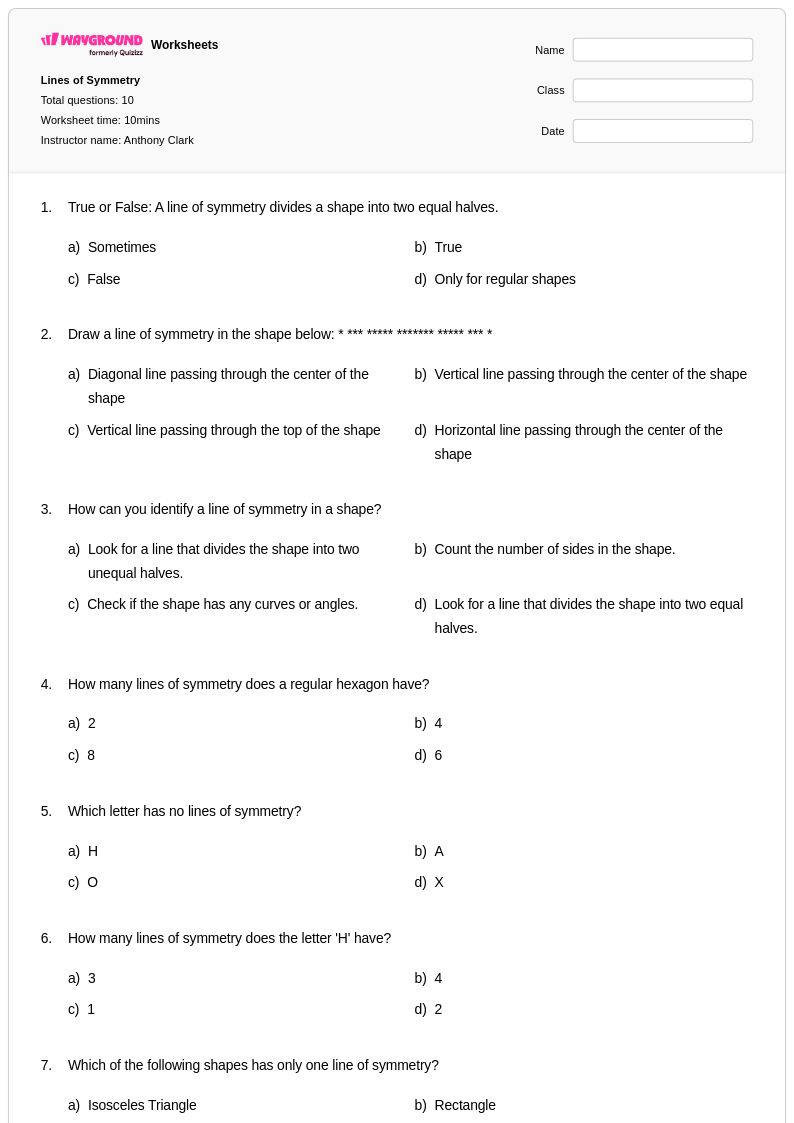
10Q
4th - Uni
20Q
4th - Uni
15Q
4th - Uni
20Q
4th - Uni
20Q
6th - Uni
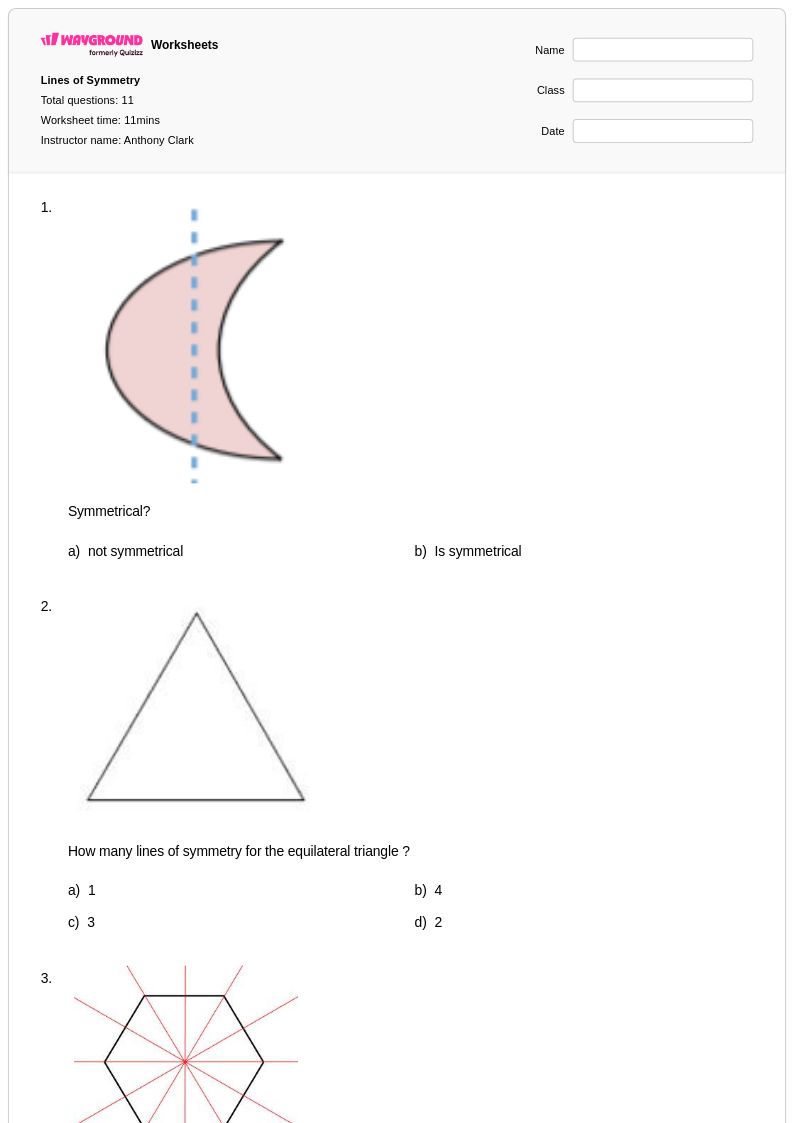
11Q
4th - Uni
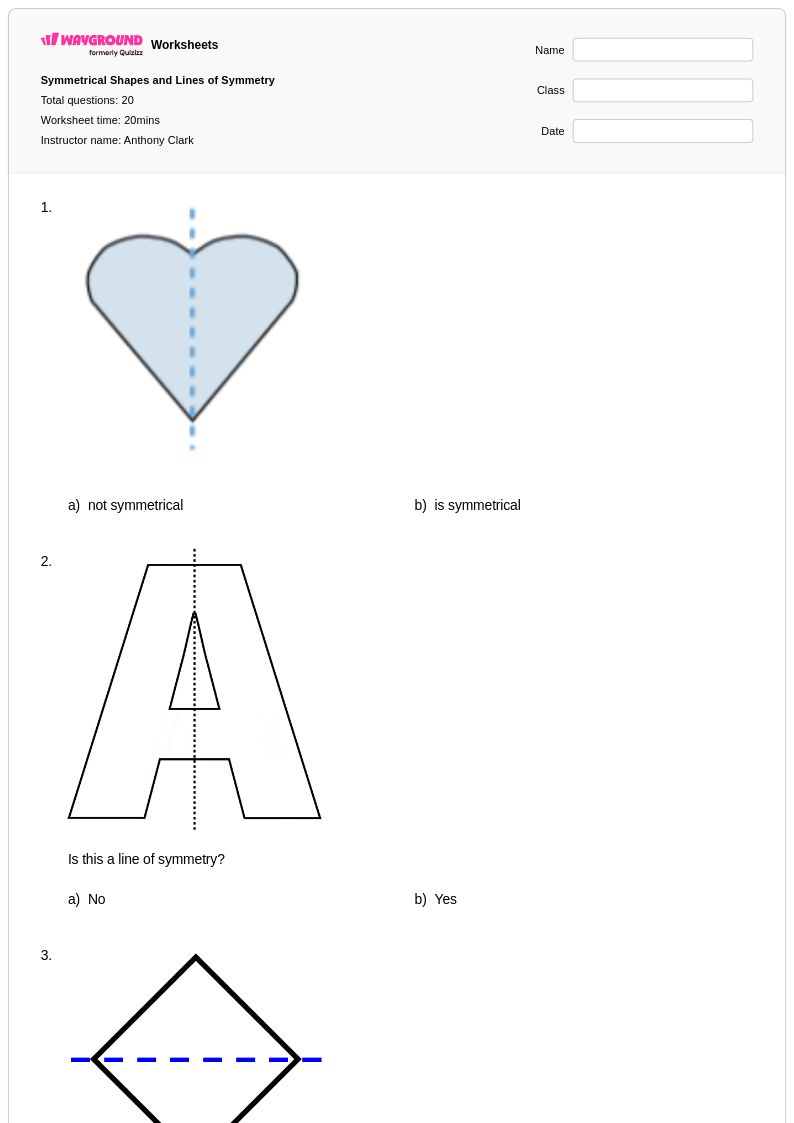
20Q
4th - Uni
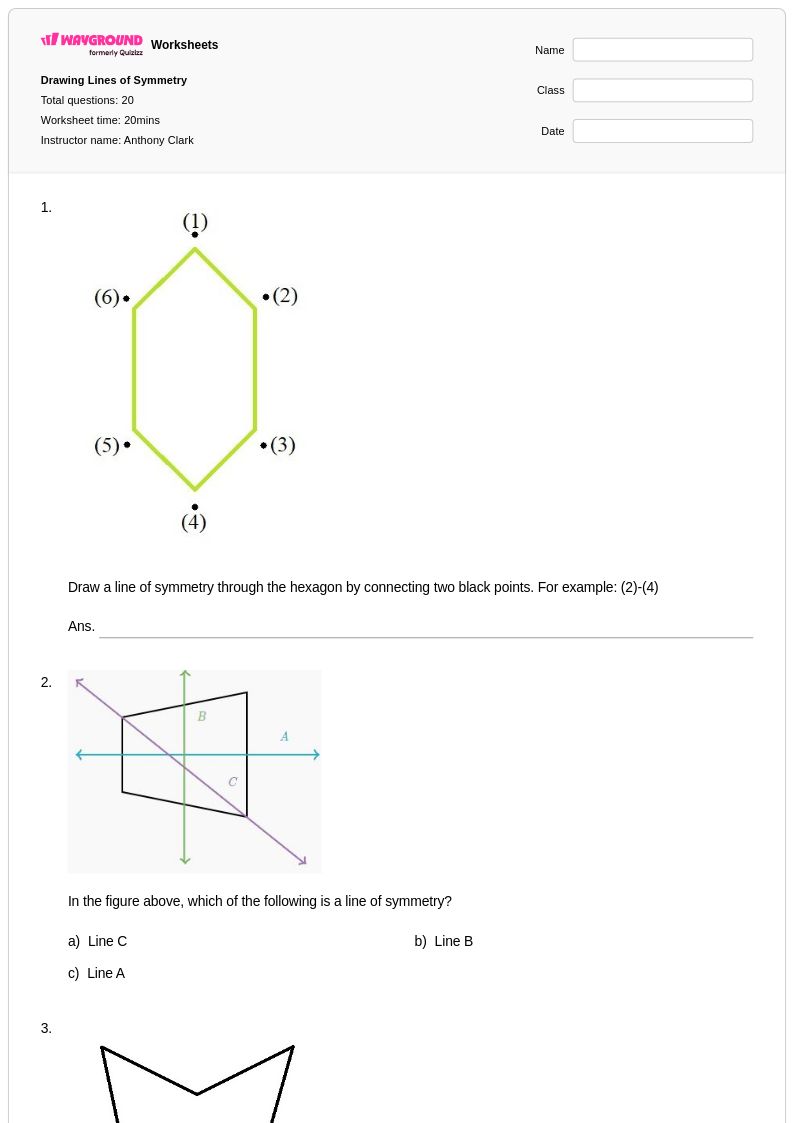
20Q
4th - Uni
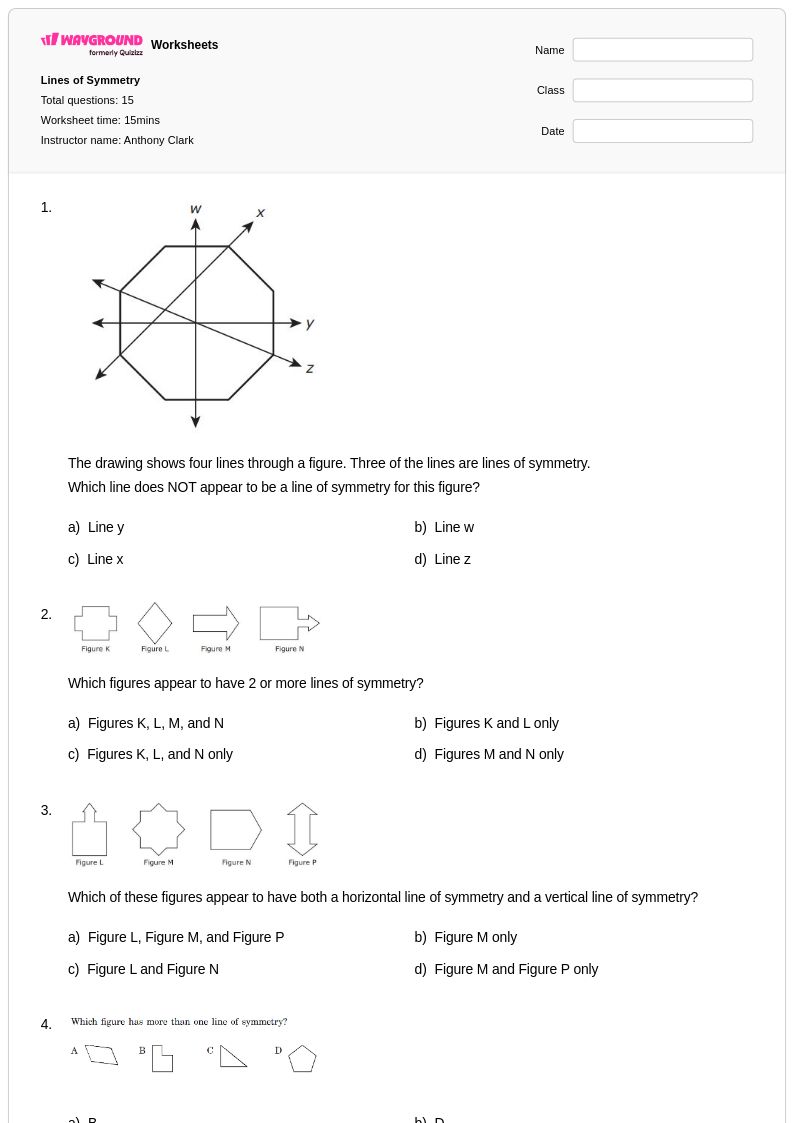
15Q
4th - Uni
35Q
6th
12Q
4th - Uni
11Q
4th - Uni
15Q
4th - Uni
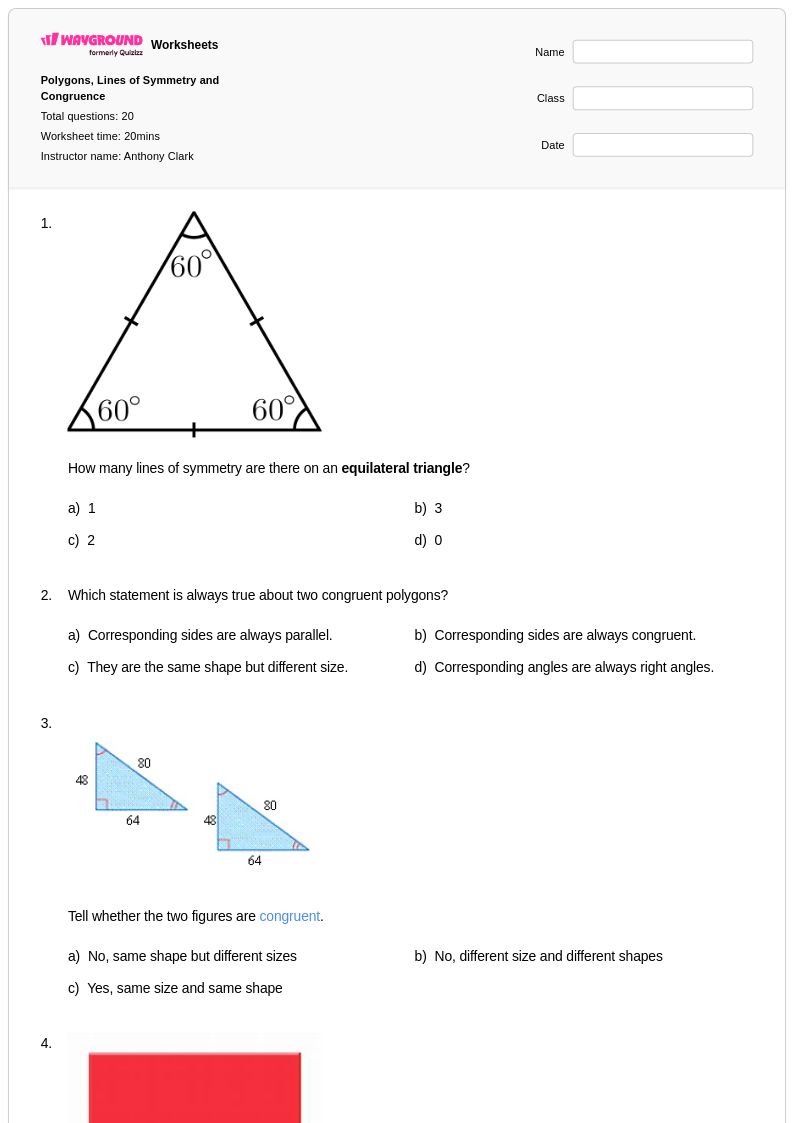
20Q
6th - Uni
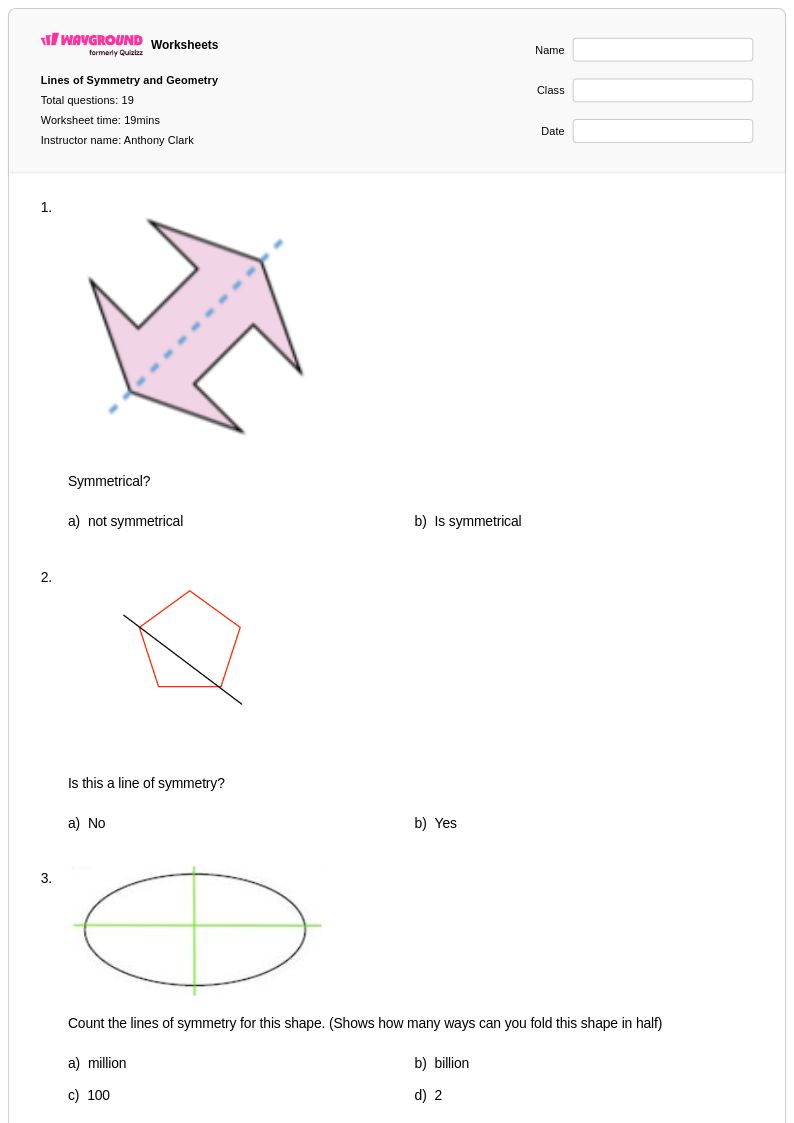
19Q
4th - Uni
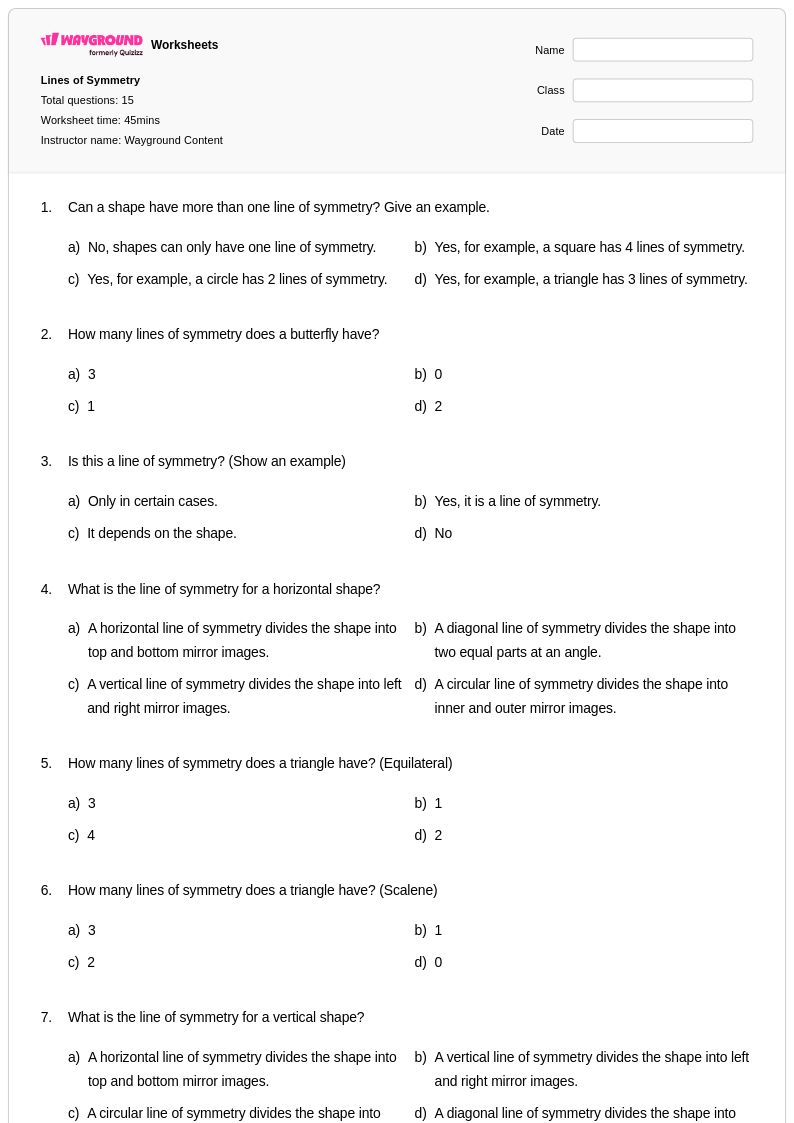
15Q
6th
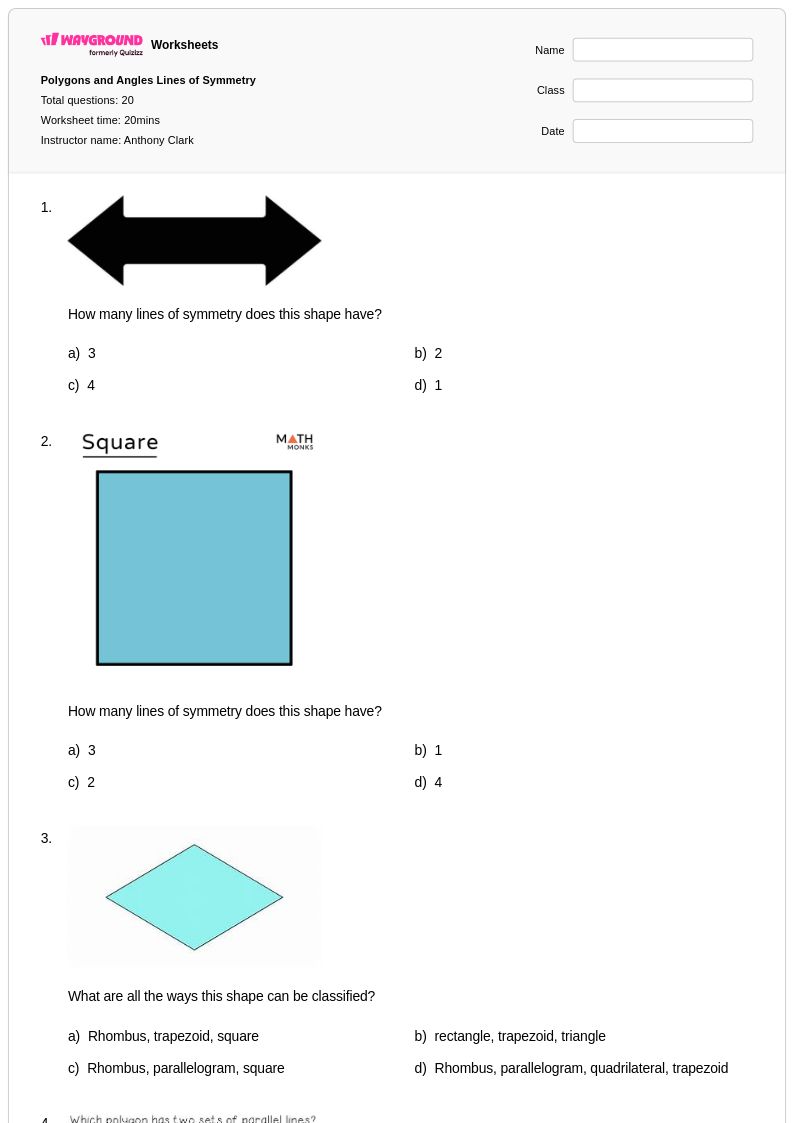
20Q
4th - Uni
Explorar Lines of Symmetry hojas de trabajo por grados
Explore otras hojas de trabajo de materias para class 6
Explore printable Lines of Symmetry worksheets for Class 6
Lines of symmetry worksheets for Class 6 students available through Wayground (formerly Quizizz) provide comprehensive practice in identifying, drawing, and analyzing symmetrical properties in geometric shapes and everyday objects. These carefully designed printables strengthen students' spatial reasoning abilities and geometric understanding by engaging them with practice problems that range from basic line identification to more complex symmetry construction tasks. Students work with various polygons, letters, numbers, and real-world images to develop their ability to recognize vertical, horizontal, and diagonal lines of symmetry. Each worksheet collection includes detailed answer keys and is available in convenient pdf format, making them accessible for both classroom instruction and independent study sessions.
Wayground (formerly Quizizz) empowers educators with millions of teacher-created resources specifically focused on lines of symmetry and broader geometric concepts, featuring robust search and filtering capabilities that allow quick access to grade-appropriate materials. The platform's standards alignment ensures that worksheets meet curriculum requirements while providing differentiation tools that support diverse learning needs within the Class 6 mathematics classroom. Teachers can easily customize existing materials or create new variations to target specific skill gaps, whether for remediation with struggling students or enrichment activities for advanced learners. Available in both printable and digital formats, these resources streamline lesson planning and provide flexible options for skill practice, allowing educators to seamlessly integrate symmetry concepts into their instructional routines while building students' confidence with geometric transformations.
FAQs
How can I teach lines of symmetry in Grade 6?
What activities help sixth graders practice lines of symmetry?
Why do students misidentify lines of symmetry in complex figures?
How can I assign a Grade 6 lines of symmetry worksheet?
Where does line symmetry fit in the Common Core geometry progression?
How can I differentiate symmetry worksheets for Grade 6 students?
Why study lines of symmetry in Grade 6?