
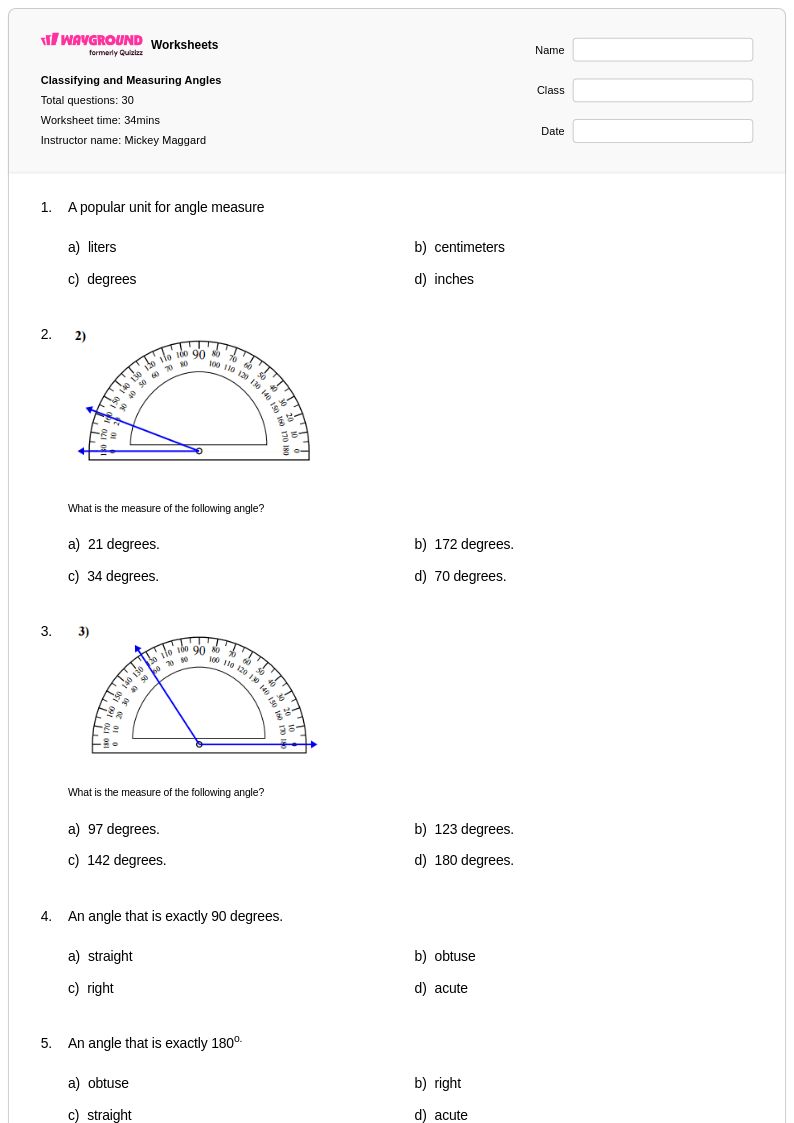
30 Q
6th
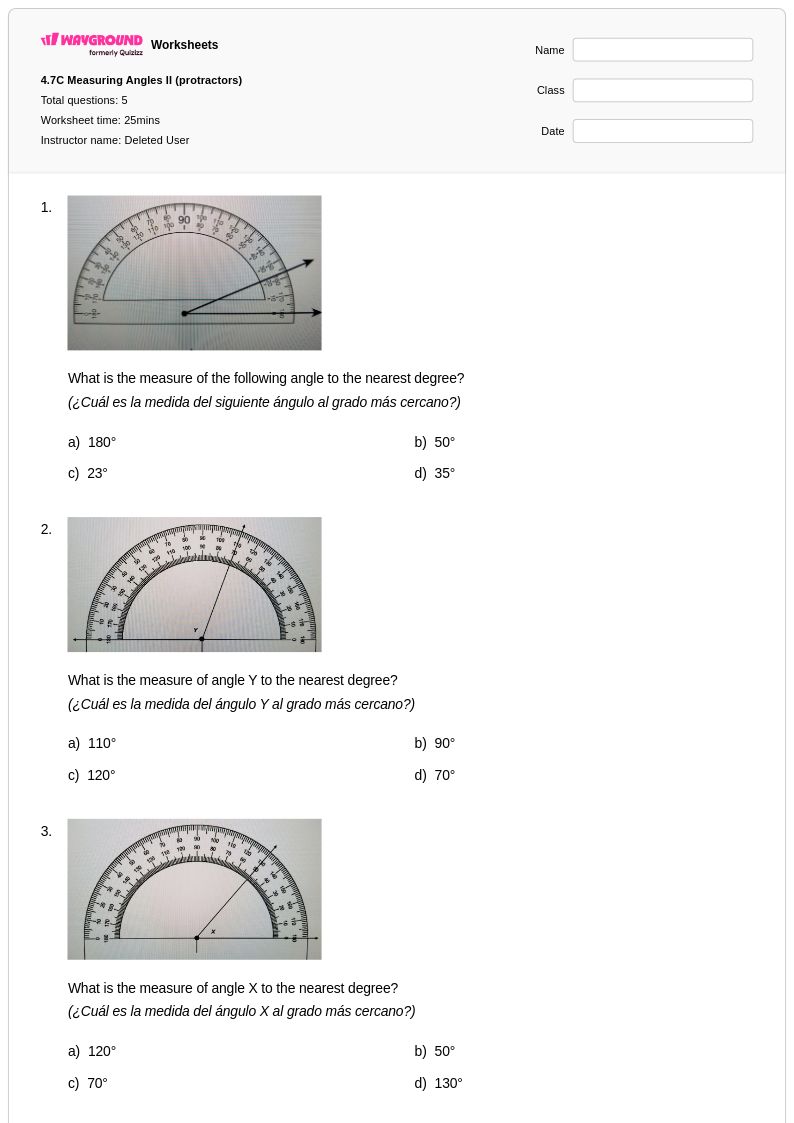
5 Q
4th - 6th
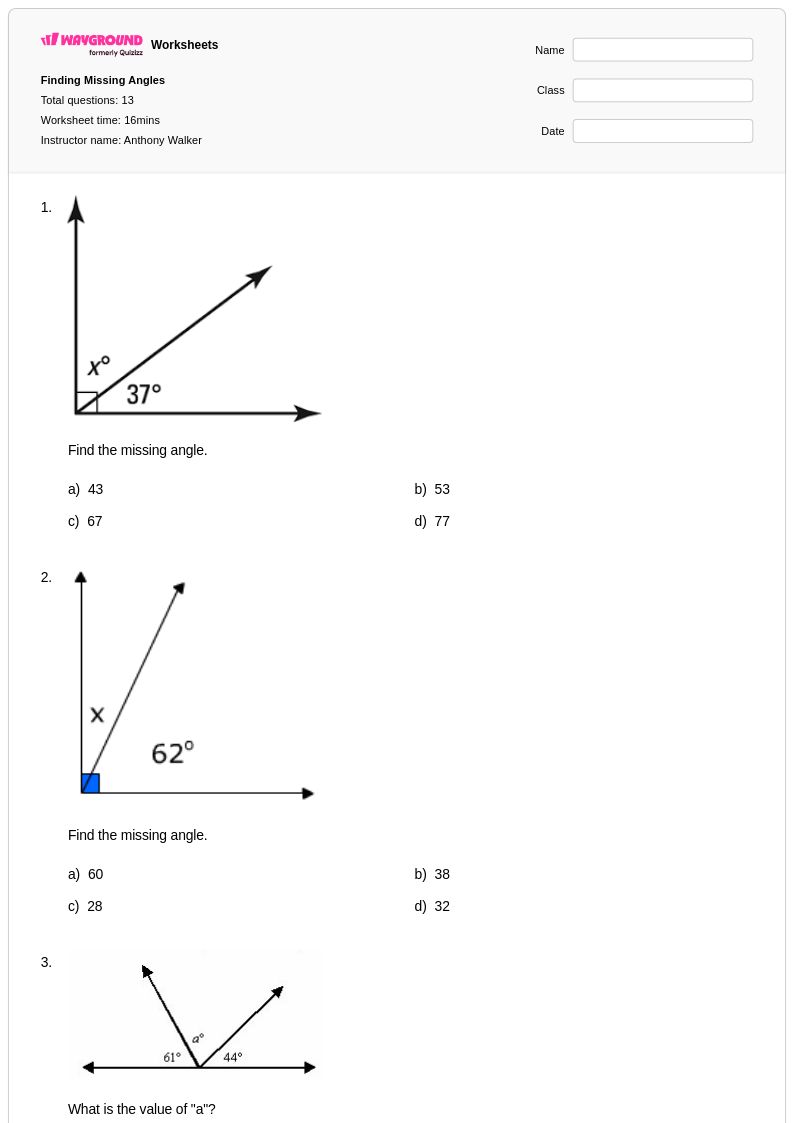
13 Q
6th - 12th
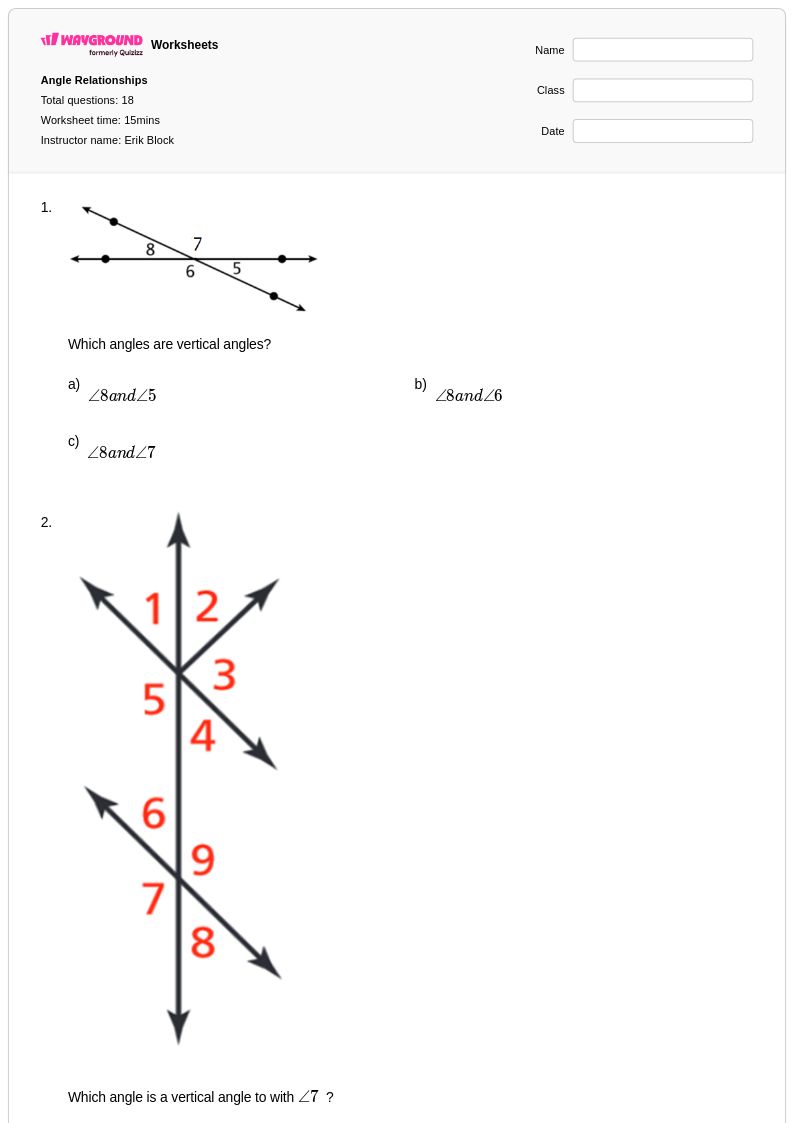
18 Q
6th - 8th
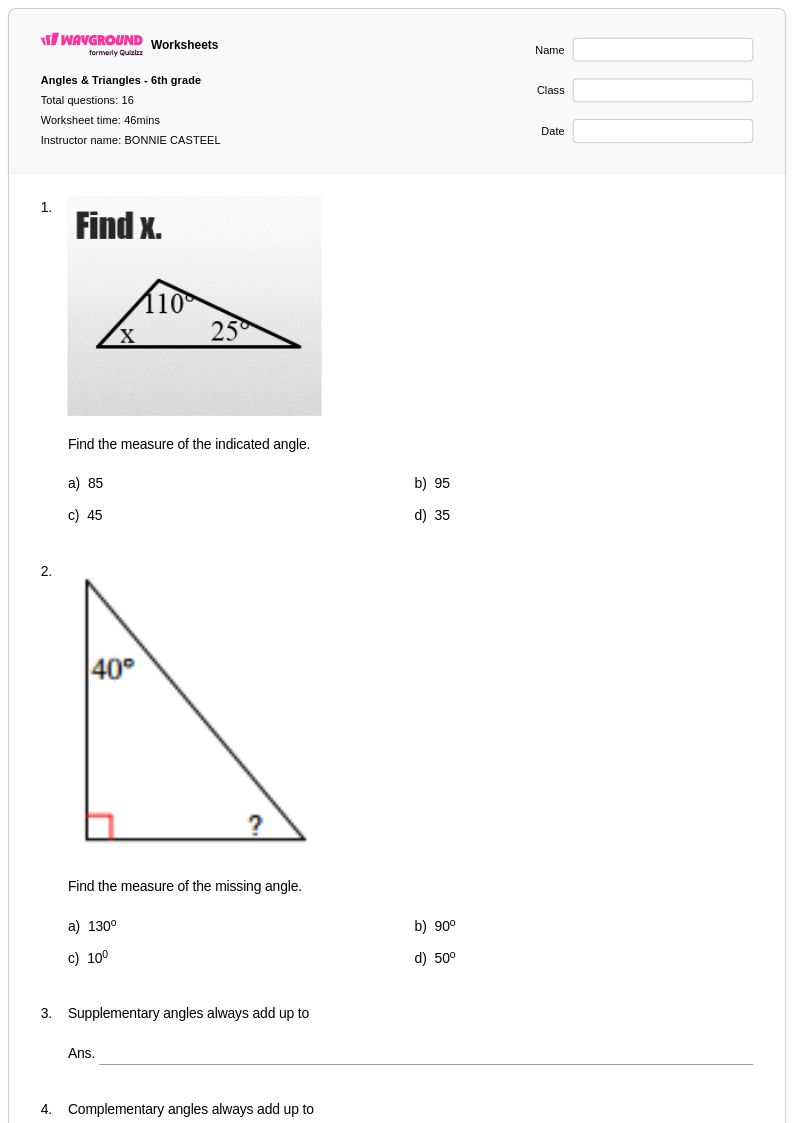
16 Q
6th
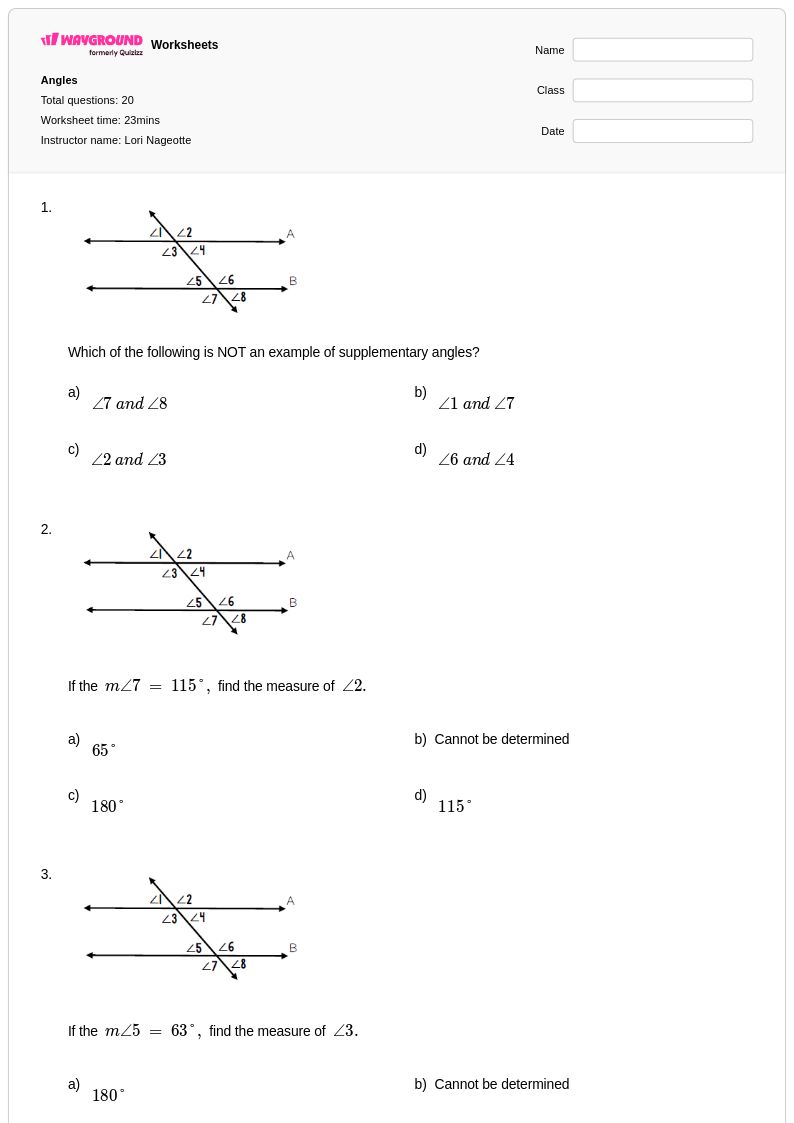
20 Q
6th - 7th
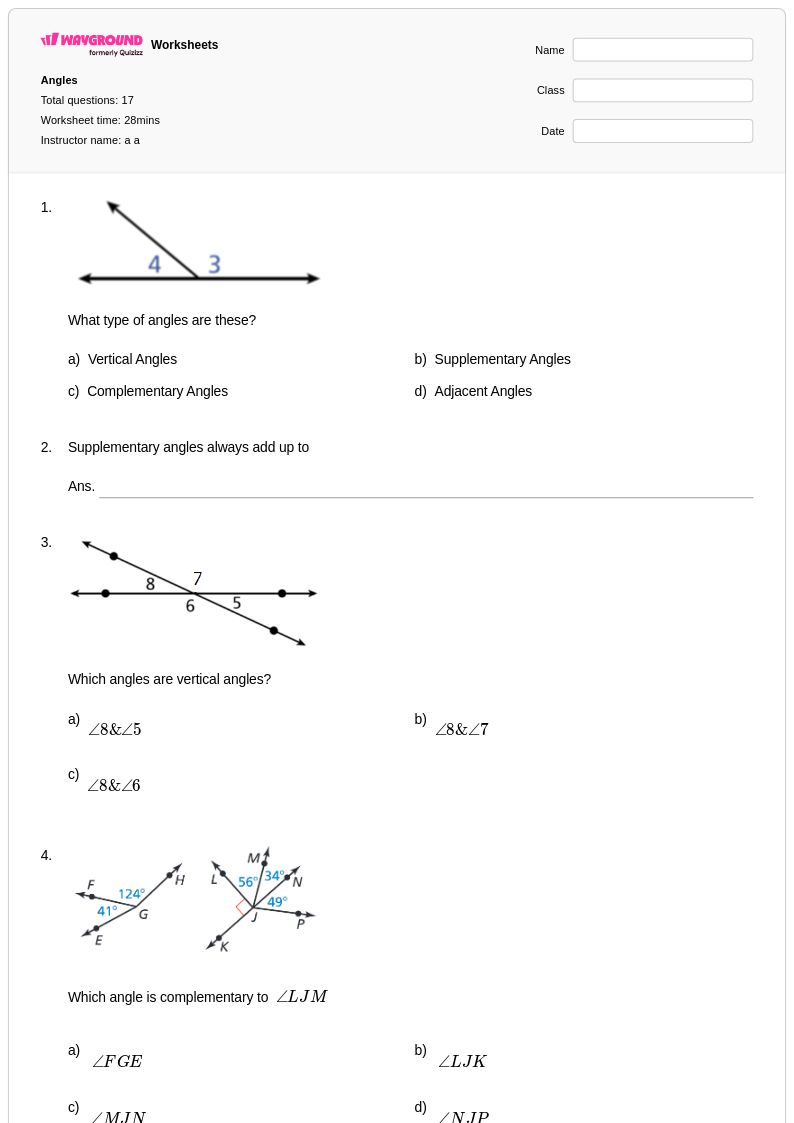
17 Q
6th - 7th
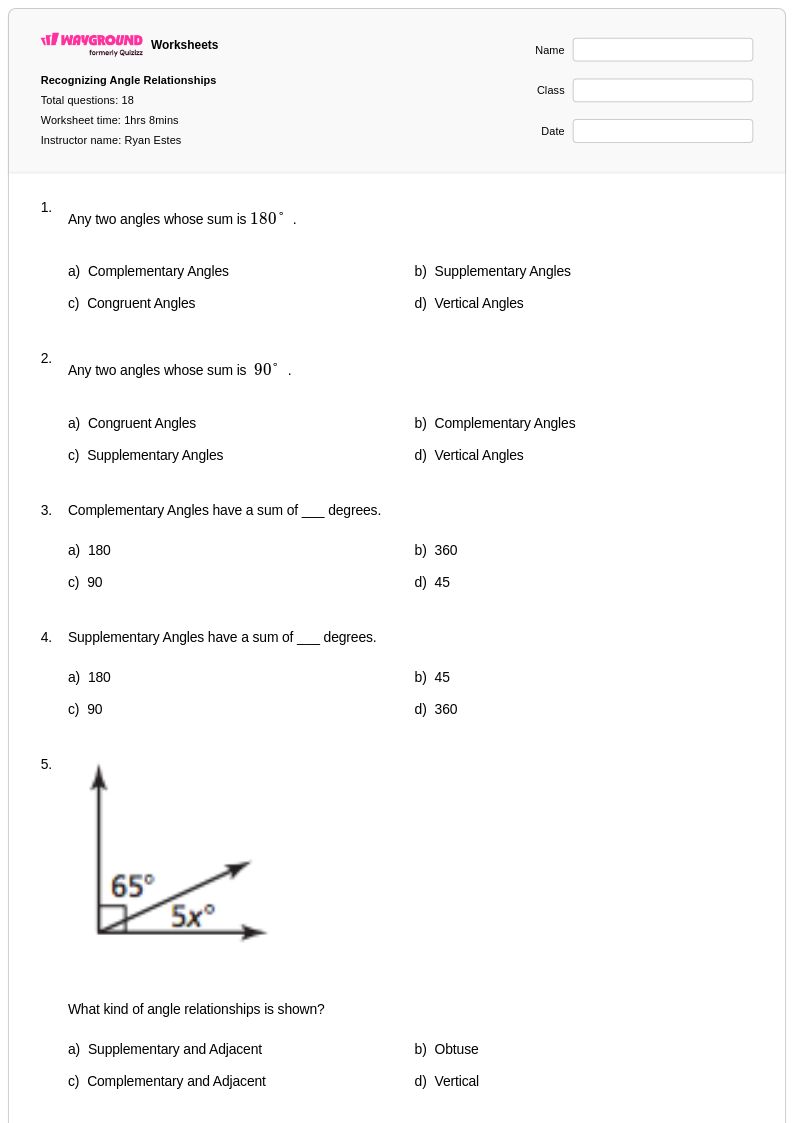
18 Q
6th - 8th
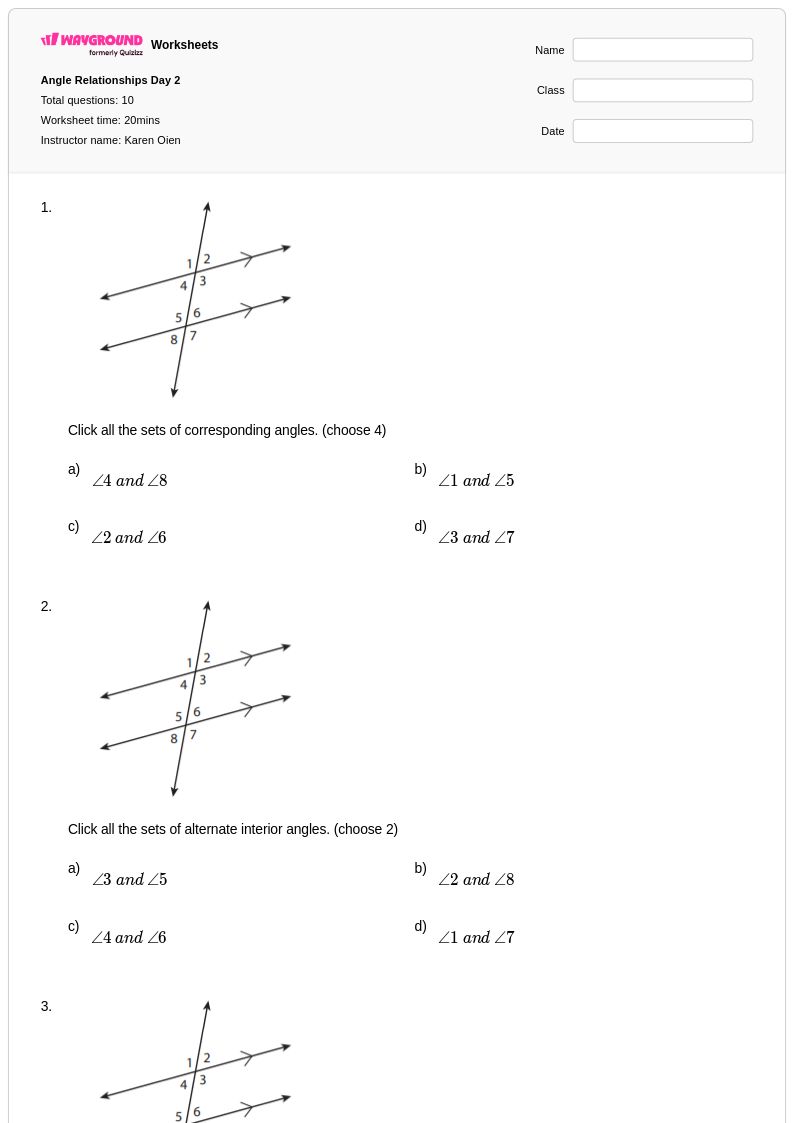
10 Q
6th - 10th
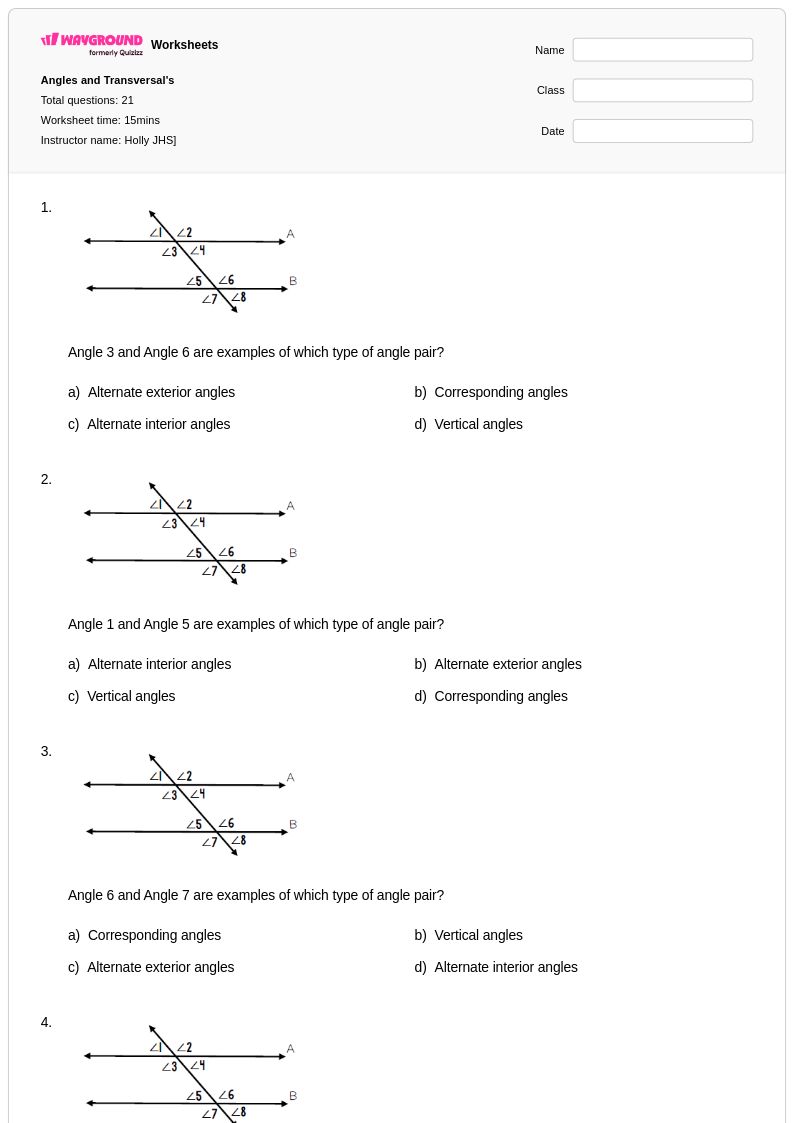
21 Q
6th - 9th
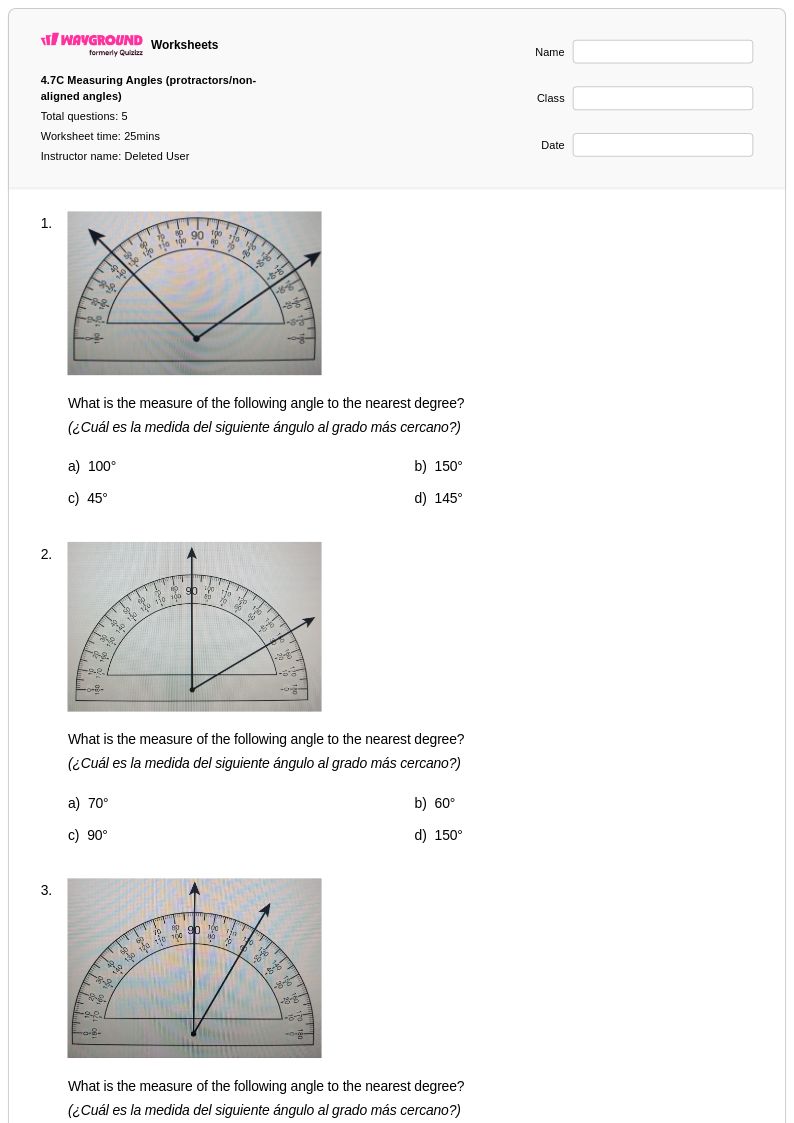
5 Q
4th - 6th
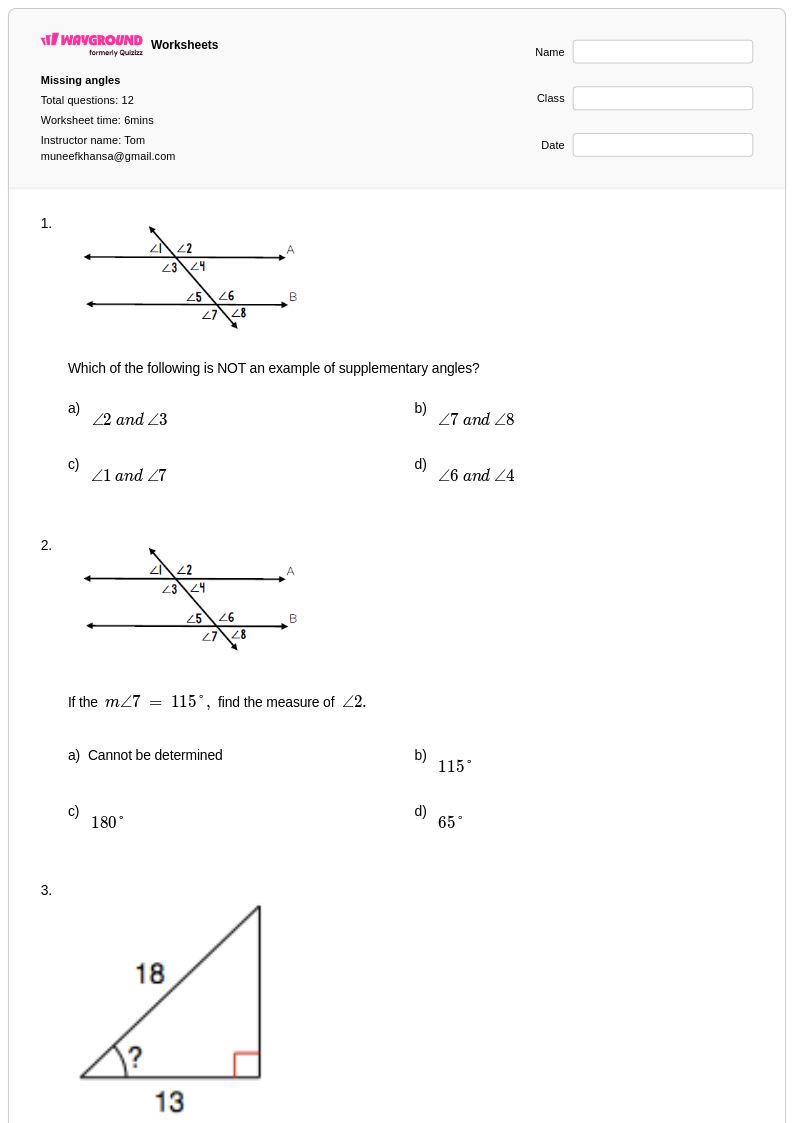
12 Q
4th - 6th
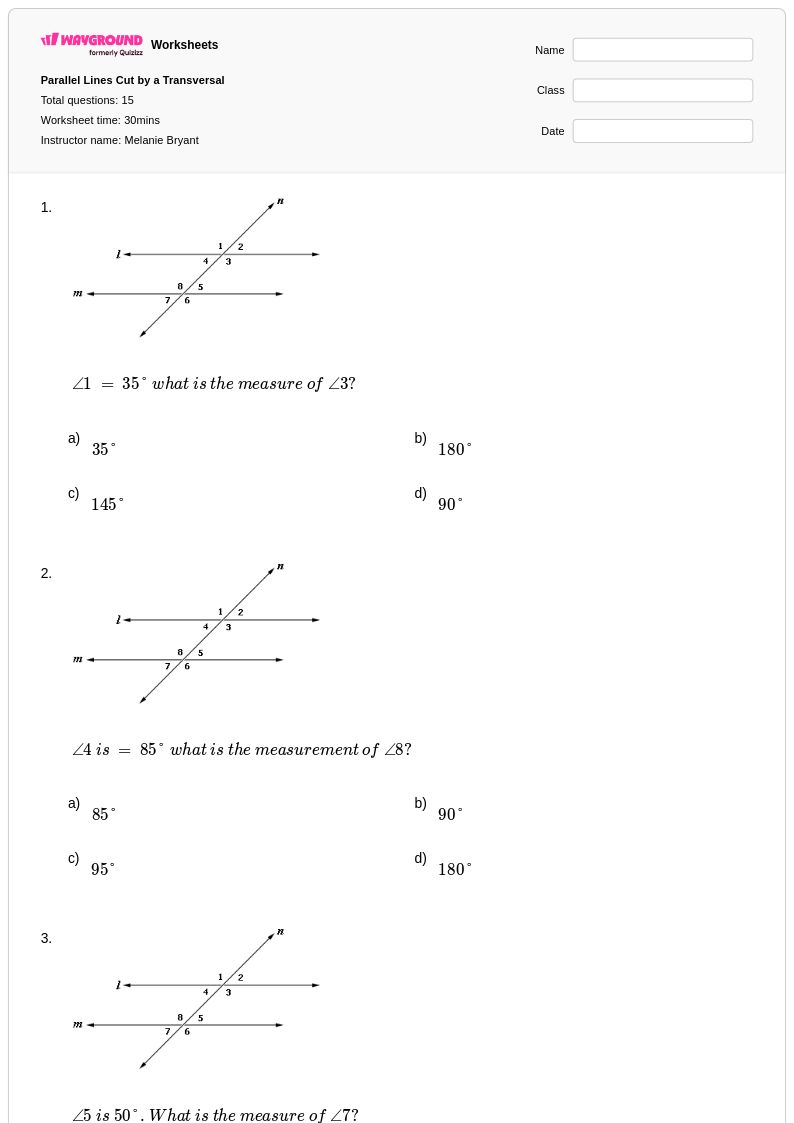
15 Q
6th - 8th
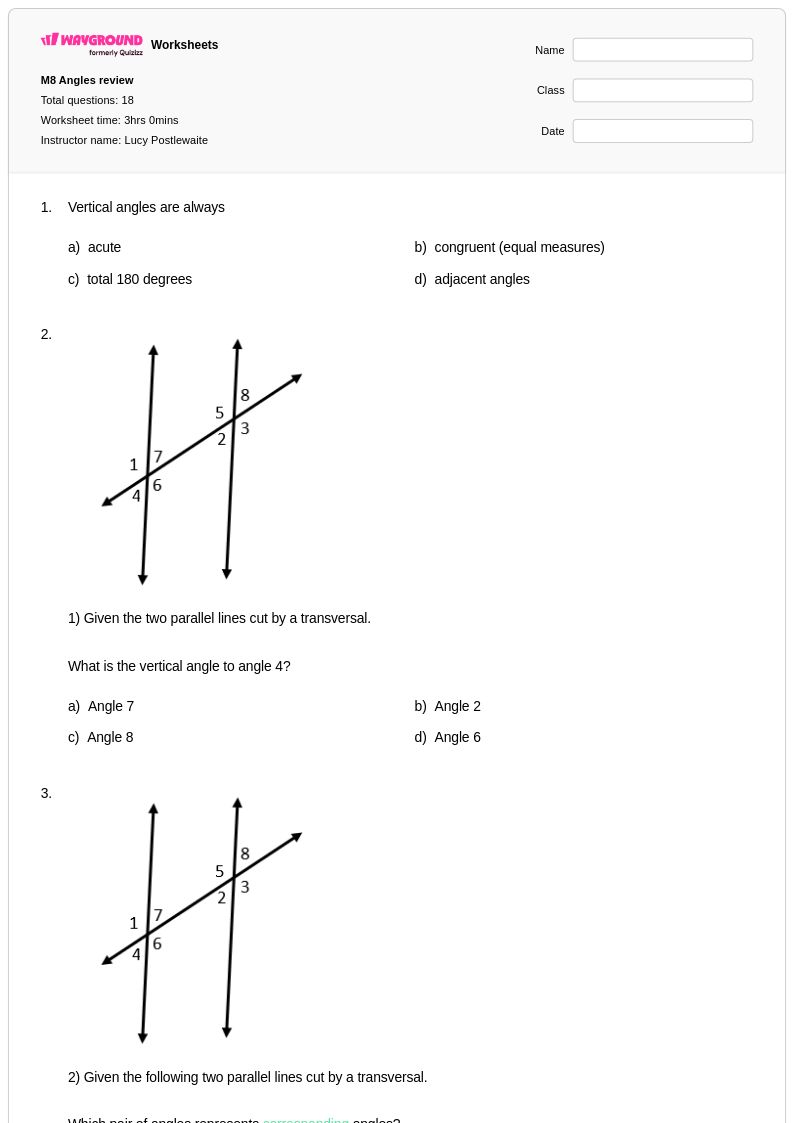
18 Q
6th - 8th
17 Q
6th - 12th
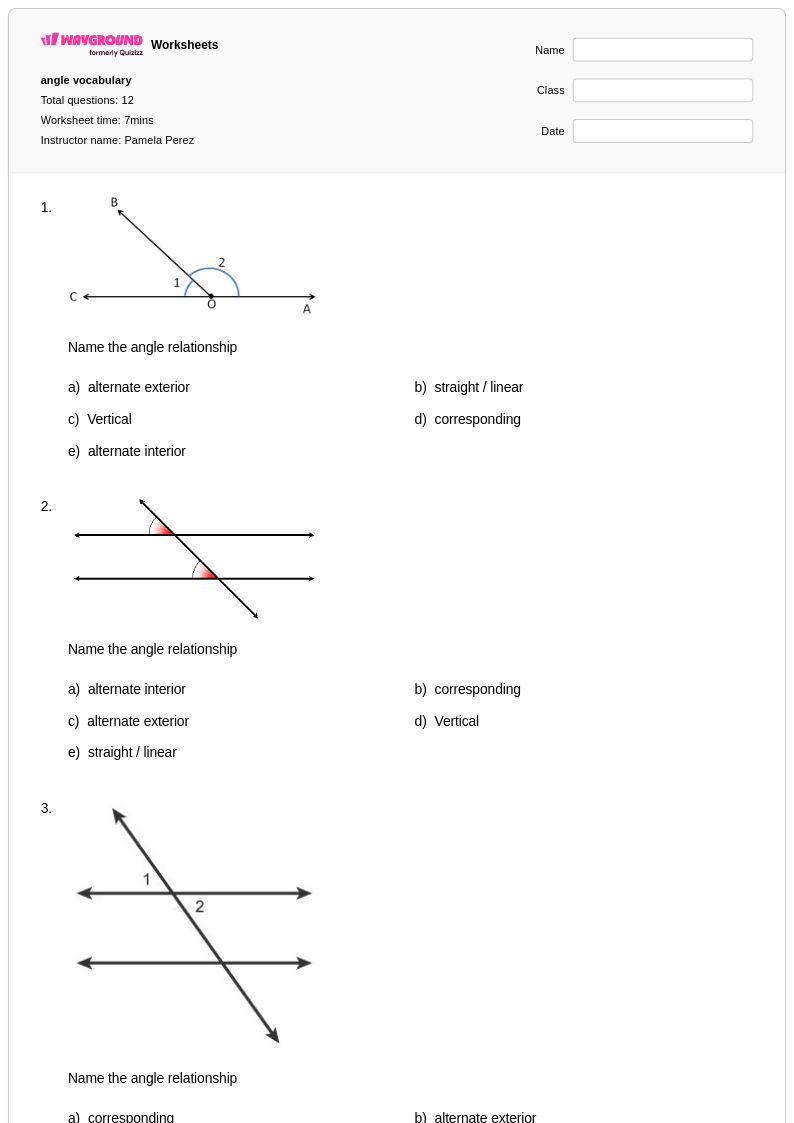
12 Q
6th - 10th
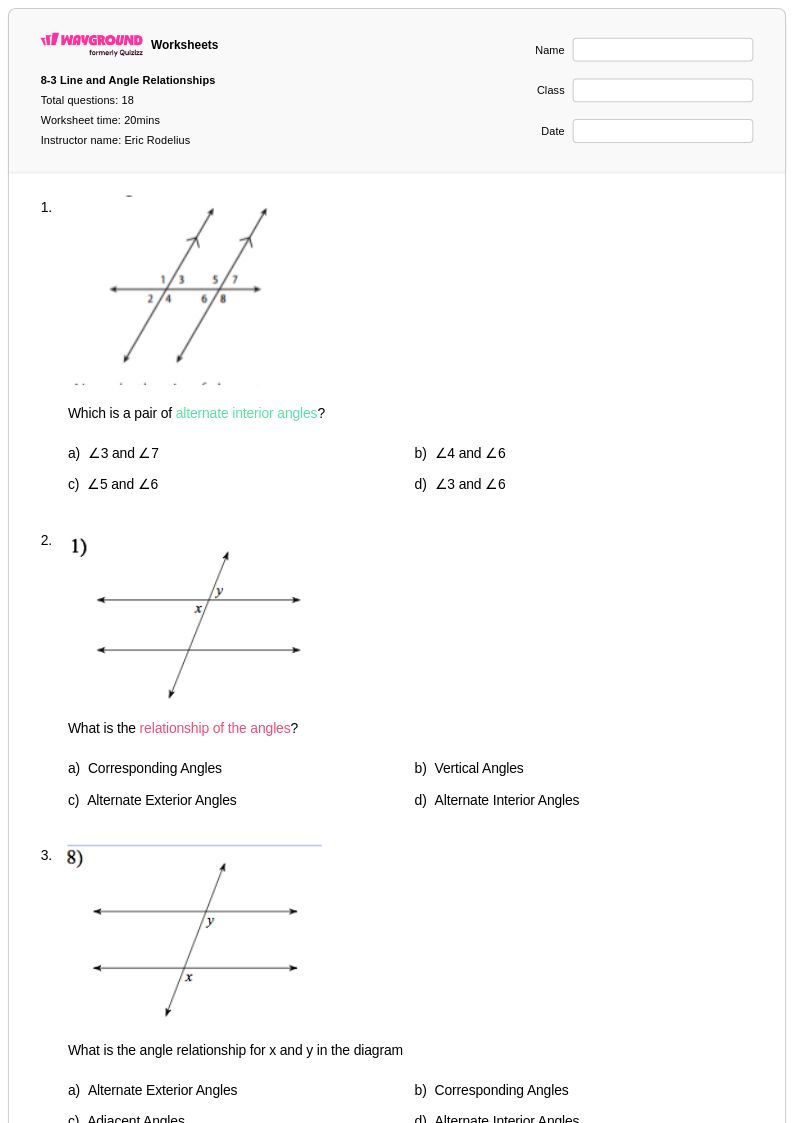
18 Q
6th
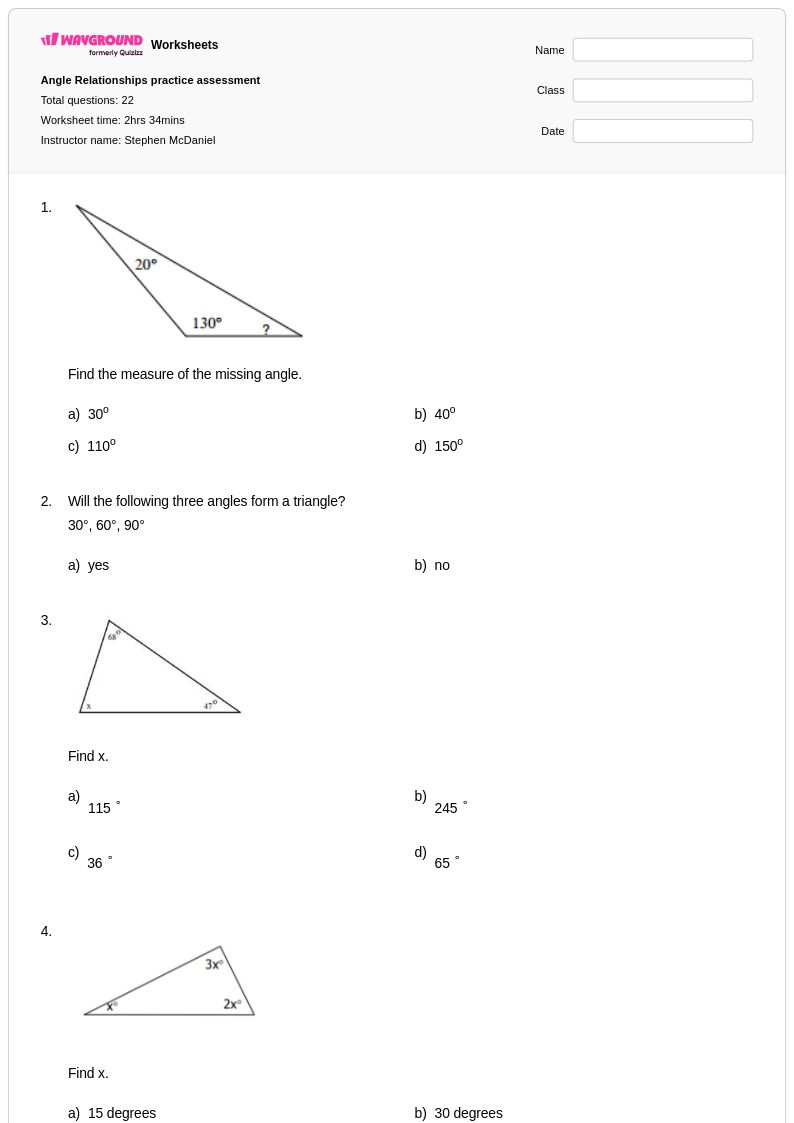
22 Q
6th - 8th
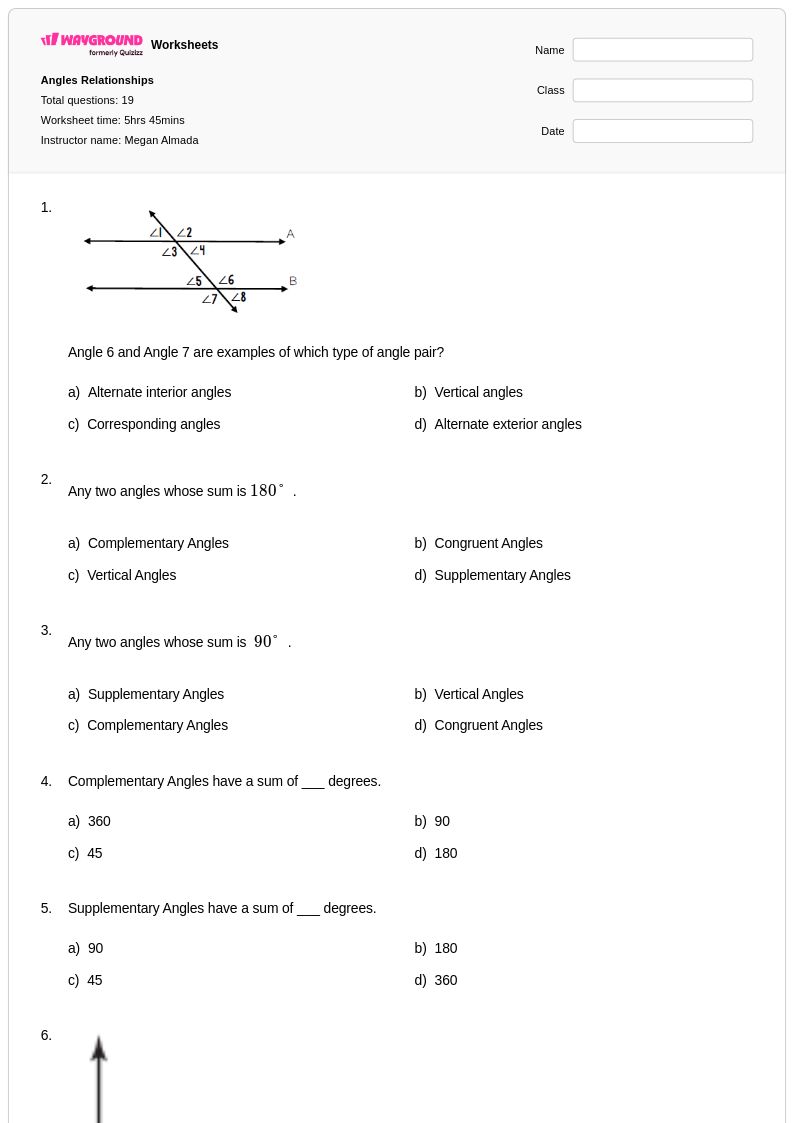
19 Q
6th - 7th
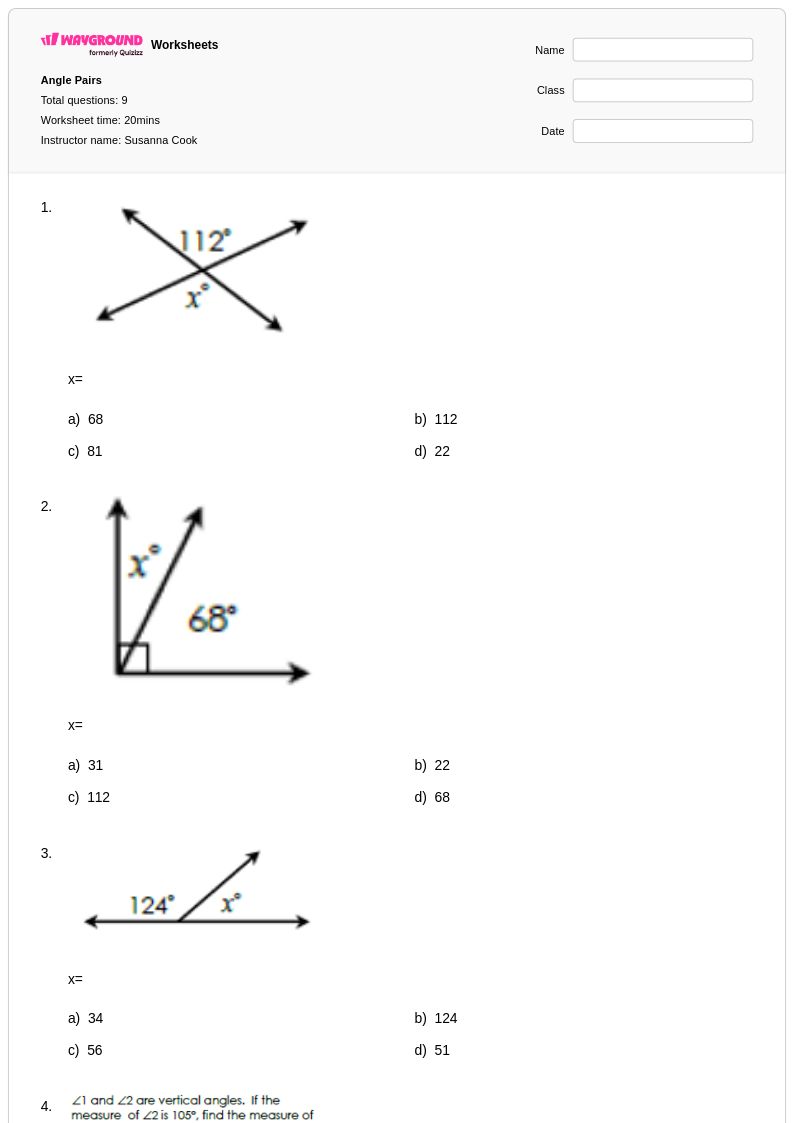
9 Q
6th - 12th
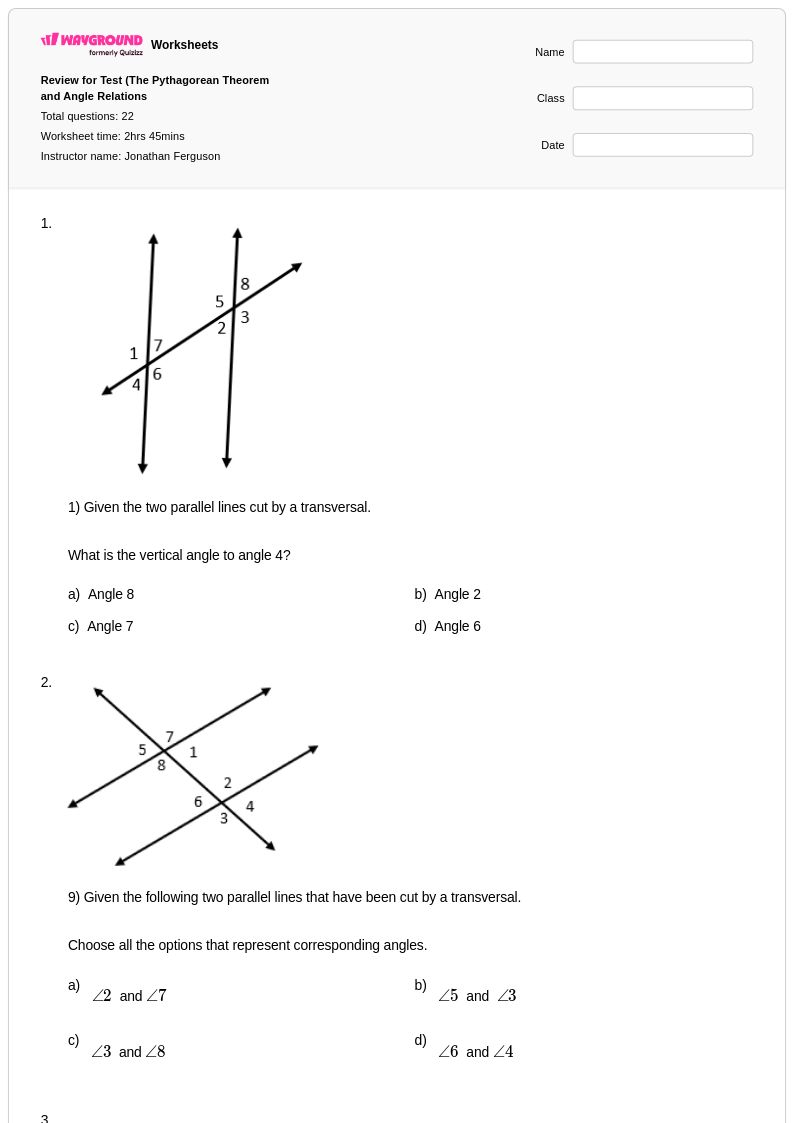
22 Q
6th - 10th
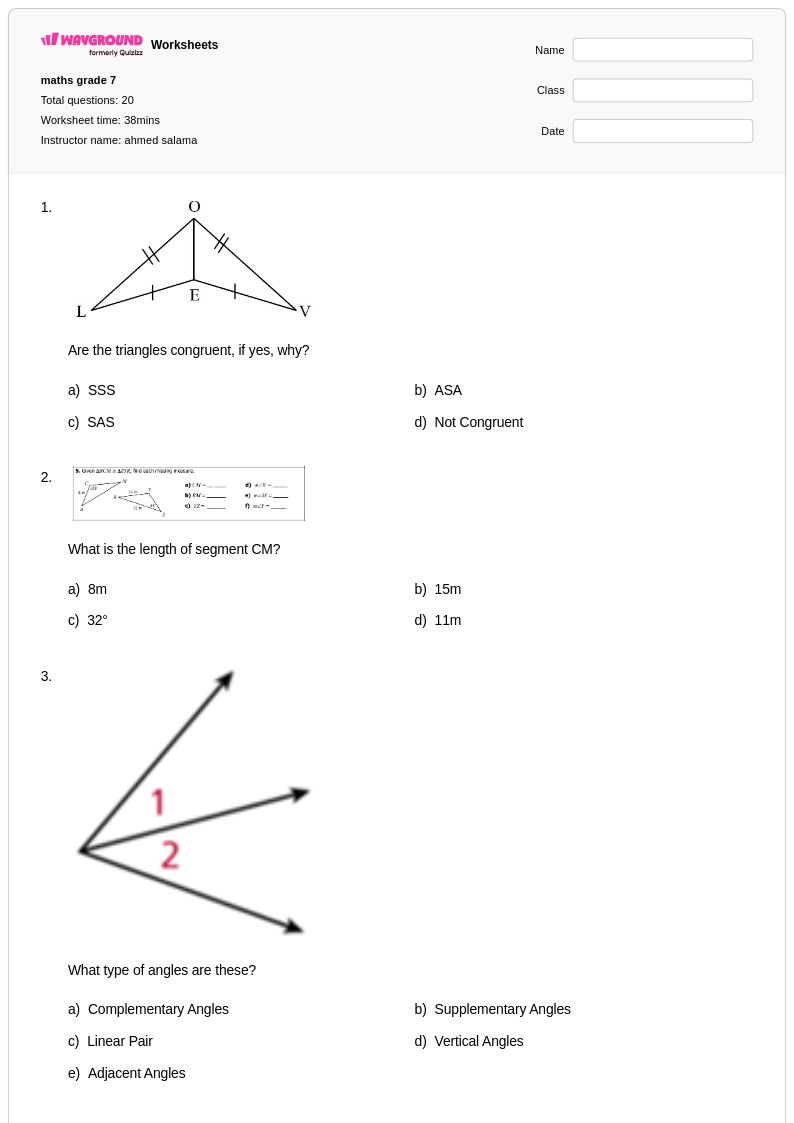
20 Q
6th - 7th
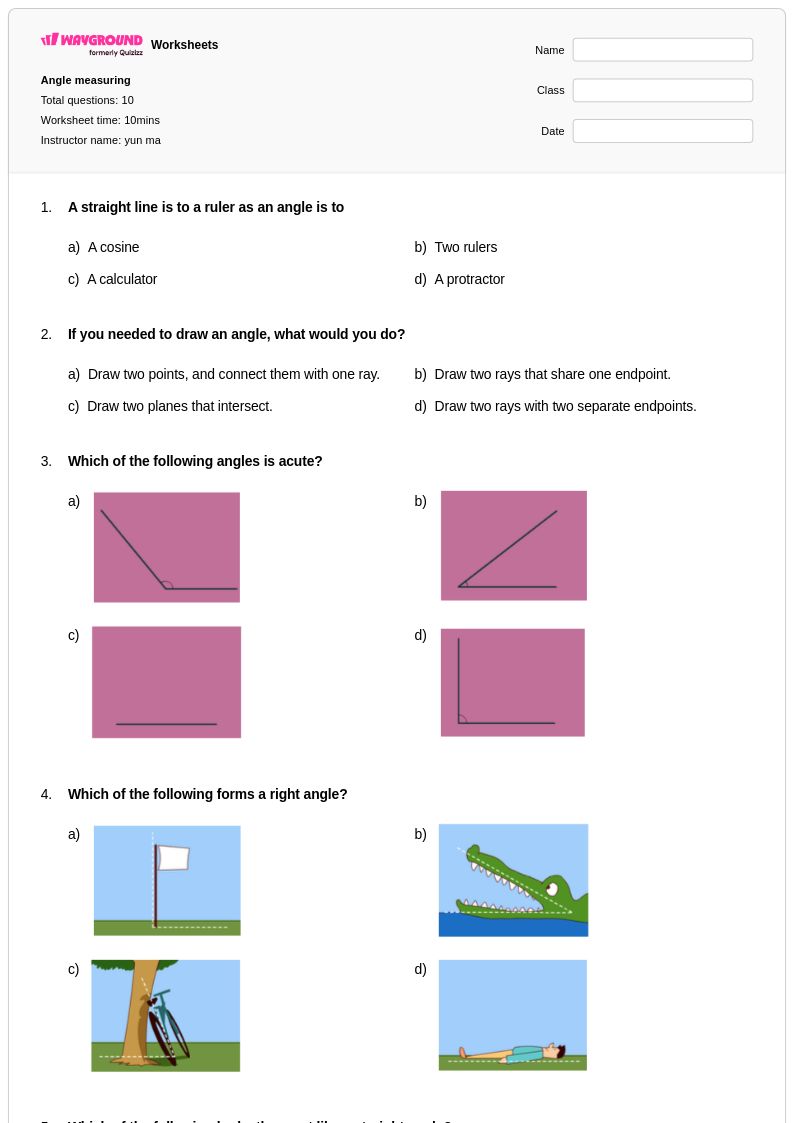
10 Q
6th
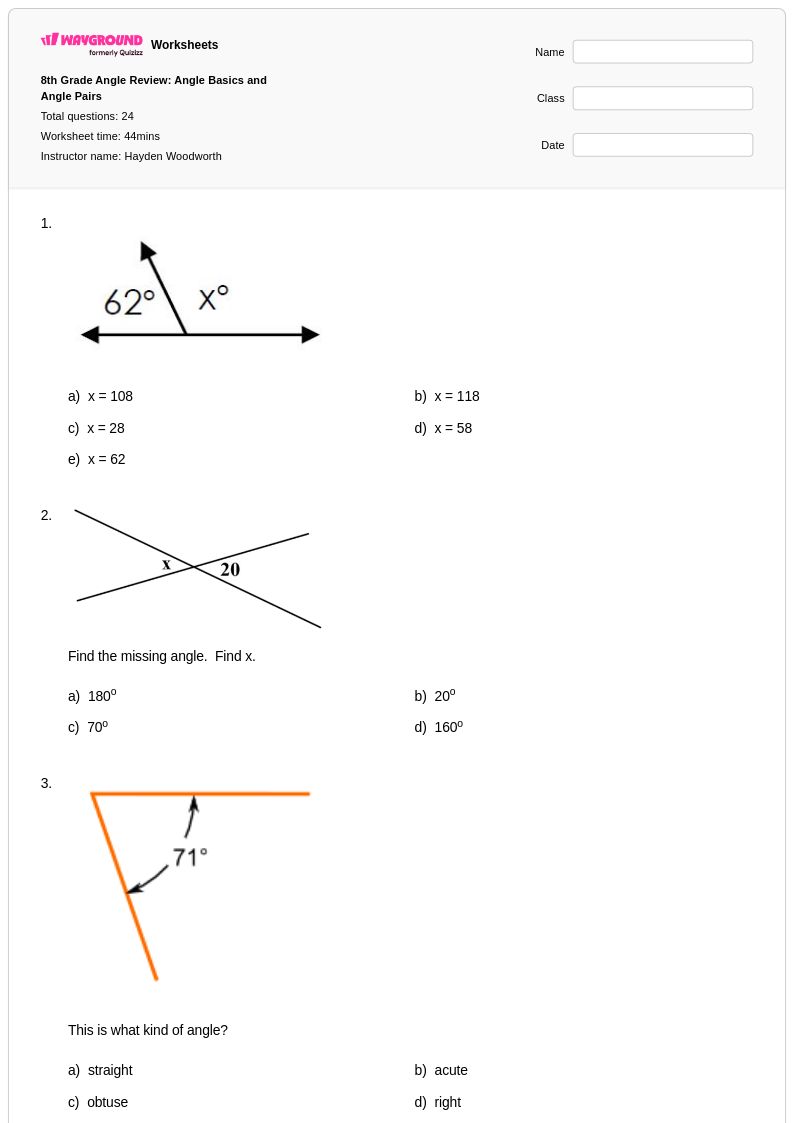
24 Q
6th - 9th
Explore Other Subject Worksheets for class 6
Explore printable Measuring Angles worksheets for Class 6
Measuring angles worksheets for Class 6 students through Wayground (formerly Quizizz) provide comprehensive practice in using protractors, estimating angle measurements, and identifying different types of angles including acute, obtuse, right, and straight angles. These expertly crafted printables strengthen fundamental geometric reasoning skills while building precision in measurement techniques that form the foundation for advanced mathematical concepts. Students develop proficiency through carefully structured practice problems that progress from basic protractor use to more complex angle relationships, with each worksheet featuring a complete answer key to support independent learning and immediate feedback. The free pdf resources encompass varied question formats including visual angle identification, measurement exercises, and real-world applications that help sixth graders master this essential mathematical skill.
Wayground's extensive collection features millions of teacher-created measuring angles worksheets specifically aligned with Class 6 mathematics standards, offering educators powerful search and filtering capabilities to locate resources that match their specific instructional needs. Teachers benefit from robust differentiation tools that allow customization of difficulty levels and problem types, ensuring appropriate challenge levels for diverse learners while supporting both remediation and enrichment objectives. The platform's flexible format options include downloadable pdf versions for traditional classroom use and digital formats for interactive learning environments, streamlining lesson planning and providing seamless integration into existing curriculum frameworks. These comprehensive resources enable educators to deliver targeted skill practice, conduct formative assessments, and reinforce angle measurement concepts through varied instructional approaches that accommodate different learning styles and pacing requirements.
FAQs
What do 6th graders learn about angles?
How can I connect angle measurement to other Grade 6 math topics?
What kind of angle problems are best for 6th graders?
Where do 6th graders typically get stuck with angle problems?
How does this topic support the Grade 6 math curriculum?
How can I use these Grade 6 angle worksheets?