
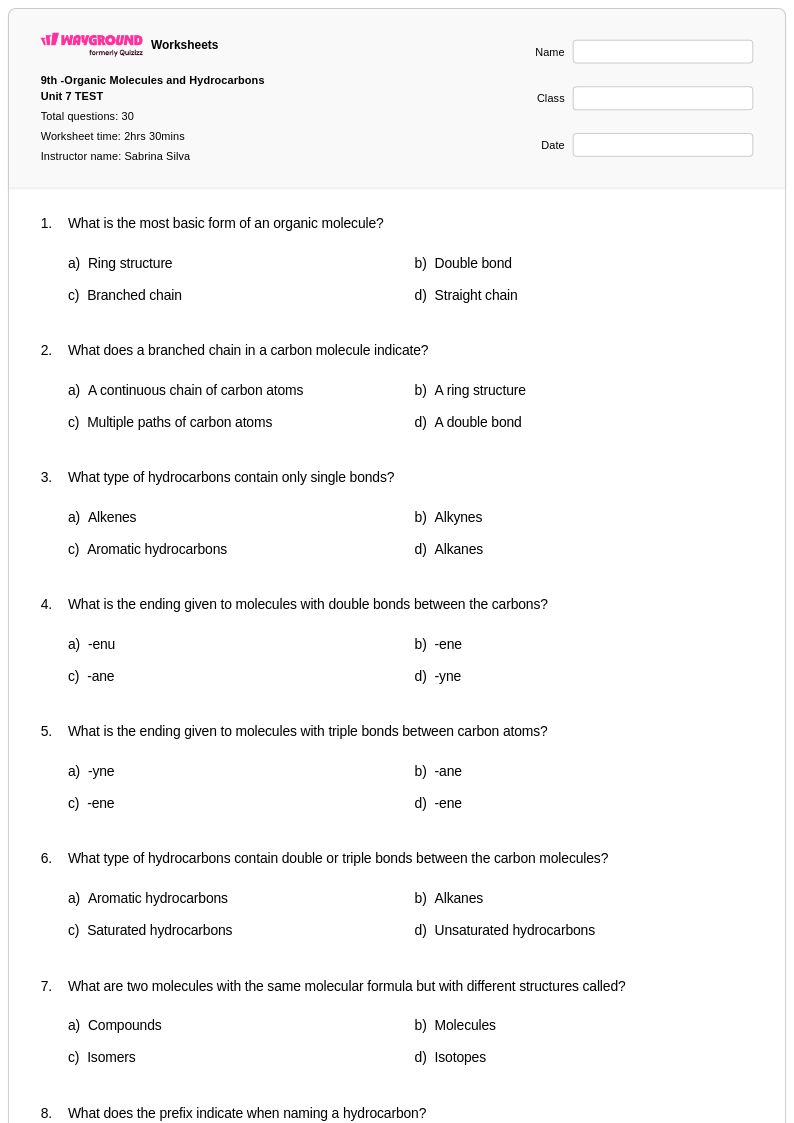
30 Q
9th
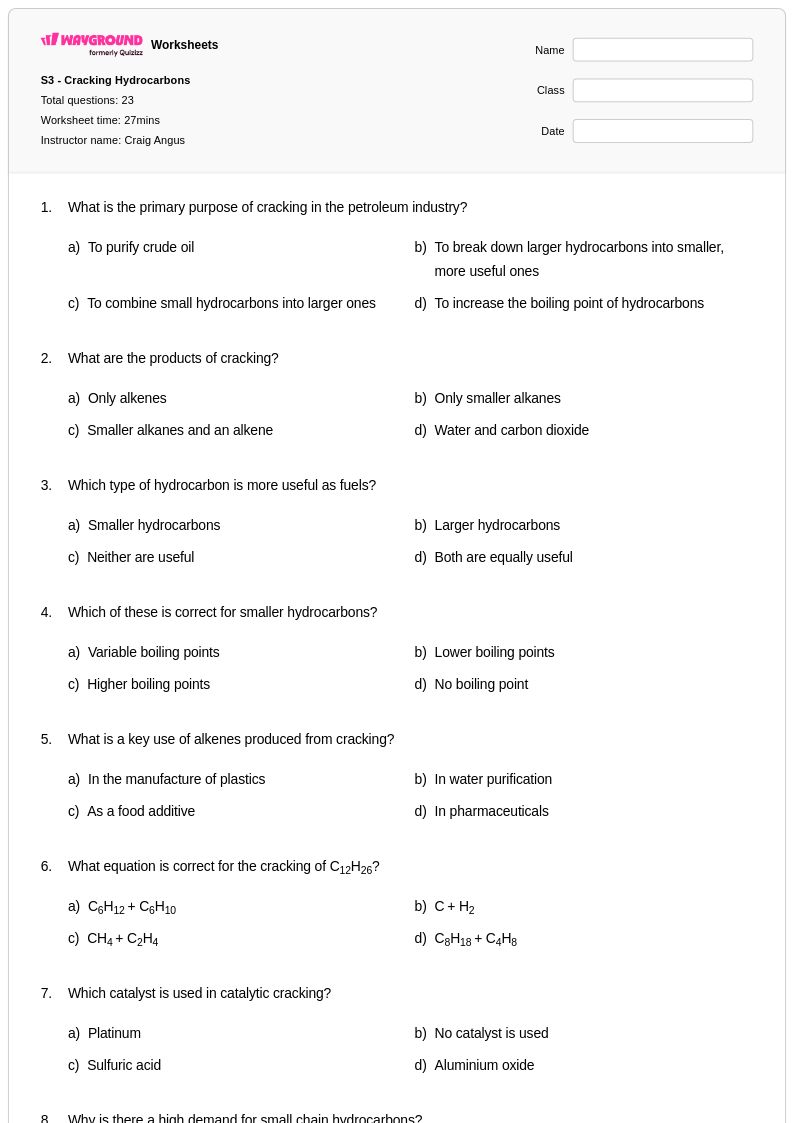
26 Q
9th - 12th
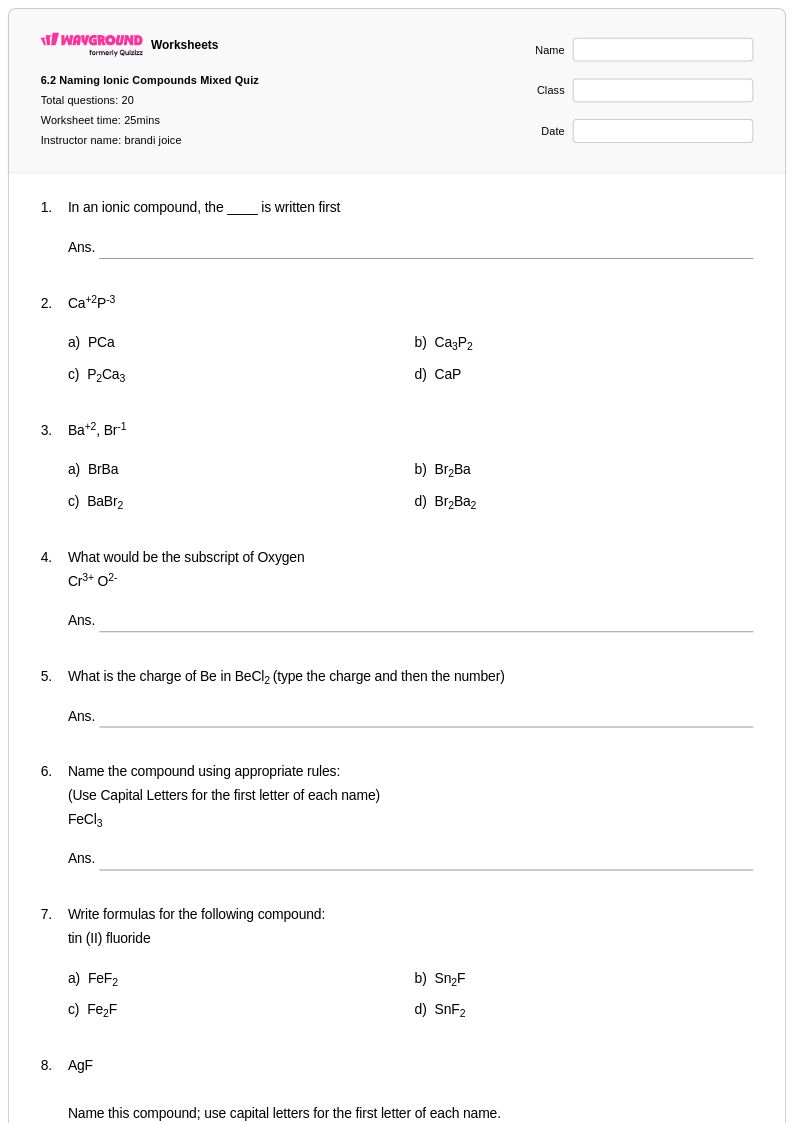
20 Q
9th - 12th
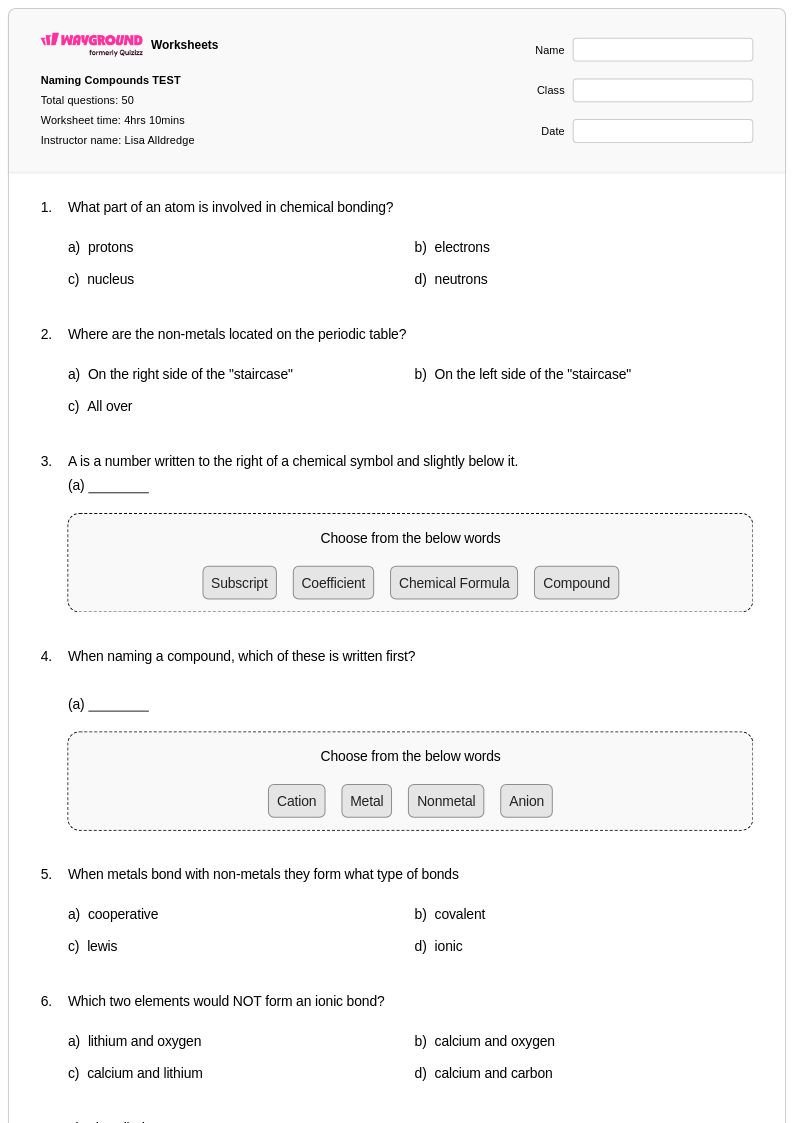
50 Q
9th
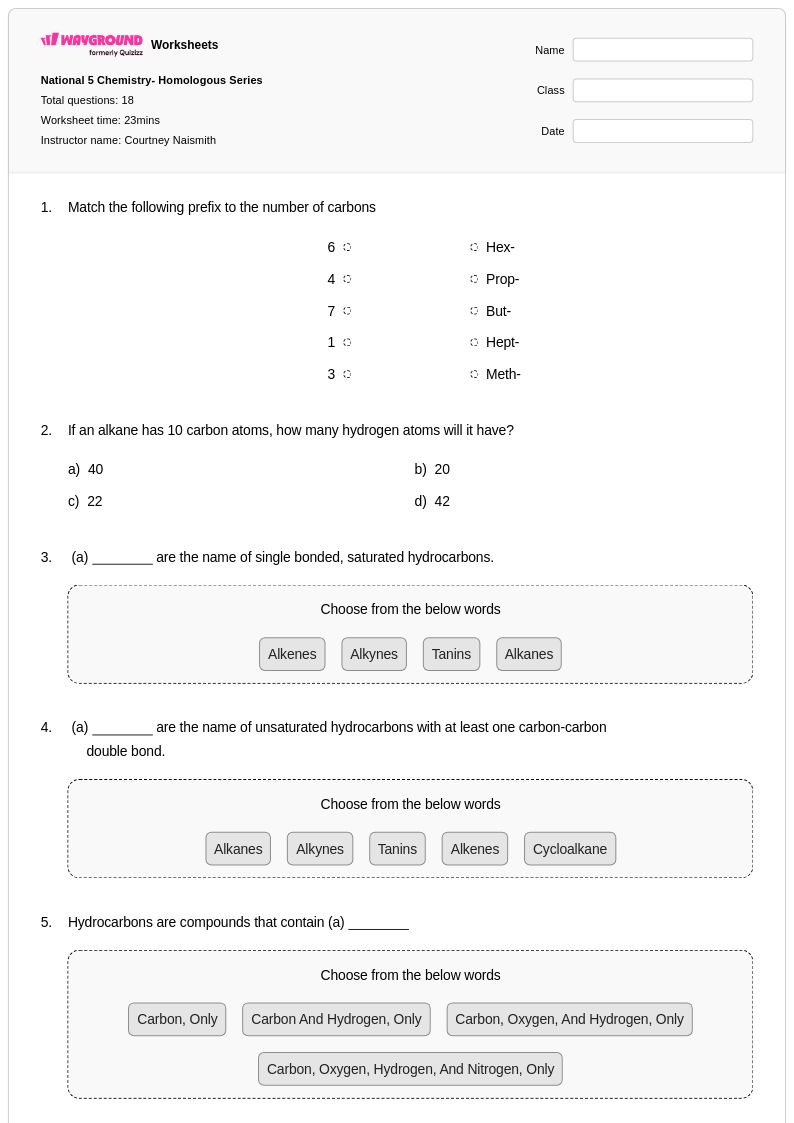
18 Q
9th - 12th
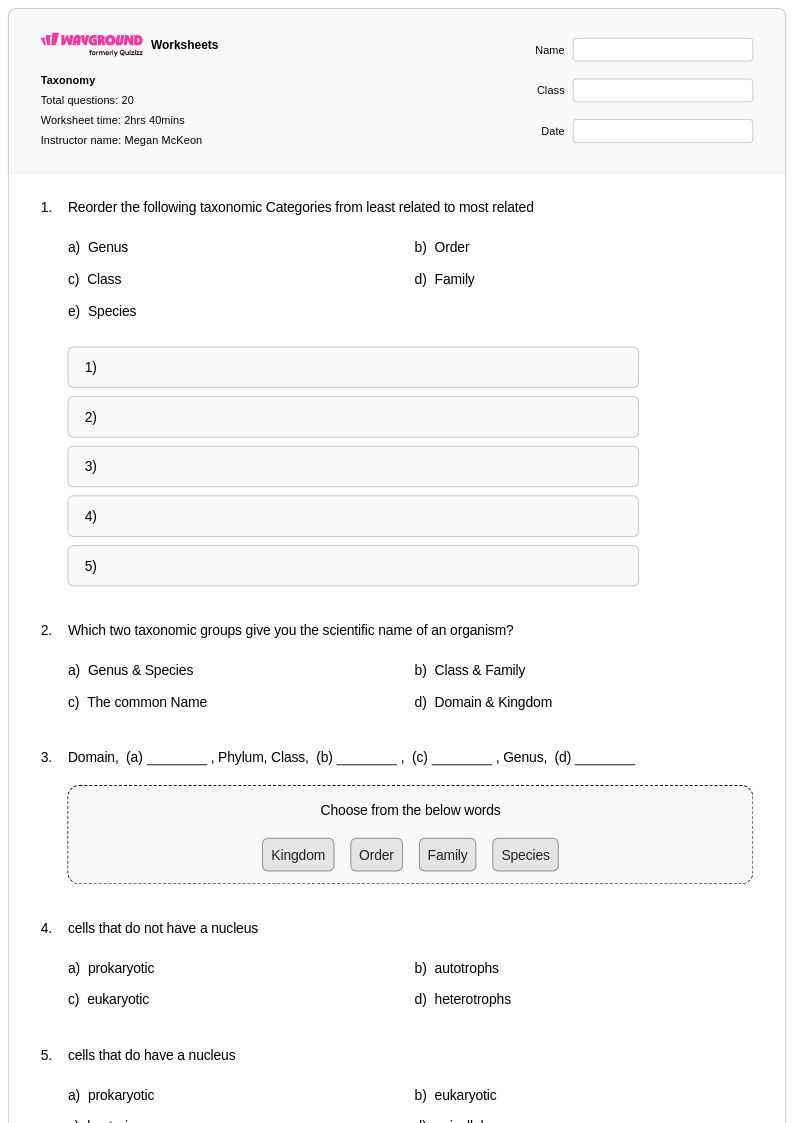
20 Q
8th
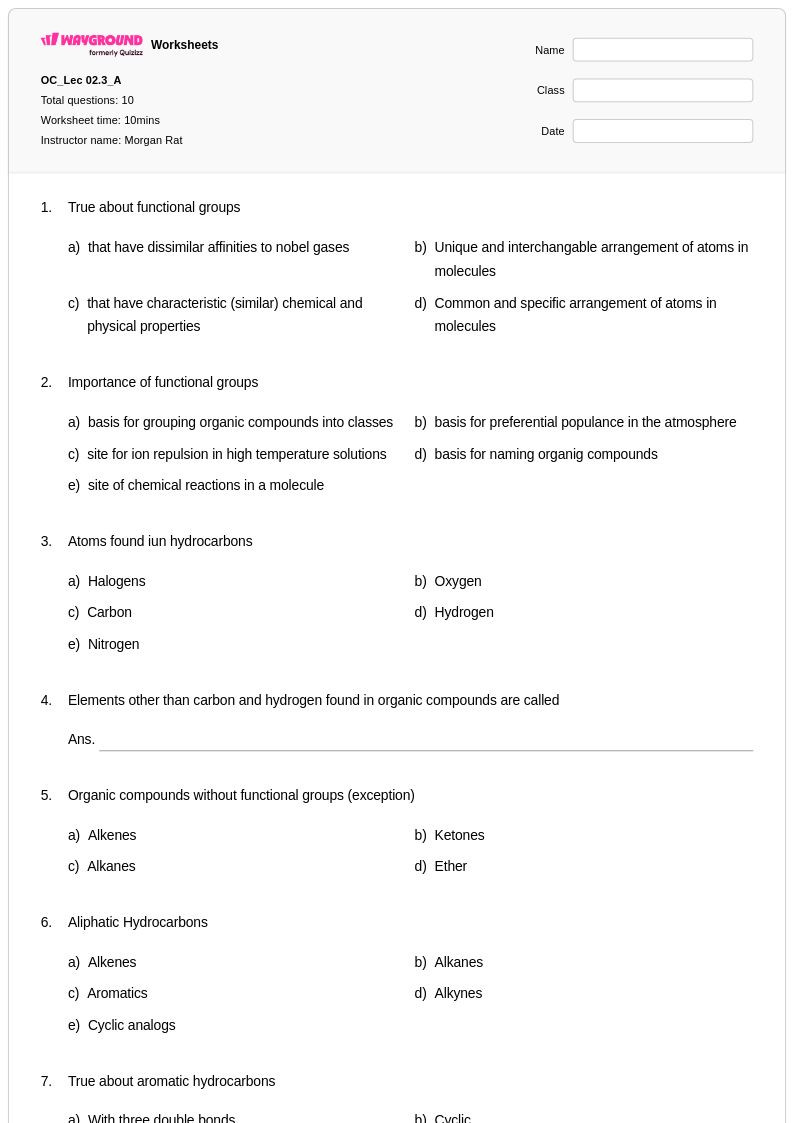
10 Q
Uni
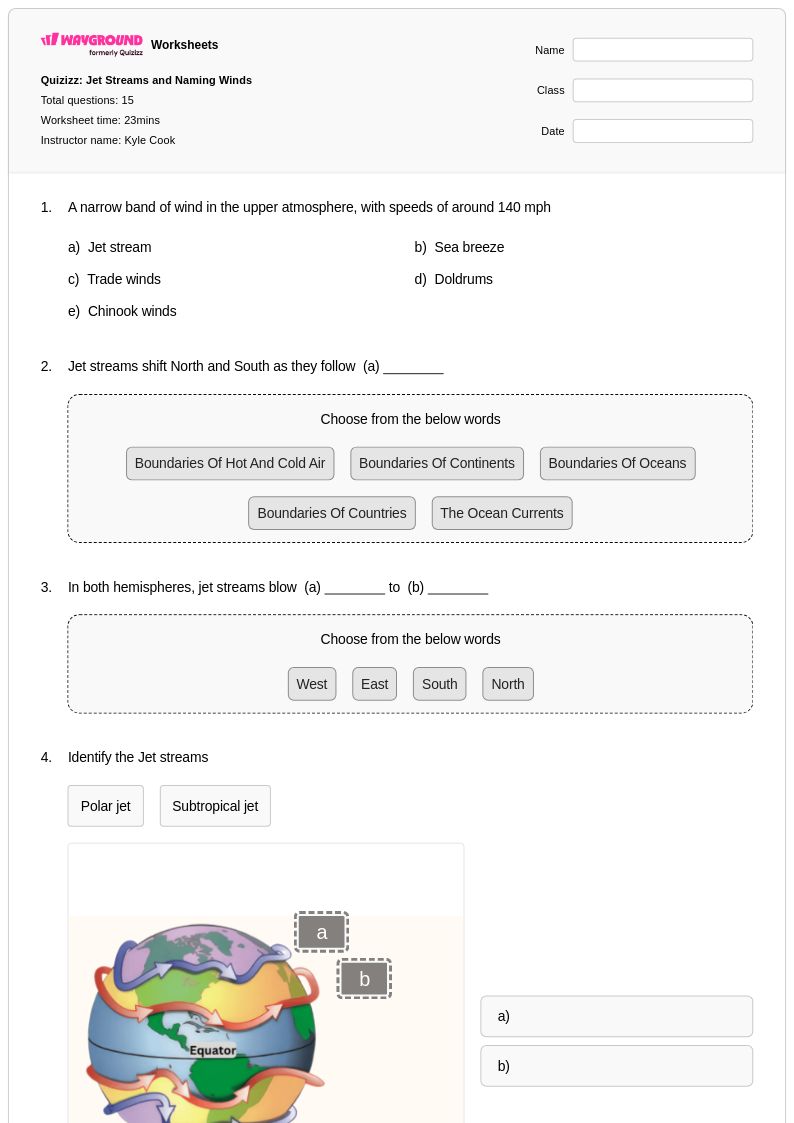
15 Q
11th
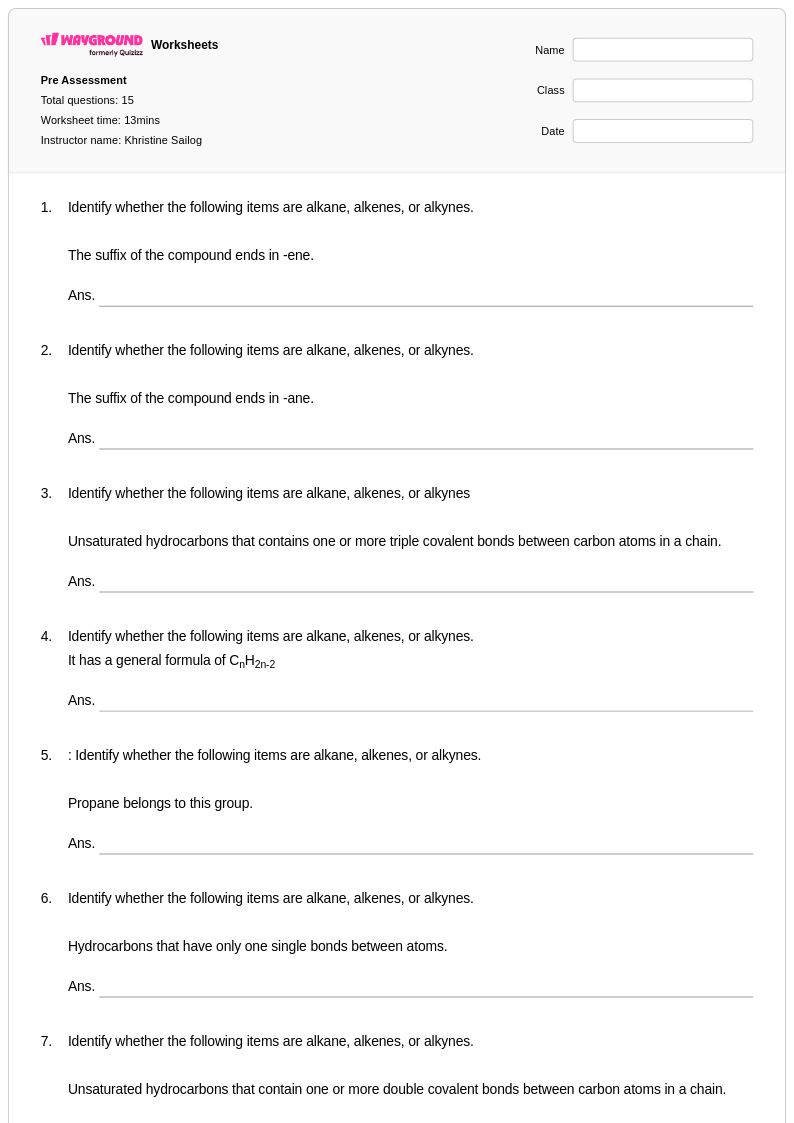
15 Q
9th
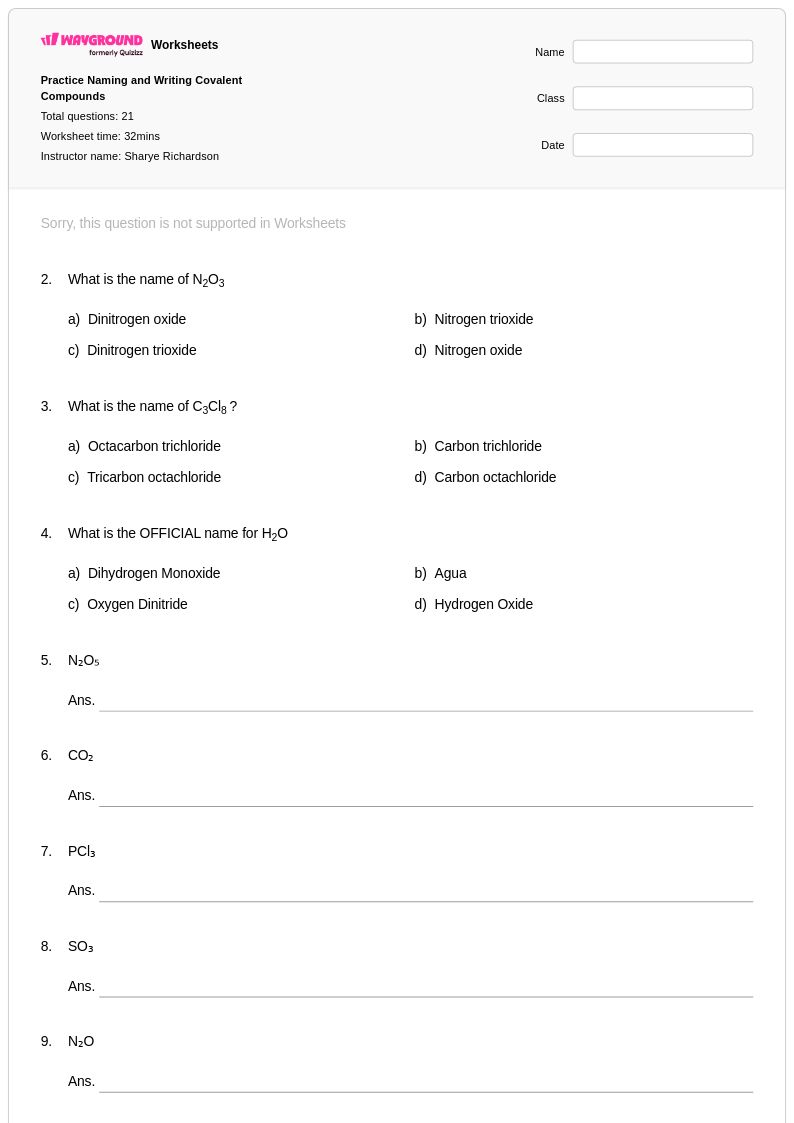
22 Q
9th - 12th
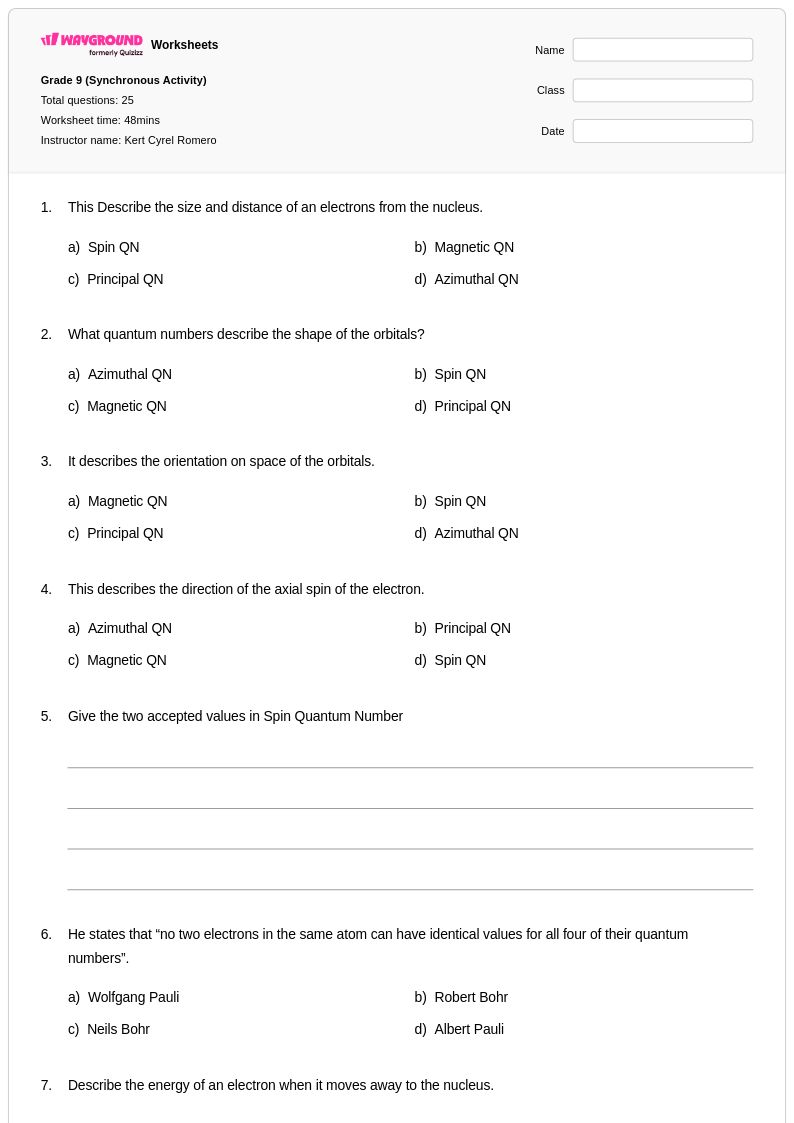
25 Q
9th
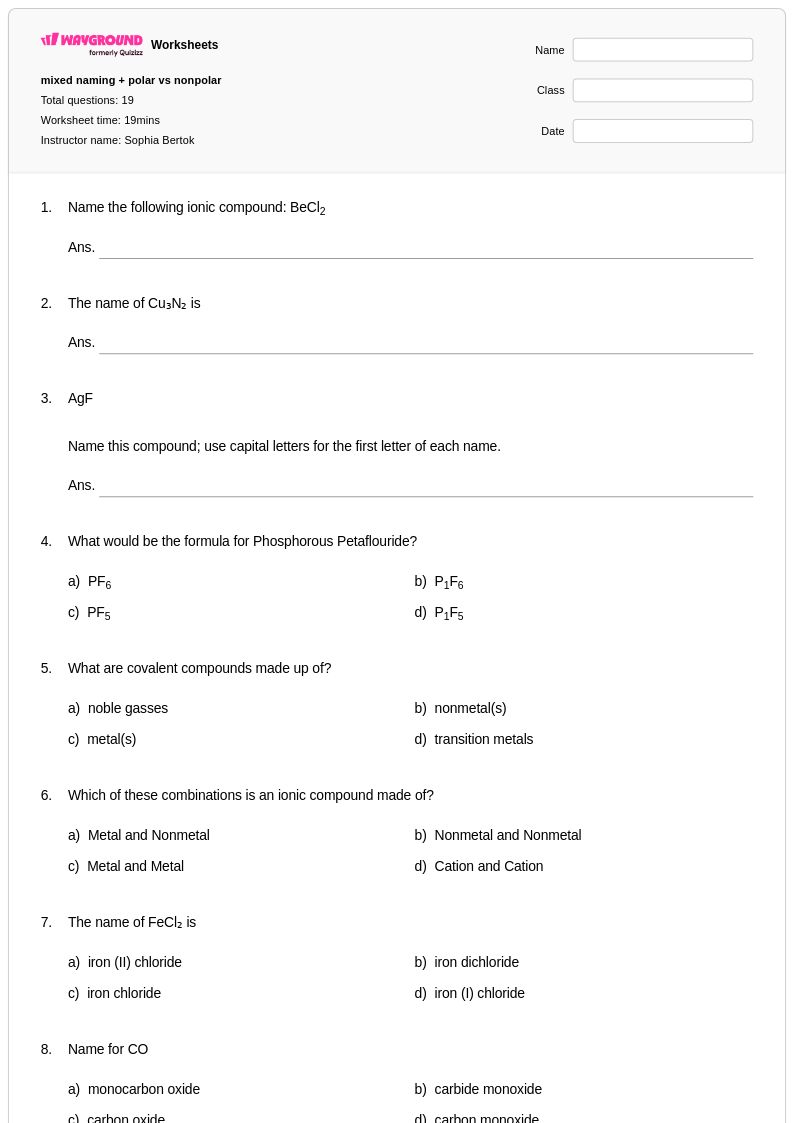
19 Q
9th

11 Q
10th
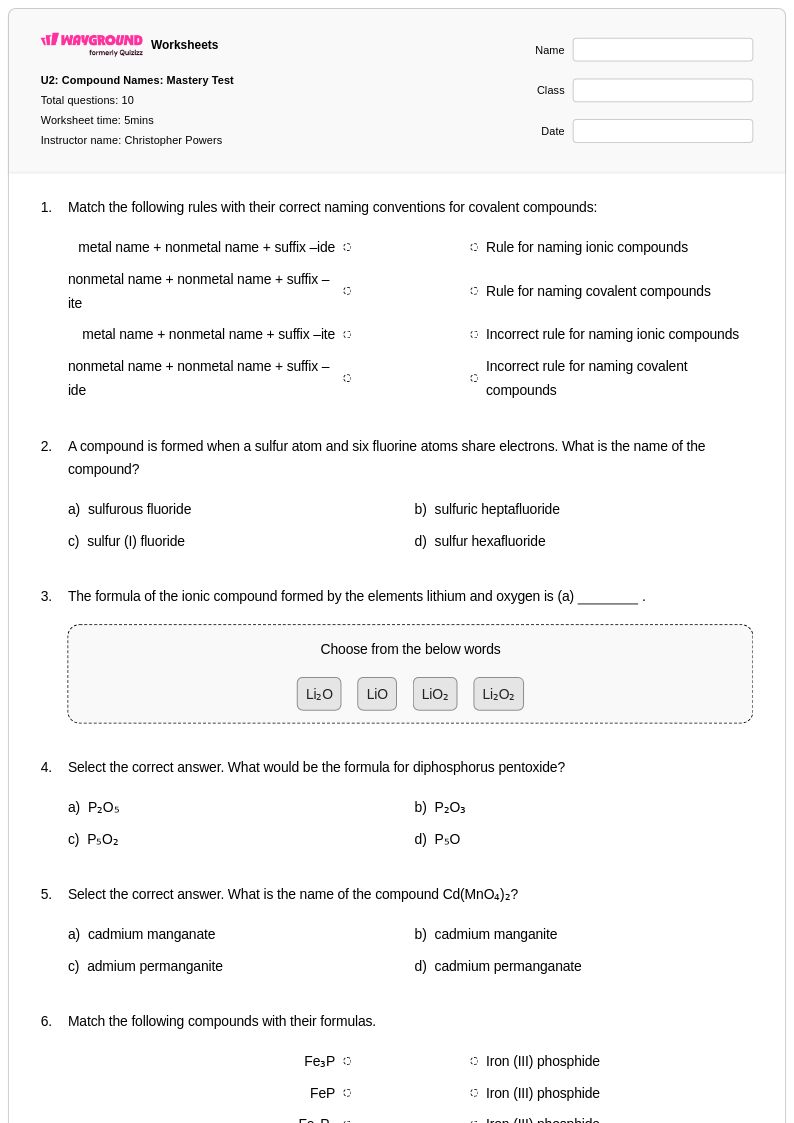
10 Q
9th
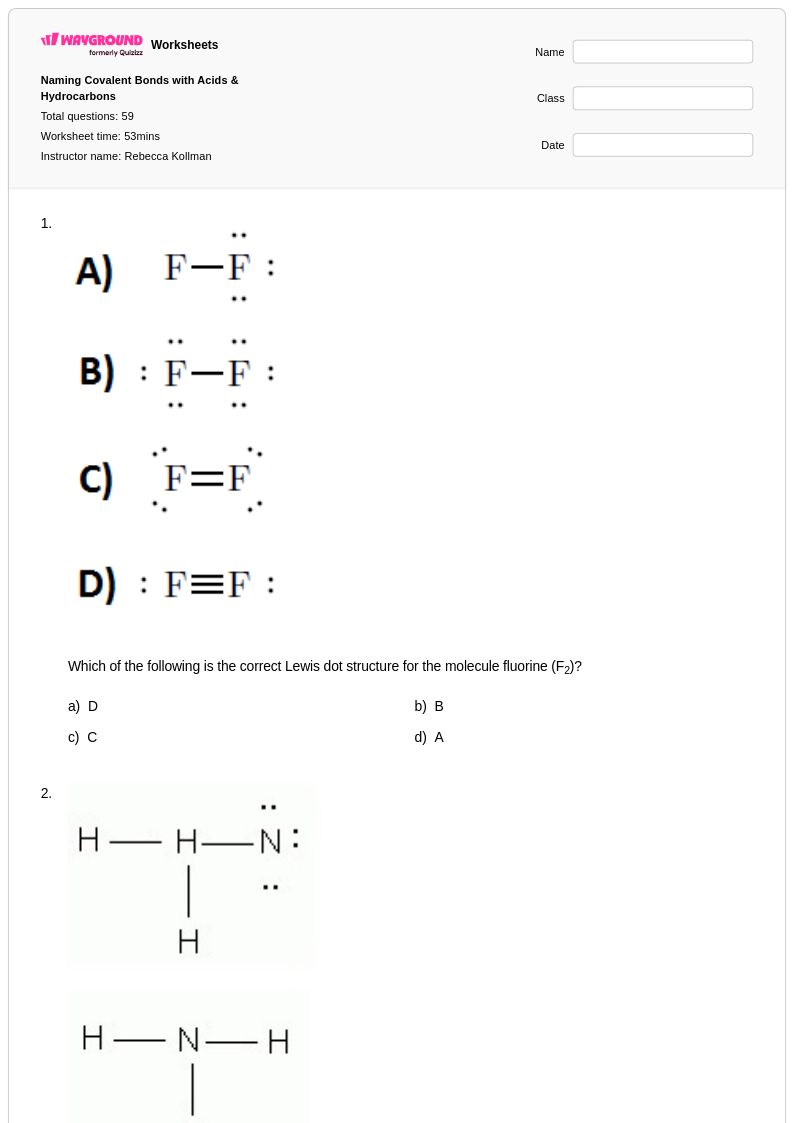
59 Q
9th - 12th
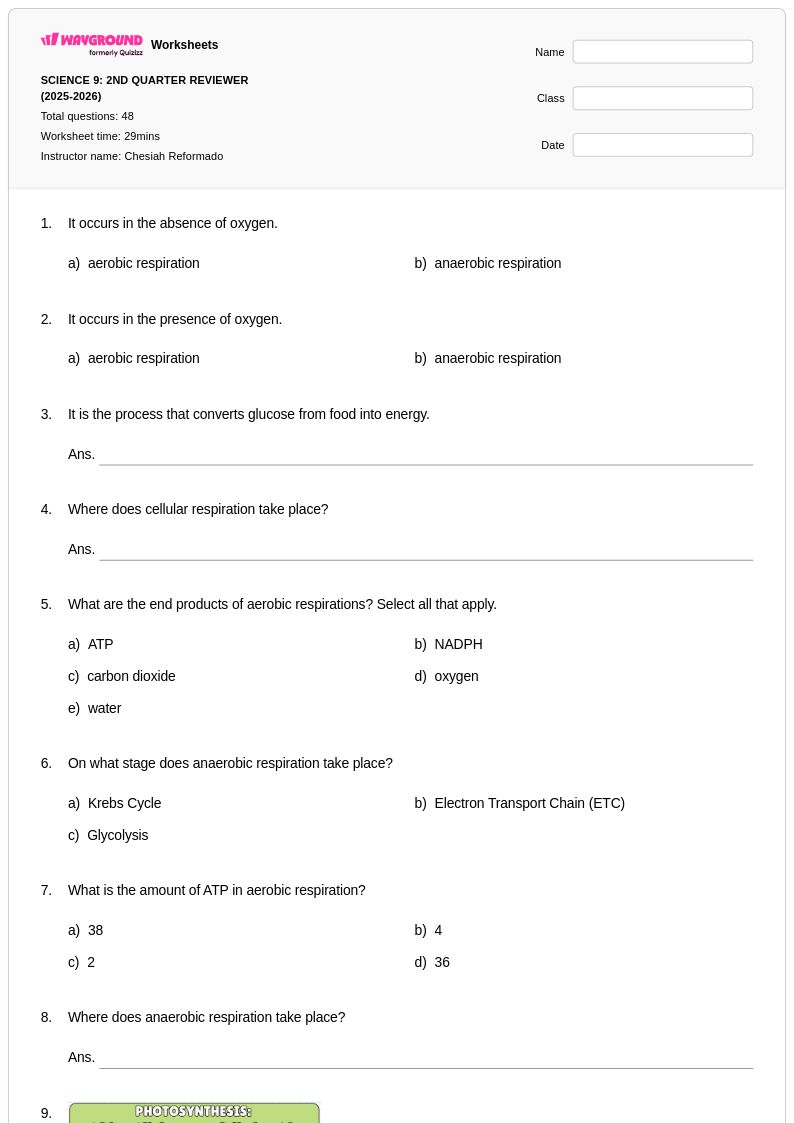
48 Q
9th
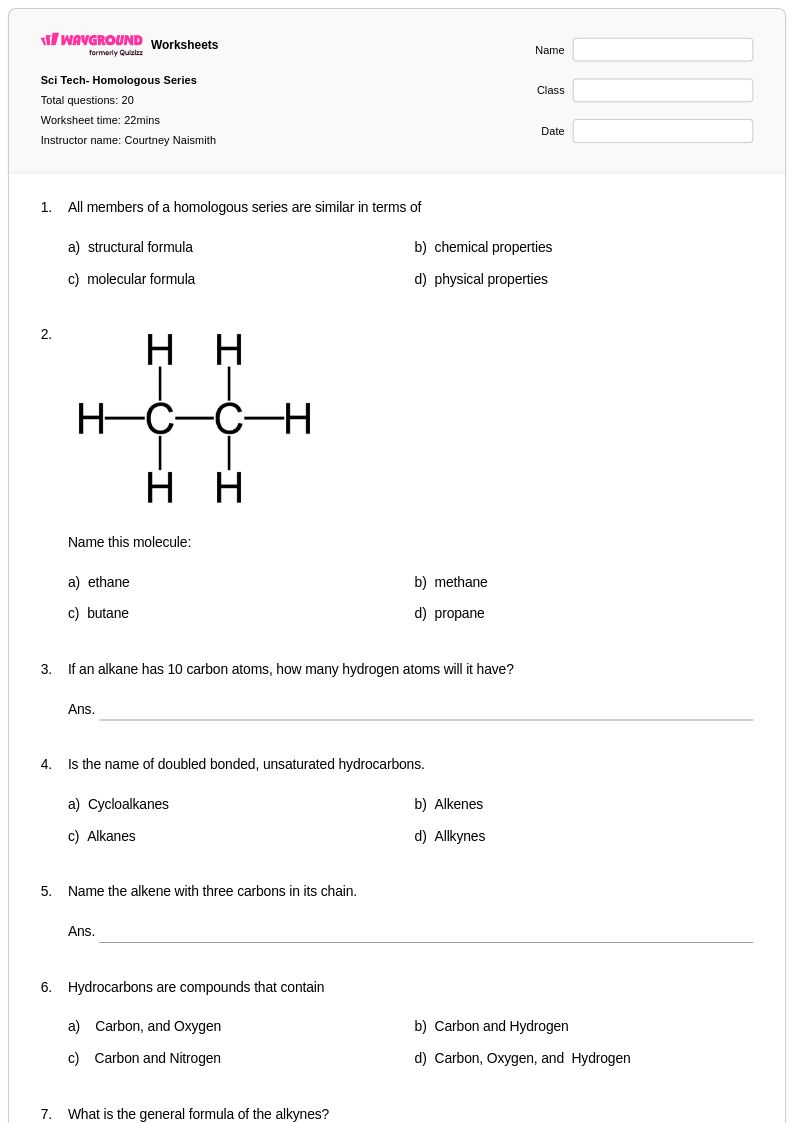
20 Q
9th - 12th
17 Q
8th
15 Q
9th - 12th
15 Q
7th - 8th
13 Q
11th
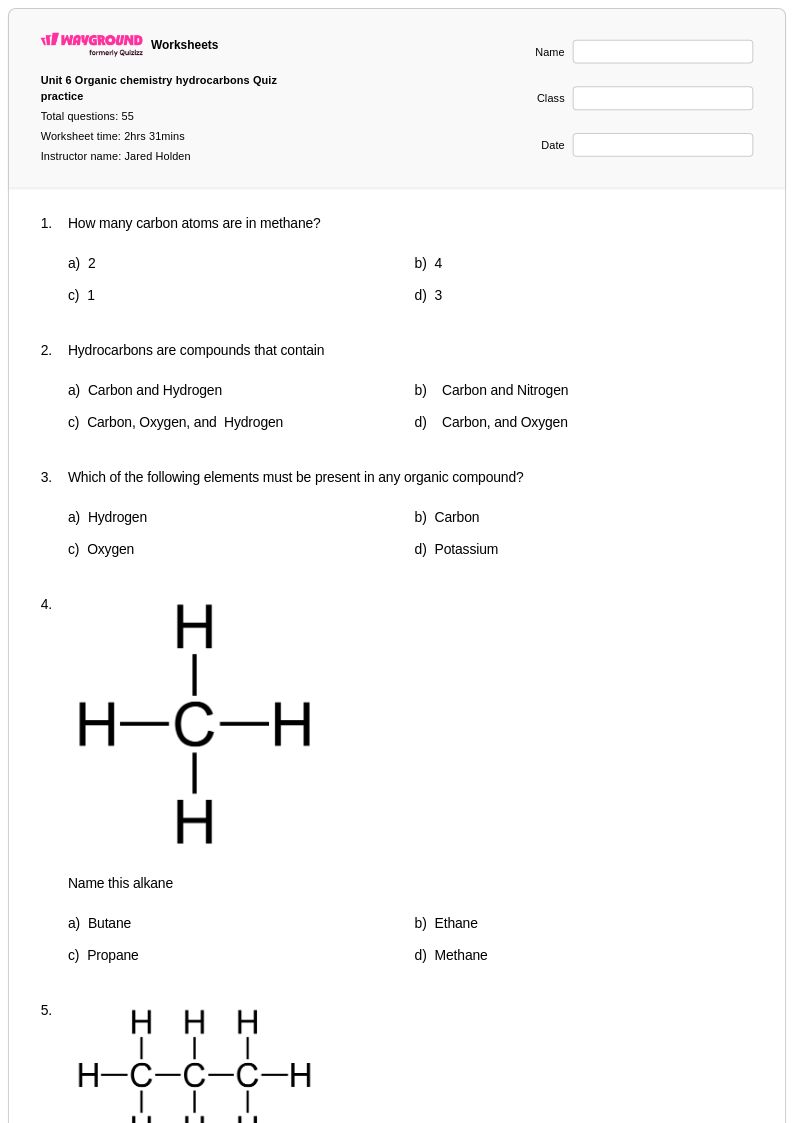
55 Q
10th
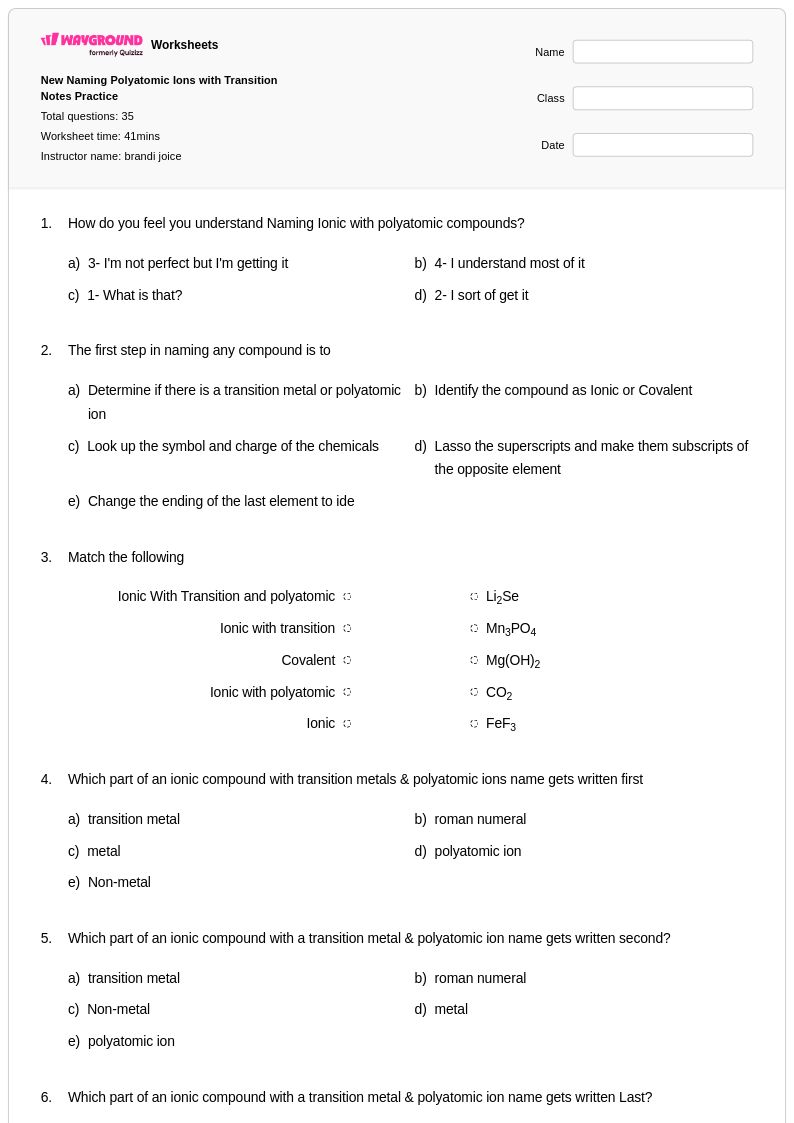
35 Q
9th - Uni
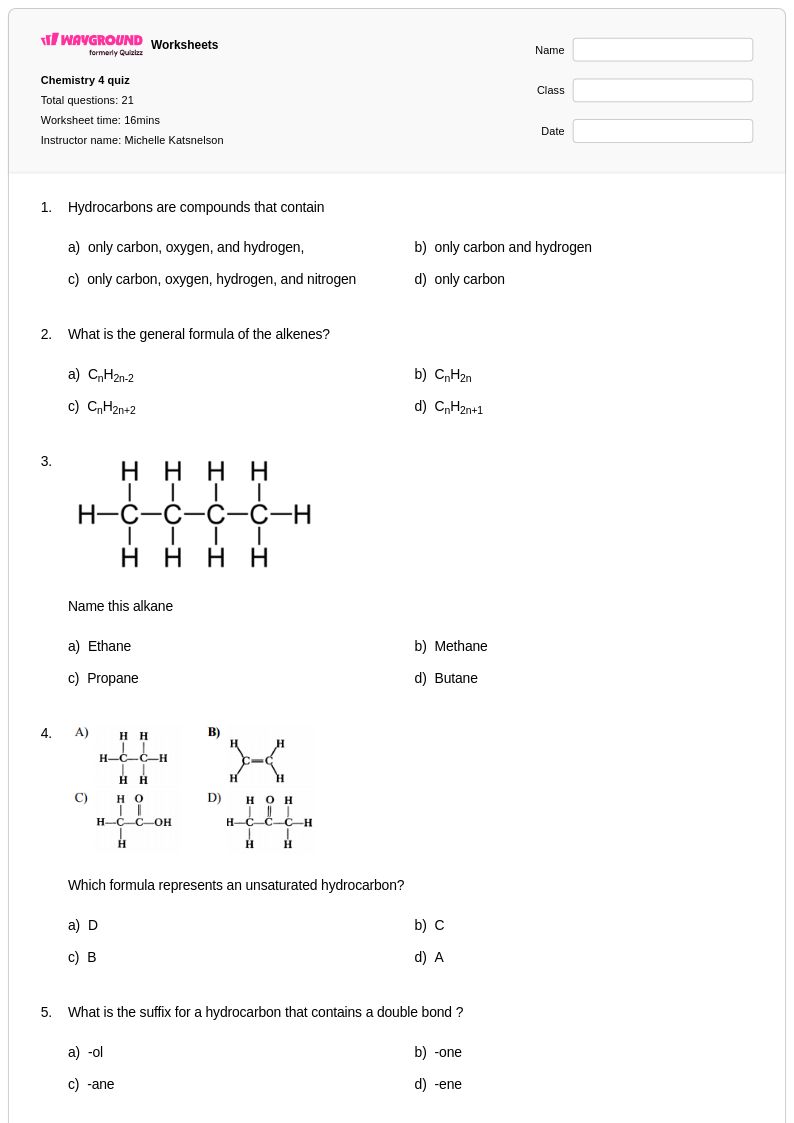
21 Q
10th
Explore Worksheets by Subjects
Explore printable Naming Alkenes worksheets
Naming alkenes represents a fundamental skill in organic chemistry that requires students to master systematic nomenclature rules for unsaturated hydrocarbons containing carbon-carbon double bonds. Wayground's comprehensive collection of naming alkenes worksheets provides structured practice opportunities that guide students through the step-by-step process of identifying parent chains, locating double bond positions, and applying IUPAC naming conventions with precision. These carefully designed practice problems progress from simple alkene structures to more complex molecules featuring multiple functional groups and branched chains, ensuring students develop confidence in systematic nomenclature. Each worksheet includes detailed answer keys that support independent learning, while the free printable pdf format makes these valuable resources easily accessible for classroom instruction and homework assignments.
Wayground formerly Quizizz empowers educators with millions of teacher-created resources specifically designed to strengthen students' understanding of alkene nomenclature through diverse problem sets and assessment tools. The platform's robust search and filtering capabilities allow teachers to quickly locate worksheets that align with specific curriculum standards and learning objectives, while built-in differentiation tools enable customization based on individual student needs and skill levels. These naming alkenes worksheets are available in both printable and digital formats, providing flexibility for various instructional approaches including remediation sessions for struggling learners and enrichment activities for advanced students. Teachers can seamlessly integrate these resources into lesson planning, create targeted skill practice sessions, and monitor student progress through systematic assessment of organic chemistry nomenclature proficiency.