Explore Wayground's comprehensive collection of free Periodic Table worksheets and printables that help students master element properties, atomic structure, and chemical patterns through engaging practice problems with detailed answer keys.
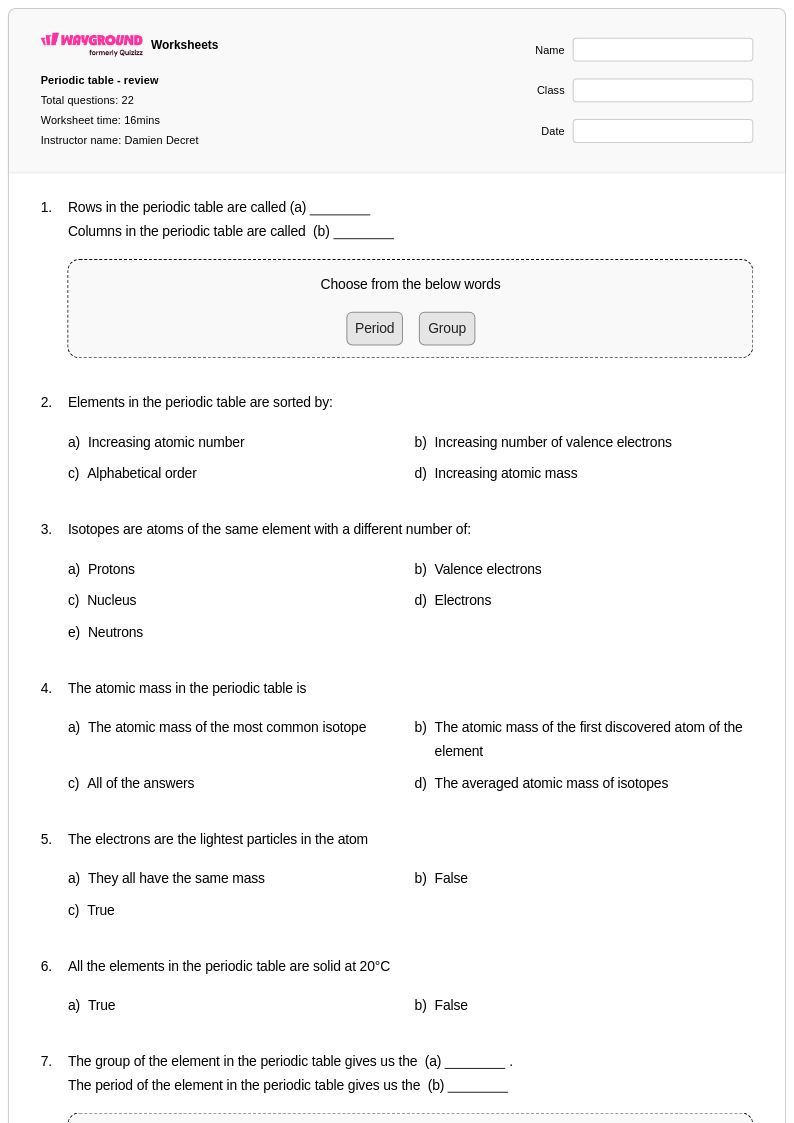
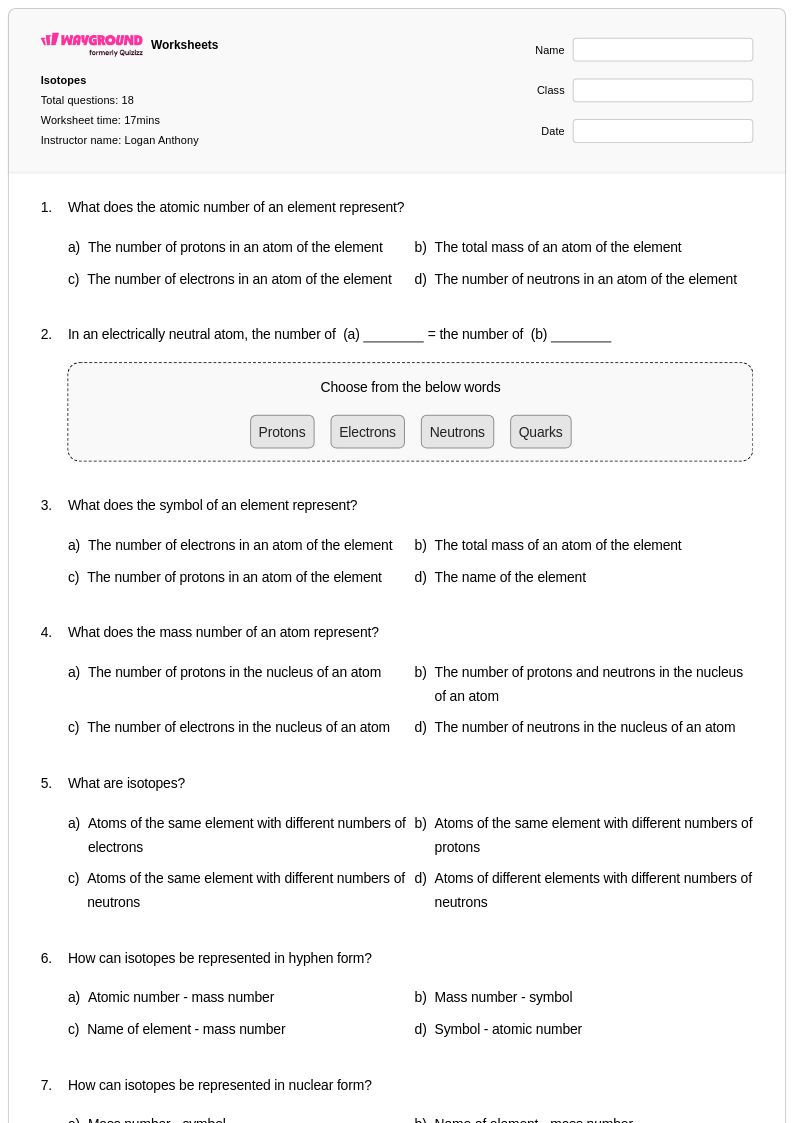
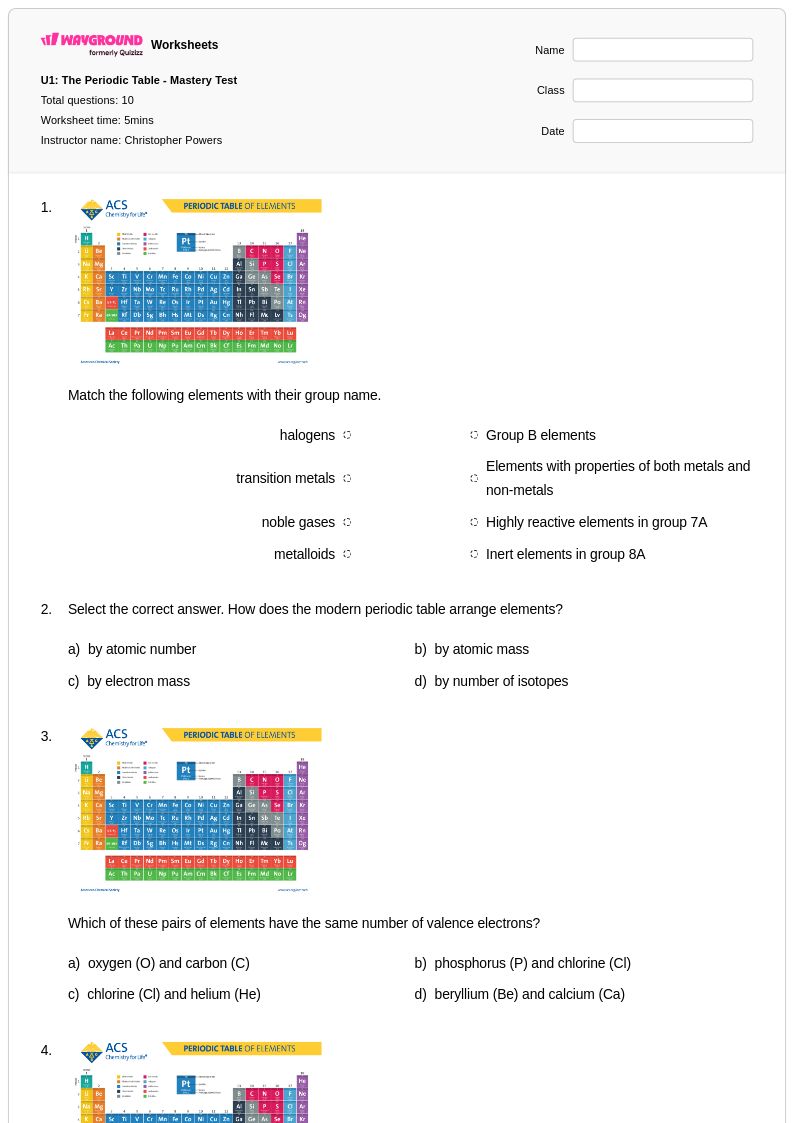
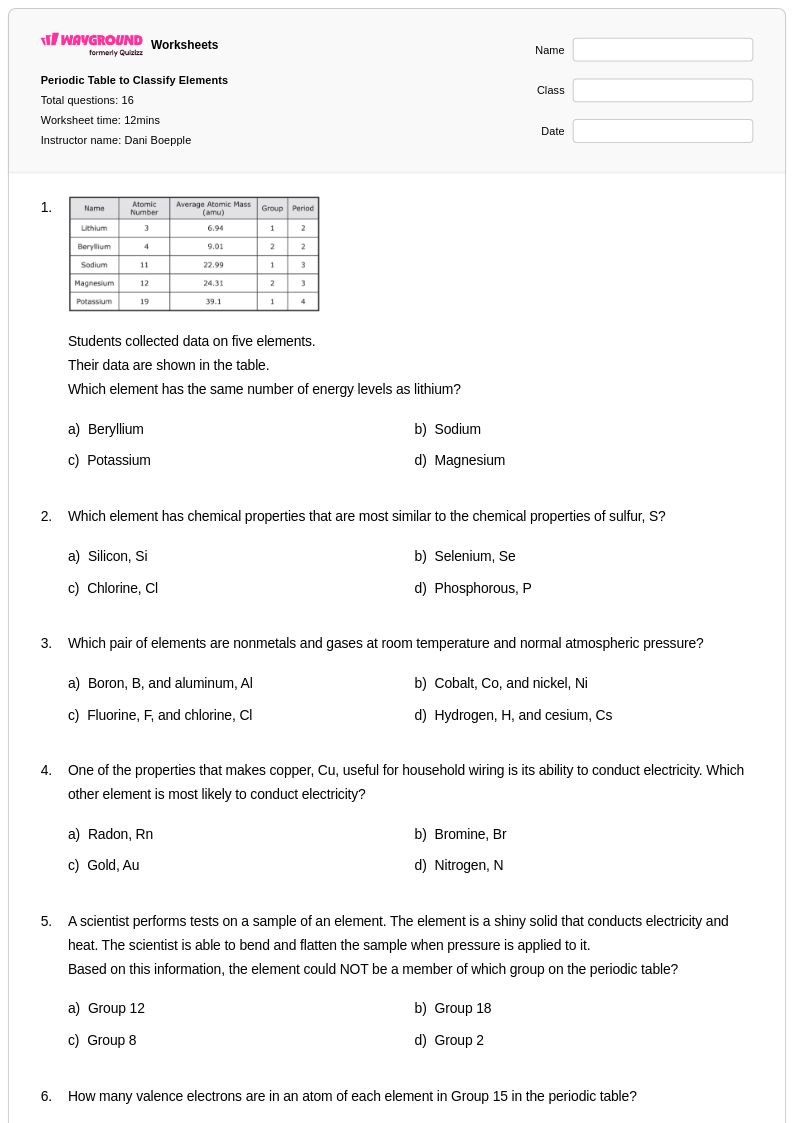
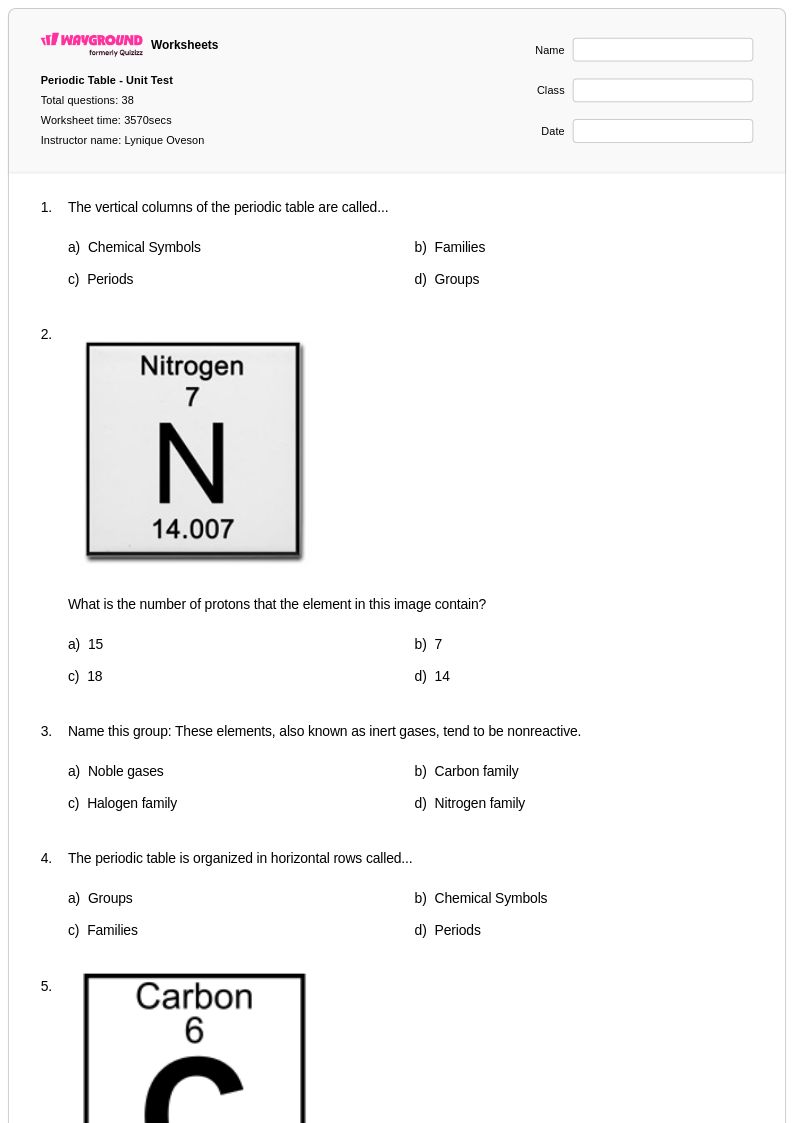
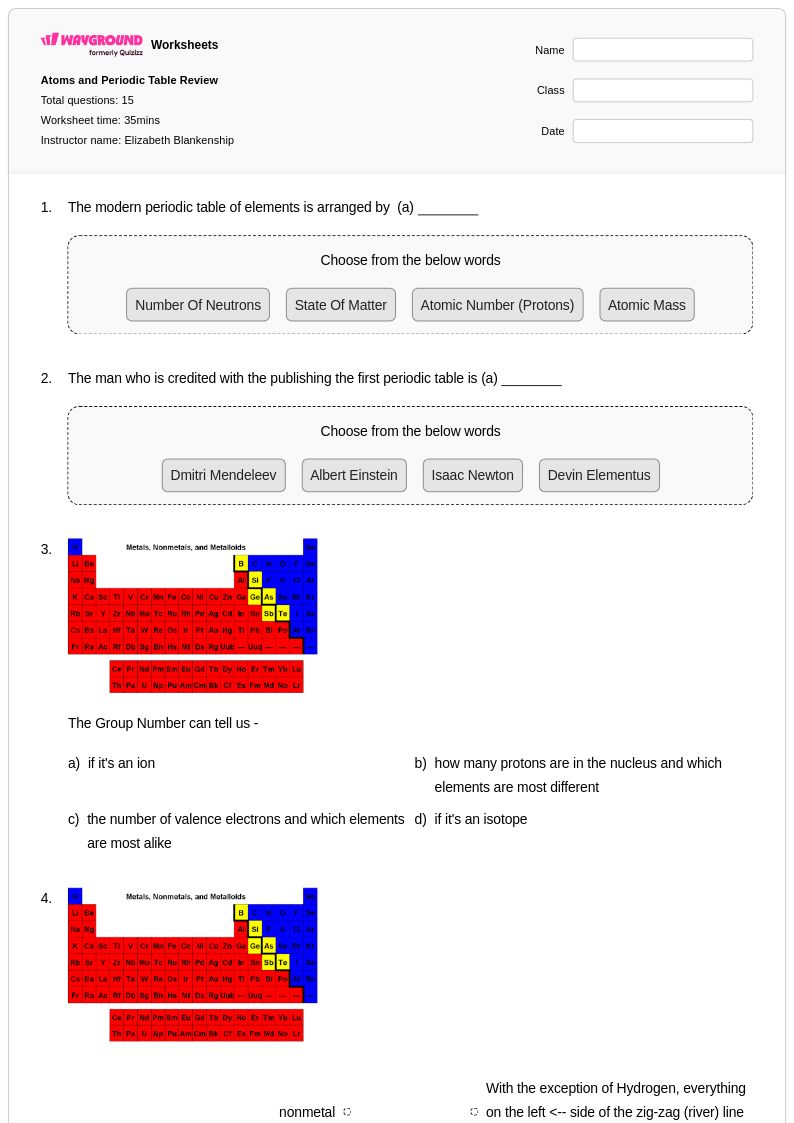
Periodic table worksheets available through Wayground (formerly Quizizz) provide comprehensive practice materials that help students master one of chemistry's most fundamental organizing principles. These expertly designed resources strengthen essential skills including element identification, atomic structure understanding, periodic trends analysis, and electron configuration practice. Students work through carefully scaffolded practice problems that build proficiency in interpreting atomic numbers, calculating atomic mass, and recognizing patterns in elemental properties across periods and groups. Each worksheet collection includes detailed answer keys that support independent learning and self-assessment, while the free printable format ensures accessibility for diverse classroom environments and home study sessions.
Wayground (formerly Quizizz) empowers educators with millions of teacher-created periodic table resources that streamline lesson planning and enhance student engagement across all learning levels. The platform's robust search and filtering capabilities allow teachers to quickly locate materials aligned with specific chemistry standards, whether focusing on basic element recognition or advanced periodic trends and electron orbital theory. Differentiation tools enable seamless customization of worksheets to meet individual student needs, supporting both remediation for struggling learners and enrichment activities for advanced students. Available in both printable pdf format and interactive digital versions, these comprehensive worksheet collections facilitate flexible instruction that adapts to any classroom setting while providing the consistent skill practice essential for chemistry mastery.
FAQs
How do I teach the periodic table to students who find it overwhelming?
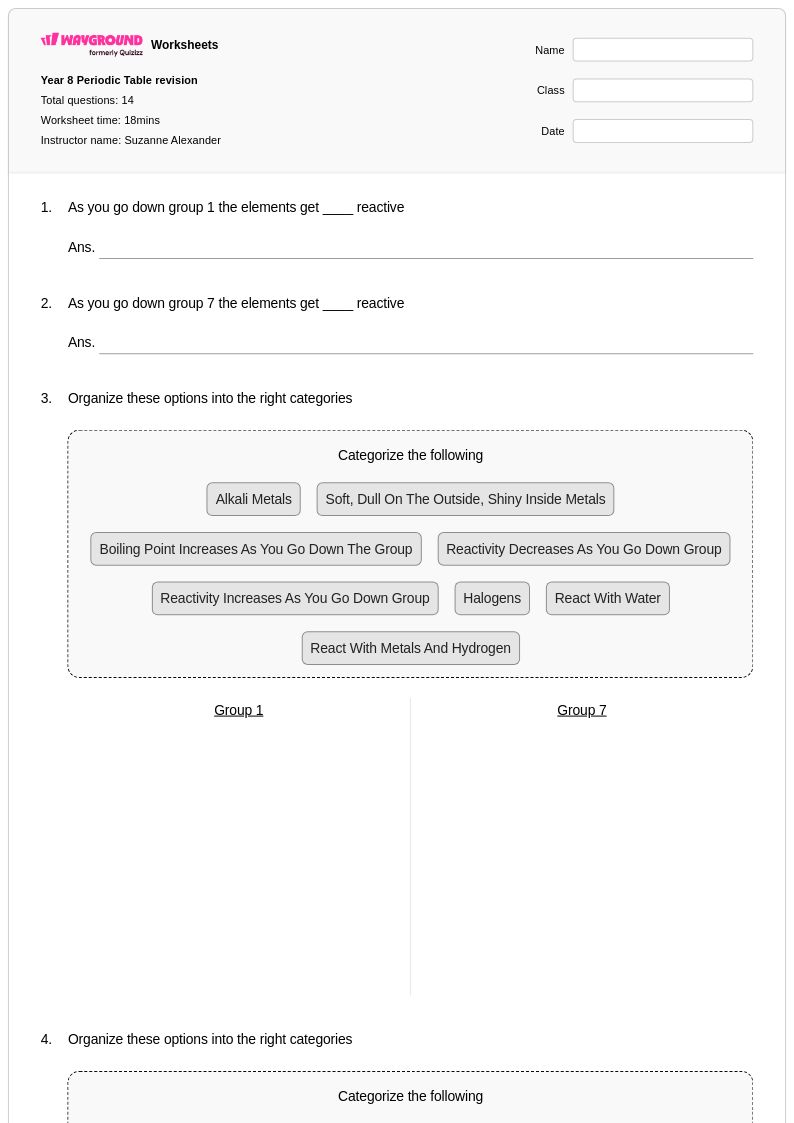
Break the periodic table into digestible sections rather than presenting it all at once. Start with periods and groups as organizational frameworks, then introduce element properties like atomic number and atomic mass before moving to trends such as electronegativity and ionization energy. Anchoring each lesson to a specific region of the table (e.g., alkali metals, noble gases) gives students a manageable foothold before they tackle the full picture.
What exercises help students practice reading and interpreting the periodic table?
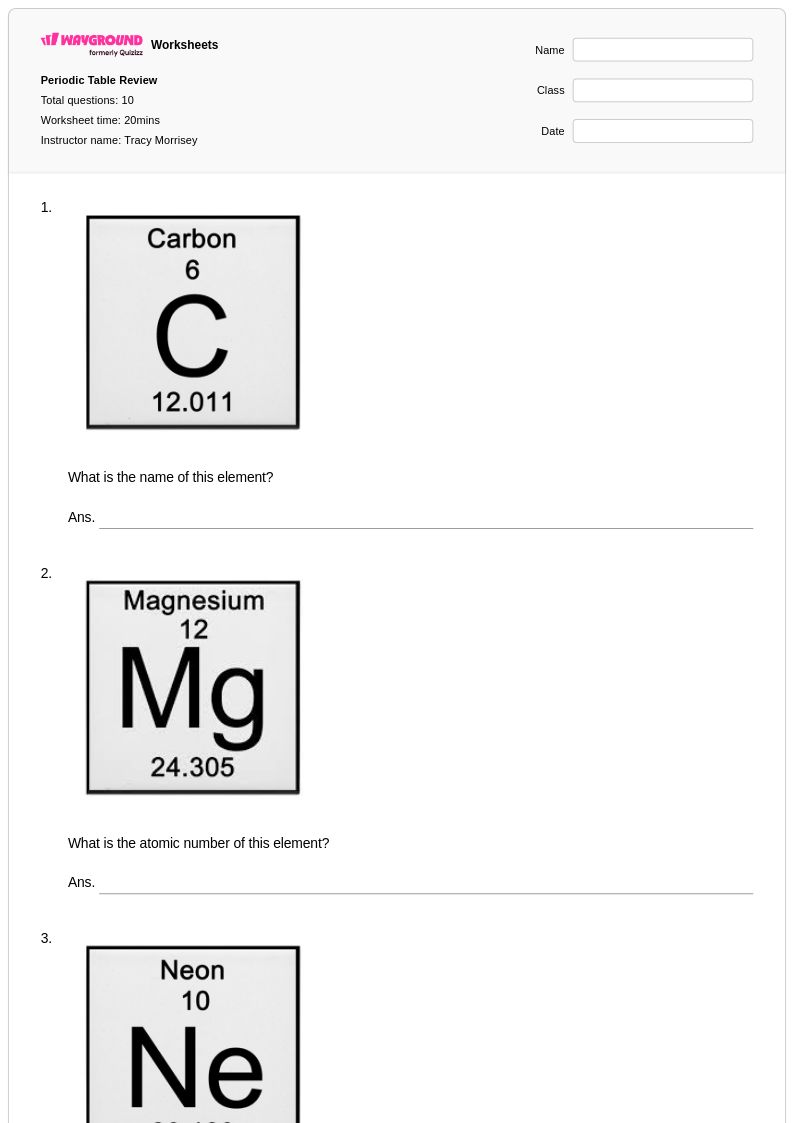
Effective practice includes identifying elements by atomic number, calculating the number of protons, neutrons, and electrons from a given element tile, and recognizing group and period patterns. Scaffolded worksheets that move from basic element identification toward periodic trend analysis build the interpretive skills students need for more advanced chemistry. Repeated low-stakes practice with immediate answer key feedback reinforces fluency with the table's structure.
What are the most common mistakes students make when working with the periodic table?
Students frequently confuse atomic number with atomic mass, or miscalculate the number of neutrons by subtracting incorrectly from the wrong value. Another common error is misreading group and period directionality, leading to incorrect predictions about periodic trends like electronegativity or atomic radius. Targeted practice problems that isolate these specific operations help students correct these patterns before they solidify.
How do I use periodic table worksheets to differentiate instruction in my chemistry class?
Differentiation can be applied by assigning scaffolded versions of periodic table tasks, where struggling students focus on element identification and basic atomic structure while advanced students tackle electron configuration and trend analysis. On Wayground, teachers can apply individual accommodations such as read aloud support, reduced answer choices, and extended time, allowing each student to engage with the same content at an appropriate level of challenge without singling anyone out.
How can I use Wayground's periodic table worksheets in my classroom?
Wayground's periodic table worksheets are available as printable PDFs for traditional classroom use and in digital formats for technology-integrated environments. Teachers can assign them as independent practice, homework, or formative assessment, and can also host them as a quiz directly on the Wayground platform. Both formats include detailed answer keys, making them practical for self-paced learning and quick teacher review alike.
How do I help students understand periodic trends like electronegativity and atomic radius?
Periodic trends are best taught by first ensuring students understand the underlying atomic structure driving each pattern, then connecting that structure to directional rules across periods and down groups. Visual comparison exercises, where students rank elements within a period or group by a given property, build intuition more reliably than memorization alone. Worksheets that require students to explain the reason behind a trend, not just identify it, push toward deeper conceptual understanding.