Free Printable Sex Linked Pedigrees Worksheets for Class 10
Class 10 sex linked pedigrees worksheets from Wayground help students master inheritance patterns through comprehensive practice problems, free printable PDFs, and detailed answer keys for genetics analysis.
Explore printable Sex Linked Pedigrees worksheets for Class 10
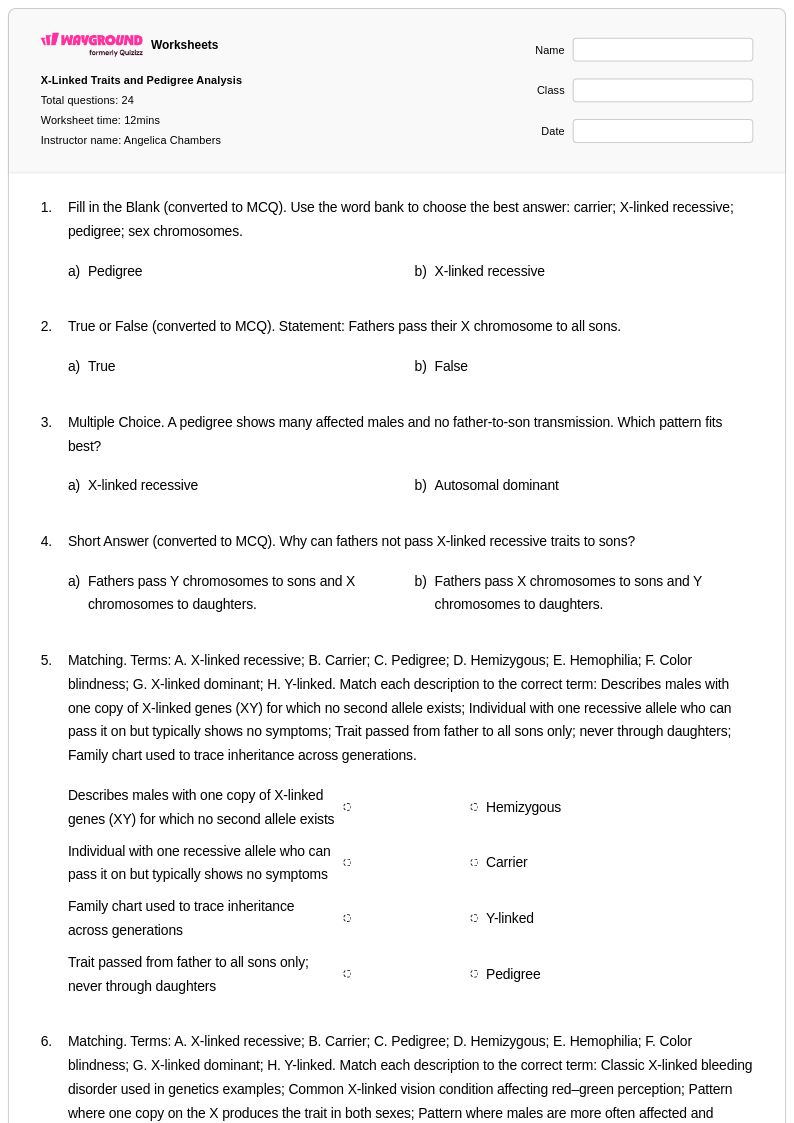
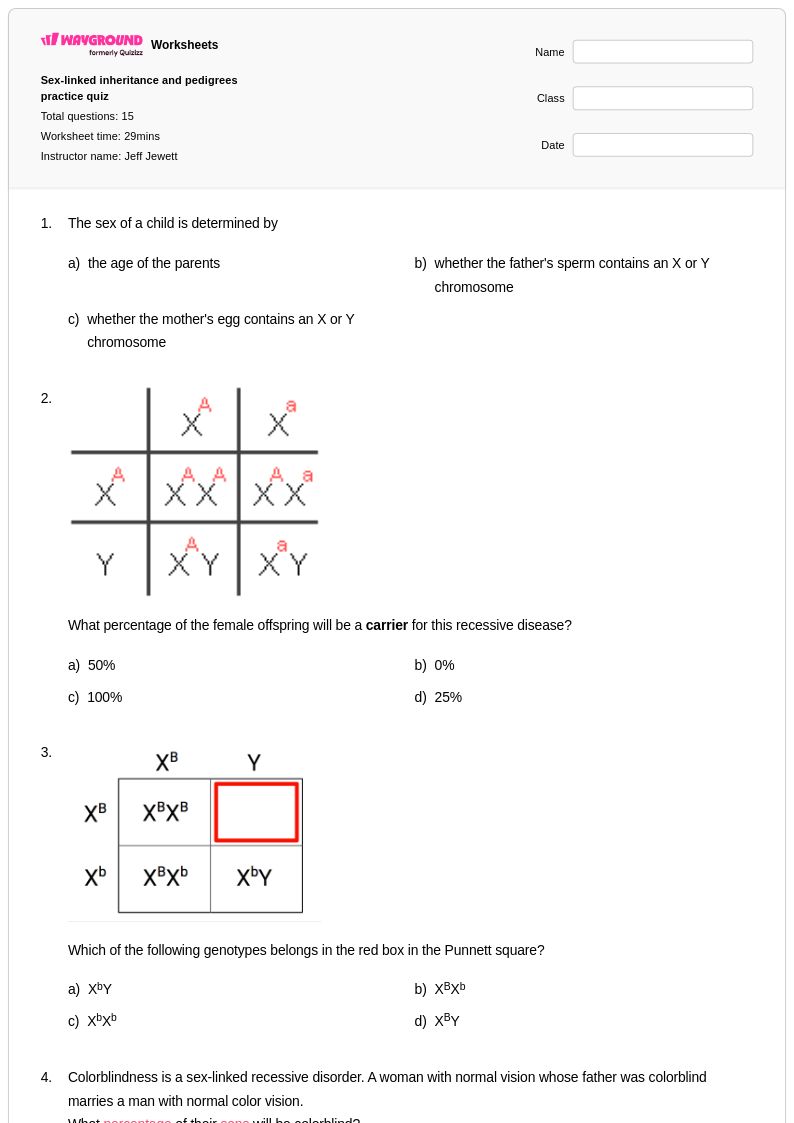
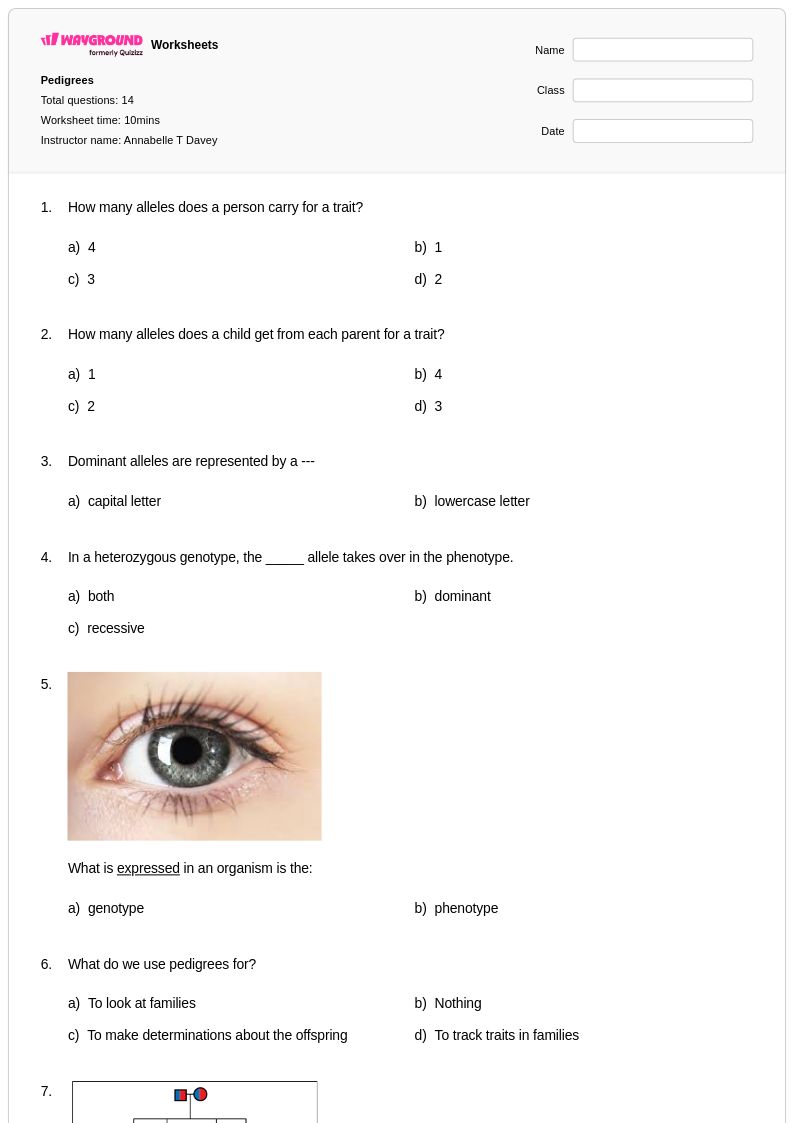
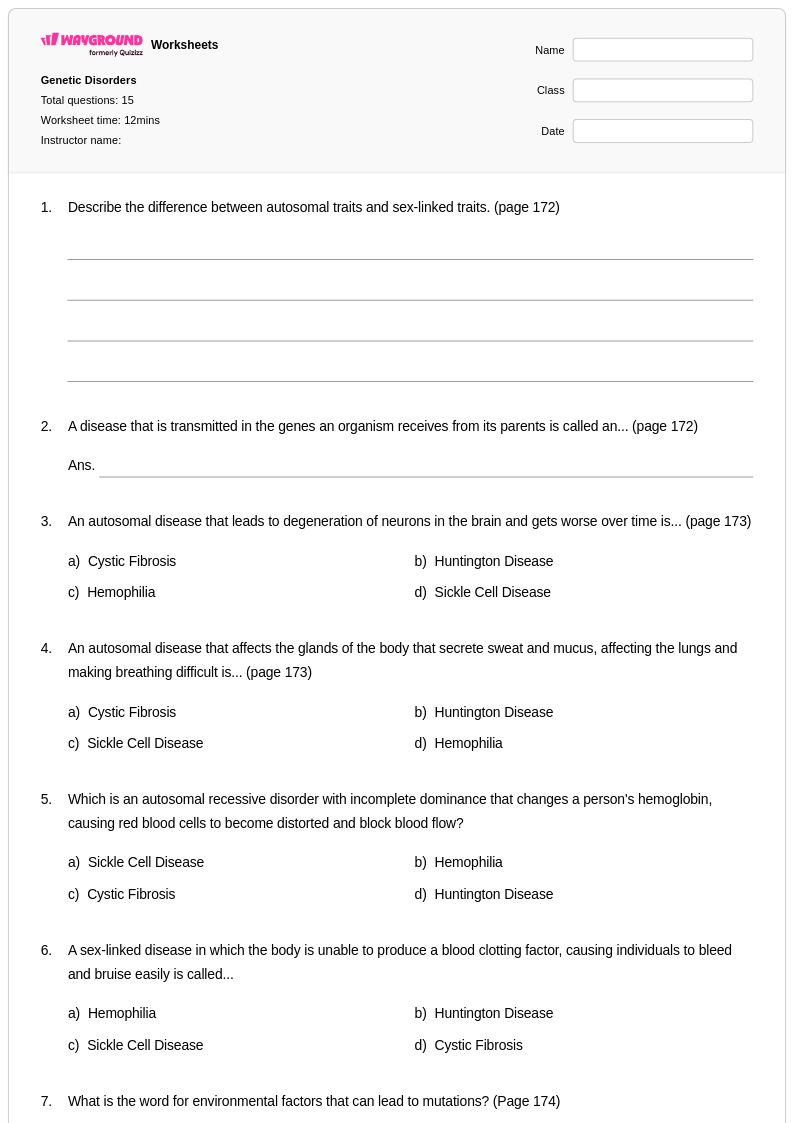
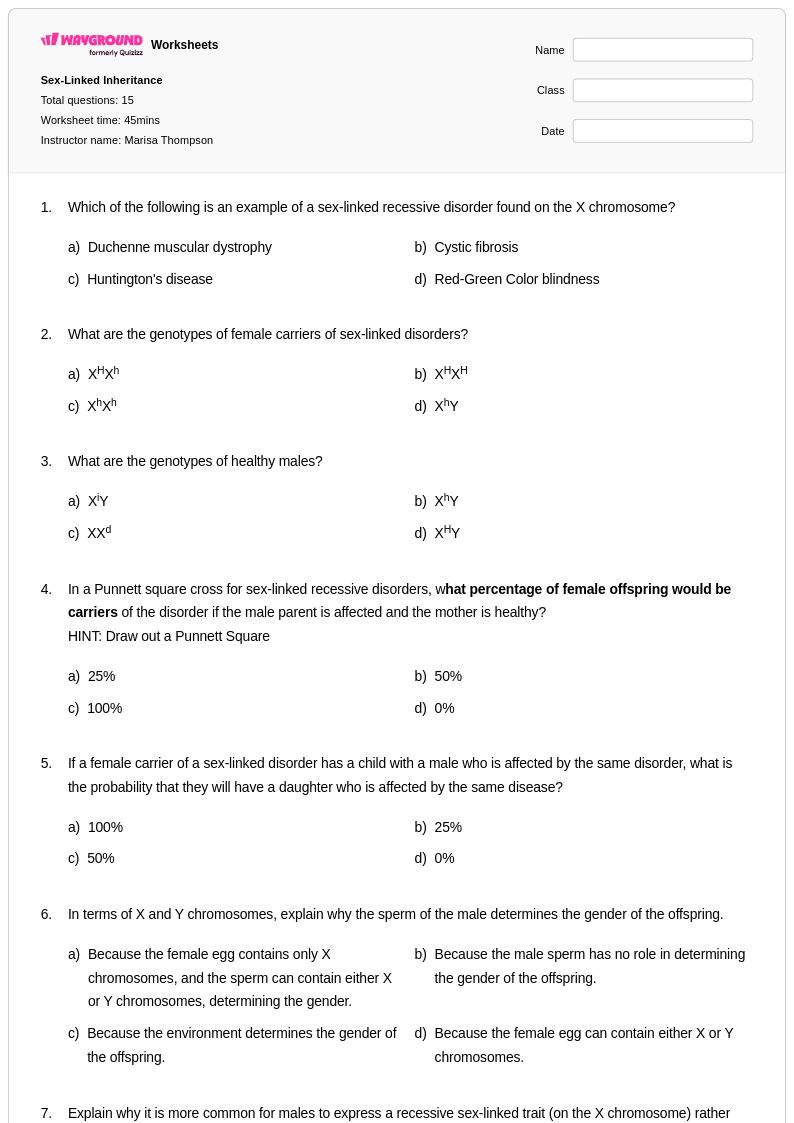
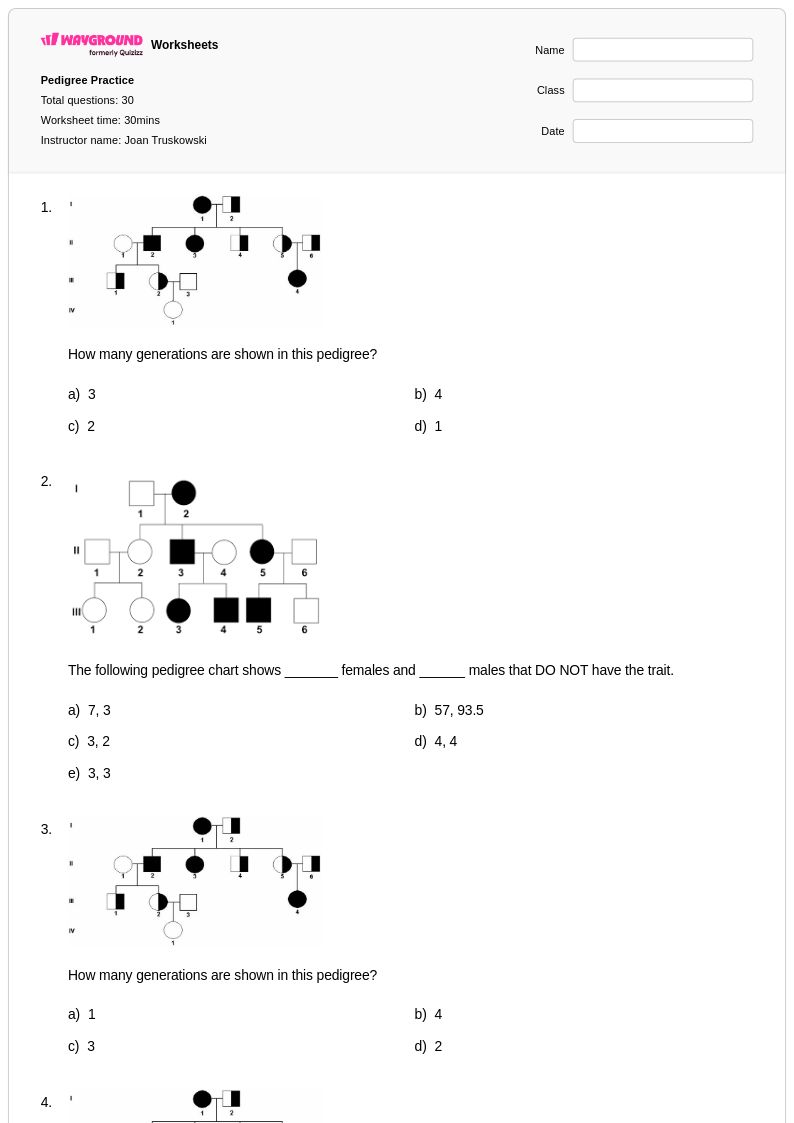
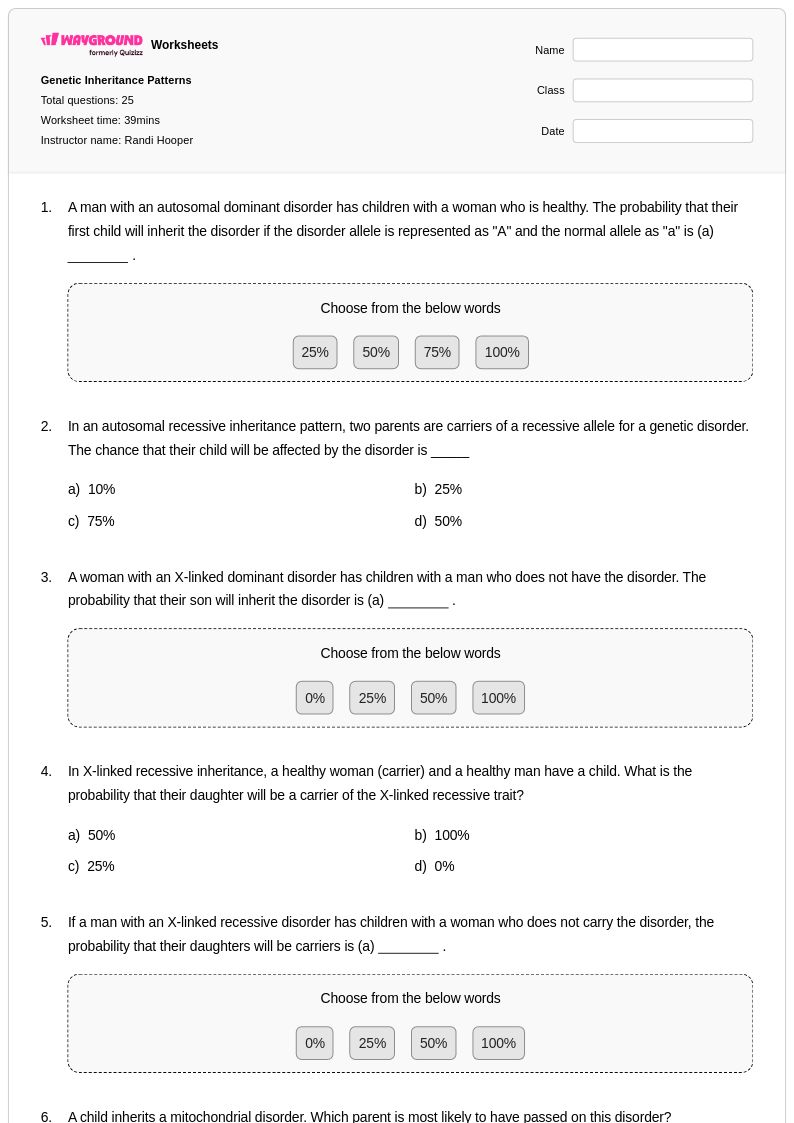
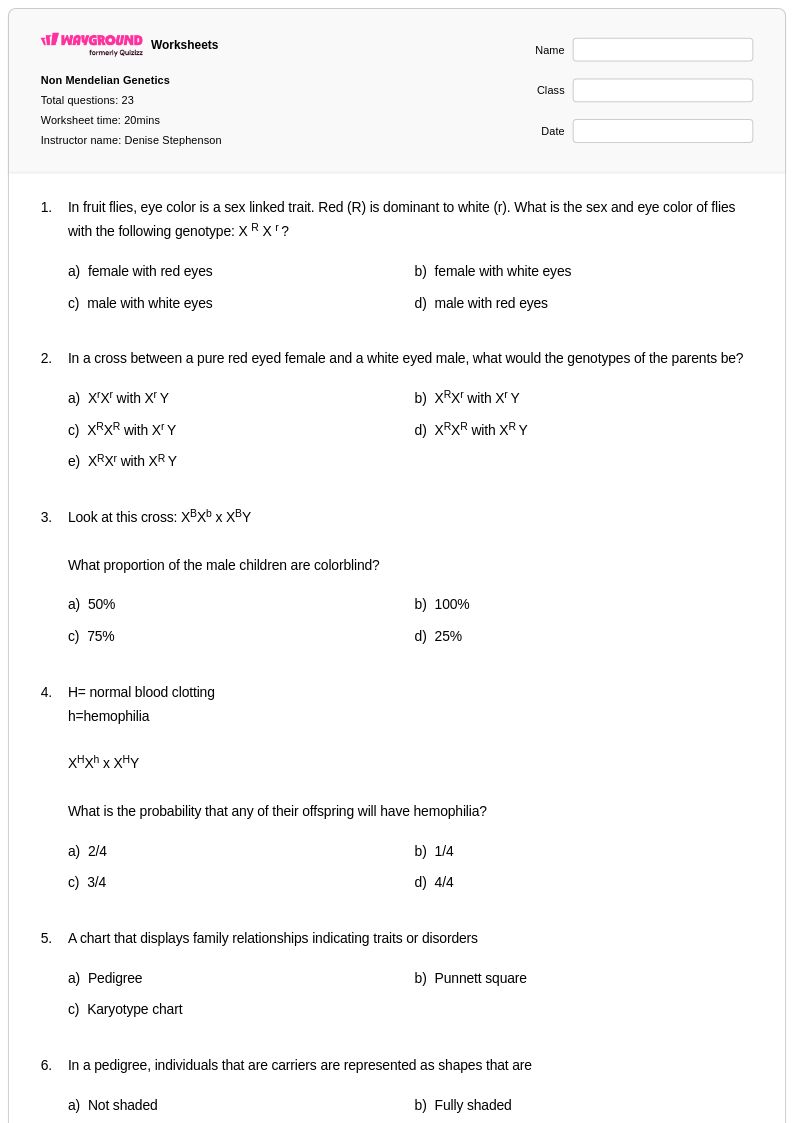
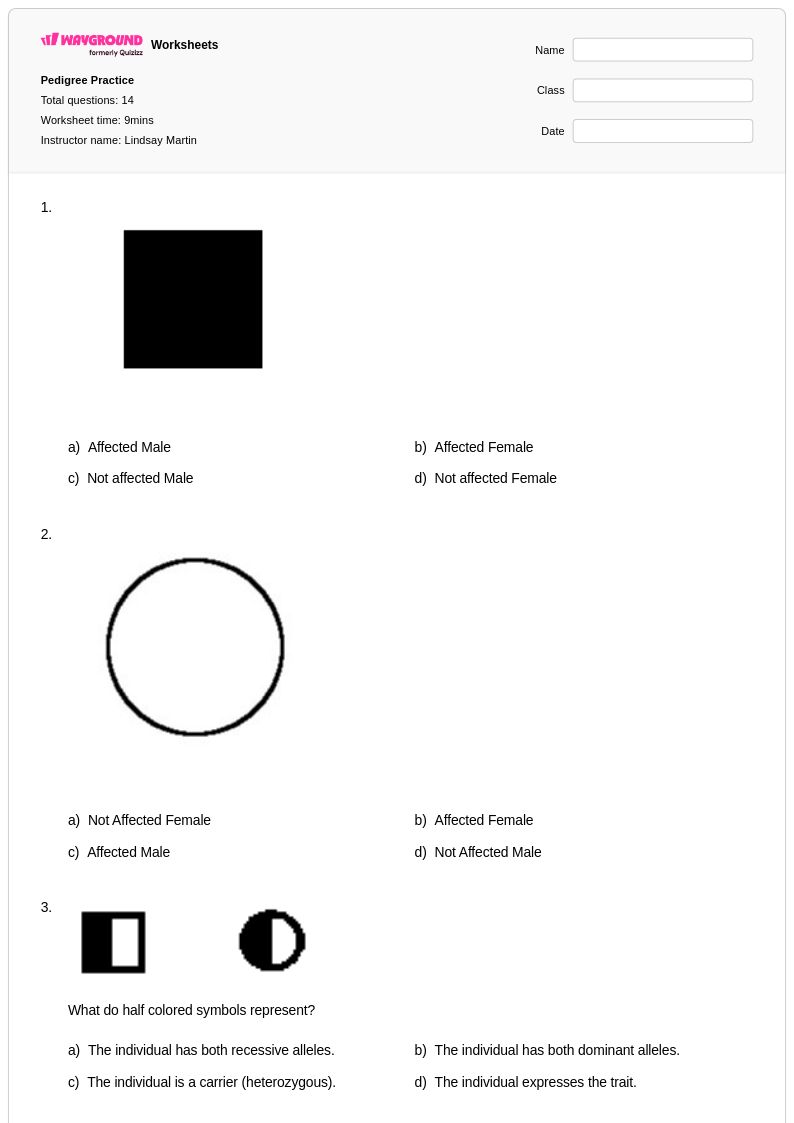
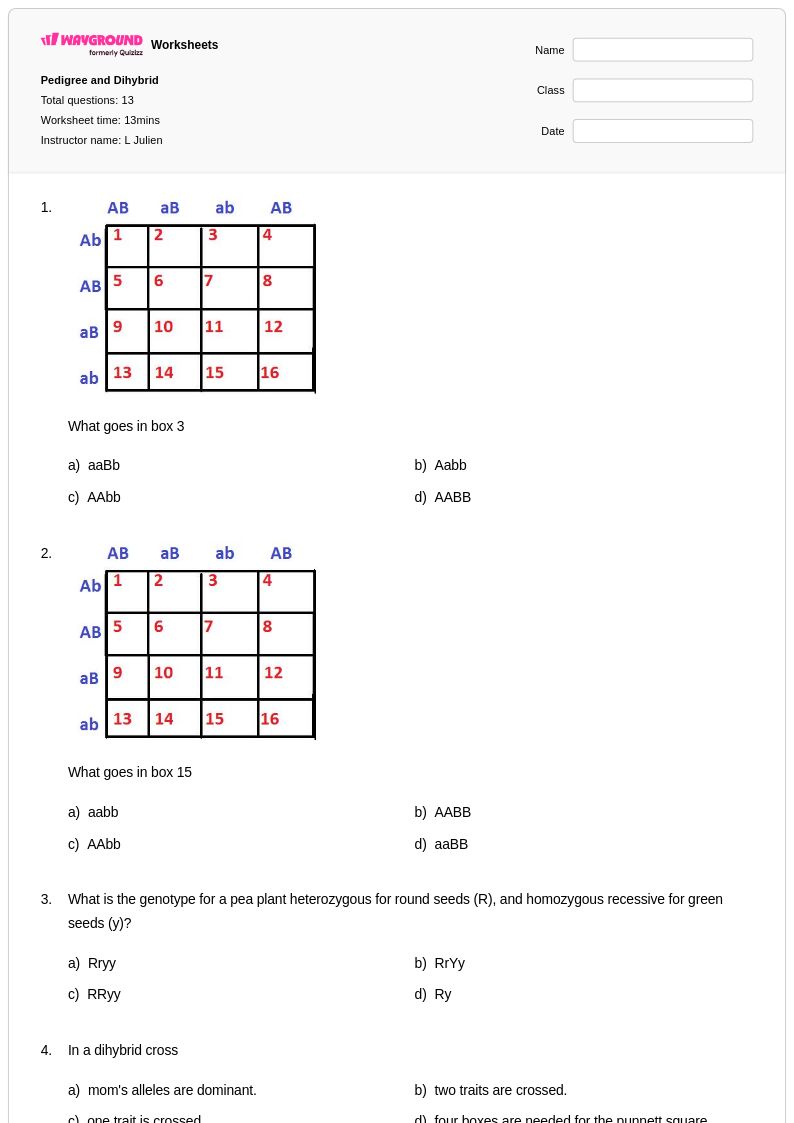
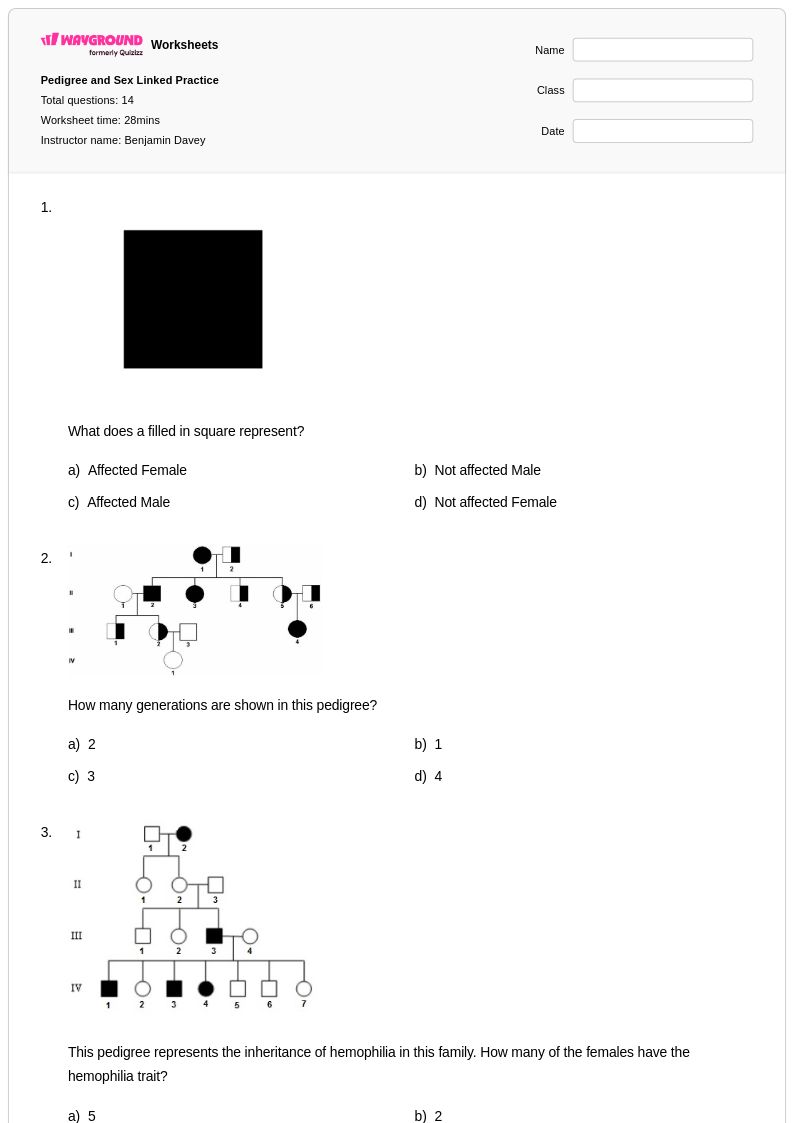
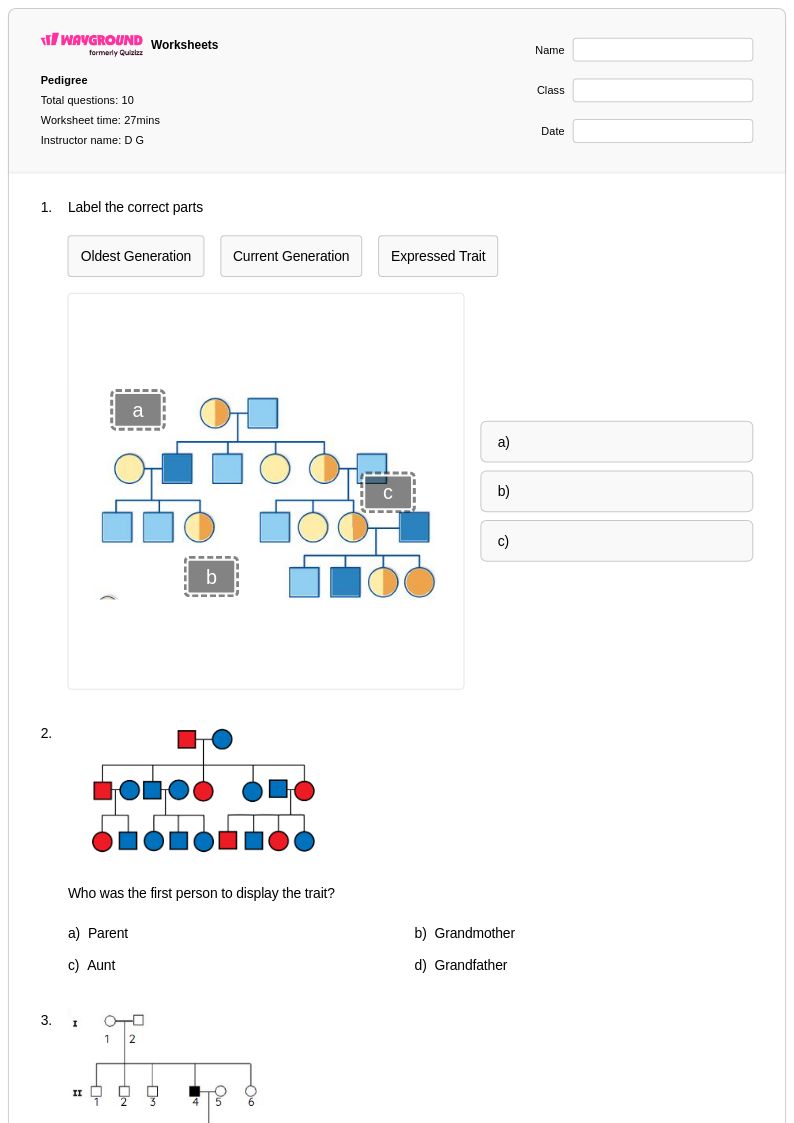
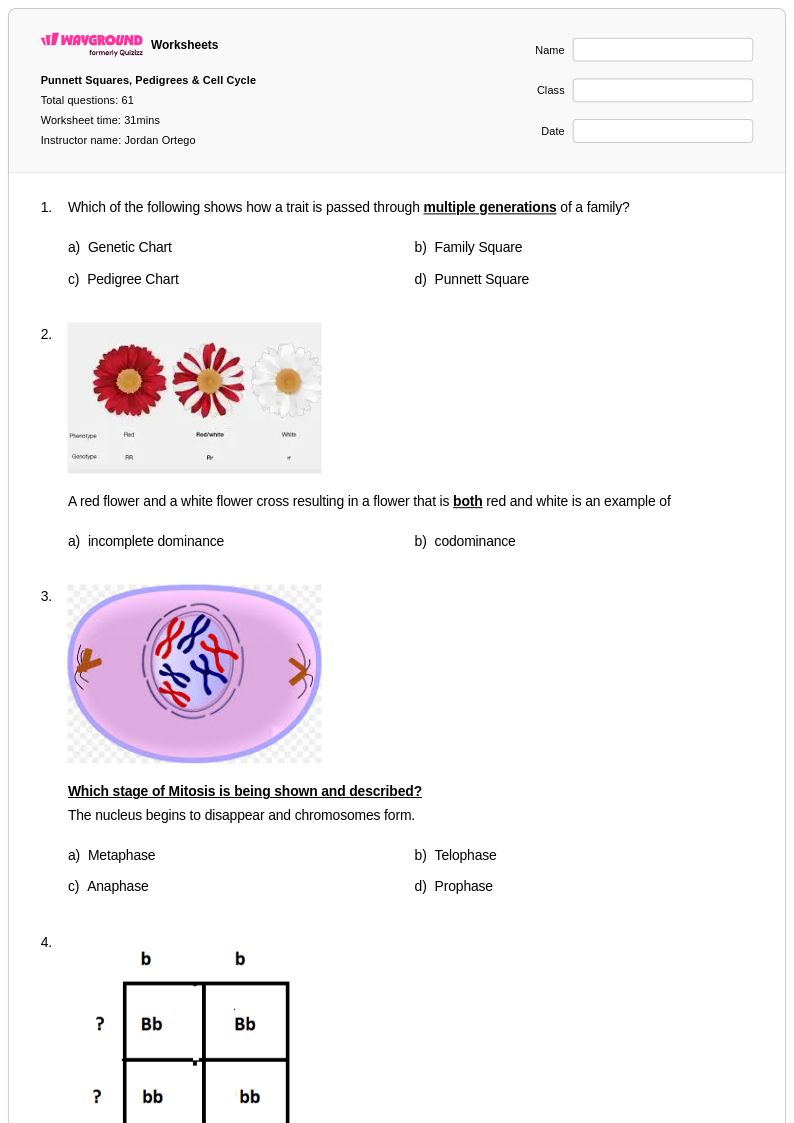
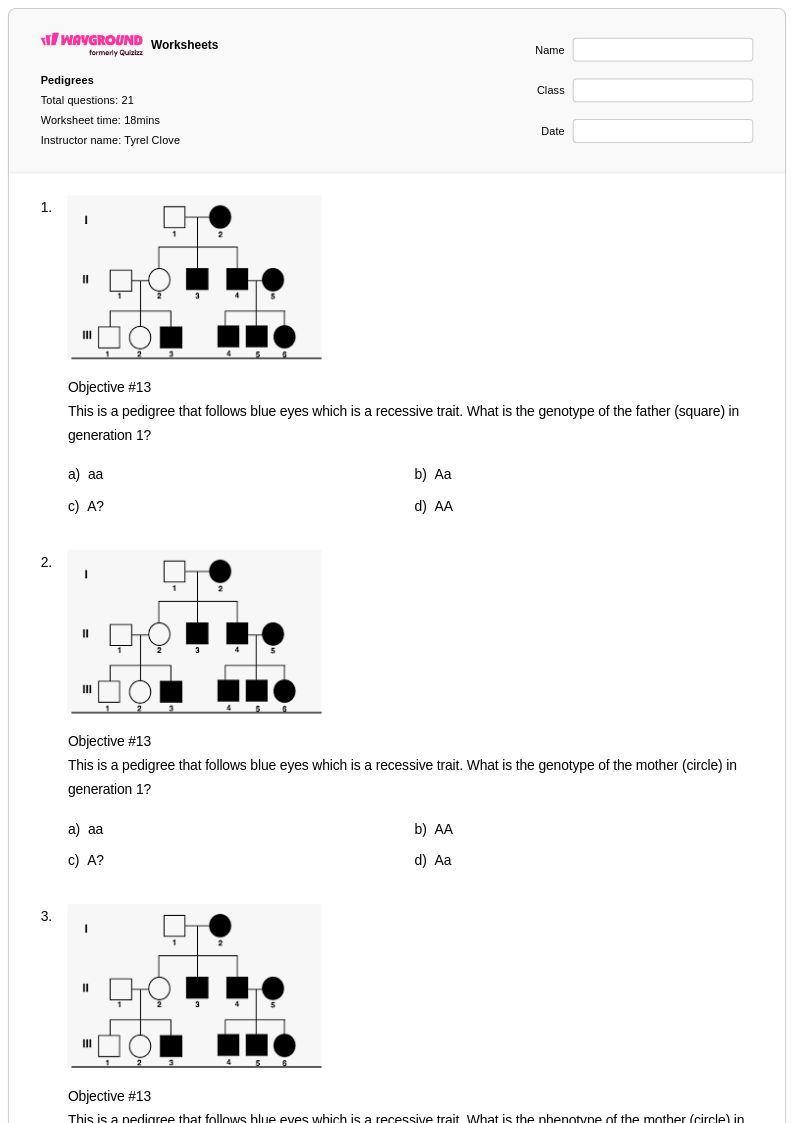
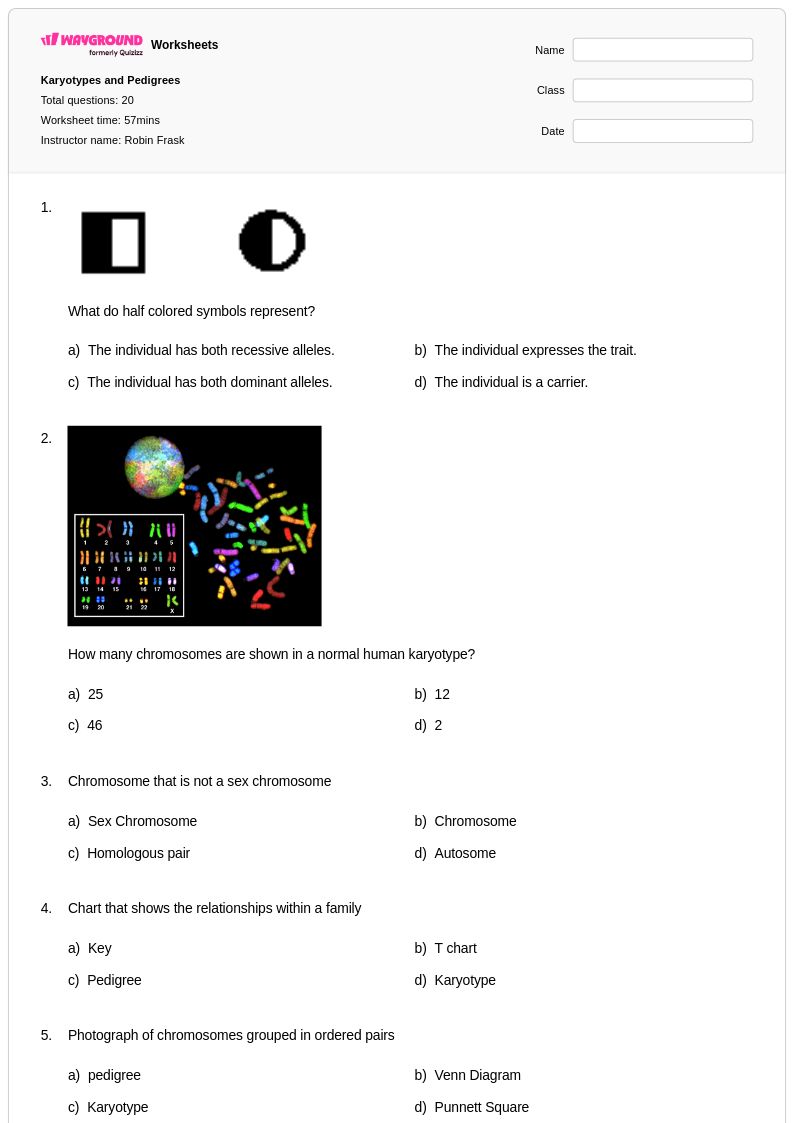
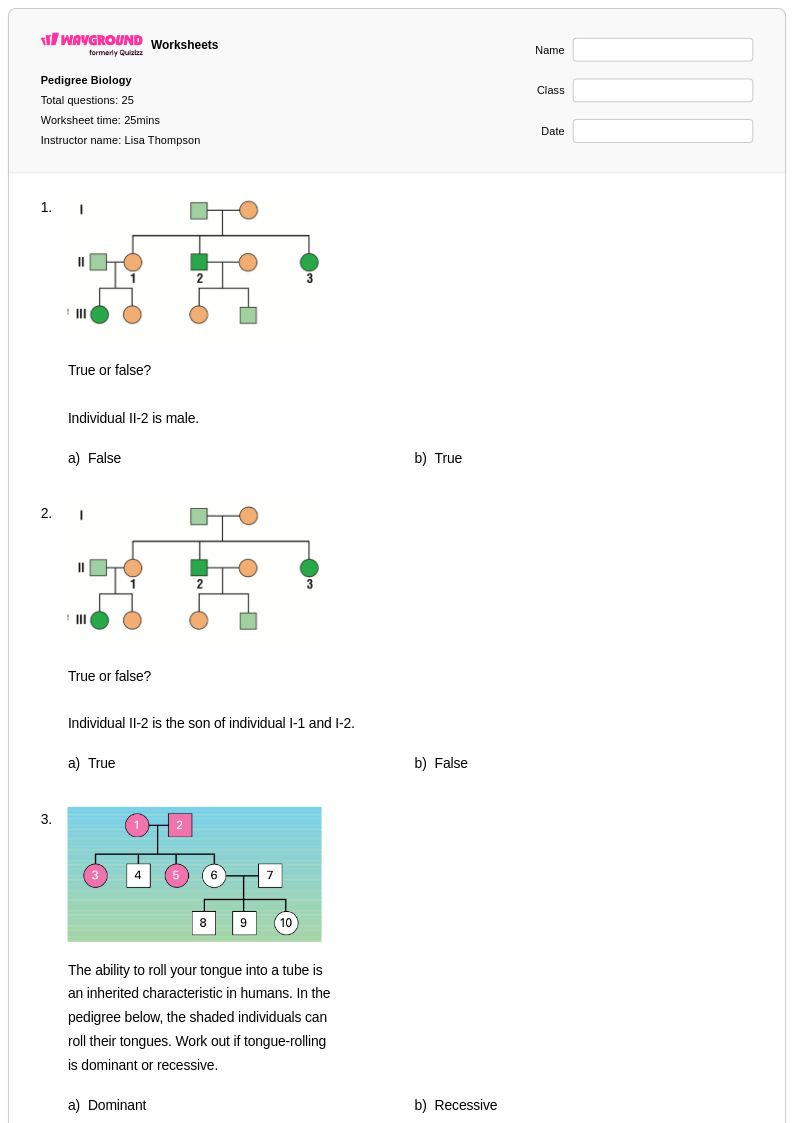
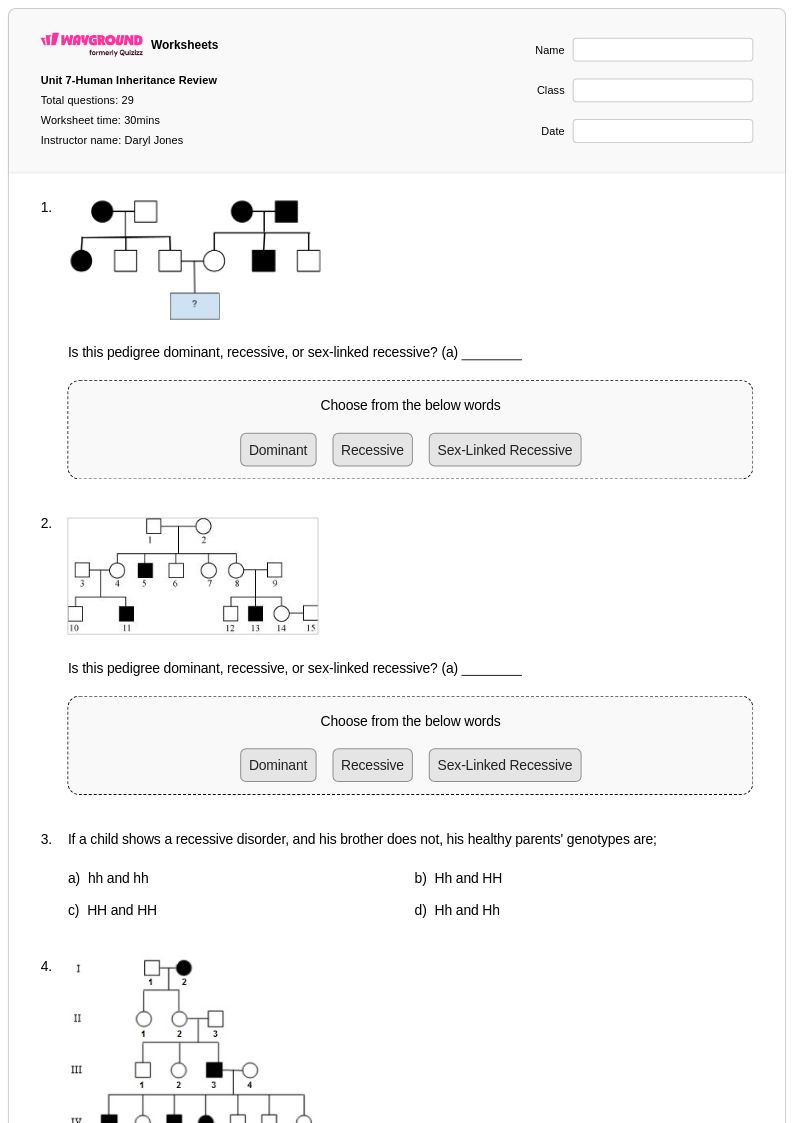
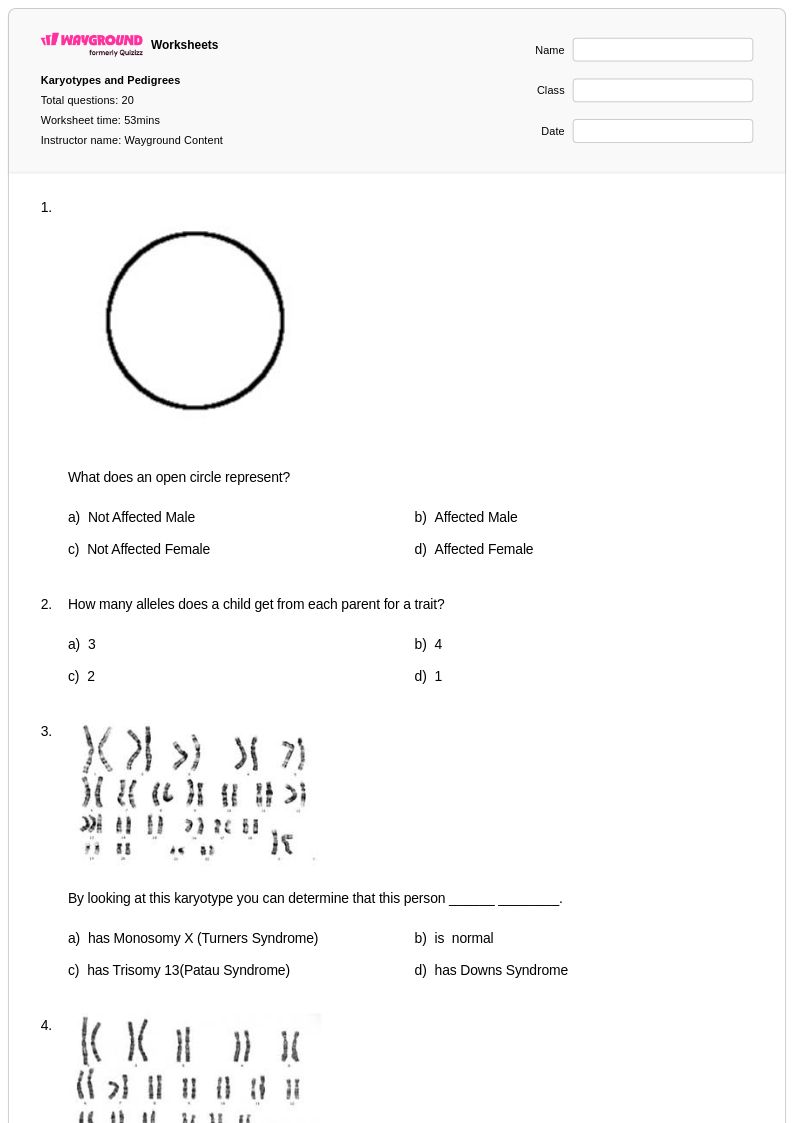
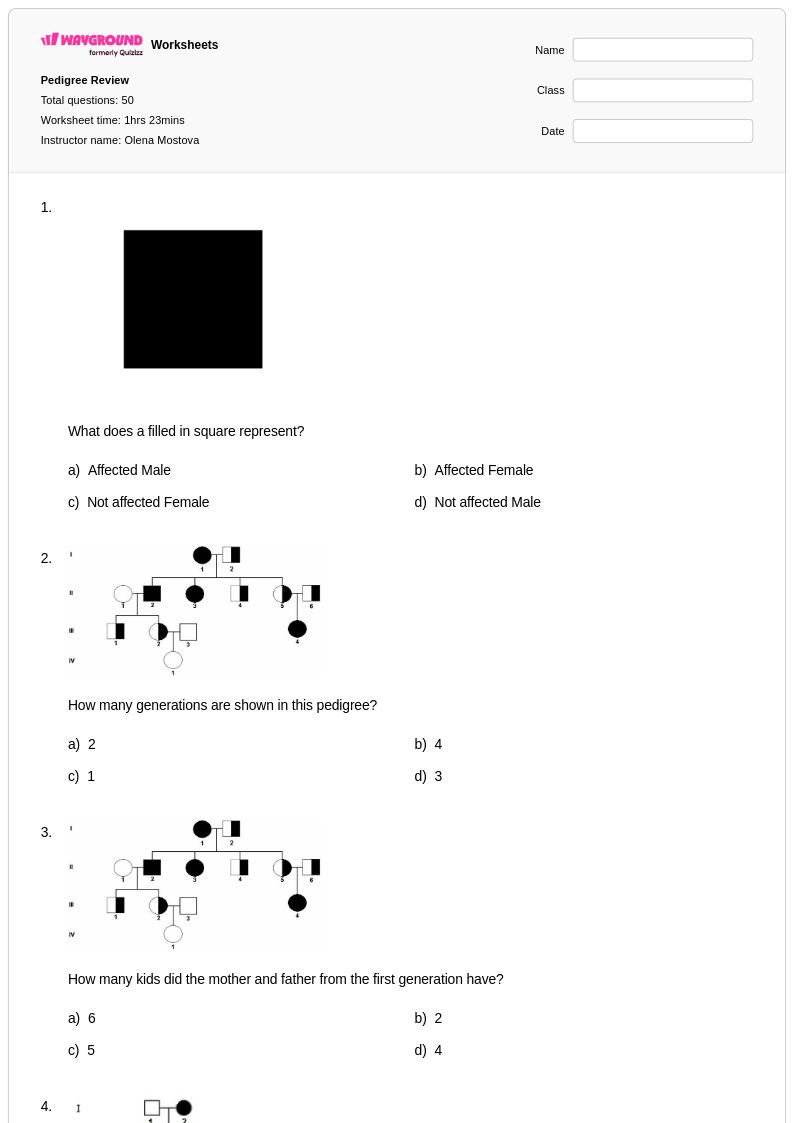
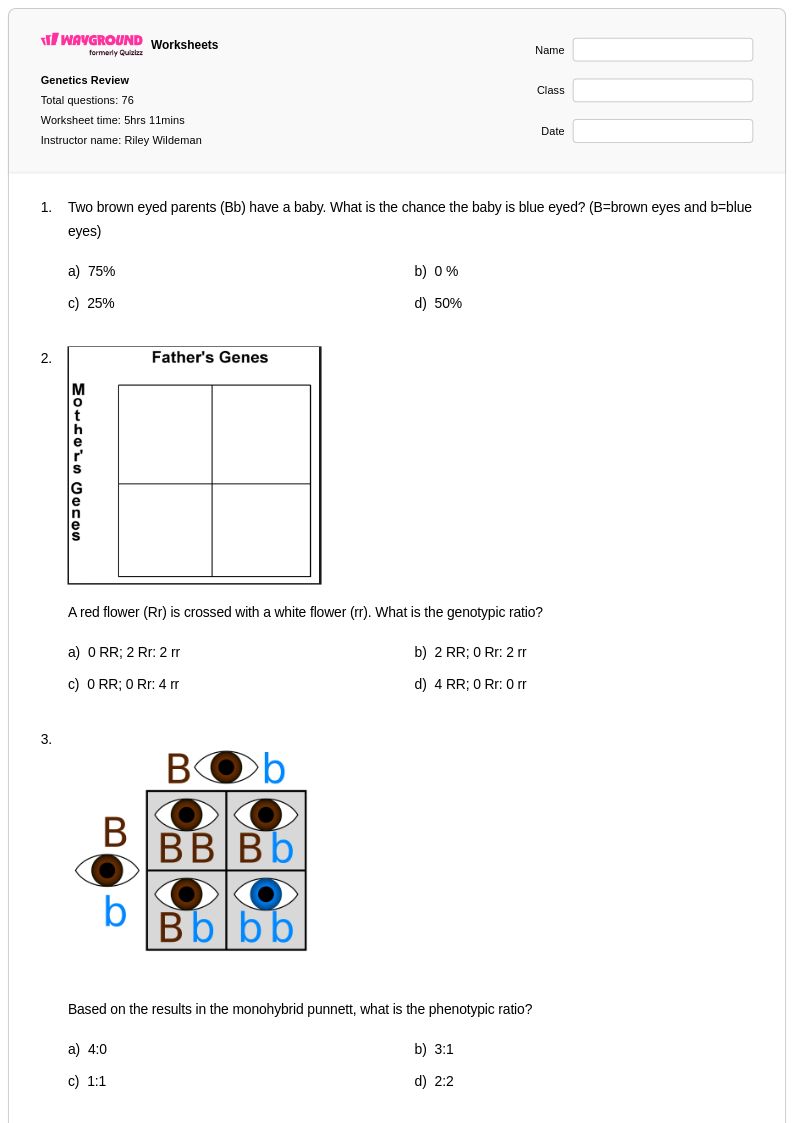
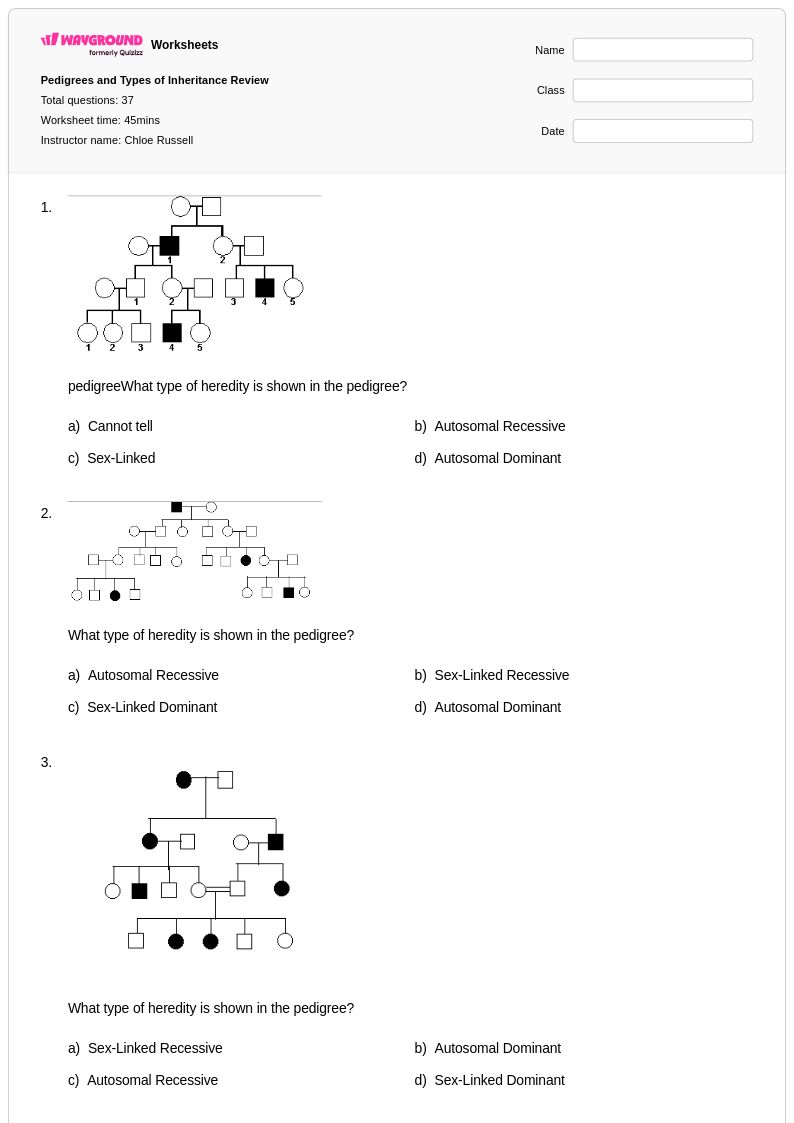
Sex linked pedigrees worksheets for Class 10 students available through Wayground (formerly Quizizz) provide comprehensive practice in analyzing inheritance patterns of traits carried on sex chromosomes. These educational resources strengthen critical thinking skills by challenging students to trace X-linked and Y-linked genetic disorders through family trees, interpret carrier status in females, and predict the probability of affected offspring across generations. The worksheets feature detailed pedigree charts accompanied by practice problems that require students to identify inheritance modes, determine genotypes of family members, and calculate genetic risks. Each printable resource includes an answer key to support independent learning and self-assessment, while the free pdf format ensures easy classroom distribution and homework assignments that reinforce understanding of sex chromosome genetics.
Wayground (formerly Quizizz) empowers educators with an extensive collection of teacher-created sex linked pedigree worksheets drawn from millions of high-quality educational resources. The platform's robust search and filtering capabilities allow teachers to quickly locate materials that align with specific curriculum standards and match their students' skill levels. Advanced differentiation tools enable instructors to customize worksheets for diverse learning needs, while the flexible format options support both traditional printable assignments and interactive digital activities. These comprehensive resources facilitate effective lesson planning by providing ready-to-use materials for initial instruction, targeted remediation for struggling students, and enrichment opportunities for advanced learners, ensuring that all Class 10 students can master the complex concepts of sex-linked inheritance patterns through structured practice and skill development.
FAQs
How do I teach sex-linked pedigrees to high school biology students?
Start by ensuring students are fluent with standard pedigree notation before introducing sex linkage. Explicitly teach the logic behind why X-linked recessive conditions appear more frequently in males — since males have only one X chromosome, a single recessive allele is sufficient to express the trait. Use well-known examples like color blindness and hemophilia to anchor abstract concepts in recognizable contexts, then have students practice identifying carrier females and affected males across multi-generational pedigrees before moving to probability calculations.
What exercises help students practice analyzing sex-linked pedigrees?
The most effective practice tasks require students to determine genotypes for every individual in a pedigree, identify carrier status for females, and calculate the probability that offspring inherit a given condition. Worksheets that feature pedigrees for X-linked recessive traits like color blindness, hemophilia, and Duchenne muscular dystrophy give students repeated exposure to the most commonly tested inheritance patterns. Including problems that ask students to explain why a trait skips generations or appears only in males deepens conceptual understanding beyond mechanical symbol use.
What mistakes do students commonly make when solving sex-linked pedigree problems?
The most frequent error is applying autosomal inheritance logic to sex-linked traits — students often forget to account for the X and Y chromosome distinction and incorrectly assign genotypes using two identical allele slots for males. Another common misconception is failing to recognize carrier females, especially when no affected daughters appear in the pedigree. Students also frequently confuse X-linked recessive with X-linked dominant patterns, so explicit comparison of both during instruction helps prevent this confusion.
How can I differentiate sex-linked pedigree instruction for students at different skill levels?
Begin with scaffolded pedigrees that label known genotypes and ask students to fill in only one or two individuals before progressing to fully open-ended charts. For students who need additional support, Wayground allows teachers to apply accommodations such as reduced answer choices and read-aloud features on an individual basis, reducing cognitive load without altering the task for the rest of the class. Advanced learners can be challenged with multi-trait pedigrees or problems that require students to determine whether a trait could be autosomal or sex-linked based on the pattern alone.
How do I use Wayground's sex-linked pedigrees worksheets in my classroom?
Wayground's sex-linked pedigrees worksheets are available as printable PDFs for traditional paper-based instruction and in digital formats for technology-integrated classrooms, giving teachers flexibility in how they assign and collect student work. Teachers can also host these materials as a quiz directly on Wayground, enabling real-time progress monitoring and immediate feedback. The included answer keys make them practical for independent practice, homework, formative assessment, or targeted remediation for students who need additional support with inheritance pattern analysis.
Why do X-linked recessive conditions appear more often in males than females?
Males carry only one X chromosome (XY), so a single copy of an X-linked recessive allele is enough to express the condition — there is no second X allele to mask it. Females (XX) must inherit two copies of the recessive allele to be affected, which is statistically less likely, meaning they more often remain carriers without showing symptoms. This biological asymmetry is why conditions like hemophilia and red-green color blindness are observed far more frequently in males across pedigrees.