Free Printable Vestigial Structures Worksheets for Class 10
Discover free Class 10 vestigial structures worksheets and printables from Wayground that help students explore evolutionary evidence through practice problems, interactive activities, and comprehensive answer keys in downloadable PDF format.
Explore printable Vestigial Structures worksheets for Class 10
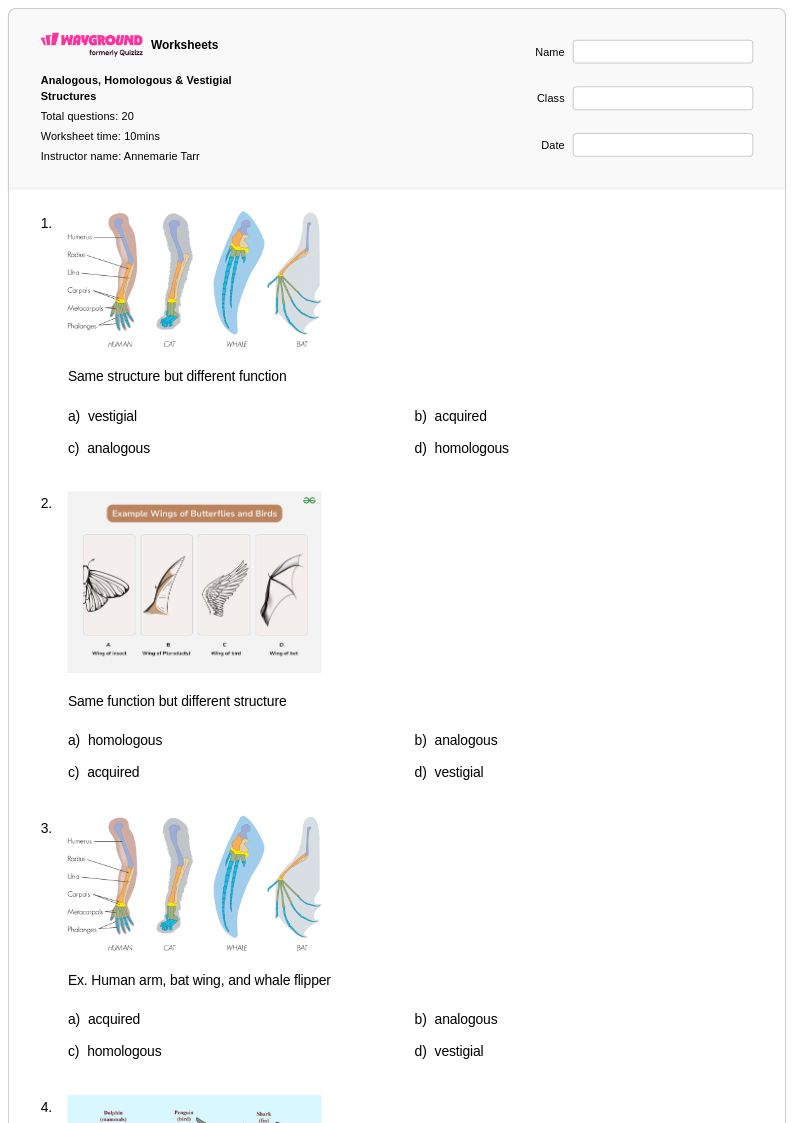
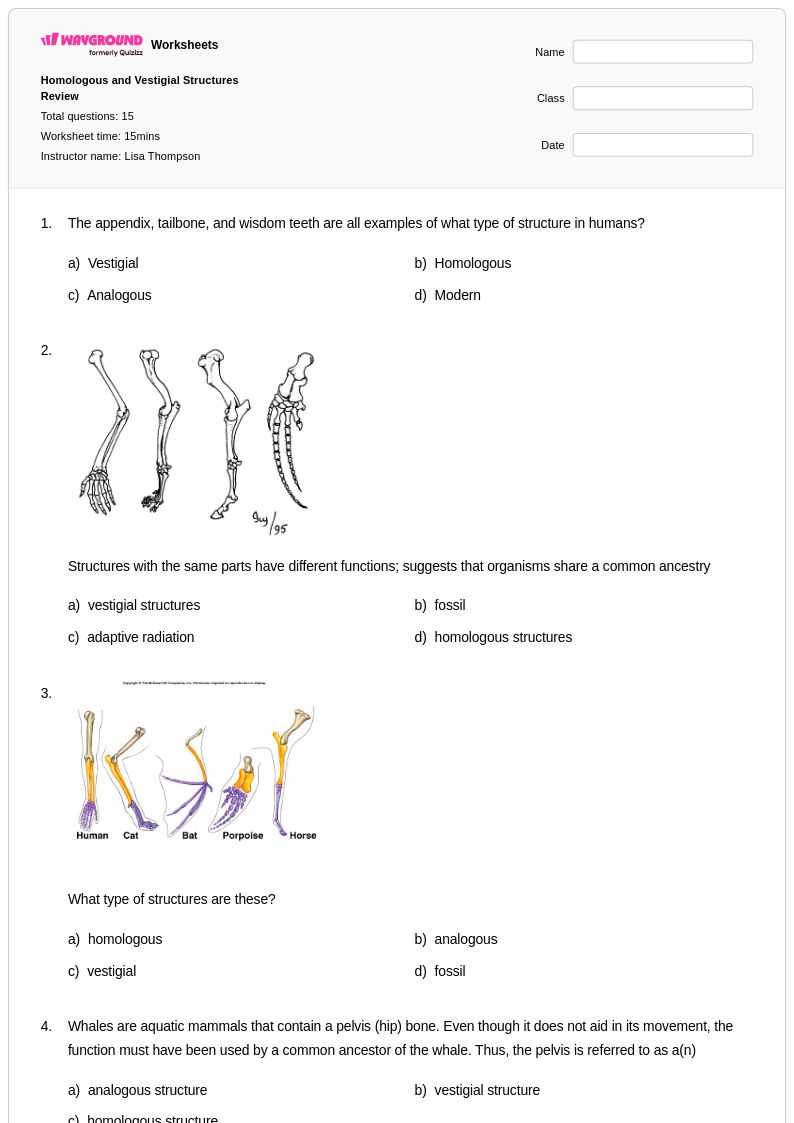
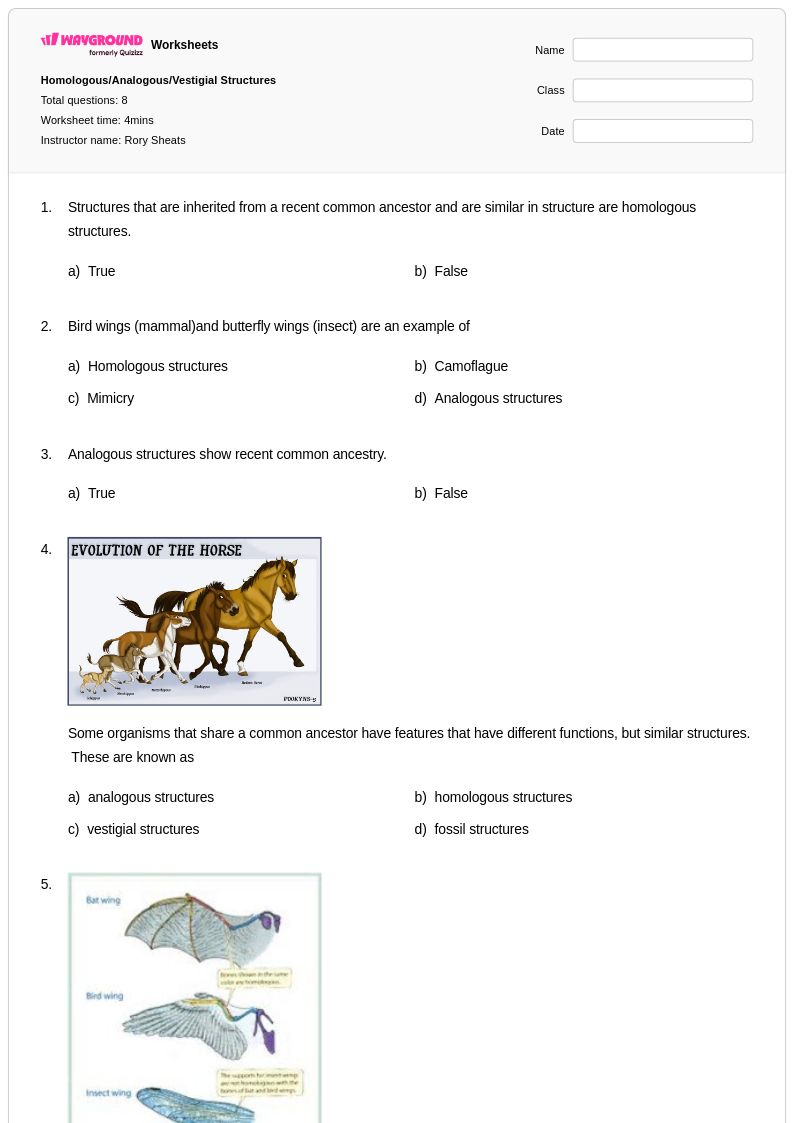
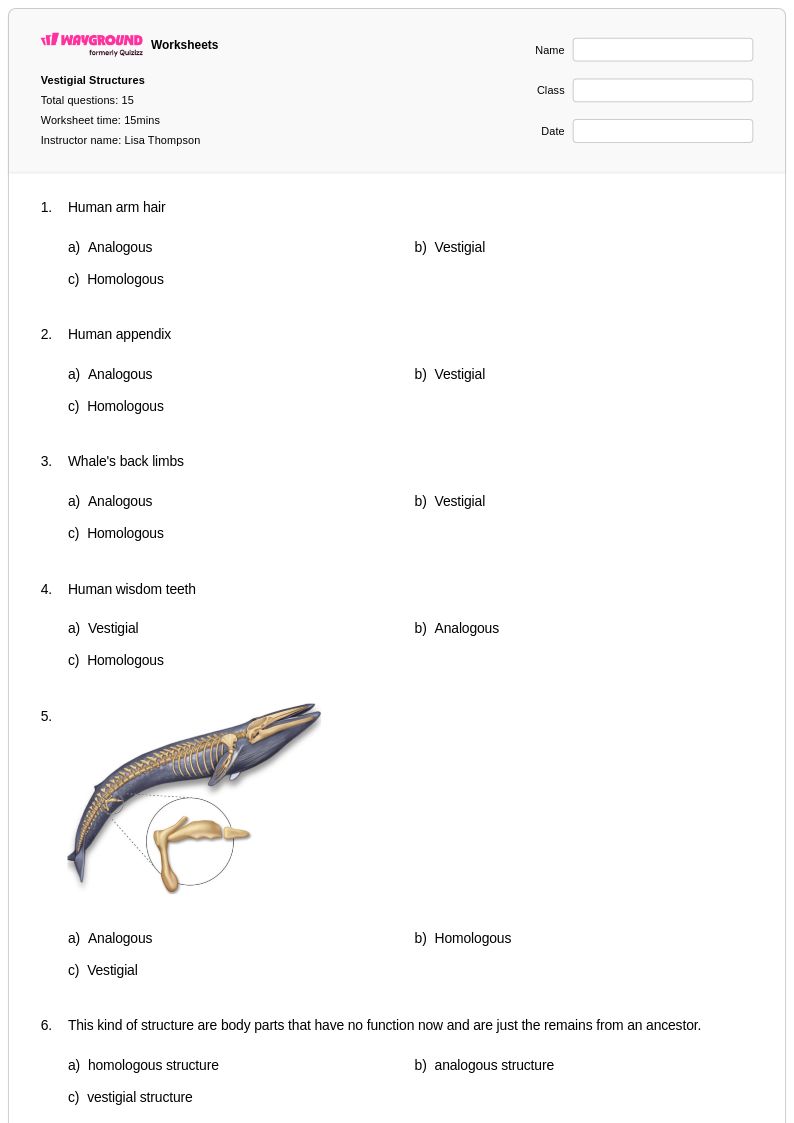
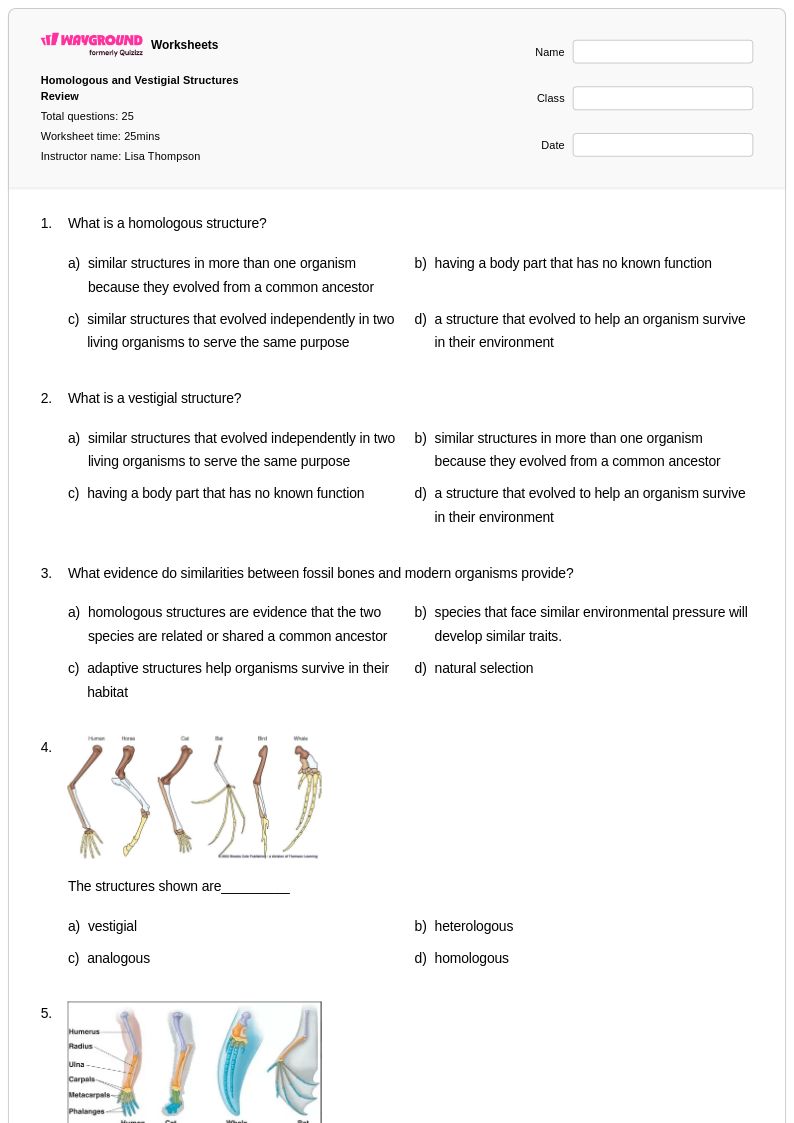
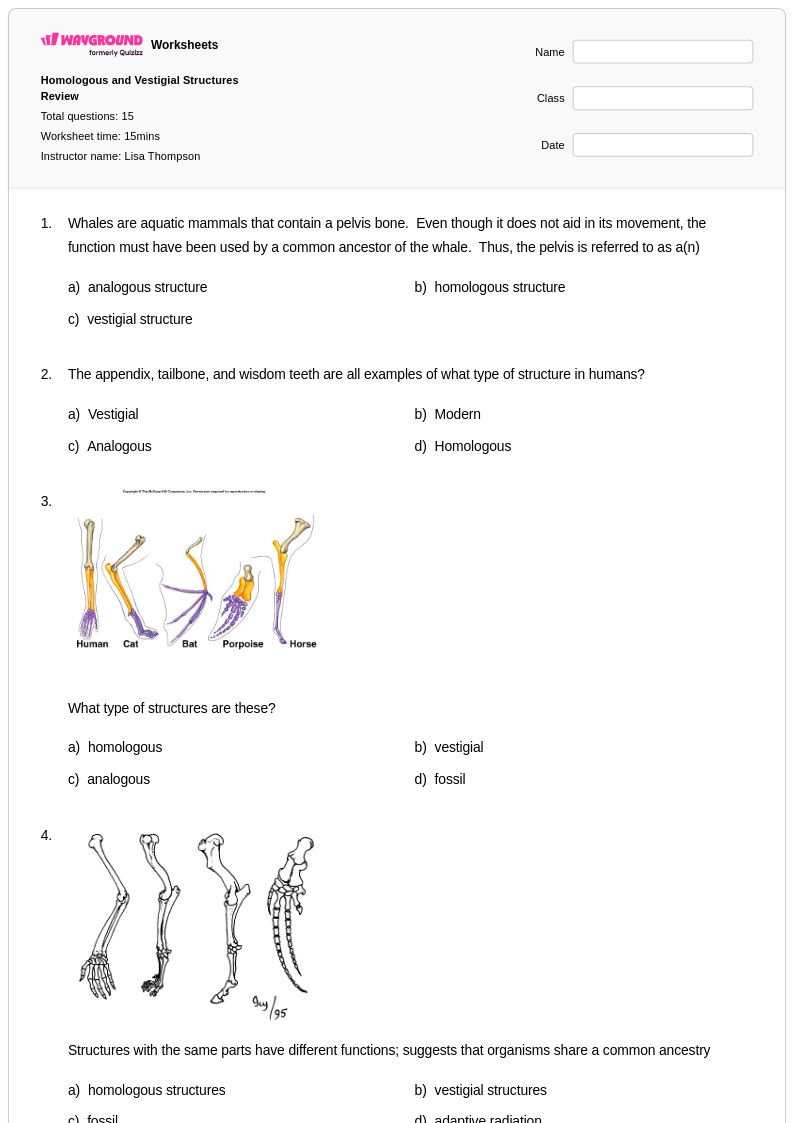
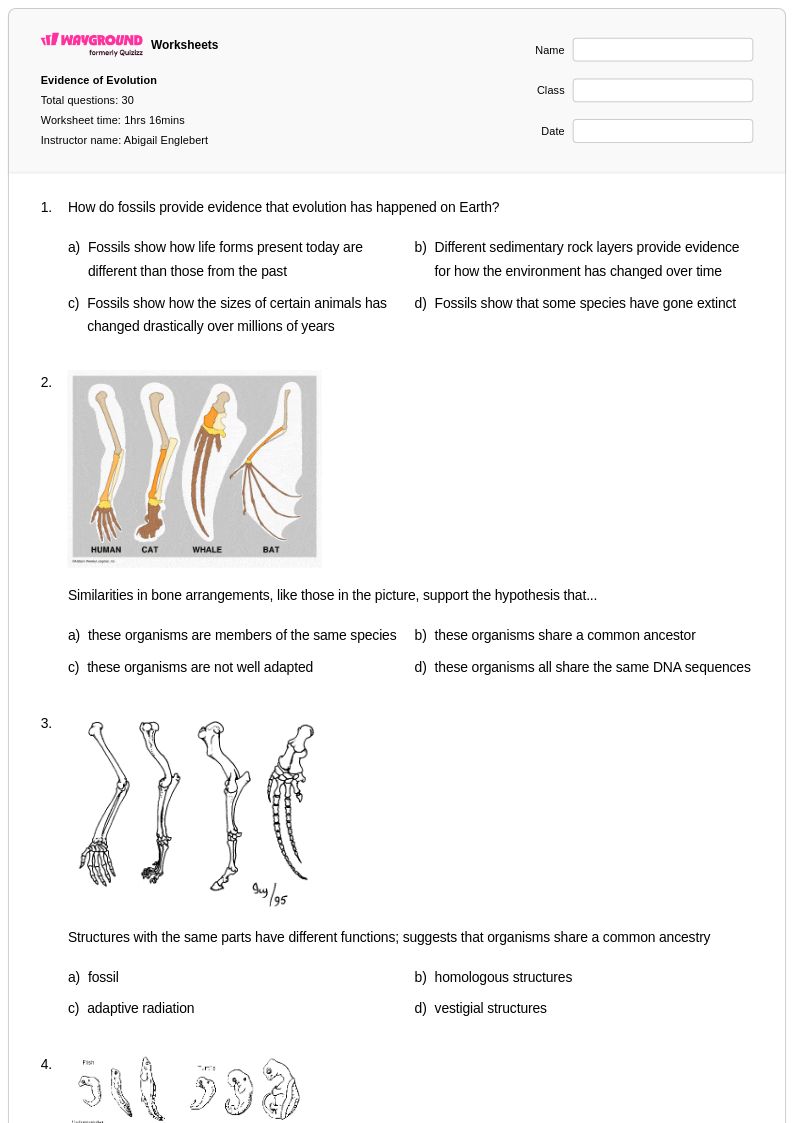
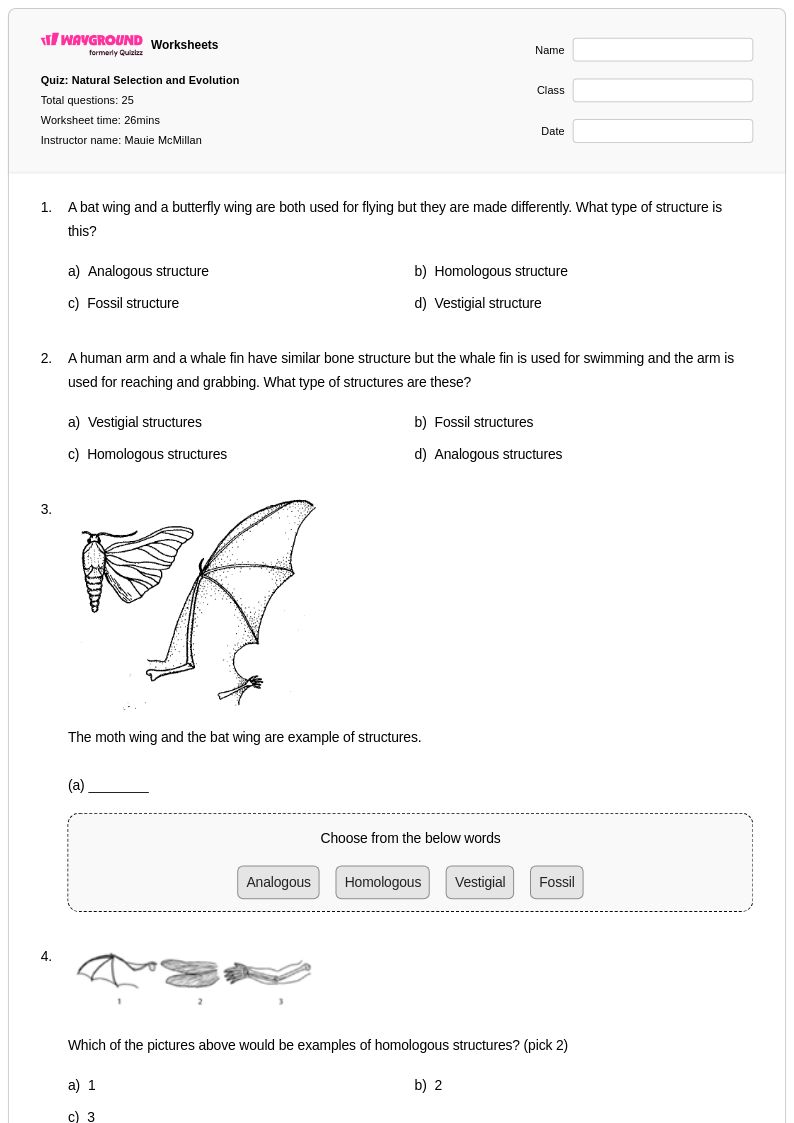
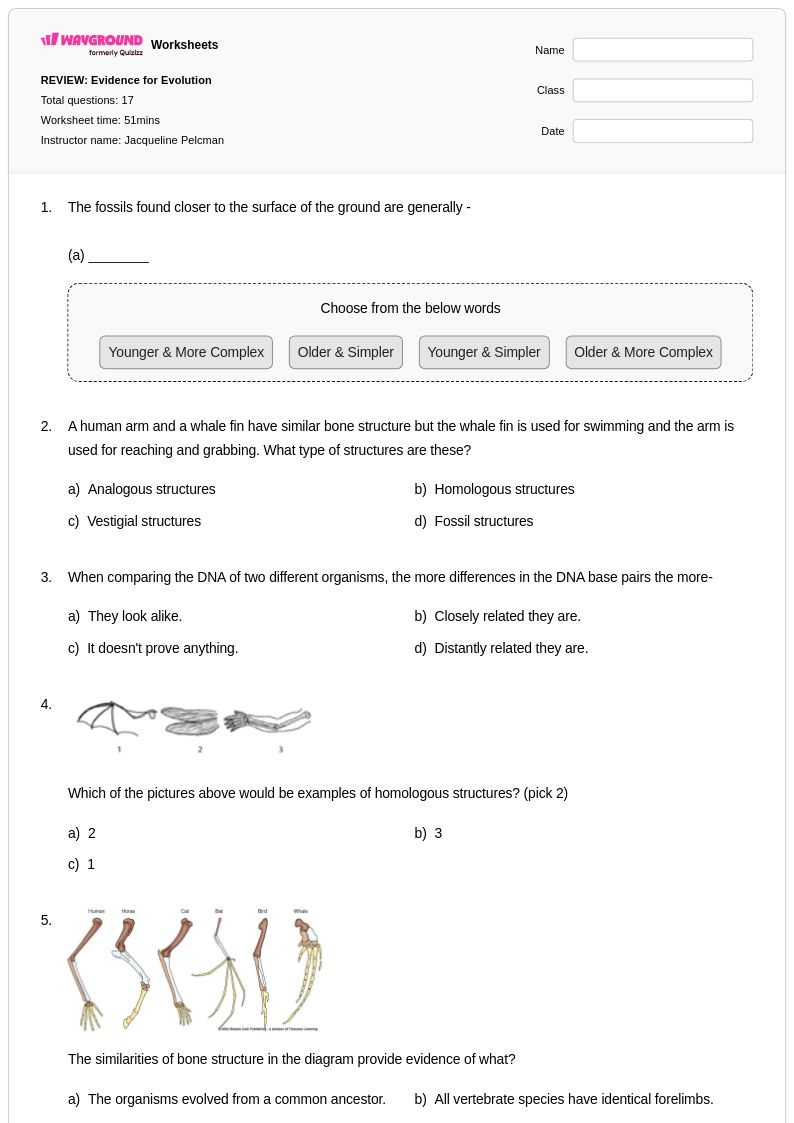
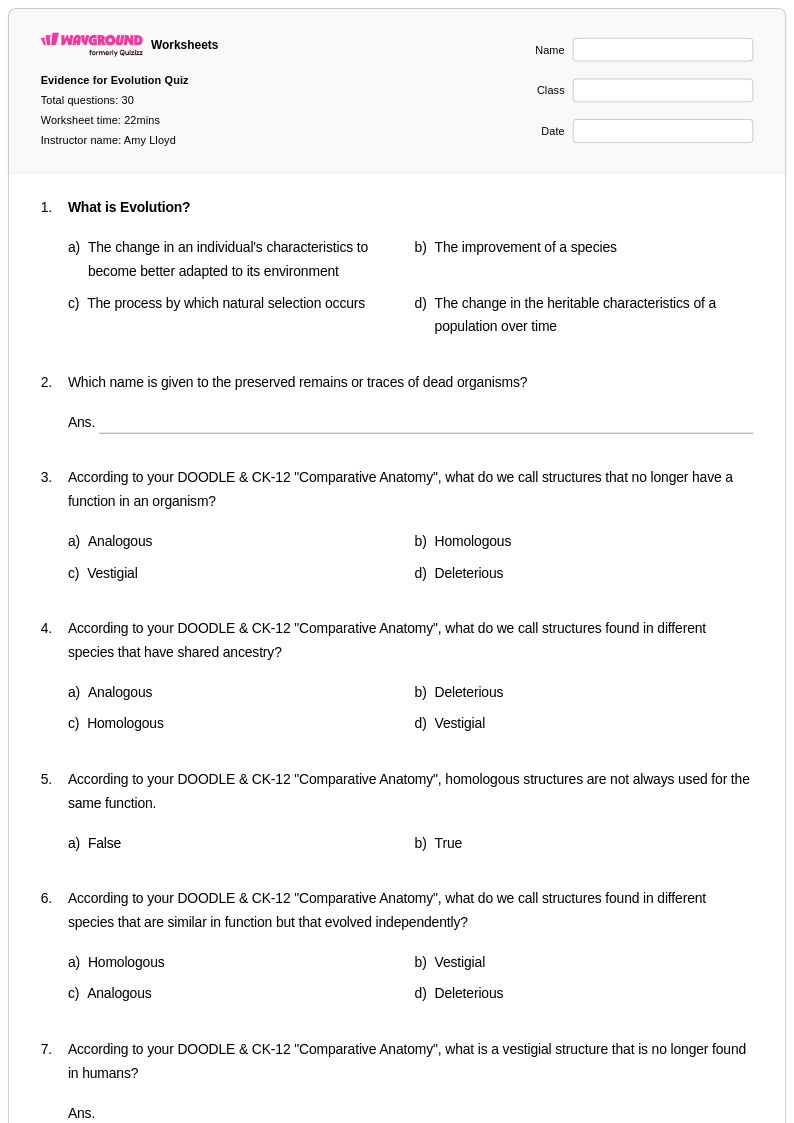
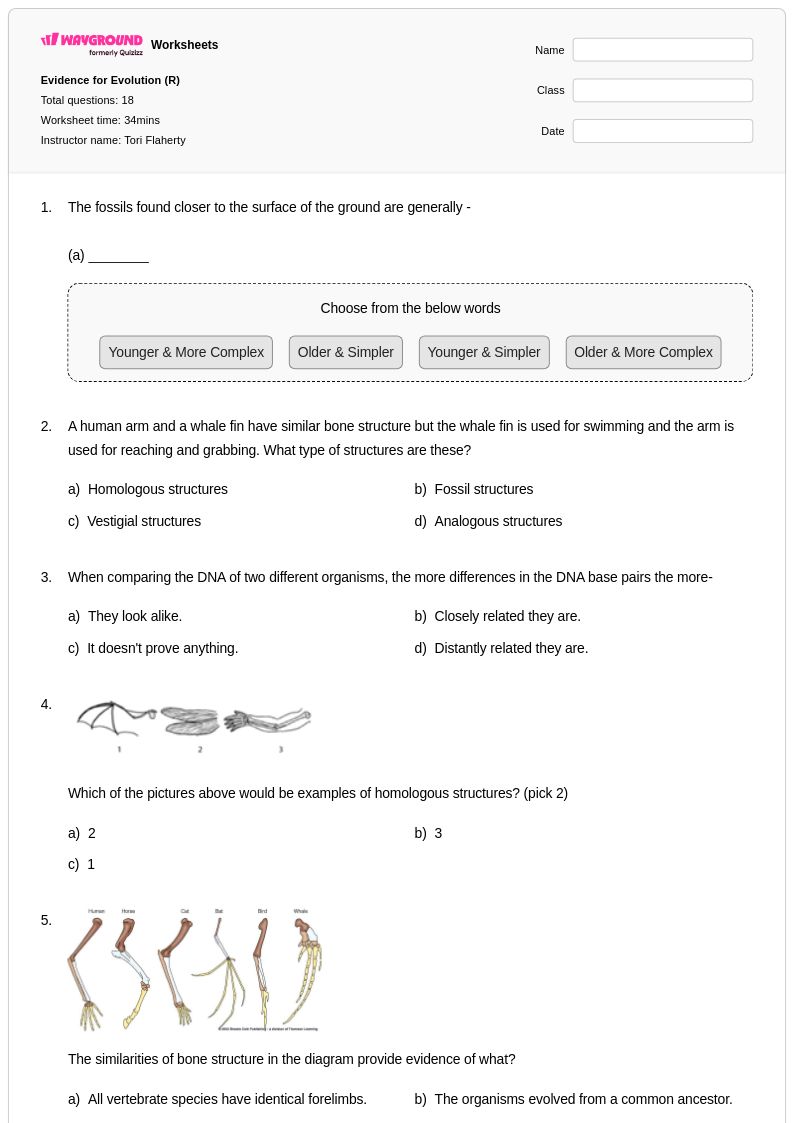
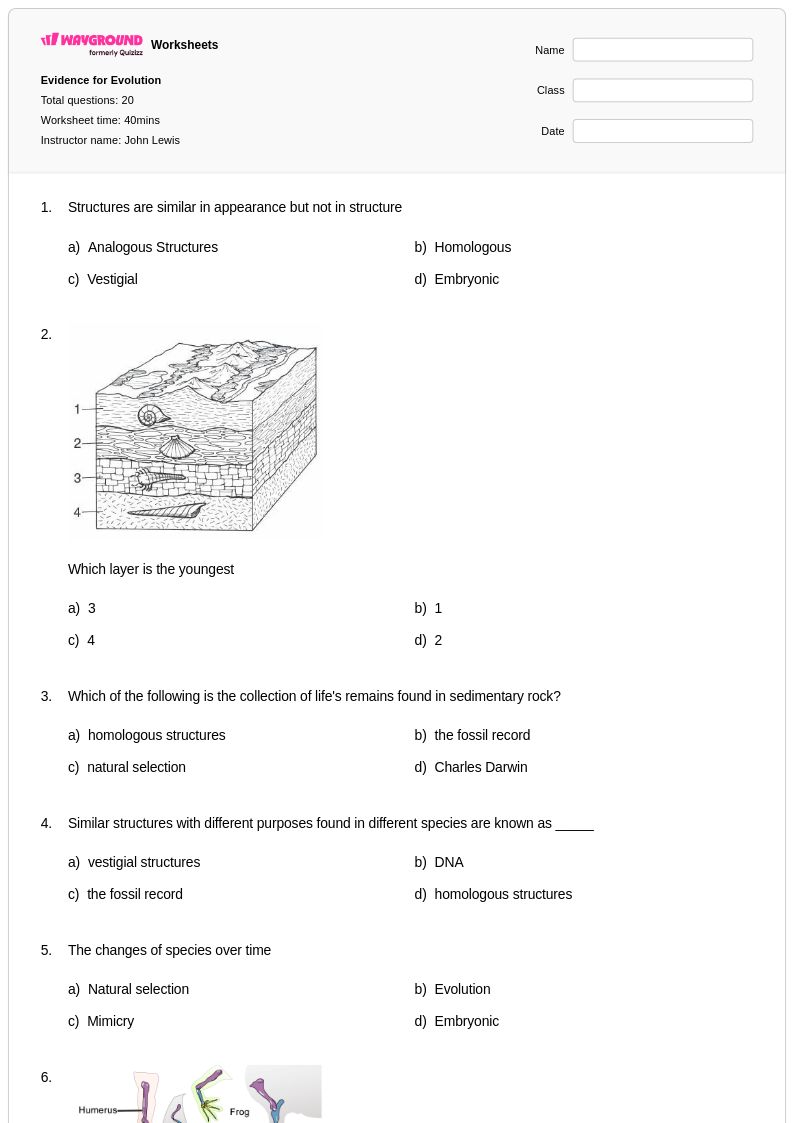
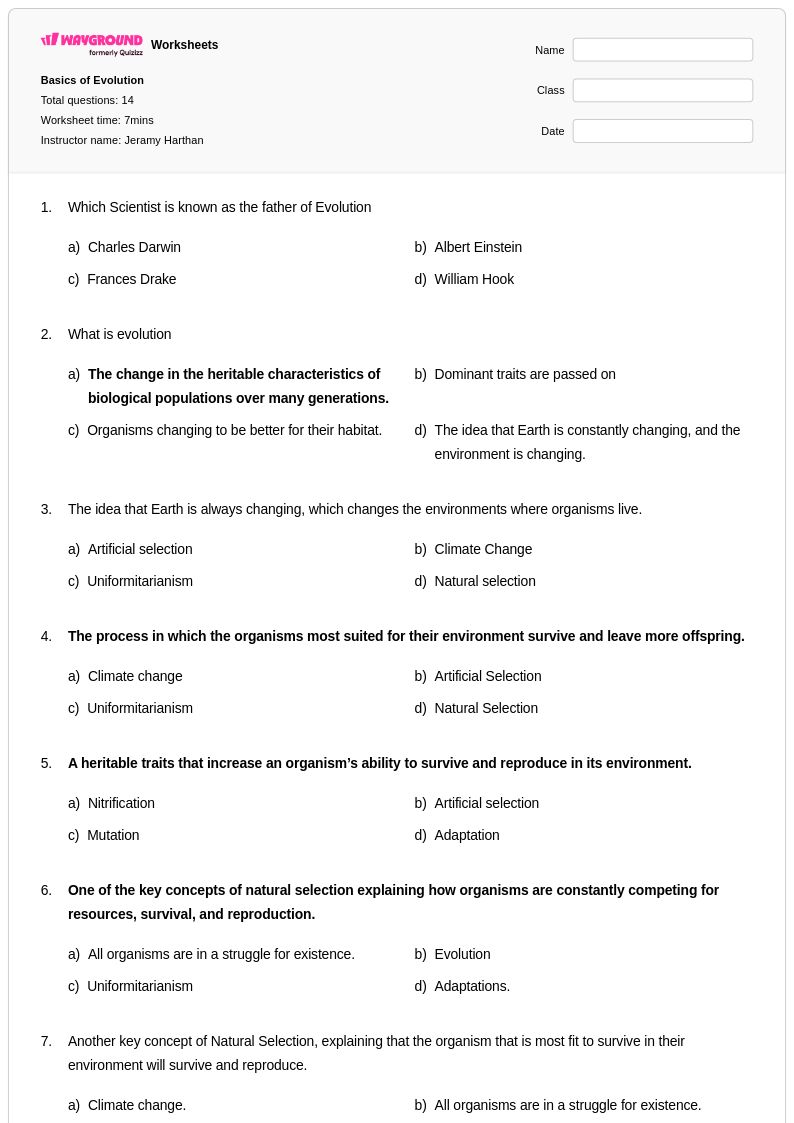
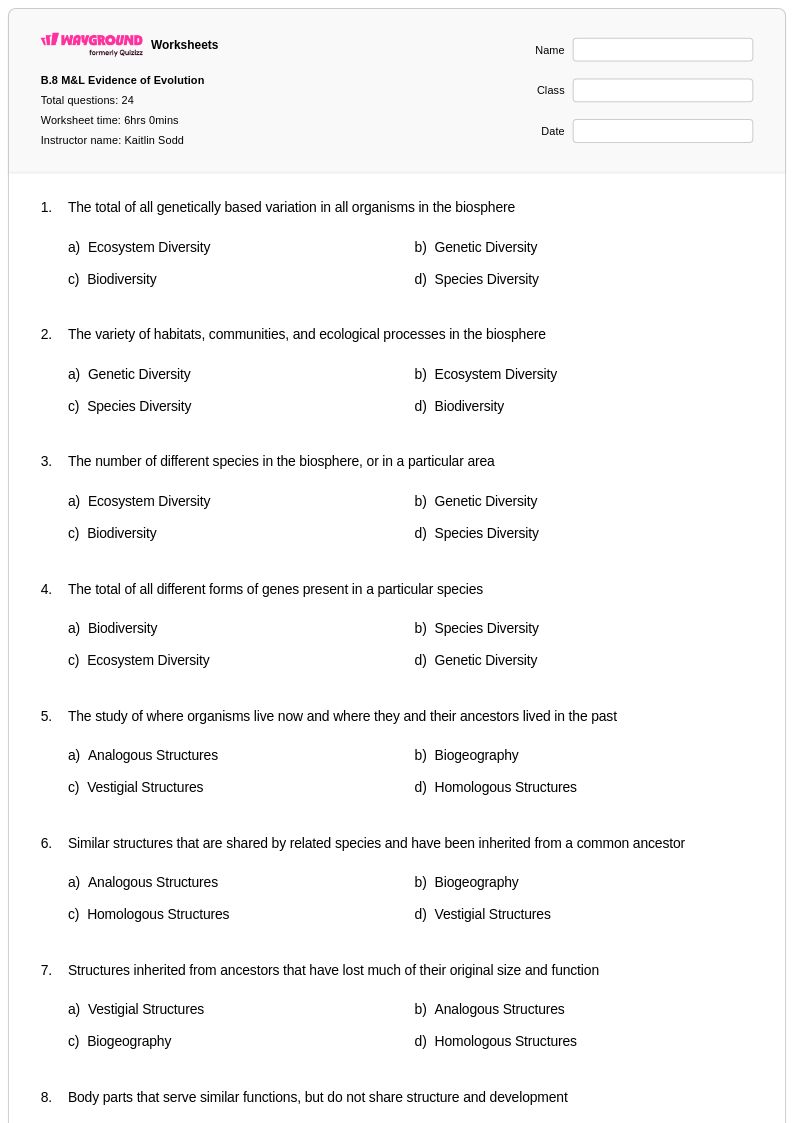
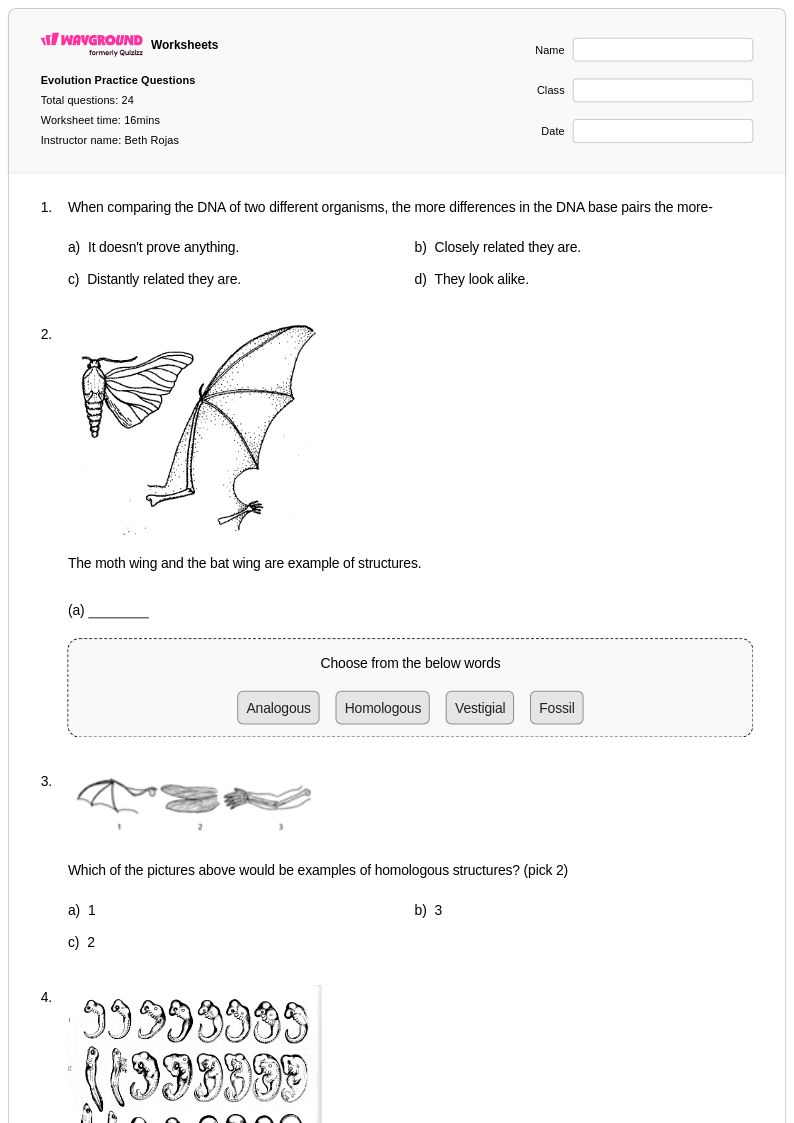
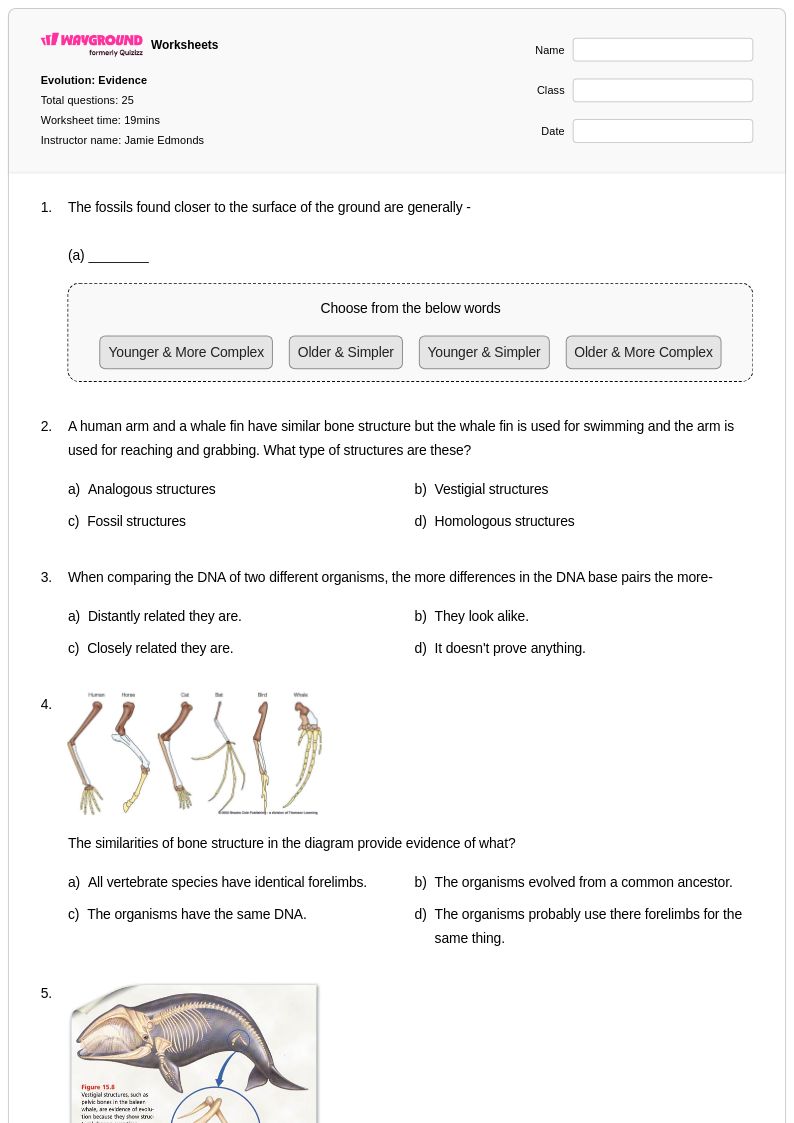
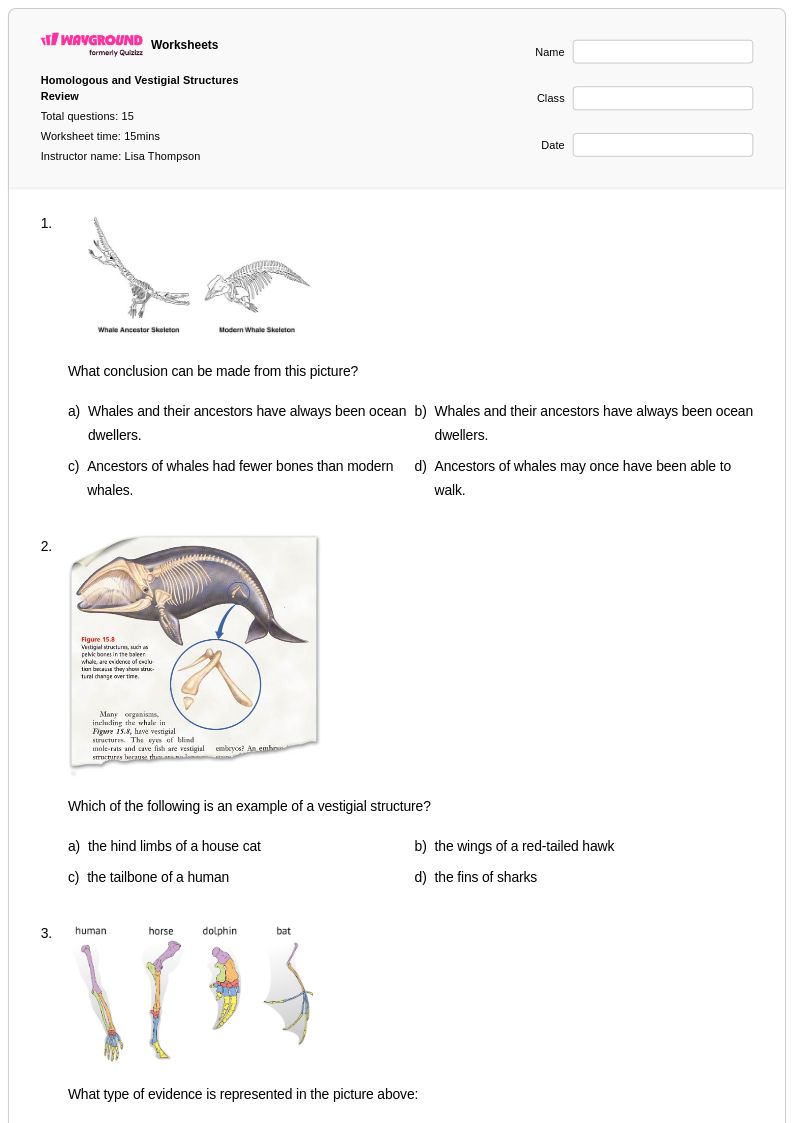
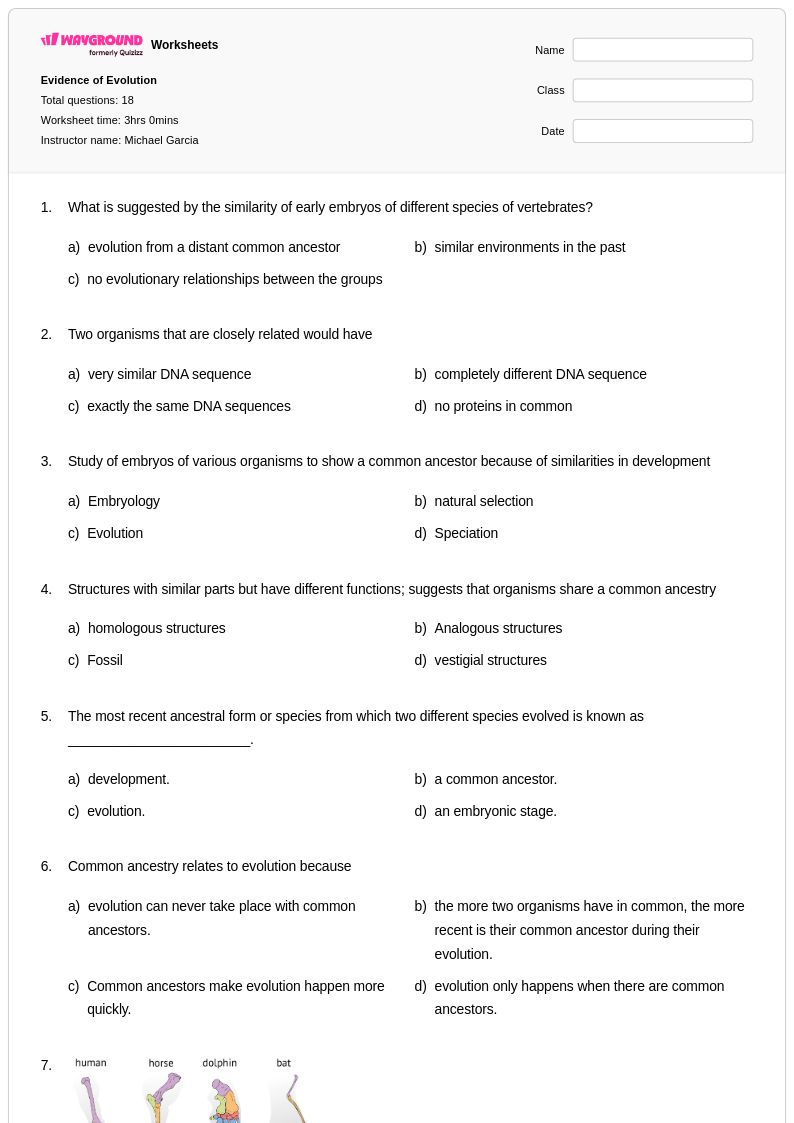
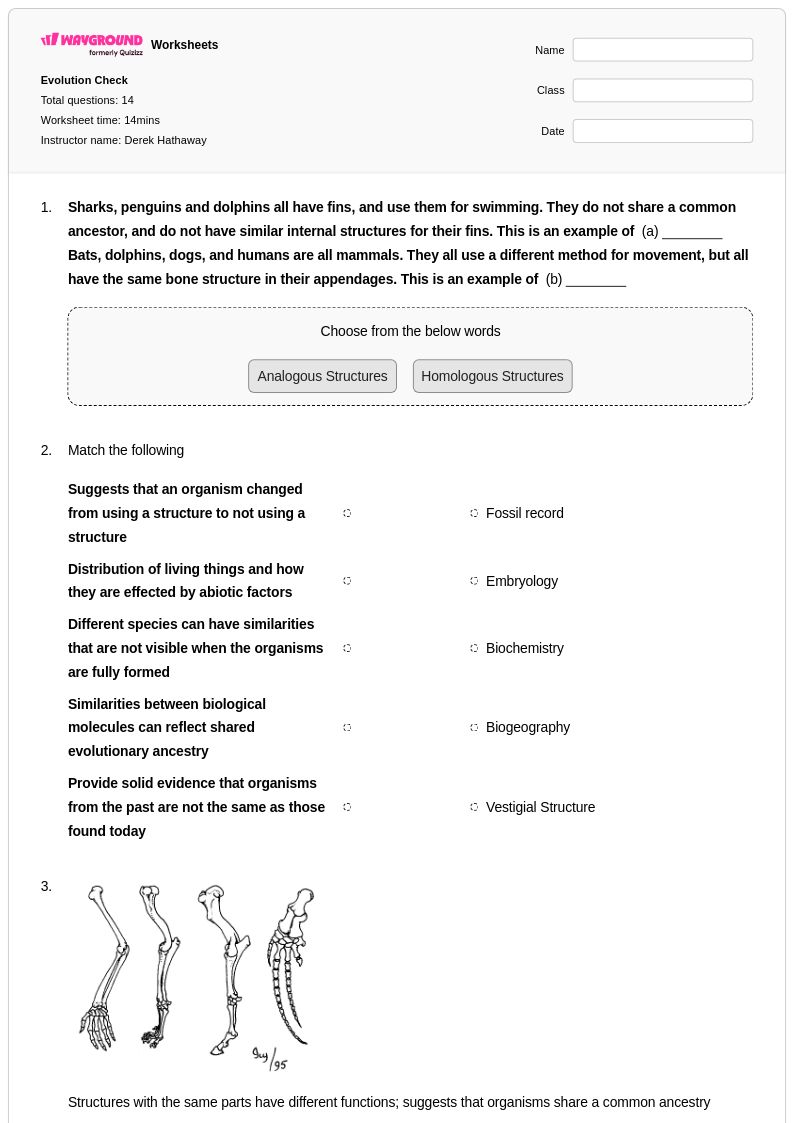
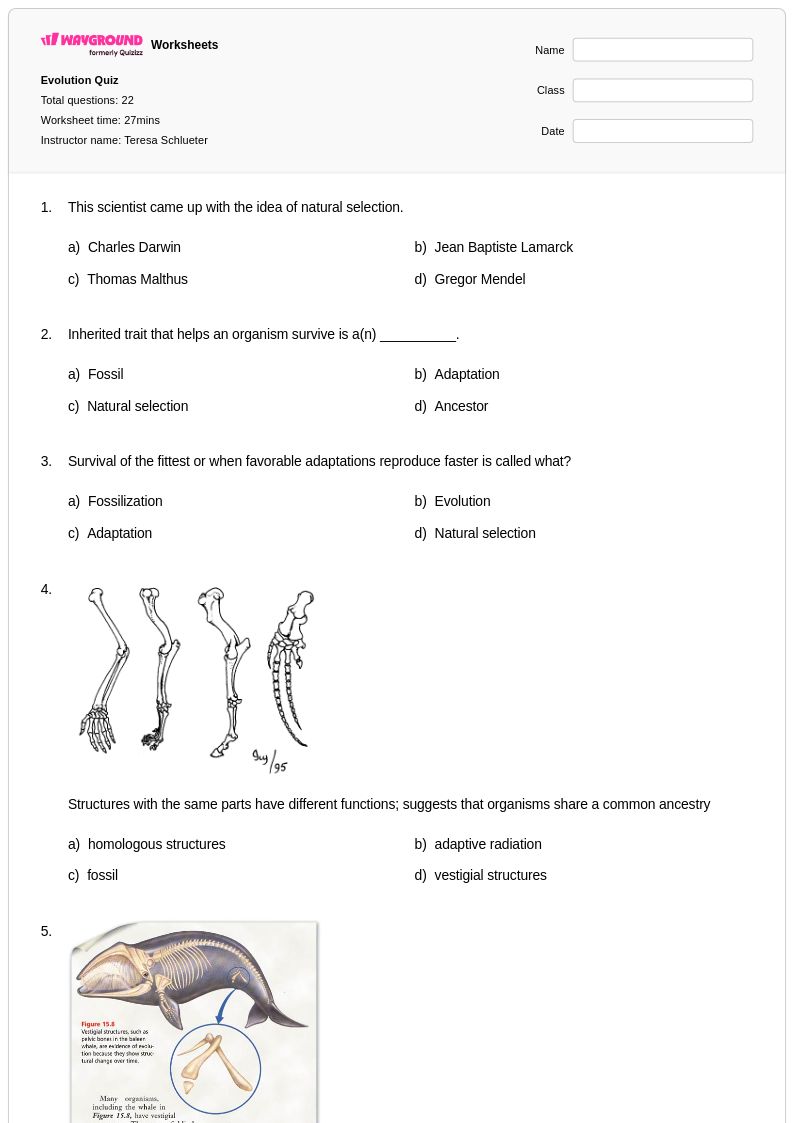
Vestigial structures worksheets for Class 10 students available through Wayground (formerly Quizizz) provide comprehensive practice materials that help students understand one of evolution's most compelling pieces of evidence. These educational resources feature detailed practice problems that guide students through identifying and analyzing vestigial structures in various organisms, from human tailbones and appendixes to whale hip bones and snake leg remnants. Each worksheet includes structured activities that strengthen critical thinking skills as students examine how these seemingly purposeless structures support evolutionary theory and common descent. The collection offers free printables with complete answer keys, allowing students to work independently while teachers can efficiently assess understanding of how vestigial structures demonstrate evolutionary relationships and the gradual modification of organisms over time.
Wayground (formerly Quizizz) supports science educators with an extensive library of millions of teacher-created resources specifically designed for vestigial structures instruction at the Class 10 level. The platform's robust search and filtering capabilities enable teachers to quickly locate worksheets that align with specific curriculum standards and learning objectives, while differentiation tools allow for seamless customization to meet diverse student needs. These vestigial structures materials are available in both printable PDF formats and interactive digital versions, providing flexibility for classroom instruction, homework assignments, and remote learning environments. Teachers can leverage these comprehensive resources for lesson planning, targeted remediation for students struggling with evolutionary concepts, enrichment activities for advanced learners, and consistent skill practice that reinforces understanding of how anatomical evidence supports the theory of evolution.
FAQs
How do I teach vestigial structures to my biology students?
Start by grounding students in the concept of common descent before introducing vestigial structures as anatomical evidence. Use comparative anatomy examples like the human coccyx, whale pelvis, and snake femur remnants to show how structures can persist without retaining their original function. Connecting vestigial structures to natural selection helps students understand why these features were not eliminated rather than simply memorizing a list of examples.
What worksheets or exercises help students practice identifying vestigial structures?
Comparative anatomy exercises are highly effective, asking students to match vestigial structures to their presumed ancestral function and identify which modern species share homologous remnants. Practice problems that require students to explain why a structure is considered vestigial rather than simply label it push for deeper conceptual understanding. Diagrams of skeletal anatomy with labeling tasks also help students visualize how these features fit within an organism's body plan.
What common mistakes do students make when learning about vestigial structures?
The most frequent misconception is that vestigial means completely useless — students often struggle when they learn that the coccyx, for example, still serves as a muscle attachment site. Another common error is confusing vestigial structures with analogous structures, conflating evolutionary remnants with convergently evolved features. Students also sometimes apply teleological reasoning, assuming organisms 'chose' to retain these structures, which signals a misunderstanding of how natural selection operates.
How do vestigial structures serve as evidence for evolution?
Vestigial structures support the theory of common descent because they reveal ancestral body plans that have been retained across lineages even after their original function became unnecessary. The presence of a pelvis in whales, for instance, indicates descent from a four-limbed terrestrial ancestor and would be inexplicable without an evolutionary framework. This makes vestigial structures one of the most concrete and visually accessible lines of anatomical evidence teachers can use when addressing evolutionary theory.
How do I use vestigial structures worksheets from Wayground in my classroom?
Wayground's vestigial structures worksheets are available as printable PDFs for traditional classroom use and in digital formats for technology-integrated or remote learning environments, giving you flexibility depending on your setup. You can also host the worksheet as a quiz directly on Wayground, allowing you to collect student responses digitally and review performance data. Complete answer keys are included, reducing prep time and making it straightforward to use these materials for guided practice, homework, or formative assessment.
How can I differentiate vestigial structures instruction for students with different learning needs?
When hosting worksheets digitally on Wayground, you can apply student-level accommodations such as read aloud support for students who benefit from audio delivery, reduced answer choices to lower cognitive load for struggling learners, and extended time for students who need it. These settings can be assigned to individual students without other students being notified, keeping the experience seamless for the whole class. Pairing accommodations with tiered versions of comparative anatomy tasks ensures all students engage with the core concept at an appropriate level of challenge.