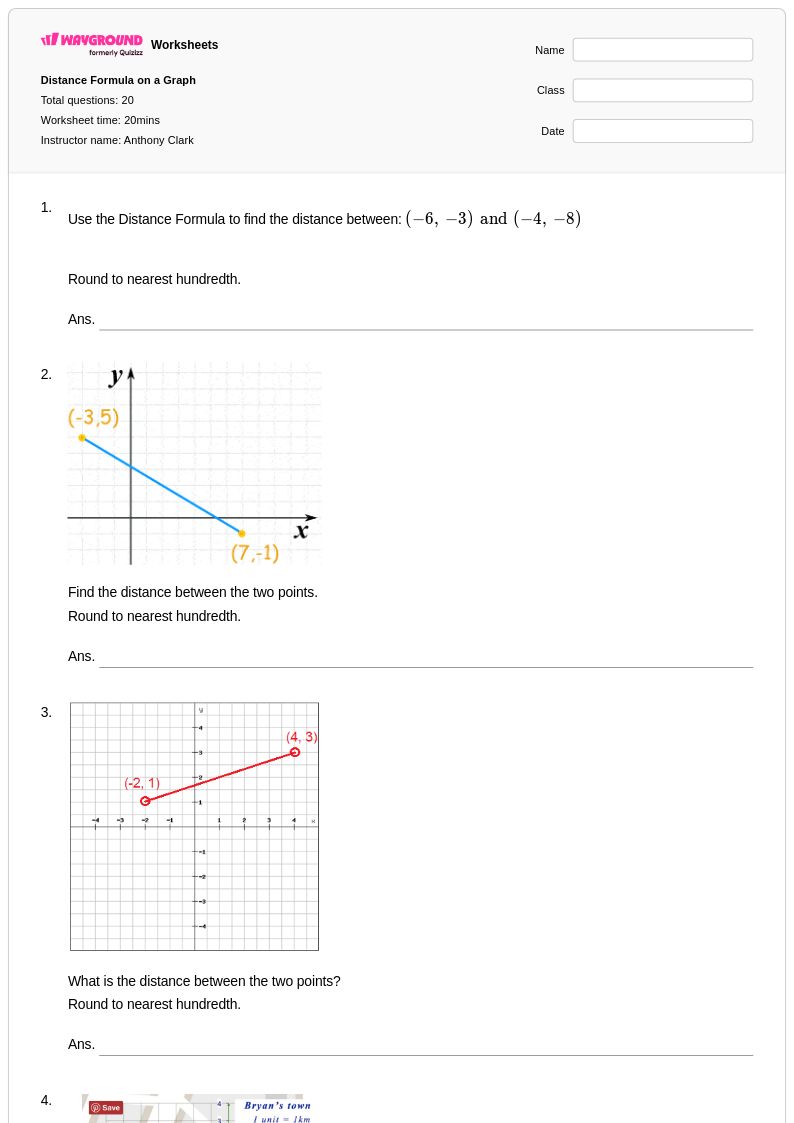
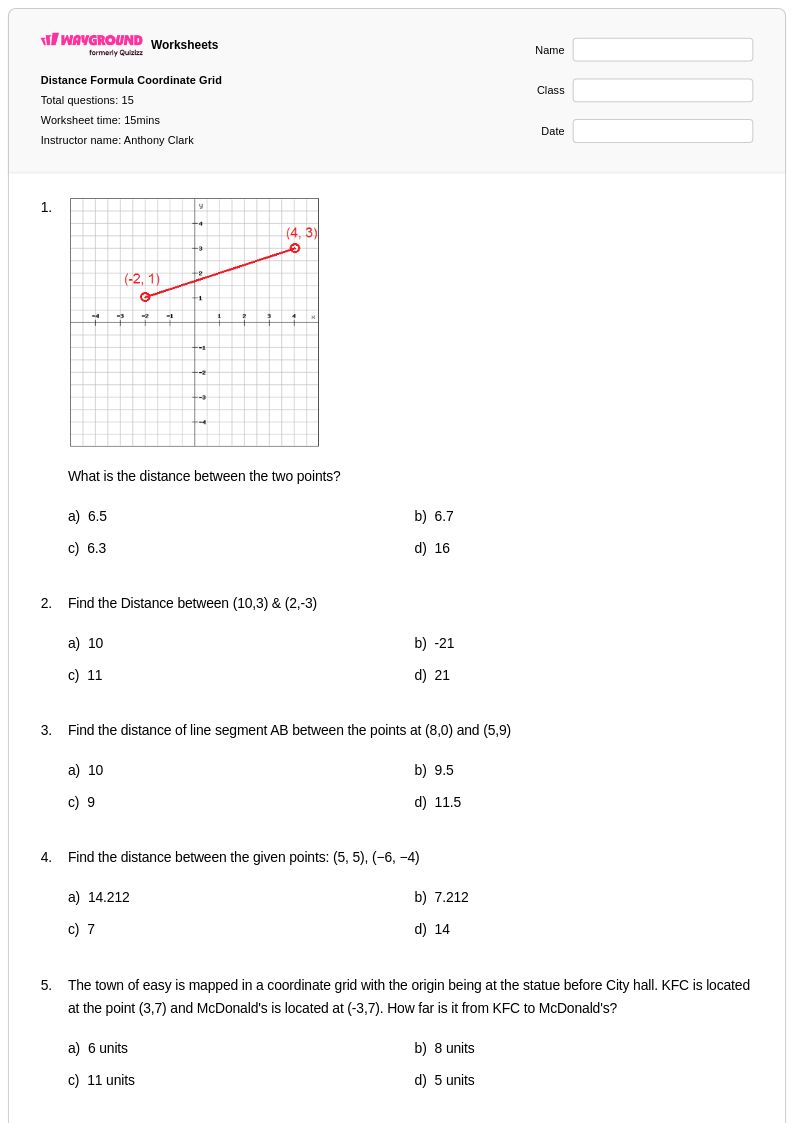
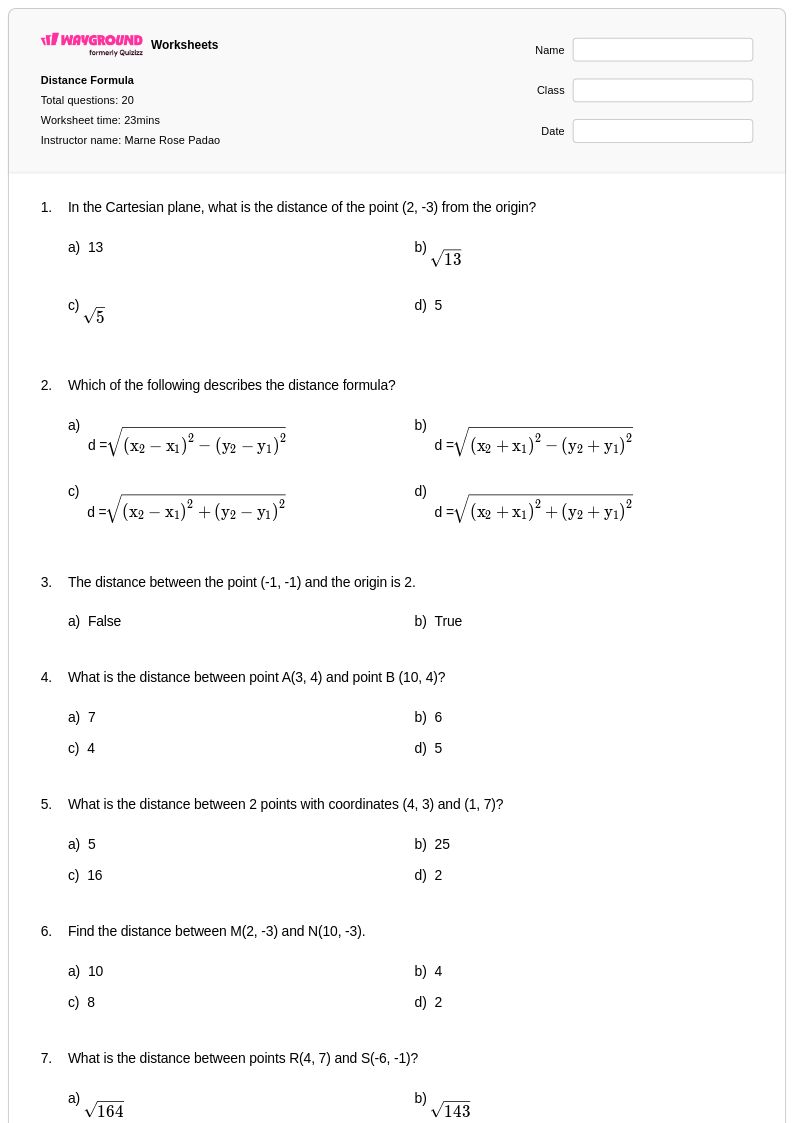
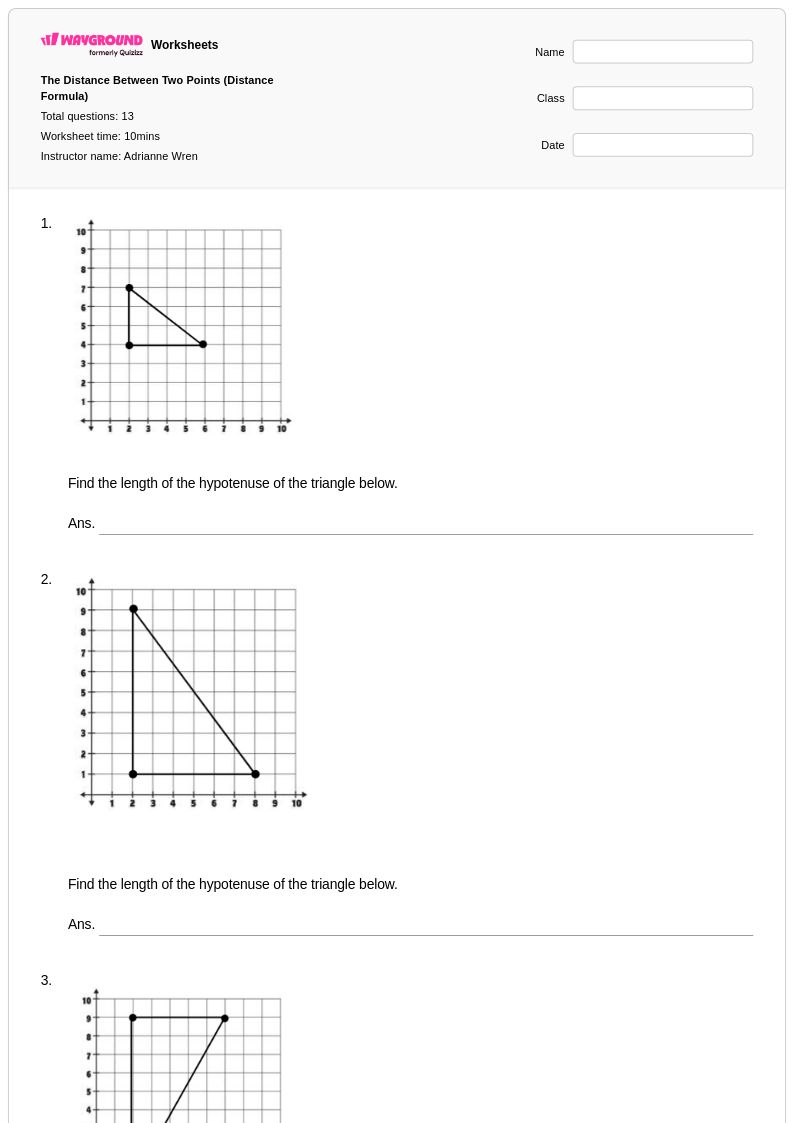
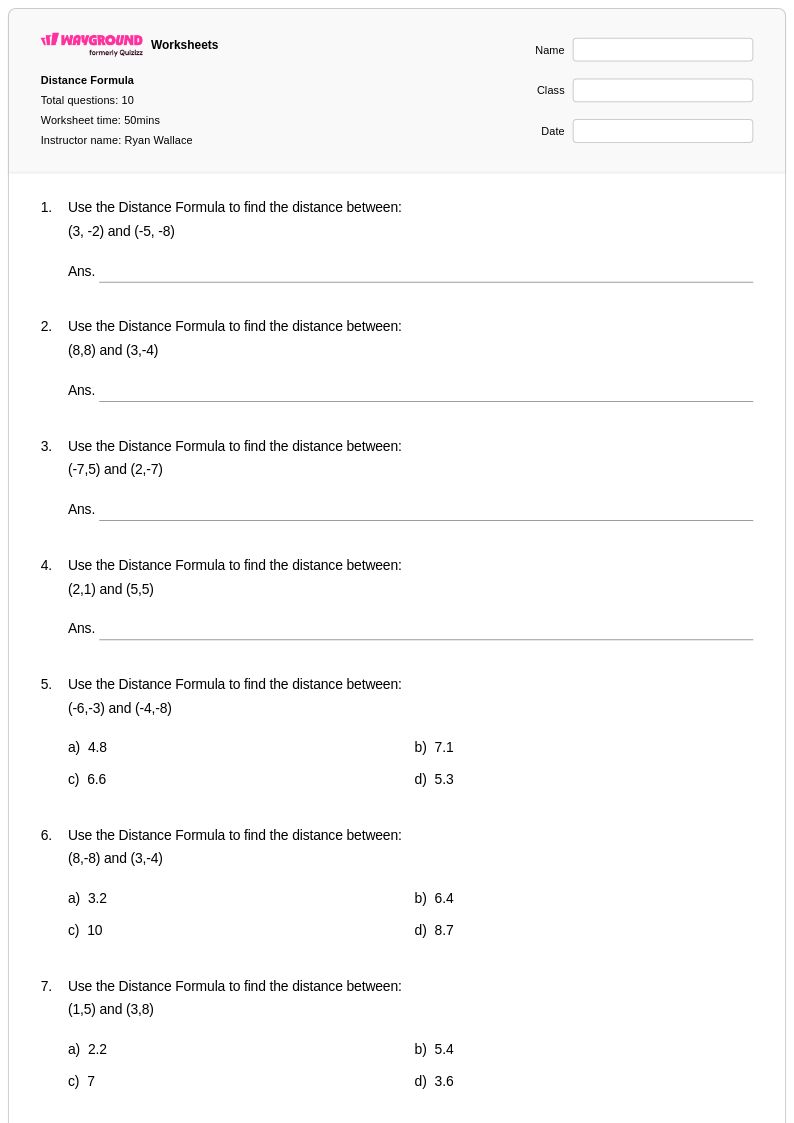
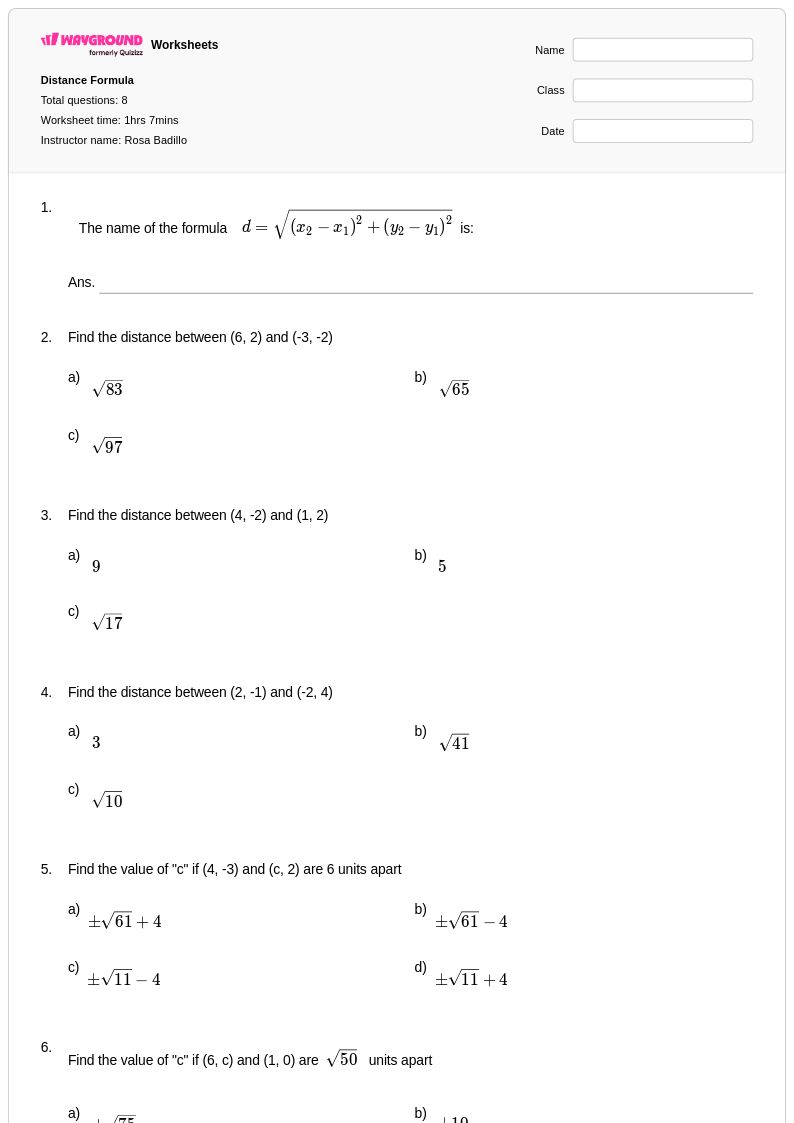
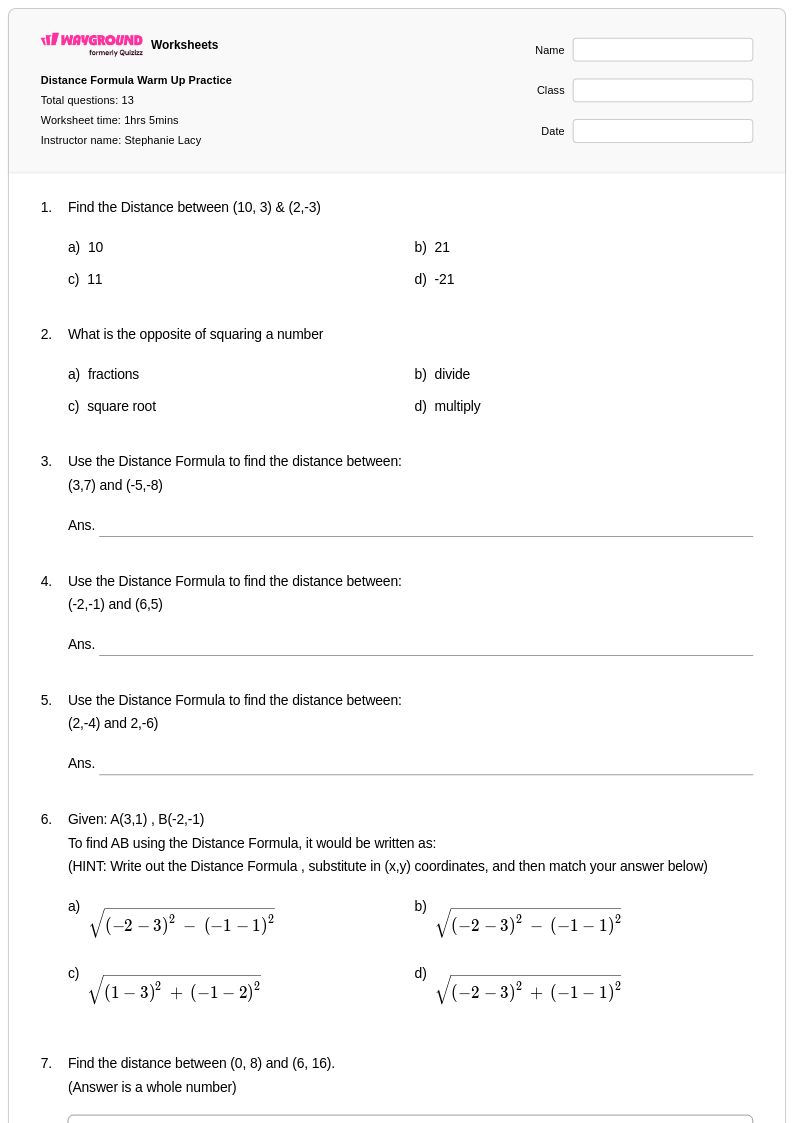
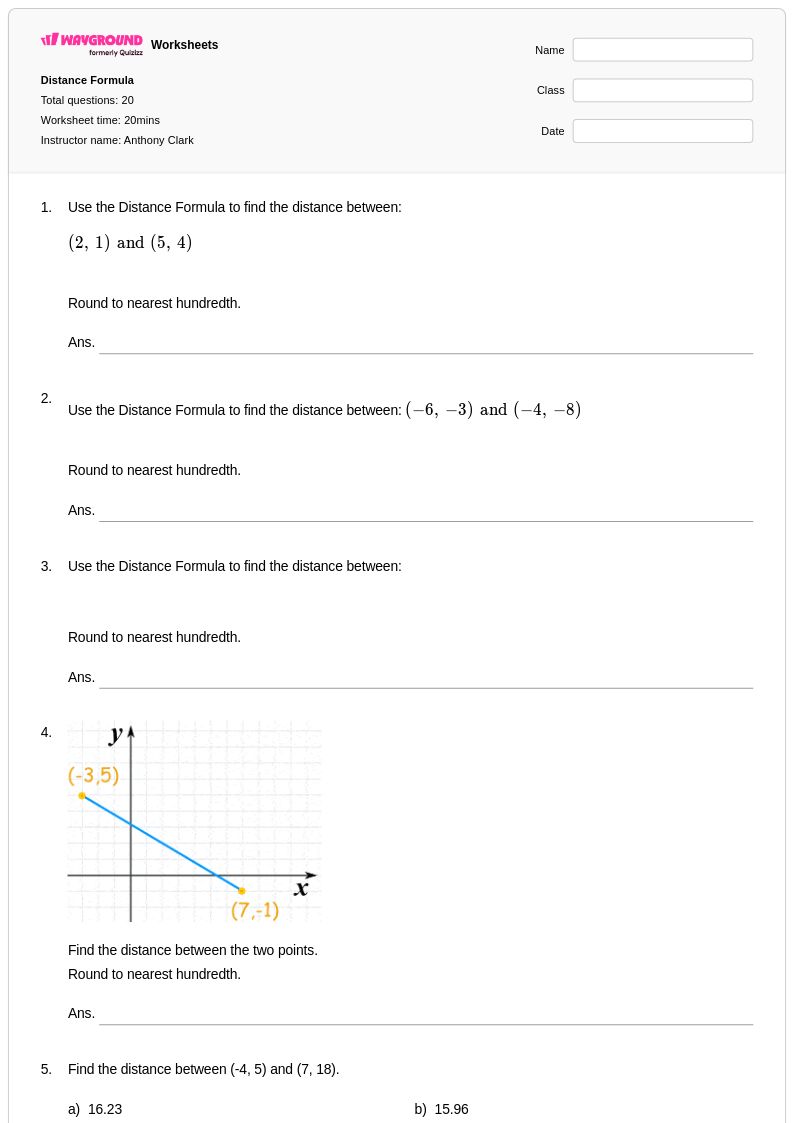
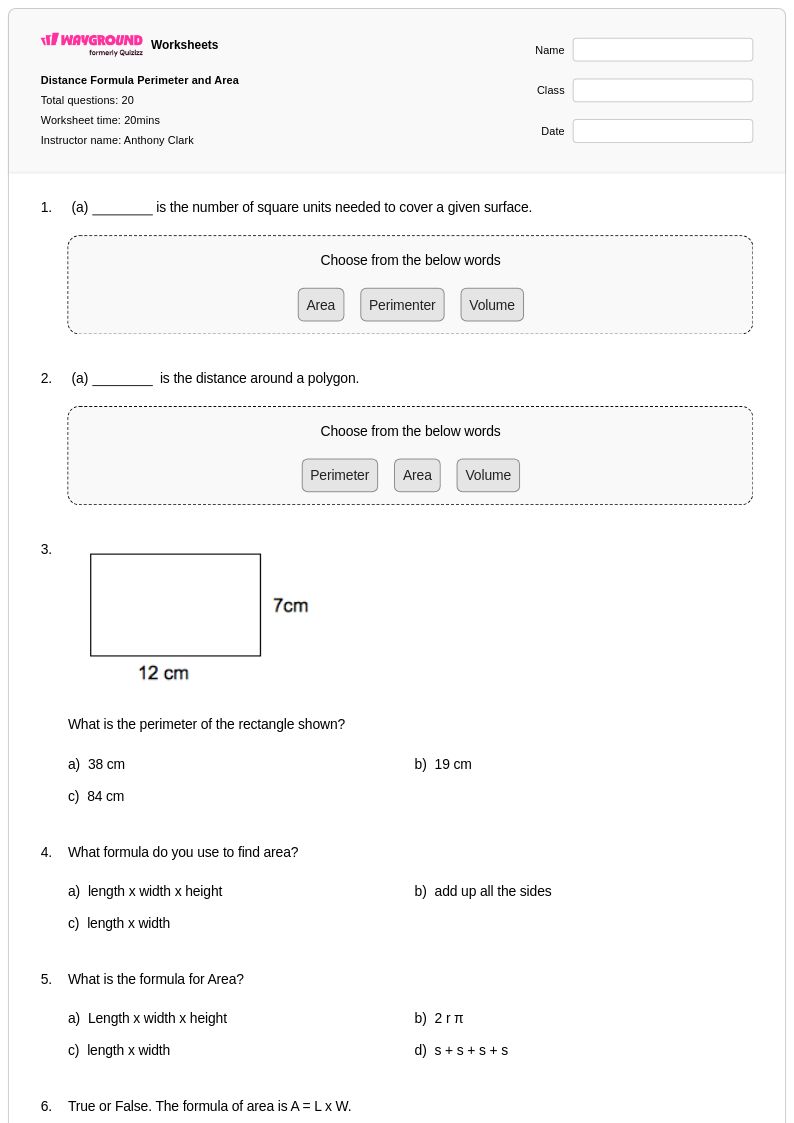
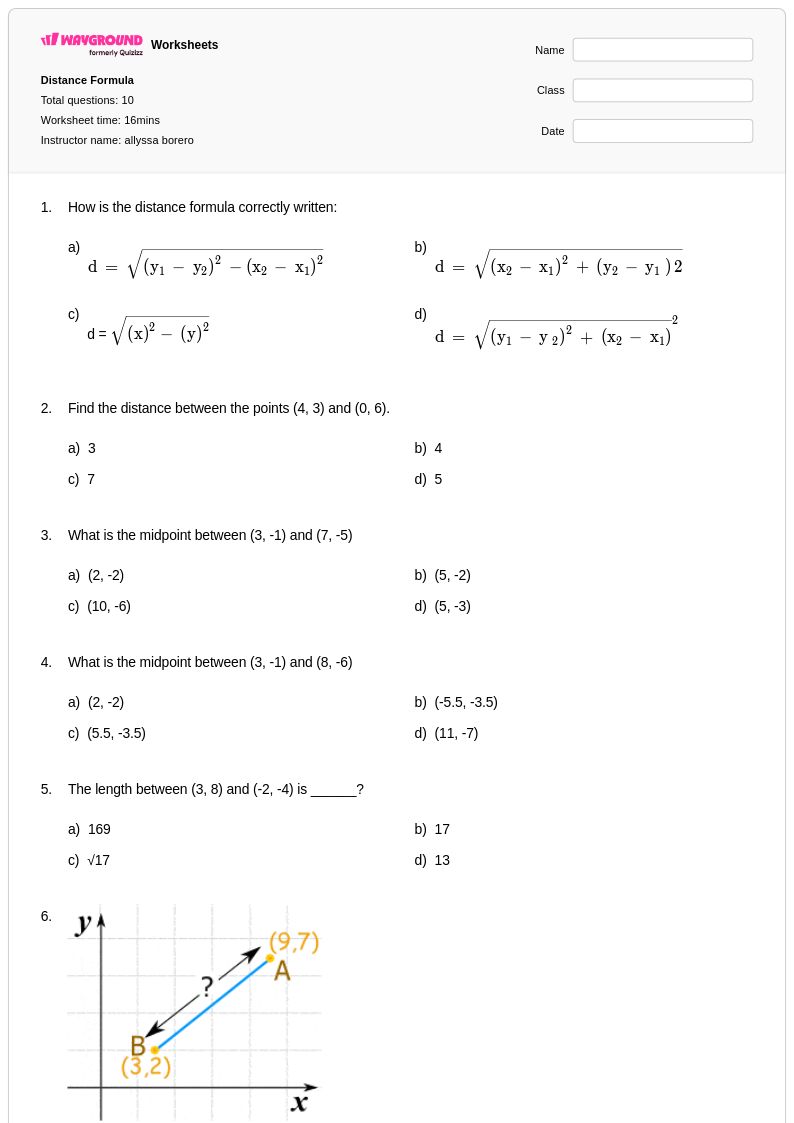
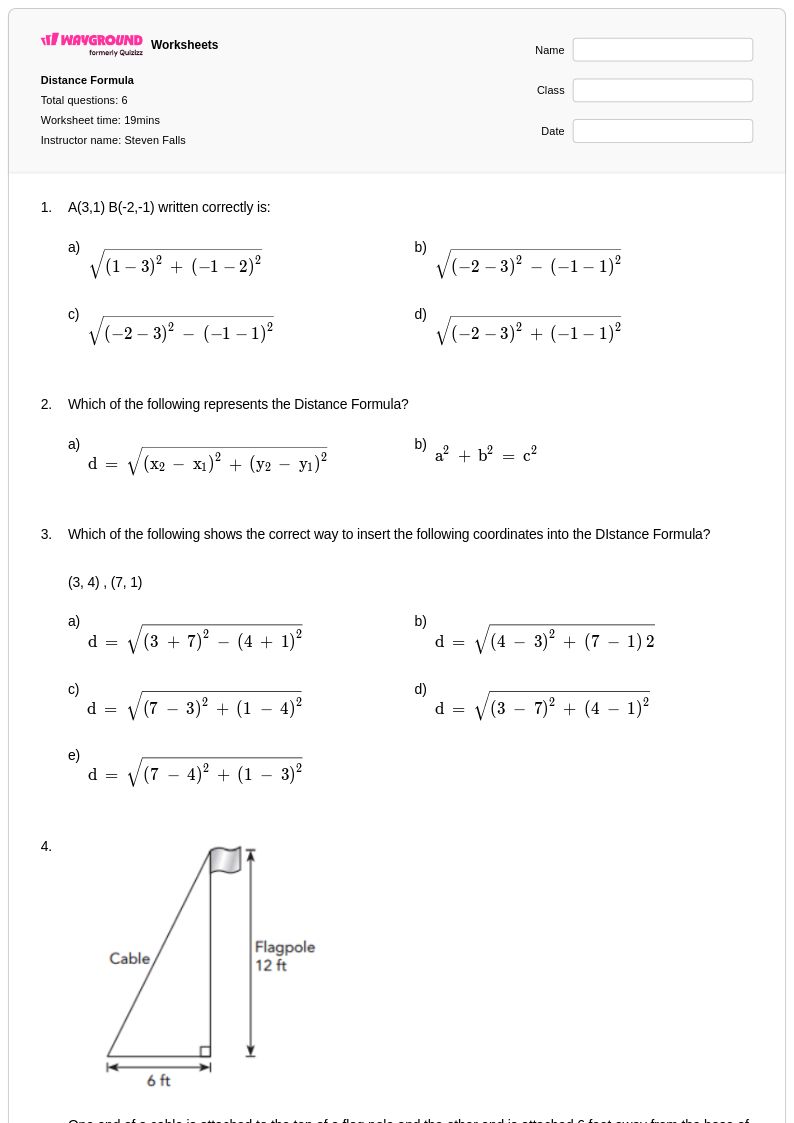
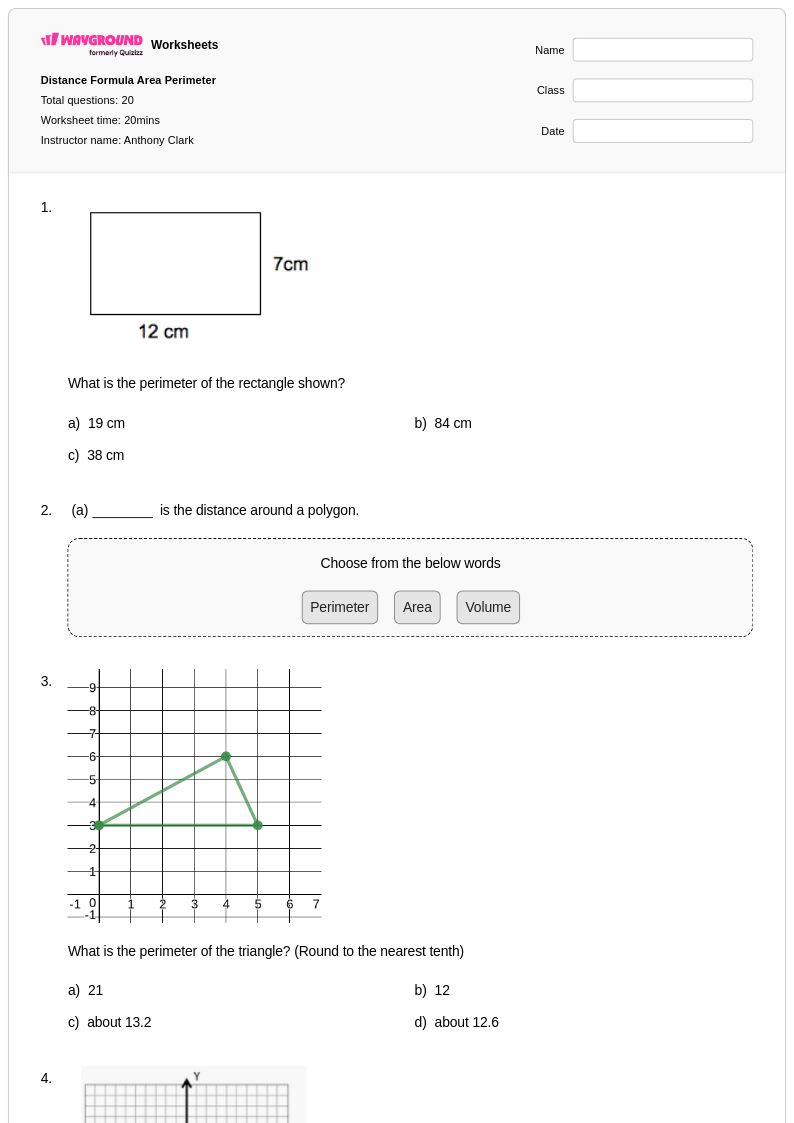
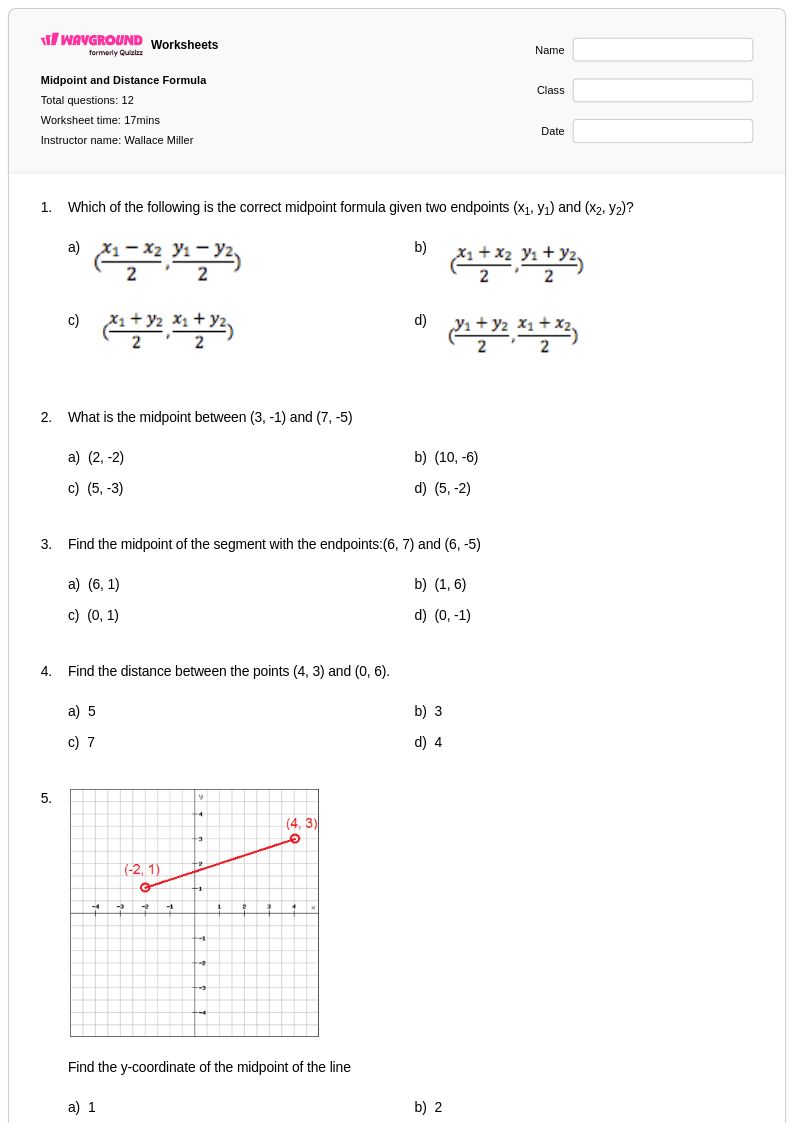
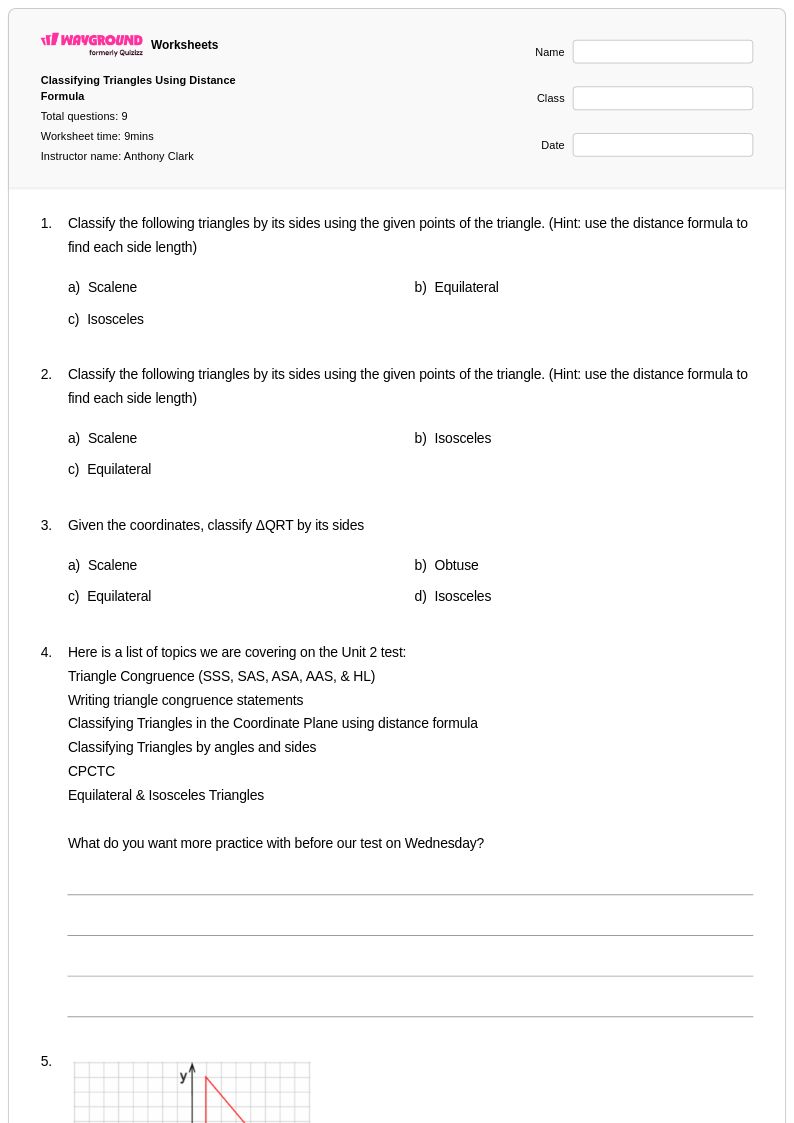
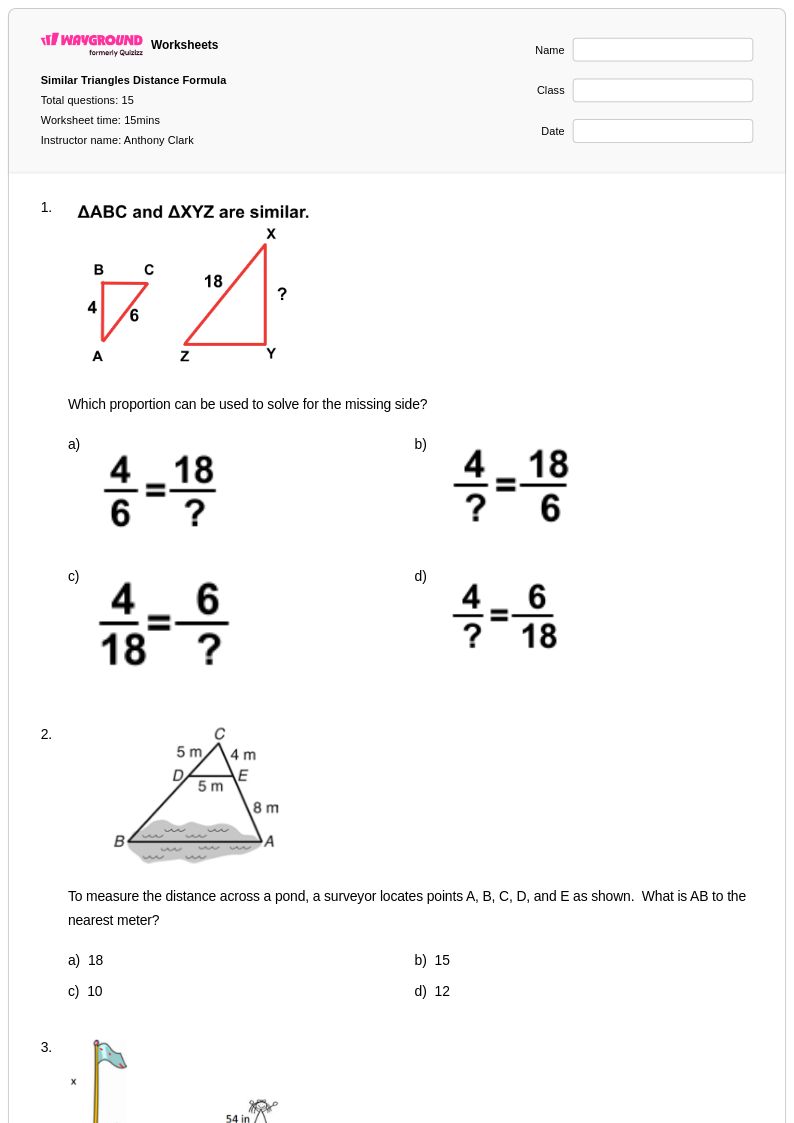
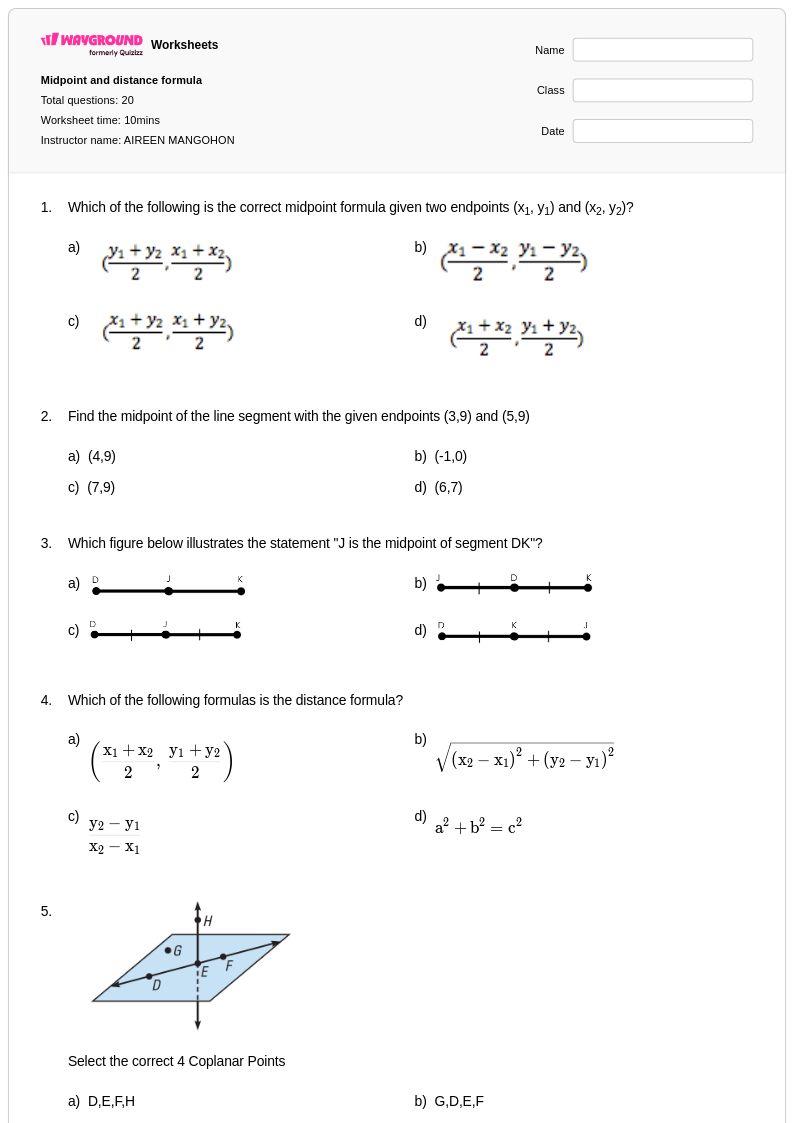
Explore Wayground's free distance formula worksheets and printables that help students master calculating distances between coordinate points through engaging practice problems with complete answer keys.
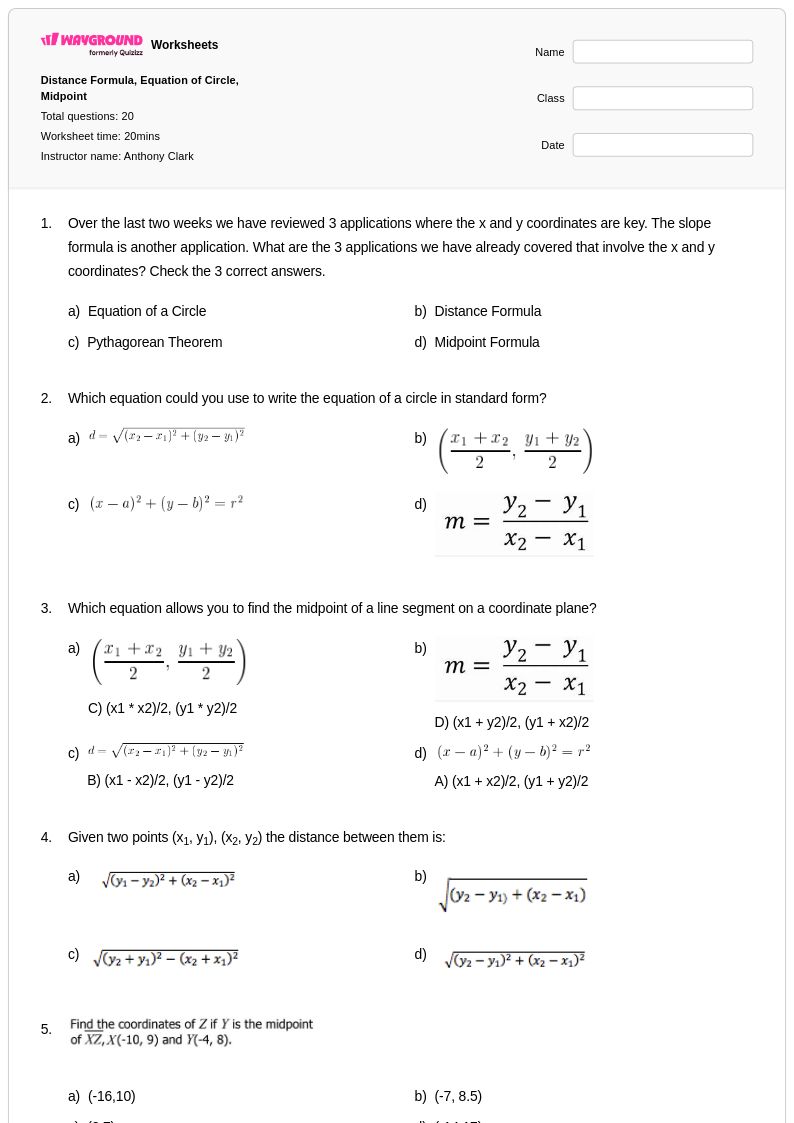
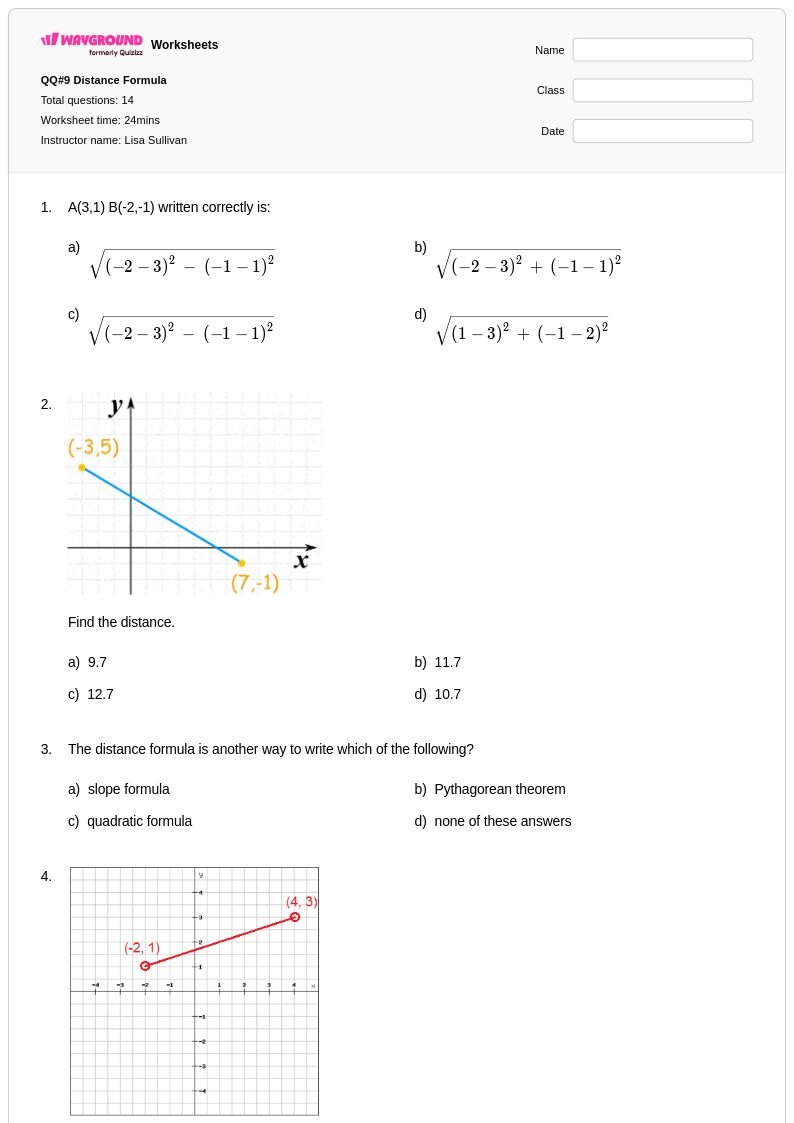
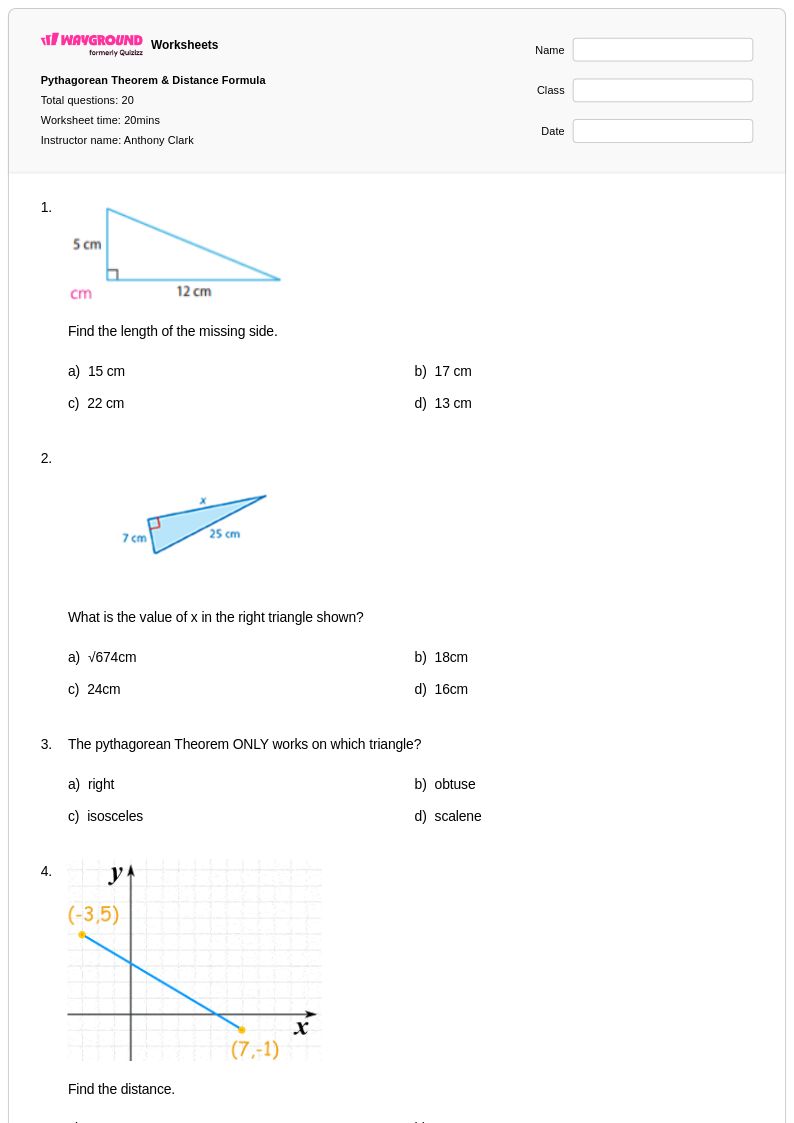
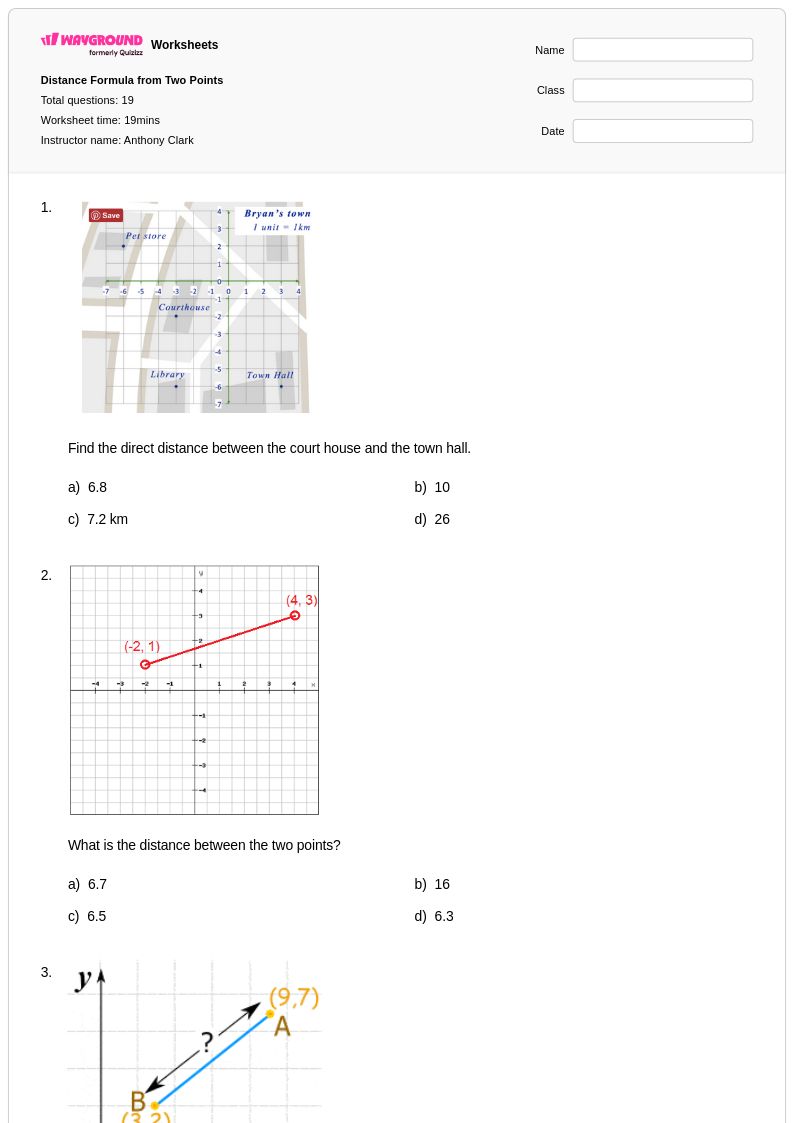
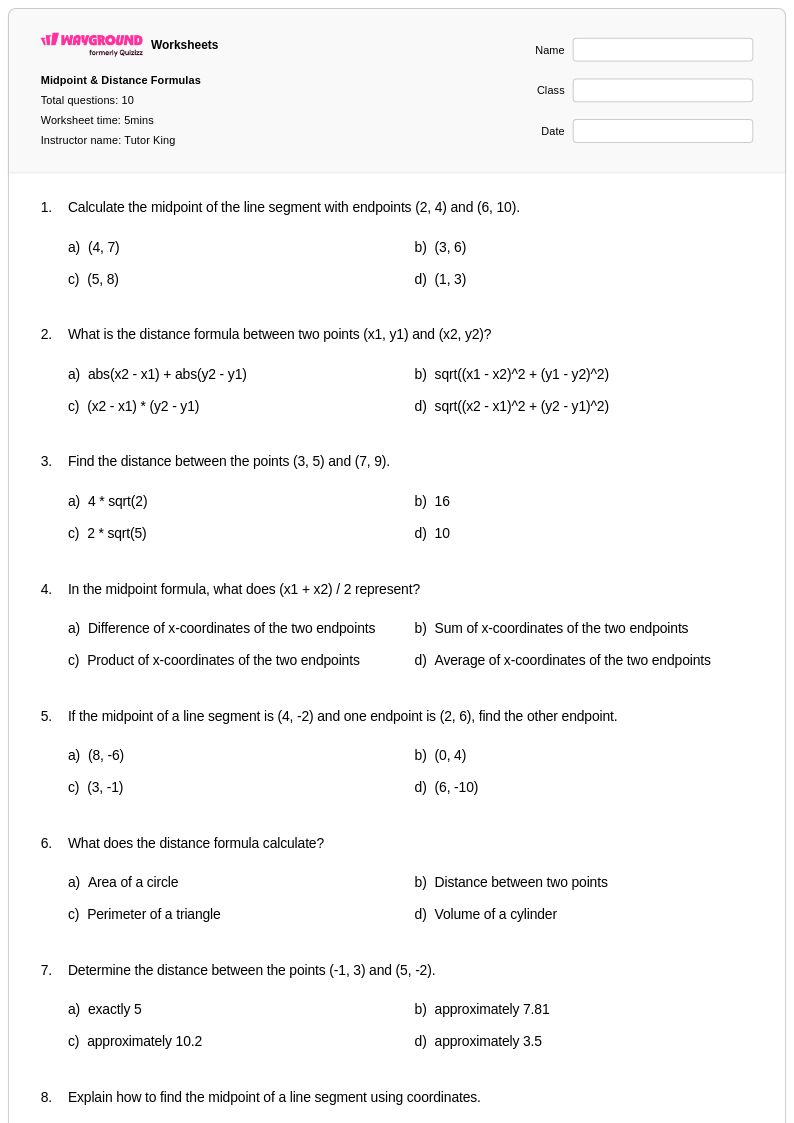
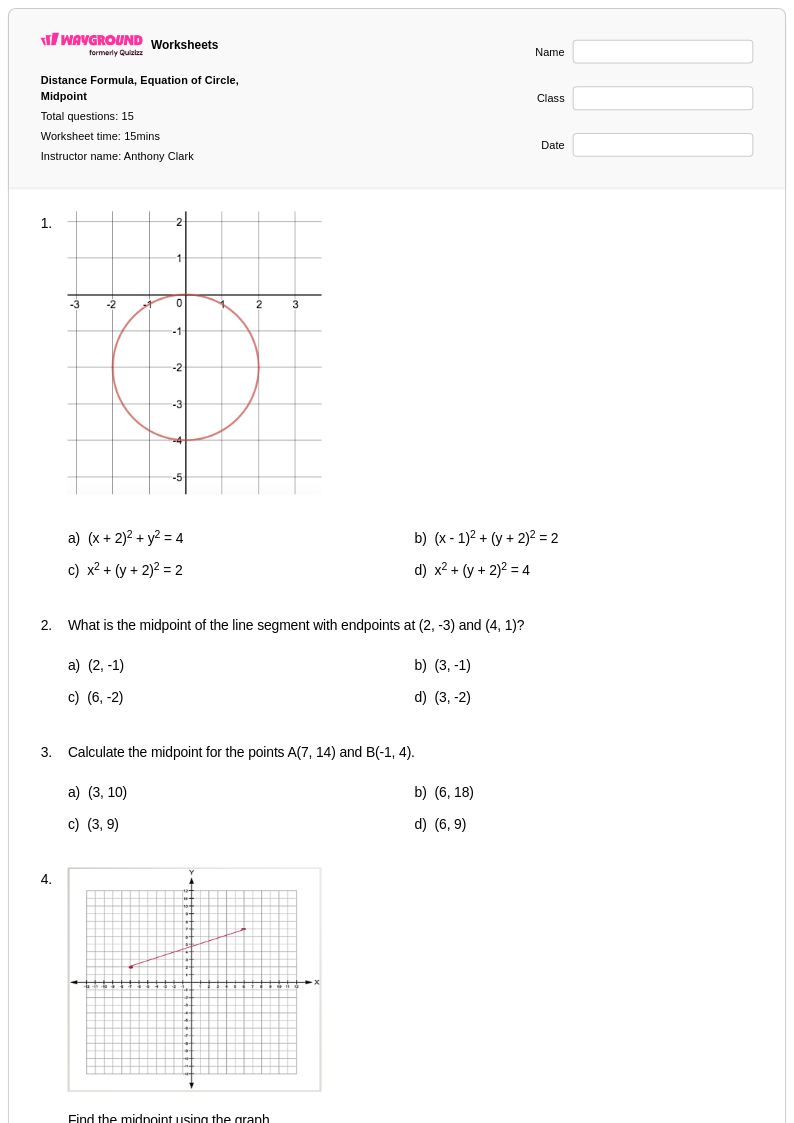
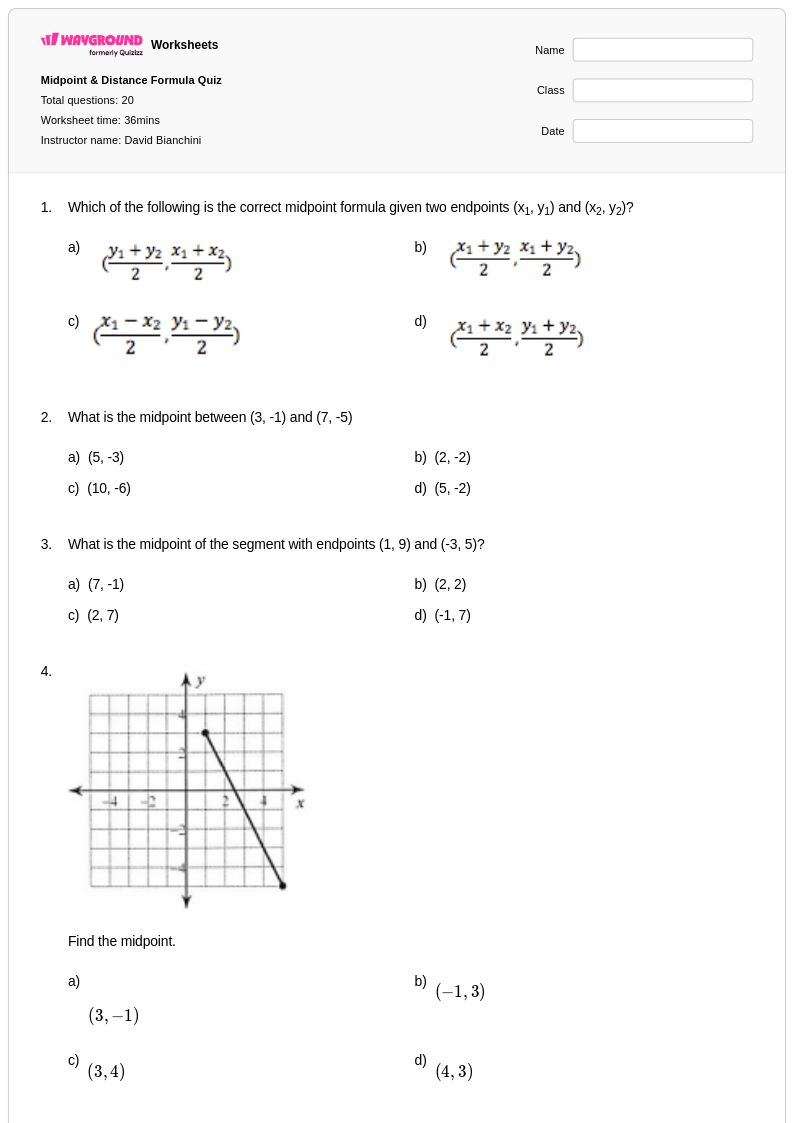
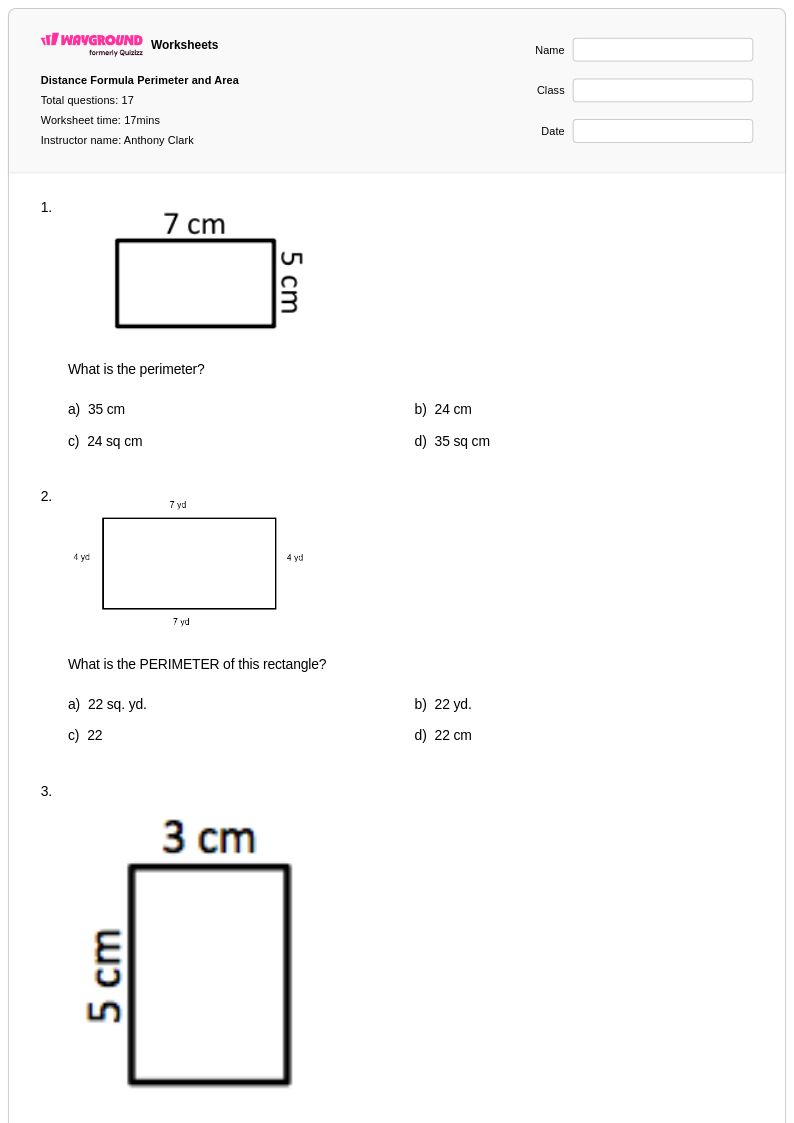
Distance formula worksheets available through Wayground (formerly Quizizz) provide comprehensive practice opportunities for students to master this fundamental coordinate geometry concept. These carefully designed resources help students develop proficiency in calculating the distance between two points on a coordinate plane using the algebraic formula derived from the Pythagorean theorem. The worksheets strengthen essential mathematical skills including coordinate plotting, algebraic manipulation, radical simplification, and real-world application of geometric principles. Students work through systematic practice problems that progress from basic point-to-point calculations to more complex scenarios involving geometric figures and practical applications. Each worksheet collection includes detailed answer keys and is available in convenient PDF format, making these free printables accessible for both classroom instruction and independent study sessions.
Wayground (formerly Quizizz) supports mathematics educators with an extensive collection of teacher-created distance formula resources that streamline lesson planning and enhance student learning outcomes. The platform's millions of educational materials feature robust search and filtering capabilities, allowing teachers to quickly locate worksheets aligned with specific curriculum standards and student ability levels. Advanced differentiation tools enable educators to customize problems based on individual learning needs, while the flexible format options include both printable PDF versions for traditional paper-based practice and digital formats for technology-enhanced learning environments. These comprehensive worksheet collections facilitate targeted skill practice, support remediation efforts for struggling learners, and provide enrichment opportunities for advanced students, ensuring that all learners can develop confidence and competency in applying the distance formula across various mathematical contexts.
FAQs
How do I teach the distance formula?
Start by revisiting the Pythagorean theorem — students accept the distance formula much more readily when they see it derived from a right triangle drawn on the coordinate plane rather than handed to them as a rule to memorize. From there, move through three stages: finding distance between two points with integer coordinates, then decimal or fractional coordinates, then applying the formula to geometric figures (finding side lengths, verifying a shape is a rectangle, etc.). Keeping the Pythagorean connection visible throughout helps students understand why the formula works, not just how to execute it.
What exercises help students practice the distance formula?
The most effective practice sequence moves from mechanical to applied. Begin with straightforward point-to-point problems using integer coordinates so students can focus on the procedure. Then introduce problems requiring radical simplification, which is where most errors surface. Finally, use problems set in geometric contexts — finding the perimeter of a triangle given its vertices, or determining whether two segments are congruent — so students practice choosing when and how to apply the formula, not just executing it on cue.
What mistakes do students commonly make with the distance formula?
Three errors come up repeatedly. First, students subtract coordinates in inconsistent order (x₂ − x₁ in one term, x₁ − x₂ in the other) — worth emphasizing that squaring makes the order irrelevant, but inconsistency signals a shaky understanding. Second, they forget to apply the square root at the end, reporting the squared distance as the answer. Third, they mishandle radical simplification, either leaving unsimplified radicals or incorrectly combining unlike radicals when a problem involves multiple distances.
How do I use Wayground's distance formula worksheets in my class?
Each worksheet comes with a complete answer key, so it works equally well as guided practice, independent work, or a take-home assignment. For in-class use, you can host the worksheet as a digital quiz on Wayground — students complete it on their devices and you see results in real time. If you prefer paper, download the PDF, print it, and grade submissions using the Wayground for Teachers app, which lets you scan or capture student work directly. Both formats carry the same problems, so the choice comes down to your classroom setup that day.
Is the distance formula aligned to Common Core standards?
Yes. Common Core introduces the distance formula in the context of the coordinate plane by building directly on the Pythagorean theorem — students first use the theorem to find distances informally, then formalize that reasoning into the distance formula. This positions the topic as a bridge between middle school geometry (the Pythagorean theorem) and high school geometry and algebra work involving coordinate proofs, circle equations, and midpoint reasoning. Mastering the formula at this stage is what makes those later topics tractable.
How can I differentiate distance formula practice for mixed-ability classes?
On Wayground, you can generate alternate versions of the same worksheet with adjusted font size, wider spacing, or a dyslexia-friendly font — useful when the barrier is readability rather than math. For students who need more support during a digital session, the Read Aloud accommodation reads questions aloud, and reduced answer choices lowers the cognitive load on multiple-choice items. Students who need extra processing time can be assigned extended time individually, while the rest of the class works under default settings without any notification.