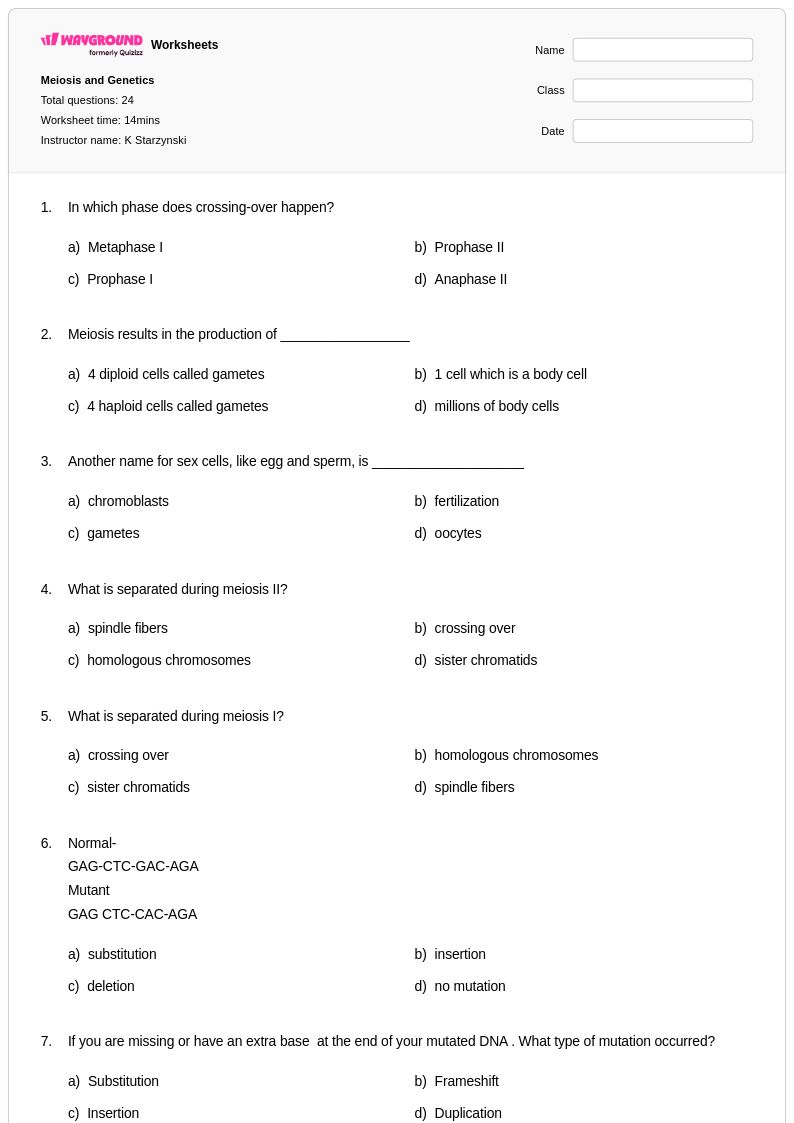
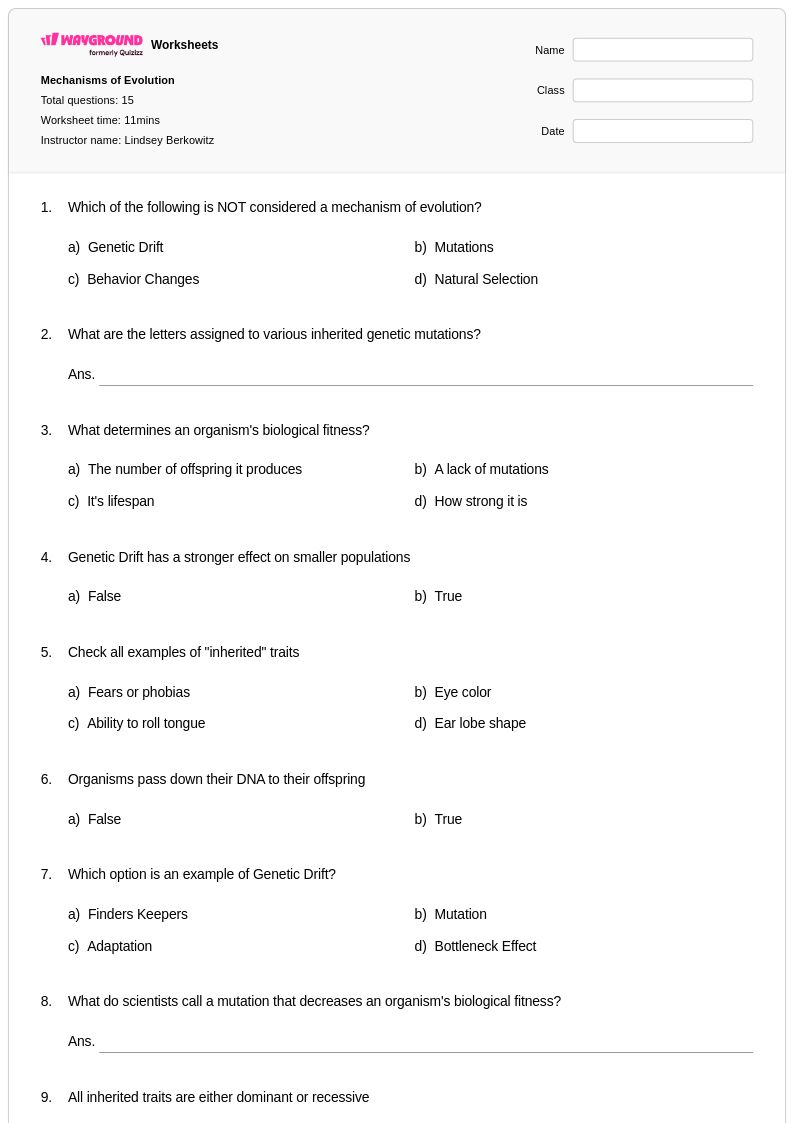
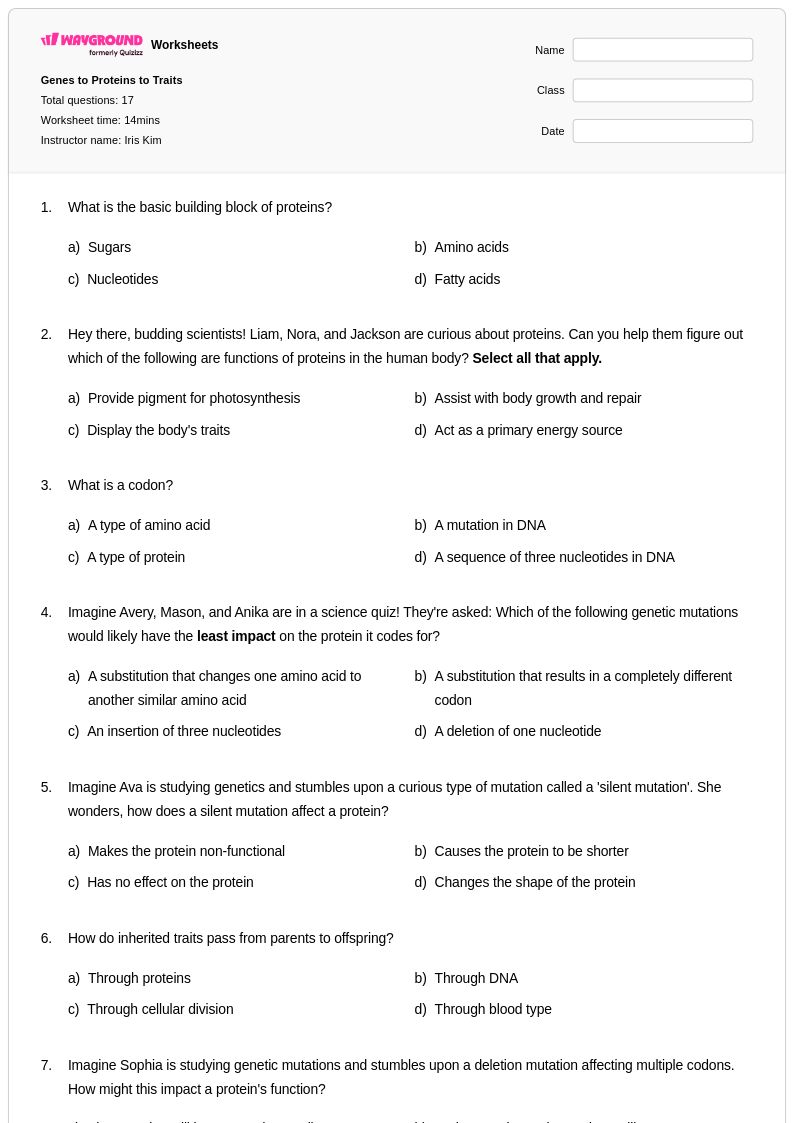
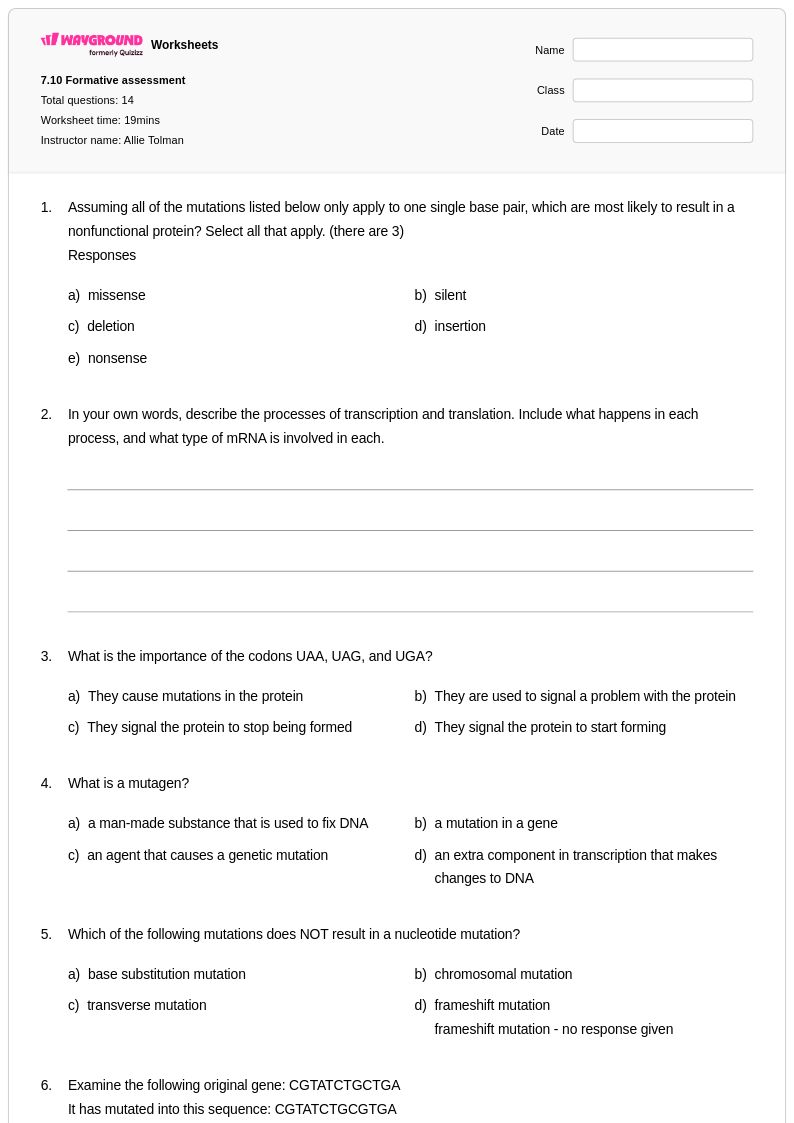
Explore Wayground's comprehensive collection of genetic mutation worksheets featuring free printables and practice problems with answer keys to help students master DNA changes, chromosomal variations, and hereditary patterns in biology.
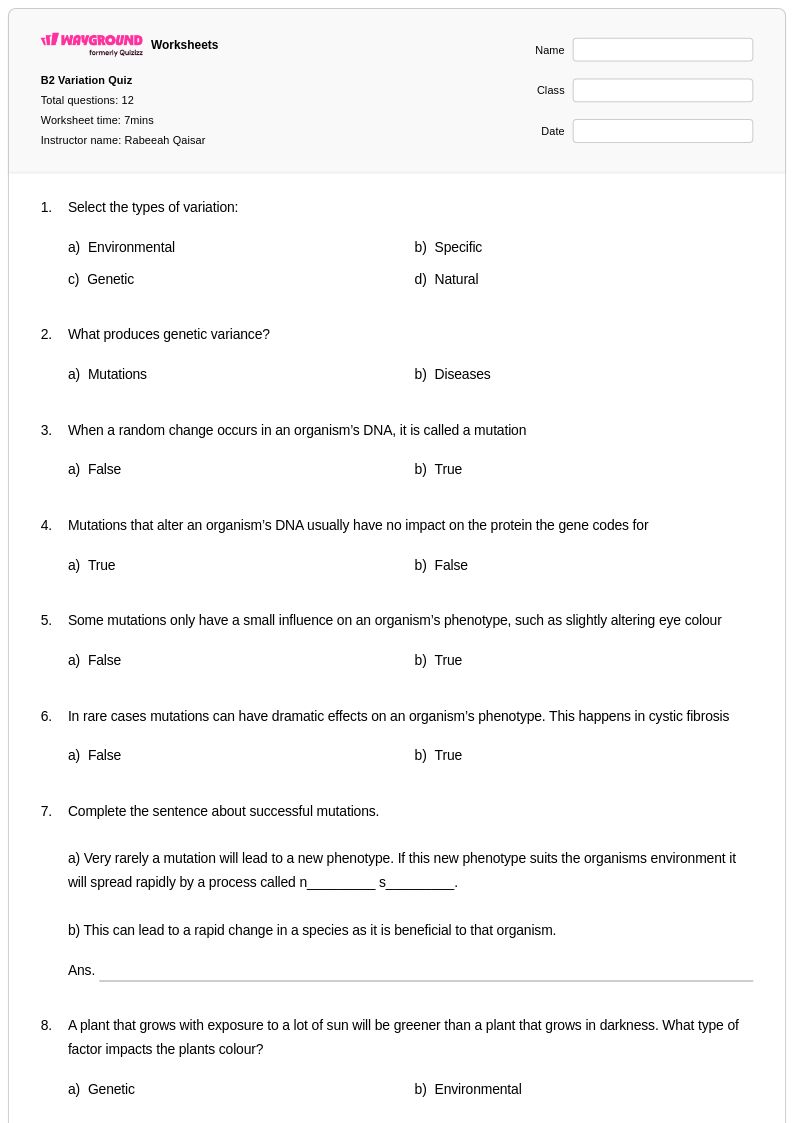
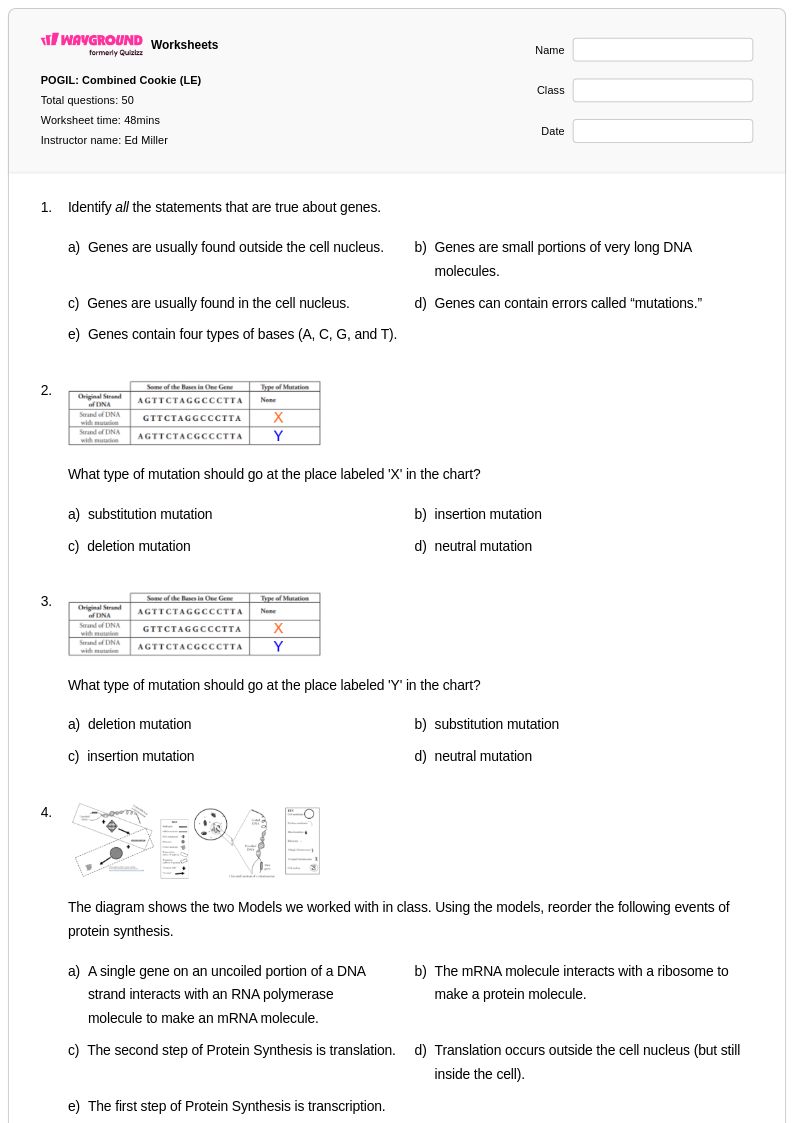
Genetic mutation worksheets available through Wayground (formerly Quizizz) provide comprehensive resources for exploring the fundamental mechanisms by which DNA sequences change and their biological consequences. These expertly designed materials guide students through various types of mutations including point mutations, insertions, deletions, and chromosomal rearrangements, helping them understand how these changes affect protein synthesis and cellular function. The worksheets strengthen critical thinking skills by challenging students to analyze mutation patterns, predict phenotypic outcomes, and evaluate the evolutionary significance of genetic variation. Each resource includes detailed answer keys and practice problems that reinforce understanding of concepts such as mutagenic agents, DNA repair mechanisms, and the relationship between genotype and phenotype, with free printables available in convenient PDF format for classroom use.
Wayground (formerly Quizizz) supports educators with an extensive collection of millions of teacher-created genetic mutation resources that can be easily accessed through robust search and filtering capabilities. The platform's standards-aligned materials offer flexible customization options that allow teachers to differentiate instruction based on student needs, whether providing remediation for struggling learners or enrichment challenges for advanced students. These comprehensive worksheet collections are available in both printable and digital formats, including downloadable PDFs, enabling seamless integration into lesson planning and assessment strategies. Teachers can efficiently locate resources that target specific mutation concepts, from basic DNA structure changes to complex topics like oncogenes and tumor suppressor genes, making it simple to provide targeted skill practice and support student mastery of this essential biology concept.
FAQs
How do I teach genetic mutations to high school biology students?
Start by grounding students in DNA structure and protein synthesis before introducing mutation types, since students need to understand what is being altered before they can evaluate consequences. Sequence instruction from point mutations (substitutions, insertions, deletions) to larger chromosomal rearrangements, using concrete examples like sickle cell anemia to connect molecular changes to phenotypic outcomes. Incorporating case studies on mutagenic agents and DNA repair mechanisms helps students see mutations as dynamic biological events rather than abstract errors.
What are the most common misconceptions students have about genetic mutations?
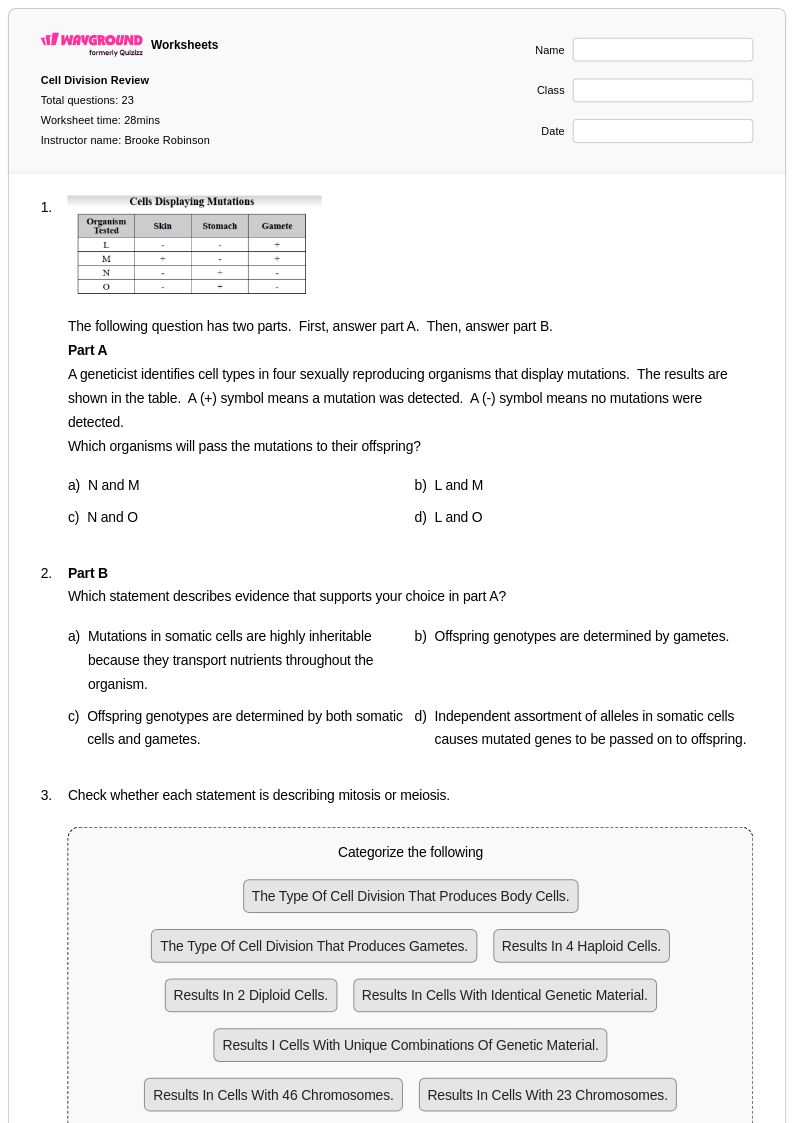
The most widespread misconception is that all mutations are harmful — students frequently overlook neutral and beneficial mutations, which undermines their understanding of natural selection and evolution. Students also commonly conflate genotype changes with automatic phenotypic change, not accounting for silent mutations or recessive alleles. A third frequent error is confusing somatic mutations, which affect only the individual, with germline mutations, which are heritable and have population-level significance.
What types of practice problems help students understand the difference between point mutations and chromosomal mutations?
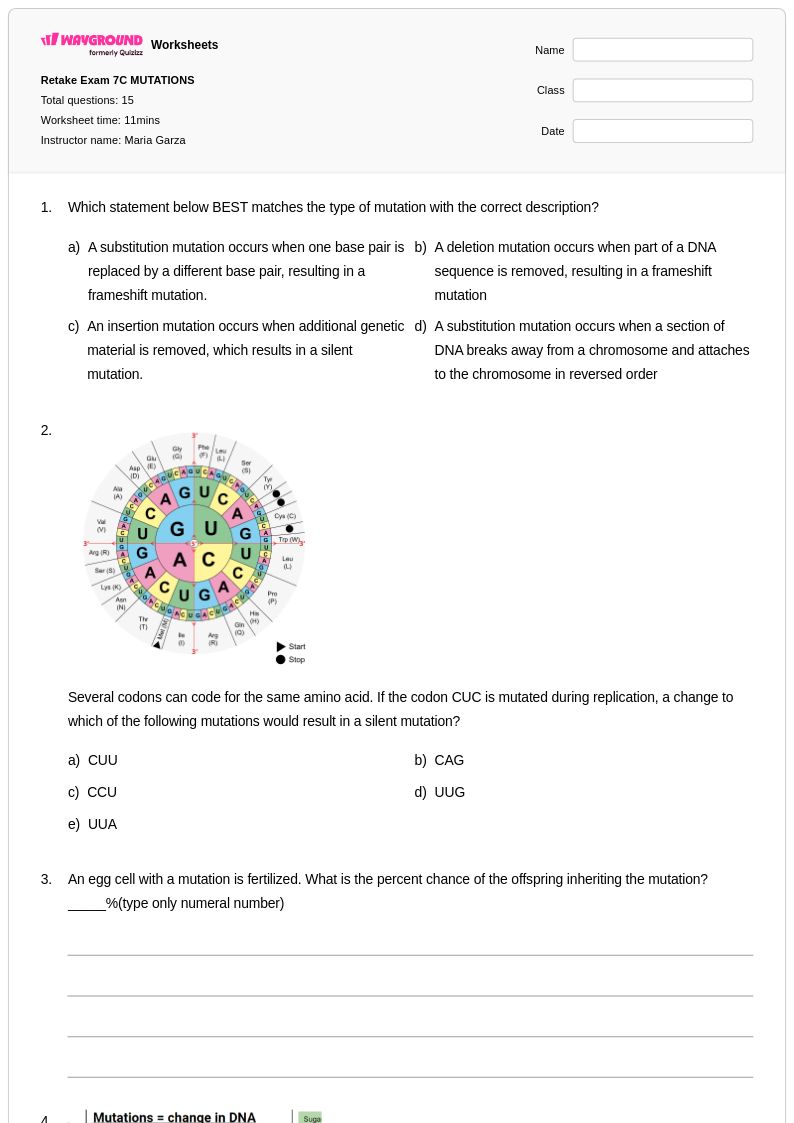
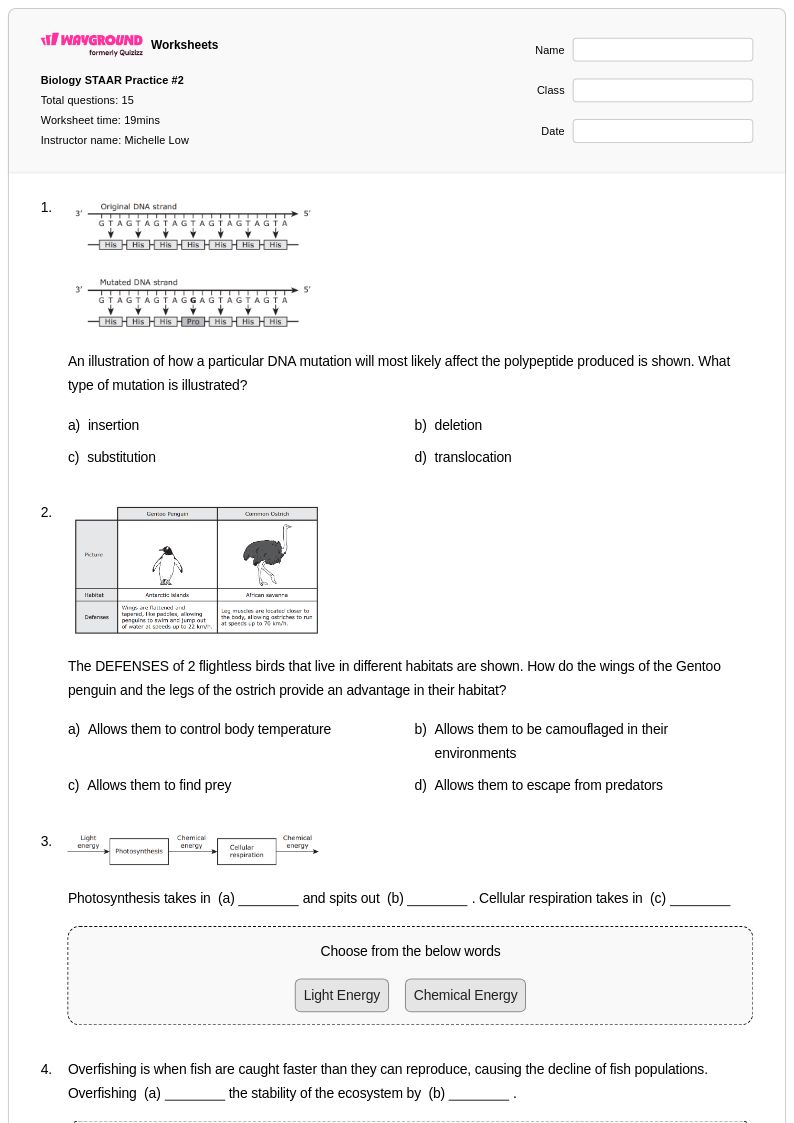
Practice problems that ask students to analyze a DNA or mRNA sequence and identify the type and effect of a specific mutation are highly effective for point mutations, because they require students to apply codon tables and reason through amino acid changes. For chromosomal mutations, diagram-based problems showing deletions, duplications, inversions, and translocations help students visualize structural changes that affect multiple genes at once. Problems that ask students to predict phenotypic outcomes from both mutation types in parallel reinforce the distinction between molecular-scale and chromosome-scale changes.
How can I assess whether students understand the relationship between mutations and protein function?
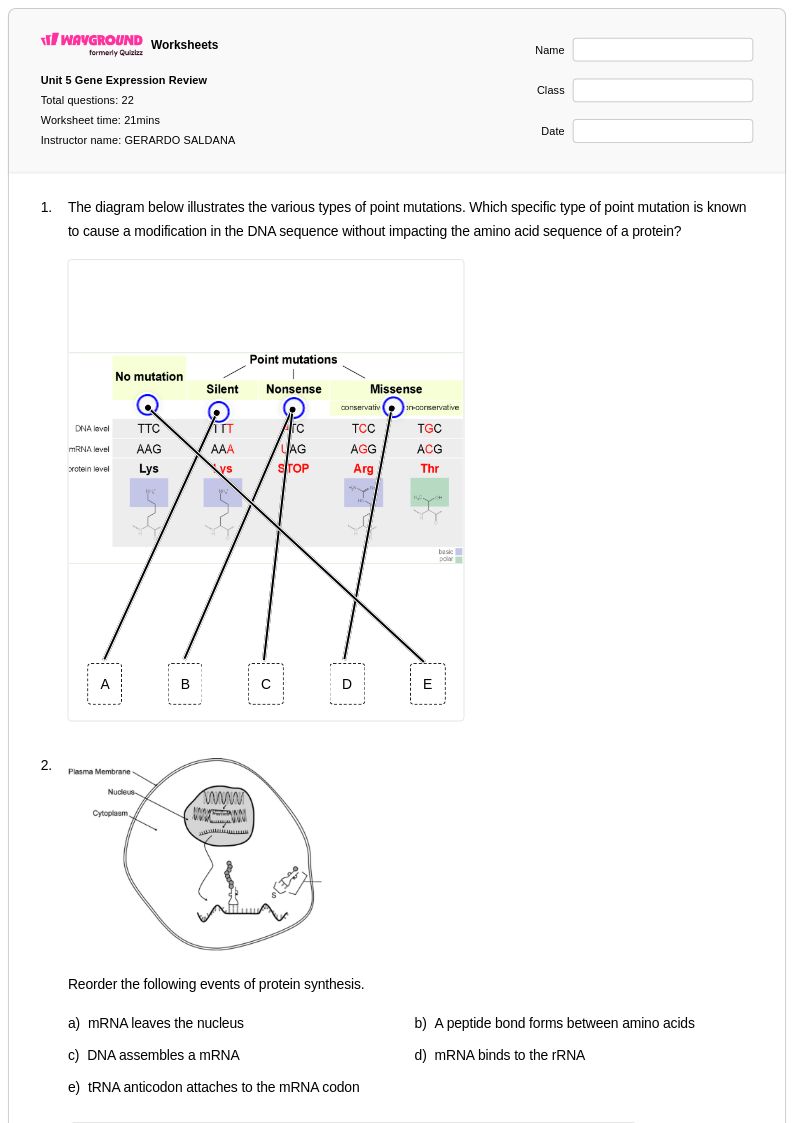
The strongest assessment tasks ask students to trace a specific mutation through the central dogma — from a DNA sequence change through transcription and translation to the resulting protein — and then evaluate whether protein function is disrupted. Missense versus nonsense mutation comparisons are particularly diagnostic, as they reveal whether students understand that a single amino acid substitution may preserve function while a premature stop codon typically does not. Including mutagenic agent scenarios, such as UV radiation causing thymine dimers, adds real-world context that tests deeper conceptual understanding beyond rote classification.
How do I use Wayground's genetic mutation worksheets in my classroom?
Wayground's genetic mutation worksheets are available as printable PDFs for traditional classroom use and in digital formats for technology-integrated environments, making them flexible for homework, in-class practice, or lab follow-up activities. Teachers can also host the worksheets as a live quiz directly on Wayground, enabling real-time student responses and immediate feedback. Each worksheet includes a complete answer key, so teachers can use them for independent practice, partner work, or formative assessment without additional preparation.
How can I differentiate genetic mutation instruction for students at different levels?
For students who need support, reducing the scope to substitution mutations with clear codon table scaffolds and using Wayground's reduced answer choices accommodation can lower cognitive load during practice. Advanced students benefit from open-ended problems involving oncogenes, tumor suppressor genes, or the evolutionary implications of mutation rates, which require synthesis across multiple biology concepts. Wayground also supports read-aloud and extended time settings that can be configured per student, allowing the same worksheet to serve the full range of learners in a single class without singling anyone out.