Explore Wayground's free monohybrid cross worksheets and printables that help students master genetic inheritance patterns through practice problems, detailed explanations, and comprehensive answer keys in PDF format.
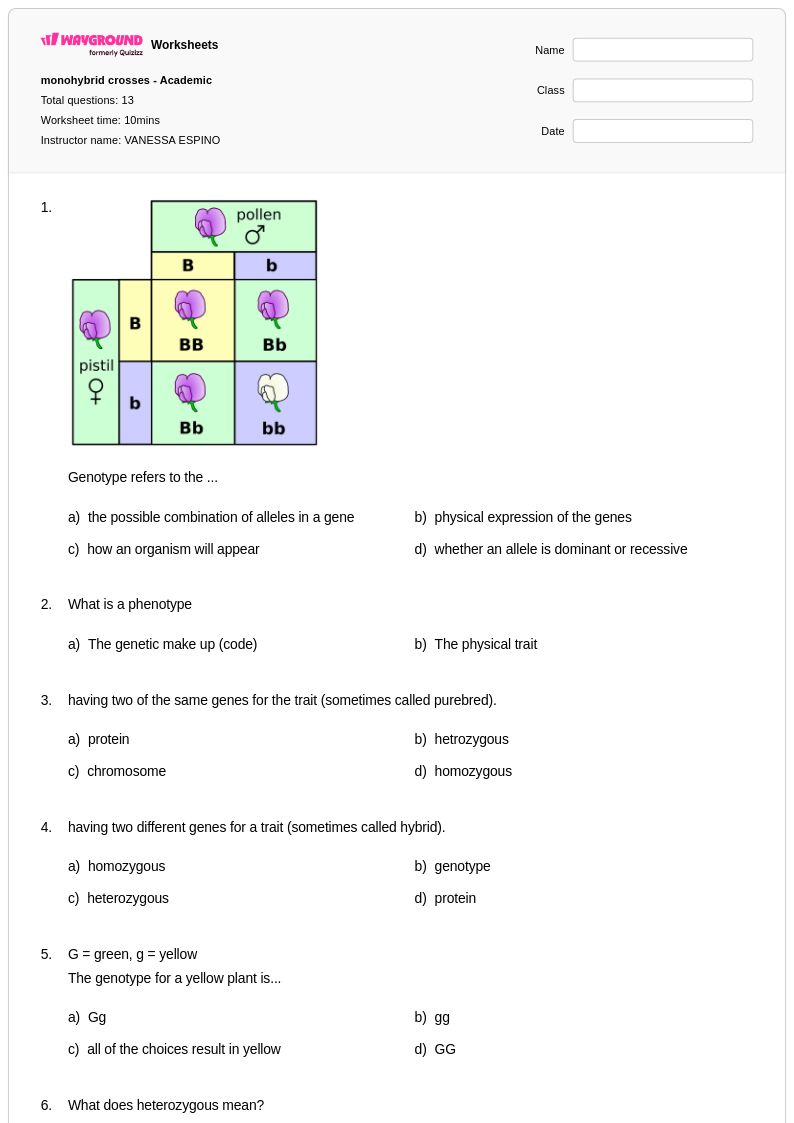
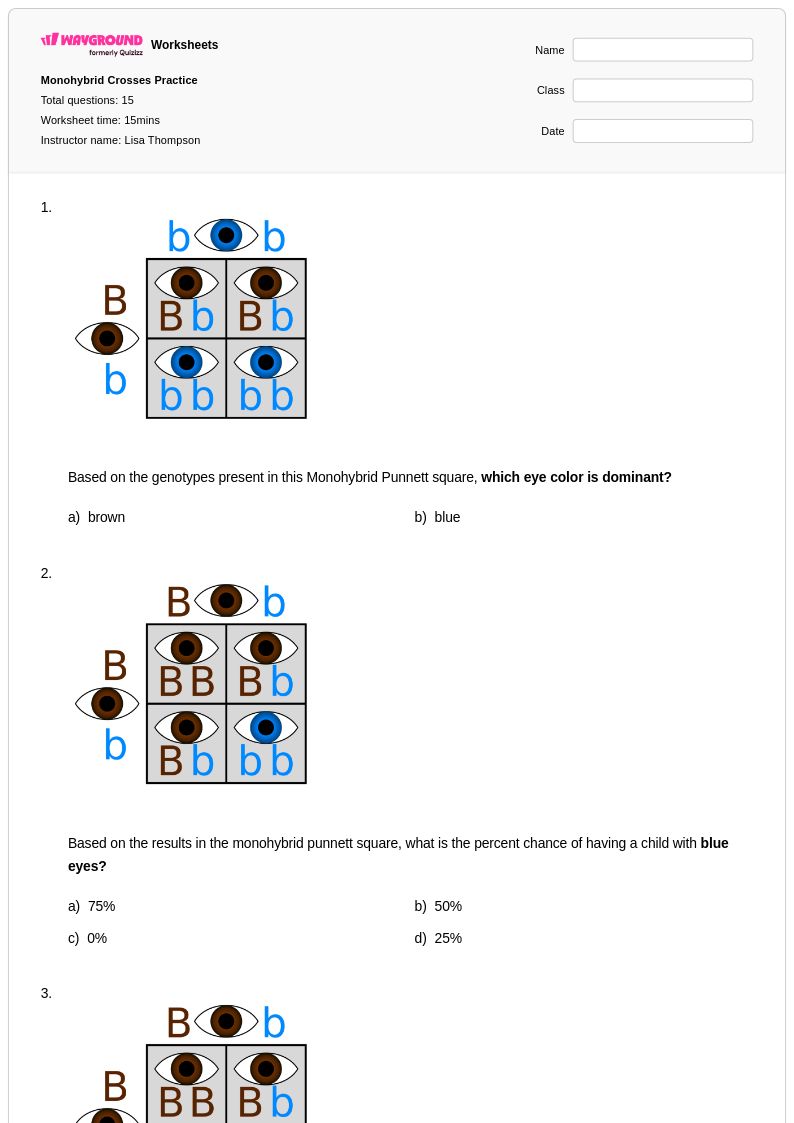
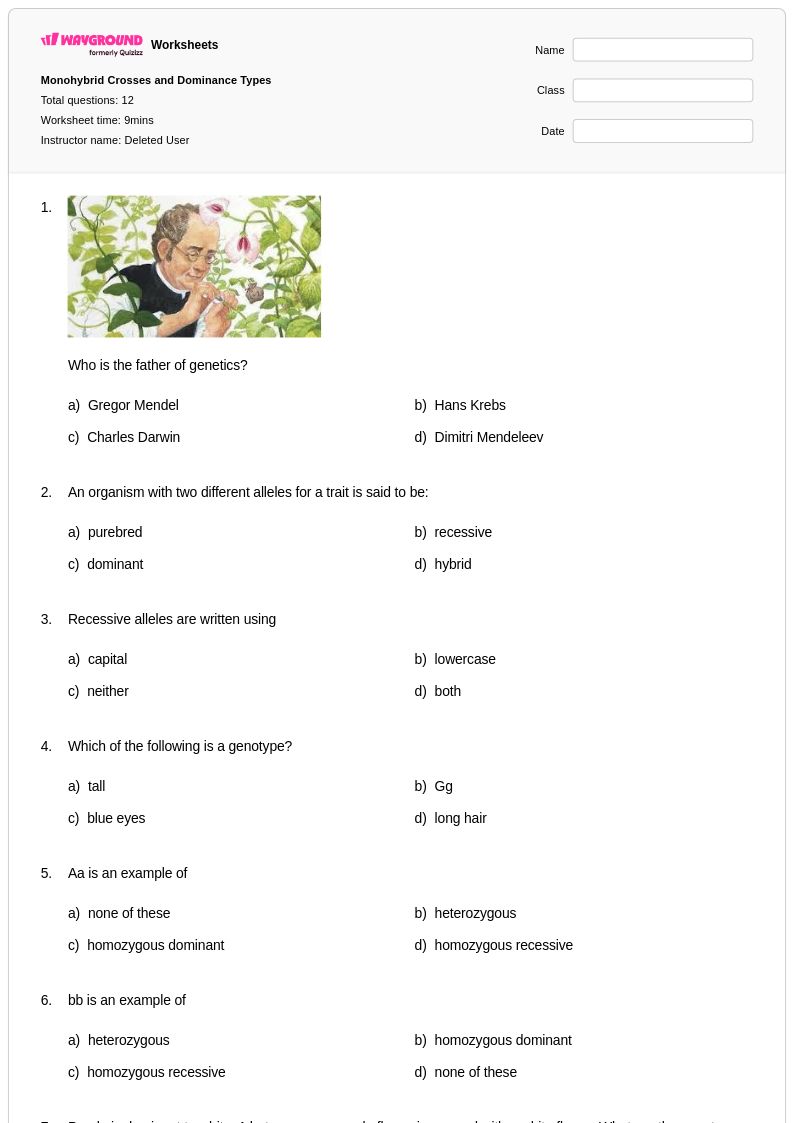
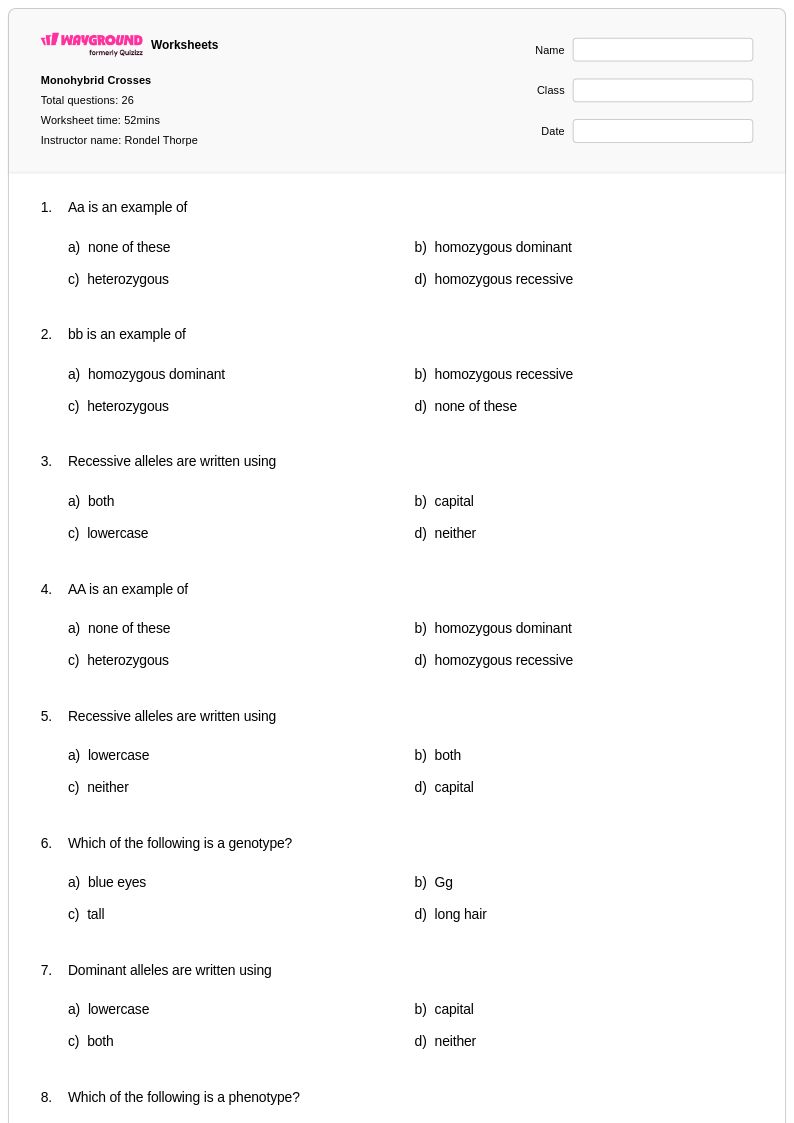
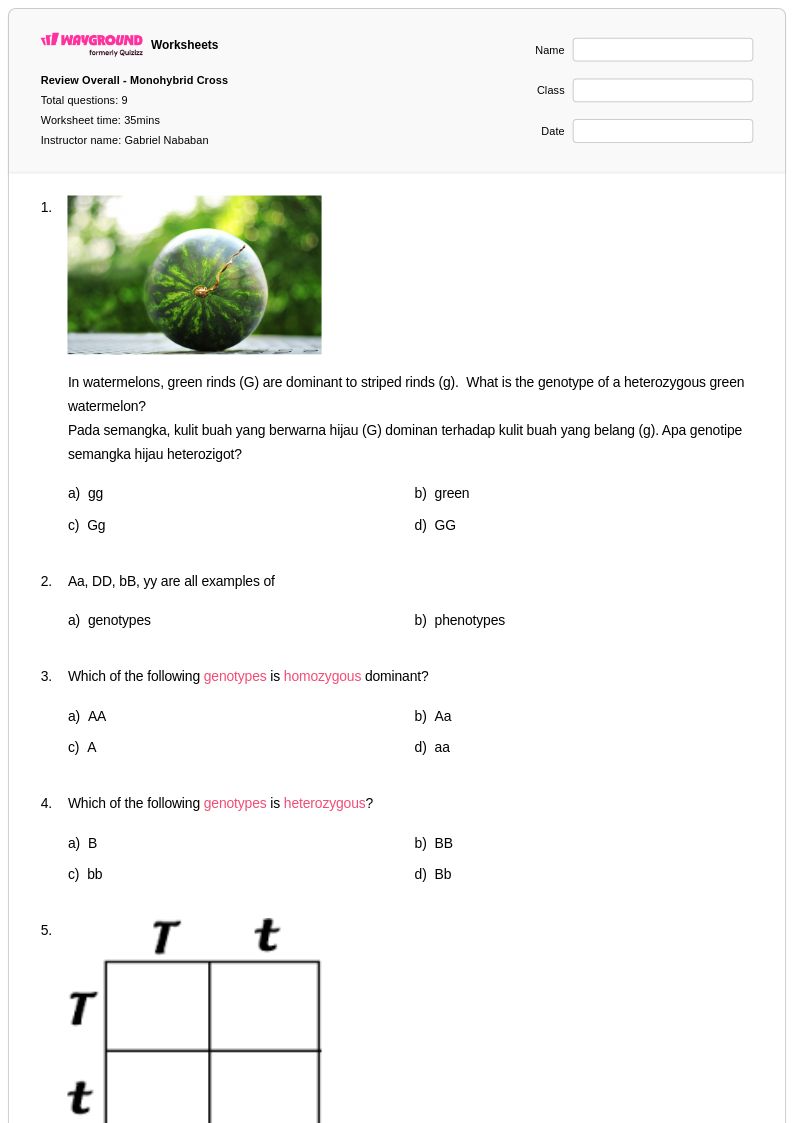
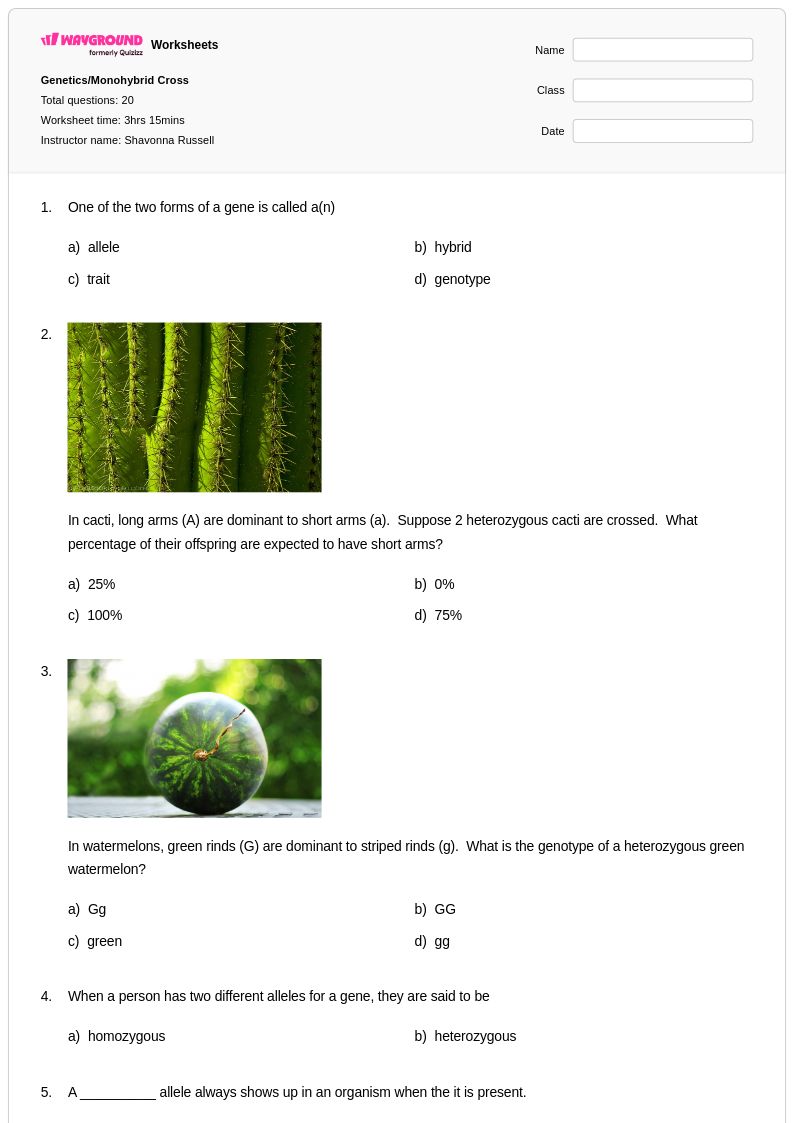
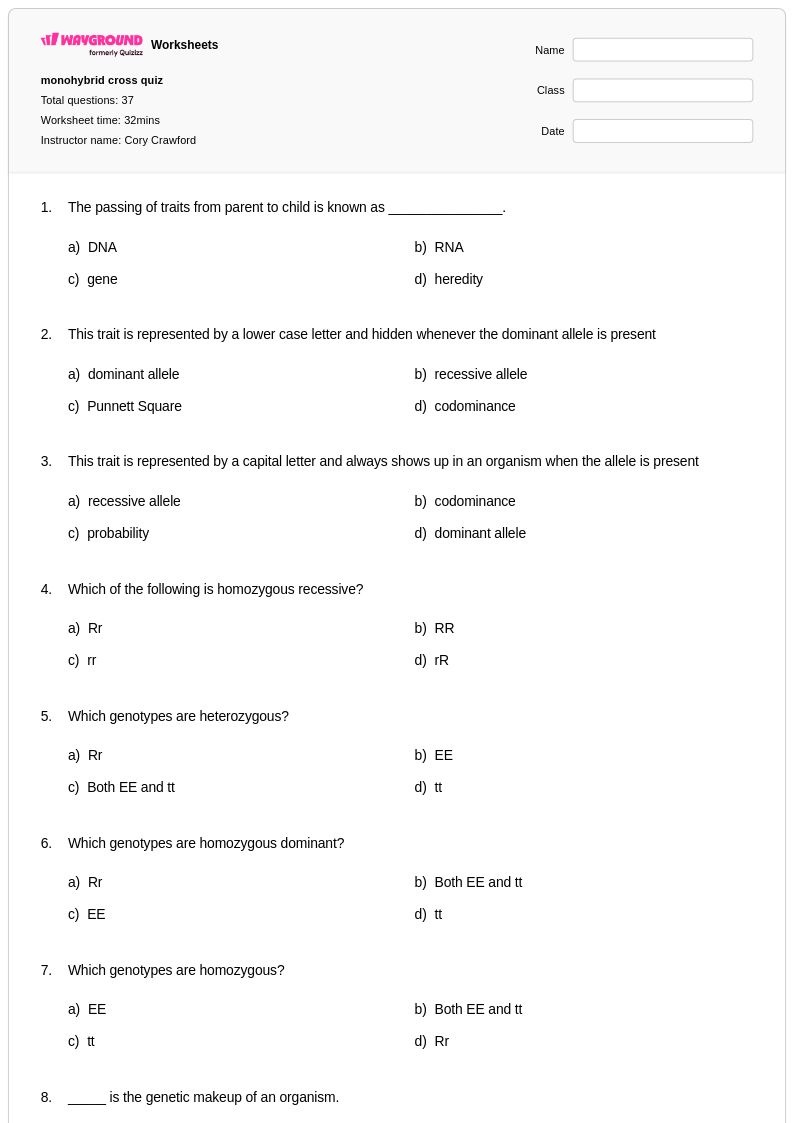
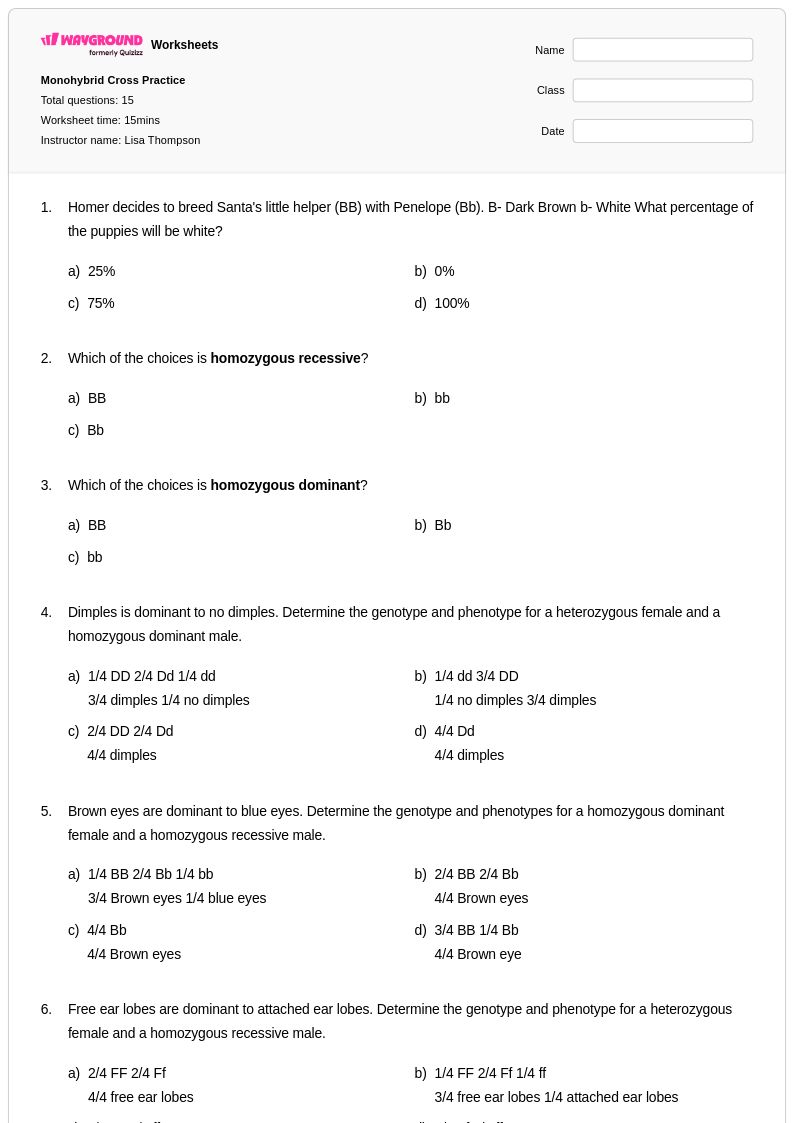
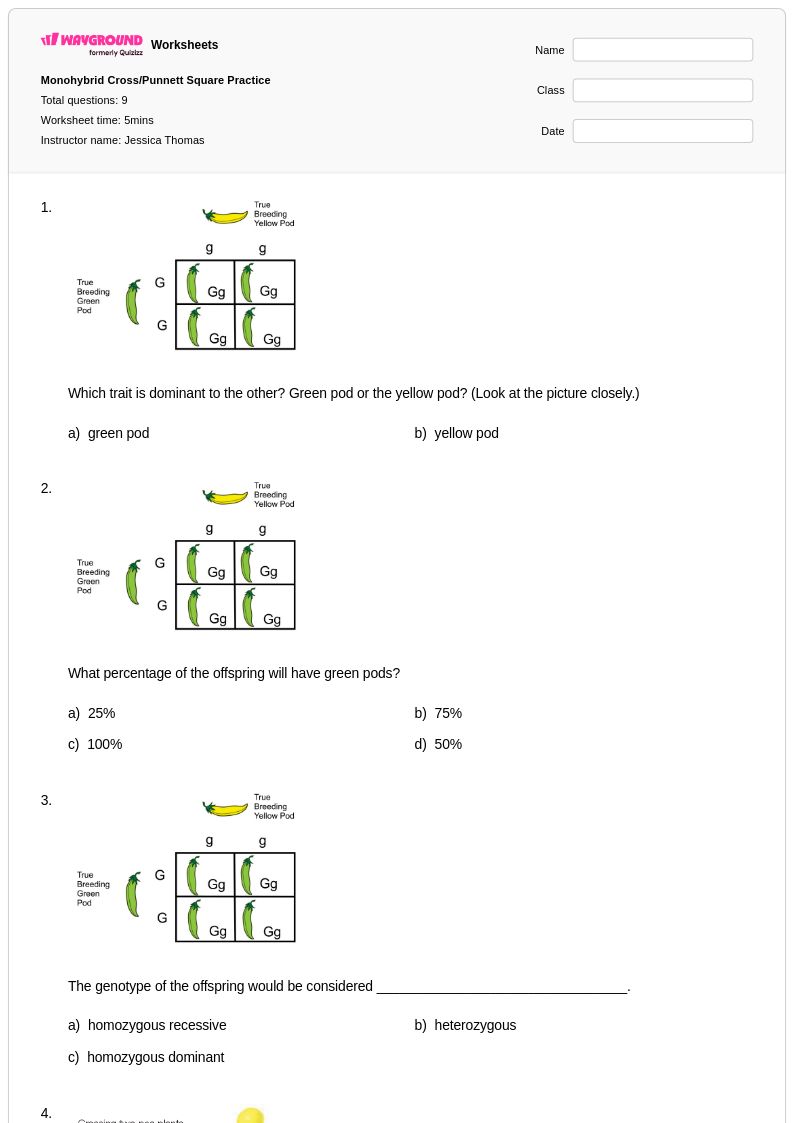
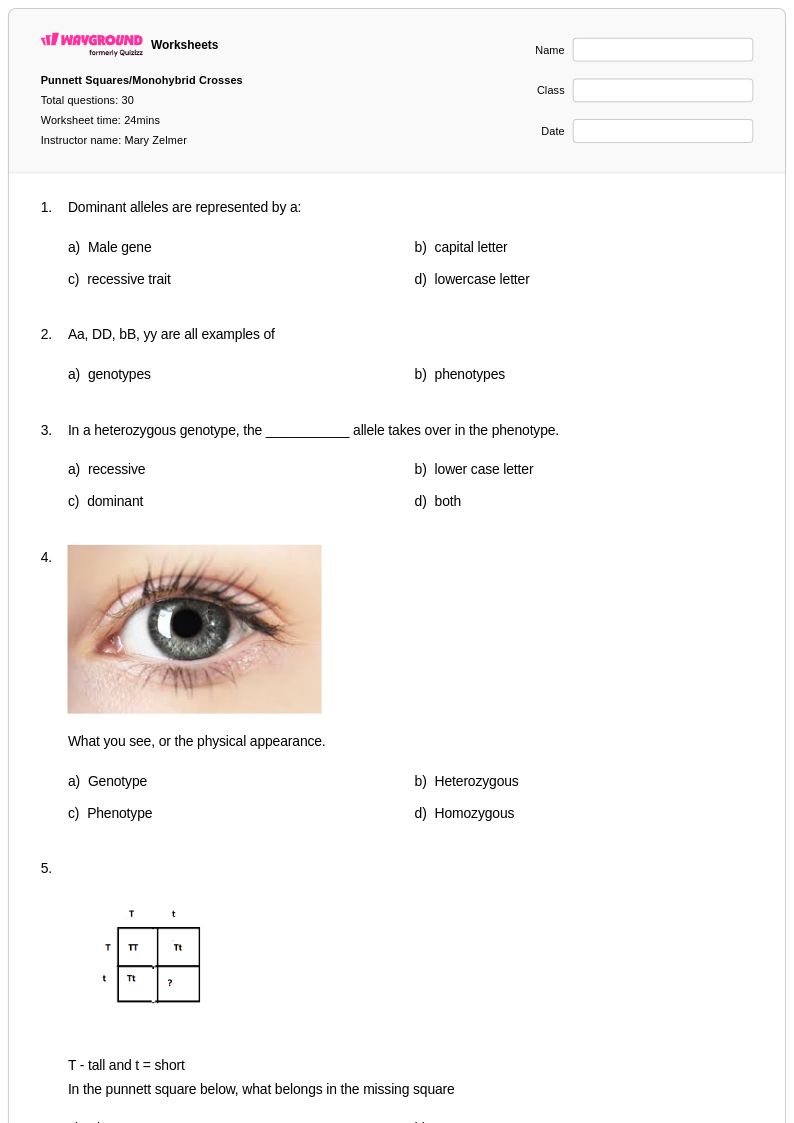
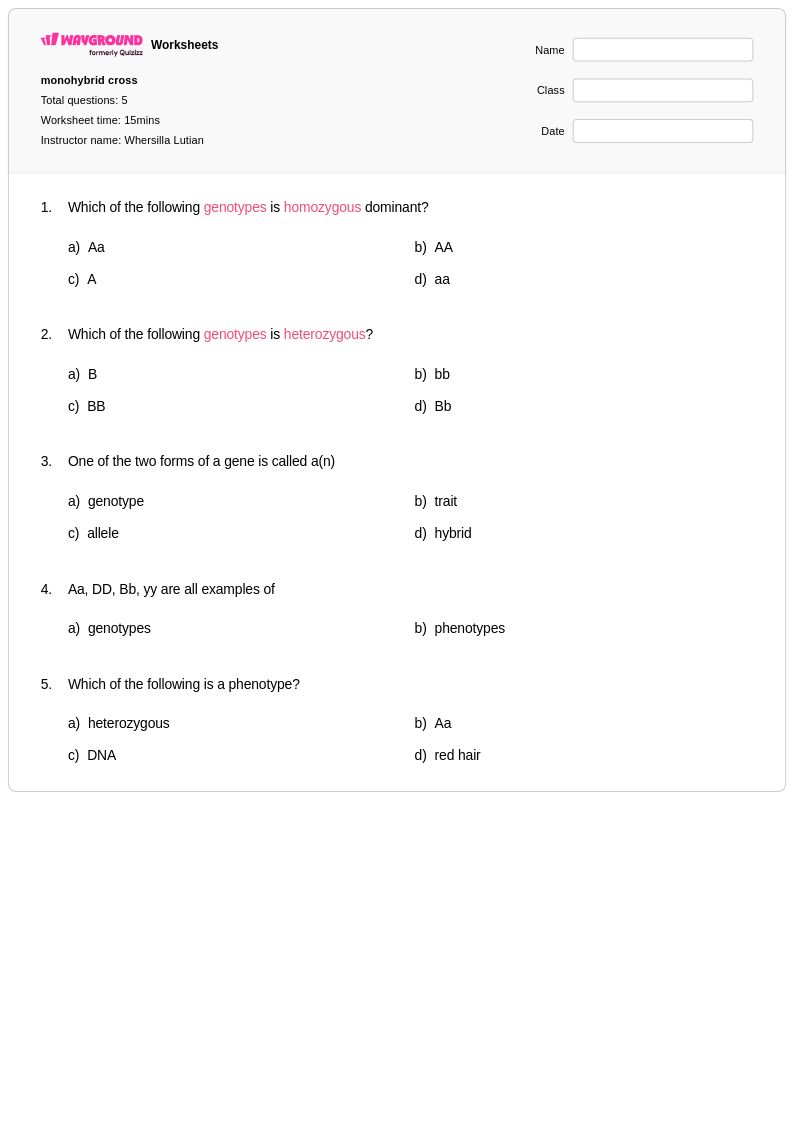
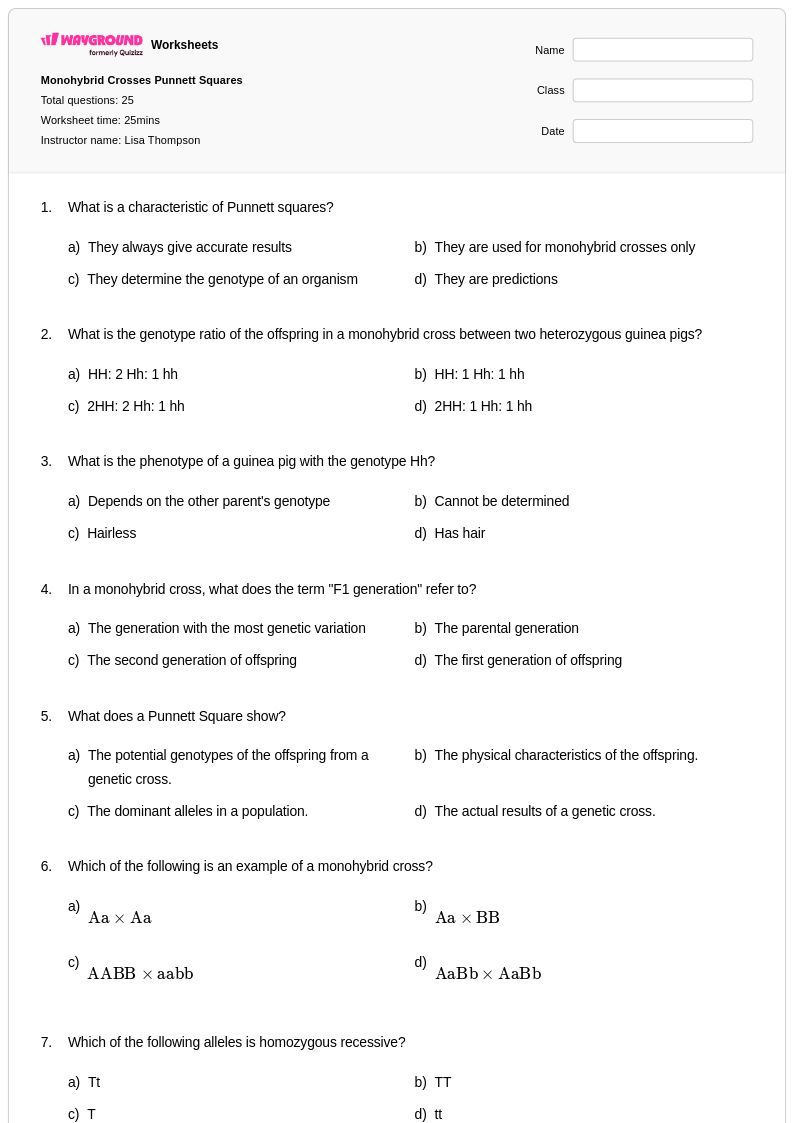
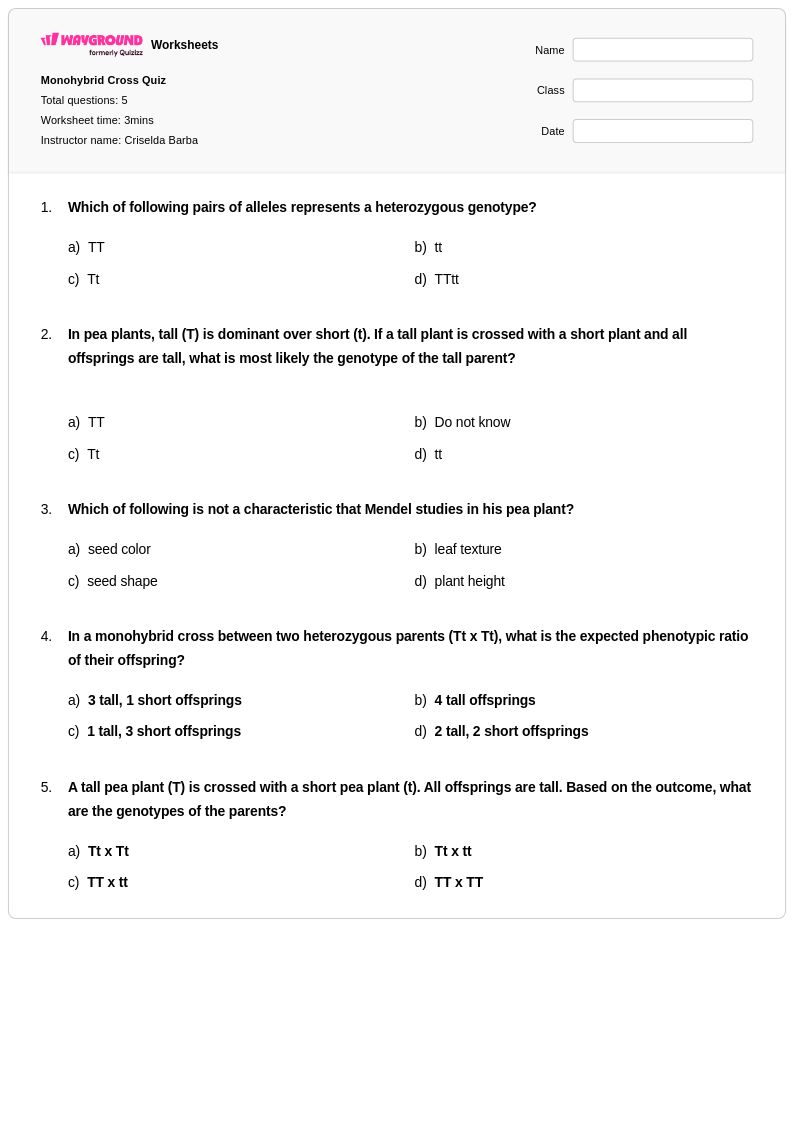
Monohybrid cross worksheets available through Wayground (formerly Quizizz) provide students with comprehensive practice in understanding single-trait inheritance patterns and Punnett square construction. These educational resources strengthen critical genetics skills including genotype and phenotype identification, probability calculations, and the application of Mendel's laws of inheritance. Students work through systematic practice problems that reinforce concepts of dominant and recessive alleles, homozygous and heterozygous crosses, and phenotypic ratios. The collection includes printables with detailed answer keys, free downloadable pdf formats, and varied difficulty levels that help students master the fundamental principles of genetic crosses through hands-on problem-solving exercises.
Wayground (formerly Quizizz) supports science educators with millions of teacher-created monohybrid cross resources that streamline genetics instruction and assessment preparation. The platform's robust search and filtering capabilities allow teachers to quickly locate worksheets aligned with specific curriculum standards and learning objectives. Advanced differentiation tools enable customization of content complexity, while flexible formatting options provide both printable pdf versions and interactive digital alternatives to accommodate diverse classroom needs. These comprehensive worksheet collections facilitate targeted skill practice, support remediation for struggling students, offer enrichment opportunities for advanced learners, and help teachers efficiently plan engaging genetics lessons that build student confidence in analyzing inheritance patterns and solving genetic probability problems.
FAQs
How do I teach monohybrid crosses to high school biology students?
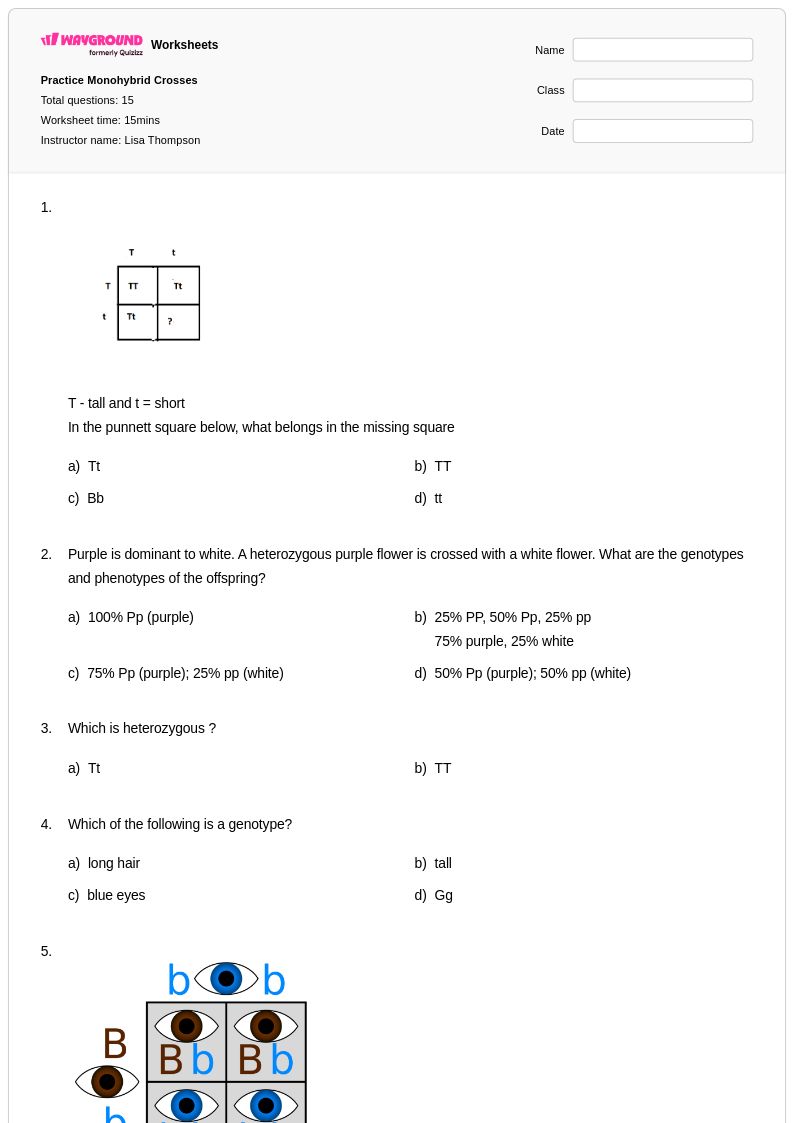
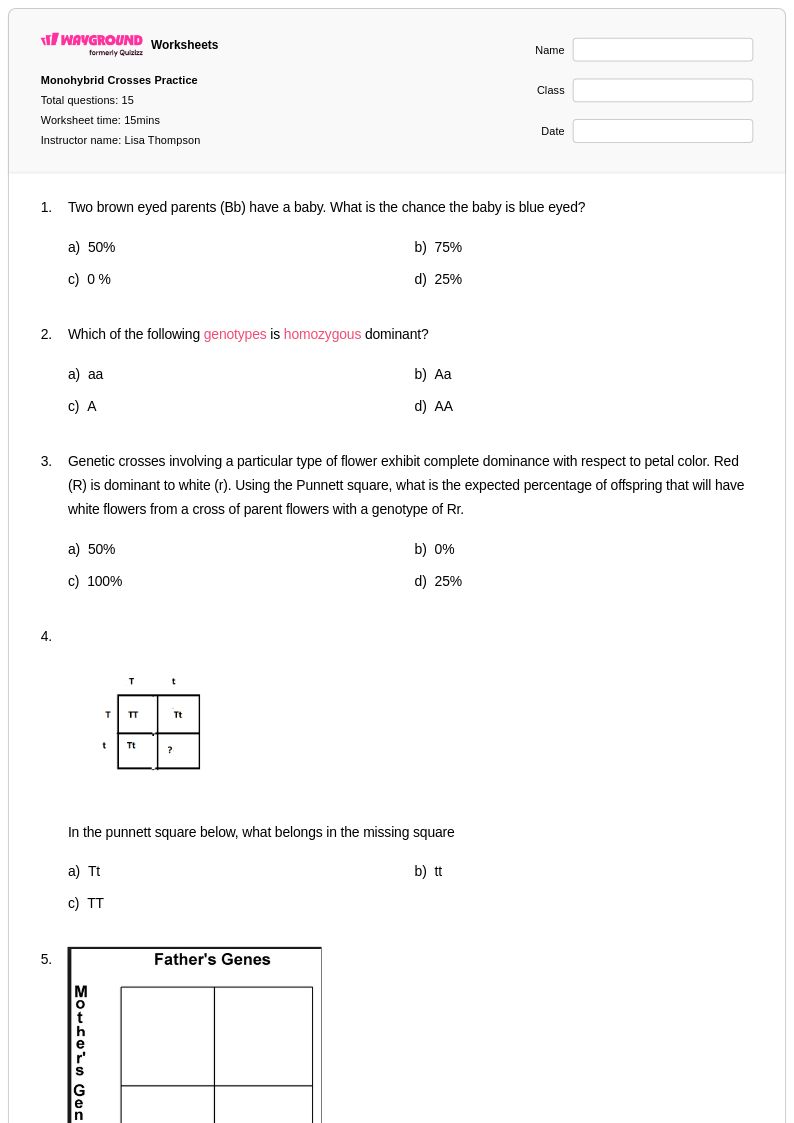
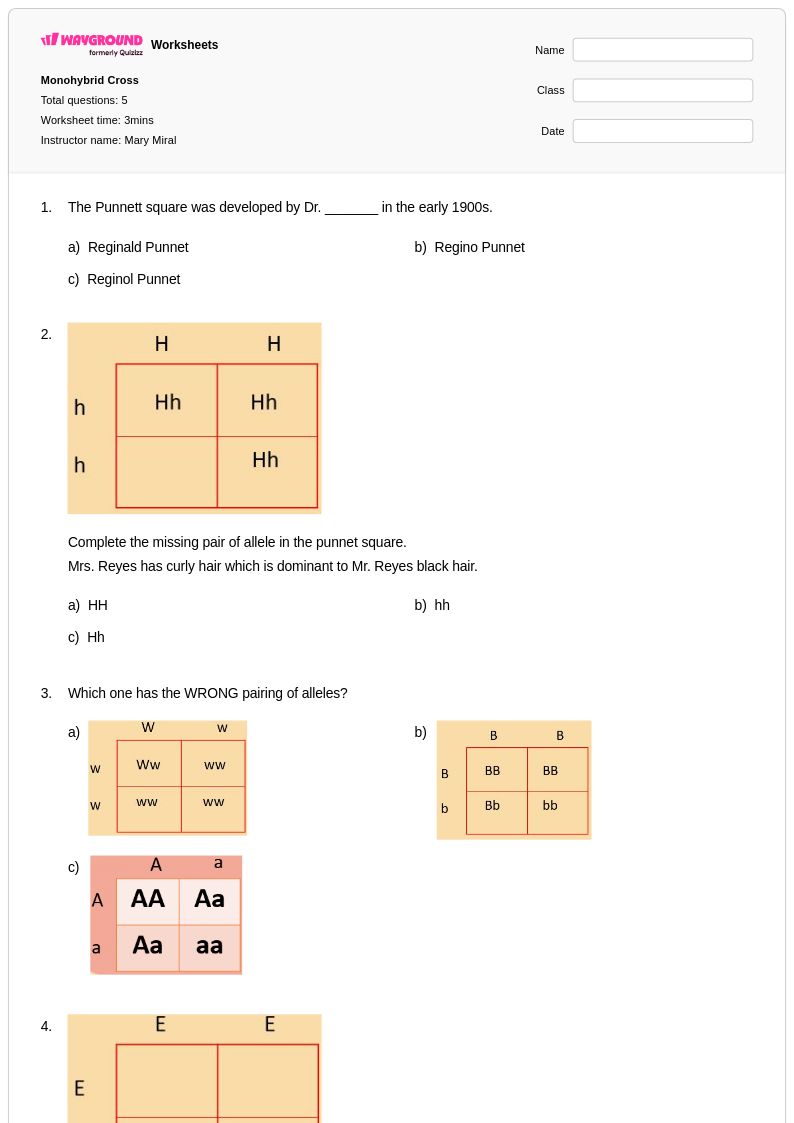
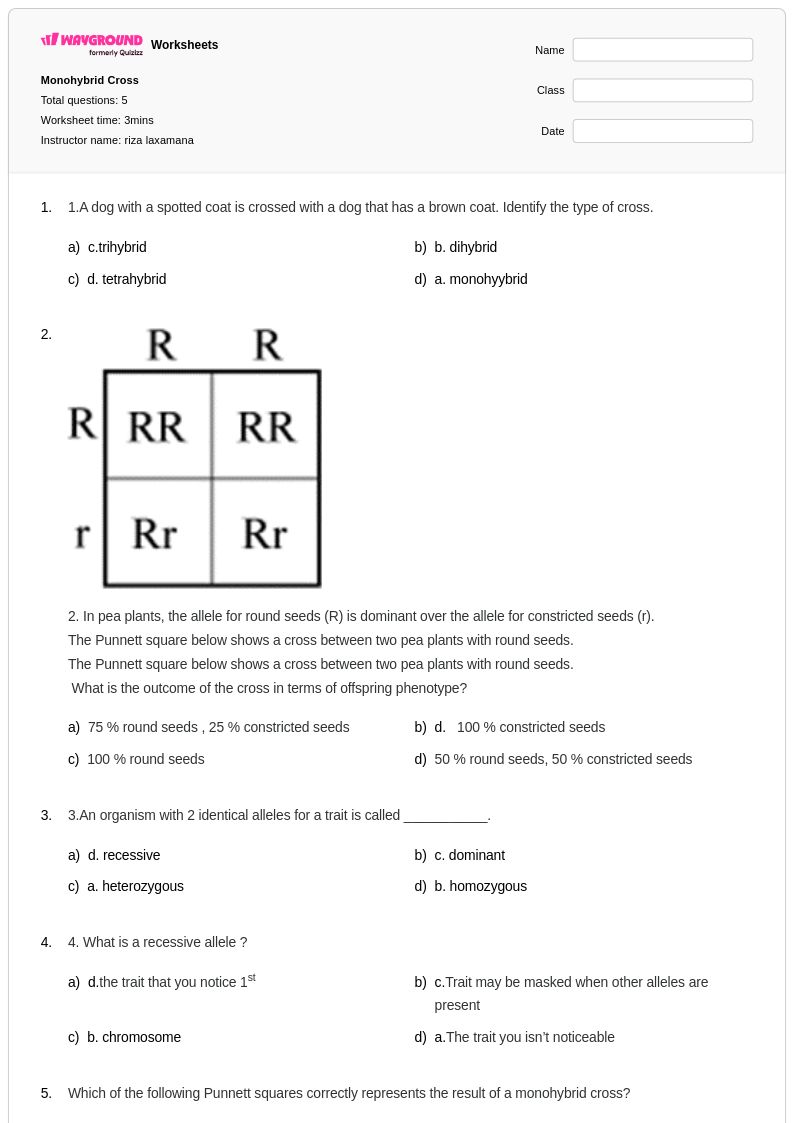
Start by grounding students in Mendel's laws of segregation before introducing Punnett squares, so they understand the biological reasoning behind the notation rather than just the mechanics. Use concrete examples like pea plant seed color to model dominant and recessive allele relationships, then progress from homozygous crosses to heterozygous ones. Once students can construct and interpret a basic Punnett square, introduce probability language to connect genotypic ratios (1:2:1) to phenotypic ratios (3:1), reinforcing that these are predictions based on chance.
What kinds of practice problems help students get better at monohybrid crosses?
Effective practice should move students through three stages: first constructing Punnett squares from given parent genotypes, then predicting phenotypic and genotypic ratios, and finally working backward from offspring ratios to infer unknown parent genotypes. Problems involving homozygous dominant, homozygous recessive, and heterozygous crosses each build different skills, so varied problem sets are important. Including probability calculations alongside Punnett square construction helps students see both the visual and mathematical dimensions of single-trait inheritance.
What mistakes do students commonly make when solving monohybrid cross problems?
The most common error is confusing genotype with phenotype, particularly assuming that a dominant phenotype always means a homozygous dominant genotype. Students also frequently misassign allele notation, using lowercase for dominant traits or mixing case inconsistently across a problem. Another persistent mistake is misreading Punnett square ratios, especially when students count individual boxes rather than grouping outcomes by phenotype or genotype. Explicitly addressing the difference between heterozygous and homozygous dominant early in instruction prevents many of these errors from becoming entrenched.
How do I use Wayground's monohybrid cross worksheets in my classroom?
Wayground's monohybrid cross worksheets are available as printable PDFs for traditional classroom use and in digital formats for technology-integrated environments, giving teachers flexibility to assign them as in-class practice, homework, or assessments. Teachers can also host worksheets directly as a quiz on Wayground, making it easy to track student responses and identify common errors in real time. The varied difficulty levels in the collection allow teachers to sequence problems from foundational Punnett square construction to more complex ratio and probability questions, supporting differentiated instruction within a single genetics unit.
How can I differentiate monohybrid cross instruction for students who are struggling?
For struggling students, reduce cognitive load by isolating one skill at a time, starting with Punnett square construction before adding probability or phenotype analysis. Providing a reference sheet with allele notation rules and ratio patterns can help students self-correct without needing constant teacher support. On Wayground, teachers can apply accommodations such as reduced answer choices and read-aloud support to individual students, allowing the rest of the class to work through the same worksheet at default settings without disruption.
How do monohybrid crosses connect to broader genetics concepts students need to know?
Monohybrid crosses are the foundation of classical genetics, directly modeling Mendel's law of segregation and establishing the probability framework that carries into dihybrid crosses, incomplete dominance, and codominance. Mastery of single-trait inheritance also supports student understanding of genotypic and phenotypic ratios that reappear throughout population genetics and heredity units. Because monohybrid crosses introduce allele notation, dominant-recessive relationships, and Punnett square logic simultaneously, they serve as a critical prerequisite for nearly every subsequent genetics topic in a secondary biology curriculum.