
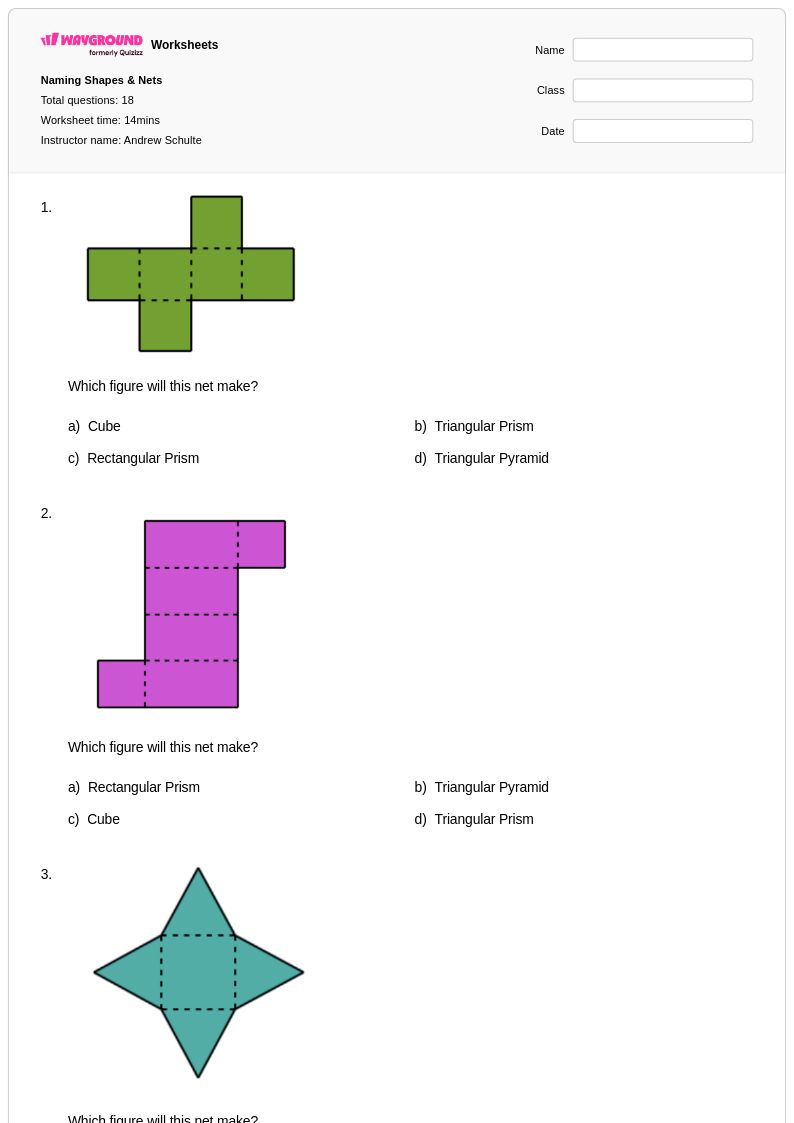
18 Q
6th
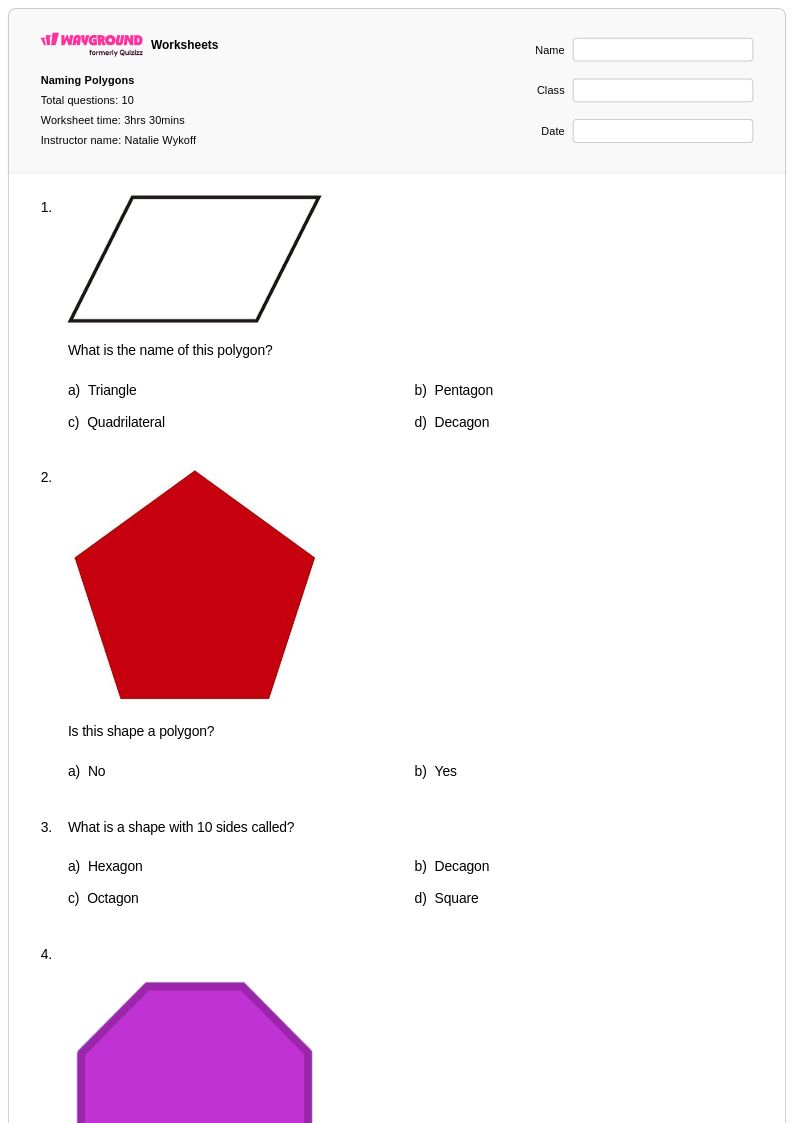
10 Q
3rd
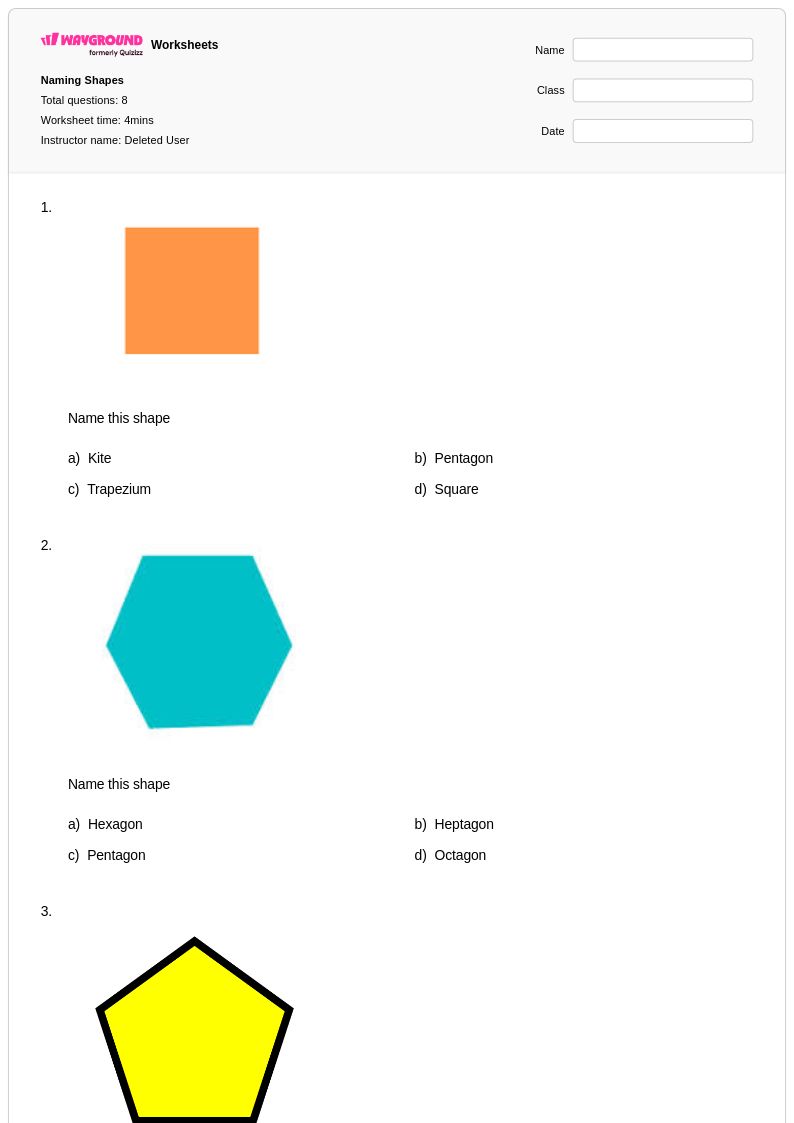
8 Q
KG - 4th
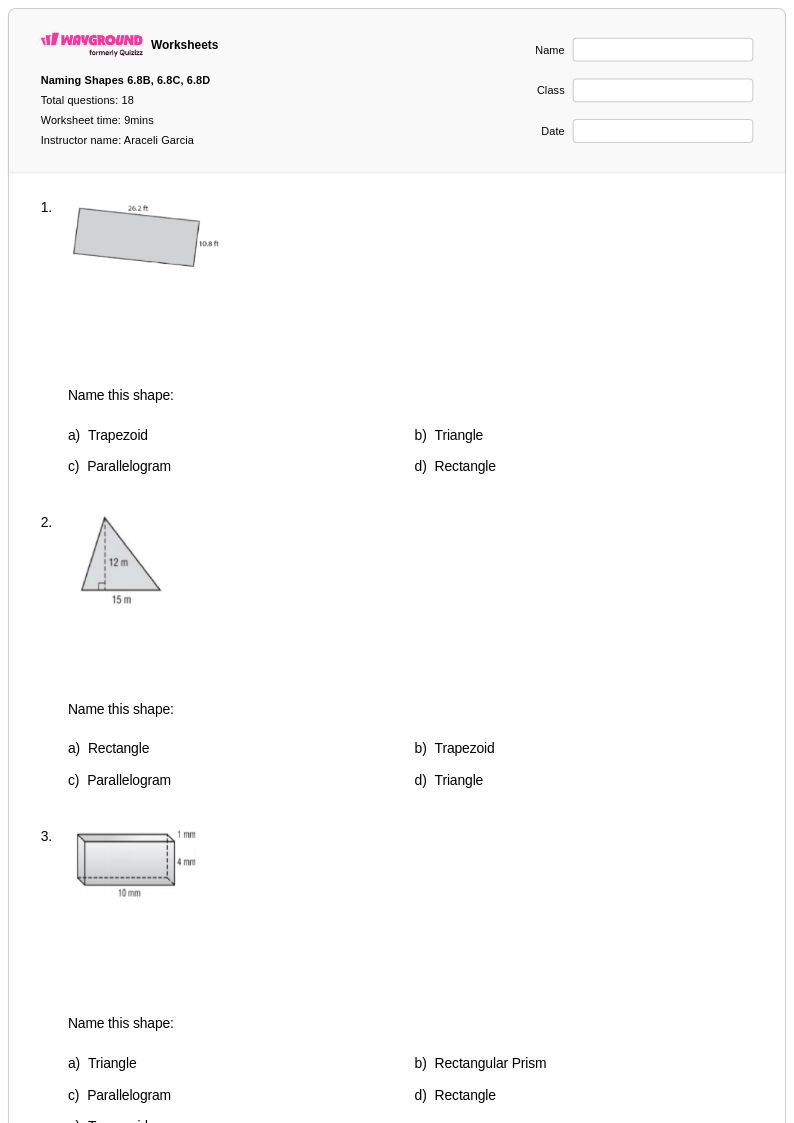
18 Q
6th
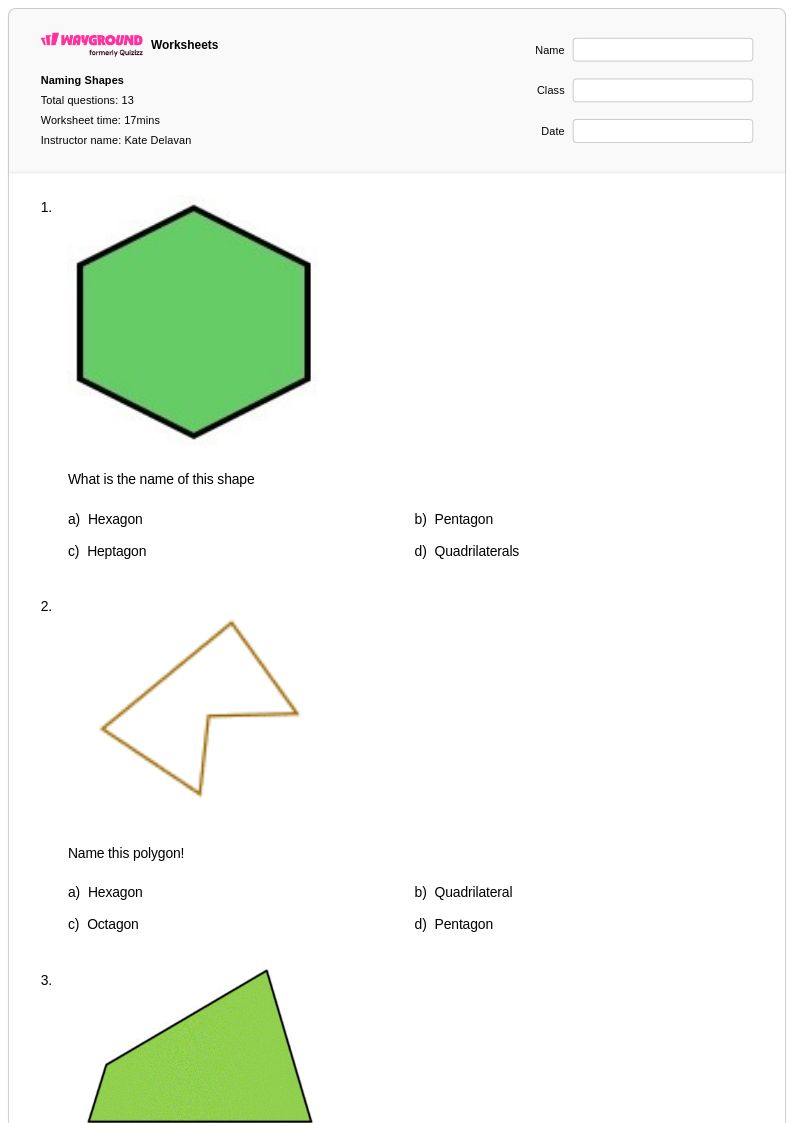
13 Q
10th
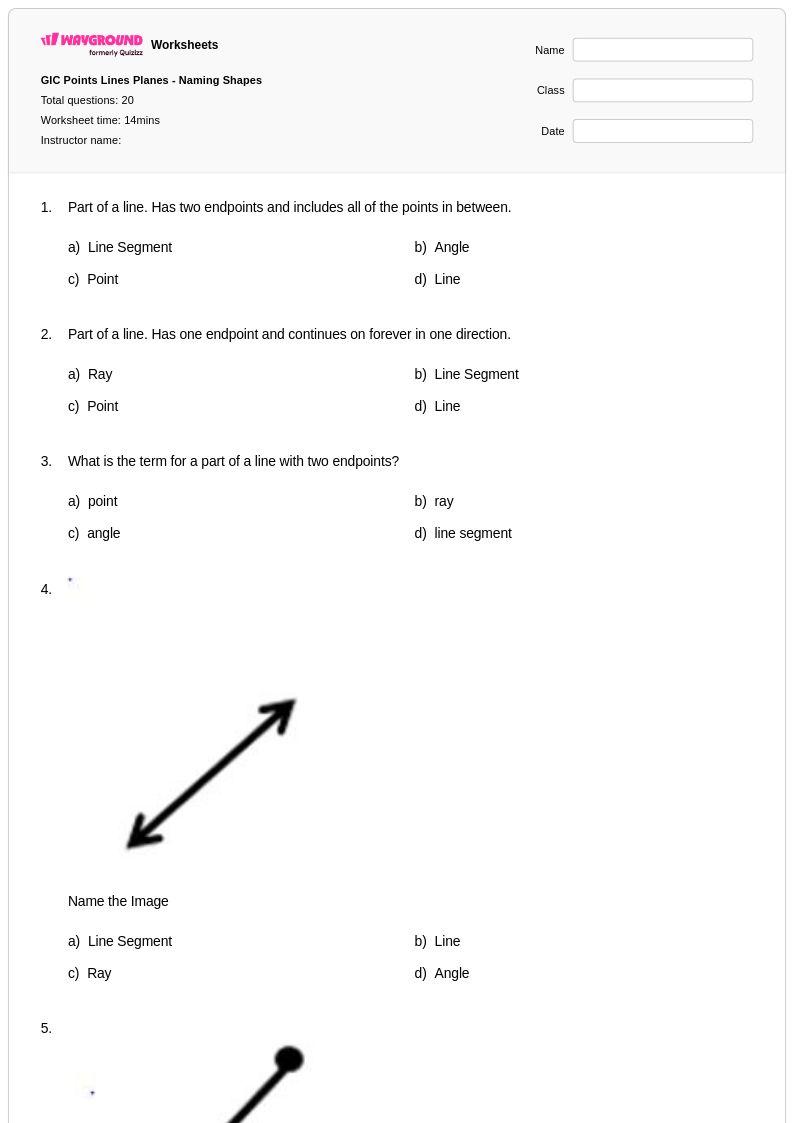
20 Q
10th
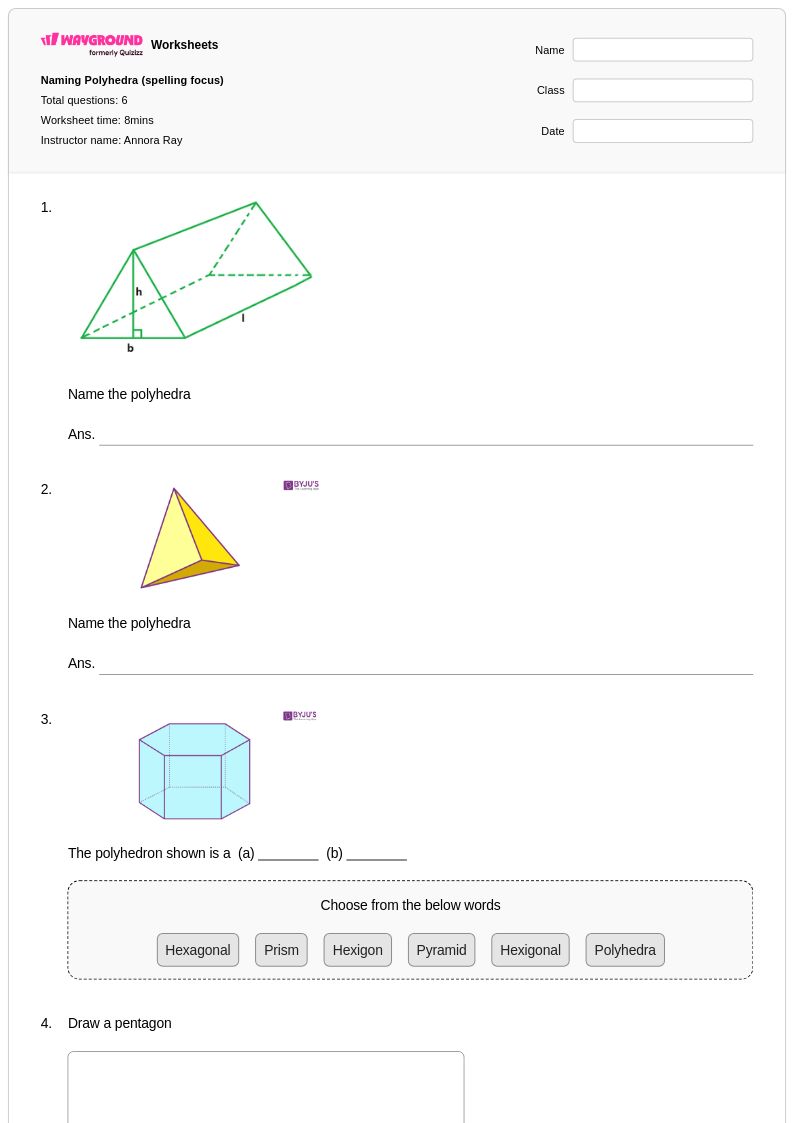
6 Q
5th - 7th
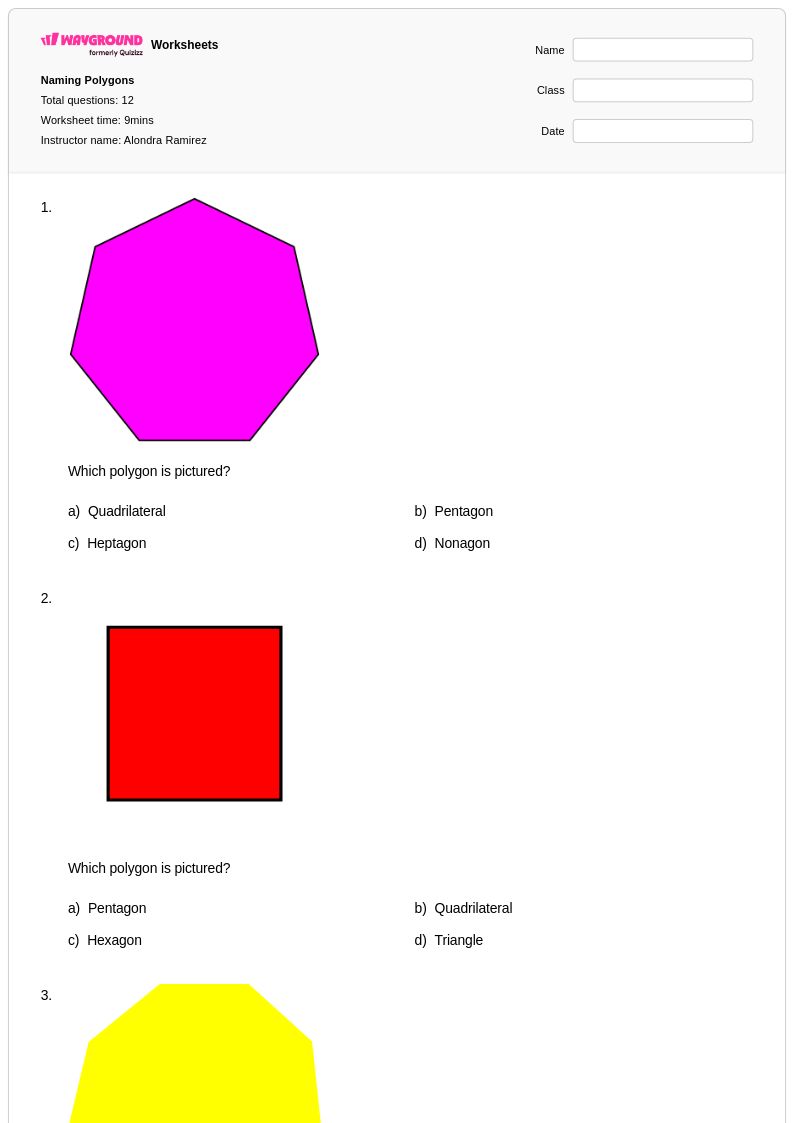
12 Q
3rd
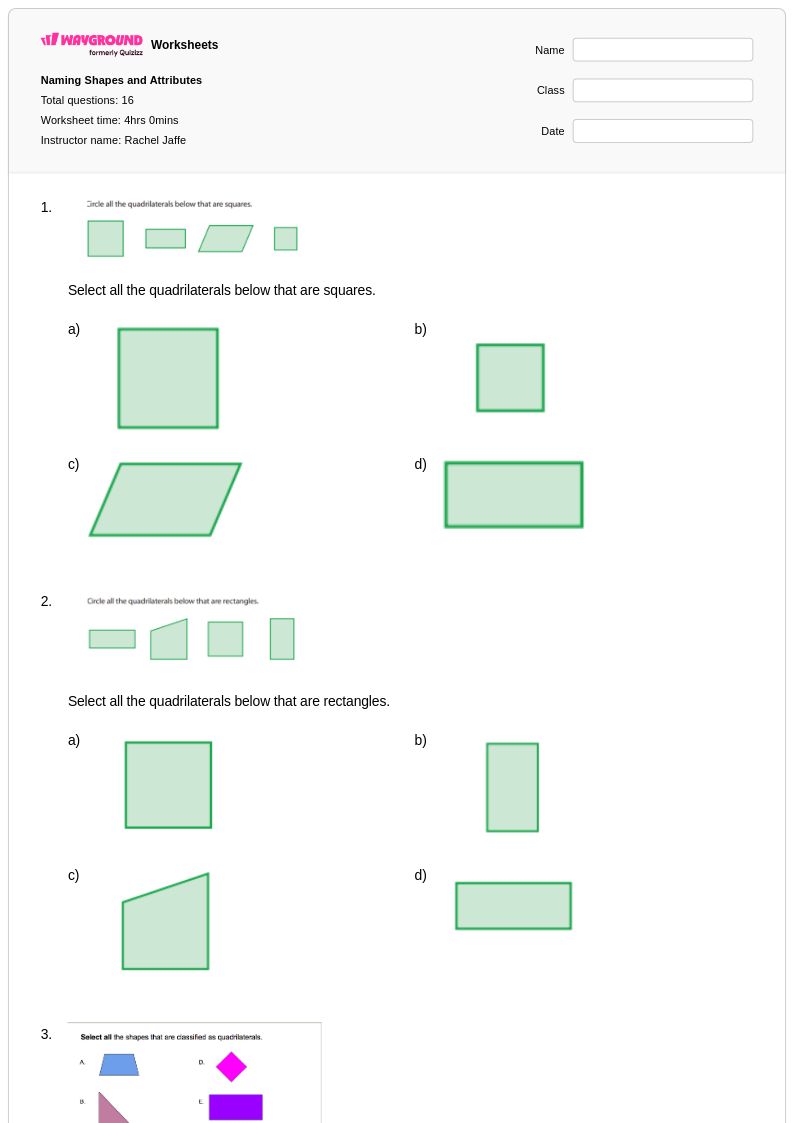
16 Q
3rd
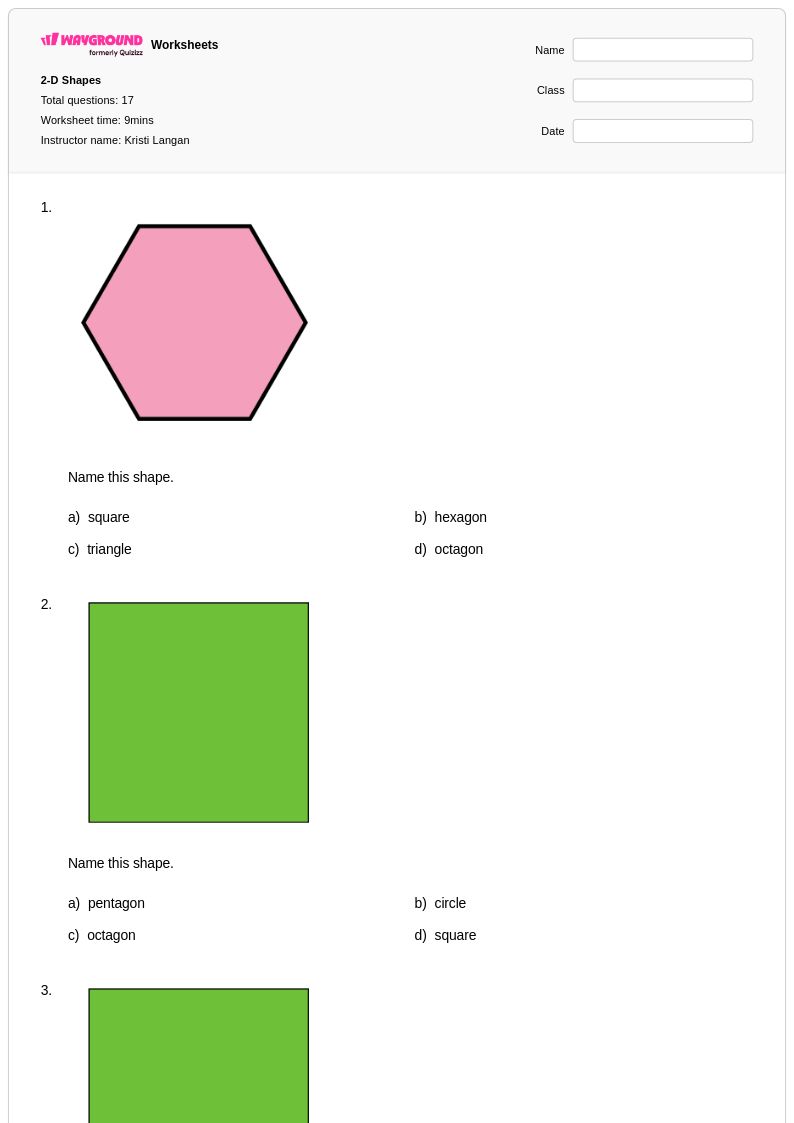
17 Q
1st - 3rd
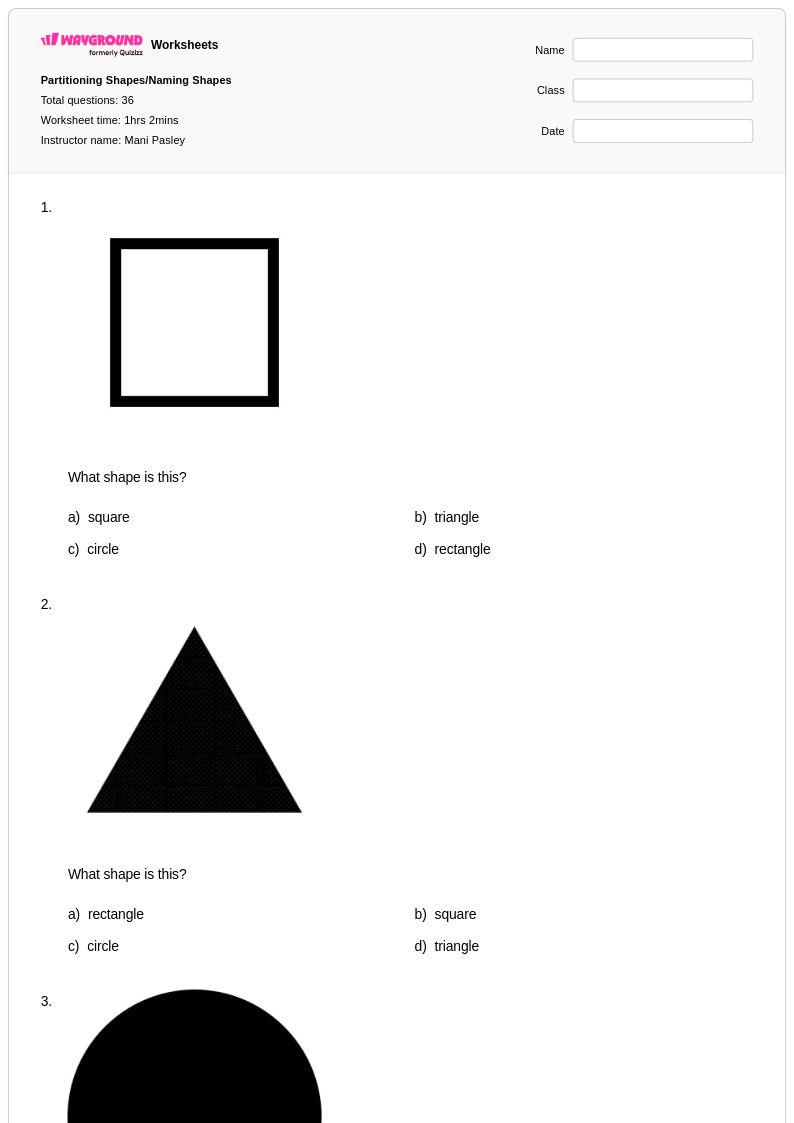
36 Q
2nd
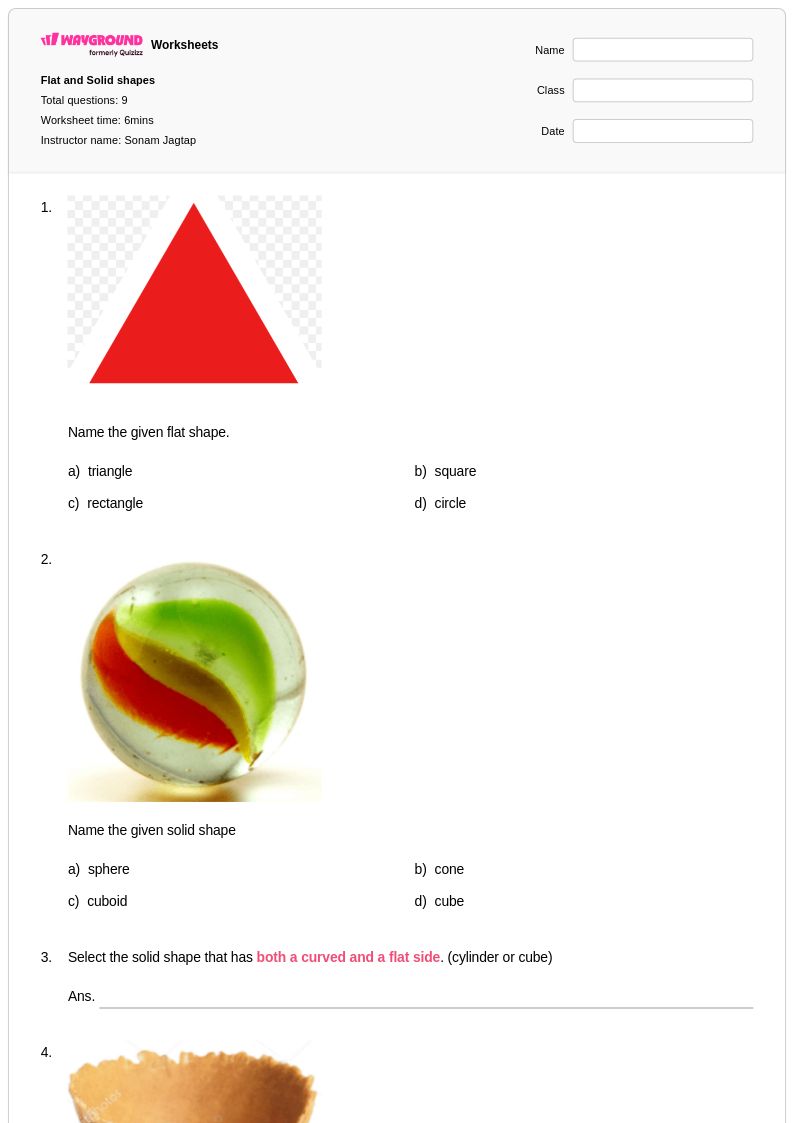
9 Q
1st
16 Q
3rd
16 Q
4th
20 Q
3rd
15 Q
8th - Uni
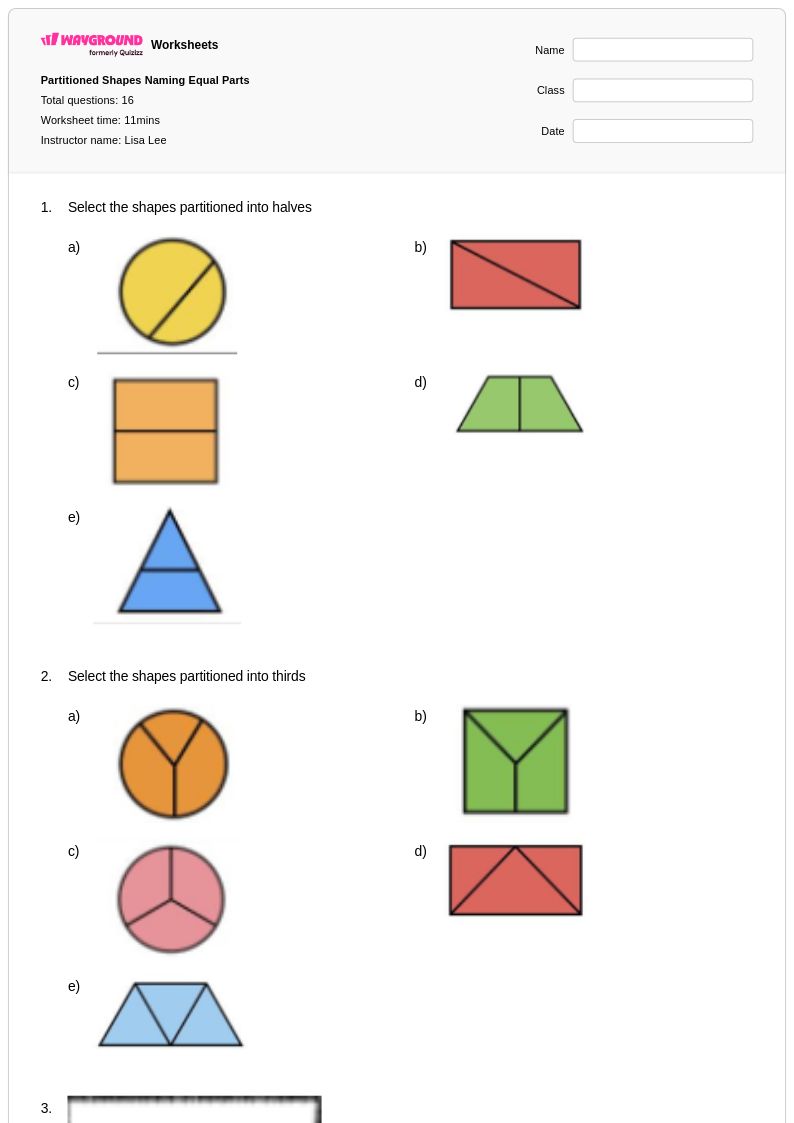
16 Q
3rd
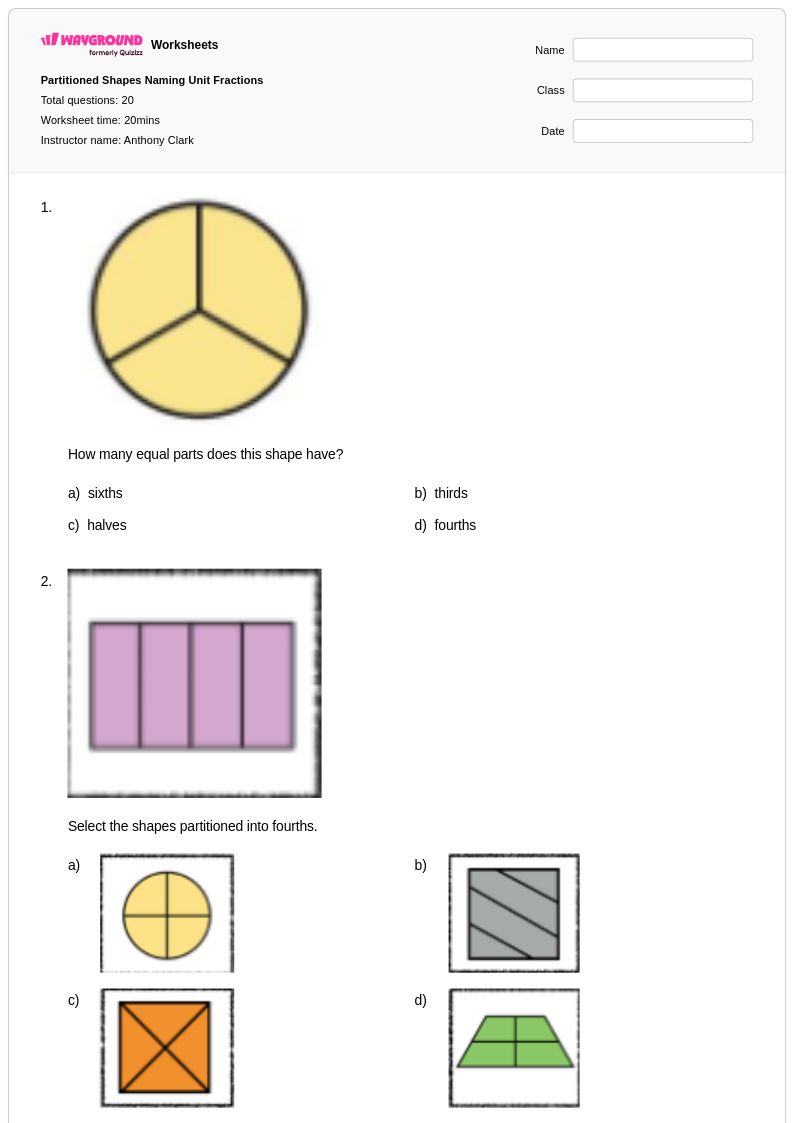
20 Q
3rd - Uni
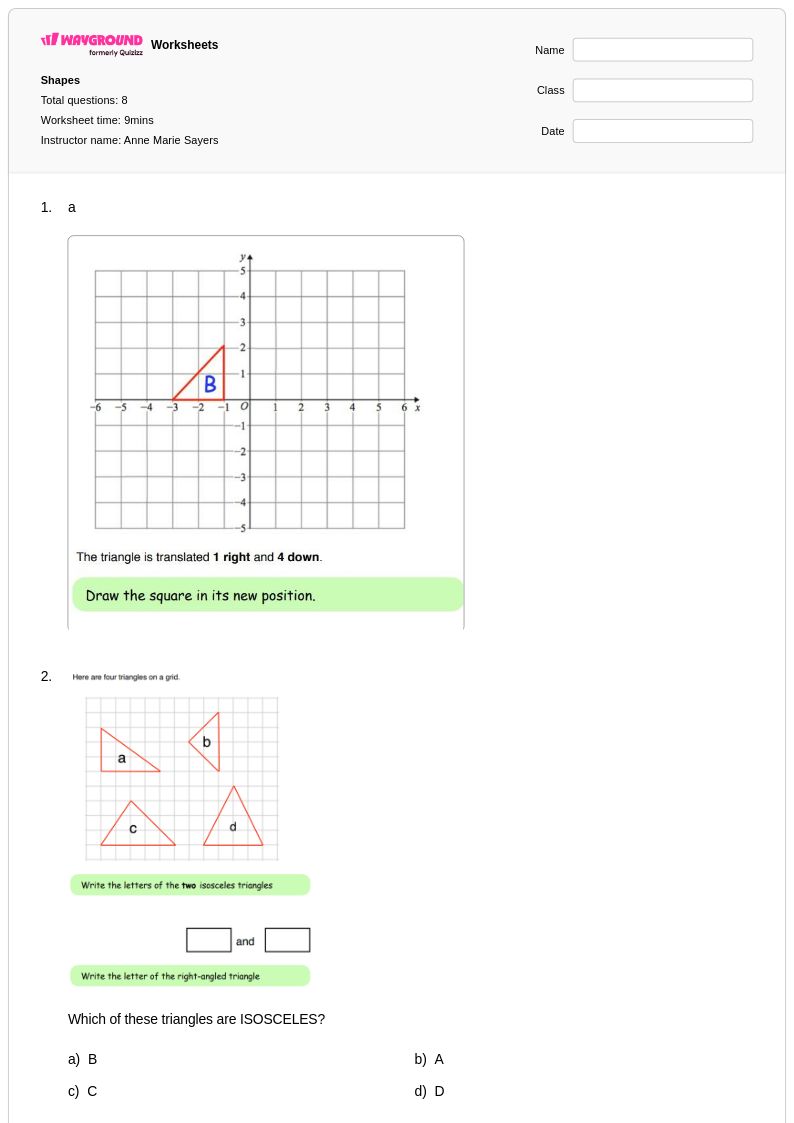
8 Q
5th - 7th
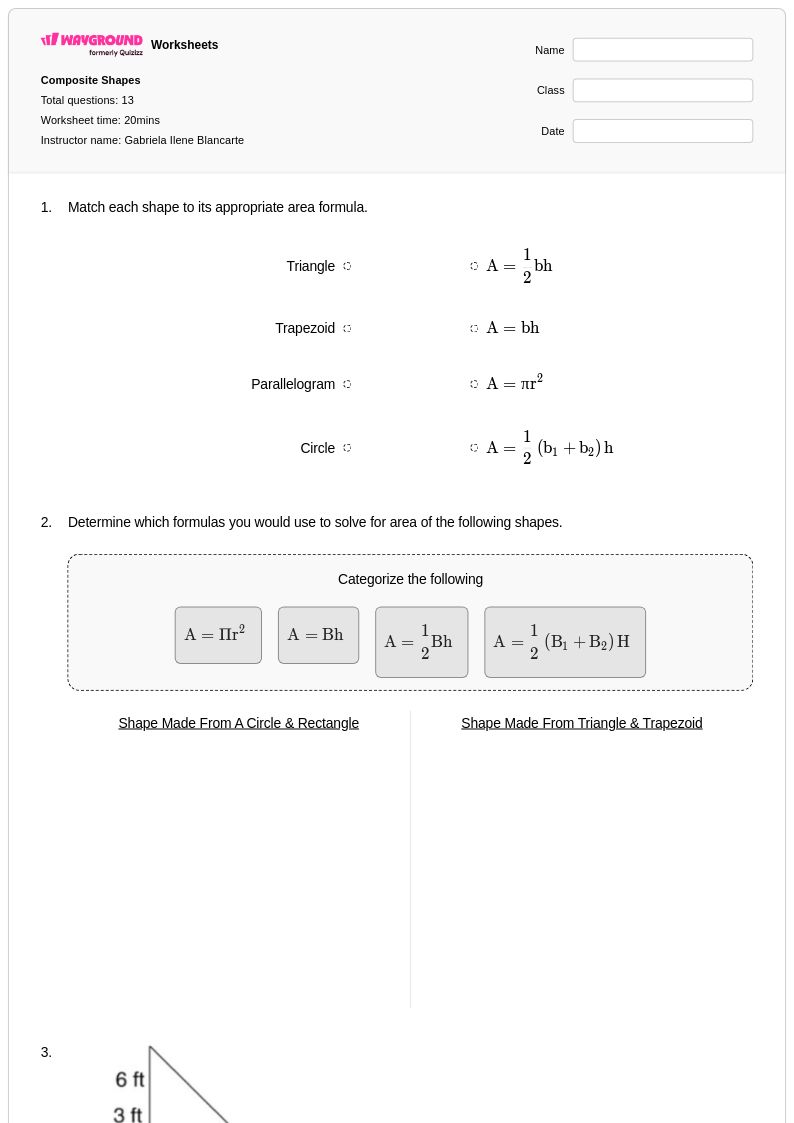
13 Q
7th
20 Q
7th
16 Q
3rd
15 Q
9th
13 Q
8th
Explore Worksheets by Grade
Explore Worksheets by Subjects
Explore printable Naming Shapes worksheets
Naming shapes worksheets available through Wayground (formerly Quizizz) provide students with essential practice in geometric vocabulary and visual recognition skills that form the foundation of mathematical understanding. These comprehensive resources help learners identify, classify, and distinguish between various two-dimensional and three-dimensional geometric figures, including triangles, quadrilaterals, circles, polygons, spheres, cubes, and pyramids. Each worksheet features carefully designed practice problems that progressively build students' ability to recognize shape attributes such as number of sides, angles, and vertices, while reinforcing proper mathematical terminology. Teachers can access complete answer keys and free printable materials in convenient PDF format, making it simple to implement these resources for both classroom instruction and independent study sessions.
Wayground's extensive collection draws from millions of teacher-created resources specifically focused on shape identification and geometric vocabulary development, offering educators powerful search and filtering capabilities to locate worksheets that match their exact instructional needs. The platform's standards-aligned materials support differentiated instruction through customizable content that can be modified for various skill levels, ensuring that both struggling learners and advanced students receive appropriate challenges. Teachers benefit from flexible formatting options that include both printable PDF versions for traditional paper-and-pencil activities and digital formats for technology-enhanced learning environments. These versatile tools streamline lesson planning while providing targeted resources for remediation, enrichment, and ongoing skill practice, allowing educators to systematically build their students' geometric reasoning abilities through consistent, high-quality practice opportunities.
FAQs
How do I teach students to name shapes?
What exercises help students practice naming shapes?
What are common mistakes when learning to name shapes?
How can I use these naming shapes worksheets in my class?
How does learning to name shapes fit into the math curriculum?
How can I support students who struggle with identifying shapes?