Free Printable Balancing Oxidation Reduction Reactions Worksheets for Class 10
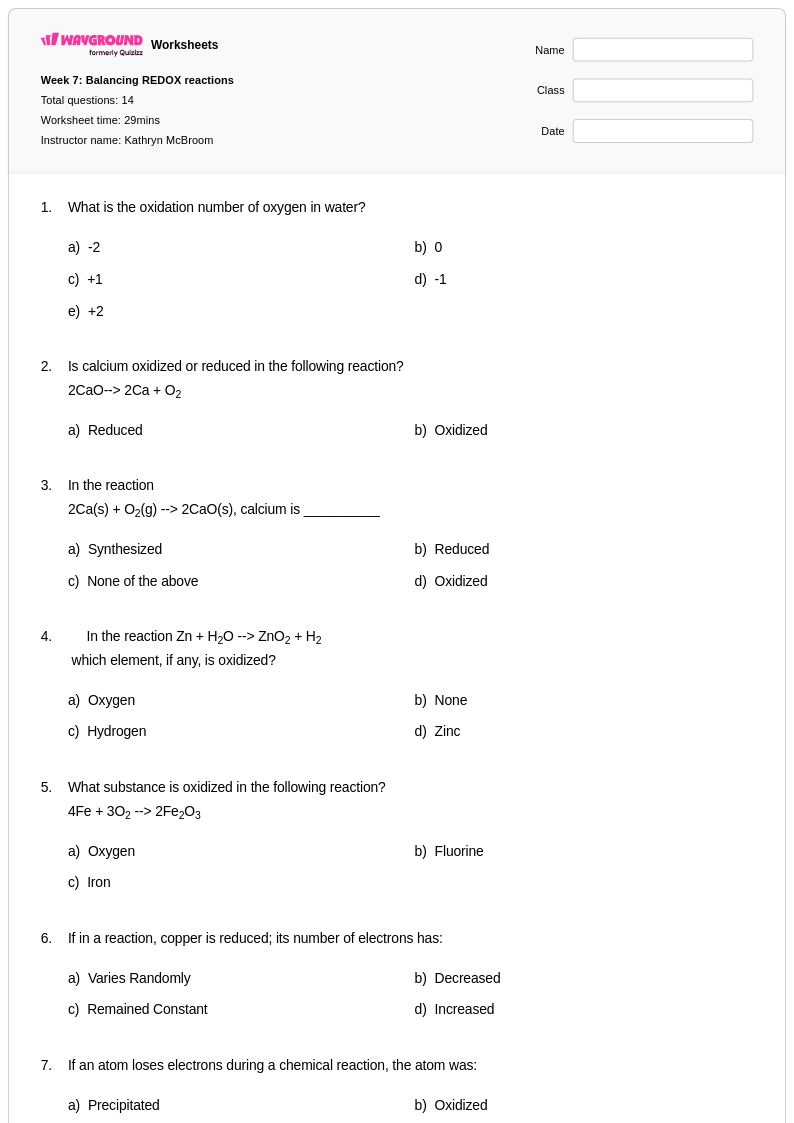
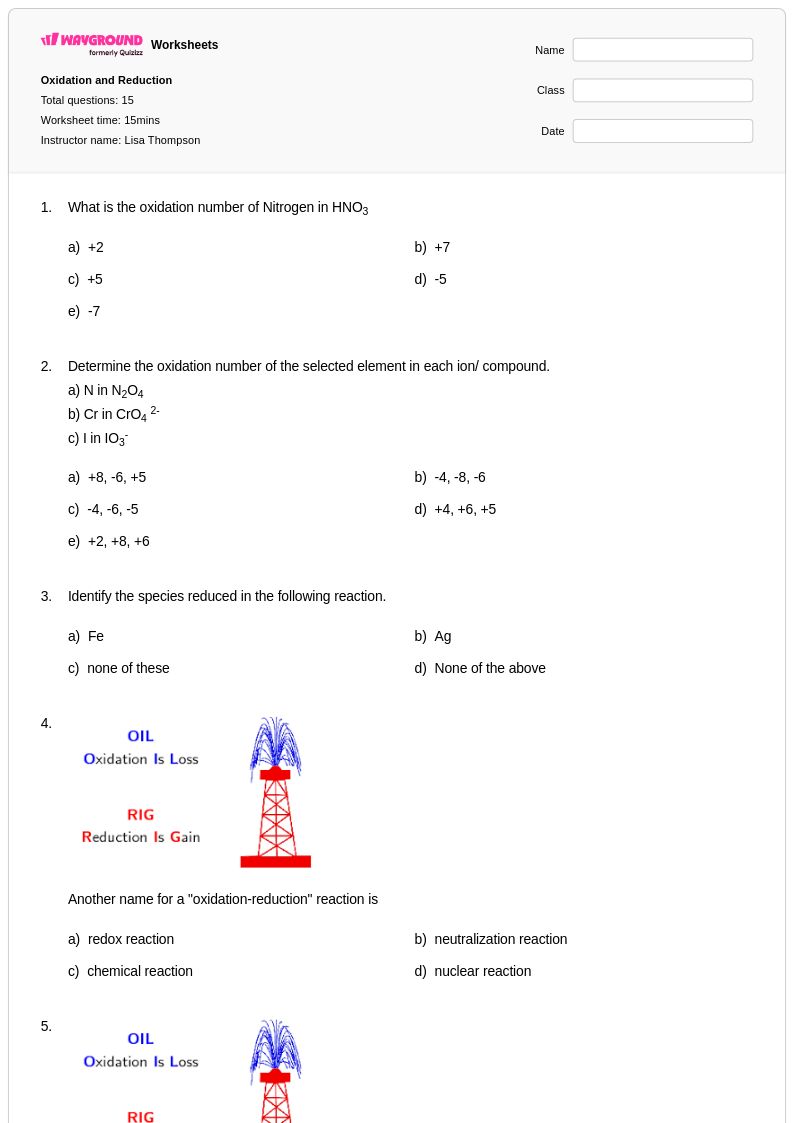
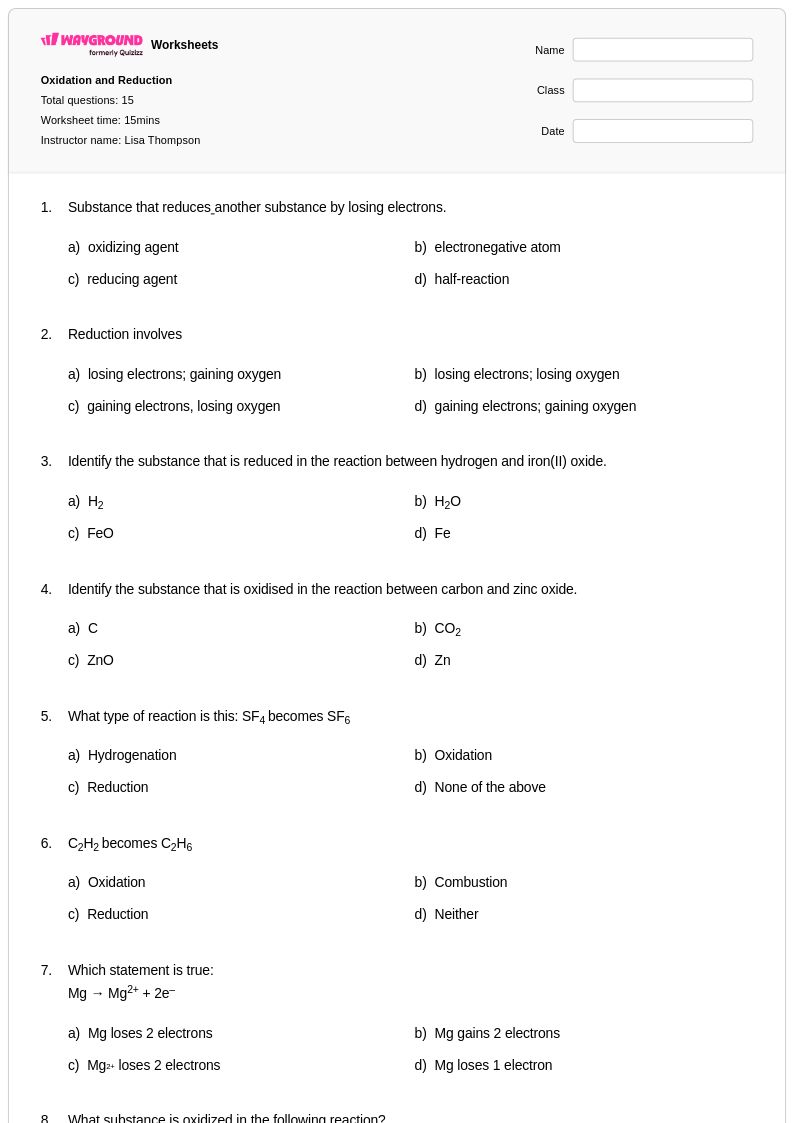
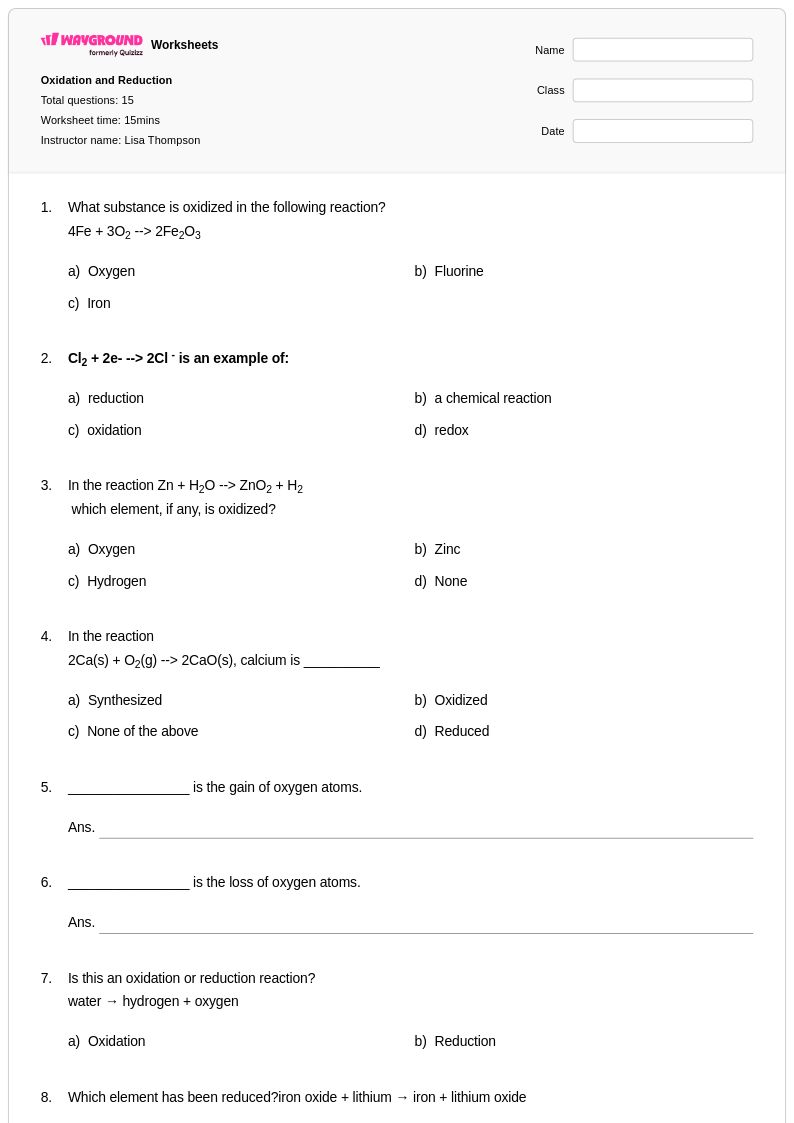
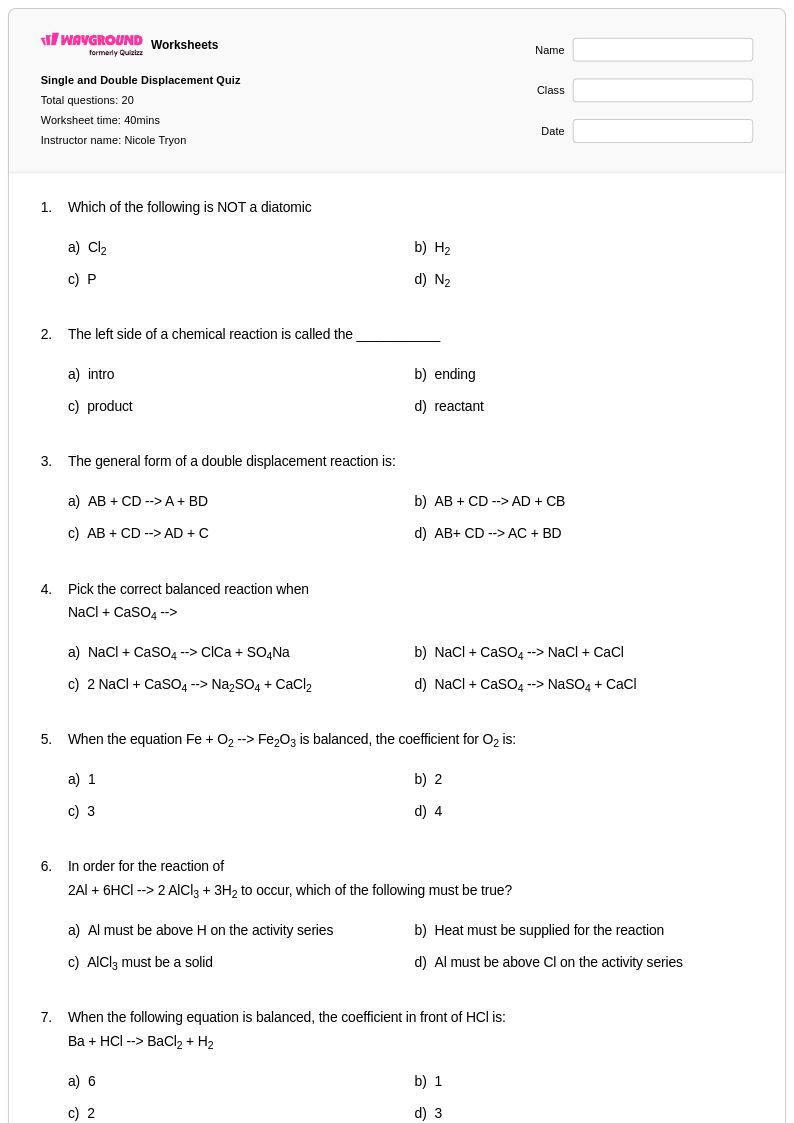
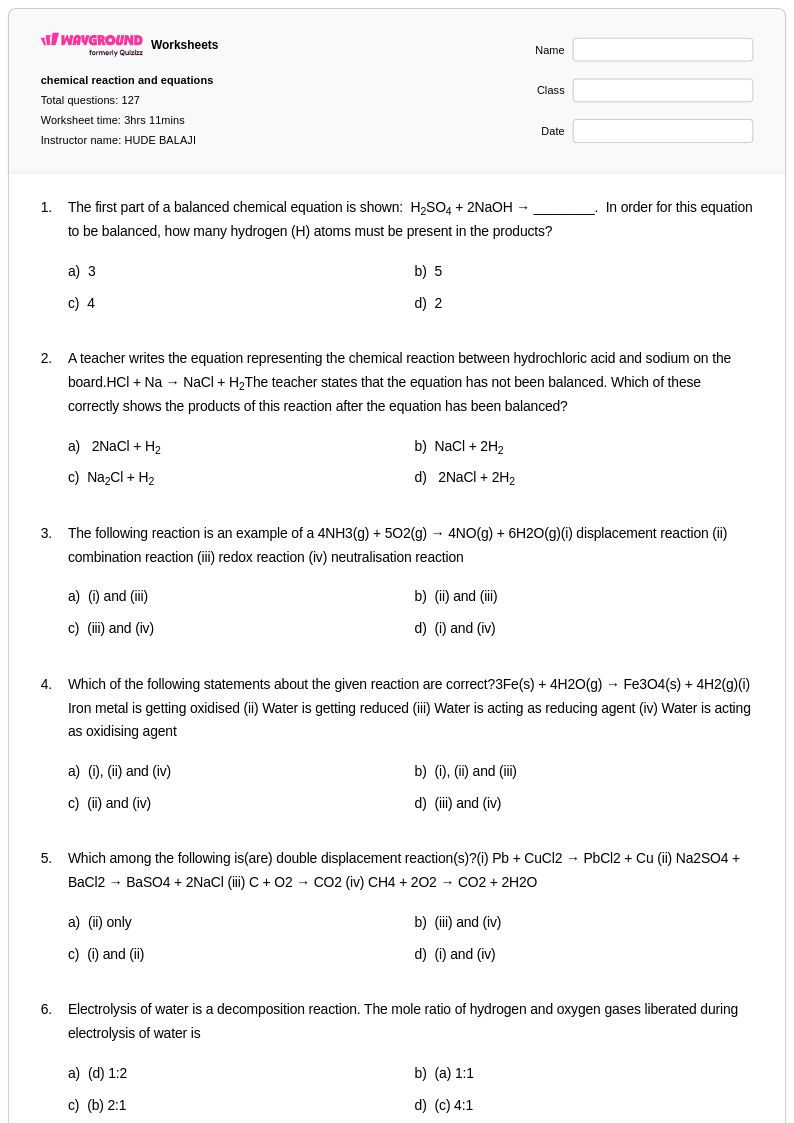
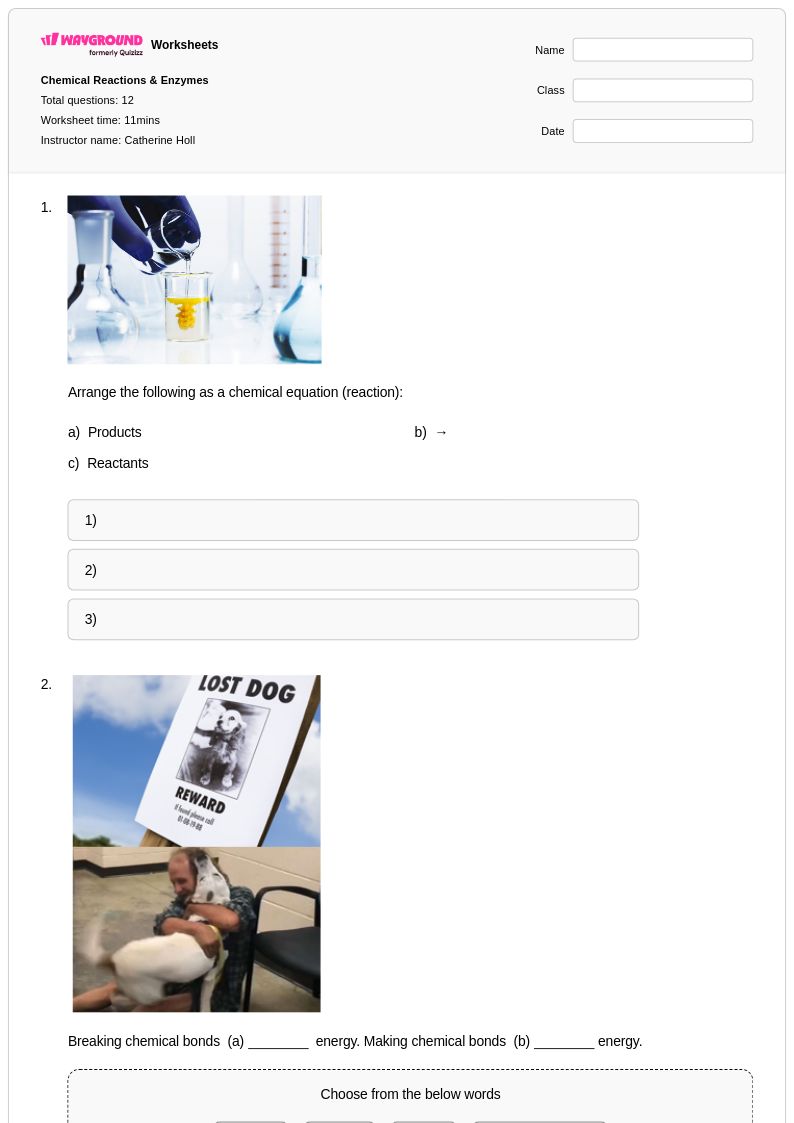
Class 10 students can master balancing oxidation reduction reactions with Wayground's comprehensive collection of free worksheets, printables, and practice problems featuring detailed answer keys to reinforce electrochemistry concepts.
Explore printable Balancing Oxidation Reduction Reactions worksheets for Class 10
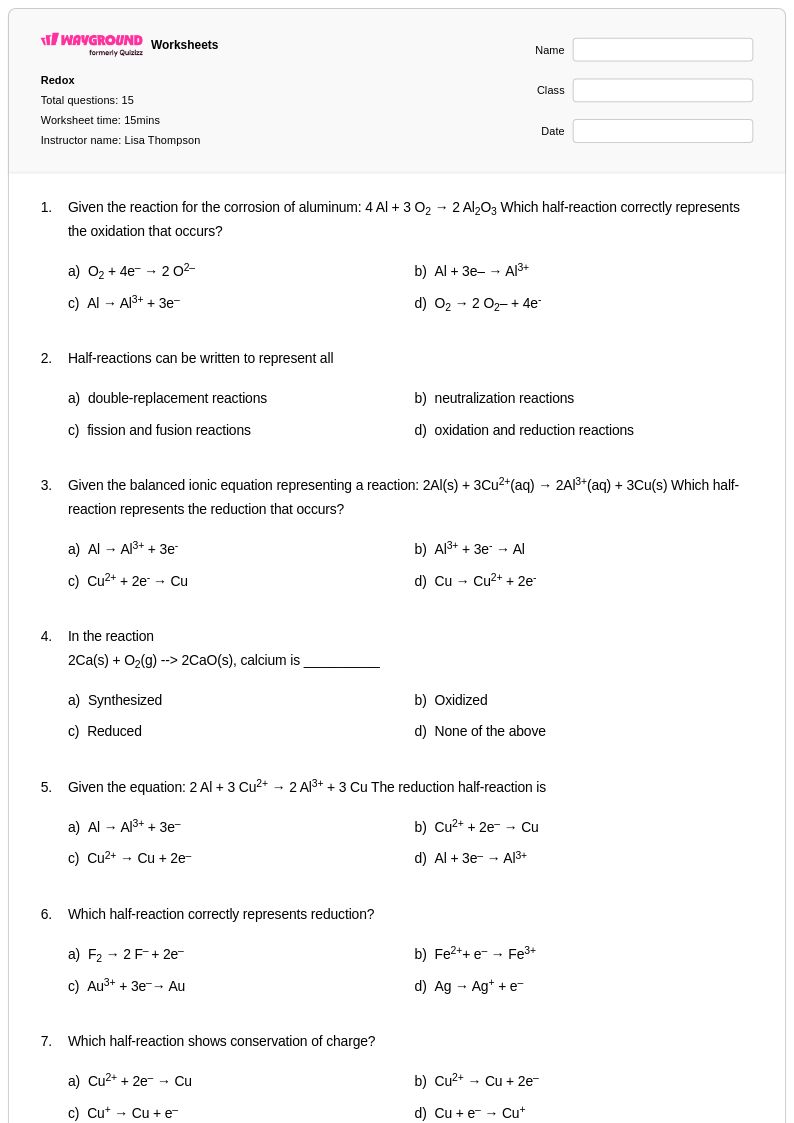
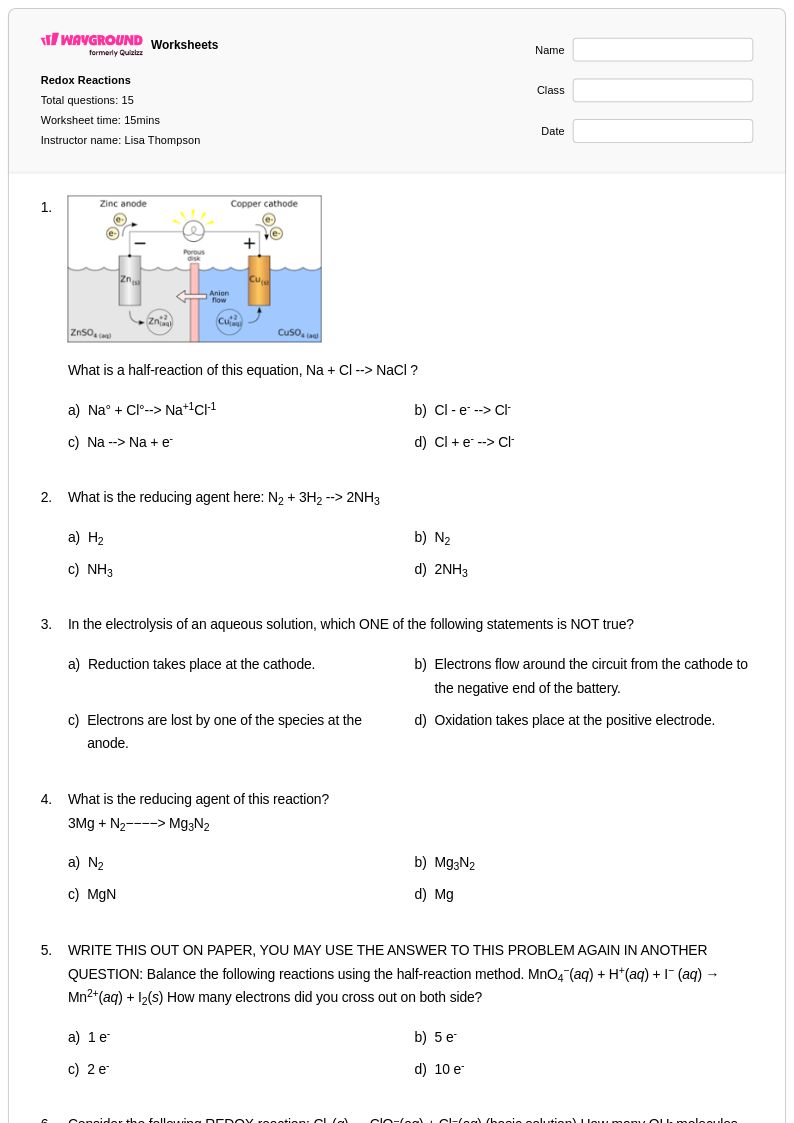
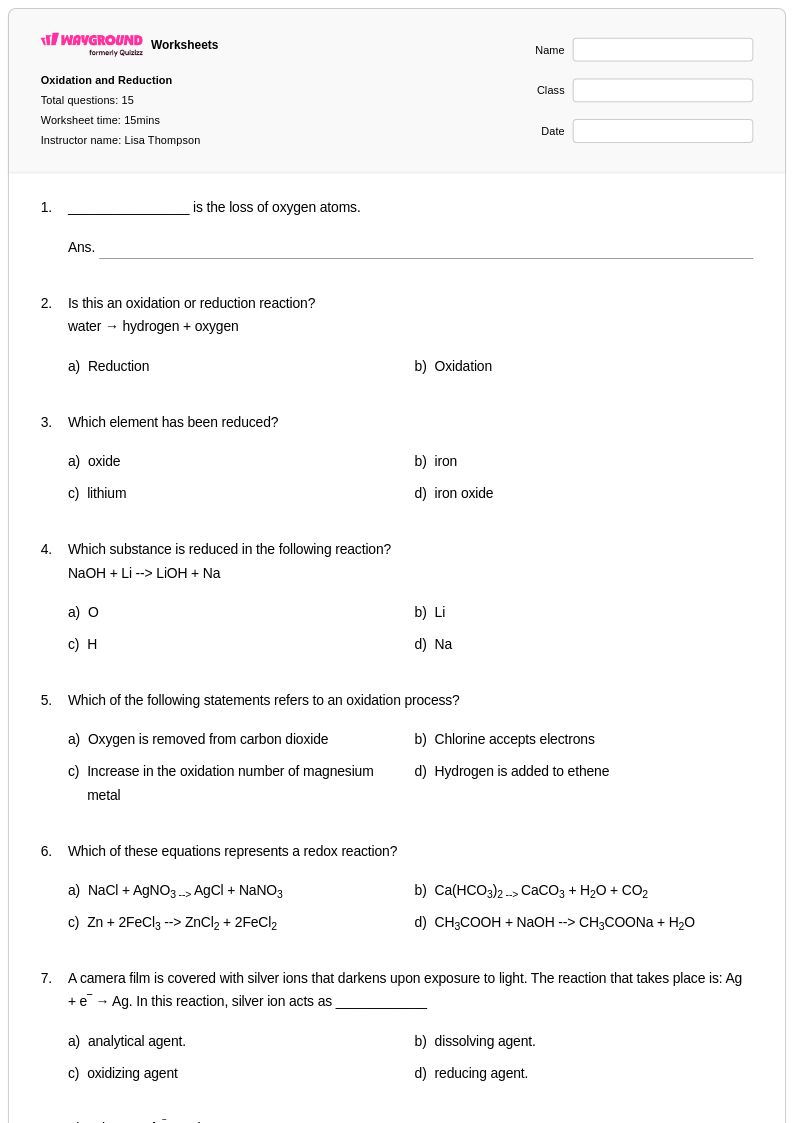
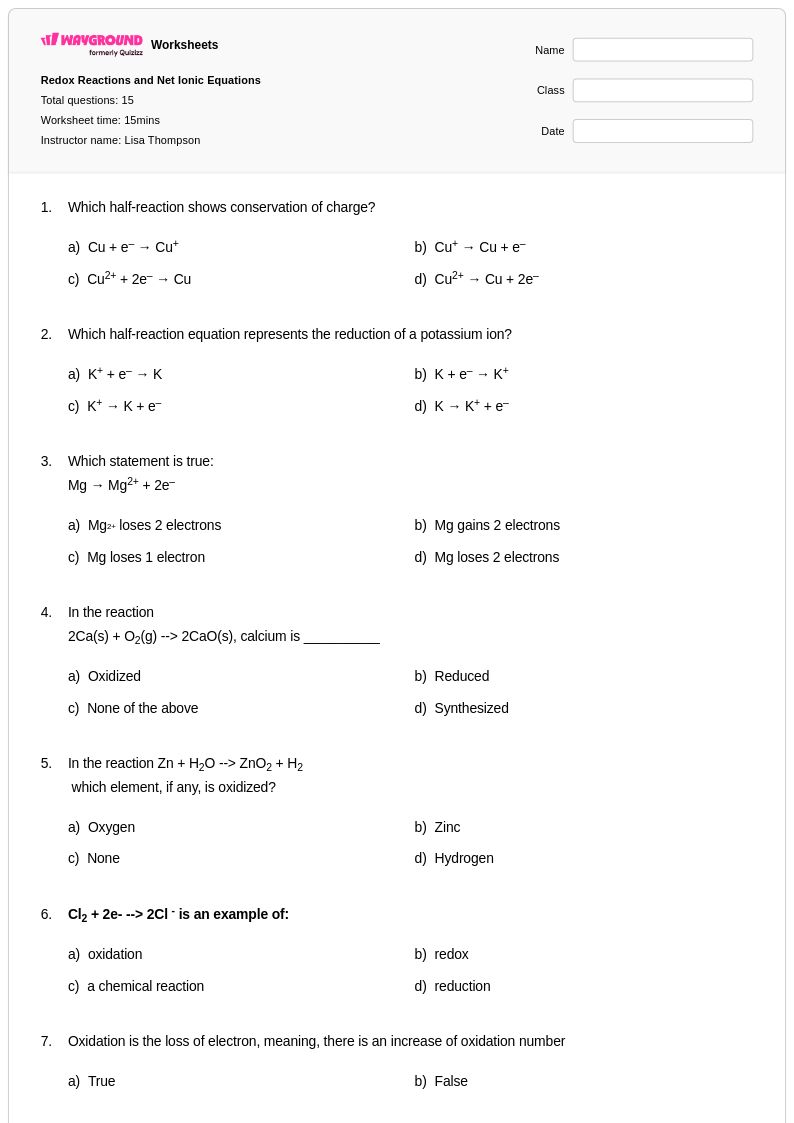
Balancing oxidation reduction reactions represents a fundamental skill for Class 10 students mastering the intricate relationships between electron transfer, oxidizing agents, and reducing agents in chemical processes. Wayground's comprehensive collection of worksheets provides targeted practice in identifying oxidation states, recognizing half-reactions, and systematically balancing complex redox equations using both the half-reaction method and oxidation number approach. These carefully designed practice problems strengthen students' analytical thinking as they learn to track electron movement, assign oxidation numbers to elements in compounds, and apply conservation principles to achieve balanced chemical equations. Each worksheet includes detailed answer keys that guide students through step-by-step solutions, while the free printable format ensures accessibility for both classroom instruction and independent study sessions.
Wayground, formerly Quizizz, empowers educators with millions of teacher-created resources specifically designed to support chemistry instruction at the Class 10 level, featuring robust search and filtering capabilities that allow teachers to locate worksheets aligned with specific curriculum standards and learning objectives. The platform's differentiation tools enable instructors to customize balancing oxidation reduction reaction worksheets based on individual student needs, offering both challenging problems for advanced learners and scaffolded exercises for those requiring additional support. Teachers can seamlessly integrate these resources into their lesson planning, utilizing the flexible digital and PDF formats for immediate classroom deployment, targeted remediation sessions, or enrichment activities that deepen student understanding of electrochemical principles and reaction mechanisms.
FAQs
How do I teach students to balance oxidation reduction reactions step by step?
Start by ensuring students can assign oxidation numbers correctly before attempting to balance any equation. Then introduce either the half-reaction method or the oxidation number change method explicitly, walking through each step: separating oxidizing and reducing agents, balancing mass and charge in each half-reaction, and combining them so electrons cancel. Students benefit from working through the same equation using both methods so they understand the underlying logic rather than memorizing a procedure.
What is the difference between the half-reaction method and the oxidation number method for balancing redox equations?
The half-reaction method splits the overall redox equation into two separate half-equations — one for oxidation and one for reduction — which are balanced individually for atoms, charge, and electrons before being combined. The oxidation number method tracks the change in oxidation states directly in the full molecular equation and uses those changes to determine the multipliers needed to equalize electron loss and gain. The half-reaction method is generally preferred in aqueous solution problems, especially in acidic or basic conditions, because it handles water and hydrogen ions explicitly.
What exercises best help students practice balancing redox reactions?
Structured worksheet sequences that begin with simple single-electron transfers and progressively introduce multi-electron, multi-element equations are most effective for building fluency. Exercises that require students to first identify the oxidizing and reducing agents, then assign oxidation numbers, before attempting to balance reinforce the logical sequence of the process. Practice problems set in both acidic and basic aqueous solutions are essential, as the balancing procedure differs and students need repeated exposure to both contexts.
What mistakes do students most commonly make when balancing redox reactions?
The most frequent error is incorrectly assigning oxidation numbers, particularly for elements in polyatomic ions or when oxygen appears in peroxides. Students also routinely forget to balance charge as well as mass, adding water molecules or hydrogen ions to balance atoms without adjusting electrons accordingly. Another common mistake is multiplying a half-reaction to equalize electrons but failing to multiply every coefficient in that half-reaction proportionally, which invalidates the atom balance already established.
How do I differentiate redox balancing practice for students at different skill levels?
For students who are still developing foundational skills, begin with equations involving only two elements and a single electron transfer, and provide partially completed half-reactions as a scaffold. Advanced students can work with multi-step redox equations in basic solution, disproportionation reactions, or problems that require them to identify the reaction type before balancing. On Wayground, teachers can configure accommodations such as reduced answer choices to lower cognitive load for students who need additional support, without affecting the experience of the rest of the class.
How can I use Wayground's balancing oxidation reduction reactions worksheets in my chemistry class?
Wayground's redox balancing worksheets are available as printable PDFs for traditional classroom use and in digital formats for technology-integrated environments, including the ability to host them as a quiz directly on Wayground. The worksheets include detailed answer keys and step-by-step solutions, making them effective for independent practice, homework assignments, or guided in-class work where students self-check their reasoning. Digital delivery also allows teachers to apply student-level accommodations such as extended time or read aloud for learners who need them, without disrupting the workflow for the rest of the class.