
Recommended Topics for you
- Abiotic Factors
- Amphibians
- Anatomy
- Anatomy Labeling
- Animal Adaptations
- Animal Anatomy
- Animal Behavior
- Animal Cells
- Animal Communication
- Animal Hibernation
- Animal Research
- Aquatic Ecosystems
- Arthropod
- Artificial Selection
- Axial Skeleton
- Bacteria and Archaea
- Bacterial Cell
- Balance in Nature
- Behavior Chain Analysis
- Behavioral Biology
- Benthos
- Binomial Nomenclature
- Biodiversity and Conservation
- Biological Classification
- Biological Molecules
- Biology Lab Techniques
- Biology Principles
- Blood
- Blood Glucose
- Blood Sugar
- Body Planes
- Body Planes and Anatomical Directions
- Body Regions
- Body Systems
- Bone Cells
- Bone Density
- Bone Tissue
- Brain Development
- Cardiovascular System
- Cell Analogy
- Cell Anatomy
- Cell Biology
- Cell Cycle
- Cell Division
- Cell Environments
- Cell Organelles
- Cell Structure and Process
- Cell Theory
- Cell Transport
- Chemistry of Life
- Chicken Anatomy
- Chloroplast Structure
- Circulatory System
- Cladogram
- Components of Blood
- Contagion
- Defense Mechanisms
- Dichotomous Key
- Digestion
- Digestive Homeostasis
- Diseases
- Dissection
- Ear
- Ecological Relationships
- Ecological Succession
- Ecology
- Ecosystem Services
- Ecosystems
- Energy Flow
- Energy Flow in Ecosystems
- Entomology
- Enzymes
- Evolution and the Tree of Life
- Eye
- Eye Anatomy
- Factors Affecting Photosynthesis
- Feedback Loops
- Fingerprints
- Flower Anatomy
- Food Chain
- Fossil Dating
- Fossils
- Frog Dissection
- Fungi
- Genetic Variation
- Genetics
- Genetics Vocabulary Dominant and Recessive
- Genetics Vocabulary Genotype and Phenotype
- Glucose Regulation
- Heart Rate
- Heart Structure
- History of Life on Earth
- Homeostasis
- Human Anatomy
- Human Biology
- Human Body
- Human Decomposition
- Human Reproduction
- Human Skull
- Humerus
- Inherited and Acquired Traits
- Integumentary System
- Interactions in an Ecosystem
- Introduction to Heredity
- Invertebrate Animals
- Jellyfish
- Joints
- Joints and Movement
- Kingdom Fungi
- Kingdoms
- Levels of Biological Organization
- Lipids
- Long Bone
- Macromolecules
- Major Muscles
- Metabolism
- Microorganisms
- Microscope
- Microscope Observation
- Mimicry
- Mitosis
- Mold Growth
- Monocots and Dicots
- Movement at Joints
- Muscle Naming
- Muscle Structure
- Muscles
- Muscles and Bones
- Muscles of the Leg
- Muscles of Upper Limb
- Muscular System
- Musculoskeletal System
- Natural Selection
- Nekton
- Nervous System
- Neuron
- Organism Characteristics
- Osmosis and Tonicity
- Parts of the Eye
- Parts of the Light Microscope
- Passive Transport
- Pathogenic Microorganisms
- Patterns of Inheritance
- Photosynthesis
- Photosynthesis and Cellular Respiration
- Phylogenetic Tree
- Phylogeny
- Plankton
- Plant Anatomy
- Plant and Animal Cell
- Plant Cell Structure
- Plant Reproduction
- Plant Structure
- Plant Structure and Function
- Plant Systems
- Pollination
- Population Ecology
- Predation
- Prefix Suffix
- Prokaryote
- Prokaryotes and Eukaryotes
- Prokaryotic Cell
- Properties of Carbon
- Punnett Squares
- Sexual Vs Asexual Reproduction
- Shark Anatomy
- Six Kingdoms
- Skeletal System
- Skin
- Skin Anatomy
- Skin Color
- Skin Structure
- Skull
- Skull Bones
- Slide Observation
- Species Coexistence
- Spinal Cord and Nerves
- Squid
- Stimulus and Response
- Structure of a Cell
- Symbiosis
- Symbiotic Relationship
- Taxonomy
- The Cell Membrane
- The Circulatory and Respiratory Systems
- The Digestive and Excretory Systems
- The Immune System
- The Reproductive System
- Tissues
- Tooth Structure
- Turkey Anatomy
- Types of Reproduction
- Urinary System
- Viruses
- Viruses and Bacteria
- Whale Anatomy
- Zombies
35 Q
6th
8 Q
6th - 12th
5 Q
6th
25 Q
6th - Uni
25 Q
3rd - Uni
25 Q
3rd - Uni
10 Q
6th
8 Q
6th
15 Q
3rd - Uni
25 Q
6th
15 Q
6th - 8th
63 Q
6th
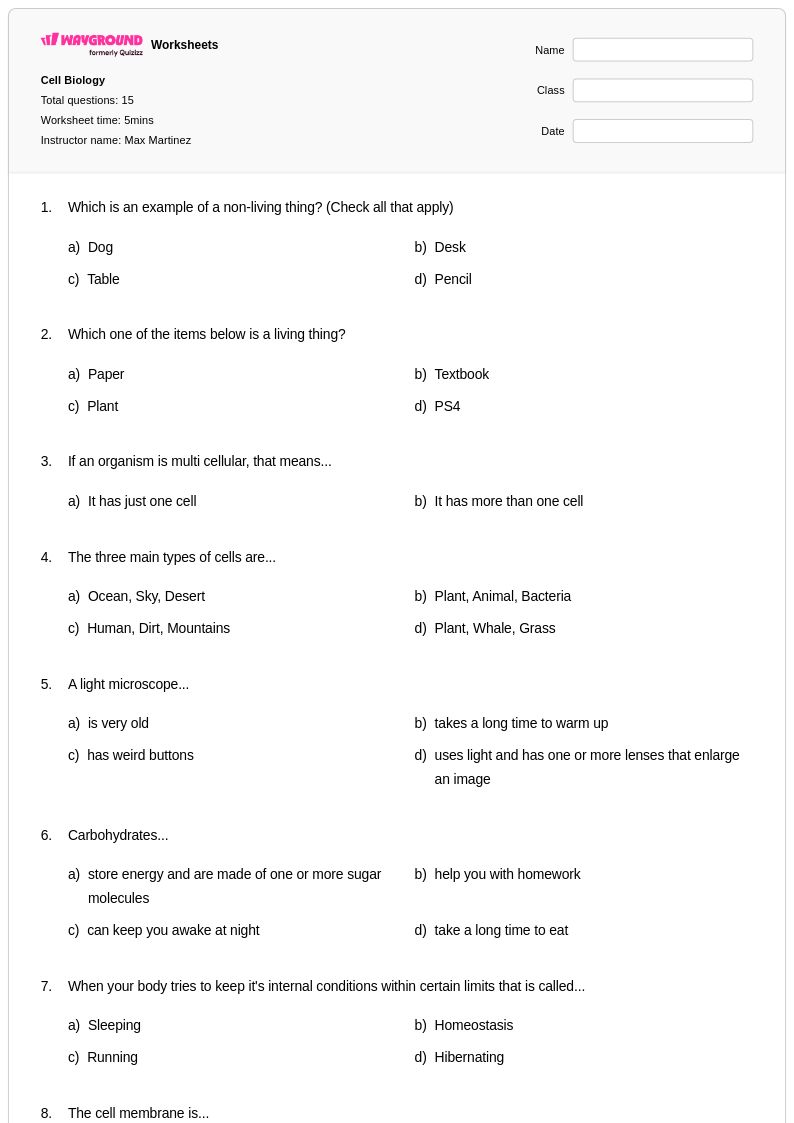
15 Q
6th - 8th
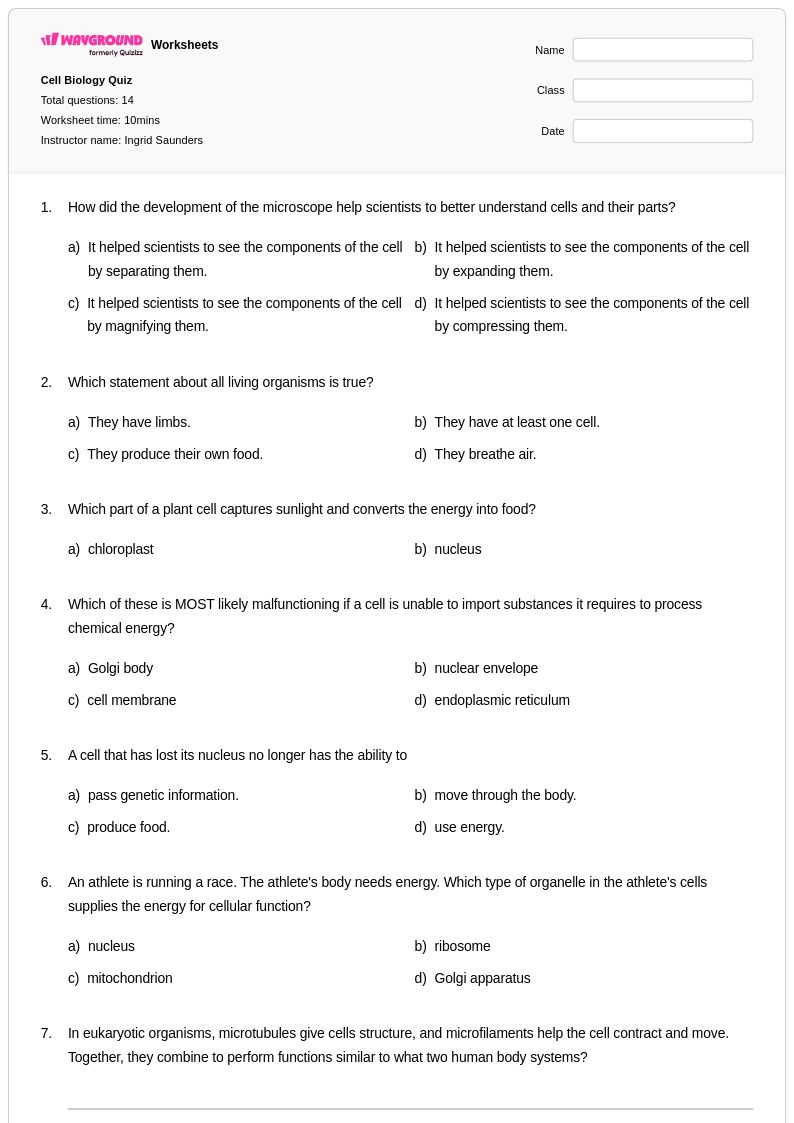
14 Q
6th - 8th
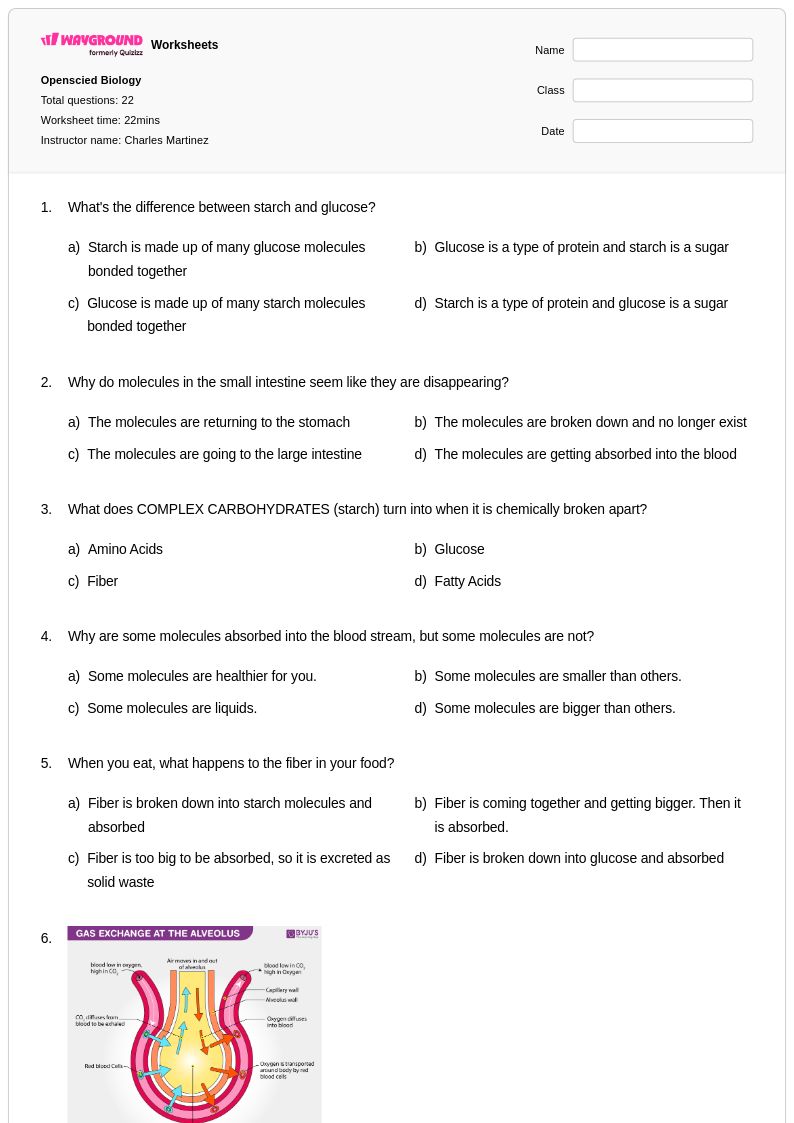
22 Q
6th - 8th
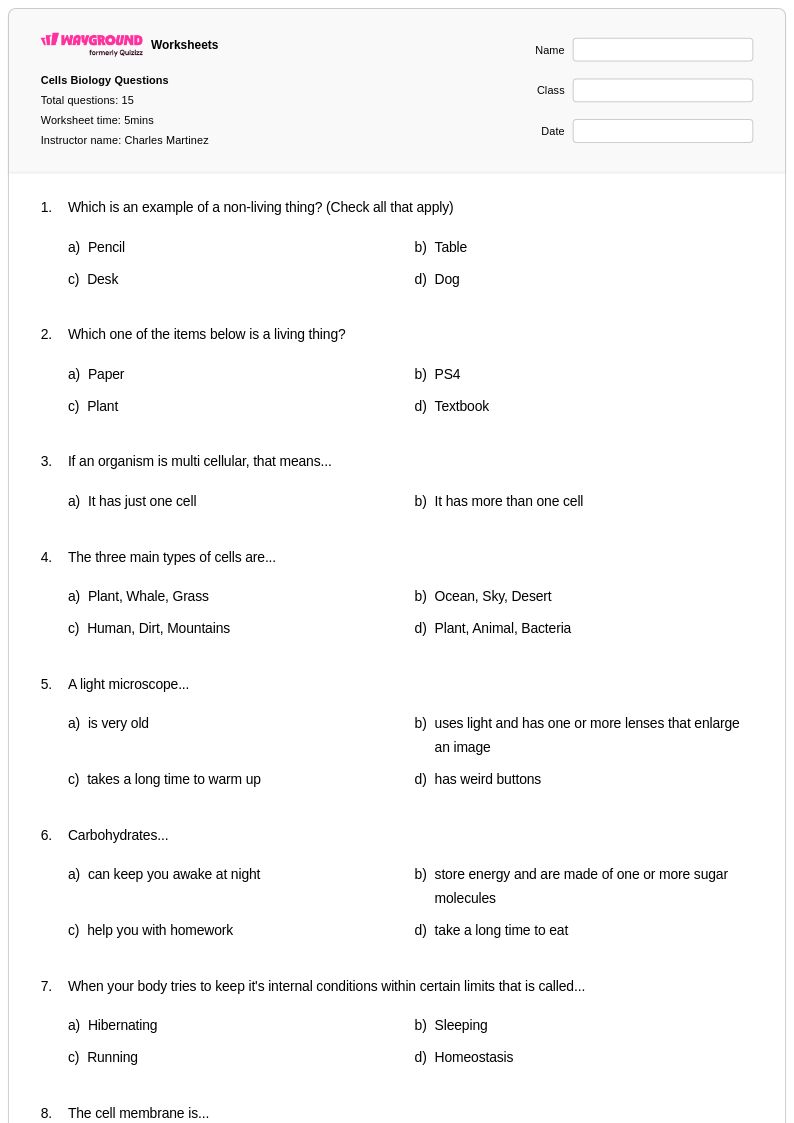
15 Q
6th - 8th
16 Q
6th
16 Q
6th
11 Q
6th
10 Q
6th - 8th
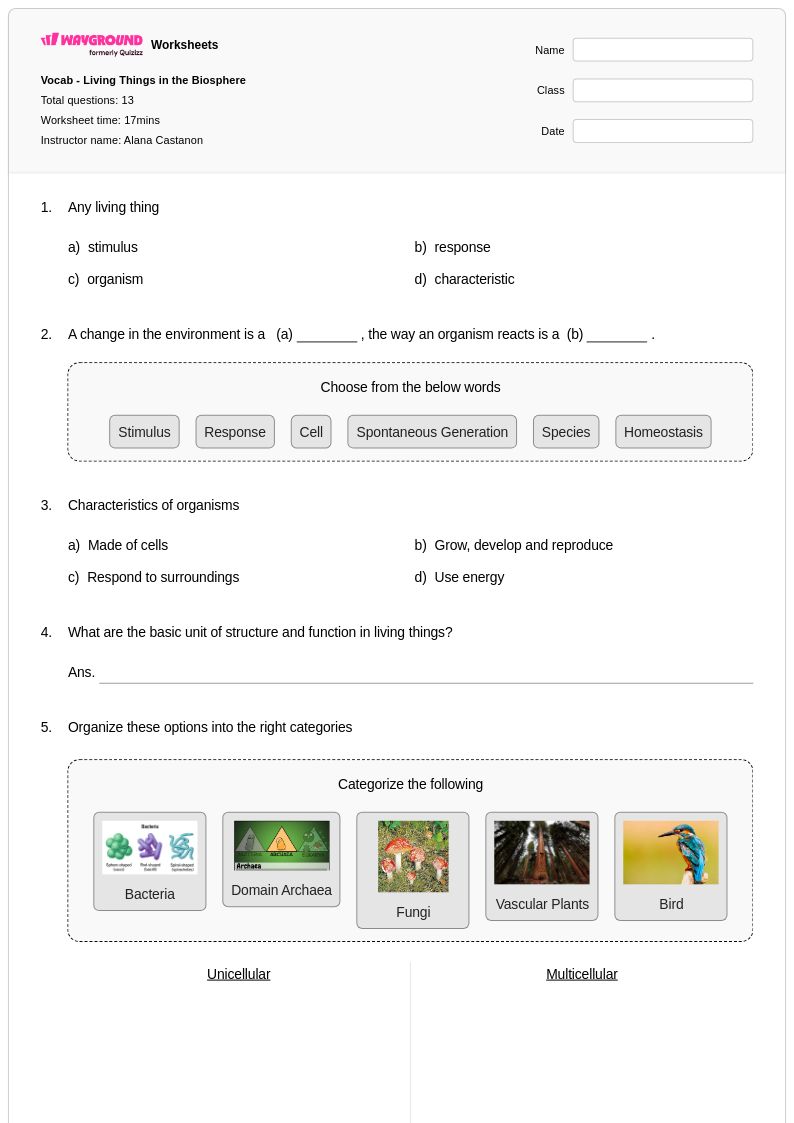
13 Q
6th
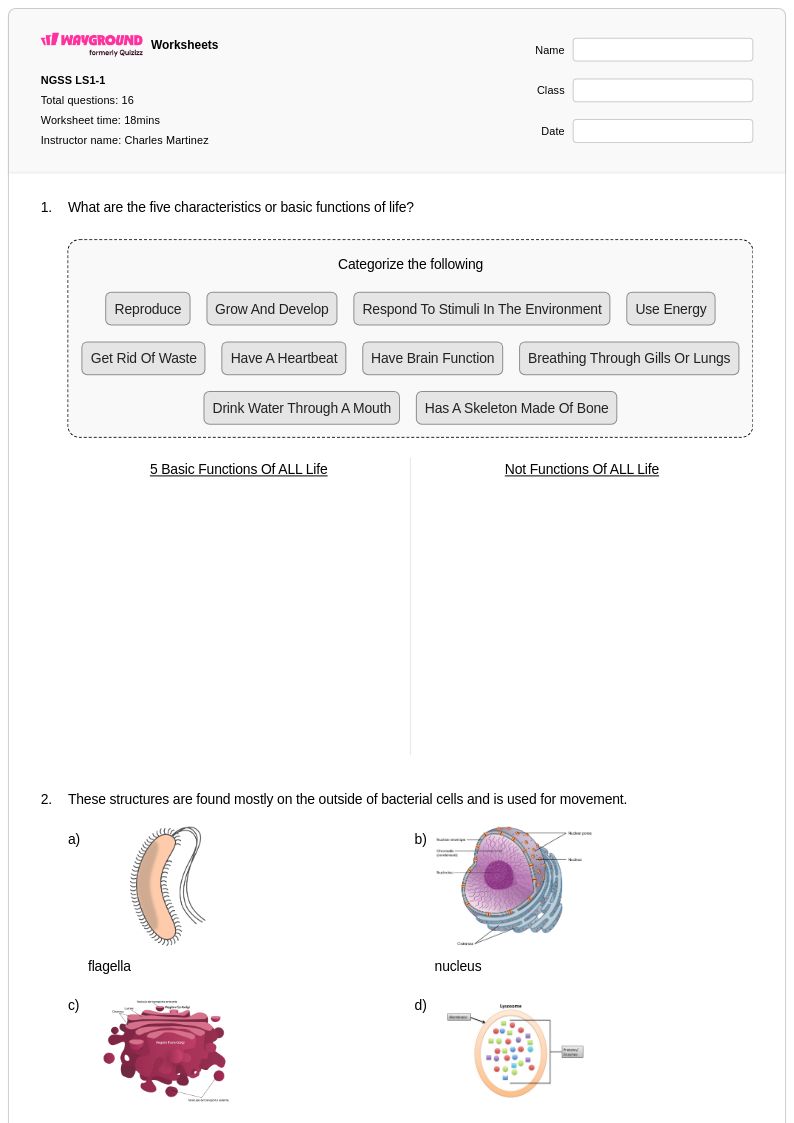
16 Q
6th
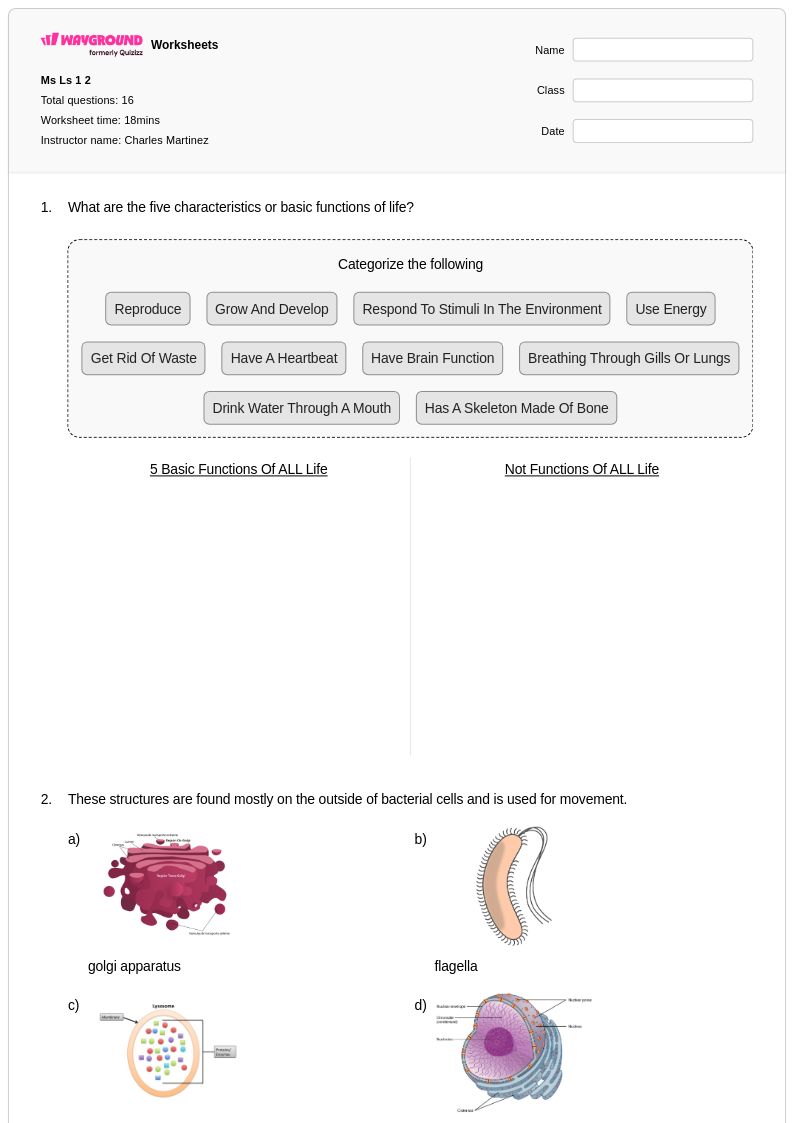
16 Q
6th
Explore Biology Worksheets by Grades
Explore Biology Worksheets for class 6 by Topic
- Abiotic Factors
- Amphibians
- Anatomy
- Anatomy Labeling
- Animal Adaptations
- Animal Anatomy
- Animal Behavior
- Animal Cells
- Animal Communication
- Animal Hibernation
- Animal Research
- Aquatic Ecosystems
- Arthropod
- Artificial Selection
- Axial Skeleton
- Bacteria and Archaea
- Bacterial Cell
- Balance in Nature
- Behavior Chain Analysis
- Behavioral Biology
Explore Other Subject Worksheets for class 6
Explore printable Biology worksheets for Class 6
Biology worksheets for Class 6 students available through Wayground (formerly Quizizz) provide comprehensive coverage of fundamental life science concepts that form the foundation of scientific literacy. These carefully designed resources help students develop critical thinking skills as they explore topics such as cell structure and function, classification of living organisms, basic genetics, ecosystems and food webs, photosynthesis and respiration, and human body systems. Each worksheet collection includes detailed answer keys that support both independent learning and teacher assessment, while the free printables offer convenient access to high-quality practice problems that reinforce key biological concepts. Students engage with authentic scientific scenarios through activities that strengthen observation skills, data analysis abilities, and scientific reasoning while building essential vocabulary and conceptual understanding in biology.
Wayground (formerly Quizizz) empowers teachers with an extensive library of millions of teacher-created biology resources specifically designed for Class 6 learners, featuring robust search and filtering capabilities that enable educators to quickly locate materials aligned with specific learning standards and curriculum requirements. The platform's differentiation tools allow teachers to customize worksheets based on individual student needs, while flexible formatting options provide both printable pdf versions for traditional classroom use and digital formats for technology-enhanced learning environments. These comprehensive features streamline lesson planning by offering ready-to-use materials for skill practice, targeted remediation for struggling learners, and enrichment opportunities for advanced students, ensuring that every Class 6 student can access appropriately challenging biology content that supports their scientific development and academic growth.
FAQs
How do I teach biology concepts effectively in a high school classroom?
What kinds of worksheets are most useful for practicing biology skills?
What mistakes do students commonly make when learning genetics and heredity?
What are the most common misconceptions students have about cellular respiration and photosynthesis?
How can I use biology worksheets to support students with different learning needs?
How do I use Wayground's biology worksheets in my classroom?
How do I assess whether students truly understand biological classification and taxonomy?